
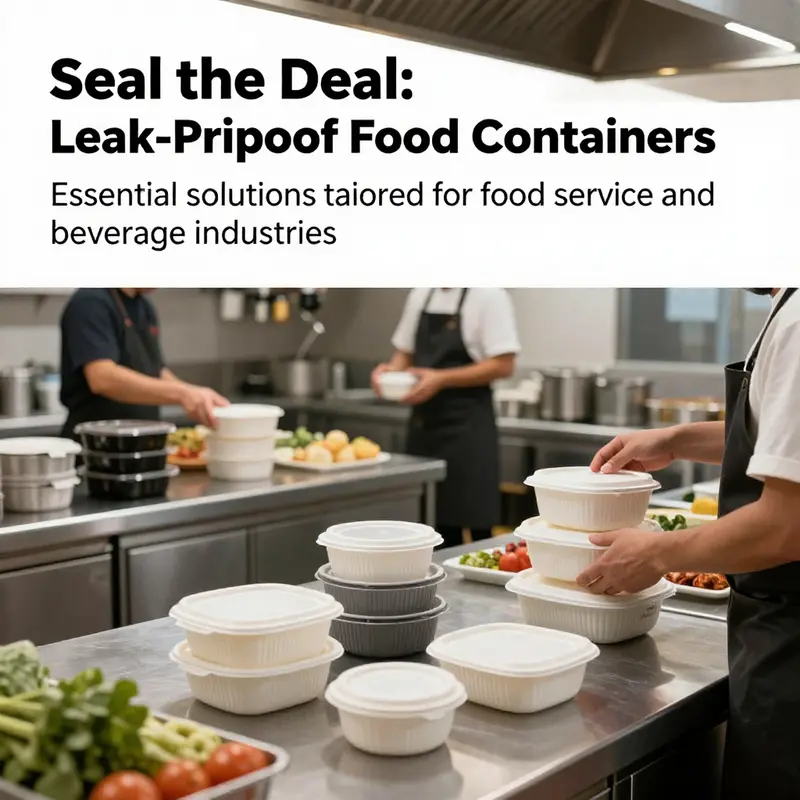
The rise of convenience foods and meal delivery services necessitates robust packaging solutions that meet today’s standards for quality and hygiene. Leak-proof disposable food containers have emerged as vital tools across various sectors, including bubble tea shops, restaurants, and catering services. This article delves into the materials that make these containers effective, their applications within the food service industry, sustainability considerations for eco-conscious businesses, and the market trends shaping their economic impact. By exploring these aspects, we aim to provide insights that will help industry professionals select the right containers for their operational needs.
Leak-Proof by Design: The Material Story Behind Disposable Food Containers
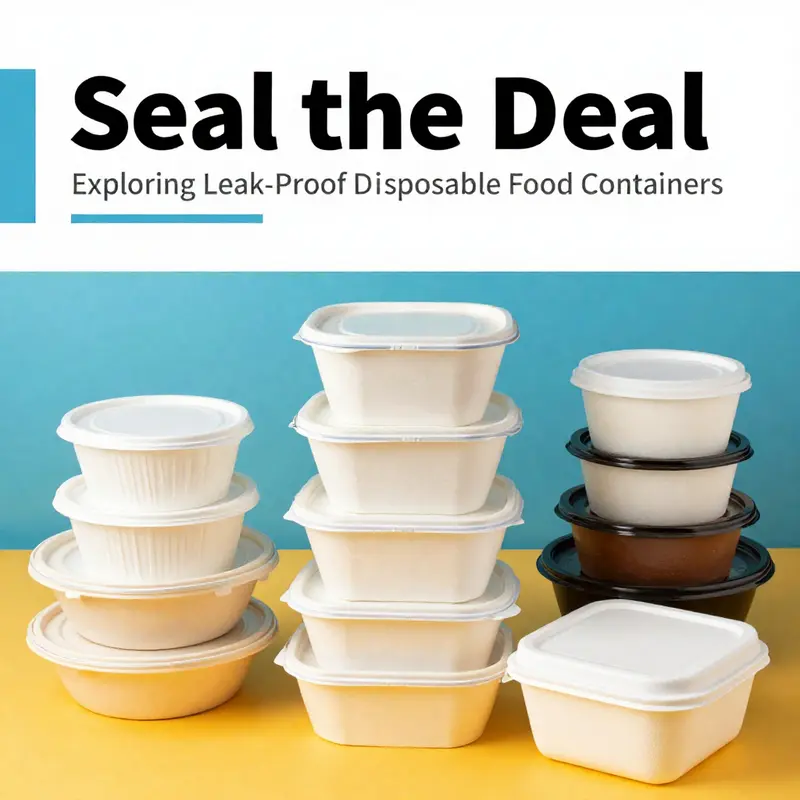
The containers that carry our meals from kitchen to curb are more than simple vessels. They are the quiet engineers of cleanliness, reliability, and trust. When a customer opens a lid and finds a spill contained within a sturdy wall, the success of a takeout moment hinges on choices that happen long before the box is sealed. At the heart of leak proof disposable food containers lies a material story shaped by performance requirements, environmental considerations, and the practical realities of food service. The material composition determines how a container handles heat, how well it resists oils and moisture, and how reliably it keeps its promise of containment through transit, even under pressure and jostling. In this chapter we examine that material backbone, tracing how polymer science, paper engineering, and packaging design converge to create containers that perform when it matters most.
Polypropylene emerges as the dominant workhorse in leak proof design. Its popularity rests on a combination of durability, chemical resistance, and the ability to be molded into precise geometry that supports secure seals. Thicker, higher grade polypropylene walls are not just about strength; they are about resisting the subtle forces that threaten containment. When a container holds a hot broth or a thick sauce, the internal pressure can push against the walls. A well thickened PP wall resists cracking, deformation, and the creeping leakage that can occur at seam joints. This is not merely about keeping liquids in; it is about preserving the integrity of the packaging under a range of temperatures and loads. PP also brings heat resilience to the table, enabling containers to stand up to microwave reheating where appropriate, a feature that blends convenience with safety for both consumer and kitchen staff. The result is a family of containers that can go from freezing to microwave without the material succumbing to fragility or becoming brittle and brittle glassy when subjected to rapid temperature changes.
Yet different operations demand different tools. For many cold or chilled items, the same material can offer reliable performance with even greater flexibility in form. PP can be engineered into a spectrum of designs—ranging from rigid, high-tolerance boxes to lighter, flexible-lip configurations that still uphold a secure seal. The strength of PP lies not just in the resin itself but in the broader design intent: lipped rims, inner liners, and compatible lids that click into place with minimal effort while guarding against slip and seep. This plumbing of design and material science creates an overall system in which leak resistance is a property of the whole package, not simply a feature of the walls. The choice of thickness, the precise molding process, and the seal geometry all contribute to the container’s ability to resist leakage when transported, tipped, or stacked in a delivery vehicle.
Beyond PP, other materials enter the scene to address specialized needs. Expanded polystyrene foam stands as a heat-retaining option that excels at keeping food at desired temperatures across long transit times. Its foam structure traps air pockets that slow heat transfer, a property that helps maintain hot soups and stews or preserve cold items when the container travels through a chilly corridor. EPS is particularly valued in applications where insulation is a critical driver of quality, and where the market accepts the tradeoff between insulation performance and recyclability. While EPS is not typically hailed for being a leak proof solution in the classic sense, manufacturers often pair it with sealed designs or liners that mitigate liquid migration. When customers demand temperature retention alongside a degree of spill protection, EPS-based solutions can fill an essential niche.
A more environmentally minded strand of this material story is kraft paper. In many contexts, sustainability goals push operators toward paper-based packaging, especially when a favorable balance between performance and environmental impact is sought. Kraft paper containers, often lined with a thin food-safe polymer such as polyethylene, bring a renewable footprint and a lightweight profile that can reduce transportation weight and waste. The design features that make these containers leak resistant are careful, precise in nature: rolled edges that reinforce structural strength, seals that minimize wrinkles and cracks, and, in some cases, lids that fit snugly to preserve freshness while curbing leakage. These paper based systems are particularly appealing for dry or lightly sauced foods where the demand for compostability or recyclability is high. They tell a story of responsibility that resonates with consumers who are weighing convenience against environmental impact. The alignment of a paper structure with a protective liner demonstrates how a different material can still deliver a reliable barrier against leaks and spills when designed with care.
The interplay among these materials—PP, EPS, and kraft paper—reveals a spectrum of choices rather than a single best solution. Each material brings its own performance envelope: the reliability and heat tolerance of thick PP, the insulation prowess of EPS, and the renewability and lightweight profile of kraft paper. A modern takeaway strategy often involves selecting from this spectrum based on what the operation values most: maximum leak resistance for hot liquids, or strong temperature maintenance for longer deliveries, or a lower environmental footprint without compromising safety. The decision is rarely about a single property; it is about a coordinated system that includes the container walls, seals, lids, and any inner liners. In practice, that means engineers and caterers look at a typical use case—hot soups, sauces, ready-to-eat meals, dairy-rich preparations, or dry snacks with sauces—and then summon the appropriate material suite to meet the required performance while aligning with sustainability goals.
From a practical standpoint, material choices ripple through the supply chain and impact the user experience in subtle yet meaningful ways. The thickened PP walls that resist deformation translate into more robust packaging that can endure the stacked realities of kitchen prep, courier handling, and consumer transport. The seal geometry, often a product of precise molding and quality control, determines how effectively a container can resist leaks at the seam, even when tilted or shaken during transit. For the operator, these design choices come with cost and scalability considerations. Thicker PP or specialized lids may incur higher material costs, but the payoff is measured in reduced product loss, fewer customer complaints, and a smoother handoff from kitchen to courier to consumer. When budgets must balance performance with price, the solution is seldom a single material; it is a strategic blend, informed by order volume, usage patterns, and the willingness of customers to trade a portion of convenience for a more sustainable option.
Testing and validation are the invisible machinery that translate material choices into reliable performance. Leak tests, heat resistance assessments, and drop tests simulate real-world scenarios to ensure that a container can hold its contents even under duress. The results of these tests feed back into the design process, prompting adjustments in wall thickness, sealing geometry, or the mating compatibility of lids and rims. The goal is not merely to pass a single standard but to build a resilient system that holds up under varied conditions—from a brisk peak hour to a long, watchful delivery window. In this way, material composition becomes a continuous thread of improvement rather than a fixed attribute. The industry recognizes that as consumer expectations evolve, so too must the engineering of containers. A material that once seemed adequate for a certain class of foods may need recalibration when the food profile or packaging environment changes. This dynamic is at the core of leak-proof design and is what keeps the packaging ecosystem responsive to the needs of restaurants, caterers, and homes alike.
Market realities also shape material choices. Availability of resin grades, fluctuations in raw material cost, and the push toward circular economy models influence what operators can actually procure. Bulk orders often favor standardized, compatible systems that enable easy stacking, efficient production runs, and predictable performance. The conversation around sustainability increasingly centers on recyclability and end-of-life options. PP, for instance, offers robust recycling pathways in many regions, while kraft paper with appropriate liners can be directed toward composting streams where they exist. The ecological footprint is not a fixed measurement; it is a moving target shaped by local recycling infrastructure, consumer behavior, and regulatory frameworks. In short, a leak-proof container is as much a logistical and environmental instrument as it is a physical package. The material choices underpin a chain of decisions that begins with a analytical assessment of use cases and ends with a customer experience free from spills and a packaging system aligned with broader societal goals.
For readers who want a closer look at the material science that underwrites these choices, a deeper dive into polypropylene and its properties offers helpful context. The British Plastics Federation provides a technical overview of PP that clarifies why this polymer remains central to durable, heat-resistant, and form-stable packaging. While the discussion here remains focused on practical outcomes, understanding the fundamental properties—melting point, toughness, chemical resistance, and processability—helps explain why designers lean toward certain materials for specific tasks. The link below is a starting point for readers who wish to connect the everyday experience of leak-proof packaging with the underlying polymer science that makes it possible.
Internal reference for practitioners: when selecting a packaging solution for soup or sauce heavy items, many operators consider kraft paper containers with lids that provide a strong barrier against leaks in dry or lightly sauced contexts. These containers combine a renewable base with a protective inner layer that keeps moisture at bay while maintaining a relatively light profile for shipping and handling. The option to pair printed branding with functional seals also makes these designs attractive for consumer-facing operations that want to reinforce a sustainable image without compromising performance. The decision to choose this route often hinges on a balance of leakage risk, temperature handling, shelf life, and end-of-life goals. It is a reminder that the material composition of leak-proof containers is not just about raw properties; it is about the entire system that enables liquids to travel from kitchen to consumer with dignity and dignity earned through consistent containment.
As the industry continues to evolve, the conversation around material composition remains central. Operators seek containers that can confidently hold soups, gravies, and broths without leaking, while also offering the flexibility to accommodate a spectrum of meals and dietary needs. They want products that are not only reliable but also aligned with environmental ambitions and regulatory requirements. The result is a dynamic landscape where polymer science, paper engineering, and lid design synchronize to deliver leak-proof performance in a world of variable temperatures, packaging formats, and service models. The stories behind these materials—thick PP walls that resist cracks, EPS insulation that buys time, or kraft paper’s renewable promise—are the unsung chapters of an everyday innovation that customers rarely see but deeply rely on. In the end, it is the material composition that quietly supports the trust customers place in the entire takeaway experience.
External reference: for a technical overview of polypropylene and its role in durable food packaging, see the British Plastics Federation resource at https://www.britishplastics.org.uk/what-we-do/our-materials/polypropylene/
null
null
Guarding Quality and the Planet: Sustainability in Leak-Proof Disposable Food Containers
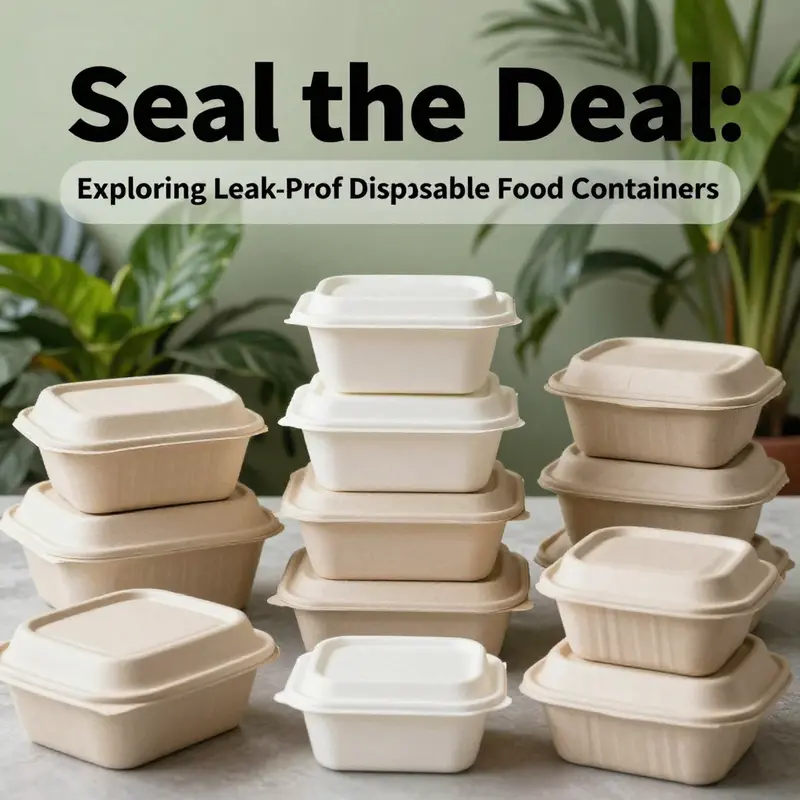
The demand for leak-proof disposable food containers has grown in step with the shift toward convenient, hygienic, and reliable meal delivery, catering, and takeout services. Yet as operations scale, so does the responsibility to manage their environmental footprint. This chapter investigates sustainability considerations for leak-proof containers, weaving together material choices, end of life pathways, and the practical realities of how these products are used, disposed of, and repurposed in a real world system. It aims to show not only why certain materials perform well under the pressures of transport and heat, but also how those same materials behave when the product reaches its final destination, whether that be a home kitchen, a community composting facility, or a regional recycling stream. The central tension is clear: the same features that ensure food remains intact and safe during transit offer rigid walls, secure seals, moisture barriers, and insulative properties often create complexities at the end of life. Solving that tension requires a nuanced understanding of materials, processes, and consumer behavior, all aligned with a growing body of standards and certifications that steer industry practice toward more sustainable outcomes.
Material composition lies at the heart of sustainability considerations for leak-proof containers. Among the options, paper-based containers with a protective inner layer such as a polyethylene lining represent a compelling case for greener performance. Paper is renewable by its nature, and when paired with a lining that prevents grease and moisture from penetrating the paper structure, these containers can be both functional and relatively gentle on the environment, provided they are disposed of in facilities equipped to handle industrial composting. In theory, this pairing can yield a product that decomposes into organic material rather than lingering in a landfill. In practice, though, the reality is more complex. The polyethylene lining, while effective at blocking leaks, can complicate both recycling and composting streams. The challenge arises because the lining is often not easily separable from the paper structure, and if mixed with traditional recycling streams, it may contaminate other materials or degrade process efficiency. This subtle barrier to separation means that compostability and recyclability are not guaranteed purely by the base material; the end of life depends on local infrastructure, the presence of industrial composting facilities, and the consumer’s disposal habits. For organizations seeking to balance performance with sustainability, this nuance matters. It suggests a direction where the focus shifts toward certifications and materials designed with easier end of life in mind, such as minimal or biodegradable linings that can be composted along with the paper without compromising the integrity of the recycling stream elsewhere.
Another option gaining attention is the use of recyclable plastics such as polypropylene for leak-proof designs. Polypropylene offers durability, heat resistance, and the ability to form secure seals that keep soups, sauces, and other liquids contained during distribution. When designed for recyclability, PP-based containers can be integrated into local recycling streams, potentially reducing waste if the facilities exist and if consumer contamination is minimized. The tradeoffs here are both environmental and logistical. Plastics, while highly functional, rely on recycling rates that vary widely by region. Contamination from leftover food, grease, or other packaging can hinder recycling efficiency, and not all communities recover PP with equal effectiveness. In addition, the end of life for plastics often lands in a landfill or energy recovery stream if recycling options are limited or if the economic balance does not favor recycling, even when technically feasible. This reality underlines the need for robust post-consumer waste management and consumer education around proper preparation for recycling, such as rinsing containers and removing residual contents when possible.
The conversation is further enriched by considering foam alternatives, particularly expanded polystyrene EPS, noted for its superior thermal insulation. EPS excels at maintaining temperature during transit, making it attractive for hot meals, cold dishes, or beverages where thermal stability is critical. However, EPS poses well-documented environmental challenges. It is persistent in ecosystems, often difficult to recycle, and its breakdown can contribute to microplastic pollution. These environmental realities have driven a push away from EPS in many regions, or toward its careful management through specialized takeback programs. The sustainability calculus therefore becomes a question of context: in settings where industrial composting is unavailable and recycling streams for plastics are not capable of handling EPS, the product may still incur an environmental cost that outweighs its thermodynamic benefits. The decision becomes not simply about performance in isolation but about how the container aligns with the local waste management landscape and broader circular economy goals.
In translating material choices into sustainable practice, transportation and customization emerge as meaningful levers. Paper-based containers, by their lighter weight, contribute to reduced transport emissions compared with heavier plastic or foam alternatives. Fewer ton-miles, less fuel consumption, and lower greenhouse gas emissions are measurable advantages that accumulate across large orders from catering operations to multi-site food service chains. This advantage is compounded when manufacturers offer eco-friendly printing options that avoid solvent-heavy inks or energy-intensive production processes. Branding, after all, remains a critical element of foodservice packaging, and sustainable design there means retaining visibility and consumer appeal while minimizing environmental impact. This is where the intersection of sustainability and business strategy becomes particularly salient. A container must not only perform reliably but also project a brand commitment to the planet through responsible materials and responsible production practices. In this way, eco-friendly design choices can become a differentiator that supports both customer satisfaction and corporate sustainability goals.
Disposal guidelines are the practical hinge on which theory becomes real world impact. Consumers and businesses must understand the actual pathways available in their locale. When industrial composting is accessible, compostable paper-based containers with biodegradable linings can be a powerful choice. They offer a credible route to returning organic material to the soil, provided the material is processed under the temperature and microbial conditions required by the composting facility. Without access to industrial composting, even products labeled compostable can contribute to waste streams that persist in landfills. This point underscores the importance of context and system design. Packaging should be matched to disposal infrastructure, with clear labeling that informs users about the intended end of life and the steps needed to achieve it. Clear guidance reduces the likelihood of contamination and helps maximize the value recovered from packaging materials. A related consideration is consumer behavior and education. Businesses can play a pivotal role by communicating disposal instructions at the point of use and by supporting programs that elevate composting or recycling participation among customers. When facilities and consumer practices align, the environmental benefits of sustainable packaging multiply.
A direct contrast to paper-based options is the EPS foam container, renowned for its insulating performance but widely criticized for environmental persistence. The environmental challenges of EPS are not merely theoretical: the material can fragment into microplastics, spread through waterways, and resist conventional recycling. This reality has shaped a broad shift away from EPS in many markets, accompanied by calls for alternatives that can deliver comparable thermal performance with fewer ecological downsides. Yet in achieving such a replacement, one must consider not only the material property but also the entire lifecycle. If a substitute reduces waste generation and improves end-of-life outcomes but increases energy use during production, the net effect may be neutral or unfavorable. Conversely, innovations in material science that yield compostable or recyclable insulating layers could provide a path to retain functional benefits while easing end-of-life management. In short, the sustainability assessment of leak-proof containers is a lifecycle exercise, from raw material extraction through manufacturing, use, and finally waste treatment.
Given these dynamics, recommendations crystallize around certified compostable alternatives and smarter packaging design. Certification programs and standards help operators distinguish materials that truly deliver end-of-life benefits, rather than relying solely on marketing claims. When possible, shifting toward paper-based options with minimal or biodegradable linings, such as those using PLA or other compostable barriers, offers a practical route to align performance with environmental objectives. The emphasis on certification is not about eliminating plastic or foam altogether, but about ensuring that the chosen materials align with the capabilities of local waste management and the stated environmental commitments of the brand. In practice, this means prioritizing products that carry transparent third-party verification, ensuring that compostability or recyclability claims are backed by credible standards and that facility infrastructure exists to support those claims. This is where external guidance and regulatory alignment become essential.
The discussion would be incomplete without anchoring it to standards and credible resources that guide decision making. The most accurate and up-to-date information on certification standards and disposal infrastructure comes from established agencies and industry bodies that map how packaging interacts with composting, recycling, and waste streams. For practitioners, this translates into a willingness to invest in materials research, supplier collaboration, and consumer education that collectively advance sustainability. It also invites a broader conversation about the market dynamics that influence container design, including demand for branding, the economics of waste processing, and public policy that promotes circular economy principles. For example, standards organizations provide benchmarks for what constitutes industrial compostability, what packaging may be accepted by recycling facilities, and how to label products to minimize contamination and misidentification at the end of life. These frameworks are not static; they evolve in response to emerging technologies and diverse regional waste infrastructures, reinforcing the need for ongoing assessment as packaging portfolios mature.
To bring these concepts into a concrete decision-making framework, consider the practical implications for different stakeholders. For foodservice operators, the choice of container material should reflect not only the product’s leak proofing and thermal resistance but also the available disposal options at customer locations and the efficiency of waste streams in their community. Suppliers can add value by providing materials with clear end-of-life instructions, certifications, and traceability, along with options for bulk purchasing that minimize environmental impact through optimized shipping and weight. Buyers should demand transparent documentation on lifecycle performance, including energy and water use in manufacturing, the potential for recycling or composting in their markets, and the presence of any renewable content in the packaging. Consumers, too, play a crucial role. Proper disposal, pre-sort education, and participation in local composting schemes can greatly influence the realized environmental benefits of any packaging choice. When these actors work in concert, the result is a packaging ecosystem that favors not just leak resistance and food safety but also a more responsible, circular approach to packaging waste.
For readers seeking a direct, actionable path, the following ideas emerge from the synthesis of material options, lifecycle thinking, and practical constraints. First, prioritize paper-based options with environmentally friendlier linings and robust compostability credentials where industrial composting capacity exists. Second, when plastics are used, design for recyclability and minimize the presence of barrier layers that hinder material separation. Third, actively engage with local waste management authorities to confirm which streams they support and why certain materials may or may not be accepted. Fourth, invest in consumer education that clarifies disposal expectations and the reasons behind them. Finally, monitor evolving standards and certifications and be prepared to adapt packaging choices as infrastructure and policy evolve. These steps enable a company to move toward a packaging strategy that reduces environmental impact without sacrificing the core strengths of leak-proof containment that customers depend on.
In closing, sustainability in leak-proof disposable food containers is not a single-material debate but a systems challenge. It requires aligning material science with waste management realities and consumer behavior, guided by credible standards and ongoing improvement. While paper-based containers with optimized linings show promise for compostable end-of-life pathways, the full value of any packaging solution is realized only when the system in which it operates supports effective separation, collection, and processing. As facilities expand and policy evolves, the industry can progressively shift toward materials and designs that keep food safe and predictable during transit while ensuring that the planet is not left with burdens in its wake. For readers who wish to explore standards and certification details further, credible external guidance is available from established bodies that map composting and recycling expectations for packaging materials, including those that address industrial composting prerequisites and performance criteria. See the standards resource for foundational guidance on compostability and disposal infrastructure: https://www.compostingcouncil.org/standards/. For practical examples of packaging that align with these sustainability goals, consider exploring the concept and options described at the internal resource https://ecocupbowl.com/product/eco-friendly-takeout-boxes-for-food-packaging-stylish-food-containers-safe-microwave-craft-paper-lunch-boxes-leak-grease-resistant/, which illustrates how design choices can harmonize performance with environmental responsibility without compromising brand presence or efficiency in delivery workflows.
Leak-Proof Promise: Market Currents and Economic Impacts in a Delivery-Driven Packaging Era
The demand for leak-proof disposable food containers has moved from a convenient afterthought to a central plank of modern food service, catering, and last-mile delivery operations. In dense urban landscapes and rapidly expanding suburban corridors, households and workplaces alike expect meals to travel with dignity—from steam to doorstep—without a hint of chaos. The ecosystem surrounding these containers now disciplines every link in the chain: from raw material selection and manufacturing efficiency to regulatory alignment, sustainability commitments, and the sensory experience customers associate with a brand. The result is a market that not only sells a product but also promises reliability, hygiene, and speed in a world where time is a tightly priced resource. In this context, leak-proof design is not merely a feature but a competitive differentiator that translates into reduced waste, lower liability, and stronger customer loyalty across food service, retail, and e-commerce channels alike.
Final thoughts
Leak-proof disposable food containers are more than just a convenience; they are crucial for maintaining food quality and meeting consumer expectations. As the demand for quality and sustainability rises, understanding the material composition, applications, and market trends surrounding these containers empowers food service operators to make informed choices. Selecting the right packaging not only enhances efficiency but also aligns with eco-conscious business practices, paving the way for success in a competitive market.