
In the bustling world of food service, the efficiency of operations is paramount. However, the potential health risks tied to reusing plastic food containers can undermine this goal. For businesses involving bubble tea shops, restaurants, food trucks, catering services, and event planners, understanding the implications of plastic reuse is crucial not only for food safety but also for customer health. This article delves into the significant risks associated with the reuse of plastic containers, highlights which plastics are safer, outlines critical safety guidelines, discusses the health implications, and suggests the best practices and alternatives for responsible food storage. Together, these insights will empower your business to make informed decisions, ensuring both safety and satisfaction in every service.
When Reuse Turns Risk: The Core Hazards of Plastic Food Containers
Reusing plastic food containers often feels like a smart, budget-friendly choice. It promises reduction in waste and a lighter footprint on the wallet. Yet the very act of reusing these vessels, especially under common kitchen conditions, can unlock a set of hazards that accumulate with heat, time, and wear. This chapter threads together the core risks—chemical leaching, microplastic shedding, bacterial buildup, and structural failure—into a single, coherent picture of how reuse can undermine safety just as it sometimes saves resources. Understanding these dynamics is essential not only for individual health but also for making informed choices about how to store and transport food in the long term.
Chemical leaching is the central concern most people encounter first. Plastics are not mere inert cages for food; they are layered with additives: plasticizers like phthalates, stabilizers, and bisphenols such as BPA and its substitutes. These substances are designed to impart flexibility, durability, and color, but they can migrate from the plastic into food—especially when heat is involved, when containers hold acidic ingredients like tomato sauce or citrus, or when fats and oils are present. The process is gradual and cumulative. Over time, repeated use and aging can increase how readily these chemicals seep into what you eat or drink. The health implications that accompany chronic low-level exposure—endocrine disruption, reproductive issues, and metabolic effects—are the core reason many experts advise caution with reused plastic containers. These concerns are not purely hypothetical: the material science behind leaching has long been recognized, and they are reinforced by contemporary research showing that wear and heat escalate the transfer of potentially harmful substances.
A closely related hazard is microplastic contamination. Every wash, every reuse, and every exposure to heat can cause the polymer to shed tiny fragments. Scratches, micro-grooves, and microcracks act as tiny weathering portholes through which plastic particles can detach. Even when a container looks clean, the surface may release microscopic and even nanoscopic particles that escape into food and drink. The literature underscores how physical stresses—such as dishwasher cycles, aggressive scrubbing, or tracking wear over months and years—accelerate the disintegration of the polymer. A notable 2020 study published in Environmental Science & Technology highlighted that repetitive washing could increase microplastic shedding by as much as 400 percent in visibly damaged containers. While the exact health implications of these microplastics are still under study, the potential for ingestion and bodily accumulation makes them a compelling reason to limit reuse or to switch to safer storage options as wear becomes evident.
Bacterial buildup serves as a quieter but persistent risk that often goes overlooked. Scratches, grooves, and the textured surface created by everyday use form ideal havens for microbes. Even after washing, these nooks can harbor bacteria and biofilms that resist standard cleaning. The problem intensifies with imperfect seals, warped lids, and containers that have absorbed moisture in hidden crevices. Food residues trapped in scratches can become a constant source of contamination, making reliable disinfection difficult. In practical terms, this means that a container may look and smell acceptable, yet still pose a food safety hazard because bacteria can lurk beneath the surface where routine cleaning fails to reach them.
Structural degradation accompanies all four hazards as reuse goes on. Repeated handling and thermal cycling—opening and closing, stacking, and exposure to hot or cold foods—gradually erode the container’s integrity. Darkening, cloudiness, warping, and weakening seams signal that the material is breaking down. When the container loses rigidity or the lid cannot seal properly, storage becomes unreliable and spill risks rise. The degradation is not merely cosmetic; it translates into diminished barrier performance. The container may no longer shield food from air, moisture, or contaminants, which accelerates spoilage and further complicates safe reuse.
Not all plastics carry the same risk profile, and a practical map of safer and riskier options emerges when you understand the resin codes inside the familiar recycling triangle. Among the common types, polypropylene—coded as #5—stands out as the most commonly recommended material for reusable food containers. It offers higher heat resistance, withstanding temperatures up to about 130°C (266°F), which makes it more suitable for microwave use if the entire container is labeled for it. A crucial caveat: ensure that both the body and the lid are PP. In many cases, lids end up made from a different plastic, often #1 PET, which does not tolerate high heat and may promote leaching when heated. This mismatch is a frequent hidden pitfall in households that reuse containers for hot foods or those moved between fridge and microwave.
Other codes have their own limitations. #2 HDPE is generally considered safe and durable and is used in milk jugs and detergent bottles, but it is not typically employed for food storage containers in the way PP is, and its reuse for food storage isn’t routinely recommended. #4 LDPE is considered safe but is not ideal for long-term food storage or high-heat scenarios. And #1 PET, used in most single-use beverage bottles, is not a container material worth reusing for foods or hot liquids; it is more prone to degradation and the leaching of substances like metals and other byproducts. The takeaway is not a blanket ban on all plastics but a nuanced use: some plastics can be reused safely under strict conditions, while others should be retired after a single use or replaced with safer options altogether.
Guidance for safer reuse, then, centers on restraint and discernment. The most practical rule is to avoid exposing plastic containers to heat. Never rely on a container’s claim of microwave compatibility as a blanket safety guarantee; the safest approach is to reheat food in a separate, clearly labeled vessel—preferably glass or ceramic—rather than in the original plastic. Dishwasher use is similarly problematic; the combination of high heat and aggressive detergents can hasten surface degradation and compound leaching. Hand washing with mild, neutral soap is preferred. Abrasive pads and harsh cleaners should be avoided because they scratch, scuff, and texture the surface, increasing both chemical migration and microbial hiding places. When a container shows signs of wear—scratches, cloudiness, warping, or a persistent odor—dispose of it promptly. The moment a container feels slick, sticky, or unusual to the touch, or if the color has changed in a way that suggests polymer breakdown, it should go to the recycling stream rather than back into the kitchen.
There is also a historical safety note worth recalling. Even if a container appears to be in good condition, older plastics may harbor substances like BPA from earlier manufacturing generations. Containers predating widespread reformulations are more likely to carry such residues, and continuing to reuse them can introduce cumulative exposure over years. A cautious approach is to retire older containers from use altogether, especially those manufactured before 2010, and to adopt newer, clearly labeled options when possible.
What does this mean for everyday decision making? It means recognizing that reuse is not inherently safe or unsafe; its safety hinges on material, design, wear, and how the container is handled. If reuse is pursued, prioritize #5 polypropylene containers that are explicitly designed for multiple uses, and verify that the entire system—the container and the lid—is PP. Avoid reusing takeout containers that are often made from other plastics and not designed for repeated use. If you must reuse plastic, handle it gently: wash by hand with mild soap, dry thoroughly, and store food in non-acidic, non-fatty contexts that gently cool before refrigerating. When signs of wear appear, swap in glass, stainless steel, or ceramic alternatives that resist heat and chemical interactions more effectively.
For households aiming to reduce waste without compromising safety, a practical path forward is to integrate safer reuse with a broader shift toward durable, long-lasting options. This can include investing in glass or stainless steel for daily storage, and reserving plastic for non-heat applications or short-term use only. Additionally, selecting packaging that is explicitly designed for reuse and that carries clear safety labeling helps maintain consistent performance over time. A single lifestyle adjustment—choosing safer plastics when reuse is unavoidable, and embracing non-plastic options for hot or acidic foods—can meaningfully reduce cumulative exposure and the chance of microplastic ingestion.
If the goal is to curb overall waste while preserving safety, consider alternatives to plastic for takeout and meal preparation that retain the convenience without the health trade-offs. For example, many vendors now offer reusable, washable containers or packaging made from materials optimized for reuse and heat resistance. See this option eco-friendly takeout boxes for food packaging as a reference for an approach that reduces reliance on disposable plastics while still supporting practical food storage and transport. While such options are not universally available in every setting, they illustrate a broader adoption path that aligns with both environmental and health considerations.
In moving through these decisions, it helps to anchor choices in a risk-aware framework rather than one that emphasizes savings alone. The core risks—leaching of additives, microplastic shedding, bacterial colonization, and structural failure—do not vanish with a single change in packaging. They shift in weight depending on the material and usage pattern. The safest overarching stance is to minimize long-term reuse of containers not designed for it, favor materials that tolerate repeated use, and seek alternatives when heat or acidity is likely. By coupling careful material selection with mindful handling, you can reduce exposure while still benefiting from the convenience and lower waste that come with reuse. And by keeping the dialogue open about packaging choices, you contribute to a broader culture that values safety as much as sustainability.
External resource: https://www.niehs.nih.gov/health/topics/agents/plastics/index.cfm
Safer Plastics for Reuse: Navigating Health, Hygiene, and Practical Choices When Reusing Food Containers
The question of whether you can reuse plastic food containers is a practical one, wrapped in a web of health concerns, environmental considerations, and everyday routines. For many households, reusing containers feels like a sensible way to cut waste and stretch budgets. Yet the science behind what happens when plastic meets food—especially after heat, acidity, or repeated washing—paints a more cautious picture. The core message is not simply “no” or “yes,” but rather a nuanced landscape of materials, conditions, and vigilance. When you move through that landscape, you begin to see why some plastics are greeted as safer options for reuse, while others are best left for single-use or discarded altogether. The aim in this chapter is to connect the dots between the resin codes at the bottom of containers, the way plastics behave under real-world conditions, and the everyday choices that can minimize risk without demanding a classroom of specialized equipment. The guidance is practical, grounded in widely accepted safety principles, and designed to help readers move through decisions with clarity rather than fear.
Health consequences loom whenever plastics and food are stored together, especially when heat, acidic content, or lengthy storage come into play. Plastics are not inert; they contain additives—phthalates and bisphenols—that help shape their softness, durability, and appearance. When containers are heated or come into contact with fatty or acidic foods, these additives can migrate into the food. Over time, repeated exposure is linked to endocrine disruption and other health issues. A less intuitive risk lies in the physical wear of the container itself. Scratches and micro-grooves act like tiny reservoirs for bacteria and can accelerate material breakdown, increasing the potential for chemical leaching and the release of microplastic particles. Each wash, each rise in temperature, each drop in storage time can contribute to a cumulative effect that might surprise people who assume that reuse is inherently harmless simply by virtue of being reused.
To understand safety in practice, the resin identification code—those numbers nestled in a triangle on the container’s bottom—becomes a practical guide. HDPE, labeled as #2, and PP, labeled as #5, stand out as materials commonly considered safer for reuse. HDPE is known for durability and chemical resistance, and PP is prized for its ability to tolerate higher heat, making it suitable for some microwave use when the container is explicitly labeled for it. Importantly, the entire container must be PP for those heat-tolerance claims to hold, including lids. In contrast, PET, coded as #1, is widely used for single-use beverage bottles and is generally not recommended for reuse in contact with food or hot liquids. It can shed chemicals, especially under heat, and its structural integrity often declines with repeated use. Polystyrene, coded #6, is another material commonly found in disposable takeout containers; it is not designed for long-term reuse and can degrade more readily when subjected to heat or rough handling. The practical takeaway is straightforward: if you want to reuse plastics, aim for containers made from HDPE (#2) or PP (#5) that are explicitly labeled for reuse, and be mindful of the entire package, including its lid, which can be made from a different plastic that does not share the same safety profile.
Yet even with the safer codes, the environment inside a kitchen matters. Heat from a microwave or dishwasher can dramatically accelerate plastic breakdown and increase chemical migration. If a container is claimed to be microwave-safe, it is not a blanket guarantee that it will prevent chemical leaching during heating. For that reason, many health experts advise a cautious approach: avoid microwaving plastic containers altogether when possible, and never rely on a single factor such as a “microwave-safe” label to determine safety. Hand washing is typically recommended to limit wear; mild soap and warm water, with gentle handling to avoid scratches, helps safeguard both the container and the food it touches. Abrasive scrubbers should be avoided, and containers should be discarded at the first sign of cloudiness, scratches, deep grooves, warping, or persistent odors. For long-term reuse planning, it is prudent to discard older plastics, particularly those manufactured before 2010 when BPA-containing formulations were more common. These practices reduce the cumulative exposure to leachants and limit microplastic shedding that can accompany repeated use.
The phenomenon of microplastics adds another layer to the risk calculation. Every cycle of washing, heating, and regular use can release microscopic and even nanoscopic plastic fragments from the container. While the precise health implications of incidental microplastic ingestion are still the subject of ongoing research, the presence of microplastics in food and water is increasingly documented. Repeated reuse cycles, especially with damaged or degraded containers, can increase microplastic exposure beyond what you would expect from a single-use scenario. The broader implication is that reuse is not a risk-free vector for safety; it is a measured trade-off that requires ongoing vigilance about the container’s condition and the storage conditions.
In practical terms, the safer path for most people is to reduce dependence on plastic for long-term food storage. If reuse remains part of your workflow, set a conservative rule: prioritize containers designed for reuse, specifically labeled for that purpose; avoid heating or storing highly acidic or fatty foods in plastic; and replace containers the moment you notice signs of wear. This may translate into choosing glass, stainless steel, or ceramic alternatives for hot foods, liquids, and long storage, while reserving plastic for short-term, cool storage of non-acidic items. The simple act of reserving dedicated roles within your kitchen—plastics for cold, non-acidic foods and non-plastic alternatives for hot or acidic items—can markedly reduce risk without collapsing the benefits of a thoughtful reuse habit.
From a policy and guidance standpoint, authoritative recommendations reinforce this careful approach. Safety codes and guidelines emphasize that while some plastics can be reused under controlled conditions, there is no universal green light for long-term reuse across all containers. The safest approach is to seek packages that are explicitly designed for reuse, clearly labeled with the appropriate resin code, and accompanied by care instructions that align with your daily routines. A practical cue for consumers is to check not just the main container but also the lid, frequently manufactured from a different material. Lids made from a different resin may have different heat tolerances and aging patterns, which can undermine the container’s overall safety profile if reused too aggressively.
To connect this knowledge to real-world choices, consider how packaging options appear within households and how a shift in material choices can reshape daily habits. For readers seeking practical options beyond traditional plastics, some reusable packaging options are available that align with safer reuse. For example, you can explore specific packaging designs that emphasize durable materials and clear usage instructions. For readers interested in tangible product examples, see the Pure Color Foldable Cake Boxes with Window, which illustrate how packaging can combine durability with thoughtful design. Pure Color Foldable Cake Boxes with Window. These types of designs demonstrate how thoughtful construction can reduce the need to replace containers frequently while still supporting a broad range of storage needs.
Of course, not all packaging options fall neatly into the reusable category. Many commonly used, one-off containers—especially those made from PET (#1) or PS (#6)—are intended for short-term use. Reusing them risks enhancing chemical migration and physical degradation, particularly when reused for food storage or heated in microwaves or dishwashers. The broader takeaway is that the resin code matters, but so does the context in which the container is used. A container that is technically reusable but used in high-heat or high-acidity contexts, or subjected to frequent rough handling, may become unsuitable far sooner than expected. Consumers who adopt a cautious approach can mitigate risk by adopting a simple heuristic: treat HDPE (#2) and PP (#5) as the safer lanes for reuse, but always inspect for wear, avoid heating, and replace the container promptly when signs of deterioration appear.
Ultimately, the goal is to align daily practices with safety considerations without surrendering the benefits of reusing food containers. If you choose to reuse plastics, adopt a regimen that emphasizes use constraints, thorough cleaning, and timely replacement. When in doubt, the most reliable approach is to transition to non-plastic alternatives for hot, oily, or acidic items and reserve plastic for cold, non-acidic storage in the short term. In terms of long-term storage and safety, glass, stainless steel, or ceramic containers are preferred, particularly for hot foods and for households with small children or individuals with heightened sensitivity to chemical exposure. The practical world of reuse is not a strict rulebook but a set of best practices that evolve with better science, improved materials, and a public that remains informed and cautious.
External resource: FDA guidance on food-contact materials can be explored for authoritative standards and current safety considerations at https://www.fda.gov/food/food-contact-materials-ingredients. This reference complements the everyday choices discussed here and provides a broader regulatory context for readers seeking to understand the safeguards behind the materials we entrust with our meals.
Guardrails for Reuse: A Critical Safety Guide for Plastic Food Containers
Reusing plastic food containers can feel like a straightforward way to cut waste and stretch a few dollars, but health science demands a more careful approach. The same habits that help reduce clutter and consumption can also quietly raise risks if we overlook how plastics behave when exposed to heat, acidic or fatty foods, and time. A unified picture emerges from research and regulatory guidance: reuse is not inherently dangerous, but it is bounded by the type of plastic, its condition, and how it is used. Without those guardrails in mind, the practice can shift from frugal to risky, turning a perceived safeguard into a health hazard.
At the core of the safety conversation are two mechanisms that make repeated use problematic. First, chemical leaching. Plastics carry additives—plasticizers that loosen up the polymer matrix and stabilizers that keep colors and textures intact. Among these are substances like phthalates and bisphenols such as BPA. When containers encounter heat, acidic foods like vinegar or tomato sauce, fatty oils, or simply long storage, these chemicals can migrate into food. Even low levels multiply in risk when exposure is persistent over months or years, and the endocrine-disrupting potential of some additives has been a central concern for reproductive health and metabolism. Second, microplastic contamination. Every wash, every scrape, and every rise in temperature can shed microparticles from the container’s surface. These particles may find their way into food or drink and, over time, accumulate in the body. The picture becomes more acute with single-use plastics that people reuse repeatedly, as the physical stresses of washing and reheating accelerate fragmentation. Scratches, cloudiness, and odor changes are not cosmetic flaws; they are signs that the material is breaking down and losing its barrier properties.
To navigate reuse wisely, the resin code on the container matters. The resin identification code (the number inside the recycling triangle) is not just bureaucratic shorthand; it points to how a plastic will likely behave under typical kitchen conditions. Code 2, HDPE, is often cited as the most robust among commonly encountered food-contact plastics. It resists heat, chemicals, and cracking better than many alternatives, and it is abundant in items like milk jugs and some takeout tubs. Yet even HDPE is not a universal permit for long-term reuse in all foods or all temperatures, and its presence in some packaging does not automatically justify repeated use for meals stored and heated at home. Code 5, PP, stands out as the most commonly recommended plastic for reusable containers. Polypropylene offers higher heat resistance—up to about 130°C (266°F)—and is frequently labeled for microwave use when the container is specifically marked as microwave-safe. The critical caveat is that the entire vessel, including the lid, must be PP. In practice, many lids are made from different plastics, sometimes PET, which cannot withstand high heat and thus undermines the intended safety.
Other codes tell a very different story. Code 1, PET, which is widespread in most single-use beverage bottles, should be avoided for reuse. Its structural integrity degrades with washing and heat, and it can release metals like antimony and solvents like ethylene glycol under stress. Code 3 (PVC), Code 6 (PS), and Code 7 (Other) are generally discouraged for repeated food contact because of chemical leaching, brittleness, or uncertain formulations. These guidelines do not merely occupy theoretical space; they map onto everyday decisions about what to reuse, how to wash, and what to heat. The practical implication is straightforward: if you must reuse a container, prioritize materials with a better-established record for multiple-use scenarios and be vigilant about the container’s condition.
Yet safety is not a matter of a single rule but of a lifecycle. Even plastics deemed relatively safe can degrade over time. A container that once served for snacks might become porous after months of use, coatings can wear thin, and the risk of bacterial intrusion through micro-abrasions rises. The visual cues—cloudiness, discoloration, scratches, warping, or a persistent off-odor—are not mere annoyances. They signal a breakdown in the material’s integrity. When such signs appear, discard should follow promptly. This is especially important for older containers, including those manufactured before 2010, when some packaging formulations included substances later restricted or reformulated due to health concerns.
The guidelines for reuse can be summarized into a practical posture: check first, treat heat with caution, and respect the wear in the container. Before each reuse, inspect for signs of damage. Cloudiness and discoloration reflect surface breakdown that can shelter microbes could be harbored in grooves or pits. Scratches and deeper cracks create niches where bacteria can hide, and warped lids compromise seals that protect contents from air and contaminants. If the lid no longer fits well, or if the container has persistent odors after washing, it is time to retire it.
Cleaning practices matter as much as the container’s composition. Gentle washing is essential. Use warm water with mild soap and a soft sponge, and avoid abrasive scrubbers that scratch the surface. Harsh cleaning agents or aggressive scouring accelerate the shedding of microplastics and can worsen the leaching potential by exposing fresh polymer surfaces. High-heat dishwashers and microwaves amplify risk. Even containers labeled microwave-safe should be treated with caution; the safest option is to avoid heating plastic altogether when possible, particularly for containers not explicitly designed for such use. Hand washing remains the default approach for most reuse scenarios, especially for containers that might not be uniformly PP throughout the vessel.
Acidic, fatty, or alcoholic foods require extra care. Acids and oils can accelerate the breakdown of polymer chains, increasing the likelihood of chemical migration. Fatty residues cling to surfaces and may wick into micro-scratches, presenting a persistent exposure pathway. Prolonged storage compounds the hazard: a container might seem clean after a rinse, but residual chemicals could accumulate in the micro-cracks over time. When in doubt about the intended use, err on the side of shorter reuse cycles and more frequent replacement.
If reuse is a rule rather than an exception in your kitchen, the most prudent option is to rely on materials designed for repeated use and to limit the length of that reuse. Polypropylene containers that are explicitly labeled as reusable and microwave-safe are among the more defensible choices. Ensure the entire container, not just the body, is PP. Also, be mindful that many lids may be made from a different plastic that cannot handle heat. A practical habit is to reserve these containers for non-heated, non-acidic foods, and to retire them once you notice any signs of wear, or if they have been in rotation for an extended period.
Beyond the specific plastics, there is a broader cultural question about reuse: when we choose plastic, we are choosing trade-offs between convenience, cost, and potential health risks. The safer long-term path emphasizes minimizing plastic exposure for foods and opting for materials with inert properties and durable performance under varied conditions. If you must reuse, consider switching to safer, non-plastic options for daily meals—glass for liquids, stainless steel for hot foods, or silicone for flexible storage needs. For a practical alternative path, explore packaging options that prioritize safety and sustainability. For example, there are safer, paper-based takeout containers and reusable alternatives that blend convenience with lower chemical risk. See a representative option here: eco-friendly takeout boxes for food packaging.
This approach does not reject reuse entirely; it reframes it with risk awareness. If you plan to reuse, choose containers that are specifically designed for multiple uses, verify the entire vessel is the recommended plastic (not just a portion of it), adhere to gentle washing, avoid microwaving or high-heat exposure unless the product is labeled for it, and retire the container at the first sign of damage. In short, reuse should be a thoughtful practice, guided by material identity, physical integrity, and appropriate cleaning and heating practices.
For readers who want authoritative guidance to anchor these decisions, regulatory resources provide a cornerstone of safety standards and recommendations. The U.S. Food and Drug Administration (FDA) maintains updated guidance on plastics and food contact materials, including safety considerations for reusable plastics and recommendations for consumer use. You can review official guidelines and current safety standards on the FDA Plastics and Food Contact page.
External resource: FDA Plastics and Food Contact. https://www.fda.gov/food/food-contact-materials/plastics-and-food-contact
The Hidden Costs of Reuse: Health Risks and Safer Practices for Plastic Food Containers
Every reuse carries a ledger of risk that rarely stays in plain view. The urge to save money or reduce waste meets the practical reality that plastic food containers are not endlessly resilient. When containers are reused beyond their design life, a cascade of health concerns can emerge, not all of them obvious at first glance. The core issue is that plastics are not inert. They are complex chemical matrices engineered to be lightweight, durable, and easy to mold. Those properties come with trade-offs that accumulate with repeated use, exposure to heat, and contact with challenging foods. Reading the risk correctly requires looking at three interwoven dimensions: chemical leaching, microplastic shedding, and physical degradation. Taken together, they help explain why the safest route is cautious reuse, or better yet, a timely replacement when wear shows itself.
Chemical leaching sits at the heart of the conversation about reuse. Many plastics contain additives such as bisphenols and plasticizers that impart strength, flexibility, and resilience. Even as manufacturers phase out certain compounds, substitutes commonly rise to take their place. BPA, once ubiquitous, has been replaced in many products by alternatives like BPS or BPF. Research consistently raises concerns that these substitutes can disrupt endocrine function, potentially affecting hormone signaling, reproductive health, and development. Phthalates, long used to adjust flexibility, have well-documented links to hormonal imbalances and measurable traces in human tissues. When a container holds heat, or when it encounters acidic or fatty foods, these chemicals are more likely to migrate into the food or drink it surrounds. The risk is not just about a single use; it is about cumulative exposure that grows with repeated cycles of heating, washing, and storage. Even if a container seems inert at first, the repeated thermal and chemical challenges of daily life can shift its chemistry enough to matter over time.
The second dimension, microplastic shedding, compounds the concern. Each washing, bending, or flexing of a plastic surface can release tiny fragments—microplastics and even nanoplastics—that may migrate into foods and beverages. While the full health implications of chronic microplastic ingestion remain an area of active study, the best available evidence signals a cautionary note: the more damaged the container, and the more it is used, the more microplastics can be released. A 2020 study in Environmental Science & Technology highlighted how repeated washing of visibly damaged plastic containers can dramatically increase microplastic release, sometimes by hundreds of percent. This is not merely a theoretical risk. Tiny particles can accompany foods and drinks through the digestive tract, and the long-term consequences of consistent ingestion are not fully understood, which makes avoidance a prudent choice for routine use.
A third layer concerns physical degradation. Reuse amplifies wear: scratches, cloudiness, warping, and even odors are not cosmetic flaws but signals of material breakdown. Scratches create microhabitats where residual moisture and food residues cling, forming a sanctuary for bacteria. The combination of moisture, organic material, and micro-cracks can undermine sanitation, making a once-clean container a potential harbor for microbial growth between uses. It is not just about what you can see. Tiny fissures and surface changes enable more rapid leaching and more rapid microplastic shedding as the material fatigues under daily cycles of heat and wash.
The practical upshot of these interlocking risks is nuanced but clear: reuse is safest when the container is purpose-built for multiple uses and is handled with strict care. Even so, the safest approach is to limit reuse to plastics that are explicitly designed for it and to avoid heating any plastic container unless it is certified for such use. Understanding resin codes helps illuminate safe choices. High-density polyethylene (#2, HDPE) is recognized as durable and relatively safe, but it is not commonly used for storage containers designed for repeated food contact, so reuse is not typically recommended for those items. Low-density polyethylene (#4, LDPE) is considered safer for some applications, yet it remains less ideal for long-term storage or high-heat scenarios. Polypropylene (#5, PP) emerges as the most commonly recommended resin for reusable containers because it has greater heat resistance and is suitable for microwave use when the container is labeled for it. The critical caveat is that the entire container, including the lid, should be PP. In many cases, lids are made from other materials, such as PET (#1), which do not withstand high heat and can complicate safe reuse.
A broader strategy, however, requires recognizing when reuse has crossed a line. If a container shows even faint signs of wear—cloudiness, chalky residue, scratches, warping, or a persistent, off-putting smell after washing—it should be retired. The temptation to mask wear with dish soap and hot water can backfire, accelerating degradation and chemical release. The safest option, for many households, is to switch to alternatives that handle heating and storage more reliably. Glass, stainless steel, and ceramic containers do not shed microplastics in the same way and generally tolerate repeated use without the same aging concerns. They offer reassurance for both storage and reheating, with fewer questions about chemical migration, especially when it comes to acidic or fatty foods.
Yet the shift to safer alternatives is not a binary choice between plastic and something sturdier. It requires thoughtful choices about how you store, reheat, and wash your food. If plastic remains part of the plan, it should be a well-considered one. Choose PP-based containers that are specifically marked as reusable and microwave-safe, and be meticulous about checking every component, including lids. Never assume that a “microwave-safe” label implies indefinite safety, because heat exposure over time changes material properties in ways that stretch the original safety margins. Hand washing is essential; a mild soap and warm water regimen helps preserve the surface integrity of the plastic and reduces the likelihood of scratching or residual residues that harbor bacteria. Harsh scrubbing pads, abrasive cleaners, or aggressive dishwashing cycles are all counterproductive, and they accelerate the wear process that can release more microplastics and chemicals.
The ethics of reuse also matter. The drive to reuse is often framed as an eco-friendly choice, and rightly so when done with care. But reusing containers that were not designed for long-term use can paradoxically increase environmental and health risks. The safer path emphasizes design for reuse—containers that are built to endure, with clear markings about heat and lifecycle—and a discipline around retirement when signs of wear appear. In practice, this means embracing safer materials for primary storage and reserving plastic for situations where its limitations are understood and accepted.
To support this shift, a growing emphasis rests on practical packaging alternatives that align with health and sustainability goals. Durable, well-designed takeout options that are explicitly built for repeated use can reduce the need to repurpose single-use plastics. These options aim to deliver reliable performance under heat, moisture, and repeated handling, while minimizing chemical migration and microplastic shedding. For those looking to transition, there is value in exploring packaging designed for reuse rather than bending single-use plastics into a longer life. The goal is to reduce risk at every point of contact—from storage to reheating to cleaning.
For readers seeking practical pathways and concrete options, consider exploring safer, durable takeout packaging designed for repeated use. eco-friendly takeout boxes for food packaging. This approach foregrounds design quality and lifecycle thinking, reducing the chances of wear-induced leaching and microplastic release while supporting cleaner, easier cleaning and safer reheating options. Of course, any path forward benefits from staying informed about the science underpinning these materials. For a broader health perspective on how plastic additives affect human health, see the EPA resource on health effects of plastic chemicals: https://www.epa.gov/chemical-research/health-effects-of-plastic-chemicals. In tandem, households can develop a simple rule of thumb: reuse only when the container is clearly designed for it, limit heating with plastic, and retire containers at the first sign of wear. The combination of careful material choice and disciplined handling offers a practical, real-world route to safer food storage and less exposure to potentially harmful substances.
Smart Reuse and Safer Substitutes: A Practical Guide to Plastic Food Containers
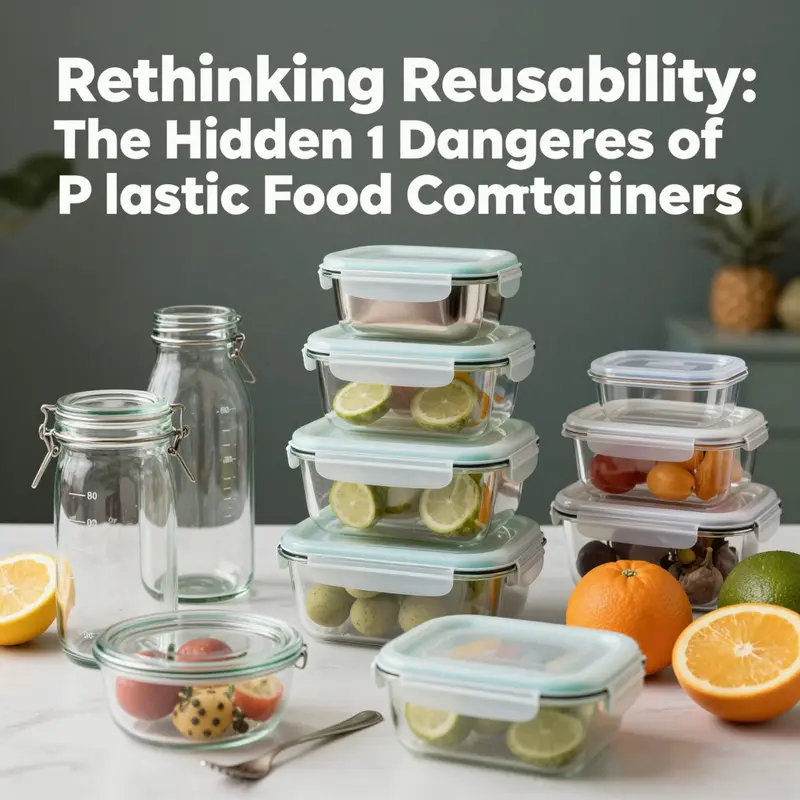
Reusing plastic food containers often feels like a sensible habit. It can cut waste, save money, and keep leftovers neatly organized. Yet the practice sits at a delicate intersection of practicality and health. The story of reuse isn’t just about whether a plastic item can be washed and squeezed back into the rotation. It hinges on what the plastic is made of, how it is used, and how long it survives in daily life. The best way to read this story is to move beyond simple reuse heuristics and examine the physics and chemistry of plastics in contact with food. When you tune into those details, a careful balance emerges: reuse can be acceptable, but only with the right materials, careful handling, and a willingness to retire containers at the first sign of wear or exposure to heat and acidity.
The core risks of reusing plastic containers start with the chemistry of the polymers and their additives. Many plastics used for single-use packaging contain additives that help with flexibility, durability, and clarity. Phthalates and bisphenols are two families of additives that have drawn heightened scrutiny. When a container encounters heat—whether from a microwave, dishwasher, or sunny kitchen window—or holds acidic or fatty foods, these chemicals can migrate into the food. Over long periods, repeated exposure to even small amounts of these substances has been linked to hormonal disruption and a range of health effects. It isn’t only about the chemicals in theory; real-world patterns show that real people experience measurable leaching when containers are used repeatedly, especially under heat or with fatty sauces and acidic liquids like citrus or tomato products. The risks accumulate not because a single use is catastrophic, but because repeated use compounds the potential for chemical migration.
Beyond chemistry, there is the issue of microplastics. Every wash, every knock against a countertop, every time a container flexes under heat, tiny particles can shed from the walls. These microplastic fragments can be ingested with meals, and the cumulative effect of long-term exposure remains a topic of ongoing study. The simplest way to think about it is this: the more you reuse, the more surface area interacts with food, and the more opportunities there are for microscopic fragments to come free. Research that has looked at repeated use in similarly styled single-use containers shows just how patient this process can be. It isn’t about dramatic contamination in a single moment; it’s about the steady, incremental release that accompanies long-term use and frequent washing.
Physical wear is the third dimension of risk. Scratches, cloudiness, warping, and odors are not cosmetic issues; they signal that the plastic’s barrier properties are diminishing. A scratched surface increases the overall surface area that can contact food and becomes a conduit for diffusion. A container that smells off after washing or shows a persistent cloudiness is a cue that the material is breaking down and should be retired. Damaged containers are more porous and less capable of preventing leaching, especially when they meet heat, oil, or acidic foods. A rule of thumb that resonates with most safety-conscious households is simple: when you see wear, retire the container rather than gamble with its safety.
That said, not all plastics pose the same level of risk, and not all reuse is equally ill-advised. The resin code, the number inside the recycling triangle on the bottom, is a practical shorthand for understanding what you’re dealing with. HDPE, coded as #2, is often praised for its durability and chemical stability. It is common in milk jugs and detergent bottles and is considered safer than many alternatives. However, the practical reality is more nuanced: #2 HDPE is rarely used for most food storage containers designed for long-term reuse, and even when you encounter it, the guidelines for reuse remain conservative. The upside is its relative resistance to cracking and chemical migration under mild conditions, but it isn’t a universal solution for every food scenario.
Polypropylene, coded as #5, sits higher on the safety ladder for reusable food containers. It has a higher heat tolerance, making it suitable for microwave use if the product is explicitly labeled for such use and if the entire container, including the lid, is PP. This matters because many lids are made from a different plastic, sometimes #1 PET, which cannot withstand high heat. When you see a container advertised for reuse, a quick check of the lid material is worth the extra effort. Polypropylene’s combination of chemical stability and heat resistance makes it the most commonly recommended plastic for reusable food containers, provided the labeling aligns with safe reuse guidelines.
Low-density polyethylene, or LDPE (#4), is another safer option within the reuse ecosystem. It is generally considered safe and is used for squeeze bottles and some flexible packaging. Yet, for long-term food storage or high-heat exposure, it has limitations. It can wear more quickly than PP and may not seal as firmly after repeated cycles. The practical takeaway is not to demonize #4, but to treat it as a transitional option—useful for certain cold, non-fatty foods with careful handling, and avoid subjecting it to heat that could accelerate degradation.
One precautionary note is to avoid #1 PET (Polyethylene Terephthalate) for any reuse scenario that involves food contact, hot liquids, or oils. PET is the workhorse of single-use beverage bottles, and it degrades more readily under reuse conditions. If a container is PET-based, consider replacing it rather than reusing it for anything beyond its rare, first cycle. The migration of metals like antimony and other potential contaminants can be a concern when PET is exposed to heat and certain substances. In short, while PET can be convenient, it is not a reliable material for repeated food storage.
Guidelines for reuse are not just about what plastic you choose but how you treat it. The simplest protective practices begin with heat control. Do not microwave plastic containers unless they are clearly labeled as microwave-safe, and even then, avoid using containers that show signs of wear. The same logic applies to dishwashers. High heat and aggressive detergents accelerate the breakdown of plastics, diminishing their barrier properties and increasing the likelihood of leaching. Hand washing is the preferred method, using mild soap and warm water and avoiding abrasive scrubbers that can scratch the surface. Worn surfaces invite more rapid deterioration and should prompt retirement.
Another practical guideline is to inspect before each reuse. Look for scratches, cloudiness, warping, or a persistent odor after washing. Any of these signs should lead you to discard the container. Long-term storage considerations also matter. Even containers that appear fine can become a hazard if used to store acidic or fatty foods over extended periods. Tomato sauces, citrus juices, or rich curries can promote leaching over time, especially if the container has seen repeated cycles. And if a container predates modern safety testing—before 2010 or so—it may have contained BPA or related compounds that have since been restricted; older plastics carry a higher risk profile and are better retired.
If your aim is to minimize risk while still reusing some plastics, there is a narrow, safer corridor. Choose PP containers that are explicitly labeled for reuse and heat exposure, and ensure both the body and the lid are PP. Be mindful that many lids are made from different materials and can undermine safe reuse if subjected to heat. Even with PP, the philosophy should be to reuse for limited periods and with careful washing, avoiding prolonged contact with fatty or acidic foods, and never storing hot liquids for long durations. In practice, this means using PP containers for relatively simple cold storage tasks, like keeping sandwiches or salads, rather than for hot soups or oily dishes that linger in the container for hours.
For those who want to move beyond plastic altogether, safer and more sustainable alternatives exist. Glass is non-porous and inert, resisting leaching and readily recyclable. Stainless steel offers durability and non-toxicity, with excellent performance for cold and hot foods, though it isn’t microwave-friendly. Some silicone options are labeled as BPA-free and food-grade, combining flexibility with heat resistance. When considering these options, the goal is clear: minimize contact between food and any plastic where possible, or select plastics purpose-built for repeated use under safe conditions. If you must use plastic, make it count by choosing the safest available option and treating it with respect—retiring it at the first sign of wear and discarding it once its usefulness for safe storage has clearly ended.
The decision to reuse or to switch away from plastics also intersects with broader concerns about waste and resource use. Reuse, when practiced cautiously with appropriate materials, can reduce packaging waste. Yet the health risks, especially from heat and certain food types, tilt the balance toward safer storage practices. Across the health and environmental literature, the guidance remains consistent: prioritize glass, stainless steel, or high-quality silicone for reusable storage, and reserve plastics for short-term or limited-use scenarios with strict adherence to safety cues. If you choose to reuse plastic, pay attention to the resin code, the lid material, the presence of heat, and the type of food stored. Treat aging containers with respect; a worn container is a warning sign that safe reuse has likely ended.
As you navigate these choices, a practical pointer is to view packaging decisions as a spectrum rather than a binary choice. The safest stance is to minimize heat exposure and avoid storing highly acidic or fatty foods in older or damaged plastics. The resin code offers a quick check, but the most important signals come from the container itself—the feel of the surface, the presence of scratches, the scent after washing, and the absence of warping. The science supports a cautious approach: reuse can be safe for certain plastics under controlled conditions, but it is not a universal permission slip to reuse any plastic container indefinitely. A thoughtful balance—careful material choice, mindful handling, and timely retirement—offers the best path to safety and sustainability.
For readers seeking broader options beyond plastic, consider resources that discuss safer packaging materials and designs. eco-friendly-takeout-boxes-for-food-packaging-stylish-food-containers-safe-microwave-craft-paper-lunch-boxes-leak-grease-resistant. These examples illustrate how packaging innovations can align with health considerations while still meeting practical needs for storage and transport. And for official, evidence-based guidelines on plastic in food contact materials, the U.S. Food and Drug Administration provides a comprehensive overview and safety considerations at https://www.fda.gov/food/food-contact-materials-labeling/plastic-food-packaging-and-food-contact-materials.
Final thoughts
As food service professionals, prioritizing the safety of your customers should always be a top priority. While reusing plastic containers might appear practical and economical, the associated health risks are significant and can have long-lasting effects. By understanding the core risks, recognizing which plastics are safer, following critical safety guidelines, and considering all health implications, your business can choose the most responsible practices for food storage. Emphasizing safety does more than protect your customers; it fosters trust in your establishment. Transitioning to safe alternatives like glass or stainless steel containers can enhance food service standards while supporting sustainability efforts. Make informed choices for a healthier future in your food service operations.