
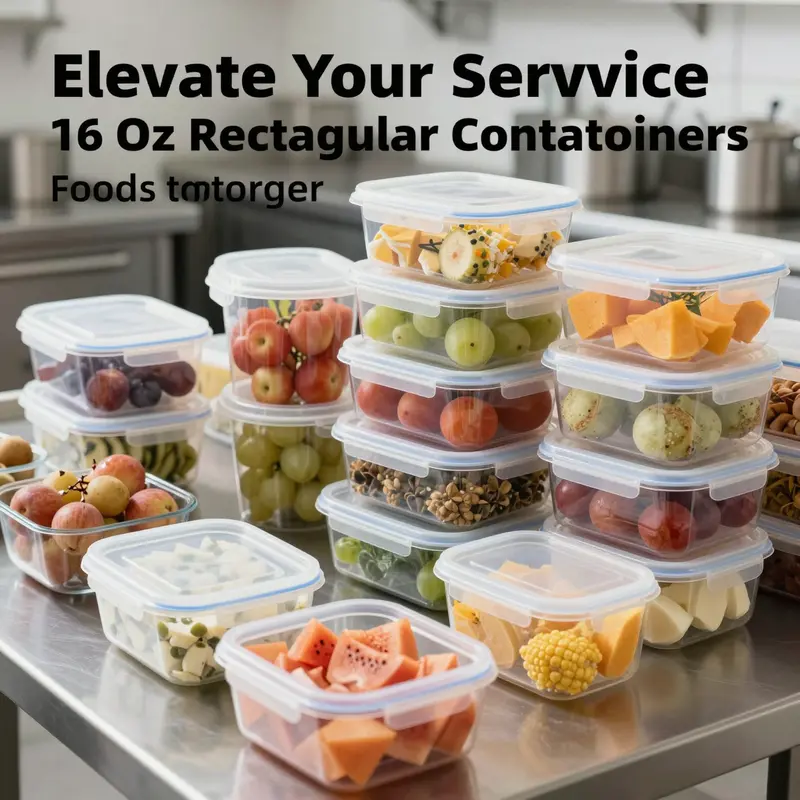
In the world of food service, efficient storage solutions are essential for maintaining quality and convenience. The 16 oz rectangular plastic food storage containers with lids are designed to meet these needs, offering exceptional durability and versatility for businesses like bubble tea shops, restaurants, and catering services. Each chapter will explore pivotal aspects—highlighting the unique features and advantages, showcasing the diverse applications in various food service contexts, and examining the best products available in the market. This comprehensive understanding will empower your business to make informed choices that drive success.
Rectangular Clarity, Secure Seals: Core Features and Benefits of 16-Ounce Rectangular Plastic Food Storage Containers with Lids
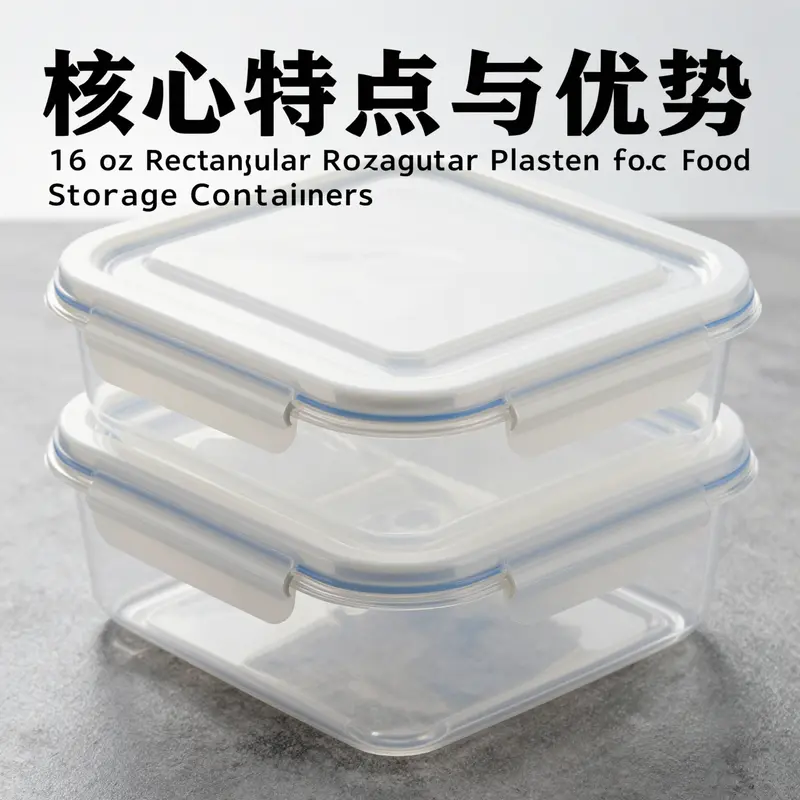
Rectangular clarity in kitchen storage is more than a matter of taste; it is a practical philosophy that shapes how we shop, prep, and share meals. The 16-ounce rectangle, a compact yet versatile size, anchors a system built around predictability, space efficiency, and reliable performance. In daily life, a container that holds roughly a single generous serving or a small batch of leftovers becomes a workhorse, reducing waste and easing routine tasks. When the container is rectangular, it does more than sit neatly on a shelf; it optimizes the geometry of domestic refrigeration and office coolers, letting you stack and align multiple units without wasted gaps. The combination of a standard 16-ounce capacity with a clean, rectangular silhouette translates into a simple principle: you gain more usable storage space with less clutter. As this chapter unfolds, the focus shifts from appearance to the core features that make these containers trustworthy partners in kitchens, cafeterias, and packaging workflows alike.
MATERIAL SAFETY: The value starts with what the container is made from. Across high-quality options, the material is typically food-grade polypropylene (PP), chosen for its balance of rigidity, chemical stability, and safety in direct contact with food. One key assurance is BPA-free construction, a standard that resonates with cautious consumers and health-conscious food service teams. Beyond safety labeling, the practical implications are clear: PP containers can survive the daily rhythms of kitchen life, from freezing to thawing and even gentle microwaving. In many households, microwave use is a common requirement, and the ability to reheat directly in the container saves steps. Yet, this is not a universal invitation to cook meals in plastic; guidelines usually recommend removing the lid or using vented instructions when microwaving to avoid pressure buildup. Freezer storage, refrigerator accommodation, and dishwasher compatibility complete the triad of versatility. In all cases, the certification and materials must be unambiguous: no harmful chemical migration, no off-odors, and no discoloration through repeated cycles.
TRANSPARENCY AND IDENTIFICATION: One of the most tangible benefits of the transparent, clear plastic is the ability to see content without opening the lid. When meals are prepped, portioned, or displayed for sale, the user can confirm content, quantity, and even freshness by glance alone. The square corners and straight sides reveal the interior at a moment’s notice, a small but meaningful time saver in busy kitchens, schools, clinics, or stockrooms. Clarity is not only an aesthetic feature; it is a functional attribute that reduces the cognitive load of everyday tasks. For producers and retailers, that visibility becomes a quality cue, enhancing trust and encouraging batch organization. The capacity, in this sense, becomes less about the number on a label and more about how easily the user can map containers to meals, ingredients, and inventory.
SEALING AND LEAK PROTECTION: The seal is where reliability becomes almost invisible yet indispensable. Most modern rectangular containers employ a lid that works with a silicone or elastomer gasket to create an airtight barrier. This seal is often combined with an interlocking or threaded lid mechanism that keeps the cover in place even when carried, tipped, or jostled during transport. In practice, this means sauces, soups, and soups-in-salad combos stay put, not on the bag or coat. The seal also guards against cross-flavor leakage that might occur when multiple products share the same storage bin or when containers are stacked. The lid design matters here as well: some models feature a twist-lock or a press-and-seal action that requires a deliberate closed-state, making inadvertent openings less likely. The interface between lid and body—where the silicone lip meets the container wall—defines the line between everyday confidence and the anxiety of spilled liquids. The effect is cumulative: when you prepare meals for yourself or others, you gain peace of mind that a container will keep what you pack intact until it is time to eat.
SPACE OPTIMIZATION AND STACKABILITY: Rectangular geometry is not a stylistic choice alone; it is a strategic one. In a kitchen, fridge, or pantry, rectangular containers align with shelves and drawers in a predictable grid, leaving little wasted space. This becomes especially valuable when you prepare meals in batches, or when you assemble grab-and-go lunches for a family or a team. The flat, uniform lids and uniform body contours allow containers to stack stably, both when full and during long-term storage. A well-designed base is not merely about height and width; it includes a thoughtful bottom profile that resists sliding and helps with air circulation so leftovers stay fresh longer. When a household or a small food operation adopts a system of 16-ounce rectangles, the result is a tangible improvement in organization. There is less rummaging, less frustration, and more efficient use of refrigerator real estate, freezer space, and even the kitchen’s dish rack. The outcome is a calmer workflow, a quiet efficiency that emerges from geometry as much as from technical specs.
MULTIFUNCTIONAL USE CASES: The range of applications for 16-ounce rectangular containers extends far beyond mere leftovers. For families, they become ideal for portion-controlled snacks, prepped ingredients, or holiday cookie projects packed for gifting. For small cafés, catering setups, or educational programs, the same container doubles as a portable meal kit or a durable package that preserves freshness without resorting to more fragile materials. In professional settings, these containers can be used for ingredient pre-portions, making assembly lines smoother and reducing waste through accurate batching. They are also practical for non-food applications: a well-sealed, clear, rectangular container can hold small consumer goods such as cosmetics, craft supplies, or hardware items, turning a snack container into a compact storage solution for diverse needs. The value emerges not merely from the container’s primary purpose but from its adaptability across contexts, scales, and teams. The familiarity of the shape invites trust and ease of use, two qualities that often determine whether a tool will be adopted and used consistently.
SAFETY AND DURABILITY FOR REPEATED USE: When thinking about a 16-ounce plastic container, many factors converge: chemical safety, resilience to temperature shifts, and long-term durability. Food-grade PP is prized for its resistance to cracking and warping under typical kitchen handling. It can handle routine cold storage and moderate heat, withstanding temperature swings that happen during lunch prep or while moving from freezer to thaw. This durability reduces the need to buy replacements frequently, aligning with the broader desire for sustainable, low-waste life in home and work settings. The ability to re-use these containers many times also aligns with the growing emphasis on reducing single-use packaging. A well-made rectangle can maintain its clarity and shape after numerous cycles, preserving the visual appeal of the stored contents while avoiding the micro-scratches that can sometimes harbor residue. The safety message extends to the absence of BPA and other harmful plasticizers, a commitment that many manufacturers emphasize through certifications and clear labeling. Consumers can be confident that the container meets food-grade standards and performs reliably across everyday tasks.
DESIGN FOR STORAGE OPTIMIZATION: The rectangular shape is the most obvious benefit, but the underlying design details matter, too. A practical lid interface may include features such as modular hinge mechanisms, compatibility with other containers in the same line, and lid-stacking compatibility to simplify dishwasher loading. The interior may be smooth or lightly textured to reduce sticking, and the corners may be slightly rounded to ease cleaning and minimize residual food buildup. When you handle these containers, you notice how the lid sits flush, how the sealing surface remains even after repeated cycles, and how the edges do not shear or cut into your fingers during open-close actions. All of these design characteristics contribute to a cooking-and-prep workflow that is smoother and less tiring. The compatibility with other containers in a system—whether it is the same family of shapes or other shapes with similar locking mechanisms—facilitates broader kitchen organization and reduces decision fatigue when stocking up. In sum, good design is not ceremonial; it is a practical tool that reduces friction in everyday routines.
CHOOSING AND USING WISELY: A well-chosen 16-ounce rectangle is a stable backbone for daily routines. Look for a true, food-grade material and a label you can trust—BPA-free, microwave-safe, freezer-safe, and dishwasher-safe. The sealing system should be robust enough to prevent leaks, but not so tight that it becomes a battle to open. The lid shape should align with your typical loads; some prefer a snap-fit, others a twist-to-seal, and some use a simple press-and-seal. Check the lid’s gasket for wear and ensure it remains flexible after many cycles. Confirm there is a reliable system for stacking, either with interlocking lids or stable rims that prevent rolling. Consider capacity in the context of how you meal-prep or transport: 16 ounces offers a solid middle ground between portion control and bulk storage, while still fitting neatly in many fridges and lunch bags. If you frequently transport liquids or sauces, evaluate leak resistance under tilt and vibration. For businesses, the decision may include durability under transport, compatibility with dishwashing cycles, and consistent performance across large volumes. A reliable container is not merely a vessel; it is a tool that supports consistent dietary habits, efficient workflows, and thoughtful packaging.
INTEGRATION WITH THE BROADER PACKAGING ECOSYSTEM: The 16-ounce rectangle is also part of a larger story about how we package, transport, and present food and goods. In a world where space is at a premium and waste is a constant concern, the efficiency of rectangular shapes translates into real-world gains in storage, stacking, and inventory control. The landscape of packaging includes a spectrum of materials and formats—from rigid plastic to compostable alternatives—and each choice carries implications for shelf life, transport safety, and consumer confidence. The container’s clear body doubles as a canvas for labeling and branding, a quiet but meaningful point for small businesses trying to establish identity while maintaining practical performance. As you explore the ecosystem, you may come across related formats such as takeaway packaging supplies and disposable tableware designed for theme events; for a concrete example of how these pieces can fit into a broader system, you can explore this category: take-away-packaging-supplies-disposable-tableware-for-theme-party. This linkage demonstrates how the same design principles that govern food storage containers also inform more elaborate packaging solutions, reinforcing a coherent approach to storage, display, and distribution across personal, institutional, and commercial realms.
LOOKING AHEAD: MAINTAINING CLARITY AND PERFORMANCE OVER TIME: The trajectory of 16-ounce rectangular containers is inseparable from the expectations of kitchens and businesses that rely on precision and reliability. Every cycle—wash, dry, fill, and re-use—adds to the container’s story. Careful handling, such as avoiding abrasive cleaners or high-heat solvents, preserves the smoothness of the inner walls and the integrity of the seal. In many cases, warming foods in the microwave is safest when done with the lid off or with the lid vented; this prevents pressure buildup while still allowing heat to circulate evenly. When you store leftovers, consider organizing by category or by meal plan; a uniform system reduces the risk of cross-contamination and helps you track inventory. The 16-ounce size supports efficient meal prep for one or two people, but the real strength lies in the capacity to scale as needs grow, to coordinate with larger take-away operations, or to serve as a compact core for a rotating kit of daily essentials. By investing in quality containers with clear designs and sturdy seals, you enable a kitchen or workspace to function more smoothly over time.
VISUALIZE THE SMALL, LARGER IMPACT: The everyday rituals of slicing, measuring, mixing, and storing become more manageable when the container’s geometry supports consistent workflows. The rectangle’s rigid edges align with the dominant axes of a modern refrigerator, while the lid’s secure mechanism reduces waste and spillage that would otherwise burden cleaning routines and waste management. In sum, the 16-ounce rectangular container with a lid is not a flashy gadget but a practical embodiment of efficiency, safety, and organization. It embodies a philosophy: that careful design choices, executed well, cascade into real benefits across households and commercial operations. The decision to use such containers is a quiet commitment to reliability, cost efficiency, and mindful consumption, a commitment that grows clearer the more you stock your kitchen and your workplace with well-considered storage solutions.
TURNING THEORY INTO PRACTICE: If you are configuring a system for meal-prep or for a small food business, you will benefit from thinking in terms of ‘units that multiply.’ Each 16-ounce rectangle becomes part of an emotionally satisfying, functionally coherent toolkit that you can pull from as needed. You may reserve a cabinet section for open containers, another for ones in use for prep, and still another for those awaiting labeling or branding. The tangible advantage is that with a standard, recognizable size, you minimize miscounts in inventory and maximize predictability in service. The result is a smoother day-to-day rhythm in the kitchen or the back office—fewer surprises, more confidence, and sharper operational pacing. The humble rectangle, in this view, becomes a strategic asset rather than a simple storage device, reminding us that materials engineering matters in the choreography of daily life.
CONSOLIDATING VALUE, SAFETY, AND BEAUTY: High-function containers blend practical performance with a touch of clarity that can elevate everyday routines. The transparent body invites appreciation for the contents, while the sealed lid protects them. The rectangle’s lines signal efficiency and order, aligned with the demands of modern kitchens and small businesses. In the end, the promise of these 16-ounce plastic containers with lids rests on a few core attributes: food-grade safety, reliable sealing, space-saving geometry, durability under routine use, and adaptability to multiple contexts. When these features come together, they support a simple, repeatable practice: pre-portion, store, thaw, reheat, and serve without friction. The result is not merely a better way to hold leftovers; it is a better way to plan meals, run a small operation, or present a product with clarity and care. As you move forward, the rectangle becomes less about novelty and more about the quiet stability that underwrites daily life.
External resource: https://www.amazon.com/dp/B0C7QKXJYV?th=1
Stackable Solutions: The Multifunctional Power of 16 oz Rectangular Plastic Food Storage Containers with Lids
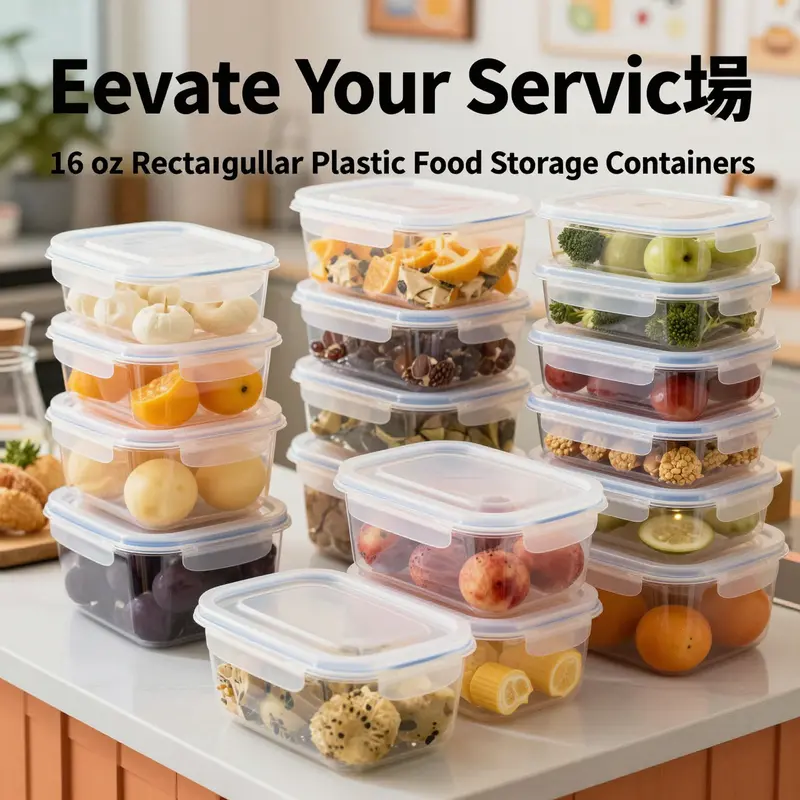
The 16 oz rectangular plastic food storage container with a lid sits at a quiet crossroads of modern kitchen work: it is small enough to be maneuvered with one hand, large enough to hold a substantial portion, and shaped to fit the tight, predictable geometry of a refrigerator or a commercial storage rack. Its appeal lies not in flashy novelty but in a steady, reliable blend of safety, seal, and space efficiency that makes it a workhorse for daily routines and for professional operations alike. The container’s design is anchored in a few fundamental ideas: materials that are safe for direct contact with food, a lid that keeps contents secure against leaks and odors, a form that maximizes usable storage space, and a versatility that allows the same utility to travel from home kitchen to cafeteria lunch line or grocery-prep station without missing a beat. In a world where meals move from prep to plate with speed, these virtues matter as much as any flavor or texture. The rationale behind this seemingly modest vessel becomes clearer when we trace how each attribute serves practical needs across a spectrum of environments, from the quiet kitchen counter to a bustling takeout counter and beyond into personal care or small-batch artisan packaging.
First, the safety profile is essential. Materials used for these containers are commonly food-grade polymers such as polypropylene, chosen for their balance of rigidity, clarity, and chemical stability. A recurring priority is that the material is BPA-free, a safeguard against any potential leaching that could arise under typical kitchen conditions. The promise of safety extends beyond the material itself to the everyday processes a container endures: microwave reheating, refrigeration, freezing, and dishwasher cleaning. A dependable 16 oz rectangular container is expected to withstand these cycles without warping, cracking, or compromising the seal. When a container is safe for routine microwaving, it becomes a practical ally for reheating leftovers without transferring to a separate dish, an act that not only saves time but also reduces dishware clutter. In cooling and freezing scenarios, straight-sided geometry aids in even heat distribution and predictable stacking, while the transparency of the body allows quick visual assessment of what lies inside, helping to manage inventory, portion control, and meal planning with minimal effort. The lid, too, matters in safety terms. A well-engineered seal—whether it relies on an interlocking latch system or a screw-on mechanism—minimizes the risk of leaks when the container is tipped or jostled during transport. This is crucial for both the home user who commutes with a prepared lunch and the professional who packages meals for distribution. The sealing system must hold up under everyday handling, from a crowded refrigerator shelf to a busy delivery route, without compromising the integrity of sauces, soups, or stews. A tight seal does more than prevent leaks; it preserves the quality of contents by limiting exposure to air, which slows the onset of moisture loss or flavor degradation. The result is a practical assurance that the food inside remains closer to its intended state from prep to plate.
The rectangular footprint itself is a deliberate choice that reshapes how kitchens and storage spaces are used. In a world filled with round bowls and irregular containers, the rectangle offers a predictable, efficient use of space. It lines up neatly with the straight edges of shelves, doors, and drawers, creating an organized, stackable system that reduces wasted space. When multiple containers share the same lid geometry, users gain a modular flexibility that translates into fewer separate storage solutions. Stacking becomes a simple arithmetic of height and footprint, an advantage that grows clearer as the quantity of stored items increases. In personal homes, this translates to better meal-prep routine: batches of rice, grains, or pre-divided portions can be prepared once, stored, and warmed as needed, minimizing food waste while supporting consistent portion control. For families, the stackable design supports efficient lunch packing for school days and workdays, turning a busy morning into a well-orchestrated sequence rather than a rushed scramble.
Beyond safety and space, the 16 oz rectangle is a testament to adaptable usability. These containers are often designed to be compatible with multiple modes of care and use. They may tolerate the heat of a quick microwave pass to reheat leftovers, while also standing up to cold storage in the refrigerator or freezer, and surviving a dishwasher cycle for thorough cleaning. This flexibility mirrors the varied rhythms of daily life: a meal-prep Sunday afternoon can fill a lineup of containers with portions that will be heated later in the week; a food service operation can deploy them as compact, transport-friendly packaging for single portions; and a consumer can repurpose them for non-food uses such as storing cosmetic items or small hardware components, appreciating the same seal and stackability that ensure everything stays neat and uncontaminated. The clear, unobstructed view of the contents is more than a convenience; it reduces the constant need to label every item and helps keep track of inventory in a busy kitchen or pantry. The lid’s ease of use matters as well. A lid that opens with minimal effort while maintaining a reliable seal saves time in the rush moments of morning preparation or during a service shift. When factors like ergonomic grip and straightforward latching are present, the user experience shifts from one of mere function to one of genuine ease and confidence. In the hands of a busy caregiver, a student, or a catering team, this translates into fewer interruptions and more predictable outcomes, whether the goal is a portion-controlled meal, a serialized prep plan, or a precisely measured ingredient distribution for a commercial menu.
The content’s flexibility extends into multiple life domains, a facet worth exploring for a moment because it reveals why such a container remains relevant even as trends in packaging and storage evolve. In homes, the 16 oz rectangle makes a natural companion for leftovers, soups, sauces, stews, and prepped ingredients that require portioned storage. It can be used for marinating ingredients, where the tight seal protects both the marinade and the food from cross-flavor contamination. For busy families, it doubles as a practical lunchbox, allowing a parent to prepare several days’ worth of meals while keeping them separated and easy to transport. The shape also serves as a canvas for creative uses: a container can become a portable supplier for a DIY gift set, a display piece for a small batch of handmade confections, or a neat, transparent vessel for organizing small desk items, art supplies, or toiletries at home or in a shared living space. In a small business or cafeteria setting, these containers prove their worth through consistent performance. They enable a streamlined workflow: prep, seal, label, and store, then retrieve with minimal rummaging. The rectangular geometry, when paired with a dependable lid, reduces the risk of spillage during transport from kitchen to service area or to a customer’s door. Their presence on a line can contribute to faster assembly, faster service times, and more consistent presentation of packaged items, which in turn supports a reliable brand experience for customers seeking predictability and quality.
The lifecycle of these containers—how they age, how long they last, and how they are disposed or repurposed—also informs decision-making. Durable construction and robust sealing systems reduce the need for frequent replacements, which is a practical advantage in both home and professional contexts. When used repeatedly, the containers accumulate a track record of reliable performance: they resist cracking at the corners, keep their transparency, and maintain seal integrity after multiple reheats and wash cycles. The potential for reuse is a meaningful sustainability consideration, as it limits the frequency of new purchases and lowers the overall environmental footprint when compared with disposable options. Yet even as they are reused, the containers carry a responsibility: routine inspection for signs of wear, such as scratches that harbor bacteria in ill-advised cleaning environments, or lids that no longer seal firmly. The habit of checking and replacing compromised lids or bodies helps sustain a standard of food safety and ensures continued confidence in the item as a reliable storage tool. For users who curate a balanced kitchen routine, the 16 oz rectangle becomes a central node in a broader system: it stores leftovers for future meals, portioned ingredients for weekly meal prep, and even non-food items in a controlled, organized fashion when needed.
One of the subtler but powerful aspects of these containers is how they enable more deliberate, intentional use of ingredients and meals. When portions are pre-measured and clearly visible, it becomes easier to monitor dietary goals, control calorie intake, or adhere to a meal plan. A family can pre-portion snacks or treats to avoid overindulgence, while a student can maintain a portable, nutritious lunch that travels well and remains appetizing. The visibility afforded by a transparent body helps minimize waste because spoiled items are easier to notice early, while the tight seal preserves the state of the contents—textures, colors, and aromas—until consumption. The 16 oz size embodies a practical middle ground: it is not so large as to tempt overage, but not so small as to require constant refills. The result is a user experience that supports mindful eating and organized storage without imposing rigid routines that feel restrictive. In professional settings, the containers’ predictable dimensions simplify inventory management, rack organization, and shelf labeling. A line of uniform containers reduces the cognitive load on staff when they are selecting vessels for a new batch or re-stocking a station. The ability to see through the container also assists in quality control, allowing supervisors to quickly assess fill levels, cleanliness, and the presence of any debris or residue that might require a rewash before the next use. These practical considerations coalesce into a straightforward conclusion: when a storage solution feels almost invisible in its efficiency, it becomes a platform for better cooking, better service, and better everyday life.
The decision-making process around adopting these containers is guided by a few non-negotiables that transcend branding or fashion. Foremost is a clear understanding of safety certifications and material claims. In a world where direct contact with food is the baseline, the claim that a container is BPA-free and food-grade is not merely a marketing line but a pledge about safety and reliability. The next criterion is compatibility with common kitchen activities: microwave reheating, dishwasher cleaning, freezing, and freezer-to-oven transitions when relevant. The more versatile the container, the greater its utility across time as needs evolve—whether the user is preparing meals for the coming week, packaging a batch of sauces for distribution, or simply storing small quantities of ingredients to keep them fresh longer. A third criterion is the integrity of the lid. A well-designed lid stays securely closed, resists accidental opening during transit, and opens without exertion when access is required. The ease of use is especially important for children, the elderly, or anyone managing a tight schedule where even small friction can disrupt a routine. Finally, size and form consistency play an essential role. A standard 16 oz capacity with a consistent rectangular footprint enables a coherent stackable system that fits in standard fridges and on shelves, enabling a reliable, scalable approach to storage. When these elements align, the container begins to demonstrate a quiet robustness: it becomes a dependable instrument for organization, a facilitator of efficient cooking and meal prep, and a practical partner for a broad set of non-food uses. In short, its value emerges from how well it integrates with daily life and commercial workflows, rather than from any single standout feature. It is the sum of its parts—the material safety, the seal, the shape, and the practical elasticity—that elevates the 16 oz rectangle from a mere vessel to a dependable, multipurpose system that supports healthier eating, cleaner kitchens, and more organized operations across home and work alike.
For readers considering broader packaging and storage ecosystems, the container’s versatility is a reminder that efficiency often comes from modular, repeatable design. In this sense, these boxes become more than just containers; they are components of a larger practice of careful preparation and thoughtful distribution. They invite a disciplined approach to meal planning and inventory management, encouraging people to think in terms of portions, timelines, and reuse rather than episodic, one-off storage. When a kitchen or a workspace embraces such a practice, everyday routines gain a quiet reliability that reduces waste, saves time, and supports healthier habits. The continuity from prep to storage to reheating is what makes the 16 oz rectangular storage container with a lid more than a tool—it makes the overall process of cooking and caring for food smoother, more predictable, and ultimately more human. For businesses exploring packaging approaches beyond traditional takeout boxes, consider the broader family of sustainable, stackable solutions that can travel from kitchen to customer with confidence. As one practical starting point, eco-friendly takeout boxes for food packaging offers a perspective on how form and function can align to support both safety and efficiency while remaining mindful of environmental considerations. This reference helps anchor the conversation in a broader context of packaging that prioritizes usability, recyclability, and safe handling, illustrating how the same core principles apply whether the vessel is used to hold a weekday lunch or a batch of prepared ingredients for a week’s worth of meals.
In closing, the 16 oz rectangular plastic food storage container with lid exemplifies a practical synthesis of safety, seal integrity, space efficiency, and versatile usability. Its rectangular form optimizes storage density, its lid design ensures containment against leaks and odors, and its material and manufacturing choices support safe, repeated use across microwaves, freezers, and dishwashers. The chapter has traced how these features interlock to produce a tool that is not only functional but also capable of supporting healthier, more organized lives, whether at home or in a professional kitchen. The real value emerges when a user recognizes that the container is not merely a vessel for leftovers but a responsive element of a larger system—one that adapts to meal-prep rhythms, shopping patterns, and service demands with quiet reliability. As kitchens continue to evolve toward greater efficiency and more mindful consumption, the humble 16 oz rectangular container remains a steady cornerstone—an instrument that, in small but persistent ways, helps translate intention into action, order into meal, and plans into plates.
Choosing the Right 16-Ounce Rectangular Plastic Storage Containers: Safety, Seal, and Space-Saving Design
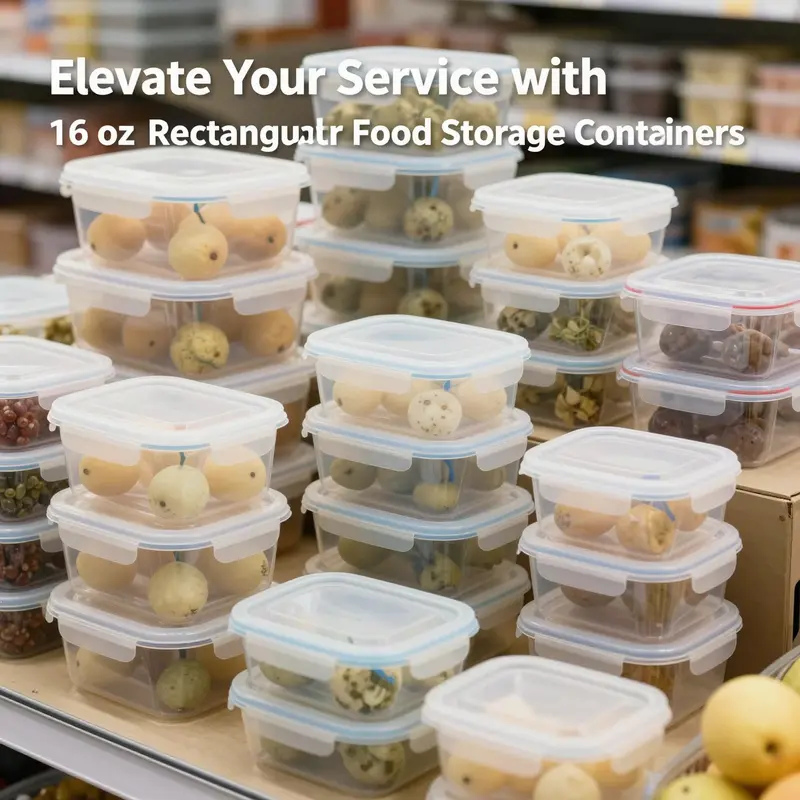
In kitchens, offices, and the backrooms of catering operations, the 16-ounce rectangular plastic storage container with a lid has become more than a simple box. It is a compact, versatile tool designed to preserve freshness, streamline workflows, and make the most of precious space. The appeal rests on a careful balance of safety, sealing performance, and practical shape. When a rectangular form aligns with the measurements of a refrigerator shelf or a snack prep station, the container becomes a quiet workhorse, stacking neatly with other containers and occupying less horizontal footprint than round counterparts. But beyond its silhouette, the container speaks to a set of design choices that translate into real-world benefits: materials that touch food with confidence, lids that lock and seal to prevent leaks, and a geometry that maximizes storage density while remaining easy to handle during hurried meal-prep routines. This convergence of safety, performance, and efficiency makes the 16-ounce rectangular option a staple for households and businesses alike, whether the goal is portion control, batch prep, or reliable transport for meals and snacks.
From the outset, the material selected for direct food contact matters as much as the lid design. The most trusted options are food-grade polymers that are BPA-free, with polypropylene as a common base. This choice is not incidental. It ensures that the container can be used for reheating, cooling, freezing, and washing without introducing harmful substances into the contents. The absence of BPA is not just a marketing claim; it is a commitment to safety in everyday routines and high-volume operations. In practice, this translates to a container that can endure the shifts of a busy kitchen—from the cold of the refrigerator to the warmth of a microwave—without compromising the integrity of the food or the container itself. For people who prepare meals ahead of time, the ability to safely heat and reheat leftover portions inside the same vessel reduces the number of transfers, minimizing the risk of contamination that can come with moving food between multiple containers.
The lid is a crucial partner to the body. A well-engineered seal begins with the lid, but the seal’s strength rests on the interaction between lid and body. Modern designs often feature intelligent locking mechanisms or twist-and-lock systems that interlock with precise tolerances. The result is a leak-resistant seal that performs reliably even when containers are jostled during transport, stacked on a crowded pantry shelf, or carried in a bag for a commute. The closure is not just about liquids; it protects the integrity of the food by limiting odors and preventing exposure to air, which can hasten the staling or degradation of prepped ingredients. Users benefit from peace of mind during grocery trips and meal deliveries alike, knowing that a spill won’t derail a busy day or a client’s expectations.
In addition to safety and sealing, the geometry of the container plays a decisive role in daily use. The rectangular shape is a deliberate choice with practical advantages. It fits snugly in standard shelf spaces, fridge compartments, and cabinet stacks, allowing more units to be organized in the same footprint. The flat sides enable efficient labeling and visibility when contents are tucked away behind a clear, transparent wall. Visibility matters; being able to glance at the contents without opening the lid saves time and reduces the temptation to repeatedly sample, which can lead to unnecessary waste. For households that practice portion control or meal-prep routines, the clear body means that a quick inventory check can be performed with a single look, enabling better planning and reducing the chance of forgotten leftovers.
Durability is another cornerstone of the 16-ounce rectangular container’s appeal. The materials chosen are designed to withstand repeated cycles of use and washing. High-quality plastics resist cracking and clouding, maintaining clarity so contents remain visible even after multiple passes through a dishwasher or a rack in a bustling kitchen. A robust construction also supports consistent dimensional tolerances. When the walls and the lid meet with tight tolerances, seals stay reliable and consistent across dozens or hundreds of units in a commercial setting. The idea is not merely to survive a few uses but to endure long-term reuse, reducing waste and lowering the frequency with which replacements are needed. In industrial contexts, that translates to predictable performance, fewer quality issues, and smoother inventory management.
Space efficiency and stacking capability are not merely convenience features; they are operational imperatives in many settings. Rectangular containers stack neatly, forming compact towers that minimize air gaps in storage and during transport. The seals contribute to this efficiency by maintaining their integrity even when containers are nested. In a café, a catering kitchen, or a home with a crowded fridge, this translates into more shelf space for other items and a cleaner, more organized environment. The design also supports portioning and pre-portioning workflows. When a batch is divided into uniform 16-ounce portions, it becomes easier to standardize recipes, track inventory, and manage food costs. The clamp or lid mechanism remains accessible and intuitive, ensuring that staff and family members can operate the system quickly and without frustration, even during peak hours.
Another layer of practicality emerges in the container’s versatility. Although designed for food, a well-managed 16-ounce rectangle can be repurposed for other tasks. It can hold small items like skincare products, hardware components, or craft supplies, preserving neatness and allowing for easy transport from one space to another. The transparent body keeps contents visible, while the secure lid protects against spills. Such multi-use capability is particularly valuable in households where space is at a premium, or in small studios and offices where an efficient, reusable solution reduces clutter and waste.
The market context surrounding these containers reflects a diverse set of needs. In food service and commercial kitchens, the primary demand centers on durability, reliability, and compliance with health standards. Restaurants, delis, and catering operations value consistency in size and seal, as well as the ability to package meals for delivery or takeout without compromising freshness. For meal-prep enthusiasts and busy families, the focus shifts toward practicality, including microwave safety, ease of cleaning, and the ability to stack efficiently in a refrigerator or pantry. In retail and gourmet packaging scenarios, the containers often serve as the outer shell for smaller portions, demonstrating how the visual clarity and clean lines of a rectangular design can contribute to attractive displays while maintaining practical performance. In industrial contexts, the demand for standardized dimensions and high tolerances supports efficient handling, labeling, and compatibility with other packaging components.
From a purchasing perspective, a shopper or procurement professional should consider a handful of core criteria to ensure the container meets intended use. First, confirm that the material is food-grade and BPA-free, with clear statements about microwave compatibility, freezer safety, and dishwasher suitability. The presence of a reliable sealing mechanism is equally important, as is the presence of interlocking features that resist accidental openings during transport. The rectangular geometry should align with the storage environment, including fridge shelves, cabinet depths, and existing stackable systems. The lid’s ease of use also matters; a design that requires excessive force or fiddling can slow down prep workflows and increase the risk of mishandling. Finally, size must be paired with capacity; 16 ounces, or about 0.5 liters, should be framed as a practical portion size for meals, snacks, or prepped ingredients, with clear labeling to prevent misinterpretation or cross-contamination in busy settings.
Looking beyond the product’s physical attributes, the broader value proposition centers on how these containers contribute to safer, more efficient, and more organized routines. The safety standards and the absence of harmful substances reduce consumer concerns about long-term exposure to plastics in everyday meals. The robust sealing and leak resistance protect both the contents and the user’s environment, mitigating the spillage risks that can occur during transit, storage, or office deliveries. The space-saving design directly impacts workflow efficiency, particularly in environments where every square inch of refrigeration space counts. And the clarity of the container reinforces a culture of organization and accountability, enabling quick decisions about what to prepare, what to discard, and how to rotate stock to minimize waste.
To connect ideas across packaging and storage practices, consider exploring related packaging concepts that emphasize practical, microwave-safe, and leak-resistant designs. For a broader look at eco-conscious takeout solutions and how they intersect with reusable containers, you can explore eco-friendly takeout boxes for food packaging. This resource highlights how modern containers balance convenience with responsible materials and design choices, illustrating how the principles behind 16-ounce rectangular storage boxes can extend into a wider ecosystem of safe, reliable, and aesthetically tidy packaging options.
In sum, the 16-ounce rectangular plastic storage container with a lid embodies a careful alignment of safety, seal integrity, and space efficiency. Its material choices support direct food contact without compromising health, while its lid design ensures a dependable seal under real-world conditions. The rectangular geometry optimizes storage density, simplifies organization, and enhances accessibility. Whether used for home meal prep, restaurant kitchens, retail packaging, or industrial stocking, this container offers a cohesive, high-value solution that reduces waste, speeds workflows, and protects both food and people. For buyers and users, the key is to prioritize food-grade, BPA-free materials; confirm microwave, freezer, and dishwasher compatibility; evaluate the seal and lid mechanism for leak resistance; and ensure the size and shape truly align with the storage environment and the intended use. The result is not just a container but a reliable, reusable tool that brings order, safety, and efficiency to everyday life and professional operations alike. See also the broader category of eco-friendly takeout packaging to understand additional design considerations that complement the functionality of rectangular storage options.
External resource on safety and best practices for food contact plastics: https://www.fda.gov/food-safety
Final thoughts
The 16 oz rectangular plastic food storage containers with lids represent a practical yet sophisticated solution for modern food service environments. Their safety, durability, and versatility make them essential for a wide range of applications—from storing food at restaurants to packaging for catering services. By choosing quality containers that meet safety standards, businesses can enhance their operational efficiency and maintain the integrity of their products. Investing in these solutions will undoubtedly lead to better organizational practices and customer satisfaction in your food service operations.