
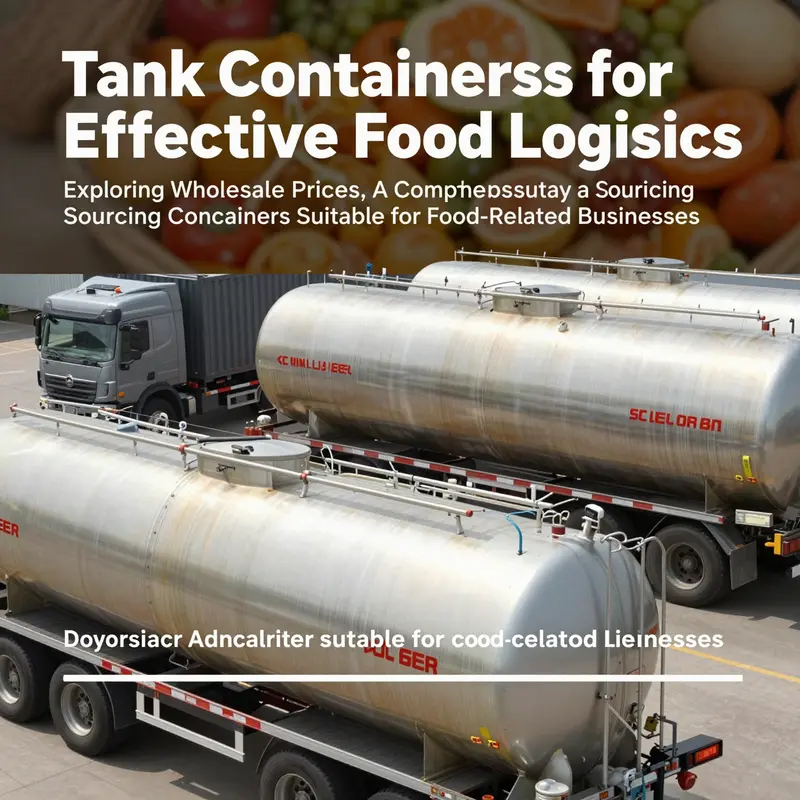
Understanding wholesale tank containers is essential for bubble tea shops, beverage chains, restaurants, food trucks, catering services, and corporate procurement teams. This guide delves into wholesale prices, specifications, and diverse applications of tank containers in food logistics. With the increasing demand for safe and efficient transport of liquid food ingredients, knowing the right type of container can make or break a business. As we navigate through wholesale pricing dynamics, explore critical tank specifications, and examine real-world applications in the food industry, you’ll gain valuable insights that can enhance operational efficiency and product safety.
null
null
Liquid Routes, Bulk Prices: Navigating Wholesale Tank Containers for Food Logistics
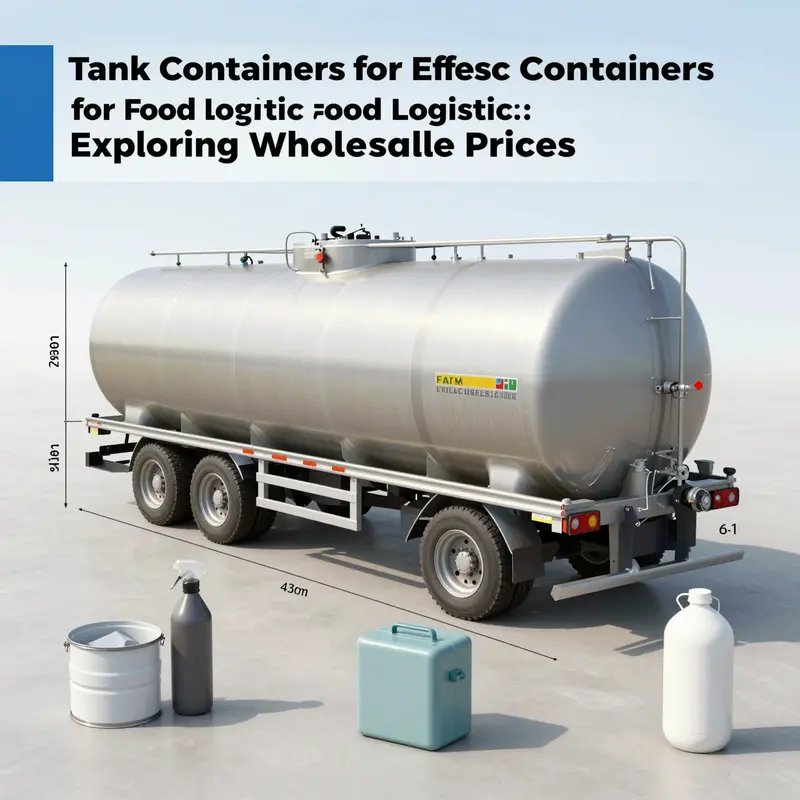
In the modern food supply chain, liquid ingredients travel across oceans, rails, and roads with a discipline that mirrors the precision of manufacturing plants themselves. Wholesale tank containers are not merely boxes; they are the vessels that preserve freshness, ensure safety, and sustain the scale at which global food logistics now operates. The investment in these containers is a decision that threads through procurement, compliance, and operational strategy. Price, as buyers quickly learn, is not a single number but a tiered conversation shaped by size, material, and the design features that keep a cargo safe from the moment it leaves a production line until it reaches a distant bottling plant or kitchen. This chapter threads the pricing landscape with the design logic that justifies those price differentials, while keeping the focus firmly on food-grade practicality, reliability, and the realities of moving liquids across intermodal networks.
At the heart of wholesale pricing lies a simple truth: capacity and capability drive value in the same breath. A compact 1000-liter square stainless steel tank, designed for liquids and compatible with both food-grade and chemical materials, demonstrates this balance. In wholesale listings, this smaller unit often commands a price range of roughly US$2,180 to $2,230 per piece, with a minimum order quantity of one. The economics here are deceptively straightforward. The low MOQ signals a market organized around fleet purchases and ongoing maintenance cycles rather than ad-hoc, one-off orders. The weight of 163 kilograms matters too, not merely as a specification but as a practical factor in transportation planning, unloading at destination yards, and the load assignments that fleets manage daily. The value of such a unit lies in its flexibility: it can slip into a wider procurement strategy as a modular piece that supports pilot programs for new products, small-batch testing for flavors or fortifications, and emergency response scenarios in which a fast, hygienic liquid-handling solution is essential.
Yet many buyers operate with broader needs that stretch beyond a single unit. The 20-foot tank container—the standard size that dominates intermodal shipping—summons a different pricing conversation. In wholesale catalogs and tender documents, the 20-foot ISO tank is referenced as a common product type, widely sold in bulk. The exact price is not fixed in the excerpted data because it depends on configuration: whether the unit is uninsulated or insulated, whether it includes heating capabilities, CIP systems, or enhanced sanitary fittings, and whether it is built to meet stricter regulatory alignments for specific markets. This variability is a feature rather than a flaw. It acknowledges that food logistics spans commodities as diverse as edible oils, syrups, dairy liquids, and beverage concentrates. Each category carries its own risk management requirements and its own tolerance for temperature fluctuations, contamination risk, and cleaning cycles. In large fleets, the ability to tailor a 20-foot tanks to a given product profile—while maintaining interoperability with ships, trains, and trucks—can trump a narrow price comparison that ignores total cost of ownership.
Within the wholesale spectrum, a transformative option emerges in the form of Flexi Tank containers. These are large, flexible tanks designed to fit inside a standard 20-foot container, combining high liquid capacity with modularity. Made of stainless steel and aligned with ASME standards, a 20 cubic meter Flexi Tank can begin at approximately US$11,400 and extend up to US$18,900 per unit. The capacity here is substantial enough to bring down per-liter transport costs for bulk liquids like edible oils, syrups, or concentrated beverages. The higher end of the range reflects added features or higher build quality—elements that contribute to longer service life, more robust cleaning cycles, and better resistance to the rigors of global transit. In practice, the Flexi Tank is often valued not just for its volume but for the way it integrates into a multi-product logistics plan. A single 20 m3 unit can serve several SKUs in a single voyage, reducing the need to swap or strip cargo mid-transit. It also creates opportunities to diversify product lines without committing to a fleet of multiple container types, a strategic advantage for companies that wish to preserve cold-chain integrity while maintaining cost efficiency.
For larger food-grade ISO tank containers, the price envelope broadens further. Wholesale pricing typically ranges from US$15,000 to over US$40,000 per unit, with the exact figure contingent on several interrelated factors. Capacity is the most obvious driver: higher-volume tanks command higher prices, but there is more nuance. Construction quality—such as wall thickness, weld integrity, and surface finish—directly affects durability and resilience against corrosion, which is critical given the harsh detergents and cleaning cycles used in food processing environments. Added functionalities can dramatically shift the math as well. Heating systems, enhanced insulation, dual- or multi-zone temperature control, and advanced instrumentation for remote monitoring can collectively push a unit toward the higher end of the spectrum. These features are not mere luxuries; they can enable preserved temperatures for sensitive products, reduce spoilage risk, and extend the viable transport window for liquids that demand stringent temperature management. When a buyer evaluates a larger ISO tank, the decision often becomes a balancing act: invest in features that preserve product integrity today, or maximize short-term price advantages with the expectation of mitigating risk through intensified cleaning protocols and more frequent gear replacement in the long run.
Design features give a transparent window into why prices diverge and how the value proposition is built. Material choice is foundational. Food-grade stainless steel, typically AISI 304 or 316, forms the bedrock of hygiene, corrosion resistance, and regulatory compliance. The higher-grade alloys offer improved resistance to caustic cleaners and to certain acidic liquids, while maintaining cleanability and non-reactivity with a wide range of cargos. The sanitary fittings that accompany these containers are not cosmetic details; they define how easily a unit can be connected, cleaned, and sanitized within strict hygienic regimes. A CIP—clean-in-place—system elevates a container’s value by enabling thorough interior cleaning without disassembly, a rigorous requirement for products with strong flavors, colorants, or allergens that must be metabolically isolated between loads.
Pressure and vacuum valves are another critical design facet. They regulate the internal environment during loading, transport, and unloading, ensuring product integrity and preventing accidents due to pressure fluctuations. Sealing mechanisms, too, are engineered to minimize contamination risks while preserving the container’s internal cleanliness. In the intermodal context—ships to rails to trucks—these designs support rapid transfer without the need to unload and reload liquids, reducing risk and saving time. A container that integrates reliable seals and versatile fittings improves throughput and reduces the likelihood of costly delays caused by regulatory checks or sanitation re-validations at port facilities.
Interoperability is not an optional feature but a core design assumption. ISO-standardized dimensions and fittings enable smooth transfers across modes of transport. In a global network, where a single voyage can involve multiple carriers and break-bulk points, containers designed for intermodal use prevent reloading errors and minimize the physical handling that can introduce contamination or spillage. Temperature control, while not universal in standard models, becomes a strategic differentiator for cold chain applications. Insulation and climate-control systems can maintain product temperatures during coast-to-coast shipping or long-haul air freight, expanding the viable product portfolio that a logistics provider can carry without compromising safety or quality. Yet the extra capability has to be weighed against initial cost, ongoing energy consumption, maintenance, and the cleaning complexity that those added features inevitably introduce.
The cleaning protocols around these assets are, in effect, one of the most practical anchors of the pricing logic. Food products, especially dairy, beverages, and certain oils, demand rigorous sanitation to prevent cross-contamination. Cleaning between incompatible loads—whether by detergent, sterilant, or heat-based methods—must be efficient and reliable. The industry standard hinges on CIP-ready interiors, accessible valves, and smooth, non-porous surfaces that resist bacterial growth and staining. The cost calculus thus includes not only the purchase price but also the expected lifetime cleaning expenses, the frequency of sanitation cycles, and the downtime required for maintenance windows. A robust CIP-equipped container reduces total downtime and improves fleet utilization, translating into a lower cost per unit of cargo transported over a given period.
Regulatory alignment is a non-negotiable axis of value. The most sensitive markets require compliance with food-contact regulations and safe materials. In practice, buyers verify that the container’s materials and finishes meet standards such as FDA or EU Food Contact Materials Regulation. This compliance is not just about the metal itself but also about the entire ecosystem: seals, gaskets, lubricants, and the interior coatings used for cargo compatibility. The price signal here is the premium associated with verified compliance, which reduces regulatory friction at destination ports and speeds up time-to-market for new products. It is a strategic risk-management choice as much as a cost choice. For those procuring on a global scale, the assurance that a tank container will routinely meet the regulatory expectations of multiple jurisdictions is a critical factor that justifies paying a premium on the upfront cost.
From a procurement perspective, several practical considerations shape the wholesale path. The pricing ladder described above interacts with lead times, customization options, and after-sales service. Larger orders may unlock volume discounts or extended warranties, while customized interiors, specialized coatings, or integrated instrumentation may require longer lead times but deliver long-term reliability gains. Maintenance regimes, spare parts availability, and the accessibility of skilled technicians across key markets influence the long-run cost of ownership. In food logistics, where a single misstep could cause expensive product loss or regulatory action, the relative value of a more capable tank container often proves itself through fewer incidents, shorter turnaround times, and greater confidence in cross-border operations.
Market dynamics also shape wholesale pricing. Global demand for bulk liquid transport in the food sector grows with consumer appetite, seasonal production cycles, and the expansion of cold-chain networks. Supply chain shocks can influence the price of raw stainless steel, the cost of specialized coatings, and the availability of certified components for sanitary fittings. In tandem, the fleet refresh cycle—how frequently operators replace or upgrade containers—affects wholesale pricing trends. A robust second-hand market can offer lower upfront costs, but it requires careful due diligence to ensure that refurbished units meet current safety and sanitation standards. Buyers must weigh the allure of lower price tags against potential hidden costs in maintenance or retrofitting to meet newer regulatory standards.
In practice, a buyer evaluating wholesale options for food logistics should approach the market with a lifecycle view. The initial sticker price carries a consequential weight, but it only tells part of the story. When capacity, material integrity, and added functionalities align with product requirements and route profiles, a higher upfront investment can produce meaningful savings in cleaning, loading efficiency, and product integrity over the container’s lifetime. Conversely, for product lines with relatively low throughput or limited geographic reach, a leaner configuration with fewer frills may be the most economical choice—provided that rigorous sanitation and regulatory compliance can be maintained within those constraints.
The decision framework becomes even more nuanced when considering the broader logistics ecosystem. For instance, a food manufacturer distributing concentrates and syrups in high volumes across diverse climates benefits from a Flexi Tank approach: the large internal capacity, the ability to fit inside a standard container, and the potential for significant per-liter transport cost reductions. But this choice also implicates maintenance practices, cleaning validation, and the need for operators who understand the subtleties of keeping such a system hygienic through repeated fill-and-clean cycles. On the other end of the spectrum, compact 1000-liter units provide an agile entry point for pilot projects, regional distribution tests, or temporary scale-ups where a full ISO tank would be ill-suited or economically unjustified. The pricing that accompanies these smaller units, while modest, is anchored to reliability and ease of deployment—qualities that translate directly into faster time-to-value for teams testing new formulations or entering new markets.
As buyers navigate these options, the reliability of supplier ecosystems becomes a critical consideration. The market emphasizes reputable vendors who can offer not only the containers but also the standardization support, customization guidance, and regulatory validation necessary for food-grade applications. Platforms that host comprehensive catalogs and verified vendors can facilitate the process, helping buyers to align product specifications with regulatory requirements, pilot test results, and long-range procurement plans. While a single price tag cannot capture the entire value proposition, it remains a useful anchor for budgeting, supplier negotiations, and internal approvals. The most effective wholesale strategies translate a complex matrix of product type, capacity, construction quality, and added safety features into a coherent plan that supports consistent quality, compliant operations, and scalable growth across the network.
Ultimately, the wholesale price landscape for tank containers used in food logistics is as much about strategy as it is about sticker price. It requires an understanding of how a container’s interior geometry, material science, and sanitation capabilities intersect with the realities of multi-modal transport, cold-chain demands, and regulatory compliance. The best decisions balance upfront investment with lifecycle costs, recognizing that the most economical option over five to ten years may be quite different from the cheapest alternative at the point of sale. This is not a field where the cheapest unit wins the race; the prudent buyer secures value through interoperability, sanitation reliability, and regulatory alignment that reduces risk across markets and accelerates time-to-market for food products that feed people around the world.
For researchers, buyers, and operators who want to explore more about the range of options and the regulatory landscape, external resources that compile vendor information and product specifications can provide deeper context and current pricing signals. A widely referenced external resource aggregates food-grade ISO tank container listings and related specifications, offering a broader vista of what is available in the global market and how different configurations align with particular product needs. External reference: https://www.alibaba.com/product-detail/Food-Grade-Iso-Tank-Containers_1600722188455.html
Liquid Freight, Solid Strategy: Wholesale Tank Containers in Food Logistics Pricing and Performance
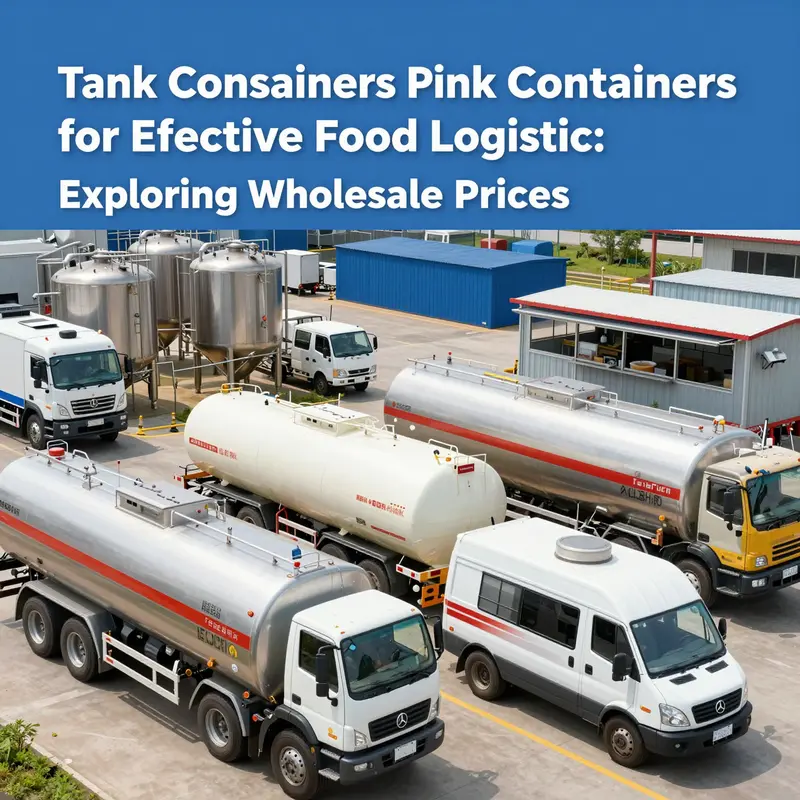
In global food logistics, tank containers are more than just vessels for liquids—they are strategic assets whose pricing shapes service levels, risk management, and supply chain resilience. These containers transport edible oils, syrups, beverages, dairy liquids, and other bulk products, and their wholesale value reflects a blend of base fabrication costs, materials, coatings, certifications, and long-run lifecycle economics. Across markets, price signals are influenced by container capacity, build quality, sanitation features, and the degree of customization required to meet product-specific safety standards. In practice, the gap between a minimal-spec unit and a fully featured configuration can be substantial, because the latter promises faster turnarounds, extended service life, and reduced risk of contamination. The up-front premium must be weighed against operating costs, downtime for cleaning, and the broader value of data-enabled monitoring that supports traceability and regulatory compliance.
Beyond the sticker price, ownership versus leasing terms shape cash flow and total cost of ownership. Lease rates, maintenance bundles, and refurbishment plans can stabilize budgeting in the face of currency swings, fuel price changes, and supply disruptions. Buyers often look for bundled packages that guarantee periodic inspections, guaranteed repair windows, and predictable sanitation schedules, because these services directly impact throughput and spoilage risk. In tiered pricing models, unit costs may decline with higher volumes or longer commitments, but the true economics emerge when considering uptime, cleaning turnaround times, and the ability to reconfigure the platform for new product streams.
The supplier landscape tends to reward durability, clear documentation, and scalable service offerings. Internationally recognized food-safety standards, leak-prevention certifications, and robust quality-management systems can justify price premia by reducing regulatory friction and cross-border delays. Digital integration—sensors that monitor temperature, pressure, fill level, and cleaning status—adds to upfront cost but can yield meaningful reductions in waste and improved inventory accuracy, especially for high-value liquids managed across multiple locations. In the end, wholesale pricing for food-grade tank containers is a multi-faceted negotiation that blends capital expenditure, operating expense, service levels, and risk transfer. The most economically advantageous choice aligns configuration, contract terms, and aftermarket support with a company’s production profile, regional footprint, and appetite for risk in transit.
For readers seeking current specifications and price signals, market listings and supplier disclosures provide essential reference points. They enable apples-to-apples comparisons of configurations, long-term cost-to-serve, and the incremental value of features such as enhanced coating systems or integrated telemetry. This pricing framework—comprising base price, customization upcharges, maintenance commitments, and flexible deployment options—helps food businesses scale their logistics architectures with confidence, ensuring product integrity while supporting just-in-time delivery and sustainable operations.
Final thoughts
In conclusion, wholesale tank containers play a critical role in the food logistics sector, catering to diverse businesses ranging from restaurants to food trucks. Understanding the cost dynamics, specifications, and applications can help streamline your operations and ensure safer transport of liquid ingredients. Investing in the right tank container not only safeguards product quality but also enhances logistical efficiency, ultimately benefiting your bottom line. With the right knowledge and supplier partnerships, you can elevate your food logistics strategies and meet market demands effectively.