
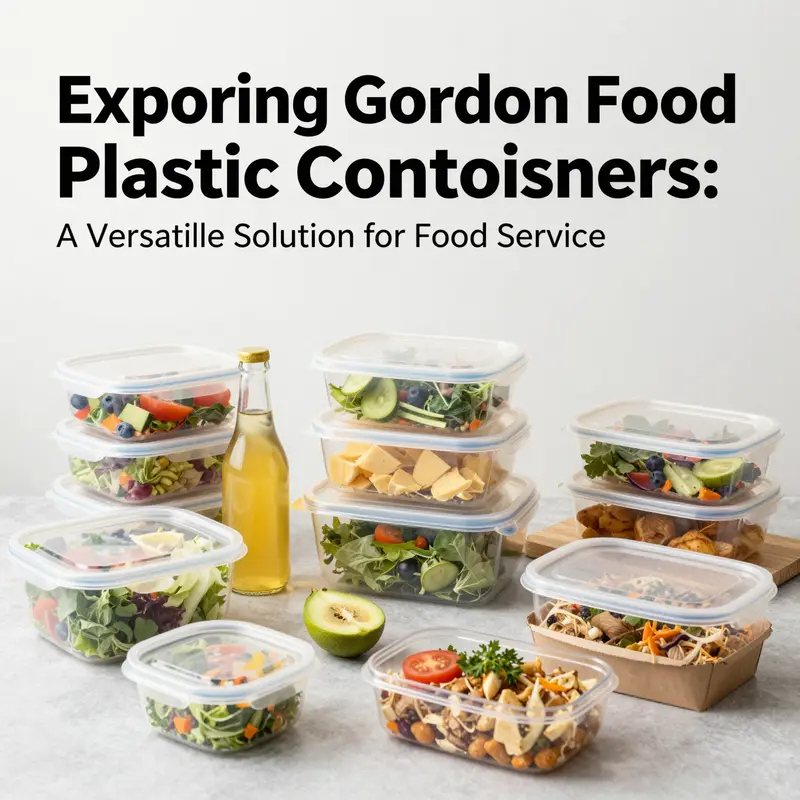
Gordon Food Service provides a comprehensive selection of plastic containers tailored for diverse food service needs, from bubble tea shops to catering services. The versatility, durability, and functionality of these containers make them ideal for a variety of operations. Chapter one will delve into different types of containers available, followed by an exploration of their material composition and properties in chapter two. Chapter three will illustrate practical applications and usage scenarios, while chapter four will highlight sustainability practices that minimize environmental impact. Let’s embark on this detailed journey through Gordon Food plastic containers and see how they can elevate your food service business.
A Practical Overview of Plastic Containers in Modern Foodservice
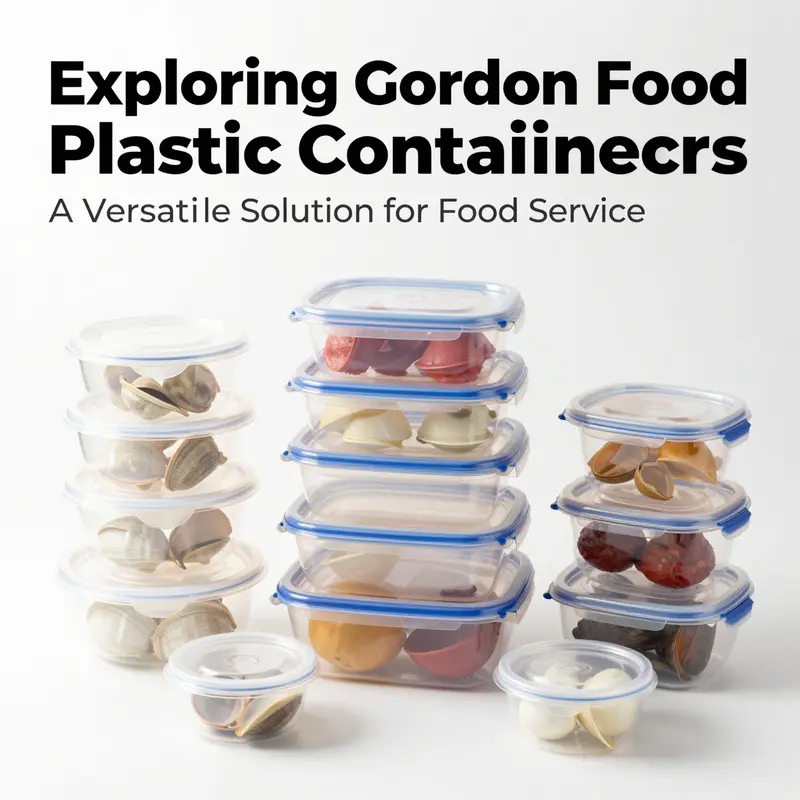
In modern foodservice distribution, plastic containers come in a spectrum of designs. Key categories include clamshells and hinged containers for ready meals, leak-resistant lids for sauces, and clear, stackable storage containers for prep and inventory. Materials such as polypropylene (PP), high-density polyethylene (HDPE), low-density polyethylene (LDPE), and PET balance rigidity, heat tolerance, chemical resistance, and visibility. A large distributor typically offers layered assortments: ready-to-eat containers, sauce cups, beverage cups, and bulk storage options, with sizes ranging from small portions to larger family-size formats. Design details—lids, seals, vents, gasket materials—affect leak resistance, reheating compatibility, and shelf life. Sustainability considerations, including recyclability and potential bio-based options, are increasingly part of procurement discussions, alongside certifications and safety standards. The practical takeaway is to match application to material properties and container design, verify with up-to-date specifications, and partner with a supplier who can provide reliable stock, branding options, and consistent quality across channels (dine-in, takeout, delivery, catering).
Resin, Safety, and Serviceability: Material Composition and Performance of Gordon Food Service Plastic Containers
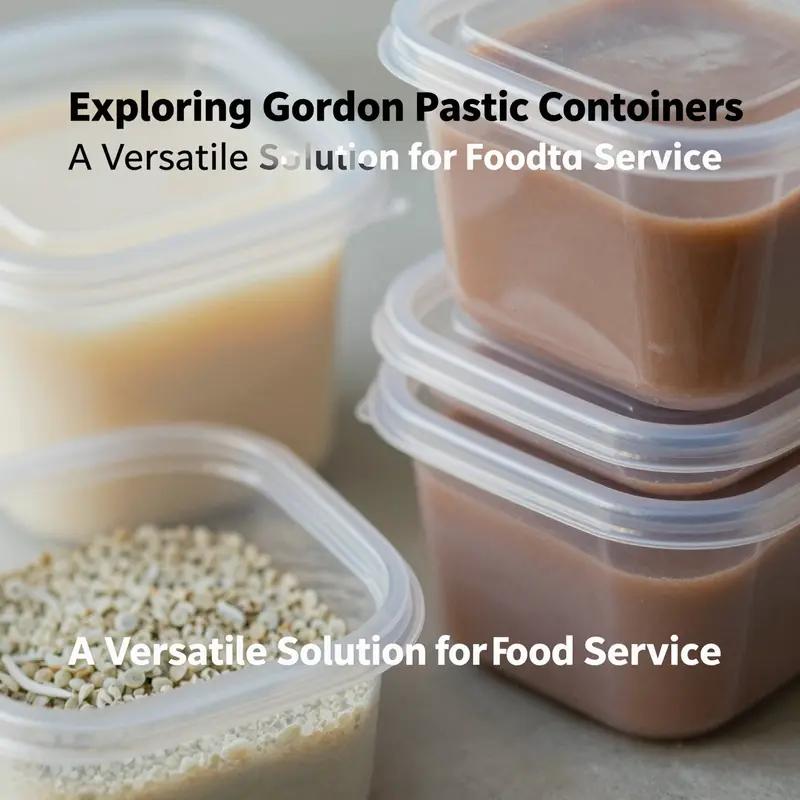
Material composition often stands behind every practical choice in a bustling kitchen, a delivery fleet, or a catering event. The containers used to package and transport food are more than inert shells; they are active participants in safety, shelf life, and service efficiency. In the context of Gordon Food Service, the SDS-backed picture is clear: the plastic containers commonly employed are predominantly food-grade polymers such as High-Density Polyethylene (HDPE) and Polypropylene (PP). These choices are not incidental. They reflect a balance between chemical stability, barrier performance, heat tolerance, and ease of manufacturing. The decision to use HDPE or PP influences how well a container resists the chemical milieu of foods, how effectively it protects moisture and oxygen, and how it behaves under real-world handling. In a sector where throughput, consistency, and safety are non-negotiable, understanding the material foundation helps operators anticipate performance from the moment a product is sealed to the moment it reaches a diner or a guest at a staged event. The SDS details provide a trusted baseline for what these containers can and cannot endure, while the everyday realities of foodservice illuminate how those capabilities translate into practical outcomes.
HDPE, the workhorse of sturdy packaging, develops its strength through a dense, nonpolar lattice that resists many common chemical challenges. In food storage and transport, chemical stability translates into predictability. Acids from citrus, bases from cleaning solutions, and fats from ready-to-eat meals are all part of the thermal and chemical environment these containers must tolerate. HDPE’s stability means that, during storage, there is little risk of reactive leaching or flavor contamination caused by the container itself. Its low permeability to moisture and gases further supports shelf life by reducing the ingress of unwanted moisture loss or oxygen exposure that could accelerate staling or fat rancidity. For operators, this reduces the need for excessive preservation measures and helps maintain product integrity from the initial packing to the moment of service. HDPE’s robust impact resistance also matters in the physical world: containers are stacked, moved, and slid across loading docks and kitchen floors, where a brittle container would fail. HDPE’s resilience minimizes breakage, which reduces waste and improves overall efficiency. In addition, HDPE’s suitability for cold storage and, with proper labeling, microwaving or reheating, makes it a versatile choice for many takeout and meal-prep applications.
PP offers a complementary set of traits that appeal to different operational needs. While HDPE provides exceptional stiffness and chemical resistance, PP stands out for higher temperature tolerance and potential clarity in some formulations. Temperature resistance is not just about surviving a freezer or a microwave; it also affects how a container maintains structural integrity through cycles of cooling and heating. PP’s ability to resist deformation at higher temperatures means that lids can maintain seals even when the contents are hot or warm, a practical safeguard against leaks and odor transfer. In many designs, PP is selected for components that require a reliable seal and a more precise fit, such as screw-on lids or snap closures. Clarity is sometimes an asset, particularly for display or quick identification of contents; while PP is often opaque, formulation variants can offer translucent options that aid in inventory checks without removing the lid. The choice between HDPE and PP thus becomes a strategic one: HDPE leans toward ruggedness and moisture barriers, while PP emphasizes heat tolerance and seal integrity. In combination, they provide a broad range of packaging solutions that align with the varied needs of a large, diversified foodservice network.
Beyond the raw polymers, the design of these containers matters as much as the base material. Wall thickness, ribbing, and wall geometry collectively influence rigidity, heat distribution, and stacking efficiency. A container’s thickness can help it resist denting during transit while maintaining a light overall weight that improves handling for staff and reduces transport costs. Ribbed walls can provide the structural support needed for heavier or denser items, helping to prevent deformation when containers are nested or stacked. The lids, often engineered with sealing features and gaskets, reinforce leak resistance and cross-odor containment. A well-designed lid couples with the body to form a barrier that protects product quality during short-term freezing, refrigeration, and medium-range reheating cycles. Even with a strong base polymer, subpar fit or a loose seal would undermine performance, underscoring why packaging engineers prioritize tight tolerances along with material choice.
The materials also carry a set of safety assurances that matter to both operators and customers. The SDS confirms that HDPE and PP are non-toxic and odorless when used as intended. They comply with FDA requirements for contact with food, and they are prepared to meet the relevant European Union regulations where applicable. This regulatory alignment matters at multiple points in a supply chain, from factory floor to food safety audits to consumer protection programs. When a staff member retrieves a container for a hot meal, the risk of unwanted chemical migration is kept low, preserving flavor and safety. The absence of hazardous residuals is a critical feature, especially for carryout and catering workflows where containers may be subjected to multiple handling steps or reused across different meals. Sanitation and cleaning are also shaped by the polymer choice: HDPE and PP respond well to standard cleaning and sanitizing regimens when the labeling indicates dishwasher safety or appropriate heat exposure, which is common in many commercial settings.
In practical terms, operators look for transparency in container performance. Clear visibility of contents remains a valuable feature for quick quality checks in busy kitchens. Where this is important, manufacturers may incorporate translucent or clear formulations in PP or HDPE variants, or they may rely on the natural translucency of certain molded components. The combination of material stability and visibility helps reduce errors in portioning and inventory management. It also improves the customer experience by enabling staff to confirm contents at a glance during handoffs, which is particularly valuable in high-volume takeout and curbside pickup scenarios. As a result, the material foundation—HDPE or PP—drives tangible outcomes in reliability, efficiency, and safety in everyday foodservice operations.
The broader landscape of packaging design in the foodservice sector also shapes material choices. Trends toward microwave-safe and dishwasher-safe labeling influence how containers are engineered. Operators often require containers that can withstand short-term microwave reheating without warping or softening, paired with lids that resist leaks when liquids are involved. The material and design must also handle freezing without becoming brittle, which is a notable concern when stock is stored long-term in cold facilities. In this context, HDPE’s excellent impact strength at low temperatures and PP’s higher heat resistance form a complementary pair that enables a versatile container family. The result is a toolkit of packaging solutions that can cover a wide spectrum of foods—from sauces and gravies to salads and entrees—while maintaining safety, integrity, and ease of use across multiple service channels.
A practical takeaway for procurement and operations teams is that material choice cannot be evaluated in isolation. It interacts with lid design, seal geometry, and the intended usage cycle. For example, a clamshell-style container made from HDPE may excel in cold-chain transport and meal-prep kits, offering sturdiness and moisture resistance, while a polypropylene lid with a precise locking mechanism can deliver reliable leak resistance for liquid-rich or semi-solid foods. The interplay of polymer chemistry, mechanical engineering, and food safety standards informs a cohesive packaging strategy that supports consistent service and brand reliability. When teams review SDS data, they gain confidence that the chosen packaging aligns with safety expectations and with regulatory compliance, reducing risk across the supply chain. In the end, the material composition is more than a material fact; it is a governing principle for performance, safety, and operational efficiency in the modern foodservice ecosystem.
For teams exploring the sustainability dimension, it is important to acknowledge that the broader packaging world is increasingly attentive to environmental impact. While HDPE and PP provide durability and safety, ongoing conversations about recyclability, life-cycle assessment, and end-of-life options are shaping supplier choices and specification standards. In many markets, there is momentum toward incorporating recyclable resins, recycled content, and alternative materials where feasible. Some of these shifts reflect customer expectations and evolving regulatory landscapes, rather than a single solution. As the industry absorbs these changes, procurement teams balance performance, safety, and sustainability with the same rigor applied to barrier properties and heat tolerance. The result is a more nuanced approach to packaging selection that respects both the immediacy of kitchen needs and the longer arc of environmental stewardship. To illustrate how broader packaging ecosystems are evolving, consider the growing emphasis on eco-friendly disposable options that still meet the stringent requirements of food safety and service reliability. eco-friendly disposable three-compartment packaging boxes serve as a reminder that the conversation around material choice is not only about chemistry but also about fit with sustainability goals and end-user expectations.
Ultimately, the SDS-backed picture of Gordon Food Service’s plastic containers centers on HDPE and PP as the backbone materials, with properties that support chemical stability, low permeability, high impact strength, and temperature resilience. The containers are designed to be sealable and to pair with leak-resistant lids, a feature essential to preserving the integrity of liquids and semi-solids while preventing cross-odor transfer. Their transparency in design and labeling enables quick identification of contents and straightforward quality checks. They are built to withstand the rigors of refrigeration, freezing, and microwave heating within the limits defined by product specifications. They also embody a commitment to safety—non-toxic, odorless, and compliant with FDA guidelines—ensuring that food contact remains within the bounds of trusted regulatory frameworks. In a fast-moving industry, these material choices translate into dependable performance, streamlined workflows, and consistent protection for both products and people throughout the supply chain. The next step for operators is to continually verify that their specific packaging configurations match the needs of their menus and service models, while staying aligned with the latest safety data and regulatory guidance. For those who want to ground their decisions in the primary safety documentation, official details are available through Gordon Food Service’s Safety Data Sheets. Gordon Food Service SDS
From Prep to Takeout: The Applications and Usage of Commercial Plastic Containers in Foodservice
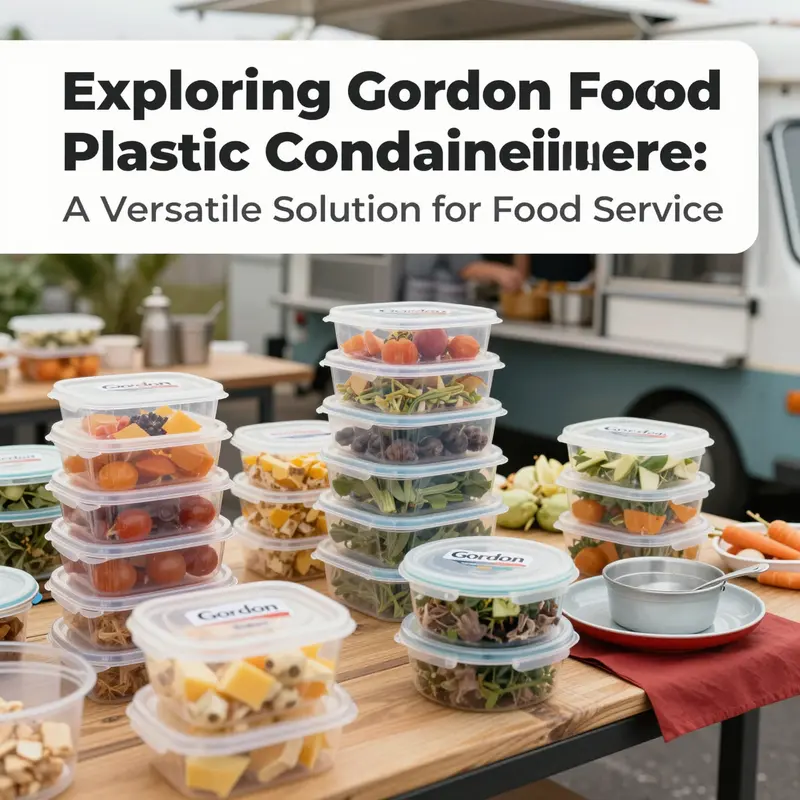
In the fast-paced world of foodservice, containers do more than hold food. They shape workflow, influence safety, and impact the bottom line. A well-designed plastic container system translates kitchen prep into reliable storage, efficient service, and confident delivery. The modern operator navigates a landscape where performance, sustainability, and ease of use must coexist. In this context, the Re.Source line from a major foodservice distributor emerges as a case study in how durable, food-grade plastics can be harnessed to meet diverse needs across deli counters, bakeries, cafeterias, and catering operations. What sets this approach apart is not merely the selection of containers but the way the system communicates end-of-life options to users and integrates with a kitchen’s daily routines. The result is a practical, scalable packaging strategy that helps kitchens control costs, maintain hygiene, and align with evolving environmental expectations while continuing to deliver meals with consistency and care.
At the heart of this philosophy is a commitment to sustainability that does not compromise performance. The containers are designed to carry food safely, with materials that meet safety standards for direct contact with prepared items and ingredients. In a real-world kitchen, this assurance translates into fewer compliance questions during service and fewer concerns when meals are plated, portioned, or sealed for transport. The emphasis on food-grade plastics supports a hygienic environment where the risk of contamination is minimized and the likelihood of leakage or spoilage during transit is reduced. It also makes it possible for kitchens to reuse space efficiently, as containers can be stacked, nested, and organized in a way that streamlines inventory management and speeds up routine tasks from prep through service.
One striking feature described in product literature is a color-coded and icon-based system that communicates end-of-life options at a glance. This design choice is more than a visual flourish. It provides a practical, at-a-glance cue for staff when sorting waste streams, recycling, or composting, and when deciding whether a container should be rinsed and reused or disposed of after a service. In busy kitchens, where every second counts, such a system helps ensure that waste management decisions are quick, consistent, and compliant with local regulations. It also reduces the cognitive load on staff, who can rely on a simple, universal language rather than debating disposal guidance during peak hours. The upshot is a more streamlined operation, less wasteful behavior, and better alignment with facility-wide sustainability goals.
From a safety and compliance standpoint, the containers are rooted in materials that meet safety standards for direct contact with food. In practice, this means operators can trust that the containers won’t impart unwanted flavors or odors, will resist moisture and oils that can degrade performance, and will maintain structural integrity under typical restaurant conditions. The capacity to withstand the rigors of the service environment—whether being stocked in a winter pantry behind the line or handed to a catering client for an off-site event—depends on durable constructions. Many of these designs feature secure, snap-on or press-fit lids that seal tightly enough to be leak-resistant during transport. In applications that involve liquids, sauces, or semi-solid foods, a reliable seal reduces the risk of drips that could compromise presentation, contaminate other items, or create safety hazards in delivery tubs and cars. In short, the objective is to preserve temperature, protect integrity, and prevent cross-contamination, all while keeping the workflow smooth for cooks and service staff.
Beyond safety, the practical utility of these containers holds substantial value for daily operations. In deli counters, the ability to portion meals quickly, store prepped ingredients, and package ready-to-serve items for display and sale is essential. For bakeries, containers must hold delicate pastries securely while allowing clear visibility to customers; for cafeterias, a steady cycle of portioning and replenishment demands a system that minimizes waste and optimizes shelf life. Catering operations, which juggle food safety, transportability, and presentability, rely on containers that are not only sturdy but also easy to transport and visually coherent in a serviced display or buffet setup. Throughout these contexts, the containers support core functions: portioning meals with consistent sizing, storing prepped ingredients for just-in-time assembly, packaging takeout orders for reliable transport, and displaying ready-to-serve items in a manner that remains attractive and inviting.
The performance characteristics of these containers are framed by a balance between durability and convenience. Their construction emphasizes a secure lid system that resists leaks and spills, protecting food during transit and while stacked in delivery totes or refrigerated cases. This durability is particularly important in multi-stop deliveries, where food passes through several hands and environments before reaching the customer. At the same time, these containers are designed to be compatible with common kitchen workflows. They are easy to open and reseal, compatible with standard dishwashers when labeled as such, and suitable for short-term freezing in many cases. The balance between heat resistance and thermal insulation is a key consideration. While some container families rely on foam-based options to provide robust thermal insulation for hot and cold takeout, modern sustainability programs encourage alternatives where feasible. The foam options can offer excellent insulation, helping hot meals stay hot and cold items cold during the time between preparation and consumption. As operators continue to optimize energy use and reduce waste, many facilities evaluate the trade-offs between insulation performance and environmental impact, choosing container lines that meet safety, performance, and sustainability criteria without compromising service quality.
Another critical dimension is how containers fit into the broader workflow of a busy foodservice operation. The stackability and transparency of many container designs enable kitchens to maximize cold storage space and rapidly identify contents without opening. Clear or semi-transparent bodies let staff inspect contents at a glance, supporting inventory control and reducing the likelihood of spoilage due to misplacement or misidentification. When staff can see what is inside a container, they can plan meals more efficiently, ration portions with precision, and maintain consistent plating standards. This visibility supports better stock rotation, reduces waste, and enhances the ability to provide consistent customer experiences whether the product is prepared for a walk-in counter, a self-serve line, or a catered delivery.
The sustainability narrative accompanying these containers speaks to a broader industry shift toward responsible packaging. In addition to the color-coded system that directs end-of-life decisions, opportunities exist in choosing container families that align with recycling streams, composting programs, or reuse pathways. When feasible, manufacturers and distributors are moving toward materials that minimize environmental impact. Biodegradable polylactic acid (PLA) and sugarcane fiber alternatives, for example, are mentioned in discussions of eco-conscious options within the packaging ecosystem. The aim is to give operators choices that reduce landfill burden while still meeting the safety, performance, and cost criteria critical to day-to-day operations. This alignment with sustainability goals helps kitchens meet customer expectations and regulatory requirements without sacrificing the reliability that foodservice operations depend on.
The shift toward sustainable packaging is also an organizational challenge for large distributors whose networks span multiple regions, kitchens, and service formats. The supply chain considerations are significant: consistency of supply, standardization of containers across facilities, and the ability to respond to seasonal demand while maintaining cost control. A distributor that emphasizes a cohesive container program can help operators manage procurement more predictably, reducing the administrative burden of ordering, tracking, and restocking. By offering containers that perform consistently from cold storage to the pass-through, and by providing clear guidance on disposal and recycling, such programs support kitchens as they scale their operations and pursue continuous improvement in waste reduction. The practical payoff is a more predictable operation, with fewer surprises during peak periods, and a packaging system that supports both efficiency and sustainability goals.
In this context, the relationship between container design and end-user behavior becomes a focal point. The color-coded system, for example, can reduce mis-sorted waste and improve compliance with local recycling or composting programs. When kitchen staff understand at a glance which containers are destined for which disposal path, the risk of cross-contamination, improper recycling, or missed composting opportunities decreases. This clarity also empowers chefs and managers to communicate more effectively with staff and customers about packaging choices and environmental commitments. The result is not only a more responsible cleanup process but a stronger, more transparent brand message that can resonate with diners who increasingly value sustainability alongside convenience and price.
Sourcing and supply chain efficiency also play a pivotal role in enabling these outcomes. A robust distribution system can standardize the packaging that reaches diverse facilities—whether in a campus cafeteria, a healthcare setting, a university dining service, or a regional catering operation. Standardization reduces the need for multiple container SKUs, simplifies training for staff, and accelerates daily routines. In practice, operators benefit from knowing that the containers they rely on for portioning, storing, and displaying foods will perform consistently across locations, while the disposal guidance remains clear and accessible. The operational harmony created by such a system helps kitchens stay focused on what matters most: delivering high-quality, safe meals to customers, guests, or students, without being bogged down by packaging ambiguities.
To illustrate how these principles translate into tangible choices, consider the way an operator might select containers for a given week’s menu. For prepared meals destined for a deli counter or grab-and-go shelf, a transparent or lightly tinted container that showcases the product while preserving its moisture and texture may be preferred. For sauces and soups, leak-resistant screw-top lids can provide the necessary confidence for ready-to-serve presentations and travel, particularly in catering contexts where transport stability matters. For prepped ingredients stored in the back of house, the ability to stack efficiently and to see at a glance what is inside helps prevent overproduction and waste. And when the service window closes, the color-coded signals guide staff toward the correct end-of-life path, ensuring compliance with local waste facilities while supporting ongoing sustainability commitments.
For readers seeking a concrete example that aligns with these principles, consider eco-friendly takeout packaging options that mirror the approach described above. See this product page for a visually aligned representation of the kinds of containers discussed here: eco-friendly takeout boxes for food packaging.
In sum, the applications and usage of commercial plastic containers in modern foodservice emerge from a careful balance of safety, durability, and sustainability. Operators rely on materials that protect food, support efficient workflows, and meet environmental obligations without sacrificing the sensory and experiential qualities customers expect. The container system acts as a backbone—robust enough to endure the rigors of prep, display, transport, and service, yet adaptable enough to accommodate evolving standards and consumer preferences. This integrated approach—where packaging design, end-of-life signaling, safety, and practicality converge—helps foodservice operations deliver consistent quality while advancing responsible practices that are increasingly central to the industry’s future. For those who want to explore the broader industry context and the evolving standards that guide packaging decisions in foodservice, an external resource offers further perspective on responsible packaging initiatives and industry-wide considerations: https://www.gordonfoodservice.com/re-source
Closing the Loop: The Sustainability Journey of Plastic Containers in a Major Foodservice Network
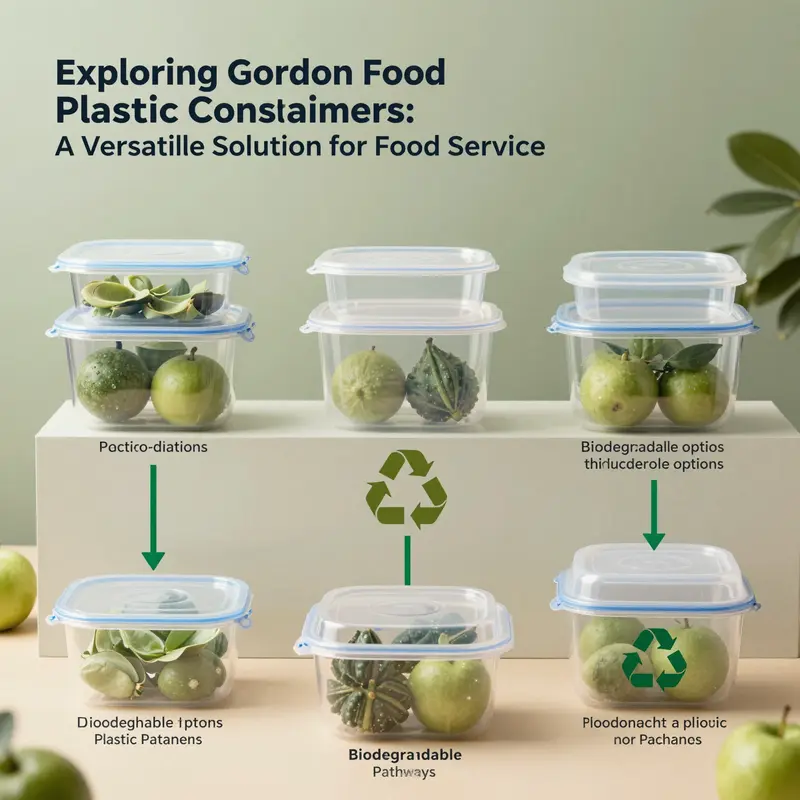
Plastic containers in commercial kitchens carry far more than the ability to transport meals. In a large U.S. foodservice distribution network, they stand as a practical test bed for how sustainability can be woven into everyday operations without sacrificing safety, cost, or performance. This chapter explores the ongoing shift from traditional, single-use packaging toward materials and practices that align with a circular economy—where used plastics are seen as inputs for new products rather than waste. It is a narrative about how a major distributor leverages recycled content, educates customers, and collaborates with suppliers to reduce the environmental footprint of its plastic containers, all while upholding the high standards required by food safety and regulatory frameworks. The throughline is simple: durable, fit-for-purpose packaging can also be environmentally responsible, and the two goals can reinforce each other when guided by clear criteria, transparent communication, and a commitment to continuous improvement.
The most visible thread in this story is the increasing use of post-consumer recycled content in food-contact plastics. Post-consumer recycled, or PCR, plastics derive from consumer packaging that has completed its first life and is reprocessed into new packaging streams. By incorporating PCR, the distributor reduces reliance on virgin plastics, which in turn lowers energy use, greenhouse gas emissions, and the depletion of natural resources. This approach aligns with broader industry movements toward circularity, where the end-of-life fate of packaging feeds back into new products rather than ending up in landfills or incinerators. The practical impact is tangible: PCR can be blended into various container families—whether in clamshells, storage containers, or sauce cups—so long as the material meets the necessary food-safety standards and performance requirements for heat resistance, leak protection, and durability. The result is a packaging portfolio that is lighter on virgin resin, more resilient in the face of the heavy-volume, high-turnover demands of restaurants and caterers, and better suited to the wear and tear of the supply chain.
At the heart of this transformation is careful material selection guided by regulatory compliance and rigorous testing. Food safety remains nonnegotiable. Containers must meet FDA-compliance expectations for food-contact plastics, ensuring that migration, odors, and contamination risks stay within established limits. Yet safety does not stand alone. The chemistry of PCR blends, the design of container structures, and the choice of resins must also support practical operation—microwaveability for reheating, dishwasher compatibility for quick turnover, and resistance to leaks or grease that can complicate handling and storage. Balancing these requirements with a rising preference for recycled content calls for close collaboration among packaging engineers, suppliers, and operations teams. The outcome is a family of products that can perform in the real world—whether in a fast-casual kitchen preparing meals for pickup, a catering operation delivering to events, or a central distribution center that handles tens of thousands of containers daily.
The shift toward PCR-enabled packaging does not happen in a vacuum. It translates into concrete choices about product configurations, labeling, and waste-management guidance that help both operators and end consumers participate in the sustainability effort. For instance, packaging choices are increasingly informed by how the end of life for a given product is likely to unfold. If a container is predominantly used for cold storage or short-term cold reheating, it may be optimized for lower energy impact over its lifecycle. If a container is designed for hot foods, the emphasis shifts to heat resistance and durability while still considering recyclability in the post-use stream. The overarching philosophy is to design packaging that fits the actual usage patterns of foodservice operations, then to direct users toward disposal or recycling pathways that keep materials circulating rather than letting them accumulate as waste.
Educational outreach accompanies the packaging itself. A sustainability program cannot rely on product innovations alone; it must also cultivate behavior that reinforces those innovations. The distributor undertakes outreach that helps customers understand why certain materials are chosen, how to sort containers for recycling or composting where applicable, and how to dispose of packaging in a way that minimizes environmental impact. This educational component extends to the broader supply chain, with guidance on supplier selection, the importance of recycled-content targets, and the role of proper labeling in enabling downstream reuse or recycling. The ultimate aim is to move from a linear model—make, use, dispose—to a more circular approach where the life of plastics is extended, and the value of materials is preserved through multiple life cycles.
An important part of the sustainability narrative is the expansion of packaging options that reflect environmental responsibility without compromising performance. In practice, this means offering a spectrum of container types—ranging from microwave-safe clamshells to leak-resistant sauce cups and secure-lid storage containers—that meet the varied needs of kitchens and the diverse requirements of customers. While many of these containers are traditionally made from polypropylene (PP) or polyethylene (PE) due to their food-grade safety, heat stability, and affordability, the trend is toward blends and formulations that incorporate PCR content. This does not erase the necessity for quality and reliability; it simply reframes the trade-offs in favor of a lower environmental footprint where achievable. In some instances, it also opens the door to alternative materials that can be recycled or composted, including systems that use bio-based components or that are designed for easier disassembly at the end of life. The result is a packaging ecosystem that remains fit for purpose while advancing sustainability goals.
To illustrate how material choices translate into real-world packaging options, consider the range of practical configurations that support different culinary workflows. For sauces and broths, leak-resistant containers with screw-on lids are preferred because they minimize spills during transit and storage. For ready-to-heat meals or gourmet takeout, microwaveable clamshells constructed from heat-stable polymers offer convenience for both operators and customers who reheating directly in the container. For long-term storage, durable snap-lid or screw-top storage containers provide reliable performance in cold environments, helping kitchens manage inventory and reduce waste due to spoilage. Each configuration must satisfy safety and performance standards while also aligning with the company’s broader goals for recycled content and end-of-life management. In this sense, container design becomes a dialogue among safety, usability, and sustainability, with PCR content as a central, measurable strand that informs trade-offs rather than a barrier to functionality.
Yet there is more to the sustainability equation than material content. The logistics of supply, the responsibility of brands, and the behavior of customers all influence the overall impact of packaging. The distributor’s approach recognizes that reducing the footprint of plastic containers requires more than cleaner materials; it requires smarter logistics, better forecasting, and partnerships with recycling and waste-management networks that can handle post-consumer plastics at scale. When PCR materials are sourced responsibly, the energy savings and emissions reductions multiply as the supply chain consolidates and pain points in recycling streams are addressed. This systemic thinking extends to labeling and product information, where operators are given clear guidance on material composition, safe-use instructions, and disposal options. Clear labeling helps prevent contamination in recycling streams and makes it easier for facilities to process containers efficiently.
The sustainability program also embraces optional packaging formats that respond to evolving consumer sentiments and legislative contexts. The industry is increasingly attentive to consumer demand for lower-waste options and for packaging that aligns with recyclability goals. This has encouraged explorations into packaging families that are lighter in weight, easier to separate into recyclable components, or compatible with composting in municipal programs where available. It is not just a matter of replacing one resin with another; it is about rethinking the entire container system to minimize waste, optimize performance, and maintain food safety. In some cases, this translates into adopting biodegradable or plant-based components, such as PLA or sugarcane fiber-based alternatives, where applicable and certified for food contact. While these materials present their own technical and regulatory considerations, they illustrate a forward-looking stance that aligns packaging innovation with environmental stewardship.
Embedded in the daily routines of kitchens and distribution centers is a practical discipline: understanding the end-to-end lifecycle of containers. Operators are encouraged to treat packaging as a resource—one that can be recovered, recycled, or repurposed rather than discarded. This requires the alignment of labeling, storage practices, and customer communication. The educational pieces emphasize that choosing recycled-content packaging is a responsible step, but it is not the final step. The next steps involve ensuring that waste streams are properly sorted, that facilities accept and process PCR materials, and that customers know how to dispose of or reuse containers after their primary use. In this sense, the packaging choice becomes a catalyst for broader waste-reduction strategies, including improved routing, efficient stock management, and consumer engagement that explains why certain packaging is chosen and how it should be handled after use.
The narrative of sustainability in plastic containers is therefore neither abstract nor purely theoretical. It is grounded in real, actionable practices that influence every link in the chain—from raw material sourcing and resin formulation to product design, manufacturing processes, and the moments of point-of-use in kitchens. It is about choosing materials that deliver safety and performance while enabling higher recycled-content targets. It is about designing for end-of-life clarity and convenience so that waste streams can be diverted from landfills and redirected toward recycling streams or energy-recovery pathways when appropriate. It is about educating customers to adopt better disposal habits and to make informed packaging choices that reduce environmental impact over the container’s entire life. And it is about continuously reassessing and refining these decisions in light of new technologies, evolving regulations, and changing market expectations.
For readers who want a practical touchstone within the packaging ecosystem, consider how a single packaging option can embody the broader sustainability goals. The following example demonstrates how a product family can integrate recycled content, maintain performance, and present clear disposal guidance. It is an illustration rather than a rule, showing how environmentally conscious design can coexist with everyday use in high-volume foodservice operations. The example also highlights the importance of supplier partnerships and consumer education in achieving deeper impact. eco-friendly disposable 3-compartment packaging box for fast food
The bigger picture is that sustainability in plastic containers for foodservice is a moving target, shaped by materials science, regulatory expectations, and the lived realities of kitchens and delivery networks. It requires attention to safety margins, performance guarantees, and cost-effectiveness, all while pursuing higher recycled content and clearer end-of-life pathways. It also demands humility and transparency: recognizing that no single solution will solve every environmental challenge, but committing to a program that reduces virgin plastic use, expands recycling opportunities, and enhances education for customers and employees alike. In this light, the packaging choices of a major foodservice distributor become a kind of proxy for a broader commitment to sustainable business practices. They show how a system—spanning procurement, product design, logistics, and customer engagement—can align with principles of environmental stewardship without compromising the core values of food safety, reliability, and value.
For those seeking to understand how such programs are organized and implemented, the external resource introduced here provides a window into the governance and standards that underpin these efforts. It offers context on how an established distributor articulates its goals, tracks progress, and communicates expectations to suppliers and customers alike. External resource: official sustainability program page
Final thoughts
Gordon Food plastic containers stand out as essential tools in the food service industry, offering a blend of versatility, durability, and sustainable options. By understanding the various types, materials, and applications, businesses can make informed choices that enhance their operations while supporting eco-friendly practices. As the food service landscape continues to evolve, partnering with a trusted supplier like Gordon Food Service can provide the necessary solutions to meet both customer expectations and environmental responsibilities.