
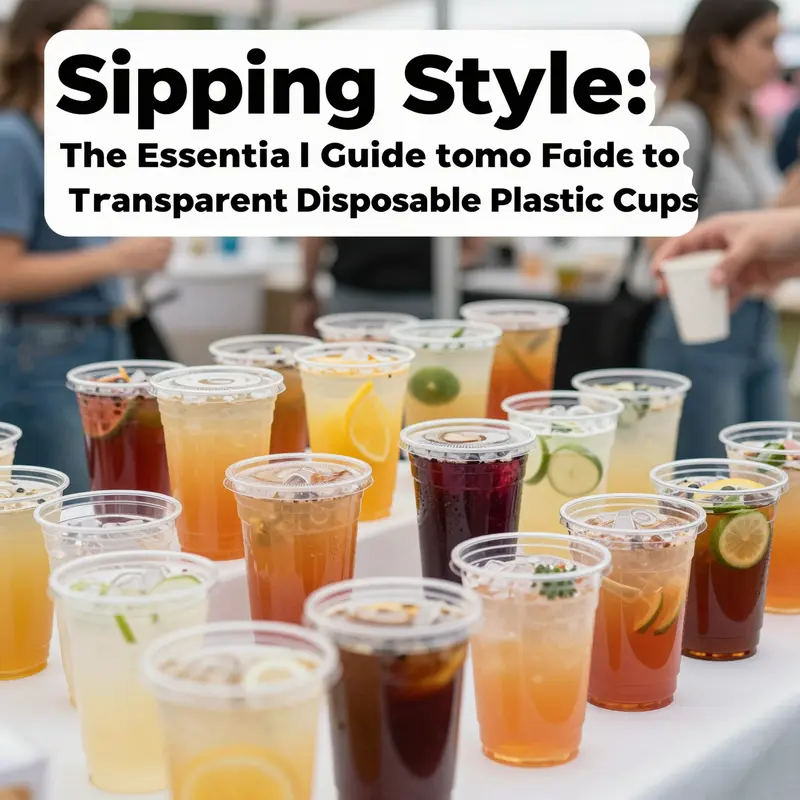
Transparent disposable plastic cups play a pivotal role in enhancing the customer experience across various sectors, including bubble tea shops, restaurants, food trucks, catering services, and corporate events. As an essential element of casual dining and on-the-go consumption, these cups not only serve practical purposes but also reflect trends in branding and sustainability. This comprehensive guide delves into the material options available, analyzes market trends and pricing, and explores the landscape of suppliers and customization features. By understanding these aspects, businesses can make informed choices that cater to their specific needs and elevate their service offerings.
Clear by Design: How Material Choices Shape Transparent Disposable Cups for Hot, Cold, and Brandful Moments

The selection of a material for a transparent disposable cup begins with the most visible attribute: clarity. A cup that looks cloudy or yellowed, or one whose walls pulse when the light hits them, betrays the compromises hidden in its composition. Clarity sets the stage for perception—consumers judge freshness by the pristine look of the cup as much as by the beverage it contains. Yet clarity alone does not decide the choice. A restaurant or event operator may require a cup that remains bright and transparent through a hot beverage, through a long service window, or through a busy takeout scenario where seconds matter. It is here that the material’s heat tolerance, thickness, and dimensional stability intersect with the ability to print branding, apply lids, or stack containers for efficient service. The four most common material options for clear, disposable cups appear in a familiar lineup. PET, or polyethylene terephthalate, is the good fit for cold drinks, appreciated for its high clarity, light weight, and solid tensile strength. It is recyclable in many municipal streams, which adds to its appeal for brands that want to emphasize a responsible lifecycle for their cups. But PET has a realistic boundary: its heat resistance is moderate, which makes hot beverages a risk for deformation or softening if a cup is not engineered with particular wall thickness or a careful design. For hot drinks, the more thermally resilient plastic—PP, or polypropylene—often takes the lead. PP maintains structural integrity at higher temperatures, tolerates steam and hot pours, and holds its shape in both single-serve coffee service and longer service windows. It can be molded into a range of shapes and thicknesses while staying lightweight, a combination that keeps costs in check when large volumes are produced. This makes PP a natural partner for cups intended for hot coffee, tea, or other heated beverages where the cup’s performance under heat is as important as its appearance. Then there is PLA, a biodegradable option derived from renewable resources. PLA can deliver a clear, glossy finish similar to traditional plastics, yet its heat resistance generally does not match PET or PP. PLA finds its strength in environmental positioning: it can be marketed as compostable under industrial conditions, offering a path for brands that want to align with sustainability narratives. However, there is a caveat. Industrial composting facilities are not universal, and the conditions required for PLA to degrade efficiently depend on local facilities and waste management infrastructure. If a consumer stream does not route PLA into the appropriate anaerobic or composting process, the material may behave similarly to conventional plastics in terms of environmental persistence. Finally, PS, or polystyrene, has historically been used in some transparent cups but is often avoided for higher-end clear tasks because of brittleness and lower impact resistance. Very thin PS cups can be economical and clear, but their durability under stress, or when stacked, can be limited. The economics of PS must be weighed against user experience and breakage risk, particularly in high-traffic settings or when cups are handled by staff who are not always mindful of delicate wares. In practice, the material choice is rarely a simple duel between clarity and cost. It is a careful negotiation among clarity, durability, heat tolerance, printability, and end-of-life outcomes. In that negotiation, the shape, thickness, and forming process play critical roles as well. A cup can be designed with a thicker wall to withstand heat or to improve insulating properties, but additional thickness can alter transparency, increase material use, and impact stacking efficiency. Conversely, a thinner wall may improve visibility and reduce material use, but it can compromise rigidity or heat performance. The interplay between thickness and wall design is a discipline in its own right, one that often determines how a cup behaves with hot beverages, how easily it can be printed with a logo or other branding elements, and how well it performs during takeout and delivery, where it must resist leaks and maintain integrity while being transported. Beyond the material itself, the capacity and shape of the cup matter. Most operations lean toward a standard set of volumes that correspond to common drink sizes, from smaller cold beverages to larger hot portions. The interior geometry must accommodate expansion of hot liquids, the potential for carbonation, and the need to hold a smooth surface for branding. The surface finish is another critical factor. A crisp, continuous surface makes logo reproduction more precise and durable during handling and consumption. Printing on transparent cups is a refined art that relies on compatible surface chemistry and a surface that remains stable under the printing process and the beverage’s time in the cup. The choice of material can either enable or constrain the printing system used. PET and PP are known to accept many conventional printing methods, from pad printing to digital printing, and even heat stamping, if the wall thickness and surface preparation are appropriate. PLA can accept similar processes, though the heat profile must be carefully controlled to avoid softening the material during printing. The printing compatibility, in turn, feeds into branding strategy. A brand may wish to showcase a vivid logo, a gradient color band, or a textual message that reinforces a moment of hospitality. The ability to render these designs clearly on a transparent surface plays into the cup’s effectiveness as a branding instrument. In a crowded market, where customers encounter dozens of disposable cups during a single visit, the ability to reproduce a brand’s identity in a way that remains legible as the cup exchanges hands becomes a subtle but important competitive differentiator. The material choice also has a life-cycle consequence. PET’s recyclability is a strong argument for circularity-minded operators who want to close the loop on plastic waste. The recycling stream for PET typically involves collection, cleaning, and reprocessing into regranulate that can be used for new containers or other packaging products. The catch is that different recycling systems exist across regions, and acceptance depends on local policy and infrastructure. The demand for clear, optically pristine PET can drive a high-quality recycling yield, provided the cups are sorted and separated from other plastics. PP, while widely recyclable, may enter streams that favor other forms of polypropylene packaging. Its recyclability is well understood, but the degree to which it can re-enter beverage packaging varies by locale. The environmental argument for PLA rests on its renewable origin and compostability. Yet the practical reality is nuanced: PLA’s end-of-life outcome requires appropriate composting facilities, which are not universally available. If PLA ends up in a standard landfill or a recycling stream that cannot process it, the environmental benefit may be diminished. PS, though less common in premium clear cups, raises concerns about brittleness and end-of-life management. In many markets, PS is less favored due to lower recyclability and a higher propensity for fragmentation. A business choosing PS must weigh those concerns against short-term cost and performance in very specific contexts. The practical choices are not made in a vacuum. They are driven by the intended use, the service model, and the supplier ecosystem. For hot beverages, PP often emerges as the pragmatic choice because it holds up under heat without sacrificing too much transparency or rigidity. For cold beverages with a premium, glass-like appearance, PET is a natural fit, provided heat exposure remains minimal. For brands signaling environmental responsibility, PLA offers a compostable path, but only if the waste management stack supports industrial composting. For very budget-conscious, low-durability occasions, PS may still be used, but its weaknesses in clarity under stress and in durability are a common finding among operators who have tested it under real-world conditions. In practice, the most successful programs combine a design-and-material strategy with a careful assessment of how cups will be used, stored, transported, and discarded. The service model matters as much as the material. A takeout-focused operation may optimize for lean production, strong lid compatibility, and a stacking-friendly geometry that reduces bulk and handling costs. A dine-in or event-focused operation may lean toward cups with higher wall thickness for a premium feel and better heat tolerance, even if that means a slightly heavier product. A brand that emphasizes sustainability might commit to a PLA option and pair it with a clear labeling scheme that educates customers about composting. Each path has implications for procurement, supplier selection, and the downstream waste stream. Printing and customization add another layer of complexity. Transparent cups often serve as surfaces for branding and information, and how well those designs hold up under use depends on the printing method and the surface’s chemistry. Some materials push printing to the limit, enabling vibrant, durable designs that survive the handling, stacking, and washing cycles of service environments. Others may require compromises, such as lighter inks or thinner layers, to avoid cracking or delamination during use. The final material choice thus informs not only the cup’s performance and look but also the feasibility of achieving consistent, scalable branding across thousands or millions of units. It is here that supply networks and manufacturing capabilities become central. In a mature market, a diverse supplier base can offer PET, PP, PLA, and even PS options with different wall thicknesses, diameters, and accessory compatibility. This allows operators to tailor a portfolio of cups to specific venues, drink types, and service channels. A strong supplier ecosystem can also provide insights into color and printability tests, regulatory labels, and packaging constraints that influence how a cup is used and promoted. For a business planning a large event or a long-term program, it may be strategic to pilot several material options with a representative customer cohort. That approach lets operators observe user perception, how branding holds up visually during service, and how the cups perform in real-world handling and transport. It is also worth noting that this decision space is not static. Advances in polymer science, recycling technologies, and waste management policies continually reshape what is feasible and desirable. New blends, improved clarity, and enhanced heat resistance can shift the balance toward options that were previously marginal. In the meantime, the clarity of the cup remains a core requirement. Consumers expect to see the beverage they ordered, and the cup must not distort that perception. The material must also integrate with branding strategies that rely on a crisp surface for logos, color, and message. The result is a cup that is as much a passive carrier as it is a marketing tool, a tiny stage that supports a beverage and the story the brand wants to tell. For those exploring the practicalities of procurement and design, a reference point is the breadth of choices made by large-volume suppliers who emphasize customization and reliable dispatch. They offer varied wall thicknesses, diameters, and capacity options, along with a suite of customization services for printing, labeling, and packaging. The market’s flexibility reflects the diverse demands of cafés, catering outfits, event organizers, and online sellers who require scalable solutions, sometimes at aggressive price points and sometimes with premium finishes for special occasions. In this context, material choice is not a mere technical decision; it is a strategic lever that affects branding, customer experience, operational efficiency, and environmental impact. The chain from raw resin to a finished cup to a customer’s hand is bridged by careful engineering, thoughtful design, and a clear-eyed view of end-of-life outcomes. This is how a transparent cup, when chosen with intention, can help a business tell a more coherent story—one that respects the drink, supports the brand, and respects the world that will inherit the waste. The opportunity lies in recognizing that each material path offers unique advantages and caveats, and that a well-considered mix of options—guided by use case, temperature exposure, branding ambitions, and waste infrastructure—can yield a portfolio of cups that perform consistently across shifts, events, and channels. In the end, material choice reinforces the human experience of drinking: the cup is a vessel for enjoyment, for hospitality, and for the shared ritual of a beverage moment made clear by design, not just by transparency. To explore practical examples of how these cups appear in market catalogs and to see how some operators weave material, printability, and service requirements together, you can consult a representative product page that highlights the intersection of form, function, and branding in transparent cups. disposable-clear-plastic-cup-outdoor-picnic-pet-cup-drinking-cup-for-parties-birthdays-weddings-camping-utensils. This kind of resource helps bridge the theory of material properties with the practice of sourcing for large-scale operations and niche events alike, while reinforcing the idea that what a cup is made from will ripple through to customer perception, handling efficiency, and even the end-of-life story it carries.
External reference for further depth on material properties and end-of-life considerations: https://www.alibaba.com/product-detail/Plastic-Cup-Material-Options-and-Properties_1600758931475.html
Seeing Through the Market: How Demand, Regulation, and Innovation Shape Transparent Disposable Cups and Their Prices
Transparent disposable plastic cups sit at a critical crossroads of everyday utility and long-term sustainability. They are the simplest of tools for serving a cold coffee, a hot tea, a fruit smoothie, or a delicate dessert, yet the market dynamics behind them reveal a complex web of choices, constraints, and strategic moves. The chapter that follows unspools how consumer preferences for visibility and experience intersect with regulatory pressure, material science advances, and the economics of scale. It is a narrative that helps explain why a seemingly straightforward product can carry a wide spectrum of prices, designs, and practical features, depending on where and how it is produced, and for whom it is intended. In this sense, the story of transparent cups is less about a single product and more about a living system where materials, production methods, branding opportunities, and policy targets continuously reshape what customers pay and what suppliers deliver.
At the heart of the market is a substantial and expanding global demand. Recent industry analyses place the disposable cup market well into the tens of billions of dollars, with projections showing meaningful growth into the next decade. Growth is driven by urbanization, a shift toward on-the-go lifestyles, and the enduring appeal of food service and hospitality—segments that increasingly prize speed, convenience, hygiene, and consistent presentation. Emerging markets, particularly in Asia, are pivotal to this expansion. In these contexts, the appeal of transparent cups hinges on their ability to showcase color, texture, and composition, turning a drink into a vivid visual experience. This clarity is not merely a cosmetic preference; it is a branding and merchandising tool. A beverage can be judged by what it looks like through the cup as much as by what it tastes like, and the transparency of the cup becomes a stage for producers, retailers, and even event organizers to communicate quality, freshness, and style.
Material choice dominates the technical and economic performance of transparent cups. The most common plastics used are polypropylene (PP), polyethylene terephthalate (PET), and polystyrene (PS). Each material brings distinct advantages and trade-offs. PP is renowned for its heat resistance and general durability, making it a versatile choice for hot and cold beverages alike. PET is prized for its clarity and strength in cold applications, which makes it a preferred option when seeing the drink inside matters most—coffee crema, tea gradients, or layered smoothies all benefit from high visual fidelity. PS, often prized for its crisp clarity and cost efficiency, remains a staple for certain low-cost, high-volume applications. Yet, in parallel with the demand for clarity, the industry is increasingly attentive to the environmental and health narratives around PS, which are pushing many buyers to assess alternatives.
This evolving preference landscape has accelerated interest in more sustainable materials and processes. PLA (polylactic acid) and PBAT (polybutylene adipate terephthalate) surface in policy discussions and product development as potential eco-friendly alternatives. They are not yet as widely deployed as the traditional options in all markets, and their higher baseline costs reflect current process and feedstock realities. However, the trajectory is clear: policy frameworks and consumer expectations are nudging manufacturers toward materials that can perform in the same roles while offering improved end-of-life outcomes. In the Chinese market and beyond, double carbon targets and related regulatory ambitions are reshaping cost structures and investment priorities. They encourage producers to explore bioplastics, increased recyclability, and more energy-efficient manufacturing practices. The implication for buyers is a broader set of choices, but also a greater need to balance price, performance, and sustainability across different regions.
Pricing, perhaps more than any single specification, reveals how these forces converge. The market exhibits a wide spread in unit costs, reflecting differences in material, capacity, design, and order scale. A basic cup destined for everyday use in low-volume settings can be priced in a narrow band, while high-volume orders with custom printing, thick walls for enhanced durability, or special shapes can rise to considerably higher price points. The price gap is not merely a function of raw material cost; it also reflects processing complexity, coating or printing options, and the logistical demands of international distribution. In other words, two cups that look similar on the surface can diverge dramatically in total cost when one is optimized for visual impact through branding, while the other is engineered for maximum break resistance and heat tolerance.
Regional dynamics compound these differences. In markets with strong demand for hot beverages, such as certain high-traffic urban centers, heat resistance and safe handling of hot liquids are crucial. PP cups perform well in these contexts, offering reliability at a competitive price. In markets with a premium on presentation, clear PET cups with high glass-like transparency and thicker walls to reduce flex and spill risk can command premium pricing, especially when paired with lids, printing, or branding customization. The consumer perception of value in these contexts is closely tied to how well the cup communicates quality and care, which in turn feeds into willingness to pay. For manufacturers, this translates into a dual objective: optimize for cost efficiency at scale while maintaining the flexibility to offer customized solutions that align with brand storytelling and consumer experience.
The distribution and supply chain dimensions also shape pricing. Transparent cups are widely produced in high-volume, standard formats, enabling economies of scale that drive unit costs down. Yet, global supply chains face volatility—from raw material fluctuations, to shipping costs, to safety and regulatory compliance. Smart production systems and flexible manufacturing capacities help cushion these pressures. When plants are designed to switch quickly between line configurations, they can respond to sudden shifts in demand, such as a spike in a particular size or a surge in custom-print runs for events. This flexibility is increasingly valuable in a market that prizes both speed and customization. The result is a pricing environment in which buyers may see stable baseline costs embedded within a broader variability band driven by design choices, regional factors, and the cadence of orders.
Quality and design trends also influence price signals. There is growing consumer and client emphasis on durability, particularly for on-the-go use where the cup must resist cracking, warping, or leakage under varied thermal and mechanical stresses. This has spurred a preference for thicker walls in many standard formats, especially in regions with a high incidence of hot beverages or rough handling in delivery channels. The thicker-walled variants not only perform better but also convey an impression of robustness, which can justify higher unit costs when brands seek premium positioning. At the same time, consumers increasingly value the transparency as part of the sensory experience—the ability to see the color, texture, and even layer integrity of beverages. Transparent cups extend this visual advantage into a branding canvas when companies print logos, seasonal motifs, or promotional graphics on the cups themselves or via lids and sleeves. While customization raises per-unit costs, it also unlocks branding potential and can translate into higher overall order values in events, hospitality, or boutique retail contexts.
From a policy and sustainability standpoint, the economics of transparency are entangled with environmental considerations. The environmental debates surrounding PS have intensified scrutiny of single-use plastics, pushing buyers to consider alternatives where feasible. Some buyers tilt toward PP or PET solutions that still deliver consumer-visible clarity and reliable performance, but with better compatibility with recycling streams or lower life-cycle risk profiles. The broader push toward recyclable or compostable packaging further adds a dimension to pricing: the added end-of-life management costs, potential container-deposit schemes, and the need for recyclable resin streams all influence total cost of ownership over the product’s lifecycle. In many regions, regulators encourage packaging that can be collected and processed through established waste systems. Those conditions encourage manufacturers to invest in more recyclable formulations and to explore post-consumer recycling partnerships. For buyers, that can mean a premium now with expected cost stabilization later if supply chains mature and technology scales, but it also presents a clear incentive to balance immediate procurement needs with long-term sustainability goals.
A nuanced view of the market recognizes that pricing is not a single gradient but a spectrum shaped by choice, circumstance, and collaboration across the value chain. In practice, buyers face decisions about material trade-offs (clarity versus heat resistance versus cost), about whether to prioritize standardization for the sake of price competitiveness or customization for brand impact, and about whether to pursue recyclable or compostable options that may entail higher upfront costs but potential long-term benefits in terms of waste management and public perception. Suppliers, meanwhile, navigate a portfolio of demands—the need to serve large-volume customers with predictable pricing while maintaining agility to fulfill bespoke runs, and the urge to innovate with bioplastics or advanced coatings that could improve end-of-life outcomes but require capital and process investments that push up unit prices in the near term.
In the end, the pricing narrative for transparent disposable cups is a reflection of how modern manufacturing, consumer desire for clarity, and policy ambitions converge. The market rewards efficiency and reliability, but it also values the capacity to tell a brand story through packaging. The most successful participants are those who can offer a package of features—clear visibility, consistent performance in varied beverage contexts, appropriate heat tolerance, reliable compatibility with lids and branding options, and a clear path to sustainable disposal—that resonates with buyers’ immediate needs and longer-term aspirations. This balance often appears in the form of tiered offerings: a core, cost-conscious line that emphasizes standardization and speed, plus premium variants with enhanced rigidity, superior printability, or specialized shapes. In markets where customers demand a premium experience or a strong brand wink, the price can reflect more than material costs; it can capture the storytelling value of the cup as a canvas for the drink inside.
For practitioners and researchers looking to deepen their understanding of this evolving landscape, the dialogue between material science, packaging design, and policy frameworks is especially fruitful. Technical innovations in surface treatments, wall thickness optimization, and compatibility with advanced lid systems promise to push performance while controlling costs. Meanwhile, regulatory signals—from recyclability targets to bioplastic adoption incentives—offer a compass for future investment and product development. The net effect is clear: transparent cups will continue to be a dynamic product category, with pricing that mirrors not only raw material costs but also the broader social and environmental narrative surrounding packaging in the 21st century.
As buyers weigh options, a practical lens focuses on how to translate market signals into procurement decisions. A cost-optimized strategy in this space must account for the intended use, the desired visual impact, and the expected lifecycle. A simple cold beverage in a high-visibility setting may justify a mid-range cup with good clarity and decent wall thickness, while a premium event that aims to convey luxury and precision might deploy thicker walls, higher clarity, and customized branding. And as supply chains evolve and technologies mature, the price bands are likely to compress in some dimensions while expanding in others, depending on how quickly bioplastics scale and how efficiently recycling streams can absorb higher volumes of used cups.
For readers seeking deeper technical and sector-specific context, an online reference provides an extensive view of the technical specifications, quality standards, and practical applications of 400ml disposable cups. This resource can illuminate performance benchmarks, material properties, and processing tolerances that underlie pricing decisions and product development strategies. External readers may explore the technical information linked at the end of this discussion to ground their procurement or R&D in concrete performance data.
Internal link note: supply chain players often offer customized takeaway packaging and disposable tableware that align with branding strategies and event needs. See this example of a supplier offering tailored takeaway packaging and disposable tableware: custom takeaway packaging supplies and disposable tableware.
In summarizing the market dynamics for transparent disposable cups, several core ideas emerge. First, consumer demand for visible, premium beverage presentation drives a premium segment that values clarity and aesthetics alongside durability. Second, regulatory and environmental considerations are not peripheral; they actively shape material choices, end-of-life options, and long-term price trajectories. Third, the economics of scale, production flexibility, and branding opportunities create a wide price spectrum, making the category a fertile ground for both volume-driven and value-driven procurement approaches. Fourth, ongoing investment in smarter manufacturing and sustainable materials holds the potential to reshape cost structures over time, even as new regulatory requirements and consumer expectations push the industry toward more responsible packaging solutions.
Together, these threads paint a picture of a market that is less about a single price tag and more about a continuum of possibilities. A buyer can pursue a cost-efficient standard cup for routine service, a robust, high-clarity option for premium settings, or a blended approach that balances price, performance, and sustainability. A supplier can navigate this spectrum by building flexible production lines, investing in branding-friendly printing capabilities, and exploring collaborations that bring recyclable or compostable options to scale. The chapter thus argues that transparency is not only a physical attribute of the cup but a strategic metaphor for the packaging economy itself: what is visible through the cup is a reflection of the choices behind it.
For readers who want to explore further outside the immediate market dynamics, a broader technical resource offers in-depth data on the specifications and performance of 400ml disposable cups, enriching the discussion with concrete metrics and comparative benchmarks. This external resource provides a foundation for practitioners to calibrate their own product development, supplier selection, or procurement strategies in light of measurable performance criteria and evolving market expectations.
External resource: https://www.example.com/inside-400ml-plastic-cup
Bridging Brands and Bulk: The China-Centric Supplier Landscape and the Language of Customization in Transparent Disposable Cups
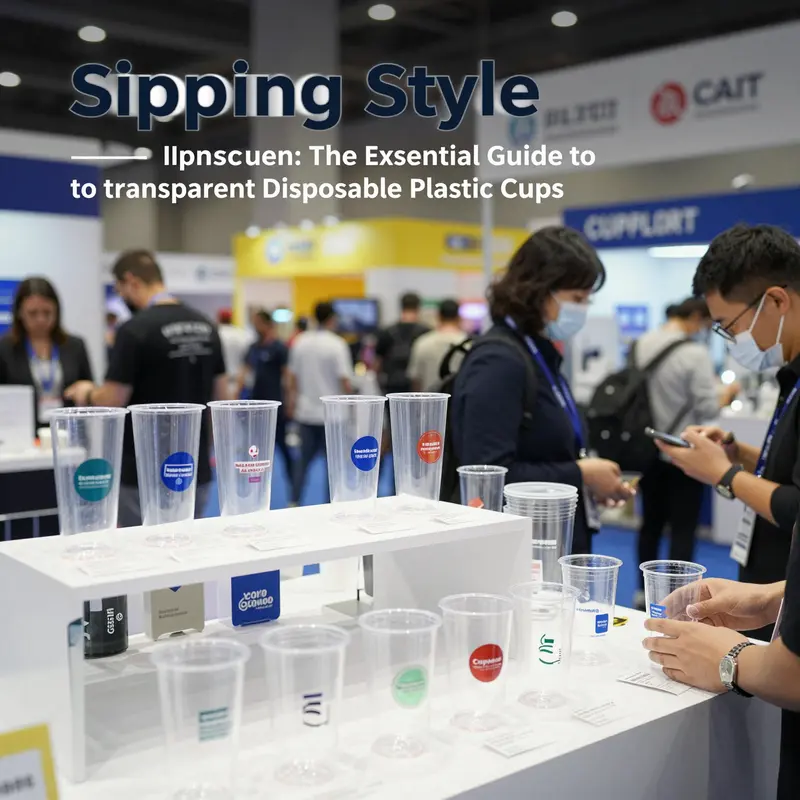
The market for transparent disposable plastic cups is not just about clear walls and even rims. It is a living map of global manufacturing, logistics, branding, and memory-making moments—moments at weddings, backstage catering, coffeehouses, and crowded festivals where a simple cup carries a brand story as vividly as the beverage inside. The supplier landscape that underpins this ubiquitous product is, in broad strokes, China-centered, but nuanced by regional strengths, port access, and a sophisticated ecosystem that ranges from raw material sourcing to high-speed mold engineering, through to finish packaging and international shipping. In practice, this means a chain that starts in the eastern and southern corridors of the country, in regions such as Zhejiang and Guangdong, with Ningbo and its adjacent zones serving as strategic hubs for export. Producers here lean on a tightly integrated supply chain: access to food-grade polypropylene (PP), PET, and, increasingly, compostable bioplastics like PLA, followed by rapid injection-molding cycles, precise temperature controls, and a packaging and logistics network that can deliver bulk orders with remarkable reliability. The proximity to major ports—Ningbo-Zhoushan on one coast and Guangzhou on the other—translates into shorter lead times, smoother export clearance, and a cadence of shipments that aligns with large event seasons, promotional campaigns, and seasonal spikes in hospitality demand. This is not a static picture but a dynamic system that can scale from a few thousand units for a boutique café to tens of millions for global event organizers. The most important feature of this landscape is its end-to-end capability. Suppliers can guide a buyer from the earliest decisions about whether PP, PET, or PLA best suits the intended use, through the labyrinth of sizes, shapes, and wall thicknesses, and onward to color, print, lid compatibility, and even sleeves or secondary branding touches. In practice, these capabilities are not merely about producing a clear cup; they are about delivering a platform that can support a client’s branding and service model across multiple channels—takeout, delivery, in-store consumption, and pre-packaged service at large venues. The choice of material has implications beyond mere durability. PP is widely preferred for general use due to its impact resistance and heat tolerance, while PET is favored for its clarity and rigidity in cold beverages. PLA, when chosen, signals a sustainability intent, albeit with trade-offs in heat resistance and cost. The design language—wall thickness, diameter, and lobed or octagonal shapes—speaks to the user experience, not just the cup’s container function. Within this ecosystem, customization sits at the center of the value proposition. Suppliers routinely offer a range of sizes, from smaller 180 ml (roughly 6 oz) to mid-range 400 ml and up, with some lines extending into larger capacities to accommodate “big bucket” formats used in fairs or large events. The geometry of the cup matters as much as its clarity because it influences stacking efficiency, ease of handling, and the perceived premium of the brand when a logo is printed in vibrant, food-grade inks. The market’s customization language is robust: you can select from a spectrum of diameters, typically in the 70 mm to 95 mm range, and a variety of shapes beyond the classic round—octagonal or even more stylized silhouettes that optimize grip and visibility on a bustling banquet table. Printing isn’t an afterthought; it is a core capability. Full-color, edge-to-edge branding with food-safe inks can turn a simple cup into a mobile billboard, turning a generic takeout moment into a branded experience that travels to markets, conferences, and pop-up events. The integration of lids and accessories further amplifies customization. A compatible, well-sealing lid is often essential for hot beverages, for takeaway reliability, or for beverage programs with straws, sleeves, and designed straw apertures. This is where suppliers’ flexibility shines: lids, straws, and even branded sleeves can be embedded with a brand’s palette to create uniformity across all touchpoints. Such alignment lowers the cognitive load for customers who encounter a brand across different venues or channels and reinforces a cohesive consumer experience. The economics of customization are carefully balanced through MOQs and production efficiencies. On the lower end, some materials and designs can be produced at modest minimums, especially in markets accustomed to quick-turnaround campaigns. But the more ambitious the branding—full-color logo, multiple print areas, specialty shapes—the higher the plumb depth of the MOQ. The numbers matter because they anchor a company’s procurement strategy. In many cases, MOQs begin around the five- to ten-thousand-unit mark for standard, non-customized lines and stretch to the hundreds of thousands for fully customized, color-printed cups with bespoke lids and packaging. For bulk plastic orders, MOQs can climb into the 100,000-piece range, a scale that finally enables the unit economics making branded campaigns viable at scale. The practical upshot is clear: for a café launching a seasonal line or a festival rolling out a new sponsorship, a partner who can guarantee consistency, color fidelity, and reliable lead times is almost as critical as the beverage itself. Buyers in this space are increasingly discerning about the entire procurement journey. The process often begins with a catalog or a product page that showcases a spectrum of options, including the core choices of PP and PET versus PLA-based plastics, alongside wall thickness, ribbing features for grip, and the availability of “hot or cold” compatibility. The next step is sampling—an essential warm-up that confirms fit with the brand’s color palette, ink tolerance for logos, and the physical feel of the cup in a real-world setting. The sampling phase is where risk management begins to play out. A brand will want to test not only aesthetics but stability under practical conditions: whether a printed cup holds up to sunlight without fading, how it performs in a heated beverage scenario, and whether the printed artwork remains legible after repeated dishwashing simulated cycles for reusable-looking lines. The suppliers in this space are accustomed to such tests. They routinely offer sample runs and then scale to production, balancing speed with quality control. The procurement platforms that facilitate these transactions—well known to buyers around the world—further streamline the process. Alibaba’s ecosystem and Made-in-China access points are frequently cited as gateways to verified suppliers, with Diamond Members, audited credentials, and established buyer-repeater statistics. These platforms allow buyers to compare raw material options, wall thickness, printing capabilities, and MOQs in one place, while also enabling secure payment methods and traceable orders. Yet even with these efficiencies, due diligence remains essential. Buyers must assess a supplier’s track record for reliability, the stability of their supply chains, and the degree to which they can scale from a couple of thousand units per month to tens of millions. A common proxy for reliability is a history of high repeat buyer rates and time-tested logistics performance, including the ability to dispatch quickly and consistently—claims often supported by documented dispatch windows and samples of fast shipping, such as 72-hour dispatch promises from certain manufacturers focusing on international markets. Within this spectrum of capabilities, the role of a regional cluster becomes evident. The Zhejiang corridor, for instance, is a hotbed of mold engineering and high-speed injection molding, enabling a rapid transition from concept to finished cup. Guangdong, with its dense manufacturing network, complements this with a broad base of suppliers able to manage high-volume orders and complex branding packages. Ningbo, as a port city, serves as a logistics crossroad that helps synchronize production with shipping lanes and customs processes. Together, these regions create a resilient, responsive supply chain that can absorb demand shocks—whether caused by a sudden surge in catering for a festival or an end-of-year hospitality push—without compromising the consumer-facing experience of the cup itself. A practical lens on this landscape helps explain why a global buyer might converge on China for transparency—and for a customizable, scalable offering. The economics of scale are clear: a supplier that can produce in large volumes with tight tolerances, while also offering a broad selection of materials and printing options, can price aggressively on unit cost, enabling brands to maintain margins even as they pursue high-visibility campaigns. These advantages are often visible through price bands in the production ecosystem. For instance, basic cup formats in smaller sizes may be priced quite low in high-volume contexts, while larger, premium, or highly customized options command higher unit costs. The numbers are not arbitrary; they reflect the realities of materials, tooling, and color fidelity, as well as the energy and precision embedded in modern production lines. For buyers, the implication is that the decision to customize goes beyond aesthetics. It is a strategic financial calculation that accounts for brand impact, customer perception, and the ability to manage inventory across multiple sales channels. The supplier landscape also accommodates startups and scale-ups through flexible MOQs and easy integration into established procurement workflows. For startups, a tiered approach can be employed: begin with a modest, clearly branded line in a small set of sizes to test consumer response, then expand the footprint as demand grows. For established brands with an appetite for global events, the path is often to lock in a few trusted suppliers able to deliver across regions, with a consistent color story and reliable objective measurements—thickness tolerances, print endurance, and fit with lids and accessories. All of this requires robust quality control, clear documentation, and certification where applicable. Food-contact materials standards, traceability records, and clear communication about packaging and logistics all contribute to a smoother relationship between buyer and supplier. In many cases, buyers will request traceable supply lines and documentation showing compliance with food-safety standards. Suppliers understand this demand and respond with transparent product specifications, material safety data, and test results that reassure clients about regulatory compliance, which in turn reduces the friction of international shipments and customs checks. The buyer’s ecosystem also includes the branding layer—the language that makes the cup more than a container. A cup becomes a canvas for identity when a brand adopts a full-color print, a cohesive color scheme, and a design that complements the beverage experience it accompanies. The ability to combine a clean, transparent PET or PP cup with a branded lid, matching sleeve, and color-consistent printing creates a multi-item suite compatible with a brand’s packaging family. This alignment helps ensure that a consumer’s first impression—whether at a café counter, a festival booth, or a hotel concierge station—echoes the same visual language as the brand’s signage and digital assets. It is precisely this synergy between product engineering and branding that explains why many buyers treat supplier selection as a core strategic decision rather than a simple sourcing step. Beyond the factory floor, the market’s agility is equally anchored in the availability of verified suppliers, procurement platforms, and transparent pricing. An example that often surfaces in industry discussions is a supplier network offering transparent pricing on standard cup formats while simultaneously presenting a path to customization that aligns with a brand’s design language. Buyers can leverage this mix to optimize both cost and impact. A realistic purchasing scenario for a mid-size event company illustrates the interplay: the company begins with a standard cup line in a 250 ml format for everyday service, then scales up to a 400 ml night-out or festival cup, and finally sponsors a branded line for a large expo, including a lid and straw combination that complements their beverage program. The procurement team negotiates MOQs aligned with their event calendar, requesting samples to verify print fidelity under venue lighting and ensuring color accuracy against their brand’s media assets. In this way, the supplier landscape becomes a strategic partner rather than a mere supplier. As readers explore concrete possibilities, a practical point of reference for understanding the spectrum of product options and customizations can be found on a product page that showcases a disposable clear plastic cup designed for outdoor events. This page exemplifies how a single cup model can be adapted for different contexts, from weddings to picnics, and how branding elements—logos, colors, and artwork—can be integrated into a single, coherent product family. See the disposable clear plastic cup product page for outdoor events for a vivid example of how design and utility intersect in this space. For those who want to understand the broader procurement ecosystem from a vendor’s perspective, an external resource on wholesale plastics and sourcing offers guidance on compliance, sourcing pathways, and supplier verification practices that buyers can apply to their own supplier selection processes. External resource: https://www.alibaba.com/showroom/wholesale-plastic-cutlery-suppliers.html. Finally, it is useful to close with a reminder that the cup is the most ubiquitous of vehicles. It travels across borders, languages, and policies, yet remains a familiar touchpoint in every hospitality encounter. The China-centered supplier network, with its depth of capabilities in materials, molding, customization, and logistics, supports a global business environment that demands speed, consistency, and a narrative on brand value. The result is a market where a simple, transparent cup does not merely hold a drink; it carries a brand’s promise, a moment of hospitality, and a memory that lingers in the mind of the consumer long after the beverage has been consumed. This is the essential truth of the supplier landscape for transparent disposable cups: it is not just about producing a clear container, but about orchestrating a reliable, scalable, and brand-aware supply chain that can translate design intent into tangible, memorable experiences that travel with the consumer wherever they go. See the linked product page to appreciate how this translation looks in practice, and consider how your own branding brief might be realized within this highly adaptable ecosystem.
Final thoughts
In conclusion, transparent disposable plastic cups are more than just a serving vessel; they are a strategic asset for businesses in the beverage and food service industry. By choosing the right materials, staying informed about market trends, and exploring customization options, brands can enhance their visibility and customer satisfaction. Whether you’re running a small bubble tea shop, catering services for events, or a large chain restaurant, selecting the appropriate cups can make a significant difference in your service delivery. Empower your business by choosing solutions that align with your brand, ensure quality, and meet consumer demands.