
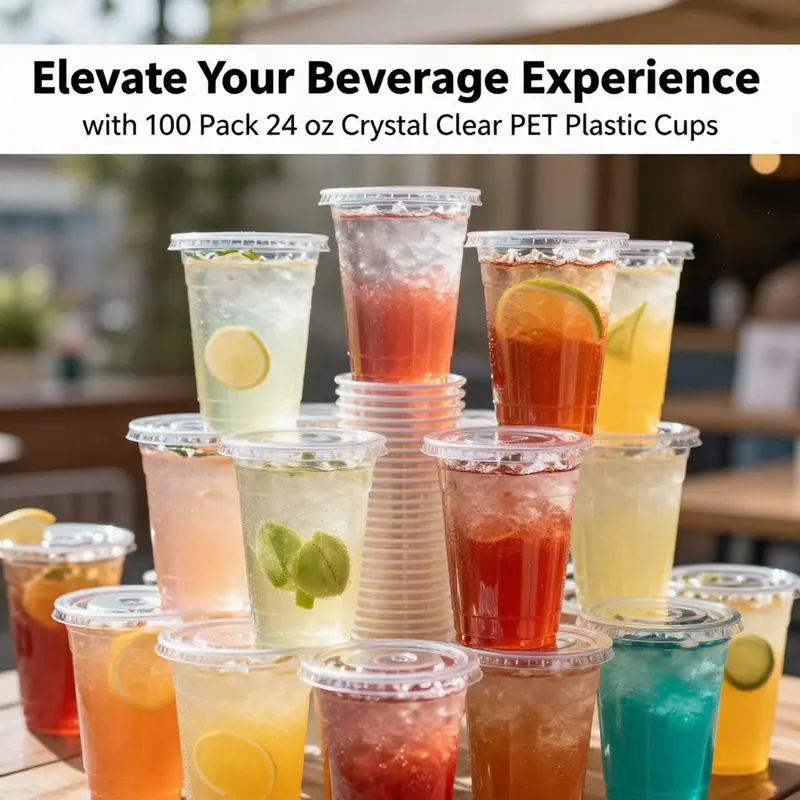
100 pack 24 oz crystal clear PET plastic cups are perfect for beverage-centric businesses like bubble tea shops, restaurants, and catering services. Their lightweight yet sturdy construction makes them ideal for serving a variety of beverages, catering to customers’ needs while facilitating quick clean-up. As we explore the material science, applications, economic impact, environmental considerations, and market trends associated with these versatile cups, you’ll see how they can elevate your beverage service to new heights.
Crystal Clarity, Heavy-Duty Convenience: The Science Behind 24-Ounce PET Cups in a 100-Pack
The 100-pack of 24-ounce crystal-clear PET cups sits at the intersection of materials science and everyday practicality. They are not just bulk items for parties; they embody a deliberate choice of material, form, and process that makes a simple beverage feel more presentable, more controllable, and more manageable for hosts, caterers, and families alike. At the heart of these cups is PET, a thermoplastic polymer renowned for its clarity, light weight, and dependable strength. When you lift a full 24-ounce cup, you feel how the material resists bending and cracking, how the walls retain their shape under a typical breeze and a steady pour, and how the cup remains nearly invisible in front of the drink’s color. This is no accident of design. It is a consequence of the interplay between polymer science and precise manufacturing, tuned to deliver a product that performs reliably from the first pour to the last wipe of a table.
Clarity matters as much as toughness in a beverage vessel. PET’s high transparency is not a cosmetic feature alone; it enhances the consumer experience by allowing the drink’s hue to shine through — the deep amber of iced tea, the ruby glow of a fruit punch, the gradient of a layered cocktail, or the dark shimmer of cola. In a catering scenario, this visual appeal can guide guests toward certain options, while the clear walls help servers quickly confirm that a refill is needed for the same guest without exposing spilled or mixed contents. The 24-ounce capacity further reinforces this experience by reducing the frequency of refills during events, a practical advantage that translates into smoother service and less interruption in the flow of a gathering. Crave-worthy presentation, when paired with reliable containment, becomes part of the overall event choreography rather than an afterthought.
From a materials perspective, PET’s barrier properties set these cups apart from many other disposable options. The polymer forms a snug barrier against moisture and gas transfer, helping to preserve the beverage’s freshness and flavor across a range of drinks. The same barrier property helps keep carbonated beverages from losing fizz too quickly and can assist in maintaining the integrity of cold beverages during transport or display. While the public conversation around plastics often centers on safety, PET is widely recognized as BPA-free, addressing common concerns about chemical leaching. In practice, this means consumers can enjoy a cold or moderately warm drink without the worry of unwanted exposure. The combination of clarity, barrier performance, and chemical safety contributes to a cup that feels trustworthy enough for both everyday hydration and more polished event settings.
Durability is another critical axis on which these cups are judged. PET’s inherent crack resistance translates into real-world resilience when users carry, stack, and hand off cups across a busy room. The result is a product that holds up to the occasional bump at a kid’s party or a busy buffet line without cracking or warping. That durability is complemented by a light-but-sturdy build. PET’s weight is one of its most practical virtues: it makes handling easy and shipping efficient, while still delivering enough rigidity to prevent deformation when liquids are sloshed or when a straw is inserted. The absence of glass means a lower risk of shattering, which, in a public setting, translates into safer consumption, quicker cleanup, and reduced waste, an understated but meaningful advantage when thousands of cups flow through a single event.
Understanding how such a cup is made deepens the appreciation for its consistency. The manufacturing process typically employs either injection molding or blow molding, each chosen to produce a uniform 24-ounce form with predictable wall thickness. Consistency in wall thickness is not merely a matter of appearance; it is essential to preventing leaks and ensuring that the cup can withstand typical handling forces without deforming. Uniform walls also help guarantee dimensional stability during filling and consumption, a factor that matters when drinks are dispensed at a high rate or when the cups are nested for efficient packing and storage. The end result is a product that feels engineered rather than improvised, a distinction that matters when a host is trying to project a certain level of care in even the simplest of moments, a toast, a party, a family gathering after a long day.
Of course, the life cycle of PET cups extends beyond the table. Environmental considerations play a significant role in the decision to choose crystal-clear PET for a bulk 100-pack. PET is recyclable, aligning with broader sustainability goals that many households and venues now embrace. The recyclability, however, is not automatic; it depends on local infrastructure and consumer participation in proper recycling streams. In practice, a well-designed PET cup like this one can contribute to a virtuous loop when it is collected, processed, and re-entered into new products. Its light weight and durability optimize logistics, potentially lowering transport emissions per cup and reducing overall waste associated with event cleanup. Still, the ultimate environmental impact hinges on the broader system: whether recycling facilities are accessible and whether the cups are correctly sorted after use. This reality invites readers to consider not just the product in hand, but the pathways it travels once the celebration ends.
Another dimension worth noting is the user experience tied to disposability. While a durable and reusable cup may be ideal in some settings, disposability remains a practical choice for many gatherings. The 24-ounce PET cup offers a balance between generous capacity and manageable waste, enabling quick cleanup and swift turnover after an event. For hosts and organizers, that translates into less time spent on washing and more time enjoying the occasion. For guests, it means straightforward service without the anxiety of broken glass or fragile containers. The design supports a philosophy of efficiency that does not compromise presentation; consumers get the clarity they want, the reliability they expect, and the convenience they need at a moment when every minute counts.
To anchor this discussion in real-world use, consider the way a host might select a cup not only for capacity but for compatibility with the beverages offered. A clear PET cup showcases the color and texture of a drink, from bright citrus to layered coffee beverages, while maintaining the structural polish required for a wide range of drinks. The crystal clarity invites creativity in presentation, becoming a blank canvas for spectrums of color, garnish, or even themed party aesthetics. The 24-ounce size supports generous servings, which can minimize refill interruptions and support a steady rhythm of social interaction at events. In retail or hospitality settings, the transparency and consistency of such cups help standardize serving sizes, reduce variability, and streamline inventory management, factors that contribute to a smoother operation overall.
For readers who want to explore related disposable-packaging options that align with the same principles of clarity, safety, and convenience, there is a practical resource that aligns with these conversations. For outdoor gatherings, a disposable clear plastic cup designed for easy transport and reliable performance can simplify logistics and elevate the guest experience when meals spill from a crowded table to a sunlit lawn. See an example here: disposable clear plastic cup for outdoor picnics and parties. This kind of linkage keeps the discussion grounded in tangible choices while highlighting how design choices in one product area echo across related categories of disposable tableware.
Finally, the broader narrative around these cups cannot ignore the economic and logistical realities of mass events. A 100-pack provides a predictable, scalable solution that works for both weekend picnics and larger celebrations. The combination of 24-ounce capacity, crystal-clear presentation, and PET’s proven performance yields a package that is easy to stock, easy to transport, and easy to deploy with minimal fuss. This aligns with a deliberate approach to event planning: choose materials that honor the appearance of the beverages, respect the environment where possible, and reduce friction in the flow of service and cleanup. In that sense, the 100-pack 24-ounce crystal-clear PET cups represent more than a container. They are a careful balance of material science, manufacturing precision, and practical wisdom, designed to make ordinary moments, like sharing a drink, with friends and family a little more effortless and a little more enjoyable. External reference: https://www.alibaba.com/product-detail/24-oz-crystal-clear-disposable-PET-plastic_1600578355291.html
Crystal Clarity in Bulk Beverage Service: The 24 oz PET Cups that Elevate Events and Everyday Use
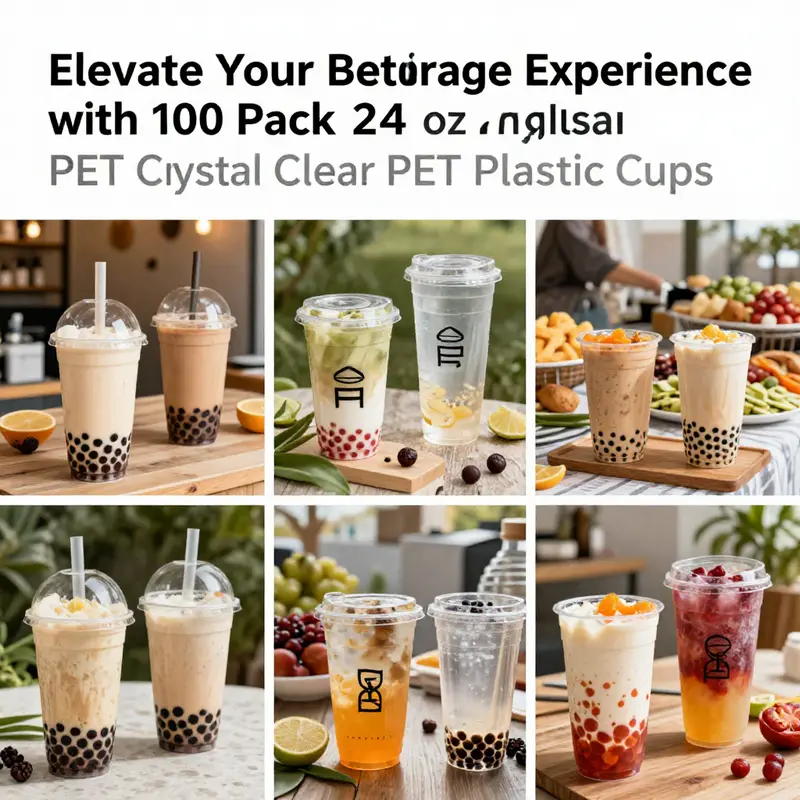
Choosing the right vessels for beverage service isn’t merely about capacity; it is about balancing presentation, practicality, and the rhythm of an event. The 24 oz crystal clear PET cups in a 100-pack format bring a rare combination of visual appeal, strength, and logistical ease that many settings rely on to keep guests satisfied and service moving smoothly. Made from polyethylene terephthalate, these cups turn a simple drink into a showcase. The transparent walls reveal the drink’s color and texture, turning a crowded drink station into a gallery where beverages become the focal point rather than afterthought. This clarity matters because color is part of the experience. A vibrant iced tea, a strawberry smoothie, or a sparkling soda looks more inviting when its hue is unobstructed by opaque or tinted glass. The effect is not merely aesthetic; it elevates perceived quality and helps guests make quick choices, especially in buffet lines, catering stations, or busy gatherings where timing matters as much as taste.
The material itself deserves attention. PET is celebrated for its crystal clarity, but it also offers strength that belies its light weight. In a setting where cups are handed across tables, stacked in storage, and moved by servers, the durability reduces the risk of cracks or leaks. That robustness matters in environments ranging from a backyard barbecue to a school function or a corporate event. And because PET is recyclable where local programs permit, the cups provide a pathway to responsible disposal after celebrations end. The combination of lightness, resilience, and recyclability makes these cups especially well suited for events that expect a large audience and a fast turnover of beverages.
Capacity is another critical factor. At 24 ounces, these cups hit a practical middle ground between smaller, single-serve servings and larger party quarts. They accommodate generous servings of cold drinks—water, juice, soda, iced tea, and energy beverages—without forcing guests to refill constantly, which keeps lines moving and conversations flowing. The size also pairs neatly with bulk serving stations. They hold enough liquid to satisfy larger appetites while remaining manageable for guests to carry and sip confidently when on the move. In a mobile or takeout scenario, such as a food truck or a pop-up beverage stand, the 24 oz capacity strikes a balance between value per cup and the convenience of fewer refill stops, helping vendors serve more customers in a given time.
Visual presentation is inseparable from the guest experience. Clear cups show off the drink’s natural tones, but they also communicate cleanliness and care in event design. A well-curated beverage display benefits from uniform cups that look polished on the buffets and in the photos guests will share afterward. The unbroken transparency of crystal-clear PET elevates the perceived quality of the beverages and the event itself. For planners and caterers who want to project coherence across a venue, these cups are a practical canvas. They support branding opportunities through logos, slogans, or event details printed or applied to lids and sleeves, helping the service environment feel cohesive and intentional. When a client wants a streamlined, professional look, the clear cups deliver a visual discipline that can harmonize with tableware, signage, and décor.
This is where customization becomes more than a marketing flourish. Disposable cups serve as portable billboards for a brand or event theme. A simple logo or color scheme etched on the cup or lids can reinforce a marketing message long after the last toast. Even without full customization, clear cups preserve a clean surface for event-specific labeling, insert cards, or signage at self-serve stations. The practical benefit aligns with creative goals: guests enjoy beverages that look as good as they taste, and organizers achieve consistency without sacrificing speed or clarity at the point of service. In environments where multiple drink options are offered, the transparency helps guests distinguish between options by color, which can reduce crowding and mis-orders while preserving a sense of order and efficiency.
Functionality extends beyond appearance. Many versions of these cups are designed to work with compatible sip lids, enabling leak-proof transport and on-the-go consumption. This compatibility is a boon for mobile vendors, outdoor events, and casual gatherings where guests may wander from station to station or stand in line with their drinks. The combination of a secure lid and a sturdy base reduces the likelihood of spills on crowded surfaces, a practical advantage that often goes overlooked in planning discussions. The cups therefore become not just vessels of liquid, but enablers of smoother service flows and cleaner environments.
Beyond performance, the cups are well suited to a wide range of social and event contexts. Think birthday parties with punch bowls and fruit beverages, baby showers with pastel-colored drinks, school events with water and juice stations, sports gatherings with electrolyte beverages, and holiday celebrations with seasonal fruit punches and iced coffees. In each case, the cup’s clarity and generous capacity support a diverse beverage program without requiring multiple formats. The bulk packaging is a practical asset here, allowing organizers to stock up with confidence and avoid mid-event shortages that disrupt the guest experience. The uniform, professional appearance of a 100-pack across a table or behind a portable bar also contributes to a sense of preparedness and control, which guests subtly perceive and appreciate.
From a sustainability angle, PET cups embody a thoughtful balance between convenience and responsibility. While disposable by design, they are lighter than glass and less prone to breakage, which translates into lower waste from mishaps and fewer damaged items during transport. The environmental footprint of a single-use cup depends on local recycling capabilities, but the material’s recyclability offers a pathway to reuse rather than replacement where programs exist. This practicality resonates with event planners who are increasingly responsible for choosing supplies that align with sustainability goals without compromising guest experience. The transparency of the cups also makes recycling easier in some contexts, since contents are visible and easy to identify at the end of service. The choice of this cup type, with its clear aesthetics and robust construction, integrates well with modern event management practices that emphasize efficiency, safety, and mindful consumption.
In terms of everyday use, these cups translate well to home entertaining and casual gatherings. They are not limited to formal events; their clear design suits family dinners, picnics, or simply a refreshing glass of lemonade by the pool. The bulk option reduces the frequency of shopping trips during a busy week and supports a low-maintenance hosting routine. Guests appreciate the quick, mess-free setup, the ease of sharing drinks with a wide circle of friends, and the simplicity of cleanup that follows a well-planned event. The practical advantages—strength, lightness, and the reassurance of a leak-resistant lid when needed—come together with an appealing presentation that makes ordinary beverages feel a touch more celebratory.
For planners seeking a versatile, disposable option that still looks polished, consider the disposable clear plastic cup for parties and events. Its blend of clarity, capacity, and durability makes it a reliable ally whether you’re coordinating a grand celebration or a casual weekend gathering. The cups offer a quiet confidence: guests enjoy their drinks, servers move efficiently, and the overall presentation remains cohesive from entry to exit. In this light, the 24 oz PET cup is not just a container. It is a facilitator of experience, a practical tool that helps bend the logistics of service toward hospitality. The result is a smoother flow, clearer sightlines to what matters—the beverages themselves—and a setting in which guests can savor both the drink and the moment.
External reference for further reading on crystal-clear PET beverage cups and similar options is provided for those exploring broader context and alternatives: https://www.ebay.com/itm/185396719992
Crystal Clarity, Clearer Profits: The Economic Ripple of 100-Pack 24 oz PET Cups
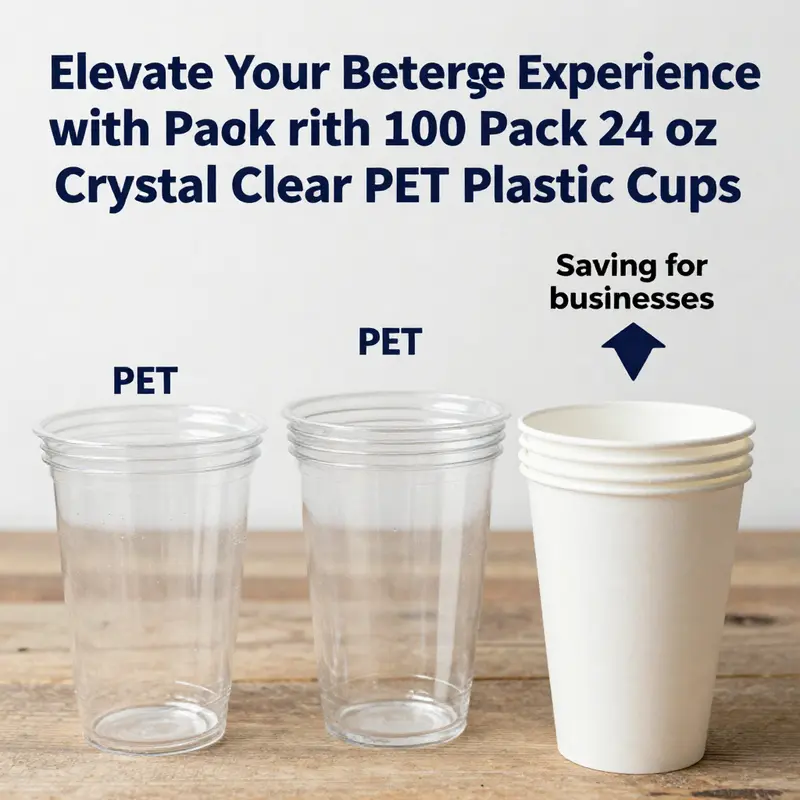
The 100-pack of 24 oz crystal clear PET cups sits at a curious intersection of everyday practicality and strategic economics. On the surface, these cups are a simple consumable—clear, sturdy, disposable, and ready for a wide range of beverages. But when you view them through the lens of business operations, supply chains, and environmental considerations, they reveal a much larger economic narrative. Bulk disposables like these are not merely products; they are instruments that shape pricing structures, logistics planning, and even sustainability strategies for countless small businesses, event organizers, and foodservice operators. In markets where margins hinge on efficiency and predictable costs, the appeal of a bulk purchase with a known per-unit price begins to resemble a basic tool of modern cost control: the reduction of variability. If a planner can forecast beverage service needs for an event with a degree of certainty, the ability to lock in a favorable per-unit cost and minimize waste becomes a meaningful profit lever. The appeal is immediate: lower cost per cup translates into lighter, more predictable line items on invoices and proposals, making large gatherings easier to budget and more accessible to clients who require transparent, straightforward pricing. The economics of bulk purchases are thus not only about saving a few cents per unit; they are about stabilizing the financial terms of service and enabling scalable execution across events of varying size.
Cost efficiency is the most conspicuous thread in this tapestry. Across multiple retailers, the average price per cup for a 100-pack hovers around $0.19 to $0.20. That translates to roughly $19 to $20 per hundred cups, and it compounds quickly for large-scale operations. For instance, a typical catering setup that serves 500 drinks might rely on two or three such packs, depending on the mix of beverages and the anticipated spill rate. In practical terms, the per-event material cost can be markedly lower than if one purchased dozens of smaller packs, where shipping fees, packaging waste, and replenishment cycles accumulate. The savings compound when you factor in the reduced breakage and leakage risk that comes with PET compared to glass or some other plastics. PET’s combination of clarity, lightness, and resilience helps protect margins: fewer cups are lost to damage, and that reliability improves inventory planning and service speed, both of which have tangible time-cost benefits in the kitchen and at the venue. For those who manage multiple venues or events weekly, even small per-unit savings multiply into meaningful annual figures. In the broader sense, this kind of bulk pricing underpins a market dynamic where suppliers can invest in more efficient production lines and more robust packaging, further driving down unit costs through economies of scale. The math is straightforward, but the implications ripple through procurement policies, supplier negotiations, and the way event programs are designed around beverage service.
The supply chain implications deserve more attention than a single price tag might reveal. When factories operate at scale to fulfill a 100-pack, the production process tends to benefit from automation, standardized quality control, and streamlined packaging. High-volume runs enable manufacturers to optimize for throughput, minimize changeovers, and reduce labor costs per unit. These efficiencies can cascade into more stable supply and shorter lead times for bulk orders, which is a meaningful competitive edge in periods of heightened demand—such as holiday seasons, wedding seasons, or big outdoor festivals. From a logistics perspective, bulk packs simplify stocking and distribution. Fewer line items to manage means less complexity in warehousing, fewer forklift movements, and a more predictable schedule for replenishment. That steadiness translates into lower handling costs, reduced risk of stockouts, and more reliable delivery timelines to venues, catering operations, and retail partners. The net effect is a supply chain that can flex more gracefully with demand spikes, helping small and mid-sized operators maintain service levels without sacrificing overall margins.
Yet this economic logic cannot ignore the broader environmental and regulatory context in which these cups circulate. PET is recyclable, and the market for recyclable post-consumer resin has grown alongside consumer demand for more responsible packaging. The prospect of recycling can soften the long-term economic calculus by enabling savings on disposal costs and by aligning with municipal or organizational recycling incentives. Still, the reality remains nuanced: recycling rates for PET vary by region and by the efficiency of local programs. When a consumer base expects sustainability, the actual cost of end-of-life management can influence total lifecycle costs in ways that are not immediately visible at the point of sale. For businesses, that means weighing the immediate savings of bulk purchases against potential future costs of waste management, regulatory compliance, and the logistics of collecting and processing PET waste. In places where regulations incentivize or even require higher recycling rates, the perceived value of PET can rise as municipal costs shift away from disposal toward recovery and circular use. These dynamics can influence long-term procurement strategies, encouraging suppliers and buyers alike to invest in better labeling, clearer recycling streams, and partnerships that close the loop on PET materials.
The clarity of the cups themselves adds a subtler but equally important economic dimension. Crystal clear PET enhances the presentation of beverages, enabling operators to showcase color, garnish, and branding in a way that opaque or tinted containers cannot. That visual appeal has tangible effects on consumer perception and, eventually, on top-line revenue. In controlled settings—such as catered events, self-serve stations, or beverage-forward venues—the ability to identify contents quickly reduces service friction. Customers can distinguish between a citrus mocktail and a berry Punch without having to lift a lid or search labels, a minor convenience that yields smoother service flows and often higher guest satisfaction. When guests experience efficient service, repeat business and favorable recommendations follow, contributing to revenue stability in markets where competition is intense. The economic equation thus includes not only the cost of the cups but also the incremental revenue associated with faster service and improved guest experience.
To connect these threads to practical decision-making, consider the ways planners and operators evaluate a bulk purchase beyond the sticker price. First, they assess usage forecasts with an eye toward minimizing waste. A clear, sturdy 24 oz size often suits both casual and semi-formal beverage programs because it accommodates a generous serving while limiting the need for refills that slow lines. Second, they consider the reliability of supply. A steady bulk supply reduces downtime caused by stockouts, which can derail an event schedule and inflate labor costs as staff scramble to find substitute containers. Third, they weigh the end-of-life option. Recyclability is not a mere afterthought; it is a factor that can influence total cost when waste disposal fees or curbside recycling policies carry a charge or when a venue has a sustainability pledge that translates into supplier requirements. Taken together, these considerations reveal why even a product that appears to be a mundane consumable can function as a critical lever in cost control, efficiency, and strategic planning for beverage programs.
The economic narrative also touches on employment and regional economic activity. The steady demand for bulk cups supports manufacturing jobs in plastics processing, packaging, and distribution. It sustains local and regional supply chains, from raw material suppliers to transportation networks, and it creates predictable demand that allows workers to plan and train for specialized tasks in automated environments. This ripple effect extends into retail and hospitality sectors, where bulk purchasing behavior reinforces inventory planning and bulk-driven maintenance of storage and shelving—an ancillary but meaningful contribution to local economies. The interplay between bulk demand, packaging efficiency, and distribution networks creates a virtuous cycle: efficiencies at the production end help keep per-unit costs low, which in turn encourages more bulk purchasing by buyers who then sustain the jobs and infrastructure underlying the market. It is a reminder that even seemingly modest items—the kind most households would overlook—can weave into the fabric of regional economic health when bought and used at scale.
From a practical standpoint, the decision to purchase a 100-pack of 24 oz crystal clear PET cups rests on a balance of predictable cost, reliable supply, and responsible end-of-life management. The immediate savings per cup are clear, but the broader value proposition includes the stability of procurement, the efficiencies gained in service delivery, and the alignment with consumer expectations around presentation and sustainability. In environments where beverage service is central to the guest experience, the combination of low unit cost, strong durability, and visual clarity can translate into tangible improvements in throughput, guest perception, and overall profitability. For operators who manage seasonal peaks or high-volume events, bulk purchasing often becomes a cornerstone of strategic planning rather than a merely financial decision. It is in this integration of price, process, and perception that the true economic impact of a 100-pack of 24 oz crystal clear PET cups comes into focus, shaping not only the microeconomics of individual events but also the broader dynamics of the markets that supply and demand disposable tableware.
For readers seeking a concrete reference to current pricing and availability, the official listing provides a useful benchmark as of early 2026. External pricing references help validate the ranges discussed here and offer a practical touchpoint for budget planning across diverse venue types. As with any bulk purchase, customers should consider lead times, shelf-life considerations for storage, and the specific waste-management arrangements of their locale when integrating these cups into a larger procurement strategy. If you are exploring options that align with broader packaging and disposableware needs, you can explore related disposables and event-ready solutions at this product page: disposable-clear-plastic-cup-outdoor-picnic-pet-cup-drinking-cup-for-parties-birthdays-weddings-camping-utensils.
External reference for current pricing and availability: https://www.amazon.com/dp/B0CQYKZ8V5
Crystal Clarity, Hidden Footprint: Environmental Realities of 24 oz PET Cups in a Disposable Era
The allure of crystal clarity in a crowded buffet line or a sunlit picnic is hard to resist. A 24-ounce PET cup, transparent as glass, seems to promise a pristine, spill-free serving experience. Yet behind that gleaming surface lies a lifecycle with consequences that rarely match the ease of use. This chapter considers the environmental realities of a 100-pack, 24 oz crystal-clear PET disposable cups and asks readers to weigh convenience against a broader set of ecological costs. In doing so, it treats the cups not as isolated objects but as participants in a system shaped by production choices, waste management infrastructure, and consumer behavior. The clarity that makes these cups visually appealing also masks a more complex truth: recyclable does not automatically mean recycled, and recycling alone does not erase a product’s footprint from the planet’s finite resources. PET, or polyethylene terephthalate, has long been favored for its combination of lightness, strength, and the ability to be recycled. But the practical sustainability of PET depends on local realities—the presence of collection systems, the capacity of facilities to process post-consumer plastic, and the market demand for recycled content. In many places, those conditions are spotty or evolving, which means that the fate of a single cup is, in practice, uncertain and highly dependent on where and how it is disposed of. This is not merely a footnote in a chapter about consumer ware; it is a central hinge on which the ethics of disposable serve and waste balance rotate. A candid look at the lifecycle begins with the material discipline itself. PET’s clarity and resilience come from polymer chains arranged in a way that resists shattering and maintains a clean, appealing appearance even when filled with a cold beverage. That same chemistry enables the design of light, stackable cups ideal for large events or vending. However, the same advantages that carry these cups to the hands of hosts and guests also carry them into the waste stream. The environmental accounting is revealing: even when a cup is labeled as recyclable, its ultimate destiny is not within the cup’s control. Global recycling rates tell a disconcerting story. Data compiled by international bodies through recent years show that only a fraction of plastic waste is recovered and reprocessed. A commonly cited figure from global assessments hovers around a single-digit percentage for many plastics, with broader waste management patterns showing that roughly half of discarded plastics end up in landfills, a substantial portion is incinerated, and a sizable share escapes containment and contributes to environmental leakage. In this framework, the 9 percent recycling figure that periodically surfaces for plastics globally underscores a harsh reality: recycling, when it occurs, is not a panacea, and many cups never become new cups. They become litter, or they are downcycled into products of lesser quality, or they are lost to systems that do not capture post-consumer streams efficiently. The consequence is not only a waste bin tally but a representation of the material’s pathway—from fossil-fuel feedstock to beverage vessel to final resting place. The production side compounds the concern. PET manufacturing relies on fossil fuels for both the feedstock and the energy required to convert resin into finished cups. Each cup embodies an embedded energy and carbon footprint, contributions that accumulate across thousands of units in a single event and across millions of events globally. While some brands promote the use of recycled PET, or rPET, the economics of high-quality recycled content pose challenges. rPET can be more expensive to produce than virgin PET, and the supply of rPET is sensitive to feedstock availability and processing costs. Scaling up the use of recycled content in disposable cups, therefore, is not simply a matter of preference; it is a matter of market structure, investment in recycling infrastructure, and the willingness of buyers to pay for the additional value created by recycled inputs. The risk of “greenwashing” also looms in discussions of recyclability. Terms like “100 percent recyclable” can be deployed to suggest that the end of the line equals sustainability, but such statements often obscure the larger problem: a system that relies heavily on single-use plastics. True sustainability, as warned by researchers and policymakers, requires more than end-of-life recovery. It demands reducing plastic use at source, increasing reuse, and ensuring that recovery systems are robust, accessible, and capable of maintaining material quality through cycles. The COVID era’s echo of increased plastic waste—ranging from personal protective equipment to takeout ware—also underlines the urgency. Plastic materials proliferated at a pace that outstripped the capacity of some communities to manage them responsibly. In this sense, the cups in question are not just products; they are signals of a broader consumption pattern that places short-term convenience before long-term stewardship. If the goal is to balance everyday practicality with ecological responsibility, several avenues emerge without sacrificing the benefits that PET cups provide in venues like catering, sport events, or casual gatherings. One path is the adoption of reusable cup programs. Reusables, when properly washed and circulated, can dramatically reduce per-use emissions and waste over time. The barrier is logistical: the need for reliable warewashing facilities, careful inventory management, and procurement systems that ensure objects are returned and sanitized to safe specifications. In contexts where reuse is feasible, the environmental payoff can be substantial. A second path lies in exploring alternatives to single-use plastics, such as compostable materials derived from plant-based feedstocks. Although compostables present their own set of complexities—compostability depends on industrial facilities, and not all compost streams are compatible with home setups—they can offer a different trajectory for waste management when the supply chain and consumer behavior align. A third path is to pursue a more circular design for disposable cups, one that emphasizes recyclability and high-quality recycling streams. Design for recyclability includes choosing resins that are widely accepted by local facilities, reducing colorants that complicate sorting, and avoiding multilayer constructions that hinder material separation. These design choices can influence whether a cup becomes a feedstock for new products rather than an end-of-life contaminant. For readers navigating this landscape, the decision to use a 100-pack of 24 oz crystal-clear PET cups, at any scale, becomes a question of values as much as logistics. It invites a careful assessment of when convenience truly serves the event’s goals and when it creates downstream costs that are passed on to communities and ecosystems. The practicalities of event planning—timeliness, ease of service, and guest experience—remain important, yet they can be aligned with more sustainable practices through thoughtful choices about disposal streams, reuse where feasible, and transparent communication about end-of-life options. In this light, even a single cup can be part of a larger conversation about consumption patterns, waste prevention, and the commitments that organizers, vendors, and participants are willing to make. For those seeking a concrete bridge between convenience and responsibility, a tested approach is to pair disposable choices with clear recycling pathways and to consider alternatives for high-volume occasions. If the event’s context makes disposables appealing, selecting cups and lids that maximize recyclability, collaborating with local recycling programs, and encouraging guests to participate in post-event recycling can help close the loop. For readers curious about practical packaging alternatives that maintain ease of service while reducing environmental impact, a related resource on disposable clear plastic cups used in outdoor settings can offer additional context and options: disposable clear plastic cup for outdoor events. This anchor invites a closer look at how different packaging choices integrate with local waste systems and consumer habits, highlighting the potential for more sustainable behavior without sacrificing the immediacy of service. In sum, the environmental considerations surrounding 24-ounce PET cups reveal a landscape where transparency is both a visual attribute and a reminder of the material’s lifecycle. The cups deliver convenience and clarity, yet they demand attention to recycling infrastructure, market dynamics for recycled content, and the broader aim of waste reduction. The path forward lies not in abandoning disposables altogether but in linking them to stronger circular practices. Reducing reliance on single-use items, refining product design for recyclability, and investing in systems that reliably collect and reprocess post-consumer PET are essential steps. The choices made by hosts, suppliers, and consumers collectively determine whether the crystal-clear surface reflects a future of cleaner waste streams or a persisting shadow of plastic waste. For readers who want to explore more about how plastics fit into a circular economy, consider resources that map the long-term opportunities and challenges of reusing, recycling, and redesigning plastic materials in everyday life. External perspectives illuminate how policy, industry, and citizens can collaborate to bend the curve toward true sustainability. See https://ellenmacarthurfoundation.org/programmes/plastics-in-a-circular-economy for a broader view of plastics within a circular economy.
Crystal Clarity at Scale: Mapping the Market Pulse of 100-Pack, 24-Ounce PET Cups
The market for bulk, crystal-clear cups in a 24-ounce size is a telling signal about how events, foodservice, and casual hospitality are evolving. When planners size up a 100-pack of cups, they are not just tallying inventory; they are choosing a practical standard that threads through planning, service speed, presentation, and even sustainability narratives. The 100-pack, 24-ounce PET cups embody a concise fusion of capacity, clarity, and convenience. They cater to moments that want generous servings without compromising on visual appeal or ease of use. A table staffed with these cups signals readiness for everything from a casual backyard barbecue to a polished buffet at a mid-scale conference, where drinks must look as good as they taste and be quick to replenish. In this sense, the product becomes more than a utilitarian object; it is a strategic tool for efficiency, aesthetics, and flow management at events of varying scale.
Material choice is a foundational driver of this trend. PET, known for its high clarity, light weight, and resilience, delivers a premium feel that rivals glass while reducing the fragility risk associated with thinner plastics. The transparency is not simply about aesthetics; it is about content recognition. Guests can identify the beverage quickly, which reduces mix-ups in settings with several options. At the same time, the lightweight nature of PET simplifies handling for servers and venue staff, contributing to smoother service during busy intervals. And because PET cups are recyclable, the sustainability story gains traction with buyers who are increasingly conscious of end-of-life waste. The shift away from more rigid polystyrene toward clear PET reflects a broader consumer preference for materials that balance performance with environmental responsibility.
Online marketplaces have become a proving ground for these bulk formats. Bulk-packaged disposables that combine capacity, presentation, and logistics appeal to caterers, event planners, and hospitality operators who must balance speed with consistency. The 24-ounce size sits at a sweet spot: it accommodates a generous serving while remaining compatible with standard coolers and cup holders. This compatibility is not trivial. It translates into fewer logistical hiccups, less need for oversized coolers, and a cleaner, more organized service line. For many buyers, the e-commerce ecosystem serves as a one-stop evaluation hub where price, availability, and delivery speed converge. The visibility of bulk options in search results and shopping carts reinforces their role as a standard item rather than a specialty purchase.
A key narrative around these cups is sustainability messaging. Even as a single-use product, manufacturers frequently highlight BPA-free construction, recyclability under the #1 resin code, and a reduced environmental footprint in the manufacturing process. This messaging resonates with buyers who must justify disposables within broader sustainability goals. The net effect is a market where the environmental footprint is not an afterthought but a selling point. Buyers increasingly expect transparency about recyclability and BPA-free status, and they reward suppliers that communicate these benefits clearly. In practice, this means that product listings often pair performance with responsible attributes, helping event organizers, restaurants, and institutions align disposable choices with their own green objectives.
Customization is another trend shaping the market. A growing number of suppliers now offer branding opportunities that turn standard cups into marketing assets. Whether for weddings, corporate events, or promotional campaigns, the ability to imprint logos, event branding, or themed designs on the packaging layer elevates the disposable cup from a mere vessel to a branded touchpoint. This evolution expands the role of bulk cups beyond utility, enabling them to support on-site branding and guest experience. For teams seeking to leverage this aspect, there is a natural alignment with related packaging and takeaway solutions that extend branding across the entire service experience. And for vendors, customization often translates into value-added differentiation in a crowded marketplace.
From a procurement perspective, price and reliability continue to shape buyer behavior. The current landscape shows competitive pricing for bulk packs, with typical ranges that make the 100-pack financially attractive for kitchens, buffets, and event fleets. The math is straightforward: lower per-unit cost in bulk reduces the cost per serving, which matters when service budgets are tight and volumes are high. This is especially true for venues that host recurring events or frequent gatherings, where predictable costs and consistent product performance help stabilize procurement planning. Beyond price, supply chain reliability matters as well. Fast shipping options, including next-day delivery in some regions, provide a buffer against rush orders or last-minute event changes. The ability to source a large quantity quickly helps operators maintain service continuity and guest satisfaction even when demand spikes.
The market implications extend to how operators position these cups within a broader offering. A bulk 24-ounce PET cup pairs naturally with standard lids, straws, and associated disposable tableware, enabling a cohesive, one-stop solution for event logistics. Operators who bundle cups with compatible accessories can streamline inventory and reduce the risk of mismatches at service time. The packaging ecosystem around the cups—lids, sleeves, and branding options—becomes a coordinated toolkit rather than a scattered set of add-ons. For brands aiming to integrate these cups into a cohesive branding framework, there is value in exploring the broader assortment of packaging options that support a themed or branded takeaway experience. See this resource for a practical example of how customized takeaway materials can complement bulk disposables: custom-takeaway-packaging-supplies-disposable-tableware-for-theme-party.
As the year progresses, the confluence of reliability, presentation, and environmental considerations suggests a durable demand trajectory for 100-pack, 24-ounce PET cups. The volume is sufficient to support sizeable gatherings while remaining manageable for frequent users who replace stock in regular cycles. Buyers are increasingly mindful of how disposables perform in real-world service—how well they resist cracking under cold beverages, how clearly they display contents, and how easily staff can dispense drinks without bottlenecks. The emphasis is on consistent, dependable performance that supports a smooth workflow from guest arrival to final cleanup. In practice, this means cups that hold up under cold beverages, resist fogging, and maintain clarity even after extended transport and handling. The long-term allure is not just the initial purchase price, but the total cost of ownership: a combination of durability, ease of use, branding potential, and responsible disposal.
Looking ahead, the market for crystal-clear PET cups is likely to be shaped by ongoing advances in recyclable packaging design and a growing emphasis on circular economy principles. Manufacturers may offer more explicitly recyclable options, more transparent sustainability data, and layering of design features that reduce waste, such as minimalistic packaging or packaging that supports reuse where feasible. For buyers, this translates into an ongoing evaluation of how disposables align with event goals, guest experience, and environmental commitments. The 100-pack format will probably continue to serve as a reliable backbone for events of all sizes, while ancillary innovations—such as lids that seal tightly, straws made from compostable materials, and branding-compatible packaging—will expand the utility and appeal of the overall disposable kit.
External reference: https://www.ebay.com/itm/100-Pack-Crystal-Clear-PET-Plastic-Cups-24-OZ-Disposable-Party-Cups/284979258816
Final thoughts
In conclusion, the 100 pack 24 oz crystal clear PET plastic cups represent a compelling choice for beverage businesses seeking versatility, durability, and attractiveness in their packaging. Their applications span various sectors—from bubble tea shops to catering events—demonstrating their essential role in enhancing customer experiences. As businesses continue to prioritize eco-friendliness and cost-effectiveness, adopting PET cups can position them favorably within the market. Embracing these cups not only aligns with modern consumer preferences but also supports sustainable practices, ensuring a brighter future for all.