

Offering a seamless blend of convenience and functionality, 16 oz clear plastic cups from Walmart stand as a pivotal choice for various food and beverage services. From bubble tea shops to catering services, these cups not only enhance the presentation of drinks but also cater to the fast-paced demands of busy environments. This article will delve into essential product information, provide insights on pricing and availability, and outline practical considerations for usage – ensuring that your establishment finds the perfect fit for its needs.
Clear, Practical, and Ready for Anything: A Deep Dive into Walmart’s 16-Ounce Clear Plastic Cups
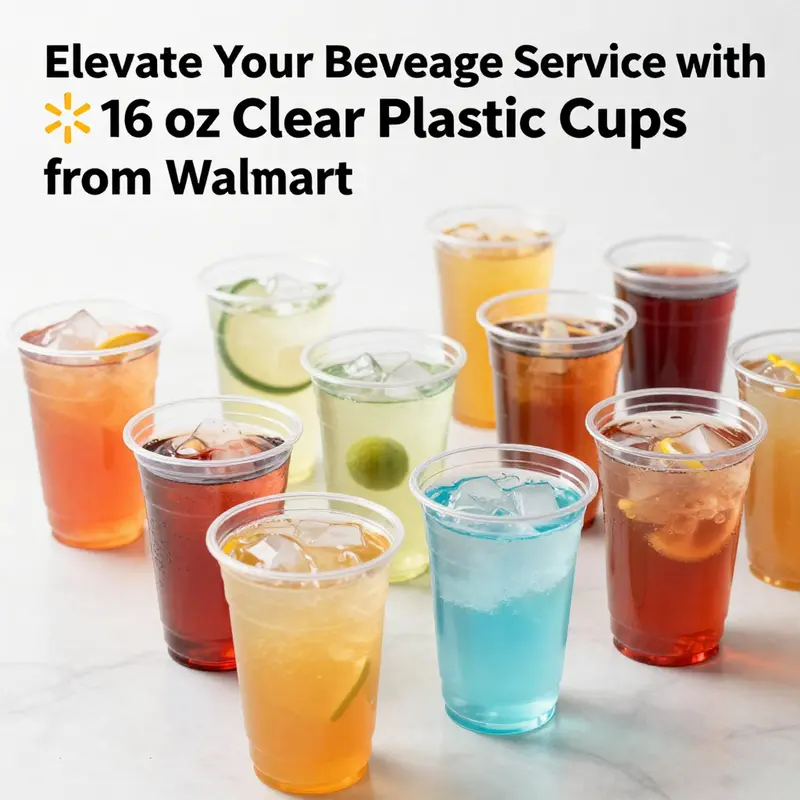
A quiet kitchen counter, a soft breeze through a window, and a tidy row of 16 ounce clear plastic cups waiting like blank canvases. In homes and at casual gatherings, a simple cup can carry more than liquid. It carries intention about how a beverage is served and how a moment is shared. When we focus on the Walmart listing that anchors this chapter, the emphasis is not only on appearance. The 16 ounce clear plastic cups with lids are presented as durable, versatile vessels that can function as cups, storage containers, and portable drinkware. They belong to a broader conversation about everyday practicality and the role of packaging in home life.
The key features commonly shown include lids, tamper evident design, and freezer compatibility. The lid turns a cup into a portable container that can travel with less risk of spills. A lid is more than an accessory; it expands when and where the product can be used. Reuse is another practical theme. A container that can be washed and reused reduces trips to the store and reduces waste in households that track consumption. Freezer safety adds seasonal value for batch teas, juices, or soups prepared in advance.
The 16 ounce size sits in a familiar range between a standard glass and a larger tumbler. It holds a generous serving while remaining manageable to carry and clean. The transparent walls invite the eye to see color, texture, and clarity, helping users monitor freshness. The design is understated: straight walls, a consistent rim, a smooth surface that feels reliable in the hand. The lid completes the system by containing the contents during transport and protecting against dust or curious hands.
Beyond a single product, the Walmart listing illustrates a broader pattern in consumer goods. Bulk packs, predictable sizing, and compatibility with freezers and lids reflect a workflow in busy households and small gatherings. The listing invites shoppers to imagine uses from everyday hydration to DIY projects, party planning to meal prep. In this sense the container is not just a utility; it is a flexible platform for daily life that folds into routines rather than forcing changes.
Realistic expectations about material performance matter. Clear plastic can handle common beverages and moderate temperatures, but hot liquids or long term storage in direct sun require caution. The path of reuse and recycling depends on material and care. The features highlighted in the listing—durable construction, freezer compatibility, and a secure lid—support durability and ease of cleaning. A well chosen container becomes a small but steady tool for reducing waste and simplifying packing, storage, and transport.
In the end the 16 ounce clear container is more than a vessel for a drink. It is a practical platform for everyday memory making. It facilitates family meals, dorm life, and friendly gatherings by providing a reliable, visible, and adaptable container. The Walmart listing frames this idea as a living part of daily life: a simple object that can travel, store, and present with minimal fuss, while inviting creative uses that matter to real households.
Clear Choices, Sharp Prices: Navigating 16-Ounce Clear Plastic Cups on Walmart’s Marketplace

The moment you start planning for a gathering, whether it’s a neighborhood potluck, a birthday celebration, or a casual office breakout, the humble cup becomes more than a simple container. It becomes a decision point about cost, practicality, and perception. On Walmart’s online marketplace, a familiar category of products—16-ounce clear plastic cups—sits in a landscape defined by pack sizes, lid options, and the promise of convenience. The way these cups are presented to shoppers reveals a practical story about how a retailer channels everyday essentials into options that fit different event scales and budgets. What begins as a quick search for a beverage vessel often evolves into a careful calculation of cost-per-use, storage considerations, and the subtle tradeoffs between disposable convenience and the desire to minimize waste. The data that anchor this discussion come from a clear spectrum of Walmart listings: compact 25-count packs, larger 100-count bundles, and a lid-inclusive option that shifts the economics of practicality. The numbers tell a story that goes beyond sticker price; they illuminate how choice is shaped by what you get in each package, how quickly you expect to deploy the vessels, and how the site frames availability and value in real time. In this conversation, the cup is not just a receptacle for liquid; it is a proxy for decisions about scale, planning, and the rhythm of a social moment. And Walmart’s product pages, with their succinct descriptions and price tags, offer a glimpse into how the market segments these everyday items so that a shopper can size up a potential purchase in minutes, not hours.
To understand the landscape, it helps to anchor the discussion in concrete examples that reflect the typical range of options a shopper might encounter. Among the listings that can appear on Walmart’s marketplace, one common configuration is a 16-ounce clear plastic cup sold in a 25-count package. The stated price for this bundle comes in around the mid-two-dollar range, a figure that translates to a per-cup cost just over four or five cents once you do the simple arithmetic—though, of course, the exact figure per cup depends on the precise price at the moment of purchase and any taxes, shipping, or store pickup fees that might apply. A parallel option in the same 16-ounce category is a larger 100-count pack. This bulk offering carries a price point around ten dollars, and when you do the math, the per-cup cost aligns closely with the smaller 25-count bag, roughly around ten-and-a-half cents per cup. Those two data points—the 25-count at approximately $2.62 and the 100-count at approximately $10.48—illustrate a fundamental principle: the unit price remains relatively consistent across these sizes, making the volume choice the primary lever for saving money when you expect to use a lot of cups.
But the Walmart listing ecosystem doesn’t stop at straightforward disposables. There are bundlings that include lids, aimed at addressing spill concerns and transport practicality. In one 25-count configuration with a lid, the price rises to about $4.96. This bundle highlights a different kind of value equation. While you pay more per package, you also gain the benefit of a lid, which can be a critical feature for cold beverages, outdoor events, or settings where a secure seal helps reduce spills. When you compute the cost per cup for this lid-inclusive variant, it comes to roughly $0.1984 per cup if you simply divide the package price by the number of cups, a noticeable premium over the plain cups without lids. The per-cup cost here is almost double what you’d pay for the lidless 25-count or the 100-count option, underscoring a broader pattern in consumer goods: add-ons like lids, straws, or stacking features can tilt the value proposition from “just cups” to “cups with added functionality.”
The narrative grows a bit more nuanced when you widen the lens to how the product is presented and how availability can differ by context. Walmart’s marketplace makes clear that all of these cups are available for purchase directly through Walmart.com, a fact that matters once you consider delivery options, in-store pickup, and the convenience of handling large orders without the friction of a physical trip to a store. Availability on the site is not merely a matter of a single item being in stock; it reflects an ongoing balance of demand, shipping logistics, and regional stock. For planners hosting events, this is more than a trivia detail. It translates into real planning capacity: if you’re equipping a large get-together or a community event, you can often secure a larger quantity with a straightforward online checkout, potentially at a favorable per-unit rate, without committing to a trip to a crowded store. The pricing snapshots thus become a practical map for decision-making rather than a static snapshot of a single scenario.
A closer look at the presented pack configurations also reveals an important distinction about the kind of event each option seems to be best suited for. The 25-count packages, given their compact size and modest price, tend to appear as sensible impulse buys for small gatherings—think a weekend picnic, a neighborhood potluck, or a classroom activity. They offer enough cups to cover a few dozen servings, while the price is low enough that a cautious shopper can add a couple of 25-counts to a larger cart without feeling like the budget will balloon with a single, miscalculated purchase. The 100-count bundles, with their lower per-cup cost, are more clearly aligned with larger events: summer barbecues, office celebrate-by-the-week parties, or fundraisers where the headcount is uncertain but where a margin of safety in supply is desirable. The math is straightforward, and the value proposition is visible in the checkout summary, where you can see the cumulative impact of buying in bulk. It’s not simply about getting more cups; it’s about getting more cups for a price that scales more favorably with volume, allowing organizers to plan with a certain confidence that supplies won’t become a limiting factor midway through the run of a long event or a series of gatherings.
The lid-inclusive option adds a trench of nuance to the decision framework. For anyone who has wrestled with outdoor events, kids’ parties, or a coffee bar at a conference, the benefit of a tightly sealed lid is tangible: fewer spills, more stable transport, and the ability to prepare beverages ahead of time. Yet the added utility comes with a price premium that’s easy to overlook if you scan the page quickly. The price per cup in a lid-inclusive bundle is notably higher, a reminder that every added feature introduces a cost that must be weighed against the practical value it delivers. The Walmart listing, in its concise format, invites shoppers to perform this calculation in their heads as they browse, to weigh the convenience of a ready-to-use solution against the geometric simplicity of a plain cup. This dichotomy—economy versus convenience—plays out in every event plan and in every budget line item for hosts who need to balance abundance with accountability.
Beyond the numbers, the very geometry of these products—size, stackability, and compatibility with lids or other accessories—shapes how shoppers conceive their ordering strategy. A 16-ounce vessel is a standard size in many beverage settings, and a cup that stacks neatly or nests well with a lid becomes more than a disposable container; it becomes a logistical tool. The Topboutique entry in this category, while not an exact 16-ounce cup, sits in a related space: a stackable, clear plastic tumbler that resembles the same visual language as the 16-ounce cups and is marketed as a nearby option for buyers who want a similar user experience in terms of clarity, form, and stackability. Price data for these variants often remains elusive in the snapshot view, yet the presence of such items on Walmart’s platform underscores a broader strategy: retailers offer a spectrum of sizes and features that allow consumers to approximate their needs even when the precise specification isn’t a perfect match. In practical terms, this means that a shopper planning to serve a slightly smaller or larger volume, or someone who wants a container that can double as a simple reusable cup for a small household, can find options that align with their expectations without stepping outside the same product family.
The interplay of these price points and packaging configurations also informs a broader consideration: how much to budget for cups in relation to the total event budget. At first glance, the per-cup cost of the simplest 25-count option might appear almost negligible, especially when multiplied by dozens of attendees. Yet you must account for the reality that even a modest miscalculation in headcount, or a last-minute addition to the guest list, can shift the required quantity, and with it the total cost. A decision to lean toward the 100-count bundle can reduce the risk of running out and can simplify inventory management for the host, particularly when there are ongoing beverage stations or repeat refill needs across a day-long event. When a lid-compatible option emerges as a preferred feature, organizers face a tradeoff: the convenience of a spill-resistant design versus the incremental price increase. Walmart’s listings present these tradeoffs in a way that invites quick, informed decisions rather than protracted deliberations. The shopping experience becomes a practical exercise in forecasting, balancing, and anticipating use over time, rather than a one-shot purchase task.
Stock availability itself is a dynamic partner in this narrative. The listings show that all of these options are purchasable through Walmart.com, but the real-world experience varies by location and timing. A week with a high demand for disposable drinkware—early summer, back-to-school events, or community fundraisers—can push some packs into backorder or require shoppers to pivot to adjacent SKUs. The retailer’s marketplace design is built to support that flexibility: it surfaces the most common sizes, presents clear price signals, and nudges shoppers toward the quantity that often matches the scale of typical gatherings. In that sense, the Walmart product page functions not only as a catalog but as a practical planning tool. It helps hosts map out their beverage service footprint with more confidence, particularly when they are trying to minimize trips to the store and maximize the time they can dedicate to event prep.
Yet even as price and packaging inform the planning process, there is a layer of discernment that comes with evaluating disposable wares in a broader context. The environmental dimension cannot be ignored, even when the immediate concern is pragmatic convenience. Clear plastic cups, by their very nature, invite consideration of recyclability and reuse. The packaging material and the treatability of cups after a single-use scenario can influence a shopper’s choice, especially for organizers who are consciously budgeting for waste disposal costs or who aim to minimize the environmental footprint of their event. In this sense, the conversation extends beyond the retailer’s price tags and into the realm of personal responsibility and community impact. Listeners can reflect on whether a given event will benefit more from a bulk purchase of cup units that are easy to recycle, or from exploring alternatives like reusable tumblers, which, while not the focus of these Walmart listings, often require a different planning calculus—one that weighs long-term cost against the upfront price of disposables. The point is not to prescribe a single path; it is to illuminate how the container you choose interacts with the broader choices you make about waste, convenience, and the rhythm of hospitality.
In practical terms, what does this mean for a shopper standing on the threshold of a purchase decision? First, anchor your plan around your guest count and the expected duration of the event. For smaller affairs, the 25-count option offers a wallet-friendly entry point and a straightforward way to keep costs predictable. For larger gatherings, the 100-count option typically yields a lower aggregate cost and reduces the risk of reordering mid-event, especially if you anticipate back-to-back beverage service or multiple serving stations. If your event requires lids to keep drinks contained or to maintain temperature stability during transport, factor in the higher per-cup price of the lid-inclusive option. It is a simple arithmetic exercise to weigh the convenience against the incremental cost, and Walmart’s pricing framework makes it easy to compare these pathways side by side on the same storefront page. The presence of a 12.5-ounce or 370-milliliter option in the same family of products—though not a perfect 16-ounce substitute—also expands the planner’s toolkit. It offers an alternative form factor for individuals who may be serving beverages that are more typically poured in a smaller vessel, or for use in settings where a slightly smaller capacity is adequate and where stackability and ease of storage offer tangible benefits.
All of this, taken together, creates a practical narrative about how a simple item—the 16-ounce clear plastic cup—functions within a broader ecosystem of shopping, event planning, and consumption. The Walmart listings present a concise, data-informed snapshot that is immediately actionable: choose based on capacity needs, weigh the per-cup economics against the features you require, and keep an eye on how size, packaging, and accessory add-ons influence overall value. The site’s direct-to-consumer model simplifies the procurement process, enabling hosts to secure the exact configuration they need with digital speed and minimal friction. For anyone who has spent hours chasing the right vessel through a crowded aisle or wrestling with the tension between cost and convenience, the Walmart product pages offer a compass: a straightforward way to align a practical event-administration mindset with the realities of supply, format, and price.
What remains essential is clarity about what you are trying to achieve with the cups. If your priority is to reduce the cognitive load at the party—less time spent restocking, fewer unanswered questions about whether a lid is included, and a smoother service flow—the lid-inclusive option with a robust per-package price may be the most efficient path, particularly for events where the cups will travel and be reused within a reasonable timeframe or kept in a shared beverage station. If, on the other hand, you want to optimize cost and have the flexibility to replenish based on actual consumption without committing to large quantities, the bulk 100-count option provides a comfortable buffer that seamlessly extends your supply across multiple days of events or a longer duration of service. The practical implication is clear: pricing and availability data on Walmart’s site translate into a plan you can implement, then adjust as the actual guest list or event schedule evolves.
In the end, the chapter of the story told by Walmart’s 16-ounce clear plastic cups is not merely about plastic and price. It is about the human factors that drive the decision: how many cups do you need, how long will your beverages stay at the right temperature, how important is it to prevent spills in transit, and how much storage space do you have for extra units? The site’s packaging options, the math of unit cost, and the reassurance of direct online ordering converge to help a shopper move from uncertainty to a confident, repeatable purchasing pattern. The cups, in their clear simplicity, become the scaffolding for a well-run event. The choice between a small, economical bundle and a larger, more economical-per-cup option reflects a larger pattern in consumer behavior: one that values both efficiency and foresight, and that recognizes that even everyday items can be invested with a degree of strategic thought if you know where to look and how to compare.
As you proceed, remember that price follows usage. The numbers on a Walmart product page are more than isolated figures; they’re a gauge of potential, a mechanism for saving, and a mirror of the event’s scale. The 25-count cup might offer a near-impulse buy for a modest celebration, while the 100-count option speaks to a longer horizon of hosting or a larger community gathering. The lid-inclusive option introduces an additional dimension to the planning equation—one that is often worth a premium when the context makes spills and transport more likely. The variety you see is not a mistake but a signal: a marketplace that recognizes different rhythms of life and seeks to accommodate them with clarity and efficiency. And for those who value the alignment of budget, timing, and practicality, the Walmart catalog of 16-ounce clear plastic cups becomes not just a shopping list but a reliable framework for turning a simple party staple into a well-executed plan.
In Plain Sight: Practical, Safe, and Sustainable Choices for 16 oz Clear Plastic Cups from Walmart
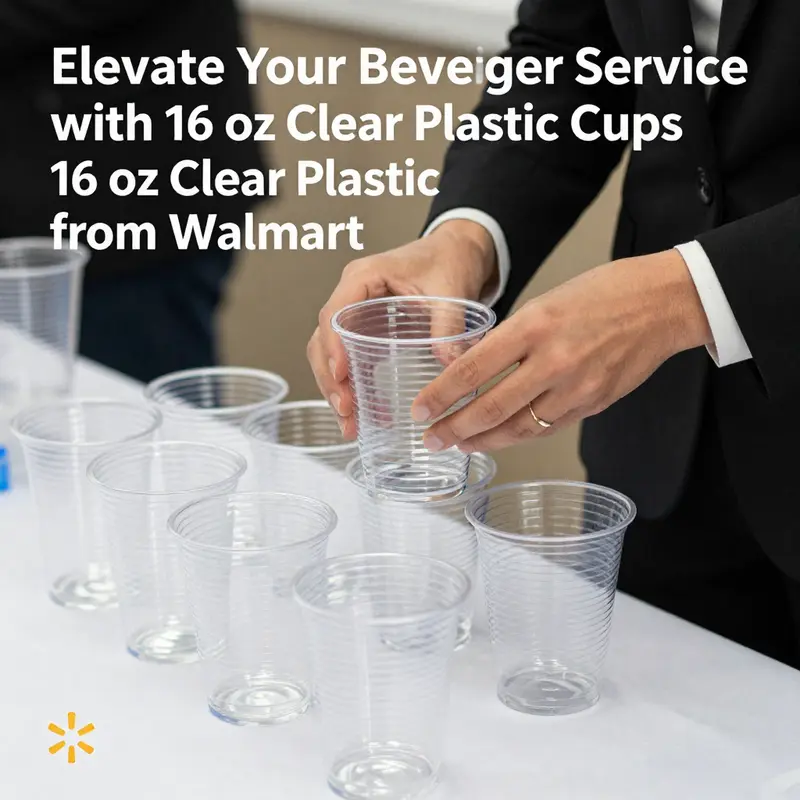
Clear plastic cups in a 16-ounce capacity sit at a quiet crossroads where everyday practicality meets safety and responsibility. Walmart’s official product listings offer a straightforward path to understanding what these cups are designed to do, how they perform, and what choices come with choosing them. The appeal is tangible: a transparent vessel that showcases the color and texture of a drink, a size that fits generous servings, and a price point that makes bulk purchases feasible for households, offices, or small events. Yet beneath the surface of convenience lies a web of considerations about how the cups are made, how they are used, and how long they last in actual service. In exploring these cups, we begin with purpose, then move through safety and durability, and finally acknowledge the broader footprint that accompanies disposable tableware. Walmart functions here as a practical touchpoint, directing buyers to current stock, available packaging, and the specific features that shape everyday decisions.
Intended use matters as much as the container itself. Many 16-ounce clear cups sold through Walmart are designed for disposable, short-term use. They shine in settings where cleanup must be rapid and uncomplicated: casual gatherings, picnics, school events, or office break periods where time is scarce and the focus is on hospitality rather than on washing up afterward. The single-use model aligns with the rhythm of large groups, where the priority is straightforward distribution, quick turnover, and minimal aftercare. However, this disposal mindset is not universal. Some buyers seek options that invite longer life, such as cups that can withstand repeated handling or fit into a broader strategy of waste reduction. In practice, the actual choice depends on anticipated traffic, the kind of beverages served, and the willingness to engage with post-use disposal or reuse in creative ways. Walmart’s listing ecosystem makes it easier to compare these pathways side by side, showing which cups are promoted as lightweight and project-friendly, and which entries emphasize structural reliability and durability at the outset.
Material safety and durability anchor the conversation in real-world terms. A key feature many shoppers look for is whether the cups are labeled for food contact and free from certain chemicals that could migrate into beverages. BPA-free labeling has become a standard expectation for many clear plastic cups, signaling that the material composition has been vetted for consumer use and does not include a specific chemical of concern. Beyond safety, durability matters too. In busy environments, cups must resist minor drops, stacking pressure, and everyday handling without cracking or warping. Some Walmart listings highlight clarity as a primary benefit—an emphasis on visual appeal that helps beverages look as fresh as they taste. The clarity of the plastic supports not only presentation but also content identification; it is easier to spot lime wedges, fruit slices, or the color of a drink, which can be important for events, catering, or retail displays.
Another crucial boundary is temperature tolerance. Most 16-ounce clear cups on the market are designed for room-temperature or cold beverages. They are not intended for hot liquids unless the product specifications explicitly state otherwise. This temperature ceiling matters when planning menus for gatherings where hot coffee, cocoa, or tea is involved. The temptation to reuse a cup for a hot drink can lead to burns or the deformation of the plastic if the material is stressed by heat. Therefore, readers should carefully read the packaging details or the listing description to confirm whether a specific cup can safely hold warm beverages for short periods. In the Walmart context, the core guidance favors scenarios with cold or iced drinks and encourages users to select cups that align with the intended beverage temperature to maintain both safety and the integrity of the container.
Storage, stacking, and transport are practical advantages that make these cups appealing for households and small businesses alike. The nesting design embedded in many 16-ounce clear plastic cups enables efficient storage, enabling a larger stock to occupy a smaller footprint. When event planning or catering logistics come into play, the ability to stack cups neatly reduces clutter, speeds up setup, and simplifies inventory management. The same nesting principle translates to transport: stacks of uniformly shaped cups are easier to pack, less prone to tipping, and less likely to suffer cosmetic damage during handling. Walmart’s catalog approach often highlights these physical characteristics as part of the product description, helping buyers gauge how much space they will need in cabinets, storage bins, or car trunks when they pick up supplies for gatherings of various sizes.
The environmental dimension cannot be ignored. Disposable cups, even when labeled BPA-free and designed to be sturdy, contribute to the broader conversation about waste and resource use. For readers mindful of ecological impact, the answer is rarely a simple either-or. Reusable alternatives exist that fit different lifestyles and budgets. Walmart’s assortment can include reusable travel cups or tumblers that come with lids and sometimes straws, offering an option for daily use that minimizes waste. The broader takeaway is that the choice of a 16-ounce clear cup should be harmonized with a plan for reuse or recycling. If the aim is to reduce waste, a predictable pattern emerges: favor durable, multi-use vessels when the setting and the beverage service call for frequency, then reserve disposable cups for occasions where the scale or pace of service makes reuse impractical. In this light, the 16-ounce cup operates not only as a beverage vessel but as a decision point that reveals a consumer’s longer-term intentions for sustainability and daily efficiency.
From the perspective of a small business or a family hosting regular gatherings, the economic logic becomes equally salient. The unit price of disposable cups is a factor, but so is the cost of cleaning, storage, and potential contamination of beverages if cups are reused improperly. A practical rule of thumb is to align the choice with the event’s scale and the expected turnover of cups. For a quick outdoor gathering with lemonade, iced tea, or fruit punch, the disposable option offers speed and convenience. For a weekly office refreshment station or a family kitchen that rotates beverages with minimal waste, reusable cups paired with a simple cleaning routine may win on both cost and environmental grounds. Walmart’s role here is more than a supplier of containers; it is a gateway to informed decision-making, showing where the balance lies between convenience, safety, and responsible consumption.
An additional layer of practicality emerges when considering compatibility with lids, straws, and other accessories. A 16-ounce clear cup that accommodates a snap-on lid or a straw slot adds a level of versatility that can influence its use in a given setting. In crowded venues or busy offices, the assurance that a lid can be attached to minimize spills translates into real peace of mind for staff and guests alike. At the same time, the availability of compatible lids or accessories in the same product family helps streamline purchases, reducing the risk of mismatched components that could otherwise compromise usability. Walmart’s product pages often present these compatibility details upfront, making it easier for buyers to plan a cohesive service kit rather than sourcing disparate parts from multiple places. This integrated approach supports a smoother experience from cart to event, aligning the practicalities of serving beverages with the realities of inventory and logistics.
Barriers to reuse and recycling also deserve attention. Even when a cup is designed to be sturdy and safe for contact with beverages, the ideal path remains dependent on local recycling capabilities and consumer habits. In many communities, clear plastic cups are recyclable in the appropriate waste stream, but success hinges on proper sorting and adherence to local guidelines. The onus then falls on organizers and households to implement a basic recycling protocol, ensuring that cups do not simply become waste but are directed to the right end of the lifecycle. When reuse is favored, a simple cleaning routine can extend the life of cups intended for multiple uses. This involves basic washing with mild detergent and air drying, followed by proper storage to avoid scratches that degrade clarity or structural integrity. Walmart’s listings thus serve a dual function: they guide the consumer toward an appropriate use-case and, by implication, encourage mindful handling and disposal that align with contemporary sustainability norms.
To situate these considerations within a practical shopping mindset, it is useful to imagine a spectrum of use cases. For small, informal gatherings where speed matters, a bulk pack of clear, disposable cups can be a smart investment. The advantage is measured in time saved and the clean finish after a meal, with minimal post-event burden. For family gatherings or community events that occur on a predictable schedule, a mixed approach may prevail: reserve some cups for reuse and keep a surplus supply of disposables for peak moments. For a café, pop-up, or micro-event scenario, the focus shifts to presentation and reliability. The cups’ crystal clarity helps beverages look appealing on camera or on a display shelf, while a sturdy lip and comfortable grip support steady pouring and serving. In each case, Walmart’s listings provide the foundational data—the size, the material composition, the packaging configuration, and the practical notes about temperature and usage—that empower the shopper to tailor a solution to the moment.
A final thread weaves through the narrative of these 16-ounce clear cups: the balance between immediacy and responsibility. The convenience of a readily available, visually clear vessel meets the equally important obligation to consider waste, reuse, and recycling. This is not a manifesto against disposables; it is a thoughtful approach to choosing the right tool for the right moment. In many cases, the 16-ounce cup serves superbly as a short-term solution during a busy event or a busy week. In other cases, it catalyzes a transition toward more durable options when the rhythm of daily life permits. Walmart’s accessible platform makes these choices tangible, helping buyers compare features, assess fits for lids and accessories, and project how much space will be required for storage and transport.
As readers reflect on their own use, a simple guideline emerges. Start with purpose: how many hours or events will the cup serve, what beverages will fill it, and what are the constraints around temperature and storage? Next, assess safety and durability: confirm food-contact suitability, check for crack resistance under typical handling, and acknowledge the temperature limits. Then weigh the environmental implications: is reuse feasible, or does the event truly demand a disposable approach? Finally, consider logistics: how will you store, transport, and dispose of or recycle the cups after use? The Walmart listings distill these considerations into clear, actionable details that fit into a broader planning process rather than into a singular purchase decision. In this way, the humble 16-ounce clear cup becomes more than a vessel; it becomes a practical touchpoint for mindful consumption, sensible organization, and efficient event management.
For readers seeking a broader view of options that extend beyond single-use cups while remaining within the Walmart ecosystem, there is value in examining reusable travel cups with lids and simple mechanisms for cleaning and transport. These products illustrate how the same retailer can address both quick-service needs and longer-term everyday use without forcing a single path. They also offer a tangible contrast to disposable options, highlighting the trade-offs between cost, convenience, and environmental footprint. In this way, Walmart’s product range supports informed decision-making across a spectrum of beverage-service scenarios, from casual home use to organized events. As with any purchase decision in a busy consumer landscape, the key is to align the choice with actual needs, preferences for sustainability, and the practical realities of storage and cleanup.
External resource: For a broader look at reusable options that Walmart also carries, see this travel cup set with lids and color-changing features in a 16-ounce size: https://www.walmart.com/ip/Reusable-Travel-Cup-To-Go-Coffee-Tumblers-Summer-Cold-Drink-Cups-with-Lids-and-Straws-Color-Changing-Cups-16-oz-Plastic-Cold-Cups-7-Pack/54291911
Final thoughts
In conclusion, 16 oz clear plastic cups available at Walmart represent a versatile and practical solution for a wide range of food and beverage applications. Their clear design enhances drink presentation, while their robust build supports high-volume demands. By considering product details, pricing, and usage scenarios, bubble tea shops, restaurants, catering services, and event planners can make informed choices that elevate their service offerings. Embrace the efficiency and esteem these cups bring to your establishment.