
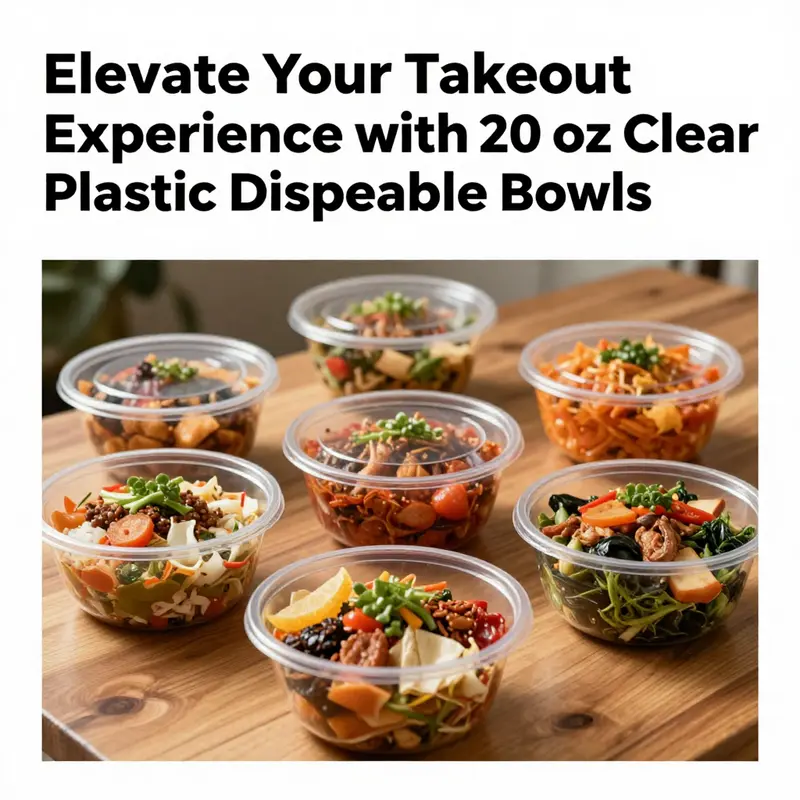
20 oz clear plastic disposable bowls have become essential tools for businesses, from bubble tea shops to catering services. With their appealing transparency, these bowls not only display food beautifully but also meet various operational requirements. This article will delve into their product features, safety standards, and wide-ranging applications, allowing you to appreciate the value they bring to your establishment.
Crystal Clarity and Practical Reach: The Product Features of 20 oz Clear Plastic Disposable Bowls in Modern Service
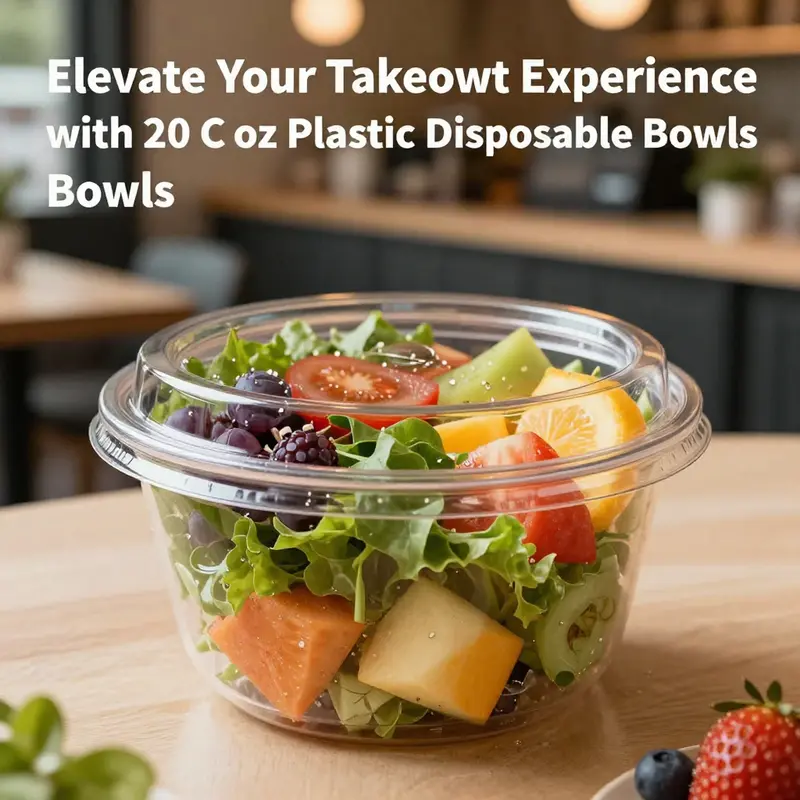
The appeal of 20 oz clear plastic disposable bowls lies not only in their dimensions but in the clarity with which they present food. In bustling kitchens, quiet cafes, and the event spaces where every detail matters, transparency becomes a silent ally. The bowls’ crystal-clear interior acts like a frame for the food inside, allowing the colors, textures, and even the moisture of a dish to be read at a glance. This visual transparency isn’t a mere stylistic flourish; it translates directly into consumer perception and, by extension, sales. A salad with emerald greens, plump berries, and a gloss of vinaigrette looks more tantalizing when plated in a bowl that does not distract from the food. Ice cream or fruit desserts reveal their layers with the same honesty. The bowl becomes almost a stage for the food, offering a window that invites a closer look without competing for attention. In a market crowded with choices, that ability to showcase the product clearly becomes a practical advantage, especially for takeout, gifting, or self-serve settings where the consumer’s decision happens in seconds and is influenced by what they can instantly see. The 20 oz size is a sweet spot for medium portions, balancing generous serving with a compact footprint. It is large enough to hold a substantial serving of a salad, a hearty portion of frozen dessert, or a single, ample soup, yet compact enough to be stacked, stored, and transported efficiently. The capacity supports both individual meals and shared or party-sized servings, aligning with the varying demands of restaurants, caterers, and households that want flexibility without clutter or waste. It is a capacity that feels practical rather than indulgent, offering versatility without demanding special handling or storage beyond what many kitchens already manage. This practicality underpins the bowl’s widespread adoption across a range of settings, from casual takeout counters to more formal catering lines, where speed and presentation must coexist without compromise.
The material story behind these bowls reinforces their visual strengths with a parallel emphasis on safety and reliability. Most variants are produced from BPA-free plastics, typically PET or PP, chosen for their food-grade compatibility. The choice of a BPA-free polymer is not merely a technical specification; it is a promise to both operators and diners that direct contact with food remains within safe, regulated boundaries. Materials that meet or exceed FDA safety standards contribute to a broader trust framework, where customers can enjoy a dessert or a savory snack without questioning the container’s integrity. The non-toxic nature of these plastics becomes especially important in environments with children, where ease of use and safety must walk hand in hand with convenience. The emphasis on food-grade materials also supports routine health and safety audits common in commercial kitchens, event venues, and retail takeout operations. When a bowl is used to present a layered salad, a yogurt parfait, or a bright sorbet, the material’s inherent chemical stability ensures that it does not impart odors or flavors that could alter the eating experience. This is not merely about keeping a dish pristine; it is about preserving the authenticity of the recipe and the cook’s intention, right up to the last bite.
Durability, a word that often accompanies discussions of disposable tableware, carries real weight in this context. The bowls are designed to withstand the everyday rigors of food service. They resist minor bumps and drops that would otherwise jeopardize the presentation of a dessert or the neat containment of a soup-based entrée. Although designed for single-use, the materials chosen are robust enough to handle typical handling scenarios—from quick-handoffs by a server to a rushed bagging process at a drive-through window. The strength of the plastic supports confident stacking and secure nesting to maximize space in storage and during transport, which in turn reduces the risk of damage and the need for repacks or substitutions during a busy service period. For operators, the combination of transparency and durability translates into fewer breakages and less waste—both tangible benefits in a world where margins are sensitive to every plate and every cup.
The design language of these bowls extends beyond their clarity and strength. A number of variants adopt an angled bowl form, a subtle yet practical feature that makes scooping and tipping easier, especially for loose, dry foods such as chips, popcorn, or small bite-sized confections. Angled sides invite gravity-assisted access to the contents, which not only enhances the consumer’s experience but also improves efficiency for food handlers who must portion or transfer items quickly. Other shapes—flat bottoms or softly curved rims—accommodate soups, cold cuts, or fruit salads, broadening the scope of application without sacrificing the core benefits of transparency and ease of use. In this sense, the 20 oz category becomes less about a single function and more about a family of ideas that adapt to the type of dish being served. The right form, chosen with the dish in mind, can subtly influence portion perception and the user’s sense of value, a factor that is often reflected in ordering behavior when meals are displayed side by side in a self-serve area or when staff recommends a complete meal package.
From a food safety and regulatory perspective, these bowls carry formulas and production practices designed to align with industry expectations. The emphasis on BPA-free materials, coupled with plastic types known for their stability in contact with food, supports compliance with safety guidelines that govern packaging for ready-to-eat items. While the consumer may not read every letter of the technical spec, the presence of safety certification and material compliance informs restaurant owners and event organizers about the reliability of the vessel in which their recipes are presented. The public-facing benefits are paired with internal assurances: the same material that protects the integrity of a delicate fruit salad also guards against the migration of unwanted substances when the bowl encounters cold desserts or warm sauces within a safe temperature window. While these bowls are not designed for long-term heat exposure or microwaving, their performance in a short, confident hot or cold service aligns with common practice in casual eateries and catering operations, where the flow of service is the priority. The temperature tolerance is carefully considered. In practice, the bowls handle warm beverages and slightly warm foods up to a point, but they are not intended for microwaving or prolonged exposure to high heat. This boundary is not an obstacle but a guide, helping operators plan menus and service protocols that protect both container and food integrity.
The practical reach of the 20 oz clear bowls also intersects with the economics of food service and the evolving expectations of customers. Many buyers find value in a standard size that reduces decision fatigue while delivering a predictable portion and a reliable presentation. The capacity supports a balanced meal or sizable snack without demanding an oversized vessel that would complicate storage or create extra waste. It makes sense for caterers who need to stock flexible portions for events where guests may vary in appetite, as well as for quick-service venues that rely on a straightforward, repeatable packaging solution. The sheer versatility of the 20 oz bowl—serving salads, soups, desserts, snacks, or even some breakfast items—offers operators a way to unify their takeout and dine-in presentation under a common, cohesive aesthetic. Production and procurement teams often prefer standardization; a single vessel that covers multiple menu items simplifies inventory management, reduces the number of SKUs, and converges ordering, ordering lead times, and waste control.
Manufacturing excellence undergirds all these benefits. The production of a high-volume, consistent product relies on automation and precision. Heat forming equipment, such as modern high-capacity thermoforming lines, enables rapid, uniform shaping with tight tolerances. One can imagine the flow: feeding raw polymer sheets into the machine, trimming, forming, and cooling, all in a synchronized sequence that yields a stack of identical bowls ready for packaging. Such automation supports quality control by ensuring that each bowl maintains a consistent thickness and structural integrity across thousands of units. The result is a reliable product that can be stocked and delivered with confidence, whether it’s destined for a small café, a large catering company, or a corporate event. The stackability also translates into efficient warehousing and logistics, where space savings contribute to lower handling costs and more streamlined distribution.
Beyond the manufacturing floor, the market narrative for these bowls encompasses both procurement realities and consumer expectations. On major e-commerce and wholesale platforms, these bowls are commonly offered in multi-pack configurations—often in sets of four or eight—providing a straightforward path for restaurants or households to ramp up stock without overcomplicating ordering contracts. The pricing structure tends to reflect the economies of scale that come with mass production, with per-unit costs remaining modest even as quality remains high. This balancing act—between price, performance, and presentation—fuels wider adoption in diverse settings. Buyers often weigh the trade-off between disposability and environmental sentiment. While the bowls deliver convenience for single-use scenarios, many operators pair them with recycling programs or compostable liners where available, seeking to minimize waste while preserving the benefits of a clean, efficient service model. The public dialogue around disposable tableware increasingly emphasizes responsible use, and manufacturers respond with BPA-free formulations, recyclable or recyclable-compatible materials, and clear labeling to help end users make informed decisions. The ongoing tension between convenience and sustainability remains a defining feature of the market, shaping product development and procurement strategies alike.
Customizability adds another layer to the product’s appeal. Suppliers increasingly offer branding opportunities, from subtle embossing to full-color logos and thematic graphics. In the party and event ecosystem, customization helps transform a simple serving vessel into a portable advertisement or a memorable touchpoint for guests. An example is the possibility to incorporate brand elements or festive imagery that resonate with a specific event theme, turning the act of serving food into a branded experience without altering the core function of the bowl. The option to print or apply decorative touches aligns well with marketing goals, where visual cues in packaging and presentation influence recall and guest satisfaction. For operators who want to harmonize their packaging with other disposable tableware, a modular approach to design—where lids, separators, and complementary containers share a cohesive aesthetic—can yield a more polished, professional appearance for every service setting.
In this light, the 20 oz clear plastic disposable bowl becomes more than a container. It is a functional instrument that supports efficiency, a visual enhancer that improves the perceived quality of the dish, and a logistical element that aligns with the practical rhythms of modern food service. Its transparency invites trust, its durability sustains performance, and its standardized capacity fosters predictability in both kitchen operations and customer experience. The design and material choices reflect a careful balance: beauty and practicality, safety and speed, brand potential and everyday usefulness. As operators anticipate the next wave of trends in takeout and catering, this vessel remains a dependable anchor in a shifting landscape, ready to accommodate evolving menus, changing consumer expectations, and the relentless pace of service.
To ground these reflections in real-world choice, one can consider how the packaging ecosystem supports these bowls. The selection of a compatible container family—whether it is a straightforward companion lid or a more sophisticated re-seal system—can amplify the benefits of the 20 oz bowl. A closing thought on procurement might emphasize the importance of choosing suppliers who can provide consistent stock, reliable certification, and flexible customization options. The ability to source bowls in bulk while knowing they meet safety standards provides a solid foundation for a menu that aspires to clarity, consistency, and a strong visual identity. As the conversation about disposable tableware continues to evolve, the 20 oz clear plastic bowl stands as a practical exemplar of how form and function come together in everyday service, blending visual appeal with reliable performance to meet current needs and future possibilities.
For practitioners seeking a concrete reference point for understanding how similar products perform in real retail contexts, a practical resource is available through major retailers. This external reference offers a tangible snapshot of how a comparable 20 oz clear bowl is positioned in the market, detailing dimensions, material composition, usage recommendations, and consumer feedback that can inform purchasing decisions and operational planning. External reference: https://www.walmart.com/ip/20oz-Clear-Plastic-Serving-Bowls-4-Pack/1234567890.
In parallel, those looking to explore how customization can be harmonized with broader packaging strategies may find value in exploring supplier options that offer branded or themed packaging solutions. For instance, some providers present a pathway to merge the functional benefits of a high-clarity bowl with distinctive branding or event-specific graphics, which can amplify brand recognition and consumer engagement at the point of sale or during gatherings. Such options illustrate how even a simple, disposable vessel can contribute to a cohesive consumer experience, reinforcing the idea that packaging is not merely a vessel for food but a conduit for storytelling, quality signals, and operational excellence. Please note that internal context and guidance should be aligned with the broader article narrative, ensuring coherence with the themes discussed in surrounding chapters and avoiding repetition of previously stated concepts.
From a holistic perspective, the 20 oz clear plastic disposable bowl embodies a pragmatic blend of visibility, safety, and adaptability. Its core features support a wide range of culinary presentations—from crisp, colorful salads to indulgent desserts—while its material choices reassure operators about safety and compliance. Its form factors enable both efficient handling and effective display, translating into tangible benefits in preparation, service, and customer perception. In this sense, the bowl is not a single-use afterthought but a strategic element in the architecture of modern food service, where speed, consistency, and presentation are all critical to delivering satisfying guest experiences in a world that values both convenience and quality.
Seeing Through Quality: Materials, Safety Standards, and the Everyday Impact of 20 oz Clear Plastic Disposable Bowls
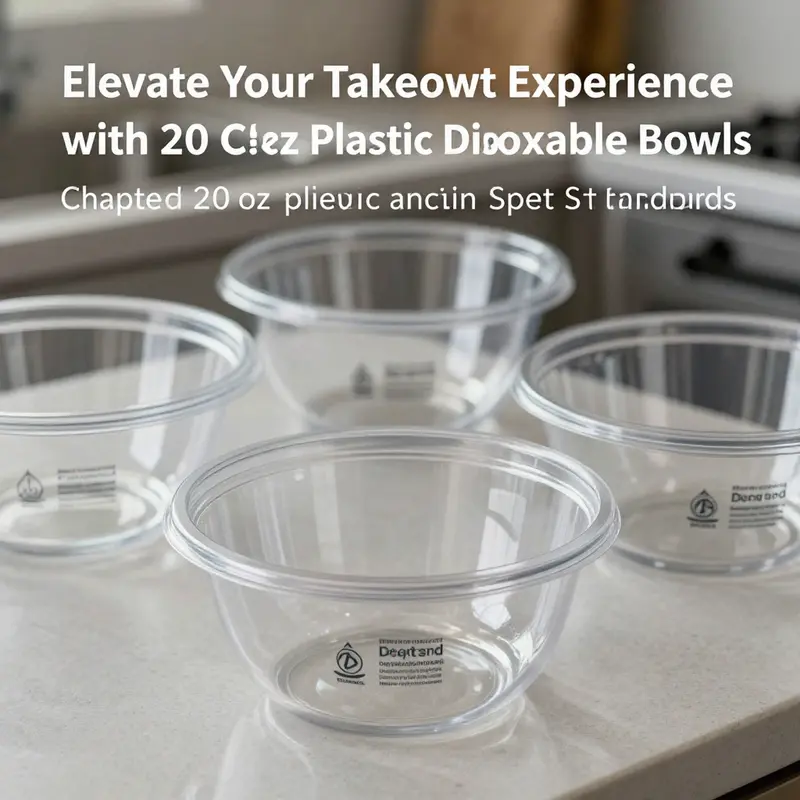
A single, transparent bowl can be more than a vessel; it is a quiet ambassador for the food it contains. In kitchens and banquet halls, takeout counters and home gatherings, the 20 oz clear plastic disposable bowl does not merely hold a portion. It presents it. The crystal clarity of the container lets the color, texture, and composition of fruit salads, chilled desserts, or neatly portioned snacks stand out with unambiguous appeal. Yet the appearance is the surface we see; beneath lies a careful balance of material science, safety testing, and practical design choices that shape every bite that reaches a consumer. In this chapter, we explore the materials and safety standards that define these bowls, drawing connections between raw resin, regulatory expectations, and the everyday decisions that keep food presentation both attractive and trustworthy. The journey begins with what the bowls are made from, because material choice sets the stage for performance, safety, and end-of-life considerations, all of which ripple through the service experience and the conversations customers have about quality.
Materials used in these bowls are typically derived from two families of thermoplastics known for their clarity, rigidity, and compatibility with food contact. One family centers on polyesters that fuse strength with transparency, enabling a near-perfect view of the contents without sacrificing structural integrity. The other family offers a lighter weight option, one that keeps costs down while preserving the essential stiffness needed for handling, stacking, and transportation. The choice between these materials is not merely a matter of colorless appearance; it is a calculus that weighs mechanical performance against cost, heat tolerance, and the nuances of food safety. In practical terms, the PET option—often celebrated for its shatter resistance and high optical clarity—delivers a bowl that looks as clean as the fruit inside it. PET’s refractive qualities contribute to a bright, glass-like transparency that helps showcase the freshness of a salad, the sheen of a glaze on fruit, or the cool sparkle of a dessert. The other common material, polystyrene, is frequently selected for its lighter weight and manufacturing efficiency. Its rigidity and processability support thin walls and economical production, which translates into competitive pricing for bulk orders while maintaining a solid barrier against external moisture and contamination.
These material choices, while straightforward on the packaging line, carry implications for safety and user experience. When we speak of food-grade materials, we are referring to a standard that ensures compatibility with direct contact with food under typical usage conditions. The designation is not decorative; it is a guarantee that the resin will not introduce harmful substances into the food, even when the container encounters the occasional warm beverage, slightly acidic sauce, or a moist, chilly dessert. In many markets, manufacturers and suppliers go a step further by labeling products as BPA-free. The decision to remove bisphenol A from the formulation responds to public health concerns surrounding chemical migration, especially for cold or room-temperature foods often stored in transparent, see-through containers that invite close visual inspection by consumers. The BPA-free label is more than a marketing cue; it is a reassurance about the chemical landscape within the container, signaling that the design prioritizes safety in everyday use.
Safety standards for these bowls extend beyond the absence of specific substances. They encompass the broad framework of food-contact regulations designed to manage risk from the moment the resin is formed, through the conversion into finished bowls, to the moment a customer disposes of the packaging. A foundational element is food-grade certification, which confirms that the materials used are appropriate for direct contact with food and that their manufacturing processes meet established health and safety criteria. This certification process considers not just the composition of the polymer but how additives, colorants, and surface finishes interact with foods across typical temperature ranges. It also recognizes that real-world use can involve exposure to heat, acidity, and moisture that could influence migration or leaching. The result is a system of checks and balances designed to protect consumers while enabling a flexible supply chain that can respond to diverse catering needs, whether for a refined restaurant takeout service or a bustling outdoor event.
In many regions, regulatory oversight of food-contact materials is anchored by authoritative agencies that translate scientific evidence into practical rules. The U.S. Food and Drug Administration, for instance, provides guidance on materials used in direct food contact and sets expectations for manufacturers to demonstrate safety through appropriate testing and documentation. This framework is not a rigid, one-size-fits-all standard; it is a living, risk-based approach that recognizes the variety of foods, temperatures, and handling scenarios that bowls encounter in the wild. For buyers and operators, understanding these standards helps explain why a seemingly simple product carries a cluster of assurances, from the absence of BPA to adherence to migration limits and cleanroom-grade production practices. The emphasis is not merely on compliance for compliance’s sake but on building trust with customers who expect their foods to be presented in containers that do not compromise flavor, aroma, or safety.
The design and performance of a 20 oz clear plastic disposable bowl are inseparable from how it is manufactured. Thermoforming is the dominant production method behind many of these bowls, a process in which heated plastic sheets are shaped over a mold to form the bowl and lid or to create nested, stackable geometries. Thermoforming equipment—often large, automated machines—provides the precision that ensures consistent wall thickness, flat bottoms for stable stacking, and uniform clarity that thrives in high-volume environments. For PET and PS, the forming parameters are tuned to balance transparency with rigidity, ensuring that the bowl can be grasped, transported, and used without risk of collapse or warping. The outcome is a product that not only looks pristine on a table but also behaves predictably in busy service settings where speed and reliability are essential. The production workflow also addresses the practicalities of distribution: light, rigid, and shatter-resistant designs reduce breakage in transit and storage, while nesting capabilities optimize space in warehouses and trucks, contributing to lower costs and more sustainable handling practices.
In the day-to-day reality of food service and social gathering, the fact that these bowls are disposable is not merely a convenience statement but a reflection of hygiene, efficiency, and supply chain fluency. The disposable nature of the bowls aligns with expectations for quick-service operations, where customers appreciate quick turnover and simple cleanup. At events, the see-through shell helps guests identify portions without unnecessary handling, a feature that supports speed without sacrificing presentation. At home, these bowls can facilitate portion control, storage, and even meal-prep routines, where cling-film or lids assist in keeping leftovers neat. Yet the single-use aspect also triggers important conversations about environment and sustainability. The choice of material, its recyclability, and the presence of additives can influence the end-of-life path. Reclaiming the resin through recycling streams depends on local infrastructure, the clarity of the material, and the purity of the stream. In markets where curbside recycling is robust, PET often finds a second life as bottle-grade material, while PS may face more limited recovery depending on the local program. This reality shapes the decisions of suppliers, operators, and even consumers who weigh the value of a pristine presentation against the broader environmental footprint.
The balance between safety and performance is also reflected in how these bowls are labeled and tested. Clear communication about food safety, including BPA-free claims, helps consumers trust that the packaging will not introduce unwanted substances into their meals. The emphasis on plastic that stays within safe temperature ranges—while cautioning against microwave use or prolonged exposure to high heat—helps ensure that both cooks and diners behave in ways that preserve safety and quality. It is not unusual for suppliers to present documented statements about compliance with food-contact regulations, along with test results that demonstrate acceptable migration limits and stability under expected conditions. In practice, this means that a buyer can expect a bowl that remains visually clear under standard usage, withstands the rigors of fast-paced service, and does not degrade or impart off flavors in the course of preparation, service, and short-term storage.
From a commercial perspective, material selection is a lever for price, performance, and image. Clear bowls that rely on PET may command higher manufacturing costs than simpler PS options, yet the superior clarity and shatter resistance often translate into enhanced product presentation and reduced breakage, particularly valuable in takeout and catering contexts. The ability to offer a fully transparent container aligns with consumer expectations around visibility and freshness; customers can see the salad greens, the ice cream swirl, or the fruit medley, reinforcing appetite and perceived quality. Customization possibilities further amplify this impact. Suppliers frequently offer branding opportunities that can be applied to the rim, lid, or exterior surface of the bowl, enabling a business to extend brand presence without altering the core packaging. Such customization supports marketing campaigns and thematic packaging for events, while still preserving the integrity of the material and the safety profile of the product. For businesses considering expansion into themed packaging, there are practical paths toward integration, including options for custom takeaway packaging and disposable tableware for theme parties (https://ecocupbowl.com/product/custom-takeaway-packaging-supplies-disposable-tableware-for-theme-party/). This approach allows brands to maintain a coherent aesthetic across their array of disposable tableware while ensuring that safety standards remain non-negotiable.
The chapter’s emphasis on materials and safety is not merely about compliance; it is about enabling confidence at every link of the supply chain. Procurement decisions rely on clear specifications: the resin family, the presence or absence of BPA, the stated food-grade status, and any additional certifications. Quality control checks during manufacturing verify that the bowls meet consistent standards for clarity, wall thickness, and dimensional accuracy. When these attributes align with safety assurances, foodservice operators can rely on predictable behavior in high-volume environments. Consumers, in turn, gain assurance that the packaging they trust with their meals has endured the rigors of transport, display, and handling without compromising safety or aesthetics. The end result is a packaging experience that feels effortless to the eye and trustworthy to the palate, turning a simple purchase into a promise of quality.
In considering the broader ecosystem, the regulatory landscape and the science of materials intersect with consumer expectations about transparency and health. The conversation about plastics used in food contact has evolved as new data emerge about migration, leaching, and the cumulative effects of exposure. While a bowl may seem straightforward, its life cycle involves resin suppliers, converters, manufacturers, regulators, retailers, and, ultimately, the consumer. Each step carries responsibilities: designers must select materials that perform under realistic use, manufacturers must validate safety through testing and documentation, and retailers must communicate clearly about what is inside the container and how to use it safely. The consumer’s role, too, is important. By looking for BPA-free labeling, by respecting temperature guidelines, and by disposing of packaging through appropriate channels, customers participate in a system designed to maximize safety and minimize waste.
To complete the picture, we acknowledge that the cultural and market contexts in which these bowls operate shape their development. Visual appeal matters, especially when presentation is part of the dining experience. The transparency of the container elevates the dish, but it also makes the integrity of the food more visible, inviting higher standards for preparation, plating, and handling. In catering and fast-casual settings, the combination of material clarity, safe composition, and robust manufacturing creates a reliable platform for everyday service as well as special occasions. Suppliers who understand these dynamics can pursue opportunities for optimization, whether by refining wall thickness to balance strength and cost, improving surface finish to resist scratching, or pursuing color-free resins that maintain pure transparency without tint. The result is a family of bowls that not only serves a practical function but also communicates a commitment to quality, safety, and the dining experience itself.
As with any packaging choice, informed decision-making rests on accessible information. The consumer-facing narrative around safety and materials can sometimes appear opaque, but the underlying science has tangible implications for taste, texture, and comfort. When a bowl is labeled BPA-free and food-grade, it is not merely a claim; it is an invitation to trust that what sits beside the food—its container—has been designed with care. In a world where meals travel from kitchen to curbside to table, the clarity of the container becomes a silent ally in a story of safe, appealing, and efficient dining. The 20 oz clear plastic disposable bowl embodies this alignment between form, function, and safety. Its design is not an accident but the outcome of a careful synthesis of material science, regulatory standards, and practical needs. In short, it is a container that helps foods look as good as they taste, while keeping the principles of safety and responsible manufacturing at the core of every serving.
For readers seeking further regulatory context and deeper engagement with material standards, the FDA provides official guidance on food contact materials, which governs how these containers are developed and tested. This body of information helps connect the everyday experience of using a disposable bowl with the broader framework that protects health and ensures consistency across manufacturers, retailers, and foodservice operators. The conversation around materials and safety standards is ongoing, and the bowls discussed here sit at the intersection of aesthetics, performance, and responsibility—an everyday reminder that even the most modest packaging can carry meaningful commitments to quality and safety. FDA guidance and related resources offer a foundation for understanding how such packaging is evaluated, tested, and approved for market, reinforcing the idea that transparency in the container should be matched by clarity in safety and process. For a broad overview of these principles, see the FDA’s guidance on food-contact materials: https://www.fda.gov/food/food-contact-materials.
Seeing Through Service: The Emergence of 20 oz Clear Plastic Disposable Bowls in Presentation, Packaging, and Market Dynamics
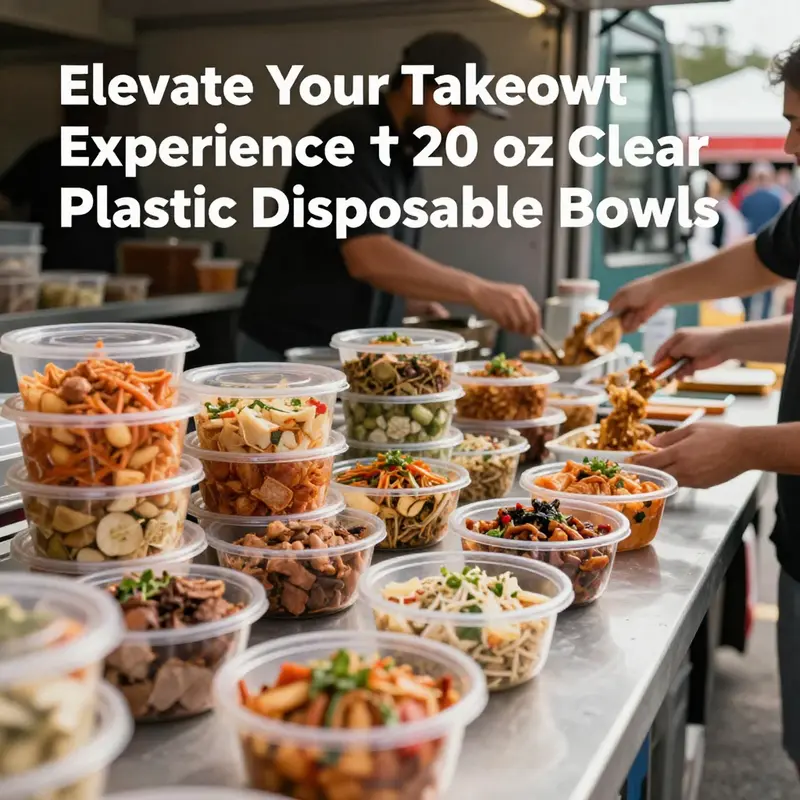
Clear plastic disposable bowls in the 20-ounce size have become more than a convenience; they are a lens through which modern food service examines speed, display, and consumer trust. The bowl’s transparency invites a direct read of color, texture, and portion, letting a vibrant fruit salad glow, a mousse glisten, or a snack mix shine. The capacity sits at a sweet spot: large enough to hold a generous single serving or an ample tasting portion, yet portable enough for quick service lines, curbside pickup, and casual gatherings. When the container is clear, it becomes an extension of the dish, not a barrier between chef and diner. This visual pivot matters not only for appetite but for decision-making in professional kitchens that must balance presentation with operational efficiency. As orders pile up and menus diversify, these bowls offer a universal stage for food art while keeping the mechanics of service straightforward and scalable.
From a materials perspective, the 20-ounce clear bowls are typically molded from food-grade plastics such as PET or PP. Both materials deliver a high level of clarity, a degree of rigidity, and a safety profile appropriate for direct food contact when they are BPA-free. The emphasis on safe contact is not merely regulatory; it reflects a growing expectation among operators and guests that packaging should be inert and non-toxic. In many regions, suppliers offer an explicit FDA certification, a signal that the container has met rigorous standards for contact with items ranging from fresh fruit to cooling desserts. Heat performance is another practical consideration. While these bowls handle warm elements up to roughly 70 degrees Celsius in certain configurations, they are not designed for microwave heating or extended exposure to high heat. This limitation shapes how kitchens stage meals: hot components are kept separate, while the bowls welcome cooling foods, beverages at room temperature, or chilled desserts. The material choice also informs downstream considerations, such as how easily the bowls stack for storage, how they resist cracking in freezing conditions, and how they behave during cold-chain transport.
Beyond material, the geometry of the bowl plays a defining role in everyday use. Many 20-ounce clear designs employ an angled or sloped side that gently tilts toward a wider rim. This configuration eases the flow of chips, popcorn, and fruit chunks, inviting gravity to do part of the work when scooping. It also helps create a more intuitive eating experience for guests who navigate the container with a fork or spoon. Other bowls favor a flatter bottom and a rounded profile that suits soups, salads, and layered desserts. In a bustling service environment, the choice of form can influence line speed, plate appearance, and even the way staff portion out items. The option to pair bowls with lids—whether vented for cold items or secure for takeout—adds a layer of spill resistance and transport reliability that is invaluable when orders travel across town or span event spaces. The result is a toolkit rather than a single vessel: a family of shapes that speak to the food type, the service style, and the level of presentation a kitchen and host wants to achieve.
Visually, a clear bowl reframes the dining moment. A bright salad becomes more appealing when its greens and reds are framed by glass-like walls, and a layered dessert reveals its texture through the bowl as if on a stage. The psychology of viewing is powerful: when diners can identify ingredients at a glance, they perceive freshness and portion control more readily. This is not limited to high-end dining; in self-service arrays and dessert tables, the transparency of the container supports quick decision-making, reduces the cognitive load of choosing among many items, and even encourages smaller bites when presented in a way that reveals the layers or chips within. For retailers or caterers, the economic calculus also shifts. Clear visibility can shorten service times by minimizing questions about contents, and it can improve impulse purchases by highlighting color variation, sparkle, and contrast—the visual language of appetizing food. The bowl becomes a partner to the chef’s plating, not merely a vessel for containment.
Within hospitality and retail ecosystems, 20-ounce clear bowls find homes in a broad spectrum of settings. Banquets and catering events rely on them for serving salads, fruit platters, or cold desserts with a sense of ceremony, while everyday foodservice operations use them for takeout, dine-in, and quick-service formats. Cafeterias and salad bars, in particular, benefit from the ability to pre-portion ingredients into visible displays that invite customers to assemble their preferred bowls. At parties and gatherings, the shared nature of snacks—chips, nuts, candy, or fruit medleys—often requires containers that are robust enough for passing around a crowd and light enough to minimize fatigue for servers. Families, too, appreciate the ease of portioning meals for children or for lunches, where the transparent container doubles as a meal tracker, giving caregivers a quick visual read on what’s inside without opening the lid. In every scenario, the 20-ounce size anchors the experience with enough food to satisfy without creating wasteful surplus, a balance that becomes increasingly important as service models evolve toward flexibility and speed.
From a market perspective, the demand for these bowls has grown as operators seek efficiency, consistency, and brandable aesthetics. Standard configurations are commonly sold in multi-pack formats, a logistics choice that reduces handling and simplifies storage while ensuring uniform inventory. Buyers often value either a straightforward, no-frills presentation or a chance to express identity through customization. Suppliers increasingly offer branding options, such as adhesive labels or printed motifs that can be applied to the exterior, enabling a theme, a seasonal promotion, or a corporate identity to come through without altering the core container. The scalability of production is another core driver. Modern thermoforming and forming lines enable rapid, repeatable production with tight tolerances, ensuring that every bowl stacks predictably and interlocks with lids or other components. The broader trend toward sustainability appears in the rising preference for BPA-free materials, clear recyclability where possible, and messages that align with responsible consumption. Even on a simple product like a 20-ounce bowl, the life cycle from raw material to disposal becomes a conversation about waste, resources, and opportunity.
Ecology and safety shape procurement choices as much as cost and convenience. While these bowls are designed for one-time use, their lifecycle does not end with a single dinner party. Recyclability depends on local infrastructure and the exact resin, finishes, and any adhesives used for branding or labeling. For operators seeking to minimize environmental impact, the decision often weighs the trade-offs between disposability and reuse, the latter sometimes requiring dedicated cleaning capacity that may not align with high-volume throughput. In addition to safety certifications, the material choice supports compliance with regulations that govern direct food contact. Clear plastics, when properly maintained and used as intended, present a low-risk option for serving and display. Yet even with BPA-free formulations, attention to handling, storage, and temperature remains essential—temperatures above recommended thresholds can affect the integrity of the container, and rough handling can lead to cracks that compromise hygiene. These considerations underscore a larger shift in food packaging: when function, form, and footprint are aligned, containers can help food service run more smoothly while still respecting stewardship principles that resonate with guests and operators alike.
In practice, success with 20-ounce clear bowls often comes down to simple operational choices. Place a few bowls on a service table with a few easy-to-grab items near the front, and you create an inviting display that invites guests to sample. For cold items, a few consistent ingredient lines—a crisp fruit mix, a creamy dessert, and a crunchy snack—help maintain visual appeal and prevent needless mixing or sogginess. When assembling salads or fruit bowls, consider pre-dressing in separate lines or offering dressing on the side to preserve texture and color. For staff, aligning portion sizes with the bowl’s capacity helps control waste and ensures consistency across orders. For events, stacking and transport logistics deserve attention: secure lids that fit snugly reduce spill risk, and protective packaging that cushions the bowls during transit protects their clarity and prevents scratches. The stillness of a well-arranged dessert bar or a tidy salad station can elevate the perceived value of offerings and streamline service in a way that translates into happier guests and smoother operations for the team.
As packaging and presentation continue to evolve, operators benefit from viewing containers as dynamic tools rather than passive receptacles. For brands exploring how packaging can reinforce a theme, consider exploring options like custom takeaway packaging and disposable tableware. The right combination of form, clarity, and branding can unify menu narrative with the dining experience, turning a simple bowl into a storytelling device that communicates quality, care, and consistency. At the same time, suppliers are expanding capability beyond the container itself. Access to lids, dividers, inserts, and labeling systems enables a fully integrated display that matches the tone of a restaurant, a festival, or a home celebration. The push toward modular solutions means bowls are no longer a singular product but a node in a network of service components designed to speed service, protect contents, and preserve presentation from the kitchen to the table. This broader view helps explain why a simple 20-ounce clear bowl remains a mainstay across diverse contexts and why it continues to attract attention from buyers who value both practicality and aesthetics.
External resource: https://www.alibaba.com/product-detail/Clear-Disposable-Plastic-Bowls-8oz-12oz_1600358917728.html
Final thoughts
The 20 oz clear plastic disposable bowl stands out for its combination of style and practicality, making it a great choice for diverse food service needs. From tempting bubble tea offerings to catering exquisite events, these bowls elevate food presentation while ensuring safety. Businesses that prioritize quality and efficiency will find these bowls a perfect fit as they navigate serving individuals and larger gatherings.