
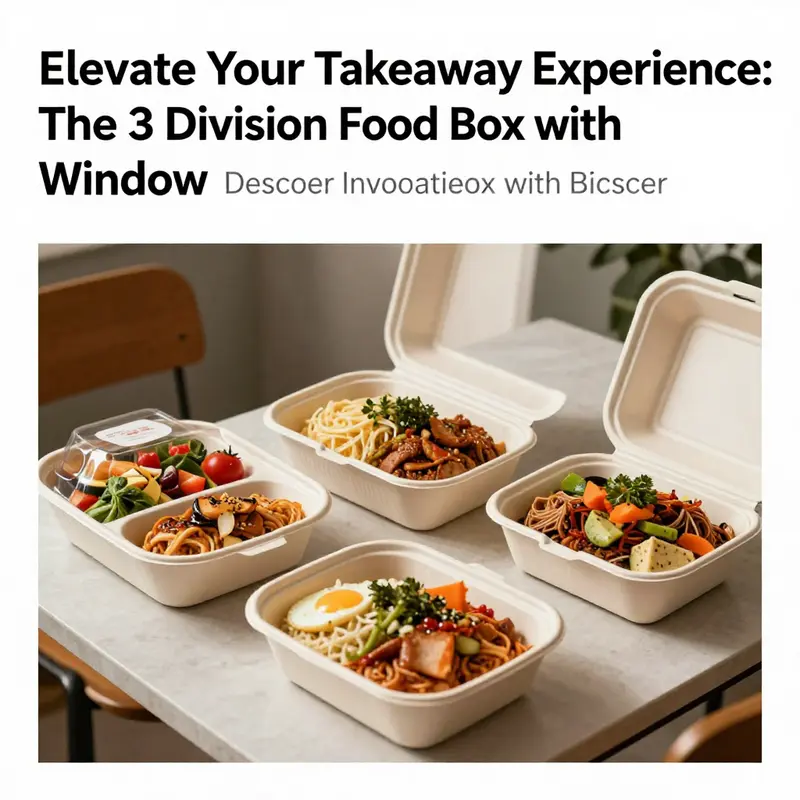
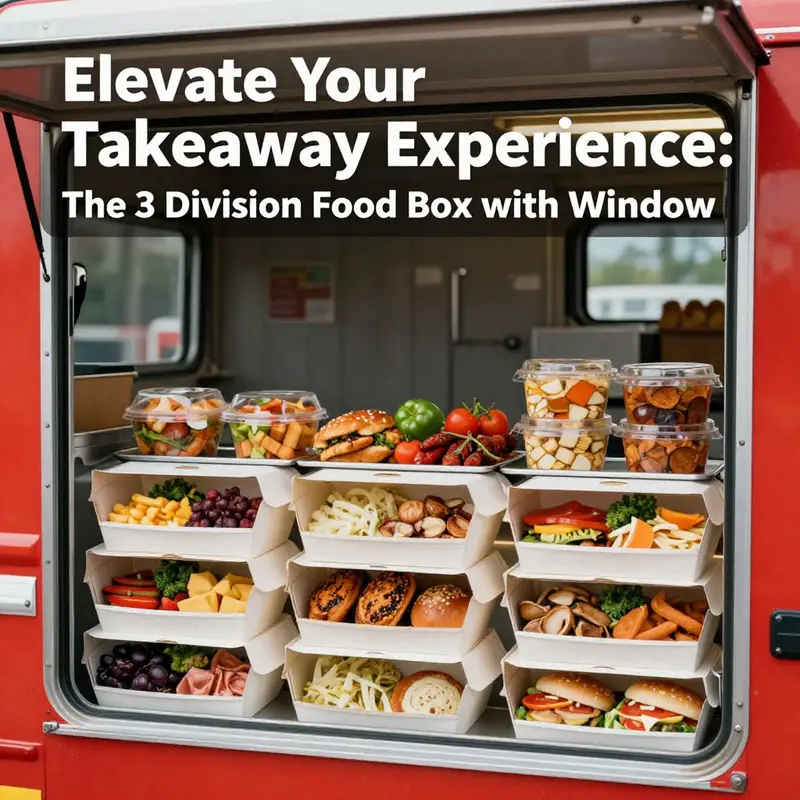
In an increasingly competitive food service landscape, offering visually appealing, functional, and hygienic packaging solutions can set your business apart. The 3 division takeaway food box with a window is engineered to meet these demands, creating a unique point of engagement for customers, from bubble tea shops and restaurants to catering services and food trucks. Each chapter of this article delves into different facets of this packaging innovation, encompassing market demand, materials and techniques, design nuances, supplier landscape, and environmental impact, all of which combine to illustrate how this product can support businesses in delivering a top-notch experience.
null
null
Clarity in Construction: Materials and Manufacturing for the 3-Compartment Takeaway Box with Window
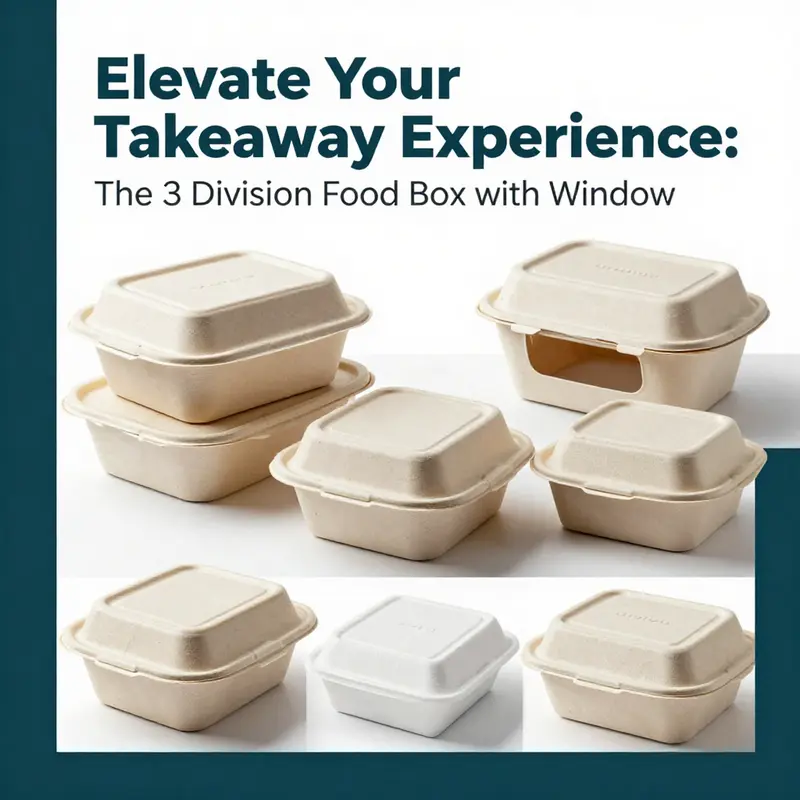
The three-compartment takeaway box with a window is not merely a container; it is a carefully engineered interface between food and consumer experience. This chapter follows the thread that stitches material choice to manufacturing technique, and finally to how brands present what is inside. It is a story of how transparency and separation can coexist without compromising safety, convenience, or sustainability. At the core lies a simple premise: the box must keep hot foods hot, sauces contained, and aromas under control, while offering a clear view of the contents that prompts trust and appetite alike. Material science and the factory floor play equal roles in delivering that promise, and the choices made at each step ripple through cost, performance, and the environmental footprint of the product on every doorstep, counter, or curbside pickup.
First is the broad spectrum of materials that enable the functional triad of durability, visibility, and compatibility with a window. Plastic remains a cornerstone, with polypropylene and PET leading the charge. PP is prized for its toughness, moisture and oil resistance, and respectable heat tolerance in many configurations. PET offers excellent clarity, a quality that makes the window more than a mere window; it becomes an invitation to visually confirm the meal’s allure without lifting a lid. When used for the box body and the film, these plastics support microwave-safe and freezer-safe applications, depending on the exact grade and treatment. Yet their appeal comes with a caveat: they are not inherently biodegradable, and the environmental cost of single-use plastics remains an ongoing concern for brands seeking to improve their green image.
To address that concern, kraft paper, bagasse, and other renewable feedstock options have moved from niche to mainstream. Kraft paper boxes, often treated with a thin moisture barrier, appeal to brands that want to emphasize recyclability and compostability. The natural, earthy aesthetic of kraft can also amplify a brand’s storytelling about simplicity, tradition, and local sourcing. Bagasse, the pressed sugarcane fiber that forms the backbone of many compostable meal solutions, offers robust heat resistance and good barrier properties. It is especially appealing when the aim is to minimize petrochemical dependence, but it does require careful selection of compatible window films and coatings to maintain a coastal balance between transparency and barrier performance.
Where bagasse and kraft boxes lean toward compostability, polylactic acid or PLA-based solutions push for industrial composting end-of-life pathways while offering a transparent or semi-transparent window film option. PLA is a bioplastic derived from renewable resources and can be used for both container bodies and window films. It is truly compostable under industrial conditions, though it tends to be less heat-resistant than traditional plastics or bagasse, which can influence the design and use-case scenarios. When selecting PLA for a window, manufacturers must weigh the heat exposure from hot foods against the need for a clear, flexible film that adheres reliably to the substrate. The material mix, in other words, becomes a system rather than a single choice.
The window itself is a crucial design decision and not a mere afterthought. The window film options mirror the material choices for the body, ranging from PP/PET composite films to cellulose-based films and PLA films. A PET or PP window film offers high transparency and predictable optical performance, but may require barrier treatments to resist fogging as steam from hot foods condenses on the surface. Cellulose films align well with compostable or fully biodegradable substrates like bagasse or kraft, delivering a more ecological finish. PLA films offer the most cohesive alignment with PLA bodies, delivering a fully compostable package when conditions allow. Each option carries its own set of trade-offs for heat resistance, moisture management, and the integrity of adhesives used to join film to substrate.
Manufacturing techniques translate these material choices into manufacturable realities. Thermoforming is perhaps the most common method for plastic and certain bioplastic materials. A heated sheet is formed over a mold to generate the main body, the three compartments, and even the window opening in a single, integrated process. Thermoforming excels in high-volume production, delivering consistent geometry and rapid cycle times, which are essential when the target is tens or hundreds of thousands of units per day. Injection molding represents another path, especially for rigid plastic bodies that require precise tolerances and robust wall thickness. Injection molding lends itself to a more rigid, well-sealed container, but it can be less flexible for rapid customization compared with thermoforming. Hydraulic molding is frequently employed for bagasse or paper-based bodies. In this approach, a high-pressure process shapes the fibrous pulp into a solid form, producing strong, heat-resistant structures that align with the sustainability narrative these materials support. The choice of manufacturing method is thus a direct reflection of the material strategy and the required performance under real-world conditions.
The window integration step is a lesson in precision. The transparent film must be cut to exact dimensions and bonded to the box with a process that guarantees a durable seal without compromising food safety. Adhesive bonding is a straightforward route for plastics, while heat sealing can create a seamless, edge-bonded window that reduces the risk of detachment. Lamination—where the film is integrated during molding or forming—offers the most seamless, high-end finish but requires tighter process control. Each method must contend with the stresses of transport, the hustle of a delivery environment, and the variations in food temperature that can push a seal to its limits. Fogging remains a persistent challenge when steam from hot meals meets a cooler exterior surface. Anti-fog coatings or the use of hydrophilic films can mitigate this issue, but the choice must be weighed against costs and compatibility with the chosen substrate.
A well-engineered three-compartment box with a window becomes a system that honors the consumer’s needs for visibility, order, and safety. The presence of three separate compartments is more than a matter of aesthetics; it is a functional solution that manages cross-contamination and keeps textures distinct. The precise separation also imposes design constraints on the lid, seal geometry, and venting options. In hot meals, steam buildup can create pressure that strains the lid or causes leaks if the seal is not robust enough. Designers must anticipate these forces, integrating features such as vent channels, double-seal rims, or micro-vents that relieve pressure without compromising the tight, transport-ready lock of the box. These decisions are not trivial; they influence the user experience from the first moment a customer picks up the box to the last bite of the meal at home.
The landscape of materials and manufacturing for these boxes is not confined to the lab. It unfolds in real-world supply chains that have evolved to support mass production while accommodating a broad spectrum of sustainability goals. China remains a global powerhouse for this category, with Guangdong Province acting as a hub for mass-volume plastic production. Dongguan and Shenzhen exemplify the region’s capability to scale, where injection molding and thermoforming lines run at extraordinary speeds. In parallel, Zhejiang is emerging as a leader in eco-friendly innovations, offering rapid prototyping and a suite of compostable films and recyclable substrates. Jiangsu contributes precision engineering know-how, ensuring that even the most intricate three-compartment layouts meet exacting tolerances. Together, these regions demonstrate how a single packaging concept can traverse a continuum from design to mass delivery, with material choices and manufacturing processes tuned to market needs and environmental aims.
From a sourcing perspective, the path to a reliable supplier rests on distinguishing between direct manufacturers and intermediary traders. Direct manufacturers offer clearer quality control, more transparent pricing, and greater continuity in the supply chain, all of which matter when a brand is trying to scale or test new concepts with minimal risk. For buyers seeking a more agile entry into new markets, digital marketplaces often present a broad set of options, including customizable, microwave-safe configurations and varied shipping terms. The ability to negotiate low minimum order quantities can be especially appealing to startups testing regional menus or experimenting with seasonal themes. The practical route is to identify a manufacturer that can deliver consistent drawing-board-to-delivery outcomes: defined tolerances, repeatable window bonding, and reliable performance under heat and moisture exposure.
In practice, the design and material selection process also reflects a brand’s sustainability commitments. A growing segment of operators favors compostable or recyclable substrates, paired with window films designed for industrial composting or recycling streams. The synergy between the body and window film matters here; mismatched materials can compromise end-of-life outcomes, undermining the packaging’s environmental narrative. The goal is a coherent story where every component—body, compartments, and window—contributes to a lifecycle that aligns with the brand’s values while still delivering the practical benefits customers expect on a busy day.
For readers exploring concrete sourcing options, the broader market landscape offers a spectrum of pathways. On one hand, a direct manufacturer backed by a strong in-house thermoforming line can deliver scalable, cost-effective solutions with tight quality control. On the other hand, established suppliers with global distribution networks bring access to an array of materials and customization options, along with established compliance and certifications. The choice hinges on a brand’s market strategy, risk tolerance, and the degree to which sustainability is embedded into the supply chain. In either case, the promise remains consistent: a three-compartment structure with a window that communicates quality, freshness, and care, all while supporting efficient, hygienic, and reliable delivery.
To illustrate the broader ecosystem, consider how industry players position these boxes in response to logistical realities and consumer expectations. The design often hinges on flexibility: the capacity to accommodate a range of meals, from heavier fried items to lighter sides and sauces, without requiring a different box every time. A universal approach to the interior compartments, coupled with a window that shows the food’s appeal, helps brands maintain consistency in branding and presentation across a varied menu. The box becomes a canvas for storytelling, where the visible contents reinforce the narrative of freshness, care, and convenience. As manufacturers push toward more sustainable materials and more efficient production, they must keep the end user in view—someone selecting a meal, receiving a crisp, clean package, and then appreciating the transparent glimpse inside that confirms the meal’s integrity before the journey into eating begins.
For those seeking practical guidance on materials and manufacturing strategies, it helps to reference industry overviews that capture the current state of the market while pointing toward future developments. A comprehensive overview of the marketplace shows how suppliers in major production regions balance performance with cost, and how innovations in eco-friendly materials are reshaping the options available for three-compartment boxes with windows. These developments are not isolated; they feed into a broader shift toward packaging that harmonizes user experience with environmental responsibility, a balance that increasingly defines successful takeout programs. Within this evolving landscape, the three-compartment box with a window stands as a focal point where form meets function, and where material science, process engineering, and brand storytelling converge to deliver a packaging solution that respects both the consumer and the planet.
Internal link note: for brands exploring greener options, see eco-friendly takeout boxes for food packaging. This resource highlights how sustainable materials and thoughtful design choices can complement the windowed, multi-compartment concept while aligning with evolving consumer expectations. eco-friendly takeout boxes for food packaging
External resource: broader industry context and sourcing dynamics can be explored through global supplier platforms that document the capabilities and certifications common in mass-produced packaging solutions. External reference: 3-Compartment Takeaway Food Boxes with Window on Alibaba, which outlines typical configurations, materials, and order terms for international buyers seeking a scalable, ready-made solution. https://www.alibaba.com/product-detail/3-Compartment-Takeaway-Food-Boxes-withWindow1600598785258.html?spm=a2700.15638025.0.0.6f9d5c8aRqQYxV
Seeing the Meal Before It Opens: The Design and Everyday Functionality of a 3-Division Takeaway Box with a Window
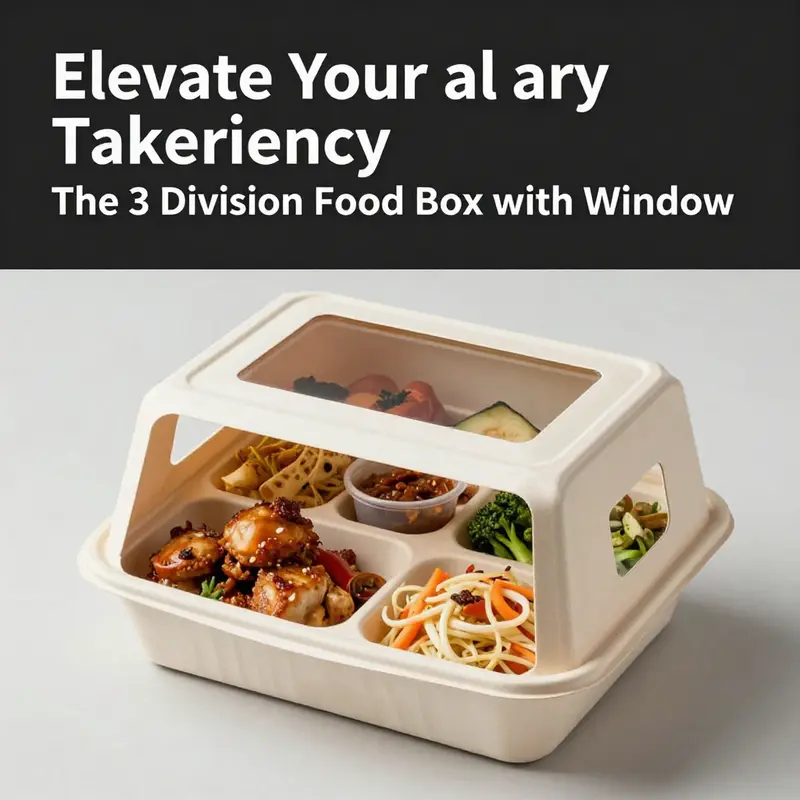
A takeout box can become more than a simple container when its design thoughtfully integrates how people eat, perceive, and trust what is within. The three-compartment takeaway box with a window is a succinct example of how form and function converge to elevate a meal before the user ever takes a bite. The window, a translucent gate between packaging and palate, is not merely a gimmick. It is a carefully considered feature that anchors customer expectations to visual clarity while supporting operational realities in busy kitchens and delivery teams. In such a box, three distinct compartments organize the meal components—main, sides, and sauces or dips—without mingling flavors or textures. This separation is more than a convenience; it is a guarantee of quality. When a customer unfurls the lid, what they see should align with what they smelled and what they anticipated at the ordering stage. The window provides that instant confirmation, reducing the cognitive load on the consumer and, in practice, diminishing the need for unpacking and peeking from multiple angles. The result is a smoother, faster, and more reliable post-purchase experience that can be the difference between a repeat order and a one-off impulse buy. The design therefore operates on several layers at once: consumer psychology, food integrity, and practical packaging economics, all held together by the choice of materials and the geometry of the box itself.
Material selection for this packaging category represents a balance between durability, heat resistance, and environmental stewardship. A common framework features a recyclable kraft paper outer shell with a three-layer construction that adds rigidity, moisture resistance, and a sense of premium tactility. The transparent window, typically a film made from compostable or recyclable substrates, must resist condensation while remaining flexible enough to contour to the box’s shape during transport. The film’s performance is not simply about visibility; it also encodes a promise of safety. When customers see their food, they also trust that the contents have not been tampered with in transit. This trust is essential in a landscape where consumers expect transparency from brands and a hygienic experience from the packaging. The self-locking mechanism on the lid further reinforces that trust by keeping the box firmly shut through the rigors of delivery, stacking, and甚至 the occasional bump along a curb. Yet no design is perfect in every situation. Some configurations may experience lid displacement under jostling, or fogging on the window when piping hot foods release moisture onto the inner surface. Manufacturers respond through engineering refinements: tighter lid interfaces, anti-fog coatings or films, and seals that preserve heat while preventing condensation from becoming a visual barrier rather than a belly-friendly cue that the meal is fresh.
The functional advantages of a tri-compartment layout extend well beyond the sensory experience of seeing food through a window. Each compartment can be sized to accommodate common meal components—one for the protein or main course, one for carbohydrates or vegetables, and a third for sauces, gravies, or dipping accoutrements. In practice, this arrangement preserves texture and flavor integrity. Dry items remain crisp if they are kept separate from moist components, while sauces stay visually appealing and ready for dipping instead of pooling into a single mass. For brands that offer meal kits, bento-style lunches, or multi-component dishes, this segmentation translates into meaningful operational benefits. Standardized dimensions, such as a 500ml or 700ml capacity with specified top and bottom measurements and a balanced height, enable efficient stacking in storage, smoother flow in automated packaging lines, and seamless integration into delivery logistics. When every unit can be predictably sized, kitchens can optimize shelf space, route packing sequences, and minimize waste through precise portioning. The window’s contribution to brand storytelling should not be underestimated. It acts as a showcase, letting customers visually confirm the presence and arrangement of items before purchase, which in turn reduces the likelihood of incorrect orders and returns. At the same time, the window invites brand storytelling through the packaging’s surface area. Printing opportunities on the kraft exterior can convey sustainability credentials, menu imagery, or seasonal promotions, reinforcing brand identity as the consumer engages with the box on the counter or in the car.
From a manufacturing standpoint, the 3-compartment box with a window sits at an intersection of traditional paper-based packaging and modern, eco-conscious design. China remains a global hub for producing these containers, with Guangdong Province contributing significantly through its dense network of thermoforming capabilities, port access, and integrated supply chains. The efficiency of mass production in such regions helps brands scale from pilot runs to large-volume distribution while maintaining consistent quality. Yet the leadership is not monolithic. Regions like Zhejiang and parts of Shanghai are carving out reputations for eco-friendly innovations—experimenting with biodegradable films and recyclable substrates, and refining the supply chain to shorten lead times and improve sustainability credentials. This geographic mosaic means brands can tune their packaging to align with both cost considerations and environmental targets. It also means suppliers can offer a spectrum of material options, from durable kraft-based cores to compostable films that still satisfy the demands of high-velocity kitchens and demanding delivery schedules. For stores, such flexibility translates into practical choices: a box that can withstand a hot 500ml entrée, a window that remains clear after repeated reheats, or a lid that locks securely even during rapid in-and-out door movements at a takeout counter.
Within the context of consumer expectations, the window’s presence prompts a dialogue between visibility and responsibility. On one level, customers want to see what they are paying for, which reduces the perceived risk of misrepresentation. A well-executed window, framed by clean printing and a precise seal, communicates care for the customer’s sensory experience. On another level, visibility must be managed so that the food’s safety and temperature are not compromised by exposure to air or moisture. There is a delicate equilibrium between showing enough of the meal to satisfy curiosity and shielding the food from environmental fluctuations. This balance often leads to packaging innovations such as barrier films that resist fogging and moisture, and lid designs that maintain heat while allowing steam to escape in a controlled manner. For operators, the design translates into fewer product complaints, more efficient order verification, and improved digital-to-physical confidence as customers post photos of their meals on social channels, often highlighting the packaging as a mark of quality and care.
The three-compartment model also dovetails with evolving retail and consumer trends toward customization and branding. Rather than a one-size-fits-all approach, many providers offer modular configurations that can be tailored to different cuisines, portion sizes, or promotional themes. Brands can vary the capacities of each compartment, adjust the depth of the shell, or alter the window size to optimize visibility for particular menu items. Such flexibility is rarely achieved with a monolithic, single-compartment box. The ability to tailor packaging aligns with broader market expectations, where restaurants and caterers seek packaging that mirrors the versatility of their menus. The packaging itself becomes a canvas for storytelling—an edible extension of the dining experience that advertises sustainability, quality, and attention to detail.
In addition to the design and material considerations, procurement and supply chain realities shape how these boxes are adopted across markets. For B2B buyers, reliable supplier networks and flexible ordering terms matter as much as the aesthetic and functional qualities of the box. Platforms that connect buyers with verified manufacturers often offer options such as customizable printing, microwave safety, and shipping terms that accommodate international markets, including Delivered Duty Paid arrangements. The drawing power of easy, low minimum order quantities also lowers the risk for startups testing new concepts, enabling them to experiment with prototypes, sample menus, and seasonal promotions without large initial investments. This accessibility helps fledgling brands validate packaging concepts before scaling up, ensuring the packaging solution chosen aligns with customer expectations, operational realities, and sustainability commitments.
To see how these ideas translate into practical choices, consider the kinds of decisions a restaurant or catering service makes when selecting a three-compartment box with a window. The outer shell material must withstand daily handling and a range of temperatures, while the window must remain clear after repeated microwaving or hot-stemmed steam exposure. The lid’s locking mechanism should offer secure transport without adding complexity at the point of sale. The internal layout should accommodate the restaurant’s signature dishes, ensuring that sauces and sides stay separate yet easily accessible. The branding opportunity should feel intentional, not incidental, with printing that communicates values and menu highlights without overpowering the design. And finally, the packaging should align with the business’s sustainability goals, offering recyclable or compostable film options and responsibly sourced paper materials that can be integrated into existing waste streams. When these elements come together, the three-compartment takeaway box with a window becomes more than a container; it becomes a tangible expression of a restaurant’s care for its customers, its planet, and its own operational efficiency.
For readers seeking broader context on sourcing and material options, consider exploring a dedicated resource that highlights eco-friendly, three-compartment packaging designed for fast-food applications. This particular reference showcases how brands balance visibility, durability, and environmental responsibility in practical terms and offers concrete examples of how such packaging can be integrated into existing operations. This resource can be a valuable companion as you imagine replacements, upgrades, or pilot programs for your own food-service concepts. eco-friendly-disposable-3-compartment-food-grade-packaging-box-for-fast-food-high-quality-takeout-boxes-for-fried-chicken-french-fries-packaging.
In the larger ecosystem of packaging, the box with a window sits among a spectrum of solutions aimed at balancing visibility, safety, and sustainability. Its success depends not only on a clever window and a sturdy three-compartment layout but also on how well the materials hold up under heat, how reliably the locking mechanism performs during logistics, and how effectively the entire solution communicates a brand’s values. As regional innovators push the boundaries of biodegradable films and recyclable substrates, the windowed three-compartment box will likely become even more versatile, enabling more brands to deliver flavorful experiences with a clear, honest presentation. For anyone involved in product development, logistics, or procurement, the takeaway is clear: thoughtful packaging design reduces friction at multiple touchpoints—from kitchen to car seat, and from doorway to doorstep. It is not merely about keeping food intact; it is about shaping perception, reinforcing trust, and making the meal feel as anticipated as it was ordered.
External resource: for further context on global supplier landscapes and practical procurement considerations, see an overview on Alibaba’s supplier guide, which provides insights into how manufacturers structure production, certification, and distribution for takeaway packaging: Alibaba supplier guide.
Seeing the Window: Navigating the Global Supply Web for 3-Compartment Takeaway Boxes with Window
The 3-division takeaway food box with a window sits at the intersection of function, perception, and supply chain orchestration. Its appeal hinges not only on how neatly it separates entrées, sides, and sauces, but also on how reliably it can be produced, delivered, and branded at scale. The supplier landscape surrounding this packaging is a living map of regional strengths, evolving materials, and ever-shifting regulatory expectations. To understand what it takes to bring a windowed 3-compartment box from concept to consumer, one must follow the thread that runs from regional manufacturing hubs to the digital marketplaces that enable procurement across continents. The most telling story about this landscape begins with the regions that drive production, moves through the capabilities that buyers rely on, and ends with the decisions B2B buyers must make to balance cost, quality, and sustainability over the life of a brand’s packaging program.
In the first tier of the supplier map, the Guangdong corridor—centered on cities like Guangzhou, Shenzhen, and Dongguan—functions as a production backbone. This region is renowned for its mass production capabilities, the speed of turnaround, and a high degree of automation that lends itself to consistent quality at scale. For brands seeking premium finishes and strict adherence to international food-contact standards, Guangdong-based facilities can deliver high-end printing, precise color matching, and stable supply chains that respond quickly to demand swings. The sheer volume of output from this cluster means shorter lead times and the ability to accommodate large bundles for restaurants, fast-casual chains, and catering providers who require reliable replenishment. From a sourcing perspective, this translates into fewer bottlenecks when a new menu item or regional variation requires multiple SKUs within the same packaging family, all sharing a common windowed design language and lid structure. However, scale in this region must be managed with attention to material choices and process controls to ensure that the window film, the sealing method, and the inner barriers satisfy evolving regulatory expectations and brand safety goals.
Beyond Guangdong, the Yangtze River Delta and Zhejiang province emerge as a different flavor of advantage. These areas are celebrated for their flexibility and ongoing innovation in sustainable materials. It is here that manufacturers experiment with compostable or recyclable substrates, and where window configurations can be tailored to minimize plastic use while preserving visibility. The factories in this zone are known for rapid prototyping, enabling brands to test multi-layer window configurations, fancy branding coatings, or novel barrier layers that improve grease resistance without compromising recyclability. For brands that want to align packaging with environmental commitments, this is a critical layer of the supply map. It is not only about meeting today’s standards but about anticipating tomorrow’s certifications, such as verifiable compostability claims or recycled-content targets that resonate with eco-conscious consumers. In practice, this means suppliers in Zhejiang or nearby provinces can offer a roadmap toward more sustainable windows, coatings, and inner films, alongside traditional PET or PP options, while keeping the visual appeal and structural integrity buyers expect from a windowed box.
A third, often more price-sensitive tier centers on Fujian and Anhui provinces. These regions provide proximity to raw materials, including kraft paper, corrugated boards, and the essential window films like PET and PP. They form a practical backbone for startups and mid-market buyers who need cost efficiency without sacrificing essential performance. The proximity to material suppliers in these regions helps shorten lead times and reduces freight costs, which matters when orders scale or when a brand launches multiple SKUs in a short window. The factories here may not always match the ultra-high-end finishes found in Guangdong or the rapid prototyping capabilities of Zhejiang, but they excel at reliable quality at lower unit costs. They also tend to offer more flexible MOQs and a willingness to collaborate on packaging configurations that suit a growing brand’s evolving needs. For a company testing new concepts or piloting regional menus, this regional mix provides a pragmatic path from pilot to production.
The materials palette that underpins these boxes is as telling as the regional footprints. Durable, food-grade plastics like polypropylene are widely used for heat resistance and sealing performance. Biodegradable and compostable options are increasingly prominent, with sugarcane bagasse and compostable cornstarch becoming more common for certain components. The window itself—often a transparent film such as PET or a compostable alternative—must balance visibility with barrier properties and print compatibility. The choice of lid design, seal integrity, and compartment dividers also influence how a brand communicates its value proposition. A three-compartment structure offers a straightforward way to separate main courses from sides and sauces, while the window invites curiosity and appetite. Each material choice carries implications for sustainability, cost, and end-of-life considerations. In this sense, the supplier landscape is not just about fabrication capacity; it is about the negotiation between brand promises and the practicalities of supply chain physics.
For buyers, the procurement journey is increasingly guided by digital marketplaces that bring together verified manufacturers and the kinds of customization options that brands require. Platforms like Alibaba.com have become central hubs where teams can validate supplier capabilities, request samples, and negotiate terms, including DDP shipping and low MOQs that accommodate startups. The ability to request custom dimensions, to specify microwave-safety, and to lock in packaging certifications early in the process helps prevent costly design iterations later. In practice, a buyer can press a few buttons to explore a range of suppliers who can deliver a consistent unit with a window that complements branding, while simultaneously ensuring that the three-compartment layout remains robust under transport. The dance between design intent and production feasibility plays out most clearly in this space. For brands seeking to move quickly, the digital marketplace reduces the friction of supplier discovery, but it also places a premium on due diligence, sampling, and a clear specification package that minimizes miscommunication during mass production.
The decision-making lens for B2B buyers extends beyond the initial purchase. It encompasses ongoing considerations around quality control, regulatory compliance, and the sustainability profile of the packaging system. A well-specified three-compartment box with a window must maintain its structural integrity during transit, resist grease and moisture transfer, and preserve the visual appeal of the contents even after hours on the road. That means choosing a window film with reliable clarity and anti-fog properties for hot meals, selecting inner coatings that resist staining, and confirming the lid’s clamping force under a variety of temperatures. It also means verifying that materials meet international standards for food contact, such as FDA compliance or EU regulations, which can influence supplier selection, packaging design, and the pace at which a brand can expand into new markets. Regional capabilities interact with regulatory expectations in meaningful ways. Guangdong’s scale favors consistency and speed; Zhejiang’s sustainability focus enables more ambitious environmental targets; Fujian and Anhui’s cost sensitivity keeps the economics of growth within reach. Each region contributes a different piece to the overall equation.
The practical implications for brands are clear. If speed to market and branding polish are paramount, a Guangdong-based partner with strong extrusion and thermoforming lines may be the best fit. If the objective centers on minimizing plastic use while preserving visibility, the Zhejiang corridor offers appealing material innovations and design flexibility. If cost efficiency and supply chain accessibility are the priority, Fujian or Anhui options can deliver reliable baseline performance with room to evolve as the business scales. The optimal choice often lies in a blended strategy: a core supplier for volume production in a leading region, plus a secondary partner that can prototype and pilot more sustainable configurations. A thoughtful sourcing plan might also incorporate a phased approach, where initial launches lean on proven, cost-effective configurations, followed by a sustainability-driven redesign that qualities with consumer expectations and regulatory developments. This approach requires a clear specification language and an ongoing dialogue with manufacturers about material options, process changes, and quality assurance protocols.
Crucially, the supplier landscape supports a brand’s storytelling. The window is not merely a feature; it is a visible expression of the packaging program’s values. When a brand selects a window film with a lower environmental impact, or a lid system engineered for safer transport, that choice communicates commitment to quality and responsibility. The regional dynamics described above shape the ease with which such narrative-driven design choices can be realized at scale. A thoughtful buyer will seek partners who can translate a design brief into production-ready tooling, who can provide transparent lead times, and who can offer assurances around reliability during peak demand. A cohesive supplier ecosystem reduces risk, improves forecastability, and accelerates time to market—all essential in the competitive world of takeout dining where visual appeal and reliability are equally essential.
For teams exploring specific case studies or practical examples of how a windowed 3-compartment box can be engineered to align with corporate sustainability goals, a practical reference to a product page that highlights eco-friendly options may be instructive. See this example as a tangible illustration of how a three-compartment packaging system can be configured with a window while emphasizing environmental considerations: eco-friendly 3-compartment packaging with window. This resource demonstrates how material choices, supplier capabilities, and design constraints converge to deliver a compelling packaging solution that resonates with today’s consumers and procurement teams alike.
The landscape also benefits from a few overarching caveats that buyers should bear in mind as they negotiate terms. Window fogging remains a practical challenge when hot foods are involved, and lid stability during transit is a recurring area for mechanical testing and design refinement. These are not insurmountable hurdles, but they require explicit attention during the design brief and during the initial sampling phase. Suppliers can tailor window configurations, barrier coatings, and sealing methods to address these issues, but doing so often influences cost and lead times. The best teams approach these tradeoffs with a clear set of priorities: what level of visibility is essential for the brand’s product image, what degree of heat resistance is required, and how important is end-of-life performance to the brand’s sustainability narrative. By aligning these priorities with regional supplier strengths, brands can craft a packaging program that not only performs on day one but matures with the business as it expands into new markets.
As the sourcing journey unfolds, it becomes evident that the supplier landscape for three-compartment windowed takeaway boxes is not a single path but a multi-lane highway. Guangdong provides scale and speed, Zhejiang offers innovation and eco-conscious options, and Fujian and Anhui deliver cost-conscious production. The result is a flexible ecosystem where brands can test, iterate, and scale with confidence. This synergy of regional capabilities, material science, and procurement platforms empowers restaurants, caterers, and food service operators to present their meals in a way that is visually compelling, practically resilient, and aligned with a sustainable future. In the end, the windowed box is more than a container. It is a conduit for brand storytelling, a tangible expression of supply chain competence, and a practical instrument for delivering consistent experiences to customers around the world. The route from design to door hinges on a robust supplier network, clear communication, and a shared commitment to quality that travels as reliably as the packaging itself.
External resources can enrich understanding of the broader supplier scene. For a broad view of verified manufacturers, see Alibaba’s listings on windowed, three-compartment takeout boxes. This external reference provides a sense of scale, capability, and certification pathways across global suppliers: https://www.alibaba.com/showroom/3-compartment-food-box-with-window.html.
Through the Window and Beyond: The Environmental Footprint of 3-Compartment Takeaway Boxes
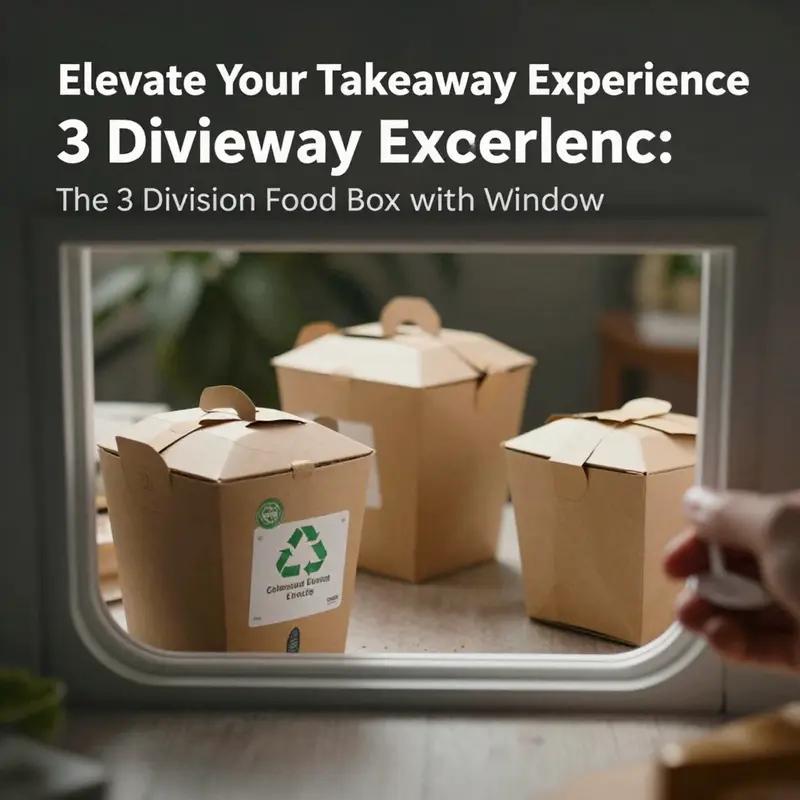
The window on a takeaway box is more than a design flourish. It is a window into a larger conversation about how meals travel from kitchen to consumer in a modern, disposable culture. The three-compartment takeaway box with a window carries a dual promise: it keeps food organized—mains, sides, and sauces separated to preserve texture and flavor—while offering a visual cue that can entice a customer to choose one option over another. Yet this same window, usually a transparent film such as PET or a similar plastic, introduces a set of environmental considerations that ripple through the box’s entire life cycle. To understand the environmental impact of this packaging, one must examine not only the box’s functionality but also the material choices, manufacturing realities, end-of-life pathways, and the broader infrastructure required to minimize harm.
At the heart of the environmental discussion is material composition. The most common configurations pair a sturdy, food-grade tray—often polypropylene (PP)—with a clear window that is typically PET or PET-derived film. These plastics offer the moisture resistance and rigidity necessary for shipping hot and greasy foods without leaking or collapsing. They also provide the visibility that brands rely on to communicate freshness and portion size, a factor that can influence consumer choice and perceived meal value. However, the same plastics that deliver performance also anchor the box to a fossil-fuel-based supply chain. They are not biodegradable in conventional landfills, and when mismanaged, they contribute to long-term pollution, potentially becoming megapathogens of the environment as they travel through urban runoff to rivers and oceans. A growing body of research points to the persistence of such materials, often lasting for decades and fragmenting into microplastics that threaten wildlife and ecosystem health.
The window, while valuable for consumer confidence, is not a trivial add-on from a life-cycle perspective. The presence of multiple materials in a single packaging piece makes recycling more complex. It is not enough to say a container is recyclable in theory; the packaging must be responsibly sorted and processed in facilities with compatible streams. In practice, when a PP tray is fused with a PET window, or when the film is laminated to other substrates, the recyclability can suffer. The challenge multiplies when the container is used for hot food, because heat can cause the window to fog, reducing visibility and sometimes compromising the user experience. Fogging is more than a cosmetic issue; it signals that the barrier properties have been pushed by temperature, and it can complicate the downstream sorting processes in recycling facilities that rely on optical cues to separate materials.
Beyond the technicalities of visibility and sealing, the box’s design shapes environmental outcomes in meaningful ways. The three compartments must be sealed well enough to prevent cross-contamination during transport, which means the lid and the core structure demand precise tolerances. The more robust and leak-proof the packaging, the higher the chance that it endures all the rigors of last-mile delivery. Yet durability can come at the expense of recyclability. If the lid, walls, and window are made from different plastic streams, the composite becomes less attractive to recycling streams that require clean, single-material inputs. In many cases, brands end up with a mixed-material waste stream that is technically recyclable only in limited facilities, and often with reduced efficiency or additional processing steps. This is not simply a technical drawback; it translates to higher energy use in recycling processes and, in some geographies, greater likelihood that packaging ends up in landfills.
To address these concerns, several strategies have emerged. One is the substitution of materials where feasible, such as using a higher proportion of recycled content in the PP tray or choosing films with higher post-consumer recycled (PCR) content for the window. Another is to pursue designs that facilitate recycling, such as simplifying the material stack or enabling easy separation of the window from the tray. Yet the viability of these approaches is heavily dependent on the local waste management infrastructure. In regions where industrial composting is underdeveloped, even compostable options fail to deliver their promised environmental benefits because there is no system to process them appropriately. The mismatch between material innovation and composting or recycling infrastructure creates a gap that brands must navigate with care.
The supply chain context matters just as much as the material chemistry. In places where manufacturing scales are large and where integrated logistics networks exist, producers can optimize for both performance and sustainability. Guangdong’s manufacturing ecosystem, for example, has built a robust platform for thermoforming and high-volume production, delivering economies of scale that can lower per-unit environmental impact through improved process efficiency and resource utilization. But mass production does not automatically translate into sustainability. If the energy mix driving those factories relies heavily on fossil fuels, the carbon footprint remains elevated. Conversely, suppliers who publicly commit to reducing single-use plastic, increasing recycled content, and investing in circular economy models can significantly tilt the lifecycle balance toward better outcomes. The choice of supplier then becomes a governance decision as much as a technical one.
The consumer angle also matters. Customer willingness to recycle or properly dispose of packaging varies widely by market, culture, and convenience. A box with a window might prompt a more mindful consumer experience, encouraging people to check what they ordered and to appreciate portion integrity. But it can also tempt consumers to over-pack or over-order due to the perceived freshness conveyed by the window. These behavioral dynamics affect waste generation and littering in urban settings. When brands understand this, they can pair packaging choices with consumer education and improved take-back or recycling programs, creating a more circular pathway for materials that would otherwise accumulate in landfills.
What about alternatives? There is a growing interest in compostable or biodegradable options, including plant-based polymers and bagasse, a by-product of sugarcane processing. These approaches promise end-of-life pathways that can reduce long-term persistence in the environment. Still, the effectiveness of compostable solutions is not automatic. They require industrial composting facilities with controlled conditions to break down materials in a predictable timeframe. Without such infrastructure, compostables behave similarly to conventional plastics in the environment, failing to deliver the intended climate or waste reduction benefits. For this reason, many sustainability advocates emphasize a broader strategy: design for recyclability first, then consider compostability as a secondary option where the waste system can support it. The aim is to minimize the reliance on any single pathway and to maximize the likelihood that packaging re-enters the economy as a valuable input rather than becoming waste.
In practical terms, this means brands should seek out suppliers who can demonstrate transparency around material composition and recyclability credentials. It also means evaluating the packaging’s ultimate disposal in the specific markets where the product will be sold. If a brand plans to ship internationally, it must consider how different regulatory regimes, waste collection practices, and consumer habits will influence the packaging’s fate. A supplier network that provides materials with a high content of recycled input and an emphasis on monomaterial design can make a measurable difference in reducing the package’s carbon footprint and waste burden. Where possible, brands should also support closed-loop or take-back schemes that enable customers to return used packaging for repurposing or recycling, thereby strengthening the packaging’s circular life rather than letting it fade into a litter stream.
For those seeking a practical path forward in a world where packaging decisions are never abstract, it helps to see a concrete example of how design decisions align with environmental goals. A growing segment of suppliers markets an eco-friendly disposable 3-compartment packaging box designed for fast food and takeout. These offerings emphasize a balance of durability, food safety, and sustainability, aiming to combine the benefits of three compartments with a window while reducing the overall environmental impact. The emphasis is not merely on theoretical recyclability; it is on real-world performance, manufacturability at scale, and end-of-life outcomes in typical urban waste streams. Consumers and brands alike should look for packaging that clearly communicates its material makeup, provides options for recycled content, and aligns with local recycling or composting capabilities. When such transparency exists, the box stops being a stray piece of plastic and becomes part of a systematic effort to reduce waste and conserve resources.
The decision-maker in this space is not only the brand but the entire ecosystem of suppliers, processors, and waste handlers. It is about aligning product design with the realities of post-consumer pathways. To progress, brands can begin by asking suppliers to disclose sources of resin, share data on energy use and emissions in production, and outline how their packaging can be disassembled or separated for recycling. They can also partner with waste management providers to understand which materials are accepted in local streams and what, if any, post-consumer processing is feasible. In markets where the windowed three-compartment design remains a preferred choice for aesthetics and practicality, the path forward is less about abandoning the concept and more about improving its life-cycle performance through thoughtful material selection, smarter design, and supportive waste infrastructure.
For readers seeking practical guidance on aligning packaging with sustainable outcomes, a relevant resource discusses the broader environmental implications of food systems and packaging, offering a framework for integrating healthier diets with planetary health. This external reading provides context for how packaging choices intersect with climate considerations and food-system resilience. https://www.unep.org/resources/report/food-and-climate-change-healthy-diets-healthier-planet
In the end, the environmental cost of the three-compartment takeaway box with a window is not a fixed figure; it is a function of material choices, design decisions, manufacturing practices, and the waste systems available in the markets where the product circulates. When brands view packaging as a system rather than a single component, the window becomes a signal for responsible choices rather than a concession to aesthetics. The box can still deliver on its core promises—organization, visibility, and consumer confidence—while also advancing a more sustainable path where plastics are used thoughtfully, end-of-life pathways are improved, and the circular economy gains a foothold in the fast-food supply chain. The window then serves not only as a view into a meal but as a window into a future where packaging design is inseparable from planetary stewardship.
Internal link: For further exploration of eco-friendly packaging options that align with three-compartment designs, see the supplier-focused overview of eco-friendly disposable 3-compartment packaging in the industry ecosystem. eco-friendly disposable 3-compartment packaging
Final thoughts
The 3 division takeaway food box with window is not merely a packaging product; it represents an opportunity for food businesses to enhance customer satisfaction through innovative design and eco-friendly materials. By understanding market demands, leveraging advanced manufacturing, and choosing dependable suppliers, businesses can thrive in a competitive environment while also making sustainable choices. Partnering with the right suppliers can ensure that your food packaging aligns with your brand values and meets customer expectations, ultimately contributing to your success.