
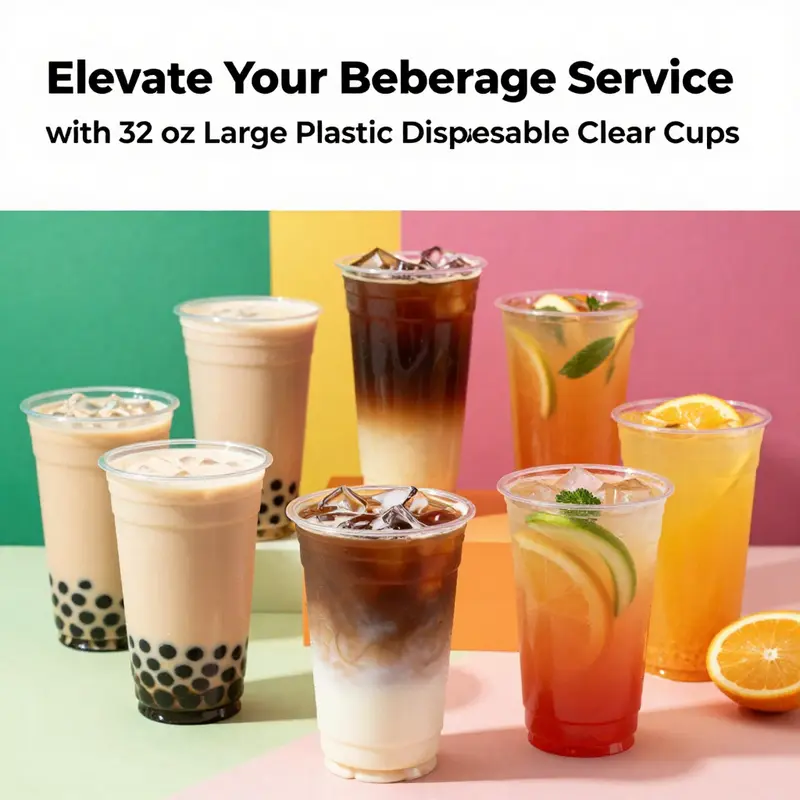
As the beverage industry continues to evolve, the need for versatile and functional serving solutions becomes paramount. The 32 oz large plastic disposable clear cups serve as an ideal choice for a wide range of establishments, from bubble tea shops and beverage chains to food trucks and catering services. These cups are not only designed for practicality but also play a significant role in enhancing customer experience. In this exploration, we will delve deep into the materials and environmental impacts of these cups, outline their numerous advantages, and identify key market trends that are shaping procurement processes in your industry. Understanding these facets will empower you to make informed decisions that align with your brand values and customer expectations.
Clear Capacity, Brand Impact, and Green Tradeoffs: The 32 oz Disposable Clear Cup in Modern Beverage Service
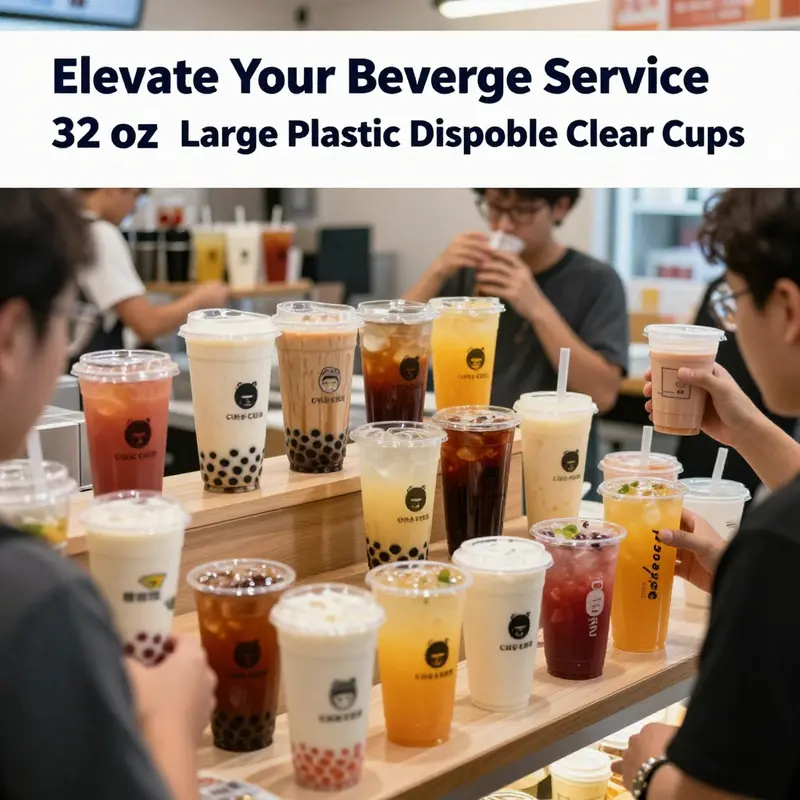
The 32 oz large plastic disposable clear cup has become a staple in the operation of hospitality and retail beverage services. With a capacity around 946 milliliters, it sits at a sweet spot for cold drinks that invite lingering sips and visible color. In cafés, juice bars, quick-service restaurants, takeout windows, and event catering, these cups function not merely as containers but as a showcase for the drink inside. The transparency is more than a visual cue; it is an invitation to customers to evaluate texture, contrast, and layering—the gleam of crushed ice in a bright lemonade, the swirl of dark espresso and milk in a frappé, the vivid hue of a blended berry smoothie. This visual honesty can elevate perceived quality, cueing freshness and generosity in portion size. The cup’s design also supports efficient service: its standard form factor integrates smoothly with widely available lids and straws, enabling a sealed or semi-sealed transport that bridges in-store service with at-home consumption. When handled well, the cup becomes a subtle yet powerful extension of the brand experience, turning a simple beverage into an opportunity for visual storytelling and memory formation.
Under the hood, the material choices for these cups lie at the core of their performance, lifecycle, and environmental profile. The two dominant materials in today’s market are food-grade PET (polyethylene terephthalate) and PLA (polylactic acid). PET cups are celebrated for their strength, clarity, and light weight. They resist deformation when filled with cold drinks, resist leakage, and maintain a sharp profile through multiple handling steps—from quick-serve counters to courier delivery. PET’s high transparency enhances beverage appeal by presenting the drink’s color and texture with little distortion. They are easily stackable, which translates to efficient storage and transport. Yet PET is not biodegradable in natural environments; it is broadly recyclable, but the recycling system requires proper collection streams and processing infrastructure to yield meaningful environmental benefits. In contexts where recycling infrastructure is robust, PET can be a sensible option for short-term use and high-volume throughput.
PLA cups, by contrast, represent a shift toward renewable, plant-based feedstocks. Derived from cornstarch or sugarcane, PLA offers a compelling environmental narrative: a cup that is marketed as 100% biodegradable and compostable under appropriate industrial conditions. When facilities exist to process them, PLA cups can break down into water, carbon dioxide, and biomass within a matter of months, reducing long-term persistence in landfills relative to conventional petroleum-based plastics. This alignment with sustainable development goals resonates with customers who value environmental stewardship. PLA cups are especially well-suited to cold or room-temperature drinks, since their heat resistance is limited to roughly 50–60 degrees Celsius. This constraint is essential to plan around, as it means hot beverages typically require alternative packaging or careful handling to avoid deformation or leakage. In markets where industrial composting facilities are accessible, PLA can fulfill an important niche: a clearly biodegradable option that aligns with consumer expectations for responsible packaging.
The decision between PET and PLA is not merely a materials choice; it is a strategic balancing act among product performance, cost, and environmental impact. PET shines in scenarios demanding durability, heat tolerance for incidental contact with hot surfaces, and broad recyclability. PLA excels where the environmental narrative matters most and where the beverage service is clearly oriented toward cold or ambient-temperature drinks. In practice, many operators weigh these factors alongside practical considerations such as viscosity of the beverage, presence of hot toppings, and expected dwell time in the cup. The 32 oz format, with its generous capacity, also introduces handling considerations: the larger body height can increase the tendency for condensation on the outer surface, which affects grip, spill risk, and the overall user impression. A well-chosen cup considers not only inner contents but also the user’s comfort during transport and the integrity of the drinking experience from the first pour to the last sip.
From a sustainability perspective, the conversation around these cups has broadened beyond material science to encompass consumer expectations, regulatory standards, and end-of-life options. The trend toward environmentally friendlier packaging has intensified as operators recognize the reputational and regulatory advantages of clearly labeling a cup as compostable or recyclable. PLA cups, when certified under recognized standards such as FDA food-contact compliance and EN13432 or equivalent compostability certifications, offer a clear signal to customers and procurement teams that the product aligns with a more circular approach to packaging. However, the practical realization of those benefits depends on local waste management infrastructure. Industrial composting facilities must accept, process, and maintain conditions that enable PLA to degrade within the claimed time frame. In areas lacking such facilities, PLA cups may end up in general waste or standard recycling streams, where the outcomes are uncertain and the environmental advantages diminished. This reality underscores a critical point: the ecological promise of the 32 oz PLA cup rests not only in the material itself but in the systems that can responsibly handle it after use.
Another dimension of the 32 oz cup’s story is its role in branding and promotional strategy. The large surface area of the cup makes it a natural canvas for branding, message placement, and seasonal design. Customization—logo printing, color schemes, or promotional artwork—transforms ordinary beverage packaging into a portable advertisement. The ability to align packaging aesthetics with store design and campaign messaging can strengthen brand recall and customer loyalty, especially in events, festivals, and pop-up channels where memory anchors are fleeting and moments of encounter matter. At the same time, customization adds costs and lead times. While standard, unbranded cups offer economies of scale, branded cups can drive incremental value through enhanced visibility and perceived premium quality. A careful cost-benefit analysis is essential here: the incremental value of branding must be weighed against the added expense and any potential impact on downstream recycling or composting streams.
The practical logistics of sourcing 32 oz cups also shape their effectiveness in everyday operations. Suppliers typically present a range of options in packaging, lids, and printing capabilities. In many markets, the minimum order quantity (MOQ) for customized cups sits in the tens of thousands to hundreds of thousands of units, with unit prices that can vary widely from a few cents to several dozen cents depending on print coverage, material choice, and packaging configuration. For operators testing new concepts or seasonal menus, samples are indispensable; typical response windows offer 4–7 days for samples and 15–20 days for mass production, influenced by order volume and customization level. The ability to source reliable, compatible lids and sleeves further enhances the user experience by reducing spill risk during transport and maintaining beverage temperature during in-store service or delivery. In practice, the union of cup, lid, and sleeve is what delivers a spill-resistant, visually appealing, and brand-consistent package that can travel from counter to curb with confidence.
An essential thread in this narrative is ease of integration into existing workflows. The 32 oz cup is designed to be compatible with standard lid formats and straw diameters that many operators already use, enabling straightforward adoption without necessitating a wholesale change in equipment or training. This compatibility reduces friction when introducing larger sizes into the lineup, allowing operators to offer a bigger option for customers who seek value, shareability, or a more dramatic beverage presentation. The practical value of stackability cannot be overstated: a cup that nests neatly reduces warehouse footprint and simplifies restocking during peak periods. In catering contexts, where transport efficiency and reliability are paramount, such features contribute to a smoother service rhythm and a lower risk of breakage or leakage during handling.
From a consumer perspective, the 32 oz cup often signals value and generosity. The volume invites experimentation—layered drinks, bold color contrasts, and visually impressive toppings—while the clear cup allows drinkers to gauge the amount of ice and liquid at a glance. This visual honesty helps manage expectations, particularly in on-the-go scenarios where customers decide quickly. The perception of freshness and abundance is reinforced when the cup remains sturdy through the service journey, from counter service to curbside collection. These perceptual cues are not incidental; they are the result of an integrated design approach that aligns cup material, wall thickness, rigidity, and sealing performance with the intended beverage format and service model.
In discussing the environmental dimension, it is worth noting how the lifecycle is framed for customers and operators. PET cups lend themselves to established recycling streams, but true circularity depends on robust collection and processing. PLA cups promise a more explicit end-of-life pathway in systems equipped for composting, yet their benefits hinge on the presence of industrial facilities capable of converting them into compost rather than redirecting them to landfill or mixed streams. Operators who pursue sustainability often adopt a dual-track approach: offering PLA options where composting is feasible and maintaining PET options where recycling is well established. Clear labeling about material composition and end-of-life expectations supports responsible disposal by customers and waste managers alike. In parallel, ongoing innovations in resin formulations, alternative bio-based polymers, and improved compostability certifications continue to shape what a 32 oz cup signifies in a world increasingly attentive to packaging footprints.
For readers seeking a concrete example of how one supplier presents a 32 oz clear cup designed for broad use, the following internal resource provides a direct reference: disposable clear plastic cup for outdoor parties and events. This page illustrates how the same cup design can be positioned for versatility—from backyard gatherings to formal celebrations—while highlighting compatibility with lids, branding options, and packaging configurations that support efficient logistics and consistent consumer experience. The broader takeaway is that the best 32 oz solutions harmonize clarity, durability, and sustainability within a cohesive package that serves both business goals and environmental responsibilities.
External considerations round out the conversation. External researchers and industry publications continue to explore the evolving footprint of PLA versus PET in large-format cups, scrutinizing real-world compostability versus laboratory certification, the availability of industrial facilities, and the potential for mechanical recycling pathways to improve overall resource recovery. For readers seeking a deeper dive into the environmental benefits and challenges of PLA cups, a detailed external resource offers a rigorous synthesis of current knowledge and practical implications: PLA cups environmental benefits and challenges. This resource helps place the discourse around 32 oz clear cups within the broader context of plastics innovation, sustainability signals, and policy developments that influence packaging choices across sectors.
As the market continues to evolve, the 32 oz clear cup remains a telling exemplar of how form, function, and value intersect in beverage packaging. It is a device that carries more than a drink; it carries the brand story, the environmental narrative, and the practical rhythm of service. The choice between PET and PLA is ultimately a choice between performance and sustainability narratives, between the certainty of recycling infrastructure and the aspiration of composting systems. Either way, the cup’s role in shaping the customer experience—through visual clarity, tactile confidence, and seamless service—will persist as a central element of modern beverage presentation. Operators who navigate these tradeoffs with clarity, supported by reliable supply chains and transparent labeling, can deliver a consistent, compelling, and responsible beverage experience to diverse audiences across multiple channels.
Transparent Choices: Materials, Performance, and the Environmental Promise of 32 oz Clear Cups
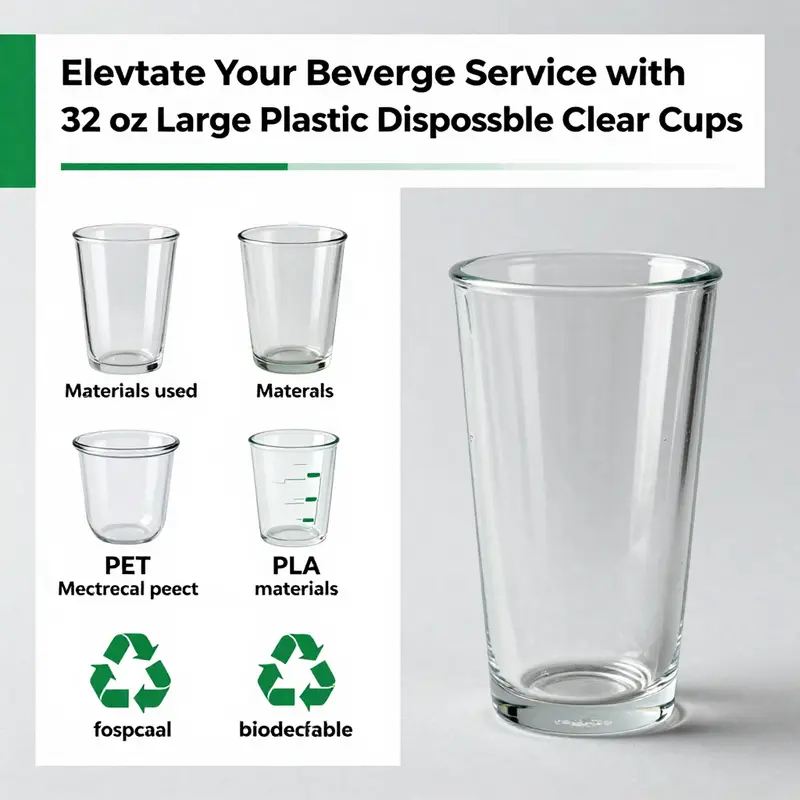
The 32 oz large plastic disposable clear cup sits at the intersection of daily practicality and strategic packaging choice. In countless cafés, juice bars, takeout windows, and event settings, these cups are more than vessels; they are a reflection of how a business balances performance with responsibility. Their size makes them ideal for cold beverages, from iced coffees and teas to smoothies and citrusy blends, and even for beer at casual gatherings. Yet the very clarity that makes them visually appealing also forces a reckoning with materials, end-of-life options, and the broader story of how disposables fit into a more sustainable economy. When designers and buyers speak of these cups, they do so not merely about how well they hold liquid, but about how well they align with a brand’s values, a supplier’s capabilities, and a consumer’s expectations for environmental stewardship.
At the core of the discussion are three primary materials that dominate today’s market: polypropylene (PP), polyethylene terephthalate (PET), and polylactic acid (PLA). Each brings a distinct blend of performance, recyclability, and environmental footprint. PP, for example, is celebrated for its durability and chemical resistance. It stands up well to the rigors of cold beverages and is relatively forgiving in manufacturing, which keeps costs competitive. Recyclability is available through standard streams in many regions, and this combination—durability, cost-effectiveness, and recoverability—helps explain why PP-based cups enjoy wide use in cold-drink service. In terms of the life cycle, PP typically leaves a smaller eco-footprint than older petroleum-based plastics, because it can require fewer additives and can be produced with leaner processes in some manufacturing contexts. For operators who prize affordability without sacrificing basic environmental considerations, PP cups present a compelling option, particularly where the targets are fast turnover and high volume.
PET cups, by contrast, are renowned for their exceptional clarity and strength. The visual appeal of a truly transparent cup enhances beverage presentation, allows the natural color of the drink to shine, and can elevate the customer experience at the point of sale. PET’s rigidity also translates into reliable stacking and handling, which is crucial for both storage and transport. However, PET is derived from fossil fuels, and even though PET is widely recyclable, its carbon footprint during production remains higher than some alternatives. In markets where recycling infrastructure is robust, PET can be a sensible choice for long-run operations that prioritize pristine clarity and durable performance. Some manufacturers explore PET blends or coatings to improve moisture resistance or printability, but those enhancements can complicate end-of-life options and recycling streams. For businesses emphasizing purity of presentation and high-use scenarios, PET remains a strong candidate, especially where the supply chain values predictability and visual impact.
Polylactic acid, or PLA, has emerged as a movement-friendly option tied to renewable resources. PLA cups are designed to be totally biodegradable and compostable under industrial conditions, typically sourced from corn starch or sugarcane. The environmental appeal is clear: a plant-based origin, reduced reliance on fossil fuels, and the potential to return to the soil through composting streams. The tangible benefit for the 32 oz cup is a cleaner narrative around waste and a tangible cue for customers who are increasingly aware of how packaging aligns with sustainability goals. Yet PLA carries trade-offs. Its heat tolerance is modest—best in the realm of cold drinks and room-temperature beverages, with practical limits around 50–60°C. In hot coffee or tea contexts, PLA can soften or deform, which is a risk for consumer experience and product integrity. Moreover, the composting requirement matters: PLA’s preferred fate is industrial composting facilities rather than backyard compost piles, and that infrastructure varies by region. In the right conditions, PLA can be a powerful tool for brands seeking a stronger alignment with circular economy principles, while in others it may require an investment in collection and processing infrastructure to realize its full environmental benefit.
The environmental implications of these materials extend beyond the cup’s immediate function. Reducing waste and promoting responsible end-of-life outcomes demand a nuanced approach that recognizes the entire lifecycle—from raw material sourcing, through manufacturing, to disposal and potential reuse. In this framework, PLA’s renewable basis and compostability present a compelling story for many restaurants, cafés, and event organizers who want to signal a commitment to sustainability without sacrificing the lean efficiency that modern service demands. It is not merely about using a “green” material; it is about integrating that choice into a broader system of waste reduction, recycling, and, where possible, industrial composting streams. The literature and supplier communications indicate a growing clustering around PLA as a preferred option for cold beverages in the 32 oz category, particularly when the messaging and operational realities align with industrial composting capacity and consumer tolerance for the less-than-perfect heat performance.
Beyond material choice, the cup’s design and compatibility contribute significantly to its overall environmental and economic profile. The high transparency that makes a beverage look vibrant also invites branding opportunities. Lids and straws can be designed to create secure packaging that reduces spillage, which, in turn, minimizes waste during handling and transport. Stackability is another practical virtue: a cup that nests efficiently saves precious warehouse space and reduces shipment weights, leading to lower transportation emissions. In many supply ecosystems, customization—logo, color, or promotional messaging—can be achieved without sacrificing recyclability, provided the inks and coatings used are compatible with recycling streams and food safety standards. The best practice for many operators is to align material choice with a clear end-of-life plan. If a business decides to go with PLA, it should pair that decision with education for staff and customers about composting pathways and local facilities, ensuring the commitment translates into real-world action rather than marketing rhetoric.
From a procurement perspective, the economics of the 32 oz cup reflect a balance between scale, material, and service level. Market data suggest a minimum order quantity that ascends quickly with customization and packaging options, often in the tens of thousands to hundred-thousand unit ranges. The unit cost tends to sit in a price band that makes sense for high-volume venues, especially when the cup includes features such as a fitted lid, a secure seal, or branding prints. The economics of PLA, for instance, can differ from PP or PET due to feedstock costs and the value placed on end-of-life infrastructure. In practice, buyers must weigh the long-tail costs—storage, handling, waste management, and potential recycling fees—when selecting a material. The intensity of the current market signal suggests that sustainability-driven choices may carry premium upfront but can unlock downstream benefits in brand perception, compliance with environmental targets, and alignment with circular economy ambitions. In this light, PLA becomes not merely a niche option but a strategic one for operators who want their single-use packaging to echo the values they publish in menus and corporate statements.
Coupled with performance and environmental considerations is the practical need for reliability in supply chains. A vendor who can offer consistent quality, predictable lead times, and flexible packaging formats will always be valued, especially in industries where demand is volatile and events create spikes in consumption. For many buyers, the ability to print or emboss branding on cups, while maintaining a smooth surface for lid compatibility and straw insertion, is essential. The interplay between flexibility, cost, and sustainability thus centers on a pragmatic calculus: which material best supports the beverage program’s daily rhythm, its waste-management commitments, and the brand’s longer-term environmental narrative?
To ground this discussion in real-world experience, consider how an outdoor or event setting benefits from a clear, disposable cup. The ability to quickly identify the beverage at a glance, the secure fit of a lid, and the ease of stacking for transport all contribute to service speed and customer satisfaction. A cup’s material choice informs not only its functional performance under the open sky or in a bustling concession line but also the signals it sends about a business’s values. In this sense, the choice between PP, PET, and PLA is not purely a technical decision; it is a narrative one—about transparency, responsibility, and how a brand wants to be seen when customers lift the cup to their lips.
For readers seeking a tangible context, a practical reference point is the broader family of disposable clear cups designed for outdoor and party use. In such contexts, the balance between clarity, weight, and durability becomes critical, and the ability to withstand transport, stacking, and handling without compromising beverage integrity is essential. This connection emphasizes that material choice is always part of a larger ecosystem, where packaging, lids, straws, printing, and waste management converge to shape the consumer experience and the environmental footprint of the beverage program. When a venue opts for a PLA-based 32 oz cup, the subsequent steps—collection, composting, or proper recycling—must be part of the planning, so that the environmental advantage is realized rather than postponed.
In sum, the 32 oz clear disposable cup embodies a pragmatic fusion of form, function, and responsibility. It is a product of materials science, logistics, and careful policy around waste and recycling. PP offers cost-effective durability for dynamic cold beverages, PET delivers unmatched clarity and rigidity for high-volume display, and PLA presents a future-forward path toward renewable sourcing and compostability, aligned with the goals of circularity in many regions. The final choice, as with many packaging decisions, rests on a nuanced assessment of where the product will go after the last sip—whether it returns to a recycling stream, flows into an industrial composting system, or requires a different end-of-life strategy across diverse markets and seasons.
Internal reference: For a practical view of how disposable clear plastic cups are positioned for outdoor events and everyday use, see the product page on disposable-clear-plastic-cup-outdoor-picnic-utensils. disposable-clear-plastic-cup-outdoor-picnic-utensils.
External resource: For a broader industry perspective on 32 oz biodegradable, clear disposables and their end-of-life pathways, see the external reference at Alibaba:
https://www.alibaba.com/product-detail/32oz-100-Biodegradable-Clear-Disposable_1600558472111.html?spm=a2700.11007173.0.0.6a4b1e4fjJZtFz
Clarity, Capacity, and Change: The 32 oz Clear Cup at the Intersection of Convenience and Sustainability
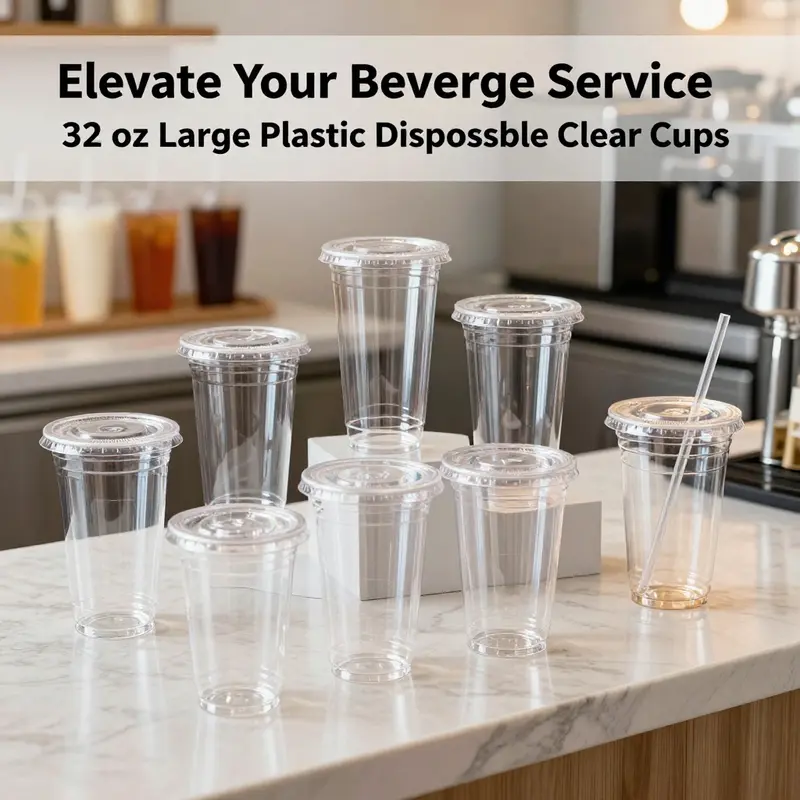
A 32-ounce cup is more than a vessel; it is a stage on which modern beverage culture presents itself. In cafes, juice bars, and takeout windows, this generous vessel frames the first impression of a cold drink long before the last sip is taken. Its capacity, about 946 milliliters, is not just a number. It signals choices—larger servings, longer indulgence, fewer refills—and it can influence how a customer experiences a drink, from the initial swirl of cream to the final ice-cold finish. The size matters because it aligns with today’s demand for convenience without sacrificing display. A drink carried in a clear, sizeable cup invites the eye to follow the colors, layers, and textures that define a barista’s artistry or a fresh-pressed juice blend. The clarity of the cup amplifies the vibrancy of a beverage, turning a simple cold drink into a visual centerpiece. In practice, this is a balance between form and function: a cup that keeps its shape during transport, reveals its contents invitingly, and remains easy to handle from the counter to the customer’s hands.
The practical advantages of the 32 oz format ripple through the entire service chain. First, the capacity itself reduces the frequency of refills for customers who want a more substantial experience, while still preserving portion control for the business. For operators juggling busy service times, this means fewer interruptions and smoother throughput, especially during peak hours or at events where movement and lines become part of the daily rhythm. Second, the transparency of the cup is not cosmetic alone; it is a merchandising tool. The beverage’s hue, texture, and layering become visible signals of quality. A well-constructed iced coffee, a smoothie with visible fruit chunks, or a cocktail with a hint of color at the rim can all be enhanced simply by letting the drink speak through a high-clarity cup. This visual appeal often translates into higher perceived value, encouraging customers to select larger portions and savor the experience rather than defaulting to a smaller size.
Behind the scene, the material choice for a 32 oz clear cup matters as much as its goblet-like appearance. The two dominant options in today’s market are PET and PLA. PET, or polyethylene terephthalate, is renowned for its strength, lightness, and excellent clarity. It can withstand the rigors of daily use, travel, and handling typical of cafes, catering, and takeout. PET’s recyclability is widely recognized, making it a practical choice when the priority is reliability, reusability through recycling streams, and a relatively low barrier to mass production. Yet, PET is not itself biodegradable; it remains a polymer that requires appropriate recycling infrastructure to close the loop. In many cases, brands rely on PET for hot or moderately warm beverages, although its strength can also serve cold drinks with a crisp, crack-resistant profile when ice and syrup are in play.
PLA, or polylactic acid, represents a different trajectory—one that leans toward sustainability with a plant-based origin. PLA cups are typically 100% biodegradable under industrial composting conditions. They are derived from renewable crops such as corn starch or sugarcane, and manufacturers often emphasize that PLA cups can compost commercially within months. The environmental appeal is clear: a plant-based material designed to minimize long-term waste. But PLA introduces nuances that matter in decision-making. It has a more limited heat tolerance, generally up to about 50 to 60 degrees Celsius. That makes PLA ideal for cold drinks and ambient-temperature beverages, but less suitable for hot coffee or tea. The compostability claim is compelling, yet it hinges on the availability of industrial composting facilities that can maintain the specific temperatures and moisture levels required for efficient breakdown. In places where such facilities are sparse, the practical environmental benefit can be more nuanced than a simple label might imply. The industry has responded with certifications and standards, including FDA compliance for food safety and EN13432 or similar criteria that indicate a material can break down under industrial composting conditions within a defined timeframe. In practice, the PLA option signals a forward-looking, sustainable posture, even as it invites important questions about end-of-life disposal, regional waste infrastructure, and consumer education about proper disposal.
The choice between PET and PLA thus becomes a dialogue between convenience, cost, and environmental responsibility. For operators prioritizing a robust, cost-effective option with broad compatibility and established recycling streams, PET continues to fulfill a familiar role. It supports a wide temperature spectrum and offers reliable performance during transport and service. For those aiming to align with a sustainability-first narrative and who can connect customers with appropriate disposal pathways, PLA provides a compelling route to reduced landfill impact, especially when the end-to-end system includes composting facilities or programs that accept plant-based plastics. The decision is rarely binary; many buyers weigh the trade-offs between heat exposure, recycling versus composting, and consumer expectations tied to branding. The industry has responded with transparent labeling, clear certifications, and educational information so that buyers can communicate the environmental story behind the cup as effectively as the beverage itself.
Alongside the materials, the functional design of a 32 oz clear cup reinforces its role as a versatile tool in the beverage service ecosystem. High transparency remains a core attribute, but the performance envelope includes sturdiness, ease of stacking, and compatibility with lids and straws. When a cup’s fit with lids is precise, spill protection during transport improves markedly, which is crucial for takeout and delivery contexts where traffic and handling pose real risks to product integrity. The typical packaging of these cups often anticipates the need for smooth logistically efficient workflows: standard lid sizes and straw compatibility intersect with efficient warehousing and shipping. A well-designed cup minimizes leakage, reduces customer frustration, and supports a smooth, predictable experience from purchase to consumption. In practice, vendors emphasize stackability. A stackable cup saves warehouse space, lowers storage costs, and facilitates rapid fulfillment in high-volume settings. A package that nests neatly also reduces breakage and provides a cleaner, more efficient shipping profile, especially when orders move through complex distribution networks.
Beyond function and form, the cups become a canvas for branding and communication. Custom printing and branding options transform a disposable item into a mobile advertising vehicle. A practical approach is to print logos, promotional messages, or seasonal artwork on cups that travel from the point of sale to events, offices, or home gatherings. Branded cups extend a business’s reach beyond the storefront, turning every serving into a promotional touchpoint. This capability has become a notable driver for beverage programs that seek to differentiate themselves in a crowded market, adding a tactile, visual layer to marketing campaigns. Yet branding also intersects with environmental narratives. For brands choosing PLA, the story of compostability becomes part of the printed message. Clear labeling about material origin, disposal guidelines, and facility availability can help customers participate in the lifecycle of the product, reinforcing trust and reinforcing the brand’s commitment to responsible consumption.
Procurement realities shape how businesses deploy 32 oz cups in the field. Market data from early 2026 indicate that minimum order quantities (MOQs) for large-scale supply are typically in the five- to six-figure range. Unit prices can range from roughly a penny to a few cents per cup, influenced by whether lids are included, whether the cups are printed with logos, and the scale of the order. Large orders often come with favorable per-unit pricing, while smaller, customized runs may incur higher costs. Packaging often leverages efficient configurations, including inner wrapping and palletized shipments, balancing protection with transport efficiency. Lead times reflect a combination of fabrication capacity and customization: samples may arrive in about a week, while full production cycles can span a few weeks. These timelines matter when aligning cup procurement with seasonal demand, menu changes, or event planning calendars. In the broader conversation about sustainability within procurement, buying PLA-cup options can send a signal about corporate values, but procurement teams must align waste management capabilities with these choices to realize meaningful environmental benefits.
The narrative around the 32 oz clear cup thus weaves together a set of interlocking considerations: the physics of capacity and visibility, the chemistry of materials, the logistics of packaging and transport, and the values embedded in branding and sustainability. In one cup, you see a snapshot of contemporary consumer culture—an appetite for larger portions and clearer presentation, balanced by a growing concern for environmental impact and genuine end-of-life responsibility. The choice between PET and PLA is not merely a materials decision; it is a statement about how a business envisions its role in the circular economy, how it communicates with customers about disposal, and how it plans to align its supply chain with broader environmental goals. The market continues to evolve as new processing capabilities and policy frameworks shape what is feasible, affordable, and responsible. For practitioners, the path forward is not about picking a single solution but about designing a system that harmonizes product performance with ecological stewardship, customer experience, and operational efficiency.
For those seeking practical avenues to explore this balance, one supplier’s product page highlights the utility of clear, disposable cups for outdoor and event contexts, underscoring how portability and presentation converge in real-world use. This reference provides a tangible example of how the cup serves as both a functional vessel and a branding support tool in dynamic environments. Internal link: Disposable Clear Plastic Cups for Outdoor Events
External reference for broader context on plant-based, biodegradable cups and their lifecycle considerations can be found in industry resources that document material standards and certification expectations. External resource: https://www.alibaba.com/product-detail/32oz-100-Biodegradable-Clear-Disposable_1600558472111.html?spm=a2700.11007173.0.0.6a4b1e4fjJZtFz
Sustainability, Customization, and Capacity: Navigating the Landscape of 32 Ounce Clear Cup Solutions
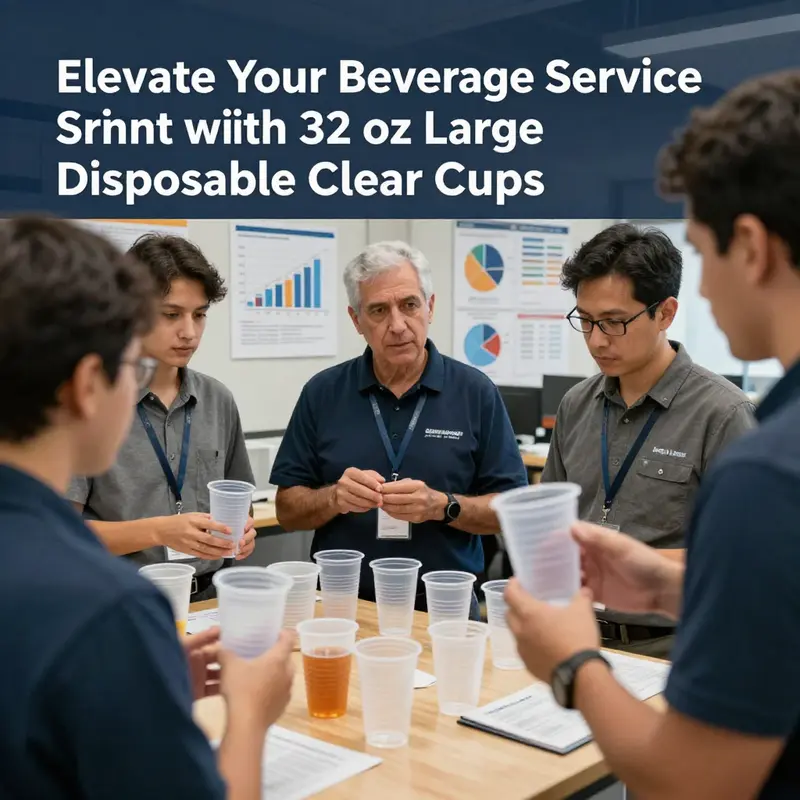
The 32-ounce clear cup stands at a curious crossroads in contemporary food and beverage service. Its generous capacity, roughly 946 milliliters, makes it a staple for cold drinks, bulk beverages for events, and takeout that demands a visually striking presentation. The simplicity of a clear container—to showcase the color and texture of a beverage—belies the complexity of decisions behind its manufacture, material choice, and lifecycle. In markets that prize speed, scale, and image, these cups are not just passive vessels; they are active gatekeepers of brand perception, product integrity, and environmental responsibility. The trajectory of the 32-ounce cup, from raw material to final consumer experience, weaves together material science, sustainability standards, customization economics, and procurement strategy, all converging in a single, widely used format that can shape a brand’s story as surely as its liquid contents do on a social media feed.
Material choice anchors the conversation about performance and responsibility. The two most common families of plastics offered for these cups are poly(ethylene terephthalate), or PET, and polylactic acid, or PLA. PET is a familiar material in the food-contact world: it is renowned for high transparency, light weight, and dependable strength, which translates into a pleasing presentation and durable handling in busy service settings. It also benefits from an established recycling stream in many regions, a factor that influences decisions around end-of-life management and overall sustainability accounting. PLA, by contrast, is a plant-based polymer derived from corn starch or sugarcane. It represents a deliberate pivot toward renewable sourcing and biodegradability. When conditions are right—industrial composting facilities, high temperature, and consistent moisture—PLA-based cups can break down into water, carbon dioxide, and biomass in a matter of months. This does not equate to municipal composting in every locale, however, and PLA’s heat tolerance is lower than that of PET, with practical maximums around 50 to 60 degrees Celsius. In cold-beverage contexts, party-friendly events, and many takeaway scenarios, PLA’s advantages often outweigh its limits, particularly for brands seeking to convey a green image without sacrificing clarity or printability.
The environmental narrative around these cups is no longer optional but integral to product selection. When a business names its sustainability commitments, it is often the cup—visible at the point of sale or handed to a guest—that becomes a tangible signal to customers. In practice, many suppliers now label PLA cups as 100% biodegradable or compostable under industrial conditions, aligning with standards and certifications that reassure buyers about end-of-life outcomes. This is not merely marketing; it affects consumer trust and regulatory compliance. Yet the conversation must be nuanced. While PLA can reduce reliance on fossil fuels and lower some environmental footprints, it still requires appropriate disposal infrastructure to realize those benefits. PET cups, while not biodegradable, offer advantages in clarity, barrier performance, and mechanical resilience, which can translate into longer service life in high-volume operations or settings where hot-fill or repeated handling is a concern. In short, the material choice for a 32-ounce clear cup is a statement about priorities: whether the emphasis is on renewability and compostability, or on durability and established recycling pathways.
Beyond material selection, the market is moving toward higher degrees of customization and functional refinement. Modern beverage programs demand more than a simple, clear shell. Brands seek cups that carry logos, slogans, or intricate graphics that align with campaign aesthetics or seasonal promotions. The capacity to print, emboss, or otherwise brand a cup creates a portable marketing asset that travels with the beverage—from the counter to social feeds and beyond. This shift toward customization reshapes procurement dynamics: it typically increases minimum order quantities, alters lead times, and elevates the unit price for cups that include branding. Yet for many operators, the investment pays off in greater brand recall and guest engagement, particularly in crowded spaces or at events where visual impact matters as much as the liquid inside.
From a functional angle, designers push for cups that withstand practical stresses without compromising the sipping experience. For cold drinks, the cups must resist condensation without becoming slick to the touch, and they should maintain their form under the pressure of carbonated beverages, ice, or thick smoothies. The lid and straw ecosystems that accompany these cups are not afterthoughts; they are integral to customer experience, spill prevention, and portability. A well-integrated lid system can enable a confident seal, reducing the risk of leakages during transit or in crowded venues. Ergonomic considerations—curves that fit the hand, rims that feel comfortable against the lips, and bases that balance stability on uneven surfaces—are often as important as the transparency and printability of the cup itself. In environments where speed matters, stackability also features prominently. A cup that nests efficiently in racks or bulk packaging minimizes handling time and protects against scuffing or cracking during transit from kitchen to curbside pickup to event location.
Procurement realities shape how organizations access these cups at scale. For many buyers, the economic logic of a 32-ounce cup is governed by a combination of material choice, customization, packaging, and the included accessories. The baseline unit price declines with higher volumes, while the convenience of optional lids and printed branding contributes to the overall cost. Minimum order quantities for customized or branded variants can run into tens of thousands of units, creating a need for careful demand forecasting and supply planning. Lead times for standard production typically extend from a few weeks to several weeks depending on the vendor and the degree of customization. It is not unusual for samples to arrive in days, allowing buyers to conduct visual inspection, fit tests with lids, and performance tests with various beverages before committing to a larger purchase. In markets where environmental tradeoffs loom large, buyers increasingly prioritize transparent materials, labeling that communicates compostability or recyclability, and third‑party certifications that verify safety and sustainability claims.
Certification and safety considerations play a decisive role in the decision matrix. The cups are designed to meet food-contact safety standards, with materials tested for biocompatibility and non-toxicity. For PLA, compliance often intersects with compostability standards such as those that require industrial composting conditions. For PET, attention centers on clarity, resistance to cracking, and absence of harmful additives, including BPA. In addition to material safety, buyers look for documentation that confirms compliance with international or regional standards. This includes labeling that clearly communicates the material composition, disposal recommendations, and any applicable certifications. The broader implication is that supply chain partners must be ready to provide certificates, testing reports, and product specifications that support procurement decisions in a structured, auditable way.
The market landscape for 32-ounce clear cups is also shaped by the evolving architecture of procurement platforms and supplier ecosystems. Buyers increasingly rely on direct-from-manufacturer sourcing to secure quality, consistency, and customization options at scale. The financial calculus of a large-volume purchase often incorporates not just the unit price, but the total landed cost, which includes packaging, freight, and potential duties in international shipments. The procurement process benefits from clear communication of required tolerances for cup dimensions, wall thickness, lid compatibility, and color or print fidelity. Vendors that can demonstrate stability in supply and capability for rapid reconfiguration—supporting seasonal campaigns and short-notice promotions—tend to stand out in competitive tendering or supplier-selection exercises. In the end, the choice rests on a balance among environmental commitments, brand-building potential, product performance, and the practical realities of sourcing at scale.
As brands contemplate the next wave of cup design, several forward-looking themes emerge. First, the alignment of environmental goals with consumer demand suggests a continued uptick in PLA-based options for cold beverages, balanced by PET where recyclability pipelines are robust. Second, the convergence of branding and packaging performance means that the cup becomes a medium for storytelling—color, texture, and graphic details that reinforce a brand’s identity, while the lid ecosystem ensures reliability in real-world handling. Third, the maturation of logistics and supplier networks supports more dynamic procurement, enabling operators to adjust order quantities, variety, and customization in response to demand signals without sacrificing efficiency. Taken together, these trends point to a future where 32-ounce clear cups are not merely disposable vessels but calibrated parts of a responsible, efficient, and visually compelling beverage program.
For readers seeking a concrete illustration of the options in the market, consider a product page that showcases clear, disposable cups designed for events and cold beverages. While the precise supplier landscape may vary by region, the page demonstrates how a 32-ounce format can be presented with environmental labeling, customization capabilities, and practical packaging options that align with modern restaurant and event needs. This example helps ground the discussion in real-world choices while underscoring the tradeoffs between material choice, branding opportunities, and end-of-life outcomes. To explore a representative example of this category and its customization features, you can refer to the product page at this URL: https://ecocupbowl.com/product/disposable-clear-plastic-cup-outdoor-picnic-pet-cup-drinking-cup-for-parties-birthdays-weddings-camping-utensils/. This internal link serves as a touchpoint for readers who want to visualize how the concepts discussed translate into a tangible offering, while keeping the broader considerations of sustainability and procurement front and center.
The procurement story here does not end with the choice between a PET or a PLA cup. It extends into the operational discipline of sourcing at scale, the demand signals from brand campaigns, and the logistics that deliver the right cup at the right time with the right branding. The best choices harmonize environmental aspiration with practical performance, enabling a beverage program to present itself with clarity and confidence. In settings ranging from a bustling café to a large outdoor festival, the 32-ounce clear cup is both a medium for the drink and a mirror for the brand. When organizations align the cup’s material, construction, and labeling with their environmental promises and customer expectations, they achieve more than functional success. They create a coherent narrative of responsibility, quality, and creativity that resonates long after the drink is tasted.
External resource: https://www.alibaba.com/product-detail/32oz-100-Biodegradable-Clear-Disposable_1600558472111.html?spm=a2700.11007173.0.0.6a4b1e4fjJZtFz
Final thoughts
In conclusion, 32 oz large plastic disposable clear cups are not just functional items; they are key components that can enhance your beverage service quality and brand perception. With their diverse materials offering both practicality and sustainability, these cups appeal to a broad range of consumers while supporting environmental goals. As trends evolve, businesses that recognize the value of these cups can strategically position themselves in a competitive market. By choosing reliable suppliers and focusing on eco-friendly options, you can promote your brand’s commitment to quality and sustainability. Make the smart choice for your beverage service and ensure you stay ahead of the curve in a rapidly changing industry.