
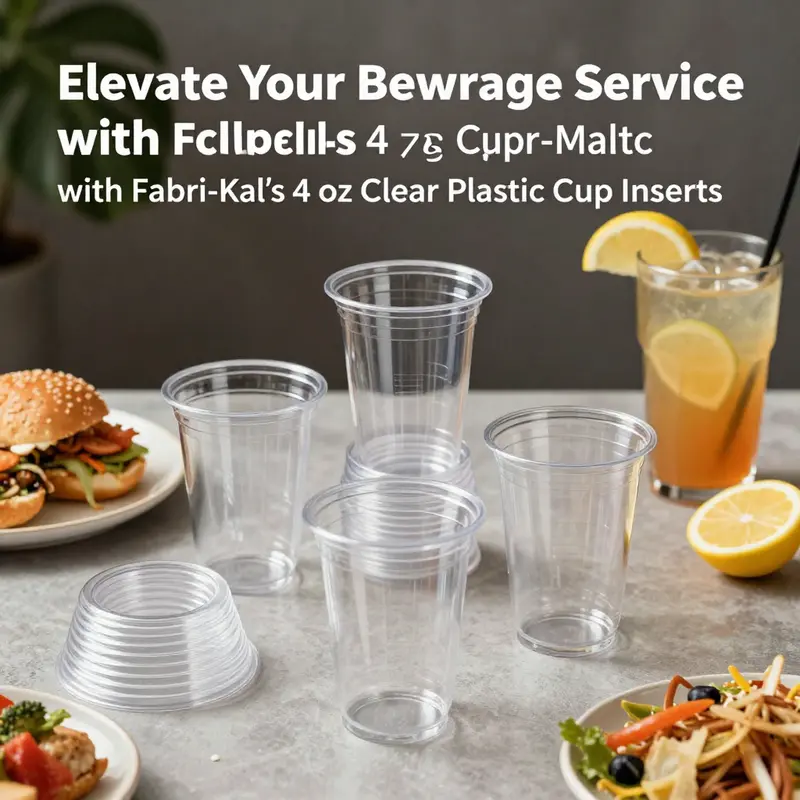
For businesses in food service—from bubble tea shops to catering services—the presentation and functionality of your offerings can make all the difference. The 4 oz clear plastic Fabri-Kal cup insert, offered at a convenient 1,000 per case, is the ideal solution to enhance your product display while maintaining cost efficiency. This article will first explore the compatibility and versatility of these inserts across various serving needs, followed by insights into the economic benefits of bulk purchasing. Sustainability will be highlighted to assure responsible practices in your operations, and finally, a buying guide will ensure you make informed decisions as you integrate these inserts into your supply chain.
Crystal Clarity and Flexible Service: How a 4 oz Clear Cup Insert in a 1000-Case Bundle Elevates Menu Presentation and Operational Efficiency
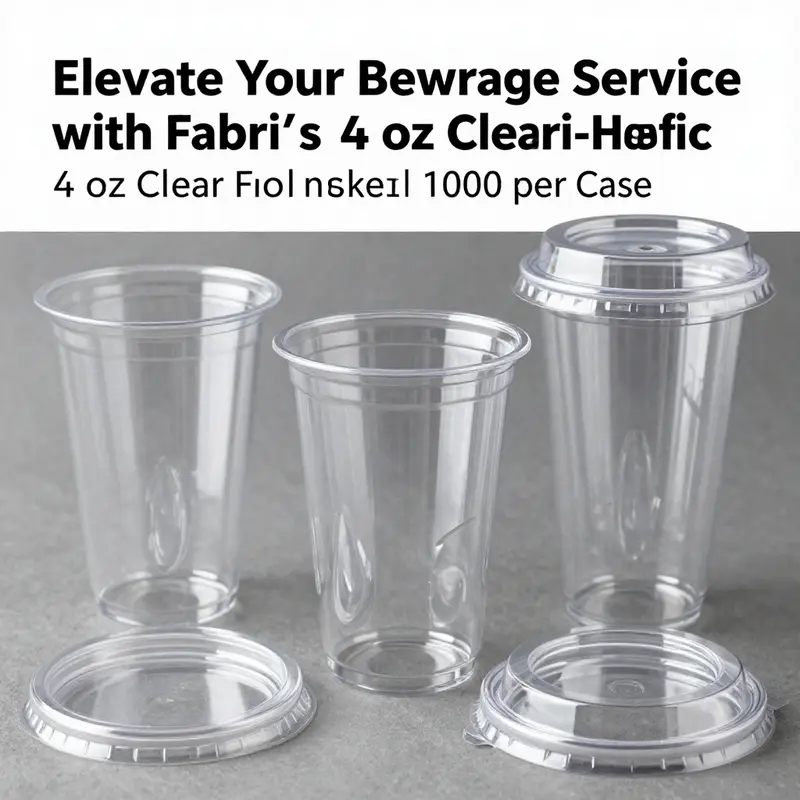
In the world of food service, where first impressions often hinge on visuals as much as on taste, a small accessory can play a disproportionately large role. The 4 oz clear cup insert, shipped in bulk as a 1,000-count case, is one of those understated components that quietly reshapes how operators approach presentation, portion control, and day-to-day workflow. Its value rests not in flash or notoriety, but in its ability to harmonize a menu’s ambitions with the realities of service dynamics. When a counterperson retrieves a cup, the insert is already in place, guiding the customer’s eye to the product inside, while simultaneously establishing a clean boundary that helps the staff manage portions with consistency. This kind of consistency is essential in venues that operate on high turnover, where a dozen orders can look alike at a glance but must still meet exacting standards for appearance and portion size. The insert acts as a mediator between product and vessel, ensuring that each serving occupies the right space without crowding the lid or compromising the cup’s own clarity. The practical impact, therefore, extends beyond aesthetics to influence labor efficiency, waste reduction, and the overall pace of service. In this sense, the insert is not a luxury add-on but a core enabler of dependable service.
Compatibility sits at the heart of this value proposition. The insert is designed with a standardized size that is engineered to fit a broad spectrum of cup and lid configurations within a given line of 4 oz PET vessels. This means a single insert can serve multiple offerings—whether a simple, chilled beverage, a dessert shooter, a sampling portion, or a small cup of sauces and toppings—without forcing operators to inventory a cascade of specialty inserts. The result is a leaner, more predictable supply chain where ordering, stocking, and replenishment are less prone to misalignment. The effect on inventory management is tangible: fewer SKUs to track, smaller risk of mismatches, and a smoother cycle of replenishment that aligns with demand patterns. The case quantity amplifies this advantage, too. A 1,000-count package reduces the frequency of reordering and the administrative overhead that comes with frequent purchases, allowing staff to allocate time to front-of-house tasks that directly influence guest experience. In an environment where a single misfit insert can disrupt assembly lines or slow service, having a reliable, compatible insert in ample supply can be the difference between a smooth shift and a stumble at peak moments.
The clarity of the material itself is another cornerstone of its effectiveness. Constructed from a crystal-clear PET polymer, the insert preserves the visual impact of the contents. In today’s beverage and dessert presentations, the ability to showcase what’s inside the cup matters as much as the contents themselves. When customers can discern layers, toppings, or the exact shade of a similarly hued drink, trust solidifies faster. Clarity communicates quality; it signals that the establishment pays attention to every detail, from the exterior aesthetics to the inner composition. This alignment between presentation and product is particularly valuable in settings that rely on vibrant, eye-catching displays—portrayals of layered coffees, fruit-forward cups, or dessert portions where the contrast between elements is part of the appeal. The insert thus serves as a quiet stagehand, ensuring the main act—the product inside—remains in full view and in its best possible light.
Versatility emerges not as a single use case but as a spectrum of applications that make the insert a practical bridge across menus and occasions. A 4 oz capacity is small enough to accommodate tastings, samples, and flight-size servings, yet substantial enough for simple, everyday portions. This flexibility is crucial for operators who commonly rotate offerings or experiment with seasonal items. The insert’s thickness and rigidity are balanced to support these varied applications without bending, warping, or interfering with lid closure, which keeps packaging intact during transport, service, and display. Such reliability matters when the same cup is used across different formats—hot or cold beverages, light sauces, or small desserts—since it minimizes the risk of leakage, breakpoint failure, or misalignment. In this sense, the insert functions as a universal component within a constrained system: one part that helps a diverse range of products present themselves with consistency, whether they’re served as a quick sample at the counter or as a miniature showcase on a tasting tray.
Operationally, the 1,000-count case speaks to a balance between scale and accessibility. Bulk packaging reduces the administrative burden of restocking and the likelihood of sudden stockouts during busy periods. It enables managers to forecast more accurately, aligning purchasing with anticipated demand rather than reacting to sporadic shortages. For front-line teams, this translates into steadier replenishment cycles, fewer last-minute substitutions, and less time spent triaging packaging needs mid-shift. The insert’s compatibility with various cup and lid configurations further consolidates this efficiency. When a menu shifts or a promotional item demands a different presentation, operators can adapt without ordering a new family of inserts or juggling incompatible components. The workstream remains streamlined, the line flow remains uninterrupted, and the customer-facing side of the operation benefits from the same steadiness that the back room enjoys. In practice, this creates a chain reaction: better inventory control reduces waste, which in turn supports cost containment, and the savings can be redirected toward menu development or guest experience enhancements.
From a guest-relations perspective, the insert’s influence extends into perception. Clarity of the product and seamless presentation convey a sense of care that customers notice, even if subconsciously. A dessert shooter with clean edges and a crisp, transparent display communicates that the establishment values precision and hygiene. A sample cup offers an honest view of what the customer is considering, free from obstructions or obscuring packaging. In a crowded market, such cues matter, because they contribute to a narrative of reliability and quality. The insert thus becomes a subtle ambassador for the brand’s standards, helping to set expectations and deliver on them with consistency across multiple touchpoints—from the moment a guest sees the cup on the counter to the moment they take a sip or a bite at their table.
The decision to select a standard, compatible insert also interacts with broader strategies around sustainability and waste reduction. While any single component is only part of a larger system, using a universally compatible insert can minimize waste caused by mismatched parts and prevent the proliferation of unnecessary SKUs. Fewer unique items mean simpler end-of-life considerations, and in markets where recyclability and responsible packaging are increasingly valued by guests and regulators, maintaining a lean, compatible kit supports corporate stewardship goals. The PET material itself adds another layer to this conversation. PET is widely recyclable in many jurisdictions, and its optical clarity is a natural fit for brands that rely on transparent displays to communicate freshness and quality. While the insert is typically a disposable element used in procedures of portioning and serving, the overall lifecycle can be optimized through responsible waste streams and clear recycling instructions for cups, lids, and inserts alike. In contexts where outlets strive to minimize footprint while maximizing guest impact, a well-chosen insert becomes a practical ally rather than a mere afterthought.
Beyond the economics and the ecology, the insert also participates in the choreography of service design. Consider a café that offers samples, seasonal tastings, and dessert snacks alongside a core lineup of beverages. The insert’s standardized fit means the same cup can be repurposed across the menu without retooling the station or retraining staff. This level of adaptability reduces the cognitive load on the team during busy periods, allowing baristas, servers, and cashiers to maintain a calm rhythm while still delivering a precise product. It also supports consistent portion control, an important factor in controlling costs without compromising guest experience. When portions are uniform, pricing becomes predictable and inventory tests become more straightforward, enabling better forecasting and more reliable profitability analyses. In short, a uniformly compatible insert helps align how a menu is imagined with how it is executed, smoothing out variables that can otherwise introduce friction into daily operations.
The practical takeaway for operators is straightforward: a dependable, compatible insert in bulk form can be a quiet engine of consistency. It reduces the friction of everyday tasks, from ordering and stocking to assembling and serving. It stabilizes the guest experience by maintaining clear visibility and predictable portions, and it supports broader goals around waste management and sustainability through SKU simplification and efficient packaging cycles. In such a framework, the insert is less a single-use accessory and more a strategic asset that ties together menu ambition, operational discipline, and guest satisfaction into a coherent, dependable system. For teams looking to optimize their display and delivery without overhauling their existing cup lines, it presents a compelling case for standardization that respects both the eye of the customer and the hands of the staff. To explore a related sense of applicability and to see how this kind of clear, universally compatible component is positioned in real-world settings, you can discover more about disposable clear plastic cups used in event settings at the following resource: disposable clear plastic cup for outdoor events.
In sum, the 4 oz clear cup insert in a bulk case embodies a surprisingly robust convergence of clarity, compatibility, and capability. It is not a flashy feature but a durable backbone for presentation and process. By reducing complexity in the supply chain, preserving the visual integrity of the contents, and enabling a flexible approach to menu design, this insert helps operators deliver consistently excellent experiences even as they adapt to changing tastes and demands. It is, in essence, a compact tool with outsized influence—a reminder that in hospitality, the best improvements are often the ones that disappear into the rhythm of the day, letting guests enjoy their drinks and desserts with confidence and delight. External resources for further official specifications and product details can be found here: https://www.walmart.com/ip/Fabri-Kal-PET-Cup-Insert-Clear-4-oz-1000-Case/1382597699
Economies of Clarity: How Bulk 4-Ounce Clear PET Cup Inserts Drive Cost, Efficiency, and Consistency in Food-Service Operations

In the fast-paced world of food service and hospitality, the small, almost invisible choices often determine the bottom line as much as the big-ticket items. One such choice is the decision to procure 4-ounce clear plastic cup inserts in bulk, packaged as a 1000-count offer. These inserts, designed to fit standard 4-ounce cups, are built from PET and valued for their crystal-clear visibility, reliable fit, and compatibility with a range of cup and lid options in typical disposables lines. The economics of buying in bulk—especially when it comes to items that play a supporting role in presentation, portion control, and user experience—tend to ripple through several layers of a business: purchasing discipline, daily operations, supplier relationships, and even marketing impact. The conversation around bulk purchasing in this context is not merely about price per unit. It is about how scale can synchronize procurement with production schedules, inventory governance, and service quality in ways that reinforce brand consistency and profitability over time.
From a financial perspective, the most immediate and tangible benefit of a 1000-piece case is the reduction in per-unit cost. Suppliers offer lower unit prices on larger orders because they gain by spreading fixed costs over more units and by reducing the transactional burden that accompanies frequent small purchases. In practical terms, a warehouse or a busy beverage program can shift a series of small, repetitive purchases into a single, predictable outlay. This consolidation reduces the cumulative transactional overhead—purchase orders, approval workflows, invoice processing, and vendor communication. When a venue’s procurement team can forecast demand with greater confidence, the organization can lock in favorable terms, avoid last-minute rushes, and preserve budgetary elasticity for other priorities, such as product development or staffing during peak periods. The arithmetic is straightforward, yet the impact can be substantial: a lower unit price multiplied across a long horizon translates into meaningful savings that accumulate over weeks and months rather than only at the end of a fiscal quarter.
Beyond the headline savings, bulk purchasing of clear PET inserts supports a more stable budgeting process. By standardizing the inputs that accompany every drink or small dessert offering, operators can reduce the variability that often surfaces in meal and beverage costs. A reliable, bulk-backed stock reduces the likelihood that price spikes at the supplier level will cascade into guest-facing price changes or limited menu items. This is especially valuable for operators who must maintain consistent portion control and visual appeal across multiple service lines—whether a casual coffee program, a fast-casual concept, or a seasonal beverage lineup. The inserts themselves contribute to that consistency: their transparent material ensures product visibility, which in turn reinforces trust in portion integrity and presentation. When a customer can clearly see a well-presented item through a clear insert, the perceived value rises, and the risk of misperception about portion size or quality diminishes.
Operational efficiency is another pillar of bulk purchasing that often travels below the surface of simple cost-per-unit calculations. With 1,000 inserts in a single case, procurement teams reduce the frequency of reordering. This means fewer purchase orders to process, fewer supplier touchpoints to manage, and less administrative drift in inventory records. In environments where every minute counts, the time saved at the administrative level can be redeployed toward activities that drive guest satisfaction and revenue, such as streamlining prep workflows, coordinating with kitchen staff on throughput, or focusing on upsell opportunities. The cumulative effect is a smoother operating rhythm. The bulk approach also promotes better stock control because a single reference point replaces a scattering of small-pack items. When staff know exactly where to locate the inserts and how many are expected on hand, it reduces the risk of stockouts during busy shifts or promotions and lowers the probability of overordering that ties up capital in unused material.
This is not a purely numerical exercise. Supplier relationships emerge as a critical, often undervalued, source of resilience. A dependable supply of bulk inserts fosters a more predictable calendar for deliveries, enabling operators to align receiving schedules with peak demand windows. Consistency in supply can translate into better delivery times, fewer backorders, and access to technical support or product guidance when needed. A stable relationship with a supplier can also open doors to negotiated terms that extend beyond price—such as favorable lead times, flexible credit arrangements, or the ability to tailor packaging and fulfillment to match specific service concepts. In the end, these relational benefits contribute to a more predictable operating environment. They free management to focus on strategic tasks like menu engineering, seasonal promotions, and guest experience design rather than constantly firefighting procurement bottlenecks.
Quality consistency and compatibility weave through every stage of usage. The 4-ounce clear PET cup insert is designed to preserve the clarity of the beverage or dessert, ensuring that the visual appeal is not compromised by the containment method itself. In a multi-channel setting where cups are used across dine-in, takeout, and delivery, consistency of fit and presentation matter more than the brand of the insert. Bulk purchasing supports standardization across locations, reducing the risk of variations that can occur when different teams use different packaging configurations. When the same 1000-count case is deployed across a fleet of venues, store managers and kitchen staff operate from a shared standard, which simplifies training and quality control. The result is not only cost savings but also a more uniform guest experience—clear visibility into the product, clean presentation, and familiar handling across channels.
Inventory management, cash flow, and demand planning are the final elements that elevate bulk purchasing from a tactical choice to a strategic capability. A case of 1,000 inserts can be scheduled into inventory cycles around typical demand rhythms—weekdays with steady, predictable volume and weekends or promotional periods that spike activity. With better forecast accuracy, inventory levels can be tuned to minimize both surplus and stockouts. The financial leverage extends beyond reduced unit costs to more favorable cash flow dynamics. By consolidating orders, a business can reduce late payment penalties, optimize payment terms, and synchronize capital expenditure with revenue cycles. The result is a more stable liquidity profile, which in turn creates room for reinvestment in guest-centric improvements—improved sanitation, faster service lines, or enhanced ambience that supports higher check averages.
To truly appreciate the ripple effects, consider the lifecycle of an average shift in a mid-scale operation. Staff arrive, prep work begins, and orders start to accumulate. The presence of a bulk stock solution reduces the cognitive load on team members who would otherwise need to track multiple SKUs and reorder thresholds. Instead, they access a single, predictable supply line. This reduces the risk of miscounts, misplaced inventory, or last-minute substitutions that could alter the guest’s perception of quality. Presentation remains consistent because inserts stay true to their design: crystal clarity, reliable fit, and compatibility with a range of lids and cup sizes. In this context, bulk purchasing becomes a steadying force that supports operational tempo rather than a mere budget line item.
From a sustainability viewpoint, bulk packaging offers nuanced trade-offs. On one hand, buying in bulk typically reduces waste associated with repetitive small packaging units and can lower the environmental footprint per unit when logistics and handling improve. Fewer shipments and consolidated orders also translate into fewer handling events and often less packaging material overall, depending on how the bulk units are packaged and distributed. On the other hand, bulk inventories require more storage space and can introduce higher carrying costs if demand wanes or if the program experiences extended periods of low activity. Smart inventory practices—accurate demand forecasting, sensible safety stock levels, and timely rotations—help mitigate these risks. For operators who balance sustainability with efficiency, bulk procurement, when paired with disciplined stock management, can align with both financial goals and responsible resource use.
A practical framework emerges when considering whether bulk purchasing of a 1000-piece case is the right move. First, assess demand stability: locations with steady, recurring beverage and light-food service are prime candidates for bulk stocking. Second, evaluate space: sufficient storage capacity reduces the chance of environmental exposure or damage to inserts. Third, calibrate lead times: longer supplier lead times justify bulk stocking to prevent stockouts, whereas shorter ones may favor smaller, more frequent replenishment. Fourth, examine the broader procurement ecosystem: bulk purchasing should harmonize with other standard disposables to maximize the benefits of volume pricing and supplier relationships. The goal is not to hoard inventory but to create a predictable supply chain that supports consistent guest experiences and reliable cost control.
To tie these threads into a practical cue for decision-makers, consider how a single internal link to related packaging resources might illuminate broader packaging strategy. Explore materials and formats used in take-away and delivery models through common packaging categories, recognizing how one choice—an insert for a cup—interacts with lids, shells, and external presentation. For a broader view of these concepts in action, you can explore a resource that discusses take-away packaging boxes and related takeaway solutions. take-away food packaging boxes demonstrate how packaging ecosystems evolve around the core needs of fast service, durability, and on-brand presentation. This interconnected perspective helps illuminate how bulk inserts fit into a wider continuum of packaging decisions that influence guest perception, order accuracy, and operational efficiency.
In terms of external benchmarks and real-time dynamics, industry buyers often consult broad retail listings to gauge pricing and supply trajectories. For example, major retailers frequently publish current stock levels and price points that reflect broader market movements, which can inform when bulk purchases are most advantageous. Such market signals can guide timing, negotiate terms, and set expectations for lead times and delivery windows. Keeping an eye on these external indicators helps procurement teams align bulk purchases with the current cost climate, ensuring that the anticipated savings from economies of scale remain robust even as markets shift. In this sense, the bulk case for 4-ounce clear PET cup inserts extends beyond the unit economics and into the realm of strategic procurement that supports steady service quality, predictable cash flow, and resilient operations across multiple venues.
For reference and ongoing pricing context, real-time pricing and availability are often reflected in retailer listings. Access to up-to-date information can help teams determine whether a bulk purchase continues to offer an edge relative to smaller packaging options, and whether current demand expectations justify leaning into a 1000-count case now or waiting for a more favorable window. The broader takeaway is that bulk purchasing, when grounded in solid forecasting and aligned with a thoughtful packaging strategy, yields advantages that propagate through financial performance, operational reliability, and guest satisfaction alike. As the chapter above suggests, the savings are not merely theoretical; they unfold in the rhythm of daily service, in the steadiness of stock on the shelves, and in the confidence with which flat-rate pricing can be offered to guests who value clarity, consistency, and value across every cup and bite.
External reference: https://www.walmart.com/ip/Fabri-Kal-PET-Cup-Insert-Clear-4-oz-1000-Case/526832783
Clear Choices, Hidden Footprints: Navigating the Sustainability of 4 oz PET Cup Inserts in Bulk
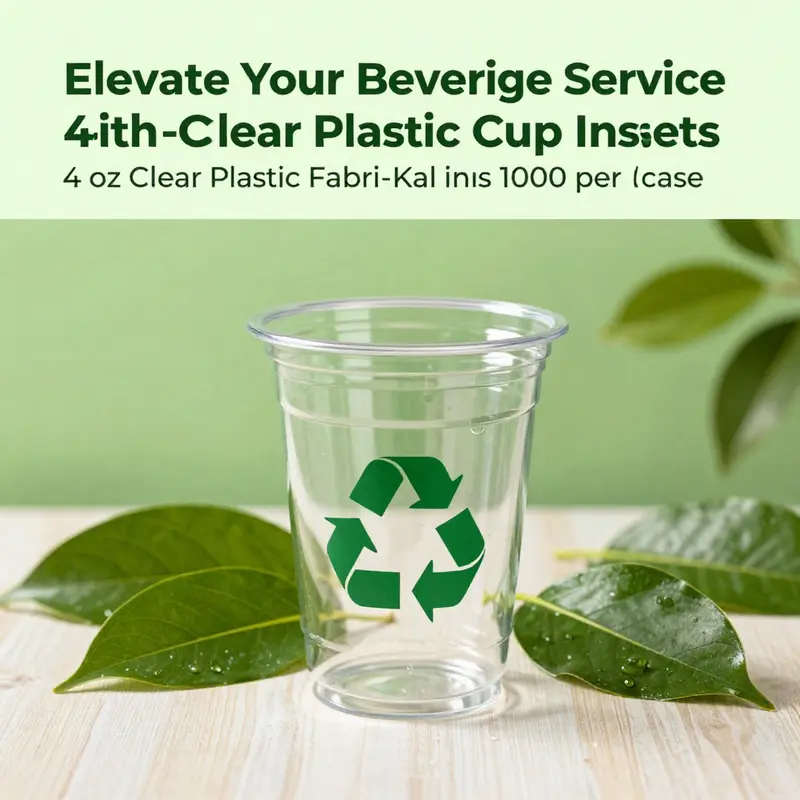
The quiet drama of sustainability often plays out in the corners of a busy kitchen or a bustling takeaway line, where a small, transparent insert can carry more meaning than its size would suggest. A 4 oz clear plastic cup insert—used inside a standard PET cup to stabilize contents, showcase products, and streamline service—does more than hold liquid or food in place. It sits at the intersection of presentation, efficiency, and end-of-life responsibility. In bulk arrangements, such as cases of a thousand inserts, operators face a practical question: how can bulk procurement deliver cost savings while maintaining an accountable, responsible footprint? The answer is not a single choice but a balance of material science, logistics, consumer behavior, and regional recycling realities. The narrative around these inserts becomes a case study in how a seemingly minor component can influence not only operational flow but also a brand’s stance on waste, reuse, and resource stewardship. The clarity these inserts provide—visually and physically—also invites a deeper look at what happens once they have fulfilled their role in a beverage or a bite-sized treat.
Material clarity is the first and most visible dimension. PET, the polymer most associated with clear, sturdy cups, is assigned the #1 recycling code in many curbside programs. Its popularity stems from two strengths: it preserves product visibility, which matters for consumer appeal, and it offers a relatively straightforward path back to recycled content when a robust collection system exists. This is not a universal guarantee, however. Recycling infrastructure varies widely by locality, and consumer participation in sorting recyclables remains a pivotal determinant of PET’s true recovery rate. A 4 oz cup insert made from PET inherits those same advantages and constraints. When the local stream accepts PET, the material can be processed into a range of secondary products—fibers for textiles, new containers, or other plastic goods. Yet if the stream is weak or mis-sorted, the inserts can end up diverted to landfill or incineration, undermining the best intentions of sustainability efforts. The economic signals around PET—collection costs, processing fees, and the value of recovered material—also shape whether facilities invest in the specialized handling that inserts require. As a result, the life cycle of these inserts is not only about material selection but about the ecosystem that surrounds disposal and reuse.
A second layer rests on design intent. The same clear, rigid form that highlights product visibility also minimizes the need for extra packaging around the insert itself. In practice, this means fewer packaging layers, less material consumption, and a simpler supply chain. The versatility of a single insert size to fit multiple cup and lid configurations reduces the risk of overstocking different SKUs that often lead to waste through obsolescence. When operators can stock a universal insert rather than several variants, they reduce the chance that an item will be discarded because it doesn’t align with a specific cup size. The design thus contributes to waste reduction at the source, even as it remains a single-use accessory in many operations. The elegance of this efficiency rests in its simplicity; the insert does not rely on a patchwork of specialized parts to achieve stability and presentation. Instead, its strength lies in a geometry that accommodates a range of configurations while maintaining clarity of the final product on display.
Yet the sustainability story cannot stop at material choice and clever geometry. The broader question concerns end-of-life management and how commercial operations translate a responsible design into responsible practice. In theory, PET offers a robust recycling loop, but real-world outcomes depend on consumer habits and municipal programs. Contamination—leftover beverage residues, mixed materials, or incorrectly sorted items—erodes recycling efficiency. Even when an item is labeled PET and technically recyclable, if it is not properly sorted or if it enters a waste stream that cannot process it, the environmental benefit diminishes. In addition, the single-use nature of many inserts invites a broader dialogue about plastic pollution, particularly when products are discarded en masse after peak service hours or when corporate offers do not clearly wire end-of-life expectations into staff training. The tension between convenience and responsibility becomes most acute in high-volume environments, where speed and consistency conflict with slower, more deliberate sorting and recycling practices.
The analysis must also consider regional variability in waste management infrastructures. PET’s recyclability is strong on paper, yet a city with advanced materials recovery facilities may divert a high share of PET into new products, while another jurisdiction with limited processing capacity may struggle to accept even clean, sorted PET. This discrepancy means that the same insert can have very different environmental implications depending on the location and the consumer culture around recycling. For brands and operators, this underscores the importance of aligning procurement choices with the actual capacity of local systems. It also elevates the role of consumer education and clear labeling. If customers understand what items are recyclable, how to prepare them for recycling, and why a particular packaging component matters, there is a greater chance that the intended circularity will be realized. In this sense, the insert becomes not only a passive container but a touchpoint for sustainability literacy across the entire supply chain.
A further dimension emerges when discussing the broader packaging ecosystem. While the inserts themselves are small, they inhabit a world of cartons, lids, sleeves, and outer packaging, all of which contribute to a cumulative waste profile. The fact that these inserts can enable a leaner overall packaging approach—by reducing the need for extra packaging layers to secure contents—should be weighed against the cumulative impact of producing, distributing, and disposing of thousands of small plastic pieces. The net effect depends on how many times the same basic insert design is reused, how efficiently it is recycled, and how well the supply chain communicates end-of-life expectations to end users. In this light, sustainability becomes a question of system design as much as material science. Companies that pursue closed-loop concepts, where used inserts are collected and returned into the recycling stream, begin to tilt the balance toward a more sustainable equilibrium. The practical challenge is establishing reliable collection channels, ensuring intact recovery, and coordinating with waste haulers and recyclers to handle the material in a way that preserves its value.
From a strategic perspective, the push toward sustainability for 4 oz cup inserts sits within a broader tension between operational pragmatism and environmental responsibility. Bulk purchasing—such as cases of 1,000 units—offers clear cost and logistical advantages. It reduces replenishment frequency, lowers administrative burden, and stabilizes price exposure for operators. However, bulk procurement also concentrates risk: if the bulk item is not integrated into a long-term, end-of-life plan, a large number of units can accumulate in waste streams or become stranded assets in aging waste management systems. To reconcile these factors, many operators are turning to two complementary approaches. First, they adopt a more deliberate end-of-life strategy, aligning procurement with the availability of local recycling capacity. Second, they explore material and design alternatives that interface more naturally with circular systems, including the potential for biodegradable or compostable substitutes in future lines. While this second pathway may involve trade-offs in clarity, rigidity, or cost, it signals a forward-looking willingness to adapt to the evolving norms of sustainable packaging.
The recommendations that arise from this analysis are pragmatic and forward-oriented. For businesses already using these inserts, investing in a closed-loop or take-back program can yield meaningful environmental gains and strengthen brand integrity. Even modest requirements—clear instructions on cleaning, collection, and drop-off points; partnership with local recycling facilities; incentives for customers to participate in the program—can dramatically improve end-of-life performance. In addition, exploring material innovations remains essential. While PET’s recyclability is well-established, the dynamic landscape of sustainable materials invites ongoing evaluation of alternatives that might require less energy to recycle, yield higher-quality recycled content, or decompose more readily in appropriate industrial facilities. The pursuit of biodegradable materials could introduce a new layer of opportunity, though it also demands careful attention to compatibility with existing waste streams and the possibility of contamination in mixed streams.
Inside this strategic frame, the stakeholder landscape matters. Brand owners, packaging engineers, operators, waste managers, and consumers all influence outcomes. Brand owners set procurement policies, define expectations for suppliers, and communicate recycling instructions to customers. Packaging engineers translate sustainability goals into practical designs, balancing clarity, strength, and end-of-life considerations. Operators bring daily experience with service flow and inventory management, translating policy into practice on the floor. Waste managers and local authorities shape what is feasible at the municipal level, from collection schedules to processing capabilities. Consumers, finally, determine how actively they participate in sorting and recycling. The synergy among these players determines whether the inserts truly contribute to a circular economy or simply pass through a linear system with limited value capture. The best path forward is a collaborative one, underpinned by transparent data about recycling rates, contamination, and the real environmental footprint of the entire packaging set.
In closing, the sustainability story of a 4 oz clear PET cup insert is not a single verdict about material choice but a continuous process of alignment among design, infrastructure, and behavior. The material itself offers clear advantages in visibility and potential recyclability, but those benefits are conditioned by local infrastructure and consumer engagement. The design’s efficiency—fewer packaging layers, a universal fit—helps reduce waste at the source, yet it must be supported by robust end-of-life practices to realize a genuine lifecycle advantage. The reality is nuanced. When aligned with a closed-loop mindset and a willingness to explore alternative materials over time, bulk inserts can coexist with ambitious sustainability goals. The journey is incremental, and progress is measured not only in material efficiency but also in the systems that recover value from the plastics we produce. For practitioners seeking a practical entry point, the path is clear: map local recycling capacity, educate staff and customers, and pursue continuous improvement in both design and end-of-life management. The result is not a perfect solution but a more responsible one—where clarity in the cup is matched by clarity about what happens to the insert after use.
For readers seeking broader context on PET’s recyclability and best practices, external resources offer valuable guidance. The U.S. Environmental Protection Agency maintains a comprehensive overview of PET plastics, their recycling pathways, and the considerations involved in keeping them out of landfills. This resource helps frame why PET remains a staple in clear packaging—and why end-of-life planning matters as much as material selection. https://www.epa.gov/epawaste/hazard/recmgmt/pet-plastics.htm
To connect the sustainability narrative to practical sourcing options that complement responsible inserts, many operators look to broader eco-conscious packaging families. For example, a collection of eco-friendly, multi-compartment takeout packaging boxes provides an integrated approach to reduce overall packaging layers and improve end-of-life outcomes across a menu. By exploring options that align with the same principles—clarity, compatibility, and recyclability—brands can build a cohesive, lower-impact packaging strategy. Such resources illustrate how a single component, when paired with compatible packaging systems, can contribute to a more sustainable service model. See more about eco-friendly takeout packaging choices here: eco-friendly-disposable-3-compartment-food-grade-packaging-box-for-fast-food-high-quality-takeout-boxes-for-fried-chicken-french-fries-packaging.
In sum, the sustainability profile of a bulk 4 oz cup insert hinges on the choreography between material properties, product design, and the systems that move waste from consumer hands to the recycling stream. When operators treat the insert as part of a larger lifecycle, not merely as a disposable accessory, they unlock opportunities for meaningful improvements. The result is a packaging choice that remains clear and appealing on display while gradually becoming clearer in its environmental footprint. The path forward is iterative, collaborative, and informed by both local realities and global best practices. It is a path that invites ongoing dialogue among suppliers, customers, and regulators as they shape a packaging future that respects presentation, efficiency, and the planet alike.
Clarity Under Pressure: Maximizing Visibility and Efficiency with 4 oz Clear Plastic Cup Inserts in Bulk
In a dining room light or under the glare of a concession stand, the smallest components often carry the largest expectations. A 4 oz clear plastic cup insert does more than separate samples; it frames what customers see, protects what is inside, and speeds service when every second counts.
These inserts sit inside standard 4 oz PET cups, crafted from clear plastic that emphasizes the color and texture of the beverage. The material’s clarity is not just about beauty; it’s about trust. When customers can see the layers of a smoothie or the sheen of a pour-over coffee, they perceive value. The insert preserves that moment of first impression from the moment the beverage is prepared through to the moment it’s enjoyed. The crystal-clear visibility helps staff and customers alike gauge portion accuracy, separation of toppings, and the presence of any layered elements that might appeal to sensory expectations. In fast-paced service environments, that visual clarity reduces hesitation and accelerates order completion, which translates into smoother lines and happier guests.
The design is built for versatility: it fits seamlessly into multiple cup and lid sizes within the same family, so a single insert family can bridge many menu items. This reduces the cognitive load on staff and minimizes the risk of mismatched packaging. For operators juggling a busy menu, that compatibility means you can rotate from a simple juice to a layered specialty without investing in a new line of cups and lids. The clarity of PET plus the precision of the insert means the presentation remains consistent across shifts and locations. This interoperability also simplifies training, as team members learn a single insertion protocol that works across several SKUs, reducing the chance of mix-ups during peak hours.
If shipments travel or customers pick up orders, the insert’s capacity to be heat sealed with most common cup sizes adds a safeguard against leaks. Sealing reduces the risk of spills during movement, which matters in catering and delivery. It also supports safety and hygiene because the contents are protected from airborne contaminants and from casual contact during transport. In many operations, this small compatibility trick translates into tangible reductions in waste, disorder, and refunds that can erode margins. When drivers juggle multiple stops, a leak-free seal on the insert means fewer messy handoffs and cleaner, more reliable deliveries.
The economics of bulk packaging matter as soon as a business moves into the 1000 inserts per case tier. When you count the cost of daily restocking, the bulk option becomes a lever on profitability. Fewer replenishments, less administrative time, and more predictable usage rhythms help operators forecast inventory needs and keep cash flowing toward the front of house. The case quantity aligns with high-traffic venues such as concession stands, food trucks, stadium kiosks, and large event operations where the same packaging must perform across many service contexts. In such settings, the ability to standardize on a single insert type reduces errors, simplifies training, and streamlines restocking to a shelf or a back-of-house bin. Price-wise, one major retailer lists the case at around $97, which translates to roughly 9.7 cents per insert, a favorable rate for high-volume purchases. For managers tallying yearly packaging costs, that per-unit figure is a meaningful lever when calculating margins, especially when the same insert supports multiple drinks and small food items.
Beyond the economics, the inserts support the aesthetics and throughput that define a strong service experience. A beverage that is visually appealing from first sight invites a longer moment of appreciation. The insert ensures the cup remains pristine while the beverage is mixed, layered, or shaken. It can hold a small garnish or a dusting of topping without obstructing the customer’s view of the product inside. In practice, that translates to better upsell opportunities as customers are drawn to the visual appeal of the clear cup and its contents. For beverage teams, the combination of clarity, compatibility, and leakage protection enables faster prep and fewer postmix cleanups, which means staff can allocate more time to customer engagement and quality control. In addition, the insert acts as a subtle stage for branding or menu storytelling by keeping the cup’s contents front and center while maintaining a clean and polished presentation.
Choosing the right insert is not merely about fit and price; it is about aligning packaging with workflow. Start by confirming that the insert matches your cup and lid system, not just the nominal size. Even within the same 4 oz family, a few tolerance differences can affect how snugly the insert sits, how easily it seals, and whether it sits flush with the rim of the cup. Consider the typical handling path of a drink—from preparation to transport to pickup—and select an insert with robust edge geometry that resists crushing under pressure or during stacking. If heat sealing is part of your process, test whether the insert achieves a secure seal with your lids, ensuring that transport remains leak-free even on bumpy routes. Price is important, but it should be weighed against reliability and the ability to scale. Bulk purchases can offer substantial per-unit savings, but only if the product consistently meets the operational needs across your locations. A practical purchasing approach includes evaluating supplier tolerances, confirming compatibility with your existing cup line, and requesting sample runs to verify fit across all current SKUs before committing to a full case.
For operators curious about how clear packaging performs in different settings, a related example of disposable clear cups designed for outdoor picnics shows that the same visual advantages travel across use cases. See this link for a practical illustration of translucent packaging in action disposable clear plastic cup for outdoor picnics.
In terms of storage and handling, store inserts in a cool, dry place to prevent warping or distortion that could affect seating inside cups. Keep them flat and stacked in a way that avoids crushing the rims or bending the edges. When operations expand, the benefit of bulk packaging often becomes a guardrail against hurried replenishments that might tempt staff to substitute with a less compatible insert. The result is a more consistent guest experience and fewer incidents of mismatched packaging that can confuse customers or slow service. A well-organized back-of-house area, with clearly labeled cartons and a first-in, first-out approach, helps ensure that the bulk supply remains readily accessible and that inventory levels stay steady, avoiding both overstock and stockouts during peak seasons.
Finally, the purchasing decision sits at the intersection of product visibility and service logistics. The clear plastic insert is a small component, yet in high-volume environments it plays a disproportionate role in presentation quality, spill containment, and process efficiency. It can be the quiet workhorse of the beverage program, enabling menus to stay visually dynamic while operations stay orderly. The case quantity is a signal of a packaging system designed for scale, where uniformity across locations supports brand consistency and staff familiarity. The trade-off is straightforward: the better the fit and the more robust the heat seal, the more consistent the customer experience and the more predictable the back-of-house workflow. For buyers, the message is to treat this choice as a genuine lever in the quest for efficiency, aesthetics, and reliability across a multi-channel beverage operation. In the end, the value of a well-chosen insert is measured not just in dollars saved per case but in the steadiness of the flow—from preparation to plop of a straw into a completed beverage—across days of service, across shifts, across locations.
External resource: https://www.walmart.com/ip/Fabri-Kal-PET-4-oz-Clear-Plastic-Cup-Insert-1000-per-Case/155896177
Final thoughts
The 4 oz clear plastic Fabri-Kal cup insert is a practical asset for food service businesses seeking to optimize both presentation and operational efficiency. Its compatibility with a variety of other Fabri-Kal products enhances its versatility, while purchasing in bulk brings significant economic savings. Moreover, these inserts align with sustainable practices, making them a thoughtful choice for environmentally conscious businesses. By utilizing this guide, you can ensure that your procurement meets both your quality and budgetary needs, ultimately elevating your food service offerings.