
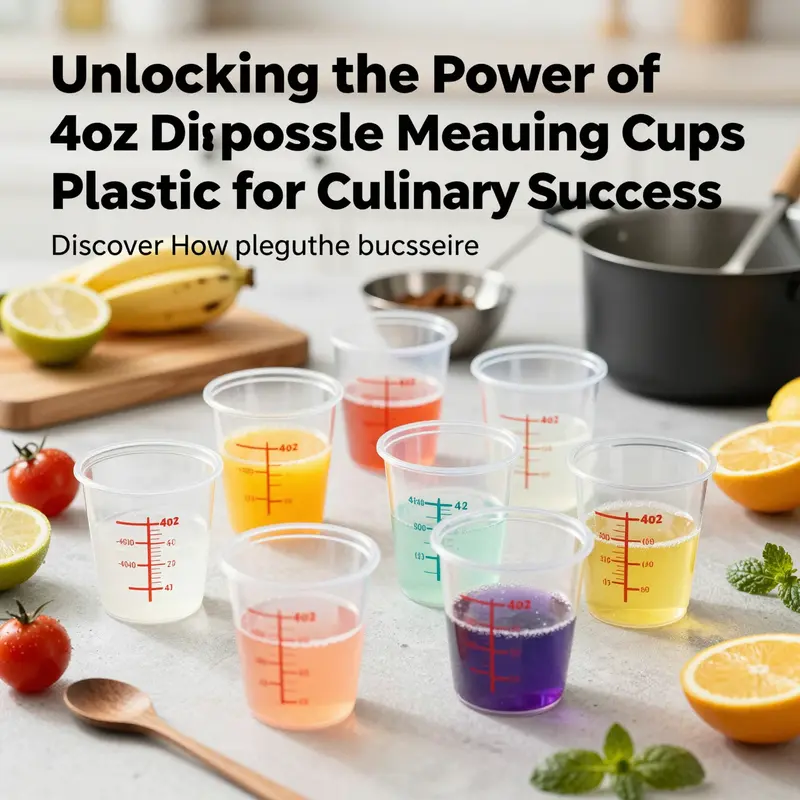
The culinary world thrives on precision and convenience, making 4oz disposable measuring cups plastic invaluable tools in restaurant kitchens, bubble tea shops, catering services, and more. Their ability to provide accurate measurements while maintaining hygiene standards is crucial for any food service operation aiming to deliver consistent quality. This article dives deep into the myriad applications of these cups, their material makeup, emerging market trends, branding opportunities, and important considerations regarding their environmental impact, crafting a comprehensive understanding of their role in elevating food and beverage operations.
Tiny Measures, Big Impact: How 4oz Plastic Disposable Measuring Cups Elevate Cooking, Baking, and Small-Batch Innovation
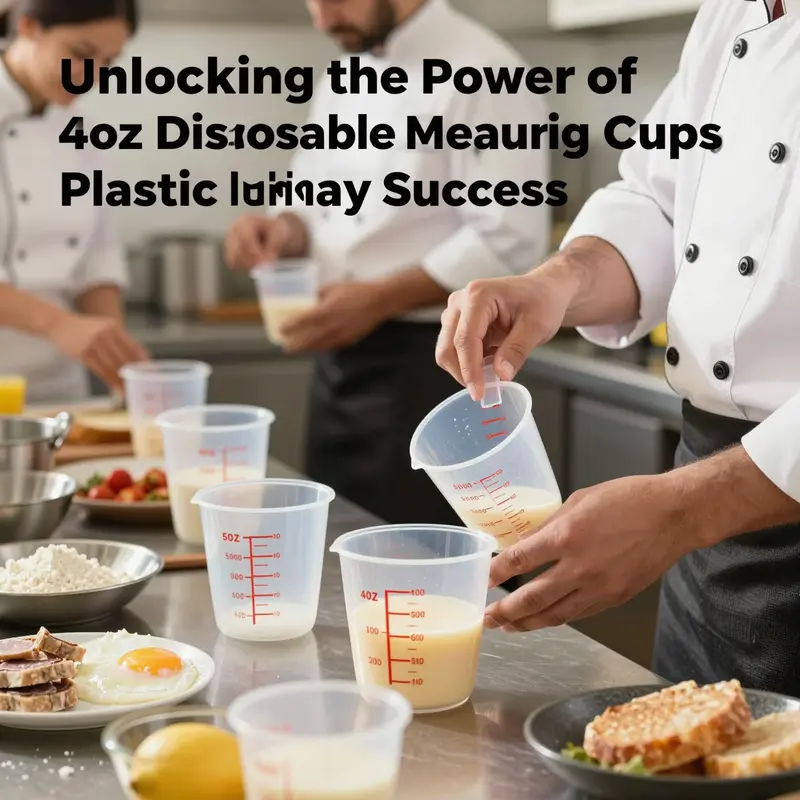
On a quiet morning in a bustling kitchen, a line of tiny cups sits at the edge of the mise en place. Each 4 oz cup is more than a container; it is a lever of accuracy in an activity that rewards exactness. When a recipe hinges on delicate adjustments—an extra dash of vanilla, a drop of lemon juice, a whisper of salt—the small, clear plastic cup becomes a trusted partner. The 4 oz size is intentionally compact. It sits between a pinch and a measured tablespoon, a space where experimentation meets reproducibility. In many kitchens, bakers and cooks rely on these cups not only for liquids but for the precise portioning of dry ingredients: a measured spoonful of ground nutmeg, a bloom of crushed spices, or a dab of colorant for icing. The cup’s design is deliberately simple yet telling: a transparent body that shows the volume at a glance, a lip for easy pouring, and markings that read clearly even when the user is elbows-deep in a prep.
The capacity, about 118 milliliters, makes this cup the perfect scale for small-batch work. It is half a standard cup, a reminder that good results often begin with modest quantities. This scale supports recipe testing, where chefs calibrate ratios, test texture, and record observations without committing precious ingredients to a full batch. In teaching kitchens, it acts as a quiet mentor; each student can measure, observe, and adjust without sharing utensils that might spread errors across a group. The educational value goes beyond technique. It teaches hygiene discipline, because the disposable nature eliminates cross-contamination risks between batches. When allergens or sensitivities must be managed, the single-use cup provides a visible boundary between preparations, reinforcing safe practices in both home kitchens and professional settings.
The materials chosen for these cups balance lightness with stability. Many 4 oz cups are molded from clear plastic such as polypropylene in consumer-grade offerings, but it is common to encounter variations in the broader market that include materials like polystyrene or PET. What matters most to a user is that the cup maintains its shape under normal handling, preserves the integrity of the volume markings, and resists cracking when bumped or stacked. The result is a tool that stays readable from prep to pour, even when the surface is crowded with bowls, spoons, and notes. A well-made cup has a stable base, preventing tipping during a quick transfer of liquids or powders. The markings are not decorative; they are functional anchors that guide portions with confidence. When poured into a batter or glaze, the cup offers a tactile cue—the level line aligning with a printed measurement—that reduces the chance of over- or under-seasoning by mere fractions.
In practical cooking workflows, the 4 oz cup shines in parts of the process that demand speed without sacrificing precision. For liquids, it holds vinegars, oils, emulsions, and extracts used in small, repeated additions. For dry ingredients, it can hold spices, cocoa, or powdered sugar in pre-measured amounts that become the building blocks of a tester batch. The same tool may support a line cook who needs to portion a concentrate or a flavoring that is too expensive or too potent to waste with trial-and-error scoops. The habit of pre-measured portions, once established, shortens the path from concept to plated dish. It also makes clean-up easier: because the cups are designated for one-time use, a station can be cleared quickly, enabling cooks to pivot from one dish to another with minimal downtime.
Beyond the kitchen, the appeal of 4 oz disposable measuring cups extends into the realm of craft and experimentation. In art studios where resin, paints, or pigments are measured for projects, these cups offer a cheap, disposable option that keeps workspaces tidy and reduces cleanup time between projects. The transparency allows artists to see the exact mix of components, and the compact size makes it possible to create multiple color tests side by side. The same principle translates to home science or DIY skincare experiments, where small volumes must be measured with accuracy to ensure repeatable results.
Hygiene, accuracy, and speed converge most clearly in environments where consumer expectations for safety are non-negotiable. In catering operations, for example, pre-portioned ingredients help maintain consistent taste profiles across dozens or hundreds of servings. For events and demos, a single-use setup reduces the risk of cross-contact among different recipes and dietary needs. In demos, instructors can demonstrate a concept with visually appealing, pre-measured ingredients that participants can replicate later, and attendees can take home a portioned kit to encourage experimentation on their own. The design benefits extend to branding and logistics as well. A checklist-friendly tool, these cups can be printed with logos or labels for promotional purposes, turning the simple act of measuring into an opportunity for visibility at tastings, fundraisers, or cooking classes. This kind of customization, when done tastefully, reinforces professionalism and streamlines the workflow by offering participants everything they need in one hand.
In choosing a 4 oz disposable cup, the limitations are as instructive as the advantages. It is not intended for long-term storage; the contents should be transferred to a more durable vessel for extended preservation. It is not designed for repeated heat exposure; high temperatures can warp the shape or alter the contents. It is not a substitute for proper storage containers in a busy kitchen, where a recipe demands a stable, airtight environment. Instead, its role is transient: a momentary measure in a larger sequence of tasks. The appeal lies in the union of simplicity and reliability. The cups arrive in bulk, stack neatly, and can be retrieved quickly when a process calls for repeated measurements. Their single-use character aligns with stringent hygiene standards found in many food-service operations, where ease of discard after use supports a clean and controlled environment.
As a working principle, the 4 oz cup is more than a throwaway utensil; it is a mental model for portion control. It reminds cooks to respect the small quantities that accumulate to large outcomes—taste, texture, and presentation all begin with a precise start. In a crowded kitchen, this mindset translates into a smoother workflow. The cups sit in a designated station where every measured amount has a ready, readable measure that staff trust. The impact is not merely about efficiency; it is about consistency. When a recipe is tested, the same 4 oz cup can be used to recreate a proven fraction across batches, ensuring that the result remains faithful to the original goal. The single-use design is not wasteful if viewed through the lens of safety and accuracy; it is a commitment to reproducibility and clean practice.
To tie these threads together, consider the broader culinary ecosystem in which such small tools operate. They bridge the gap between artisanal intuition and industrial precision. They make it feasible to run a demonstration with dozens of participants while preserving individual experience and control. They enable a home cook who admires technique to explore flavors with confidence, knowing there is a dependable, readable measure at hand. And they offer a practical pathway for brands and educators to present a disciplined approach to food preparation, where every measurement has a manifest purpose and every pour tells a story about balance and technique. In short, the 4 oz disposable measuring cup is a compact but pivotal instrument. It embodies a philosophy of careful, repeatable action—one that can scale from a kitchen table to a commercial kitchen without losing its essential clarity.
For readers curious about supply options that align with themed events or branded experiences, there are suppliers offering themed or customized takeaway packaging and disposable tableware that can integrate with a light measuring program, ensuring that the tiny shapes and markings remain legible and unobtrusive in busy settings. custom-takeaway-packaging-supplies-disposable-tableware-for-theme-party. The end result is a practical, aesthetically mindful system that honors both the art of measuring and the needs of modern service environments.
External reference: For those seeking a more technical overview of materials and performance, see a comprehensive guide to disposable 4 oz plastic cups. https://www.alibaba.com/product-detail/A-Complete-Guide-to-Disposable-4-Oz-Plastic_1600538927462.html
Clarity, Comfort, and Compliance: The Material Make-Up of 4oz Disposable Measuring Cups
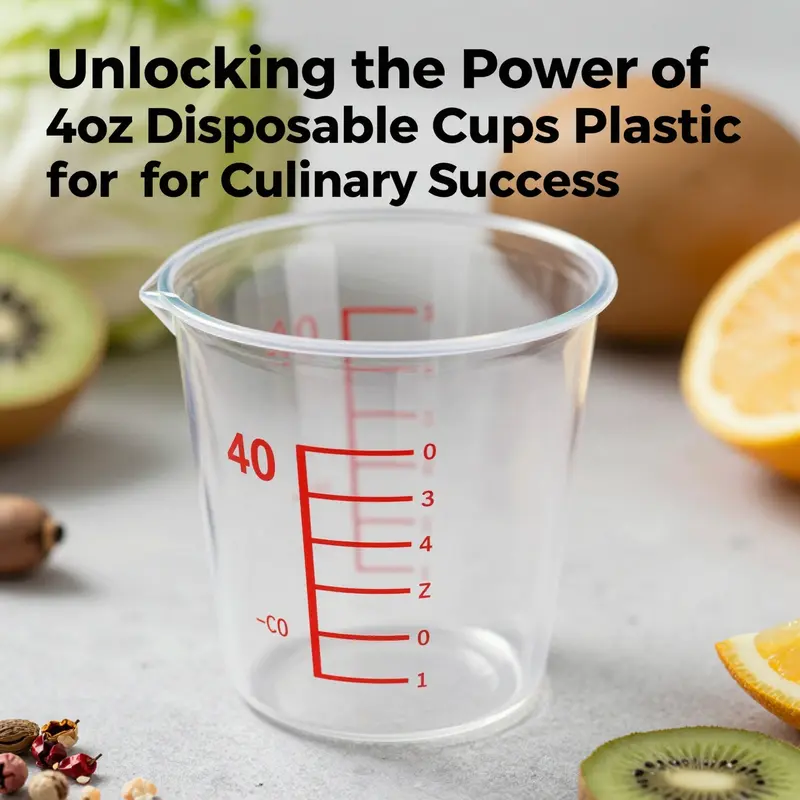
In the realm of small-batch cooking, baking, and craft projects, 4 oz disposable measuring cups are more than convenient disposables; they are a chorus of material choices that quietly shape every pour, every reading of a scale, and every moment of reuse or single-use hygiene. The material make-up of these cups is the unseen backbone of their performance. When you lift a tiny, clear cup from a box, you are engaging with a carefully chosen polymer system that balances readability, temperature tolerance, durability, and safety. The result is a tool that can be counted on for dependable portioning, precise markings, and predictable behavior whether you are measuring a dash of vanilla, a dollop of glaze, or a delicate specialty ingredient that requires careful handling.
Two polymers dominate the category for 4 oz disposable measuring cups: polypropylene and polystyrene. Each brings a distinct set of strengths, and together they form a practical spectrum that serves different uses and environments. Polypropylene, or PP, is celebrated for its heat resistance and chemical stability. It can tolerate moderate temperatures without softening, which means it stands up to hot liquids better than many other plastics in the same category. In a bustling kitchen or a DIY lab, that resilience matters. Sponges of steam, sudden heat from a warm pan, or the incidental contact with warm syrups won’t immediately deform a PP-based cup. This durability translates into more reliable measurements, since the cup is less likely to flex, warp, or smear under pressure, and the volume markings stay legible over repeated uses or extended storage. In addition to hot tolerance, PP’s chemical stability helps ensure that acids, sugars, and alcohol-based ingredients don’t interact with the container in ways that could compromise flavor, color, or hygiene.
Polystyrene, by contrast, is prized for its clarity and light weight. A clear cup makes it easy to verify liquid levels at a glance and to confirm that the measured amount hasn’t settled into a cloudy or discolored suspension. The visual simplicity of PS-based cups makes them especially attractive for color-coded workflows, promotional displays, or sampling environments where quick, unambiguous readings are essential. Lightness also contributes to ergonomics in high-volume settings, where staff might handle hundreds of portions in a single shift. The crisp, transparent nature of PS can be a meaningful advantage when the precise appearance of a product matters—whether you’re presenting a thin oil, a frontier of spice powders, or a vividly colored extract.
A practical note about how these materials translate into everyday use: both PP and PS cups are designed to be leak-resistant and to carry clear, legible measurement markings in milliliters, ounces, or cups. The markings themselves are an important facet of the material story. They must remain crisp and visible even as the cups are stacked, transported, or chilled, and sometimes exposed to warm condensation. In many products, the markings are ink-printed or embossed in a way that withstands the normal wear of kitchen tasks. The resulting combination—clear markings on a transparent, rigid form—allows cooks and makers to portion with confidence, a factor that matters equally in professional kitchens and home setups.
Safety plays a central role in material choice. The cups aimed at direct contact with foods and liquids are designed to meet stringent food-contact safety standards. In the United States, this often involves compliance with FDA guidelines for indirect or direct food contact, such as the FDA 21 CFR 177.1520 family of regulations that govern polymeric materials in contact with food. In the European Union, compliance with Regulation No 10/2011 further frames the permissible use of plastics for food-contact applications. These standards are not cosmetic; they govern how ingredients migrate from the cup into the food, especially when substances are acidic, oily, or otherwise reactive. When a product is certified under these kinds of regimes, it signals to buyers that the cup has been tested for safe performance across typical kitchen conditions—from cold storage to a quick pass through the dishwasher or a gentle warming in a microwave, depending on design and intended use.
Beyond the core PP-PS dichotomy, many manufacturers offer variants that reflect evolving consumer expectations. BPA-free materials have become a standard feature in many lines, driven by consumer demand for safer, more eco-conscious options. While BPA itself has seen extensive regulatory scrutiny, the overarching move is toward plastics designed to minimize any potential migration of unwanted substances and to enable easier recycling pathways where possible. These eco-conscious options often emphasize clean, simple formulations and reduced environmental footprints, recognizing that a small, single-use cup still has a role in hygiene and portion control when used responsibly and with appropriate discard or recycling channels.
Another layer in the material story is the temperature range the cups are built to handle. For many users, the cups will encounter hot condiments, steam, or heated ingredients right out of a pot or pan. The PP-based options tend to perform well enough at typical kitchen hot-fill conditions; PS-based cups, while providing exceptional clarity, may be more sensitive to higher heat and longer exposure. Therefore, the choice between PP and PS in a 4 oz cup often comes down to the specific recipe profile and workflow. If a task involves hot oils, citrus-infused syrups, or acidic concentrates, PP’s resilience provides a margin of safety. If the priority is a crystal-clear view of a pale liquid or a delicate extract where appearance matters, a PS-based cup offers an attractive, functional option—provided the temperatures and contact duration stay within the material’s comfort zone.
Even the simple act of reading a measurement is subtly shaped by the material. A bright, high-contrast scale on a clear base reduces eye strain and makes quick checks feasible in busy environments. The physical rigidity of the cup prevents flexing that could distort marks during pouring, and the dimensional stability helps ensure that the 4 oz mark remains a trustworthy reference even after repeated handling. In professional kitchens, where consistent portioning helps manage costs and yield, this reliability becomes a practical form of quality control. In home kitchens and craft studios, it translates into fewer reset moments and less guesswork when a recipe demands precise fractions of an ounce or a precise number of milliliters.
Alongside performance, there is the matter of how these cups fit into broader packaging and branding ecosystems. For commercially oriented environments, some suppliers offer customization options, enabling logos or labels to be printed on the cups. This feature can serve multiple purposes: brand reinforcement, instructional labeling for multi-ingredient tasks, or promotional giveaways at events. The 4 oz size is particularly conducive to sampling and tasting programs, where a compact, hygienic vessel is useful for presenting a controlled portion of a product or a test batch. The compact footprint of these cups means they can be blended seamlessly into takeout packaging, sampling stands, or display tables without overwhelming the space or complicating the workflow.
The ecology of choices does not end with the material alone. In practice, the most responsible selections consider end-of-life scenarios. Recyclability is a practical consideration, especially in venues with robust waste streams and clear labeling. While not all disposable cups are accepted by every recycling system, many PP and PS variants are identified as recyclable where local infrastructure supports it. Consumers and operators who aim to minimize waste can pair the material choice with appropriate disposal methods, ensuring that the cups do not linger in landfills longer than necessary. This alignment with environmental goals is part of a broader shift in food-service packaging, where clarity of material composition informs both performance and accountability.
For readers exploring tangible examples of these principles in action, the topic of disposable clear cups for events or everyday use often serves as a practical reference point. The clear plastic cup category routinely highlights how a product can deliver both reliability in measurement and ease of use in dynamic settings. In culinary contexts, a well-chosen cup does more than hold a volume; it supports precision, reduces waste, and contributes to a smoother workflow. If you need a concrete product reference to envision these properties, you can explore a typical disposable clear plastic cup page that showcases readability, durability, and practical design in one accessible package. disposable clear plastic cup for parties and events.
The material story continues beyond the kitchen, into the rhythm of supply chains and production lines. The choice between PP and PS is not merely a matter of a supplier’s catalog; it is a decision that echoes across safety certifications, manufacturing tolerances, and consumer expectations. The small 4 oz cup becomes a case study in how a seemingly simple item can embody a balance of science and practicality. Readers who are weighing options for a new line of measuring accessories, whether for home use, professional kitchens, or educational kits, will find that the material characteristics—temp resilience, clarity, chemical compatibility, regulatory alignment, and end-of-life considerations—form a coherent framework for decision-making. The result is not just a container but a tool that supports precise, hygienic, and efficient work, all packaged in a form that is ready to be integrated into a wide array of culinary and crafting activities.
External reference for further technical detail on safety and material standards supports this synthesis. You can consult the Alibaba listing for Tengyue 4oz Clear Disposable Sauce Cup with PET Lid for an example of how manufacturers describe materials and safety certifications at scale. https://www.alibaba.com/product-detail/Tengyue-4oz-Clear-Disposable-Sauce-Cup-with_1600483982268.html
Small Measures, Leading Markets: The Growing Trajectory of 4oz Disposable Plastic Measuring Cups
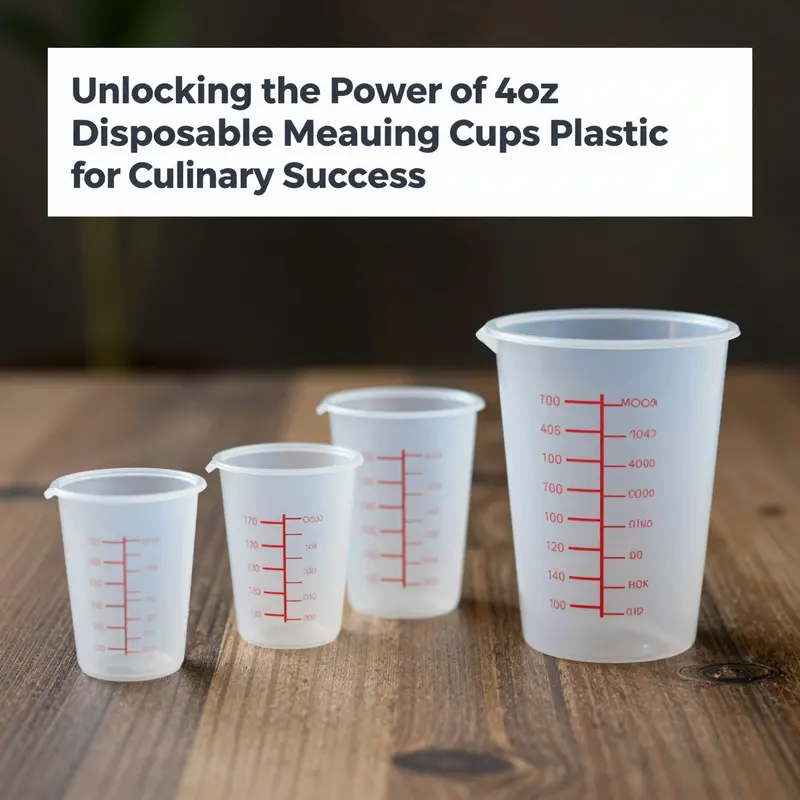
The appeal of a 4-ounce disposable plastic measuring cup rests in practicality and speed. In kitchens and laboratories, the ability to pour and measure a precise amount with minimal cleanup becomes a practical hinge on efficiency. These cups, typically made from durable polypropylene, are valued for lightness, shatter resistance, and clear measurement marks that remain legible over time. Their single-use convenience supports hygiene in fast-paced operations, whether a home cook portioning spices, a researcher tracking reagents, or a crafter preparing glazes and paints. The small size—handy and precise—makes it ideal for tiny quantities where accuracy matters and waste matters even more.
Market dynamics are layered. Across food service, labs, and homes, demand for 4 oz cups has grown as operators standardize portions and tighten control over ingredients and liquids. The ability to translate recipes into consistent measurements reduces variance and speeds up workflows. In labs, quick, repeatable measurements support micro-scale experiments and faster iteration. In homes, these cups serve spice blends, flavor extracts, tinctures, and small craft projects. The rise of e-commerce has amplified these trends, with manufacturers offering competitive pricing, faster fulfillment, and short-run customization that larger packaging lines cannot match. Buyers increasingly weigh cost per unit against labeling precision and regulatory compliance to reduce total cost of ownership.
Beyond price, strategic sourcing matters. Regions with integrated production capabilities can align materials, tooling, and finishing to deliver cups that meet spec, minimize lead times, and offer custom prints. The geographic dimension affects cost and compliance, with centers in key provinces shaping speed and reliability. In markets sensitive to sustainability, there is both a tension and an opportunity: recyclable or biodegradable options rise in prominence without compromising clarity or strength. Suppliers are exploring resin blends, post-consumer recycled content, and alternative barrier layers that maintain performance while reducing environmental impact.
In practical terms, buyers evaluate material compatibility, temperature resilience, and the durability of the printed scale. They consider the total lifecycle costs—from procurement and labeling to disposal or recycling—and seek accuracy and predictability to minimize waste and rework. The 4 oz cup remains a small tool with outsized impact on workflow efficiency, especially when scaled across operations that require repeatable portions.
For exploration, supplier guides and marketplaces can illuminate practical details—specifications, lead times, regulatory documents, and customization options. A broader view helps buyers compare materials, certifications, and logistics across regions. A representative product page or supplier profile can provide context for how measuring cups fit alongside related disposables in a procurement strategy.
Tiny Cups, Big Branding: How 4oz Disposable Plastic Measuring Cups Become a Canvas for Identity
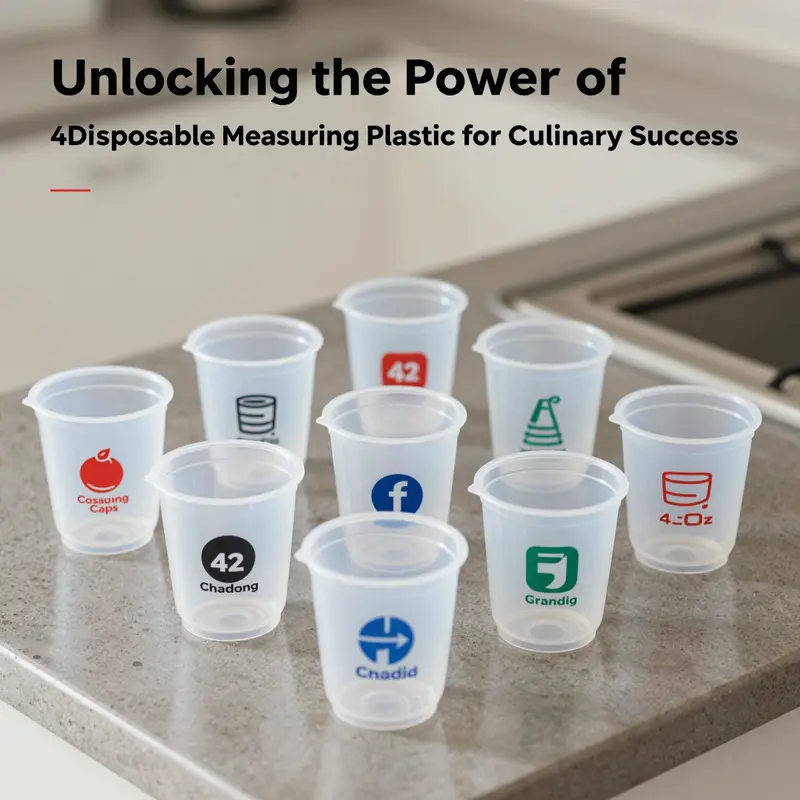
A small, clear 4 oz disposable plastic measuring cup may seem simply functional at a glance, yet its surface is a ready-made canvas for a brand’s personality. In kitchens, laboratories, and craft spaces alike, these tiny vessels do more than hold ingredients or mixtures; they project a promise of precision, cleanliness, and controlled care. The material most often used, a sturdy polypropylene, is chosen for its light weight, impact resistance, and chemical compatibility. It keeps delicate liquids and powders from spilling while withstanding the daily hustle of a busy workspace. The clarity of the markings—etched or printed with high-contrast ink—ensures that measurement is accurate at a glance, an essential feature when even a few milliliters can alter a recipe or a formulation. In this context, the 4 oz cup becomes a practical instrument, but when brands see it through a branding lens, it also becomes a portable advertisement, a small stage on which identity can travel from kitchen to event to consumer hand.
Customization turns a disposable tool into a marketing asset without sacrificing performance. The scope of customization spans size, style, color, logo, and packaging details. The size themselves can be tuned within a family of cups to align with specific recipes or product lines, reinforcing a brand’s approach to portion control. The style—whether the lip, the wall thickness, or the rim shape—can be altered to convey premium minimalism or bold readability. Color choices, from the cup wall to the printed scales, offer a direct route to brand colors, letting a logo sit on a translucent stage that harmonizes with or pops against a brand’s palette. The logo itself is more than decoration; it reinforces recognition in crowded environments like cafés, food trucks, or catering events. A logo printed or embossed on a cup’s surface becomes a microcosm of the brand’s identity, visible whenever a consumer handles the cup and shares it with others.
Beyond the mark on the cup, the packaging details of the product carry branding momentum farther down the line. UV coating can intensify color fidelity and provide a glossy finish that catches light and attention, while matte lamination offers a modern, understated texture that can communicate sophistication or eco-consciousness, depending on the chosen aesthetic. Both finishes help protect the branding from smudges and moisture, extending legibility in environments where condensation, oils, or sauces are part of the workflow. When a brand leans into these finishing touches, the cup ceases to be merely utilitarian and begins to function as a brushstroke in a broader brand narrative. The decision to use glossy or matte finishes can echo a company’s broader design language, whether that language is vibrant and energetic or restrained and refined. In many cases, these cups are paired with custom packaging—labels, sleeves, or shrink wraps—that extend the branding beyond the cup itself. A cohesive set of branding elements sends a clear signal to customers: this is a brand that cares about detail, consistency, and presentation.
The customization journey often begins with policy and production choices, including the packaging’s own branding as part of a larger marketing strategy. The packaging can carry the same color story as the cup, or it can act as a complementary frame that guides the customer’s eye to the cup’s core value: precise measurement in a hygienic, disposable format. A well-thought-out approach to packaging details not only protects the cup during transit and storage but also ensures that the product arrives in a way that aligns with a brand’s environmental and social goals. For instance, a brand that highlights sustainability might choose recyclable PP and design packaging that communicates a clear message about responsible disposal. In contrast, a brand chasing a premium, gift-like experience might emphasize premium printing, bright UV-coated colors, and a sleek, minimal box that elevates the unboxing moment. Each choice feeds into a broader narrative about what the brand stands for and how it wants to be perceived in the crowded spaces of kitchens, craft rooms, and promotional environments.
Product practicality remains central to any branding decision. The 4 oz cup’s compact form makes it ideal for recipes requiring small measurements, precise spice blends, concentrated extracts, or specialty ingredients that are easy to portion and store. In culinary contexts, this precision helps cooks maintain consistency across batches, a value proposition brands can leverage in messaging about quality control and professional-grade results. In creative or crafting spaces, the same cups can hold pigments, glazes, or sample mixes, turning the cup into a multi-use branding element that travels across tasks while keeping the brand front and center. The portability of these cups—combined with the ease of customization—means that a café’s house blend can travel from the espresso bar to a pop-up event in a way that reinforces the brand with every pour and every shared recipe.
The supply chain for customized 4 oz cups often supports bulk production and distribution, which makes the branding potential scalable. The cups, already designed for single-use convenience, are a natural fit for promotional campaigns, event kits, or themed giveaways. The design process can accommodate small, test orders to evaluate how branding reads in real-world conditions before scaling up to larger runs. In educational or workshop settings, such cups can be customized to match event themes or course branding, giving attendees a tangible reminder of the brand’s participation and commitment to quality. This scalability invites organizations to experiment with branding across different customer touchpoints, from in-store experiences to takeaway packaging and beyond. The ability to customize both the cup and its packaging means campaigns can be synchronized across channels, creating a consistent, memorable brand moment that transcends the confines of a single product line.
From a design perspective, readability remains paramount. Bold, high-contrast measurement scales ensure that the cup does what it’s supposed to do—help users measure accurately with speed and confidence. The printing method can support robust numbers and icons, while the chosen color system must align with the brand’s overall palette to maintain legibility even when the cup is partially filled or stained by colored ingredients. When brands articulate clear guidelines for minimum contrast, size, and placement, the cups become reliable ambassadors for the brand rather than decorative afterthoughts. In this light, the cup’s surface acts like a tiny billboard that travels through kitchens, catering events, and hobby spaces, extending a brand’s reach one small measure at a time.
A practical reference point for how these customization features manifest in the market is the broader availability of molded, printed, and coated cups through global suppliers. These suppliers advertise options like logo printing, UV coating, and various lamination finishes, enabling brands to craft a vivid, durable presentation on a disposable item. The result is a versatile branding tool that can be integrated into a wider suite of marketing materials, from matched packaging to event merchandise. When a brand coordinates cup design with other take-away and packaging elements—such as custom labeling on takeaway boxes or sleeves that echo the cup’s color story—the entire takeaway experience becomes cohesive. Consumers encounter a unified aesthetic that reinforces memory and recognition long after the cup is disposed of.
For brands exploring these possibilities, the path to customization is not merely about adding a logo. It is about shaping a sensory impression—the feel of the finish, the legibility of the print, and the tactile cue that signals reliability and care. It is about choosing packaging that supports sustainability goals while maintaining a clean, professional appearance. And it is about recognizing that even a disposable cup can become a quiet, effective form of branding when the design decisions respect both user experience and brand narrative. In the end, the 4 oz cup is not just a functional item; it is a platform for storytelling, a tiny stage where color, texture, logo, and packaging work together to tell a brand’s story in a single, practical moment.
In practice, brands often couple their cups with theme-specific packaging to create a cohesive presentation that travels with the product from point of sale to end-user. For example, a themed event or promotional campaign can be elevated by customizing both the cup and its accompanying packaging to reflect the same color story, typography, and imagery. See more about this approach here: custom-takeaway-packaging-supplies-disposable-tableware-for-theme-party. The synergy between cup and packaging reinforces recognition every time a consumer handles the kit, and it supports the brand’s ongoing marketing efforts in a way that is both economical and impactful. This alignment is especially valuable in spaces where visual cues drive recall, such as coffee bars, food trucks, catering events, or craft studios where branded materials help create memorable experiences without overwhelming the user with complexity.
Beyond aesthetics, there is a strategic conversation about responsibility and lifecycle. Brands today increasingly consider how their disposable products align with environmental goals. Polypropylene is recyclable in many systems, and suppliers who highlight responsible disposal practices can help brands communicate a respect for circularity to their customers. The conversation about sustainability is not just about material choice; it is about the packaging narrative, the labeling that explains recyclability, and the total footprint of the branding program. When a campaign emphasizes both visual appeal and environmental stewardship, it speaks to a growing consumer sensibility that values clarity, honesty, and traceability in the products they use. A well-executed customization program thus becomes an integrated story—one that respects efficiency in measurement, hygiene in handling, and branding that travels with the user from kitchen to event and back to the consumer’s memory.
Finally, to illustrate how these design choices translate into real-world options, consider the broader picture of how these cups are marketed and sold in bulk. They are positioned as cost-effective, versatile tools for professional kitchens, caterers, and creative enterprises that require reliable portioning with a subtle but persistent branding signal. The balance between clarity of measurement, durability of the coating, and the impact of a logo exists in a narrow but powerful design space. When executed thoughtfully, a 4 oz disposable cup can function as a crisp, portable extension of a brand’s visual identity, a small but confident touchpoint that reinforces recognition and trust across multiple environments. The result is a product that is not merely functional but also expressive, capable of reinforcing a brand’s core message in the quiet, everyday moments when people measure, mix, and taste.
External resource: For a concrete example of customization features in practice, a supplier listing detailing UV coating, gloss or matte lamination, and logo options can be explored here: https://www.alibaba.com/product-detail/Gartful-100ml-Plastic-Measuring-Cup-3-4oz1600572829447.html?spm=a2700.galleryofferlist.pimage.5a685d9cZBfKvz&scm=1007.14131.34417.0
Beyond the Measure: The Hidden Footprint of 4-Ounce Disposable Plastic Measuring Cups
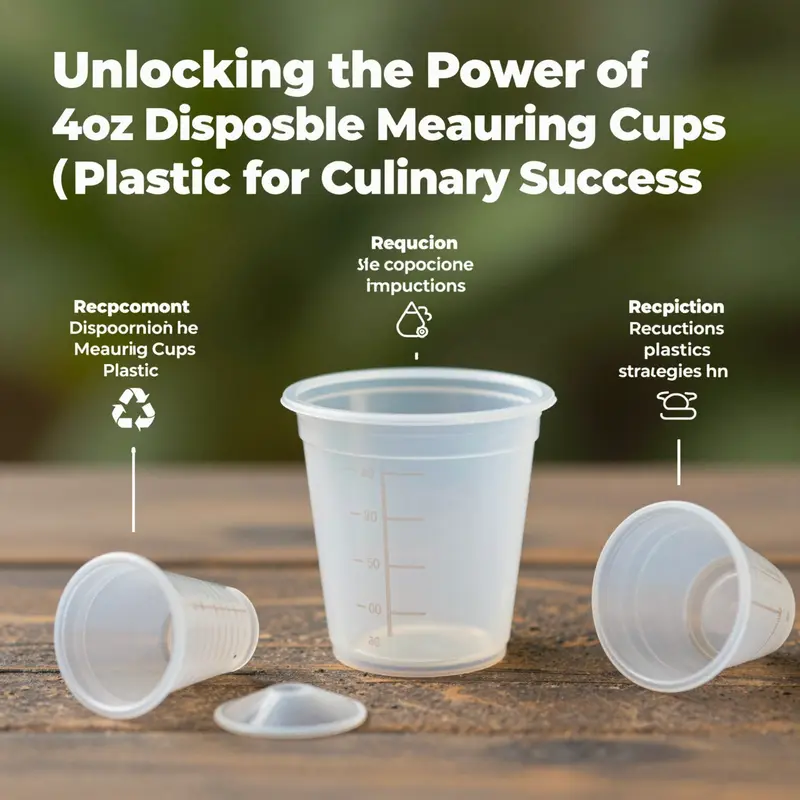
The simple act of scooping a precise two tablespoons or a measured four ounces can feel almost ceremonial in a kitchen or workshop. Yet behind that small, familiar cup lies a web of environmental choices that ripple far beyond the moment of use. The 4-ounce disposable plastic measuring cup, typically molded from polypropylene because of its light weight, clarity, and resilience, embodies a paradox: it offers practical precision and hygienic convenience, while contributing to a lifecycle that often ends in landfills or litter. In many operations, these cups are ubiquitous precisely because they minimize cross-contamination and simplify portioning. But as consumer expectations shift toward sustainability and as regulatory pressures intensify, the industry is reexamining how such a modest tool fits into a more responsible economy. The narrative of these cups is not a single act of disposal; it is a sequence of upstream decisions, manufacturing realities, end-of-life pathways, and evolving cultural norms that together determine their true environmental cost.
The cradle of the environmental story begins with the raw materials. Most disposable measuring cups of this size are produced from petroleum-based polymers, selected for their balance of stiffness, durability, and compatibility with precise markings. The extraction and refining of fossil fuels carry inherent energy demands and greenhouse gas emissions. Once the polymer is available, the conversion into a usable cup requires energy-intensive processes such as molding, cooling, trimming, and quality testing. The scale of these operations is immense because the same design must be replicated countless times across thousands of batches to meet demand in kitchens, cafes, hobby studios, and educational settings. Even when the product is small, the energy footprint compounds through the sheer volume of production. The materials chosen also influence how easily the cup can be recycled later. Polypropylene is widely accepted by many recycling streams, yet systems vary by region, and some facilities struggle with correctly sorting and processing smaller items that can escape collection or become tangled in machinery. In practice, the practical benefits of the cup can outpace the complexities of its end of life in the eyes of producers, distributors, and some end users, which helps explain why these cups persist in markets around the world.
Once in the hands of the user, the cup fulfills a straightforward purpose: accuracy, hygiene, and speed. In culinary contexts, precise measurements matter for taste, texture, aroma, and the chemistry of a recipe. In crafting or science-related activities, consistent volumes reduce variance and improve reproducibility. The design of a 4-ounce cup often emphasizes a clear, legible measurement scale, rigid walls that resist deformation, and a lip that prevents drips during pouring. These attributes are not incidental; they are engineered to support efficiency in busy environments where time is money and consistency matters. The convenience of a single-use tool also carries a hygiene advantage because it minimizes the risk of cross-contamination between ingredients, especially when separate cups are used for different components. Yet that convenience is inseparable from what happens after use. A cup discarded after a single task transitions from a brief utility into a waste lifecycle that may stretch across decades or even centuries, depending on local waste management realities.
End-of-life outcomes for these cups are uneven and often unfavorable. In many municipal systems, the journey from bin to recycling bin is not guaranteed. Small, transparent segments of plastic, especially when contaminated with food residues, pose real challenges for recycling streams. Even when facilities exist that claim PP recycling capabilities, the proportion of cups that actually re-enter the economy remains modest in many regions. This disjunction between potential and practice means a substantial portion of the cups ends up in landfills or as litter. In landfills, the cups do not simply disappear. They break down into microplastics and fragments that can persist for years, gradually fragmenting under heat, moisture, and mechanical action. These microplastics pose a risk to soil and water systems and can find their way into food webs, a reminder that tiny items can have outsized environmental consequences. The lifecycle analysis of a single four-ounce cup thus becomes a matter of scale: a vast number of seemingly inconsequential units accumulate and interact with ecosystems in complex ways, often beyond the reach of immediate human observation.
The broader environmental narrative is complicated by the realities of consumer behavior and corporate responsibility. Many buyers are drawn to the affordability and predictability of disposable options, particularly where portion control and quick turnover are essential. In response, suppliers and food-service operators have sought to optimize the balance between performance and footprint through several strategies. One pathway involves exploring certified compostable materials that can break down under regulated composting conditions. These alternatives aim to reduce long-term persistence in the environment, but they introduce new considerations, including the availability of appropriate composting infrastructure and the need to avoid contamination of traditional recycling streams. The shift toward compostable or biodegradable materials is not a panacea; it requires careful supply-chain planning, consumer education, and regulatory alignment to ensure that compostability translates into tangible waste reduction rather than a new form of waste mismanagement.
Another pathway is to strengthen cup recycling programs. When facilities can accept and properly process used cups, the recovery rate increases, and the cups can be diverted from landfills. Recycling is not a universal fix, however. It depends on the quality of the collected material, the proximity of processing plants, and market demand for recovered resin. Some end users successfully embed cups into broader recycling initiatives within their operations, tying in collection, sorting, and grinding into a circular loop. In practice, this often requires investment in program design, staff training, and consumer engagement to maintain clean streams. The effort can be amplified by aligning with broader packaging waste reduction programs and by monetizing the environmental benefits through sustainability reporting and consumer transparency. In this sense, the cup becomes less a disposable prop and more a component within a strategic system that seeks to decouple growth from waste. The tension between convenience and responsibility remains, but progress is achievable through coordinated action across procurement, operations, and facilities management.
Industry watchers increasingly emphasize the importance of design for recyclability. This principle points to material choices, compatibility with existing recycling streams, and the elimination of multi-material components that complicate processing. Even small design refinements—such as ensuring markings are printed with inks that do not hinder resin separation, or adopting a single polymer grade throughout the cup—can meaningfully affect end-of-life outcomes. When brands and producers adopt such design-conscious approaches, the cups retain their measurable advantages while becoming more friendlier to post-use recovery. In parallel, consumer-facing messaging about proper disposal, reuse where feasible, and participation in local recycling programs can shift behaviors in meaningful ways. The core idea is not to stigmatize practical utility but to highlight the shared responsibility of all players in the lifecycle—from raw material choices to the gate of a recycling facility.
Operating within this evolving landscape, many facilities are reevaluating procurement strategies. The choice of materials, the packaging around the cups, and the packaging’s own end-of-life fate all contribute to overall environmental performance. In practice, this means some kitchens and laboratories are experimenting with bulk purchasing of cups that come with clearer labeling about recyclability and disposal, or opting for packaging that minimizes additional waste. It also means that some operators are exploring partnerships with suppliers who can offer robust take-back arrangements or curbside recycling compatibility. In such settings, the decision to adopt or avoid 4-ounce disposable cups often hinges less on a single attribute and more on a portfolio assessment that weighs cost, hygiene, efficiency, and the probability of post-use collection. The result is a more nuanced picture in which the cups are understood not merely as tools of measurement but as elements within a broader environmental and social contract.
In practice, organizations’ sustainability journeys increasingly intersect with corporate storytelling and stakeholder expectations. Consumers, regulators, and investors are paying closer attention to packaging and waste. The call for responsible packaging choices amplifies the need for credible claims about recyclability, compostability, and actual waste diversion. This moment invites a more transparent performance narrative: showing how many cups are diverted from landfills, how many are recycled, and how much compostable material truly contributes to waste reduction. When such data accompany product design and procurement decisions, companies can chart tangible progress while maintaining the practical advantages that a 4-ounce measuring cup supplies in fast-paced settings. The goal is not to abandon convenience, but to reframe convenience as compatible with a sustainable trajectory—one in which small tools contribute to a larger, healthier ecosystem. The result is not a bleak forecast of limits, but a practical vision in which small tools contribute to a larger, healthier ecosystem.
For practitioners seeking to navigate this terrain, practical steps can anchor ongoing improvement. First, assess the end-of-life options available in your region, and align purchasing with those capabilities. Second, consider testing certified compostable materials where appropriate, while ensuring that the local waste-stream infrastructure supports those materials. Third, strengthen recycling programs by clarifying labeling, providing clear disposal guidance to staff and customers, and working with partners that offer robust take-back arrangements or curbside recycling compatibility. Finally, participate in broader supplier-education initiatives that emphasize design-for-recyclability and lifecycle thinking. In the end, the measure of success is a balance: preserving the utility and hygiene advantages of the cup while reducing its adverse environmental footprint through smarter materials, smarter systems, and smarter choices.
In the broader arc of packaging and disposables, the conversation around 4-ounce plastic measuring cups reflects a shift in how we value small, everyday conveniences. It is a reminder that environmental stewardship does not demand a sacrifice of practicality; it invites a reconsideration of how products are designed, used, and finally returned to the loop. The choices made by manufacturers, distributors, and end users—whether to pursue certified compostable options, implement comprehensive recycling programs, or optimize for recyclability—shape the trajectory of waste management long after the cup is emptied. As this dialogue continues to mature, the field will likely see more refined materials, clearer end-of-life pathways, and a stronger culture of responsibility that finally aligns the ease of measurement with the imperative of stewardship. The result is not a bleak forecast of limits, but a practical vision in which small tools contribute to a larger, healthier ecosystem.
External resource: https://www.alibaba.com/product-detail/The-Science-Behind-4oz-Disposable-Plastic-Cup_1600583948414.html?src=hp
Final thoughts
In summary, 4oz disposable measuring cups plastic are more than mere tools; they are catalysts for improvement in various culinary applications. From enhancing measurement accuracy to providing branding opportunities and grappling with environmental concerns, these cups hold vast potential. By leveraging their advantages, food service businesses can optimize operations, ensure food safety, and develop a distinct brand presence. Understanding these dimensions equips culinary professionals, caterers, and event planners with the insight needed to enhance their offerings and contribute to a more sustainable future.