
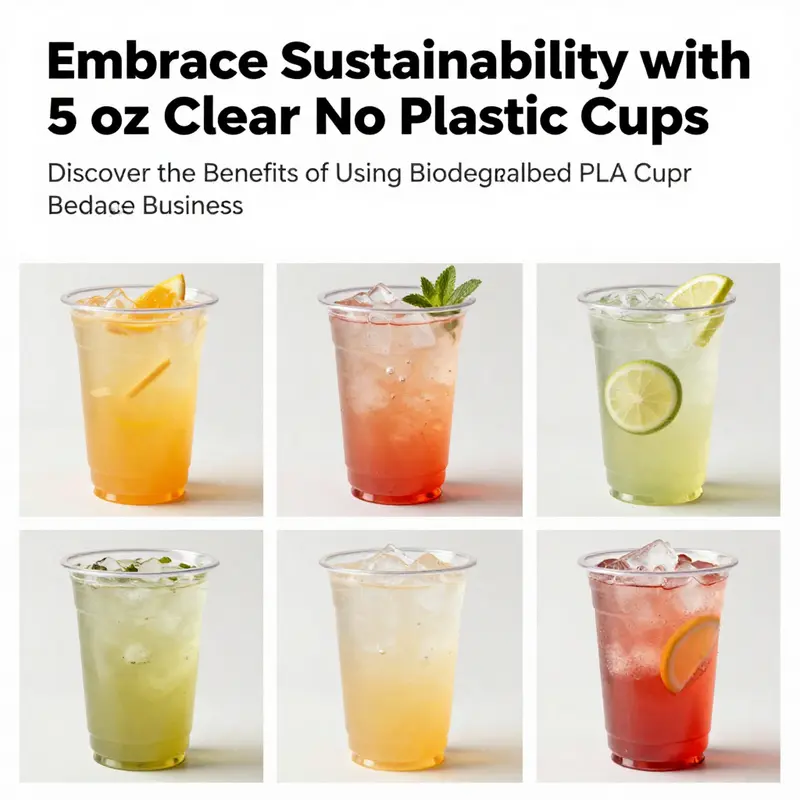
In today’s world, where environmental concerns take center stage, businesses are seeking sustainable solutions that not only cater to consumer needs but also align with eco-friendly practices. One such solution is the 5 oz clear no plastic cups, specifically designed from biodegradable PLA materials. This article is dedicated to beverage venues such as bubble tea shops, restaurants, catering services, and corporate procurement teams, guiding them through the best options, market trends, and practical uses of these eco-conscious cups. Each chapter delves deeper into the advantages of PLA cups, their growing presence in the market, contextual applications, and essential purchase considerations.
Best Choice for 5 oz Clear, No-Plastic Cups: PLA Compostable Cups for a Greener Tomorrow
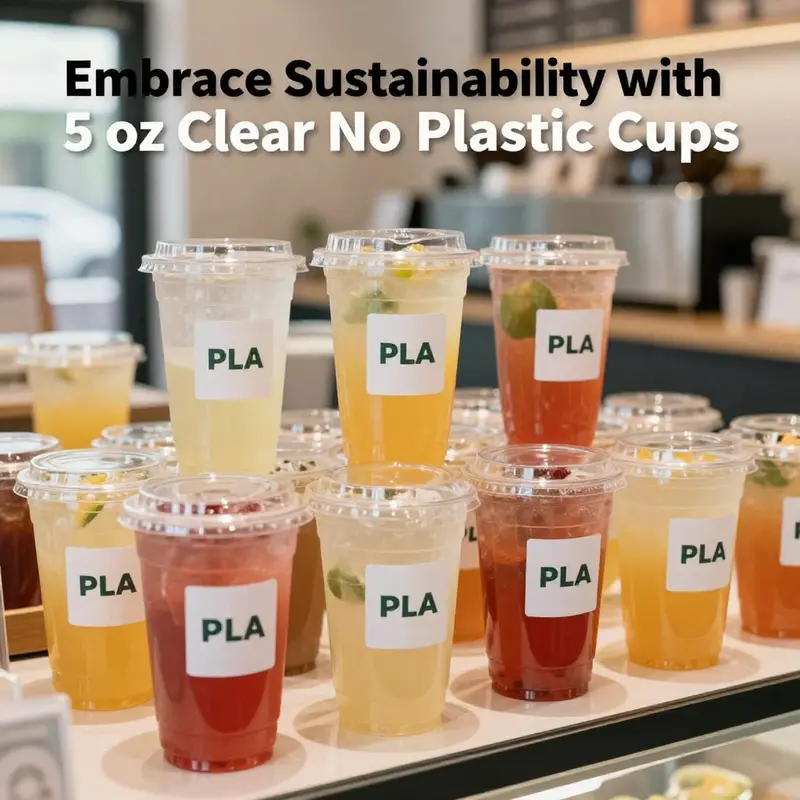
When we zoom in on a small, everyday item—the 5 oz clear cup—it becomes a touchpoint for design, materials science, and the growing demand for waste that behaves well in the world we share. Across markets, brands are shifting away from fossil-based plastics toward plant-based, compostable options. The 5 oz PLA cup offers transparency, reliable performance, and a credible end-of-life story in a package that fits many service scenarios—from beverages to desserts and sampling events. PLA, derived from renewable feedstocks such as corn starch or sugarcane, is designed to break down in industrial composting facilities into water, carbon dioxide, and organic residuals. It is not simply a label; it is a material system built to support a circular approach to servingware and waste recovery. The result is a cup that looks clear, feels sturdy, and aligns with sustainability goals when end-of-life streams are properly managed.
In practice, the PLA 5 oz cup delivers robust clarity and a clean appearance that supports branding and customer perception. While some readers need to know that compostability depends on facility capabilities, certified PLA cups in industrial composting streams can disintegrate within weeks and contribute to mature compost instead of persistent waste. This nuance matters for event planners and operators who must connect disposal options with consumer expectations. When facilities are available, the PLA cup can reduce the environmental footprint relative to conventional fossil-based disposables, while preserving the optical quality and brief service lifecycle that customers expect.
Design and performance considerations—such as wall thickness, rigidity, and compatibility with lids—shape the user experience. A well-engineered 5 oz PLA cup balances strength and lightweight feel, ensuring it holds cold drinks and desserts without leaking or failure. Printing and branding can be achieved on PLA cups without compromising compostability, provided inks and processes are chosen with end-of-life in mind. The seamless combination of clarity, recyclability in the right streams, and a practical end-of-life path makes the PLA 5 oz cup a compelling option for operators seeking a transparent, eco-conscious serving solution.
To maximize impact, buyers should verify compostability certifications, understand whether the product is industrially compostable or home compostable, and align disposal messaging with local capabilities. When used in the right contexts—with robust composting infrastructure and clear consumer guidance—the 5 oz PLA cup represents a concrete step toward reducing reliance on conventional plastics while preserving the presentation quality customers expect. As the market and infrastructure continue to evolve, PLA cups stand out as a coherent, scalable choice for 5 oz clear servingware that aims to be both functional and environmentally responsible.
Clear, Compact, and Conscious: Market Trends and Environmental Impacts of 5 oz Clear No-Plastic Cups
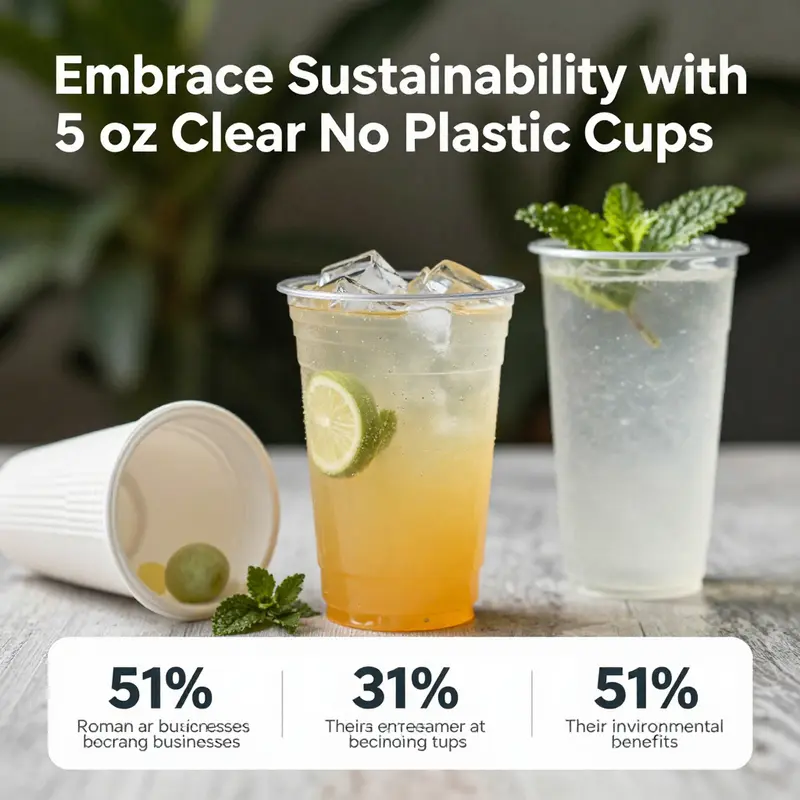
The 5-ounce clear no-plastic cup stands at a curious crossroads. It is small enough to feel intimate in a café display, transparent enough to showcase a layered beverage, and, crucially, crafted from materials that promise to reduce the environmental footprint of a single-use container. In an era when packaging choices are as much about brand ethics as they are about practical containment, this tiny vessel embodies a broader shift: the demand for packaging that is functional, aesthetically pleasing, and responsible. While the world still uses vast quantities of traditional single-use plastics, the rise of clear, compostable cups—often based on polylactic acid (PLA) and other bio-based formulations—has begun to reframe what “no plastic” can mean in everyday settings. The scale of this shift is not merely about a single product category; it is about rethinking the lifecycle of packaging itself, from production to post-use pathways, and the ways in which small-volume cups can contribute to a more sustainable economy without compromising user experience.
Market observers describe a structural transformation driven by three interlocking dynamics. First, the functional need for reliable, eye-catching containers remains constant. Small-format cups are particularly well-suited to concentrated beverages—espresso shots, short tea drinks, sample sizes, even certain frozen or blended options—where volume and visibility matter as much as grip and ease of handling. The 5-ounce capacity aligns neatly with modern beverage protocols and serving styles in specialty venues, enabling operators to offer precise portions, vibrant visual layers, and consistent portion control. Yet this functional appeal is increasingly bound to a second dimension: environmental stewardship. The concept of “No Plastic” has matured from a slogan into a design and procurement criterion. It signals a commitment to material choice and end-of-life considerations, which in turn shapes supplier ecosystems and the preferences of forward-looking buyers who want to harmonize product performance with environmental responsibility.
The second driver is a continuing push from policy and consumer awareness. In many regions, regulators have begun to phase in restrictions on certain single-use plastics, nudging foodservice operators toward biodegradable, compostable, or bio-based alternatives. The European Union, for instance, has moved to curtail problematic disposable plastics, while other markets have introduced consumer-protection standards aimed at minimizing chemical migration and health risks associated with some traditional plastics. Within China and other rapidly growing beverage markets, the momentum toward plastic reduction has become a structural industry pressure. Reports tracing consumer sentiment reveal that younger shoppers often rank environmental accountability as a key factor in where they choose to spend their money, even when price considerations are present. In this context, the 5-ounce clear no-plastic cup is not just a packaging option; it is a signal to the market that environmental values can be scaled to everyday, mass-market use.
The third dynamic is technological and material innovation. The data landscape around disposable tableware has become more nuanced as more producers experiment with bio-based polymers, compostable coatings, and design-for-end-of-life features. PLA-based cups, in particular, have gained attention for their ability to deliver high clarity and heat resistance, while still being compatible with industrial composting streams. The market has begun to identify clear segments where such cups perform optimally: settings with controlled waste streams, venues equipped with appropriate composting infrastructure, and brands that actively communicate a compostability promise to consumers. In practice, this means small-format, clear cups can serve as a strategic entry point for operators who want to demonstrate a credible sustainability narrative without sacrificing the user experience or incurring prohibitive costs.
To understand why this particular format—5 ounces, clear, no-plastic—has surfaced as a focal point, it helps to consider the evolving packaging ecosystem around beverage service. A recent global review of disposable cup markets shows a growing share for types manufactured from bio-based and compostable materials. In a world that has tuned into the consequences of white pollution, there is a visible preference for packaging that clarifies its own fate. The appeal of a cup that looks unobtrusively transparent while promising to degrade under industrial composting conditions aligns with the demand for packaging that is both legible and responsible. The conversation is not only about material science; it is about how packaging communicates sustainability to the consumer, how it integrates with existing waste streams, and how it positions a venue within a broader, value-driven narrative.
From a consumer experience perspective, the small size has another virtue. It enables a quick, repeated, and controllable tasting or sampling experience, which is particularly relevant to cafés and beverage concepts that emphasize customization. A 5-ounce cup is often enough to encapsulate aroma and texture, particularly for espresso-based beverages or delicate cold infusions, while not overburdening the customer with waste or the staff with handling. The visual clarity of the cup matters here as well. When a beverage’s color, layering, or foamy head is part of the appeal, a transparent, cleanly finished container preserves that visual storytelling. This synergy between form and content helps explain why operators are drawn to the format as a practical design choice, not merely a marketing one.
Yet the transition to a clear, no-plastic alternative does not come without challenges that must be navigated with care. The most prominent is the infrastructure gap. Industrial composting facilities, capable of processing PLA and similar bio-based materials within the advertised timeframes, remain unevenly distributed across geographies. In markets where such infrastructure is scarce, a cup labeled as compostable may still end up in a landfill, undermining the environmental promise. This is a critical reminder that the environmental impact of a cup is not just about its chemistry; it also hinges on the waste management system that surrounds it. In a well-functioning circular economy, a compostable cup should complete a virtuous loop—from production through consumer use to effective composting, and then back to soil or energy recovery. When any link in that chain is weak, the net environmental benefit may be diminished.
Costs present a similarly nuanced challenge. Bio-based materials and compostable coatings, while advancing rapidly, still face price premiums versus conventional fossil-based plastics. For many operators, especially in price-sensitive segments, the decision is a balancing act: is the environmental premium justified by the brand narrative, by consumer expectations, or by potential policy incentives? For some brands—especially those that position themselves around sustainable living or premium experiences—the premium is an acceptable investment that supports branding, customer loyalty, and risk mitigation in markets increasingly scrutinizing packaging choices. For others, it becomes a barrier to scale. The industry is watching carefully as material science, process optimization, and supply chain improvements continue to compress these costs; when that happens, the affordable adoption of 5-ounce clear no-plastic cups could accelerate, expanding their presence beyond niche venues into broader customer segments.
In this context, the conversation must also acknowledge a broader design and life-cycle principle. Consumers are not just passively consuming; they are increasingly participating in waste sorting, composting, and recycling when options exist. The success of a no-plastic cup depends not only on its material being compostable but on clear messaging about disposal, credible certifications, and reliable access to the appropriate end-of-life streams. Brands and operators that invest in consumer education—whether through simple labeling, in-store signage, or digital content—tend to build stronger trust and reduce confusion around what happens after the beverage is finished. The cup’s ability to perform its primary role—holding a beverage—while inviting responsible disposal can become a visible part of a brand’s sustainability story, a story that resonates with customers who value transparency and accountability.
The market, therefore, is not simply choosing between a plastic cup and a PLA cup. It is choosing between competing futures: one where end-of-life remains uncertain and dependence on municipal recycling or landfill dominates, and another where a localized ecosystem for composting and responsible material choice gives a tangible path to reduce environmental impact. In many cases, the 5-ounce clear no-plastic cup serves as a prototype for that future—compact, familiar in use, and capable of signaling a brand’s commitment to ecological consistency without compromising the user experience. The growth trajectory of this format is not a straight line; it is shaped by regulatory developments, waste-management infrastructure, consumer education, and the pace of material innovations that make compostable cups more accessible and cost-effective for a wider range of operators.
From a practical standpoint, operators who adopt this format frequently do so with an eye toward consistency and reliability across outlets. A uniform cup size, a consistent degree of transparency, and predictable behavior under typical beverage temperatures help maintain a smooth service experience. In addition, the ability to print or apply branding on a clear, compostable cup offers a level of customization that can differentiate a venue’s beverage program without resorting to heavier or more visually obtrusive packaging. Customization, then, becomes part of the value proposition rather than a luxury. The visual surface becomes a canvas for logos, patient branding, and even seasonal art, all while staying aligned with a sustainability promise that many customers now expect as part of their purchasing decision.
A final reflection on trends points toward a more integrated approach to packaging. The most resilient operators are those that look beyond a single material solution and consider packaging as part of a broader waste-management strategy. They ask questions about the opportunities to collect used cups, whether through in-house recycling partnerships or municipal programs, and how to align their product design with circular economy principles. The 5-ounce clear no-plastic cup, in this sense, becomes a test case for a more deliberate packaging strategy. It invites manufacturers, retailers, and waste managers to collaborate on solutions that maximize clarity in use, minimize environmental impact, and maintain economic viability. In short, it is not just a cup; it is a small but telling indicator of how beverage service can evolve toward greater responsibility without compromising the everyday joy of a well-made drink.
For readers who want to explore the packaging landscape beyond the immediate cup conversation, a broader overview of disposable cup categories and material options can offer useful context. disposable clear plastic cups serves as a reference point for traditional baselines often encountered in service settings. This contrast helps illuminate why plant-based, compostable alternatives are attracting growing interest, especially among operators who aim to connect with sustainability-minded customers while maintaining high standards of service and presentation. The point is not to vilify one material choice over another, but to recognize how the conversation around 5-ounce clear cups is part of a larger, ongoing effort to balance performance, aesthetics, and environmental responsibility in everyday business practice. The outcome we seek is not a temporary preference but a durable shift in how small packaging choices contribute to a more sustainable beverage culture.
In closing, the market signal around 5 oz clear no-plastic cups suggests a durable trend rather than a passing fad. It reflects a convergence of consumer taste, regulatory pressure, and material science that favors clarity in both appearance and promise. As more venues adopt cost-efficient, reliable composting or recycling pathways, and as the cost of bio-based materials continues to fall, this format could become an increasingly common feature of the modern beverage landscape. The true measure of success will be not only the cup’s performance but the degree to which it participates in a closed loop—where production, consumption, and end-of-life are harmonized to minimize waste and maximize value for both businesses and the communities they serve. External research reinforces this direction, highlighting the growing market and environmental implications of disposable cups as a whole, and offering a foundation for continued evaluation as technologies and policies evolve. External resource: https://www.grandviewresearch.com/industry-analysis/disposable-cup-market
Small, Clear, and Eco-Conscious: The Use Cases and Suitability of 5 oz Clear No-Plastic Cups in Modern Dining and Events

The 5 oz clear no plastic cup sits at an interesting intersection of utility, aesthetics, and sustainability. Its compact silhouette rewards sightlines with a crisp, transparent surface that showcases the color and clarity of the drink or dessert it cradles. In a world where customers increasingly expect not just taste but also responsible sourcing, this modest vessel has evolved into more than a simple serving tool. It acts as a tangible expression of an venue or brand’s commitment to reducing environmental impact while still delivering the convenience and speed that modern service demands. In many respects, the 5 oz cup embodies a compact philosophy: minimize waste and maximize presentation without sacrificing the efficiency of. service. It is within this balance that the cup proves itself most relevant across a range of contemporary contexts, from quick-service cafes to carefully staged events, where the smallest decisions can reinforce larger sustainability narratives.
At its core, the appeal of the 5 oz clear cup lies in its size. It is large enough to hold a meaningful sip of a beverage or a modest portion of a dessert, yet small enough to enable sampling, tasting flights, or the orderly presentation of multiple items in a single service sequence. In beverage service, this translates to small portions of iced tea, juice, soda, or a cold brew that customers can enjoy without committing to a full-sized drink. The transparent wall of the cup allows the beverage to speak for itself—the hue, the bubbles, the level of frost on a cold drink—conveying freshness and quality at a glance. For many venues, this is not just a functional benefit; it is a marketing one. The ability to display color and texture in a clear vessel helps beverages look vibrant and appealing, thereby driving appetite and satisfaction in a way that opaque or colored alternatives might not.
The utility of 5 oz cups extends beyond drinks into the realm of desserts and small bites. This size is well suited for layered treats such as granola parfaits, puddings, custards, and gelatin desserts, as well as for bite-sized yogurt cups, fruit compotes, and light-snack servings. The visual discipline afforded by the clear cup makes it possible to communicate layered flavors and textures without overpowering the eater with heavy, opaque packaging. The cups can also be employed for mini portions of breakfast items or snack assortments at catered events, school functions, and festival booths. In these contexts, the cup’s modest volume supports a service cadence that favors quick turnover and clean handling, while the transparent presentation helps guests make swift decisions about what to select.
From a service design perspective, the 5 oz clear cup is particularly compatible with fast-casual environments, convenience retail, and outdoor venues where speed and simplicity are essential. It stacks efficiently, travels well in a carryout setup, and pairs neatly with a range of lids and sleeves that preserve hygiene and temperature. The lid compatibility, in particular, is a practical plus. When a lid is used, the cup becomes a reliable, portable unit for cold beverages or dessert portions, which enhances the guest experience by reducing spills and keeping products visually appealing during transport. In outdoor settings, the portability and lightweight nature of the cup contribute to a smooth flow of service, from line to table to event space, with less risk of breakage or waste than heavier alternatives.
A thoughtful detail that often accompanies the use of these cups is the material itself. The most widely discussed option in today’s market is a plant-based, biodegradable polymer such as polylactic acid, or PLA. Cups made from PLA maintain the transparent, glasslike appearance that customers expect from a disposable cup, yet they offer the advantage of being compostable under appropriate industrial conditions. This is a meaningful distinction. Traditional petroleum-based plastics linger in the environment for centuries and contribute to long-lived waste streams. PLA, by contrast, is designed to break down more readily when diverted into industrial composting facilities. It is important to set accurate expectations, however. PLA cups perform best when subjected to the conditions found in specialized facilities that maintain elevated temperatures and microbial activity. In home composting environments, results can be unpredictable. Therefore, customers and operators who choose 5 oz PLA cups should align their disposal pathways with local waste management capabilities and clearly communicate the intended end-of-life for guests.
Beyond end-of-life concerns, the performance characteristics of PLA cups are supportive of both safety and usability. Clear, rigid, and moisture-resistant for the life of the product, these cups maintain a clean, neutral habitat for beverages and desserts. The absence of plastic in the sense of traditional petrochemical resins makes them appealing in branding stories that emphasize sustainability. The materials used are plant-based, and the resulting products are designed to be composted in industrial facilities where available. This aligns with a growing consumer expectation that single-use serving ware can be both practical and responsible. It is not just about reducing plastic content; it is about adopting a material approach that supports a circular or more sustainable waste stream when a disposal option exists.
In practice, the use of 5 oz clear PLA cups often goes hand in hand with a broader packaging ecosystem. The same mindset that informs the cups frequently informs other disposable components—cups, lids, straws, and packaging—that together tell a coherent sustainability story. A small but meaningful example is the way some operators pair clear cups with packaging that communicates transparency in sourcing and process. When customers can see what they are about to taste, they also see the care that went into selecting materials that minimize environmental impact. The honesty conveyed by clear vessels underlines a brand’s commitment to quality and responsibility, encouraging customers to associate the entire service experience with thoughtful, eco-conscious choices.
Choosing the right vessel extends into event design and branding opportunities. In festivals, weddings, or corporate tastings, the simplicity of a clear, compact cup offers a practical canvas for subtle customization. Operators may use printing or branding on sleeves or lids, or highlight a color accent around the rim to reflect a theme or brand palette. The small size makes customization economical and flexible, enabling a cohesive look across a variety of serving stations. The result is a visually unified experience where the cups do more than hold liquids or desserts; they reinforce a story of sustainability and careful curation.
The chain of considerations around the 5 oz clear no plastic cup naturally leads to questions about disposal and waste management. When a venue commits to PLA or similarly compostable materials, it should also commit to communicating clear disposal guidance. Guests should understand whether the item can be composted at home, requires industrial composting, or should be placed in the regular recycling or waste stream in accordance with local regulatory frameworks. In some regions, the necessary infrastructure for industrial composting is growing; in others, it remains limited. The most responsible approach is to pair these cups with explicit signage and staff training that helps guests navigate the correct end-of-life path. This not only reduces contamination but also strengthens the educational impact of choosing eco-friendly options in the first place.
The practicality of the cup in real-world settings is further amplified by its adaptability. In practice, a small tasting flight or a dessert sampler often benefits from the cup’s ability to be arranged in vertical display stands, flight boards, or stacked service lines. The design supports a clean and orderly presentation, which can be particularly important at events with multiple vendors or stations. The visual clarity allows guests to compare color, texture, and composition at a glance, a factor that can influence preference and perceived quality. The simple geometry of the cup—straight sides, rounded bottom, consistent wall thickness—also contributes to reliable stacking and efficient storage in busy back-of-house environments. For the chef or barista, this translates into less breakage, easier inventory management, and improved throughput during peak periods.
In this landscape, the 5 oz clear cup is not a standalone artifact. It exists within a continuum of sustainable servingware that increasingly values material science, design, and social responsibility. The choice of a plant-based alternative, when coupled with appropriate waste streams, enables venues to reduce their environmental footprint while still delivering the speed and guest satisfaction that define successful service. The broader trend toward sustainability in the hospitality and events sector makes the 5 oz clear cup a particularly persuasive option for venues seeking to balance practical constraints with ethical commitments. It enables a service model in which high turnover, low waste, and transparent presentation can coexist, helping operators tell a story that resonates with eco-conscious guests without sacrificing the immediacy and charm of a well-delivered beverage or dessert.
In practical terms, what matters most to operators is the alignment of product performance with guest expectations and local waste infrastructure. The cups must be clear enough to showcase product color and texture; they must hold up during service and transport; and they should end up in an appropriate disposal pathway that respects environmental goals. This triad—visual appeal, functional reliability, and responsible disposal—defines the usefulness and appropriateness of the 5 oz clear no plastic cup in a world that prizes sustainability as a core business capability. When these conditions are met, the cup becomes a quiet backbone of service excellence: unobtrusive, reliable, and faithful to a broader promise of greener hospitality.
To ground this discussion in the realities of today, consider the following scenario: a café introduces a tasting flight featuring three small beverages alongside a trio of light desserts, all served in 5 oz clear PLA cups. The transparent walls invite patrons to appreciate the gradient of color from the beverages and the delicate textures of the desserts. The cups travel well from counter to table, remain stable as guests nibble and sip, and can be collected and sorted into the compost stream after use. The café communicates clearly that these cups are compostable where industrial facilities exist and asks customers to participate in the proper disposal process. In this context, the cups do more than function; they reinforce the café’s environmental values and contribute to a cohesive guest experience that blends flavor, presentation, and responsibility into a single, memorable moment.
As with any material choice, there are trade-offs to consider. PLA is praised for its clear appearance and compostability, but its performance is not universal across all environments. Exposure to high heat or prolonged contact with hot liquids can compromise structural integrity or cause deformation. While the cups remain excellent for cold drinks and chilled desserts, operators should avoid serving steaming beverages or contents that exceed recommended temperatures. This limitation, while important, does not diminish the cup’s value in the majority of the scenarios described above. Rather, it clarifies its appropriate use and helps prevent costly misapplications. In regions without robust composting infrastructure, operators may instead emphasize recycling or waste-reduction strategies, or explore alternative plant-based materials that align with local capabilities. The key is to approach material choices with honesty and practicality, acknowledging both the environmental benefits and the logistical realities of disposal.
To connect practical use with ongoing sustainability education, venues can pair the cups with informative, concise messages about why a plant-based, compostable option is chosen. A small, well-placed note on the menu or a display at the beverage counter can remind guests that their choice supports a movement toward responsible packaging. This educational edge can turn a simple cup into a conversation starter that resonates with guests who are weighing the implications of their own consumption choices. In the end, the value of the 5 oz clear cup extends beyond its immediate function. It becomes part of a broader dialogue about how modern catering and hospitality can serve guests today while preserving resources for tomorrow.
Despite the positive momentum, it is essential to keep a clear-eyed view of the broader packaging ecosystem. The presence of a plant-based, compostable cup does not automatically solve waste challenges. The effectiveness of this option depends on the availability of composting infrastructure, the clarity of disposal instructions, and the willingness of customers to participate in appropriate end-of-life handling. Operators should collaborate with local waste management partners to understand what pathways exist and how best to guide guests. When done thoughtfully, the use of 5 oz PLA cups can contribute to a more sustainable dining and events experience without sacrificing speed, clarity, or elegance. It is a pragmatic compromise—one that acknowledges current environmental realities while striving toward improved waste outcomes as infrastructure and consumer habits evolve.
In closing, the 5 oz clear no plastic cup offers a compelling blend of form and function. Its size, transparency, and compatibility with sustainable materials create opportunities across multiple service contexts. Whether used in a fast-cresh environment, at a celebratory gathering, or in a casual tasting setting, these cups deliver clarity of presentation and simplicity of use. They enable operators to shape experiences that feel both refined and responsible, a combination that today’s guests increasingly expect. As supply chains adapt and waste streams become more sophisticated, the small, clear cup may well become a standard-bearer for how the industry can balance practicality with a genuine commitment to environmental stewardship. The result is a serving tradition that is as thoughtful as it is efficient, as visually compelling as it is ecologically conscious, and as adaptable as the many moments in which guests choose to celebrate, taste, and share.
Internal reference for complementary packaging synergy: foldable cake boxes with window.
External reference for current product landscape: https://www.amazon.com/dp/B08LJ2QKXZ?th=1
From Clarity to Conscience: Navigating 5 oz Clear No-Plastic Cups for Eco-Friendly Serving
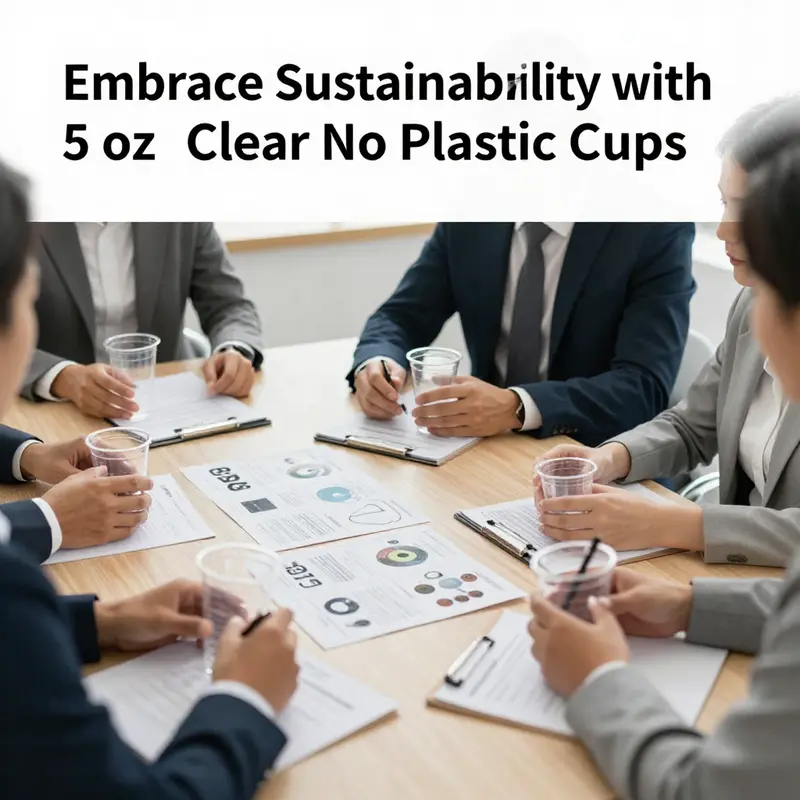
Exploring 5 oz clear no-plastic cups involves balancing visual clarity, functional performance, and end-of-life options. These cups aim to showcase beverages and desserts while aligning with environmental goals. No-plastic typically means materials like PLA (polylactic acid) or molded pulp rather than conventional polystyrene or PET, each with trade-offs in heat tolerance, moisture resistance, and composting pathways. PLA offers excellent transparency and rigidity for cold servings but can soften at higher temperatures and generally requires industrial composting to meet certification. Molded pulp cups provide stiffness and a natural aesthetic, often compostable in industrial facilities, though they may be less transparent and handle moisture differently. End-of-life clarity depends on credible certifications and local waste streams.
When selecting, operators should test real-use scenarios: cold drinks, desserts, lids, stacking, and handling. Temperature thresholds for PLA, typically around 60 degrees Celsius (140 degrees Fahrenheit), constrain hot beverages, while molded pulp may perform better with moisture barriers when lined. Beyond material properties, lifecycle considerations, safety, and regulatory compliance matter: food-contact approvals, migration testing, and reputable compostability labeling. Buyers should request documentation and verify that disposal instructions match local infrastructure.
Cost considerations include unit price, coatings, liners, storage, and waste-management requirements. Although compostable fibers can carry higher unit costs, they may reduce landfill impact and align with sustainability goals. Suppliers often offer branding options, with trade-offs in minimum orders and lead times. A thoughtful sampling process helps validate seal integrity, appearance, and customer experience before scaling up.
Ultimately, the right choice depends on menu needs, waste-system capabilities, and transparent communication with customers about disposal. Clear labeling and visible disposal guidance reduce confusion and support responsible behavior. The 5 oz size becomes a design parameter that can reinforce brand values while delivering a satisfying guest experience.
External resources and internal references may be consulted, but buyers should rely on credible certifications and facility capabilities rather than marketing claims.
Final thoughts
The movement towards eco-conscious consumerism is gaining momentum, particularly in beverage service environments. By adopting 5 oz clear no plastic cups made from biodegradable PLA, businesses can contribute positively to environmental sustainability while simultaneously meeting customer expectations for quality and aesthetics. Embracing these innovative alternatives not only satisfies public demand for greener options but also positions your brand as a leader in eco-friendly practices. Making the switch to PLA cups is not just a business decision, but a commitment towards a cleaner planet.