
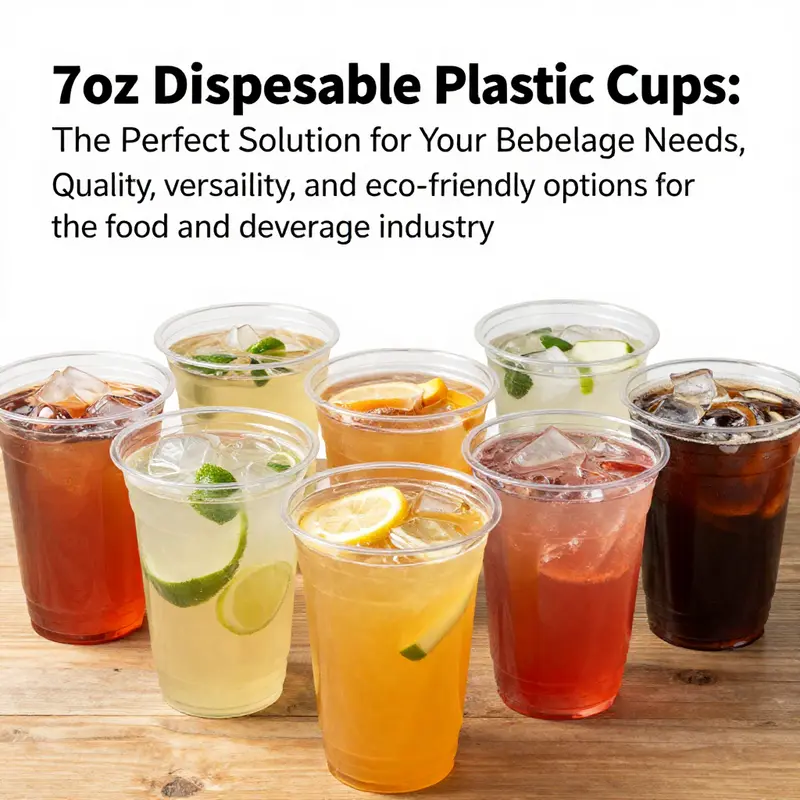
In the bustling world of food and beverage service, the choice of serveware can significantly impact customer satisfaction and operational efficiency. Among the many options available, 7oz disposable plastic cups stand out for their versatility and practicality. Ideal for bubble tea shops, beverage chains, restaurants, food trucks, catering services, and corporate events, these compact containers offer a seamless solution for serving beverages and snacks. This article explores the material composition, design features, market applications, and the environmental impact of 7oz disposable plastic cups, providing a comprehensive understanding of why they are an essential choice for professionals in the industry.
From Clarity to Temperature Tolerance: The Material Composition of 7oz Disposable Cups and Its Hydrating Impact on Service
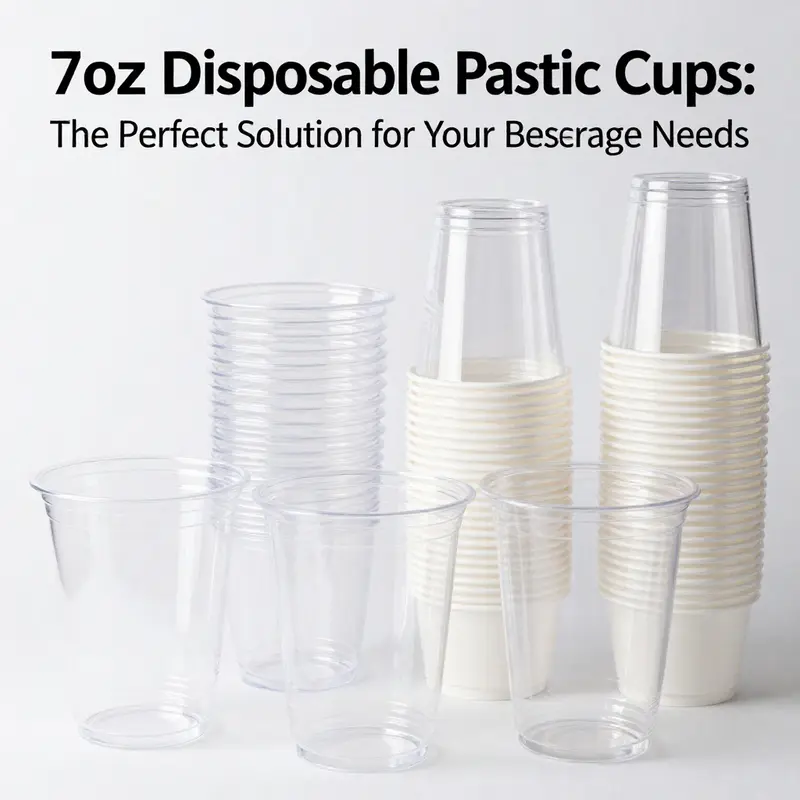
A 7oz disposable cup looks simple enough, a transparent shell designed to hold a few sips and then be tossed away. Yet the material that forms this tiny vessel governs not only how it handles cold and hot liquids, but how it feels in the hand, how it stacks for service, and how easily it can be recycled or recycled into something new. In the dense choreography of a cafe, school cafeteria, or event concession, the choice of plastic is a quiet conductor that shapes guest experience, operational efficiency, and even environmental outcomes. The chapter you are reading follows that quiet conductor into the heart of the cup, where material science meets daily practicality, and where small differences in polymer choice translate into meaningful differences in performance and responsibility.
The most common workhorse for cold beverages in a 7oz format is PET, or polyethylene terephthalate. PET cups are prized for their exceptional clarity, which makes beverages look as appealing as they taste, a factor that matters when a drink is front and center at a self-serve station or a to-go window. Clarity is not a cosmetic feature alone; it signals cleanliness and freshness to the customer, and it reduces the need for opaque labels or extra packaging to convey flavor or quality. PET cups are light in weight, an attribute that compounds the efficiency of a service operation that hands out hundreds or thousands of cups in a shift. They are also relatively shatter-resistant for a disposable product, which lowers breakage loss during transport, restocking, and handoffs. From a waste-stream perspective, PET is labeled as a recyclable resin, often identified by resin code number 1, and this recyclability is a critical consideration for kitchens that aim to close the loop on single-use plastics. The practical implication is straightforward: PET cups work well for cold drinks such as water, juice, iced tea, and carbonated beverages, where the need for a crisp, transparent presentation and reliable performance aligns with cost and throughput.
But the story does not end with PET. Polypropylene, or PP, plays a vital supporting role, especially when hot liquids enter the equation. PP is renowned for thermal stability; it maintains structural integrity as temperatures rise, which is essential for hot coffees, teas, or soups that a 7oz size might accompany in a dine-in or takeout context. The material properties of PP make it stiff and rigid, so a hot cup remains upright in a sleeve, reduces the risk of spills, and tolerates repeated handling by staff and customers. In many applications, PP cups are also microwave-safe and dishwasher-safe, features that translate into convenience for households and some institutional settings. The ability to withstand heat without warping means baristas and catering staff can offer a hot beverage in a compact, convenient cup without compromising the drinking experience. In environments such as clinics or childcare centers, PP’s durability and chemical resistance contribute to safer, more reliable service, where cups may be reused within strict hygienic protocols or subjected to frequent cleaning processes.
A third material, polystyrene, or PS, remains a common sight in many disposable cup assortments, particularly for cold beverages. PS provides good clarity and rigidity, which helps preserve the visual appeal of layered drinks and vibrant colors. However, PS has lower heat resistance compared with PP, so it is less favored for hot liquids. The use of PS in a 7oz cup often hinges on its light weight and crisp feel, making it a practical choice for cold coffee, juice, or iced beverages where the cup’s rigidity preserves form during handling and stacking. Yet the heat sensitivity of PS means operators need to keep hot drinks in PP or other higher-heat polymers when the service scenario demands it. In addition to temperature considerations, PS can be more sensitive to odor and flavor transfer when placed into contact with certain foods or strong-tasting beverages, especially over longer storage or repeated use scenarios. Operators who lean on PS typically do so in contexts where cold drinks dominate and where the marginal gains in clarity and stiffness align with the menu and the service rhythm.
Not all 7oz cups are transparent, but when transparency is a priority, HDPE is occasionally employed for specific applications where durability takes precedence over visibility. HDPE cups tend to be more opaque, a property that masks minor imperfections and provides a robust barrier against moisture and chemicals. The strength and chemical resistance of HDPE can be a valuable asset in specialized settings, such as certain healthcare, laboratory, or event environments where a sturdy, leak-resistant cup is essential. The trade-off, of course, is reduced visual appeal, which may matter in branding or beverage presentation. Nonetheless, this material option underscores the broader point that the 7oz category encompasses a spectrum of polymers tailored to different performance goals, from crystal-clear clarity to rugged reliability.
Beyond the polymers themselves, the design variants of 7oz cups—standard round shapes, tapered stackable forms, and even U-shaped configurations tailored for smoothies or milk teas—interact with material choices to shape handling and service flow. A stackable design, for instance, relies on precise wall thickness and edge geometry to minimize sticking and maximize the number of cups that can be stored in a given footprint. The interplay of wall thickness, rigidity, and surface finish affects not only how securely a cup can be stacked, but how easily staff can grab a cup from a stack, which in turn influences speed and accuracy during busy service periods. Some cups incorporate lids, whether flat or snap-on, to reduce spills during transport and consumption. The lid compatibility, seal integrity, and ease of use are all dependent on the underlying material’s surface energy, rigidity, and resistance to deformation under lid pressure. In high-volume settings, these seemingly small variances contribute to a smoother workflow, reduced spill rates, and less waste due to mishandled beverages.
The temperature range in which 7oz cups perform best offers another lens through which to evaluate material choice. PET’s cold-drink suitability makes it a natural fit for countless beverage profiles, especially when a crisp, clear presentation helps to attract customers at a glance. PP’s higher heat tolerance opens doors to hot drinks, soups, and similar offerings without compromising shape or stability. PS, while excellent for cold drinks and sauces, requires attention to heat limits when hot pours are involved. In real-world use, staff often instinctively pair cup material with beverage type to minimize undesirable outcomes such as warping, sweating, or flavor carryover. The risk of heat-accelerated odor or flavor retention can be more pronounced in some plastics, particularly at edges and inside the cup where residues can linger. This is a meaningful consideration for operations that offer a rotating variety of beverages or that reuse cups in short cycles, where the material chemistry interacts with storage time and cleaning protocols.
From an environmental and safety standpoint, the material composition of 7oz cups invites careful thought about end-of-life pathways. PET’s recyclability is a strength, but the actual recycling rate depends on local infrastructure, contamination, and consumer participation. PP’s recyclability is also favorable in many systems, yet the same caveats apply: the presence of coffee oils, sugars, and flavors can complicate recycling streams. PS, which has had more contentious recycling histories in some regions, often finds itself filtered into specific programs or used in applications where end-of-life recovery is limited. HDPE, while robust, is frequently used in opaque forms and may follow different recycling streams depending on local markets. The practical reality is that the environmental profile of a 7oz cup is not determined solely by the polymer; it is shaped by the entire lifecycle, including production energy, transport, and the efficiency of the waste management system that encounters the cup after its moment of use.
In a broader operational sense, the material mix of 7oz cups translates into tangible cost and supply considerations. The higher transparency and stiffness of PET can justify price points in contexts where a premium beverage presentation matters, or where visual appeal drives impulse purchases. PP, with its heat tolerance and durability, can deliver value in programs that feature hot drinks or soups, where the risk of leakage or deformation would otherwise erode guest satisfaction. PS often carries a lower material cost per unit, which can be advantageous in settings where the drink mix skews toward cold beverages and the budget is tight for disposable tableware. Each material also informs the handling and storage strategy; stackability, shelf life, and even the ease with which cups can be transported in bulk shipments influence labor and space planning in kitchens and event operations.
The single-use cup thus becomes a study in how material science translates into everyday outcomes. The clarity of PET, the heat resilience of PP, the rigidity of PS, and the durability of HDPE each serve different service goals. The choice is rarely about a universal best material but about aligning the cup with the beverage, the service context, and the environmental or regulatory framework in which a business operates. This alignment shapes not just the customer’s first impression, but the speed of service, the cleanliness of the dining experience, and the efficiency of the supply chain that turns raw polymers into neatly stacked cups ready for a line of thirsty patrons.
A practical reflection of these material principles can be seen in how a typical operation approaches cup selection. If the focus is high throughput of cold beverages in a bright, fast-paced setting, PET’s clarity and light weight are compelling. If the operation emphasizes hot drinks or soups, PP’s thermal stability becomes a decisive factor. In venues where cost efficiency is paramount and the drink mix leans toward cold options, PS might offer a favorable balance. For specialized contexts where a cup must endure rough handling or where opacity is desirable for masking contents, HDPE may be the strategic choice. Importantly, this selection process is not merely about the cup itself; it is about the entire service chain—from the moment a beverage is poured to the moment a guest disposes of the cup in a waste stream or recycling bin.
For readers who want a concrete sense of how these properties play out in practice, consider the broader ecosystem of disposable tableware and the ways suppliers communicate material options and performance guarantees. The availability of 7oz cups in bulk with customizable features illustrates how operators balance appearance, function, and cost. While the exact economics vary by region and supplier, the overarching pattern is clear: the material composition of a cup informs not only what beverages it can safely hold but also how it travels through the service system, how it interacts with lids and sleeves, and how it ultimately returns to a circular economy, if pathways exist. In this sense, the small 7oz cup becomes a microcosm of design decisions that unite material science with human behavior, logistics, and sustainability.
To connect this discussion with practical exploration, a representative example of a clear PET cup used in outdoor events is shown here as disposable-clear-plastic-cup-outdoor-picnic-pet-cup-drinking-cup-for-parties-birthdays-weddings-camping-utensils. This internal reference links to a page that illustrates the application and form factor in real-world settings, reinforcing how material choice translates into tangible outcomes on the ground. As you move forward in this chapter, consider how the same core material choices might map onto different service environments, from school cafeterias to hospital dining areas, and how the subtle balance of clarity, heat tolerance, and recyclability can shape both guest perception and operational practicality.
External resource for broader context on composition and standards completes this thread. For a deeper dive into the science of 7 oz cups and the standards that govern them, you can consult the external resource on plastic cup composition and standards at the following link: https://www.plasticcupexperts.com/understanding-plastic-cup-7-oz-composition-standards-and/
In sum, the material composition of 7oz disposable cups is not a single variable but a spectrum of choices that influence clarity, temperature resilience, durability, safety, and environmental compatibility. Each polymer serves a distinct role, and the best choice arises from a careful alignment of beverage type, service dynamics, cost considerations, and end-of-life goals. As the service world continues to evolve toward greater efficiency and sustainability, the nuanced differences among PET, PP, PS, and HDPE will remain central to how events, classrooms, and eateries craft experiences that are both satisfying and responsible.
Small Vessel, Big Considerations: How Design and Usability Shape 7-Ounce Disposable Cups
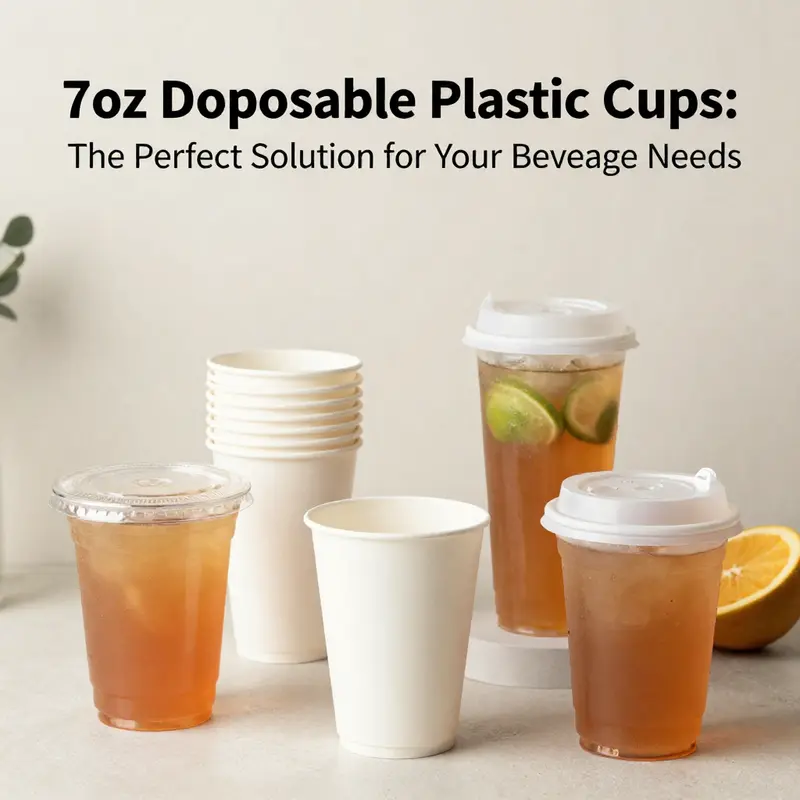
The 7-ounce disposable cup may look like a modest workhorse on a crowded service counter, yet its design is a concentrated lesson in how form supports function. In every cafe, classroom, hospital corridor, or street fair, the moment a customer reaches for a cup is a moment when ergonomics, material science, and logistical efficiency converge. The cup’s silhouette, its wall thickness, its rim, and the way it nestles into a server’s hand all operate behind the scenes to influence a customer’s experience, the speed and accuracy of service, and the ease with which organizers manage inventories during peak hours. What appears simple at first glance is in fact the product of careful decisions about shape, material, and compatibility with the broader system of disposable tableware that surrounds it. Understanding these design and usability features illuminates why the 7-ounce cup remains a staple in environments that demand rapid service without compromising safety or presentation.
Shape is a primary determinant of how a cup behaves in real-world use. A subtly tapered profile is more than an aesthetic choice. It enables efficient stacking and nesting, which translates into tangible savings in storage space and in the clutter that service lines experience during rush periods. When a stack of these cups is carried, the taper reduces the likelihood of slips and fumbles, even as staff juggle multiple drinks, lids, and order tickets. This geometry also contributes to a confident grip. The hand finds purchase along the slightly conical sides, and the smooth interior allows the beverage, whether it is a hot brew or a cold juice, to meet the tongue with predictable delivery. The rim thickness matters, too. A well-proportioned lip makes drinking feel comfortable and reduces the chance of dribbles or spills, a crucial consideration when beverages travel across a bustling floor or a crowded break room.
Material choice anchors the cup’s performance envelope. The vast majority of these cups rely on clear, lightweight polymers, with PET (polyethylene terephthalate) providing an exceptional balance of clarity, strength, and impact resistance. The transparency of PET is not merely cosmetic; it allows customers to assess the beverage visually, which can influence perceived freshness and portion satisfaction. PET’s rigidity and light weight keep shipping and handling costs down, a practical advantage in high-volume settings where many thousands of cups might move through a single day. PET is particularly well suited for cold drinks, where its properties stay stable and the cup retains its shape from the first pour to the last sip.
Alternative materials come into play when hot liquids are involved. For beverages that rely on warmth, polypropylene (PP) is commonly used because of its higher thermal stability. PP cups can withstand higher temperatures without warping or deforming, which makes them a safer choice for coffee, tea, or soups that customers prefer to be served warm. In some cases, interiors are engineered with smooth, non-porous surfaces that resist odor transfer and flavor absorption, preserving the integrity of subsequent beverages that share the same cup stock. Some designs even incorporate insulation features—thin, layered structures or double-wall constructions—that help maintain temperature and reduce the pace at which a drink cools or heats, thereby extending the sensory window in which a customer enjoys the beverage.
Usability is more than thermal performance. The cups are engineered to be lightweight yet durable enough to withstand the bumps and jostles of busy service scenarios. Weight reduction directly reduces transport costs and the amount of space required in carts, storerooms, and back-of-house. Durability matters because a broken cup disrupts service and risks spills. The best cups resist cracking when stacked, dropped, or briefly pressed amid condensation and a full tote of orders. This resilience is especially important in environments with limited counter space, where cups may be stacked high or carried with other items for far distances. In addition, the cups meet food-safety standards and are often BPA-free, aligning with consumer expectations and regulatory requirements that emphasize health-conscious design.
Economy and branding intersect at the point where a cup becomes more than a vessel. The plastic walls are clear canvases for promotions, seasonal messaging, or corporate branding. Customization options—logo printing, color accents, or even subtle typography on the cup wall—convert a disposable item into a portable advertisement. The cost of customization must be weighed against the value of brand recognition and the logistics of distributing cups at large events or across a network of outlets. Even as customization adds value, the baseline usability features must remain uncompromised: the cup must still perform reliably under the constraints of fast service, limited shelf life, and the hygienic expectations of customers.
Lids are an important design extension that enhances usability, particularly in settings where spillage is a concern or where drinks travel across surfaces. Flat lids and snap-on variants provide a quick barrier that protects beverages during transit and reduces the likelihood of accidental spills at crowded events or in busy office kitchens. The choice of lid type interacts with the cup’s lip design and overall mouthfeel, ensuring that sipping remains comfortable and controlled from the moment a drink is picked up to the moment it is set down. In some configurations, the same cup line offers both standard and insulated or double-wall options, which broadens the range of beverages that can be served without requiring a different vessel entirely. This compatibility is valuable for establishments that rotate menus or host events with varied drink offerings, from hot coffee to chilled smoothies.
The usability story broadens when we consider the contexts in which these cups operate. In cafes and fast-food venues, speed, reliability, and the clean appearance of the cup’s transparency contribute to quick service without sacrificing presentation. In schools and daycares, a cup that is light and stackable lowers the burden on staff during lunch lines and classroom events. Hospitals emphasize safety and hygiene, where BPA-free materials and robust seals help ensure that cups survive the daily wash cycle and resist damage during transport to patient rooms. Outdoor events value durability and stackability even more, since storage is often limited, inventory must be managed efficiently, and the risk of spills is higher due to movement, weather, or crowded spaces. Across all these settings, the 7-ounce cup is a tool whose success hinges on the seamless blend of ergonomics, material science, and service workflow.
The small size of the cup belies its role within a larger ecosystem of disposable tableware. When the cup design aligns with lids, straws, napkins, and the containers that hold snacks or desserts, the resulting service flow becomes smoother and more predictable. The cup’s clear walls invite customers to assess their beverage at a glance, which can influence decisions about portion satisfaction and the perceived value of the service. The simplistic elegance of a well-made cup helps reduce cognitive load on customers; they understand instantly how to lift, sip, and dispose of it, which shortens dwell time at the point of purchase and supports a quicker turnover that is essential in high-volume environments.
In this context, a single design decision—such as choosing PET for cold drinks or PP for hot beverages—cascades into a network of practical outcomes. PET’s clarity makes beverages look appealing, which supports purchase confidence and perceived freshness. Its impact-resistance and lightness aid in stacking efficiency and transport, reducing breakage risk in crowded environments. PP’s resilience against heat ensures that hot drinks arrive intact, with less chance of deforming during service or while customers carry them across a room. Some cups even integrate insulation strategies that blur the line between single-use convenience and a more controlled thermal experience, blurring the boundary between disposable and reusable when the goal is to keep drinks at a desirable temperature for longer without sacrificing the efficiency of a one-time-use model.
From a consumer perspective, the absence of flavor carry-over is a subtle but meaningful benefit. High-quality plastics minimize odor and taste retention, ensuring that a beverage’s character remains true to its ingredients. Yet no material is perfect for every scenario. Lower-grade or poorly processed plastics can introduce unwanted odors or flavors over repeated use or after exposure to certain solvents. This is why recommendations often emphasize choosing cups with verified food-safe certifications and robust quality controls, especially in institutions such as schools and healthcare facilities where the margin for error is slim and the emphasis on safety is paramount.
The conversation about design and usability would be incomplete without acknowledging the sustainability dimension that increasingly informs purchasing decisions. PET is widely recyclable, and its recyclability can be a persuasive factor for buyers aiming to align with circular economy goals, especially in regions with established recycling streams. PP is also recyclable in many programs and offers a trade-off between heat resistance and recyclability that some buyers prioritize for hot beverage lines. Insulation strategies, while improving temperature retention, may add material layers that influence end-of-life handling and recycling processes. Consequently, procurement teams balance performance with environmental considerations, aiming to select cup configurations that meet service needs while minimizing waste and facilitating responsible disposal.
In practice, operators frequently weigh the total cost of ownership against the functional benefits described here. Bulk purchasing economics often drive the decision to standardize on a single cup type across numerous locations. The cost per unit, storage footprint, and the ease of inventory management all play into this calculus. A cup that stacks neatly reduces warehousing space and streamlines restocking. A cup that maintains its integrity through multiple transport cycles reduces breakage and the frequency of replacements. A cup that stays clear and odor-free preserves the beverage experience and reduces the likelihood of customer complaints about diminished quality. All these factors coalesce into a choice that blends reliability, branding potential, and operational practicality.
For businesses keen on linking packaging aesthetics with branding efforts, there is additional value in customizing the cup. Logos, color accents, and messaging on the cup wall become visible in lines around the counter, at pickup points, and in photos shared across social channels. The integration of branding with usability is a subtle art: it must remain legible and unobtrusive while not compromising the cup’s core performance attributes. When done well, customization elevates a seemingly ordinary disposable item into a tangible extension of brand identity without adding friction to the guest experience. The result is a cohesive service experience where the cup complements the beverage, the setting, and the customer’s perception of value.
As you consider the design and usability features of 7-ounce disposable cups, a practical note helps connect this discussion to broader conversations about packaging and event planning. For a concrete example of how branding and packaging strategies intersect in the world of theme events and takeout display, you can explore a page focused on custom takeaway packaging supplies for theme parties. This internal resource highlights how a single cup design can be coordinated with broader packaging aesthetics to create a unified guest experience across venues and occasions. The relevant page is linked here for reference: custom-takeaway-packaging-supplies-disposable-tableware-for-theme-party.
The dialogue around 7-ounce cups inevitably circles back to the end of life. Customers often want to know how these cups fit into recycling streams and whether they can be reused in any meaningful way. While the cups are designed for single use, the choice of material and the presence of BPA-free formulations influence how responsibly customers can dispose of them. In regions with mature recycling infrastructure, PET cups can be collected and processed through standard programs, while PP cups may follow similar channels depending on local guidelines. The conversation also extends to the role of consumer behavior: even with recyclable materials, the best outcomes arise when cups are disposed of correctly and placed in appropriate recycling or waste streams rather than discarded indiscriminately.
Ultimately, the design and usability of 7-ounce disposable cups reflect a careful balancing act. They must be light enough to be economical and easy to transport, sturdy enough to handle the rigors of busy service, and clear enough to showcase the beverage inside while accommodating practical extras like lids and insulation. They must perform consistently in a wide range of environments—from the quiet corner of a hospital coffee station to the loud, fast-paced floor of a large market. They must support branding and consumer interaction without complicating logistics. They must also consider environmental responsibility in an era when packaging choices are scrutinized for their ecological footprint. All these elements come together to make the cup more than a simple container; it is a micro-infrastructure that underpins the pace, perception, and quality of beverage service across a spectrum of settings.
External resource: for a broader perspective on bulk options, material specifications, and supplier options, see a comprehensive external reference that profiles large-scale, low-cost production of disposable cups and related drinkware. https://www.alibaba.com/product-detail/7-Oz-Disposable-Plastic-Cup-PET-Plastic1600528837688.html?src=productsearch&spm=a2700.12900118.0.0
Tiny Vessels, Wide Reach: The Market Pulse of 7oz Disposable Plastic Cups
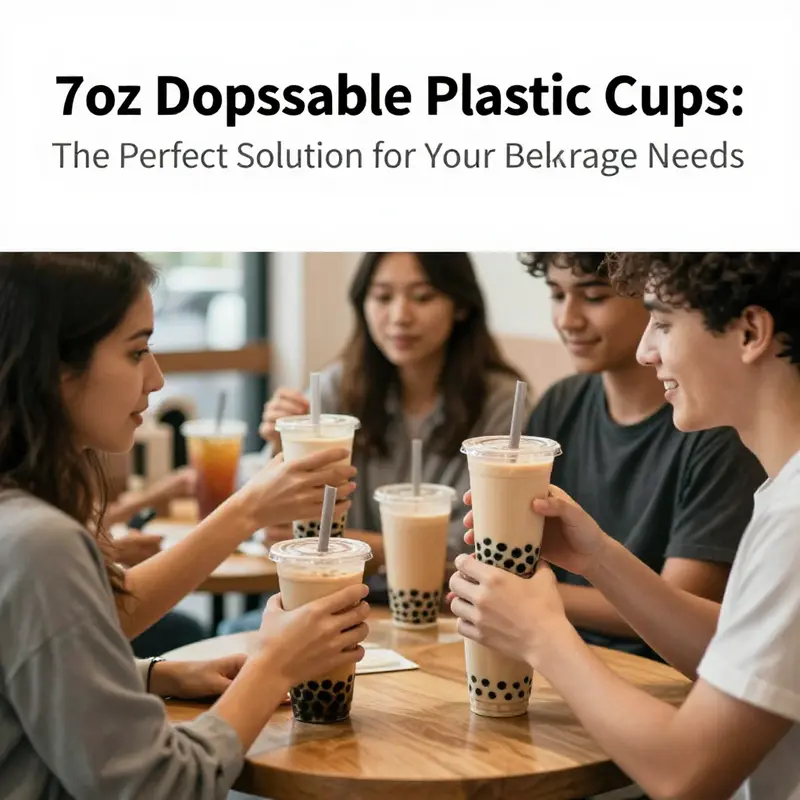
The 7oz disposable plastic cup may be a small import on any given table, but its market presence is anything but diminutive. These compact vessels have grown into a staple of the modern service economy, offering a blend of clarity, durability, and convenience that makes them indispensable across a wide spectrum of settings. Their value lies not only in holding a drink or a light snack but in enabling speed, order, and presentation in mass service. In the hands of a busy café, a hospital ward, or a catering team at a large event, these cups become silent workhorses that help brands deliver consistency and hygiene while keeping costs predictable. Their importance is not merely in the moment of use; it is also in the way they shape the workflow behind the scenes—from storage and transport to cleanup and inventory management.
The materials chosen for these 7oz cups—predominantly PET, with alternatives in clear PS and various forms of polypropylene—play a decisive role in how they perform in real-world environments. PET, prized for its transparency, brings a product that looks as clean as the beverage it holds, while also providing a level of durability that makes the cup resistant to shattering under daily handling. This clarity is more than cosmetic; it invites consumer confidence by showcasing the color and texture of the drink, whether it is a light juice, a milky tea, or a layered coffee beverage. The option to use PS or PP materials adds another layer of utility, with PS offering a crisp, economical option for cold drinks and PP bringing thermal stability that broadens potential applications to slightly warmer beverages. In practical terms, these materials are selected to balance visibility, weight, and cost while resisting the minor stresses of a fast-paced service environment. The result is a cup that remains easy to stack, simple to store, and quick to dispense, all while maintaining a level of quality that customers associate with a well-run operation.
From a design perspective, the 7oz cup family embraces a few strategic variations that support different use cases without sacrificing the core benefits. The standard round cup remains the workhorse for everyday service, delivering reliable performance for coffee, juice, or water. A tapered, stackable variant optimizes shelf and storage space, a critical consideration for any business that must manage high volumes with limited back-of-house capacity. For beverages that are more visually appealing or that require a slightly larger mouth area for texture and foam—such as smoothies or milk tea—the U-shaped or slightly contoured designs offer ergonomic advantages for both customers and staff. The option to include lids, whether flat or snap-on, adds a layer of spill prevention and transportability that is particularly valuable for takeout, catering, and outdoor events. These design choices are not mere aesthetics; they are functional responses to the realities of modern service, where speed, reliability, and presentation can directly influence customer satisfaction and repeat business.
The breadth of applications for 7oz cups across sectors is telling. In the food and beverage industry, cafes and quick-service restaurants rely on these cups for both cold and warm beverages, with their transparency letting customers preview drink content, which enhances the perceived quality of the product. In a fast-moving environment, the cups’ light weight and stackability translate into tangible gains in throughput and storage efficiency, enabling baristas and crew to serve more customers with fewer logistical frictions. The use of a consistent, familiar size also helps standardize portions and streamline waste management, which in turn supports cost control. In catering and events, the cups scale up to meet quantity demands while keeping presentation uniform. Whether indoors or outdoors, their single-use nature supports rapid turnover and simplified cleanup, allowing event staff to reallocate time and labor toward guest experience rather than dishwashing and return logistics.
In healthcare settings, the hygiene imperative elevates the cup from a mere convenience to a critical component of patient safety. Hospitals and pediatric clinics benefit from the ease of use and the assurance that each recipient receives a clean, uncontaminated container. The single-use attribute aligns with infection control protocols, minimizing cross-contamination risk and reducing the burden on staff to manage reusable systems in high-stress environments. The cups’ lightness and disposability also support mobility within large facilities, where care teams must ferry beverages between wards, waiting rooms, and treatment areas without the weight and risk of heavier, reusable containers.
Takeout and food delivery, a rapidly expanding segment of the food service industry, further magnifies the value proposition of 7oz cups. The portability and leak-resistance of these cups—especially when paired with appropriate lids—make them well-suited for curbside and on-the-go service. Customers receiving drinks with purchase-ready portability appreciate containers that can withstand brief periods of travel while maintaining beverage integrity and appearance. In this context, the cup serves as a bridge between the kitchen and the customer, ensuring that the drink remains visually appealing, taste-consistent, and easy to transport from point A to point B. The simplicity of a single-serve cup also supports efficient standardization across multiple locations, a reality for businesses seeking consistent brand behavior and predictable operating costs across a network.
The demand for 7oz cups is driven by several converging forces that shape both short-term needs and long-term planning. The rise of on-the-go beverage culture—especially within urban environments where people increasingly value convenience and speed—has created a steady baseline demand for single-serve packaging. This trend dovetails with the broader rise of ready-to-drink products, where the packaging plays a vital role in preserving product quality and appeal from the moment of purchase to the moment of consumption. In parallel, the competitive dynamics of the commercial food service sector reward efficiency. The stackable, lightweight design of many 7oz cups reduces storage footprint and simplifies inventory management, enabling operators to optimize back-of-house space and labor. In environments that must manage peak service times, the ability to quickly grab the next cup, fill it with the correct beverage, and move on to the next guest translates into measurable improvements in service rate and customer satisfaction.
Beyond immediate performance, the sustainability conversation increasingly informs decisions around 7oz cup usage. The materials landscape—PET, PS, and PP—offers a familiar mix of recyclability and thermal properties, yet regulatory pressures and evolving consumer expectations push manufacturers and buyers to consider greener alternatives. PET’s recyclability, in particular, is often cited as a reason for its continued use in many markets, especially for cold beverages where clarity and rigidity are prized. Yet the environmental footprint of single-use packaging drives ongoing exploration of compostable or biodegradable substitutes, even as such innovations must balance performance, cost, and supply chain practicality. In this sense, the market for 7oz cups sits at a crossroads where the familiar advantages of single-use convenience must be balanced against a growing emphasis on responsible packaging. Producers and buyers alike weigh the trade-offs between recyclability, performance, and total lifecycle impact, while regulators and waste-management systems push toward more sustainable end-of-life outcomes.
The global market dynamics around 7oz cups reflect scale and reach. High-volume producers have invested in scalable manufacturing processes to meet the demand across hospitality, healthcare, education, and event sectors. The ability to deliver bulk quantities quickly, with options for customization—such as logos or branding elements on the cups and related packaging—adds another dimension to the market. For buyers, the ability to source tens of thousands or hundreds of thousands of units in a single procurement cycle translates into meaningful savings on unit price and logistics. In this context, pricing can begin at deeply discounted levels for large orders, underscoring how volume drives affordability and competitiveness in the market. Moreover, suppliers frequently extend additional value through services such as free samples or demonstration runs, enabling buyers to verify material integrity, clarity, and compatibility with their beverage offerings before committing to a broader rollout.
Material innovation continues to shape the trajectory of the 7oz cup market, even as core applications remain robust. Developments in polymer science seek to enhance barrier properties, ensure better compatibility with hot liquids, and extend shelf life without sacrificing clarity or strength. The potential emergence of biodegradable or compostable alternatives promises a sustainability-driven shift in the market, though it also invites new considerations for performance under a range of temperatures and handling conditions. In the near term, the combination of PET’s clarity and recyclability with PP’s thermal stability remains a practical, widely acceptable solution for many operators, particularly in settings where cost control and service speed are paramount. The market’s resilience is thus anchored in a pragmatic blend of material science, process efficiency, and reliable supply chains, allowing 7oz cups to remain a dependable choice in the face of shifting consumer preferences and regulatory landscapes.
Viewed through the lens of consumer experience, the 7oz cup supports a seamless, visually appealing, and predictable beverage moment. The clear design invites a quick visual assessment of the product, while the compact size communicates an approachable serving that reduces the psychological barrier to trying a beverage. For operators, the cups simplify the choreography of service; staff can execute rapid pour-and-serve sequences, freeing up attention for other tasks and interactions with customers. The cups’ light weight reduces the physical strain on workers who handle large volumes, contributing to a safer, more efficient work environment. These operational benefits, combined with the cups’ low material cost and ease of disposal, align with the needs of high-turnover venues and event-driven service models that prize speed, cleanliness, and consistency.
As the market progresses, the interplay between demand drivers, material choices, and sustainability expectations will continue to shape the practical realities of using 7oz disposable cups. Operators will likely keep leveraging their proven advantages—visibility, stackability, and cost efficiency—while remaining vigilant about environmental considerations and evolving waste-management practices. In many scenarios, the cups will function as the transitional technology that supports rapid service in today’s busy settings while policies and consumer sentiment push the industry toward more sustainable packaging options in the longer term. Even as new packaging modalities arise, the 7oz cup’s legacy as a simple, effective solution that supports a wide array of beverage experiences remains secure. The market’s trajectory suggests that these cups will continue to play a central role in the orchestration of service, the logistics of supply, and the everyday rituals by which people share drinks and snacks in schools, offices, hospitals, and social gatherings.
For readers seeking a tangible glimpse into the practical dimensions of one common cup option, consider the disposable clear plastic cup designed for outdoor use. This example illustrates how a single container can accommodate a spectrum of environments—from a sunlit picnic bench to a breezy festival queue—while preserving clarity, resilience, and portability. It embodies the balance that has made 7oz cups so pervasive: a design that remains unobtrusive, yet incredibly capable in a world that prizes speed, hygiene, and presentation. The story of these cups is really a story about service—how a modest, well-made, single-use vessel supports human connection across diverse spaces and moments.
External resource: https://www.alibaba.com/product-detail/7-Oz-Disposable-Plastic-Cup-PET-Plastic1600528837688.html?src=productsearch&spm=a2700.12900118.0.0
Ripple Effect: The Hidden Lifecycle of 7oz Disposable Cups and the Path Toward Smarter Waste
The 7oz disposable cup is a small container with outsized consequences. In many settings—from bustling cafes and crowded schools to hospital wards and outdoor events—these cups fulfill a simple need: a convenient, single serving vessel for beverages and light snacks. Their design is intentionally compact, which makes them easy to stack, transport, and refill on high-volume days. Yet the same compactness that makes them practical also makes their long-term footprint surprisingly stubborn. To understand their environmental impact, it helps to follow the cups from purchase to disposal, paying attention to the materials they are made from, the realities of recycling streams, and the options that exist when a more sustainable path is chosen. This chapter explores the lifecycle of 7oz cups with a focus on material choices, recycling challenges, and the practical steps that organizers and consumers can take to reduce harm while maintaining the conveniences these cups provide. It also considers how a shift toward recyclable and reusable alternatives can reshape event planning, food service, and everyday habits without sacrificing hygiene or efficiency. Along the way, the discussion threads through a few concrete examples of how a small decision about cup selection interacts with large-scale waste systems, consumer expectations, and the broader goals of a circular economy. The chapter concludes by pointing readers toward reliable sources of information and practical guidelines for improving disposal outcomes while recognizing the realities of food contact safety and cold beverage practicality.
The materials behind 7oz disposable cups are foundational to both performance and environmental performance. Most of these cups rely on clear, lightweight plastics such as PET or variants of polystyrene and polypropylene. PET, or polyethylene terephthalate, is valued for its clarity, rigidity, and chemical resistance, especially when used with cold beverages. It is also widely recognized for recyclability when collected in appropriate streams. The familiar transparency of PET cups can make content visible and appetizing, which matters in retail and food service where appearance can influence user experience. In contrast, cups crafted from polystyrene, whether expanded or solid, often offer a different balance of cost and rigidity, but their recycling pathways are more constrained in many communities. Some PS and related materials present challenges because they may be contaminated by food residues or because the recycling process requires careful separation from other plastics. Polypropylene and other polymers can provide heat resistance and durability, but their recyclability varies by locality and by the specifics of the container’s construction. In practice, many 7oz cups use a combination of materials or a thin liner, which can complicate the recycling process and intensify contamination risks if the cups are not properly emptied before disposal.
A critical phrase in evaluating the environmental profile of these cups is recyclability in the real world. PET cups, when clean and sorted, align well with established recycling streams, and they are commonly accepted in curbside programs in many regions. The clarity and light weight of PET cups also contribute to lower transportation emissions per unit compared with heavier containers. Yet the jump from a consumer rinse at home to a recovered bottle-like stream is not guaranteed. Food and drink residues, plastic coatings, and labels can complicate mechanical recycling, forcing facilities to divert cups into downcycling or waste streams rather than true closure in a circular loop. The risk of contamination is not merely theoretical; it is a practical obstacle that can render a batch of cups economically unviable for recycling. In settings where cups are used intensively, such as events with hundreds or thousands of attendees, post-use handling becomes a make-or-break element of the environmental equation.
The environmental impact is not limited to the material choice itself. The production, distribution, and end-of-life handling of single-use cups all contribute to the carbon and resource footprints that accompany modern food service. The energy used to manufacture plastic cups, the materials required for their production, and the logistics of moving large volumes to and from venues all accumulate over time. Even when a material is technically recyclable, the net environmental benefit depends on how efficiently the recycling system operates and whether the recovered material is reintroduced into production in a profitable, high-value form. When cups are sent to landfills or released into the environment as litter, the consequences extend beyond the immediate waste stream. They include soil and water contamination risks, wildlife hazards, and the long-term persistence of plastics in ecosystems. Decomposition timelines for plastics are measured in decades to centuries, and the presence of microplastics can complicate downstream environmental and health concerns. These realities reveal why waste planners, educators, and event organizers are increasingly asking not just whether a cup can be recycled, but how likely it is that it will be recycled and reused in practice.
Within this framework, the potential for better outcomes begins with opting for materials and designs that are aligned with circular economy principles. PET cups, especially those certified for food contact, offer a clear path toward recyclability when disposed of correctly. Certifications that confirm food-grade safety provide assurance that the cups meet standards for beverage contact, reducing concerns about contaminants and enabling reuse of the polymer in a closed loop where feasible. The emphasis on proper disposal is not an academic exercise; it is a practical requirement. Even the most recyclable plastic loses value if it is contaminated by residues or remains tangled with other streams at a sorting facility. That is why clear labeling, user education, and straightforward disposal options at venues are essential. A simple labeling strategy can make a significant difference in recycling rates: cups that are rinsed and placed in the correct bin are far more likely to re-enter the manufacturing cycle than cups left in general waste.
The design variations of 7oz cups—standard round shapes, tapered stackables, and U-shaped forms—reflect a dual objective: optimize the user experience and support service efficiency. Stackable designs save space in storage and during transport, enabling more cups to be loaded onto a single pallet or container and reducing handling time for staff. Lids, whether flat or snap-on, add spill prevention and convenience, which can be particularly valuable in busy environments like coffee shops or conferences. But every added feature also carries a potential cost to recyclability. Lids are often produced from different polymers or include seals and rims that complicate separation in recycling facilities. This is not a call to abandon lids where they deliver tangible value; rather, it is a reminder to consider how to minimize mixed-material components and to explore compatible recycling streams. The practical takeaway is to align cup choice with the venue’s waste infrastructure and to negotiate with suppliers about materials and configurations that optimize both performance and end-of-life outcomes.
The pathway to making more sustainable choices does not hinge on a single magic option. It is a spectrum that includes improved material choices, better design for recyclability, and a shift toward reuse where feasible. Reusable, rigid cups offer a compelling alternative for many settings. In higher-traffic environments such as hospitals, schools, and large events, the durability and hygiene advantages of reusable cups can translate into genuine environmental wins over time. Proper washing, sanitization, and drying protocols are essential to ensure safety and user satisfaction, but when implemented well, these systems can dramatically cut waste while maintaining the service standards that customers expect. The transition to reusable cups often requires investment in warewashing capacity, staff training, and logistical planning, yet it can yield returns through reduced purchasing frequency, less waste disposal, and improved brand perception among ecologically aware attendees.
An additional option gaining attention in the discussion around single-use plastics is the advent of compostable and biodegradable alternatives, but these require careful qualification. Certified compostable cups may reduce environmental impact in the right settings, particularly industrial composting facilities that can maintain the temperatures and durations needed for material breakdown. However, the labeling and certification processes must be robust, and they should clearly indicate compatibility with the intended composting stream. Without access to certified facilities, compostable cups can merely add to the waste volume rather than reduce it, especially if they are disposed of in general trash where decomposition cannot proceed. The take-home message is that compostability is not a universal remedy; it is contextual, contingent on local infrastructure, certifications, and consumer behavior. When considering compostable options, organizers should verify the availability of certified facilities in the event’s locale and communicate waste sorting guidance clearly to participants and staff.
From a policy and system perspective, the journey toward lower environmental impact for 7oz cups depends on clearer standards, consistent labeling, and integrated waste management practices. The environmental narrative grows more coherent when waste streams are designed with end-of-life in mind. This includes choosing packaging that aligns with available recycling infrastructure, labeling materials to facilitate sorting, and coordinating with waste processors to understand accepted materials and contamination thresholds. Education plays a pivotal role here. Attendees who know where to place items and what to rinse can collectively drive meaningful improvements in recycling performance. The practical implication for event planners is to partner with waste management services that can customize a disposal plan to the venue, audience, and budget, while maintaining a focus on safety and hygiene. They can also consider communicating a simple, consistent message about how to handle cups after use, which reduces confusion and encourages proper sorting.
The broader narrative about 7oz cups also intersects with consumer expectations and corporate responsibility. People want convenience, cleanliness, and value, but they also increasingly demand transparency about the environmental footprint of the products they use. In many communities, this has translated into stronger municipal collection rules, expanded bottle and cup recycling programs, and more rigorous labeling standards. For organizations that host events or operate food service outlets, this means that the choice of cups matters not only for the product’s performance but for the business’s alignment with local sustainability goals. The small decision to select a recyclable PET option or to commit to a reuse program can become part of a brand story that resonates with customers and participants who care about waste, litter, and resource stewardship.
To illustrate how these ideas translate into practical actions, consider a typical event or service setting. Staff can prepare labeled bins with clear guidance near drink stations, ensuring that empty cups are kept separate from other trash and are rinsed when feasible. This reduces contamination and supports recovery of PET material. Staff training can emphasize the difference between cups that are disposed of in recycling streams and those that end up in landfills due to residue or mixed-material components. Such procedures require a modest upfront investment, but the payoff comes in the form of cleaner waste streams, higher recycling yields, and a demonstration to participants that the organization takes its environmental responsibilities seriously. In this sense, the choice of cup becomes a tangible indicator of an organization’s commitment to sustainability.
The chain of influence does not stop at disposal. Manufacturers, suppliers, and designers play roles in reimagining what a cup can be. If a company prioritizes recyclability by default, it reduces the friction for consumers who want to do the right thing but may be unsure of sorting rules. If suppliers offer cups that are easier to recycle with standard municipal programs, the likelihood of proper disposal increases. If designers minimize mixed-material components and create lids and rims from compatible polymers, the separation process at recycling facilities becomes more efficient. Each improvement in material science, labeling, and product architecture nudges the industry toward a circular solution rather than a linear one that ends with waste.
The practical takeaway from this exploration is straightforward: the environmental footprint of 7oz disposable cups is not merely a function of material choice but of the entire system that surrounds their use. By prioritizing recyclable PET cups, ensuring proper disposal practices, and considering reuse where feasible, venues can substantially improve outcomes without sacrificing the convenience that consumers and staff rely on. The journey also invites readers to recognize that better options exist beyond the single-use habit. When communities invest in robust recycling infrastructure, clear consumer guidance, and well-designed reuse programs, the cumulative impact of millions of cups can move from a persistent burden toward a manageable component of a sustainable operation. The lived reality of many events today is that quick, clean, and affordable service is possible alongside a growing commitment to responsible waste management, and the most practical path forward often lies in combining these strategies rather than choosing one over the other.
For readers seeking a concrete example of how a retailer or venue may present clear, recyclable options in a single, seamless package, consider the following resource that demonstrates how disposable clear plastic cups can be positioned for easy purchase and disposal in event settings: clear plastic cups for parties and events. This example emphasizes clarity, usability, and compatibility with common recycling streams, while also highlighting the importance of thoughtful design and labeling to reduce waste.
Readers are encouraged to consult authoritative guidelines on recycling to inform decisions at every step of the cup’s life. The U.S. Environmental Protection Agency provides extensive resources on how to recycle, what materials are accepted, and how to minimize contamination in recycling streams. Access to these guidelines supports more informed choices by organizers, suppliers, and consumers alike, helping to translate the insights from this chapter into tangible improvements in waste management practices. For further reading, see https://www.epa.gov/recycle
Final thoughts
In conclusion, 7oz disposable plastic cups are an ideal choice for businesses looking to enhance their beverage service while prioritizing convenience and efficiency. Their durable material composition, various design options, broad market applications, and recyclability make them a practical solution for a wide range of industries—from cafes and food trucks to large-scale catering events. By integrating these cups into your service offerings, you align quality with sustainability, catering to both customer demands and environmental standards. Choosing the right disposable tableware can elevate your service experience and contribute positively to your brand identity.