
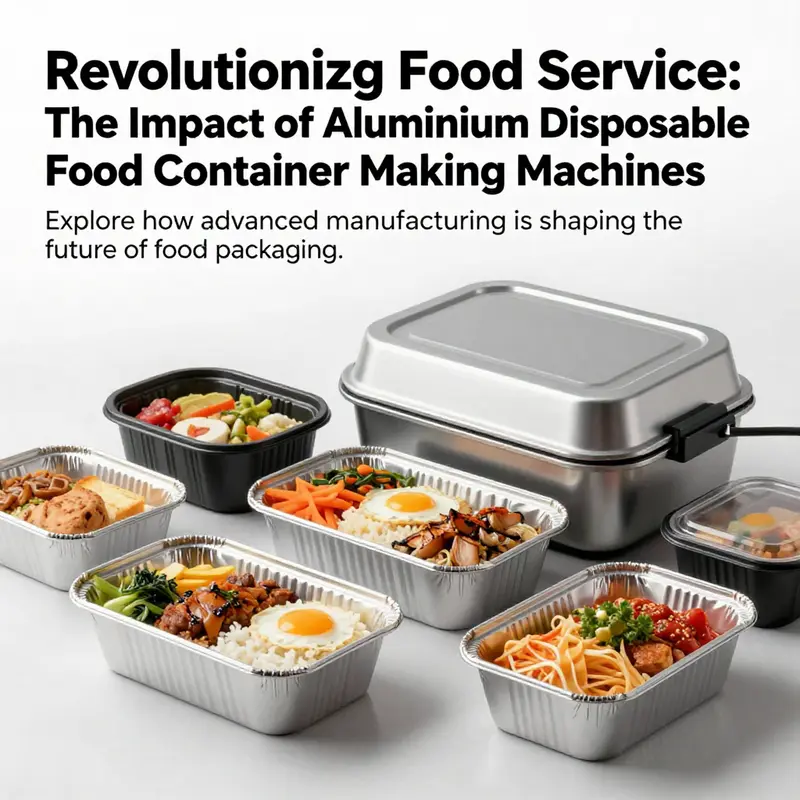
Aluminium disposable food containers are increasingly becoming a staple in the food service industry, favored for their convenience, hygiene, and eco-friendliness. As businesses such as bubble tea shops, restaurants, food trucks, and catering services seek efficient and reliable packaging solutions, the role of aluminium disposable food container making machine manufacturers becomes crucial. This article delves into technological advancements in manufacturing, the economic impacts on the industry, and global market trends that underscore the importance of these machines for service-focused businesses. Each chapter aims to provide insights that highlight how investing in these innovations can enhance operational efficiency and meet the market demands.
Smart Automation and AI Transforming Aluminium Disposable Container Machinery: Precision, Productivity, and Sustainability
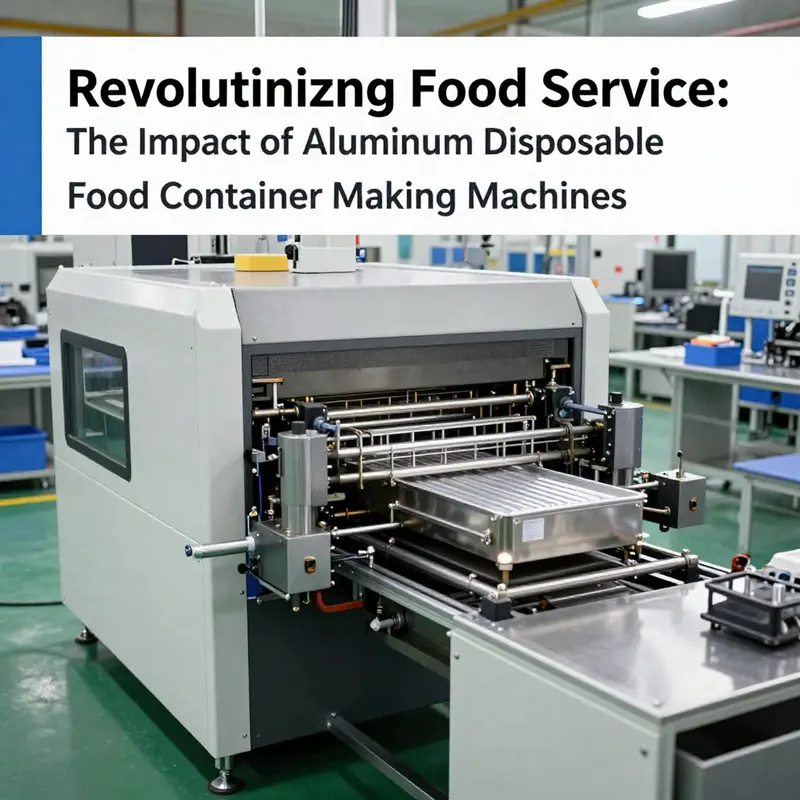
The aluminium disposable container industry stands at the threshold of a new era where precision, speed, and responsibility fuse through smart automation and AI. In regions renowned for engineering excellence, from the heart of Europe to the manufacturing corridors of Asia, the production lines that shape aluminium foil containers have moved beyond conventional mechanization. They now operate as integrated systems that continuously learn from data, respond to real-time conditions, and optimize material use without sacrificing safety or quality. This transformation is not a distant fantasy but a practical, visible shift in how containers are formed, trimmed, stacked, and recycled. Its importance extends beyond throughput. In a market increasingly attuned to hygiene, sustainability, and stable supply, the capacity to manage complex variables with reliable automation becomes a competitive advantage. The narrative here centers on how full automation, sophisticated control, and intelligent sensing are redefining what a modern aluminium container-making line can deliver, and how manufacturers—whether in established hubs or emerging centers—are adopting these capabilities to stay resilient in a changing world.\n\nAutomation in its most impactful form today goes far beyond the familiar click-clack of stampers and roll feeds. It presents a production line as a cohesive organism: a continuous flow starting with automatic tape feeders that provide the adhesive or sealing materials without manual handling, advancing through high-precision punching that cuts and shapes aluminium sheets to tight tolerances, and culminating in forming molds designed to produce a spectrum of container geometries with consistent wall thickness and shape integrity. Between these stages, automated stackers collect finished pieces with predictable alignment, while integrated waste recycling systems reclaim scrap foil during the process. The entire sequence is orchestrated by an advanced control architecture that ensures synchrony between every module, minimizing downtime and eliminating bottlenecks that used to cascade across shifts. This is not merely about speed; it is about turning a line into a dependable, predictable partner in production, capable of delivering identical outputs at scale day after day.\n\nCentral to this orchestration are programmable logic controllers, or PLCs, which serve as the nervous system of modern container-making lines. PLCs monitor temperatures, punch counts, forming pressures, and the precise timing of each actuator. They enable real-time visibility into performance, empower maintenance teams with actionable diagnostics, and support predictive maintenance that anticipates equipment wear before a fault disrupts output. The result is a production line that not only runs efficiently but also protects operators from unnecessary exposure to hazardous operations by handling the most demanding tasks with automation. The adaptive nature of these systems means that parameters can be adjusted on the fly in response to fluctuations in material quality or supply conditions, preserving product integrity without halting production for manual recalibration. The synergy between hardware and software is where the real value lies: a chemistry of mechanical reliability and data-driven governance that turns traditional manufacturing into an agile enterprise.\n\nThe role of form and function in forming moulds deserves particular emphasis. Moulds are not static artefacts; they are adaptive tools that encode product geometry, thickness distribution, and sealing interfaces. Modern lines deploy a library of forming mould configurations that can be swapped or tuned quickly to accommodate different container shapes, from compact lunch-box silhouettes to deeper trays intended for soups or sauces. The precision required in forming is both a mechanical and a computational challenge. High-precision punching and forming must ensure uniform dome curvature, flat bottoms, and consistent rim profiles, all of which influence seal performance and stacking stability. When moulds are optimized through data-driven feedback—derived from sensors measuring deformation, material strain, and thermal gradients—the line gains the ability to reproduce complex geometries with less scrap and tighter tolerances. This fusion of well-tuned mechanical design with intelligent process control is a hallmark of modern aluminium container manufacturing and a critical driver of yield, waste reduction, and finish quality.\n\nThe integration of automation with sensor technology marks perhaps the most transformative trend. A network of high-precision sensors monitors every phase of production: sheet tension as material enters the line, punch force and alignment, heat and pressure during forming, and the micro-level characteristics of the edge and rim that determine sealing performance. These sensors feed machine-learning models that continuously analyze performance trajectories, identify subtle deviations from target curves, and initiate corrective actions before defects manifest. The result is not merely defect detection but a proactive correction mechanism that preserves product consistency across mass runs. In some of the most advanced installations, the line learns to anticipate the need for parameter adjustments as soon as a slight drift in sheet width, thickness, or temperature is detected. The system responds with calibrated changes to punch depth, forming speed, or cooling rate, keeping quality within ultra-tight specifications and reducing waste that would otherwise be generated by late-stage scrap.\n\nBeyond the immediate production cycle, the AI-enabled line optimizes the broader use of materials and energy. Algorithms assess raw material consumption in real time, identifying opportunities to reduce consumption without compromising structural integrity or seal reliability. These capabilities dovetail with sustainability goals by minimizing scrap and maximizing recyclability—an especially important consideration when aluminium foil is valued for its high recyclability and circular economy potential. Built-in waste recycling systems reclaim scrap foil, feed it back into the process at appropriate stages, and shorten the loop from waste to usable feedstock. This closed-loop approach is more than environmental virtue signaling; it is a practical strategy that lowers input costs, reduces material variance, and steadies output quality across production cycles. As the industry moves toward more stringent environmental expectations, the capacity to embed circular practices within the line itself becomes a meaningful source of competitive differentiation.\n\nThe broader value proposition of fully automated, AI-assisted lines also encompasses reliability and uptime. Predictive maintenance, powered by continuous data streams, correlates indicators such as motor temperatures, hydraulic fluid conditions, and spindle wear with historical failure modes. Operators receive early warnings and recommended maintenance windows that minimize disruption. Adaptive adjustments supplied by the control system further contribute to reliability by compensating for minor variances in supply conditions that would otherwise degrade performance. In practice, this translates into longer run times between resets, steadier cycle times, and a more predictable delivery schedule for customers who rely on these containers to meet tight supply deadlines. For manufacturers, the financial logic is straightforward: higher uptime, lower scrap, and better predictability all translate into lower unit costs and improved customer satisfaction. In markets that prize swift response to demand shifts, this is a compelling mix of capabilities that strengthens a company’s ability to scale production without sacrificing quality.\n\nThe story of these advances is already visible in cross-border manufacturing ecosystems. German industry exemplifies the adoption of integrated automation and AI, where entire lines are conceived as digital ecosystems with closed-loop feedback. Yet the global outlook is not limited to one region. Chinese manufacturers, including those based in Shandong and other industrial hubs, are progressively aligning their capabilities with these best practices by building automation into the heart of their lines, investing in CNC-based control, and forming partnerships that emphasize after-sales service, training, and remote diagnostics. In this context, a company that can offer not just the hardware but also seamless installation, commissioning, and ongoing maintenance becomes a valuable partner to customers who operate in diverse regulatory environments and market conditions. The demand for such capabilities reflects a broader realization: that the advantages of automation—safety, efficiency, consistency, and sustainability—are maximized when a supplier can deliver end-to-end solutions, including technical support and skill-building for the customer’s workforce. This is precisely where manufacturers with an integrated approach to design, production, and service distinction can create meaningful long-term value.\n\nFrom a market perspective, the push toward automated, AI-enabled lines is inseparable from the requirements of quality and safety. The aluminium container sector has long benefited from certifications that assure process reliability and environmental stewardship. International standards such as CE, GS, RoHS, and ISO 9001 play an essential role in guiding the design and operation of modern production lines. These frameworks help ensure that automation upgrades do not compromise safety and that the machines—while increasingly autonomous—remain aligned with rigorous industry expectations for product integrity, worker protection, and environmental responsibility. The combination of certified quality management with advanced automation creates a credible proposition for global buyers, who seek high-volume capacity without sacrificing traceability or compliance. The result is a reinforcing cycle: trusted, compliant lines become more attractive to customers who also demand sustainable packaging solutions, which in turn encourages manufacturers to invest further in intelligent systems and predictive capabilities.\n\nIn practical terms, adopting this technology stack enables manufacturers to deliver a more resilient supply chain. The modern line can maintain throughputs in the face of irregular material batches or minor fluctuations in ambient conditions, and it can adjust to new specifications without a lengthy retooling period. This agility matters as consumer preferences intensify around convenience, hygiene, and the environmental footprint of packaging. It also matters for raw material markets that can swing in price or availability. The automation and AI toolkit provides a buffer against such shocks by preserving accuracy and reducing the need for manual intervention during changeovers. In turn, operators are freed to focus on higher-order tasks such as process optimization, quality assurance, and strategic planning, rather than the repetitive, physically demanding duties of manual control.\n\nAlongside these capabilities, manufacturers are increasingly exploring partnerships that extend beyond the factory floor. Overseas services—installation, debugging, maintenance, and operator training—play a crucial role in helping customers realize the full benefits of new lines. This service model is particularly important for customers venturing into high-volume production where uptime and rapid ramp-up are critical. Through remote monitoring, on-site visits, and structured training programs, suppliers can ensure that customers achieve the performance promised by advanced automation and AI. In this context, a leading manufacturer rooted in regions with a long tradition of precision engineering can provide the stability and continuity customers expect, while also offering the flexibility to tailor solutions to local regulatory landscapes and market needs. When these elements come together, the result is not merely a machine but a complete capability that enables manufacturers to meet evolving packaging demands with confidence.\n\nThe future trajectory of aluminium disposable container machinery will continue to intertwine automation with analytics and sustainability. As sensor networks proliferate and AI models become more sophisticated, the line will be capable of self-optimizing across longer horizons. For example, models may forecast material availability and adjust production schedules to minimize idle time, or predictively align cooling cycles with ambient heat loads to further conserve energy. These advances will not only improve efficiency but also deepen the consistency of product quality across batches, a critical consideration when containers must meet exacting standards for food safety and leak resistance. In parallel, the industry’s emphasis on circularity will drive innovations in scrap handling, material traceability, and end-of-life recycling. Systems will increasingly reintroduce reclaimed foil into the process at higher salvage rates, aided by data-driven quality checks that ensure recycled content does not compromise performance. The convergence of smart automation, AI-driven control, and sustainable design is more than a technological trend; it is a capable framework for resilient, responsible manufacturing that can scale with growing demand while reducing environmental impact.\n\nFor readers seeking tangible connections to the evolving landscape of packaging and manufacturing, consider exploring practical examples of modern packaging solutions that align with advanced production capabilities. One resource highlights how tailored takeaway packaging and disposable tableware can be integrated into supply chains that value customization, reliability, and efficiency. This reference emphasizes the importance of combining sophisticated processing with flexible packaging formats, a concept that resonates with the broader shift toward automated, AI-supported machinery in aluminium container production. custom-takeaway-packaging-supplies-disposable-tableware-for-theme-party\n\nUltimately, the trajectory of aluminium disposable container machinery points to a future where lines operate with a high degree of autonomy but remain anchored by human oversight and strategic intent. The most successful implementations will be those that balance speed and precision with rigorous quality control and environmental responsibility. As global markets demand ever more reliable packaging solutions, manufacturers that combine CNC precision, full automation, intelligent sensing, and end-to-end service will be best positioned to deliver not only containers but durable partnerships built on trust, performance, and sustainable value. For those who want a broader lens on the market dynamics and the pace of automation, an external reference offers a comprehensive view of the growth and deployment of automated aluminium container making technologies: https://www.researchandmarkets.com/reports/6214589/automated-aluminum-container-making-machines-market-growth
Spinning Global Value: The Economic Footprint of Aluminium Disposable Food Container Machinery Manufacturers
The economic impact of manufacturers that supply aluminum disposable food container production equipment extends far beyond the walls of their plants. It threads through global supply chains, regional industrial ecosystems, and environmental accounting in ways that are easy to overlook. As consumer culture increasingly favors convenient, hygienic, and recyclable packaging, the machinery that makes aluminum containers becomes a quiet engine of economic activity. The growth in this niche supports a cascade of economic activities—from specialized engineering work and precision machining to logistics, service, and aftersales support that keep lines running with minimal downtime. In many ways, the rise of automated production lines for aluminum containers mirrors broader shifts in manufacturing: higher capital intensity, a greater reliance on skilled labor, and a closer integration between design, process control, and sustainability reporting. The result is a subtle but powerful reshaping of regional economies, with manufacturing hubs forming around capabilities that enable high-throughput, high-precision production, and a workforce trained to sustain it.
In this landscape, job creation stands as a primary and visible payoff. The manufacture, sale, installation, and maintenance of aluminum container production equipment requires engineers, technicians, operators, and sales specialists. The nearly constant demand for maintenance and calibration services means those skilled roles sustain themselves across business cycles, buffering local labor markets from sharper shocks in other sectors. Regions with established industrial bases, particularly those with robust steel and metalworking traditions, tend to accumulate a cluster of suppliers and service providers who feed this demand. Small and mid-sized firms can participate as equipment integrators, mold makers, control software developers, and aftersales technicians, contributing to a diversified industrial ecology that supports resilience and export potential. When a domestic market expands its packaging needs, the local ecosystem can scale more rapidly since the underlying capabilities—die casting, CNC machining, and automated assembly—are already in place. This creates a virtuous cycle: more equipment sales encourage more training, which in turn fosters higher-quality service and longer equipment lifespans.
The export dimension of this economic activity is substantial. Modern packaging demand is global, and aluminum containers are favored for their recyclability and hygienic performance. Machinery manufacturers respond by building capability to serve international customers—from onboarding and installation to remote diagnostics and on-site troubleshooting. This export orientation requires compliance with international standards and certifications and often promotes technology transfer between markets. Countries with strong manufacturing ecosystems become attractive sources of these machines, and the revenue generated through exports flows back into the domestic economy as investment in research, development, and talent. In practice, this means a steady contribution to the country’s balance of trade, as well as a broader positive effect on related sectors such as raw material suppliers, automation components, and logistics networks. The result is a diversified industrial profile that balances domestic consumption with global demand, reducing reliance on any single market and increasing the stability of local employment and investment.
Automation and productivity gains underpin much of this economic story. Modern lines for aluminum container production are highly automated, featuring automatic feeders, precision presses, multi-cavity tooling, and stackers that optimize throughput. The aim is not only speed but consistency and waste reduction. Precise control systems monitor forming, trimming, and sealing operations, reducing scrap and ensuring uniform output. The accessibility of sophisticated CNC guidance means process parameters can be tuned quickly for different container sizes and shapes without sacrificing quality. For manufacturers, this translates into tangible cost savings over time: higher daily output, lower per-unit labor costs, and reduced material waste—all of which improve competitive position in both domestic and export markets. These productivity gains also enable manufacturers to offer more integrated solutions to customers, aligning the equipment with end-user needs such as fast turnarounds for seasonal demand, custom packaging formats for retailers, or compliance with evolving environmental standards.
Yet the capital outlay required for automated lines remains a critical factor shaping market dynamics. The economic barrier to entry is real: a fully automated system can demand a substantial upfront investment, often in the range of twenty thousand to forty-five thousand USD, depending on capacity, customization, and service packages. For many small and medium-sized enterprises, financing this investment requires clear demonstrations of long-term return. The payback often hinges on extended reductions in labor costs, lower scrap rates, and the ability to scale output to meet rising orders from the food service and retail sectors. In markets where consumer demand for sustainable, hygienic packaging is growing quickly, the incentive to invest can be even stronger, as the cost of alternatives—such as manual processes or outsourced packaging—rises in the face of demand spikes or quality expectations. Companies that can offer flexible financing options, reliable aftersales support, and credible performance guarantees help de-risk these investments and accelerate adoption across different scales of operation.
Sustainability adds another layer of economic meaning to this sector. Aluminum is inherently recyclable, and its recyclability is a key selling point for both manufacturers and buyers who aim to minimize environmental footprints. In many markets, policymakers and industry groups increasingly reward recycling efficiency and the use of recyclable packaging through incentives, certifications, or preferred procurement in public and corporate supply chains. The machinery that produces aluminum containers thus contributes to a circular economy by enabling scalable, efficient manufacturing of a material that can be endlessly repurposed. For packaging companies, this alignment with sustainability objectives translates into reputational benefits and easier access to green procurement programs. It also helps in risk management, as disruptions in raw materials or supply chains often impact more than one part of the value chain. When equipment suppliers demonstrate robust, long-term service and predictable performance, they reduce the risk of downtime and quality issues that could otherwise ripple through the supply chain.
From a regional development perspective, the clustering effect around producers of aluminum container machinery is noteworthy. The presence of an integrated ecosystem—comprising machinery suppliers, mold makers, automation technicians, control software developers, and maintenance specialists—fosters a capability that extends beyond the immediate product. Local training institutions often tailor programs to the needs of this industry, producing a workforce fluent in CNC programming, automated control systems, and quality assurance practices specific to metal forming and packaging. This alignment helps attract investment, encourages supplier diversification, and supports knowledge spillovers that benefit adjacent manufacturing activities. In practice, it means a region can weather downturns in consumer demand more effectively, because its capacity to retool and scale production for related packaging formats remains strong. The same dynamic underscores the strategic value of maintaining a robust export orientation. When global demand grows, the same industrial cluster can respond with incremental capacity, drawing on a network of suppliers and service providers that share common standards and workflows.
The economic narrative would be incomplete without acknowledging the challenges that accompany growth. High upfront costs and the need for specialized skills can deter some potential buyers, particularly smaller firms seeking to enter the market. Market volatility, currency fluctuations, and shifting trade policies can affect equipment prices and the speed of adoption. There is also the environmental dimension to consider: although aluminum is recyclable, the production of aluminum itself involves energy intensity and potential emissions. Reputable manufacturers therefore emphasize energy-efficient machine design, closed-loop coolant systems, and adherence to international environmental standards. This approach is not only about compliance; it is a strategic response to a consumer and investor landscape that increasingly ties financial performance to environmental stewardship. In this light, the equipment supplier emerges as a partner in sustainable growth, offering training, aftersales support, and upgrade paths that extend the useful life of the machinery while maintaining efficiency and compliance with evolving standards.
The implications for buyers, including foodservice operators and packaging converters, are equally consequential. A growing awareness of hygiene and convenience has shifted demand toward reliable, high-throughput packaging lines. Operators increasingly rely on the precision and consistency that automated equipment can deliver. They seek equipment that minimizes human intervention, reduces scrap, and integrates with other packaging processes such as labeling, cartoning, and palletizing. The ability to arrange a seamless turnkey solution—where installation, staff training, debugging, and ongoing maintenance are coordinated by a single provider—becomes a significant differentiator in competitive bids. The same dynamics influence the design of aftersales programs: customers value predictable maintenance timelines, rapid spare-part availability, and remote diagnostic capabilities that keep lines running with minimal downtime. For providers, this means a business model that blends equipment sales with long-term service contracts, parts supply, and digital monitoring, creating revenue streams that extend well beyond the initial installation.
Within this evolving framework, the communication of value becomes critical. Buyers are not just purchasing a machine; they are purchasing access to a system that can deliver reliable packaging at scale while supporting sustainability and regulatory compliance. This is where the economic argument for favorable supplier partnerships comes into focus. A credible supplier not only provides equipment but also acts as a know-how partner, offering technical training for operators, engineering support for process optimization, and access to updates that improve efficiency and product quality over time. The discourse around such partnerships often centers on total cost of ownership rather than upfront price, highlighting how long-term reliability, predictable maintenance, and energy efficiency influence profitability. As buyers evaluate bids, they weigh the cost of capital, the quality of aftersales service, and the credibility of guarantees against the potential for productivity gains, waste reductions, and sustainability credits. In short, the economic value of these machines accrues not only through the savings they deliver in manufacturing cost per unit but through the enhanced capability to meet evolving consumer expectations and regulatory requirements.
The story would be incomplete without acknowledging the role of digitalization in shaping both supply and demand. Data-driven monitoring, predictive maintenance, and remote diagnostics are increasingly integral to modern equipment. They enable manufacturers and buyers to optimize production schedules, identify wear patterns before failures occur, and minimize unplanned downtime. The resulting improvements in reliability feed back into the economic picture: higher plant uptime, better quality control, and more accurate forecasting of capacity needs. Digital tools also enable better collaboration across the supply chain, making it easier to coordinate procurement, production planning, and distribution—an important consideration in a market where lead times, logistics costs, and demand fluctuations can hinge on global events.
To bring this narrative into sharper relief, consider the broader macroeconomic context. The packaging machinery sector sits at the intersection of manufacturing resilience and consumer demand patterns. As disposable packaging continues to capture a larger share of foodservice and retail packaging, the demand for efficient, automated lines grows. This has a reinforcing effect: stronger demand encourages greater investment in automation, which in turn improves productivity and lowers unit costs, encouraging further adoption. In countries with established manufacturing ecosystems, this virtuous cycle can accelerate regional development, support export-led growth, and expand skilled employment opportunities. In regions where industrial capabilities are still developing, the opportunity to upgrade to automated lines presents a pathway to catch up with global best practices, provided that financing, training, and aftersales infrastructure are in place.
In closing, the economic footprint of aluminium disposable food container machinery manufacturers is multi-dimensional. It encompasses job creation, industrial clustering, export earnings, productivity gains, and environmental sustainability. It also hinges on the timely alignment of financing, training, and aftersales support with the evolving needs of packaging buyers and the regulatory landscape. For regions that cultivate a robust ecosystem around these capabilities, the payoff is not merely the sale of equipment but the emergence of a resilient, knowledge-rich manufacturing sector capable of adapting to changing market demands and environmental expectations. The linkage between supplier capability, workforce development, and sustainable packaging becomes a core economic proposition, shaping how regions compete in a world where the demand for hygienic, convenient, and recyclable packaging continues to grow. As the industry evolves, the most successful manufacturers will be those who blend technical excellence with practical, long-horizon partnerships that help customers scale responsibly and profitably. This is the center of gravity for a modern, trade-driven economy where material innovation and productive capability reinforce one another, creating value that travels from the shop floor to the global marketplace. For readers seeking concrete examples of the packaging ecosystem in action, the broader story can be explored through industry resources and product-focused repositories that illustrate how these machines translate capability into real-world packaging solutions. Further insights into material properties and technical standards offer a complementary perspective on why aluminum containers remain a strategic choice in the packaging landscape. Disposable aluminum foil take-away boxes serve as a tangible reminder of how the machinery that produces them sits at the heart of a global economy built on efficiency, sustainability, and demand for practical, high-quality packaging.
External reference: Understanding Aluminium Foil Disposable Food Container For Soup: Material Properties, Technical Standards, and Uses in Engineering. https://www.engineering.com/Aluminum-Foil-Containers-Soup-Material-Properties-Technical-Standards
Global Currents in Aluminium Disposable Food Container Machinery: Innovation, Sustainability, and the Future of Packaging
The global market for aluminium disposable food container making machines is moving beyond simple mechanization toward integrated production ecosystems that fuse precision, efficiency, and sustainable practice. As foodservice cultures increasingly favor convenience and hygiene, the demand for disposable aluminium foil containers rises in tandem with the sophistication of the equipment that produces them. This dynamic is not merely about speeding up lines; it is about enabling a new standard of consistency, customization, and lifecycle responsibility that modern manufacturers and their customers increasingly expect. In this landscape, the most successful machine makers are those who harmonize robust automation with smart control, modular scalability, and a service model that travels with the equipment across continents. The market narrative, while anchored in the tangible realities of machinery like CNC-guided lines and factory floor automation, extends into supply chains, environmental stewardship, and the long-term economics of packaging practices.
At the core of this evolution is the recognition that aluminium, as a packaging material, carries advantages that plastic cannot replicate as seamlessly. Aluminium foil containers are highly recyclable, light, and capable of withstanding the rigors of freezing, heating, and microwave use in many configurations. This makes them particularly attractive to operators in segmented markets—takeout, catering, and seasonal production—where operational flexibility matters as much as throughput. The result is a growing market for dedicated container-making machinery that can deliver not only high-speed production but also the precision required for varied formats, from half-size deep pans to standard lunch-box configurations. Market analyses have pointed to a robust CAGR for these machines from 2025 through 2033, with the exact figure varying by source but consistently signaling strong growth in North America, Europe, and the Asia-Pacific region. The implication for manufacturers is clear: invest in lines that can scale, adapt to different container geometries, and integrate with digital workflows that monitor quality, waste, and energy use in real time.
Leading producers in this field are shaping the market not only through feature-rich hardware but through a culture of service that lowers total cost of ownership for buyers. A mature supplier will offer turnkey automation lines that are CNC-guided and entirely automatic, reducing human intervention while delivering repeatable outcomes. The technology mix often includes servo-driven feeders, high-precision stamping modules, and integrated waste-management subsystems that reclaim trimmed material for recycling. In practice, this means production lines that can retool quickly for new sizes or styles, minimizing downtime and preserving throughput. The shift toward greater automation also brings a premium on safety and maintenance planning. Equipment warranties, typically around two years in this sector, reflect a confidence in long-term reliability, but buyers increasingly expect proactive maintenance programs and remote diagnostics as part of the standard offering. This evolution is no accident: as manufacturers expand into overseas markets, the ability to install, debug, train, and support complex machinery from a distance becomes a competitive differentiator, reducing break-even times for plant upgrades and expansions.
A concrete example of this trend can be seen in the range of models that are widely adopted to meet a spectrum of production needs. Modern lines commonly feature models designed to optimize speed and precision in tandem, with capacities that cover a broad gamut—from moderate-volume lines to high-throughput operations. In discussions of capability, it is common to refer to a family of machines that can be configured to produce disposable aluminium foil lunch boxes with consistent quality. The machines are engineered to operate automatically, guided by CNC technology that ensures dimensional accuracy and repeatability across batches. In many factory environments, these lines are capable of running with minimal operator intervention, allowing skilled personnel to focus on material handling, quality checks, and process optimization rather than manual operation. The outcome is a more efficient factory floor, with higher overall equipment effectiveness and better alignment with stringent quality and environmental standards.
The geographical spread of demand reinforces the case for a globalized manufacturing and distribution approach. Regions with vibrant takeout and delivery ecosystems—chiefly North America, parts of Europe, and the Asia-Pacific belt—drive the need for scalable, modular lines that can be deployed in a range of factory sizes. In such markets, buyers seek machines that can be installed rapidly, integrated with existing lines, and backed by comprehensive training and after-sales support. This demand raises the importance of a robust global service network. Overseas service teams, with capabilities for installation, debugging, maintenance, and repair, become as crucial as the hardware itself. Training programs that empower local operators to manage routine adjustments and minor repairs materially extend the productive life of a line while maintaining high safety and quality standards.
From a product-design perspective, manufacturers continue to refine the balance between automation, footprint, and energy efficiency. Early generation lines often faced limitations in throughput and power consumption, while newer models strive to deliver higher speeds with reduced energy footprints. Innovations in servo drives, precise stamping, and advanced die design contribute to shorter cycle times and tighter tolerances. In this sense, the evolution of aluminium container machinery follows a familiar arc in industrial equipment: the arrival of smarter controls, fewer human steps, and more predictive maintenance. The expectation is not only faster lines but lines that waste less, generate less scrap, and produce containers that consistently meet the stringent requirements of food safety and packaging regulations.
The market also reflects a broader shift toward eco-friendly packaging and responsible procurement practices. Aluminium’s recyclability is a unique advantage that aligns well with regulatory environments and consumer preferences for sustainable packaging. As green regulations tighten, buyers increasingly insist on equipment and process capabilities that minimize energy use and material waste, while facilitating end-of-life recycling. Machinery designed for such objectives must accommodate efficient scrap management, clean stamping processes, and streamlined integration with upstream and downstream logistics systems. In practice, that means lines optimized for minimal setup times when switching between container formats, highly repeatable die-stamping processes, and advanced sensors that monitor process health and material flow in real time. These capabilities together enable manufacturers to meet evolving regulatory demands and consumer expectations without sacrificing throughput or cost competitiveness.
The price landscape for complete lines in this sector illustrates a practical reality for many buyers: factory-direct equipment from a reliable supplier offers attractive value relative to turnkey automation projects in other domains. Current listings on leading procurement platforms show prices in a range that reflects scale, configuration, and included services, with typical sets priced around US$30,000 to US$30,880 per unit for mid-range configurations. This pricing framework underscores the importance of clear value propositions—speed, precision, energy efficiency, and a strong service network—that justify the upfront investment. For buyers, it also highlights the role of trusted manufacturers that can deliver both equipment and ongoing support across borders, ensuring that the installed lines remain productive as market volumes grow and formats diversify.
The technical backbone of these lines—CNC-guided control, fully automatic operation, and robust safety features—historicizes the shift from labor-intensive processes to highly repeatable manufacturing. In the context of global competition, those capabilities translate into lower variance in product quality, tighter process control, and more consistent yields. A robust automation stack also makes it easier to implement traceability and quality management across shifts and facilities, which is critical for food-contact products and for customers who demand stringent documentation for compliance and audit purposes. These advantages contribute to a virtuous circle: better equipment enables better packaging, which in turn supports customers’ branding and regulatory compliance while sustaining demand for further machine investment.
In the bee-hive of global trade, one sees the echo of a familiar pattern: a cluster of manufacturing powerhouses, led by producers in China and complemented by European and North American suppliers, creating a network of equipment that is increasingly adaptable, intelligent, and service-forward. This geographic distribution matters because it affects not only pricing but also lead times, after-sales capabilities, and the ease with which buyers can implement upgrades or scale production. Competitive equipment providers are those who can deliver turnkey solutions—installation, commissioning, staff training, and maintenance—across multiple continents, often with local technicians who understand regional packaging standards and consumer expectations. The capacity to offer such services makes the difference between a one-off purchase and a long-term, mutually beneficial partnership.
One practical implication for buyers is the growing importance of modularity. Modern lines are designed to retool quickly for new formats, whether it is a change from standard lunch boxes to half-size steam-table pans or a shift to a new sleeve design for enhanced product presentation. Modularity reduces downtime and improves return on investment by enabling a factory to respond rapidly to changing demand, seasonal peaks, or new customer specifications. In practice, manufacturers achieve this through configurable tooling, standardized interfaces, and careful software architecture that can accommodate new die sets, feeders, and sensors without disruptive redesigns. This modularity is complemented by digital capabilities—remote diagnostics, predictive maintenance alerts, and performance analytics—that help factory managers optimize uptime and energy use across shifts and plants.
The strategic takeaway for manufacturers is to align product development with the market’s pulse. The current trajectory favors lines that deliver speed without compromising accuracy, while also offering the flexibility to scale and adapt to new formats. For suppliers, this means continuing to invest in CNC-driven automation, energy-efficient components, and advanced quality assurance instrumentation. For buyers, it means prioritizing suppliers who can demonstrate a track record of successful overseas deployments, comprehensive training programs, and a clear plan for post-sales support. In this context, the supplier’s ability to provide end-to-end solutions—ranging from initial installation to ongoing maintenance—becomes a key differentiator in a crowded market.
In reflecting on the broader industry implications, it becomes evident that the market for aluminium disposable food container making machines is not merely about the physical equipment. It is about orchestrating a global value chain that supports sustainable packaging, efficient production, and consistent quality across borders. The shift toward green packaging, combined with the recyclability of aluminium and the desire for end-to-end, service-rich offerings, creates a compelling case for continued investment in automation and digitalization. The aspiration is to build lines that are not only fast and precise but also intelligent enough to minimize waste, optimize energy, and integrate with customers’ end-to-end supply chains. As the market expands, buyers will increasingly seek out manufacturers who can demonstrate strong certifications—CE, GS, RoHS, ISO 9001—and a proven ability to maintain performance over a two-year warranty and beyond. This certification portfolio, together with a global service footprint, ensures that equipment remains compliant, safe, and productive in diverse regulatory environments and operating conditions.
For practitioners and strategic planners alike, the current market climate suggests a two-tier focus: first, the technology stack that drives automatic, CNC-guided production; second, the ecosystem of services that makes those machines an enduring asset. The first tier is about process fidelity—tight tolerances, low scrap, predictable cycle times, and robust safety protocols. The second tier emphasizes value-adding services—installation and debugging overseas, operator training, spare-parts availability, and timely maintenance. When these elements converge, a machine becomes not just a piece of equipment but a platform for growth, capable of delivering consistent, scalable output while supporting a company’s broader sustainability and regulatory objectives.
As the industry looks ahead, several directions stand out. Smart controls that monitor temperature, pressure, and material flow in real time will enable tighter process windows and lower energy consumption. Waste-reduction strategies, including improved scrap collection and reuse, will reduce raw-material costs and improve environmental performance. Integration with digital supply chains will enable better forecasting, scheduling, and traceability, helping manufacturers synchronize raw-material arrival with line readiness and packaging demand. Collectively, these innovations promise not only higher throughput but better control over quality, waste, and total cost of ownership. The market’s forward look is thus anchored in lines that are more intelligent, more modular, and more service-oriented than ever before, with an emphasis on sustainability as a business driver rather than a regulatory obligation.
In closing, the global currents shaping aluminium disposable food container machinery are less about one dramatic leap and more about a steady acceleration of capability, efficiency, and responsibility. The best-performing manufacturers are those who balance the need for speed with the imperative to minimize waste, who couple automation with comprehensive after-sales support, and who recognize that packaging technology now operates within a broader, interconnected ecosystem. For buyers, this means choosing partners who can offer not just equipment but a shared path to scalable production, regulatory compliance, and sustainable packaging outcomes. The industry’s trajectory remains hopeful: a future where high-precision lines deliver consistent, safe, recyclable packaging at scale, while service networks and digital tools ensure ongoing performance, rapid innovation, and enduring value.
For deeper market context and data on the growth trajectory of disposable aluminium foil container machinery, see Disposable Aluminium Foil Containers Market Analysis 2026. Additionally, you can explore more on aluminium container solutions and related packaging formats through relevant product pages that highlight the practical applications and scalability of modern lines, including those designed to produce aluminium foil containers for packaging and takeaway use. disposable-aluminum-foil-tin-foil-tray for packaging.
External resource: Disposable Aluminium Foil Containers Market Analysis 2026. https://www.researchandmarkets.com/reports/541237/disposable-aluminium-foil-containers-market-analysis-2026
Final thoughts
As the food service industry adapts to changing consumer preferences and demands, aluminium disposable food containers are poised to play an integral role by offering convenience and sustainability. Technological advancements in machinery not only improve production efficiency but also ensure high-quality packaging that meets safety and environmental standards. Understanding the economic impact and global market trends continues to highlight the essential position manufacturers hold in this evolving landscape. For businesses aiming for growth and quality assurance, investing in cutting-edge aluminium disposable food container making machines is a strategic move that will enhance service offerings and operational effectiveness.