
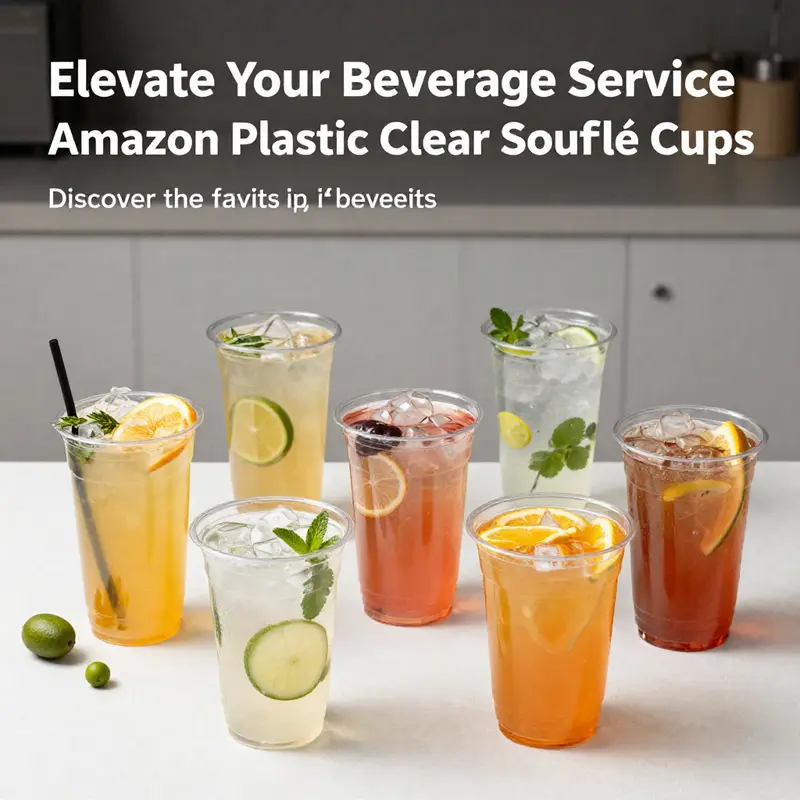
In the competitive realms of bubble tea shops, restaurants, and catering services, presentation and convenience are paramount. Amazon plastic clear soufflé cups provide an ideal solution for businesses seeking efficient portion control and stylish serving options. Throughout this exploration, we’ll delve into the product’s overview, material quality, and ideal capacity, while also examining growing market demand and potential environmental impacts. Each chapter is designed to provide essential insights that demonstrate how soufflé cups can enhance your operations and meet the evolving expectations of your customers.
Clear Portions, Clear Choices: How Plastic Soufflé Cups Shape Portioning and Presentation on Online Marketplaces
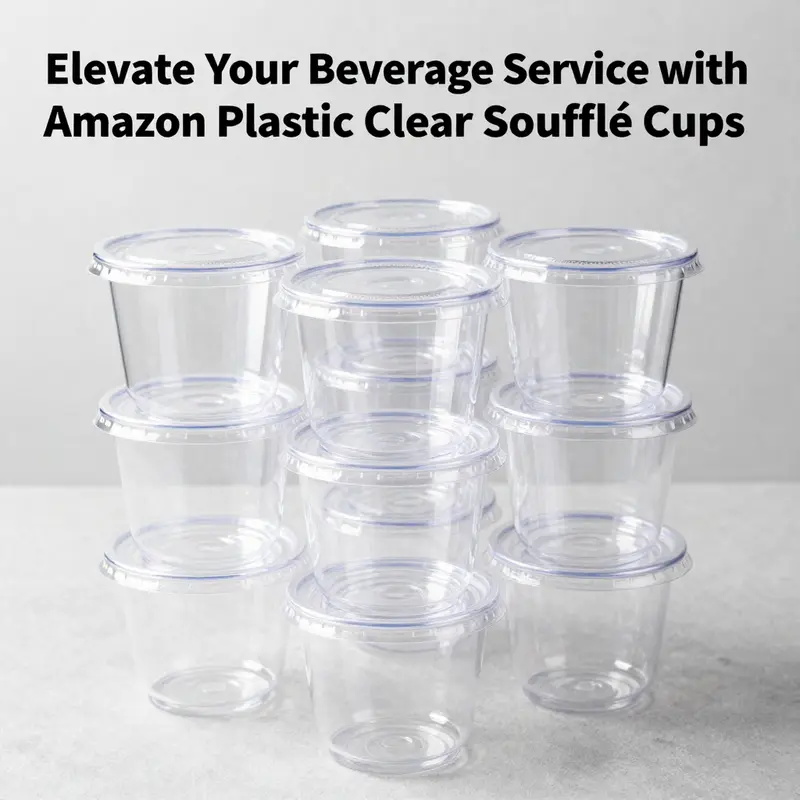
In the busy ecosystem of online shopping and quick-serve service, plastic clear soufflé cups have become a quietly indispensable tool. They are the small, transparent vessels that hold sauces, dressings, dips, desserts, and a range of other pre-portioned products with the kind of confidence that comes from a design tuned for both display and practicality. The appeal is not merely about seeing the content; it is about seeing it cleanly, safely, and in a way that invites trust. On major online marketplaces, where attention is brief and decisions hinge on visible quality, these cups perform a second, equally important function: they communicate portion control, serial readiness, and professional reliability at a glance. A common capacity landscape—ranging from tiny one ounce portions to larger five and a half ounce cups and beyond—speaks to the diverse needs of kitchens, caterers, and home meal preppers alike. In practical terms, the 2 ounce size, which sits at the confluence of shareable portions and portable convenience, has emerged as a standard workhorse for dressings, condiments, and creamy toppings. This capacity sits alongside other popular options, each chosen for a balance between usability during prep, stability in transit, and a display-friendly silhouette that honors the cleanliness of the product inside. The choice of material matters as much as the size. Food-grade polypropylene, often described by the absence of bisphenol A, or BPA-free formulations, is a recurring theme in the design of these cups. This emphasis on safety is not a mere marketing footnote; it translates into real consumer confidence. On the evidence side, retailers and manufacturers highlight that the cups are BPA-free and recyclable, aligning with broader consumer demand for packaging that respects health considerations and environmental impact. The transparency of the plastic enhances the product story. When you can clearly see the level, color, and texture of a sauce or a layered dessert, the purchase decision feels grounded in inspection rather than abstraction. The cups’ clear construction also makes quality control straightforward for both sellers and buyers: nothing hides behind a opaque wall, and any clumping, separation, or leakage is readily visible. In the logistics of online commerce, this mix of safety, visibility, and standardization translates to repeatable performance. These cups are commonly sold in bulk, a practical arrangement for professional kitchens and event planners who must manage inventories, forecast demand, and streamline restocking. Sets that include both the cups and secure, matching lids further simplify handling. The flat lids, a standard design feature, create a sealed barrier against leaks and spills while still presenting a clean, uniform profile that stacks neatly for shipping, storage, and front-of-house display. The combination of a leak-resistant seal, a transparent body, and stackable geometry forms a practical trifecta that many operators rely on, especially when takeaway and portability are priorities. In real-world use, the applications run far beyond the pantry and condiment bar. Salad dressings and sauces find a home in these cups, and so do jellied desserts, yogurt swirls, and small portions of fruit puree for tasting menus or sample stations. For home cooks who embrace meal prep, the cups offer an organized way to portion out meals, snacks, and baby foods, making it easier to maintain nutritional balance through the week while reducing the friction that often accompanies portion control. The adaptability of the format becomes especially evident at events and catering engagements. The cups can be part of a self-serve station, a dessert flight, or a tasting lineup, and their clear shells ensure that guests can quickly identify contents without exposing the contents to handling. In catering contexts, the ability to customize the presentation, add branding with labels, or pair the cups with themed lids, can elevate the perceived value of a offerings. The market dynamics behind the demand for plastic clear soufflé cups reflect broader trends in food service and home cooking. There is a discernible uptick in meal prepping and portion control, driven by the desire to reduce waste and to enable consistent serving sizes across multiple days or multiple service channels. The online marketplace environment amplifies this trend, with buyers seeking reliable, standardized packaging that can be counted on in bulk. The packaging itself becomes a form of communication: a clean, transparent vessel implies organization, hygiene, and predictability. To navigate this landscape, buyers often consider a few core criteria: material safety, capacity variety, lid performance, and packaging format. The material choice—whether PP or BPA-free plastics—addresses safety and compatibility with a range of sauces, dressings, and desserts. The capacity spectrum ensures there is a fit for both small samples and larger portions, a flexibility that is particularly valuable for meal prep and trial catering menus. The lid design matters as well; the flat lid is a sensible default that offers a reliable seal for transport while maintaining a low profile for stacking and storage. The packaging in bulk, such as sets that include multiple cups and lids, reduces procurement overhead and supports efficient kitchen workflows. These cups function as a bridge between the visible, appetizing presentation of a dish and the practical, behind-the-scenes demands of prep, transport, and service. They enable a consistent experience whether a customer is dining in, taking away, or sampling a new sauce or dessert in a tasting lineup. For those who want to visualize the category beyond the product page, a related example of the broader ecosystem of clear disposable cups can be explored through a category that emphasizes dessert-oriented and pastry-focused packaging options. See Clear cake cups for desserts for a reference point on how similar transparent vessels are used to create a coherent, appetizing display in event settings and retail displays. This reference helps illuminate how the design language of clear cups—transparency, clean lines, and uniformity—translates across related packaging formats, reinforcing the importance of consistent presentation and reliable performance in the online market. The conversation around these items also invites a note on sustainability and recyclability. While these cups offer practical advantages, there is continuing interest in improving the lifecycle of single-use packaging. Recyclability hinges on local infrastructure and consumer participation, and many options explicitly advertise BPA-free construction and recyclability as key selling points. In the end, the value proposition of plastic clear soufflé cups lies in their ability to convert a simple portion into a reliable, attractive part of the dining and shopping experience. They compress time and trouble: prep teams can portion quickly, delivery teams can protect contents in transit, and consumers can see exactly what they are choosing. They also encourage a disciplined approach to portion control, episode by episode, meal by meal, event by event. The effect may seem small, but in aggregate it shapes ordering behavior, reduces waste, and supports a smoother flow of goods from kitchen to customer. External resource: FDA guidance on food-contact materials provides a grounded reference for safety expectations and regulatory context when evaluating packaging choices that will meet both consumer protection standards and practical performance needs. https://www.fda.gov/food
Clear Measure, Clear Use: Material Make-Up and Quality of 2-Ounce Clear Soufflé Cups in Modern Food Service
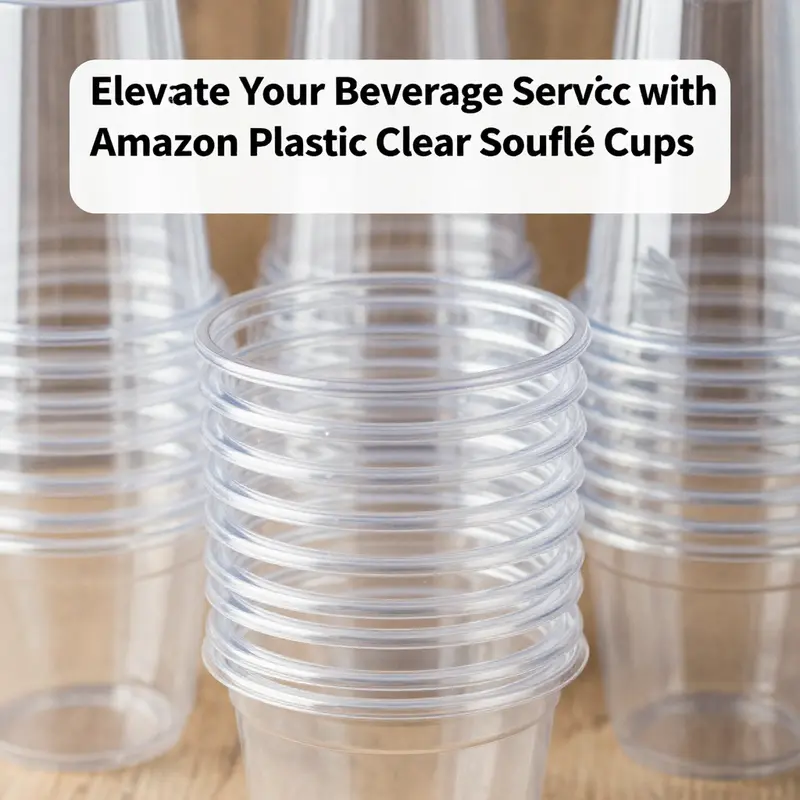
The 2-ounce clear soufflé cup occupies a small but essential niche in modern food service. It is compact enough for prep spaces and sturdy enough to hold sauces, dressings, samples, or dessert bites without losing shape or clarity. In a world of portion control and visual appeal, material choice and construction influence speed, safety, and presentation from prep to plate. At the core is a dependable food-grade polymer: polypropylene (PP) known for clarity, toughness, and resilience. The BPA-free standard is not just regulatory compliance; it signals safety and purity to cooks and customers. These cups are designed for single-use practicality, suited to catered events, samples, and fast-paced service where sanitation and speed matter.
Material performance matters beyond labels. Polypropylene’s crack resistance helps maintain form when filled with viscous dressings or thicker dips. In a busy line, a cracked or warped cup disrupts flow and risks leaks. A clear cup stays steady on the way from prep to guest. Clarity supports quick identification of contents, speeds service, reduces cross-contamination, and aids accurate portioning. In lines with multiple sauces, visibility helps servers and guests distinguish between sauces without removing lids or inspecting contents.
Design features support real-world use. Cups are disposable, a practical convenience that does not undermine reliability. A tight-fitting lid improves spill resistance and transportability. Stackability helps with space constraints in busy kitchens or catering setups.
Safety and standards underpin every feature. The PP base tolerates cold-to-warm transitions common in condiment service or dessert sampling, while heating is usually not recommended. Freezing is possible for samples or frozen desserts, with careful handling to avoid cracking. Environmental considerations are important; disposal guidance and recycling options vary by region, so buyers should select recycling streams where available and follow local waste guidelines.
Marketplace context matters in bulk orders, where consistent material performance becomes a differentiator. Clear, glass-like transparency builds trust and aids inventory management, enabling quick confirmation that contents are fresh and properly portioned. This combination of safety, visibility, and practicality makes 2-ounce clear soufflé cups a versatile tool for home cooks expanding into small-scale catering and for professional operations aiming for repeatable results.
Clear, Contained, and Convenient: Capacity, Material, and Usability of Market-Ready Plastic Soufflé Cups

In the modern landscape of food preparation, presentation and portion control often converge in a single, unassuming tool: the clear plastic soufflé cup. It may seem small, yet it plays a surprisingly versatile role in kitchens ranging from home meal preppers to high-volume caterers. The appeal rests on a simple combination: a transparent vessel that reveals its contents, a compact size that supports precise portions, and a design that translates easily from prep work to service. When we examine the capacity, material, and usability of these cups, a cohesive picture emerges of how such a seemingly modest item helps shape both everyday dining routines and professional catering workflows. Capacity, in particular, reveals a spectrum rather than a fixed standard. Across listings, these cups appear in sizes that span tiny tidbits and generous samples to standard servings. Some options hover around the one-ounce mark, with capacities near 29 milliliters, while others edge up to about 1.25 ounces (roughly 35 milliliters). Even more common is a midrange—about 5.5 ounces, or roughly 156 milliliters—often marketed as a “portion cup” that can accommodate dressings, sauces, or dessert morsels. A 2-ounce size, typically around 59 milliliters, also surfaces as a standard in many catalogs and food-service contexts. This variety is not accidental; it reflects the diverse needs of users who must balance visual appeal, portion control, and transportability. A 2-ounce cup can be ideal for dipping sauces at a bar, while a 5.5-ounce cup may better suit a tasting flight or a more substantial dessert sample. The presence of such a range ensures that a single category of containers can support a broad set of tasks, from delicate garnish cups to compact trial portions and beyond. In practice, the multiplicity of capacities translates into practical decisions about menu design, event planning, and home cooking. The smallest sizes are often favored when a dish needs a controlled taste or when sampling is essential—think of sauces that accompany a plated item or jelly shots at a reception. The larger options become benchmarks for portioning a side, a dip, or a small dessert during busy service periods or at catered events with a self-serve format. The upshot is that the marketplace recognizes a simple truth: portion control is not monolithic, and the tools used to implement it must accommodate a variety of portion scales without demanding compromises in presentation or accessibility. Material and safety considerations reinforce the practicality of these cups. The clear cups are typically made from food-grade plastics such as polypropylene or PET, chosen for their balance of clarity, rigidity, and user safety. The transparency is not merely aesthetic; it enhances the dining experience by letting guests or customers instantly see the contents, which is especially valuable for visually oriented presentations like layered dressings, color-rich sauces, or dessert assortments. When lids are included, the combination becomes a reliable option for on-the-go consumption, catering logistics, and prep-heavy workflows where contents must be preserved during transport. Even with a lightweight construction, these cups can offer reliable performance for a range of temperatures and contents, provided the material specifications align with the intended use. In many cases, the cups are designed to be leak-resistant or leak-proof when paired with matching lids, a feature that significantly reduces risks during transit or buffet-style service. For home cooks and small businesses alike, the ability to stack, store, and retrieve these cups without deformation or breakage further enhances their value. The ease of storage is not merely about saving space; it translates to lean inventory management and faster service during peak times. A clear, stackable design minimizes the cognitive load of stocking and restocking, allowing staff to focus on efficiency rather than rummaging through cluttered cupboards. Beyond the mechanical utility, there is a branding dimension that often proves decisive for commercial users. The cups’ sheer visibility makes them an attractive canvas for logos, labels, or color-coding schemes that streamline line work and reinforce a brand identity at events or in retail settings. The combination of clear material and compatible lids makes branding feasible without sacrificing practicality, enabling cafés, bakeries, and caterers to deliver a cohesive, on-brand experience with minimal friction. This capability dovetails with broader consumer trends toward convenient, apartment-friendly meal prep and portable meals. The rise of meal-prepping culture, together with the demand for precise portioning, has elevated these cups from niche tools to everyday staples in both kitchens and service environments. It is not only about the cup itself; it is about what the cup enables—the efficiency of pre-portioned ingredients, the clarity of presentation, and the simplicity of cleanup after service. In practice, the cups serve multiple roles across contexts. For home users, they support organized refrigerator storage, quick-meal assembly, and a tidy way to portion condiments or snacks. For professional contexts, they become practical test beds for new sauces or dressings, convenient samples for tasting events, or compact packaging for takeout and catering portions. Their liquid or semi-liquid content, once placed inside, is easy to view, easy to handle, and easy to portion out for the consumer. This combination of features—capacity variety, food-grade materials, leak-resistance potential, and branding-friendly clarity—speaks to a broader design philosophy: a tool should be as adaptable as the people who use it. Within a compact footprint, it must perform reliably across the spectrum of everyday cooking, seasonal catering, and event-centered service. It should also accommodate the practical realities of modern consumption, where people expect portability, clean presentation, and minimal waste. The internal logistics of using these cups echo those expectations. The packaging often comes in bulk sets that are economical for both home cooks and businesses, with hundreds of cups paired with lids ready for rapid deployment in service lines or at home meal-prep stations. This bulk approach aligns with the growing appetite for bulk purchases in both consumer and commercial markets, where the objective is to minimize restocking frequency and maximize throughput during busy periods. The net effect is a tool whose value scales with need: a compact option for intimate gatherings and a robust, scalable solution for larger events or restaurant service. For readers navigating the broader ecosystem of disposable, clear plastic containers, this chapter highlights how a deceptively small object can ripple outward, shaping preparation strategies, display aesthetics, and operational efficiency. To situate this discussion within a wider context, consider the broader family of disposable, clear, portion-focused containers used across food service and home kitchens. Disposable clear plastic cup for parties and events. The link points to an example of how such containers are positioned for events and everyday use, offering a tangible sense of the kinds of arrangements that make these cups both practical and market-ready. As you move forward in this chapter and into subsequent sections of the article, the emphasis remains on how capacity, material, and usability converge to produce a tool that is at once simple in form and powerful in function. These attributes explain why clear souffle cups have become a familiar component in kitchens and service setups that prize efficiency, presentation, and dependable performance. External safety and regulatory considerations underpin these advantages, ensuring that what is used to hold a sauce or a dessert is safe for consumer contact. For a broader understanding of food-contact safety guidelines and labeling, an external resource provides a useful overview of pertinent standards and practices. External resource: https://www.fda.gov/food-safety
Clear Portions, Flexible Possibilities: The Role of Plastic Clear Soufflé Cups in Modern Food Service and Home Prep

The rise of plastic clear soufflé cups on online shelves signals more than a simple preference for convenient packaging. It reflects a shift in how people think about portioning, presentation, and hygiene in everyday meals and events. The 2-ounce size, a longtime companion to sauces, dressings, and dessert portions, offers a reliable measure that fits neatly into busy workflows. Its compact footprint is not merely a space saver; it is a tool that enables precise portioning, reduces waste, and supports consistent serving—an outcome appreciated by professional kitchens and home cooks alike. When the walls are transparent, the contents are easily seen, and this visibility matters as much for the eye as for the palate. A quick glance reveals the color, texture, and portion size, helping servers, caterers, and self-serve guests make accurate choices without opening containers. The simplicity of the design—clear plastic, a secure lid, and a slim, stackable form—translates into tangible benefits in both preparation and presentation. The materials are chosen not only for clarity but for safety and durability, with food-grade standards that reassure users about the integrity of the contents during handling, transport, and display. In a world where meals travel from kitchen to conference hall to home dining table, having a container that can withstand bumps and brief drops without compromising the lid seal is essential. The emphasis on leak resistance and stackability is not a luxury but a necessity for any operation that values efficiency. Leaks can ruin sauces and dressings, create messy transports, and compromise hygiene. A construct that resists leaks while stacking neatly saves time and space, two commodities that often determine whether a prep or service runs smoothly. The transparent design also matters in crowded environments where quick decisions count. Take a catering event with a dozen stations, a row of service tables, and a steady stream of guests. The ability to pre-portion items in clear cups before service reduces the risk of cross contamination and speeds up the moment when staff place cups in front of guests. In this sense, the cups are not just vessels; they are enablers of consistent quality and faster service, which is especially valuable in settings where staff must juggle multiple tasks at once. The practical benefits extend beyond the professional kitchen. Home meal prep has seen a notable uptick in organized, health-conscious routines. Individuals who plan breakfasts, snacks, or light meals for the week rely on clear cups to portion yogurt parfaits, puddings, fruit, or small servings of soups and salads. The BPA-free and food-grade assurances often highlighted by manufacturers address a central concern for modern consumers: safety. When a container is slated for daily use in a microwave, fridge, or lunch bag, it must withstand temperature changes and frequent handling without degrading, staining, or warping. The clear cups fulfill this expectation by balancing rigidity with a certain pliability that keeps lids secure while remaining easy to separate from stacks. The design invites experimentation. A simple cup can hold sauces, dips, jellies, or dessert morsels in inventive combinations, allowing caterers and home cooks to showcase texture and color in a way that a opaque vessel cannot. The result is a versatile platform for small portions that invites creativity, from dressings swirled over greens to bite-size desserts that tempt without overwhelming. In the world of branding and promotion, these cups become an implicit canvas for exhibitors at events and retailers eager to sample new flavors or showcase signature sauces. Custom lids or printed lids can turn a plain utility item into a branded touchpoint, extending a restaurant’s or bakery’s identity into the moment of sampling. The moment is brief, but it is powerful: a guest receives a pristine, transparent cup that reveals the content and, with the right lid, carries a hint of branding and professionalism. The reach of such packaging extends into the realm of event planning and hospitality, where the same cups support tasting stations, goody bags, and gift samples without demanding heavy investment in specialized packaging. This broad applicability—across food service, home meal prep, and promotional events—helps explain why a simple clear soufflé cup has become so prevalent in online marketplaces. The capacity spectrum from tiny to mid-range offers flexibility for cooks who need to balance quantity with freshness and portion control. In many markets, mid-range options like the 5.5-ounce category are frequently sought after for samples and certain dessert applications, while the staple 2-ounce portion suits sauces and dressings that accompany entrees or salads. The market response to this breadth of options is reinforced by the convenience of bulk packaging commonly available in large, economical bundles. Businesses appreciate the economies of scale, the ability to stage prep or service efficiently, and the uniformity of appearance across a fleet of cups. Uniformity matters as much as clarity; when every cup looks the same, the experience feels orderly and professional, which, in turn, elevates the perceived value of the product inside. This is especially true in brand-conscious settings where even the smallest details contribute to the overall guest impression. The interplay between practicality and presentation drives demand in multiple directions. In customer-facing environments, the ease of handling and visibility of contents appeal to managers who prioritize speed and accuracy. For home users, the simplicity of use supports consistent portions, which is a cornerstone of healthy eating and mindful meal planning. Safety considerations—the emphasis on food-grade materials and minimization of chemical exposure—align with a broader consumer shift toward transparent, trustworthy packaging. The result is a packaging niche that blends functionality with aesthetic clarity, a combination that resonates across professional kitchens, home cooks, and event organizers alike. Within this landscape, a single packaging choice can ripple outward, reducing waste, heightening efficiency, and shaping consumer perception of a brand or venue. For readers exploring the practical side of this topic, insights into themed takeaway packaging offer a useful lens on how packaging choices influence customer experience at events and in everyday settings. See the resource on custom takeaway packaging supplies for theme parties for a sense of how design and utility converge in real-world applications. custom takeaway packaging supplies for theme party. This example underscores how even commonplace items can become strategic assets when their form supports both practical use and memorable branding. In sum, the market for clear plastic soufflé cups reflects a balance of visibility, reliability, and adaptability. Their success rests on simple physics—clarity to view, a secure seal to protect, and a form that stacks and travels well—paired with a growing appetite for portion control, both in professional kitchens and in home meal routines. As consumer lifestyles continue to emphasize convenience without sacrificing safety or aesthetic appeal, these cups are likely to remain a steady, versatile tool in the modern food ecosystem. For a broader sense of current demand dynamics and to situate these cups among other disposable serving containers, consider the ongoing listings and best sellers on major online platforms. External resource: https://www.amazon.com/gp/bestsellers/home-garden/6849370011/
Clear Cups, Clouded Footprints: Rethinking Sustainability in Everyday Souffle Cups

The familiar, clear 2-ounce souffle cup sits at the intersection of convenience and waste. In busy kitchens, catering events, and home meal-prep routines, these little vessels offer a tidy solution for dressings, sauces, dips, and dessert portions. Their translucent walls reveal what’s inside, a feature prized by cooks and customers who want to gauge portions at a glance. But the same attributes that make them so practical—stackability, light weight, and a predictable size—also complicate their environmental footprint. The lifecycle of a clear plastic cup begins with resin chemistry and ends far from the plate it accompanies, often in a landfill, an incinerator, or a recycling stream that may or may not accept it. The choices we make about materials, disposal, and downstream waste management ripple through marine ecosystems, urban sanitation systems, and even the economics of foodservice operations. In this chapter, we examine how these cups are produced and used, what happens to them after use, and how individuals and businesses can tilt the balance toward more sustainable outcomes without sacrificing the practical benefits that make them so popular in the first place.
Material choice matters most in determining a cup’s ultimate fate. The most common families of plastic used for these cups fall into three broad categories: polypropylene, PET, and plant-based alternatives such as polylactic acid (PLA). Each material carries its own set of advantages and limitations. Polypropylene is valued for its toughness and clarity, and it is widely accepted in many curbside and commercial recycling programs. PET is similarly recyclable and offers excellent transparency, albeit sometimes at a higher processing cost or with more stringent recycling stream requirements. Plant-based PLA, derived from renewable resources like cornstarch, promises lower fossil fuel reliance and a clearer path to industrial composting in some facilities. The critical caveat, however, is that compostability is not universal. Industrial composting facilities vary by region, and a cup that is labeled compostable may not break down in a standard municipal yard-waste heap or in a home compost bin. Certification is essential here; a credible program assigns a specific process to industrial composting and provides performance standards for temperature, time, and residue. Without such certification, the environmental benefits can be uncertain, and the cup may simply shift waste toward the same fate as traditional plastic.
This distinction between recyclability and compostability illuminates a broader truth about single-use packaging in today’s economy. Recyclable plastics help divert material from landfills, but recycling rates and contamination challenges often limit real-world impact. In commerce and home use alike, cups frequently end up contaminated with sauces, oils, or food particles, which reduces recyclability and can cause entire batches of collected material to be rejected at sorting facilities. Contamination is a stubborn barrier; it turns streams that could otherwise be reprocessed into feedstock for new products into waste. Compostable cups present a different path—one in which organic matter is converted to useful compost rather than being incinerated or landfilled. Yet even compostable cups face hurdles: industrial facilities with the right temperature and microbial conditions are not everywhere, and mixed waste can render compostable items non-compostable if they end up in the wrong stream. This is where the certification landscape—such as programs that verify industrial compostability—becomes a practical compass for buyers who want to be sure they are choosing materials that actually fulfill their promise.
Beyond the material itself, the design and packaging of these cups influence sustainability outcomes. A cup’s size and lid compatibility determine how often it is used and how securely it travels from kitchen to table. The 2-ounce capacity aligns with portion-control practices, supporting consistent servings in both home meal-prep setups and food-service operations. But the packaging that accompanies these cups—whether bulk cases or nested sets—adds another dimension to the environmental equation. Bulk purchases can lower per-unit packaging waste when they reduce the frequency of shipments and the amount of secondary packaging. Conversely, a bulk bundle that uses excessive or non-recyclable outer wrapping can erode the gains achieved by efficient portioning. From a lifecycle perspective, the best packaging is the packaging that minimizes material use while maximizing end-of-life options, an equation that often requires a careful balance between practical handling and ecological responsibility.
A meaningful way to frame sustainable choice in this context is to consider end-of-life management as a functional design requirement, not an afterthought. When a foodservice operation opts for single-use cups, it should do so with a clear plan for proper disposal. If the facility has access to an industrial composting stream, a compostable cup makes sense in terms of material diversion. If not, a recyclable option may be preferable, provided the local recycling program accepts the specific resin type and can handle contamination control. In many communities, consumer education becomes pivotal: diners and staff alike must understand what goes where and why. Simple labeling of cups with universal symbols and clear disposal guidance can improve compliance. For households, the decision often hinges on convenience versus impact. A reusable container entails rinsing and handling, but repeated use can dramatically reduce annual waste. Reusable options, when feasible, represent a high-leverage move toward a lower footprint for frequent users. In temporary settings such as events or pop-up venues, offering portable reusable service ware—alongside compelling recycling or composting options—can demonstrate a practical commitment to sustainability without sacrificing service speed or presentation.
The social and economic dimensions of cup sustainability also deserve attention. Businesses that adopt responsible packaging practices may incur higher upfront costs or require changes to supply chains. Yet these costs can be offset by longer-term savings from reduced waste disposal fees, improved brand image, and the appeal of environmentally conscious service. Consumers increasingly expect clear stewardship from the brands and venues they patronize, and transparency about disposal options can strengthen trust and loyalty. On a systemic level, the push toward more sustainable options for disposable cups intersects with broader conversations about plastic reduction, the circular economy, and the development of infrastructure capable of supporting compostable or recyclable streams. In this sense, the cup is more than a container; it functions as a node in a network of choices that can reshape how communities manage waste and how industries innovate around packaging.
For readers who want to explore practical supplier options beyond the familiar tradeoffs of reuse versus single-use, there is value in seeking out packaging lines that emphasize eco-friendly takeout and sustainable design. Such offerings extend beyond the cup itself and include lids, sleeves, and the associated wrappers that factor into a product’s overall environmental profile. When choosing a supplier, it can help to look for statements about material origin, certifications, and any claims about end-of-life pathways. The goal is to connect the dots between what is used, how it is disposed of, and what that disposal means for the broader environment. In a market flooded with quick solutions, the best decisions come from a deliberate assessment of the entire lifecycle and a commitment to closing the loop wherever possible. For readers who want to learn more about the evolving landscape of sustainable takeout packaging, a representative range of eco-friendly takeout boxes for food packaging can be a useful starting point, described here in the broader context of responsible packaging choices: eco-friendly takeout boxes for food packaging.
In the end, the appeal of clear soufflé cups lies in their reliability and the precise control they enable over portions. The question of sustainability does not demand abandoning convenience; it invites smarter choices that align function with responsibility. Consumers and operators can favor materials with proven end-of-life options, demand credible certifications, and invest in practices that reduce waste, increase reuse, or improve recovery. The path forward is not a single answer but a spectrum of possibilities that reflects local infrastructure, product design, and the willingness to integrate environmental thinking into everyday decisions. As this chapter has explored, understanding the trade-offs between recyclability and compostability, recognizing the role of contamination, and supporting systems that actually process these materials are essential steps toward a future in which convenience and sustainability travel together rather than diverge. External resources and ongoing industry dialogue will continue to shape what “clear” means in the context of a cup’s footprint, guiding both buyers and makers toward choices that keep waste from becoming wasteful habits. External resource: Industrial compostable plant-based cups
Final thoughts
Incorporating Amazon plastic clear soufflé cups into your food service offerings presents numerous advantages, from enhanced presentation to increased operational efficiency. Their durability, usability, and appeal make them a valuable asset for any beverage-focused business. As you consider your packaging options, remember the growing demand for convenience and sustainability among consumers. By adapting your services to include these practical cups, you not only meet customer expectations but also set your business apart in a competitive landscape.