

The demand for convenient, eco-friendly beverage solutions is at an all-time high, particularly for businesses like bubble tea shops, restaurants, and catering services. Asda’s range of disposable paper cups stands out in this market, providing both functionality and style. In the chapters ahead, we will explore Asda’s disposable paper cups, their features and specifications, sustainability considerations, and economic influences that drive demand, all critical aspects for event planners, food trucks, and corporate procurement teams seeking reliable products.
Mass-Scale Convenience and Quiet Sustainability: An In-Depth Look at Asda’s Private-Label Disposable Paper Cups
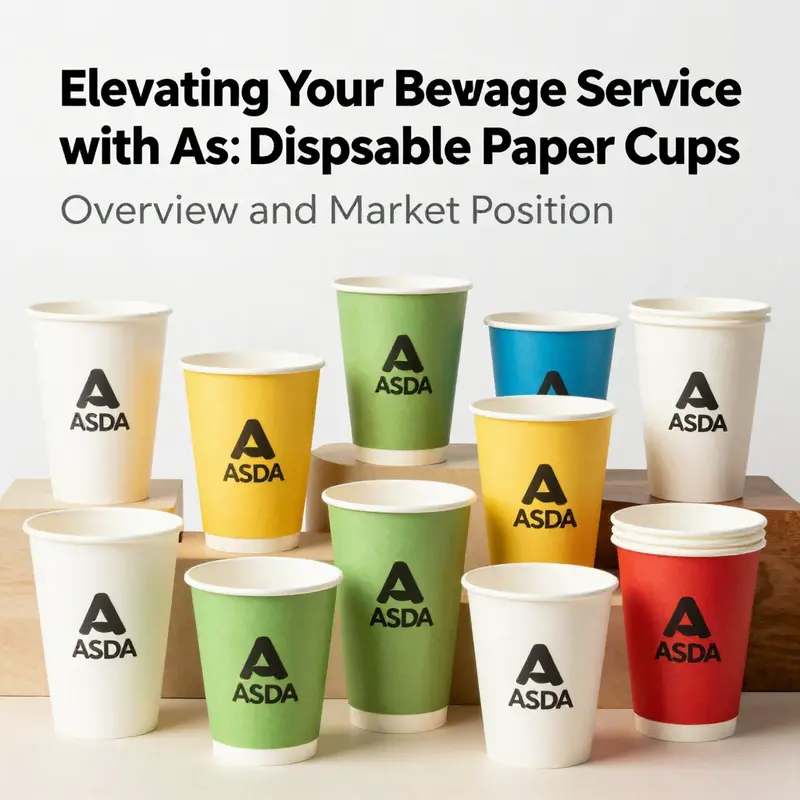
In the crowded arena of everyday tableware, one category stands out for its relentless drive toward practicality and price efficiency: disposable paper cups. Within the United Kingdom’s major retail network, a private-label line from a prominent superstore group has become a touchstone for households, small offices, and casual gatherings. The narrative around these cups is not simply about a single product; it reveals how a large retailer’s sourcing choices, pricing strategies, and sustainability claims shape consumer expectations, supplier dynamics, and the broader discourse around single-use items. This chapter weaves a cohesive portrait of Asda’s private-label disposable paper cups, tracing how they are positioned, what they are made of, and how their availability and messaging reflect the competing pressures of cost containment and environmental responsibility. It also considers how such products sit within a rapidly evolving UK market where waste reduction policies, recycling infrastructure, and consumer awareness continuously press for more responsible choices, even while budget considerations remain dominant for many shoppers.
At the heart of the discussion lies a simple, powerful truth: scale is the decisive force in the disposable cup market. As a large retailer with extensive store networks and a high-volume distribution system, the private-label assortment operates on margins that prioritize affordability and ubiquity. The cups designed under this private-label umbrella are marketed as practical, hygienic, and convenient—everyday solutions for serving hot or cold beverages at home, in small offices, or during casual social events. Their value proposition centers on the everyday usefulness of a straightforward, low-cost tool that can be trusted to perform reliably during a busy morning rush, a relaxed coffee break, or a community gathering. In this sense, the product category becomes less about novelty and more about dependable performance and predictable pricing, both of which matter deeply to cost-conscious shoppers and to retailers seeking steady turnover.
A closer look at the product construction reveals a pragmatic approach to materials and safety. The disposable cups offered under the private-label line are typically produced with food-grade paper stock. The inner lining varies by variant, with polyethylene (PE) linings remaining a standard choice for many hot and cold beverage applications, due to their leak-resistance and general durability. In addition, there are biodegradable options that leverage a polylactic acid (PLA) lining, derived from renewable plant sources, such as cornstarch. These variants are positioned to appeal to shoppers who want an eco-friendly option without stepping away from the familiar convenience of a disposable cup. The presence of PLA-lined choices signals alignment with broader sustainability narratives that emphasize renewable materials and compostable pathways, even as debates continue about grid-capable composting infrastructure and end-of-life outcomes. While the exact breakdown of SKUs and their environmental claims is not always published in granular form, the public-facing messaging in many markets highlights a commitment to responsible sourcing, FSC certification standards where applicable, and a broader intent to reduce plastic waste. In practice, this means the cups carry the same everyday usability while offering a more sustainable option for consumers who plan to dispose of them in a way that aligns with local waste-management capabilities.
From a design standpoint, the emphasis remains on practicality. The cups are shaped for easy handling, with ergonomic considerations aiming to reduce the risk of spills and to facilitate straightforward use in homes, offices, or informal events. The rims are designed to be compatible with typical lids and sleeve accessories found in the broader dispense ecosystem, and the overall geometry supports a smooth drinking experience across a range of beverages. The focus on leak resistance, heat retention for hot drinks, and user comfort reflects the way mass-market disposable cups must perform under diverse, real-world conditions. While the goal is not to replace durable, reusable options, these cups fulfill a critical function by offering a hygienic, convenient, and familiar alternative—one that many shoppers turn to for quick, low-commitment beverage service.
The market positioning of these private-label cups is inseparable from the retailer’s broader category strategy. In a sector characterized by intense price competition and rapid stock turnover, the ability to deliver a consistent, low-cost product becomes a competitive differentiator. Asda’s private-label disposable cups benefit from the retailer’s scale—long-standing supplier relationships, centralized procurement, and efficient distribution channels—allowing them to occupy a high-volume, accessible shelf presence. This alignment with scale translates into tangible advantages for shoppers who value affordability and predictability in their everyday purchases. It also situates the cups within the mass-market segment where value and convenience drive purchase decisions, as opposed to premium or specialty segments that prioritize design novelty or high-end materials. The result is a product that serves as a reliable default choice for large parts of the population, particularly during periods of heightened demand, such as back-to-school seasons, family gatherings, or communal events where disposable options become practical by necessity.
Yet, even within this mass-market framing, sustainability messaging plays a meaningful role. The private-label cups sit at the intersection of cost-consciousness and environmental awareness. The availability of PLA-lined, compostable or biodegradable iterations signals an attempt to thread the needle between affordability and responsible consumption. It is worth noting that the environmental narrative around compostable or bio-based linings is nuanced. Compostability claims depend on local waste streams and composting facilities, and consumer understanding of end-of-life options continues to evolve. For many shoppers, the appeal lies in knowing there is a more sustainable alternative without forfeiting convenience or incurring a notable premium. Retailers, in turn, rely on consumer preferences to guide assortment choices, while also leveraging third-party certifications and transparent labeling to support credible sustainability claims. In other words, the environmental story supplements the everyday value proposition rather than redefining it; it broadens the appeal to a subset of shoppers who actively seek lower-impact options without sacrificing the simplicity of a disposable cup.
Availability and distribution are the practical anchors of the chapter’s narrative. These cups illustrate the typical retail pathway: broad in-store presence complemented by online access, with bulk-quantity or family-sized packs designed to accommodate both households and small-scale events. The emphasis on convenience extends beyond the shelf. The retail framework supports quick, one-stop shopping experiences where consumers can pick up a familiar product alongside coffee, tea, and other everyday staples. For businesses and individuals seeking larger volumes, the retailer’s platform often provides straightforward purchasing options and predictable lead times. This approach contrasts with manufacturers that focus on specialized OEM production or large-scale customization. Instead, the private-label strategy prioritizes accessibility, consistent quality control across SKUs, and the ability to respond quickly to shifts in consumer demand or seasonal campaigns. The result is a dependable, easy-to-navigate offering that reinforces the retailer’s role as a reliable supplier of everyday consumables.
From a consumer behavior lens, the cups are well aligned with current realities. Shoppers value the balance between cost, convenience, and cleanliness, especially when hosting or coordinating small events. The ergonomic considerations—such as comfortable grip, stable stacking, and compatibility with typical lids—contribute to a smooth user experience. In households and small offices, these attributes translate into fewer frictions during busy mornings or informal gatherings. The capacity range commonly covers standard beverage sizes, making the cups versatile for different drink types, whether it is coffee, tea, juice, or water. The result is a product that is easy to recommend within a family budget, and easy to replace when damage or loss occurs, which in turn supports high repeat purchase rates in a competitive category.
The environmental dimension remains an ongoing, evolving thread. While absolute claims of environmental superiority can be complex, the private-label cups’ sustainability messaging reflects a broader industry push toward responsible packaging and waste reduction. Initiatives to curb plastic waste and to promote recyclable or compostable packaging across product lines signal a corporate commitment that resonates with a broad spectrum of shoppers. The interplay between cost, convenience, and environmental considerations continues to shape consumer choices. For some, the PLA-lined variants offer a pathway to reducing fossil-based plastic content in everyday use. For others, the PE-lined options remain the pragmatic baseline that satisfies immediate needs at the lowest possible cost. This spectrum allows Asda’s private-label assortment to capture a wider audience while staying true to its core strengths: value, reliability, and accessible sustainability messaging.
In assessing the chapter’s broader significance, it is important to acknowledge the limitations of publicly available data. Detailed technical specifications, market shares, and internal product development roadmaps are rarely disclosed in full by retailers, particularly for private-label lines. What remains clear is that the private-label disposable cups function as a strategic instrument in the retailer’s assortment: a durable, low-cost option that reinforces the retailer’s value proposition, while offering optional eco-friendly variants that appeal to growing segments of environmentally conscious shoppers. By balancing these elements, the retailer can maintain shelf space in a highly competitive category and respond nimbly to evolving consumer expectations and policy environments. The cups thus become a microcosm of the broader retail approach to sustainability in the single-use sector: a measured blend of accessibility, practicality, and credible environmental messaging rather than a departure into niche or highly specialized products.
For readers seeking a concrete touchpoint in the product landscape, consider exploring bulk disposable paper cups that illustrate how such packaging is used at scale across consumer and small-business settings. This example highlights how a standard, affordable option can become a staple of everyday life while still accommodating a forward-looking environmental narrative. The link below leads to a source that discusses bulk disposable paper cups and their place in the broader supply ecosystem, offering a practical reference for how these products are positioned and consumed in real-world settings: bulk disposable paper cups.
In sum, Asda’s private-label disposable paper cups exemplify how a mass-market retailer translates scale into value without sacrificing the option of more sustainable choices. They illustrate the delicate equilibrium between cost leadership and environmental responsibility that defines much of today’s disposable tableware landscape. The narrative is not about a single, spectacular product launch; it is about a steady, strategic offering that supports daily routines while signaling a commitment to responsible packaging. The story continues to unfold as policy shifts, consumer expectations, and recycling infrastructure evolve, compelling retailers to adapt their assortments and messaging to meet the moment.
External reading for context and ongoing updates can be found at the official retailer site, which provides current information on product availability, pricing, and sustainability claims: https://www.asda.com.
In Search of Clarity: Asda Disposable Paper Cups, Their Hidden Features, and the Broader Landscape of Retail Packaging
Even a casual shopper eyes the cup in a busy café line and assumes the story ends with a simple sip. But when the focus widens to a major UK retailer’s disposable paper cups, the narrative becomes a study in packaging science, supply chains, and the evolving ethics of convenience. The initial impulse to pin down a precise list of features and specifications for a product bearing Asda’s name is immediately tempered by reality: publicly accessible, granular product data for specific store-brand disposable cups often does not surface in consumer-facing materials. In other words, the data you expect to stand behind a familiar label may live behind procurement portals, internal catalogs, or competitive bidding documents that remain opaque to the public. This is not a failure of transparency so much as a reminder of how retail packaging operates in the modern era. A national chain’s cup is less a single, monolithic item than a portfolio of choices shaped by suppliers, regional regulations, sustainability commitments, and shifting consumer expectations of what “disposable” should mean in a world that increasingly questions wasteful habits.
To begin with, a disposable paper cup sold in a supermarket or café network is, at heart, a piece of engineering that must perform under pressure. It needs to hold hot beverages without buckling, resist grease from milk and sugar, insulate the liquid long enough to prevent scalding fingers, and be compatible with widely used lids and sleeve systems. In a general sense, these cups come in a few architectural flavors. There are the straightforward single-wall cups, designed for moderate temperatures and shorter use cycles. Then come double- or even triple-wall alternatives, which add insulation to keep drinks hotter longer and reduce heat transfer to the outer surface. This is not just about comfort; it affects the user experience, the likelihood of spills, and, ultimately, the cup’s acceptance in the consumer’s daily life. For supermarket fleets that operate cafés, food courts, and in-store grab-and-go counters, the choice among these designs is a balance of cost, user comfort, and the operational realities of quick-service venues.
Material composition sits at the core of what makes a disposable cup perform as advertised. The cup’s exterior paper must be compatible with the interior lining that provides a barrier against liquid seepage. Most traditional cups rely on a polyethylene (plastic) coating or a similar barrier layer that seals the paper from moisture while maintaining a low cost profile. In recent years, the packaging industry has increasingly discussed alternative coatings—often compostable or biodegradable liners such as polylactic acid (PLA) coatings or other bio-based barriers. The promise of compostable coatings is attractive, especially as more retailers strive to present environmentally friendlier options. Yet the practical reality remains nuanced. Bio-based coatings require specialized industrial composting facilities to deliver their promised end-of-life outcomes. If a cup with a compostable lining lands in a municipal recycling stream rather than an industrial facility, it can contaminate the batch and complicate recycling efforts. This complexity underscores a broader truth: sustainability claims in consumer packaging are not simply about the material label but about the entire lifecycle from procurement to end of life.
Within the context of a large retailer, the specification sheet that defines a cup’s true performance often exists in a spectrum rather than a single line item. A supplier might advertise a double-wall construction for improved insulation, a liner that resists grease, and a surface printing option for brand visibility. But the real-world grade of a cup can vary by batch, by supplier, and by the standards the retailer accepts in different regions. The consumer-facing description may emphasize aesthetics—color, printability, and sleeve compatibility—while the procurement desk may demand details about barrier properties, heat resistance, and compatibility with the chain’s standard lids. In practice, a cup is a small, highly engineered module within a much larger system of beverage service. And because a chain’s operations span multiple sites with diverse equipment, the same cup may be deployed in slightly different configurations depending on the local cafe’s equipment and drink offerings.
What does this mean for readers seeking to understand “Asda Disposable Paper Cups: Features and Specifications”? It means that any definitive public list of features is likely to be incomplete or generic. The chain sources cups from a mix of suppliers, and the exact model used in a given store may not be cataloged in an accessible consumer resource. It also means that the public discussion of such cups tends to drift toward broader themes—sustainability metrics, recyclability, and consumer behavior—rather than a precise, product-by-product feature set. This is not an indictment of the retailer’s packaging strategy; rather, it’s a reflection of how modern retail packaging operates at scale. When millions of cups are deployed across hundreds or thousands of points of sale, the packaging choices must be robust, versatile, and cost-aware while still addressing the growing demand for responsible material use.
One practical implication for researchers, writers, and curious readers is that the journey to assess a chain’s cup portfolio becomes a study in comparative packaging analysis rather than a simple read of a single product sheet. If a reader wants to understand what features might define a typical supermarket cup, it is useful to consider the common specifications that supplier catalogs emphasize: capacity, wall thickness, insulation level, coating type, lid compatibility, and branding opportunities. Capacity, often expressed in ounces, is a straightforward metric—8, 12, 16 ounces being common sizes for hot beverages. The wall design, whether single or double, informs both user comfort and dripper risk. The barrier layer tells a tale about how the cup behaves when steamed drinks meet bold flavors and sugar. The compatibility with standard lids determines how well a coffee-to-go experience travels from store to street. All of these factors converge in a single product that is almost invisible to the naked eye until it fails or excels in use.
The discourse around a retail cup also dovetails with broader debates about single-use packaging in a circular economy. In many markets, the conversation has evolved beyond the question of whether a cup can be recycled to ask whether it should be recyclable, compostable, or reused in a different form. The trade-offs are real. A cup with a slick, water-resistant inner layer can be more inert to moisture but harder to recycle because the coating complicates separation from the paper fibers. Conversely, a cup that uses a more straightforward laminate may be easier to recycle in some systems but might struggle with heat retention or grease resistance. Retailers face a delicate calculus: reduce waste by selecting materials that are easier to process in existing facilities, or push for newer materials that promise superior end-of-life outcomes but require major upgrades to recycling or composting infrastructure. In practice, many major chains, including those with broad private-label programs, adopt a mix of approaches across geographies, often adjusting as new research, regulatory guidance, and facility capabilities evolve.
The lack of accessible, granular data about Asda’s exact cup specifications should not discourage rigorous inquiry. Instead, it invites readers to examine how a typical mass-market cup would be described in supplier catalogs and how store procurement teams translate that information into shelf-ready packaging. When a consumer encounters a cup in-store, the visible attributes—color, branding, a printed logo, and the lid’s fit—often carry more salience than the underlying material science. Yet those visible attributes are anchored in technical decisions about barrier properties, heat management, and end-of-life pathways. To bridge the gap between consumer perception and engineering reality, one can look at how packaging professionals evaluate cups in the field. They ask, for example, what the cup can withstand in terms of heat, how long the drink remains at an acceptable temperature, how the cup interacts with different beverage formulations, and how the cup behaves in a washing or composting stream. The answers require a combination of laboratory testing, supply-chain visibility, and a practical sense of how a cup performs in the unpredictable rhythm of daily usage.
For readers who want to connect the general discussion to a tangible example within the ecosystem of disposable cups, a representative product page from a leading packaging provider offers a close approximation of what many mass-market cups share in terms of form and function. In the context of this chapter, it serves not as a claim about a specific brand but as a useful proxy for understanding typical features and specifications that retailers consider when selecting a cup for public sale. The page highlights the practical dimensions of a disposable paper cup: standard sizes, materials, insulation options, and compatibility with common lids, all presented in a way that emphasizes performance in high-volume service. Readers should note that while the page is not an exact blueprint of Asda’s private-label cup, the design logic it demonstrates mirrors the type of decision-making that influences what eventually lands on shelves and at coffee counters across the country. By examining such proxy materials, one gains a clearer sense of the engineering that underpins every seemingly simple beverage container, and why a retailer’s choice matters beyond the cup’s circumference and color.
As a narrative thread through this exploration, consider the experience of the consumer who accepts a cup for daily use. The cup’s success hinges on a quiet harmony of several elements: the cup’s fit in the lid, the ease with which the consumer can grip it, the absence of leaks during a brisk walk, and the way the cup’s appearance reflects the retailer’s brand ethos. In an era when customers increasingly associate packaging with values—recyclability, compostability, and the reduced carbon footprint of everyday items—the cup becomes a small but telling canvas for corporate responsibility. A chain’s cup, then, is not merely a vessel for coffee or tea; it is a visible, portable statement about how the retailer views waste, resource use, and the social contract with its customers. This is why even a lack of widely published technical specifications can itself be telling. It may indicate a carefully managed supply chain where detailed product data are guarded to protect confidentiality, or it may reflect a transitional period in which the retailer is testing multiple suppliers or coatings while awaiting certification outcomes or facility upgrades.
The chapter around Asda’s disposable cups thus becomes a broader meditation on how modern retail packaging operates. It invites readers to consider not only what is printed on the cup’s sleeve or on its surface, but what lies beneath—the barrier technologies, the insulation choices, and the supplier ecosystems that ensure consistency across hundreds of stores. It invites a critical eye toward sustainability claims, asking how a retailer communicates the end-of-life story of a cup to a consumer who wants to know that a daily habit does not come at an unaccounted ecological price. It also suggests a practical method for evaluating similar products elsewhere: start with the visible attributes and then trace them back to the likely engineering decisions; consult supplier catalogs and third-party certifications; and finally, where possible, examine end-of-life outcomes through recycling and composting programs in the relevant jurisdiction.
For those who wish to see a concrete example of the kind of product category discussed here, consider browsing a representative catalog page that shows the range of disposable cups commonly used in high-volume service. The page presents an accessible snapshot of sizes, coatings, and design features that pair with widely used lids and sleeves. While it is not a direct reflection of any single retailer’s private-label offering, the page helps elucidate the practical design logic behind disposable paper cups used in everyday commerce. To explore such a reference, you can view this product listing: 20-50-200pcs disposable paper cups. It is a useful proxy for understanding the common ground that many private-label cups share, including size range, material choices, and the balance between cost and performance that drives procurement decisions in large retail networks.
This chapter, while anchored in the specific idea of Asda’s disposable cups, thus becomes a gateway to a richer conversation about packaging choices across the retail sector. It underscores the way a seemingly simple object—an everyday cup—encapsulates a web of engineering decisions, sustainability challenges, consumer expectations, and organizational practices. The absence of a precise public feature list for Asda’s cup is not a failure of transparency; it is a reality of how large-scale retail packaging operates in the twenty-first century. And it invites readers to engage more deeply with the material life of the products they encounter, to look beyond the surface, and to ask the questions that matter for a more sustainable and accountable consumption culture.
As we move forward in this article, the themes introduced here will echo through subsequent chapters. We will revisit how retailers communicate packaging choices, how suppliers align product claims with regulatory standards, and how the evolving recycling infrastructure shapes the design and selection of disposable cups. The goal is not simply to catalog features but to illuminate the dynamics that determine why a cup looks, feels, and behaves the way it does when it becomes part of daily rituals, from a morning commute to a midday break. In that sense, the cup is more than a container; it is a microcosm of modern packaging philosophy, where efficiency, convenience, and responsibility converge in a small, familiar object that travels with us through work, home, and street life.
External reference: For a broader understanding of how packaging decisions intersect with recycling and sustainability goals in the wider industry, see https://www.wrap.org.uk/resource/paper-cups-and-lids-recycling.
Circular Aisles, Greener Cups: Rethinking Disposable Paper Cups in a Major UK Retail Context
Every shelf tell a story about choices, and when the consumer picks a paper cup for a hot drink, they are unknowingly part of a longer, more complex narrative about waste, materials, and responsibility. In a major UK retail environment, the move to reduce packaging waste is not a single program but a cascade of decisions that begin with a disposable paper cup and ripple through sourcing, design, handling, and end-of-life infrastructure. The chapter that follows surveys the sustainability considerations behind disposable cups in a large retailer’s ecosystem. It threads together targets, material science, consumer behavior, and system-level change to illustrate how a cup—one small, single-use item—can become a lever for a more circular economy. The retailer’s commitment to cutting packaging waste by a meaningful margin by 2030 anchors this exploration, and it reframes the cup from a trivial convenience into a strategic element of environmental stewardship.
At the heart of contemporary cup design is the imperative to minimize the environmental footprint without compromising performance. The UK retail chain in focus has set a clear target: reduce packaging waste by 20 percent by 2030. That objective reframes every choice around the cup—from the raw materials that form its walls to the coatings that keep it leak-free, to the way it is disposed of by the end user. The ambition is not merely to replace one material with another but to redesign the entire lifecycle so that fewer resources are consumed, and more end-of-life options are practicable. This lifecycle perspective encourages a careful assessment of trade-offs. A cup that performs brilliantly at the point of sale but cannot be recycled or composted in widely accessible facilities may, in the end, deliver a net negative impact. Conversely, a cup that is technically compostable but relies on infrastructure that does not exist in many locales will also fail to deliver real-world benefits. The challenge lies in aligning product design with the realities of waste streams, recycling plants, and consumer habits.
A core technological thread in this evolution is the exploration of biodegradable and compostable materials, with polylactic acid, or PLA, often highlighted as a plant-based alternative to conventional petroleum-based plastics. PLA offers leak resistance and a barrier profile that can be tuned to the needs of hot beverages. But there is nuance hidden in the promise. PLA is designed to break down under industrial composting conditions, not in standard home composting or the general urban waste stream. The implication is that for PLA-based cups to fulfill their environmental potential, there must be accessible industrial composting capacity and accurate, consumer-friendly labeling that guides people to the correct disposal streams. Without these supportive infrastructures, the environmental accounting can skew toward a perception of improvement that does not materialize in practice. In other words, the material choice is only as effective as the waste management system that accompanies it.
The retailer’s packaging strategy therefore advances beyond material substitution. It embraces a broader set of decisions about how cups are manufactured, used, and finally treated after use. This includes a thoughtful focus on coatings, inner linings, and sealants. Traditional wax or plastic coatings, while providing necessary grease resistance and moisture barrier performance, can complicate recycling streams. In some cases these coatings are compatible with specific recycling processes; in others, they hinder recyclability or contaminant neighboring streams. The result is a design challenge: achieve the required performance while keeping the cup compatible with widely available end-of-life options. As a response, the sustainability program examines alternatives that reduce or re-route contamination, such as designing for simpler barrier layers, exploring water-based coatings, or using paper stock that can more readily re-enter recycling streams when disposed of correctly. Each option carries its own ecosystem of trade-offs, from manufacturing compatibility to disposal labeling accuracy.
To illuminate the practical pathways under consideration, the retailer is increasingly looking at modular packaging architectures that can be adapted across ranges of takeaway products. The aim is to harmonize cups with other packaging components—sleeves, lids, and cartons—so they form a cohesive waste-management profile that is easier to sort and recycle. This systems approach often involves supplier collaboration, standardized testing, and shared benchmarks that help ensure that the cups perform in real-world settings while remaining compatible with the waste infrastructure that exists in most communities. The outcome is not a single best material but a portfolio of options that can be deployed according to local recycling capabilities, demand patterns, and cost considerations. It also means that the cups are no longer evaluated in isolation but as part of a broader, circular packaging strategy that includes reusability where feasible, as well as efficient, high-quality composting or recycling pathways where reuse is not practical.
An important practical element of this shift is the online and in-store education that accompanies product changes. Consumer behavior remains a pivotal variable in the effectiveness of any packaging strategy. Even a cup engineered for recyclability can underperform if a large share of customers discard it in ways that contaminate recycling streams or if information about disposal is unclear or confusing. As such, the retailer emphasizes clear, consistent labeling and signage that guide customers toward the correct disposal options. In some cases, this means straightforward icons indicating compostability under industrial conditions, or clear guidance on recycling where it is possible. The educational component extends to staff training and in-store reminders that help ensure cups and their associated components are recognized and handled according to the intended end-of-life pathway. The end goal is to transform disposal behavior into behavior that sustains the material’s value rather than eroding it.
The exploration of alternative materials and coatings is complemented by a broader design ethos: minimize material use without compromising consumer experience. Lightweighting is a proven strategy in packaging, reducing energy and material inputs across the life cycle. Yet rapid weight reductions can threaten performance and user experience if not carefully engineered. The retailer’s approach to lightweighting involves several parallel tracks. First, material science teams assess the thickness and density of paper stock to strike a balance between rigidity, insulation, and barrier properties. Second, they optimize the internal geometry of the cup—such as walls and seams—to reduce material without sacrificing leak resistance. Third, they seek coatings and laminates that achieve the needed performance but are easier to separate or degrade in the chosen end-of-life channel. The aim is to keep the cup visually appealing and functionally reliable while subtly shrinking the overall material mass.
An additional dimension of this sustainability journey concerns the supply chain’s resilience and transparency. The 2030 packaging-waste target requires robust data on material origins, production energy, and transport emissions. Suppliers are encouraged to disclose the environmental footprint of each component and to demonstrate adherence to defined sustainable practices. In turn, the retailer uses this data to inform supplier selection, set performance-based contracts, and drive continuous improvement. The emphasis on transparency also supports consumer trust. When customers see a credible explanation of how a cup’s materials were selected and how end-of-life is handled, they are more likely to participate constructively in disposal programs. This transparency is not merely a nice-to-have; it is a practical necessity for aligning commercial routines with environmental obligations and for avoiding the temptation to pursue glossy but misleading sustainability claims.
The material choices intersect with broader policy and market dynamics. As governments and municipalities expand waste-management capabilities, the viability of composting and advanced recycling improves. Conversely, gaps in local infrastructure can undermine even the best-designed cups. In this context, the retailer’s strategy includes scenario planning for regional variations in waste-management maturity. Some sites may have ready access to composting facilities that accept PLA-based or other plant-based cup components, while others may rely more on mechanical recycling with carefully designed barrier systems. The resulting strategy is a mosaic rather than a single universal solution. It recognizes that regional differences in infrastructure must shape product design, labeling, and end-of-life expectations. The overarching objective remains consistent: to shrink the environmental footprint while maintaining product quality and consumer satisfaction.
Another layer of complexity arises from the potential interplay between disposable cups and cups’ lids, sleeves, and affected garments used in food service. The green credentials of a cup can be compromised if its companion components are not harmonized in their waste paths. For example, if a cup is designed for composting but a sleeve is not, or if a lid introduces a non-compatible barrier, the entire takeout experience can degrade from a sustainability perspective. The retailer’s approach, therefore, emphasizes cross-component compatibility and a unified end-of-life approach. This means collaborative testing with suppliers who provide lids, sleeves, and other packaging elements, ensuring that the entire system can be sorted, processed, and recovered efficiently where possible. In practice, this requires aligning product development timelines, quality assurance protocols, and waste-management labeling across a network of partners to deliver a coherent packaging story that is greater than the sum of its parts.
A practical illustration of how these design decisions translate into on-shelf reality is the push toward coatings and barrier systems that can deliver required performance with fewer environmental penalties. In some cases, this means shifting away from multilayer laminates that are notoriously difficult to separate in recycling streams toward mono-material constructions or bio-based alternatives that retain moisture resistance and heat performance. The discussion around PLA is emblematic of the broader nuance: while plant-based materials offer a renewable feedstock and the potential for lower cradle-to-gate emissions, their real-world advantages depend on end-of-life infrastructure. The retailer’s ongoing evaluation includes lifecycle assessments that compare multiple scenarios—PLA versus conventional plastics, different coating chemistries, and various paper stock grades—across key metrics such as energy use, greenhouse gas emissions, water consumption, and end-of-life recyclability. These assessments inform procurement decisions and help articulate credible environmental claims to stakeholders.
In the framing of a future-proof cup strategy, there is also space for reimagining the cup itself through innovations in service models. When feasible, the retailer explores return-and-reuse concepts for certain takeout contexts, where cups can be collected, sanitized, and reintroduced into circulation. While this approach requires significant investments in logistics, sanitation, and consumer engagement, it points to a broader vision: a spectrum of options that can be deployed according to local conditions and customer willingness. Even without full-scale reuse programs, the same philosophy informs the design of cups that are easy to separate in recycling or composting streams, minimizing contamination and enabling more efficient processing. The central idea is to turn a disposable item into a potential resource with well-defined recovery pathways, thereby closing the loop in the packaging life cycle.
As the 2030 target looms closer, measurement becomes a decisive factor. The retailer emphasizes traceability and data integrity, ensuring that waste metrics reflect real-world outcomes rather than theoretical gains. This requires robust data collection at the product and site level, continuous monitoring of disposal behavior, and transparent reporting to stakeholders. It also means learning from field experiences—acknowledging where predictions did not match outcomes and adapting accordingly. The road to a 20 percent packaging-waste reduction by 2030 is iterative, with adjustments in materials, processing, labeling, and consumer engagement playing out across hundreds of stores and thousands of supplier relationships. Yet the core driver remains clear: every improvement in the cup’s design and end-of-life pathway compounds returns value in the form of less waste, lower emissions, and a more resilient and trusted retail system.
What does this mean for the everyday consumer who reaches for a disposable cup? It means that their disposal choices matter as much as the cup’s material composition. The retailer’s messaging and labeling aim to empower customers to participate in the recycling or composting options that align with their local infrastructure. It also helps to demystify terms like “compostable” and “recyclable,” clarifying what can be processed where and how. The aim is not to overwhelm shoppers but to invite them into a cooperative relationship with the packaging system. In practice, this translates into clear, visible guidance at the point of purchase, consistent with in-store signage and online information. It also means that the cups themselves are designed not only to perform well during a drink but to communicate their end-of-life path with honesty and clarity, reducing the likelihood of misclassification that compromises waste streams.
The chapter remains anchored in the recognition that a disposable cup is a microcosm of a larger packaging system. The cup’s journey—from raw material to finished product, from consumer hands to waste streams, and finally to potential recovery as a resource—reflects a set of values: responsibility, collaboration, and pragmatism. The retailer’s sustainability program demonstrates that meaningful progress requires balancing scientific insight, logistical feasibility, and consumer realities. By aligning material choices, manufacturing practices, waste-management capabilities, and consumer education, the organization moves toward a future in which even single-use cups contribute to a circular economy rather than a linear one. The ambition is not to eliminate single-use cups overnight but to reframe their role so that their environmental impact is minimized, their end-of-life options are practical, and their use remains aligned with the broader mission of sustainable retail.
The broader context—industry-wide pressure to improve packaging—from policymakers, researchers, and non-governmental organizations, reinforces the retailer’s approach. This alignment ensures that the cup becomes a tool for systemic change rather than a standalone intervention. The conversation about materials like PLA, the choreography of waste streams, and the design ethos toward lighter, clearer, more recyclable packaging are not isolated experiments. They are components of a larger movement toward responsible consumption in which retailers model best practices, suppliers innovate with environmental intent, and consumers participate with awareness and care. In this light, the disposable cup is not a paradox but a focal point around which a more sustainable retail experience can be crafted—one that keeps customers satisfied, protects the environment, and strengthens the resilience of the supply chain.
For readers who want to explore practical examples of the kinds of packaging options that can accompany a shift toward more sustainable takeout, see this example of eco-minded packaging choices in action: eco-friendly-disposable-3-compartment-food-grade-packaging-box-for-fast-food-high-quality-takeout-boxes-for-fried-chicken-french-fries-packaging. This reference illustrates how a packaging system can be designed for performance while remaining compatible with end-of-life pathways that communities can implement. It also demonstrates how compostability and recyclability considerations are intertwined with material science and supply-chain logistics, a trio that defines modern packaging strategy in retail networks. The chapter’s synthesis is simple: thoughtful cup design and responsible disposal choices together empower a more sustainable takeaway economy, one that can scale across tens of thousands of service points and align with a 2030 packaging-waste reduction goal.
External resource for further technical grounding: Understanding Loving Disposable Paper Cup: Technical Specifications, Grades, and Practical Applications. This external reference provides a technical lens on the relationship between cup construction, material grades, and their practical use, offering a complementary perspective to the case study of a large retailer seeking to reduce waste across its cup portfolio. https://www.understandingloving.com/disposable-paper-cup-technical-specifications/
Economic Forces Shaping Demand for Asda Disposable Paper Cups in a Shifting UK Retail Landscape
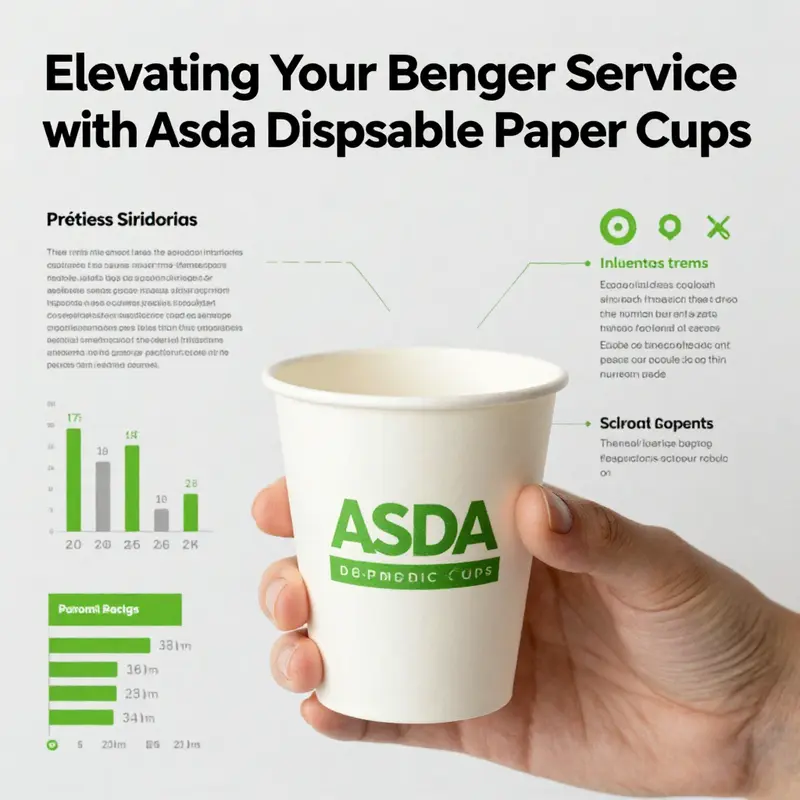
Within the modern grocery ecosystem, the demand for disposable paper cups at a large retailer such as Asda serves as a proxy for broader economic and social dynamics. It reflects how households allocate their budgets, how foodservice partners approach hygiene, and how retailers balance cost with the expectation of responsible packaging. The cup, small in size, stands at the intersection of consumer behavior, policy, and supply chain design. To understand why demand ebbs and flows, one must read the market through the lens of four intertwined forces: hygiene norms, regulatory pressure, input costs, and wider macroeconomic conditions. Each of these forces acts on both the volume of cups sold and the mix of formats offered in-store, online, and through take-away services.
Hygiene has moved from a concern to a baseline expectation. In food-service contexts, disposable cups are perceived as a practical tool to reduce cross-contact and contamination, particularly for customers who grab an item on the go. In Asda’s store network, this translates into durable demand across thousands of outlets, from large supercentres to smaller neighbourhood branches. The post-pandemic recovery period embedded this habit deeply in consumer minds, and vendors and retailers have learned to pair it with convenience. The result is a sustained floor of demand, even as some customers consolidate meals at home or switch to reusable systems in other settings. The effect is not only about safety; it is also about speed and throughput. When a cafe line moves quickly, or a takeaway counter processes tens of orders per hour, disposable cups become a practical ingredient of service design. The value proposition for retailers is clear: single-use cups help manage queue times, maintain hygiene standards, and enable a consistent in-store experience across varied formats.
Beyond hygiene, the policy environment plays a decisive role. Across the UK and many developed markets, there is a broader shift away from plastics toward paper-based packaging. Laws, regulations, and public sentiment have raised the cost of plastic alternatives and, in turn, elevated the visibility and affordability of paper cups. For a retailer like Asda, this regulatory push aligns with corporate sustainability goals and with consumer expectations. When shelves are stocked with a range of paper-based options, the retailer signals a commitment to reducing plastic waste while still offering price-conscious solutions. This is not simply about compliance; it is about brand stewardship and long-run competitiveness. The market structure rewards retailers that can translate policy into choice—providing a steady supply of compliant options that meet hygiene and affordability criteria. In practice, Asda tends to expand its assortment of paper cups and related takeaway packaging as part of a coherent sustainability and cost-management strategy. The price delta between paper and plastic remains a critical lever, translating policy into everyday consumer decisions at the point of sale. For shoppers, the new normal is a packaging choice that feels responsible, predictable, and aligned with personal budgets.
Raw material dynamics introduce another layer of complexity. Pulp costs, recycled content, energy prices, and shipping costs all feed into the price of a paper cup. When pulp and recycled fiber markets tighten, production costs rise, and retailers may pass some of this cost along to price-sensitive consumers. In contrast, stable or favorable input conditions can widen margins and support more aggressive promotions or broader distribution. In a mass-market retailer, even a small shift in input costs can ripple through to weekly deals, promotional bundles, and shelf-space allocation. At Asda, where private-label packaging often plays a central role, suppliers compete on price and quality, creating a dynamic marketplace in which cup formats, thickness, and insulation levels are adjusted to manage both cost and performance. The result is a feedback loop: higher input costs push a retailer to seek efficiency gains in design, sourcing, and logistics, while lower costs enable broader availability and more aggressive discounting. The practical implication for store operations is that the available assortment of disposable cups can vary with the season, supply contracts, and global commodity cycles, even as core demand remains relatively stable.
Macroeconomic conditions matter as well. Inflation, wage growth, energy prices, and consumer confidence shape how households allocate spending across discretionary categories. In periods of higher inflation, households scrutinize every purchase, including packaged beverages and take-away meals that rely on disposable cups. Some consumers might substitute larger quantities of coffee or tea at home, or reduce nonessential purchases, yet demand for cups persists because they are embedded in everyday routines. Retailers respond through private-label offerings that deliver predictable quality at lower price points, along with value packs that provide cost per use advantages. Asda has leveraged such private-label strategies to preserve market share when disposable incomes come under pressure. The aim is not merely to lower sticker prices but to offer a credible, consistent alternative to more expensive branded formats, while maintaining acceptable margins for suppliers and the retailer alike. In practice, this translates into product development choices that emphasize reliability, compatibility with standard cup dispensers, and ease of recycling or composting where feasible, all without undermining service speed or guest experience.
From a corporate strategy perspective, the distribution of disposable cups within a large retailer combines procurement discipline with category management and sustainability commitments. Asda, like many peers, has to manage a portfolio that balances high-volume standard cups with more premium or specialized designs used for events, promotions, or seasonal campaigns. The cost structure of this portfolio is sensitive to packaging innovations, such as liner materials that extend heat retention or reduce leakage, while still enabling efficient stacking and storage. Sustainability considerations have grown from a niche concern to a baseline expectation; customers increasingly want packaging that uses recycled content, minimizes waste, and offers end-of-life options. Retailers respond by partnering with suppliers who emphasize recycled fiber, lower carbon footprints, and alternative materials that can be marketed as responsible. The decision calculus for stock-keeping units, display layouts, and promotional calendars rests on a blend of reliability, consumer demand signals, and policy trends. In this context, the cup category becomes a microcosm of the wider retail packaging agenda: affordable, compliant, and capable of sustaining a fast-paced service environment.
Demand patterns also reflect how diverse consumer segments use disposable cups. For everyday households, cups support quick coffee runs, convenient lunches, and small gatherings. For small businesses and event organizers, cups are essential for hospitality needs at meetings, workshops, and celebrations. And in-store cafes, food courts, and pop-up food stalls rely on consistent stock to deliver predictable service levels. This multi-venue demand helps explain why a retailer like Asda keeps a broad range of cup sizes—from compact eight-ounce formats to larger, insulated variants—and why the same product line can appear in different channels with slightly different price points. It also clarifies why the category benefits from a pricing architecture that guards against sharp spikes during periods of input cost volatility. A stable private-label offer—in combination with occasional promotions—helps customers perceive value even when the broader macroeconomic environment tests household budgets. The interplay between price, convenience, and perceived value shapes how many cups are sold, how often, and in what configurations.
An ongoing tension underpins the entire discussion: the push toward sustainability versus the demand for convenience. Consumers want packaging that is easy to use, hygienic, and affordable, but increasingly they also want packaging with a lower environmental footprint. The industry response has been to refine paper formulations, increase recycled content, and promote end-of-life solutions such as recycling schemes or compostable components. For a retailer, that means not only selecting materials with better environmental credentials but also communicating those choices effectively at the point of sale. The ethical and social dimensions of packaging decisions affect reputational capital as well as price sensitivity. In practice, Asda and similar operators balance these pressures by offering a spectrum of options, including standard paper cups and select sustainable alternatives, while maintaining compatibility with existing dispensing systems and supply networks. This balancing act helps explain why the category remains resilient even as it faces headwinds from raw material volatility and shifting consumer preferences. The outcome is a market that rewards suppliers and retailers who can deliver dependable performance, while remaining mindful of environmental trade-offs and waste management infrastructure.
Looking forward, market forecasters suggest that demand for disposable paper cups will continue to grow in many regions, albeit with caveats. The growth trajectory will hinge on policy clarity, the pace of input-cost normalization, and the ability of large retailers to maintain a consistent, affordable supply. For a store network such as Asda’s, this translates into a careful alignment of procurement contracts, supplier risk management, and private-label product development. The ability to forecast demand, anticipate seasonal peaks, and coordinate with catering and franchise partners will determine the magnitude of year-on-year gains. Moreover, the market’s evolution toward sustainability will likely push brands to demonstrate tangible environmental benefits, whether through higher recycled-content content, more efficient logistics, or transparent end-of-life pathways. In such a climate, the disposable cup becomes not just a utilitarian object but a tangible signal of how retailers balance cost, convenience, hygiene, and responsibility. The dynamic is iterative: as costs shift, retailers adjust packaging formats and promotions; as consumer expectations shift, retailers refine communications and product assortments; as policies evolve, retailers accelerate or temper transitions toward paper-based options.
To ground these observations in a broader context, industry analyses project that the disposable paper cups market will continue to expand, with growth supported by ongoing regulatory push and by the gradual normalization of hygienic practices in everyday life. For practitioners and researchers, the relevant insight is that the demand for Asda’s disposable cups will reflect a convergence of hygiene standards, environmental policy, input-cost cycles, and household income dynamics. This convergence helps explain why the category remains core to store formats that blend grocery, foodservice, and take-away experiences. For those exploring practical sourcing options, a representative range is available on supplier pages such as the product page for 20-50-200pcs disposable paper cups. The page illustrates how suppliers segment by size, insulation, and packaging needs, revealing how even commodity items can be differentiated to meet diverse channel requirements. Such options support a retail strategy that prioritizes consistent in-store performance, cost control, and consumer trust. External insights, including market forecasts through 2034, reinforce the sense that the coming years will be an inflection point for how disposable paper cup categories are managed, priced, and perceived by consumers.
External resource: For forecast trends up to 2034, see the market analysis here: Disposable Paper Cups Market Size, Industry Share, Forecast to 2034.
Final thoughts
Asda’s disposable paper cups are not only a practical choice for a range of beverage services but also an investment in sustainability and customer satisfaction. By integrating these cups into your operations, you can boost your brand’s eco-friendly image while meeting the growing demand for convenient, high-quality beverage solutions. Make Asda your choice for disposable packaging and elevate your customers’ experience today.