

Black plastic Chinese food containers are not just a staple in the culinary world; they have become a central part of how restaurants, food trucks, beverage chains, and catering services package and serve food. From comforting soups to delightful bento boxes, these containers are versatile, practical, and often aesthetically pleasing. For event planners and procurement teams, understanding the different types, materials, environmental considerations, and food safety regulations concerning these containers is essential. Throughout this article, we will explore the types of black plastic Chinese food containers and their uses, delve into material considerations, discuss environmental impacts, and clarify regulatory standards in food safety. By gaining a holistic understanding of black plastic containers, businesses can make informed choices that align with both operational needs and consumer expectations.
From Bento to Takeout: The Role of Black Plastic Containers in Chinese Takeout

Black plastic containers used for Chinese takeout sit at the intersection of practicality, presentation, and performance. They are the everyday workhorses of busy kitchens and curbside pickups, shaping how meals travel from stove to doorstep and how warmth is preserved. The black box offers a utilitarian aesthetic that pairs with many cuisines while signaling reliability and efficiency. The choice of box affects not only leakage control and heat retention, but also how a customer perceives the meal before their first bite.
Material choices tell a story about heat and safety. The two most common workhorses are polypropylene and polystyrene. Polypropylene is prized for higher heat resistance and structural rigidity. A PP based black container can hold hot dishes and sauces without sagging, helping noodles retain texture and rice stay separate from sauce. The deep black color helps mask stains that may appear after heavy use, keeping the container looking presentable from bagging to delivery. The pigment and polymer must be compatible under heat to avoid migration or surface changes, making color a practical indicator of quality as well as appearance.
Polystyrene offers cost advantages and lighter weight, which can lower unit costs in high volume operations. However PS can soften at lower temperatures than PP, so it is more constrained for hot meals. Darker PS variants are common for cold or room temperature items, while hot items often rely on PP or reinforced blends. Regulatory considerations also matter, since materials must be approved for contact with food and used within safe temperature ranges. Standards vary by region, but the principle remains the same: the packaging must not contaminate the food or degrade during normal handling.
Shapes and lid designs extend the utility of black takeout boxes. Rectangular, multi compartment boxes help keep sauces separate from solids, supporting presentation and portion control. Cylindrical or tall sided containers are well suited to broths and soups, where steam needs to escape without overflow. Lids may be vented for steam, hinged for easy sealing, or snap on for quick service. A good lid contributes to aroma retention and temperature stability while giving the diner confidence that the meal will arrive intact.
Beyond the kitchen, stackability and nesting are central to efficiency in a busy operation. Boxes that nest neatly save storage space, speed up packing, and reduce breakage in transit. Packagers also value a design that makes the box easy to identify through the bag or tote, with clear visibility of contents when needed. The color black plays a dual role here: it minimizes the appearance of grease and residue while offering a timeless backdrop for branding that stays legible across a range of meal colors.
Sustainability and safety are increasingly important. Traditional black containers made from polystyrene raise environmental concerns due to persistence in landfills and recycling challenges. The industry has responded with recycled content options and improved recyclability, and with biodegradable or compostable alternatives that attempt to balance heat resistance with end of life options. Operationally, this means evaluating local waste systems and consumer expectations when choosing packaging. Safety remains non negotiable: the container must be suitable for contact with hot foods, and any heating or reheating instructions should be clear on the label. Transparent communication about materials and lifecycle helps build trust with customers and reduces risk for operators.
In summary, the black takeout box is more than a simple vessel. It is a design and logistics tool that influences heat retention, portion control, brand perception, and environmental impact. When chosen thoughtfully, it supports a reliable dining experience from the first moment the order is picked up to the last bite at home. For readers seeking more, general guidance on food contact materials from regulatory authorities and packaging associations can provide a grounded reference for safety and compliance in fast moving takeout contexts.
Material Realities of Black Plastic Takeout Containers: Safety, Performance, and Sustainability

Black plastic takeout containers are a practical interface between hot meals and consumers, and their material choices determine heat retention, leak resistance, and handling. The backbone polymers are polystyrene and polypropylene. Polystyrene offers light weight and insulation but can warp under heat, is often not ideal for repeated reheating, and safety depends on microwave ratings. Polypropylene resists higher temperatures, is commonly labeled food grade, and supports microwaving in many cases, making it a preferred option for reheating and stacking. Beyond these two, other polymers such as HDPE or PVC may appear in specialty lines but are less common in standard black takeout boxes. The color black serves branding and masking but introduces recycling challenges in some sorting streams, which can influence end of life. Regulatory frameworks seek to limit chemical migration from packaging into food and require appropriate testing and labeling. Sustainability debates highlight end of life and lifecycle impacts; alternatives like bagasse fiber offer compostability but may trade off performance in moisture barriers or cost. The procurement and design choice thus reflect a balance between safety, performance, and environmental responsibility, with ongoing innovation in materials, recycling technologies, and design for recyclability. Consumers are advised to follow reheating and storage guidelines and to understand container labeling to ensure safe use and disposal.
Hidden Footprints: The Environmental Toll of Black Plastic Chinese Takeout Containers
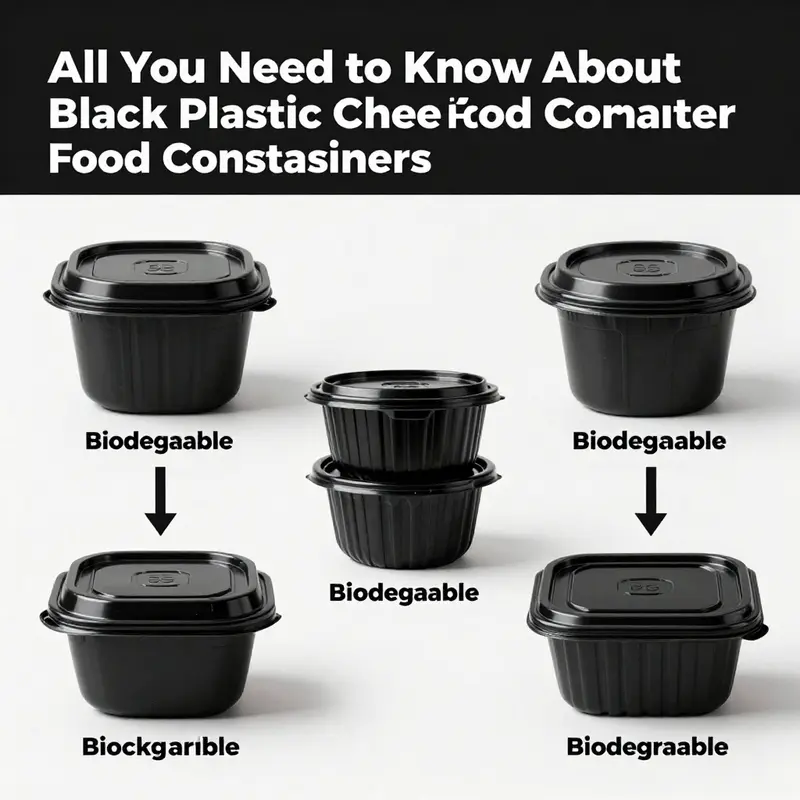
The familiar sight of takeout orders arriving in black plastic containers is a quiet, everyday ritual in many kitchens and dining rooms around the world. The convenience is undeniable: foods stay hot, portions stay contained, and the packaging tends to look sleek on the shelf. Yet beneath that glossy black surface lies a set of environmental dynamics that aren’t always visible in the moment of purchase or the moment of pickup. This chapter explores the environmental footprint of black plastic Chinese food containers, tracing how material choices, recycling realities, and potential chemical interactions shape a broader story about waste, resources, and health. It is a story that does not condemn quick meals but instead invites a more informed conversation about how packaging choices ripple through ecosystems and communities long after the meal is eaten, and how innovations in materials and systems might reduce those ripples without sacrificing the practical benefits that customers depend on every day.
At the core of this issue is material composition. Many black takeout containers are built from either polypropylene (PP) or polystyrene (PS), polymers long valued for heat resistance and durability. These materials are well-suited to holding hot and greasy foods and to surviving the mechanical demands of transport. The color black, in many cases, is chosen not only for aesthetics but for practicality: it masks stains and residues, keeps the appearance tidy, and can align with a brand or restaurant’s visual language. But the choice of color carries hidden consequences. When black is achieved through certain recycling streams, or when the post-consumer material feedstock is itself mixed with or contaminated by recycled electronics, a troubling chemical legacy can be embedded in the plastic that eventually comes into contact with food.
A growing body of evidence highlights a specific and troubling facet of this dynamic. In 2024, a study published in Chemosphere by researchers from the United States and the Netherlands revealed that household products fabricated from recycled black plastic—often sourced from ubiquitous electronic waste—can contain high concentrations of brominated flame retardants (BFRs). Decabromodiphenyl ether, a particularly well-known BFR, is one of the compounds found in such recycled materials. These chemicals were originally developed to prevent melting and thermal degradation in electronic equipment. In the context of food contact packaging, their persistence in the environment, their tendency to bioaccumulate in living organisms, and their toxicity raise serious questions about potential exposure through heating and storage. The implications are not simply theoretical; the same properties that help keep electronics safe under heat can, in principle, lead to greater risk when plastic containers derived from those feedsocks are used to hold hot foods or stored for extended periods. The notion that a single packaging choice could carry a hidden chemical burden underscores the need for careful scrutiny of how recycled black plastics are used in food-contact applications.
This is not merely a problem of chemistry isolated from daily life. The practical reality of recycling systems compounds the concern. Black plastic presents a unique challenge to circular economy workflows. Color sorting technologies, which drive much of modern plastic recycling, rely on optical cues to separate streams by resin type and color. Black pigments, however, absorb visible light and can render x-ray or near-infrared sorting ineffective or unreliable. In many facilities, this makes black containers effectively invisible to automated sorters, leading to lower recycling rates for these items. The outcome is a stream of black plastic that, after a one-time use, cannot easily reenter the loop of reprocessing. It ends up in landfills or is incinerated in many regions, contributing to resource depletion, air emissions, and longer-term environmental burdens. The lifecycle pattern—single-use, low recycling probability, and reliance on fossil-based feedstocks—creates a persistent pressure on ecosystems and waste management infrastructure.
The environmental and health risks are not only tied to the end-of-life fate of these containers. They begin with how the materials are sourced. If the black containers incorporate recycled feedstocks that contain residues from electronic devices, there is a dual risk: the initial creation process may introduce contaminants into the polymer matrix, and heating food in contact with such material could, in the worst cases, facilitate migration of additives or unintended chemicals into food. Even when foods are not heated directly in the container, repeated use, microwaving, or long-term storage can alter the balance of additives and impurities, raising questions about safety standards and testing protocols for these specific packaging streams. This is not to say that all black packaging is dangerous, but it does underscore the necessity for robust food-contact safety assessments that account for recycled feedstocks and the peculiarities of black coloration technologies.
Additionally, the broader environmental consequences extend beyond individual health concerns. The predominance of disposable black containers reinforces a consumer culture of convenience that undercuts resource efficiency. Even when the materials themselves are relatively simple—PP or PS—their association with a “single-use” pattern contributes to the long tail of waste. In many urban settings, the cumulative effect is measurable: diverted waste streams, higher volumes in landfills, and increased pressure on municipal systems designed to manage plastics that do not readily re-enter recycling loops. If the industry relies heavily on black plastics drawn from mixed streams, the cumulative impact grows not only in material terms but in the emissions and energy required to manage those streams in the absence of effective recycling pathways.
There is a path forward that respects both the demand for reliable packaging and the imperative to reduce environmental and health risks. First, transparency in material sourcing emerges as a practical and ethical starting point. Containers that disclose whether their plastic is derived from recycled electronics or other post-consumer streams enable better risk assessment by food-service operators and regulators. More importantly, producers can prioritize feedstocks that minimize hazardous additives or ensure that any additives pose no risk to human health when in contact with edible contents. Some researchers and policymakers advocate for traceable, light-colored or clear plastics for easier sorting and verification, or for dye-free or easily identifiable pigments that do not complicate downstream recycling. While this may require adjustments in manufacturing workflows, it creates a more intelligible material stream that aligns with the broader goals of a circular economy.
Second, there is a clear case for expanding the palette of packaging options beyond black plastics. Biodegradable options, such as those made from natural fibers or plant-based composites, offer compelling environmental benefits when designed for compostability or at least improved recyclability. Sugarcane bagasse, a residue from sugar production, has gained traction as a feedstock for takeout containers in some markets. It can provide a sturdy, heat-tolerant alternative with a more straightforward end-of-life path in appropriate facilities. While not a panacea, these options can reduce reliance on fossil-fuel-based plastics and shrink the environmental footprint of a takeout meal from start to finish. It is worth noting that biodegradable alternatives still require proper waste management infrastructure to realize their benefits; without industrial composting or compatible recycling streams, even biodegradable formats can fail to deliver emissions and resource savings.
For decision-makers, the chapter’s message is not simply about replacing one material with another. It is about rethinking packaging systems as a whole. If black plastics remain a feature of the supply chain, then regulatory and industry initiatives should focus on improving recycling identification, reducing impurities in feedstocks, and ensuring rigorous testing for migration of additives when used in contact with food. Standards bodies and regulators can play a crucial role by clarifying acceptable migration limits for BFRs and related compounds in packaging derived from recycled streams, and by encouraging labeling that informs consumers about the origin and safety characteristics of the packaging materials. Such steps would help to decouple the convenience of takeout from the environmental and health costs that currently accompany many black plastic containers.
At the consumer level, practical steps can make a meaningful difference even within the constraints of current packaging technologies. Choosing containers from suppliers that explicitly commit to safer, traceable feedstocks or that offer transparent certification information helps shift demand toward higher-integrity packaging. When possible, opting for packaging that is clearly marked as recyclable, or choosing packaging alternatives that use lighter colors or natural fibers, can encourage better recycling behaviors and reduce the complexity of the waste stream. In addition, supporting policies and programs that improve regional recycling capabilities—especially those that can identify and separate black plastics—can enable higher recycling rates and diminish the accumulation of black containers in landfills. The goal is not to demonize a single material but to elevate the system around it so that the convenience of today does not compromise the health of tomorrow.
Against this backdrop, the appetite for sustainable change is unmistakable. An industry that is serious about sustainability will start to tilt away from a default reliance on black plastics, toward materials and processes that are compatible with robust recycling streams, that minimize toxic additives, and that offer clear pathways for end-of-life management. Yet the transition must be pragmatic. It requires investment in research and development, supply chain collaboration, and consumer education. It also requires a careful balance between safety, performance, and environmental impact. Food-grade safety cannot be compromised, but neither can the obligation to reduce pollution and resource consumption.
In weaving together these threads—the chemistry of recycled blacks, the mechanical realities of sorting systems, the health implications of additives, and the practical options for alternative materials—a more complete picture emerges. The environmental toll of black plastic Chinese food containers is not a single-dactor failure but a confluence of decisions made across the production, consumption, and waste management spectrum. To move toward a metered, responsible approach, stakeholders must acknowledge the complexities while remaining focused on tangible improvements: safer feedstocks, better visibility in recycling, and a broader menu of packaging formats that align with both consumer needs and planetary health. The narrative here is not one of extinction for black packaging but of transformation toward smarter, safer, and more sustainable choices.
For readers seeking concrete alternatives in the marketplace, several suppliers are beginning to offer packaging options that emphasize recyclability, compostability, or improved end-of-life tracing. As industry and policy converge on best practices, the space for innovative solutions—ranging from pigment-free or light-colored plastics to plant-based composites and closed-loop recycling programs—becomes more tangible. The practical takeaway is that every container purchase carries a signal: it communicates demand, informs waste systems, and, ultimately, contributes to or mitigates an array of environmental and health outcomes. By choosing packaging that is easier to recycle, contains safer additives, or originates from transparent, traceable feedstocks, businesses and consumers alike can participate in shaping a more sustainable cycle for takeout food.
Internal resource for further exploration: eco-friendly takeout boxes for food packaging
External reference for the broader scientific context and policy considerations: https://www.sciencedirect.com/science/article/pii/S0038092524007956
Color, Compliance, and Confidence: Navigating Regulatory Standards for Black Plastic Chinese Food Containers in Food Safety
Black plastic Chinese takeout containers are among the most visible traces of the modern food service landscape. Their utilitarian appeal rests on durability, heat resistance, and cost efficiency, but beneath their glossy surface lies a dense framework of safety rules that governs every stage of production and use. In China, as in many other markets, the color of a container does not in itself determine safety. Instead, it is the material, the additives, the performance under heat and contact with fatty foods, and the rigor of production practices that decide whether a container can stand up to the demands of daily takeout and meal-prep routines. When we trace the regulatory logic, a chain emerges that begins with general safety principles for food contact materials and tightens around the specifics of plastics, migration limits, and the truth about colorants like carbon black. This chapter seeks to illuminate that regulatory spine, showing why a black container can be both convenient and compliant, or risky, depending on the material choices and the controls that surround them.
At the heart of the regulatory framework are the national standards that set the baseline for all plastics that touch food. The leading standard, GB 4806.7-2023, was enacted to unify and tighten the requirements for food contact plastics and their articles. This standard explicitly targets what substances can migrate from a plastic into food under the conditions of normal use. It does not single out color as a marker of safety; instead, it specifies numeric migration limits for a range of potential migrants, from monomers and additives to metals that might leach from the polymer matrix. The inclusion of specific migration limits means manufacturers must confirm through validated testing that, even after exposure to heat, fatty foods, or repeated use, harmful substances remain below threshold levels. The standard also codifies labeling requirements that are critical for consumer safety, including the maximum intended use temperature. In practical terms, a container might bear guidance such as Do not microwave above 100°C, or similar language indicating the heat ceiling to which the product is certified. Such labeling is not cosmetic; it is a functional checkpoint that bridges the factory floor with kitchen safety, ensuring that consumers and food handlers understand the heat conditions under which the container can operate.
A second pillar in the regulatory stack, GB 4806.1-2016, provides the general safety requirements for food contact materials and articles, laying down overarching principles that apply across material classes. This standard reinforces the notion that safety is not a color story but a materials story. It emphasizes the nontransfer of harmful substances to food, the stability of the material under expected service conditions, and the reliability of performance characteristics over the container’s service life. Together with GB 9685-2016, which regulates additives used in food contact materials, these standards construct a comprehensive map of what can be used to color, stabilize, or plasticize a container, and how much of it is permissible. The carbon black pigment commonly used to achieve deep blacks is addressed within additive standards, which means the issue is not whether the container is black, but whether the pigment and the surrounding polymer formulation meet the allowed limits for colored plastics intended for food contact. The emphasis on pigments, stabilizers, and plasticizers is deliberate: it keeps color from becoming a loophole that conceals unsafe materials.
Enforcement and production rules further sharpen the practical implications of these standards. A widely cited regulatory detail is the prohibition on using recycled or contaminated raw materials in the manufacture of food contact plastics. This rule aims to prevent unknown or residual substances from entering food contact surfaces, which could otherwise escape routine detection yet accumulate risk through heat, oil, and repeated consumer use. The effect is twofold. First, it pushes manufacturers toward qualified feedstocks and controlled processing streams, reducing the variability that makes risk assessment difficult. Second, it places a premium on traceability: being able to prove the material origin, processing conditions, and compliance test results when audits occur. In a landscape where takeout packaging must be produced at scale, the emphasis on robust production licenses and material integrity anchors safety in the realities of mass production. This is critical when the containers are used for hot foods, where elevated temperatures can enhance substance migration and stress cracking if the polymer matrix is weak or poorly stabilized.
The conversation about black containers frequently brushes up against the so-called color controversy. Consumers sometimes worry that carbon black pigments inherently raise risk because they are associated with certain recycling or industrial practices. The science, however, largely dispels the idea that color alone creates danger. Studies across standardized testing frameworks have shown that black plastic utensils and containers can meet GB 4806.7-2016 and related safety standards when the overall material formulation is sound and tested under the intended use scenarios. The pigment itself is not automatically hazardous; rather, the risk is linked to the broader formulation and manufacturing controls. Carbon black is cheap and effective, and its use is often driven by cost considerations as well as the desire to mask imperfect feeds from recycled streams. But the critical point remains: color is not a proxy for safety. The real risk lies in choosing plastics that are not food-grade, in allowing contaminants during processing, or in exposing containers to temperatures and food types that exceed design specifications.
For practitioners and policymakers, this means a pragmatic approach to safety. Consumers should look beyond the color to confirm material type and compliance marks. The food-grade label, a resin code, and the temperature guidance provide actionable information. The resin code, such as PP or PS, reveals the family of plastic involved and its typical performance characteristics. Polypropylene, for example, is known for good heat resistance and chemical stability, making it a common choice for hot-fill takeout packaging. Polystyrene, especially when expanded or with certain foams, can pose different concerns in terms of heat stability and chemical leaching. The regulatory emphasis on material type underscores that safe use is contingent on selecting the right polymer for the intended application rather than on aesthetic attributes like color.
Still, the regulatory framework cannot ignore the practical realities of the fashion and economics of packaging. The demand for durable, stain-masking, and visually uniform containers pushes manufacturers toward color and surface treatments that hide wear and tear. The availability of clear lids versus fully sealed designs also introduces variables in safety management. A container with a transparent lid can enable quick content inspection, reducing handling and the chance of cross-contamination during service. In contrast, fully sealed designs maintain freshness and reduce leakage risk but may complicate reheating or repurposing under certain conditions. These design choices are not cosmetic; they intersect with safety performance indicators and labeling requirements. They influence whether the container will survive multiple heating cycles, whether it will resist grease seepage, and whether its safety performance remains within the defined migration limits throughout its lifecycle.
From the supply chain perspective, manufacturers face a continuous balancing act. They must source materials that meet SMLs for a broad spectrum of chemicals, including potential contaminants commonly present in packaging systems. They must ensure that pigments, stabilizers, and plasticizers are within permitted ranges set by GB 9685-2016. They must implement production controls that prevent contamination, validate the absence of recycled feedstocks for food contact use, and maintain rigorous documentation for audits. This is not merely a regulatory box-ticking exercise; it is a comprehensive risk management approach designed to protect public health across millions of meals. For operators in restaurants, food trucks, and catering services, it means that choosing a container is a decision with safety, regulatory, and operational implications. A container that complies with GB 4806.7-2023 and related standards provides a foundation of confidence that the packaging will behave safely under typical consumer use, including foreseeable misuses.
In practical day-to-day terms, what should a conscientious buyer or operator do? First, verify material type and heat limits. Look for clear temperature guidance and avoid containers whose use parameters are ambiguous or contradictory to the cooking practices in your kitchen. Second, check for labeling that aligns with national standards and, where possible, third-party testing or certification claims. Third, be mindful of the total lifecycle of the packaging. If you anticipate frequent reheating, consider polypropylene-based designs with proven high-temperature performance and low migration risk for fatty foods. If you must reuse a container, ensure that its reuse is appropriate for the type of food and the heating method. While color can be a useful aesthetic cue, it should not be treated as a safety cue. Instead, it is the sum of material choice, additive regulation, and production discipline that protects food safety.
To bridge practice with policy, marketers and educators can play a crucial role by presenting clear, accessible guidance that helps food-service operators translate standards into on-shelf choices and kitchen routines. A small set of universally applicable checks—material type, temperature labeling, additive compliance, and production provenance—can demystify the regulatory landscape and reduce the risk of safety oversights. When these checks become routine, the everyday act of packaging becomes a safer link in the food chain rather than a source of uncertainty. In turn, this supports a broader cultural shift toward responsible packaging, where the color of a container no longer signals safety or risk by itself but sits within a transparent, standards-driven system that prioritizes public health.
For readers who want to explore adjacent options and broaden their understanding of sustainable packaging, a practitioner-focused overview of safer takeout packaging designs can be useful. See this resource on eco-friendly takeout boxes for food packaging safety, which discusses design considerations that balance performance with environmental responsibility while remaining consistent with food safety requirements. eco-friendly takeout boxes for food packaging safety. This reference complements the regulatory emphasis by foregrounding material choices that align with both safety standards and practical use in high-volume food operations.
In sum, the regulatory standards governing black plastic Chinese food containers illuminate a safety system aimed at ensuring that color does not mask risk. GB 4806.7-2023, supported by GB 4806.1-2016 and GB 9685-2016, creates a scaffold of requirements that cover migration limits, labeling, and additive use. Enforcement rules about material quality and feedstock integrity anchor the system in tangible practices that reduce contamination and exposure risks. The real safety signal lies not in the pigment but in the material’s behavior under heat, its chemical composition, and the rigor of its production. For consumers and professionals alike, the takeaway is clear: look beyond shade, examine the substance, and rely on a body of standards that shapes, tests, and certifies food-contact plastics so meals stay safe from factory to fork. External reference: https://www.fda.gov/food/packaging
Final thoughts
Black plastic Chinese food containers play an integral role in the food service industry, offering convenience and functionality. By choosing the right type, considering material implications, understanding environmental impact, and adhering to food safety regulations, businesses can enhance customer satisfaction while promoting responsibilities towards sustainability. As awareness grows regarding environmental issues, being equipped with knowledge about these containers becomes essential for brands that wish to thrive in a competitive market. All stakeholders, from beverage chains to event planners, should prioritize quality and compliance when selecting packaging solutions, ensuring they make respectful and informed choices.