
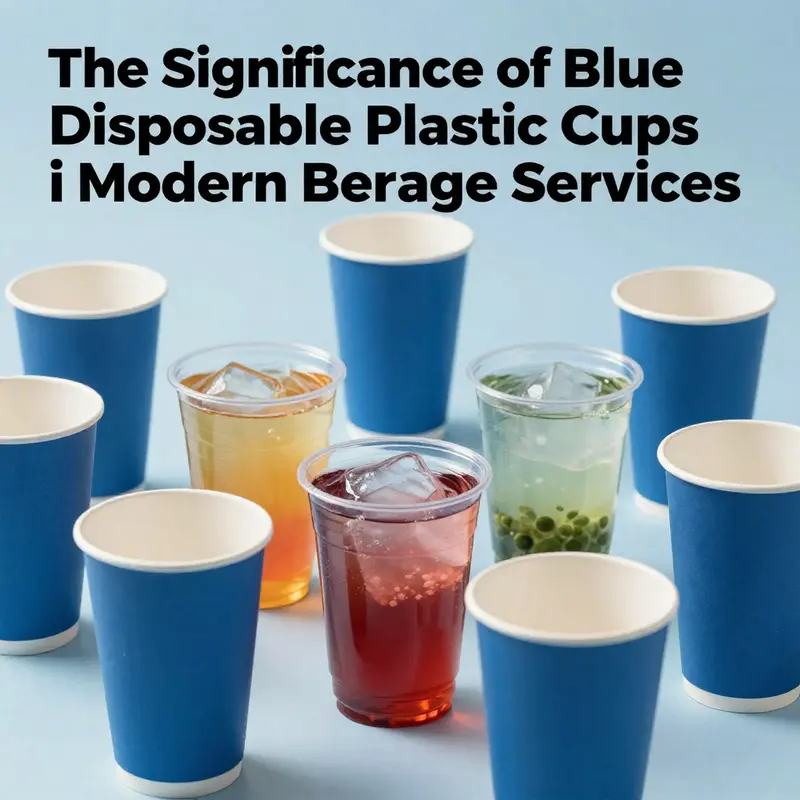
Blue disposable plastic cups have become a staple in events, food services, and beverage chains, prized for their convenience and vibrant color. Understanding the intricate manufacturing process sheds light on their accessibility, while examining their environmental impact helps us confront the pressing issues of plastic pollution. Additionally, market trends reveal the economic implications of these products, aiding businesses in making informed sustainable choices. Dive into the chapters to uncover the full spectrum of insights surrounding blue disposable plastic cups.
Blue in the Machine: The Hidden Craft of Thermoformed Disposable Cups

Blue in the Machine: The Hidden Craft of Thermoformed Disposable Cups
In a bustling event hall, a tray of vibrant blue cups catches the eye. The color signals a mood, a practical signal, and a promise of quick service. Yet behind every cup there lies a precise, automated choreography. A sheet of plastic, barely visible, becomes a cup through heat, pressure, and precision. The entire operation is a marvel of modern manufacturing, where two plastics compete for a place in the daily rituals of beverage service. The cups we grab at gatherings, fast food counters, or office events are not simply colored cylinders. They embody decisions about material science, production engineering, color chemistry, and end of life.
The material most often chosen for these blue disposable cups is a simple, sturdy plastic known by its resin code as PP, pol polypropylene, or in some cases PS, polystyrene. Polypropylene is prized for its balance of stiffness and flexibility. It resists cracking under the pressure of a full drink, it tolerates hot liquids, and it can be molded into thin yet rigid walls that keep costs down. Polystyrene, by contrast, aligns with high clarity and a smooth surface that helps with printing and labeling, though it can be more brittle under stress and less tolerant of heat. The choice between PP and PS comes down to a blend of cost, performance, and environmental considerations. In practice, many companies segment their product lines by expected use, with PP favored for heat tolerance and lower cost per unit, and PS reserved for cups that prioritize a crisp, glossy exterior and transparent appeal. When you look at a blue cup, you often see the color as part of the raw material package, formed in color either through pre colored sheets or a dye added during extrusion. The hue is not just decoration; it is a design element that can influence consumer perception, event branding, and even sales velocity in certain contexts where the color blue signals refreshment, coolness, or a specific theme.
The journey from a roll of plastic sheet to a finished cup unfolds in a dance of automation. The sheet, typically in long rolls, enters a dedicated thermoforming line that runs around the clock. If the sheet is pre colored, that color is already part of the material the moment it enters the process. If the color is added during extrusion, the dye is evenly dispersed into the resin before sheet formation, ensuring consistent hue across all produced cups. Either approach requires strict quality control to prevent color variation, which can be a telltale sign of process drift. This is not a cosmetic concern alone. Variation in shade or opacity can affect consumer trust and even compliance with packaging color standards in some markets.
As the sheet moves through the line, precise feeding and heating systems take charge. A servo driven feed system positions the sheet with millimeter accuracy, ensuring that every cup is uniform in wall thickness and diameter. The heating zone is carefully tuned; the sheet must reach an exact temperature that renders the material pliable enough to form, but not so soft that it deforms or sags when placed over the mold. The temperature control layer relies on sophisticated feedback; sensors monitor surface heat and core temperature, and the control system adjusts heating elements in real time. The temperature is a keystone of quality here. Too cool and the sheet fails to form with fidelity; too hot and the material may lose its shape, warp under pressure, or become weaker at the edges.
Thermoforming sits at the heart of the process. The heated sheet is guided to a mold cavity where it is pressed down by positive air pressure or matched with a vacuum on the underside. The approach, or combination of approaches, ensures that the plastic conforms precisely to the three dimensional contours of the cup, from the smooth inner surface to the outward flaring rim. The mold complexity matters, because some blue cups feature subtle shapes at the base or reinforced sidewalls to handle beverages with varying temperatures and weights. The interplay of pressure and vacuum determines the wall thickness distribution, which in turn influences heat resistance, stacking ability, and the feel of the cup in the hand. Modern lines often incorporate multi cavity molds that produce several cups in one cycle, increasing throughput. The result is a set of skirts, rims, and bases that reflect a precise geometry designed to be ergonomic during use and efficient during stacking and deployment.
After forming, trimming and ejection follow. The newly formed cup needs careful handling as it cools, so a cooling stage shortens the path to stable geometry. Excess material around the rim and near the base is trimmed with precision tools, leaving clean edges that minimize snags during packaging and reduce risk of injury during consumer use. Ejection from the mold is aided by subtle mechanical moves that guide each cup into a stacking stream. The cups may be diverted by a stream of air or guided by specialized brushes or conveyors that align them into consistent leads for packaging. The entire sequence—forming, trimming, ejection—occurs with remarkable speed. A well tuned line can yield tens of thousands of cups per hour, all while maintaining tight tolerance on dimensions.
Final processing and packaging complete the physical journey of the cup. In many lines, cups are guided by a combination of brushes and conveyors into a simple, uniform stack that is easy to handle when placed on a shelf or at a beverage station. The packaging stage is designed to protect the cups during transit and to optimize space in shipping containers. The packaging often includes a minimal amount of packaging material, with emphasis on reducing bulk while preventing damage. The automated nature of the line is important here; the system must respond to variations in production rate, ensuring that the stacking routine does not disrupt the flow or cause jams. When everything is running smoothly, the chain of operations is almost invisible to the eye, a machine ballet that quietly underpins the everyday acts of hospitality and quick-service dining.
Within this streamlined choreography lies a robust control architecture. Operators do not stand idle at every step; they monitor and occasionally intervene through a human machine interface. Siemens programmable logic controllers and related control software are commonly employed to regulate temperature, cycle time, pressure, and alignment. The controller acts as the brain of the line, collecting data from sensors along the path and issuing commands to heaters, vacuum pumps, and servo motors. The HMIs translate that data into readable graphs and alarms, allowing operators to see, at a glance, where any parameter drifts or where a tool may require adjustment. This is not a mere convenience. It is essential for maintaining consistent cup dimensions and color uniformity, especially when production scales to the hundreds of thousands or millions of units in a single day. A single variation in a subcomponent can ripple through the line, producing a batch of cups that might fail quality checks downstream or require rework. The discipline here is meticulous, a blend of engineering discipline and practical know how that keeps the machine in balance.
Quality control in a high speed thermoforming context looks very different from the slower, artisanal processes one might imagine. Each step is a checkpoint. The thickness of the cup wall is measured, often by inline sensors or post process sampling. The seal around the rim must be consistent so that cups stack without sticking or jamming in the downstream equipment. The color must be uniform; any blotch or streak can indicate dye separation or incorrect extrusion. The surface finish matters too. A polished exterior not only looks appealing but also improves handling, printing on cups later in the supply chain, and consumer perception of quality. The base of the cup is another critical feature; a weak or malformed base can jeopardize the ability to stand upright on a crowded surface, especially in loud, busy environments where cups are jostled. The stakes are practical: poorly formed cups spill more easily, create messes, and lengthen the service cycle. For manufacturers, the goal is to keep defect rates in the fractions of a percent. Achieving that level of reliability depends on the alignment of every instrument on the line, from raw material suppliers to the final stacker.
If you pause to consider the materials yet more deeply, you begin to see a story about environmental responsibility. The modern manufacturing narrative for blue disposable cups does not exist in a vacuum. On the one hand, these cups offer speed, hygiene, and uniform branding. On the other hand, they sit at the crossroads of waste and resource management. The sheer scale of single-use cups around the world means that even marginal improvements in process efficiency or material performance can translate into significant environmental impact. Some cups are promoted as biodegradable or compostable, often using plant-based materials such as polylactic acid PLA or cornstarch derivatives. These materials can be integrated into a thermoforming line in ways that mimic the same forming steps as conventional plastics, though their processing windows and environmental profiles differ. The adoption of these alternatives is shaped by local infrastructure for composting and the compatibility of waste streams with existing recycling programs. The reality is that compostable or biodegradable cups require careful sorting to ensure that they do not contaminate recycling streams, where they can disrupt the economics and efficiency of established systems.
Color and branding become a parallel thread in this narrative. The blue hue is not merely pigment; it is a signal that helps cups stand out in a crowded environment. Restaurants and event planners often leverage color to create mood, reinforce branding, and enhance consumer recall. In many markets the shade of blue is standardized to a degree, ensuring that a particular product category presents consistently. The dyeing process is tightly controlled, whether color is added to the sheet before forming or printed onto the surface after formation. Dyes must be food safe, inert to the beverages contained within, and stable across a range of temperatures and storage conditions. The choice to blue is also a practical one: blue tends to hide minor staining or translucence that can occur with certain beverage flavors or dyes. Beyond aesthetics, the color can affect grip and perceived temperature, subtly altering the experience of a cold or hot drink poured into the cup. Even the gloss of the surface, which finishes the look and feel of the cup, can influence the perception of quality and cleanliness.
The production chain also intersects with supply chain realities that companies navigate daily. Raw sheet material arrives in reels, each carrying thousands of cups worth of material. The material comes with tolerances for thickness, optical clarity, and color consistency that directly drive the yield of good cups from a given roll. Any misalignment between the color layer and the margins can produce waste, and even minute variations in temperature control can cause a portion of the sheet to warp during forming. The downstream packaging and stacking system depends on the ability to read and adapt to these variations, to keep pace with demand without creating backlogs or excessive leftovers. The end user never sees these challenges, but in the background every cup is a product of tight tolerance management, predictive maintenance, and careful scheduling.
The evolution of blue disposable cups as a product category has also been shaped by policy shifts and consumer expectations around single-use plastics. Public conversations about plastic waste have propelled a search for alternatives that perform as well in handling, transport, and hygiene while presenting a more favorable life cycle profile. While these cups are inexpensive and reliable, the environmental implications of single-use plastics cannot be ignored. Some regions have introduced bans or restrictions, while others have encouraged the development of recycling streams and infrastructure improvements. The interplay between material science and policy ultimately feeds back into the design choices that manufacturers make. When a company weighs the option to switch to a compostable material, it also weighs the viability of composting networks, the risk of contamination of recyclables, and the overall energy balance of production, washing, and waste management.
In this sense, the blue disposable cup becomes a small but instructive case study in the design of modern packaging. The choice between PP and PS is not just about wall thickness or cost; it is about how a product integrates into a broader system of consumption, waste, and potential circularity. The color is not a superficial attribute; it interacts with consumer expectations, with the speed of service, and with the economics of mass production. The manufacturing line, with its automatic plastic cup machine, the servo driven feed, the heated stage, the thermoforming action, the trimming, the ejection, and the stacking, represents a remarkable coordination of hardware and software, of chemistry and machine dynamics. The lines are designed to be flexible enough to adapt to different cup shapes, sizes, and even different color demands. They can switch from one mold to another with minimal downtime, enabling manufacturers to meet seasonal demand or respond to new branding campaigns without needing to reconstruct the entire production line.
Within the integrated system the importance of skilled maintenance cannot be overstated. A well tuned line requires people with a solid understanding of hydraulics or pneumatics, of sensor technology, of thermal dynamics, and of control theory. Even when automation handles the bulk of the work, human expertise remains a crucial input. Routine preventive maintenance stops minor wear from cascading into serious downtime. Calibration of temperature sensors, alignment of cutting tools, and the integrity of vacuum lines all contribute to a stable and predictable output. The entire enterprise rests on a careful balance of reliability and speed. Failure to maintain the line can cause subtle imperfections that accumulate, turning a small defect into a batch of cups that fails quality checks later on. In practice, manufacturing teams focus on a single goal: keep the line running with minimal scrap while ensuring the cups meet safety and performance standards. In this sense, the blue cup becomes a product of both advanced engineering and minute, hands on attention.
The storytelling arc of the blue disposable cup is not complete without a nod to the consumer end of life. Once poured into a beverage, a cup leaves the consumer domain fairly quickly. It may be recycled depending on local capabilities and waste sorting practices, or it may contribute to landfill if no appropriate collection exists. Recycling streams for polypropylene and polystyrene require careful separation from other plastics and from labeling adhesives or inks that might complicate processing. In many places, recycling rates for single use cups lag behind other packaging, which underscores the need for better systems, improved materials, or effective take back programs. That said, the industry is moving toward solutions that aim to reduce environmental impact without sacrificing the benefits of single use in certain contexts. Some players in this space explore reusable cup schemes, others push for compostable formats that can break down under industrial or home composting conditions, and a few are redesigning the cups to be easier to sort or to integrate into circular supply chains.
In the final tally, the blue disposable cup is a compact narrative of modern manufacturing. It embodies the efficiency and standardization of fully automated lines, the clarity and performance of straightforward thermoplastics, and the color signaling that helps products stand out in a crowded marketplace. It reminds us that even the simplest everyday object has a backstory rooted in materials science, mechanical design, control engineering, and logistics. If the industry continues to push for improvements, improvements will likely take two directions at once: first, in the reliability and flexibility of forming lines, that allow even more complex shapes and prints to be produced with lower energy consumption and less waste; second, in the sustainability dimension, where researchers and manufacturers together experiment with materials that provide similar performance with a more favorable life cycle footprint. The promise is not to negate convenience but to reframe it in a way that aligns with evolving expectations about waste, recycling, and responsible consumption. In the end, it is hard to separate the blue cup from the craft behind it. The color is a signature, the cup a tool, and the production line a chorus of machinery that makes instant refreshment possible in countless moments across the world.
For readers who want to explore a related area that touches on the broader ecosystem of disposable tableware, a useful reference point is the product pages that offer clear examples of single use packaging designed for events and gatherings. These pages illustrate how similar lines of manufacturing logic extend to a range of disposable items, from cups to plates to containers. To see an example of a disposable clear plastic cup in a real product context, you can explore a page focused on disposable clear plastic cup options that are suitable for parties and events, which illustrates how form, function, and color work together in a single stream of production. This link is meant to provide a concrete image of how a specific cup design can be integrated with event branding and service workflows. In addition, the external industry resource linked at the end of this chapter offers broader context on manufacturing practices, materials, and sustainability trends in the plastics sector, helping to situate the blue cup within a larger framework of innovation and policy.
External resource: https://www.plasticsnews.com
Internal link: disposable clear plastic cup for parties and events
Bright Color, Heavy Footprint: The Environmental Realities of Blue Disposable Cups
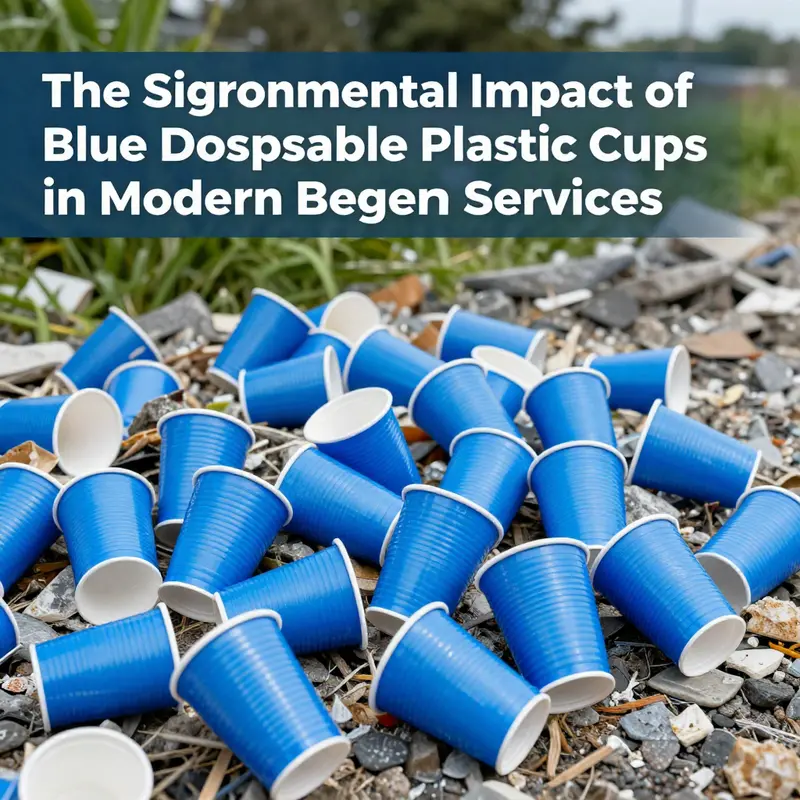
Blue disposable plastic cups have become almost as familiar as the beverages they hold. Their bright hue, paired with the convenience of disposability, makes them a staple at events, parties, fast-food counters, and bustling community gatherings. The combination of low cost and rapid production aligns with the tempo of modern hospitality, where speed and stock management can determine the success of a service. Yet beneath the shimmer of color lies a set of fraught choices about materials, waste streams, and the longer arc of environmental impact. The chapter that follows threads together the practical appeal of these cups with a candid account of their lifecycle, from raw material extraction to eventual fate in landfills or in the environment. It is not a call for blanket abstention from plastic use, but an invitation to weigh the visible benefits against the less visible costs that accrue over decades and across landscapes.
Most blue disposable cups are made from polypropylene or polystyrene, two lightweight thermoplastics that lend themselves to mass production, precise molding, and dependable performance for hot or cold beverages. The blue color is achieved by food-safe dyes added during manufacturing, a routine step that turns ordinary plastic into a vibrant vessel. This coloration is more than cosmetic; it signals a market segment and consumer expectations. The color can influence perceived cleanliness or quality, and in turn, drive purchase decisions at a glance. But color and convenience do not exist in a vacuum. They are embedded in supply chains powered by fossil fuels, energy-intensive processes, and global logistics that transport cups from mills to warehouses to event venues. The environmental arithmetic is not limited to the cup’s short-term use; it extends to resource extraction, production emissions, and end-of-life pathways that may be imperfect or unequal in different regions.
From a lifecycle perspective, the environmental footprint of blue disposable cups is best understood as a sequence of stages, each with its own set of trade-offs and unresolved questions. The sourcing stage depends on petrochemical feedstocks, whose extraction and refinement consume energy and generate greenhouse gases. The manufacturing stage involves heating, molding, cooling, and quality control, all of which require energy and often generate waste in the form of scrap plastics, dye effluents, or off-spec products. The use stage, while brief, concentrates the intended purpose: to convey drinks cleanly and safely. The final stage—disposal—constitutes the most consequential portion of the footprint, for it determines whether the cup completes a circular loop or becomes a persistent pollutant. In many places, recycling facilities are optimized for clean, uncolored, and standardized packaging plastics. The presence of colorants, stabilizers, and food residues complicates the recycling process. Even when collection occurs, a portion of blue cups ends up incinerated or buried, contributing to air emissions, groundwater concerns, and the slow, stubborn presence of plastics in the environment.
The contamination problem is not merely a matter of dirty cups spoiling a batch of recyclables. It is about how colorants and additives interact with recycling streams and how the integrity of the material is maintained after multiple processing cycles. Food residues can clog processing lines, and some additives may degrade mechanical properties after repeated re-melting. This reality pushes many facilities to route cups toward disposal rather than recycling, especially when the infrastructure to thoroughly sort, wash, and reprocess colored plastics is lacking. Blue cups, with their dyed surfaces, can pose a particular challenge in mixed-stream recycling, where purity and consistency determine end-use viability. The result is a paradox: a product designed for convenience can become a barrier to true circularity when the prevailing waste management systems are not equipped to handle it optimally. The consequence is a rising tension between a consumer expectation of one-time use and a planetary need to reduce long-lived waste.
The environmental concerns extend beyond the waste stream to what happens in natural environments when cups are discarded improperly. In landfills, blue cups contribute to the accumulation of non-biodegradable material that takes centuries to break down. In waterways and oceans, individual cups fragment into microplastics, which can be ingested by small organisms and eventually accumulate up the food chain. The physical presence of these objects also creates visual pollution and can disrupt habitats, affecting both aquatic and terrestrial organisms. The fragmentation process is gradual, but its effects accumulate; larger cups become countless tiny particles that persist for decades or longer. In this sense, color is not a peripheral attribute. It is part of the material identity that persists in the environment, sometimes signaling wildlife to mistake the cups for edible items, with dangerous consequences.
Beyond ecological impacts, the production and use of blue disposable cups intersect with climate change in meaningful ways. The energy-intensive nature of plastic production, coupled with the transportation of finished products across long distances, translates into greenhouse gas emissions. Each stage—from resin synthesis to container shipment—adds to the global carbon footprint. In places where plastics recycling is underdeveloped or underfunded, the share of cups that are incinerated increases, releasing pollutants and carbon dioxide into the atmosphere. The net effect is that a seemingly simple choice—opting for a bright blue cup for a quick service or a casual event—contributes to a larger climate equation. The broader sentence here is not that single-use plastics are always unacceptable; it is that their aggregate effect must be accounted for in planning for sustainable consumption and responsible production.
The governance environment around disposable cups has evolved in response to these concerns. Many jurisdictions now encourage or mandate shifts toward alternatives that promise lower impacts over their life cycles. Compostable cups made from plant-based materials or paper with a biodegradable lining tend to be positioned as more sustainable, especially when composting infrastructure is available to manage them properly. These options aim to break the link between single-use consumption and long-term persistence in the environment. Yet compostability is not a universal solution; it depends on local waste streams that can actually process compostable materials. Industrial composting facilities, rather than home composting setups, often require specific temperatures, moisture levels, and collection systems to ensure complete degradation. Where such facilities are absent or overwhelmed, compostable cups can end up in landfills just like their conventional plastic counterparts, effectively blunting the intended environmental benefits. In other words, the assumed advantage of switching to compostables hinges on the presence of capable waste management networks, an assumption that is not universal.
The design and marketing of blue cups have historically emphasized allure and practicality. The color signals a cheerful mood and a readiness for social interaction. In practice, however, that allure often competes with the realities of waste management, product stewardship, and end-of-life accountability. The color can complicate post-consumer sorting, especially when facilities rely on automated color-sensing and separation systems. When blue dyes are present, the material’s recyclability can be affected, not always in predictable ways, and this uncertainty feeds conservatism in recycling operations. As a result, some waste streams fragment along lines of practicality versus ambition: the industry knows that recycling colored plastics is more complex than recycling clear plastics, but societal expectations push toward the same convenience regardless of the color. This disjunction highlights a broader truth about modern consumer goods: aesthetics alone cannot guarantee sustainable outcomes unless supported by robust waste management, clear labeling, and consistent policy incentives.
Another layer to consider is the social dimension of disposable cup use. In high-volume settings, workers manage supply, cleanliness, and turnover with operations-focused discipline. The economic calculus often favors disposables because of shorter break-even cycles and lower labor for cleansing reusable wares. Yet the social costs—ranging from the time spent cleaning reusable systems to the health and hygiene standards required for shared dishware—are often overlooked in the initial cost assessment. The trade-off is complex: reusable systems may require upfront investments, careful handling, and reliable sanitation, but they can dramatically reduce per-use environmental impact when scaled effectively. The choice, therefore, is not simply between single-use and reuse; it is about which system aligns with the venue’s throughput, staff capacity, and local waste outlets. When blue cups are chosen for expedience, it becomes essential to accompany that choice with a plan to manage waste streams responsibly, to educate users about proper disposal, and to advocate for end-of-life options that reflect local capabilities.
From the perspective of a consumer, the color of a cup can also influence perceptions of cleanliness and freshness, affecting choices at the point of sale. The psychology of color in packaging and serving ware is well documented; blue, in many contexts, is associated with trust and dependability. Yet when color translates into a larger volume of material entering the waste system, the social psychology shifts—from delight in a convenient purchase to concern about environmental consequences. This is not solely a problem of individual behavior, but of collective behavior—how venues, organizers, and suppliers design systems that reduce waste, improve recovery, and maintain service levels. The path forward then becomes a continuum rather than a dichotomy: reduce reliance on single-use cups where feasible, improve the recyclability and compostability of those that remain, and invest in consumer education about the life cycle of the products they choose.
Technological and logistical innovations offer a glimmer of progress. Innovations in resin chemistry can improve the recyclability of colored plastics, while advances in sorting technologies can better separate cups from mixed streams. Process improvements at the manufacturing stage can reduce energy use and waste generation. On the policy front, extended producer responsibility schemes, container deposit systems, and targeted subsidies for more sustainable alternatives can shift the economics in favor of reuse and recycling. These shifts require a coordinated effort across manufacturers, waste managers, policymakers, and consumers. In the meantime, a practical approach for event planners and retailers is to weigh the immediate goals of cleanliness, speed, and cost against the longer-term obligation to minimize environmental harm. This involves a pragmatic mix of reducing unnecessary consumption, selecting materials with stronger end-of-life prospects, and participating in take-back or recycling programs wherever possible.
For readers seeking concrete alternatives that align with a similar service profile, there are options that preserve the convenience of disposables while reducing environmental risk. For example, clear plastic cups, when sourced from suppliers with transparent recycling streams and strong return-collection arrangements, can be integrated into events with less color-related recycling complexity. They also provide a visual cue that invites users to verify cleanliness and refill status, which can enhance customer trust. If you want to explore a practical path that retains ease of service, you can look at disposable clear plastic cups designed for event use. See this example page for a sense of what such options look like in a real-world catalog: disposable clear plastic cups for events. This link is illustrative of how suppliers present alternatives that balance performance with end-of-life considerations. While not a universal solution, it demonstrates how the choice of cup material and design can influence downstream waste handling and recycling outcomes. The broader goal remains the same: to align serving ware choices with the capacity of local waste systems, while maintaining the practical needs of customers and event organizers.
The path ahead requires both humility and ambition. Humility to acknowledge that color and convenience are not free of consequence, and ambition to pursue systems-level improvements that enable sustainable outcomes without compromising service. This means rethinking product design to favor materials that are easier to recycle, easier to compost where appropriate, or more amenable to reuse with minimal risk of contamination. It means building partnerships among manufacturers, waste managers, and policymakers to share data about end-of-life pathways and to invest in infrastructure that can support higher recovery rates. It also means empowering consumers to demand clearer labeling, to participate in recycling programs, and to recognize that everyday choices—down to the color of a cup—contribute to a larger environmental ledger.
In this sense, the vibrant blue cup is at once a symbol of hospitality and a test case for sustainability. It embodies the tension between immediate gratification and long-term stewardship. By examining its lifecycle openly, stakeholders can identify leverage points where small changes yield meaningful outcomes. A reimagined supply chain might privilege more recyclable resins, simpler color schemes, or packaging that facilitates sorting at the curb. A culture of reuse could emerge in high-volume venues with robust sanitation protocols and a willingness to invest in durable, washable wares that still deliver the same level of convenience. Community-level initiatives could pair education with accessible recycling or composting options, turning a ubiquitous plastic cup into a shared responsibility rather than an afterthought.
Ultimately, the environmental impact of blue disposable cups is not a single, easily solved problem. It is a complex tapestry woven from materials science, waste management infrastructure, consumer behavior, and policy design. The questions are pragmatic: How can we reduce the life-cycle footprint of a disposable cup without sacrificing the service model that customers expect? How can we ensure that the color blue does not automatically imply end-of-life frustration for communities trying to manage waste? And how can we align the aesthetics of a blue cup with a more sustainable economic and environmental future? The answers will not arrive in one grand reform, but in incremental improvements: better materials, smarter recycling, and a collective commitment to reduce unnecessary waste.
For readers who want to explore the broader context of plastic pollution and the urgent need for systemic change, a comprehensive external resource provides a global perspective on the crisis and the pathways forward. See the United Nations Environment Programme report on plastic pollution for a wide-ranging overview of the environmental consequences of single-use plastics, including disposable cups, and for discussions of policy options and practical solutions that can guide industry and communities alike. UNEP: Plastic Pollution Global Environmental Crisis
Hue, Hurry, and the Bottom Line: Market Trends and Economic Implications of Blue Disposable Cups

Blue disposable plastic cups occupy a quiet but dominant niche in the modern food and beverage ecosystem. They are not merely vessels; they are signaling devices, carrying identity for events, brands, and spaces that want to communicate liveliness, cleanliness, and speed. Their blue tone catches the eye, yet their value is largely measured in throughput, cost per use, and the ease with which they can be produced, stored, and disposed. The economic story behind these cups sits at the intersection of color psychology, material science, and logistics, wrapped in a narrative about sustainability that increasingly governs how companies price, market, and improve these products.
Across the globe, the broader disposable cups market has shown steady growth. The market value rising from approximately 17.4 billion USD in 2024 to an anticipated 26.8 billion USD by the mid-2030s signals more than rising demand; it signals a continuing appetite for convenience. A 4 percent annual growth rate during this period reflects not only growth in quick service and event sectors but also a diversification of formats and colors designed to help brands stand out while keeping costs predictable. Color matters in a crowded shelf and a crowded event space. Blue, among the most versatile and widely accepted hues, often serves multiple roles at once: it is calm enough to pair with many brand palettes, it is bold enough to be visible in dim lighting, and it is durable in deep or bright tones that hold up under heat and condensation.
The materials chosen for blue disposable cups—the two most common options being polypropylene and polystyrene—are part of a larger conversation about lightweight, safe, and recyclable plastics. PP cups bring heat resistance, structural integrity, and a degree of flexibility that suits chilled or lightly hot beverages in a way that many consumers associate with reliability. The design and color are achieved by adding food-safe dyes during manufacturing, a step that seems minor but underwrites the consistency needed for mass production. PS cups, on the other hand, have their own advantages in clarity and rigidity, making them favored for certain cold drinks and decorative presentations. Yet both materials share a vulnerability that has shaped the market trajectory: the single use life they offer is ecologically costly, and rising awareness of plastic pollution is prompting buyers, vendors, and regulators to rethink dependence on disposable vessels.
Within this landscape, blue cups have carved out a distinct position. They are not a niche curiosity but a practical choice that aligns with how many operators design service experiences. In fast casual settings, for instance, the color can support quick recognition of cold drinks at a glance, helping staff to organize orders and reduce mix-ups. In catering and events, the color becomes part of the visual theme—blue for nautical or summer themes, softer blues for corporate gatherings, vibrant blues for festive occasions. The aesthetic role of a blue cup can be as important as its functional role, providing a unifying visual cue across stacked piles, service counters, and bar tops. The economic value of this alignment often translates into incremental demand, as venues seek consistent, theme-ready tableware that can be bundled with lids, straws, and sleeves to create a seamless consumer experience.
In discussing market dynamics, it is essential to recognize how demand in different regions shapes opportunities and constraints. India has emerged as a particularly telling case study for PP disposable cups, where durability, heat resistance, and a favorable price point converge with a growing service sector that includes hospitality, outdoor events, and food stalls. Blue remains a popular color option because it remains legible under varied lighting conditions and remains visually appealing when ice or condensation forms on the surface. For these markets, the portability of lightweight cups is a decisive factor; their ability to perform in outdoor contexts, from street-side chaat stalls to festival grounds, makes them especially attractive. The broader supply chain in such markets supports a range of sizes and thicknesses, with thicker, more rigid PP cups designed for cold beverages that require a stable presentation under ice and glassware alike. The availability of blue variants furthers brand alignment, enabling operators to replicate a consistent feel across multiple outlets or event zones, a consistency that matters when customers rely on familiar colors to navigate service lines.
From an economic standpoint, the blue cup segment is not simply a passive recipient of consumer taste but an active creator of opportunity for small and medium enterprises. The production, packaging, and distribution of colored disposable cups support workers who operate in regional factories, distribution hubs, and small-town warehousing. The value chain benefits from customization—lids with secure seals, stacked cup carriers, and compatible lids and straws that fit standard diameters—because these features extend the usability and saleable life of a simple cup. Operators can offer bundled solutions that reduce the procurement challenge for customers who are responsible for entire events or business premises. In such contexts, a blue cup is not only a container; it becomes part of a broader, themable offering that can be tailored to specific occasions. The ability to pair cups with thematically matched packaging or signage creates perceived value that supports price points in crowded markets where price competition is intense.
Yet there is a growing tension between the low price of single-use cups and the higher public and regulatory expectations regarding sustainability. Governments and organizations are pushing for more responsible waste management, higher recycling rates, and clearer labeling that informs consumers about end-of-life options. In many places, this translates into policy that incentivizes recyclable materials, supports compostable alternatives, or imposes restrictions on the use of certain plastics in specific contexts. Operators faced with these shifts must balance the immediate cost of more sustainable alternatives against the longer-term risk of noncompliance, consumer backlash, and stranded inventory. In this sense, the blue cup market is a bellwether for how the disposable sector will navigate the tug-of-war between affordability and environmental accountability. Brands that succeed in this space are often those that anticipate regulatory trajectories and diversify their portfolios to include compostable or plant-based options alongside traditional PP and PS lines.
The economics of color, convenience, and capacity are also shaped by consumer behavior and the evolving expectations of food service providers. Consumers, particularly in urban centers, have become more conscious of environmental footprints, but many still require price-sensitive options that do not compromise taste or service speed. Blue cups help satisfy this paradox by offering a reliable, mass-producible product at scale. They enable quick service operations to maintain high throughput while offering a visually pleasing aesthetic that reinforces branding, even if viewed fleetingly by customers standing in line or at a standing-room event. The pricing strategies for blue cups are therefore influenced by multiple factors: raw material costs, energy costs in manufacturing and distribution, packaging weights, and the cost of compliance with environmental rules. When resin prices rise, differences in polymer type between PP and PS become more pronounced in total cost of ownership, especially when considering the life cycle from production to end-of-life disposal. Producers and retailers respond with a combination of efficiency improvements at the line, improved dyeing procedures to reduce waste, and more aggressive packaging optimization to lower shipping costs.
In many markets, the presence of blue cups in retail channels signals broader availability of color options that cater to brand differentiation. Retailers and distributors manage a portfolio of cup colors and formats to meet the needs of a diverse customer base, from street vendors to high-end caterers. The shape and rigidity of the cups influence not only the user experience but also the ease of handling by staff and customers. For cold drinks, thicker and more rigid PP cups prevent condensation leakage, preserving the integrity of the beverage and the presentation of ice cubes. For hot beverages, the workability and safety of the material become crucial, with a preference for barrier properties that resist deformation. These considerations drive the ongoing development of cup designs that are both affordable and consistent in quality, while maintaining colorfastness in blue hues across repeated use or stacking scenarios.
The story of blue disposable cups is thus inseparable from the broader economy of disposable tableware. It intersects with logistics, packaging, and consumer demand in ways that reveal the efficiencies or frictions of the industry. The global growth trajectory implies that producers are investing in more efficient molds, faster cycle times, and more sophisticated colorant systems that allow a broad range of hues to be produced with tight color matching. In addition, the rise of online marketplaces has expanded the reach of suppliers beyond traditional wholesalers, enabling rapid fulfillment for large events and pop-up venues. A buyer can now source an entire color palette for an event, not merely a single cup, and this capability reinforces the importance of standardization across sizes and compatible accessories. The integration of blue cups into themed packages, sets, and display arrangements becomes a differentiator in crowded markets where customers remember the look and feel of an occasion as much as the taste of a drink.
The capacity to innovate within this space also means that a blue cup can be part of a broader co-design strategy with customers. A growing number of operators are seeking color-consistent packaging that integrates with signage, napkins, and takeaway materials. In this sense, the blue cup becomes a component of a larger experiential package, aligning with consumer expectations around convenience, theme coherence, and brand storytelling. Businesses that embrace such integration can command better margins by offering a coherent, ready-made solution that reduces the procurement friction for event planners, restaurateurs, and hospitality managers. The opportunities extend to the space of event design and packaging, where color and form support the creation of cohesive experiences that travelers and locals alike remember. Where a single cup once served a simple function, it now participates in a multi-element system that covers the entire drink experience from the moment a guest approaches a counter to the moment the cup is recycled or composted.
For those seeking practical guidance beyond the macro trends, a closer look at the manufacturing and selection process reveals how blue cups, though seemingly simple, embody a set of trade-offs. The choice between PP and PS is not merely about color; it is about thermal performance, stackability, rigidity, and end-of-life considerations. In hot beverage applications, the risk of deformation must be weighed against cost and shelf life. In cold beverage contexts, the risk of condensation leakage demands materials with appropriate wall thickness and surface finish. Color uniformity across batches is achieved through controlled dye addition and rigorous quality assurance steps, ensuring that blue remains consistent from run to run. The dyeing process itself must be compatible with food-contact safety standards, a factor that influences not just regulatory compliance but also consumer confidence.
Color, in this sense, acts as both a marketing asset and a technical constraint. It allows operators to communicate intention quickly blue signals cool refreshment, trustworthiness, and clarity while imposing precise manufacturing requirements that must be met to keep colorfastness under light exposure and during cold storage. In the supply chain, this translates into demand planning that anticipates seasonal spikes in events, weddings, corporate functions, and outside catering. It also means inventory management practices that minimize waste by aligning production with the typical sizes and colors in demand. The blue cup thus becomes a small but telling node in a market that prizes reliability, speed, and reproducibility.
The internal dynamics of suppliers and manufacturers also shape the price and availability of blue cups. Firms in this sector frequently operate with lean production lines and flexible capacity, enabling them to shift quickly between colors, sizes, and closure configurations as customer demand changes. This flexibility is key in markets with rapid growth or volatile event calendars. The ability to offer customization without compromising yield supports business growth for small players who can compete with larger entrants by providing tailored solutions, including themed color runs or color-matched packaging. This is where the opportunity for partnerships and co-creation arises, as operators work with suppliers to develop color palettes that align with event themes, corporate identities, or seasonal campaigns. The result is a marketplace where taste in color is as much an expression of brand intent as taste in beverages, and where the color blue serves as a durable, repeatable, mass-produced option that reduces decision fatigue for buyers.
In considering the social and environmental consequences, it is essential to acknowledge that the proliferation of blue cups, like other disposable tableware, contributes to plastic waste streams. The environmental impact is not limited to the cup itself but extends to the lids, straws, sleeves, and packaging that accompany it. A responsible market response involves not only promoting recycling and better waste separation but also supporting alternatives that can reduce reliance on fossil-fuel based polymers. Compostable cups, often derived from plant-based materials or designed with PLA or other bio-based liners, present one path forward, though such options introduce their own supply chain and performance considerations. Cost differentials are nontrivial, particularly for organizations that rely on large quantities of disposables and must balance short-term budgetary constraints with longer-term environmental commitments. As consumer expectations evolve, and as environmental labeling standards become more transparent, the blue cup market may transform from a purely cost-driven choice into a reasoned selection that considers lifecycle impacts, end-of-life disposition, and the potential for circular economy arrangements that keep materials circulating longer within the economy.
Retail and wholesale channels reflect these shifts in interesting ways. Large-scale retailers, catering supply houses, and online marketplaces increasingly expose customers to blue cups alongside a spectrum of alternatives, including clear cups or alternatives with biodegradable components. The result is a broader decision environment for buyers. In such environments, packaging configurations—how many cups per pack, how many packs per case, what kind of lids and accessories are included—become as important as the color itself. When buyers can choose from a complete suite of compatible products, the chance of mismatches decreases and the operational efficiency of the service workflow increases. The economic implication is that vendors who can bundle cups with lids, sleeves, and compatible straws into coherent packages can capture a higher share of the wallet, particularly in markets where customers plan for large-scale events or multiple venues.
For readers who plan events or operate hospitality spaces, the story of blue disposable cups offers a practical lens on procurement strategies. In a world of rising material costs and the shadow of environmental concern, smart buyers focus on total cost of ownership rather than unit price. They examine not just the price per cup but the cumulative impact of shipment, storage, breakage, and end-of-life management. They assess whether PP or PS offers a better balance of thermal performance for their beverage lineup and whether the blue dye used is stable under the relevant light exposure and temperature range. They consider whether their waste streams can be directed to appropriate recycling or composting streams, or whether a shift toward more sustainable options may be needed to align with corporate social responsibility goals, brand commitments, or regulatory requirements.
In the end, the blue disposable cup market is a mirror of a broader economy that prizes speed, color, and convenience while slowly moving toward greater accountability for plastic waste. The numbers point to continued growth, and the qualitative signals suggest a market that will keep innovating in color management, packaging compatibility, and end-of-life solutions. The blue cup is not an isolated commodity; it is a component of events, hospitality, and quick service culture that seeks to deliver efficient experiences without sacrificing visual appeal. For those who want to explore this space further, a practical route is to examine the ways in which color-coordinated packaging and tableware can reduce procurement complexity and improve guest experience in ways that feel seamless rather than ornamental. A thoughtfully designed blue cup program can contribute to a brand story that emphasizes reliability and cheer without compromising the planet, a balance that many buyers will increasingly demand as they navigate a future in which sustainability and growth must go hand in hand.
To illustrate how organizations translate these macro trends into concrete choices, consider the notion of theming and event packaging as a service. For planners who want to move beyond a single cup and embrace a coherent color story, there are offerings that provide a ready-made, color coordinated solution for event days. Such packages can include cups in an assortment of sizes, lids tailored to fit securely even when the drinks chill or slush, and sleeves that protect hands while maintaining the blue visual cue. They can also include other disposable tableware pieces that share the same blue motif, creating a unified look that minimizes onsite logistics and maximizes guest experience. This approach reduces procurement risk for busy operators who need to deliver a look that aligns with a theme without getting bogged down in vendor fragmentation, and it can make a significant difference in the cost structure of large gatherings where every item is counted.
Within this context, the broader market invitation remains open: to balance cost efficiency with environmental performance, to design blue cup assortments that reflect both practical needs and aesthetic preferences, and to ensure that the color remains a dependable signifier of the intended experience rather than a cosmetic flourish. The future of blue disposable cups will be shaped by how well players in the supply chain can align with evolving consumer expectations about sustainability, how flexibly they can respond to demand shifts, and how effectively they can integrate with other packaging and tableware to form complete, themable solutions for events and everyday service alike. The color may be blue, but the strategic decisions around these cups are anything but simple. They are a microcosm of a world that wants instant service, consistent quality, and responsible choices all at once, a balancing act that will continue to guide manufacturers, retailers, and buyers in the years ahead.
In this light, the practical takeaway is not a single recommendation but a framework for thinking about procurement, design, and lifecycle management. For those who are planning events or running fast service environments, it helps to view blue cups as a strategic asset rather than a mere commodity. Consider how many sizes you need, how often you expect to replace stock, and how color codes can streamline the service process. Think about the full packaging system in which the cups operate, including lids, straws, sleeves, and display options, since these items influence handling, presentation, and waste. And finally, stay alert to the broader social contract around disposables: the possibility that future regulatory landscapes will demand greater transparency about material inputs, recycling options, and end-of-life pathways. The blue cup is thus a practical instrument in a larger shift toward more deliberate, responsible consumption patterns that do not sacrifice efficiency or value. For those who seek a concrete path forward in this evolving market, the following point is clear: a successful approach combines reliability with adaptability. Reliability comes from standardized production, consistent color matching, and robust supply chains that can deliver what customers expect when they expect it. Adaptability arises from recognizing that end-of-life considerations are not optional but central to the viability of a long-term strategy. It means staying connected with the growing body of packaging and sustainability thinking, including the development of compostable or recyclable alternatives that can coexist with traditional PP and PS lines rather than replace them outright. It means exploring co-design opportunities with customers who want to tell a color story that matches their brand narrative or event theme, and it means embracing the potential of internalization of waste management practices, such as setting up in-house separation or partnering with local recycling programs to ensure blue cups do not simply vanish into landfill. In this sense, a blue disposable cup program becomes not just an operational necessity but a small contribution to a larger dialogue about how society consumes, recycles, and reimagines the materials that freight everyday life.
A final reflection returns us to the interplay of color and economy. Color guides perception and behavior; it can accelerate decision-making, reduce errors, and even influence the pace of service. The economic implications, meanwhile, unfold across layers—from the cost of resin and dye to the margins earned through bundled packaging solutions, to the capacity of regional producers to respond quickly to demand. The blue cup sits at the hinge of these forces, offering a tangible focal point for brands and buyers who want a visually cohesive yet economically prudent approach to disposable tableware. In this sense, the blue cup market is both straightforward in its utility and revealing in its complexity, a small but telling indicator of how modern consumption patterns negotiate convenience, aesthetics, and responsibility. The stakeholder chorus—from manufacturers and distributors to event planners and end users—continues to shape a market that values speed and clarity while gradually absorbing the imperative to minimize waste. As technologies evolve, as materials progress, and as consumer expectations continue to shift, blue disposable cups will likely endure as a staple of the service landscape, even as the ways they are manufactured, sourced, and managed adapt to a future that prizes both efficiency and accountability.
To close, for the practitioner or researcher seeking to connect the numbers with the nuance, one productive path is to map color strategy to procurement planning. By embedding color into product families in a way that aligns with event calendars, customer segments, and waste management capabilities, buyers can build more resilient supply networks that weather price volatility and regulatory change. They can negotiate terms that reward consistent color accuracy and predictable performance, and they can adopt lifecycle thinking that weighs the environmental footprint of blue cups from cradles to recycling. The result is not merely a more colorful catalog but a more informed, sustainable approach to sourcing disposable tableware that serves the needs of today while keeping options open for the innovations of tomorrow. The blue cup, simple in form, becomes a conduit for more thoughtful choices, and for those who understand the interdependence of design, economics, and environment, it is a small but meaningful example of how markets can respond to both desire and duty with equal seriousness.
This integrated perspective helps illuminate how blue disposable cups function within the broader ecosystem of disposable tableware. They are a practical necessity, a design element, and a decision point that reveals much about supply chains, consumer preferences, and environmental policy. As the market continues to evolve, those who recognize the importance of color management, end-of-life options, and seamless packaging coordination will be best positioned to translate growth into sustainable practice. The blue cup story, continually revised by innovations in material science, supply-chain logistics, and consumer expectations, offers a lens through which to view the future of single-use products that are at once convenient, visually engaging, and increasingly accountable.
For event professionals and hospitality operators reading this chapter, a straightforward takeaway is that color strategy can act as a form of service design. The choice of blue is not incidental; it is a deliberate decision about how customers experience a moment of refreshment, how staff operate under pressure, and how waste streams can be directed toward responsible pathways. The market data suggest a healthy pace of growth, driven by demand in food service, hospitality, and events, and tempered by the unavoidable reality that sustainability concerns will continue to challenge the economics of single-use plastics. By embracing a flexible, color-aware approach to packaging, operators can meet the expectations of an increasingly discerning consumer while supporting the broader transition toward more sustainable production and disposal practices. In this sense, the blue disposable cup embodies a balance between immediacy and thoughtfulness, a balance that will define the trajectory of this market as it moves through the next decade and beyond.
To illustrate how organizations translate these macro trends into concrete choices, consider the notion of theming and event packaging as a service. For planners who want to move beyond a single cup and embrace a coherent color story, there are offerings that provide a ready-made, color coordinated solution for event days. Such packages can include cups in an assortment of sizes, lids tailored to fit securely even when the drinks chill or slush, and sleeves that protect hands while maintaining the blue visual cue. They can also include other disposable tableware pieces that share the same blue motif, creating a unified look that minimizes onsite logistics and maximizes guest experience. This approach reduces procurement risk for busy operators who need to deliver a look that aligns with a theme without getting bogged down in vendor fragmentation, and it can make a significant difference in the cost structure of large gatherings where every item is counted.
Within this context, the broader market invitation remains open: to balance cost efficiency with environmental performance, to design blue cup assortments that reflect both practical needs and aesthetic preferences, and to ensure that the color remains a dependable signifier of the intended experience rather than a cosmetic flourish. The future of blue disposable cups will be shaped by how well players in the supply chain can align with evolving consumer expectations about sustainability, how flexibly they can respond to demand shifts, and how effectively they can integrate with other packaging and tableware to form complete, themable solutions for events and everyday service alike. The color may be blue, but the strategic decisions around these cups are anything but simple. They are a microcosm of a world that wants instant service, consistent quality, and responsible choices all at once, a balancing act that will continue to guide manufacturers, retailers, and buyers in the years ahead.
In this light, the practical takeaway is not a single recommendation but a framework for thinking about procurement, design, and lifecycle management. For those who are planning events or running fast service environments, it helps to view blue cups as a strategic asset rather than a mere commodity. Consider how many sizes you need, how often you expect to replace stock, and how color codes can streamline the service process. Think about the full packaging system in which the cups operate, including lids, straws, sleeves, and display options, since these items influence handling, presentation, and waste. And finally, stay alert to the broader social contract around disposables: the possibility that future regulatory landscapes will demand greater transparency about material inputs, recycling options, and end-of-life pathways. The blue cup is thus a practical instrument in a larger shift toward more deliberate, responsible consumption patterns that do not sacrifice efficiency or value. For those who seek a concrete path forward in this evolving market, the following point is clear: a successful approach combines reliability with adaptability. Reliability comes from standardized production, consistent color matching, and robust supply chains that can deliver what customers expect when they expect it. Adaptability arises from recognizing that end-of-life considerations are not optional but central to the viability of a long-term strategy. It means staying connected with the growing body of packaging and sustainability thinking, including the development of compostable or recyclable alternatives that can coexist with traditional PP and PS lines rather than replace them outright. It means exploring co-design opportunities with customers who want to tell a color story that matches their brand narrative or event theme, and it means embracing the potential of internalization of waste management practices, such as setting up in-house separation or partnering with local recycling programs to ensure blue cups do not simply vanish into landfill. In this sense, a blue disposable cup program becomes not just an operational necessity but a small contribution to a larger dialogue about how society consumes, recycles, and reimagines the materials that freight everyday life.
A final reflection returns us to the interplay of color and economy. Color guides perception and behavior; it can accelerate decision-making, reduce errors, and even influence the pace of service. The economic implications, meanwhile, unfold across layers—from the cost of resin and dye to the margins earned through bundled packaging solutions, to the capacity of regional producers to respond quickly to demand. The blue cup sits at the hinge of these forces, offering a tangible focal point for brands and buyers who want a visually cohesive yet economically prudent approach to disposable tableware. In this sense, the blue cup market is both straightforward in its utility and revealing in its complexity, a small but telling indicator of how modern consumption patterns negotiate convenience, aesthetics, and responsibility. The stakeholder chorus—from manufacturers and distributors to event planners and end users—continues to shape a market that values speed and clarity while gradually absorbing the imperative to minimize waste. As technologies evolve, as materials progress, and as consumer expectations continue to shift, blue disposable cups will likely endure as a staple of the service landscape, even as the ways they are manufactured, sourced, and managed adapt to a future that prizes both efficiency and accountability.
To close, for the practitioner or researcher seeking to connect the numbers with the nuance, one productive path is to map color strategy to procurement planning. By embedding color into product families in a way that aligns with event calendars, customer segments, and waste management capabilities, buyers can build more resilient supply networks that weather price volatility and regulatory change. They can negotiate terms that reward consistent color accuracy and predictable performance, and they can adopt lifecycle thinking that weighs the environmental footprint of blue cups from cradles to recycling. The result is not merely a more colorful catalog but a more informed, sustainable approach to sourcing disposable tableware that serves the needs of today while keeping options open for the innovations of tomorrow. The blue cup, simple in form, becomes a conduit for more thoughtful choices, and for those who understand the interdependence of design, economics, and environment, it is a small but meaningful example of how markets can respond to both desire and duty with equal seriousness.
This integrated perspective helps illuminate how blue disposable cups function within the broader ecosystem of disposable tableware. They are a practical necessity, a design element, and a decision point that reveals much about supply chains, consumer preferences, and environmental policy. As the market continues to evolve, those who recognize the importance of color management, end-of-life options, and seamless packaging coordination will be best positioned to translate growth into sustainable practice. The blue cup story, continually revised by innovations in material science, supply-chain logistics, and consumer expectations, offers a lens through which to view the future of single-use products that are at once convenient, visually engaging, and increasingly accountable.
For event professionals and hospitality operators reading this chapter, a straightforward takeaway is that color strategy can act as a form of service design. The choice of blue is not incidental; it is a deliberate decision about how customers experience a moment of refreshment, how staff operate under pressure, and how waste streams can be directed toward responsible pathways. The market data suggest a healthy pace of growth, driven by demand in food service, hospitality, and events, and tempered by the unavoidable reality that sustainability concerns will continue to challenge the economics of single-use plastics. By embracing a flexible, color-aware approach to packaging, operators can meet the expectations of an increasingly discerning consumer while supporting the broader transition toward more sustainable production and disposal practices. In this sense, the blue disposable cup embodies a balance between immediacy and thoughtfulness, a balance that will define the trajectory of this market as it moves through the next decade and beyond.
To illustrate how organizations translate these macro trends into concrete choices, consider the notion of theming and event packaging as a service. For planners who want to move beyond a single cup and embrace a coherent color story, there are offerings that provide a ready-made, color coordinated solution for event days. Such packages can include cups in an assortment of sizes, lids tailored to fit securely even when the drinks chill or slush, and sleeves that protect hands while maintaining the blue visual cue. They can also include other disposable tableware pieces that share the same blue motif, creating a unified look that minimizes onsite logistics and maximizes guest experience. This approach reduces procurement risk for busy operators who need to deliver a look that aligns with a theme without getting bogged down in vendor fragmentation, and it can make a significant difference in the cost structure of large gatherings where every item is counted.
Within this context, the broader market invitation remains open: to balance cost efficiency with environmental performance, to design blue cup assortments that reflect both practical needs and aesthetic preferences, and to ensure that the color remains a dependable signifier of the intended experience rather than a cosmetic flourish. The future of blue disposable cups will be shaped by how well players in the supply chain can align with evolving consumer expectations about sustainability, how flexibly they can respond to demand shifts, and how effectively they can integrate with other packaging and tableware to form complete, themable solutions for events and everyday service alike. The color may be blue, but the strategic decisions around these cups are anything but simple. They are a microcosm of a world that wants instant service, consistent quality, and responsible choices all at once, a balancing act that will continue to guide manufacturers, retailers, and buyers in the years ahead.
In this light, the practical takeaway is not a single recommendation but a framework for thinking about procurement, design, and lifecycle management. For those who are planning events or running fast service environments, it helps to view blue cups as a strategic asset rather than a mere commodity. Consider how many sizes you need, how often you expect to replace stock, and how color codes can streamline the service process. Think about the full packaging system in which the cups operate, including lids, straws, sleeves, and display options, since these items influence handling, presentation, and waste. And finally, stay alert to the broader social contract around disposables: the possibility that future regulatory landscapes will demand greater transparency about material inputs, recycling options, and end-of-life pathways. The blue cup is thus a practical instrument in a larger shift toward more deliberate, responsible consumption patterns that do not sacrifice efficiency or value. For those who seek a concrete path forward in this evolving market, the following point is clear: a successful approach combines reliability with adaptability. Reliability comes from standardized production, consistent color matching, and robust supply chains that can deliver what customers expect when they expect it. Adaptability arises from recognizing that end-of-life considerations are not optional but central to the viability of a long-term strategy. It means staying connected with the growing body of packaging and sustainability thinking, including the development of compostable or recyclable alternatives that can coexist with traditional PP and PS lines rather than replace them outright. It means exploring co-design opportunities with customers who want to tell a color story that matches their brand narrative or event theme, and it means embracing the potential of internalization of waste management practices, such as setting up in-house separation or partnering with local recycling programs to ensure blue cups do not simply vanish into landfill. In this sense, a blue disposable cup program becomes not just an operational necessity but a small contribution to a larger dialogue about how society consumes, recycles, and reimagines the materials that freight everyday life.
A final reflection returns us to the interplay of color and economy. Color guides perception and behavior; it can accelerate decision-making, reduce errors, and even influence the pace of service. The economic implications, meanwhile, unfold across layers—from the cost of resin and dye to the margins earned through bundled packaging solutions, to the capacity of regional producers to respond quickly to demand. The blue cup sits at the hinge of these forces, offering a tangible focal point for brands and buyers who want a visually cohesive yet economically prudent approach to disposable tableware. In this sense, the blue cup market is both straightforward in its utility and revealing in its complexity, a small but telling indicator of how modern consumption patterns negotiate convenience, aesthetics, and responsibility. The stakeholder chorus—from manufacturers and distributors to event planners and end users—continues to shape a market that values speed and clarity while gradually absorbing the imperative to minimize waste. As technologies evolve, as materials progress, and as consumer expectations continue to shift, blue disposable cups will likely endure as a staple of the service landscape, even as the ways they are manufactured, sourced, and managed adapt to a future that prizes both efficiency and accountability.
To close, for the practitioner or researcher seeking to connect the numbers with the nuance, one productive path is to map color strategy to procurement planning. By embedding color into product families in a way that aligns with event calendars, customer segments, and waste management capabilities, buyers can build more resilient supply networks that weather price volatility and regulatory change. They can negotiate terms that reward consistent color accuracy and predictable performance, and they can adopt lifecycle thinking that weighs the environmental footprint of blue cups from cradles to recycling. The result is not merely a more colorful catalog but a more informed, sustainable approach to sourcing disposable tableware that serves the needs of today while keeping options open for the innovations of tomorrow. The blue cup, simple in form, becomes a conduit for more thoughtful choices, and for those who understand the interdependence of design, economics, and environment, it is a small but meaningful example of how markets can respond to both desire and duty with equal seriousness.
This integrated perspective helps illuminate how blue disposable cups function within the broader ecosystem of disposable tableware. They are a practical necessity, a design element, and a decision point that reveals much about supply chains, consumer preferences, and environmental policy. As the market continues to evolve, those who recognize the importance of color management, end-of-life options, and seamless packaging coordination will be best positioned to translate growth into sustainable practice. The blue cup story, continually revised by innovations in material science, supply-chain logistics, and consumer expectations, offers a lens through which to view the future of single-use products that are at once convenient, visually engaging, and increasingly accountable.
For event professionals and hospitality operators reading this chapter, a straightforward takeaway is that color strategy can act as a form of service design. The choice of blue is not incidental; it is a deliberate decision about how customers experience a moment of refreshment, how staff operate under pressure, and how waste streams can be directed toward responsible pathways. The market data suggest a healthy pace of growth, driven by demand in food service, hospitality, and events, and tempered by the unavoidable reality that sustainability concerns will continue to challenge the economics of single-use plastics. By embracing a flexible, color-aware approach to packaging, operators can meet the expectations of an increasingly discerning consumer while supporting the broader transition toward more sustainable production and disposal practices. In this sense, the blue disposable cup embodies a balance between immediacy and thoughtfulness, a balance that will define the trajectory of this market as it moves through the next decade and beyond.
To illustrate how organizations translate these macro trends into concrete choices, consider the notion of theming and event packaging as a service. For planners who want to move beyond a single cup and embrace a coherent color story, there are offerings that provide a ready-made, color coordinated solution for event days. Such packages can include cups in an assortment of sizes, lids tailored to fit securely even when the drinks chill or slush, and sleeves that protect hands while maintaining the blue visual cue. They can also include other disposable tableware pieces that share the same blue motif, creating a unified look that minimizes onsite logistics and maximizes guest experience. This approach reduces procurement risk for busy operators who need to deliver a look that aligns with a theme without getting bogged down in vendor fragmentation, and it can make a significant difference in the cost structure of large gatherings where every item is counted.
Within this context, the broader market invitation remains open: to balance cost efficiency with environmental performance, to design blue cup assortments that reflect both practical needs and aesthetic preferences, and to ensure that the color remains a dependable signifier of the intended experience rather than a cosmetic flourish. The future of blue disposable cups will be shaped by how well players in the supply chain can align with evolving consumer expectations about sustainability, how flexibly they can respond to demand shifts, and how effectively they can integrate with other packaging and tableware to form complete, themable solutions for events and everyday service alike. The color may be blue, but the strategic decisions around these cups are anything but simple. They are a microcosm of a world that wants instant service, consistent quality, and responsible choices all at once, a balancing act that will continue to guide manufacturers, retailers, and buyers in the years ahead.
In this light, a practical path forward is not merely about selecting a color but about embedding color into a broader procurement and lifecycle framework. The blue cup becomes a test case for how organizations balance cost, performance, sustainability, and customer experience. It is a small product with outsized implications for logistics, branding, and environmental accountability. The chapter thus invites readers to see blue cups not as isolated commodities but as strategic components of a service design approach that prioritizes speed, clarity, and responsibility in equal measure. And in the process, it points to a future where color strategy and sustainable practice are not opposing forces but complementary strengths that help the entire disposable tableware ecosystem move toward greater resilience and accountability.
Final thoughts
As we navigate the complex landscape shaped by blue disposable plastic cups, it’s essential for beverage services and event planners to balance convenience with sustainability. Understanding their manufacturing processes, acknowledging environmental impacts, and staying attuned to market trends equips businesses with the knowledge needed to make more ethical choices. By shifting towards more sustainable alternatives while still delivering the quality experience that customers love, we can pave the way for a greener future tailored to changing consumer demands.