
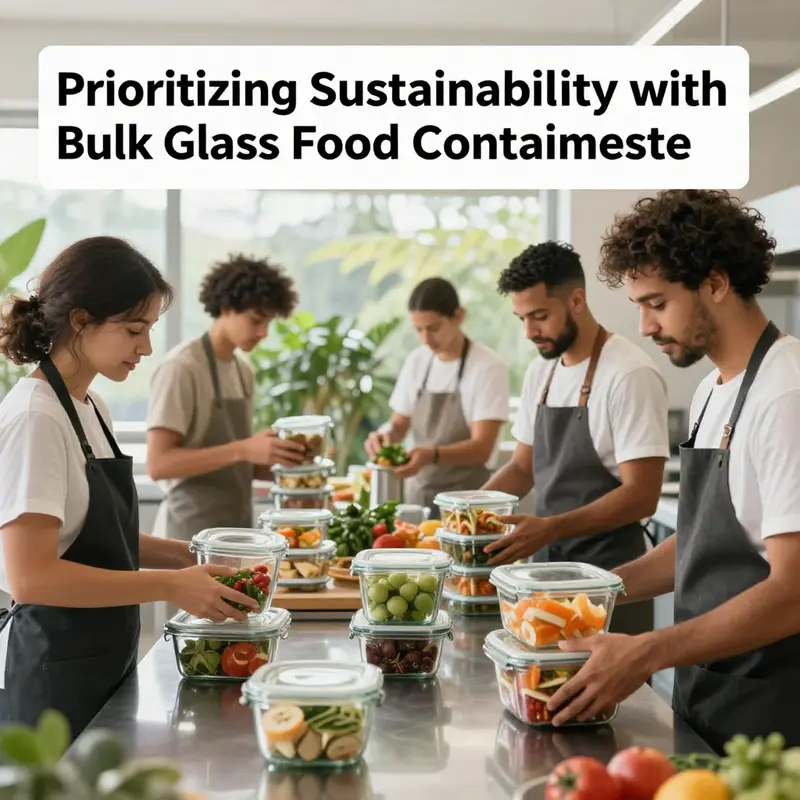
In the competitive landscape of food and beverage, sustainability and quality can set businesses apart. Bulk glass food containers wholesale present a versatile solution for bubble tea shops and restaurants, elevating both product standards and customer experience. With their non-reactive properties and aesthetic appeal, glass containers promise to innovate how food is stored, presented, and delivered. This article explores the core advantages and scenarios where these containers thrive, the materials that define their quality, key procurement parameters for successful acquisition, and geographical insights that highlight the efficiency of supply chains. By understanding these factors, businesses can make informed decisions that align with their operational goals and customer expectations.
Bulk Glass, Big Impact: Safety, Temperature Mastery, and Sustainability in Wholesale Glass Food Containers
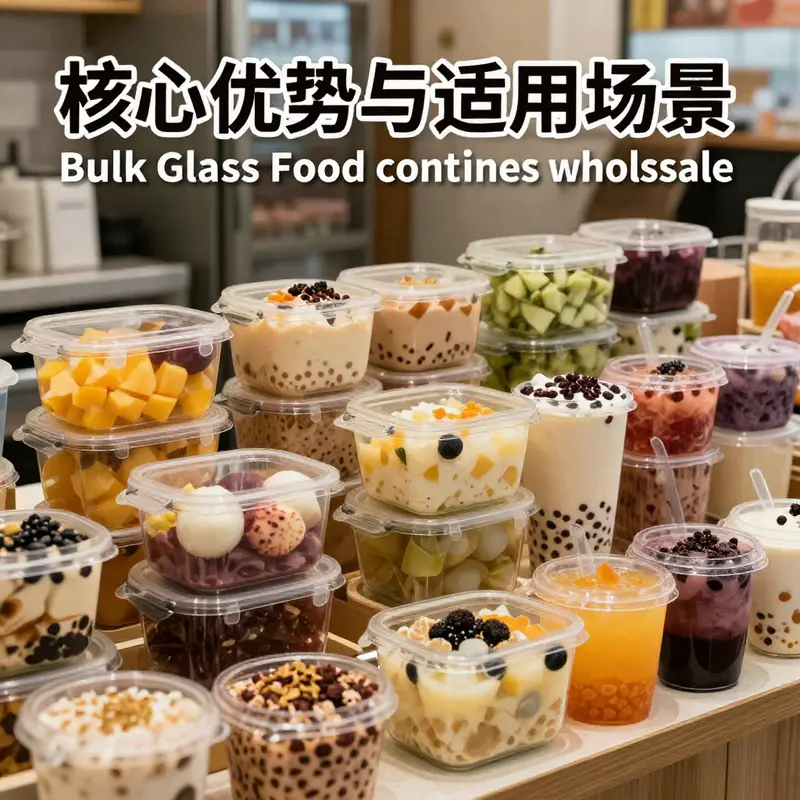
Bulk glass, big impact. The wholesale choice of glass food containers is a strategic decision that touches safety, performance, and sustainability. When a brand scales up, the container becomes a silent ambassador of quality. Glass, with its inert, non-absorptive properties and heat tolerance, preserves flavor and protects integrity while signaling purity to consumers.
The safety profile of food-grade glass is foundational. Glass is non-porous and non-reactive, so it does not leach chemicals into foods and does not absorb odors or flavors from prior contents. The absence of BPA and similar concerns has long supported glass as a preferred option in high-end food service, ready-to-eat programs, and premium retail packaging.
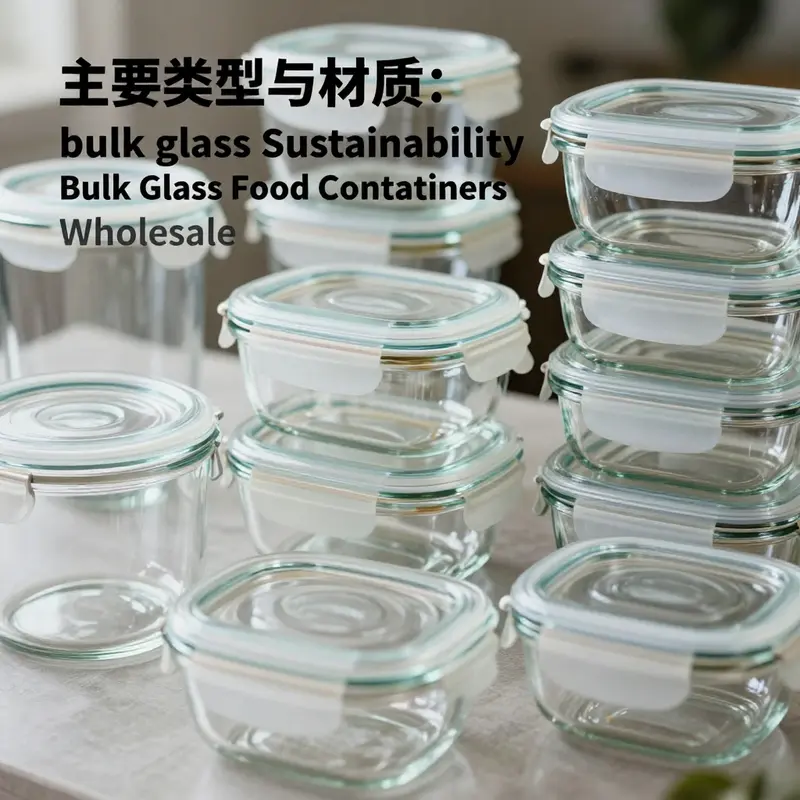
Temperature mastery is another core advantage. Borosilicate glass offers strong thermal stability, tolerating hot fill, boiling water disinfection, and rapid cooling without cracking. This makes it well suited to applications that require repeated heating or long-term cold storage, while tempered soda-lime glass provides a cost-effective option for everyday storage and basic reheating.
Visibility matters. The clear glass enables precise inventory checks, accurate fill levels, and clean product presentation. This transparency supports waste reduction, streamlined operations, and cohesive branding at shelf or in service settings.
Sustainability remains central to wholesale packaging decisions. Glass is infinitely recyclable and can be reused across cycles without losing integrity. Bulk purchases extend container lifecycles, reduce per-use waste, and align with consumer demand for responsible, greener packaging.
Procurement realities follow the math of safety, performance, and total cost of ownership. Lead times, MOQs, customization options, and the ability to provide documentation for material safety and batch traceability all influence supplier selection. Wholesale platforms with value-added services such as mold design, labeling input, and integrated packaging design can accelerate time to market while protecting quality.
In sum, the wholesale pathway for glass containers offers a strategic blend of safety, performance, transparency, and sustainability that scales with brand ambitions. The right supplier ecosystem supports consistent quality, reliable supply, and a packaging story that resonates with today’s eco-conscious consumers.
null
null
Key Procurement Parameters for Bulk Glass Food Containers Wholesale: Navigating Quality, Cost, and Delivery for Sustainable Packaging
The journey from supplier quote to shelf-ready glass is not just about finding the lowest price. In the realm of bulk glass food containers wholesale, every procurement parameter acts as a lever that can lift or sink a brand’s reliability, sustainability, and profit margins. Buyers who understand how material choices, performance characteristics, and logistical realities intersect gain leverage to scale operations—from meal-prep services to premium food delivery and retail packaging. This chapter threads those parameters into a cohesive narrative, revealing how informed decisions about borosilicate versus tempered soda-lime glass, lids and seals, and supply-chain timing translate into tangible outcomes for a business that must move quickly, protect product quality, and honor commitments to the environment.
At the heart of the decision is material science. Borosilicate glass is renowned for thermal resilience, especially when temperatures swing between deep chilling and high heat. It tolerates rapid temperature changes without cracking, making it a natural fit for containers intended for microwave and oven use, as well as for long-term storage in freezers. In contrast, tempered soda-lime glass—while typically less costly—delivers durable everyday performance that covers standard refrigeration and reheating tasks. The choice between these two materials is rarely about a single property; it is about the intended lifecycle of the product, the expected handling environment, and the value chain of the business. For a brand that targets high-frequency reheating cycles or batch meals that travel from kitchen to customer in diverse climates, borosilicate often proves a worthwhile long-term investment. For broader, price-sensitive channels with steady use in controlled environments, tempered soda-lime glass can deliver robust functionality at a lower upfront cost.
Global buyers typically encounter a spectrum of safety and health assurances alongside material performance. Glass containers are non-toxic and chemically inert, a critical advantage when storing flavorful, aroma-rich foods that can sometimes interact with packaging materials. The absence of BPA and other concerns associated with certain plastics is not only a compliance matter but a brand story—one that resonates with consumers seeking safer, more sustainable choices. The lids that accompany these containers commonly feature airtight seals, frequently silicone-based gaskets, and BPA-free components. The synergy between a glass vessel and its lid is essential; a reliable seal preserves freshness, minimizes leakage, and enables stackable storage without compromising stability on shelves or during transport. The ability to withstand dishwashing, microwaving, and even oven use—when specified—further reinforces a footprint of versatility that reduces the need for multiple packaging SKUs.
Design elegance matters, too. The market rewards containers that are easy to stack, easy to grasp, and easy to label. Clear glass supports instant visual identification of contents, which speeds up meal-prep operations, improves inventory control, and elevates consumer confidence at the point of sale. Shapes range from rounds and squares to hexagonal forms and lantern-style jars, each carrying a different branding and merchandising cue. The common thread is modularity: stackable configurations that save storage space in warehouses, distribution centers, and retail displays. In wholesale contexts, the ability to customize lids, initials on seals, or even distinct shapes that align with a brand’s identity can unlock premium pricing while maintaining efficiency in production and fulfillment.
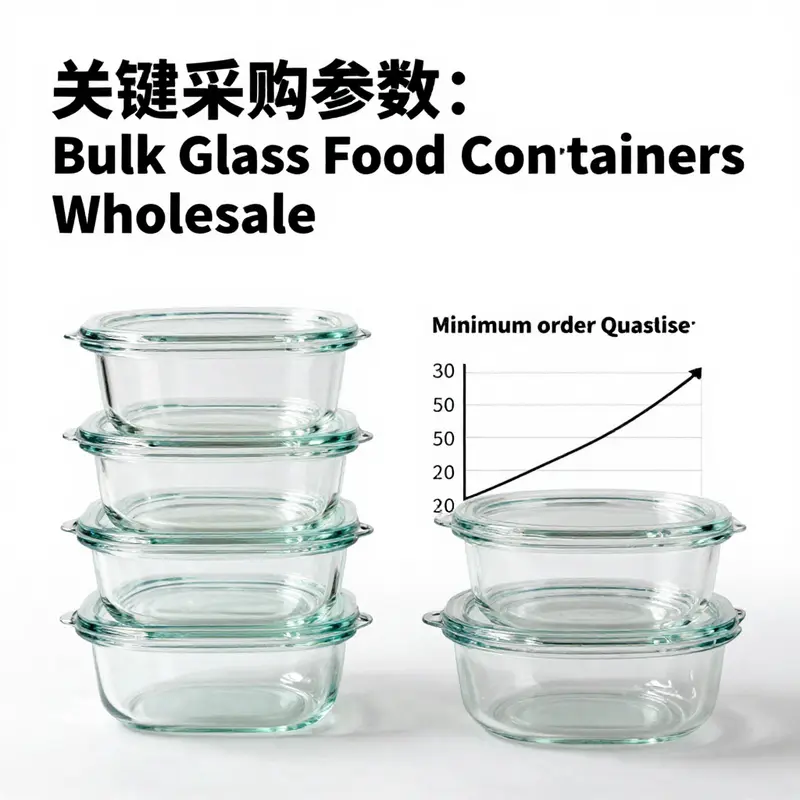
MoQs, pricing, and lead times define the economic and operational rhythm of bulk purchases. Price is rarely the sole determinant when ordering in bulk; it is part of a broader calculus that includes minimum order quantities, unit costs at different volumes, and the total landed cost. The cited price bands in wholesale channels typically range from a few tenths of a dollar to several dollars per unit, depending on size, feature set, and customization. A straightforward, transparent pricing ladder helps buyers forecast cash flow and capacity planning. For standard, non-customized glass containers with simple lids, prices can hover at the lower end of the spectrum, while fully customized, logo-printed, or uniquely shaped offerings tend to command premium pricing. The MOQ landscape is equally varied: some suppliers can accommodate as few as a few hundred pieces for non-standard designs, while others set MOQs in the hundreds of thousands to justify tooling and mold costs. Flexible MOQs become a decisive factor for seasonal campaigns or pilots where the objective is to test a new packaging concept without tying up capital in a large, unmoved inventory.
Delivery timelines in glass packaging often hinge on regional production ecosystems and downstream logistics. China remains a central hub for glass container manufacturing, with clusters in Jiangsu, Hebei, and Shandong driving scale, quality control, and cadence. The advantages are multifold: access to high-purity raw materials, advanced kiln and molding capabilities, a mature ecosystem of ancillary suppliers (such as gasket makers and lid molders), and streamlined distribution networks that shorten lead times. A standard order typically lands within a window of 25 to 40 days, a timeframe that aligns well with both season-driven demand and new product introductions. However, buyers must factor in potential variability caused by peak seasons, ocean freight schedules, and port congestion. A robust procurement plan often includes buffer stock for promotional periods and a backup supplier slate to mitigate risk without sacrificing efficiency.
From a procurement-process perspective, the channels and platforms used to source glass containers shape both the economics and the reliability of the supply. Market leaders in wholesale glass packaging offer expansive catalogs, robust QA certifications, and the ability to support OEM/ODM collaborations that allow brands to imprint logos, define colorways, or tailor lid configurations. In practice, this means engaging suppliers who can provide documentation that attests to food safety standards, such as FDA or LFGB certifications, and samples that validate fit, seal integrity, and thermal performance before large commitments are made. The path to scale often travels through pre-production testing, where a brand evaluates multiple container sizes, lid systems, and labeling approaches to determine the optimal packaging suite for a given product line.
The procurement workflow itself benefits from a disciplined, staged approach. It begins with a clear specification brief: what sizes are needed, which materials are permissible, and what performance tests must be passed—microwave compatibility, dishwasher durability, and oven safety if applicable. Then, a supplier short list is created, balancing cost considerations with reliability metrics such as defect rates, packaging integrity during transit, and historical lead times. Samples are requested and evaluated for fit and seal performance under realistic handling conditions. Once the option with the best balance of cost, quality, and delivery is identified, a pilot order is placed to validate full-scale production. This incrementally cautious path reduces the risk of misalignment between brand expectations and supplier capabilities, saving time and protecting margins in the long run. For brands that require a broader packaging ecosystem, this is precisely where the internal alignment with related offerings—such as compatible takeaway packaging or labeling solutions—becomes valuable. If you are exploring related packaging resources, you might find useful guidance in the resource dedicated to custom takeaway packaging supplies, which can be accessed here: custom-takeaway-packaging-supplies-disposable-tableware-for-theme-party.
As toxicity concerns move steadily toward greater transparency, buyers increasingly demand certifications that reassure product safety and regulatory compliance. While glass itself is inherently inert, the entire packaging system—glasses, lids, seals, and any coatings or adhesives used on lids—must pass rigorous tests. Certification ecosystems vary by region, so buyers should map the regulatory landscape relevant to their markets. For international programs, ensuring supplier capability to provide test reports and third-party validation reduces the probability of post-purchase surprises. The ability to obtain certifications not only reduces risk but also reinforces a premium branding narrative: a company can claim accountability and quality as it communicates with distributors, retailers, and end consumers.
Lead-time planning is another critical axis of procurement. Seasonal demand, promotional launches, and new product lines can all compress timelines. In practice, this means maintaining a buffer stock of core container sizes and investing in supplier relationships that can scale quickly. Some buyers implement a dual-sourcing strategy to protect against supply disruption, while others adopt vendor-managed inventory arrangements to shift the burden of stock management onto the supplier. Either approach aims to stabilize availability and avoid production delays that ripple through to product launches and fulfillment schedules. It also creates a smoother path to seasonal campaigns like holiday meal kits or limited-edition product lines, where packaging aesthetics, including lid color and imprinting, can become a differentiator and a reason to purchase at premium price.
A final, practical dimension concerns damage risks during transit and the handling realities of large orders. Glass containers, especially when loaded in bulk, are brittle by nature. Breakage translates into financial losses, customer dissatisfaction, and operational headaches. To mitigate this, buyers should specify protective packaging requirements, confirm palletization standards, and require supplier-grade packaging that reduces movement within cartons. Transparent communication about handling instructions, cold-chain or heat-exposure considerations, and insurance coverage can further cushion the cost of breakage and ensure that the inventory arriving at distribution centers is sale-ready. The cumulative effect of these protective measures contributes directly to the reliability of the supply chain and the confidence of partners who depend on timely, intact deliveries.
In summary, mastering the key procurement parameters for bulk glass food containers means balancing material choice, safety, design, cost, lead time, and risk management. It is a holistic discipline: a decision framework that not only secures the necessary packaging but also reinforces brand storytelling about durability, sustainability, and trust. For buyers who approach packaging as a strategic asset rather than a passthrough expense, the payoff appears in smoother operations, stronger market presence, and a clearer path to scalable growth. External market intelligence and supplier ecosystems continue to evolve, shaping what constitutes best-in-class procurement practices. Keeping pace with these shifts requires ongoing evaluation, testing, and an openness to collaboration across the supply chain. The result is not merely a container that holds food; it is a packaging solution that signals quality, supports efficiency, and aligns with a sustainable future.
External resource: https://www.alibaba.com/product-detail/Wholesale-Glass-Food-Containers-B2B-Supplier_1600588278289.html
From Kilns to Carts: The Chinese Glass Container Clusters Driving Bulk Wholesale
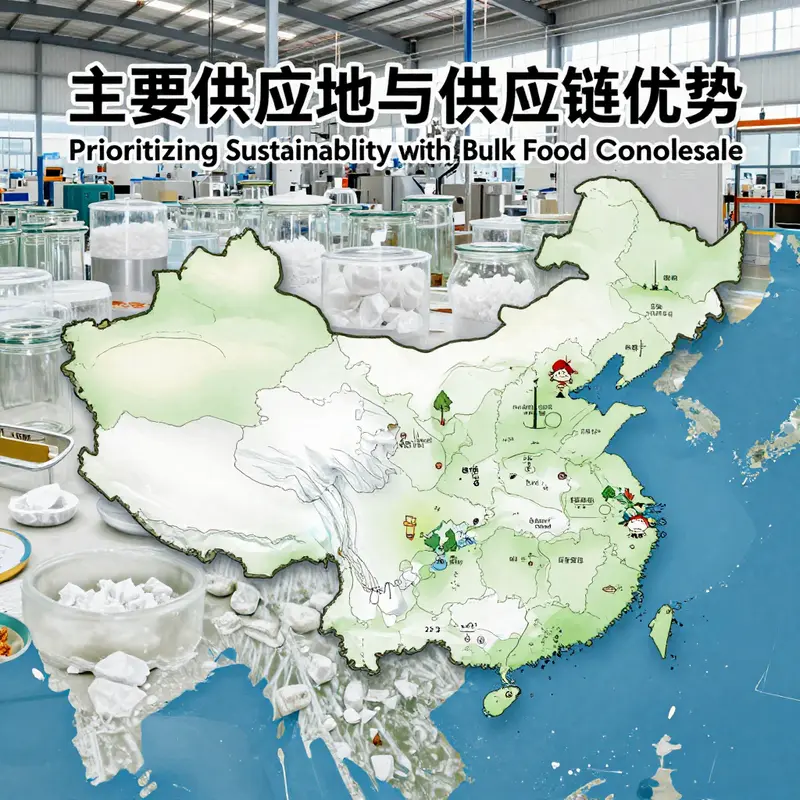
The global market for bulk glass food containers relies on a quiet but relentless industrial rhythm. Behind the gleam of a well-sealed jar lies a chain of decisions: material choice, location of mills, scale of clusters, and the speed at which brands can bring a new design to market. When viewed together, these choices map how modern packaging moves from concept to consumer in the wholesale segment where economies of scale, reliability, and adaptability matter most.
The core of this ecosystem is concentrated in a set of Chinese manufacturing clusters that have evolved through decades of specialization. Among them, three provinces stand out for their ability to deliver both borosilicate glass and soda-lime variants. In the borosilicate region, thermal endurance and chemical inertness are prioritized; kilns are designed for repeated heating and cooling, supporting containers that move from freezer to microwave or oven. The supply chain benefits come from local sourcing of high-purity quartz sand and other raw materials, enabling precise, repeatable glass formation and tight quality control that favors premium vessels with short lead times. The advantages matter most for brands that require safety and long-term reliability, where high heat resistance supports sophisticated menus or meal kits.
In the soda-lime cluster, the focus is on durability and cost efficiency. This material serves high-volume storage where price and function matter, offering robust performance for refrigeration, basic reheating, and everyday packaging. Scale allows optimization of assets and processes to reduce unit costs, making bulk orders attractive for large brands and retailer programs. The combination of affordability and durability makes soda-lime a dependable backbone for everyday pantry containers and family-size packs with margins sensitive to packaging costs.
At the heart of both clusters lies a tight, integrated supply network. Vertical integration keeps glass production close to suppliers of silicone seals, molded caps, and labeling, shortening timelines from design to finished product. The practical effect is a standard order cycle commonly landing in the 25- to 40-day window, with flexibility for seasonal spikes or rapid campaigns that require tens of thousands of units in weeks. The ecosystem’s cadence favors just-in-time production rather than bulk storage alone.
A further structural advantage is scale. The networks harmonize capacity with demand across a broad range of SKUs and configurations, supported by a mature mold-making ecosystem that enables rapid shifts in geometry and style without costly retooling. This design versatility lets brands tailor shapes and capacities to their aesthetic and functional requirements while preserving efficiency.
Cost control and procurement discipline also define cluster advantages. In favorable cases, mid-sized jars with capacities around 1,500 milliliters can be sourced in bulk for well under a dollar per piece, with dependable lids and seals near 0.80 dollars at meaningful MOQs. Pricing improves with volume and is often structured around tiered MOQs that align with brand stage and channel strategy. MOQs are typically flexible, ranging from a few hundred to tens of thousands, enabling pilots and scaled rollouts alike.
Logistics and near-neighbor supplier ecosystems reinforce reliability. Raw materials, tooling, seals, and labeling share a geographic footprint, reducing transit risk and disruption. For wholesale buyers, this translates into predictable delivery windows and a credible path to bring new packaging concepts to shelves within a defined timeframe.
For buyers, the implications go beyond price. Borosilicate glass remains compelling for repeated reheating and long storage cycles, while tempered soda-lime offers a pragmatic option for everyday use. The clusters also excel at customization through strong OEM/ODM channels, enabling exact dimensions, capacities, and features. A brand can iterate quickly with local die-builders and mold-makers, moving from sketches to prototypes with fewer external handoffs and a smoother transition to scale.
From a sustainability perspective, the recyclability of glass and the potential for local closed-loop supply chains help reduce environmental footprints through shorter transport and waste recycling. The wholesale story thus extends beyond packaging performance to overall brand messaging about responsible packaging.
For practical entry into this ecosystem, buyers should define product requirements—material choice, exact capacities, lid type, and sealing performance—and align channel strategy around MOQs, lead times, and the cadence of new introductions. When these threads converge, a program can leverage cluster strengths—quality control, flexibility, and speed—without losing sight of consumer promises and retailer expectations.
Ultimately, the bulk glass container wholesale narrative in China is one of orchestration. It is about aligning material form with practical cost structures and synchronizing production cycles with today’s dynamic food programs. The strongest wholesale relationships offer more than price—they provide a path to faster time-to-market, reliable delivery, and a packaging experience that supports both the integrity of food and the brand story.
To explore customization, buyers can view packaging ecosystems as modular platforms: standard glass formats reconfigurable with lids, seals, and branding to fit campaigns. Early engagement with suppliers helps test form, function, and aesthetics while managing risk. This collaborative approach can yield a robust line of glass containers that scales across channels and reinforces brand storytelling.
Final thoughts
Bulk glass food containers offer an array of benefits for businesses in the beverage and food service industries. Their inherent qualities promote the preservation of flavors and aesthetics while paving the way for sustainable practices. By investing in high-quality glass containers, establishments can enhance their brand image, appeal to eco-conscious consumers, and ultimately drive profitability. Understanding product specifications and supply chain dynamics provides a robust foundation for making informed purchasing decisions. Embracing these practices not only aligns with current market trends but positions businesses as leaders in environmental stewardship.