
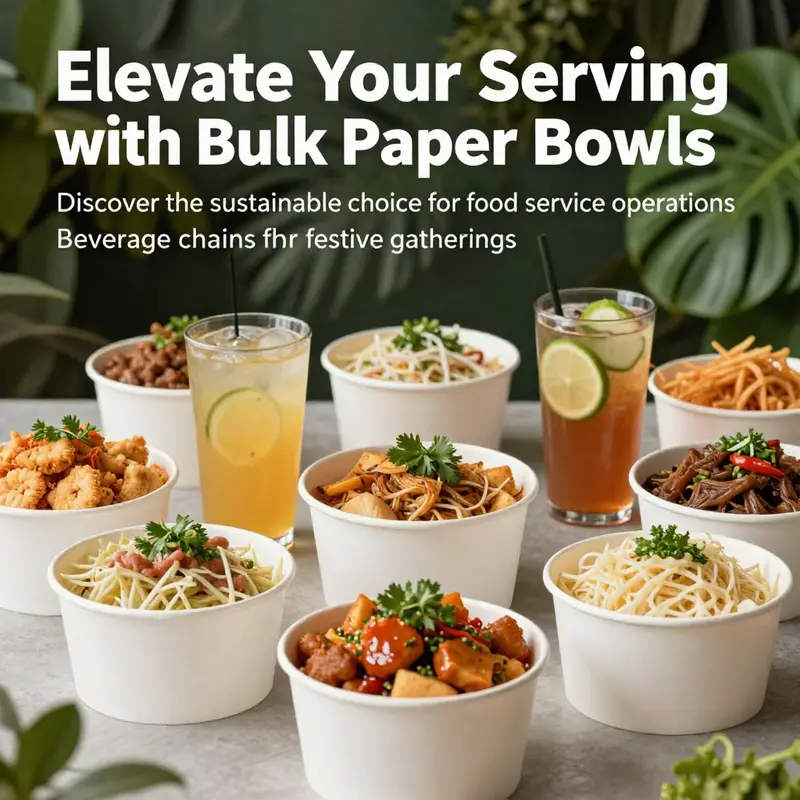
As the demand for eco-friendly packaging continues to rise among consumers and businesses alike, bulk paper bowls are swiftly becoming a favored option in various food service sectors. These versatile disposable containers, crafted from renewable materials, not only meet the functional needs of restaurants and food trucks but also align with sustainability goals. In this exploration, we will delve into the material composition of bulk paper bowls, their applications across diverse food service industries, and their positive environmental impact, providing you with a comprehensive understanding of how they can benefit your enterprise.
The Invisible Make-Up: Crafting Bulk Paper Bowls from Kraft, Coatings, and Bagasse
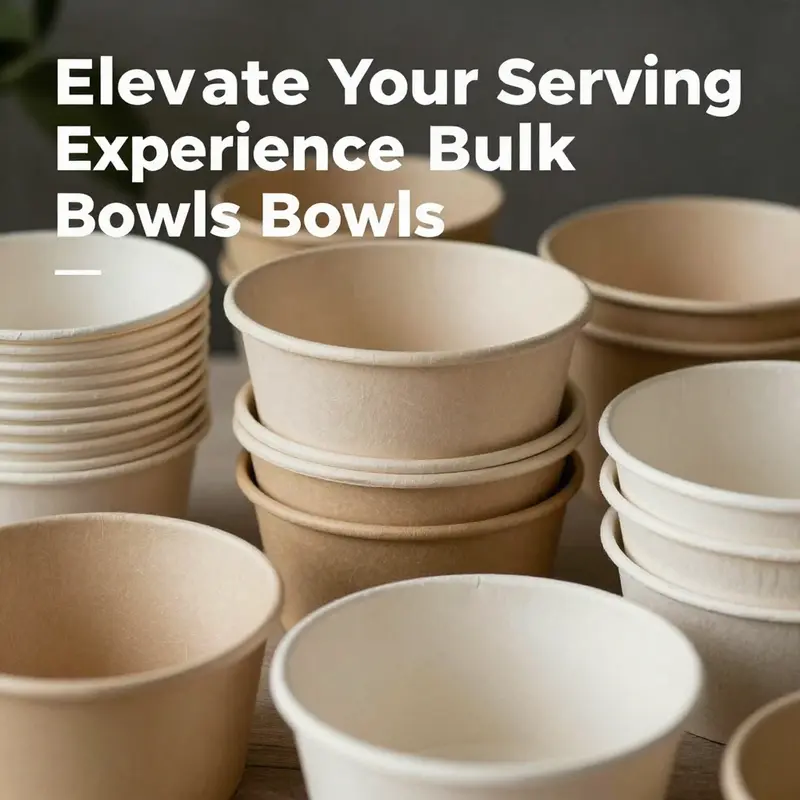
Beneath every bulk paper bowl lies a careful balance of materials, processes, and purpose. The chapter you are about to read does not merely describe what a bowl is made from; it unpacks how the very makeup of bulk paper bowls determines whether food travels safely, remains warm or cool, and ultimately returns to the earth as a responsible end-of-life option. The material make-up arrives at a decision matrix of strength, barrier performance, thermal insulation, cost, and sustainability. It is the unseen frame that supports the visible promise of convenient, sanitary, and environmentally mindful packaging in today’s fast-moving foodservice ecosystem. To understand this, we must move inward from the exterior appearance of a brown-kraft bowl to the layered assembly that makes it fit for purpose, scale, and reuse in a world that prizes efficiency as much as responsibility.
At the heart of most bulk paper bowls is a thick, multi-ply paperboard that provides structure without the brutal weight of a ceramic dish. The base layer is commonly kraft paper, a material derived from wood pulp and manufactured through the kraft process. Kraft paper is prized for its combination of strength and pliability. Its fibrous network resists tearing when gripped and stacked, yet remains flexible enough to withstand the handling that accompanies mass distribution. The material can be sourced as virgin fiber or as recycled kraft, and increasingly, manufacturers tilt toward recycled content to enhance sustainability credentials. The choice between virgin and recycled fibers is not merely an environmental preference; it can influence the bowl’s tensile strength, edge integrity, and run-through yield during production. Recycled kraft, when responsibly managed, reduces the environmental footprint and aligns with broader goals of circularity. Yet it also prompts careful process controls, since recycled fibers can alter surface smoothness, printability, and coating adhesion. In bulk programs, where consistency across thousands of units matters, these material decisions ripple across cost structures and performance expectations.
The kraft paperboard rarely stands alone. The inside of most bulk bowls carries a food-safe lining that serves as a moisture barrier and a shield against seepage. The coating is a deliberate, often proprietary compromise crafted to preserve the bowl’s integrity during hot meals and watery soups, while still supporting end-of-life aims. There are a few common coating families, each with its own set of advantages and caveats. Wax, for example paraffin wax, is a traditional moisture barrier that creates a formidable seal against liquid intrusion. It has a long track record of performance, particularly for hot soups and sauces, and it is compatible with established manufacturing lines. However, wax is not readily compatible with composting, especially under home composting conditions. It remains more aligned with industrial composting facilities that can handle certain finishes, yet its compostability is not universal and can complicate waste streams in mixed facilities. The trade-off is straightforward: high moisture resistance and robust spill containment in exchange for limited compostability in some contexts.
Polylactic acid, or PLA, represents a newer generation of barrier coatings that aim to reconcile performance with sustainability. PLA is a bioplastic derived from renewable sources such as corn or sugarcane. When used as an interior lining, PLA can offer a compostable path in the right industrial settings, enabling a more attractive environmental profile for cafes and venues that promote compostable packaging. The real-world implication is that PLA draws a cleaner end-of-life narrative but requires compatible composting infrastructure to fulfill its promise. In regions where industrial composting is reliable and accessible, bowls with PLA coatings can be marketed as compostable, aligning with consumer expectations for eco-friendly options. In places where such infrastructure remains limited, the PLA coating may complicate disposal choices, as it can be mixed with conventional plastics in some recycling streams or require dedicated composting channels.
Other food-grade coatings—such as polyethylene or various bioplastics—also appear in certain bulk bowl lines. PE, whether applied as a thin coating or as a barrier layer, can improve moisture resistance and preserve rigidity under heat. Yet, its compatibility with composting is not universal, and the formulation can influence whether a bowl remains recyclable or compostable within a specific waste-management system. The decision to use PE often hinges on a cost-benefit analysis: achieving predictable performance and moisture resistance at a scale that keeps per-unit costs in check, while navigating the evolving regulatory and consumer demands around recyclability and compostability. In practice, the coating choice is seldom made in isolation. It interlocks with fiber source, thickness, adhesive systems, and the intended end-of-life pathway to create a cohesive product profile.
Beyond the interior barrier, many bulk bowls deploy additional structural features that differentiate performance. A notable approach is the use of a double-layered paperboard with a deliberate air gap between layers. This configuration improves thermal insulation, helping to maintain the temperature of hot foods for longer periods and reducing the sensation of heat transfer to the hand or the external surface. The air gap behaves much like a miniature, passive insulation system within a single-use container. In some high-demand environments—cafeterias that see rapid turnover, catering operations that handle a variety of hot and cold dishes, or food-service settings where presentation matters—these double-layer constructions are paired with die-cut folding techniques. Die-cut folding can create self-locking structures that resist crushing and leakage without relying on extraneous adhesives. This not only streamlines production but also contributes to a more eco-friendly lifecycle by reducing the number of adhesives in the finished bowl, a factor that can ease downstream disposal concerns if the coating and fiber system are chosen with end-of-life goals in mind.
Sugarcane bagasse represents a compelling alternative or supplementary raw material for bulk bowls. Bagasse is the fibrous remainder after juice extraction from sugarcane and has gained traction in sustainability-focused applications. When bagasse bowls are produced, the resulting product is typically 100% biodegradable and compostable under appropriate industrial conditions. Bagasse fibers impart natural strength and stiffness while offering a different tactile and visual appearance compared with traditional kraft fibers. The environmental argument for bagasse is not merely about using a renewable feedstock but about diverting agricultural byproducts from waste streams and reducing reliance on virgin wood pulp. For institutions and programs striving to align packaging with circular economy principles, bagasse-based options provide a tangible pathway to demonstrate commitment to sustainable procurement. The trade-offs include potentially higher raw-material costs, variability in supply, and processing differences that may influence thickness, surface texture, and barrier integration. But in many procurement ecosystems, bagasse complements kraft, enabling a blended portfolio that targets broader sustainability criteria.
The material composition is only as meaningful as its end-use performance. Bulk paper bowls must withstand the rigors of everyday foodservice operations: frequent handling, stacking, hot liquids, and variable transit conditions. The fiber matrix must resist compression while maintaining a clean, printable surface for branding or labeling. The barrier layer must hold back moisture without peeling away or bloating with heat. Thermal performance matters as well. A bowl that remains rigid and heat-stable for longer reduces the risk of leaks, spills, and customer dissatisfaction. This is where the multi-layer and, in some cases, multi-ply architectures prove invaluable. The combination of kraft fiber, barrier coatings, possible air gaps, and die-cut structural reinforcement culminates in a product that can be trusted in bulk supply chains—from distribution centers to cafeterias, to food trucks and beyond.
From a life cycle perspective, the choice of materials and coatings has cascading implications for waste streams, compostability, and recycling readiness. If the interior coating is wax-based, the bowl may still perform well during use but could encounter limitations in composting or recycling streams that are designed to handle modern packaging. If PLA is used, the bowl’s compostability relies heavily on industrial facilities that can process PLA-containing plastics. If PE or other conventional plastics are present, the disposal pathway becomes more complicated, as some streams favor recycling but may not accommodate mixed-material products without separation. The ASTM standards referenced for evaluation, including those that govern testing methods for heat tolerance, barrier properties, and paperboard performance, provide a critical framework for manufacturers who want to ensure consistent quality while acknowledging environmental constraints. These standards, though technical, serve as a bridge between product design and real-world end-of-life outcomes. For procurement teams and sustainability officers, alignment with such guidelines enhances transparency, measurability, and accountability across supplier networks.
Within the procurement and supply chain realm, bulk paper bowls are typically sourced in large quantities, with options varying by capacity, shape, color, and coating system. Sizes such as 500 ml and 650 ml are common due to their versatility for soups, stews, noodles, and other liquid-rich dishes. The brown kraft appearance remains a preferred aesthetic that communicates simplicity and eco-consciousness to consumers. In many wholesale and institutional contexts, these bowls are paired with matching lids—often polypropylene covers—to bolster food safety and prevent leaks during transit. The availability of bulk options with possible branding opportunities means that organizations can embed identity into packaging without compromising performance.
An important practical consideration is the balance between performance and end-of-life intentions in bulk settings. For customers who prioritize compostability, bowls designed with PLA or other plant-based coatings may align with industrial composting streams. However, access to such streams varies by region, facility capabilities, and municipal programs. As a result, many buyers adopt a portfolio approach that includes both compostable alternatives and conventional, recyclable packaging in line with local waste-management infrastructure. In this context, the triple aim—delivering reliable performance, controlling costs, and supporting sustainable disposal—becomes more than a design constraint; it becomes a strategic decision about how a brand communicates responsibility to its customers and communities.
From an interpretive standpoint, the material composition of bulk paper bowls shapes every interaction a consumer has with the product, from the moment it is handed over at the pickup counter to the moment the lid is discarded in the waste stream. The tactile feel of kraft fiber, the slickness of a barrier coating, and the subtle stiffness from a multi-ply construction influence perceived quality. Each decision—fiber source, coating type, double-layer architecture, and the use of bagasse as an alternate feedstock—tells a story about where the product comes from, how it behaves under pressure, and what happens after use. For operators, these choices translate into measurable outcomes: reduced breakage during transport, fewer spill incidents, more predictable shelf-life of hot meals, and a packaging system that participates in waste streams with a clear end-of-life pathway.
To connect theory with practice, the online marketplace and supplier ecosystems offer practical illustrations of bulk paper bowl options, their capacities, material compositions, and available coatings. These sources provide real-time information on product specifications, certifications, and supplier compliance that procurement teams routinely rely on when negotiating bulk contracts. For readers seeking deeper technical context, the alignment with professional standards and testing guidelines—such as those established by ASTM—mark the boundary between decorative packaging and scientifically grounded packaging performance. The integration of material science with supply chain logistics defines how bulk paper bowls achieve their promises of durability and environmental responsibility in a single-use context.
As you reflect on the material make-up described here, consider how the combination of kraft fiber, barrier coatings, multi-layer construction, and the possible inclusion of bagasse weaves into a broader sustainability strategy. This is more than a materials science exercise; it is about crafting packaging that supports safe dining experiences while acknowledging the realities of waste management, recycling infrastructure, and composting capabilities across regions. The decisions embedded in the bowl’s architecture determine not only how well it serves its primary function but also how gracefully it exits the lifecycle, either by returning to soil through composting under appropriate conditions or by joining a recycling stream that accommodates paper-based packaging. The modern bulk paper bowl, in its seemingly simple form, becomes a conduit for a broader conversation about responsible consumption, efficient logistics, and the evolving ethics of packaging in a world increasingly attentive to footprints, costs, and convenience.
Internal linkage can play a practical role in translating this material-focused chapter into tangible procurement and design decisions. For those exploring related takeout and packaging solutions, a useful resource on eco-friendly takeaway packaging boxes demonstrates how brands conceptualize and implement packaging systems that support sustainability goals while delivering reliable performance in real-world environments. You can explore one relevant example here: https://ecocupbowl.com/product/eco-friendly-takeout-boxes-for-food-packaging-stylish-food-containers-safe-microwave-craft-paper-lunch-boxes-leak-grease-resistant/ . This link provides context about the broader ecosystem of plant-based and compostable packaging options that complements the discussion of bulk paper bowls and their coatings, fibers, and end-of-life considerations.
On the topic of standards and technical guidance, authoritative resources help anchor the discussion in testable, replicable methods. A primary external reference is the American Society for Testing and Materials standard for bulk paper bowl materials and their performance criteria. Access to standards such as F2357, which governs testing methods for barrier properties, heat resistance, and overall material performance, provides a basis for consistent product development and supplier evaluation. The precise language of these standards may be technical, but their implications are practical: they enable manufacturers to validate that a bowl will withstand the rigors of service, from boiling-hot soups to refrigerated sauces, and that it will perform consistently across thousands of units in a given batch. They also underpin consumer confidence, because buyers know that the packaging they select has undergone rigorous assessment and is aligned with recognized benchmarks for safety and durability. For those seeking a direct reference, the ASTM standards are publicly accessible, offering essential guidance for product development teams, quality assurance managers, and sustainability officers who want to calibrate performance expectations with credible metrics; see the standard documentation for F2357 to deepen the technical understanding of material testing and performance criteria in this domain.
In sum, the material composition of bulk paper bowls is a carefully orchestrated synthesis of tradition and innovation. Kraft paper—whether virgin or recycled—forms the backbone. Coatings—wax, PLA, PE, or other bioplastics—provide the crucial moisture barrier and heat-resistant properties that enable bowls to carry hot, liquid-rich foods without leaking. Structural design choices, including double-layer constructions and die-cut folding, enhance durability and reduce reliance on adhesives. Bagasse represents an increasingly important renewable material that expands the sustainability palette. All these elements must harmonize with end-of-life realities and regional waste-management capabilities. The result is a packaging solution that is not only functional and economical at scale but also responsive to the growing demand for sustainability in bulk procurement. As the landscape evolves, the interplay between material science, manufacturing processes, and waste infrastructure will continue to shape how bulk paper bowls are designed, selected, and ultimately disposed of in a world that values both performance and responsibility.
How Bulk Paper Bowls Transform Food Service: Practical Uses, Operational Benefits, and Procurement Insights
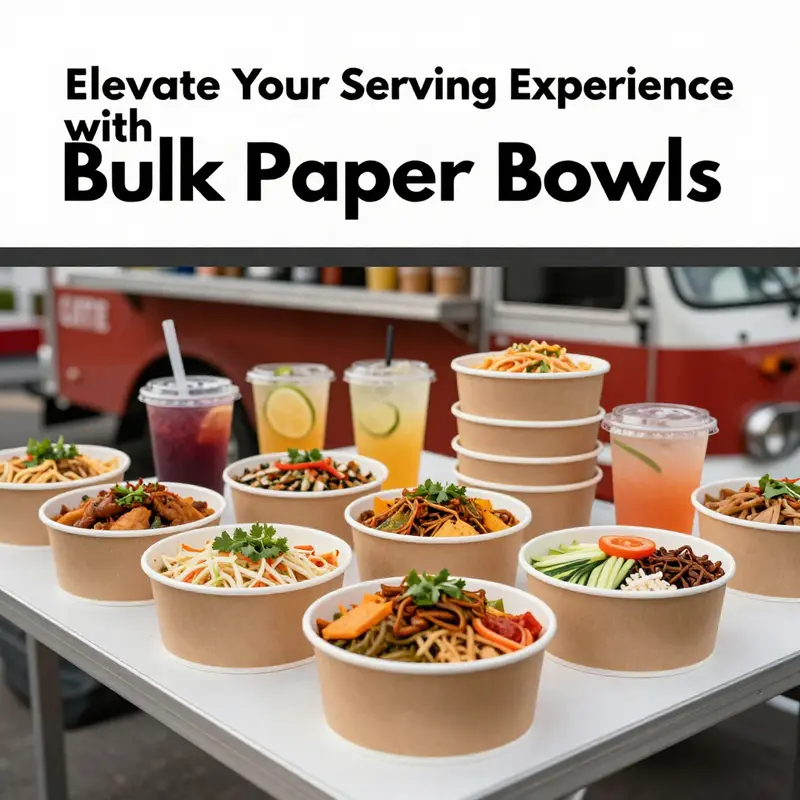
Bulk paper bowls have moved from a niche eco choice to a mainstream operational tool. Their adoption across restaurants, food trucks, meal delivery platforms, grocery grab-and-go sections, and institutional kitchens stems from a straightforward promise: combine performance with sustainability at scale. This chapter traces how bulk paper bowls perform in real service environments, and why managers, buyers, and chefs increasingly specify them. It weaves practical use cases with procurement and handling advice so teams can plan for supply, storage, and service without disrupting quality or speed.
The appeal of bulk paper bowls begins with materials and engineered structure. Most bowls are formed from renewable fibers such as sugarcane bagasse, bamboo pulp, or recycled paper fibers. These bases deliver tensile strength and a solid mouthfeel, while thin water-resistant coatings provide leak protection. Variations include single-wall and double-wall constructions. Single-wall bowls work well for cold salads, grain bowls, and chilled desserts. Double-wall or insulated variants are designed to hold heat longer and protect staff and customers from burns. Importantly, many bowls are manufactured to accept lids, which is crucial for delivery and transport. When specifying a bowl for a menu item, consider thermal needs, moisture content, and shape. Soups, saucy dishes, and high-sauce grain bowls require bowls with secure lids and reliable moisture barriers. Crisp salads and dry sides can use lighter single-wall bowls, saving cost and material.
Across restaurants, bulk paper bowls support both front-of-house and back-of-house workflows. Fast-casual and quick-service kitchens use them to standardize portion sizes. A single scoop under a calibrated lid reduces variance, simplifies inventory, and speeds up assembly at peak periods. Full-service kitchens find them useful for takeout and off-premise events. For hot entrées, double-wall bowls provide insulation that reduces the need for additional packaging, like corrugated sleeves. For cold items, paper bowls prevent condensation drip better than cheap plastic alternatives, when paired with proper lids. Because bowls stack tightly, they minimize storage footprint, which matters in urban kitchens where every inch counts. Stacking also speeds plate-up, since servers or line cooks can grab pre-stacked units and focus on food finishing.
Mobile operations and food trucks gain measurable advantages from bulk paper bowls. Trucks often operate with limited storage and irregular resupply. Lightweight, stackable bowls lower the weight penalty for carrying packaging and reduce the time needed for restocking. Compostable materials help operations meet festival and venue sustainability requirements. Many events restrict single-use plastics and favor compostable disposables. Food trucks that use compostable bowls can capture additional business at such venues and reinforce an eco-conscious brand identity. The bowls’ compatibility with microwave reheating and their thermal resistance also help trucks that pre-prepare ingredients and finish orders to demand.
Meal kit providers and delivery platforms emphasize the transit performance of their packaging. A bowl’s ability to prevent leaks and preserve texture impacts customer satisfaction directly. Lids that snap on securely, combined with bowls that resist deformation during stacking and movement, reduce refund claims and complaints. For hot soups and noodle bowls, a well-designed paper bowl minimizes steam buildup and preserves broth clarity. For mixed meals that include cold and hot components, modular packaging strategies use bowls in tandem with compartment trays to isolate moisture and maintain preferred textures. Suppliers often offer a range of volumes—500ml, 650ml, 1000ml—allowing providers to standardize portioning across varied menus.
Grocery grab-and-go sections rely on bowls to create a convenient customer experience. Shoppers expect secure lids, clear labeling, and an attractive presentation. Paper bowls with kraft finishes create a natural aesthetic that complements fresh produce and deli items. Retailers can use custom-printed bowls to reinforce store branding and product information. Bowls that accept tamper-evident seals improve food safety and reduce liability. For retailers, the cost-per-unit matters; bulk purchasing reduces per-unit cost while ensuring consistency between batches. When stocking shelves, stores find bowls with rectangular or square designs stack more efficiently in display cases, maximizing face-out presentation while minimizing wasted space.
Institutional buyers—schools, hospitals, catering companies, and corporate cafeterias—benefit from the reliability and cost structure of bulk procurement. Institutions often require consistent supply levels, vendor certifications, and traceability. Many suppliers provide certificates for food safety standards and material composition. When institutions select bowls, they consider compostability specifications and local waste stream capabilities. In jurisdictions with industrial composting infrastructure, compostable bowls reduce landfill contribution and align with sustainability targets. Without access to industrial composting, some compostable coatings do not fully break down in municipal systems. Institutions should therefore match product choice with local waste handling options. Bulk contracts often include options for custom printing and private labeling, allowing institutions to align packaging with procurement standards and aesthetics.
Operational resilience is a core argument for choosing bulk paper bowls. In high-volume kitchens, packaging failures become visible quickly. Bowls that maintain shape under weight prevent spills during plating and transport. The ergonomics of bowls—rim design, depth, and lip—affect how easily lids attach and how well customers can eat on the go. A bowl’s rim can be designed to accept a range of lid types, from clear plastic snap-ons to hinged kraft lids. For example, a press-fit lid reduces movement during delivery. Some operations prefer polypropylene lids for their clarity and reusability when customers return them. However, where compostable end-of-life is prioritized, compostable lids and paper-based covers keep the entire unit consistent.
Cost analysis is always part of procurement decisions. Bulk ordering reduces price per unit and ensures product continuity. When comparing bowls to alternatives, account for hidden costs: extra packaging to prevent leaks, sleeve materials for thermal protection, and waste disposal fees. In many scenarios, the right paper bowl reduces overall system cost. A double-wall bowl might have a slightly higher unit cost than a single-wall bowl, but it can eliminate the need for a separate insulating sleeve. A secure lid might cost more upfront, but it reduces spoilage and customer refunds from spills. Buyers should model total cost across handling, waste, customer complaints, and transportation.
Customization and branding are key differentiators for many food businesses. Printing a logo or menu information directly onto a bowl increases perceived value. Custom printing options vary widely across suppliers; some provide full-color wraps, while others offer single-color stamping. Printed bowls are particularly effective in delivery and retail contexts where packaging serves as an extension of the dining experience. For small businesses, limited runs of custom-printed bowls create a premium feel without large minimums when combined with standard lid offerings. When evaluating printers, request color proofs and check that printing inks are food-safe and comply with local regulations.
Sustainability claims need careful handling. The term “compostable” has conditions. Many paper bowls are compostable only under industrial composting conditions. Home composting does not consistently provide the heat or residence time required. Some coatings labeled as biodegradable may fragment but not fully mineralize in landfill environments. Responsible buyers pair claims with supplier documentation and look for third-party certifications where possible. Furthermore, consider the full life cycle. A bowl made from agricultural waste, like sugarcane bagasse, repurposes byproducts and reduces reliance on virgin fibers. It also diverts material from anaerobic decomposition if composted properly. Encourage customers and staff to separate compostable containers from conventional waste to maximize environmental benefits.
Storage, handling, and logistics matter for large orders. Bowls are space-efficient when stacked, but they are susceptible to moisture and pests in poorly controlled storerooms. Keep boxes elevated on pallets, away from direct sunlight, and in a dry environment. High humidity can soften coatings, increasing the risk of deformation. When receiving bulk shipments, inspect boxes for water damage and ensure lids are present in correct counts. For kitchens with limited storage, stagger deliveries to maintain a steady on-hand inventory without overcrowding.
Training and service flow are often overlooked. Staff who understand the limits and strengths of paper bowls use them more effectively. Train line cooks to avoid overfilling bowls with hot liquids that could compromise lids. Teach servers how to stack bowls safely in delivery bags and how to select the correct lid type for each bowl size. For self-serve or grab-and-go environments, provide clear signage about heat warnings or composting instructions. Proper training reduces breakage, improves customer experience, and reinforces a sustainable image.
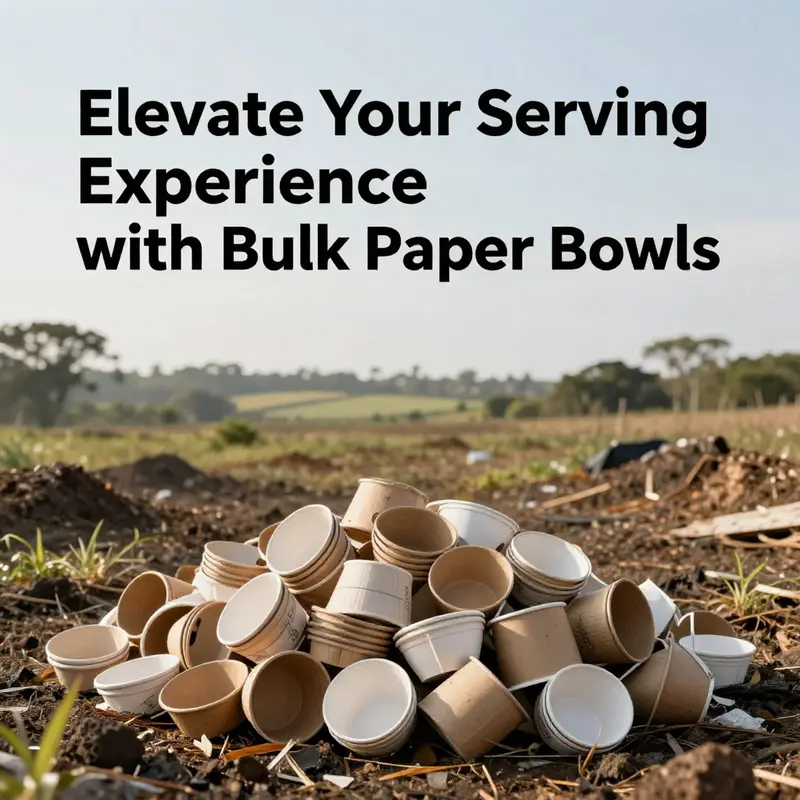
Waste handling is the final operational step. Establish clear disposal pathways for compostable bowls. If industrial composting is available, partner with a hauler that accepts certified compostable packaging. If not, clarify whether bowls should enter recycling or landfill. Not all municipal recycling systems accept coated paper products. Where possible, choose bowls with coatings designed for the local disposal stream. Communicate with local waste managers and include disposal instructions on packaging or at point-of-sale. This transparency reduces contamination and maximizes the environmental benefits promised by the product.
Choosing the right supplier streamlines these advantages. Look for vendors that provide clear specifications for material composition, barrier performance, and certification. Suppliers who offer multiple lid options, varied volumes, and compatible accessories reduce the friction of adopting paper bowls at scale. Many suppliers also provide packaging solutions sized for institutional pallets and bulk cartons, simplifying logistics and receiving.
Finally, test before fully converting. Run pilot programs on select menu items to monitor how bowls perform in live service. Track customer feedback, return rates due to spills, and waste stream compatibility. Measure any change in labor time per order and total cost per meal. Small, focused tests surface issues early and allow for adjustments in lid selection, bowl volume, or staff procedure.
For those ready to compare technical specifications, material composition, and industrial applications in detail, consult authoritative guides that outline standards and testing methods for paper-based bowls. A useful technical resource is available here: Understanding Paper Cup Bowls: Composition, Standards, and How It Benefits Industrial Projects.
For a direct look at commonly used retail-ready bowl options, consider a supplier page featuring bulk kraft paper bowls with lids that lists capacities and lid choices, useful for matching bowls to menu needs: https://ecocupbowl.com/product/disposable-kraft-paper-bowls-food-containers-with-lids-bulk-500ml-to-1000ml-rectangular-bowls-for-takeaway/
This integrated view connects everyday operational needs with procurement best practices. Bulk paper bowls are not a simple swap for plastic; they require thoughtful selection, staff training, and alignment with local waste systems. When those elements come together, bowls deliver practical benefits: consistent portioning, reduced material complexity, a lighter environmental footprint, and an improved customer perception. These advantages explain their rapid adoption across the modern food service landscape.
null
null
Final thoughts
In summary, bulk paper bowls offer a multitude of advantages for food service operations, from their eco-friendly material composition to their diverse application across industries. By adopting these sustainable packaging solutions, businesses can not only meet the increasing consumer demand for responsible products but also significantly enhance their operational efficiency. Choosing bulk paper bowls aligns your brand with a growing commitment to environmental stewardship, ensuring that you stand out in a competitive marketplace with a positive impact.