

Navigating the world of plastic food containers can be a daunting task for bubble tea shops, restaurants, food trucks, and catering services. With the growing demand for high-quality, cost-effective packaging solutions, knowing where to source these containers efficiently becomes critical. This guide will help you explore leading platforms, including Alibaba.com and Made-in-China.com, tailored for businesses in the food service industry. By the end of this article, you’ll be equipped with the knowledge to select the best suppliers and ensure compliance with safety standards across your unique operations.
Across Alibaba and Beyond: Sourcing Chinese Plastic Food Containers for Kitchens and Cafés
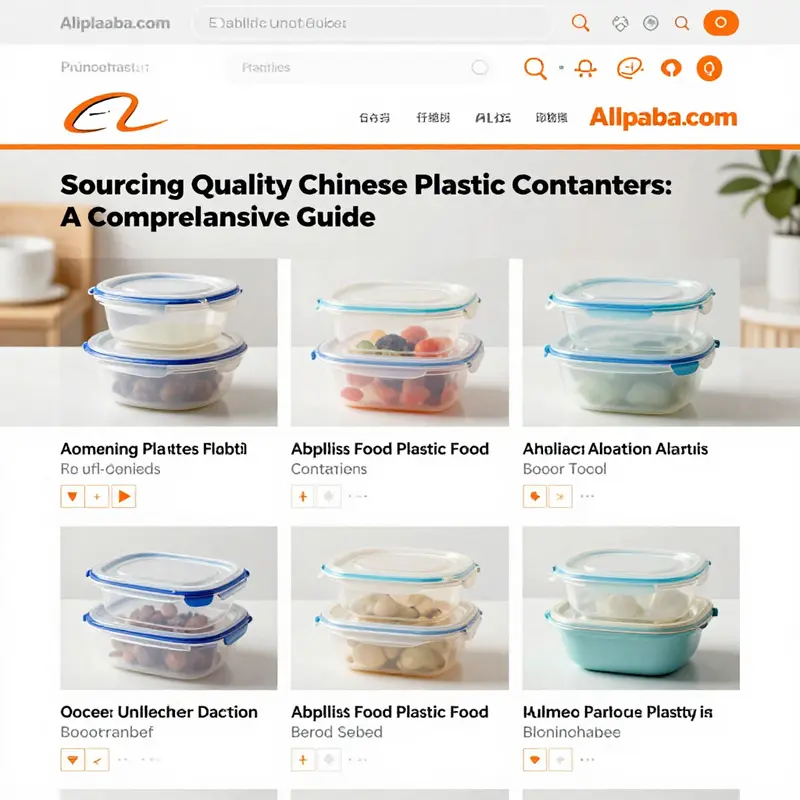
Sourcing plastic food containers from China is less about chasing a single product and more about navigating a landscape of factories, platforms, and certifying bodies that together determine whether a shipment will protect food safety, preserve quality, and arrive on time. The question, “Where can I buy Chinese plastic food containers?” often narrows quickly to a few recognizable channels, but the best answer lies in understanding how these channels complement one another. At the center of this search is Alibaba.com, a global marketplace that acts as a bridge between buyers and a vast network of manufacturers. It is not simply a storefront; it is a dynamic ecosystem where you can compare materials, design features, minimum order quantities, lead times, and the range of customization options in one place. For someone organizing a takeout operation, a restaurant kitchen, or a bulk-resale program, Alibaba’s scale means you can find both standard storage boxes and more specialized packaging solutions that can be tailored to brand and mandate. The platform’s strength rests on variety and efficiency: you can filter by material, such as food-grade polypropylene, and by attributes like BPA-free certification, microwave safety, leak resistance, and stackable designs. These factors are not incidental; they reflect the dual pressures of food safety compliance and practical use in busy service environments. The material story matters because it frames how containers perform in the real world. Food-grade polypropylene, commonly used in these products, is valued for its chemical resistance, light weight, and compatibility with common food storage protocols. When a supplier emphasizes BPA-free construction, that is more than a marketing line; it signals attention to regulatory expectations in many markets and a commitment to consumer health. In practice, this means you can expect a spectrum of options ranging from simple, transparent boxes with secure lids to more complex multi-compartment configurations designed for meal prep or portion-controlled takeout. The breadth of Alibaba’s catalog makes it possible to match the container to the use case, whether it’s cold storage in a refrigerator or hot, microwave-ready service in a casual dining setting. Customization is another pillar of Alibaba’s appeal. Suppliers offer OEM/ODM production, which translates into the ability to imprint brand marks, adjust lid designs, or modify interior configurations to fit portion sizes or modular stacking. This is not just about aesthetics; it’s a practical pathway to uniform packaging that travels well from kitchen to customer, with predictable compatibility across multiple product lines. Yet the same flexibility that makes Alibaba attractive also demands a careful, methodical approach. A responsible buyer does not buy blindly from the first listing that appears in a search. Instead, a rigorous due diligence process helps ensure that the supplier can meet food-safety standards, deliver on time, and provide documentation that stands up to scrutiny. The first line of defense is supplier verification. Look for profiles that indicate factory background, production capacity, quality control processes, and export experience. Ask for references or previously shipped orders, especially from clients in the hospitality or retail sectors. The next step is samples. Request physical samples to evaluate material feel, lid fit, seal integrity, and the ease of cleaning and reuse. The sample phase is where you can validate whether the purported food-grade status translates into a practical, shop-floor reality. If a supplier pushes back on samples, or if the lead time for a sample is unusually long, that should raise a flag for further inquiry. The value of samples extends beyond technical conformity; they offer a chance to gauge communication efficiency and responsiveness—two signals about how a supplier will perform during a longer-term engagement. In parallel with sample testing, certification checks become a recurring priority. Containers marketed for food contact typically align with widely recognized standards and regulatory expectations. You may encounter references to general food-contact compliance, and in some cases, explicit mentions of regional requirements like EU food contact safety certifications or US Prop 65 considerations. These signals matter because they translate into the practical assurance you need when your product line must carry weight in markets with strict labeling and safety norms. The combination of material safety, robust design, and credible documentation builds a foundation for a sustainable sourcing relationship. The conversation naturally broadens beyond Alibaba to other credible platforms that mirror its strengths while offering alternative negotiation dynamics. Made-in-China.com, for instance, serves as a direct conduit to Chinese manufacturers with an emphasis on factory verification, export experience, and clear production capabilities. It is a complementary route to Alibaba, often used by buyers who want direct contact with manufacturers, sometimes to secure more favorable terms or to request custom production details that may not appear in a broader marketplace. The Made-in-China platform emphasizes the same core attributes—reliability, transparency, and the capacity to customize—yet it may differ in terms of how sellers present documentation or how negotiations unfold. For many buyers, this platform becomes the second leg of a dual-track sourcing strategy: Alibaba for breadth and rapid comparison, Made-in-China for deeper engagement with vetted factories and potentially more controlled terms. Beyond these two giants, domestic e-commerce channels within China—Taobao for individual purchases and Tmall for brand-backed storefronts—offer a distinct economic model. These channels are especially relevant when testing ideas at smaller quantities or when a buyer wants to validate product performance before scaling to bulk orders. Taobao tends to accommodate smaller orders or single units, while Tmall carries the assurance of official brand representation and standardized quality controls. The advantage here is speed and low risk for pilot programs; the trade-off is that these platforms may present fewer options for large-scale customization or consistent long-term supply alignment. Navigating this multi-channel environment invites a disciplined, staged approach. A procurement professional will often begin with Alibaba to survey the baseline landscape: typical container sizes, common lid designs, and the sensory cues of product quality—weight, rigidity, and finish. Then they will use Made-in-China to verify factory capabilities and to firm up the production terms for items that will form the core of their packaging line. If the plan includes launching a brand-specific line with private labeling, the buyer would test several factories for OEM capabilities, request printed prototypes, and evaluate the feasibility of harmonizing packaging across a portfolio of products. In parallel, smaller orders from Taobao or Tmall can serve as a testing ground for new concepts, colorways, or packaging aesthetics before committing to a bulk purchase that might tie up capital in inventory. A central piece of this journey is the decision logic around MOQs, lead times, and total landed cost. MOQs serve as a practical barometer of supplier scalability and willingness to invest in a relationship. A supplier that accepts low MOQs can be an ideal partner for a boutique cafe or a startup brand, but it may come at a premium in unit cost. Conversely, a supplier with high MOQs can unlock competitive per-unit pricing, but it requires careful demand forecasting and storage planning. Lead times are equally critical. The longer the lead time, the higher the risk of inventory mismatches and price volatility, especially in markets where raw material costs can fluctuate. The best-path practice is to request a formal production schedule early and to build contingency plans that consider alternative suppliers or shorter-run options. This practical discipline helps protect a business from disruptions that could ripple through production, distribution, and customer satisfaction. In terms of safety and regulatory compliance, the landscape is not static. While widely adopted standards provide a reliable baseline, regional requirements can evolve, and different markets can demand different documentation. A prudent buyer keeps a checklist that covers material composition (PP, BPA-free claims), food-contact compliance (EU No. 1935/2004 and related regulations), and any regional disclosures such as Prop 65 statements when relevant. Even if a product will primarily be used domestically, aligning with international best practices simplifies expansion into new markets and supports a stronger brand narrative around safety and quality. The process of selecting the right container for a given use case also involves paying attention to design features that influence performance in real-world conditions. For takeout or delivery operations, leak resistance, heat tolerance, and lid security can define the customer experience. For storage, stackability, transparency for easy identification, and easy cleaning determine the efficiency of kitchen workflows. Multi-compartment designs can reduce the total number of SKUs needed in a menu and can support portion control, which is a staple of many service models. The interior geometry of a container—whether it favors a flat base, a rounded corner, or a hexagonal pattern—can influence how neatly foods align during packing, how well sauces stay put, and how easy it is to scoop or serve. These considerations matter because they translate into operational costs and customer satisfaction. As you build a sourcing plan, you may also want to integrate a small, carefully curated set of downstream partners who can assist with branding, packaging design, or compliance testing. One practical inroad is to consider a supplier who can support both standard packages and private-label work, paired with a logistics partner who understands cross-border shipments and the intricacies of customs documentation. This integrated approach reduces friction and speeds time to market, a critical factor when you are testing new concepts or expanding into new channels. To make the journey concrete, many buyers rely on a blend of platforms and strategies rather than a single source of truth. The strategy is to begin with Alibaba to map the playing field and gather pricing ranges, lead times, and available customization options. Then, validate a few promising factories on Made-in-China to confirm production capabilities and to request detailed quotations with clear terms, including MOQs, sample policies, and warranty or after-sales support. When ready to test small orders, leverage Taobao or Tmall to sample individual SKUs or pilot batches before a broader rollout. This approach reduces risk while fostering a gradual, scalable pathway from concept to consistent supply. The practical payoff is a robust, compliant, and cost-efficient packaging program that can adapt as needs evolve—whether you are building a takeout operation, stocking a wholesale catalog, or expanding a brand’s packaging footprint. For those who want a quick, direct starting point, a practical option you might consider is Custom Takeaway Packaging Supplies, a listing that reflects how a private-label mindset can emerge early in the sourcing journey and help you align packaging with brand identity while leveraging the efficiencies of bulk production. As you explore these pathways, keep in mind that a well-structured sourcing plan isn’t just about price; it’s about reliability, safety, and collaboration with partners who share your commitment to quality. If you can assemble a supplier shortlist that demonstrates clear communication, transparent certification documentation, and a willingness to accommodate sample requests, you will be well positioned to turn a sourcing inquiry into a dependable supply chain. The cross-border dimension adds a final layer of consideration: logistics, packaging integrity during transit, and the ability to manage a coherent inventory pipeline across multiple markets. These elements require thoughtful contract terms, clear packaging specifications, and a shared understanding of responsibilities for duties and taxes, shipping insurance, and delivery timelines. In sum, the landscape for Chinese plastic food containers is rich and complex. Alibaba serves as a powerful starting point with its breadth and flexibility, while Made-in-China.com provides a complementary channel for deeper factory engagement. Domestic Chinese platforms offer speed and testability for smaller orders, enabling experimentation with designs and materials. The most effective approach blends these channels into a coherent sourcing strategy driven by safety, customization, and pragmatic cost considerations. For buyers who want to ground their exploration in concrete action, consider constructing a phased plan: map supplier capabilities on Alibaba, verify with factory-focused inquiries on Made-in-China, and pilot with small orders through Taobao or Tmall before committing to large-scale production. This phased approach reduces risk, accelerates learning, and positions you to scale confidently as needs grow. For readers who want to explore the broader landscape beyond Alibaba, reference materials and supplier directories can offer additional context on quality control practices, logistics optimization, and regional compliance requirements, reinforcing the backbone of a well-run sourcing program. If you are looking for a direct navigation shortcut during your search, consult integrated supply chains that emphasize private labeling and modular packaging; these options can be especially valuable for businesses aiming to deliver consistent branding across multiple product lines while maintaining efficient procurement and inventory control. The path to reliable Chinese plastic food container sourcing is rarely linear, but with a disciplined mindset and a multi-platform strategy, you can translate market flexibility into practical, scalable packaging solutions that support both everyday use and growth ambitions. And as you build your approach, remember that each platform has its own strengths. Alibaba offers breadth and customization potential; Made-in-China provides factory-grade engagement; Taobao and Tmall offer rapid testing for smaller orders. Together, they form a cohesive ecosystem for obtaining food-grade, safe, and dependable containers that can travel from kitchen to consumer with confidence. External resource: https://www.alibaba.com/trade/search?CatId=&SearchText=Chinese+Plastic+Food+Containers&buyers_filter=1&sortType=bestMatch
Navigating a Leading Chinese B2B Platform for Plastic Food Container Purchasing: A Practical, Trust-Built Path
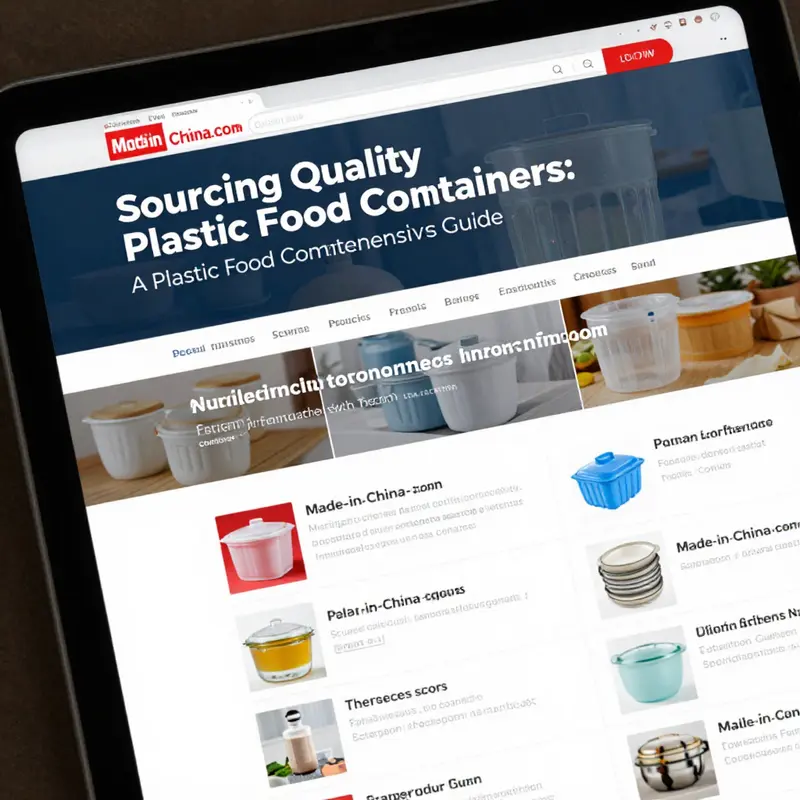
Sourcing plastic food containers from China is about orchestrating a reliable procurement flow rather than chasing a single price. On a leading Chinese B2B platform, buyers access verified manufacturers, quality control tools, and flexible customization, all within a transparent, auditable workflow. This chapter explains how such platforms function in practice, what they offer in terms of catalog depth, certifications, and how to reduce risk while maintaining cost efficiency for takeout containers, prep boxes, and display-ready packaging.
At the heart of the sourcing story is the platform’s role as an efficiency engine. A well-designed B2B portal curates access to verified manufacturers and provides a framework for quality control, samples, and scalable ordering. For plastic food containers, you’ll see a catalog that extends from basic takeaway boxes to multi-compartment sets, with precise specs such as material type (PP, PET), seal integrity, temperature tolerance, microwave compatibility, and recyclability. This granularity translates into predictable performance in real use.
Supplier verification is another practical pillar. Reputable portals showcase company profiles, certifications, and may offer video factory tours or documented quality management systems. ISO 9001, SGS testing, and similar attestations give buyers confidence that performance and traceability are built into every batch, which matters for portioning consistency, lid fit, and stackability. A strong verification base helps reduce disruptions in inventory and service levels.
Pricing and MOQs often drive much of the negotiation. Platforms hosting multiple manufacturers foster healthy competition, supporting favorable terms for larger projects while still accommodating pilot runs. FOB pricing, volume discounts, and the option for customization—such as lid types, branding, or material tweaks—can influence the total landed cost and time-to-market. Customization options should be assessed against lead times and MOQs, since these factors affect project feasibility and scheduling.
Samples are essential before committing to large purchases. A designed platform will facilitate sampling from several suppliers, with straightforward testing plans to evaluate lid seal performance, leak resistance, stacking, and food-contact safety. A sample review creates a provenance trail for packaging, helping teams verify dimensions and compatibility with existing racks or fixtures.
Customization can be a platform’s strongest value driver. Buyers may adjust lid design, printing, moisture barriers, thickness, or modular features. Detail pages should clearly show material composition, recyclability, and the impact of customization on lead times and MOQs. In practice, a procurement team might begin with a bulk-capacity run and later add a branded variation that aligns with seasonal campaigns, balancing brand impact with production feasibility.
Logistics and risk management are inseparable from selection. Global buyers must consider lead times, shipping modes, and incoterms. Platforms with production visibility help coordinate timelines, provide dispatch estimates, and standardize documentation to ease customs clearance. They can flag market-specific packaging regulations or labeling requirements, reducing the risk of delays and unexpected landed costs.
A practical workflow emerges: search broadly, filter by certifications and MOQs, request multiple samples, evaluate performance, compare total landed costs, and then negotiate with the strongest suppliers through the platform’s messaging system. This creates a transparent, auditable loop from inquiry to order, improving predictability and supplier relationships over time.
Beyond mechanics, cultural alignment matters. Clear specifications, measurable testing criteria, and consistent communications reduce misunderstandings and shorten cycle times. Buyers who document expectations—leak-resistance definitions, testing protocols, and QC checks—build trust and colocation with suppliers.
In practice, a platform can feel like a gateway to a network of factories rather than a single shop. A buyer might compare a customizable, high-volume, recyclable container with another supplier focused on tight tolerances for portion control, mapping capabilities to seasonal demand, regulatory needs, and sustainability goals. The platform’s workflow then aligns forecasts with production capacity, yielding a more strategic, less transactional approach to packaging procurement.
If you want a tangible example of customization and testing, imagine a ready-to-use takeout container family. The platform presents containers with transparent bodies and secure-seal lids, along with a cohesive line of accessories. Material notes, recycling compatibility, and sample options are accessible, providing confidence that standards will hold at scale. The same platform also hosts supplier profiles, certificates, and capacity data to support a decision that scales from pilot to replenishment.
The practical takeaway is straightforward: start with a clear, criteria-driven brief; leverage verification and sampling features; and plan customization with cost, lead time, and regulatory considerations in mind. A well-structured platform becomes a procurement partner that compresses the timeline from inquiry to order while tightening quality and reliability. Finally, explore external resources to broaden your decision framework and validate your approach within the broader sourcing ecosystem.
From Domestic Platforms to Global Kitchens: Sourcing Chinese Plastic Food Containers with Confidence
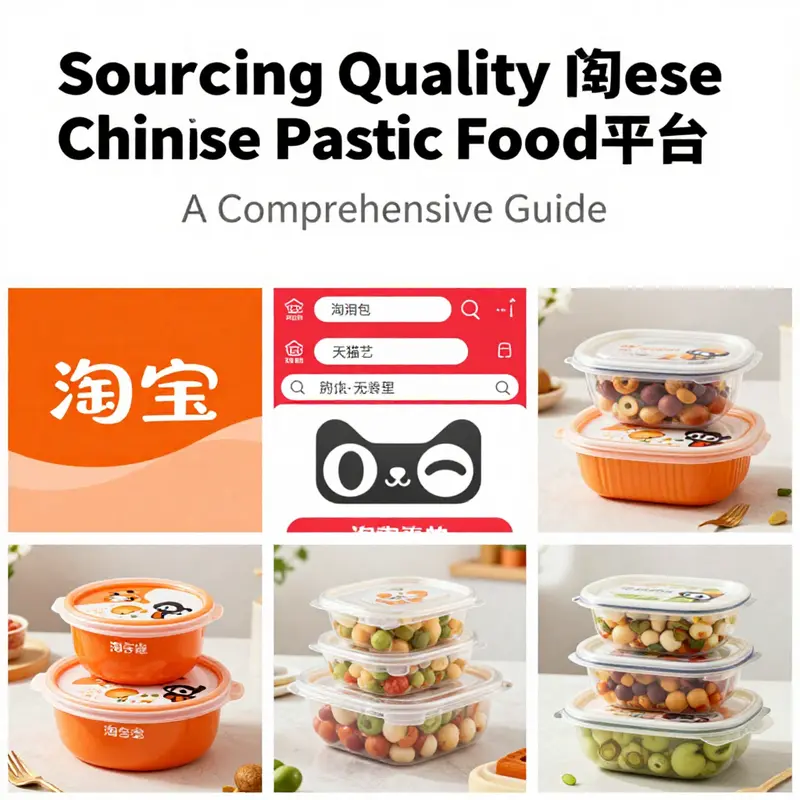
China’s domestic e-commerce platforms have matured into a central artery feeding kitchens around the world with plastic food containers. No longer are buyers restricted to glossy catalogs; they now navigate a living marketplace where manufacturers, distributors, and logistics providers co-exist in real time. For restaurant operators, caterers, and budding brands, these platforms offer a spectrum of options from bulk storage bins to compact, stackable organizers, all designed to meet the needs of modern kitchens. The appeal lies in direct access to a broad array of sizes and configurations, often with low minimum order quantities that were once reserved for large distributors. This openness lets buyers test ideas, compare designs, and refine their packaging strategy without committing to a lengthy procurement cycle. The resulting flexibility feeds not only cost competitiveness but also speed, a critical factor when shelves and menus must adapt to seasonal demand, shifting product lines, or new regulatory requirements.
Within the same digital marketplace, buyers encounter a surprisingly interconnected ecosystem. You can discover standard plastic food containers intended for pantry storage, as well as specialized pieces such as pass-through bins for fridge organization or multi-compartment trays for portion control. The vast majority of listings emphasize practical features: airtight seals that keep moisture out, stackable profiles that optimize warehouse space, and smooth surfaces that ease cleaning and maintain hygiene. Importantly, producers increasingly offer modular packaging solutions, allowing buyers to mix and match components into sets tailored to their service model, whether it is takeout, dine-in, or meal-prep kits. The range often includes both transparent and opaque plastics, varying degrees of rigidity, and an attention to transparency for product labeling, which makes inspection and regulatory compliance simpler for buyers managing large inventories.
Yet value is not merely the visible variety. The procurement journey on domestic platforms includes careful supplier evaluation, due diligence on certifications, and direct communication to confirm production practices. For international buyers, many platforms support secure transactions and buyer protection measures that reduce risk when ordering from overseas suppliers. Buyers are advised to request product samples before placing larger orders, a step that helps verify whether the container meets expected standards for food contact, durability under normal use, and performance in cold storage or microwaving where permitted. It is common to ask for test data or third-party certifications that demonstrate compliance with food safety norms, a prudent precaution given the diversity of plastics used in food-contact applications. As vendors respond to demand for higher standards, you may also encounter suppliers who offer customization options, including color, labeling, or even packaging configurations that align with branding and regulatory needs.
Regulatory awareness is a constant companion on this journey. The domestic market is governed by stringent rules about materials, additives, and manufacturing processes used in products intended for contact with food. Buyers should look for clear statements about food-grade status and avoid substances that raise safety concerns. In practice, this means checking labeling that indicates suitability for food contact and in some markets verifying compliance with recognized authorities’ guidelines. The emphasis on safety has become even more visible as cross-border commerce grows, prompting platforms to enhance traceability and documentation for each batch. For operators exporting into other regions, it helps to align packaging choices with the expectations of retailers and regulators abroad, including requirements for recyclability, recyclability labeling, and end-of-life handling. This context is echoed in discussions around sustainable packaging and the ongoing push to minimize harmful additives while preserving the protective qualities of the containers.
Beyond compliance, domestic platforms nurture a culture of innovation that matters to brands seeking distinctive packaging without sacrificing credibility. Eco-minded buyers already demand containers that reduce environmental impact, and vendors respond with recyclable materials and designs that facilitate reuse while maintaining durability. The domestic market also serves as a hub for cross-border collaboration and learning; industry events such as the China-based cross-border e-commerce showcases invite suppliers to present cutting-edge features, from smart storage solutions to logistics-friendly packaging. In this evolving landscape, buyers can observe patterns in design preferences, such as emphasis on grease resistance, microwave safety, and clear window styling for product visibility, all of which influence consumer perception and repeat purchase decisions. The synergy between evolving consumer expectations and manufacturing capability fuels a virtuous cycle of better design and competitive pricing.
Logistics and risk management are integral to the sourcing process. While many platforms facilitate global shipping, the practical realities of international procurement remain complex. Buyers should plan for factors such as lead times, customs duties, import regulations, and the possibility of product recalls or quality issues. A disciplined approach includes requesting specimen batches, evaluating packaging integrity under transport, and verifying whether container components can withstand the intended storage and service conditions. A helpful practice is to map the expected lifecycle of the product—from warehouse to kitchen, to service counter, to recycling stream—and choose containers whose performance aligns with that lifecycle. The ability to reconcile cost, speed, and safety across borders is a hallmark of savvy sourcing on domestic platforms, and it often benefits teams that maintain close lines of communication with suppliers during production and shipment.
To translate this broad landscape into a practical procurement plan, begin with a clear brief that reflects how your containers will be used. Decide on the core requirements: the size range you need; whether you require airtight seals; the possibility of compartments; and whether the design should accommodate refrigerated or frozen storage. Expand the brief to consider branding, labeling, and the preferred material family, acknowledging the trade-offs between transparency for product visibility and opacity for branding. As you search, use precise terms that capture both function and safety, such as ‘food-grade plastic storage box’ or ‘multi-compartment container’ to filter results efficiently. Inquiries should emphasize durability, compliance, and the availability of samples. When a prospective supplier responds, request supporting documents, including material safety data sheets, test reports, and any certifications relevant to the markets you serve. In parallel, assess the supplier’s service capabilities: responsiveness, production capacity, and reliability of shipments.
Because the path from factory to storefront depends on more than product specs, consider how packaging can be integrated into your broader packaging and sustainability goals. If you are exploring takeout-oriented designs or kits, you might explore options like the container line described in the ecosystem that emphasizes practicality and aesthetics. For those who want a concrete example of a responsible, design-forward option accessible through domestic channels, you can explore the concept of eco-friendly takeout boxes for food packaging, which can be accessed through a supplier page that highlights safe materials and microwave-friendly construction. This is not a product recommendation but an illustration of the kinds of packaging choices buyers expect to find on domestic platforms that can withstand frequent handling and reheating. To see what a broader category looks like, consider following the internal link to a supplier’s listing that demonstrates how form meets function in a contemporary container design.
Finally, as you navigate this landscape, remember that the path from domestic platforms to global kitchens is not a one-way street. A well-curated selection can support a growing brand, but it also requires ongoing oversight to ensure quality, safety, and alignment with evolving regulations. The next step is to consider how your internal processes—vendor onboarding, quality checks, and inventory management—fit with the rhythm of these marketplaces. When you establish a reliable cadence for supplier evaluation and sample testing, the process becomes repeatable rather than reactive. The result is a procurement system that can scale with demand while maintaining compliance and protecting consumer trust.
External resource: https://www.efsa.europa.eu/en/topics/topic/plastic-food-contact-materials
Beyond the Cart to Compliance and Quality: A Strategic Guide to Sourcing Chinese Plastic Food Containers Online
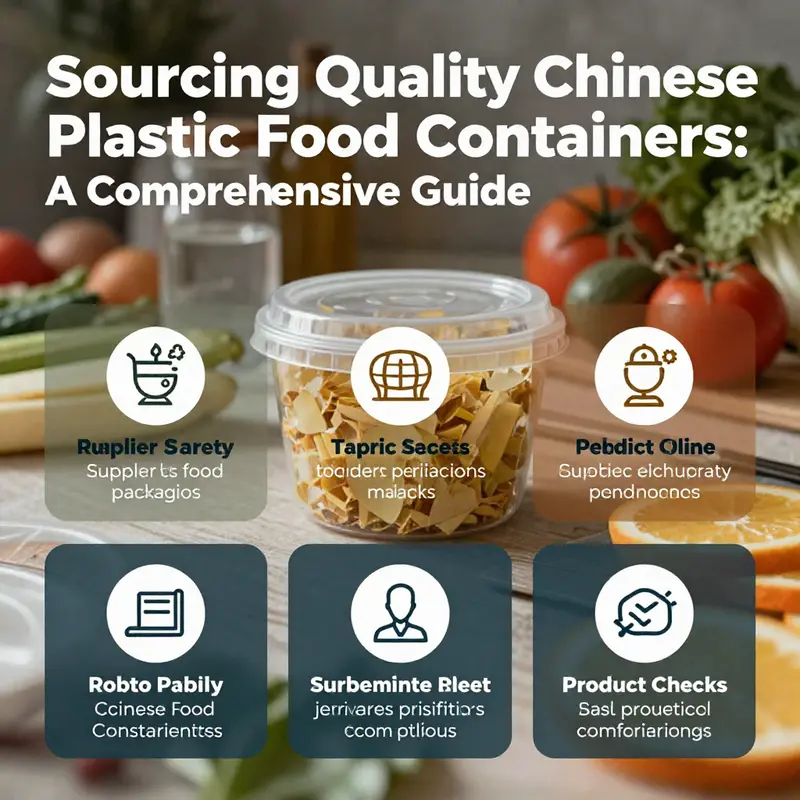
Sourcing plastic food containers from Chinese manufacturers through online marketplaces offers a compelling path to scale, diversify, and reduce unit costs. The lure is obvious: vast product variety, rapid access to factory production cycles, and the possibility of tailoring packaging to the precise needs of a business. Yet the journey from initial curiosity to a reliable supply chain requires more than a cursory price comparison or a quick sample. It demands a disciplined, methodical approach that centers on location, certification, material science, platform credibility, testing, logistics, and authenticity of sustainability claims. When navigated with care, the process yields containers that not only perform reliably in the kitchen and the freezer but also align with regulatory expectations and evolving consumer values. The path begins with geography and capability, then extends through verifiable standards, and ends in a logistics rhythm that keeps promises to customers in North America, Europe, and beyond.
Geography and capacity shape the backbone of any sourcing plan. China’s manufacturing strength in plastics rests in regional clusters where injection molding, tooling, and solid supply networks converge. For plastic food containers, the Guangdong corridor has long been the axis of high-volume production. Dongguan, Guangzhou, and Foshan host a dense ecosystem of mold makers, resin suppliers, and automated lines capable of turning out millions of units with consistent thickness, seal integrity, and color control every month. Proximity to major seaports like Shenzhen and Guangzhou translates into shorter lead times and simpler routing through customs. Yet capacity extends beyond one province. Zhejiang and Jiangsu offer complementary ecosystems for specialized components, from precision hinges to multi-compartment configurations. A thoughtful buyer may focus search efforts on suppliers anchored in these hubs, not merely to shorten transit times but to gain access to the latest in sustainable plastics innovations—materials designed to reduce carbon footprints, or to support certifications that resonate with eco-conscious brands. In practice, this means prioritizing suppliers who can demonstrate robust on-site operations and a track record of steady output, even as demand vacillates across seasons.
Compliance and certification sit at the heart of responsible sourcing. Food-contact materials demand more than cosmetic conformity; they require evidence that migration limits stay within regulated thresholds and that the product remains non-toxic under typical use—reheating, freezing, or long-term storage. The tests happen behind laboratory doors, and a supplier’s willingness to share third-party verification matters as much as the numbers in a spec sheet. The most trustworthy players routinely provide access to test reports from independent laboratories or certification bodies. These documents confirm not just compliance with general safety standards, but also alignment with specific jurisdictions that customers serve. A buyer should insist on documents attesting to food safety compliance, including but not limited to non-toxicity, migration limits, and thermal stability. When a supplier can present these reports without hesitation, it signals a culture of quality control rather than a focus on price alone. The discipline extends to packaging claims as well—brands seeking to position themselves as sustainable should request certifications appropriate to the claimed materials, such as compostability or recycled content verification from recognized bodies.
Material choices determine both performance and practicality. Polypropylene remains the workhorse for many takeout boxes and freezer-safe containers because it is durable, microwave-friendly, and relatively cost-efficient. Polystyrene, while light, carries ecological concerns and heat sensitivity that may render it unsuitable for high-heat applications. Polylactic acid, a bioplastic, introduces an appealing sustainability narrative but requires careful handling: it can be more brittle and less heat-tolerant, and performance can vary with humidity and time. A well-structured sourcing plan specifies exact material requirements when placing orders—something as precise as “food-grade PP with a minimum purity threshold” rather than a vague cue about plastics. Samples become essential here. A trial of several batches helps verify a material’s real-world behavior: how the container holds its seal over repeated cycles, how it tolerates freezing without becoming brittle, and how color and thickness hold up to stacking and handling in a busy kitchen setting. In this phase, the ability to test under conditions mimicking end-user use—microwave reheating, dishwasher cycles, or long-range cold storage—can be invaluable in avoiding costly returns and replacements later on.
The tools of verification extend beyond the factory floor to the digital marketplaces that connect buyers with manufacturers. Reliable sourcing hinges on platforms with verified supplier profiles, documented export experience, and transparent transaction protections. The most effective buyers lean on marketplaces that offer supplier verification, long-standing export histories, and protective mechanisms for payments and quality disputes. This is not a call to shun marketplaces that democratize access to factories; it is a reminder to treat them as part of a broader vetting process: request video factory tours, arrange live QC checks if possible, and demand evidence of on-site quality control teams. A seasoned buyer will also seek multiple bids to compare not just price but capabilities, lead times, and after-sales support. Even with the best protection in place, this is the moment to emphasize the importance of samples. An initial small order—perhaps in the low thousands for a multi-piece kit—provides an authentic test of seal integrity, color consistency, closure reliability, and print quality if branding is involved. In practice, a cautious approach to sampling prevents expensive missteps that can threaten a product launch or seasonal promotions.
Lead times and logistics form the rhythm of supply confidence. A supplier anchored in the major manufacturing hubs of southern China often sets a production window that translates into 10 to 20 days of manufacturing lead time, followed by 15 to 25 days for sea freight, and a variable window for customs clearance. The exact numbers depend on the complexity of the container design, whether multi-compartment configurations are involved, and the degree of customization required. Some buyers prioritize faster routes and are willing to pay a premium for air freight, while others favor the cost discipline of sea transport with a well-planned production calendar. The key is to construct a full timeline in advance and align it with sales forecasts, storage capacity, and marketing calendars. An unambitious timeline invites stockouts, while an overly optimistic forecast risks shipping delays and penalties for late delivery. The buyer should also align on Incoterms and the division of responsibilities—who handles the freight, who bears the risk during transit, and who takes responsibility for customs duties. These decisions, though technical, set a foundation for frictionless delivery to end customers.
Sustainability and brand alignment have moved from optional considerations to business-critical requirements. Consumers increasingly expect packaging to reflect environmental responsibility. In response, many Chinese suppliers have begun offering options beyond conventional plastics: bagasse-based substitutes, PLA-coated papers, and recycled-content plastics. Certifications that demonstrate conformity to recognized sustainability standards can become a decisive factor in supplier selection, particularly for brands that want to highlight responsible packaging as part of their value proposition. The right supplier will not only deliver on performance but will also articulate a credible sustainability story, with documentation and traceability that can be conveyed to customers. In this sense, sustainable packaging is not a marketing add-on; it is an operational capability that must be integrated into material sourcing decisions, supplier audits, and the ongoing evaluation of product lines.
As buyers deepen their relationships with suppliers, they increasingly leverage curated platforms and verification services that reduce risk and shorten the path to a compliant supply chain. The strongest sourcing plans do not rely on a single listing or a single inbox message. They combine the network effects of reputable platforms with direct factory engagement, third-party testing, and ongoing quality assurance. In practice, this means a process that begins with a careful screen of supplier profiles, moves to sample evaluation, and culminates in an early-stage trial order that confirms production capabilities and quality consistency before entering larger volumes. A well-structured approach also includes a documented risk assessment—evaluating regulatory compliance in target markets, potential supply disruptions, and contingency measures for any stage of the chain. The goal is to create a sustainable pipeline of containers that reliably meet safety standards, support brand promises, and remain resilient in the face of fluctuations in demand.
To bring these elements together, consider a practical narrative of how an expanding brand might proceed. The brand identifies a target region and a set of product requirements—volume, compartment count, sealing mechanism, and temperature tolerance. The team then surveys the leading manufacturing hubs, seeking suppliers with robust QC processes and a history of export activity. They request test reports and material data sheets, then arrange for physical or virtual tours if possible. A small trial order follows, with close monitoring of seal performance, color consistency, and print quality if branding is included. The team maps production lead times, confirms shipping options, and negotiates Incoterms that clarify responsibilities. They track performance metrics during the initial shipments and adjust orders based on actual consumption rates and forecast accuracy. Finally, they engage in ongoing dialogue about material choices and sustainability certifications, building a supplier relationship rooted in quality and shared values.
Within this broader framework, a practical touchstone is the idea of accessibility and trust. Buyers should maintain a rigorous but fair stance: demand corroborating documentation, insist on samples, verify on-time delivery against commitments, and monitor post-delivery performance. The aim is a transparent supply chain where every link—from resin supplier to final lid seal—contributes to a reliable product experience for end customers. Embedded in this approach is a simple reality: price alone cannot guarantee success. The cheapest option often masks hidden costs in quality, customer returns, and regulatory risk. A disciplined sourcing program, by contrast, builds a foundation for predictable performance, scalable growth, and a market image that resonates with both retailers and consumers.
For readers who want to explore supplier directories and verify marketplace credibility, consider starting with a curated collection of listings that emphasize verified export experience and documented compliance. When you encounter a listing that includes detailed product specifications, material data, and accessible third-party test results, treat it as a credible signal rather than a mere price quote. The difference between good and great sourcing is not merely the initial cost; it is the assurance that every container will perform in the hands of a customer who expects safety, reliability, and an experience that matches a brand promise. And when sustainability is part of the equation, the evaluation becomes more nuanced—but equally rewarding: it aligns with consumer expectations, reduces long-term risk, and supports a circular economy that many markets now insist upon.
As a final note, the practical steps outlined here can be adapted to various sizes of operations, from small startups testing a concept to larger brands expanding their packaging portfolio. The core principles stay constant: choose suppliers with geographic and operational strength, verify compliance through independent testing, define material requirements clearly, favor platforms that offer credible supplier verification, start with controlled trials, and maintain a rigorous view of logistics and sustainability. The chapter’s aim is to provide a durable framework that readers can apply repeatedly as products, markets, and regulatory landscapes evolve. When aligned with these best practices, online sourcing of Chinese plastic food containers becomes not a gamble but a strategic asset—one that enables growth while safeguarding safety, quality, and trust.
For a practical starting point that aligns with the guidance above and offers a direct window into the world of wholesale plastic food containers, explore a curated supplier showroom that emphasizes verified export records and compliance capabilities. This resource helps bridge strategy with execution, guiding you toward partnerships that endure beyond the first season of supply. custom takeout packaging supplies.
External resource: For a comprehensive, up-to-date directory of suppliers and certification checklists, see the industry directory and verification guides at https://www.alibaba.com/showroom/wholesale-plastic-food-containers.html.
Final thoughts
In this guide, we’ve explored essential platforms for sourcing plastic food containers from China, tailored for various businesses in the food service sector. By utilizing Alibaba.com, Made-in-China.com, and domestic e-commerce sites like Taobao and Tmall, you can effectively find the containers that fit your needs. Pairing this with best practices for verifying suppliers and understanding compliance standards will ensure your purchasing process is efficient and meets safety regulations. Leveraging these insights can elevate your service offerings and streamline your operational capabilities.