
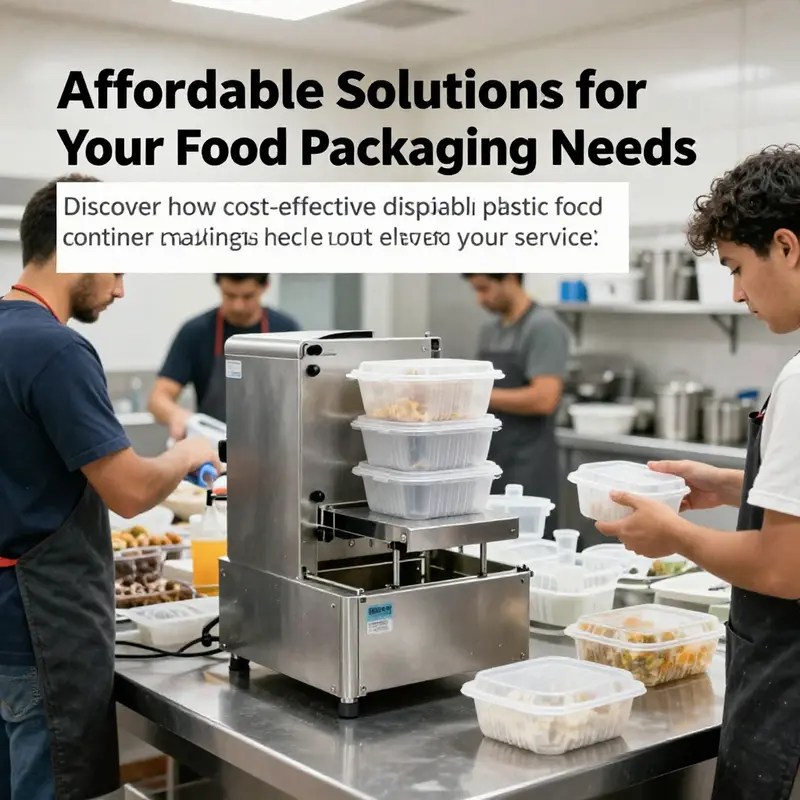
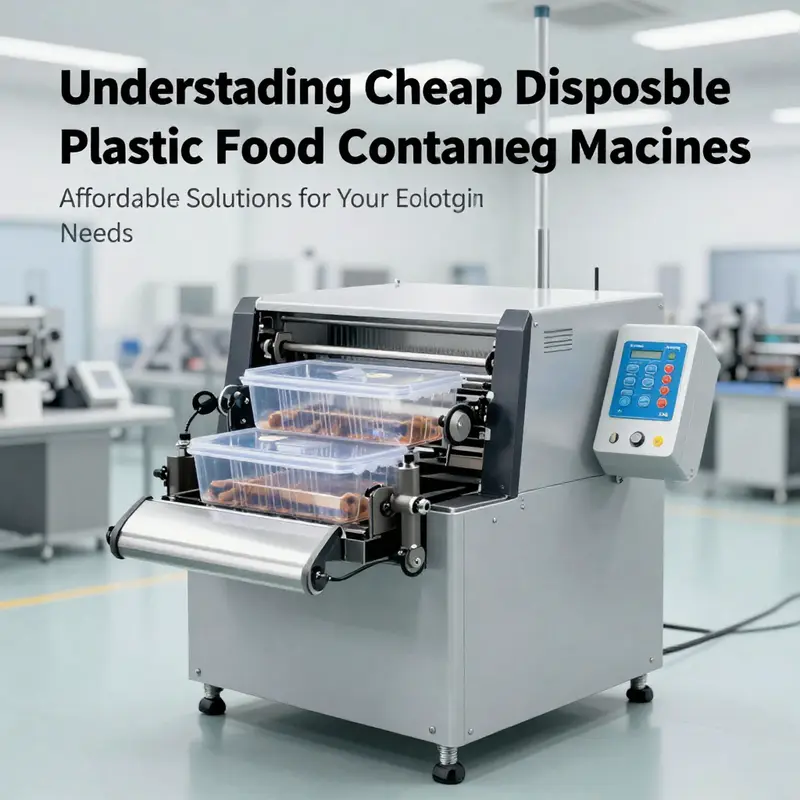
Cheap disposable plastic food container making machines are becoming essential for businesses like bubble tea shops, restaurants, food trucks, and catering services. With a primary focus on cost-effective production, these machines enable businesses to produce a variety of containers suitable for their needs while maintaining profitability. Throughout this article, we will explore the essential aspects of these machines, including their understanding, types and production capacities, key features, market availability, and overall economic impact on the food industry, guiding you to make informed decisions for your operations.
null
null
Low-Cost, High-Volume: Navigating Cheap Disposable Plastic Food Container Making Machines and Their Production Footprints
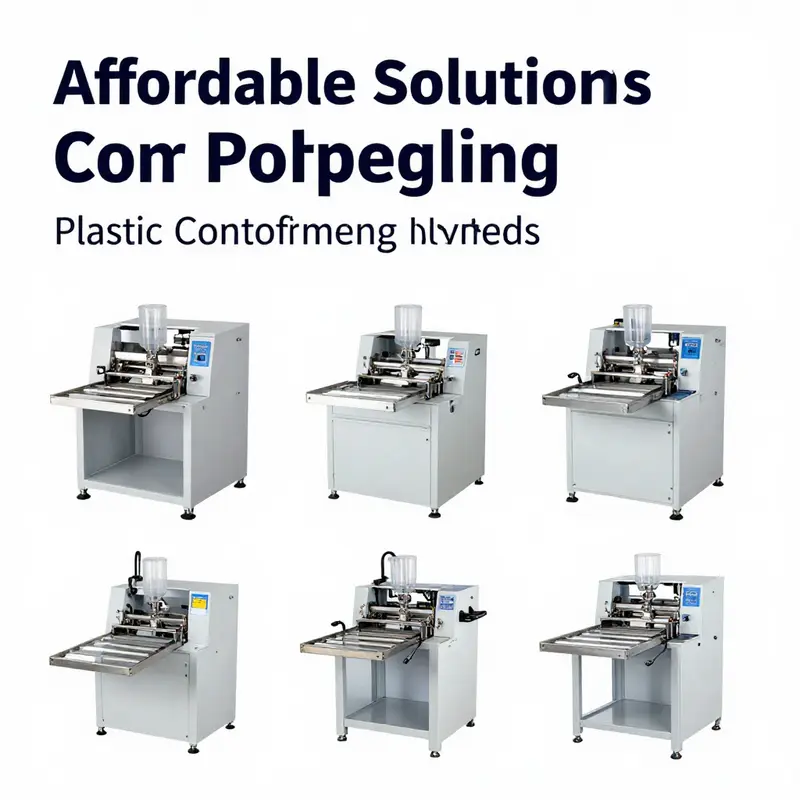
The appeal of cheap disposable plastic food container making machines lies in their ability to turn a modest investment into a steady, predictable stream of product for small eateries, caterers, and neighborhood suppliers. These lines are engineered for practicality rather than poster-perfect scale, delivering a reliable daily output without forcing a business to gamble on borrowed capital or overwhelming overhead. They are designed to occupy a compact footprint, run with straightforward controls, and rely on basic automation that keeps labor costs in check. For an entrepreneur watching cash flow, the promise is simple: a turnkey set that can begin producing 1,000 to 5,000 containers per day, with room to grow as demand comes and a plan to control energy and material costs. The frame of this promise rests on three pillars—production method, material choice, and line configuration—that together determine not just price but the real cost per unit and the viability of a venture over time. In practice, the cheapest options are typically thermoforming or simple injection lines, because these methods minimize molding complexity while preserving the ability to shape lightweight, stackable containers. The result is a balance between capital expenditure and operating expense that suits a business model built around steady, predictable orders rather than dramatic, fast-paced expansion. A compact system can be a strategic starting point for a cafe, a delivery service, or a regional distributor that wants regional coverage without a dedicated plastics plant. This approach also allows for a measured upgrade path as volumes climb and service expectations tighten.
The core machinery in this tier falls into a few broad categories, each aligned with the kind of container a customer needs. Injection molding can deliver precise, closed-form containers with integrated features such as lids or threads. It excels where components must snap together with tight tolerances and where durability matters. Blow molding focuses on hollow, uniform-walled forms, ideal for larger cups or containers that require consistent wall thickness across a geometric profile. Thermoforming, particularly in its vacuum-forming variety, softens a plastic sheet and shapes it over a mold, often producing relatively light, inexpensive disposables with a broader range of geometries. Within this spectrum, the cheap end of the market typically emphasizes thermoforming for its efficiency with sheet stock and its ready-made mold sets. A competing consideration, of course, is how these choices translate into ongoing costs—energy use, maintenance, and the pricing of compatible resin types such as polyethylene (PE) and polypropylene (PP).
Material choice is central to both performance and economics. PE remains the workhorse for cold cups and light, everyday containers thanks to its flexibility and durability. It typically yields the lowest up-front costs and is forgiving in forming lines that run at modest speeds. PP, by contrast, adds heat resistance and microwave safety, expanding the possible applications to hot foods and certain microwavable containers. The trade-off is a slightly higher equipment cost and potentially more precise control needed to handle PP’s harder melt and different shrink characteristics. In small-scale lines, where capital constraints are real, many operators lean toward PE for the majority of standard takeout containers and reserve PP for a subset of products that require higher temperature tolerance. This material strategy shapes not only what the machine can produce but how the production line is configured from the outset.
Capacity ranges for cheap disposable container lines reflect the intended scale of the buyer. Small-scale machines, designed for startups, local vendors, or compact cafés, routinely target daily outputs up to about 5,000 units. These lines are often sold as complete, plug-and-play packages that include essential elements such as extruders, forming units, and cutting or trimming mechanisms. A typical package might be marketed as a turnkey system that can be deployed with modest fit-out costs. For mid-sized operators, medium-scale machines offer improved automation and consistency at higher daily rates, commonly in the 5,000 to 20,000 cups-per-day range. These systems tend to be more integrated, with better process control, higher precision, and more robust quality checks, translating into lower scrap and closer tolerances across shifts. At the upper end of the affordable segment are full automatic lines capable of exceeding 50,000 units per day. While these are not “cheap” in the strictest sense, they often come with field installation support, modest warranties, and a clear long-term cost calculus that rewards labor savings, energy efficiency, and throughput. Some high-speed units in this tier may push capacity to 200 or 350 containers per minute in truly optimized conditions, underscoring how volume can reshape economics over time. The takeaway is that the cheapest options serve as a practical entry point, while the next tiers open doors to higher volumes and more sophisticated process control.
In practical terms, choosing the right line requires a careful look at the end product mix and the specific markets served. A shop that primarily supplies cold, lightweight containers may prioritize a PE-focused thermoforming setup, whereas a business planning to offer hot foods or microwave-safe options may find PP compatibility worth the premium. The design flexibility of thermoforming offers tangible benefits here: it supports a broader range of shapes and sizes, including lids or integrated foam features, without resorting to more expensive tooling. The ability to form foam-based containers using vacuum forming further broadens the spectrum of disposables a small producer can offer, from standard clamshells to stackable lunch boxes. While injection molding can produce complex forms with tight tolerances, the capital cost and cycle times can be less forgiving for rapid changeovers or highly variable product lines. For many budget-sensitive operators, the sweet spot lies in a versatile thermoforming line that balances cost, speed, and design freedom, with a simple automation layer that can be upgraded as demand grows.
A practical consideration that threads through every decision is the availability of suppliers and market accessibility. In the current landscape, budget-conscious buyers have access to a broad array of options—complete lines that ship as turnkey systems, modular components that can be assembled over time, and everything in between. Energy efficiency and low operating costs are not afterthoughts; they are part of the negotiating table when a buyer compares different configurations. The ongoing cost of resin, energy, and maintenance will determine whether a line pays for itself in months or quarters. For small operators, it is not only the machine price that matters but also the post-purchase support, spare parts accessibility, and the expected lifespan of the molds and forming tools. The procurement journey often involves weighing the printed spec sheet against on-site performance, and evaluating whether the line can reliably produce the target shape with consistent wall thickness and adequate sealing. This reality makes supplier responsiveness and available local service crucial.
As you map the path from idea to production, consider the packaging trajectories you want to support. Takeout and fast-service packaging demand reliable, grease-resistant surfaces, predictable stacking behavior, and tolerance for repeated use or short shelf life. The modern design language for disposable containers leans toward lightweight, recyclable forms, and lines that can accommodate eco-conscious materials without sacrificing efficiency. A practical way to explore options is to examine examples of market-ready takes on disposable packaging that align with your target mix. For instance, there are widely available options that emphasize multi-compartment designs and sturdy closure systems that perform under typical handling and transit conditions. These references illuminate how a small plant can expand from basic cups and containers to more complex, multi-compartment formats while maintaining cost discipline. And for operators exploring sourcing options, a relevant product page illustrates how straightforward an integrated line can be when a supplier bundles sheet extrusion, forming, and finishing together in a turnkey package; this kind of offering provides a realistic blueprint for the budget-conscious buyer seeking to scale with minimal disruption. For instance, the following page showcases an example that aligns with the idea of affordable, multi-compartment takeout solutions: eco-friendly disposable 3-compartment packaging box. While this link points to a specific product page, it embodies the concept of accessible, modular packaging options that a small line can target with a capable, affordable thermoforming or basic molding setup.
The road to a successful operation that uses cheap disposable container machinery is paved with pragmatic decisions, not grandiose promises. Start by defining the daily target and the geographic reach: local delivery, neighborhood cafés, or a district-wide takeout network? Next, align resin choice with the expected thermal and mechanical demands of the containers and select a line that provides reliable cycle times, repeatable quality, and straightforward changeovers for different sizes and shapes. Ensure space, utilities, and maintenance plans fit the scale you intend to achieve. Finally, cultivate a vendor relationship that emphasizes accessible support, spare parts availability, and a clear upgrade path as volumes rise. In this way, a cost-conscious machine choice becomes a durable foundation for a packaging enterprise that can respond to evolving customer needs, maintain steady margins, and navigate the logistics demands of a competitive market.
The chapter thus circles back to the central insight: cheap disposable container making machines are tools for practical entrepreneurship. They are not silver bullets, but when chosen and operated with care, they translate modest capital into dependable output, predictable costs, and the flexibility to adapt to shifting market appetites. The value lies in the thoughtful pairing of a suitable production method, a resin that aligns with the product line, and a line configuration that supports stable quality at the expected scale. In the end, the most enduring advantage is the operator who uses a lean, well-maintained system to serve a reliable stream of customers day after day.
Affordable, Agile Containers: How Cheap Disposable Plastic Food Container Making Machines Empower Small-Scale Packaging
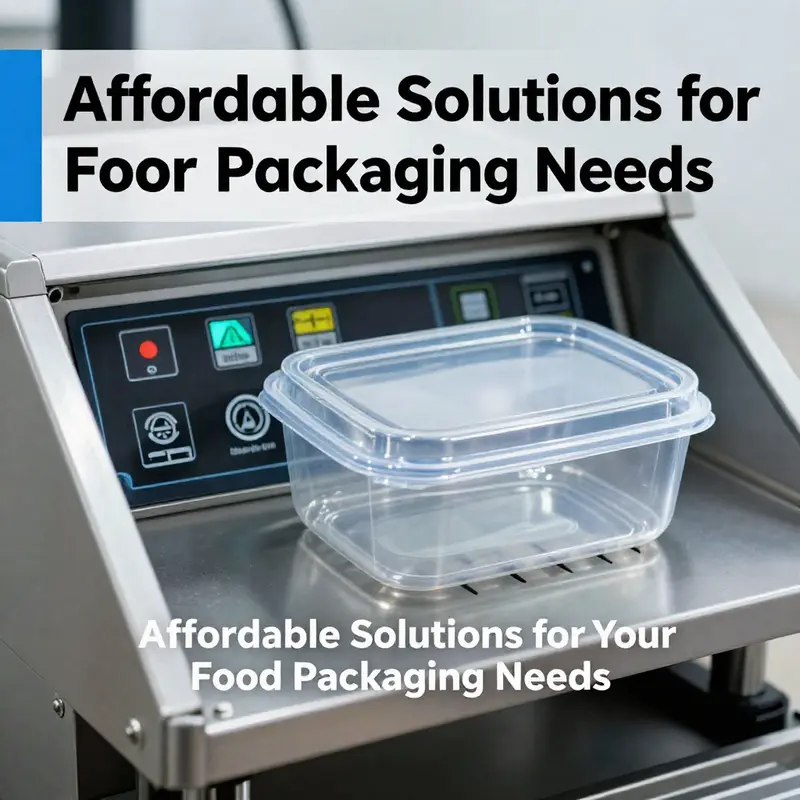
A compact class of equipment has quietly transformed the economics of packaging for small and mid-sized food businesses. Cheap disposable plastic food container making machines are not simply cheaper versions of heavy industrial lines; they are purpose built for entry points that prioritise speed, flexibility, and control. They translate a startup’s ambitions into tangible output, delivering a practical path from concept to shelf without the overhead of large, multi-line plants. For operators who need to produce roughly one thousand to five thousand containers a day, these machines offer a rare combination: affordable capital expenditure coupled with dependable, repeatable performance. The result is a more resilient, responsive supply chain where a cafe, a caterer, or a regional takeout brand can safeguard margins and adapt quickly to shiftable demand. In many ways, these systems democratize access to thermoforming and forming technology, turning packaging into a controllable, in-house operation rather than a variable cost tied to outside suppliers.
The heart of this affordability lies in the way these machines balance core requirements: enough automation to minimize labor, enough hardware to maintain consistent quality, and enough simplicity to avoid crippling downtime. Most units in this segment are engineered to process common plastics like polyethylene and polypropylene. PE brings flexibility and durability for cold cups and lighter containers, with lower upfront cost and simpler handling. PP, while often slightly more expensive, unlocks applications where heat resistance and microwave safety are essential. The choice between PE and PP is rarely a dead end decision; it shapes the range of products a small facility can confidently offer, from cold-spp takeout boxes to hot food containers that can withstand brief exposure to elevated temperatures. The material choice then feeds into a broader equation of energy use, cycle times, and mold life, which in turn influence long-run unit costs and product quality.
From the perspective of production capability, the landscape is intentionally tiered but coherent. Small-scale machines typically deliver up to five thousand containers per day and arrive as turnkey systems that streamline the path from raw material to finished product. They may include an extruder, a forming unit, cutting tools, and a simple automation sequence designed to minimize operator intervention. The price points for a complete, plug-and-play setup in this category have become surprisingly accessible, making them a practical option for startups and local vendors who want to test markets without tying up capital in a full-scale line. Medium-scale configurations push capacity higher, often in the five-thousand to twenty-thousand range. These lines emphasize stronger automation, better process control, and more robust quality checks, typically featuring integrated sheet extrusion, forming units, hydraulic punching or cutting, and customized molds that support a wider variety of container shapes and sizes. A turnkey medium-scale line may also include field installation support and a warranty that reduces the perceived risk of investing in automation. For operations already nearing or at the 20 thousand daily mark, full-automatic systems exist, designed to exceed fifty thousand units per day. While those larger lines are not part of the cheap category, understanding their capability helps small operators plan scale, efficiency, and potential future expansion. The common thread across these tiers is the emphasis on rapid changeovers, modular upgrades, and a design that favors straightforward maintenance—whether that means easily sourced spare parts, simplified electrical panels, or molds that can be swapped with minimal downtime.
The features that deserve particular attention—cost efficiency, material compatibility, high-speed production, customization, and ease of use—do not exist in isolation. Cost efficiency is multifaceted. It starts with a modest upfront investment and extends to energy use, ongoing maintenance, and the ability to adjust production to demand without costly downtime. In-house production eliminates per-unit transport costs and the volatility of supplier pricing, which can swing with material shortages or logistics constraints. Material compatibility is a practical consideration that informs both the design of the forming process and the expected lifecycle of molds. Machines that are optimized for PE and PP typically include heating zones and cooling cycles calibrated for consistent wall thickness and edge integrity. This consistency translates into predictable performance across batches, a critical factor when a small operation needs reliable packaging for a growing product line. High-speed production is about more than speed; it is about stable cycle times, repeatable forming, and integrated quality checks that can spot deviations before they cascade into waste. Even affordable lines that operate at high cadence reduce batch variance and accelerate throughput, enabling a small business to meet short-term promotions or seasonal demand without sacrificing product quality.
Customization is where these machines often shine. Despite the perception that lower-cost systems come with fixed formats, many affordable lines offer molds and forming options that cover a surprisingly broad spectrum of shapes and capacities. This flexibility helps brands differentiate their packaging, telling a story about the product through form, size, and branding. A practical path for many operators is to adopt a modular approach: start with a standard container format that covers the most common applications, then invest in a few specialized molds to accommodate hot or multi-compartment meals, or to accommodate branding initiatives such as branded lids and printed surfaces. The ease of operation and maintenance complements customization. User-friendly interfaces and straightforward control logic reduce training time and error rates, while maintenance protocols—easy access to regularly worn components, clear diagnostic indicators, and readily available spares—minimize downtime. In practice, this means operators can retool a line for a different container in a matter of hours rather than days, a capability that aligns well with seasonal menus or pop-up concepts that require rapid product iterations.
Beyond immediate economics, the long-term advantages touch hygiene, reliability, and sustainability. In-house production enhances hygiene oversight by allowing operators to control the entire manufacturing window, from material handling to final cutting and packaging. Quality control becomes more immediate and continuous, not something that occurs only after a supplier delivers finished goods. This enhanced control also supports regulatory compliance by preserving verifiable process records and traceable materials, a factor that matters when safety standards govern hot foods or multi-use applications. On the sustainability front, careful material selection and disciplined scrap management can reduce waste and optimize recycling streams. While inexpensive lines must be paired with responsible practices, they are compatible with sustainable workflows when the operator assigns attention to material recovery, mold longevity, and energy-efficient cycles that align with local energy policies.
Market dynamics and supplier ecosystems matter as well. In many regions, leading suppliers in Asia and Europe offer complete plastic packing machinery that specifically targets small and mid-sized operators. The affordability of these lines is often complemented by responsive service, basic automation enhancements, and the option to add modules as the business grows. Platforms that cater to budget-conscious buyers list a range of complete systems and component options, including sheet extrusion, forming, and customization tooling, with transparent pricing that helps buyers benchmark total cost of ownership. For buyers who are evaluating options, the key is to balance initial cost against flexibility, mold availability, and service levels. A prudent approach is to map the business’s product portfolio against the anticipated demand curve and then choose a line that can scale in small, measurable steps rather than forcing a rapid, costly upgrade.
For teams exploring practical formats and packaging options, a straightforward internal reference can help anchor decisions. Consider this resource as a starting point for evaluating container designs that align with your product line and branding: eco-friendly takeout boxes for food packaging. Such formats are representative of the kinds of lightweight, durable, and microwave-safe containers these machines can produce, and the linked page offers concrete examples of foldable or multi-compartment options that can be molded to customer needs. eco-friendly takeout boxes for food packaging.
As operators plan the next steps, it is worth acknowledging an external resource that codifies industry expectations around machine standards and performance. For those who want a formal reference, consult the industry standards guide on plastic container making machine standards, which provides a framework for evaluating equipment capabilities, safety considerations, and quality assurance practices. This external reference can help shape procurement criteria, mold design decisions, and the leveling of expectations across suppliers. https://www.plasticmachinery.com/industry-guidelines/2026/plastic-container-making-machine-standards
Market Accessibility, Supplier Networks, and the Quiet Dynamics of Cheap Disposable Plastic Container Machinery
The market for cheap disposable plastic container making machines has evolved into a global ecosystem that rewards practical entry points as much as scale. For small and mid-sized operations, the appeal is turnkey entry with a balance of price, capability, and reliability. The bench reality is not a single flashy machine but a continuum: compact thermoforming lines for 1,000–5,000 containers per day; mid-range lines that reach tens of thousands; automated lines that exceed 50,000 with monitoring and integration. The thread is cost efficiency: upfront price plus long-term energy, labor, and material savings. The democratization is driven by manufacturers in China and other low-cost centers offering complete sets under one roof, with options for founders, regional distributors, or takeout operators.
Pricing signals are daily reality. A basic, fully assembled thermoforming set can start around US$23,999, a practical entry for essential components like mixers, forming units, and molds. Mid-range lines run roughly US$69,900 to US$99,900 per set, bundling extrusion, forming, punching, molds, with automation and quality control. High-volume automated lines exceed 50k units/day with real-time monitoring and inline inspection; not cheap, but potential long-term savings through labor reductions and throughput gains for regional or international scale.
The technology core is thermoforming. It requires lower tooling outlay and faster development cycles than injection molding, suitable for hollow, lightweight containers such as clamshells and trays. Thermoforming supports recycled materials and post-consumer resins, shrinking material costs and improving sustainability. PP processing capability is a differentiator for heat resistance and microwave safety, though with higher upfront cost than PE lines. The PP-enabled value lies in opening hot-food applications and broader customer base. The material theory translates into decisions about product mix, target markets, and durability.
Supply networks are robust yet must be navigated. Much of the market concentrates in China, with export experience across Southeast Asia, Africa, and Europe. A spectrum of offerings from entry-level semi-automatic to turnkey lines allows buyers to tailor to capital and ambition. Marketplace components like lid-forming or lid-assembly lines can complement thermoforming. A typical price for a cover forming machine starts around US$8,500 with a one-set minimum; comprehensive automatic thermoforming lines are commonly priced in the US$23,999 to US$28,999 band for complete sets. For higher automation, servo-driven systems with precise cycle control and integrated handling enter negotiations reflecting features and service.
Credibility and procurement: Due diligence is prudent. Verify supplier certifications, request product docs, and seek evidence of EU or other standards compliance. Factory inspection videos or third-party test reports offer assurance on build quality, durability, and safety. Suppliers should emphasize customization with sustainability—compatibility with recycled sheets and responsible waste management. Ensure timely spare parts, reliable maintenance, and reasonable warranties. Turnkey procurement minimizes fragmentation, reduces downtime, and simplifies installation, commissioning, and training.
Market availability and channels: Market availability extends to trade platforms and regional distribution. For buyers balancing cost and risk, B2B marketplaces are a viable path to budget equipment, especially for entry-level configurations. Offerings vary by automation, capacity, and specs, but the throughline remains: lower upfront investment often comes with longer lead times or limited after-sales support, while higher-priced lines deliver reliability, tighter tolerances, and stronger warranties. Map supplier capability to the target market; mid-to-high tier lines suit high-volume, stable demand, while modest, well-supported entries fit testing phases or niche markets.
Practical resources: A curated supplier profile resource can illustrate what buyers encounter on product pages for takeaway packaging and disposable tableware. For deeper dives into customized packaging solutions, see relevant supplier pages and case studies. External resources can illuminate the broader industry context and evolving standards that shape supplier offerings today: https://www.alibaba.com/showroom/disposable-plastic-food-container-making-machine.html
Closing: In summary, this market rewards clarity and diligence. Buyers who understand capacity, automation, and material compatibility, combined with careful supplier evaluation, can secure equipment that fits a startup budget and scales with the business. The next chapter will design production lines around product families, aligning machinery with takeout formats and logistical realities of a growing food-service operation.
Small Machines, Big Impacts: How Cheap Disposable Container Makers Reshape Costs, Access, and Local Supply Chains
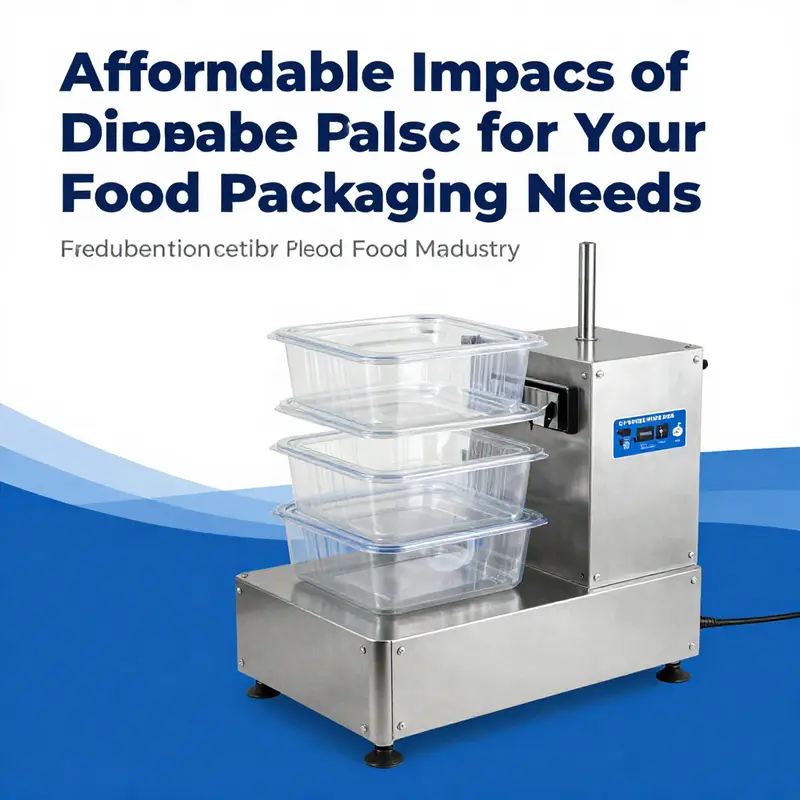
A shift in cost structure often travels quietly, until it becomes the default expectation. The cheap disposable plastic food container making machines, positioned at the low end of the market, are doing just that for the food industry. They lower the barriers to entry, not by promises of glamorous scale but by offering a practical, achievable path to in-house packaging production for startups, local vendors, and small food-service businesses. When a shop can choose a turnkey, plug-and-play line that starts around the high twenty-thousands in US dollars, the calculus of feasibility changes. It is no longer a distant dream for a neighborhood cafe to brand its own takeout containers; it becomes an ordinary business decision rooted in shorter lead times, more control over design, and the possibility of aligning packaging with real-time demand. The economic logic is simple yet powerful: reduce upfront capital, simplify the supply chain, and increase the speed at which a business can respond to customers.
The price ladder itself helps frame the strategic choices. Small-scale machines, designed for up to around five thousand containers per day, come as complete sets that include basic extrusion, forming, and cutting components. They stride into operation with modest monthly overhead, and their affordability makes them a viable option for people who previously would have faced a chilling gap between idea and production. Medium-scale lines, capable of 5,000 to 20,000 units per day, add improved automation and quality control, enabling more consistent output across longer runs. These systems strike a balance between cost and capability, offering a path to regional distribution without the scale and risk of high-capital, fully automated plants. For high-volume producers, fully automatic lines exist, but they are far from cheap. They are optimized for efficiency and integration but require substantial investment, maintenance, and workforce readiness. In practice, the cheap end of the market is redefining what success looks like for many operators who need to test concepts, build local brands, or seasonally scale up to meet demand.
The economic effect ripples through several interlocking layers. First, the immediate cost structure shifts for individual businesses. With the right material choice—polyethylene for flexible, durable containers or polypropylene for higher heat resistance—these machines can broaden the range of products a kitchen can offer. The material choice itself is a lever: PE-focused lines tend to be more affordable and well-suited for simple, lightweight items; PP-capable lines justify higher upfront costs because they enable hot food containers and microwave-safe formats. Even so, the key benefit remains the same: a lower per-unit cost when production is localized, rather than bought from a distant supplier that adds transport time and markups. The net effect is a reduction in procurement costs and greater control over branding, which matters just as much as the price tag on a container.
Second, in-house production reshapes market accessibility. A local operator can move from reactive purchasing to proactive design, prototyping, and customization. The possibility of producing in-house opens avenues for branding that can distinguish a business in a crowded field. A takeout box can be tailored to fit a menu theme, a promotional campaign, or a seasonal packaging concept. This design flexibility translates into stronger brand cohesion and the potential for premium-margin opportunities on a limited run basis. In practical terms, the decision to produce containers in-house lowers the risk of stockouts and price spikes tied to external suppliers, especially during peak seasons when demand for packaging surges. The capability to respond quickly to changes in the market is itself a form of competitive advantage, albeit one that requires attention to maintenance, operator training, and ongoing line optimization.
Third, the local production narrative dovetails with supply chain resilience. When communities can manufacture their own containers, transport costs drop, and delivery times compress. Regional suppliers of packaging materials can be matched more closely with local manufacturers, creating a micro-ecosystem where suppliers and buyers share knowledge, feedback, and tighter inventory loops. This localization contrasts with the long, tender-laden cycles of global procurement, where disruptions ripple through to price and availability. The result is a more adaptable, less fragile packaging chain for small to mid-sized operators. In markets where importing containers from far away is the norm, this shift toward in-house capability also reduces exposure to currency volatility and trade barriers, adding another layer to the long-term cost calculus.
Within this broader economic frame, the dominance of certain manufacturing ecosystems—especially in China—helps explain why cheap machines are feasible. The specialized industrial base, export orientation, and established networks reduce the relative cost of equipment and spare parts. For buyers in developing or mid-income markets, this translates into access to scalable technology that would have been out of reach a decade ago. The affordability, in turn, fosters entrepreneurship at a micro level: a shop owner can invest in a line, experiment with different container formats, and iterate quickly in response to customer feedback. The result is a more dynamic, decentralized packaging landscape where new ideas can be tested in real time and scaled up if they prove viable.
Yet there are clear trade-offs that accompany this economic rebalancing. Semi-automatic and basic manual models, while accessible, come with higher labor intensity and potential variability in output. They may require more rigorous quality control, operator training, and process standardization to achieve consistent results. For larger operations or for brands with exacting specifications, these constraints can become a bottleneck. The risk of inconsistencies in wall thickness, seal integrity, or lid fit becomes part of the cost structure that operators must manage. In addition, single-use plastics face intensifying regulatory scrutiny in many jurisdictions, pushing some buyers toward recyclable or biodegradable materials. While those materials align well with sustainability goals, they also come with price premiums and different processing characteristics, influencing machine selection and operating efficiency.
The economic landscape described also intersects with branding strategy. A business that embraces in-house container production can embed its identity into packaging—color, texture, windowed lids, or branded embossing—without relying on external customization lead times. In practice, this means a small restaurant or a mobile cart can offer a packaging experience that reinforces its story, builds customer loyalty, and supports a more resilient demand cycle. The ability to design and adjust packaging without waiting for a supplier’s production window is not just a cost story; it is a channel for storytelling and differentiation that can translate into repeat business and word-of-mouth growth.
What does this mean for the long arc of competition in the food packaging space? Cheap container-making machines democratize capacity, enabling new entrants to move from spark to scale with greater speed. They alter the economics of entry, reducing the capital delta between a handful of inspired operators and a credible, delivery-ready operation. Over time, this redistributes opportunity: more players in more places can experiment with formats that fit regional taste, diet, and waste-management practices. It also raises the bar for incumbents who must compete not only on price but on speed, customization, and reliability of supply. In this sense, the machinery landscape acts as a catalyst for local manufacturing intelligence, where operators accumulate tacit knowledge about materials, sealing techniques, and end-user preferences that far exceed what a distant supplier could ever know.
Embedded in these shifts is a reminder that cheap machines are not the entire story. They are a doorway to experimentation and regional resilience. The operator who treats the line as a learning system—monitoring waste, energy use, cycle time, and output consistency—can steadily improve profitability even as volumes stay modest. Conversely, neglecting the quality implications, or ignoring regulatory and environmental considerations, can undermine the value of the very cost savings these machines deliver. As with any manufacturing decision, the most durable competitive advantage emerges from alignment: the machine choice, the material strategy, the branding ambition, and the supply-chain posture all moving in concert with the local market context.
For readers exploring practical in-house packaging options, one illustrative path is to consider container formats that balance cost with usability and branding opportunities. A simple, cost-effective example is the disposable kraft paper soup container with lids, which can be produced alongside other lightweight, recyclable formats to meet takeout demand while supporting sustainable positioning. disposable kraft paper soup containers with lids. The broader takeaway is clear: cheap machines empower small players to write their own packaging narratives, while also inviting a broader conversation about materials, compliance, and the evolving expectations of consumers who value responsible waste management. As research in this area continues to unfold, it becomes increasingly evident that the economics of these lines extend beyond upfront price and throughput. They touch on local employment, supplier diversity, and the capacity to adapt quickly to shifting consumer preferences.
External resource: https://www.plasticmachineryguide.com/disposable-plates-making-machine-analysis/
Final thoughts
Investing in cheap disposable plastic food container making machines is a strategic move for businesses in the food industry, from cafe-style shops to catering services. Understanding the variety of machine types, their production capacities, and key features allows you to choose the right equipment that meets your specific needs. As you explore market options and consider the economic impacts of these machines, it becomes clear that they are essential for enhancing operational efficiency and profitability. Aligning your business with the right technology not only streamlines production but also improves service delivery and customer satisfaction.