
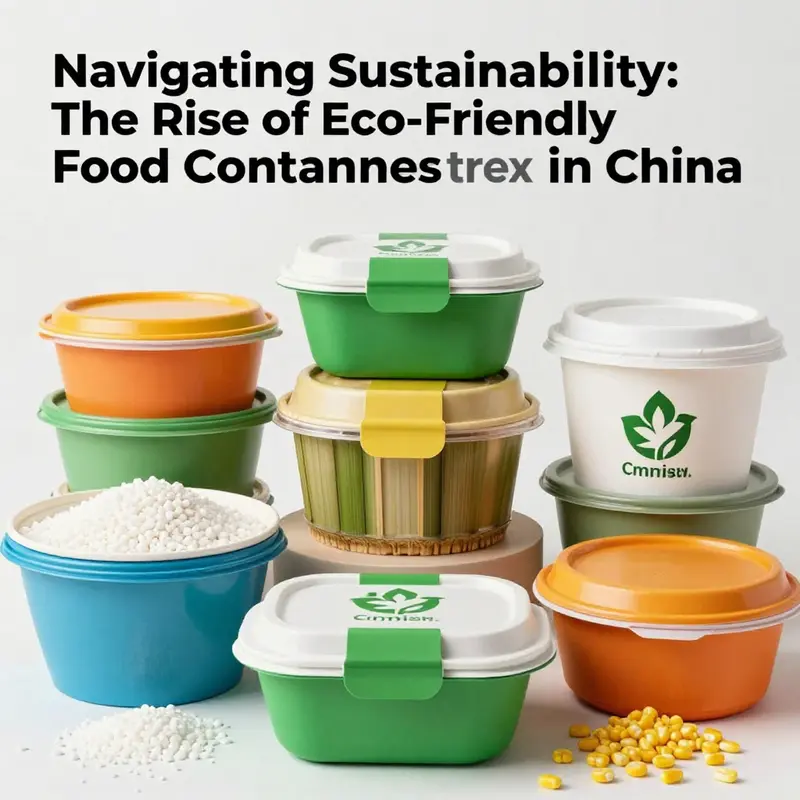
As the global push towards sustainability accelerates, China is at the forefront of innovating eco-friendly food containers. Businesses such as bubble tea shops, restaurants, food trucks, and catering services are recognizing the importance of sustainable packaging solutions that not only minimize environmental impact but also resonate with consumer values. This article unravels the rising trends and insights within the eco-friendly food container wholesale market in China, examines the regulatory landscape supporting these innovations, explores the growing global demand for such products, and highlights the competitive edge offered by customization in this sector. With these insights, stakeholders can better navigate the market and align their offerings with evolving consumer expectations.
From Plant Fibers to Brand Stories: Navigating China’s Growing Eco-Friendly Food Containers Wholesale Market
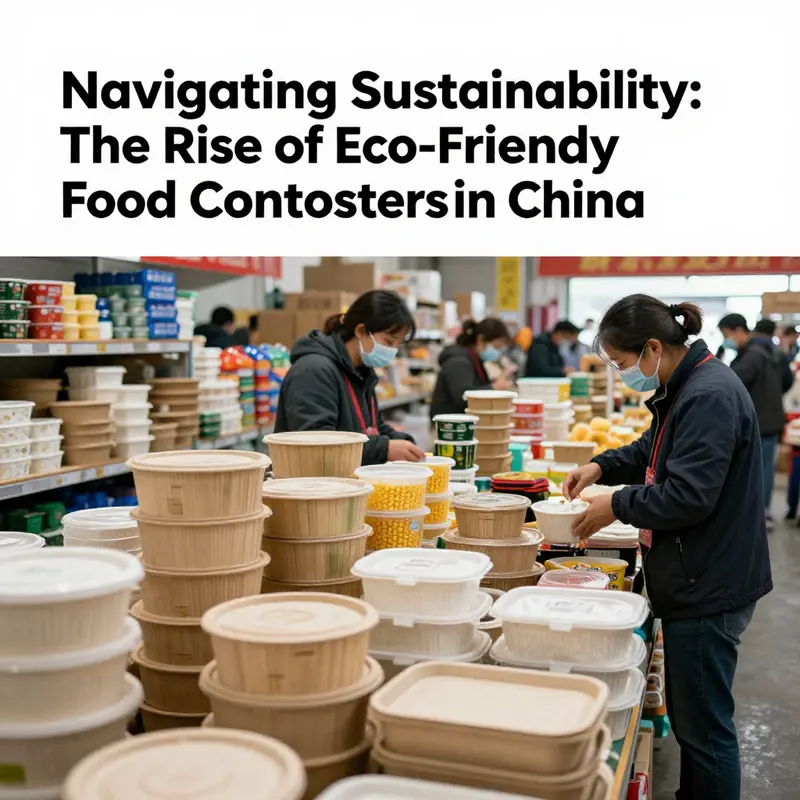
China’s eco-friendly food containers wholesale market is a dynamic ecosystem where rising consumer awareness meets ambitious policy targets and a manufacturing sector learning to align with a circular economy. Across provinces, plants shift from traditional plastics to recyclable, biodegradable, or compostable materials, rethinking the entire life cycle from sourcing to end-of-life and integrating sustainability into pricing and branding. Wholesalers play a foundational role by translating demand signals into material science, enabling customization that communicates environmental value to brands, and turning policy goals into practical packaging choices for millions of meals and snacks.
The market’s trajectory is driven by the rapid adoption of sustainable materials such as recyclable cartons, biodegradable sleeves, and plant-based fibers like bamboo and bagasse. This aligns with national green development initiatives and pushes manufacturers to balance performance, food safety, and cost. Wholesalers must stay ahead of new certifications, ensure microwave compatibility where appropriate, and maintain reliable supply chains. They act as bridges between lab breakthroughs and the everyday needs of kitchens and delivery fleets, helping brands deliver on sustainability without sacrificing practicality.
Customization is a defining differentiator. Brands want packaging that carries a story—color, texture, and finish—that remains environmentally friendly, coupled with low minimums, scalable sizes, and the ability to print logos or patterns. Premium, branded options can command modest premiums when backed by credible testing and transparent disclosures. At the same time, there is growing demand for affordable, disposable solutions with predictable performance and compostable or recyclable end-of-life options.
Regulatory alignment and consumer education underpin the system’s resilience. Government incentives encourage shift away from single-use plastics, while wholesalers educate buyers about end-of-life options and circular approaches for restaurants and service models. The practical takeaway for buyers is clear: seek scalable, compliant products with clear labeling, food-contact safety certifications, and reliable performance. For readers seeking to engage, verified wholesale channels that emphasize safety, traceability, and transparent testing results offer a practical route to expanding a green footprint without compromising service quality.
Regulatory Currents and the Green Horizon: How China’s Packaging Rules Cut Through Waste to Shape Eco-Friendly Food Containers for Wholesalers
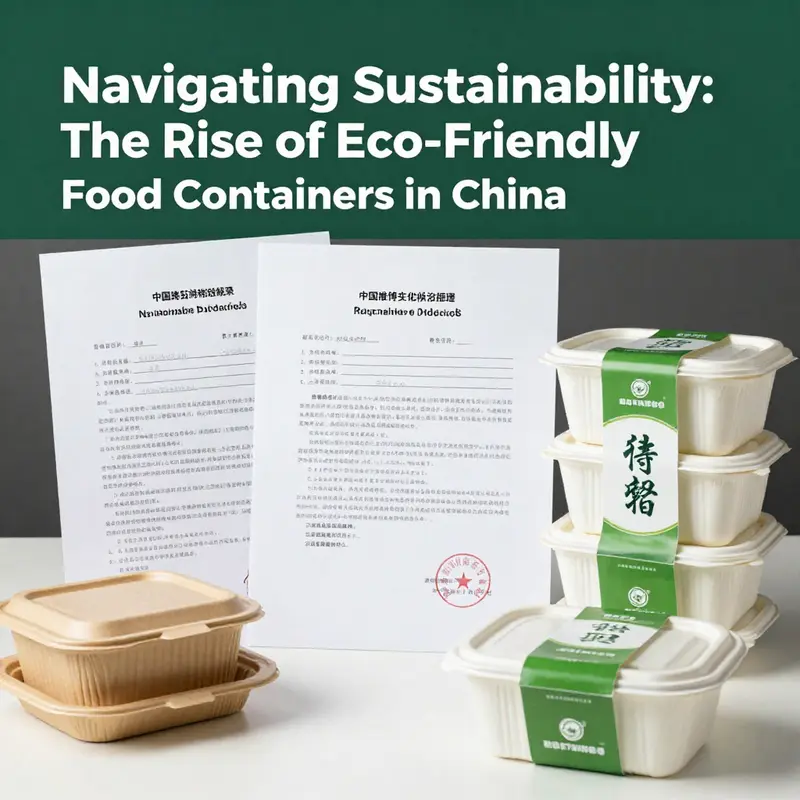
Regulatory instruments in China have long shaped the materials and designs that sit at the heart of the country’s bustling food-service ecosystem. Yet in recent years, the pace and precision of policy have accelerated, not to constrain imagination but to channel it toward safer, cleaner, and more resource-efficient packaging. For wholesalers who supply takeaway boxes, disposable bowls, and other food-contact containers, this regulatory evolution is not a burden to bear but a frame that clarifies opportunity. It aligns public health imperatives with environmental ambitions and expands the field where plant-based materials, recyclability, and smart design can coexist with cost-effective production. The dialog between safety, waste reduction, and lifecycle thinking now guides not only what can be sold, but how it can be sold at scale, with credibility and consistent quality across markets.
At the core of China’s regulatory approach to food-contact materials is a robust emphasis on safety, backed by a suite of standards that collectively shape every step of a container’s journey from raw material to end of life. The cornerstone, known in practice as the Food Safety National Standard: General Requirements for Food Contact Materials and Articles, codified as GB 4806.1—2016, sets a clear rule: all products intended for direct contact with food must be labeled as food contact use and must meet stringent safety requirements to prevent migration of harmful substances into food. This standard is more than a label; it is a system of risk awareness that informs every decision a wholesaler makes, from the choice of resin or fiber to limits on additives and processing aids. It also reinforces a simple consumer truth: packaging used for food must be demonstrably safe, and truthfully labeled as such. In practice, this means that non-food-grade materials—such as certain industrial plastics or improvised storage bags—are off-limits for kitchen and dining contexts. For a wholesale supplier, GB 4806.1—2016 is a compass that helps separate credible packaging options from those that might compromise health or erode trust with customers.
Beyond safety, the regulatory landscape explicitly targets waste and wastefulness. To deter over-packaging, China has issued the Limitation of Over-Packaging for Goods – Food and Cosmetics, GB 23350, a mandatory national standard that sets concrete criteria for packaging structure. It weighs the total layers of packaging, internal void space, and even cost ratios, with the aim of reducing unnecessary material use and improving overall packaging efficiency. A supplementary amendment to this standard tightens rules further, nudging manufacturers toward leaner constructions and simpler forms. A parallel framework—General Principles for Limiting Over-Packaging, known as GB/T 31268—offers broader guidance on lightweight design, simple structure, and the preference for recyclable or reusable materials. For wholesalers, these standards translate into a demand signal: when a product line is designed with fewer layers, better fit for purpose, and more recyclable content, it not only complies more easily with regulation but also reduces logistics costs and waste handling challenges for your customers. The impact is often felt in standardization of formats, easier stacking and warehousing, and clearer messaging to end users about what is and isn’t recyclable.
Where the path becomes more nuanced is in the promotion of green packaging across the lifecycle of a container. The Green Packaging Evaluation Method and Criteria, or GB/T 37422, introduces lifecycle thinking into everyday product development. It evaluates packaging across resource consumption, energy use, environmental harm, and product performance, urging manufacturers to consider not just the product in isolation but its whole journey from cradle to grave. This standard is particularly relevant to wholesalers who curate assortments for a diverse set of food-service clients—from quick-service and casual dining to catering and meal-prep operations. The emphasis on biodegradable, recyclable, and renewable materials converges with the broader market push toward plant-based inputs such as bamboo fiber, bagasse (sugarcane pulp), and corn-starch composites. When a supplier claims environmental benefits, GB/T 37422 provides a framework for substantiation, enabling wholesalers to communicate with clarity and confidence about the true lifecycle performance of their packaging offerings. In effect, it helps avoid greenwashing and supports durable supplier-customer relationships built on verifiable claims.
Labels play a crucial role in this ecosystem as well. The Packaging Recycling Mark (GB/T 18455) and the Packaging and Environment series (GB/T 16716) establish practical labeling and technical guidelines to advance recycling and improve recovery rates. For wholesalers, clear recycling information is not merely regulatory compliance; it is a consumer-facing asset. A customer can quickly understand whether a given container is curbside recyclable, whether it requires specific disposal streams, or whether it is compatible with industrial composting. This transparency helps food-service operators communicate with their patrons about responsible disposal and branding built on sustainability. It also aligns with a growing expectation among buyers that packaging choices reflect corporate sustainability commitments with reproducible results, rather than vague promises.
The regulatory framework also acknowledges the realities of reuse, albeit in a measured way. For familiar reusable formats like beer bottles and liquor containers, dedicated standards exist to ensure durability and safety across multiple cycles. The Beer Bottle standard (GB 4544) imposes mandatory technical specifications for reusable beer containers, while the Glass Container—Quality Requirements for Liquor Bottles (GB/T 24694) sets quality benchmarks that support reuse while reducing single-use consumption. Although these standards largely address longer-lived glass containers in beverage contexts, they symbolize a broader national preference for durability and reuse where feasible. In a market increasingly anchored by disposable options for convenience, wholesalers may view reuse as a complement to a strong, safety-first disposable packaging program rather than a replacement strategy. The practical takeaway is that reuse-focused standards help create a credible spectrum of solutions—ranging from durable glass and metal alternatives to fully degradable disposables—so that customers can select packaging that matches their operational model and sustainability goals.
Taken together, these standards map a regulatory canvas that strongly nudges the market toward safer, leaner, and more responsible packaging. They also create a predictable environment in which manufacturers can invest with confidence. The predictability is valuable for wholesalers who need consistent supply quality, predictable lead times, and reliable certifications to meet customer expectations. In the context of a rapidly evolving Chinese eco-friendly packaging market, these standards encourage a steady development of materials and processes that are compatible with plant-based inputs and with modern waste-management infrastructures. For the plant-based materials that are gaining traction in the market—bamboo fiber, bagasse, and cornstarch—the regulatory regime offers clear routes to compliance. Material suppliers must demonstrate that their inputs and additives are appropriate for food contact and that migration levels stay within established thresholds. They must also provide data on recyclability, compostability, or biodegradability as applicable and consistent with GB/T 37422 and GB/T 18455. The implication for wholesalers is straightforward: a well-documented, standards-aligned product line reduces risk for buyers and supports faster, more confident procurement decisions.
As the market consolidates around sustainability, customization remains a powerful differentiator. Wholesalers increasingly seek packaging solutions that balance safety, environmental performance, brand image, and cost. In this setting, standards do not suppress creativity; they create a verified baseline that lets innovative packaging concepts move from prototype to scale. A practical example is the growing availability of customizable, compliant disposable packaging options that can be tailored to branding needs while staying within the safety and environmental parameters set by national standards. A compelling illustration of this balance is a compliant, eco-friendly option like the eco-friendly disposable 3-compartment packaging box for fast food, which demonstrates how wholesalers can align packaging with safety standards while enabling branding. Such products can be printed with logos, colors, or patterns, while remaining easy to recycle or compost, depending on the material and design. The experience of manufacturers and distributors who integrate regulatory insight with design thinking shows how regulatory governance, when well understood, can augment market opportunities rather than limit them.
From a practical perspective, wholesalers should invest in supplier due diligence that prioritizes certified materials and credible testing. Certifications that align with GB/T 37422 and related standards increase confidence among customers who require verifiable environmental performance. Likewise, traceability is essential. A container’s journey—from raw material sourcing to end-of-life outcomes—must be traceable, so buyers can verify compliance with food-safety standards and environmental claims. In an era where retailers and food-service brands publicly commit to sustainability programs, the ability to demonstrate a verifiable evidence trail matters as much as the product’s performance in the kitchen. The regulatory environment thus acts as a facilitator of trust: it gives wholesalers a reliable framework in which to communicate the safety and environmental benefits of their offerings, while also clarifying the boundaries of what is permissible and what constitutes meaningful eco-advantage.
For those operating in or entering the Chinese market, a practical takeaway is that meaningful regulatory compliance need not be an expensive or opaque process. It can be achieved through deliberate product design, straightforward material choices, and robust supplier collaboration. The standards encourage a modular approach to packaging development: select a base material with proven safety credentials; design for minimal layers and optimized void space; choose compatible inks and printing methods that do not undermine recyclability; and provide clear disposal or composting guidance to end users. When such a framework is paired with transparent labeling and lifecycle analysis, wholesalers gain not only regulatory alignment but a stronger value proposition for food-service operators seeking to enhance brand reputation and reduce waste.
The regulatory tale is not isolated to the domestic market. International buyers, too, watch these standards with interest, because they influence trade in eco-friendly packaging. The Chinese standards increasingly inform supplier certification programs and benchmarking practices used by global purchasers who want consistent quality and environmental performance across their supply networks. As a result, the Chinese eco-friendly food-container ecosystem benefits from a coherent, enforceable policy environment that supports scalable, responsible innovation. This, in turn, strengthens the argument for wholesalers to invest in higher-fidelity product catalogs, better certifications, and more explicit consumer messaging regarding safety and environmental outcomes.
For readers seeking a broader policy lens, the official government guidance provides the definitive frame. It offers the formal articulation of these principles, public commitments, and timelines that shape how packaging will evolve in the years ahead. See the government document for a contemporaneous overview of regulatory priorities and enforcement practices that influence packaging strategy and wholesale decisions in practice. (government document)
In sum, China’s sustainable packaging regulations for food containers create a disciplined yet flexible platform for wholesale growth. They demand safety, discourage waste, and reward lifecycle thinking, all while enabling customization and brand differentiation. For wholesalers, the opportunity lies in curating and delivering compliant, credible, and compelling packaging options that meet the exacting demands of food-service clients and the sustainability aspirations of their end customers. As the market continues to evolve, those who align their sourcing, testing, and labeling practices with the letter and spirit of these standards will be well positioned to capitalize on the upward trajectory of plant-based materials, improved recyclability, and the broader shift toward a more circular economy in China’s food packaging industry.
External context and further reading can be found through official policy resources, which provide the regulatory backbone for these trends and help frame future developments in sustainable packaging in China: https://www.gov.cn/zhengce/zhengceku/2023-06/26/content_5777383.htm.
Green Currents in the Global Market: How China’s Eco-Friendly Food Containers Fuel Worldwide Demand
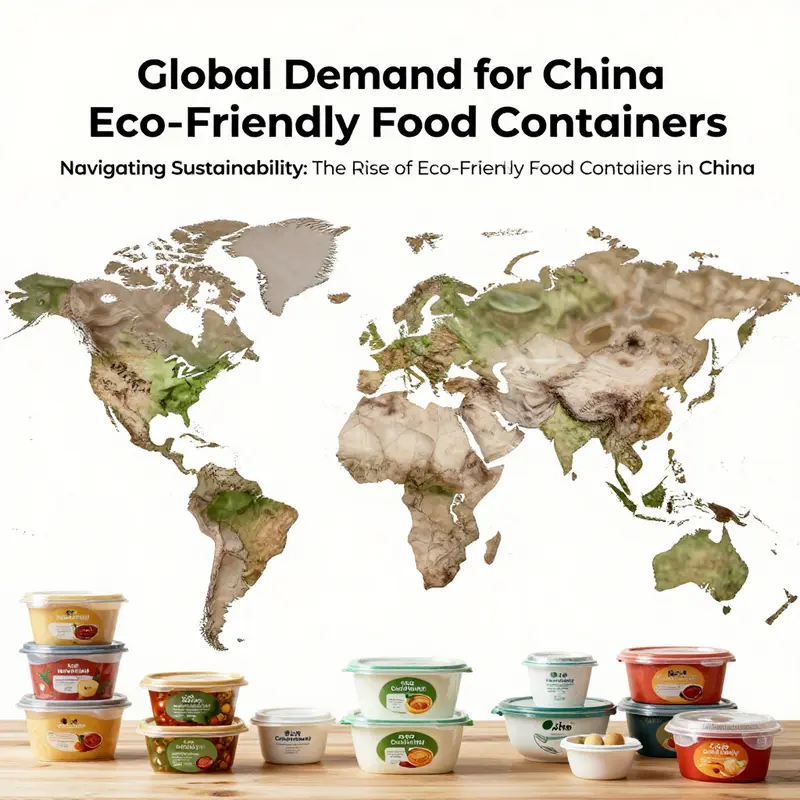
The global demand for eco-friendly food containers mirrors a broad and ongoing shift in how businesses and households think about packaging, waste, and responsibility. In 2026, the world entered a new phase of packaging economics, where sustainability metrics began to align with cost and convenience in ways that were previously difficult to reconcile. The market for eco-friendly food packaging, valued at approximately USD 211.78 billion, is projected to grow at a steady pace, with a compound annual growth rate around 6.36% and a trajectory that could push the market toward USD 288.33 billion by 2031. Those figures are not mere arithmetic; they signal a seismic reorientation of supply chains, product development cycles, and commercial expectations. At the heart of this reorientation lies China, a country whose manufacturing ecosystems, regulatory environment, and research capacities have converged to place it in a pivotal position within the global supply chain for sustainable containers. China’s role is not simply that of a factory floor or a sourcing hub. It is a dynamic engine driving efficiency and innovation, capable of scaling biodegradable materials and smart packaging technologies at a speed and with a cost structure that many markets can only aspire to. This is not to overlook the fact that customers around the world—ranging from European retailers to North American food service operators and Southeast Asian meal-courier brands—are increasingly unwilling to compromise on environmental standards when choosing packaging. Environmental awareness has evolved from a fringe consideration to a central criterion for procurement, and government policy has followed suit. In Europe, North America, and parts of Asia, regulations targeting single-use plastics have become more stringent, nudging both producers and buyers toward alternatives that perform as well or better than conventional plastics while leaving a smaller environmental footprint. Against this backdrop, China’s manufacturing base has matured to deliver advanced production capabilities alongside a growing portfolio of innovative materials. Plant-based plastics, paper-based composites, and biodegradable starch products are no longer experimental footnotes; they are mainstream options that Chinese suppliers can blend into existing lines or deploy as new product families. This evolution is supported by a broader push toward green manufacturing that integrates efficiency with environmental stewardship, a combination that not only reduces waste but also optimizes energy use and resource management across complex supply chains. The result is a more resilient global supply framework for eco-friendly containers, where mass customization becomes both feasible and affordable for a wider array of buyers. Within the Chinese ecosystem, materials innovation has progressed rapidly. Plant-based plastics derived from renewable resources offer the potential to cut lifecycle emissions and reduce reliance on fossil feedstocks, while paper-based composites provide a biodegradable pathway that aligns with consumer demand for compostable packaging. Biodegradable starch-based materials, too, are being refined for improved performance in a range of conditions, from microwave-safe applications to sealing and stacking features that support efficient distribution and storage. These material platforms are not viewed in isolation; they integrate with design and processing innovations that enable containers to be safe for food contact, microwave or oven use where appropriate, and durable enough for the rigors of takeout and delivery. The interplay between material science and process engineering is central to the global expansion of eco-friendly packaging. In this context, China benefits from substantial government backing aimed at strengthening sustainable manufacturing and accelerating the adoption of greener practices. Policy support reduces the friction that can slow research-to-market cycles, offering incentives for R&D, certification, and scale-up. This alignment between policy, industry, and market demand helps explain why Chinese suppliers have become capable of meeting the diverse standards of international buyers while maintaining competitive price points. The consequence is a market where custom options—color, branding, variable sizes, and even printing patterns—are accessible through wholesale channels with minimal order quantities that still preserve cost efficiency. For buyers such as dim sum producers, catering entities, meal-prep services, and fast-casual concepts, this translates into a compelling value proposition: packaging that is not only environmentally responsible but also tailored to distinctive brand narratives. A growing segment of wholesale buyers prioritizes options like customizable packaging and branding alignment, where the container itself reflects corporate values and contributes to customer perception in a tangible way. A practical response to this demand is the expansion of supplier capabilities to accommodate flexible MOQs, small-batch runs for seasonal campaigns, and rapid prototyping of design iterations. In practice, the ability to offer low minimums coupled with scalable production means brands can test new concepts, seasonal packaging ideas, or limited-edition collaborations without bearing prohibitive costs. The result is a more vibrant market for eco-friendly paper bowls, takeout boxes, and related disposables that are both sanitary and convenient for retail and takeaway settings. Yet the market is not solely about raw materials and customization. The wholesale ecosystem recognizes that consumers are increasingly seeking products that integrate seamlessly into daily life. This includes packaging that can safely endure microwave heating, oven use, or dishwasher cycles when appropriate, while maintaining a pull-true barrier against leaks, grease, and contamination. It also means designing for end-of-life scenarios that align with composting or recycling infrastructure in various regions. Consequently, developers, manufacturers, and distributors are collaborating to ensure that containers are compatible with existing waste management streams and that certifications for food safety are readily accessible to customers. It is here that the global demand picture becomes more nuanced. While some segments of the market still view glass and metal containers as premium, long-term sustainable options, the majority of growth in wholesale eco-friendly packaging is anchored in cost-effective, fully degradable disposable solutions. The market’s momentum is therefore shaped by how well these materials can balance performance, safety, and affordability across high-volume applications such as meal delivery, catering, and everyday household storage. Across geographies, the demand equation is further influenced by consumer expectations around aesthetics, convenience, and ecological impact. In regions with mature environmental programs, buyers push for supply chains that demonstrate traceability, low carbon footprints, and verifiable certifications. In emerging markets, the focus often centers on accessibility and reliability, with buyers seeking straightforward, scalable solutions that align with local regulations and waste-treatment capabilities. Against this backdrop, China’s capacity to deliver end-to-end solutions—ranging from raw material sourcing to finished packaging—becomes a critical competitive advantage. The country’s manufacturing clusters enable rapid iteration and the deployment of a wide array of process technologies, from extrusion and forming to lamination and printing, all within a consolidated ecosystem. This means that buyers can source not only containers themselves but also related services such as design support, branding execution, and packaging validation, all from a single, integrated supply channel. The ability to partner with reliable Chinese suppliers who provide customizable, high-quality, and certified eco-friendly packaging underscores a broader strategic opportunity for global wholesalers. For purchasers who must balance speed to market with sustainability commitments, China offers a compelling proposition: a one-stop capability that can translate conceptual ideas into market-ready packaging at scale, with consistent quality across large orders and flexible scheduling to accommodate promotional campaigns or seasonal demand surges. Looking forward, the market foresees continued expansion, with projections suggesting the global food container market will reach upward of USD 275.2 billion by 2035 as packaging technologies evolve. The trajectory is shaped in part by the integration of smart features into eco-conscious designs, including temperature indicators and freshness sensors that enhance product safety and consumer confidence in higher-value markets. These innovations do not merely add novelty; they deliver practical benefits, enabling retailers and food service operations to monitor storage conditions, reduce waste, and optimize inventory management. The combination of smart functionality with sustainable materials holds particular relevance for importers and wholesalers who must navigate risk, compliance, and quality assurance across borders. In this climate, the role of China as a stable, scalable, and innovative supplier becomes even more pronounced. The country’s export-oriented manufacturing base, when paired with growing standards for environmental responsibility, positions it to meet the evolving expectations of global buyers while maintaining competitive lead times and pricing structures. For readers seeking to ground these insights in a real-world sourcing pathway, consider exploring examples of wholesale packaging options and customization services such as those offered by established suppliers who emphasize eco-friendly takeout packaging and branding compatibility. This approach aligns with the broader market trend toward packaging as a strategic asset rather than a simple utility. When buyers can partner with suppliers that provide both material innovation and brand-building capabilities, the value proposition extends beyond the container itself to encompass the narrative a brand communicates through sustainable packaging. The implication for wholesalers and retailers is clear: to succeed in a market characterized by rising demand and sophisticated consumer expectations, suppliers must deliver not only compliant and cost-effective products but also the ability to differentiate through design, flexibility, and responsible manufacturing practices. In sum, the global demand for China’s eco-friendly food containers reflects a broader transformation of how packaging supports sustainability, safety, and business growth. It highlights the critical interdependencies among material science, manufacturing efficiency, regulatory alignment, and consumer psychology. As the market moves toward greater adoption of biodegradable alternatives and smarter packaging features, China’s manufacturing capabilities and policy framework position it to continue shaping the direction of global packaging, helping wholesalers meet ambitious green goals while offering buyers reliable, scalable, and customizable solutions that align with contemporary expectations. For further reading and market context, see the external resource linked below, which provides a comprehensive forecast and analysis of the eco-friendly packaging landscape that underpins these dynamics. External resource: Global Eco-Friendly Food Packaging Market Size & Share Analysis. And for direct supply chain opportunities that emphasize customization and branding alignment, you can explore options such as custom take-away packaging and disposable tableware, which illustrate how wholesale suppliers are meeting diverse brand and application needs while advancing sustainability goals across markets.
Custom Fit, Lasting Edge: Crafting Competitive Advantage Through Customization in China’s Eco-Friendly Food Containers Wholesale Market
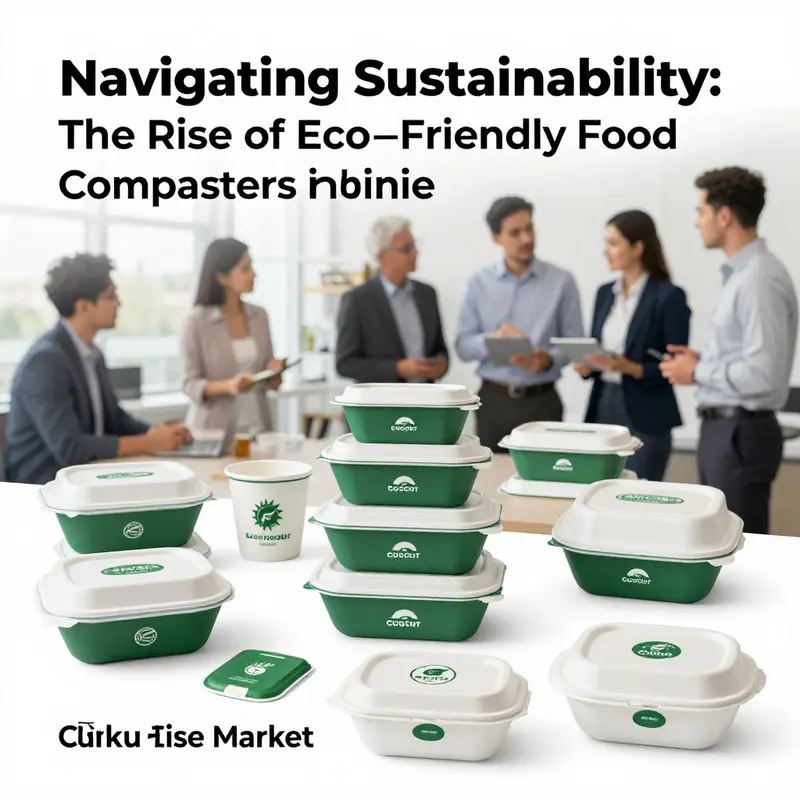
The Chinese eco-friendly food containers wholesale sector is undergoing a recalibration, where customization has shifted from a value-added option to a core strategic capability. In a market shaped by stringent environmental rules, rapidly rising consumer awareness, and a logistics ecosystem that prizes efficiency, suppliers are learning that a one-size-fits-all approach no longer suffices. The shift is not only about swapping plastic for plant based materials; it is about translating brand intent, product requirements, and operational constraints into packaging that performs, looks, and travels as a seamless extension of a client’s product story. In this environment, customization has become a decisive differentiator, enabling suppliers to transcend commodity pricing and cultivate durable partnerships that weather price volatility and shifting regulations alike. This is not mere trend chasing; it is a fundamental redefinition of how value is created in the wholesale market for eco friendly containers.
A central driver behind this customization wave is the heterogeneity of downstream customers. Large-scale food manufacturers, national restaurant networks, and rising specialty brands each arrive with distinct packaging demands. A major quick service operator might require a container with a distinctive silhouette, a brand-specific color language, and integrated branding that reinforces in-store perception. A premium tea or cold-brew brand, by contrast, might prioritize an innovative cooling and leakage-resistant cup design that preserves flavor integrity during transit and storage. The ability to tailor dimensions, wall thickness, printing, and even material blends becomes crucial. In this landscape, the supplier who can offer a flexible, end-to-end solution—ranging from concept and testing through manufacturing and lifecycle support—gains not just a customer, but a partner with high switching costs built into the collaboration.
New Tianli stands out as a particularly instructive example of how deep customization can translate into sustained competitive advantage. The company’s portfolio reportedly spans more than 10,000 product variants, a testament to its capacity to translate client briefs into tangible packaging solutions. What makes their approach notable is not merely the breadth of variants but the operational logic that underpins it. The customized plus innovative process model centers on rapid responsiveness. When a client needs a new cup shape, a specific color palette, or an integrated branding feature, New Tianli mobilizes R&D, prototyping, and supply chain adjustments to deliver within tight timelines. They have invested in advanced co extrusion and layered materials that extend shelf life for fresh produce while maintaining a sleek, market-ready appearance. The result is a form of loyalty that arises from a supplier’s capacity to remove friction across the product lifecycle—from design and certification to end-of-life considerations.
Customization in this market is inseparable from sustainability. Policy signals, such as China’s plastic reduction initiatives and the broader push toward carbon neutrality, compel manufacturers to rethink not only the materials they use but how those materials are processed and disposed. This pressure has accelerated the adoption of plant-based bioplastics and recycled content resins. PLA remains a common reference point in discussions of compostable or biodegradable options, while bagasse and bamboo fiber emerge as appealing alternatives for lunch boxes and fiber-based cups. Yet the value of customization is amplified when it also encompasses the manufacturing chain. Clients increasingly ask for processes with lower environmental footprints, such as water-based inks for branding, designs that simplify recycling, and packaging that can be repurposed or returned for reuse in a closed-loop model. The market response is to pair bespoke designs with smarter material choices and greener production methods, creating a trifecta of environmental responsibility, brand differentiation, and operational efficiency.
The market dynamic is further shaped by a broader industry shift away from traditional plastics toward fully degradable disposable solutions that align with everyday takeaway needs. While premium options such as glass and metal containers offer long-term reuse, they remain costlier and less convenient for high-volume, fast-moving environments. The bulk of growth, therefore, appears rooted in affordable, fully degradable disposables that meet safety and performance standards for microwave or oven use when appropriate. This is where customization adds measurable value: containers that fit the exact product, fit the target channel, and fit the brand’s narrative while still offering straightforward recycling or composting pathways. In this sense, customization does not merely differentiate a product; it reinforces a business model that emphasizes sustainability as a service—delivering a packaging solution that is bespoke, scalable, and aligned with a client’s sustainability commitments.
A practical dimension of this customization orientation is the close integration into clients’ supply chains. Leading players increasingly offer end-to-end services that go beyond supplying packaging to include R&D collaboration, testing, certification, and lifecycle analysis. This holistic service approach creates high switching costs. When a supplier has co-developed a multi-layer co-extrusion technology for fresh produce containers or secured a reliable, low-moisture processing line for plant-based materials, changing suppliers becomes a riskier proposition for a client, given the potential impact on product quality, shelf life, and sustainability reporting. The result is a durable partnership founded on shared expertise, mutual incentives, and a long-term roadmap that aligns packaging innovations with a client’s brand evolution and channel strategy.
The material science underpinning customization has become more sophisticated as well. Plant-based bioplastics, recycled content resins, and even bio-based coatings open new avenues for tailor-made solutions. The strategic choice of material is no longer about single-use vs reusable; it is about material compatibility with a client’s product, regulatory compliance, and end-of-life options for the consumer. For instance, a line of multi-layer cups designed for hot beverages may incorporate an inner barrier to prevent grease penetration while a outside shell uses a color-matched bioplastic that can be reclaimed or composted. A dedicated research pathway might explore a hybrid approach—combining bamboo fiber with a recycled polymer core—to balance stiffness, heat resistance, and environmental impact. All of these options are negotiated in close collaboration with clients, using performance criteria that matter most to their products and channels.
The branding dimension of customization cannot be overstated. Packaging now acts as a moving storefront, particularly in a crowded marketplace where foodservice brands seek to differentiate themselves at the unit level. Clients want options for branding that extend beyond a logo on the side. They seek shape differentiation to optimize stacking in delivery fleets, color schemes that reinforce brand identity, and printing patterns that convey product quality and provenance. The market has responded with scalable customization platforms that let brands request low MOQs, define custom sizes, and specify printing patterns without sacrificing efficiency. This convergence of customization and branding yields a container that is not only functional but also a tangible expression of a brand’s sustainability promise.
One notable feature of this trend is the emergence of ready-to-use, brand-ready packaging examples that demonstrate how customization translates into consumer experience. For example, a packaging option that combines a pure color foldable cake box with a window offers a way for bakeries or dessert brands to showcase product appeal while delivering compostable performance. The container preserves freshness, provides a clear view of the product, and carries a branding message that resonates with eco-conscious consumers. The link between design and consumer perception is a reminder that the value of customization is measured in both manufacturing efficiency and market response. The capability to customize, to tailor, and to showcase a unique look in the marketplace is increasingly treated as a strategic asset rather than a commodity differentiator. For brands seeking to partner with a supplier that can offer a bundle of services—from concept through certification and beyond—this approach reduces risk and accelerates time to market.
As the market matures, the blueprint for competitive advantage in China’s eco-friendly container sector increasingly centers on three pillars: deep customization capability, relentless technological innovation, and a genuine commitment to environmental sustainability. The first pillar—customization capacity—enables suppliers to move beyond price or scale as the primary levers of value. The second pillar, technological innovation, is expressed not only in product features but also in process improvements that reduce waste, shorten development cycles, and improve yield. The third pillar—environmental stewardship—ensures that innovations align with regulatory expectations and consumer values. When suppliers can harmonize these pillars, they create a durable value proposition that can command premium pricing, win long-term contracts, and shape market norms toward higher quality, more sustainable packaging solutions.
For readers who want a concrete picture of how these ideas translate into real-world options, consider the broader ecosystem of packaging formats available through contemporary suppliers. The market now encompasses a spectrum of products—from biodegradable meat and ready-to-eat meal containers to eco-friendly disposable bowls and plant-based cups that perform under microwave heating and vending machine environments. The customization conversation often begins with basic constraints—volume, MOQs, and lead times—but quickly expands into a dialogue about product life cycle, recycling streams, and the brand narrative embedded in the packaging. The opportunity is not merely to replace plastic with a greener alternative; it is to co-create packaging ecosystems where material science, design ethics, and operational logistics reinforce one another. In such ecosystems, a client does not simply purchase a container; they acquire a packaging partner that contributes to brand equity, supply chain resilience, and sustainability reporting.
The future trajectory appears clear: a wholesale market in which the most successful players will be those who fuse deep customization with scalable processes and transparent environmental performance. The ability to rapidly translate a client brief into a tested, ready-to-manufacture design—while maintaining cost discipline and meeting regulatory requirements—will define leadership. Suppliers who can also offer lifecycle support, including recycling or composting pathways and clear end-of-life messaging, will differentiate themselves further. In this sense, customization becomes a strategic investment in long-term market position rather than a short-run competitive tactic.
For brands and distributors seeking ideas about practical integration, a glance at example packaging platforms reveals how visually distinctive yet sustainably minded designs can be executed at scale. One example is a color-coordinated, windowed cake box that blends aesthetics with eco performance. This concept illustrates how customization can deliver an immediate brand signal while meeting performance standards for moisture resistance, heat tolerance, and safe disposal. It also demonstrates how online configurators and design collaboration tools can shorten development cycles, enabling brands to experiment with shapes, colors, and logos without sacrificing reliability or price stability. The story of customization in this sector thus reads not as an isolated design exercise but as a core capability that touches product development, procurement, manufacturing, and corporate sustainability reporting.
As the industry continues to evolve, the conversation returns to the same practical truth: the path to competitive advantage in China’s eco-friendly food containers wholesale market is paved by a disciplined blend of customization, technology, and sustainability. Companies that master this trifecta—by offering tailored solutions, advancing material science, and embedding environmental considerations into the entire value chain—will command premium prices, secure enduring partnerships, and lead the transformation toward green, resilient packaging for a crowded, rapidly changing market. The takeaway for buyers and suppliers alike is straightforward: invest in customization as a strategic capability, not as an add-on feature, because it unlocks deeper collaboration, faster time to market, and stronger alignment with both regulatory expectations and consumer values.
Internal resource note: to see an example of a highly customized packaging option that blends aesthetic flexibility with practical performance, explore the pure color foldable cake boxes with window bakery boxes linked here: pure color foldable cake boxes with window bakery boxes. This demonstrates how branding considerations can be embedded directly into the container design without sacrificing function or end-of-life clarity. For readers seeking broader context on sustainable packaging standards and corporate responsibility, a practical external resource is available at https://www.greenbiz.com.
Final thoughts
Through understanding the diverse trends, regulatory landscape, and customization opportunities in the China eco-friendly food containers wholesaler market, businesses can better position themselves for success. By aligning with sustainability goals, you not only respond to market demands but also nurture a brand image that resonates with environmentally conscious consumers. The time to embrace these innovative packaging solutions is now—ensuring that your business thrives in a conscientious and competitive landscape.