
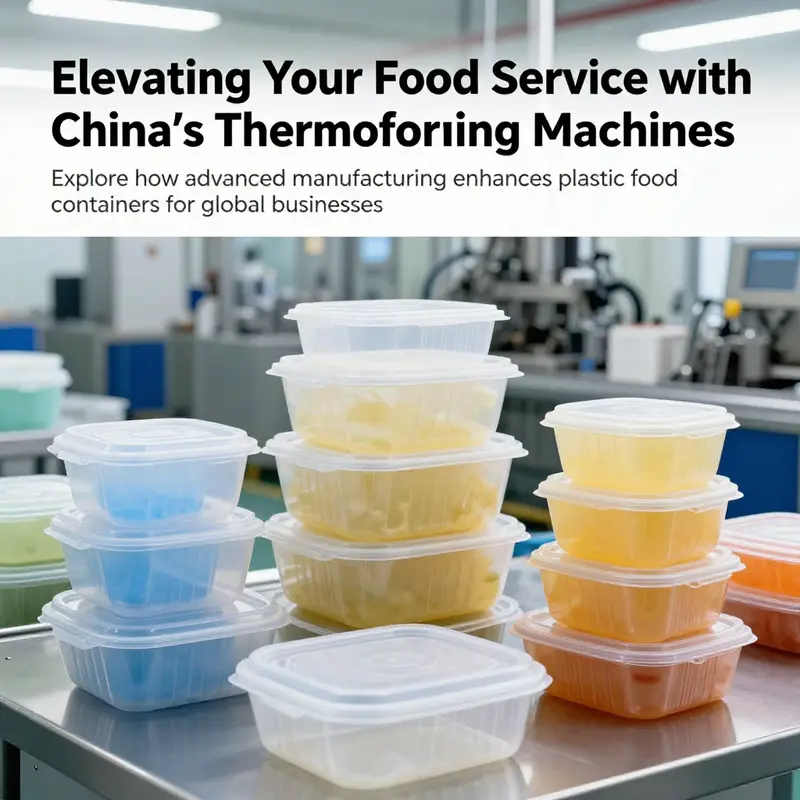
China stands as a flagship in the manufacturing of thermoforming machines, integral to producing plastic food containers that meet varied business needs. From bubble tea shops to catering services, the demand for reliable and efficient packaging solutions is on the rise. This article delves into the thriving industry of thermoforming machines in China, examining technological advancements, economic impacts, environmental concerns, and the challenges and opportunities within this growing sector. Each chapter aims to provide insights tailored to your business, helping you make informed decisions in sourcing high-quality food packaging solutions.
Machining the Meal: Inside China’s Thermoforming Machine Landscape for Food Containers
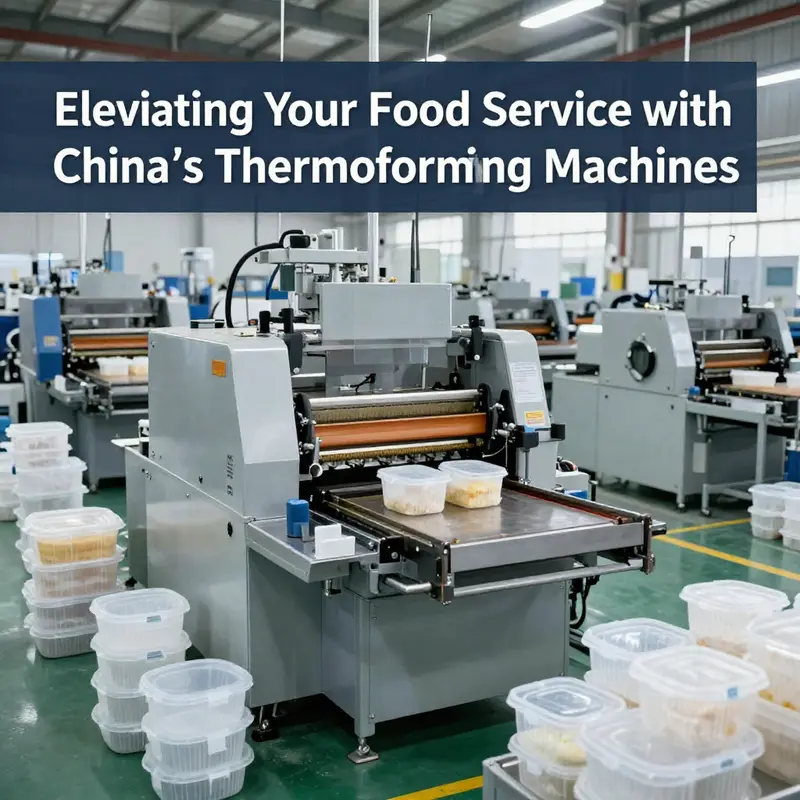
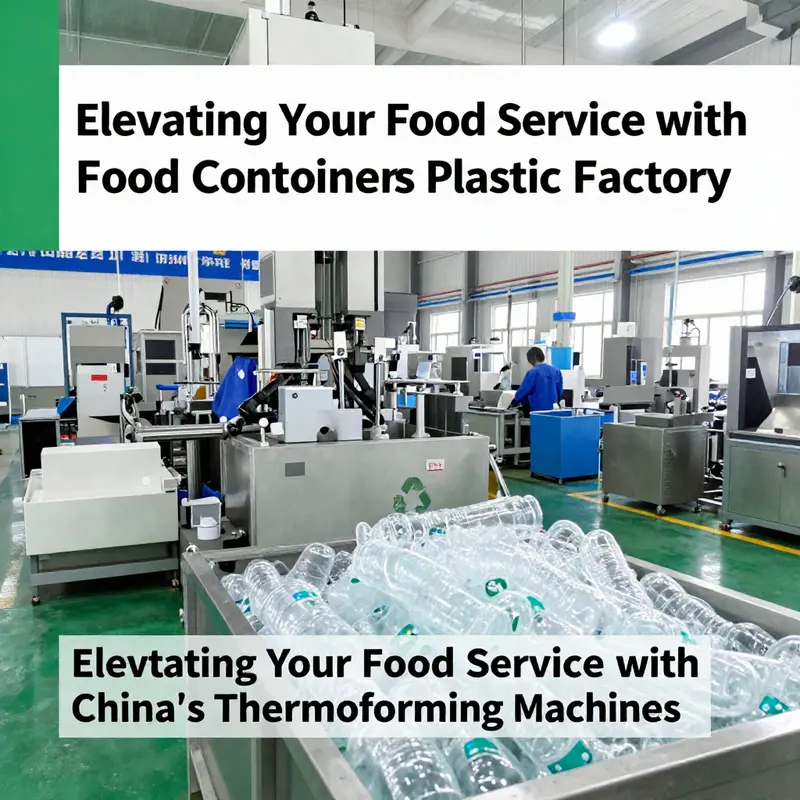
Across the globe, the packaging of ready-to-eat meals, fresh-prep groceries, and a widening array of takeout options depends on a quiet, precise form of industrial choreography. In China, this choreography has evolved into a sophisticated, highly specialized ecosystem centered on thermoforming machines that turn plastic sheets into the clamshells, trays, lids, and nested packaging that fill kitchens, storefronts, and warehouses alike. The industry is not a single factory floor but a network of focused competencies: machine builders, control-system integrators, material suppliers, and after-sales engineers who collectively drive a suite of capabilities designed for speed, sanitary standards, and cost efficiency. The result is a dynamic manufacturing landscape that has matured from simple line production to a form of smart, automated manufacturing that aligns with global demand for durable, food-safe packaging at scale. This is the story of how a country built a robust, end-to-end machinery industry that underpins the world’s food container supply chain, from local eateries to international food-service providers, and how this landscape continues to change as automation, material science, and environmental expectations intensify competition and opportunity alike.
Geography and the spine of the industry are inseparable. The main production clusters are concentrated in provinces that serve as both manufacturing powerhouses and integrated supply hubs. In these zones, factories not only design and assemble thermoforming systems but also draw on a dense network of material suppliers, component manufacturers, and service providers. This proximity to downstream converters and packaging converters creates a flow that shortens lead times, stabilizes pricing, and enhances the ability to customize lines for particular end-use packaging, whether it be fast-food containers, beverage cups, or specialized trays for seafood, meat, or prepared meals. The regional density also fosters a culture of continuous improvement around process control, extrusion compatibility, and post-forming operations, which in turn supports the broader goal of reducing downtime and waste while increasing overall equipment availability.
Within this ecosystem, the equipment itself has evolved from modular, semi-automatic machines to fully integrated, multi-station lines capable of handling a range of thermoplastics—polyethylene, polypropylene, polystyrene, and PET variants—without demanding major reconfiguration between runs. The most capable lines are designed to deliver full automation: heating, forming, punching, cutting, and stacking occur in a streamlined sequence governed by sophisticated control software. The result is a system that can produce a steady stream of containers with consistent wall thickness, depth, and structural integrity. The automation extends beyond the core forming cycle. Modern lines often feature automatic loading and unloading, in-line punching and trimming, robotic grasping for stacking, and even marking or coding for traceability. In practice, this means a single line can produce dozens of thousands of units per shift, with minimal human intervention at critical touchpoints. The payoff is not only labor cost reduction but also tighter process control, which translates into more uniform product quality, reduced scrap, and improved sanitary conditions—an essential consideration given the strict requirements around food-contact materials.
The inputs to these machines matter as much as the machines themselves. The industry’s capacity to work with multiple thermoplastics broadens the spectrum of suitable end-use applications. For example, polystyrene and PET variants remain common for lightweight trays and clamshells, while PP and certain PETG grades support higher heat resistance and improved rigidity for more robust packaging. To stay competitive on a global stage, manufacturers emphasize versatility in material handling so one line can transition from PETG to PP with minimal downtime. This adaptability is coupled with precision heating methods designed to minimize material degradation and energy consumption. In parallel, control systems have matured to orchestrate the entire cycle with reliability. Programmable logic controllers, touchscreen human-machine interfaces, and servo-driven actuators work in tandem to ensure each forming station operates in harmony with downstream punching, cutting, and stacking stages. The result is a coherent, auditable production process that reduces variability and supports consistent output across shifts.
The equipment’s reliability rests not only on internal design but also on the integration of high-quality, externally sourced components. Vacuum systems and pneumatic elements—critical for forming, cooling, and ejecting finished parts—are supplied by proven, globally respected suppliers. While the specific brands may vary, the underlying requirement remains universal: robust performance under high cycle counts, clean operation to preserve sanitary conditions, and predictable response under demanding production schedules. This emphasis on dependable ancillary systems is essential for keeping lines in steady operation, avoiding unplanned downtime, and ensuring that the thinner, more intricate features that modern packaging often requires remain intact from first cycle to last.
A defining trend in China’s thermoforming industry is the push toward greater automation, smarter integration, and greener operation. Modern lines increasingly adopt the principle of alternating positive- and negative-pressure forming, a technique that supports faster cycles while maintaining precise control over material behavior. In essence, the forming process can be tuned so that one side of the sheet forms while the other is cooled, enabling faster throughput without sacrificing dimensional stability. The result is a shorter production cycle and higher hourly output that translates into more economical per-unit costs for manufacturers and, ultimately, lower price points for customers.
Beyond the core forming step, the expansion of inline automation features is notable. Automatic feeding systems, servo-driven punching, high-velocity cutting, robotic stacking, and even inline coding for traceability are now common in mid- to high-end lines. These capabilities are particularly valuable in markets where packaging efficiency, brand messaging, and regulatory compliance must align tightly. The environmental footprint of forming processes has also come under scrutiny. Many lines now incorporate heat sources and forming technologies designed to minimize secondary emissions, with layered heating concepts that reduce overall energy use. Recyclability and waste management are increasingly considered during machine design, with waste-film recovery or reground materials being directed back into the process wherever feasible. In short, the industry is moving toward a holistic approach to manufacturing that balances speed, quality, and environmental stewardship—a combination that resonates with buyers who demand responsible, scalable packaging solutions.
The applications of these machines extend well beyond everyday consumer packaging. China’s thermoforming sector has increasingly targeted specialty markets, including vacuum- orMAP-based packaging for premium meats and seafood, where tight seals and precise gas composition help preserve freshness and extend shelf life. In addition, there is sustained attention to medical packaging formats that meet international standards for sterile and safe packaging, reflecting a broader adoption of rigorous quality systems across the industry. This diversification underscores the sector’s capacity to support both high-volume, low-cost production and high-value, precision packaging that commands premium pricing and longer-term value. As a result, the equipment ecosystem in these regions is not simply a set of machines but a complete, adaptable platform that can be tuned to local demand while still satisfying global buyer expectations.
No discussion of China’s thermoforming machine landscape would be complete without considering the service and support architecture that accompanies equipment sales. The strongest players in this space offer more than a machine; they deliver a package of training, commissioning, and ongoing engineering support, often including overseas service visits and technical documentation in multiple languages. One-year warranties and flexible payment terms help international buyers navigate the costs and risks of capital equipment purchases. The importance of after-sales support cannot be overstated. For buyers who must rely on equipment uptime to meet tight production calendars, access to timely spare parts, clear maintenance protocols, and remote diagnostics can be as important as the base machine’s specifications. This service dimension helps consolidate long-term value, especially for buyers entering new geographic markets or expanding production capacity in response to rising demand.
The industry’s outward-facing growth is equally tied to the broader packaging market’s evolution. The demand for takeout and ready-to-serve meals continues to drive growth in containers that are lightweight yet sturdy, capable of withstanding stacking, transport, and short-term temperature variation. The supply chain’s resilience is tested by geopolitics, raw-material price volatility, and shifting consumer preferences, but China’s thermoforming ecosystem has shown a capacity to adapt by offering configurable lines, rapid changeover capabilities, and competitive pricing. The ability to source both the machines and the essential tooling or dies locally—coupled with import alternatives for raw materials—helps stabilize production plans and shorten lead times for buyers around the world. The result is a market where manufacturers can tailor lines to specific product families, whether standard clamshells, multi-compartment trays, or complex, high-clarity packaging for premium foods.
As the industry continues on its path toward smarter manufacturing, the challenge for buyers and partners is to align expectations with the capabilities available within a given region. The process of selecting a thermoforming line involves weighing factors like cycle time, material compatibility, dimensional tolerances, energy efficiency, and total cost of ownership. It also requires careful consideration of downstream operations—the punching, cutting, stacking, and coding steps that complete a packaging run. For businesses that aim to harmonize domestic production with international markets, the ability to switch between formats with minimal downtime can be equally critical. In practice, this means seeking lines that offer modularity, robust control software, and clear maintenance pathways. It also means recognizing that true optimization comes from an integrated approach: the synergy between machine design, material science, process control, and supply-chain logistics.
For readers exploring the tangible connections between factory floors and the shelf, a concrete reminder lies in the takeout packaging that many consumers encounter daily. The market’s demand for reliable, cost-effective, and sanitary packaging continues to push suppliers to refine everything from the base sheet to the finished container. A representative example of how packaging formats travel through the supply chain can be seen in the widespread use of disposable kraft paper bowls with lids for takeout. These formats illustrate the kind of end-to-end thinking that manufacturers in China’s thermoforming sector strive to enable: compatibility with a range of materials, seamless integration into automated lines, and reliable performance under real-world use. disposable kraft paper bowls with lids for takeout.
Ultimately, the trajectory of China’s thermoforming machine industry for food containers reflects a broader shift in global manufacturing: a move toward smarter, more automated, and more sustainable production that leverages an established ecosystem to deliver value, scale, and reliability. The days when a single machine could do only a portion of the work are fading as lines become more capable, adaptable, and connected. The industry’s strength lies in its ability to combine deep manufacturing know-how with a flexible, integrated approach to production—one that embraces new materials, evolving regulatory expectations, and the ever-present pressure to reduce costs without compromising safety or quality. In this sense, the Chinese thermoforming machine landscape for food containers is not merely a collection of machines but a living, evolving system that continually refines the art and science of turning plastic sheets into dependable packaging for meals, snacks, and daily sustenance across the world.
External reference: https://www.alibaba.com/product-detail/Advanced Technology Plastic Pet Lid Food Container Clamshell Box Thermoforming Machine
Speed, Sanitation, and Scale: The Technological Rise of China’s Thermoforming Machines for Plastic Food Containers
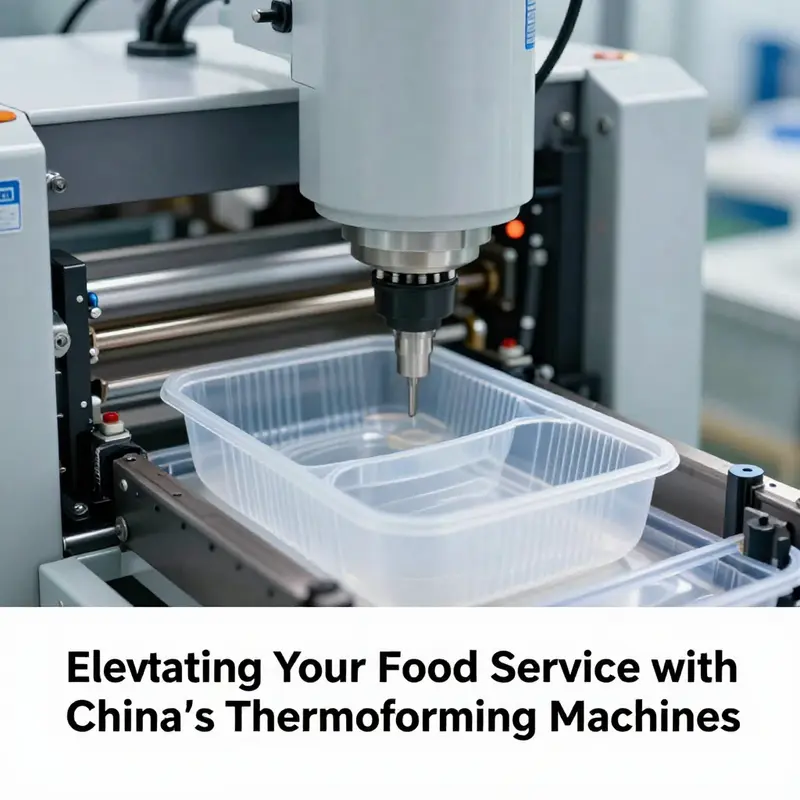
China’s thermoforming machine industry has evolved from a manufacturing niche into a global engine for food packaging. Over the past decade domestic factories have built automated lines that turn raw plastics into ready-to-use food containers with speed, precision, and hygiene. This shift is not only about bigger machines. It is about integrated systems that couple heat, pressure, motion, and intelligent control to create reliable packaging at scale. Buyers around the world now access machines that can process PS, PVC, PET, and PP into clamshells, trays, and other shapes that meet evolving consumer expectations and regulatory demands.
Behind this transformation lies a design philosophy that emphasizes continuity. A representative automated line can perform heating, forming, punching, cutting, and stacking in a continuous flow, often without any manual intervention. By eliminating intermediate handling, manufacturers reduce the risk of contamination, improve product uniformity, and trim labor costs. The removal of human touch in critical steps also reduces secondary pollution and accelerates the production cycle. In practice this means the same line can switch from one product family to another with minimal downtime, a feature that matters as packaging shapes evolve with brand requirements and product protection needs.
One of the most impactful technical features is dual zone forming. One side of the material is heated and formed while the other side cools, shaving seconds off cycle times and boosting throughput. Combined with rapid dwell cooling and precise material flow, dual zone forming helps achieve tighter tolerances and crisper edges, which matter when consumer facing packaging must stack cleanly and resist damage during transportation. This capability supports high volume runs for foodservice and retail channels and makes it feasible to produce both rigid PET clamshells and lighter PS foam trays on the same line.
The control architecture of modern thermoforming lines reflects a move toward industry 4.0 readiness. Centralized PLCs, operator friendly touch interfaces, and modular I/O architectures enable real time monitoring of temperature profiles, vacuum levels, cycle status, and output counts. Such visibility is not cosmetic; it underpins consistent cooling curves, uniform material draw, and rapid fault isolation. The drive systems, often using servo motors for precise positioning, contribute not only to output stability but also to energy efficiency, reducing heat waste and lowering the plant’s overall energy footprint. When coupled with advanced vacuum and pneumatic components designed for reliability and long service intervals these lines deliver a stable, repeatable process that operators can trust for high speed runs and tight hygiene standards.
Global standards and market expectations shape what counts as a successful thermoforming line. For packaging used in food service and medical settings, compliance with hygiene and barrier standards is essential. Chinese manufacturers have oriented development toward ISO 11607 like requirements for sterile packaging and other hygiene regulations. This alignment positions domestic equipment as a viable option for customers in Northern and Western Europe, Southeast Asia, and beyond, as buyers look for machines that can demonstrate traceable quality, consistent output, and robust after sales support. The industry’s push toward high purity cleanrooms, sealed tool paths, and automated tooling changes further reinforces the case for equipment designed with hygiene and ease of cleaning in mind.
Materials and sustainability infuse the technical decision making of modern lines. While PS foam remains widely used for lightweight, low cost trays, there is a parallel push to accommodate PET clamshells and other rigid plastics for premium packaging and recyclability goals. Modern lines optimize energy consumption by reclaiming heat and using efficient drives, while also reducing scrap through precise forming and trimming. The ability to punch and trim in a controlled automated fashion minimizes secondary waste and supports lean manufacturing. For operators the consolidating effect of such lines means smaller crews can manage multiple shifts, with technicians focusing on routine maintenance rather than manual production steps. In the broader supply chain these capabilities enable packaging suppliers to offer consistent, compliant products at scale to retailers and food service brands seeking reliability and cost containment. A trend toward packaging designs such as eco-friendly takeout boxes for food packaging demonstrates how automated lines can support both performance and responsible material choices.
An industry wide shift toward domestic R&D is propelling more compact high capacity lines. Engineers are exploring modular configurations that can be expanded as demand grows, allowing plants to start with mid range output and scale upward without replacing the core infrastructure. Such modularity paired with remote diagnostics and predictive maintenance features helps reduce downtime and extend equipment life. The result is a more resilient manufacturing ecosystem that can adapt to disruptions in raw material supply, fluctuations in global demand, or sudden regulatory changes. In practice this means a regional hub in China can supply machine configurations tailored to different end markets, from quick service packaging to prepared food containers designed for longer shelf life and better protection during transport.
Beyond hardware the service model around these lines has become an essential differentiator. Manufacturers increasingly offer comprehensive after sales packages, including overseas engineering support, on site commissioning, and ongoing maintenance programs. Warranties and service level agreements provide customers with peace of mind when investing in capital equipment. Flexible payment options and varied shipping arrangements reduce friction for international buyers and help accelerate the deployment of automated lines in new facilities. The result is a more stable, predictable expansion of manufacturing capacity that supports the global demand for safe, sanitary, and cost effective packaging solutions.
As the packaging landscape evolves new business models emerge around the manufacturing of containers themselves. Chinese thermoforming lines are now integrated into broader packaging ecosystems that emphasize traceability, sanitary design, and end of life considerations. Operators are seeking not only speed and cost efficiency but also features that support cleanliness sanitation and lifecycle management. This includes improved ease of cleaning, more robust sanitation protocols, and the capacity to handle food contact materials that meet stringent hygiene expectations. The ability to maintain film integrity, manage lamination layers, and perform clean punching and trimming without contaminating edible products has become a central criterion for buyers who need to minimize risk in fast moving food environments.
Industry observers note that the trajectory of China’s thermoforming equipment will continue to be shaped by the convergence of automation, material science, and environmental stewardship. Material science drives smarter, lighter, and more recyclable packaging, while automation makes those designs repeatable at global scales. Environmental stewardship pushes lines toward better energy efficiency, reduced waste, and cleaner production processes. All of this occurs in a context where international buyers increasingly demand transparent supply chains, clear performance data, and verifiable compliance records. In this merged landscape the most successful machines are not merely capable of forming plastic into containers; they are platforms for safe, compliant, and scalable packaging solutions that can travel the world.
For readers who want a tangible sense of how these machines translate into real world packaging outcomes, consider the broader ecosystem of food container offerings that can be produced on automated thermoforming lines. The modern takeout and bakery packaging industry increasingly favors designs that combine functional performance with aesthetic appeal. Among the design trends are durable leak resistant trays, clear view clamshells for product visibility, and light yet rigid trays suited for shipping hot and cold items alike. The best lines are capable of handling a spectrum of materials—from rigid PS and PET to versatile PP—without sacrificing precision hygiene or throughput. And as brands push for packaging that is both economical and environmentally responsible, manufacturers will continue to invest in automation architectures that minimize waste and maximize consistency across shifts and plant locations. In other words the machines themselves have become strategic assets in how global food producers think about packaging.
Readers who want to explore technical depth and current industry trends beyond the scope of this chapter can consult external resources that detail ongoing innovations in thermoforming machinery. It highlights how manufacturers are approaching automation energy efficiency and throughput in response to global demand. External resource: https://www.made-in-china.com/products-detail/ThermoformingMachineIndustryTrends2026/1143989294.html
From Factory Floor to Global Shelf: The Economic Ripple of China’s Thermoforming Machines in Food Container Packaging
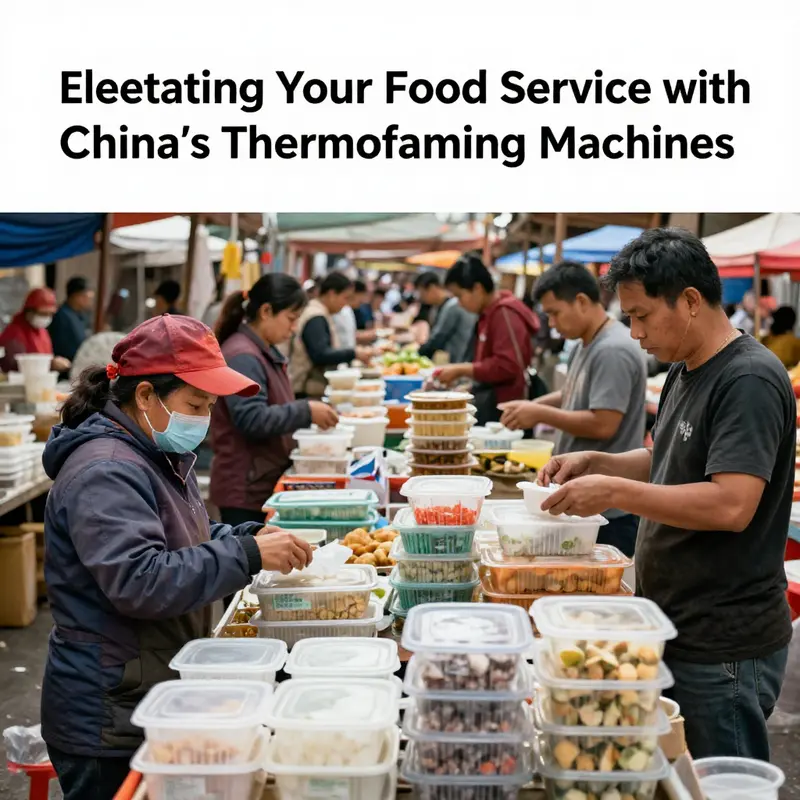
Across the world, the economics of food packaging hinge on a single hinge: the thermoforming machine. In China, this hinge has grown into a robust axis around which modern manufacturing, regional development, and international trade turn. The country’s thermoforming industry is not merely about producing machines; it is about enabling a production model that pairs high throughput with sanitary, consistent quality, all while driving down unit costs. As a result, plastic food containers—from clamshells and trays to takeout boxes and cups—emerge from factories with the precision, speed, and reliability that today’s global foodservice ecosystem demands. The economic ripples of this capability travel far beyond factory walls, shaping supply chains, labor markets, and competitive dynamics across continents. In this chapter, we trace how the scale, automation, and energy efficiency of Chinese thermoforming equipment translate into broader economic outcomes, and why those outcomes matter for manufacturers, suppliers, and buyers worldwide.
The efficiency story starts with scale and speed. In the modern food packaging sector, demand has never ceased growing, driven by quick-service and delivery models that prize fast turnaround and consistent product integrity. High-speed thermoforming lines can execute multiple cycles every minute, sometimes in the range of ten to several dozen per minute, depending on material and design. That kind of throughput compresses production timelines dramatically. When a plant can move from raw sheet to finished, stacked containers in a fraction of the time, the incremental cost of each unit falls. The effect is a lower marginal cost curve, which in turn supports more aggressive pricing strategies and the ability to absorb fluctuations in demand without sacrificing margins. In a market where grocery chains and foodservice outfits push for reliable, on-time supplies, the price discipline created by efficient machinery translates into more stable revenue streams for manufacturers and more predictable procurement budgets for buyers. The economic logic is straightforward: if a factory can produce more containers with the same or lower energy and labor inputs, the value produced per hour rises, and so does the potential for reinvestment in capacity, technology, and workforce development.
A second strand of the efficiency narrative is the ongoing transition from older equipment to more intelligent, energy-conscious solutions. Modern lines increasingly favor fully electric actuation and servo-driven control systems over traditional hydraulic configurations. The energy savings claimed by these upgrades—often in the vicinity of 30 percent or more—are not merely a line-item in a utility bill. They cascade through the cost structure, improving cash flow, reducing the need for peak-power capacity, and enabling facilities to operate with leaner energy footprints. In environmental terms, electricity-driven systems tend to produce fewer thermal losses and easier integration with energy management practices. For manufacturers, the implication is clear: upgraded machinery not only lowers operating costs but also aligns with national carbon-reduction goals, which can translate into favorable policy considerations, tax incentives, or access to green financing. For the broader economy, lower energy intensity in packaging production reduces the energy demand embedded in a massive stream of consumer goods, contributing to a lower national energy intensity and a more sustainable industrial profile.
The third economic thread is the way thermoforming equipment catalyzes a broader industry ecosystem. A single line brings into play a network of upstream materials—polymers such as polypropylene, polystyrene, and PET derivatives—and downstream automation and logistics. Inline shredders, automated forming controls, and automated stacking and palletizing units become parts of an integrated chain that needs reliable, steady supply. Regions that have become centers for thermoforming equipment and packaging products—areas in eastern and coastal provinces, and inland hubs that support distribution networks—often see a rise in specialized suppliers, service networks, and skilled maintenance personnel. This clustering effect fosters regional job creation and accelerates the diffusion of advanced manufacturing practices. It also spurs investment in related sectors, from polymer resin production to automation software and servo motor supply chains. The result is not only a more efficient packaging industry but a more resilient regional economy, capable of absorbing shocks and sustaining growth even when other sectors fluctuate.
The export dimension of China’s thermoforming prowess is a crucial link in the chain of economic impact. The improved efficiency and lower cost per unit translate into competitive pricing for foreign buyers, expanding China’s share of the global market for disposable food containers. This is particularly evident in segments tied to takeout and meal-delivery packaging, where lightweight, durable, and sanitary designs matter as much as price. Export growth compounds as buyers in Europe, the Americas, and parts of Southeast Asia increasingly rely on Chinese equipment and packaging capabilities to meet rising demand. The Global Thermoforming Plastics Market Report 2026 underscores how the packaging sector’s expansion dovetails with the broader plastics market, reinforcing China’s role as a key supplier not only of finished containers but also of the machinery and automation that produce them. The economic implications ripple outward: higher export volumes support a favorable trade balance, encourage foreign direct investment in related technology and services, and reinforce the exchange of technical know-how that spreads throughout global supply chains.
The economic benefits of this ecosystem extend to employment. On the factory floor, the shift to automated lines reduces the reliance on manual labor for critical steps such as forming, punching, and cutting. While automation replaces some routine tasks, it also creates demand for high-skilled jobs in machine maintenance, programming, line optimization, and quality assurance. These roles require training and ongoing skill development, which in turn stimulates local education and vocational programs and raises the average productivity of the regional workforce. Beyond direct employment, the spread of sophisticated packaging systems generates demand for ancillary services: pre- and post-processing of materials, recycling and waste management, facility construction and retrofits, and advanced safety and sanitation protocols. The net effect is a more dynamic labor market with opportunities for workers to upgrade their skills and move into higher-value roles, which contributes to higher wage levels and improved living standards in manufacturing districts.
Another layer of economic impact comes from the precision and waste reduction afforded by modern thermoforming lines. In an industry where even small improvements in material yield translate into meaningful cost savings, the ability to form containers with tight tolerances and minimal scrap matters. The leaner waste profile helps producers manage raw material costs more effectively, especially in a market where polymer prices can be volatile. The savings from reduced scrap also improve the overall environmental performance of the production process, a metric that increasingly influences buyer decisions, supplier selection, and procurement strategies across global markets. When manufacturers can demonstrate efficient material utilization alongside reliable quality, they gain a competitive edge that extends beyond price alone. They secure longer-term contracts, cultivate brand reliability, and reduce the risk premium that buyers attach to supply chain disruptions.
The financial architecture that supports these economic benefits deserves attention as well. Capital investments in automated thermoforming lines are non-trivial, and access to affordable financing can determine whether a facility expands, upgrades, or maintains a critical edge. In many regions, financial ecosystems have evolved to support such capital expenditures through equipment leases, credit facilities, and government-backed incentives designed to accelerate modernization. Because packaging is a recurring cost in the value chain, streamlined depreciation schedules, favorable financing terms, and predictable maintenance costs contribute directly to corporate profitability. The result is a virtuous cycle: investment drives capacity and efficiency, which lowers unit costs and prices, which in turn stimulates demand and revenue, enabling further investment in technology and skills.
Yet the economics of China’s thermoforming sector are not without risks or fragilities. Global demand can be cyclical, and shifts in consumer behavior—such as increased focus on sustainability and stricter end-of-life disposal rules—pose challenges and opportunities in equal measure. The industry must navigate fluctuations in feedstock pricing, import tariffs, and currency volatility, all of which can influence competitiveness. Maintenance and after-sales support, a hallmark of large-scale equipment suppliers, become critical for sustaining uptime and long-term performance. Regional disparities in energy pricing, water usage, and infrastructure quality can also affect the capital cost and operating efficiency of plants. To manage these risks, manufacturers rely on diversified supplier networks, robust service ecosystems, and ongoing capability-building within the workforce. Taken together, these strategies help sustain the economic advantages that the thermoforming sector provides both to China and to its trading partners.
The narrative of economic impact also invites reflection on the sustainability agenda. The push toward lighter, durable packaging aligns with broader environmental aims by reducing material use and enabling recyclability, while the precision of modern forming processes minimizes waste. However, plastics remain under scrutiny in many markets, and the evolution of packaging strategies will interact with policy, consumer preferences, and innovations in recycling and circular economy models. In this context, the role of state-supported modernization—through energy-efficient machinery, smart manufacturing practices, and investment in material science—becomes all the more important. The objective is not only to lower costs but to align manufacturing with responsible, forward-looking standards that resonate with global buyers who increasingly weigh sustainability in their procurement decisions.
In sum, the economic impact of China’s thermoforming machine production for food containers is multi-faceted. It amplifies production efficiency, drives energy and material savings, strengthens regional manufacturing ecosystems, and expands export capabilities. It elevates the skill base and betting on advanced automation, while also introducing exposure to global market dynamics and sustainability imperatives. The net effect is a manufacturing landscape that can respond rapidly to changing demand, deliver consistent quality at scale, and contribute meaningfully to the economic development of production regions and the competitiveness of Chinese packaging products on the world stage. As markets continue to evolve toward smarter, greener, and more integrated production models, the role of thermoforming machinery in food container packaging will remain a central driver of industrial modernization and global trade resilience. For readers seeking a deeper market context that frames these shifts, the Global Thermoforming Plastics Market Report 2026 offers an external viewpoint on the broader forces shaping the industry. https://www.giireports.com/reports/789421/global-thermoforming-plastics-market-research-report-2026
Interwoven with this economic tapestry is a domestic thread: the way one internal supplier ecosystem can enable international buyers to source turnkey packaging solutions quickly and reliably. A notable example is a supplier network that integrates automated lines with inline material handling and finishing capabilities. The capability to deliver fully automated forming, punching, cutting, and stacking—titted to climate-controlled sanitation and fast cycle times—helps producers meet rising demand with consistent quality. Buyers seeking efficient, customizable solutions can turn to partners offering turnkey arrangements that harmonize forming technology with packaging design. For instance, firms can engage with providers offering versatile thermoforming lines that accommodate several plastics and allow quick changeovers for varying container styles, a feature that lowers downtime and supports responsiveness to market shifts. This accessibility reinforces the economic argument: when sophisticated equipment becomes adaptable and affordable, the entire packaging ecosystem grows more dynamic and capable of sustaining long-run profitability.
In this unfolding panorama, the link between strategic investment in equipment and broad-based economic outcomes becomes visible. The capacity to form, trim, and stack containers at scale, while maintaining sanitary standards and low energy usage, underwrites lower production costs, more stable pricing, and the ability to meet offshore demand with reliable supply. It also anchors regional development by creating skilled jobs, stimulating supplier ecosystems, and encouraging the adoption of complementary technologies that improve efficiency and transparency across the value chain. The result is a packaging industry that can keep pace with rapid dietary and consumer-service changes, while contributing to the broader growth of manufacturing and trade in a country already renowned for its prowess in mechanical engineering and automation. The economic story, then, is not only about machines; it is about the systems, people, and policies that make those machines capable of sustaining competition in a crowded, evolving global marketplace.
null
null
Forging Speed, Sanitation, and Smarts: Reimagining China’s Thermoforming Machines for Food-Container Manufacturing
The Chinese thermoforming machine industry for food containers sits at a decisive crossroads, where breakthroughs in speed, cleanliness, and digital capability must converge with market demands for sustainability and customization. The factories that drive this segment have long built their strength on robust mechanics, modular automation, and close, service-driven relationships with buyers. Yet as global competition intensifies and regulatory expectations rise, manufacturers must harmonize three enduring pressures: the tempo of production, the exacting standards of hygiene, and the new demands of intelligent, data-driven operation. The narrative that unfolds is less a tale of isolated machines than a story of systems thinking—of how speed and precision can be reconciled without sacrificing cleanliness, how energy efficiency can be raised without compromising throughput, and how factories can transition from batch-minded routines to continuous, observable improvement rooted in data. In this context, the Chinese market is not merely expanding its footprint; it is rethinking what a high-performance thermoforming line should look like in a modern food-packaging ecosystem.
A fundamental tension remains between speed and precision. In traditional lines, pushing more parts per minute often came at the cost of dimensional accuracy and repeatability. The consequence for food packaging is not cosmetic; it is functional. A deviation in tray height, seal width, or panel thickness can translate into misalignment during stacking, misfit with downstream handling equipment, or even rejection in quality-control checkpoints. Industry observations point to deviation rates that have, in some cases, hovered around a few percentage points. When tolerances tighten for standardized food-grade parts, even small variances become large problems across high-volume runs. The challenge is not simply to crank up the speed, but to embed precision into every stage of the cycle—from preform heating to forming, punching, trimming, and stacking. It is here that modern control architectures, high-speed servo drives, and closed-loop feedback start to matter as much as the raw throughput; speed without control becomes a liability rather than a virtue.
Equally pivotal is the issue of energy consumption and cleanliness. Many legacy lines still rely on older hydraulic systems that guzzle energy and struggle to seal reliably, leading to oil leaks and contamination risks that threaten product integrity. The discrepancy between actual energy use and industry best practices can be substantial—systems reported as being up to forty percent less efficient than modern benchmarks. Beyond energy, cleanliness is a nonnegotiable standard for food-contact materials. The production environment must meet stringent hygienic requirements, rising beyond a once-acceptable “hundred thousand-grade” threshold toward a ten-thousand-grade GMP reality compatible with GB4806.7-2016 guidelines. The gulf between older designs and what today’s global buyers expect is widening, and factories must choose whether to retrofit with energy-saving hydrodynamics and enhanced seals or to adopt wholly new, enclosed systems that minimize cross-contamination risks while delivering reliable performance.
A third, equally pressing theme is the limited adoption of smart, Industry 4.0–adjacent capabilities. Real-time data collection, remote monitoring, predictive maintenance, and digital scheduling remain a sparse feature set on many lines. The consequence is not only higher labor costs but also a slower feedback loop between process experience and process improvement. When machines cannot communicate with an overarching manufacturing execution system, operators rely on manual, sometimes error-prone, interventions to adjust cycle times, heat settings, or tool paths. Even modest error rates can translate into wasted material, suppressed yield, and inconsistent packaging quality across multi-variety runs. In a market that is increasingly defined by flexibility—small-batch production, rapid changeovers, and on-demand customization—this lack of integration becomes a strategic bottleneck. The result is a divide between the capabilities of leading, more capable players and the rest of the field, where the high-end segment already holds a disproportionate share of value and margin.
Against these challenges stand compelling opportunities. The most transformative avenue is the rise of advanced thermoforming technology that couples high-speed actuation with precision control and robust hygienic design. Modern lines emphasize high-speed servo drives, precision servo actuation, and advanced sealing technologies that together deliver faster cycle times with tighter tolerances. These innovations can push injection speeds to impressive levels and achieve repetition accuracy within fractions of a millimeter, all while consuming less energy and maintaining a fully enclosed, food-safe environment. The practical effect is a line that can deliver high throughput without compromising the cleanliness of the production chamber or the integrity of the food-contact surfaces. A ten-thousand-grade clean environment is no longer a luxury but a baseline requirement for the next generation of packaging equipment.
Sustainability is another powerful driver. Global consumers increasingly favor recyclable and biodegradable substrates, and regulators are aligning with these preferences through incentives and standards. The machinery ecosystem must be able to handle substrates such as PLA and recycled PET without sacrificing performance. This capability does not merely reduce a factory’s environmental footprint; it opens access to new-value markets where certification and traceability are prized. The presence of regulatory endorsements—such as approvals from major safety bodies—helps accelerate market acceptance of rPET-based or compostable packaging solutions. In this context, the machinery itself becomes a platform for sustainability, capable of accommodating evolving material technologies, advancing energy efficiency, and enabling cleaner,easier-to-clean production environments.
An additional layer of opportunity arises from the growth of high-value packaging applications. Beyond basic containers, manufacturers are expanding into vessel designs optimized for vacuum sealing and modified atmosphere packaging (MAP). These approaches extend shelf life and preserve product quality for delicate items like fresh meat, seafood, and premium baked goods. The ability to produce these complex, high-precision containers reliably differentiates a producer in a crowded field. The automation stack must support not only the forming process but also downstream post-form operations such as integrated punching, cutting, and stacking with precision alignment. This multi-function capability is a strategic advantage, reducing handling and error while delivering consistent, premium-grade outputs.
Policy direction also plays a decisive role. Government programs calling for upgrading toward high-performance, high-quality, and environmentally friendly equipment create a favorable climate for domestic manufacturers to invest in R&D and scalability. Initiatives under national planning frameworks emphasize breakthroughs in advanced molding technology and the development of high-end molds and equipment. When policy aligns with industry needs, it accelerates the adoption of modern machine lines, promotes standards convergence, and stimulates investment in supply chains that support innovation—from servo motors and control software to hygienic tool design and contamination-free clamping mechanisms. The effect is a virtuous circle: better equipment enables higher-quality packaging, which in turn reinforces regulatory confidence and market demand.
All of these dynamics have concrete implications for factories across China’s key manufacturing hubs. In regions with dense ecosystems of plastics suppliers, automation integrators, and toolmakers, the leap to modern, intelligent lines can be achieved through staged, modular upgrades. A practical approach combines improving energy efficiency and cleanliness on existing frames with a gradual integration of data-collection, remote-monitoring, and predictive maintenance features. This staged strategy preserves cash flow while delivering measurable benefits in yield, defect reduction, and cycle time. It also lays the groundwork for more ambitious transformations, such as digital twins of forming and sealing processes that enable real-time optimization and scenario planning for different substrates and product formats.
A central element in this transformation is material compatibility. The ability to handle a range of substrates—from traditional polystyrene and PET to more sustainable options like PLA and rPET—depends on both machine design and tooling. The sealing system must be robust against substrate variability, and heating profiles must be adaptable to different material properties to avoid warping or thinning. This adaptability is not merely a feature; it is a strategic necessity in a market where customers demand variations in size, shape, and sealing performance while maintaining consistent sterile and safe surfaces for food contact. The machinery must also accommodate evolving regulatory requirements around food safety and material provenance. In practice, this translates into design choices that prioritize cleanability, minimized oil exposure, and reduced leach risk within the process chamber.
The implications for corporate strategy are clear. Factories that plan to lead in this space must pursue a blended strategy that emphasizes both technical upgrade and market alignment. On the technical side, investments should prioritize hygienic, enclosed designs; energy recovery or efficient hydraulic alternatives; and control architectures capable of real-time data capture and closed-loop optimization. On the market side, manufacturers should align products with sustainable materials, support for MAP and vacuum packaging, and certifications that reassure global buyers about safety and quality. This combination—robust, hygienic hardware paired with intelligent software and sustainable substrate capability—offers a durable path to higher margins and greater resilience against price competition in the high-end segment.
From a practical standpoint, manufacturers can begin with a focused, incremental upgrade plan. Start by isolating critical bottlenecks in cycle time and defect rates, then introduce targeted improvements such as servo-based actuation, tighter sealing, and more precise chucking and punching integration. Parallel to this, introduce simple digital tools that provide visibility into energy use, cycle counts, and maintenance needs. A gradual, data-informed transition reduces risk while delivering early wins in yield and uptime. In time, modular expansion can extend the line’s capabilities to handle more varieties with consistent quality, enable more frequent changeovers, and support smaller batch runs with faster ramp-ups. This is the pathway that aligns with both the market’s appetite for customization and the sector’s push toward more sustainable, data-driven manufacturing practices.
The broader context remains essential. A successful transition does not occur in isolation; it requires a networked ecosystem—material suppliers, automation integrators, service providers, and regulatory partners all contributing to a shared standard of quality and safety. The promise of a modern thermoforming line in China is not merely higher speed or lower energy consumption; it is the ability to produce reliable, compliant, and sustainable food packaging at scale while retaining the flexibility needed to respond to shifting consumer preferences. In this sense, the next wave of competitiveness will be defined by how well manufacturers connect mechanical excellence with hygienic design, by how deftly they apply digital insights to daily operations, and by the extent to which they can offer sustainable materials without sacrificing performance.
For readers exploring concrete examples of packaging innovations and sustainable design in the broader ecosystem, a practical reference to hyper-specific product examples within the packaging catalog landscape can be found here: eco-friendly takeout boxes for food packaging. This kind of packaging, while not a substitute for in-line engineering choices, illustrates the end-market demands that drive the evolution of forming equipment and process controls. It underscores how a machine philosophy that prioritizes hygienic, efficient, and adaptable operation aligns with customer expectations for safety, sustainability, and customization.
As the industry contemplates this trajectory, external guidance from food-safety authorities and international standards bodies remains an important compass. Broadly, the pathway to safer and more sustainable packaging is reinforced by regulatory frameworks that encourage safer materials, better life-cycle transparency, and higher levels of validated cleanliness in production environments. While the specifics of each jurisdiction differ, the underlying principle is universal: packaging machinery must enable high-throughput, precise production without compromising the integrity of the food it protects. In pursuit of this balance, manufacturers in China and beyond are carving out a competitive future built on technology-enabled hygiene, energy-conscious operation, and a readiness to embrace substrates and designs that support a circular economy.
The chain from machine design to market acceptance is long but navigable with a clear, incremental plan. It begins with improved mechanical envelopes and control laws, then embraces data-rich operation and predictive oversight, and finally unlocks the capability to work with a range of sustainable materials and high-value packaging formats. This is not a distant ideal; it is a practical ambition within reach for the forward-looking plants that invest in intelligent, hygienic, and adaptable thermoforming lines. In the chapters that follow, we will explore the material science, control architectures, and supply-chain strategies that converge to realize this vision, and we will examine how regional supply networks, financing mechanisms, and after-sales ecosystems support and sustain progress over time.
External resource: https://www.fda.gov/food/packaging-labeling-guidance/food-packaging-implications-safety
Final thoughts
As the market for food containers continues to expand, understanding the landscape of China’s thermoforming machines becomes crucial for businesses of all sizes. The insights shared under each chapter highlight the importance of technology, economic influence, and environmental responsibility within this industry. Sourcing reliable thermoforming machines can not only streamline operations but also support sustainable practices. Regardless of your role—be it in a restaurant, food truck, or event planning—investing in high-quality, efficient food packaging solutions is clearly the way forward.