
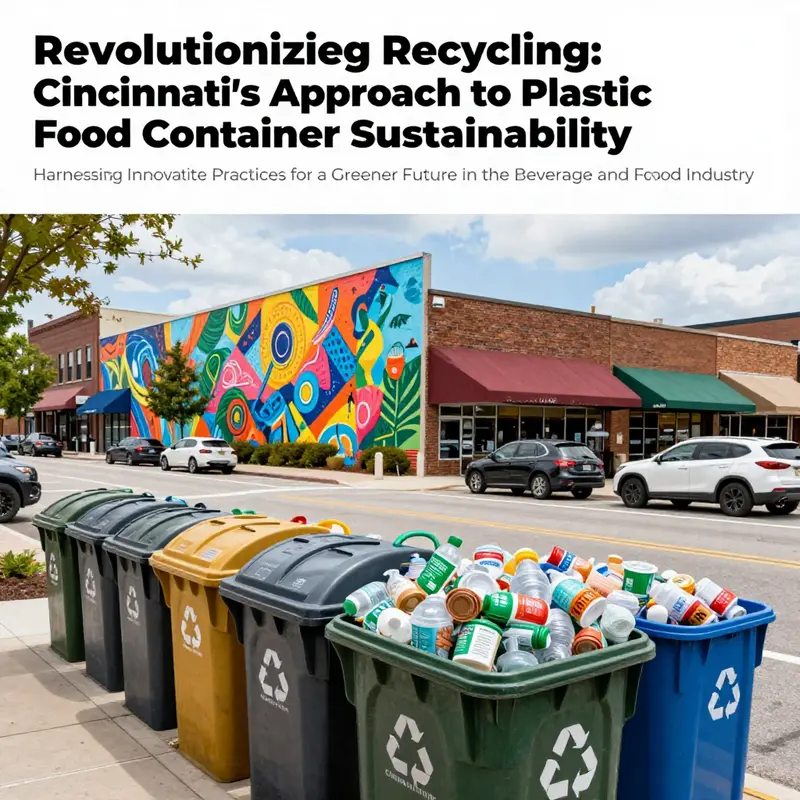
Cincinnati’s efforts to recycle plastic food containers are making waves in the local food and beverage industry. With a focus on innovative solutions, community education, advanced technology, economic impact, and environmental benefits, these initiatives resonate with bubble tea shops, restaurants, food trucks, and more. This article explores how key players can take part in these practices to enhance sustainability and meet consumer demand for eco-friendly operations.
Closing the Loop in Cincinnati: Reimagining Plastic Food Containers Through Cutting-Edge PET Recycling
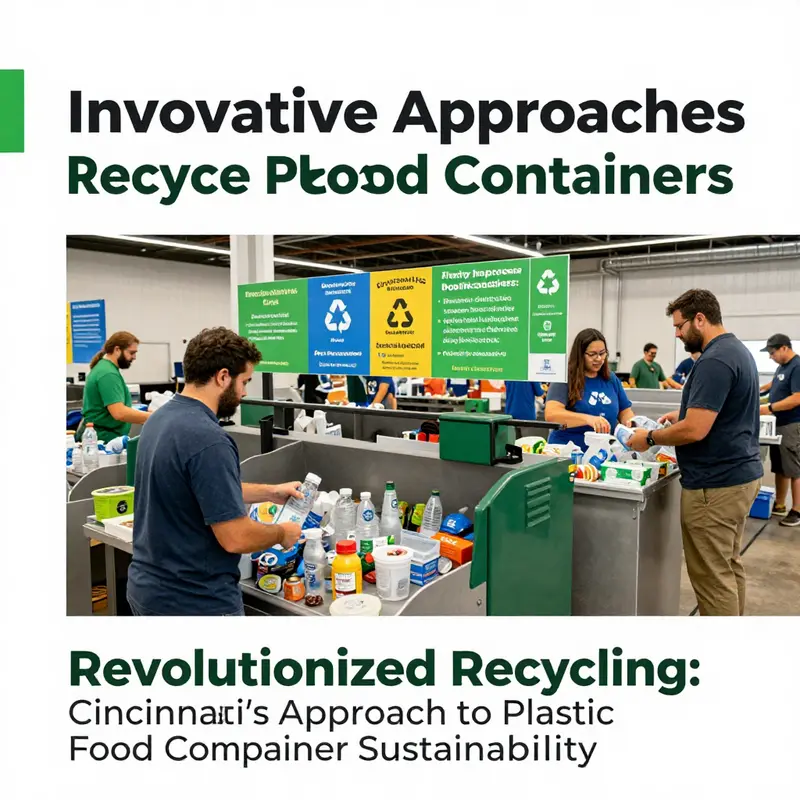
Cincinnati is reimagining plastic waste as a resource, building a system where a bottle or clamshell re-enters the economy instead of filling a landfill. The centerpiece is the Recycling & Reuse Hub, a facility designed to map a living loop from curb to community to design table. It emphasizes hard-to-recycle streams and reuse as a daily practice, encouraging residents, businesses, and makers to move beyond the two-bin mindset and toward a network of materials that can be repurposed or transformed into new products. In practice, plastic food containers that would otherwise vanish into a landfill can be sorted, cleaned, and redirected toward processes that give them a second life. The hub aims to divert waste and reframe it as a design challenge that invites collaboration and a more resilient local economy. The result is a practical, community centered pathway for responsible disposal that acknowledges today packaging realities while laying groundwork for tomorrow’s solutions.
This framework aligns with advances in post consumer plastic processing and safety, ensuring that high quality recycled PET can meet food contact standards. Cincinnati encourages multiple streams: reduce consumption, reuse everyday containers for storage or crafts, and treat the hub as a trusted partner when curbside programs cannot accept certain plastics. The wisdom of reuse—such as repurposing glass jars for storage—complements high tech recycling by reducing demand for new virgin plastic and by keeping materials circulating longer. Replacing single use plastic wrap with silicone lids or stretchable fabric covers further lowers waste and reinforces a culture of mindful consumption essential to a closed loop.
At the technical frontier, PET is a workhorse in food packaging, prized for clarity and barrier properties. When post consumer PET is processed through advanced systems, it can re-enter the market as new food contact material. A German based approach has drawn international attention for turning used PET into safe, high quality materials suitable for fresh food packaging. Cincinnati can learn from this demonstration that robust safety standards and efficient processing can coexist, preserving material integrity while meeting regulatory expectations. The no-heat curing technology from this model accelerates production and reduces energy use, enabling a faster path from waste stream to finished packaging with a smaller carbon footprint.
The EFSA safety assessment of the recycled PET process reinforces that circularity does not require compromise on safety or performance. This rating matters for local manufacturers, retailers, and consumers who want a credible path to reuse. In households, the hub provides education and hands on experiences about how an ordinary yogurt cup or takeout container can find a second life as a component in a new package or a designer project. The practical impact is measurable: lower energy use, reduced water consumption, and a smaller demand for new plastics. For readers seeking deeper context, the EFSA opinion anchors the narrative in rigorous scientific evaluation and regulatory context, situating Cincinnati within a global, safety conscious trajectory toward a more circular economy.
Looking ahead, Cincinnati invites sustained investment in advanced recycling infrastructure, clear standards, and public education to unlock high quality material streams and keep materials circulating. The city’s model demonstrates that design, policy, and everyday behavior can align to make plastic containers resources rather than waste, and that a local hub can scale to meet emerging consumer and business demand for recycled packaging.
Rethinking Cincinnati’s Plastic Food Containers: A Community Odyssey in Reuse, Recycling, and Education
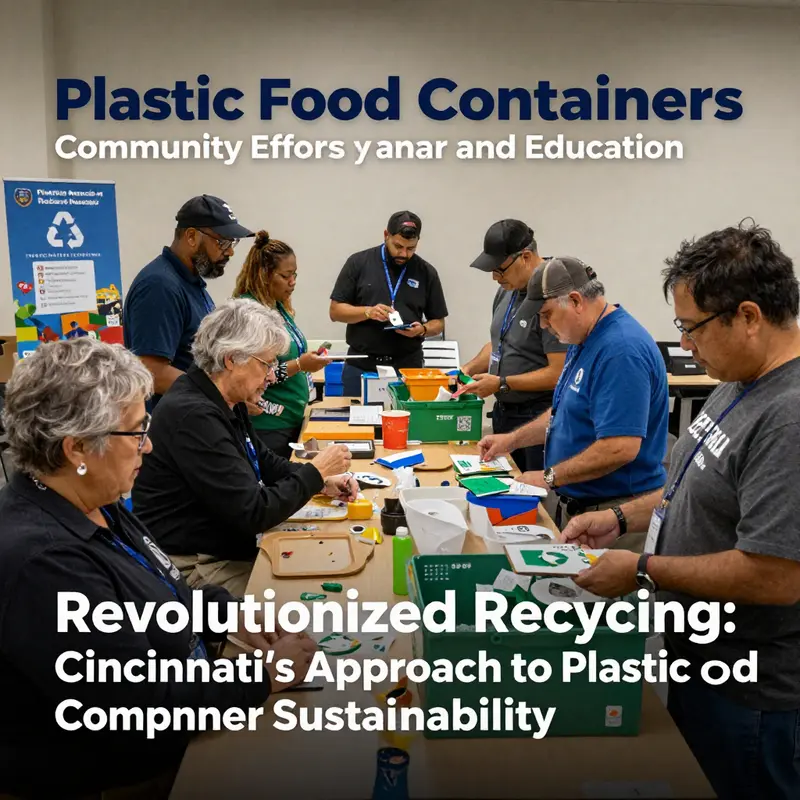
Rethinking Cincinnati’s plastic food containers begins with a practical question: what counts as waste, and who benefits when we reimagine it as input for the next usable cycle? In Cincinnati, the answer lies not only in a traditional sorting line but in a network of places, people, and practices that together push plastic food containers from single-use habits toward longer, kinder lifecycles. At the heart of this shift sits the Cincinnati Recycling & Reuse Hub, a facility unlike any standard curbside center. Rather than aiming to recycle everything in a generic sense, the Hub zeroes in on the materials traditional programs overlook—hard-to-recycle plastics, flexible packaging, and mixed-material goods—because those are precisely the items that most challenge landfill diversion and climate resilience. In this framing, plastic food containers are not simply waste to be disposed of; they are opportunities to reduce demand for new plastics, to conserve energy, and to cultivate a culture of reuse that stretches from a kitchen counter to a community workshop. The Hub’s approach reframes what people bring to the curb and what the city does with it, offering a practical pathway from disposal anxiety to recovery, reuse, and learning.
This is more than a collection point. It is a learning space that merges material flows with citizen education. The Hub’s mission is to transform how residents think about waste by creating a place where almost anything can be recycled or repurposed. In practice, that means keeping plastic food containers out of the landfill and steering them toward processes that either regenerate them into new raw materials or repurpose them into useful products for schools, nonprofits, and creative projects. The dual aim of collection and reuse makes a tangible difference: fewer containers end up in landfill heightening methane emissions, and more are given a second life in contexts that stretch their value. This model does not treat plastic as an inert nuisance; it treats it as a resource with multiple potential destinations, depending on the kind of container, its condition, and the imagination of the community around it.
Education is the other pillar that sustains this effort. The Hub hosts workshops, school programs, and public events designed to illuminate how materials move through the system and why sorting matters. The message is concrete and actionable: proper sorting, reduced reliance on single-use plastics, and creative repurposing are not abstract ideals but everyday practices with measurable outcomes. For example, plastic food containers collected at the Hub can be processed into new raw materials or used in community art projects and educational tools. The aim is to show that even the most complex materials—containers with different caps, labels, and residues—can be reinvested in a circular economy rather than becoming waste. The workshops emphasize practical steps residents can take at home, such as choosing containers designed for durability, cleaning them adequately to reduce contamination, and recognizing which materials truly belong in the dedicated streams.
This integrated approach—collection, processing, education, and community involvement—relies on partnerships with local businesses, schools, and nonprofits. The Hub operates as a hub not only for disposal but for knowledge exchange and infrastructure building. When schools incorporate reuse into their curriculum, or a local maker space hosts a workshop on upcycling plastic containers into art or tools, the city begins to see waste as a shared resource rather than a private problem. The Hub’s engagement extends beyond residents to the broader economy, encouraging small businesses to rethink packaging choices and to consider supply chains that favor reuse and recyclability. This is a collective act, where every bin of plastic containers, every classroom presentation, and every donated art project contributes to reducing the city’s overall environmental footprint and increasing its climate resilience.
The practical dimension of Cincinnati’s strategy is clear in how it guides daily choices. For households, the Hub’s framework invites a shift in routine: question whether a container can be cleaned and reused, whether it can be repurposed for storage or craft projects, and whether it is better to reduce overall packaging in the first place. In kitchens across the city, people are experimenting with glass jars repurposed from pasta sauce, pickles, or jam as free, eco friendly storage for grains, spices, or homemade dressings. Replacing plastic wrap with silicone lids or stretchable fabric covers reduces single-use plastic risk in the home. These everyday decisions are not small; they demonstrate how household waste practices ripple outward, changing demand signals for manufacturers and prompting retailers to offer packaging that is easier to sort and recycle. The Hub’s emphasis on reuse as an equally important pathway complements recycling, ensuring that materials that cannot be recycled at scale still stay out of landfills through repurposing and community sharing networks.
The city’s narrative around plastic containers reflects a broader shift toward resilience in the face of changing waste streams. Cincinnati’s emphasis on hard-to-recycle items acknowledges a frustration many households share: curbside programs rarely capture every material that could be diverted from landfills. The Hub helps fill that gap by providing a reliable destination for difficult items and by modeling a more ambitious sort of circularity. It is a practical demonstration that waste management can evolve beyond the linear model of produce, consume, dispose toward a system in which materials are named as resources and kept in circulation for as long as their properties remain useful. The hope is for residents to experience waste management as something collaborative and empowering, rather than something imposed from above. When people participate in sorting, attending a workshop, or contributing to a local craft project, they see themselves as scientists, designers, and stewards of a shared environment.
Connecting the material and the social dimensions is essential to sustaining momentum. The Hub’s partnerships with local businesses create a feedback loop: packaging choices influence what is accepted and processed, while the processing capabilities of the Hub push suppliers toward more recyclable designs. Businesses learn to value packaging that travels through the Hub’s network rather than ending in a landfill, and community groups find in the Hub a reliable partner for outreach, education, and access to recycled materials for projects. The symbiosis among residents, schools, nonprofits, and businesses strengthens Cincinnati’s social fabric while advancing a practical, climate-conscious waste system. This is not merely about discarding fewer items; it is about building a culture that treats materials with respect, curiosity, and imagination.
In tracing the arc from initial sorting to educational programs and community reuse, it becomes clear that Cincinnati’s model is a blueprint for other cities grappling with similar challenges. The Cincinnati Recycling & Reuse Hub demonstrates that a city can concentrate resources on the most challenging materials while still maintaining a broad, inclusive invitation for public participation. It shows that education and opportunity are key levers: when residents understand how materials move, when they see demonstrations of repurposing in action, and when they have access to reuse items in their own neighborhoods, a shift in behavior follows naturally. Importantly, the Hub facilitates not just a local loop but a conversation about what modern waste systems should look like. It invites residents to imagine a future in which plastic containers become the raw ingredients for new products, art, and useful goods, rather than clutter in the home. In this sense, Cincinnati’s chapter on plastic containers is less about a single program and more about a living, evolving ecosystem that links household decisions to municipal strategy and regional collaboration.
As readers consider how to translate these ideas into their own communities, a tangible tie to everyday choices emerges. The Hub’s approach encourages people to view plastic containers as starting points for reuse or transformation, rather than endpoints for disposal. The central lesson is that education and access are inseparable from impact. Without clear guidance on what to recycle, where to drop off nonstandard items, and how to participate in reuse programs, even well-intentioned residents can miss opportunities. With guidance, they can begin to see the containers in their homes as potential seeds for new products, artworks, or practical storage solutions that extend their usable life. Cincinnati’s experience thus becomes a practical guide for households seeking to reduce waste and for communities seeking to foster a culture of sustainability that reflects a more resilient, circular economy.
For residents who want to explore practical, household-level steps that align with Cincinnati’s core principles, the Hub’s model provides a compelling template. It demonstrates that meaningful change comes from combining access with education and from inviting people to participate in both the science of recycling and the art of reuse. It also highlights the value of partnerships that bridge civic life, education, and local enterprise. By positioning plastic containers as raw materials rather than disposable items, Cincinnati invites a broader conversation about how communities organize themselves around sustainability. The result is not only cleaner streams and fewer wasteful practices but also a shift in the narrative around consumption, one where reuse and responsible disposal are integral to everyday life and to the city’s identity as a model for innovative waste management.
For readers seeking further context on Cincinnati’s approach and an authoritative starting point for community engagement, the Cincinnati Recycling & Reuse Hub’s official website offers practical guidance on what can be recycled, where to drop off materials, and how to participate in reuse programs. Eco-friendly takeout boxes for food packaging provides a sense of how home packaging decisions intersect with broader reuse opportunities, illustrating how design and consumer choice can align with community recycling efforts. The broader external resource to deepen understanding of Cincinnati’s centralized hub approach can be found here: https://www.cincinnatirecyclingandreusehub.org/. This external link serves as a practical companion to the bookish discussions of circular economies, showing how a city translates ideals into accessible, hands-on programs for residents of all ages and backgrounds.
From Curbside to Circular: Technology, Hub Culture, and the Rebirth of Cincinnati’s Plastic Food Containers
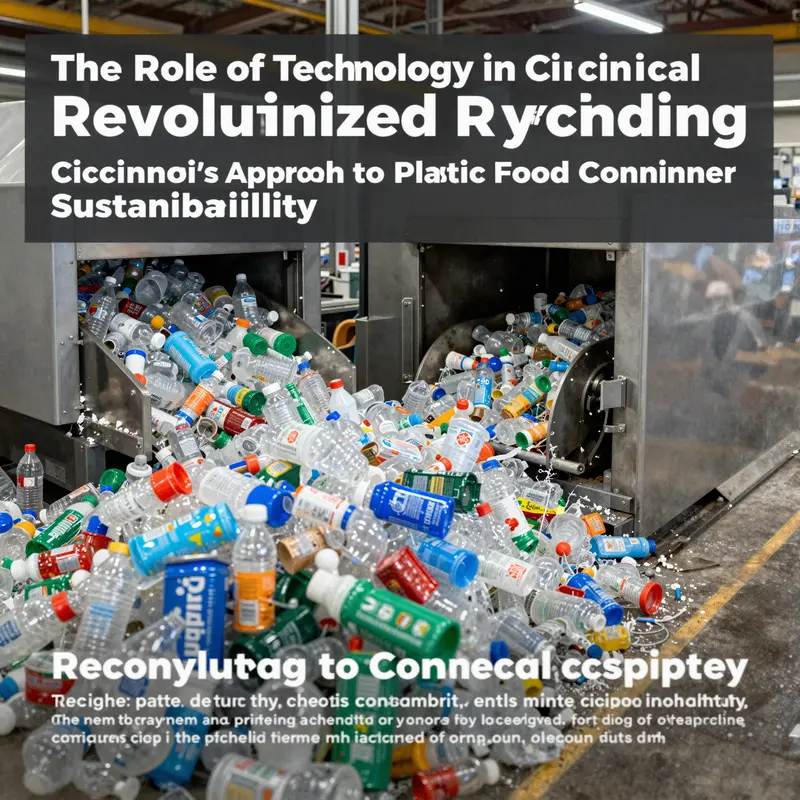
In Cincinnati, the story of plastic food containers reaches beyond the familiar curbside bin and into a broader philosophy of waste, reuse, and regional responsibility. The city’s approach threads together a dedicated Recycling & Reuse Hub, advanced processing concepts once associated with far-off factories, and everyday habits that neighbors can adopt at home. This chapter follows that thread, tracing how technology and community practices converge to reshape what happens to plastic food containers after their first use. It is a narrative that refuses to treat recycling as a single act of disposal and instead presents it as a continuous loop—an ongoing collaboration among residents, facilities, and evolving scientific standards that keep growth within the circular economy both possible and practical.
At the heart of Cincinnati’s effort sits a hub designed with an unconventional mission. Unlike many traditional recycling centers, the Cincinnati Recycling & Reuse Hub concentrates on items that standard curbside programs often reject. Hard-to-recycle materials, which might otherwise end up in landfills, find a second life here or are redirected into programs that seek reuse as a legitimate outcome. This approach is not merely about diverting waste; it is about reimagining value. When residents bring plastic food containers that do not easily fit into regular recycling streams, they participate in a process that recognizes the material’s potential long after the initial meal has been consumed. The hub acts as a bridge—connecting household waste with repair, reuse, and, where appropriate, high-grade recycling pathways. In this sense, Cincinnati’s strategy is less about managing waste in isolation and more about constructing a local ecosystem where waste becomes a resource, and where the work of residents, waste workers, and researchers overlaps in meaningful ways.
The practical value of a hub focused on hard-to-recycle plastics becomes clear when one considers the life cycle of a typical PET container—from bottle to beverage to potential new packaging. The Battenfeld-Cincinnati Germany process illustrates what is possible when technology and safety become non-negotiable priorities. This system demonstrates how post-consumer PET can be transformed into food-contact materials, a step that hinges on rigorous steps: collection and sorting, washing and drying, and then converting the clean PET flakes into materials suitable for packaging that may touch food. Each stage is carefully designed to minimize contaminants and preserve the integrity of the polymer. The method’s emphasis on purity—thorough washing to remove residues, robust drying to eliminate moisture, and controlled processing to maintain safety—reflects a standard that Cincinnati can aspire to, even as local capacities scale up or partner with outside experts.
In Cincinnati’s context, the role of technology is not only about replicating a process but about adapting a framework to fit local realities. The same principles that guide the Battenfeld-Cincinnati approach—clean input, transparent processing steps, verifiable final products—help the hub articulate to residents what happens to their containers. The community benefits when people understand that a PET bottle or clamshell isn’t merely trash; with the right steps and oversight, it can re-enter the economy as food-contact packaging or other high-value materials. This recognition helps demystify recycling and invites greater participation. It also raises the standard for what constitutes safe, reliable recyclate in a city that values both environmental health and consumer safety.
A crucial element in linking technology with community practice is the acknowledgment and acceptance of safety and regulatory validation. EFSA’s CEP assessment, tied to the EU register RECYC303, provides a benchmark. The EFSA evaluation confirms that the Battenfeld-Cincinnati process can produce recycled PET compatible with contact with food, a determinant that matters for any further use in packaging that may hold consumables. This is not merely a bureaucratic seal; it is an engineering compass that guides process improvements, material selection, and the end-market confidence required for scalable operations. When Cincinnati looks at adopting or adapting similar technologies, the EFSA validation serves as a credible reference point, signaling that the pathway from post-consumer PET to food-contact material can be both technically feasible and scientifically sound. The link between German expertise and European safety oversight creates a cross-border knowledge pipeline that can inform local practice, supplier relationships, and testing protocols in Cincinnati’s own facilities.
The practical takeaway for residents is not that a complex machine is turning plastic into food-grade packaging on every street corner, but that a thoughtfully designed system can honor safety, preserve material value, and reduce the need for virgin plastics. The hub’s emphasis on repurposing and reuse—alongside its openness to advanced recycling concepts—encourages households to rethink what they consign and how they sort. This is where technology and daily life converge: people sort with an eye toward future uses, while the hub tests, demonstrates, and scales possibilities that were once considered academically interesting but impractically distant.
Yet technology alone does not seal the cycle. A circular approach requires a social and behavioral dimension as well. Cincinnati increasingly emphasizes actions that complement industrial-scale recycling with home-based practices that begin the cycle sooner and reduce contamination risk. Simple acts—washing containers to remove food residues, removing caps if required by local programs, and flattening boxes to maximize space—compound the benefits of formal processing. More than ever, the community understands that durable outcomes hinge on how people treat containers before they enter the system. In this light, the hub’s work dovetails with the everyday rituals of kitchens and pantries, where choices about storage and packaging shape the lifetimes of plastic materials.
Residents who want to participate at a deeper level can look to practical, immediately actionable pathways. The city encourages repurposing glass jars gathered from pasta sauce, pickles, or jams to store grains, spices, or homemade dressings. This small shift in habit reduces reliance on new plastic containers and promotes a culture of reuse that strengthens the overall recycling loop. In addition, households can explore silicone lids or stretchable fabric covers as replacements for single-use plastic wrap. These adjustments may seem modest, yet they align with the hub’s mission by reducing waste generation at the source and ensuring that what is recycled arrives in cleaner streams that processing technologies can handle more efficiently.
The narrative of Cincinnati’s plastic container recycling is not a straight line from bin to brand-new bottle. It is a loop that invites community actors to adopt practices that feed into the hub’s flow. Education and outreach become essential components, translating complex processing steps into everyday actions and clarifying what can be recycled, reused, or repurposed. The hub becomes a living classroom where residents, students, and local workers observe how PET behaves when clean, how contaminants affect the final material, and how safety standards guide decisions at every stage. When people understand that the quality of input determines the quality of output, their daily sorting and rinsing habits gain new significance. The resulting improvements in recyclate quality encourage more manufacturers to consider recycled content and more retailers to embrace packaging that is designed for recyclability and reuse.
The broader implication for Cincinnati is clear: technology and community practice must co-evolve. The hub’s role is not to replace household effort but to create connective tissue—policies, processes, and examples—that keep the system moving smoothly. This requires ongoing collaboration among policymakers, waste-management professionals, researchers, and residents. When such collaboration is visible, the city’s recycling message reaches beyond convenience and becomes a shared commitment to environmental stewardship. It also signals to neighboring regions that high-safety recycling of plastic food containers is achievable with a combination of rigorous processing standards, robust material streams, and a populace willing to participate with care.
The practical access point for those who want to engage with this ecosystem is the hub’s public-facing information and its partnership network. While the details of the Battenfeld-Cincinnati process live in specialized reports, the everyday experience of Cincinnati residents involves drop-off opportunities, sorting guidelines, and reuse ideas that connect directly to daily life. The hub can translate complex science into clear instructions, and in doing so, it reinforces trust in the recycling system. When residents know that their PET containers are treated with methods validated for food-contact safety, their confidence in the system grows, and so does participation. This is the core of Cincinnati’s strategy: make high-quality recycling accessible, understandable, and meaningful to the ordinary household.
For readers who wish to explore related practical resources, consider this internal reference to a broader range of eco-friendly packaging options that align with the city’s emphasis on reuse and responsible disposal. eco-friendly takeout boxes for food packaging. This resource highlights how packaging choices outside the curbside bin influence recycling effectiveness, and how city programs can partner with manufacturers and distributors to promote materials designed for recyclability and reuse. The connection between consumer choice, processing technology, and safety standards is the backbone of a resilient regional system that Cincinnati continues to refine.
The interlocking pieces—the hub, the technology, the safety validation, and the day-to-day behavior of residents—form a cohesive picture of how Cincinnati recycles plastic food containers. It is a picture that values precision and practicality in equal measure. It acknowledges that modern recycling involves complex chemistry and rigorous oversight while remaining deeply rooted in ordinary acts of tidying, washing, sorting, and reusing at home. The city’s approach demonstrates that a concentrated effort around a specialized facility, informed by robust scientific validation, can shift what is possible with plastic waste. It is a model built on the premise that communities are the essential catalysts for technology to reach its full potential. And it invites every resident to see a familiar container not as waste, but as a resource that will be carefully reimagined, reprocessed, and reintroduced into the life cycle of materials that shape Cincinnati’s environment and its economy.
External reference note: For technical validation and details on the safety assessment that underpins this approach, see the EFSA report RECYC303: https://www.efsa.europa.eu/en/efsajournal/pub/8149.
Closing the Loop in Cincinnati: Recycled Plastic Food Containers, Local Jobs, and a Smarter Waste Economy
Cincinnati is increasingly defined by its willingness to rethink what waste means and how materials can move through the city’s economy again and again. At the center of this shift is the practical challenge of plastic food containers—containers that, once emptied, seem ordinary but which carry the potential to drive much larger benefits when handled with care, ingenuity, and a systems view. The city’s approach blends specialized recycling infrastructure with a keen eye on reuse, a strategy that acknowledges the limits of traditional curbside programs and embraces what it calls the circular economy in a real, tangible way. The Cincinnati Recycling & Reuse Hub stands as a landmark in this regard. It is not just a drop-off point but a junction where residents can bring hard-to-recycle plastics, unusual shapes, and neglected packaging with the understanding that many items can be transformed or redirected toward new uses. The hub’s mission—to revolutionize how people think about waste by providing a place where almost anything can be recycled or reused—resonates with a broader economic logic. By diverting materials that would otherwise end up in landfills, the city reduces the upstream pressure to extract virgin resources and, in doing so, nudges local markets toward more sustainable production cycles. A practical way to view this is to see plastic containers not as disposable end-points but as potential feedstock for a future where reprocessing and reuse are the default options rather than exceptions. For residents, the hub offers a concrete pathway to participate in this shift without having to leave the city or navigate a maze of private services. The effect is both educational and operational: people learn what can be recycled, how to prepare items for processing, and how reuse options can stretch a single product’s life across multiple uses and users. The result is a ripple effect that touches households, businesses, and the city’s broader environmental accounting.
As the city pursues this path, advanced recycling technologies illuminate what is possible when science and policy converge. The Battenfeld-Cincinnati process, though rooted in Germany, illustrates a high-water mark for turning post-consumer PET—commonly used in food containers—into materials that can re-enter food-contact streams. This is not a theoretical possibility; it is a tested capability that benefits from rigorous safety standards. The 2023 EFSA safety assessment provides a cornerstone for confidence, evaluating the process and deeming its outputs safe for contact with food. That judgment matters because it helps reduce the market friction that has long hindered recycled plastics from competing with virgin resins in food-contact applications. When a city like Cincinnati can anchor its programs around a technology that meets strict safety criteria, it creates a more stable demand for recycled PET and a clearer pathway for local manufacturers who want to participate in a closed loop.
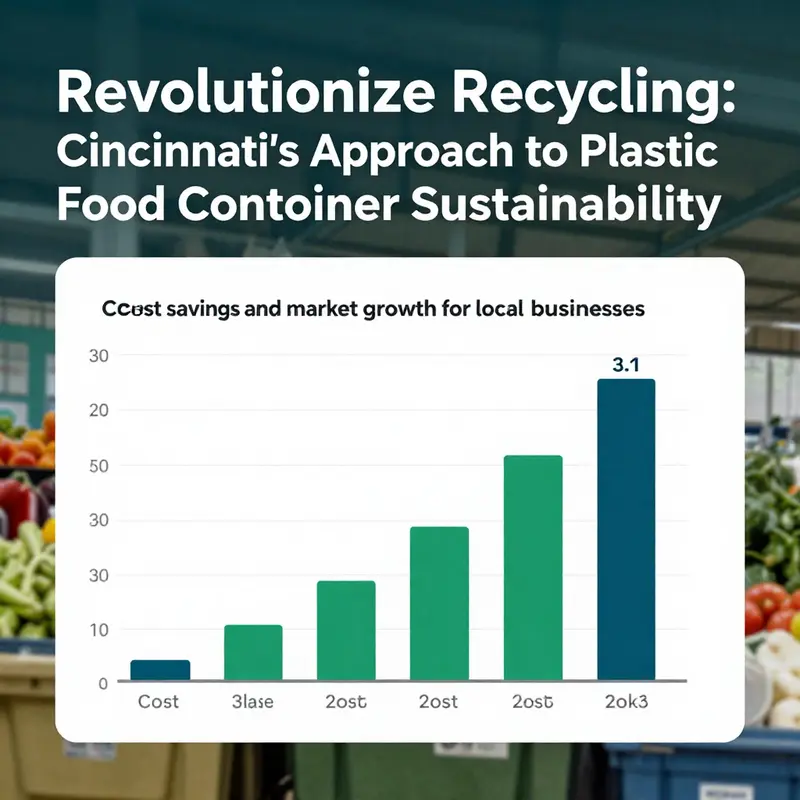
The economic implications extend beyond safety and market access. Reducing the need for virgin plastic translates into tangible cost savings for those who design, produce, and package goods in the region. In addition to material costs, there are opportunities for job growth across the collection, sorting, and advanced recycling stages. The local labor market benefits from the presence of specialized facilities that require skilled technicians, operators, quality-control professionals, and logistics personnel to manage the flow of plastics from curbside or drop-off to processing and, ultimately, to new uses. This isn’t merely about jobs in a factory; it is about careers in a supply chain that must adapt to more sophisticated separation, cleaning, and transformation technologies. A broader regional perspective shows that the impact of these shifts can extend to ancillary services—training programs, equipment maintenance, and data analytics—that support more efficient, traceable flows of material.
The scale of the opportunity is underscored by broader analyses of the plastic pollution problem. A widely cited industry perspective from Plastonomics in 2024 estimated the global environmental and social costs of plastic pollution at roughly USD 300 billion annually. By adopting technologies that enable recycled PET to meet food-contact standards and by building demand for post-consumer plastic in Cincinnati and similar cities, communities can help mitigate that vast cost. This requires not only technology but also robust governance, transparent performance metrics, and supportive local policy that encourages collection, sorting, and high-purity recycling streams. Cincinnati’s model combines these elements with a strong emphasis on reuse. People who remove containers from use can repurpose familiar items rather than overlook secondary markets for old packaging. For example, repurposing glass jars from pasta sauce, pickles, or jam into storage for grains, spices, or homemade dressings offers a practical, no-cost bridge between consumer habits and the city’s broader objective. It is in these small, everyday choices that macro-level change begins to take root.
Within this ecosystem, the Rumpke example provides a concrete illustration of how local players can translate policy into practice. The company has integrated recycled content into widely used municipal products, such as service carts that incorporate 20 percent recycled plastic and the reprocessing of outdated bins. This level of integration demonstrates how a circular approach can seep into routine waste management and create visible, measurable outcomes. It also signals the potential for further scale: if a regional operator can demonstrate viability with partial recycled content, it opens doors for higher percentages and more complex streams that might otherwise have remained economically or technically challenging. Cincinnati benefits from such momentum, and the synergy between hubs, recyclers, and industry partners creates a more resilient local economy. The hub’s emphasis on hard-to-recycle items aligns with this vision by expanding the spectrum of plastics that can be diverted from landfills and redirected into reprocessing or reuse channels. In essence, the city is building a pipeline toward more robust material circularity, where every container can, in principle, have another life rather than a single ending.
Crucially, the human dimension remains at the heart of this transformation. Public awareness and behavior shape the effectiveness of any recycling system. The hub’s approach encourages residents to reframe plastic containers from waste to resource, to understand what can be recycled in this particular system, and to recognize the benefits of reuse as a practical option. Even when a container cannot be recycled in a curbside program, the city can offer avenues for responsible disposal, repurposing, or donation to reuse streams. The goal is not simply to divert material from landfills but to reorient consumption patterns. The more people see recycling and reuse as part of a daily routine—alongside easier, low-cost reuse options—the more likely they are to participate consistently. In many ways, the hub becomes a classroom where city residents, businesses, and visitors learn to treat plastics as a resource that travels through a loop, rather than a one-way commodity destined for disposal.
To connect this vision with practical choices, Cincinnati also highlights low-friction, home-based habits that support the broader system. Replacing single-use plastic wrap with silicone lids or reusable fabric covers, and replacing disposable storage with clean, reusable glass jars, reduces the volume of plastic needing processing in the first place. These small changes not only cut waste but help stabilize the input streams that recycling facilities rely on. In a city moving toward more sophisticated recycling technologies, such habits can complement the investments in advanced processing and reuse infrastructure, ensuring that the feedstock that reaches sorting facilities is as clean and consistent as possible. And for those who want to go further, the hub’s resources and partnerships offer avenues to learn about accepted materials, proper preparation of items, and opportunities for collaboration with local makers, manufacturers, and community groups who see packaging as a design problem with economic implications, not merely a waste problem.
As this story unfolds, the potential for integrated solutions becomes clearer. A city that treats plastic containers as feedstock for a growing circular economy can align public programs, private investment, and community behavior in a way that strengthens resilience against price shocks and supply chain disruptions. By not relying solely on the supply of virgin plastic or on distant markets to process waste, Cincinnati demonstrates a model that localizes value creation while protecting the environment. The Cincinnati Recycling & Reuse Hub serves as a focal point in this model, an access point through which households, schools, and small businesses can participate in the learning, sorting, and repurposing that moves the city closer to a self-sustaining loop. For those curious about the practicalities of sourcing packaging that aligns with such a system, one example is the availability of eco-friendly takeout packaging options that are designed to be both functional and recyclable, and which can serve as tangible case studies in how packaging choices influence waste, reuse, and recovery at scale. These examples—while not exhaustive—illustrate how the city’s approach to plastic containers combines technical capability, economic incentive, and everyday behavior change into a coherent strategy. The result is a more robust regional economy, a cleaner environment, and a citizenry that feels empowered to participate in a collective effort to redefine waste as a resource rather than a problem.
For readers who want to explore more about Cincinnati’s approach to plastic container management, the Cincinnati Recycling & Reuse Hub offers a detailed, locally grounded entry point to learn what items are accepted, how to prepare them for processing, and how reuse pathways are being nurtured across neighborhoods. As the city continues to refine its systems and scale its capacity, the lessons from Cincinnati’s effort offer a useful beacon for other municipalities seeking to balance safety, sustainability, and local economic vitality in the management of plastic food containers.
To explore related packaging options that complement recycling and reuse efforts, consider this resource on eco-friendly takeout packaging and its role in reducing single-use waste. eco-friendly takeout boxes for food packaging.
For a rigorous external reference on the safety and viability of advanced recycling processes for food-contact materials, see EFSA’s scientific opinion. EFSA scientific opinion.
Turning Waste into Resource: The Environmental Benefits of Cincinnati’s Plastic Food Container Recycling Practices
In Cincinnati, a quiet transformation unfolds around the simple act of discarding a plastic food container. What begins as a routine curbside throw becomes part of a larger system that treats waste as a resource and turns everyday choices into measurable environmental benefits. The city’s Recycling & Reuse Hub, a focal point for material that traditional programs often overlook, embodies a different way of thinking about waste. This hub does not merely collect and sort; it reframes waste by embracing hard-to-recycle items, including many plastic food containers that would otherwise linger in landfills or contribute to polluting pathways. The hub’s mission—reimagining waste so that almost anything can be recycled or reused—creates a bridge between household habits and a broader circular economy. For residents, this means a practical, accessible route to responsibly manage containers that curbside programs may not accept, a path that ultimately reduces the environmental footprint of food packaging from the kitchen to the recycling stream.
The environmental arithmetic behind these efforts is robust, and it rests on a clear understanding of how materials move through a system designed to keep resources in use longer. When Cincinnati diverts plastic containers from landfills, the city reduces the volume of refuse that must be managed in ways that can unleash long-tail environmental problems. Landfills and incinerators, even when well managed, can contribute to microplastic leakage into waterways and soil, as well as localized emissions and energy use. By keeping containers out of these endpoints, Cincinnati minimizes the downstream impacts of plastic waste and helps protect local ecosystems from the chronic pressures of plastic pollution. This is not merely about reducing waste; it is about keeping plastics in productive use, where they can be reprocessed rather than replaced with virgin feedstocks.
A central element of Cincinnati’s approach is the utilization of reprocessing streams that recover valuable polymers from used containers. Materials such as polypropylene (PP) and high-density polyethylene (HDPE) can be regrained, reformulated, and blended into new products. This is not a trivial matter of recycling a few bottle caps; it is a systemic commitment to extracting value from the plastics already in circulation. Each time a container is diverted from a landfill and re-entered as a feedstock for new items, energy is saved, and the demand for fossil fuels in virgin plastic production diminishes. In practical terms, this means that the city’s recycling ecosystem is not just about handling waste; it is about conserving the resources embedded in the containers themselves—from the energy and water invested in fabrication to the raw materials that would otherwise be consumed anew.
The environmental benefits extend beyond resource conservation to encompass a broader spectrum of pollution prevention. When plastics are properly recycled, the lifecycle emissions associated with producing new polymers can be significantly reduced. Although the chemistry of plastics is complex, the overarching trend is consistent: reusing and recycling materials lowers energy intensity and cuts greenhouse gas emissions relative to producing virgin plastic from fossil fuels. In this sense, Cincinnati’s local initiative contributes to climate goals by shrinking the carbon footprint of packaging throughout its lifecycle. The city’s emphasis on better recycling practices aligns with national and international efforts to curb plastic pollution, a challenge that remains formidable even as governments set ambitious targets for waste reduction and material circularity.
The Cincinnati model also speaks to a larger, more aspirational framework—the circular economy. In a true circular system, the end of one product’s life becomes the beginning of another’s. The Recycling & Reuse Hub embodies this philosophy by creating a physical and symbolic space where discarded containers are reimagined as inputs for new products. This encourages residents to participate not only in recycling programs but also in the broader practice of reuse and material recovery. When people understand that a plastic container can reappear as part of a new object, they begin to see waste not as an inevitable byproduct but as a resource with value. The result is a culture that favors reuse over disposal and a system that supports the continual loop of materials through the economy, thereby reducing the pressure on natural ecosystems and diminishing the need for new plastic production.
An important, often overlooked aspect of this work is how it intersects with human health and chemical safety. Recycling practices that prioritize high-quality input streams help minimize the release of potentially harmful substances throughout a container’s lifecycle. Substances such as certain additives, including bisphenol A (BPA) and various phthalates, have raised concerns about leaching in some contexts. While the issues are nuanced and depend on processing conditions and product design, robust recycling systems can reduce the likelihood of harmful chemical exposure by ensuring that plastics are properly managed and reconstituted in ways that meet safety standards for their next use. Cincinnati’s focus on refining the quality of recycled material—through specialized hubs and thoughtful consumer guidance—contributes to safer recycled outputs and, by extension, safer reuse pathways for food-contact plastics. The city’s approach acknowledges the connection between waste management, chemical stewardship, and public health, and it treats each element as part of a cohesive strategy rather than as isolated challenges.
To support these outcomes, residents are encouraged to adopt practical, everyday practices that reinforce the system’s effectiveness. Beyond dropping containers at the hub, households can rethink how they interact with packaging. The research materials underscore the value of repurposing common items—glass jars from pasta sauce, pickles, or jam—as free, eco-friendly storage for grains, spices, or homemade dressings. This is more than a clever stopgap; it is a tangible demonstration of how mindful re-use can reduce demand for new containers and, in turn, lessen the amount of plastic that must be recycled or disposed of in the first place. Similarly, replacing single-use plastic wrap with silicone lids or stretchable fabric covers is a straightforward habit that can substantially lower kitchen waste. These practices, when multiplied across neighborhoods, amplify the environmental dividends of Cincinnati’s formal recycling infrastructure.
Alongside these domestic strategies, community-level initiatives create an environment where recycling is easy to do and hard to ignore. The hub’s role goes beyond processing; it acts as an educational and motivational center that helps residents understand the environmental stakes and the everyday steps that can move the city toward its goals. The site’s emphasis on hard-to-recycle items—what many jurisdictions might overlook—demonstrates a practical commitment to addressing the gaps that typically hinder effective recycling programs. In a city context, this means fewer containers ending up in landfills, fewer resources wasted on producing new plastics, and a more resilient waste system capable of adapting to evolving packaging formats and consumer behaviors.
The alignment with national policy and industry best practices further anchors Cincinnati’s approach in a broader regulatory and scientific framework. The Battenfeld-Cincinnati Germany process, for example, is cited in research as an example of advanced technology for recycling post-consumer PET into food-contact materials. While based overseas, it serves as a benchmark for the level of technological rigor and safety that modern recycling streams aspire to achieve. German standards and their assessment by consumer protection authorities highlight the kinds of quality controls and material integrity that contribute to reliable, safe recycled outputs. Cincinnati’s strategy resonates with those standards by prioritizing input quality, process transparency, and traceability—elements that help ensure that plastics recycled in Cincinnati are repurposed into safe, usable materials and products.
From a broader perspective, the city’s efforts are not isolated experiments but part of a growing recognition that recycling outcomes depend on more than a single facility or policy. They depend on the social contract that residents are willing to make with their waste—consistent participation, accurate sorting, and a willingness to bring unusual items to specialized hubs rather than consigning them to a landfill. In this sense, Cincinnati’s model is about building trust between households, the hub, and the system that processes the material. Trust is the lubricant that keeps the circular economy moving: it ensures that the input streams are clean enough for processing, that the outputs meet safety and quality expectations, and that the public can see tangible environmental benefits from their daily actions. The city’s experience shows that when people understand the connection between their routines and the broader health of local ecosystems, recycling becomes a valued, enduring habit rather than a bureaucratic obligation.
Finally, the environmental benefits of Cincinnati’s plastic container practices are inseparable from the city’s ongoing communication about sustainability. Public messaging that links everyday choices to measurable outcomes helps residents navigate trade-offs and embrace more responsible packaging and disposal behaviors. This is not about guilt or perfection but about progress: incremental improvements in waste diversion, resource conservation, and pollution prevention accumulate into meaningful shifts in environmental impact. As more households participate and as the market for recycled plastics matures, Cincinnati stands to demonstrate that a city can maintain convenience and economic vitality while pursuing ambitious environmental objectives. The face of sustainability in Cincinnati is thus not a single policy or a single facility; it is a dynamic ecosystem that includes households, specialized hubs, technological advances, and an informed public ready to make recycling count.
For readers seeking a practical entry point, the Cincinnati Recycling & Reuse Hub offers a tangible example of how a city can reorganize waste into opportunity. By welcoming hard-to-recycle items and guiding residents toward responsible disposal and reuse, Cincinnati builds a foundation for a flexible, durable waste system. In tandem with everyday habits—such as reusing glass jars, opting for durable kitchen supplies, and choosing packaging designed for reuse—the city’s approach helps reduce reliance on virgin plastics and supports a cleaner, healthier environment for current and future generations. As national and global conversations about plastic pollution continue to evolve, Cincinnati’s experience offers a constructive template: invest in infrastructure that can handle the tough materials, educate the public about practical actions, and align local practice with a shared goal of a more circular economy. To explore the hub and its resources, visit the city’s Recycling & Reuse Hub site for more information and guidance on how to participate in this evolving system. And for broader context on how municipal programs fit into sustainable plastics management, see the EPA’s comprehensive resources on sustainable management of plastics: https://www.epa.gov/sustainable-management-plastics.
In the spirit of practical, accessible action, imagine a city where a simple container is never merely waste. In Cincinnati, a plastic food container can become the seed of a new product, a reused storage solution, or a component in a recycling stream that powers a cleaner economy. The environmental benefits—reduced waste, conserved resources, lower emissions, and safer materials—are not abstract. They are the direct outcomes of a civic commitment to rethink waste, invest in specialized infrastructure, and cultivate a culture of reuse that begins at home and ripples through the city. Alongside the formal systems, households can contribute by embracing small, repeatable changes that add up to substantial environmental savings. The result is a more resilient community where the lifecycle of plastic containers is extended, not exhausted, yielding a tangible, positive impact on air, water, and soil quality. This is the essence of Cincinnati’s plastic container recycling story: a practical, hopeful, and replicable model of how a city can turn everyday packaging into ongoing opportunity rather than persistent waste.
Internal link: To see how packaging choices can reinforce circularity in everyday life, consider exploring eco-friendly takeout boxes for food packaging. This resource offers tangible options that align with Cincinnati’s approach to reducing plastic waste and supporting safer, more sustainable packaging design in local kitchens. eco-friendly takeout boxes for food packaging.
External reading: For a broader policy and practice context on plastics management at a national scale, see the Environmental Protection Agency’s guidance on sustainable management of plastics: https://www.epa.gov/sustainable-management-plastics.
Final thoughts
Cincinnati’s multifaceted approach to recycling plastic food containers exemplifies how cities can positively impact the environment while supporting local businesses. The collaborative efforts in community education, advanced technology, economic advantages, and environmental sustainability not only empower food establishments but also inspire customers to engage in responsible practices. As industry leaders, embracing these strategies will resonate with the growing consumer demand for eco-friendly initiatives and ensure a greener future for the city.