
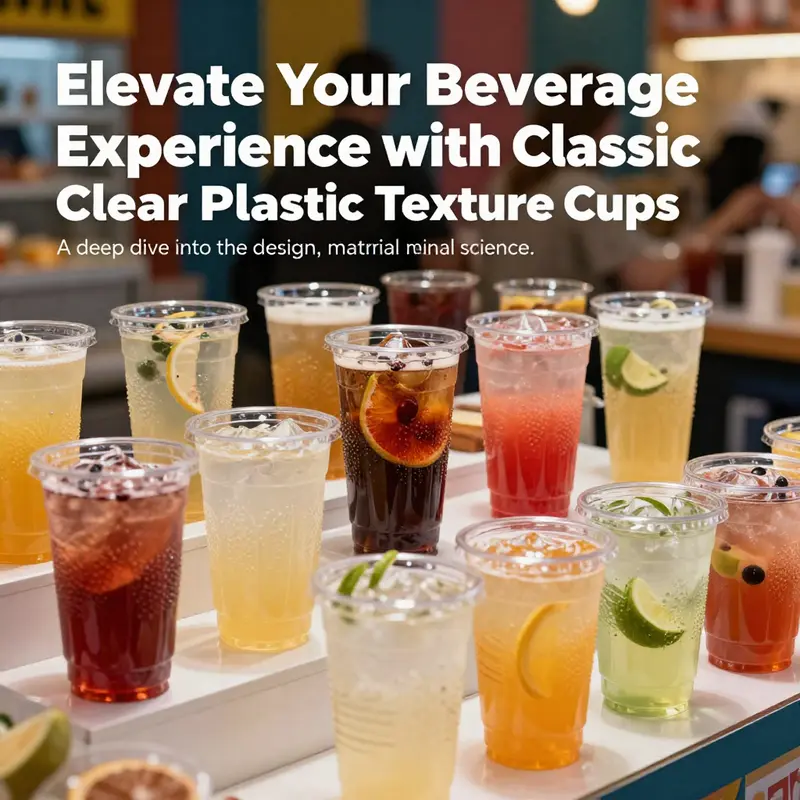
Classic clear plastic texture cups are more than just functional items; they serve as a canvas for creativity and sustainability in various beverage industries. Whether you run a bubble tea shop, cater events, or operate a food truck, these cups offer aesthetic appeal and durability. In this exploration, we will delve into the materials that make these cups ideal for vibrant drinks, highlight the innovative designs that enhance user experience, discuss the environmental implications of their use, analyze current market trends shaping their popularity, and showcase diverse applications across various industries. Each chapter aims to provide a holistic understanding of why classic clear plastic texture cups are a crucial investment for your business.
Crystal Clarity in Motion: The Material Science Behind Classic Clear Plastic Texture Cups

The classic clear plastic texture cup is more than a vessel for a cold drink. It is a careful balance of optical performance, mechanical resilience, and tactile engagement. The texture on the surface does more than catch the eye; it shapes how a beverage is perceived and how easily the cup can be handled in a busy service environment. When light passes through the wall of the cup, it interacts with both the material and the microstructure of the surface. Subtle embossing or geometric textures scatter light in ways that can enhance perceived clarity, reduce glare, and create a premium feel even as condensation beads on the outside. The texture also improves grip, turning a slippery moment into a reliable handle, especially when the cup is wet or sweaty from a chilled drink. This combination of clarity, texture, and grip is at the heart of why these cups circulate through catering, cafés, takeout, and retail displays with such frequency and familiarity.
At the core of most classic texture cups are thermoplastics chosen for clarity, weight, and strength. The three most common standbys are polyethylene terephthalate (PET), polypropylene (PP), and polystyrene (PS). Each brings a distinct personality to the cup, tailored to different end uses, temperatures, and lifecycle considerations. PET stands out for its high clarity and lightness coupled with surprising strength. It often wears a slightly ribbed texture that can be felt as a gentle vertical or radial sensation on the wall. This combination keeps drinks visually vibrant, allowing the colors of coffee, juice, or smoothies to pop against a nearly pristine backdrop. PET’s moisture resistance helps protect the contents and minimize clouding, an important factor when a beverage sits for a moment in a display case or during a gracefully paced outdoor service.
For hot beverages or containers that must withstand higher temperatures, PP is frequently the preferred option. Its exceptional thermal stability ensures that the cup maintains shape and integrity when exposed to steam or a warm liquid. The wall remains relatively rigid under pressure, and PP can be engineered to endure repeated lifts, transit, and handling without cracking. In texture design, this material supports more robust embossed patterns that can endure the heat without losing their bite. In addition to temperature resilience, PP offers strong chemical and moisture barriers, which helps preserve flavor and aroma by minimizing interaction between the beverage and the cup wall. This equivalently supports more versatile use in both foodservice and bulk operations where hot drinks or soups might be served in a single cup pattern.
Polystyrene, the third pillar in classic texture cup design, delivers a glass-like appearance with high impact resistance and exemplary clarity. Its optical properties are difficult to beat for those moments when the cup is meant to read as nearly invisible, allowing the drink to be the star. PS also keeps weight exceptionally low, which can ease handling in busy environments and contribute to lower transport costs per serving. However, PS has its tradeoffs: it can be more brittle and surface-susceptible to scratching over time. When used for premium or vintage-themed presentations, its refined look can be highly desirable, providing a crisp backdrop that complements elaborate beverages and curated lighting in hospitality settings.
In practice, many manufacturers pursue hybrid or composite blends to fuse the best of multiple polymers. By layering or blending materials, they aim to withstand demanding conditions—such as high-pressure pouring, rapid thermal changes, or long display times—without sacrificing clarity or texture integrity. These advanced formulations can preserve optical brightness while expanding the measurable range of temperature and mechanical performance. The result is a cup that remains visually appealing as a single-use option or even as a durable, texture-enhanced item for controlled reuse in certain contexts. The overarching goal is to retain the tactile elegance of texture while ensuring reliability under real-world use.
Texture design itself is a product of both aesthetic intent and functional engineering. Subtle embossed patterns, including pleated or plaid-like textures, create tactile feedback that can reduce accidental slippage. Geometric motifs and organic textures offer light-scattering effects that can slightly modify gloss and perceived depth, making the cup look more substantial or refined under display lighting. The finish choices also influence condensation behavior. A textured wall can encourage a more uniform distribution of moisture, reducing the risk of slippery, concentrated wet spots that might compromise grip. From a manufacturing perspective, achieving consistent texture requires precision tooling and repeatable molding processes. Textures must be durable enough to withstand handling, washing (when appropriate), and occasional contact with abrasive surfaces, all while maintaining optical clarity.
From a sustainability standpoint, the conversation around texture cups has matured. PET’s recyclability, particularly when it becomes post-consumer recycled PET (rPET), supports broader recycling streams and the potential for circular design. In many contexts, rPET can be incorporated without compromising the visual or tactile characteristics that define a premium cup experience. PP’s recyclability and its compatibility with reusable or multi-use packaging systems align with circular economy initiatives in kitchen and bulk-service environments. PS, while offering unmatched clarity, poses challenges in recycling streams that many facilities struggle to accommodate. As a result, initial design choices increasingly consider recyclability and end-of-life scenarios alongside performance. The evolving landscape invites material scientists and packaging engineers to explore how surface textures can be integrated with sustainability goals, such as incorporating recyclable lids or leveraging post-consumer content to create cohesive, eco-aware presentation ecosystems.
The balance between single-use practicality and long-term value also encompasses the emerging world of reusable cups. In these cases, surface textures still play a critical role, but the material shifts toward BPA-free acrylics or other durable polymers designed for repeated use and safe cleaning. These reusable variants often emphasize dishwasher safety and heat resistance, while preserving the visual clarity that makes the beverage inside legible and appealing. Here the texture continues to contribute to the sensorial experience; it remains a cue for quality and tactility even as the cup transitions from disposable to reusable contexts. In summary, the material science behind classic clear plastic texture cups is not a simple selection of a single polymer. It is a layered decision about clarity, resilience, heat tolerance, and lifecycle considerations that inform how a cup performs from the moment a drink is poured to the moment it is discarded or repurposed.
Not all limitations are overcome by material choice alone. Over time, some plastics can exhibit subtle degradation when exposed to certain liquids, solvents, or prolonged storage. Texture itself can become a trap for residues if cleaning isn’t thorough or if surfaces are scratched, creating micro-topographies that harbor particles. This reality underscores the importance of cleaning protocols, surface finish control, and careful selection of texturing strategies that balance grip with ease of cleaning. The best practice is to design textures that minimize crevices while still delivering the intended tactile and visual benefits. Designers also weigh the cost implications of textured molds and the potential impact on shelf life and consumer perception. A texture that looks premium but wears down quickly or collects residue can undermine the very advantages it was intended to provide.
Beyond the practical, the frontier for these cups also includes advances in manufacturing techniques. 3D additive layering and related processes allow for highly intricate textures, including fractal-inspired or brand-logo motifs, to be embedded directly into the wall of the cup. While these approaches push the boundaries of speed and cost, they open opportunities for limited editions, experiential marketing, or eco-conscious collaborations that emphasize material science as a storytelling device. When executed well, such innovations do not merely decorate the cup; they reinforce its function and its identity as a well-crafted interface between beverage and consumer. As with any design evolution, the key is to preserve clarity and usability while expanding aesthetic and functional possibilities.
For designers and marketers visualizing these products, a library of mockup resources can be a valuable asset. While the underlying science remains constant, the perception of texture, clarity, and form is influenced by lighting, environment, and the surrounding presentation. The textures respond differently under various angles and shadows, offering a dynamic stage for beverages, logos, and color palettes. In practice, the most effective presentations harmonize the material properties with the design language of the cup. The result is a coherent narrative where the cup seems almost invisible when empty, yet becomes a vivid stage for the beverage when filled.
In sum, the material science of classic clear plastic texture cups is a careful orchestration of optics, mechanics, and surface engineering. PET, PP, and PS each contribute unique advantages, while texture finishes amplify grip and aesthetic appeal. Hybrid blends push performance further, and sustainable design considerations increasingly shape material choices. The ongoing dialogue between clarity, texture, and end-of-life considerations ensures that these cups remain both practical and visually compelling across diverse settings, from quick-service counters to premium events. As production methods evolve and recycling streams expand, the potential for refined textures that respect the planet while heightening the drinking experience continues to grow. For researchers, designers, and decision-makers, this is a reminder that every sip carries with it a chapter of material science waiting to be explored.
External reading: For a deeper dive into the material science behind these options, see the reference on polymer composition, processing, and lifecycle considerations. https://www.benjaminross.com/plastic-cups-material-science
Crystal Clarity Reimagined: Design Innovations in Classic Clear Plastic Texture Cups
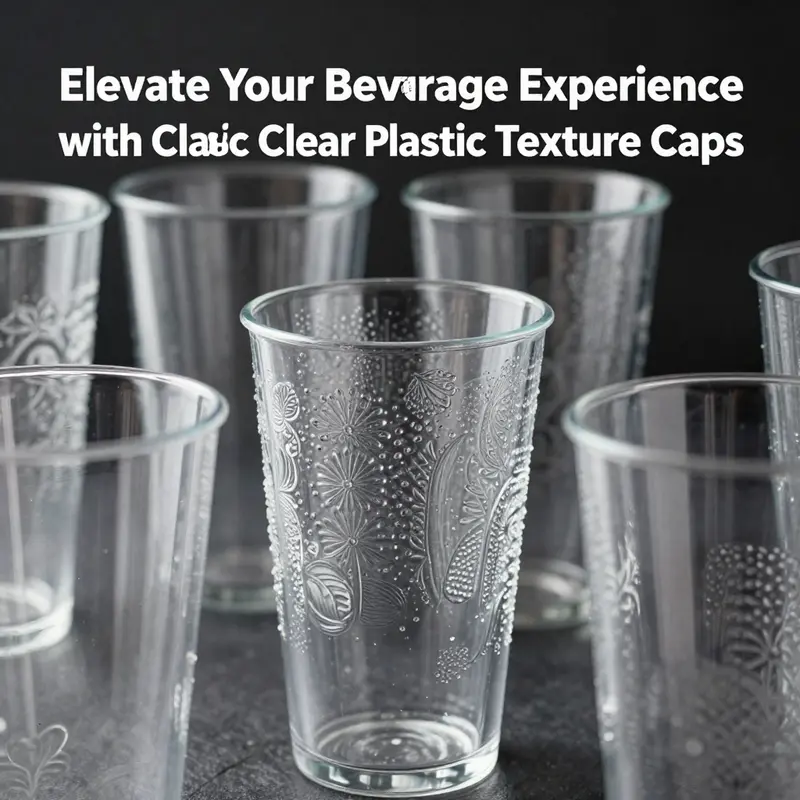
For designers seeking to ground their work in practical resources, a recent reference offers a realistic texture portrayal that can anchor digital mockups, presentations, and marketing materials. Access to a royalty-free PNG demonstrating traditional plastic cup textures provides a dependable starting point for visual experiments and concept reviews. This asset helps teams explore how different finishes interact with color and light, and how subtle changes to embossing or gloss can shift perceived value. In a field where the smallest detail can influence perception, such tools translate the vision in the designer’s mind into tangible visuals that clients can react to with clarity and confidence. They remind us that the elegance of a clear cup lies not only in its transparency but in how thoughtfully its surface speaks to the drinker’s senses.
Clear Yet Complicated: The Environmental Footprint of Classic Plastic Texture Cups
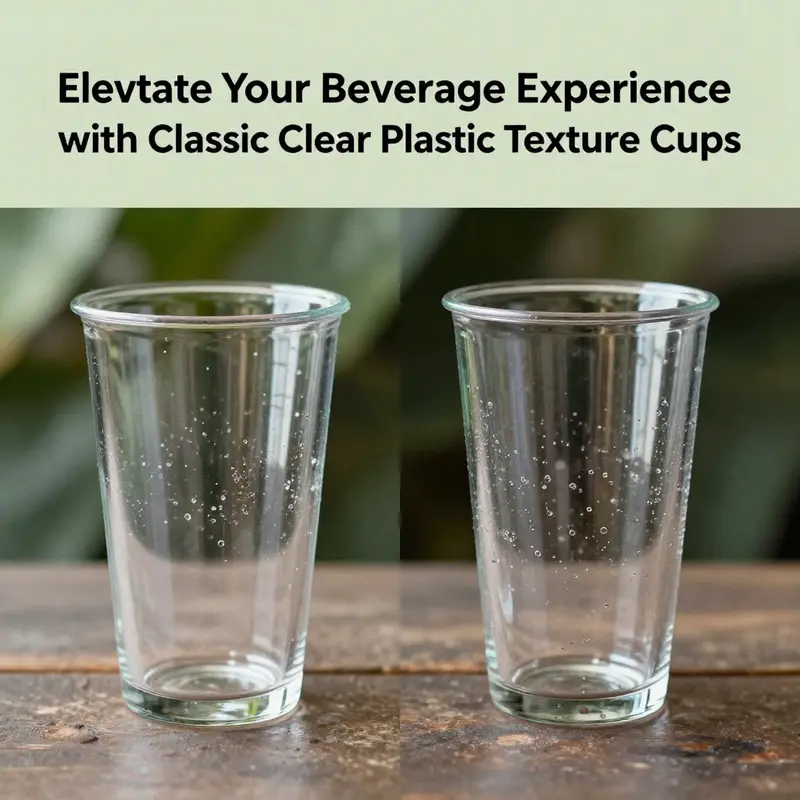
The visual appeal of classic clear plastic texture cups remains strong. Light plays off the crisp edges, and the tactile texture adds grip and a premium feel to beverages. Yet behind that gleam is a more complex story about how durable, lightweight cups shape our environmental footprint. These cups are commonplace in cafes, events, and grab-and-go counters, and their texture often accompanies a moment of service more than a moment of reflection. To understand the full picture, it helps to trace the journey from raw material to end of life and weigh the benefits of portability and cleanliness against the costs borne by ecosystems and communities over time.
The materials themselves: classic texture cups are commonly made from polymers such as polypropylene (PP) or polystyrene (PS). Both originate from fossil fuels and rely on energy-intensive processes that emit greenhouse gases. The choice of polymer influences performance and the production’s environmental load. PS, for instance, involves emissions during monomer production and polymerization, while PP has its own energy-demanding steps. The result is a product that is light and durable in the moment, yet linked to a resource-use chain that extends beyond a single serving.
In practice, many such cups have a short usage window but a long afterlife in the global waste stream. They are disposed after a single use, yet can persist in landfills for decades or longer. Even when recycling is technically possible, real-world collection, sorting, and consumer participation determine whether cups re-enter manufacturing cycles. When recycling rates are low or when streams are contaminated by other plastics, valuable materials are squandered and the energy embedded in the initial production is not recovered.
Plastic persistence in the environment is a core concern. Plastics do not biodegrade; they fragment into microplastics that can travel through soils and waterways and enter food chains. In many settings, microplastics may carry adsorbed contaminants and pose potential risks to wildlife and human health. Although research is ongoing, the mounting evidence about microplastics supports precautionary action to reduce unnecessary use and improve end-of-life pathways.
Disposal choices have further consequences. Incineration can release toxins such as dioxins and furans, and even energy recovery does not fully offset air and water pollution associated with plastics. In ecosystems, plastics can disrupt habitats and clog waterways, with effects that ripple to communities and economies. The design and governance of recycling programs, as well as consumer participation, shape how much material can be recovered and re-fed into new products.
There are constructive paths forward. Reuse and durable alternatives—such as BPA-free reusable cups made for many washes—offer a way to maintain the experience while reducing single-use waste. When reuse is not feasible, clearer labeling, accessible recycling programs, and higher recovery rates matter. Designers can pursue recycled-content options and more easily recyclable material formulations to improve circularity. Consumers and businesses can also seek products that balance aesthetics with end-of-life considerations.
Beyond materials and end-of-life logistics, the texture and clarity of the cup intersect with consumer culture and the broader push for sustainability. Nature-inspired motifs or redesigned packaging can reinforce responsible choices without compromising recyclability. The overarching message is that the footprint of a seemingly simple cup is shaped by decisions across the value chain—from raw material selection to how a cup is used, cleaned, disposed of, and recycled. When communities invest in robust recycling streams and extended producer responsibility, the visible gleam of a cup becomes a reminder of a commitment to a more sustainable material culture. The path forward is not a single silver bullet but a combination of smarter materials, smarter use, and smarter recovery.
For readers seeking practical takeaways, look to markets and programs that support reuse, recycling, or substitution with lower-impact materials. The journey toward sustainability is incremental, but each mindful choice—whether in a café, at an event, or in a household—helps reduce the cumulative burden of plastic waste. And as research continues, the conversation about texture, clarity, and environmental responsibility will keep evolving, inviting innovations that honor both form and function without compromising our shared environment. External resource for further reading on lifecycle analyses and alternatives is available from the EPA’s Plastic Pollution overview, which outlines the broader context of plastic waste, recovery, and policy. EPA Plastic Pollution: https://www.epa.gov/assessing-chemicals-in-environmental-media/plastic-pollution
Clear by Design: The Market Forces Behind Classic Transparent Cups

The classic clear plastic texture cup stands at a crossroads where visibility, practicality, and evolving consumer expectations converge. Its timeless appeal rests in how the surface catches light, how the cup feels in the hand, and how a beverage’s color speaks for itself through glassy clarity. Yet beneath that silhouette lies a dynamic set of market forces reshaping not only what these cups are made from, but how they are imagined, manufactured, and marketed. The texture – ridges, planes, and patterns pressed into the surface – does more than texture a product; it textures an experience. It provides grip, enhances perceived quality, and signals a premium touch even before a sip is taken. To understand where these cups are headed is to trace the currents moving in sustainability, materials science, consumer behavior, and production technology, all converging around a single idea: the classic design remains, but the reasons for choosing it are expanding in sophisticated directions.
Sustainability has become the primary driver in this evolution. Regulatory landscapes around single-use plastics sharpen the focus on end-of-life outcomes and responsible consumption. In regions enforcing plastic-use reforms, the old equation cheap, transparent, disposable no longer suffices. The push toward biodegradable and compostable materials is not simply substituting one polymer for another; it redefines what a clear cup can mean when clarity is paired with environmental accountability. Materials once avoided for performance trade-offs are now revisited because they can meet both optical brilliance and disposal infrastructure requirements. Practically, this means a shift toward bio-based and compostable polymers, such as polylactic acid and related blends, that aim to offer industrial compostability without sacrificing the visual appeal of a crystal-clear container. Regulations compel supply chains to evaluate the lifecycle—from raw material sourcing to end-of-life processing—and to design products that perform reliably in a busy service environment while leaving a lighter environmental footprint.
Alongside regulatory pressure, material innovation is transforming what classic can mean in the cup category. Bio-based plastics and engineered blends are designed to maintain high clarity and impact resistance. The goal is not to abandon the familiar aesthetic of the clear cup but to ensure that this aesthetic can be produced with a smaller climate footprint and a more predictable end-of-life outcome. The trend toward bio-based and compostable options also invites dialogue about circular economy strategies. Businesses are evaluating whether partners and facilities can process used cups in industrial composting streams, how to separate materials at scale, and what post-consumer waste remains acceptable for different markets. In practice, this creates a market for textured cups that balance grip and handling with responsible disposal, a balance that becomes more important as consumers demand both convenience and conscience from single-use items.
The functionalization of the cup experience is another major vector of change. Consumers now expect more than a simple container; they seek enhanced value in everyday rituals. Cups that offer heat resistance, microwave safety for on-the-go reheating, and reliable leak-proof performance are becoming standard in premium segments. The texture itself – previously a matter of grip – now collaborates with functional attributes. Subtle embossings can improve dry grip for slick hands or condensation, while more intricate textures may aid thermal management in the lip and rim, enhancing drinking comfort. The emergence of the so-called ice cup is a striking illustration of this trend: a transparent vessel designed to accent ice formations and flavored syrups, transforming a basic pouring into a visually engaging experience that can be highly shareable on social platforms. This premiumization is not mere embellishment; it enables brands to command value by offering sensory richness and customization without abandoning the clarity the cup is known for.
Manufacturing technology is the quiet engine behind these shifts. To reconcile low cost with high performance, producers are turning to innovations that reduce material use while preserving strength and appearance. Microfoaming, for instance, allows for thinner walls without compromising impact resistance, which lowers material consumption and can translate into lighter, more cost-effective products. The integration of smart factory concepts—automated injection molding lines, real-time process monitoring, and AI-driven quality control—significantly improves consistency at scale. Such advancements enable faster iteration cycles, enabling brands to test new textures and material blends with less risk and shorter time to market. The result is a broader palette for the classic clear cup: textures that are not merely decorative but engineered to contribute to performance, process efficiency, and sustainability outcomes.
Market diversification widens the horizon for these cups. While their primary role remains in food and beverage service, the same design language now finds applications beyond traditional cups. Medical contexts may leverage carefully engineered texture and material choices for diagnostic or sample containers where clarity and sterility are paramount. Automotive interiors and personal care sectors borrow this aesthetic for single-use or limited-run packaging where the look of transparency communicates purity and reliability. The rise of e-commerce accelerates vertical integration, as companies seek to control material sources, production quality, and end-user experience from first mile to last. In this ecosystem, the classic clear cup becomes a platform that can be customized with texture, size, and functional features to meet a wider array of needs while retaining its essential clarity.
A crucial thread running through these shifts is the balance between practical performance and brand storytelling. The surface texture turns a disposable item into a tactile, memorable object. It invites a closer look at the beverage, a closer touch at the rim, and social sharing when presentation aligns with contemporary aesthetics. Yet the texture must be designed with care; over-embossing can create residue or cleaning challenges, especially in fast-paced service settings. This is where the collaboration between design, materials science, and process engineering becomes essential. The texture must be resilient to repeated washings, resistant to staining from colorful drinks, and compatible with a broad range of dishwasher cycles. As producers explore new textures—from geometric grids to organic motifs—driven by consumer preference data and aesthetic experimentation, they also invest in coatings, surface treatments, and molded-in textures that can preserve grip without compromising transparency or recyclability. The evolving texture becomes a signature that communicates quality and care, even as the cup remains a simple, functional vessel.
In envisioning the near future, the trajectory of the classic clear plastic texture cup seems less like a linear upgrade and more like a redefined blueprint. It is a blueprint in which sustainability acts as the compass, material science supplies the palette, and customer experience dictates the brushstrokes. The same crystal-clear look that has made the cup ubiquitous will continue to captivate, but with a new vocabulary of textures and a strengthened commitment to end-of-life responsibility. Manufacturers and designers who embrace this integrated approach will not only meet stricter environmental standards and consumer demands but will also expand the creative boundaries of what a simple cup can represent in a world that increasingly values transparency, not just in the cup material but in the values a brand stands for. For researchers and professionals exploring product visualization and packaging experimentation, the evolving landscape offers fertile ground for imagining how texture, form, and function can harmonize in a single, enduring form.
External resource: https://ec.europa.eu/environment/waste/plastic_waste.htm
Seeing Through Style: The Many Lives of Classic Clear Plastic Texture Cups
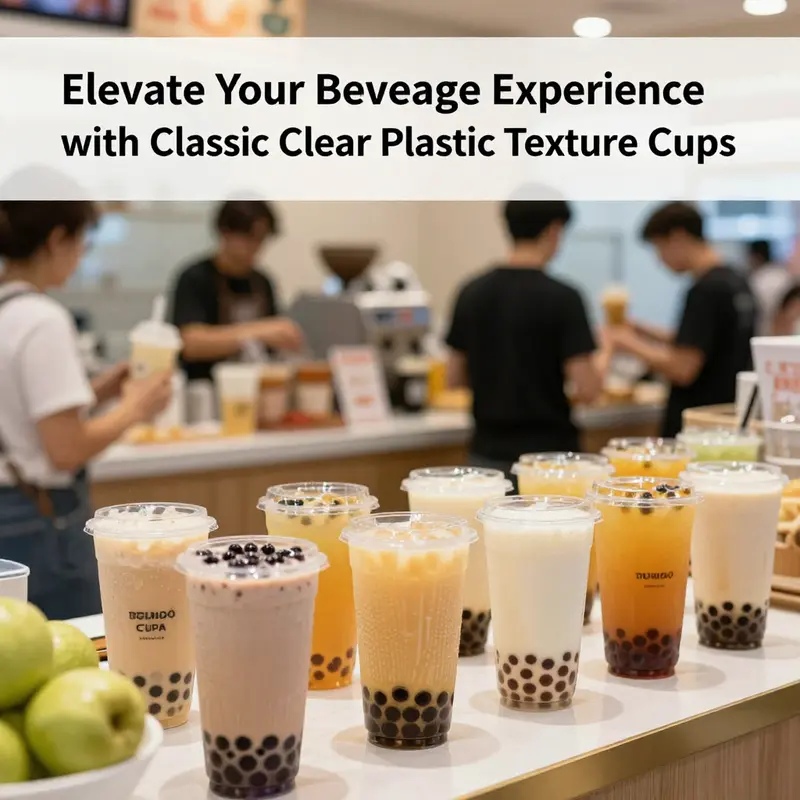
The classic clear plastic texture cup has a quiet resilience that makes it more than a temporary container. Its appeal rests not just in the clarity of the material but in the subtle texture that coats its surface, the way light travels through it, and the almost paradoxical mix of disposability and possibility it embodies. These cups, typically molded from polystyrene (PS) or polyethylene terephthalate (PET), are prized for being lightweight, shatter-resistant, and remarkably transparent. The texture—whether a delicate plaid embossment or more intricate geometric relief—does more than decorate the exterior. It provides grip, reduces slippage, and adds a tactile layer that elevates the moment of drinking from a mere act of consumption to a small, mindful ritual. In stores, cafes, classrooms, and even homes, this combination of clarity and texture becomes an unassuming stage on which color, aroma, and texture of the beverage can shine. The cups work best when they disappear from view visually, allowing the beverage to take center stage while still delivering a subtle, premium touch that makes everyday drinks feel a touch more special. The balance between visibility and tactility is deliberate: you want to see the beverage’s hue and texture clearly, yet you also want a surface that feels trustworthy to hold and to reuse or recycle as needed. The generous transparency supports this dual purpose by showcasing the drink’s color, ingredients, and even the froth or bubbles that charmingly crown a smoothie or iced tea. The surface texture, meanwhile, avoids the sterile flatness that can accompany smooth plastic, offering a refined texture that engages the senses without dominating the experience. This is why the classic clear texture cup remains a staple for a wide range of settings—from bustling food service operations to crafted home setups—because it ticks essential boxes: clarity, durability, and a design detail that quietly signals quality.\n\nYet the texture itself deserves attention. It is not merely decorative; it is a deliberate design choice that influences how the cup feels in the hand, how easily it can be gripped with damp fingers, and how it behaves when stacked for storage or transport. Subtle embossed patterns can reduce surface slipperiness, which is a practical boon in busy environments where drinks move from counter to cart to table. In higher-end contexts, these textures become part of the brand language, hinting at a product’s personality without shouting. Textured cups invite a kind of tactile engagement that often translates into a more confident and comfortable drinking experience, particularly for cold beverages that require a steady hand and careful handling.\n\nThe breadth of applications begins to unfold once the cup’s purpose extends beyond serving beverages. The materials’ transparency invites visual storytelling, and the texture adds a layer of sophistication that makes the cup suitable for a range of non-beverage roles. The same clear cup that holds a fruit-infused water or a smoothie can be repurposed as a lightweight display vehicle in a retail setting, where color and composition can be curated to attract attention. In educational spaces, the predictable dimensions and clear walls make these cups excellent vessels for demonstrations of fluid dynamics, diffusion, or growth experiments. In such contexts, the cup becomes less a disposable item and more a transparent window into processes, a small lab or display case that students can observe through with clarity and curiosity.\n\nWithin the realm of personal expression, a distinct cultural moment has emerged around repurposing these cups as fashion-forward accessories or micro-display cases. Among younger communities, for example, there is a trend of turning cups into wearable adornments by inserting favorite items—anime badges, tiny plush figures, or miniature charms—before binding them to bags with acrylic chains. These repurposed cups become portable mood boards, a practical fashion statement that travels with the wearer. The trend is widely documented on social platforms, where the act of transforming a disposable container into a personalized accessory has become a form of self-expression, accessible to anyone with a little ingenuity and a few dollars’ worth of material. The numbers cited in these circles—tens of thousands of posts about the concept and modest costs that can be as low as a few yuan—speak to a larger impulse: the urge to reclaim ordinary objects and reimagine them as carriers of identity and personality.\n\nFor plant enthusiasts and those seeking a small desktop ecosystem, the cups also serve as ideal miniature planters and observatory vessels. The transparency makes growth visible from root to shoot, turning a simple seed or cutting into a microdrama of development that can be watched in real time. Herb seeds, tiny succulents, or even micro-ecosystems with a few fish or aquatic plants can flourish in such clear, compact habitats. The experience is both calming and educational, offering a tangible link to nature in compact urban spaces. A quick search of user-generated projects reveals a growing habit of using these cups as living demonstrations of plant biology and water-based microhabitats. When planted on desks or windowsills, the cups become little windows into life, giving people a subtle sense of responsibility and care as they observe growth rhythms unfold before their eyes. For those drawn to this kind of living display, a curious case study can be found in the growing collection of tiny garden setups that place living systems into the cup’s glassy embrace. And for those who want a ready-made touchpoint, a common option is to explore planters that align with the cup’s dimensions and shape, blending convenience with a playful sense of science and design. If you’re curious to see a particular example of how a cup can become part of a living display, you might explore options like the green-soil-lotus planter as a compatible companion piece, which demonstrates how texture and transparency can coexist with soil and plant life. green-soil-lotus.\n\nThe cup’s utility continues into the realm of organization and practical daily tasks. In offices and homes, the same simple form can be repurposed as a storage solution in surprising ways. A lid with a small drilled hole can turn the cup into a hand sanitizer dispenser, combining a hygienic function with a sleek, contemporary look. The same approach works for small tool storage, cosmetics indices, or hair accessories, transforming clutter-prone spaces into tidy, accessible work zones. The lightweight, stackable design makes these cups highly packable for events, classrooms, or pop-up shops, where space and efficiency are at a premium. In such environments, the texture’s grip-boosting surface helps prevent slips and spills, while the transparent walls allow organizers and participants to identify contents at a glance.\n\nIn service settings, the cups remain a reliable canvas for presentation and palate. The clear surface grants an unobstructed view of a beverage’s color, composition, and textures, enabling baristas, caterers, and home enthusiasts to craft visually appealing presentations. Fruit-infused waters, layered smoothies, and sparkling drinks can be showcased with a clarity that highlights ingredient quality and freshness. In this respect, the cup acts as a stage lighting, enhancing the sensory perception of flavor through color and contrast. The texture complements this function by contributing tactile elegance; a customer can grip a cup confidently, appreciating its refined yet approachable feel. In commercial spaces, the texture also becomes a subtle cue of premium experience, signaling care and attention to detail in the mundane act of drinking a cold beverage.\n\nBeyond serving and presenting drinks, these cups play a significant role in education and inquiry. Their geometry is predictable, their walls transparent, and their walls sturdy enough for simple experiments. Teachers and students use them to visualize fluid behavior, observe diffusion, or compare the effects of different liquids. Because the cups come in standard sizes and shapes, measurements are straightforward and results are easy to compare, making them a practical tool in classrooms and makerspaces where hands-on learning thrives. This educational utility couples naturally with the cups’ aesthetic and tactile appeal, creating a versatile artifact that supports inquiry while remaining approachable and affordable.\n\nAs manufacturing capabilities evolve, so do the possibilities for customization. Advanced techniques such as 3D additive layering enable more intricate texture patterns or personalized branding, including fractal motifs or corporate logos. These enhanced versions are typically more expensive and slower to produce, but they open doors to brand collaborations, tech showcases, or limited-edition releases. The combination of transparency, texture, and customization resonates in markets oriented toward experiential consumption, where customers value not just function but also narrative and identity. For designers and marketers, the clear cup becomes a platform for storytelling—an object that communicates mood, values, and a brand’s approach to everyday objects. In practical terms, this translates to a product that can be both a reliable everyday utility and a distinctive collectible, depending on the context and audience.\n\nThe broad spectrum of use cases—fashion-forward repurposing, living displays, practical organization, sensory presentation, and educational applications—illustrates why the classic clear plastic texture cup has endured as a versatile object in a rapidly changing world. Its ability to adapt without losing its essential character makes it a quiet but powerful instrument of creativity. It is not simply a disposable vessel but a medium through which people can explore aesthetics, function, and expression in everyday life. As the conversation around sustainability evolves, these cups also invite scrutiny and innovation. Recyclability and BPA-free variants expand the conversation beyond convenience to responsibility, inviting brands, venues, and individuals to consider lifecycle impacts while enjoying the cup’s signature clarity and tactile finish. In this light, the simple cup becomes a gateway to thoughtful design and mindful consumption—a tiny artifact that, when viewed through the right lens, reveals a surprising depth of possibility.\n\nFor visuals and contextual ideas that align with these uses, many makers and designers turn to freely available mockups and textures that showcase how a clear cup can serve as a flexible canvas in digital presentations and packaging concepts. The dialogue around these textures—how light interacts with the surface, how patterns alter grip, and how color streams through the cup—offers a reminder that everyday objects can be platforms for creativity when they are designed with attention to touch as well as sight. External resources and visual libraries provide further inspiration and examples for artists seeking to translate the cup’s simplicity into more elaborate or brand-forward projects. For those exploring this topic, a broad range of imagery and templates can be found in reference collections and design repositories that celebrate the subtle power of transparency and texture. External resource: https://www.kuaitu.com/.
Final thoughts
Classic clear plastic texture cups are indispensable for the beverage industry, combining practical benefits with aesthetic charm. Their material science ensures durability, while design innovations keep pace with market demands and consumer preferences. As businesses and industries become more environmentally aware, understanding the implications of plastic use is crucial for sustainability. The flexibility these cups offer allows for diverse applications in various settings, whether in a bubble tea shop or a catered event. Embracing these innovations can elevate your brand and service—make the transition to classic clear plastic texture cups and see the difference it makes.