

The holiday season brings an opportunity for creativity, celebration, and innovative decor. Among the trending items this year is the clear plastic cup Christmas ball—a versatile ornament made from everyday materials that not only adds elegance and charm to any setting but also promotes sustainability. This article presents an insightful exploration of DIY techniques for crafting these delightful decorations, delves into their environmental implications, and highlights commercial alternatives available to businesses. By understanding this unique holiday decoration, retailers, event planners, and food service providers can elevate their festive offerings while embracing eco-friendly practices.
From Cups to Glow: Practical Techniques for Clear Plastic Cup Christmas Balls

Building and Lighting Techniques
Transforming clear plastic cups into luminous Christmas balls is a satisfying blend of precision and play. The approach is simple: turn familiar disposable cups into a hollow, translucent sphere and then add light. The result reads modern and delicate, while staying affordable and safe. This chapter guides you through reliable techniques for constructing both a large, multi-layered light ball and a quick decorative cup tree. It blends stepwise process, practical tips, and creative variations so you can adapt scale, finish, and function with confidence.
Begin with materials and mindset. For the larger, iconic sphere you’ll need many identical clear cups—nine-ounce cups are common. Gather a strong string of small lights designed for indoor use, a drill or awl for neat holes, a sturdy hole punch for side connections, and lots of small zip ties. Aim for quality in connectors and lights; they determine durability and the evenness of the final glow. Clean and dry every cup before you begin. Stains, sticky residue, or burrs can affect fit and appearance.
If sourcing new cups, choose a smooth, clear style with thin rims. Recycled cups work fine, and using them is an eco-aware choice. You can also purchase clear plastic cups intended for events; these provide consistent shape and clarity. For buying options, consider suppliers that sell disposable clear plastic cups for gatherings and outdoor use that are also sturdy enough for crafting: disposable clear plastic cups.
Work area and ergonomics matter when you assemble dozens of cups. Set up a long table with a padded surface to avoid cracking. Keep tools organized—drill with variable speed, spare bits, a handheld hole punch, scissors for trimming zip ties, and a utility knife. Use safety goggles while drilling and gloves if you plan to sand any edges. For lighting, select battery-powered mini-lights if you need portability and no visible cord, or plug-in lights for a continuous, brighter glow.
Start by planning the sphere. The large multi-layered ball takes shape in two mirror-image halves. Each half assembles from concentric rings of cups stacked and zip-tied through side holes. Punch or drill one hole in the bottom of every cup for the bulbs. Then add four evenly spaced side holes below the rim to connect cups horizontally. Punching side holes at matching heights ensures cups nest neatly. A steady mark on each cup rim speeds consistency—use a felt-tip pen and a shallow jig or template to transfer markings quickly.
When drilling bottoms, stack two or three cups to speed the process. Use a 1/2-inch drill bit or slightly smaller depending on your lights’ bulb base. Test-fitting a bulb before proceeding ensures the hole retains a snug fit and the bulb won’t wobble. The bottom holes should accept one or two bulbs, depending on your lighting plan. Keep edges smooth; if the plastic splinters, sand lightly with fine-grit paper.
Assembly begins with a ring. Arrange twelve cups in a close circle and connect adjacent cups through the side holes with short zip ties. Pull each tie taut, but not so hard as to deform the cups. Trim each tail flush. This ring becomes the base layer. For the second layer, stack nine cups, each placed above the seam of two cups below, and secure them to the lower ring. This creates a dome that gradually curves. A final top layer of four cups closes the half-sphere. Tighten methodically and evenly; do a sweep around the assembly, adjusting ties to eliminate bulges.
Repeat the process to make the second half. Building halves separately makes lighting easier. Test the light string before insertion. Work from the plug end outward so the plug ends up accessible once halves join. Insert bulbs into the bottom holes. Plan for one or two bulbs per cup for a balanced glow. Place bulbs with care so they sit centered and point inward. If a bulb feels loose, use a small foam washer or a dab of hot glue to secure it and diffuse hotspots. Maintain consistent bulb placement to prevent uneven patches of light.
Joining halves requires patience. Line up corresponding cups and connect them with zip ties through the existing side holes. As you tighten, make sure the light string is not pinched at any join. If the plug must pass through, provide a small gap or route it through an unobstructed cup. Once the two halves are secured, trim and tuck tie ends neatly. Inspect the ball for stability and light distribution. A wiggle test will reveal any loose connections. Reinforce weak points with additional ties or a small amount of clear silicone adhesive, which remains invisible and flexible.
Beyond the large-scale technique, smaller, child-friendly projects highlight the versatility of the clear-cup technique. A decorative cup tree uses a single inverted cup as a form. Pinecones or small ornaments are glued around the rim, layer by layer, creating a miniature evergreen silhouette. Use hot glue for quick adhesion. Fill gaps with cotton batting to simulate snow. Top the tree with a small pinecone and a red cotton ball as a festive accent. This variation is fast, tactile, and safe for group activities with supervision.
Surface treatment is where craft personality shines. Leave cups crystal-clear for modern minimalism. Spray a light frost with matte glass spray for a soft, diffused glow. Apply glitter sparingly; mix a glue medium and brush it inside selected cups to create shimmering pockets. For color, insert tissue paper or translucent colored film in the cups before assembly. These inserts can be removable, letting you change palettes year to year. If you want an aged or vintage look, tea-stain small interior felt discs and glue them into cup bottoms; the light will pick up warm tones.
If you prefer a sealed globe you can move outdoors, consider adding a clear lid or flexible plastic membrane at the seam. A thin disc of clear acrylic, cut to follow the sphere’s opening, can be attached with silicone beads to weatherproof the unit while still allowing air circulation. Outdoor use demands weather-resistant lights and attention to moisture around electrical connections. Use a weatherproof junction box or keep batteries in a sealed compartment.
Practical sizing decisions influence materials and behavior. A 90-cup sphere, lit with 100 to 150 bulbs, makes a strong visual centerpiece. Reduce cup counts for smaller spheres for trees or mantels. Keep bulb density proportional to the cup count to avoid dark zones. If bulbs are too concentrated, the ball becomes hot or the light harsh. Spacing bulbs evenly, and using frosted bulbs or diffusers, softens and spreads illumination.
Safety and longevity can’t be overlooked. Use LED mini-lights to minimize heat. LED bulbs run cool and use less power. Avoid large incandescent bulbs that can melt thin plastic. Zip ties should be trimmed and sanded if sharp. Keep the finished sphere out of reach of small children if it uses mains power. For kid-friendly versions, use battery-operated light strings and secure the battery pack inside a well-covered cup or in the hollow interior of the ball.
Troubleshooting is mostly about fit and light. If the ball warps during assembly, check that all cups are identical and that zip ties are tightened progressively. Over-tightening one area causes distortion. If lights flicker, test the string outside the sphere. Faulty bulbs or loose wiring often reveal themselves when the string is unconfined. Replace those strands before inserting them into the assembled structure.
Storage and reuse matter if you intend to bring the decoration out year after year. Label and document the light string used in each sphere, and store halves nested in a box padded with tissue. Keep spare cups and a few spare lights for quick repairs. Because the construction uses zip ties, breaking just a few ties allows partial disassembly for compact storage.
Customization opens a wide range of applications. Make small spheres as hanging tree ornaments by using smaller cups or trimming larger ones. Create a cluster of three different-sized spheres as a table centerpiece. Line the inside of cups with mirror-sheet segments to increase reflection and sparkle. Alternatively, attach translucent beads to the rim holes so they dangle and catch light. Use different cup sizes to achieve layered surface textures, or mix in opaque cups for patterning.
For group workshops or classroom projects, scale down to simpler steps. Pre-drill bottoms and pre-punch side holes for younger participants. Provide a handful of batteries and shorter light strings. Focus on decoration rather than complicated assembly. The cup tree method is ideal for younger hands and shorter attention spans.
As you refine technique, experiment with hybrid approaches. Combine the zip-tied shell with an inner liner of translucent fabric or paper lantern material. This liner softens LED hotspots and adds color without changing the exterior aesthetic. If you want a richer texture, weave thin ribbon through side holes before final assembly for a decorative banded look.
Beyond single projects, consider how these methods fit into broader decorating plans. A string of small cup spheres hung along a mantel can create a unified lighting theme. Placing a large cup sphere as a table center becomes a conversation piece. For commercial events or displays, the clear-cup approach offers cost-effective scale and quick assembly, provided you account for labor and the time required to prepare holes and joins.
Repurposing and recycling are natural companions to this craft. Used cups, once cleaned, make excellent raw material. When the season ends, salvage lights and hardware for future projects. Consider donating finished spheres to local community spaces or schools to extend their life and meaning.
The building and lighting techniques described here emphasize repeatable, scalable practice. They balance precision—consistent hole placement and even tightening—with creative freedom in finish and illumination. With attention to tool choice, light selection, and assembly rhythm, you can craft spheres that glow evenly, stand up to handling, and express personal style. Whether you pursue a large, luminous Sparkle-style ball or a cozy cup tree for a child’s room, these methods offer a reliable roadmap.
For inspiration and a visual walkthrough of a similar large light ball technique, explore a step-by-step tutorial that aligns with the multi-cup, light-insert method: https://www.instructables.com/Sparkleball/.
Hidden Costs of Glow: The Environmental Footprint of Clear Plastic Cup Christmas Balls

Material roots and long shadows
Clear plastic cup Christmas balls feel light and festive. They glow on a tree and sparkle on a mantle. Yet the clarity and convenience come from materials with heavy environmental footprints. Most clear disposable cups and clear ornament shells are made from petroleum-derived polymers. These plastics include polycarbonate, acrylic, and polyethylene terephthalate variants. Production consumes fossil fuel feedstocks and emits greenhouse gases at multiple stages. Extracting crude oil, refining it, and polymerizing monomers requires energy. That energy often comes from fossil fuels. The result is a product whose embodied carbon begins long before it reaches a crafting table.
Beyond greenhouse gases, the manufacturing process relies on additives. Plasticizers, stabilizers, and flame retardants adjust performance and appearance. Some additives are persistent and biologically active. When ornaments finally break down or are discarded, these compounds can migrate into soil and water. This gives a direct link between a decorative object and broader ecological and public health risks.
Persistence, degradation, and the slow decline of clarity
Plastic does not disappear. It fragments and changes. A clear ornament left in sunlight will undergo photo-oxidation. Ultraviolet rays break polymer chains. This creates yellowing and brittle textures in months or years. Tiny cracks form. Sticky residues can appear as plasticizers migrate to the surface. With prolonged exposure, ornaments lose structural integrity and aesthetic appeal. Craft projects often prioritize glow, but sunlight exposure and heat hasten the decline. That decline raises the odds these items become waste sooner than intended.
When they fragment, clear plastic ornaments contribute to microplastic pollution. Cracks and flakes can shed during handling. Microplastics travel through storm drains, reach soils, and move into freshwater systems. Once in those environments, microplastics attract and carry other pollutants. They also enter food chains, where effects on wildlife and human health remain active research areas.
Leaching hazards and chemical exchange
The additives that make clear plastics flexible and shiny can become environmental hazards. Phthalates, bisphenols, and similar compounds can leach out when plastics are exposed to heat, abrasion, or sunlight. Soil and water near landfills, or in yards where disposal occurs, may accumulate these chemicals over time. Wildlife can ingest contaminated fragments. Human exposure becomes a concern when ornaments are handled frequently, used near food, or repurposed into children’s projects.
The chemistry of leaching is subtle. Many additives are not covalently bound to the polymer backbone. Instead, they are blended into the plastic. That structural choice enables migration. Warmer temperatures and UV exposure increase mobility. That explains why a once-clear cup turned ornament may feel tacky after a season near a window. It also explains why many clear plastic decorations are unsuitable for long-term reuse near children or food.
The myth of ocean plastic solutions
Sustainable-sounding claims about recycled ocean plastic often appear alongside seasonal decorations. They are attractive marketing lines, but they need context. Global recovery rates for ocean plastics remain extremely low. Most ocean plastic is diffuse, degraded, and difficult to collect. Even where cleanup initiatives exist, the volume recovered is small compared to total pollution.
Recycled content in ornaments can be symbolic. It may reduce demand for virgin resin slightly, but it rarely addresses the core issue. Relying on seasonal decorations as a solution to marine plastic pollution is misleading. Effective reduction requires systemic changes to production, waste management, and consumption patterns. Partial recycling of collected plastics into low-value seasonal items does not replace those systemic steps.
For makers and buyers, this means scrutiny of claims matters. Ask whether recycled content is verified. Consider the material’s future. If an ornament contains a small fraction of recycled material mixed with virgin plastic, its eventual degradation still contributes to microplastic loads. Recycling does not transform persistence into biodegradability.
Recycling realities and practical disposal
Plastic recycling systems vary widely. Clear plastics may be recyclable in some municipalities but not others. Even when accepted, recycled clear plastic often downgrades in quality. Contamination, mixed polymers, and additives reduce the number of times that plastic can be mechanically recycled. The result can be a single additional lifecycle before landfill or incineration.
Municipal sorting facilities are designed for common packaging streams. Seasonal decorations can confuse those streams. A small craft ornament with metal hooks, glued sequins, or embedded electronics will likely be sorted as residual waste. Safe recycling starts with design choices: avoid mixed materials, choose single-polymer shells, and remove non-plastic components before disposal. For many DIY clear cup ornaments, craft glue, paints, and embedded batteries make recycling impractical.
Composting is not an option for petroleum-based clear plastics. They persist in compost systems, contaminating otherwise nutrient-rich soil. Incineration eliminates material, but it can release hazardous compounds unless managed by high-temperature, controlled facilities. The bottom line is pragmatic: prolong use, repair when possible, and prefer materials compatible with local recycling systems.
Design choices that reduce impact
Crafters can reduce environmental harm through careful choices. First, prioritize reuse. Select clear cups or shells made from durable polymers intended for repeated use. Durable items require more material per unit, but they last many seasons. That longevity can lower the lifetime environmental cost compared to single-use cups repurposed into ornaments.
Second, minimize mixed-material construction. Choose adhesives and fasteners that can be removed later. Avoid combining metal hooks, unreliable varnishes, and non-recyclable trims. If a decoration will likely be recycled someday, design it so the primary polymer can be separated.
Third, limit exposure to UV and heat. Store ornaments away from sunlight when not in use. Shielding from UV reduces photo-oxidation and plasticizer migration. That preserves both appearance and structural soundness. It also lowers the chance of releasing additives during use.
Fourth, think about embedded electronics. Battery-powered LEDs bring magic to ornaments. Choose lights with removable batteries and recyclable components. Keep batteries out of the ornament body if possible. Remove batteries before long-term storage. Label electronics separately for proper end-of-life handling.
Alternatives that work and look good
There are practical, lower-impact routes to achieving a similar aesthetic. Glass and metal ornaments are infinitely reusable and, in many systems, recyclable. They often cost more upfront, but their durability spreads that cost across seasons. Natural materials—wood, dried botanicals, pressed leaves, fabric—offer warm textures and are compostable when untreated.
Biodegradable materials exist, but they require specific conditions. Some plant-based polymers can break down in industrial composters. They will not degrade fully in backyard piles or landfills. If opting for compostable plastics, confirm local composting capabilities first.
DIY alternatives marry craft freedom with lower impacts. Use reclaimed glass, thrifted baubles, or repurpose packaging destined for recycling. Paper mache, starch-based doughs, and felt offer tactile results with clear end-of-life paths. Even simple LED tealights placed near translucent paper creations can reproduce the warmth of a glowing plastic ornament.
Extending life through care and repair
The greenest choice is to keep an item in use. For clear plastic ornaments, cleaning gently and repairing damage extends life. Use mild detergents and soft cloths to remove residues. Avoid harsh solvents that can accelerate degradation. Where cracks form, use compatible adhesives sparingly to prevent spreading stress points.
Storage matters. Wrap ornaments in acid-free paper or cloth to reduce abrasion. Keep them in sturdy boxes to prevent crushing. Store battery-powered lights separately to avoid leakage and corrosion inside ornaments. A season of good care can add multiple years to an ornament’s life.
Another powerful practice is repurposing. A cracked ornament can become a vignette in a bowl, a hanging mobile, or a plant terrarium cover. Reimagining damaged pieces avoids immediate disposal and keeps the material cycling in your home.
Community-level approaches and sharing systems
Individual choices scale when shared. Community craft swaps, seasonal lending libraries, and decoration exchanges reduce overall demand. Swap events extend the useful life of decorations that might otherwise be discarded. They also distribute the embodied environmental cost of production across many homes.
Local repair cafes or maker spaces can teach techniques for repairing ornaments and safely removing electronics or paints. Community composting hubs with industrial capabilities can accept certain biodegradable options that municipal systems cannot.
Retailers and craft organizers can support these initiatives by offering repair kits, take-back schemes, and clear labeling. Such infrastructure makes it easier for consumers to select lower-impact options.
Practical checklist for lower-impact ornamenting
- Choose durable, reusable shells over single-use cups when possible.
- Avoid mixing polymers and metals in ways that block recycling.
- Remove batteries before storing ornaments.
- Store ornaments away from direct sunlight and heat.
- Favor natural and reclaimed materials for new projects.
- Check local recycling rules before assuming a plastic can be recycled.
- Consider repair or repurposing before disposal.
- Participate in swaps, donations, or community reuse programs.
Policy and manufacturing improvements that matter
While consumer choices are important, system changes drive large-scale impact. Extended producer responsibility, improved recycling infrastructure, and product standards for durability reduce waste. Designing clear ornament products for repair and recyclability would lower future environmental costs. Manufacturers can reduce virgin resin use by incorporating verified recycled content and limiting harmful additives.
Policy can also encourage investment in collection systems that recover hard-to-capture plastics. Better labeling would help consumers sort materials and follow local guidelines. Finally, incentives for reusable and refillable systems, even in seasonal decoration markets, would shift the balance away from disposability.
A pragmatic path forward
Clear plastic cup Christmas balls have appeal and potential. They reflect light beautifully and democratize decoration. But that convenience carries persistent costs. Understanding material origins, degradation pathways, and disposal realities helps crafters make smarter choices.
Opt for longevity over single use. Design for disassembly. Choose natural or recyclable components when feasible. Share extras and repair damaged pieces. When a plastic ornament reaches end of life, verify recycling options and avoid composting or backyard burning. Small acts add up when combined with community practices and better industry standards.
If you want a clear-eyed resource on the broader scale of plastic pollution, review comprehensive global assessments. The United Nations Environment Programme provides data and guidance on plastic pollution and practical solutions. https://www.unep.org/resources/report/plastic-pollution
For everyday crafting decisions, aim to match the sparkle you want with materials that last. That alignment keeps holiday joy bright and reduces the long-term shadows your decorations cast on ecosystems.
Where to Buy Clear Plastic Cup Christmas Balls: Marketplaces, Trade Choices, and Practical Buying Strategies
Commercial channels and what to expect
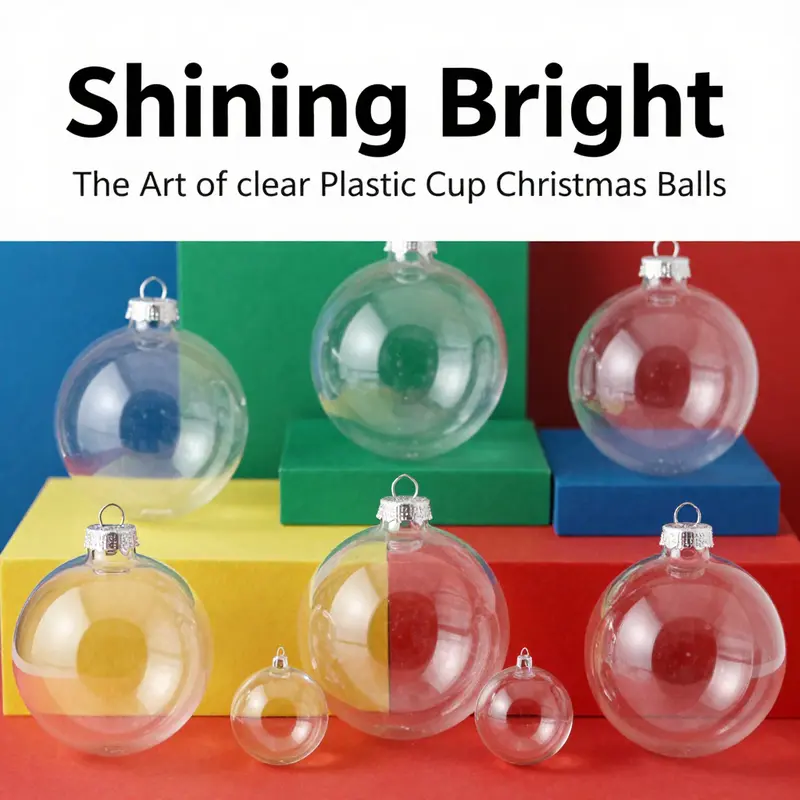
Choosing a commercial source for clear plastic cup Christmas balls requires balancing price, quantity, lead time, and finish. Retail marketplaces, small-batch platforms, and wholesale suppliers serve different buyers. Each channel brings trade-offs in customization, minimum order quantities, shipping, and quality control. This chapter walks through the options, shows what to inspect before buying, and outlines practical strategies for ordering ornamental spheres that meet both aesthetic and logistics needs.
Start by grouping commercial options into three practical categories: wholesale manufacturers and bulk suppliers, multi-seller retail marketplaces that support small batches, and consumer-focused storefronts offering ready-to-hang ornaments with quick delivery. Wholesale suppliers suit retailers, event planners, and businesses. Small-batch marketplaces help crafters and boutique shops test designs. Consumer storefronts are ideal for immediate decorating needs and low-risk purchases. Understanding what each channel specializes in makes buying smoother.
Wholesale suppliers usually provide the lowest unit price when orders are large. They can modify sizes, wall thickness, and closure types. Expect to discuss minimum order quantities, lead times, and sampling. A typical negotiation begins with requesting a sample. Samples show real clarity, fit of lids or closures, and the consistency of seams. If clear plastic cup spheres will be filled with lights or ornaments, confirm the opening diameter and whether a manufactured seam interferes with your fill process.
Customization is a wholesale advantage. Manufacturers can add logos, silk-screen prints, frosting, or tinted finishes. They can also change dimensions to match existing displays. Custom molds or tooling may add setup costs. For a first-time bulk order, build the incremental tooling costs into the unit price. Ask suppliers whether their quoted price includes packaging and whether packaging can be customized. Packaging matters for retail display and shipping. If you plan to resell, discuss minimum packaging specifications and available barcode or label printing options.
Small-batch marketplaces are a different proposition. They host many sellers offering standard clear ornament balls in sizes from small tree baubles to large display spheres. These platforms are ideal when you need a moderate number of ornaments, or when you want to test a new market concept without committing to a large inventory. Because multiple sellers list similar items, you can compare finish, price, and shipping speed quickly. Look for listings that describe the plastic type and wall thickness. Ask sellers whether the ornament opens and how securely it closes; refillable ornaments are perfect for inserting LED lights or decorative fillings.
Consumer-focused storefronts provide curated selections and fast shipping. These are the easiest choice for single orders and gift-ready purchases. Retail listings often include user photos and verified reviews. Pay attention to comments about durability, especially if the ornaments will be hung outdoors or handled by children. Clear plastic can vary from brittle to flexible. Many consumer listings include a warning about cold-weather brittleness for certain plastics. If you plan outdoor displays, confirm the product is rated as weather-resistant. UV-stabilized plastics resist yellowing, and thicker walls better withstand wind and incidental impacts.
Sizing and scale deserve careful thought. Clear plastic cup Christmas balls come in measurements ranging from small fillable spheres to large 100 mm or bigger display baubles. The visual effect depends on size, finish, and lighting. Smaller orbs concentrate internal reflections and suit dense tree foliage. Larger spheres produce broad, luminous areas and are ideal for mantles and centerpieces. When shopping, request exact external diameter and opening size. A common mismatch occurs when an ornament’s diameter is specified, but the usable opening is smaller. If you need to insert a cluster of battery lights or a garland of beads, confirm the internal clearance.
Materials and finishes determine clarity and durability. Most commercial clear ornaments are made of rigid polystyrene or lightweight acrylic. Polystyrene often achieves glass-like clarity at a lower cost, but it can crack under impact. Acrylic is more flexible and durable, but sometimes has a faint tint. Some suppliers offer a blown or thermoformed option that reduces visible seams. Frosted finishes diffuse light and soften glare. Iridescent coatings add color-shifting sheen. Many sellers offer fillable options that open in two halves or include a removable plug. If lighting is the goal, check how the halves align and whether a removable cap fits snugly to prevent accidental openings.
Pricing depends on size, quantity, and customization. Bulk purchases justify lower unit costs. For small runs, factor in shipping, fees, and possible import duties. Request the total landed cost when evaluating international suppliers. Ask whether quotes include sample shipping. Delays can occur if samples must pass through customs or sit in inspection queues. A practical approach is to test locally first, then scale globally once specifications are validated.
Lead times vary. Standard inventories ship quickly. Custom orders require production slots and tooling time. Expect production windows measured in weeks for moderate custom runs. Rush options may be available at a premium, but prioritize quality checks when time is tight. For seasonal demand, order well before the peak. Suppliers and logistics carriers may prioritize shipments differently around holidays, which can add turnaround time.
Quality control should not be an afterthought. Decide on an acceptable defect rate and document it in writing. For large orders, require pre-shipment inspection. Request photos of pallets and packaged cartons to confirm packaging integrity. Consider third-party inspection when purchasing major volumes. A spot inspection can assess clarity consistency, seam quality, and dimensional conformity. If the ornaments will be filled with liquids or fine materials, ensure there is no micro-porosity in the plastic that could allow leaks.
Packaging decisions affect retail presentation and breakage risk. Clear ornaments often ship nested or in molded trays. Nested packing reduces carton size but increases the risk of scratching. Molded trays or individual boxes improve presentation and reduce damage during transit. If retail display is a priority, ask about window boxes or hang tags. Eco-friendly packaging options exist—paperboard trays and recycled cartons—so you can reduce plastic waste and align with sustainability goals. If you sell food or confectionery alongside decor, verify that packaging materials meet any applicable food-contact regulations.
When ordering for events or branded purposes, plan for labeling and assembly. Some suppliers can pre-assemble hanging strings, hooks, or caps. Pre-assembled items save time at installation. If you will insert decorative elements or lights yourself, discuss bulk flat-pack options and the feasibility of partially assembled kits to streamline on-site work. Assembly time multiplies across units, so time-saving options justify additional cost in many projects.
Shipping and logistics shape the final delivered price. Bulk shipments benefit from sea freight for cost-effective transport. Air freight shrinks lead times at higher cost. Understand volumetric weight implications: clear plastic spheres consume cubic space compared to their weight. Carton optimization reduces cost. Ask your supplier for recommended carton dimensions and maximum units per carton. Also ask whether cartons are labeled for fragile handling. For large seasonal orders, negotiate staggered shipments to control inventory carrying costs and to enable earlier sales.
Compliance and safety should be verified for public displays. If ornaments hang in public spaces or will be used in hospitality contexts, check whether the plastic meets local flammability standards. Some jurisdictions restrict use of certain plastics near open flame. For child-friendly products, prioritize materials that resist shattering. Request safety data sheets and ask about flame retardant additives if that is a concern for the final application.
Sustainability is increasingly relevant. Even though many clear plastic ornaments come from virgin plastics, suppliers now offer recycled-content options. Recyclable designs and minimal packaging help reduce environmental impact. If your brand story emphasizes reuse and recycling, ask suppliers whether they can provide recycled or recyclable materials. Many wholesale manufacturers can blend recycled resin into the polymer mix. Confirm how that affects clarity, brittleness, and possible discoloration.
Comparing channels side-by-side helps make the right choice. Wholesale suppliers are your best option for fully customized ornaments and lowest unit price at scale. Multi-seller marketplaces excel at mid-volume experimentation and quick design variety. Consumer storefronts give speed and convenience for immediate decorating. Your buying decision should match your operational needs: testing new designs? Choose small-batch platforms. Rebranding or stocking a scaled retail line? Engage a wholesale manufacturer. Need last-minute decor? Use a consumer storefront.
For buyers who want a mix of both worlds, a two-step strategy works well. Purchase a small sample or pilot stock from a retail or small-batch seller. Validate the design with customers or at an event. Then, take the validated specs to a wholesale supplier and negotiate for a larger run. This approach reduces upfront risk and uses the marketplaces as product development tools.
When dealing with wholesale manufacturers, effective communication shortens development cycles. Provide clear technical drawings, preferred tolerances, and material preferences. Share photos of prototypes and exact measurements. Clarify whether you want glossy or frosted surfaces. If you rely on lighting inside the sphere, include the type of lights and battery pack dimensions so the supplier can confirm internal clearance. Use visual references and a sample fixture when possible.
Negotiate on more than price. Discuss payment terms, packaging requirements, defect rates, and inspection points. Try to secure a small initial production run to test the supply chain. Also request a trial of packaging designs. Packaging that saves return logistics and reduces damages is a hidden source of profit.
If your project integrates clear plastic ornaments into event décor, coordinate timing with the broader event plan. Insist on a delivery schedule that aligns with installation timelines. Reserve contingency stock for replacements. For outdoor displays, order extras to account for weather-related damage.
A practical buying checklist helps avoid common pitfalls. Before committing, verify material type and UV resistance, confirm opening size and closure type, request a sample, ask about minimum order quantities, get clear pricing with shipping included, set acceptable defect rates, and arrange a pre-shipment inspection for bulk orders. For branded items, confirm mark placement and proof approval. Finally, understand return policies and warranty coverage.
For buyers who also need packaging solutions for retail presentation, explore suppliers who offer companion packaging. You might find compatible clear or printed boxes, trays, and hang tags. Packaging that showcases the product increases appeal at retail. For inspiration on presentation and takeaway packaging options, consider a supplier that offers clear display containers and food-safe packaging in their catalog, like a collection of clear cake cups and similar transparent packaging methods. See an example of clear plastic serving and display options here: disposable clear plastic cup.
Sourcing clear plastic cup Christmas balls is as much about logistics as it is about aesthetics. The right marketplace or supplier depends on quantity, customization needs, timeline, and expected finish. Test before scaling, document specifications, and use inspection and packaging controls to protect your brand and the final display. When in doubt, start small, learn quickly, and scale with partners who demonstrate consistent quality and reliable shipping.
For a direct starting point when exploring wholesale options and factory-level customization, review supplier platforms that connect buyers with manufacturers worldwide: https://www.alibaba.com
Final thoughts
As we dive into the heart of the festive season, clear plastic cup Christmas balls present an exciting opportunity to blend creativity with environmental mindfulness. From DIY projects that engage the community to commercially viable options that enhance offerings, these decorations exemplify how holiday cheer can shine brightly without compromising sustainability. By embracing this innovative approach, businesses can delight their customers while making a positive impact on the planet. Encourage your staff and clients to participate in this joyful journey of crafting, celebrating, and caring for our environment—after all, every small action contributes to a brighter, greener future.