
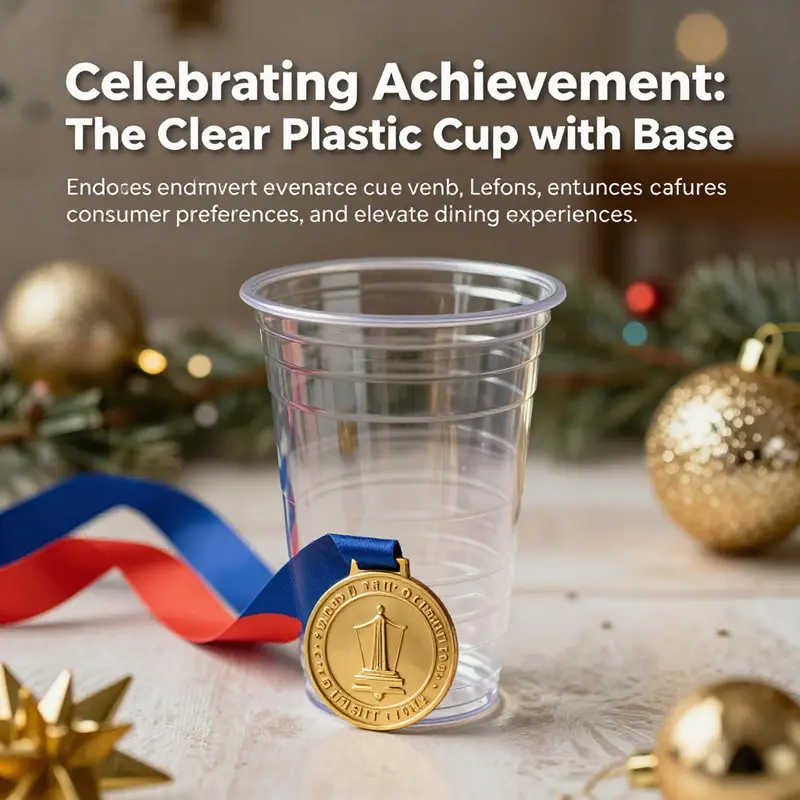
The clear plastic cup with a medal base is more than just a functional item; it’s a delightful fusion of celebration and practicality. Designed specifically for children’s events, competitions, and gatherings, this cup offers a unique means to recognize participation and achievement. It caters to an array of industries including bubble tea shops, restaurants, food trucks, and event planning services. In the chapters ahead, we will explore its distinctive design and features, the various applications it serves in special occasions, and the emerging market trends and consumer preferences that surround it.
A Cup That Awards the Moment: The Design Narrative of Clear Plastic Cups with Medal Bases
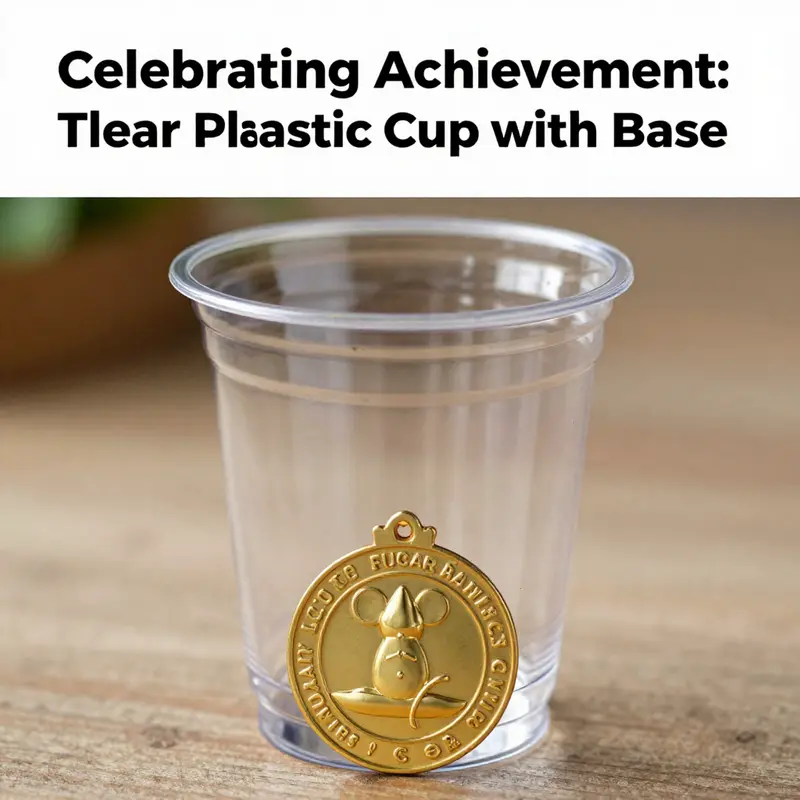
The fusion of utility and ceremony often arrives in the simplest forms, and few objects illustrate that blend as clearly as a clear plastic cup with a medal base. This small, unassuming vessel does more than hold a drink; it conveys a moment of recognition, a tangible hook on which achievement can hang. In the realm of children’s sports days, classroom challenges, and community gatherings, these cups enact a quiet theater of celebration. Their transparent body frames what the cup contains—the color of a beverage, a splash of confetti, or the gleam of a token—while the carved silhouette of a medal base anchors the event in a trophy-like memory. The result is a design that is at once practical and symbolic, a beverage vessel that doubles as a keepsake, an everyday object that elevates an ordinary moment into something worthy of attention. The design logic behind such a cup is not a haphazard union of two elements but a deliberate negotiation between form, function, and feeling. It speaks to a pervasive instinct in modern events: participants deserve to sense dignity in small rewards as vividly as in grand ceremonies. The cup, in this sense, becomes a portable podium, a compact stage on which a child’s small victory can be displayed, sipped, and saved for later reflection.
The material choices are foundational to this dual purpose. The clear cup is typically crafted from high-quality, transparent plastics such as polypropylene (PP) or polyethylene terephthalate (PET). These materials are chosen for clarity, durability, and safety in equal measure. Clarity ensures visibility of contents, which matters when the cup is used to showcase a colorfully layered drink or a visually appealing prize tucked inside. Durability matters because the event environment—gas-filled classrooms, outdoor fields, or crowded party spaces—can be unforgiving. A sturdy cup resists cracks, maintains its shape under typical handling, and continues to look pristine as it travels from station to station. Safety is non-negotiable. The cups are frequently BPA-free and designed to meet food-grade standards, aligning with regulatory expectations that govern materials which touch consumables. While the visible portion of the cup is the clear exterior, the unseen assurance of safety is what keeps organizers confident in serving beverages, small treats, or celebratory symbols directly in the cup. In this regard, the design philosophy mirrors broader industry commitments to health and well-being, underscoring that celebration need not compromise safety. The assurance often extends beyond the cup itself to environmental considerations through certifications like FSC, which signal attention to sustainable sourcing and responsible manufacturing practices. The result is a product that looks crisp in a photo, feels trustworthy in hand, and travels with a quiet, responsible footprint.
The most striking feature of the cup is the medal base, a deliberate aesthetic that elevates the object beyond mere drinkware. The base is typically integrated into the cup’s geometry so that the trophy-like silhouette remains visually cohesive rather than appearing as two disparate parts bolted together. This integration matters for a couple of reasons. First, a seamless base lowers the risk of wobble or instability that could occur if the two components were joined awkwardly. Stability is essential when a group of excited children lines up to receive awards; the last thing a facilitator needs is a spill or a toppled trophy. Second, the medal base provides a stage for customization. Logos, names, slogans, or award titles can be subtly etched, printed, or embossed onto the base, transforming the cup into a personalized memento of a specific event or achievement. The customization capability is not mere embellishment; it is the mechanism by which a generic cup becomes a meaningful artifact. A logo-crowned base, for example, can reinforce a program’s identity and remind recipients of the moment’s significance long after the event ends. The ceremonial aura created by the medal base is enhanced by a design that respects the proportions of a child’s grip. The cup’s height—roughly in the neighborhood of a comfortable three and a third inches—means the device sits well in small hands, offering a sense of ownership without overwhelming the user. When a child clutches a cup that is visually a trophy and physically easy to hold, the sense of accomplishment is reinforced by the ease of use.
Design elements extend beyond the integration of cup and base. A well-considered model may include a secure sealing lid to guard contents, a feature not to be underestimated in event settings where movement, wind, or a bustling crowd could otherwise jeopardize a drink or its hidden contents. The lid can be particularly valuable for keeping beverages fresh during long events, reducing the likelihood of spills during transitions between activities. In some versions, a U-shaped handle adds a practical twist: the handle facilitates one-handed carrying during a busy award ceremony, helps guardians supervise younger participants, and minimizes the risk of accidental drops. This relatively modest ergonomic addition can have outsized effects on user experience, particularly for younger participants who may be less adept at managing a container while balancing a trophy-like prize. The combination of a secure lid and a sturdy handle helps ensure that the cup remains user-friendly in the chaotic environments that often characterize school events, sports days, and community gatherings.
From a functional perspective, the clear plastic cup with a medal base is designed to be part of a broader system of recognition. It is intended to work as a keepsake that travels beyond the event space, stimulating recall and pride as memories mature into stories the recipients tell about their achievements. The design acknowledges that recognition is a social function as much as a personal one. When a cup is exchanged with a name or an accolade linked to a moment of effort, observers—parents, teachers, coaches, or peers—are reminded that effort is seen and acknowledged. This is not merely sentiment; it is a psychological reinforcement that participation is valued and that the rewards of effort are tangible, memorable, and portable. In this sense, the medal base is more than a decorative touch; it acts as a cognitive cue, a physical reminder that a moment of achievement was earned and preserved.
The customization potential that accompanies these cups expands the horizon of what a single item can represent. The base serves as a canvas for branding or commemoration, enabling logos, names, dates, or brief accolade phrases to be embedded, printed, or embossed in ways that suit the tone of the event. This capacity for branding is particularly relevant in settings where a program seeks to maximize the impact of its giveaways or ceremonies. A school event might seek to promote school pride and continuity across grades, while a sports clinic might use customized bases to mark the season and celebrate individual milestones. The ability to apply a clear and legible inscription ensures that the cup becomes a lasting label on a memory: a tangible reminder of a day when effort met opportunity and was celebrated in a public, accessible way. The design language thus becomes a narrative device, telling a story about participation, improvement, and communal celebration that a plain cup would struggle to convey.
A practical dimension of the design concerns event logistics and production scale. Customization capabilities typically align with a model of mass production that balances fidelity with speed. Typical branding options include logo printing, text embossing, or color accents that echo organizational colors without compromising the cup’s clear aesthetic. The marketing and procurement logic that underwrites these products often notes minimum order quantities (MOQs) around the thousand-unit mark for full customization. That threshold aligns with many school districts, sport leagues, and corporate event planners who require a balance between cost efficiency and branding impact. At the same time, a range of sizes—commonly including 12 oz, 16 oz, and 32 oz variants—offers flexibility to tailor the cup to different audience ages and event formats. A smaller 12 oz cup can feel more like a delicately designed trophy for younger participants, while larger capacities may be more appropriate for older youth or mixed-age activities that involve longer celebrations or more substantial refreshments. The choice of size also interacts with the visual ratio between the cup and the medal base, ensuring that the base remains prominent without overwhelming the practical function of the cup as a drinking vessel.
In the choreography of an event, these cups serve multiple roles. They function as gavels of praise in a line-up of award moments; they can act as a micro-incentive that encourages participation in the first place. The cups make a statement about how we recognize effort: not with a single ceremonial award, but by weaving recognition into the rhythm of the day. A child who earns a cup at the end of a contest doesn’t simply go home with a beverage and a prize; they leave with a commemorative object that can be displayed on a shelf, tucked into a backpack, or slipped into a memory box. The medal base lends gravity to the moment, even as the cup remains fully functional for daily use. The design thereby sustains meaning beyond the event’s conclusion, encouraging repeated engagement with the idea that effort yields visible, shareable success.
The sustainability and safety story is not an afterthought but a core component of the design narrative. Consumers and organizers increasingly expect packaging that aligns with environmental values and health standards. The use of food-grade materials helps assure safety for small hands and curious mouths, a critical consideration when children are involved in events where the cups may be refilled, shared, or repurposed for non-beverage uses such as containing small tokens or candies. Certifications—such as FDA compliance for food-contact materials and FSC certification for responsibly sourced packaging—signal a commitment to responsible production. Even as the cup remains a simple tool for celebration, its production speaks to a broader environmental ethic that resonates with schools, community groups, and organizations seeking to model sustainable practices for young participants. In this sense, the cup with a medal base becomes a micro-lesson in responsibility: it demonstrates that celebration can be designed to honor achievement without compromising safety or ecological considerations.
The narrative around these cups also intersects with the logistics of customization and distribution. For event organizers, understanding the economics of customization is essential. The MOQs and available sizes shape planning timelines and budget allocations. The opportunity to imprint logos or event names on the base means that each unit carries more than liquid and lid; it carries a promise that this moment is part of a longer arc of learning and achievement. The distribution strategy—whether at a single finish-line moment, at classroom award ceremonies, or across a circuit of events—benefits from a design that is intuitive to handle. The U-shaped handle, for instance, enables quick handoffs and reduces the risk of spills during transitions between activities. The secure lid helps preserve contents during transport to a post-event celebration or reception, where cups may be refilled as a way of sustaining energy and enthusiasm. The result is not merely a product but a thoughtfully engineered experience that supports the flow of events rather than impeding it. The cup’s design, then, becomes a quiet partner in the choreography of recognition, enabling organizers to deliver an experience that runs smoothly and feels cohesive from start to finish.
As the event landscape continues to evolve, the appeal of a clear plastic cup with a medal base endures precisely because it embraces dual duties with elegance. It is a practical beverage container and a celebratory artifact in one compact form. The design seeks to minimize friction—easy handling for kids, secure containment during movement, and a base that delivers a dignified, trophy-like presence without demanding additional display space. In a world where recognitions are often intangible, the physicality of a cup that can be held, sipped, and proudly shown offers a tactile memory of a moment when effort met opportunity. The result is a product that travels well into the future of school and community events, where the lesson learned is not just about a single victory but about the meaning of being acknowledged for striving toward a goal.
For readers who want to explore an example of related product categories and packaging concepts in the broader materials ecosystem, a detailed overview of disposable clear plastic cups and their use in party and event settings can be found on a related product page. This resource provides a practical lens on how clear cups perform under real-world conditions, including aspects of usability, safety, and customization potential. See the linked page for a closer look at the practicalities of clear plastic cups used in diverse event contexts: disposable-clear-plastic-cup-outdoor-picnic-pet-cup-drinking-cup-for-parties-birthdays-weddings-camping-utensils.
The chapter closes with a reminder that the cup with a medal base is not simply a product feature; it is an articulation of how we honor effort in the spaces where children grow, learn, and participate. It is a compact emblem of achievement that travels with the recipient, inviting continued participation and serving as a catalyst for conversations about success, celebration, and community. In this light, the design becomes a bridge between daily nourishment and the larger ritual of recognition—a small object capable of carrying large meanings through time. The cup, with its transparent body and its regal base, stands as a modest but meaningful testament to the idea that even everyday moments deserve a touch of ceremony, and that ceremony can be integrated into everyday objects without sacrificing practicality. It is this synergy—the blend of clarity, stability, customization, and ceremonial resonance—that makes the clear plastic cup with a medal base a quietly indispensable element in the toolkit of event organizers, educators, coaches, and families who seek to honor participation with dignity and joy.
External resource: https://www.made-in-china.com/products/
Clear Triumphs, Visible Moments: The Medal-Base Cup as a Subtle Engine of Celebration

A medal-base cup sits at the intersection of utility and symbolism, turning a simple drink into a small ceremony that participants can carry home. The clear container invites visibility, while the embedded medal serves as a tangible badge of merit that can be engraved with a name, logo, or brief message.
The design supports both practicality and sentiment. The cup remains a sturdy vessel for everyday use, yet the base anchors memories of effort, participation, and achievement in a format families can display for years.
In crowded venues the combination travels easily from hand to hand, on a shelf, or in a photo album. The clear material highlights the content inside and makes the medal stand out, creating a moment that photographs well and feels meaningful to participants of all ages.
From a production point of view the concept balances cost and perceived quality. Plastic keeps the price accessible while the medal base adds a sense of ceremony. The result is a versatile keepsake that can support multiple events and branding goals while reducing the need for separate trophies and cups.
Seeing Value in a Small Trophy: Market Currents Shaping the Clear Plastic Cup with Medal Base
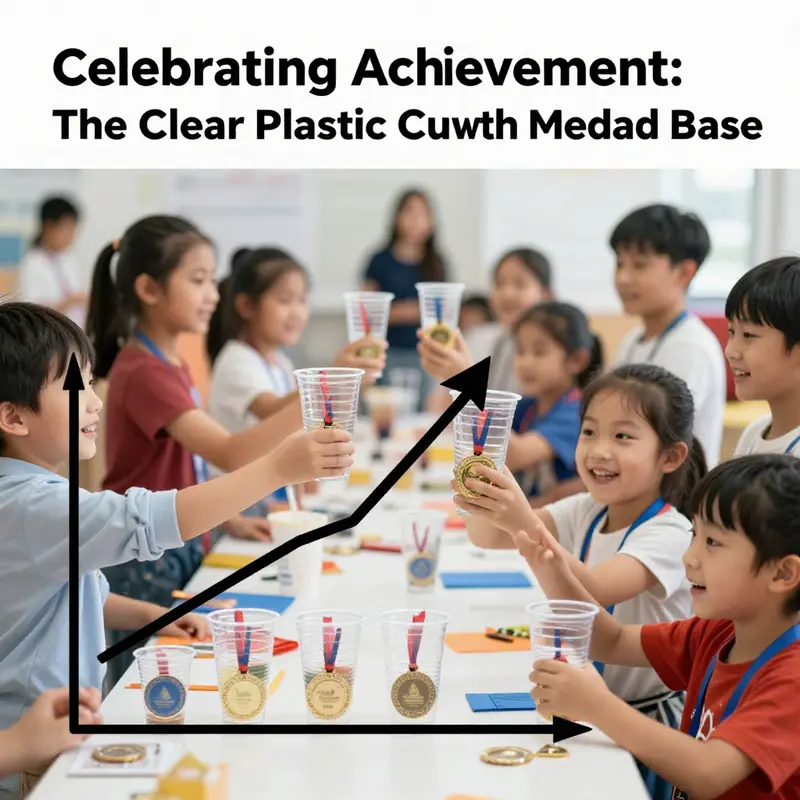
The simplest object often carries the loudest message. A clear plastic cup with a medal base is more than a functional vessel for drinks or a tiny trophy for a child’s win. It sits at the intersection of affordability, visibility, and recognition, and its popularity emerges from a set of converging market forces that shape how organizations celebrate achievement, how brands engage participants, and how households conduct celebrations. This chapter surveys those forces in a cohesive narrative that links material choices, consumer expectations, and the broader dynamics of the disposable and promotional products sector. At first glance, the cups in this category are modest. They are designed for social occasions—sports days, classroom contests, club events, and community fundraisers—where the goal is to recognize effort quickly, clearly, and with a sense of ceremony. The design principle is simple: a transparent vessel that displays contents or simply the celebratory aura around an award, paired with a medal or medal-inspired base that signals prestige without the fragility or expense of traditional trophies. Yet within this simplicity lies a sophisticated response to evolving consumer preferences and market strategies that have become central to the way awards are conceived and delivered in the modern era. The global plastic cups market has been steady if not spectacular in growth. Projections show a continued expansion of the Cups and Lids sector, from roughly USD 18.34 billion in 2026 to USD 21.64 billion by 2031, a compound annual growth rate around 3.37 percent. Those numbers are not merely about liquid containment. They reflect a broader appetite for plastic items that blend functionality with design, and for awards that balance visual appeal with practical value. In this landscape, the clear plastic cup with a medal base represents a compact synthesis of several durable trends. The first trend is material efficiency. Clear plastic, as a category, provides a cost-effective alternative to glass with the look of crystal when manufactured to high standards. The base, often constructed of metal or alloy elements, adds a tactile sense of weight and permanence that resonates with the idea of achievement. The result is an item that feels premium in a context where price is often the deciding factor for bulk buyers. The second trend centers on customization. Buyers increasingly demand products that can be tailored with logos, messages, dates, or event names. Yet even as customization grows in scope, the default aesthetic—clear, transparent, and bright—appeals across industries. A crystal-clear surface communicates purity and clarity, qualities that parents, coaches, teachers, and event organizers want to associate with fair play and transparent competition. The third trend focuses on durability and safety. The appeal of a medal base immediately communicates value, but the underlying cup must withstand repeated handling by children, rowdy crowds, and long event days. For many buyers, the cup is intended to be kept as a memento, not discarded after a single use. This combination of durability and affordability underpins the market’s preference for clear plastic designs that still look sophisticated. The consequence for producers and retailers is clear: there is substantial demand for products that deliver a premium first impression without imposing prohibitive costs on bulk buyers. Customization options, minimum order quantities, and competitive per-unit pricing determine how widely a product travels from supplier to consumer. Studies and supplier reports from the wider plastic awards and disposable cup sector indicate a willingness among buyers to tolerate larger MOQs when the unit price remains affordable. A typical wholesale scenario notes MOQs around 20 pieces, with unit costs varying from roughly US$10.50 to US$18.50, depending on design complexity, finish, and the integration of base materials. These figures illustrate a balancing act: buyers want something that looks and feels valuable in a photo, yet they want to maximize the return on every event’s budget. In practice, the clear cup with medal base often leverages a design language that resembles high-end awards without the fragility or expense of glass trophies. The clear cup acts as a canvas, letting contents, colors, and the celebratory moment shine through. The medal base, sometimes metal-plated or alloy-based, adds a physical cue of achievement. This is critical in settings where visual impact matters as much as the moment of victory itself. When the base shines, the entire award becomes a moment to be photographed, shared, and remembered long after the event ends. Such photo-worthiness aligns with the modern impulse toward social sharing. Events strive to produce momentous visuals that participants will want to post, tag, and discuss. A simple cup, turned into a trophy by the addition of a medal base, can star in a cascade of user-generated content on school bulletin boards, club newsletters, and family social feeds. The design logic, therefore, serves multiple purposes: it signals recognition, facilitates immediate use, and creates an enduring keepsake that travels beyond the event space. This multi-functionality matters because the purchases are not just about the trophy itself. They often reflect a broader brand or event identity. For community programs, a consistent design language across cups, medals, and accompanying collaterals reinforces a sense of fairness and coherence. For schools, youth sports leagues, and corporate wellness programs that conduct micro-competitions, a simple, elegant trophy-like cup offers a scalable approach to celebrate a wide range of achievements. It also supports inclusivity: the same base and cup can be customized to honor participants at different levels—participation, improvement, or first place—without requiring a separate trophy for each category. The result is a product line that can grow with an organization’s needs while maintaining a consistent aesthetic and emotional resonance. The customization dimension remains a key driver of demand. Buyers increasingly expect to imprint their own logos, messages, or event dates onto the cup or base. The base, often a metal or alloy element, can be designed to receive enamel inlays or laser-etching that preserves legibility even after repeated handling. This durability is especially important for children’s events, where the cup may travel home, be displayed in a bedroom, or be used again in future activities. The ability to brand awards with logos or personalized inscriptions enhances perceived value and helps reinforce brand recognition. Suppliers who offer bulk orders with flexible customization options meet a core need of schools, clubs, and community organizations. In this context, the medal base acts as a focal point for branding and storytelling. It’s not merely a weight or a decorative feature; it is a symbolic anchor that houses the event’s memory. The aesthetic language of the base—shiny metal, a gold-like finish, or a brushed alloy—communicates prestige. The cup’s transparency then frames the memory; the contents inside can be a winner’s medals or a confetti-tinted spectacle that captures the moment. Consumers respond to these signals with a willingness to pay a modest premium for items that appear high-end without demanding a premium price tag. In analyzing consumer preferences, several patterns emerge. First, there is a clear demand for products that appear premium yet remain accessible to mass markets. Clear plastic trophies with medal bases deliver this balance. They mimic the look of glass or crystal with a fraction of the risk of breakage. Second, buyers favor items that combine beauty with practicality. A medal base that doubles as a sturdy stand makes the product suitable for display. Families and educators appreciate a keepsake that doubles as a decorative object. Third, the demand for wholesale customization is not limited to large corporations. Smaller organizations, craft vendors, and event planners have found a sweet spot in kits that allow minimal order quantities while delivering on-brand results. The growing interest in customization has a knock-on effect on production and logistics. Manufacturers need to manage design files, color matching, and production lead times. They must also ensure that the materials used in the base meet safety standards for children’s products. This safety dimension is important. The base and the cup must be food-safe where appropriate and must not present choking hazards or sharp edges. Clear guidelines around material safety, especially for products used by children, contribute to consumer confidence. Regulators in some regions emphasize food-contact safety and toy-safety standards for products used in schools and by youth groups. Compliance with these standards does not just protect buyers; it protects retailers and event organizers who rely on these items to be safe and dependable. The ethical dimension of manufacturing practice—responsible sourcing of base metals, adherence to safe resin or coating processes, and sustainable disposal pathways—also factors into consumer preferences. While the cup and base are designed for cost-effective use, the end-of-life story matters to buyers who seek packages and products aligned with sustainability goals. Suppliers who can demonstrate responsible materials selection, recyclability, and reduced environmental impact appeal to a growing segment of buyers who see awards as part of a larger corporate or community narrative rather than as one-off trimmings. The broader industry dynamics reinforce these trends. The promotional merchandise segment and the disposable cup sector have become more interconnected as brands seek to integrate events with giveaways that are not merely disposable. The ability to feature a logo or a message on a celebratory cup means that a simple party favor can become a portable advertisement, a miniature ambassador for a program, or a family keepsake that travels into households and social feeds. The medal base anchors the moment, and the clear cup preserves it in a form that remains readable and bright across time. For practitioners, the path from market signal to product configuration can feel straightforward, yet it requires careful decision-making. The choice of base material influences not just appearance but weight, durability, and safety. A metal base can offer a tactile sense of prestige, but it might add cost and weight. An alloy finish such as gold-tone plating may satisfy the premium look while keeping costs in check. The cup itself should remain clear and resistant to yellowing or clouding with use and sunlight exposure. The manufacturing process must balance clarity with durability, avoiding micro-scratches that detract from the liquid’s appearance or from the cup’s display potential. In practical terms, buyers looking to source these items will consider lead times, MOQs, and the availability of customization options. The wholesale channel thrives when suppliers can offer reliable stock, predictable pricing, and fast turnaround for proofs and final products. As a result, the market rewards suppliers who can combine template designs with flexible customization, enabling events of all sizes to present a consistent, visually appealing award package. The relevance of the clear cup with medal base extends beyond youth-focused events. Sports tournaments, school science fairs, community fundraisers, and corporate wellness challenges all benefit from a product that conveys recognition instantly. The medal base pedagogy—recognition, achievement, and a visible marker of success—translates across contexts. Even at corporate events, where the tone might skew toward formality, a clear cup with a medal base can serve as a lighthearted, inclusive gesture that honors teamwork, perseverance, and improvement. The design language harmonizes with modern aesthetics that value minimalism, transparency, and a premium feel without ostentation. For event planners, this translates into practicalities: ease of distribution, quick assembly, and reliable capture in event photography. A cup that is easy to pass around at a ceremony, easy to store afterward, and easy to brand with a logo or inscription becomes more than a token. It becomes part of the event’s story. The practical implications for the supply chain are also meaningful. Clear cups with medal bases present predictable manufacturing challenges and opportunities. The plan to source in bulk must consider the production schedule, the stability of base finishes, and the protection of the cup’s surface during transport. Packaging choices, shipping methods, and inventory management all influence final costs and delivery timelines. Buyers must weigh the value of a premium appearance against the realities of storage space, shelf life, and post-event usage. In this light, the market for customizable clear plastic cups with medal bases demonstrates resilience. It adapts to budgeting constraints while preserving the emotional impact of recognition. It also aligns with the broader logic of promotional merchandise where items serve both immediate purposes at events and longer-term symbolism in households or classrooms. The trend toward clear plastic and high-clarity designs echoes the preference for products that feel precious yet practical. The final value proposition rests on the combination of affordability, display quality, customization, and durability. It is no longer enough for an award to be functional; it must be visually compelling and easy to brand. Consumers respond to this blend by gravitating toward products that can be personalized without sacrificing the clarity of the moment they want to honor. In closing, the clear plastic cup with a medal base operates as a small but potent artifact of recognition. It is a product born of market demand for affordable, durable, and visually engaging awards. It benefits from growth in the overall plastic cups market, benefiting from consumer appetite for clarity and customization. It satisfies the need for a tactile symbol of achievement that is both approachable and memorable. For event planners, educators, and brands, this item represents a scalable means of celebrating participation and success in a way that travels well—from school gymnasiums to community centers to corporate events—while still feeling personal and premium. For those seeking to understand practical applications of these trends, consider the broader ecosystem of disposable and promotional products that support such awards. The combination of a clear cup and a medal base is more than a product; it is a narrative device that marks moments of effort as part of a longer arc of learning, growth, and shared celebration. In the end, the appeal rests not in the cup alone but in the story it tells—the story of recognition that travels with the participant, a small trophy that endures in photos, memories, and conversations long after the event ends. For practitioners looking to apply these insights, the practical path is to seek suppliers who can offer reliable customization, attractive MOQs, and proven material safety, while keeping the design aligned with contemporary aesthetics and the needs of diverse events. As markets evolve, the core attributes remain stable: affordability without sacrifice of visual impact, durability that stands up to repeated handling, and a base that conveys prestige while grounding the cup in a tangible symbol of achievement. The continued growth of the plastic cups market supports the likelihood that these items will remain mainstream awards tools for years to come. External resource for further context on market size and material trends: https://www.researchandmarkets.com/reports/689124/plastic-cups-strategic-roadmap-analysis-and-forecasts This external reference provides a broader framework for understanding the dynamics behind the numbers cited earlier and helps contextualize how product designers balance cost, appearance, and performance when shaping next-generation awards. For practical examples and discussions of related disposable cup applications in events and packaging, you can also explore broader supply-chain insights in the linked resource that covers related categories and the role of customization in wholesale opportunities. As you reflect on the chapter’s themes, remember that the modest clear cup with a medal base embodies a larger narrative: recognition as a shared experience that can be designed, produced, and celebrated with clarity and care. It is a small object with a big footprint in how we acknowledge effort, encourage participation, and preserve moments of achievement for memory and reuse. Internal link reference: for a practical example of a disposable clear plastic cup intended for parties and events, see the resource here: disposable clear plastic cup for parties.
Final thoughts
The clear plastic cup with a medal base has reshaped how we celebrate achievements, especially among children. Its charming design, combined with practical functionality, makes it an essential addition for bubble tea shops, restaurants, and event organizers looking to offer something special. As market trends indicate a growing demand for unique and engaging presentation, this cup not only meets but exceeds those expectations, delighting both children and parents alike.