

In the bustling world of beverage service and event planning, clear plastic cups stand out as essential tools for presentations and convenience. Whether you’re in a bubble tea shop, a restaurant, catering service, or managing a corporate event, understanding how to source clear plastic cups in bulk is pivotal to your operations. This article delves into crucial aspects of clear plastic cups—such as material types, capacity considerations, geopolitical influences, and the economic implications of sourcing. Each chapter offers insights that cater to your specific needs, ensuring you make informed decisions that enhance your service while staying cost-effective.
Crystal Clarity or Thermal Toughness: Navigating PET vs. PP for Bulk Clear Plastic Cups

Choosing clear plastic cups in bulk begins with a material decision that ripples through every layer of a business’s operations. The choice between PET and PP is not just about a preference for transparency or a momentary price difference. It shapes how beverages appear to customers, how a supply chain behaves under pressure, and how sustainability goals are measured in practice. In bulk procurement, where small differences in material performance aggregate into meaningful cost and reliability outcomes, understanding the practical realities of PET and PP helps buyers align packaging with the specific demands of their environments. The narrative around these plastics is not a simple dichotomy of good and better; it is a spectrum of trade-offs that factor in presentation, temperature exposure, durability, and end-of-life considerations. When you evaluate these factors in a bulk context, you can craft a sourcing strategy that preserves drink visual appeal while delivering the reliability needed for high-volume operations, whether it is a bustling café, a weekend festival, or a corporate catering schedule that runs with machine-like precision.
PET, or polyethylene terephthalate, has become the default material for many clear, single-use beverage cups precisely because it delivers a level of visual clarity that is hard to match. In bulk orders, this transparency becomes an asset; it allows the beverage itself to stand out—the green of a lime wedge in a clear glass, the violet tinge of a berry smoothie, or the gradient of an iced tea layered with juice. The way PET refracts light and the smoothness of its surface gives drinks a premium, minimalist presentation that many venues associate with quality. PET cups are lightweight and shatter-resistant, two attributes that resonate at scale: they minimize risk in transit from supplier to event space and reduce injury or damage during handling. Recyclability is another compelling point. PET is widely recycled in many regions, and that recyclability aligns with sustainability ambitions that increasingly drive procurement choices. For brands prioritizing a clean, unobtrusive look that keeps beverages front and center, PET often emerges as the top visual performer in bulk selections.
Temperature tolerance is where PET’s story becomes more nuanced. PET can be formulated for hot beverages, but the baseline plastic is better suited to cold to moderately warm servings. When a supplier specifies heat-resistant PET, it is typically designed to withstand hot beverages without warping, but that resilience has limits. In a bulk setting, where a café offers both iced coffee and hot chocolate in the same style cup, buyers must confirm the exact temperature range and the intended use case. The heat resistance of PET is a critical factor in a kitchen or event workflow that relies on take-out service or self-serve stations, where drinks may sit for several minutes before consumption. Another practical consideration is surface durability. PET, while generally scratch-resistant enough for typical service life, can show micro-scratches in high-use environments. Those micro-scratches, over time, can dull the perceived clarity and the perceived “newness” of a cup. In contexts where presentation is everything—think boutique cafés or premium event settings—these blemishes can be more noticeable, and they may influence decisions about reusability versus single-use disposal.
Polypropylene, or PP, presents a different calculus. PP is renowned for its heat resistance and durability, key attributes for environments that see hot beverages, frequent handling, or longer storage periods. In bulk procurement, PP cups perform especially well for takeout and high-temperature servings, such as coffee and tea that customers carry to their next destination. The practical strength of PP lies in its ability to endure repeated heating and cooling cycles without significant deformation. This makes PP a reliable choice where cups may be pre-filled, stored in warm displays, and transported across a campus or a large event space. However, the optical clarity of PP, while still strong, is typically not as high as PET. PP cups usually appear a touch more opaque or milky, which can influence how the drink is perceived visually. For beverages where color, layering, or the exact hues of the drink are a critical part of the experience, this slight loss of transparency can be a consideration. Yet the trade-off is a cup that maintains its shape and clarity of form under heat and impact far more robustly than many PET formulations.
Another essential dimension is durability in transit and during service. PP’s glass-like resilience under rough handling, its resistance to chemical degradation, and its ability to withstand temperature shocks make it a trustworthy choice for bulk operations that involve quick turnover and varied storage conditions. This durability often translates into fewer broken units in the field, less waste, and more predictable inventory management. For operators whose business hinges on reliable performance across many venues, PP’s resilience can reduce spillage, damage, and the need for replacement stock during a busy service window. On the other hand, when the objective is to maximize visual impact and drink presentation, PET’s sharper clarity can outweigh those durability advantages, especially in settings where cups are used in a controlled front-of-house environment and discarded after use.
The decision between PET and PP also echoes a broader sustainability conversation. PET’s recyclability is well established, and many recycling streams are designed to handle clear PET cups efficiently. For buyers who track recyclability metrics and aim to align packaging with circular economy goals, PET can be a strong fit, provided that the cups are properly sorted and recycled at end of life. PP is also recyclable, and its durability contributes to a lower loss rate in the waste stream due to breakage. However, the recycling infrastructure for PP can vary more significantly by region, which means regional considerations become part of the decision-making process. In practice, buyers who operate across multiple markets must balance the desire for a cup that photographs well and feels premium in the moment with the realities of what happens to cups after use in their specific locale. These end-of-life dynamics matter, especially when sustainability reporting or certifications are part of the procurement mandate.
With these material profiles in view, how should a buyer approach bulk purchasing? The guideline starts with the core use-case: cold beverages with an emphasis on appearance versus hot beverages or high-traffic environments where durability and heat tolerance are non-negotiable. When drink presentation and brand image are the top priorities, PET often leads the way in bulk selections. The cups deliver a crystal-clear canvas for color and gradient, whether the event highlights a layered cocktail or a fruit-forward iced tea. In contrast, when service demands include hot drinks, varied temperatures, and heavy daily use, PP offers a more forgiving performance envelope. PP’s stability under heat and its resistance to deformation during handling can reduce the risk of cup failure during busy service periods. The nuance here is not to favor one material in every scenario but to map the decision to the operational realities of the venue, the beverage lineup, and the expected workflow.
For buyers navigating this decision, several practical steps help translate these material attributes into a confident bulk purchase. First, request precise temperature specifications from the supplier. If hot beverages are part of the plan, insist on heat-resistant formulations and verify the maximum tested temperature. Second, consider the end-user experience. Clarity matters for presentation, but the perception of quality can fade quickly if cups become scratched or clouded after a few uses or during a long event. Third, assess stacking and storage behavior. PET’s lightness and rigidity support reliable stacking and space efficiency in storage and transport, but some PP options can offer comparable stackability with potentially greater toughness in crowded back-of-house environments. Fourth, evaluate the regional recycling ecosystem. If sustainability claims are part of the brand narrative, align the material choice with the local recycling infrastructure to ensure end-of-life goals are not compromised by misalignment between packaging and local programs.
In bulk contexts, it is also prudent to think about customization and supplier partnerships. Many buyers seek not only a drink cup but a packaging solution that can carry logos, brand colors, or event themes. PET’s smooth surface often lends itself to high-quality printing, which can enhance brand visibility at a festival or a catered gathering. PP cups can accommodate branding as well, though the print fidelity and vibrancy may differ slightly due to the surface’s optical characteristics. Long-term partnerships with suppliers who can provide consistent quality, reliable lead times, and scalable printing options are especially valuable when orders run into thousands or tens of thousands of units. The procurement experience, therefore, becomes as important as the material choice itself. Having access to samples, verifying certifications, and establishing clear lines of communication helps avoid surprises in bulk orders and supports a smoother supply chain from factory floor to event site.
To illustrate how these considerations translate into practical decision-making, consider a typical bulk purchase scenario. A café chain planning a seasonal drink menu with a strong emphasis on color and presentation may prioritize PET for its superior clarity, aiming to capture the visual appeal of colorful beverages across multiple locations. A university catering operation, meanwhile, might lean toward PP for hot chocolate and coffee served during exams weeks, emphasizing durability and heat tolerance to withstand high-volume service in dorms and student centers. Each scenario reveals how a single material choice interacts with usage patterns, temperature exposure, and the brand’s narrative about sustainability and quality. The end result is not a one-size-fits-all answer but a thoughtful mapping of product attributes to operating realities.
Even within the broad PET vs. PP framework, buyers should remain mindful of the broader supply ecosystem. China continues to be a dominant hub for manufacturing and exporting bulk clear plastic cups, with established clusters that integrate automated molding lines, quality-control systems, and proximity to major export ports. The ability to secure steady supply hinges on more than price. It depends on the vendor’s track record for consistency, their ability to meet customization needs, and their commitment to environmental certifications and clean production practices. The sourcing strategy should therefore include due diligence on supplier capabilities, a preference for partners with robust quality management, and a willingness to engage in a long-term collaboration that supports predictable lead times and reliable product quality. In this environment, a well-structured supply plan paired with a clear material strategy reduces the risk that an urgent event will encounter stockouts or quality deviations that disrupt service.
For readers seeking a concrete anchor in the broader conversation about material selection, a practical example within the bulk category can illuminate how choices translate into everyday decisions. Disposable Clear Plastic Cup for Parties and Outdoor Picnics provides a real-world reference point for visual clarity, single-use convenience, and the tradeoffs inherent in bulk campaigns. It underscores how a cup’s appearance, temperature resilience, and handling characteristics come together in a product designed for wide distribution and high turnover. While the specific product page may vary, the underlying principle remains consistent: the material choice should align with the intended beverage experience, the service context, and the practical realities of bulk supply—and the supplier relationship should reinforce that alignment through dependable performance and clear communication.
The next step for buyers is to translate this material understanding into a procurement brief that captures temperature ranges, presentation priorities, and sustainability targets. A well-crafted brief helps suppliers demonstrate what their PET and PP offerings can deliver in a bulk scenario, including any heat-resistant formulations, print capabilities, and packaging configurations that optimize storage and transport. The briefing process also helps buyers assess long-term value beyond upfront unit price. Hidden costs—such as waste from breakage, storage requirements, or the need for additional defect-related replacements—often reveal themselves only after a pilot run or a staged rollout. By anticipating these factors, buyers can compare PET and PP not just on a per-unit basis but on the overall cost of ownership across the product’s life cycle in bulk usage.
In closing, the PET versus PP debate is not a rigid verdict but a strategic choice that should be grounded in the specific context of the business: the type of beverages offered, the service environment, the handling and storage realities, and the brand’s sustainability commitments. When presented with cold drinks that rely on color and clarity, PET’s exceptional transparency can elevate the consumer experience. When service demands mandate heat tolerance and rugged durability, PP provides a resilient platform that keeps performance intact from kitchen to curb. Each material has a distinct spectrum of strengths, and the most effective bulk-buying approach mirrors the unique blend of beverage strategy, operational workflow, and environmental stewardship that defines the business. As you navigate this landscape, keep the end-to-end journey in mind—from the factory floor to the event floor—and lean into suppliers who can translate material science into reliable, scalable packaging solutions that support consistent service today and a clearer footprint for tomorrow.
External reference: For a broader, external materials guide on PET versus PP and their implications for bulk cup procurement, see the detailed resource here: https://www.supplychain.com/plastic-cups/pet-vs-pp-clear-plastic-cup-materials-guide.
Sizing for Scale: Mastering Capacity When Buying Clear Plastic Cups in Bulk
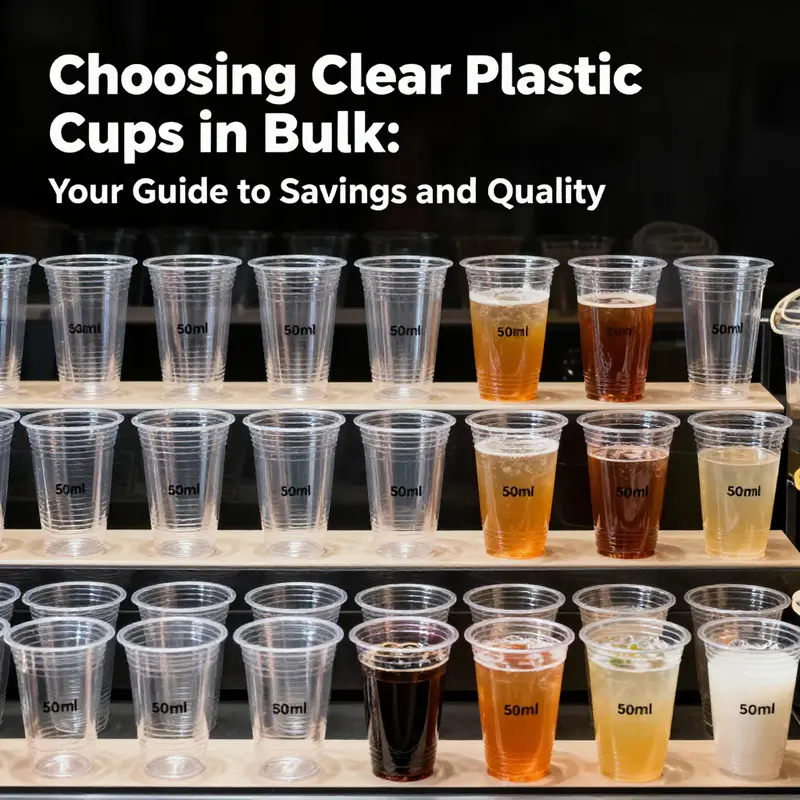
Capacity is more than a number on a spec sheet. In the world of clear plastic cups bought in bulk, it is the quiet engine that drives how smoothly a business operates, how efficiently a kitchen or event crew can respond to demand, and how waste is controlled from the moment a beverage is poured. When buyers plan for capacity, they are not simply choosing a size; they are shaping the rhythm of service, the efficiency of storage, and the economics of every event, cafe run, or catering engagement. This makes capacity planning an essential, often understated, part of sourcing decisions. A well-chosen mix of sizes can simplify stock management, reduce spoilage, and deliver predictable portions that align with customer expectations. It can also provide the flexibility to accommodate a wide range of applications, from a light afternoon tasting at a conference to a full-service beverage station at a festival. The practical question, then, is how to map the spectrum of sizes to the real-world needs of a business without incurring unnecessary cost or waste. The answer begins with understanding the typical capacity ladder and how each rung serves a distinct purpose, then moves to how those sizes interact with the realities of storage, transport, and daily operations.
Clear plastic cups are available in a broad range of capacities, with common sizes spanning from tiny samples to very large servings. The smallest cups, around 3 ounces, often serve in tasting flights, health-care demonstrations, or sample capsules at product launches. At the next level, 7-ounce cups provide everyday portions suitable for light beverages or controlled samples. Moving up, 12-ounce cups have become a standard for medium beverages, balancing comfortable handhold and ample beverage content for a casual drink. The workhorse size in many cafes and venues is the 16-ounce cup, prized for its rigidity and ability to hold cold beverages like iced tea or juice without collapsing under their weight. Beyond that, 20-ounce cups offer more generous capacity for larger drinks, while 24-ounce versions fit the needs of long events or where guests expect a larger, more substantial serving. Capstone sizes, such as 32 ounces, cater to very large drinks or even multi-serve portions that can be shared or used for self-serve beverage stations. In metric terms, suppliers often present sizes as roughly 100 ml, 150 ml, 200 ml, 240 ml, and 300 ml equivalents, mirroring the way teams think about portions in different markets. It is not uncommon for a single bulk order to feature multiple sizes, providing a toolkit of options rather than a single, one-size-fits-all solution. This multi-size capability is especially valuable in settings where menus rotate with seasonality or where events range from bite-sized tastings to full-service beverage bars.
The practical implications of capacity extend into every corner of operations. Storage footprint matters: larger sizes occupy more shelf space and demand more careful stacking to avoid damage during transit and in warehouses. But larger cups can reduce the frequency of restocking and limit the total number of SKUs a buyer must manage, which can translate into simpler inventory workflows and lower handling costs per unit. Conversely, smaller cups often lead to finer control over portioning, which can help minimize waste and tailor servings to specific customer expectations. The key is to balance the space saved on shelves with the space required on the restaurant line or at the event service area. A well-structured bulk order can allow staff to pull from a compact, predictable assortment rather than hunting for the right size amid a cluttered storage area.
Cost considerations are inseparable from capacity decisions. Unit price generally scales with volume, but the pricing curve is not linear. Manufacturers and distributors frequently offer volume discounts that reward larger orders or combinations of sizes. The per-ounce cost often drops as capacity increases, but the incremental savings must be weighed against the total quantity purchased and the anticipated usage. In many operations, cost-per-serving becomes the more meaningful metric. A bulk purchase that stacks up to a modest total cost per beverage can be more economical than a smaller order that forces frequent reorders, carries higher handling costs, or leads to more frequent supplier communications. The subtle arithmetic ofCapacity per unit versus total cost per event drives how many sizes to stock and how aggressively to consolidate orders. For businesses handling a mix of quick-service drinks and longer, more complex service at events, a mixed-size strategy commonly yields the best balance between efficiency and flexibility.
Functionality is intimately tied to capacity. For cold drinks, 12-ounce and 16-ounce cups are near-universal because they provide a comfortable balance between sip experience and the cold-drink environment they inhabit. For cocktails or beverages with decorative elements, clear cups in mid-range capacities often allow garnishes, color showcase, and layered beverages to be presented without crowding. For hot beverages, the degree of heat resistance becomes a factor that sometimes interacts with capacity. In this context, material choice—commonly PET or PP—can influence when a larger cup is practical, because thicker walls and specialized rims may be needed to maintain integrity under heat exposure. In many retail and service environments, there is a preference for cup designs that resist condensation, remain stackable, and offer reliable fatigue resistance when cages of cups are moved from storage to service lines. The capacity decision is then not only about how much liquid a cup holds, but how those physical properties work in concert with the way the drink is prepared, displayed, and consumed.
An important consideration is the degree of customization that a supplier can offer within a bulk order. Some buyers value the ability to mix sizes in a single purchase to align with varied service formats across a single venue or across a season of events. A bulk order might include a 3-ounce option for sample demos in a health-food expo, a 12-ounce option for standard fountain beverages, and a 16-ounce option for specialty coffees or iced drinks. Beyond capacity, buyers can explore compatibility with design elements such as logos or color accents, but they should weigh customization against lead times and minimums. Customization can add value by reinforcing branding and improving recognition, but it is essential to confirm that the added features do not compromise supply reliability when demand is high. In practice, suppliers with robust quality control and scalable production lines can deliver consistent results across a spectrum of sizes, helping buyers maintain uniform service quality while still offering diverse serving options. The capacity question, therefore, becomes part of a broader conversation about reliability, customization, and long-term partnerships with manufacturers who can scale with demand.
The decision to mix capacities within a bulk order also intersects with storage efficiency and logistics. Larger sizes can streamline restocking by reducing the number of trips needed to replenish beverage lines, particularly in venues with high throughput. Smaller sizes, in contrast, can be used to fine-tune portion control at stations where staff shifts and guest flows demand nimble, rapid service. For catering operations, the capability to deploy a handful of sizes across a single event translates into a more resilient service model: guests enjoy appropriately portioned drinks, while staff experience smoother workflows. When teams anticipate peak moments—like lunch rushes, cocktail hours, or outdoor festival windows—they may pre-plan a temporary surge in certain sizes to match expected demand. In such cases, a well-documented capacity strategy helps procurement teams forecast usage patterns, optimize storage layouts, and minimize the risk of running out of a preferred size mid-service.
For buyers actively sourcing in bulk, the pathway from capacity considerations to procurement outcomes often passes through supplier evaluation and sample testing. A practical approach is to request samples in several sizes to verify fit with beverage lines, verify cup rigidity under typical temperatures, and assess how the cups stack and nest for efficient storage. Because capacity is intertwined with physical handling, it helps to observe how cups perform during on-site service: how they feel in staff hands, how well they resist tipping when pulled from a tray, and how attractive they look when filled with clear liquids that reveal color and clarity. The sample process is also an opportunity to test the supplier’s responsiveness, packaging integrity, and consistency across multiple batches. A supplier who can demonstrate stable performance across sizes and maintain reliable lead times during peak periods often proves to be a more valuable partner over the long term.
In the context of the broader supply ecosystem, capacity decisions are influenced by how buyers plan to source at scale. When exploring bulk options, buyers may encounter platforms that connect to verified suppliers and offer bulk programs starting from thousands of units. The ability to mix sizes within a bulk order can simplify logistics, especially when planning cross-functional events or multi-day operations where a single provider handles multiple beverage concepts. This is where a strategic approach to capacity aligns with broader sourcing objectives: consolidating procurement, reducing supplier fragmentation, and ensuring that the cups’ capacity matches the expected consumption patterns across the organization. It is also worth noting that many buyers find value in establishing long-term partnerships with suppliers who demonstrate consistent quality control, transparent communication, and scalable production capabilities. The capacity conversation, then, becomes a gatekeeper for reliability and replicable results in busy environments.
At times, capacity planning touches on the aesthetics of presentation as well. Clear cups provide visual appeal that helps guests assess the beverage color, texture, and perceived freshness. In retail or event contexts, this visibility can influence ordering behavior and perceived value, especially when drinks are displayed on self-serve stations or in front-of-house settings where customers select beverages directly from display lines. From a design perspective, capacity choices should harmonize with display strategy, ensuring that the chosen sizes complement the glassware, napery, and overall presentation. As businesses scale, the ability to optimize capacity while preserving clarity and presentation becomes a valuable differentiator that supports both guest experience and operational efficiency. In such a landscape, the capacity decision functions not as a narrow technical spec but as a strategic lever for service quality, cost management, and brand consistency.
For those who want a concrete example of how capacity translates into everyday practice, consider a scenario where a venue hosts a weekend festival with multiple beverage options. The organizers decide to stock three primary sizes: 12 ounces for standard soft drinks, 16 ounces for specialty iced beverages, and 20 ounces for larger, crowd-friendly servings. They order a balanced mix that minimizes waste and keeps storage manageable on site. They arrange the inventory in a way that staff can quickly access the correct size at each station, with clear labeling and a simple re-stocking rhythm that aligns with break times and service surges. By combining sizes in a thoughtful, demand-driven way, they achieve consistent portion control, reduce over-pouring, and maintain a clean, organized service footprint that speeds service without sacrificing quality. This approach demonstrates how capacity is more than a function of unit count; it is a strategic element of service design and operational discipline that scales with the event’s scope.
In occasional discussions about the sourcing landscape, buyers often encounter the broader question of where to purchase in bulk. The capacity considerations described here apply whether orders come from regional distributors, direct-from-manufacturer programs, or global marketplaces. A practical takeaway is to evaluate the entire lifecycle of the cups—from production capacity and quality controls to packaging, transport, and end-of-life considerations. Buyers should look for suppliers who provide clear specifications on wall thickness, rim design, and sealing surfaces, all of which influence how well a cup maintains its capacity integrity through handling and service. The reliability of shipping schedules, the predictability of lead times, and the consistency of capstone sizes across lots are additional metrics that matter when capacity is scaled up. When a capacity plan is paired with a robust supplier network and a clear understanding of usage patterns, it becomes possible to build a bulk sourcing strategy that is both efficient and resilient across seasons and events.
As a practical resource for buyers seeking to ground their capacity decisions in a broader sourcing framework, a look at product assortments available on supplier platforms can be illuminating. Some buyers find value in exploring ranges that explicitly list multiple sizes within a single catalog entry, which simplifies comparison and planning. Others rely on supplier-provided data sheets to verify compatibility with beverage lines and to confirm whether the cups are intended for cold, room-temperature, or hot applications. The key is to approach capacity not as a single specification to be checked off, but as a dynamic parameter that informs how you design menus, schedule service, and allocate space in storage and transport. When capacity is understood as a flexible, scalable component of the procurement equation, bulk purchases become not only cost-effective but also adaptable to shifting demand and emerging service formats. The result is a more resilient operation that can navigate the demands of crowded events, steady daily throughput, and seasonal variations with equal competence.
For readers who wish to explore related packaging options and to see how capacity planning sits alongside other disposable tableware decisions, an internal reference worth examining is the broader portfolio of clear packaging solutions that support dessert, beverage, and catering applications. See the collection focused on clear cake cups for desserts for a concrete example of how capacity considerations translate into a practical packaging choice: clear cake cups for desserts.
In sum, capacity is a foundational element of bulk purchasing that informs storage, cost, and service design. It helps determine how many serving options a venue can sustain, how staff will manage the service line, and how customers will experience portions. When buyers approach capacity with a strategic mindset, they set the stage for reliable, scalable operations that deliver consistent quality across a spectrum of events and daily workflows. The conversation about capacity thus weaves together practical logistics, economic efficiency, and guest experience into a cohesive sourcing narrative that supports growth and resilience in the disposable tableware ecosystem. External sourcing insights and market dynamics continue to shape these decisions, reminding buyers to balance standardization with the flexibility to adapt to new formats and events. For a broader look at bulk sourcing options and supplier capabilities, industry resources and catalogues offer a landscape of possibilities that can help refine capacity strategies and procurement plans over time.
External resource for further reading: https://www.alibaba.com/showroom/plastic-cups-in-bulk.html
Global Currents, Clear Cups: Geopolitics in Bulk Procurement
Bulk buying of clear plastic cups sits at the intersection of practicality and risk. The cup is simple, but the supply chain behind it travels through geopolitics. Raw materials, shipping routes, and policy decisions all influence price, availability, and lead times. When energy markets tighten or sanctions constrain key exporters, resin costs can rise and shipments can be delayed. For buyers procuring hundreds of thousands or millions of units, understanding these forces is not optional but essential.
The production backbone relies on polypropylene and polystyrene derived from fossil fuels. Changes in energy policy or regional stability can shift feedstock availability and transportation costs, producing price volatility even when unit prices appear stable. Buyers should plan with scenarios that test tariff shocks, currency moves, and port disruptions, and build in buffers and flexible contracts.
Diversification across regions and suppliers helps spread geopolitical risk. Regional manufacturing, multi-sourcing, and contingency clauses in contracts can reduce exposure to single points of failure. Collaborative supplier relationships enable better visibility into capacity and potential bottlenecks, supporting steadier pricing and reliable delivery.
Sustainability and regulatory developments also shape sourcing choices. Recyclability goals and food-contact compliance influence supplier selection and may steer buyers toward regions with stable standards, reducing risk tied to import restrictions on virgin resins. In practice, this translates into transparent certifications, clear material provenance, and traceable quality control across the supplier network.
In day-to-day procurement, scenario planning, currency hedging, and flexible delivery calendars help maintain supply during geopolitical shifts. The result is not just cost control, but resilience: a bulk cups program that can weather disruptions while continuing to serve events, institutions, and everyday service.
From Bulk Buys to Bottom Lines: The Economic Calculus of Sourcing Clear Plastic Cups in Large Volumes

For many food-service operations, event programs, and retail concepts, the decision to buy clear plastic cups in bulk is not just about meeting daily needs. It is about aligning a basic, high-volume item with a business model that prizes predictable costs, reliable supply, and strategic flexibility. The economics of bulk sourcing begin with the most visible lever: price per unit. When a buyer purchases thousands or tens of thousands of cups at a time, the supplier can spread fixed production costs across a larger output, negotiate favorable resin prices, and push down handling and packaging costs per cup. The reductions in unit cost are not merely cosmetic. They translate into meaningful margins for venues that operate on tight profit pools, as well as more predictable cost structures for caterers who bill by event and for retailers who plan for seasonal spikes in demand. In practice, the economics of scale cascade through every layer of procurement, logistics, and usage. A few figures, typical in large operations, help illuminate the logic: a supplier may offer a 6–10 percent per-unit savings at certain volume thresholds, while the cost savings from reduced packaging and improved stacking efficiency can shave additional fractions of a penny off each cup. Over a year, that compounds into real capital that can be redirected toward service improvements, marketing, or sustainability initiatives. The core idea is straightforward: the larger the purchase, the more leverage a buyer commands, and the more value can be extracted from the same basic product. Yet the path from bulk order to bottom line is not a straight line. It travels through supply chains, risk management, quality controls, and evolving consumer expectations about packaging. The journey begins with the two most consequential choices a buyer makes before the first pallet is opened: the material composition and the capacity option that best matches anticipated usage. Clear plastic cups are typically fashioned from PET or PP resins, each offering distinct profiles of rigidity, clarity, heat tolerance, and recyclability. PET tends to deliver crisper transparency and greater stiffness, which is particularly valuable in beverages that demand a premium presentation—think cocktails, iced coffees, or fruit-forward drinks where color and hue matter. PP, while often a touch less rigid, can excel in applications requiring cooler temperatures, lighter weights, or more flexible stacking behavior. The material decision is not purely a matter of aesthetics. It directly informs a cascade of cost implications: resin price volatility, occurrences of micro-variations in cup thickness, and the likelihood of breakage during transit or handling. These factors ripple through shelf space planning, display strategy, and even the design of serving processes in busy environments. The capacity choice—ranging from small 50ml samples for quick-service environments to 473ml or larger sizes for bulk beverage service—must be anchored in forward-looking demand planning. A hospital or testing facility that routinely uses spill-safe rinsing cups, for example, will require different inventory strategies than a multi-site cafe network serving tall specialty beverages. The more precisely a buyer forecasts, the more the economics of scale can be exploited without incurring the opportunity costs of overstocking or stockouts. Forecasting is not a standalone exercise. It intersects with procurement cycles, supplier lead times, and storage realities. Longer lead times are common when sourcing from major manufacturing hubs, particularly in periods of global demand fluctuation or port congestion. In such contexts, the economics of bulk purchasing also hinge on the ability to secure favorable terms that stabilize cash flow and protect against sudden price spikes. Long-term contracts may lock in resin prices or provide fixed discounts that apply across multiple orders, helping to stabilize budgeting for events, hospitality programs, or retail promotions. At the same time, bulk contracts introduce their own set of financial and operational considerations. They often require minimum purchase commitments, credit terms, and performance milestones. If supply becomes erratic—due to factory downtime, transport bottlenecks, or quality issues—these agreements can become a source of risk rather than resilience. This is where supplier selection strategies become central to economic outcomes. A practical approach emphasizes more than merely the price tag. It weighs compliance, capacity, communication, and customer retention as core pillars. A supplier who operates with robust quality-control systems, traceability, and FDA-compliant, food-grade resins reduces the chances of recalls, complaints, or regulatory headaches that can erode margins far more quickly than a temporary price advantage. In this sense, the economics of bulk sourcing become a test of risk management as much as a test of arithmetic. A reliable supplier is a hedge against hidden costs: the expense of recalls, the downtime required to address defects, and the reputational damage that can follow a poor batch. Conversely, a supplier with unreliable lead times or opaque quality checks can introduce significant costs through expedited freight, last-minute substitutions, and uneconomical batch splits. The strategic purpose of bulk purchasing can also be reinforced by the branding and marketing benefits that high-volume operations often leverage. Branded, custom-printed cups can convert everyday disposables into portable advertising real estate. Logos, color schemes, and slogans on clear cups can improve brand recall at events, in-store promotions, and hospitality settings. The incremental marketing ROI, while not always quantified in simple unit economics, can be substantial. It’s important to balance the upfront costs of customization with the long-run value of increased visibility, especially for seasonal campaigns or recurring partnerships with venues and franchises. From a financial planning perspective, the lifecycle economics of bulk plastic cups require a careful comparison of single-use convenience against reusable options. In markets that are increasingly attentive to sustainability, buyers must consider the total cost of ownership, including waste disposal, recycling fees, and the potential for regulatory pressure to restrict consumer waste. Although bulk purchases simplify immediate cost control, the broader environmental cost calculus can influence long-term budgeting and strategy. If a company aims to optimize energy use, reduce landfilled waste, or meet corporate sustainability targets, the economics of bulk sourcing must be weighed against alternative packaging strategies. This is especially important as consumer expectations shift toward reusable or more easily recyclable packaging options. The decision framework grows more complex when considering logistics and storage. Bulk purchases require adequate warehouse space, appropriate handling equipment, and inventory management systems that track expiry, if any, and rotation. While many clear cups have a broad shelf life, mismanagement can lead to overstocking, obsolescence, or damage during storage. The financial impact of such failures extends beyond the direct cost of the cups. It includes tied-up capital, space that could be used for higher-margin inventory, and the administrative burden of extra stock audits. The interplay between storage, demand variability, and supplier reliability is a constant in the economics of bulk sourcing. The most successful buyers of bulk clear cups adopt a holistic procurement view. They align procurement calendars with event schedules, marketing campaigns, and store rollouts. They also maintain contingency plans for disruptions—alternate suppliers, expedited shipping options, and flexible contract terms that allow for volume adjustments without punitive penalties. In practice, this means regular supplier performance reviews, transparent communication channels, and clear escalation protocols when production or logistics gaps emerge. It also means integrating procurement with product lifecycle and brand strategy. If a retailer plans a major seasonal push, the cups purchased in bulk should be readily divisible into smaller, reusable packaging units to support store-level merchandising while maintaining the bulk price advantage. The marketing synergy is not incidental; it is a deliberate optimization that ties unit economics to the broader business model. Even the most straightforward purchases can become complex when one considers the external forces that shape prices and availability. Global oil markets, geopolitical developments, and trade policies can influence resin costs and freight rates. A 2026 lens on supplier selection urges buyers to evaluate more than price: it suggests assessing capacity, communication, compliance, and customer retention as core metrics. Those factors help ensure long-term reliability and minimize hidden costs that may accompany recalls, regulatory investigations, or production delays. The value of this approach becomes most apparent when a fast-paced operation experiences a sudden surge in demand. A well-mhed bulk strategy can scale to meet spikes without triggering price shocks or stockouts. At the same time, it requires disciplined governance—clear procurement strategies, risk-adjusted inventories, and ongoing dialogue with suppliers about capacity commitments and quality targets. For buyers who seek tangible examples of the category’s economics, a practical reference point lies in the category’s own core use cases. Restaurants, caterers, and event firms rely on clear cups not just as containers but as components of their service experience. The cups must be transparent enough to display the beverage, sturdy enough to withstand day-long service, and compatible with a variety of lids, sleeves, and accessories that support efficient service workflows. The procurement decision, thus, integrates with kitchen design, bar operations, and event logistics. It is not simply about obtaining the cups; it is about ensuring the cups contribute to consistent service delivery, predictable costs, and a reliable supply chain that can weather disruptions. To illustrate the practical side of these choices, consider a scenario where an operator negotiates a multi-year bulk agreement with a single supplier. The arrangement might include tiered pricing, annual volume commitments, and performance-based incentives tied to on-time delivery and defect rates. In return, the operator gains budgeting certainty, more straightforward reorder cycles, and reduced administrative overhead. The supplier, in turn, benefits from predictable demand, capacity planning, and reduced risk of last-minute price changes. The shared outcome is a more efficient operating model that supports daily operations and major events alike. A noteworthy dimension of this dynamic is the potential to leverage bulk cups as a strategic asset within a broader packaging ecosystem. Buyers can coordinate with other disposable tableware items—plates, trays, lids, napkins, and promotional packaging—through a single supplier network that offers consolidated terms, simplified logistics, and consistent quality across product families. The efficiency gains from such alignment are not trivial: consolidated shipping can reduce freight costs, shared quality-control processes can lower the risk of mismatches, and a unified supplier relationship can improve response times during busy periods. Embedding a category like clear cups into a larger strategic framework also supports sustainability objectives. When a buyer can standardize a family of products, it becomes easier to communicate recycling and waste reduction goals to customers and staff. It can also enable more coherent end-of-life strategies, such as bulk recycling programs or collaboration with certified recyclers. The challenge remains to balance economic gains with environmental responsibilities. Markets increasingly favor suppliers who publish clear recyclability data, provide traceability, and invest in cleaner manufacturing processes. The economic advantage of bulk sourcing thus evolves with a broader ethical and regulatory landscape, where the most resilient buyers are those who can demonstrate not only cost efficiency but also responsible stewardship of resources. As with any complex procurement decision, the ultimate test of bulk sourcing economics lies in execution. A well-conceived strategy that optimizes price, risk, and value will still falter if the supply chain is brittle, if quality is inconsistent, or if the organization cannot translate savings into measurable improvements for customers. For readers seeking a concrete example of how the category can be navigated in practice, consider this product page that showcases disposable clear plastic cups for events. This internal reference illustrates the kind of category you want to align with when negotiating bulk terms, communicating with suppliers, and planning for peak demand. disposable clear plastic cups for events. Beyond the specifics of any single page, the principle remains: bulk sourcing is a financial discipline that, when executed with discipline, can produce durable margins, resilient operations, and a clear path to sustainable growth. The chapter’s central argument is not merely about finding the lowest price, but about designing a procurement program that marries cost discipline with quality, reliability, and adaptability. The evolving expectations of customers, investors, and regulators all push toward a procurement approach that values transparency, strong supplier relationships, and a clear plan for currency and price risk. In this environment, the trade-offs that define success are less about chasing a single price at a single moment and more about maintaining a resilient procurement engine that preserves value across cycles of growth and volatility. For readers who want to explore the regulatory context that underpins the safe use of plastics in contact with food, the following external resource provides detailed guidance on materials used in food-contact packaging. External resource: FDA Guidance on Food-Contact Plastics: https://www.fda.gov/food/food-contact-materials/fda-guidance-food-contact-materials
Final thoughts
Clear plastic cups serve as invaluable assets across various sectors, from beverage service to event planning. By understanding the material types, capacity options, geopolitical influences, and economic implications of bulk sourcing, businesses can make strategic purchasing decisions that not only enhance customer experience but also streamline operational costs. Investing time in research and selecting the right suppliers ensures quality and reliable supply, optimizing your service impact. As you move forward in your sourcing journey, let these insights empower your choices in serving beverages efficiently and attractively.