
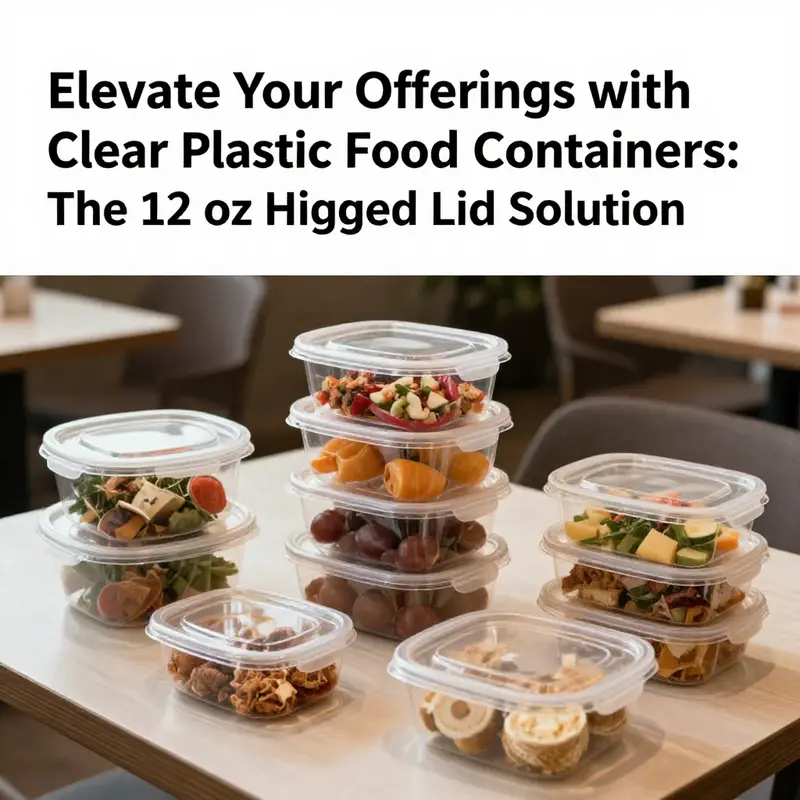
In today’s fast-paced food and beverage industry, the packaging you choose can significantly affect customer satisfaction and operational efficiency. Clear plastic food containers with hinged lids, particularly the 12 oz variant, are becoming increasingly essential in settings such as bubble tea shops, restaurants, food trucks, catering services, and event planning. These containers not only provide a reliable solution for portion control but also enhance the presentation of your offerings. The following chapters will delve into their design and functionality, discuss environmental considerations, and explore current market trends and economic impacts, illustrating why these containers are an ideal choice for your business.
Clarity, Control, and Craft: The 12 oz Clear Hinged-Lid Container as a Cornerstone of Modern Food Packaging
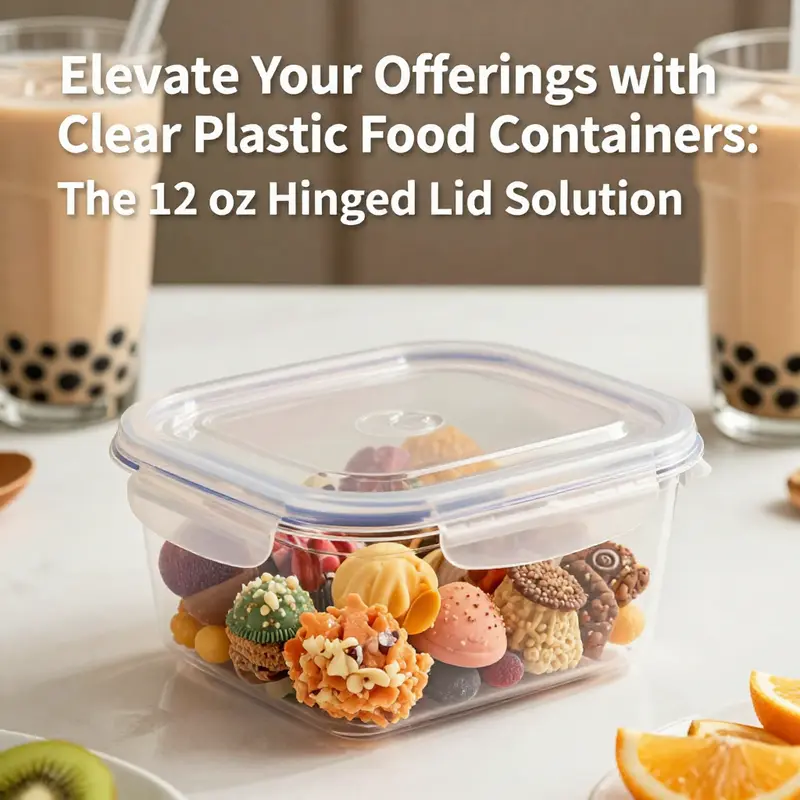
The 12 oz clear plastic food container with a hinged lid sits at a quiet frontier of modern packaging, where everyday practicality meets a growing expectation for transparency, hygiene, and sustainability. In the stream of meals and snacks that move from kitchen to consumer, this small vessel serves as a bridge between appearance and assurance. Its compact footprint belies a design that must perform under a variety of pressures: durable containment, clear visibility, predictable handling, and efficient logistics. The hinge, the lock, and the transparent walls together tell a story of reliability, enabling operators to present products with confidence while preserving freshness through transit and display. In a marketplace where shoppers often decide in an instant, the value of visibility cannot be overstated. The 12 oz size is especially versatile, straddling the line between a serving and a portion, making it a staple for deli cases, fruit assortments, desserts, salads, and convenience meals. The question driving the design is simple, but its implications are broad: how can a container be so small and so capable at the same time?
At the heart of capability is material choice. The clear body is typically fashioned from a food-grade polymer such as PET or RPET. PET, or polyethylene terephthalate, is renowned for its clarity and rigidity, traits that keep the contents visible and the container sturdy during handling. When recycled content is introduced, as in RPET, the story expands to include environmental responsibility without sacrificing performance. Clarity remains essential; the material must transmit light well enough to display the contents attractively while resisting yellowing or hazing over time. For retailers and food service operators, that translucence translates into faster eye-level recognition of product and, ultimately, quicker turnover. This is particularly important for items like fruit medleys, layered desserts, or pre-packaged meals where the consumer decision is heavily influenced by the appearance of freshness and portioning. The design thus balances optical performance with practical toughness, ensuring a clean, pristine backdrop that allows the product itself to be the focal point.
The lid is a feature often overlooked in casual appraisal but central to the container’s value proposition. A hinged lid converts the act of opening into a one-handed motion, a small but meaningful improvement in user experience. For a customer grabbing a snack on the go, the ability to open, view, and reseal with one hand translates into reduced spillage and greater confidence in cleanliness. A bar-lock mechanism—where present—adds a discreet, reliable seal that resists accidental opening during transport. This is especially critical for items with liquids or viscous sauces that could migrate under pressure, and it supports the overall promise of hygiene. The hinge itself is engineered for durability; it must withstand numerous open-and-close cycles without loosening or warping. In the context of food service and retail, that reliability reduces waste, minimizes returns, and supports consistent product quality across shifts and days.
Aesthetic and functional alignment together drive the 12 oz container’s geometric language. The choice between a rectangular or square clamshell shape is not incidental; it is a calculated decision to maximize stackability and shipping efficiency. In practice, these shapes allow near-perfect packing density in both back-of-house storage and front-of-house display. The claim of up to 40 percent savings in storage space is not merely a statistic; it translates into real-world efficiency. Fewer pallets or shelf pulls mean lower handling costs, faster restocking, and better use of cold-chain real estate. When a kitchen or deli replenishes a display case, every inch saved in packaging translates into more product on the floor or more items ready for delivery orders. Lightweight construction further complements this efficiency, easing manual handling and reducing fatigue among staff during busy periods. The cumulative effect is a packaging system that seems simple on the surface but is deeply aligned with the needs of busy kitchens, retailers, and delivery operations.
From a safety perspective, compliance and hygiene underpin every design choice. In many markets, these clear containers are aligned with FDA standards for direct contact with food. Standards such as FDA 21 CFR 177.1630 establish the safety framework for materials that touch food, including the appropriate resins, additives, and processing conditions. Adherence to these standards signals to buyers that the container is appropriate for a range of products—from fresh produce and baked goods to ready meals and salads. The combination of transparency and safety is especially potent: consumers are drawn to products they can see, while operators require packaging that won’t compromise safety or flavor. The disposable nature of these containers further reinforces hygiene, mitigating cross-contamination risks associated with multi-use storage and simplifying waste management for food service operations. In practice, this means a container that can be used once for a specific product, disposed of cleanly, and replaced with a fresh unit in future batches—a workflow that supports consistent quality and reduces the risk of lingering residues or odors.
The versatility of the 12 oz hinge-lid container extends beyond mere containment. It is equally well-suited to a spectrum of retail and food service contexts—snack bars, grocery delis, coffee shops, catering setups, and ready-meal kiosks all rely on a package that communicates freshness through its transparency while maintaining structural integrity during customer handling and logistics. The clear walls become a stage for product storytelling: the natural colors of fruit, the crisp layers of a layered salad, the glossy sheen of a dessert, or the even portioning of a deli offering—all of which are more legible to the shopper when housed within a crystal-clear shell. The lid ensures that what makes the product appealing at the moment of purchase remains intact through the journey from kitchen to consumer. This is not mere convenience but a form of quality assurance that reduces the cognitive load on the shopper; seeing is believing, and in the case of packaged foods, that visible assurance translates into trust and impulse decisions that propel sales.
Environment environmentally sensitive choices are also a core part of this container’s story. The packaging ecosystem is increasingly oriented toward sustainability without sacrificing performance. The trend toward recycled materials—especially RPET—reflects a broader shift in the plastics value chain: rethinking waste as a feedstock, improving collection and sorting to enhance recyclability, and delivering products that align with circular economy principles. RPET containers contribute to reducing the life-cycle impact by incorporating post-consumer content and supporting reuse and recycling streams rather than single-use plastics. Yet sustainability is not a monologue about recycled content alone. It also encompasses design-for-recycling, where materials and adhesives are chosen to ease separation at end of life. The hinge, lid mechanism, and wall materials are considered with an eye toward recyclability, ensuring that the container can re-enter the material loop rather than accumulating as waste. In practical terms, this means packaging that remains lightweight, reduces material usage without compromising performance, and is compatible with existing recycling streams in many markets. The consumer and business communities increasingly view RPET as a tangible pledge toward less waste and more responsible packaging choices, a signal that aligns with broader corporate sustainability goals while maintaining the operational value of the container.
Economic viability emerges as a central driver of adoption across food service, retail, and consumer markets. The 12 oz clear hinged-lid container offers a compelling balance of cost, performance, and versatility. Its relatively low unit cost, when viewed across large-scale operations, compounds into meaningful savings in shell life management, shrinkage, and spoilage. The durability and seal translate to reliable transport, minimizing discounts and returns that often accompany product damage in transit. For restaurants, caterers, and delivery services, the container supports efficient takeout and meal-prep workflows, allowing teams to stage portions, package individually, and preserve texture and freshness during delivery windows. The economic appeal extends to space efficiency; as previously noted, the potential for significant storage savings improves inventory control and order cycle times. In aggregate, these factors create a compelling business case: a packaging solution that is not simply a container but a strategic asset in the logistics and merchandising chain.
The environmental and economic narratives intersect with design philosophy in a broader sense. The 12 oz hinged-lid container embodies a pragmatic approach to packaging that acknowledges the realities of busy kitchens, fast-moving retail environments, and the evolving preferences of environmentally conscious consumers. It is a product of robust engineering that respects form and function, while remaining adaptable to the needs of different product categories. For bakery and pastry operations that rely on look-and-feel to drive sales, the option to link a clear display with a reliable lid is particularly powerful. In fact, the broader packaging ecosystem often embraces the idea of versatility: a single container class used across multiple product lines, from fruit salads to sliceable desserts, from grab-and-go meals to small party platters. This cross-application capability reduces supplier complexity and enhances the ability to scale packaging operations in response to demand, a quality that shops and suppliers prize when forecasting seasonal peaks or new product introductions.
A nod to practical exemplars helps illuminate how these containers function in real life. In the world of bakery and fruit displays, the appearance of freshness and the ease of access carry significant weight. A container that can showcase vibrant colors and textures without distortion under lighting conditions in a display case makes product selection instinctive for shoppers. The hinged lid, with its secure closure, contributes to a credible experience of cleanliness and reliability, encouraging customers to purchase with confidence. The design also anticipates the realities of storage in a kitchen or pantry. Because the container is compact and stackable, it can be organized in height-efficient ways, freeing up cold storage or shelving space for additional SKUs. When combined with RPET content, it is easy to communicate to staff and customers that packaging choices reflect sustainable practice without compromising performance. In this way, the packaging becomes part of a broader story about product integrity and responsible sourcing, a narrative increasingly demanded by both business partners and consumers.
To illustrate how the container’s design can align with broader packaging strategies, consider its potential role within a curated display lineup that emphasizes visibility and portion control. The object is not just a vessel for food but a component of a merchandising system. By leveraging the crystal clarity of the PET or RPET body, operators can arrange colors and textures to maximize visual appeal, guiding the shopper through a sensory journey from fresh fruit to dessert. The one-handed opening capability reduces friction in busy service environments, encouraging impulse purchases, while the resealable hinge minimizes mess during transport and at the table. For those who want to extend this concept into more specialized packaging deployments, there is an opportunity to explore the interplay between clear containers and windowed bakery packaging. A representative idea is to integrate foldable packaging with transparent walls and windowed lids that help customers preview the product without fully exposing it to handling. The broad idea—transparent packaging as a salesperson—can be found conceptually in related packaging options that emphasize visibility and consumer trust. See for instance a category of foldable cake boxes with window bakery packaging. The broader packaging ecosystem often embraces the idea of versatility: a single container class used across multiple product lines, from fruit salads to sliceable desserts, from grab-and-go meals to small party platters.
All these considerations circle back to the central premise: the 12 oz clear hinged-lid container is not a single-use item but a practical building block for an efficient, visible, and responsible packaging system. It responds to the demands of modern food service and retail—easy opening for customers, secure sealing for product integrity, and a presentation that invites inspection before purchase. It performs reliably across environments, from refrigerated retail shelves to bustling catering kitchens, while offering a pathway toward more sustainable packaging choices through the use of RPET and thoughtful design for recyclability. And as the packaging landscape evolves, this class of container remains a steady anchor—a dependable, visible, and efficient choice that supports the needs of producers, retailers, and consumers alike.
Clear and Contested: Environmental Realities of the 12 oz Hinged-Lid Clear Plastic Food Container
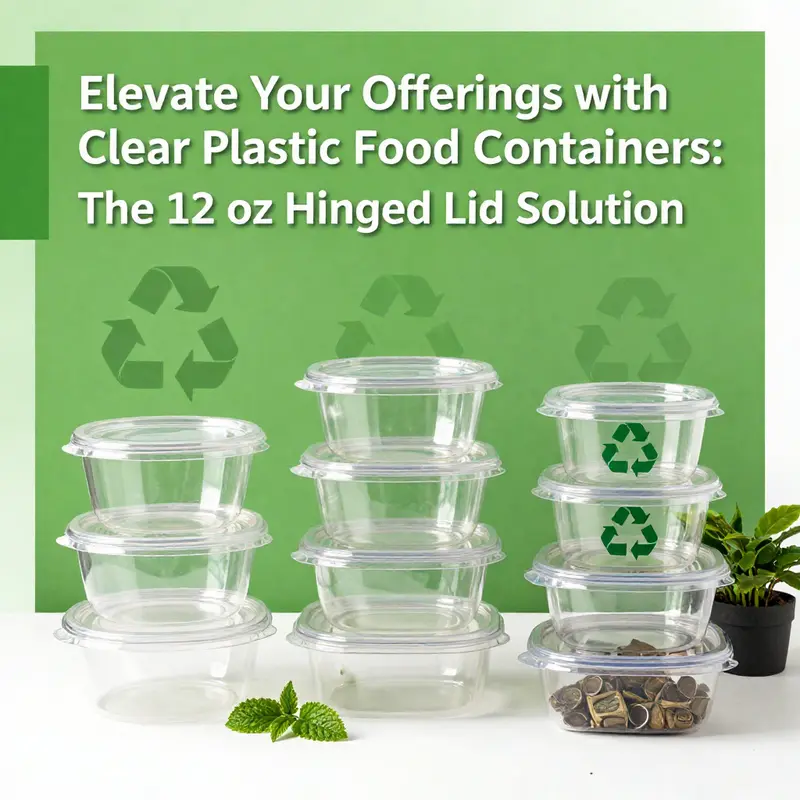
The 12 oz clear plastic food container with a hinged lid stands as a quiet workhorse in kitchens, delis, and takeaway lines, prized for its transparency, compact stature, and the confidence that a well-sealed lid offers to preserve freshness during transport. Its slender silhouette—about 15 centimeters long, 13 centimeters wide, and 4.5 centimeters high—belies a carefully engineered utility. In a single hinged motion, the lid folds away to reveal the product inside, then snaps back into place to preserve aroma, moisture, and texture. This combination of clarity and convenience has made the 12 oz variant a staple for portion-controlled servings, catering platters, and grab-and-go displays alike. Yet beneath its practical appeal lies a spectrum of environmental considerations that demand attention from manufacturers, retailers, and consumers who value responsible stewardship alongside everyday utility. The material choices—primarily PET and its recycled counterpart RPET, with occasional references to APET in manufacturing streams—anchor the conversation in a materials science framework that informs not only performance but also end-of-life fate. PET’s crystalline clarity and toughness make it ideal for visible contents and for resisting impacts during handling. The hinge, engineered as a simple, reliable pivot, contributes to user experience by enabling quick access while minimizing the risk of leakage. In practice, this design translates into fewer accidental spills, reduced product waste, and a more efficient workflow in a service environment. But the advantages of PET or APET—their lightness, their moisture retention, and their ability to showcase food through clear walls—also intersect with a global push to reimagine packaging in ways that minimize environmental impact across the life cycle, from cradle to grave. The recycled variant, RPET, adds another layer of complexity. By incorporating post-consumer content, RPET helps lessen the demand for virgin resin, reducing the cumulative material footprint. It is a tangible step toward circularity, a concept that today frames strategic decisions about sourcing, manufacturing energy, and post-use processing. In a broader sense, RPET signals a shift in packaging philosophy: products designed to be seen, to function reliably, and to be reclaimed after use rather than discarded without thought. Yet the path from RPET to recycling remains nuanced; it hinges on consumer participation, local recycling infrastructure, and the willingness of processors to sort and reprocess clear plastics into new feedstocks. The near-universal preference for clarity in these containers also intersects with recycling realities. Clear PET streams are generally more readily instructive for sorting facilities than colored or opaque plastics, and they often command higher recycling values when properly separated from other materials. This synergy between material choice and recycling outcomes underscores why many producers emphasize not just the performance of the container, but its end-of-life prospects as well. The environmental conversation around a 12 oz hinged-lid container, therefore, moves beyond the tray’s surface-grade appeal to engage with the energy, emissions, and resource flows embedded in its manufacture and reuse. On the production side, the energy embedded in virgin PET production reflects the broader fossil-fuel footprint of plastics manufacturing. While modern processes have become more energy-efficient, the conversion of petrochemical feedstocks into clear, rigid packaging incurs greenhouse gas emissions, water usage, and feedstock depletion. The lighter weight of these containers compared with alternatives like glass reduces transport emissions per unit of product carried. Each container requires less fuel to move from factory to point of sale, a factor that, at scale, contributes meaningfully to the overall carbon equation. Still, the savings in transport must be balanced against the energy demands of resin production and the complexities of recycling streams that may not always capture the material’s full value. The 12 oz container’s environmental profile, then, is a calculus of tradeoffs: exceptional convenience and visibility at the potential cost of single-use waste, but with an opportunity to steer outcomes through recycling, material choice, and design for reusability. The environmental challenges come into sharp relief when one surveys real-world behaviors surrounding disposal and recovery. Single-use culture has grown around many forms of packaging, and hinged-lid clear containers are no exception. The product’s convenience can lead to rapid consumption, followed by disposability rather than reuse. This behavior compounds the waste burden if materials are not properly diverted into recycling streams. Even when recycling programs exist, contamination—leftover food residues, sauce oils, or misrouted items—can derail the process, reducing the quality and yield of recovered PET and necessitating energy-intensive cleaning and processing to render the material suitable for new products. Municipal recycling programs vary widely in what they accept, and for PET products, factors such as labeling, adhesive residues, and multi-material components can complicate the sorting journey. A hinged-lid container is not merely a plastic shell; it is part of a system with lids, labels, and sometimes coatings. Each component can influence recyclability. If the lid is made from a different polymer or if the container’s interior surface carries a film or lining, the chances of clean separation diminish. The energy and resources required to reprocess PET plastics—melting, extrusion, filtration, and reforming into new resin pellets—are nontrivial, and any loss of material value in the recycling loop translates into less favorable environmental outcomes. In addition to end-of-life considerations, production emissions remain a persistent concern. The virgin PET pathway depends on fossil fuels to create the base polymer, with associated emissions and resource consumption. While the market increasingly values recycled content, the proportion of RPET in a given container can vary by supplier, region, and price. The environmental benefit of RPET hinges on robust post-consumer collection and careful processing to maintain material quality. When RPET is well-integrated, it reduces reliance on virgin feedstocks and lowers the incremental emissions tied to new resin synthesis. Yet the pipeline must be carefully managed; the introduction of RPET does not automatically guarantee a lower footprint if the recycling or reprocessing stages are energy-intensive or if the recovered material is downcycled into products with limited lifecycle opportunities. The question, then, becomes not simply whether RPET is “better” than virgin PET, but under what conditions it meaningfully shifts the entire life cycle toward lower impact. In the world of packaging design, sustainability is not a single attribute but a tapestry of interrelated choices. The 12 oz hinged-lid container embodies this reality: it can be a model of efficient material use when paired with high recycling rates, or it can become part of a waste stream that fails to close the loop if consumer behavior and infrastructure lag. The container’s utility for portion control—helping to reduce food waste at the consumer level—presents an indirect environmental benefit that complements the direct material considerations. When portion control leads to less leftover food, this reduces the overall environmental footprint by curbing food waste, which is itself a major contributor to greenhouse gas emissions and resource use. The net environmental profile of the container, therefore, depends on a combination of design decisions, production practices, consumer disposal habits, and the strength of local recycling ecosystems. To move beyond a static assessment, many stakeholders are turning to pragmatic strategies that honor the container’s functional value while advancing sustainability. One avenue is the exploration of compostable or biodegradable alternatives, such as plant-based PLA-based containers. These materials offer clarity and sometimes comparable barrier properties, but they require industrial composting facilities to achieve meaningful degradation. In communities without access to such facilities, these alternatives may end up in landfill rather than the intended composting stream, where they can persist and contribute to long-term waste. This reality emphasizes that material substitution alone does not guarantee environmental improvement; it must be paired with appropriate waste-management infrastructure and public participation. Reuse presents another compelling route. Designing hinged-lid containers for multiple uses, with durable plastics and clear labeling that encourages consumers to wash and return or reuse them, can dramatically extend the product’s life. Reusable systems, whether in restaurant settings or consumer households, reduce single-use demand and can lower the container’s overall environmental footprint when adoption scales. Yet reuse introduces tradeoffs in cleaning, energy use, and potential cross-contamination, necessitating careful process design and consumer education. For businesses, the question of how to source more sustainable packaging often amounts to supplier collaboration and lifecycle thinking. Suppliers can prioritize recycled content, reduce packaging layers, and offer take-back programs that facilitate proper end-of-life handling. Take-back initiatives, in particular, can help close the loop by ensuring products are recovered, sorted, and reprocessed into new packaging or other products rather than being discarded. The environmental narrative of the 12 oz hinged-lid container also invites a reconsideration of consumer behavior and labeling. Clear, informative labeling can help users understand what to recycle and how to prepare items for recycling—such as rinsing containers to reduce contamination—without turning the packaging into a burden. The interplay between consumer action and municipal capabilities means that even well-designed packaging can underperform if the broader system is not aligned. This is where the role of policy, standards, and incentives becomes salient. When regulators, industry bodies, and retailers coordinate on labeling conventions, collection schemes, and minimum recycled content requirements, the path toward lower environmental impact for clear, hinged-lid packaging becomes clearer and more achievable. In modeling the life cycle of a 12 oz container, it is helpful to imagine the journey from a factory floor to a household, and finally to a recycling facility or, less ideally, a landfill. Each stage presents opportunities to improve outcomes. At the factory, designers can optimize resin usage, minimize waste in production, and select high RPET content where feasible. In distribution, the mobility and weight of the container contribute to lower transport emissions relative to heavier packaging options. In consumer use, education about rinsing and recycling can dramatically reduce contamination. And in end-of-life processing, the choice of material, the ability to separate components, and the strength of local recycling streams determine how effectively the product re-enters the materials economy. Taken together, these considerations remind us that a seemingly modest packaging choice—the 12 oz hinged-lid clear container—acts as a microcosm of the broader sustainability challenge in packaging. It highlights how material science, design for recyclability, consumer behavior, and infrastructure all intersect to shape environmental outcomes. For practitioners seeking practical pathways forward, the literature suggests several focal points. Prioritize recycled content and transparent supply chains, so customers can trace the material’s journey and its ultimate fate. Invest in hinge and lid designs that facilitate secure sealing while minimizing material use and enabling easier separation in recycling streams. Align packaging choices with regional recycling capabilities, recognizing that a container’s environmental performance is partly determined by the system that receives it after use. And consider hybrid strategies that blend reusability with responsible end-of-life management, so the container can serve short- and medium-term needs while offering a credible route to reuse or recycling that closes the loop. In the broader conversation about clear plastic food containers with hinged lids, the 12 oz size emerges as a poignant test case. It embodies the tension between consumer convenience and environmental accountability. The container’s prowess in preserving freshness, enabling portion control, and delivering clear product visibility is counterbalanced by the responsibility to ensure it is collected, sorted, and reprocessed where possible. The environmental implications cannot be reduced to a single dimension; they require a nuanced approach that acknowledges material realities, infrastructure limitations, and human behavior. However, by embracing a lifecycle perspective and pursuing collaborative innovations across manufacturing, retail, and municipal waste systems, stakeholders can transform a common packaging choice into a more sustainable one. The opportunity lies in combining the inherent benefits of PET-based clear plastics with strategies that elevate their end-of-life performance. For instance, a practical exploration of eco-friendly disposables shows how packages such as multi-compartment, easy-to-clean packaging solutions can be integrated into a sustainability program without sacrificing the benefits of visibility and portion control. This is not a denial of the container’s usefulness; it is an invitation to expand the toolkit of options and to prioritize choices that align with responsible consumption and recoverability. If readers wish to see how manufacturers and retailers frame such options in real-world assortments, they can explore examples within related packaging lines that emphasize recyclable content, simplified material composition, and design for reuse. For a practical overview of how eco-conscious packaging can manifest in everyday choices, see the eco-friendly disposable packaging options page. eco-friendly-disposable-3-compartment-food-grade-packaging-box-for-fast-food-high-quality-takeout-boxes-for-fried-chicken-french-fries-packaging. This reference illustrates how packaging systems can balance the tactile benefits of clarity and secure sealing with more intentional end-of-life planning, a balance that the 12 oz hinged-lid container is well positioned to exemplify when adopted within a coherent sustainability strategy. The environmental narrative of the 12 oz container does not end with a simple verdict of “good” or “bad.” It ends with a set of informed choices that honor both the function of food containment and the imperative to steward natural resources. In practice, this means acknowledging the container as part of a larger system that includes consumer habits, municipal programs, and the economics of recycled content. It means recognizing that the container’s impact can be reduced through higher recycled content, improved sorting, and better consumer guidance on disposal. It also means acknowledging the potential benefits of alternative pathways—where feasible—for compostable variants or reusable designs that extend life and reduce waste. The journey toward improved environmental outcomes is incremental, guided by data, and sustained by collaboration across the supply chain. It rests on the willingness of manufacturers to invest in materials, processes, and designs that support recovery, and on the willingness of retailers and consumers to adopt practices that keep plastics in the materials economy rather than letting them slip into landfills. The EPA’s overarching framework for plastic packaging environmental impacts and sustainable alternatives provides a critical backdrop for these efforts, outlining how choices across production, use, and disposal shape energy use, emissions, and resource flows. It serves as a reminder that even seemingly small packaging decisions can ripple through the system, influencing recycling rates, waste diversion, and ultimately the health of ecosystems. External resource: https://www.epa.gov/sustainable-management-plastics/plastic-packaging-environmental-impacts-and-sustainable-alternatives
Clear Vision, Steady Seals: The Economic Rhythm of 12-Ounce Clear Hinged-Lid Food Containers
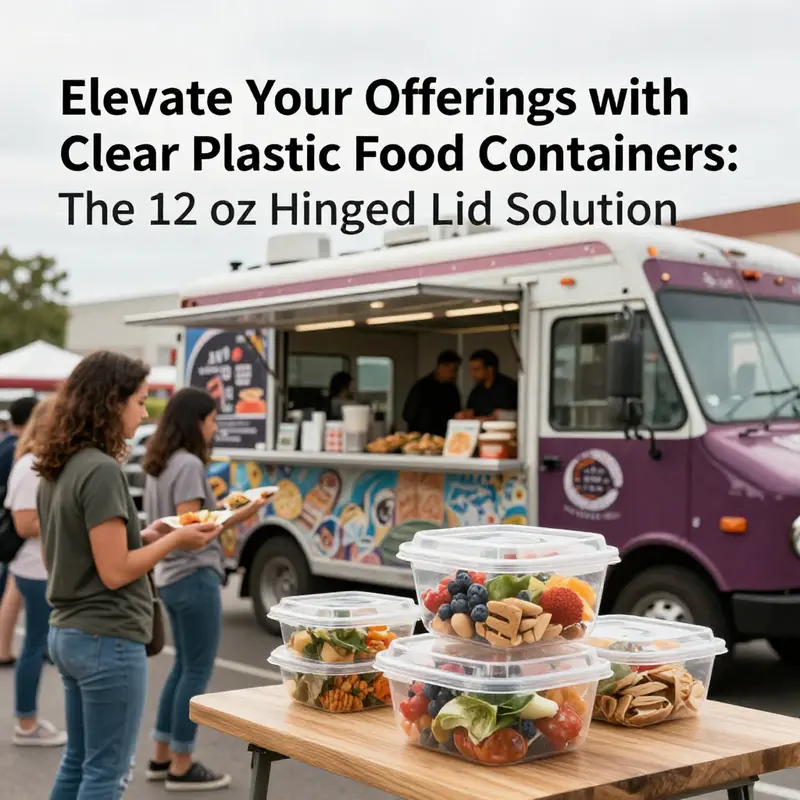
The market for clear plastic food containers with hinged lids, particularly the 12 oz size, sits at a junction where convenience, visibility, and sustainability converge to shape a durable, value-driven narrative for modern foodservice and everyday use. The research landscape shows that these compact vessels are not merely vessels; they are orchestration devices in a broader system of portion control, brand transparency, and supply-chain efficiency. In real terms, the 12 oz variant embodies a sweet spot of capacity, footprint, and performance. It is large enough to accommodate a single serving of snacks, deli meats, or desserts, yet small enough to fit into standard grab-and-go workflows, display cases, and delivery totes. The typical dimensions—roughly 15 cm in length, 13 cm in width, and 4.5 cm in height—translate to predictable stacking, optimized shelf use, and straightforward packaging logistics. A hinged lid design goes beyond mere convenience; it delivers a reliable seal that preserves moisture, prevents leakage, and minimizes spontaneous exposure during transport, all of which are critical for perceived freshness and consumer satisfaction. The transparency of clear PET or RPET material is not incidental. It is a deliberate design choice that enables shoppers to assess the product at a glance, cultivating trust through visible quality cues. When a customer can confirm the crisp color of a salad, the gloss of a cheese-dusted snack, or the even layering of a prepared dessert, the likelihood of miscounts or replacement requests diminishes—a practical boon for both retailers and home users who value accuracy alongside convenience. In a landscape where orders are frequently fulfilled under time pressure, these attributes translate into fewer complaints and a smoother handoff between kitchen, counter, and customer. The hinge system, engineered for repeated opening and closing cycles, reinforces the container’s role as a reusable, reliable component in fast-casual dining, catering, and takeout environments. It is a mechanism that reduces the friction of service and ensures that contents remain sealed and fresh during transit, a feature that increasingly matters as orders move through multiple touchpoints, from kitchen to curb to door. The 12 oz size, with its compact but practical form, supports a wide array of product categories—from bite-sized deli salads to fruit portions, from crunchy snacks to layered desserts—without forcing brands into oversized, wasteful packaging choices. The result is a packaging solution that aligns with the operational realities of diverse foodservice models, including micro-restaurants, meal-prep services, and delivery platforms, where standardized, scalable packaging translates into lower operating costs and higher throughput. The economic logic behind this alignment is straightforward: when a container is well suited to common portion sizes, the supply chain benefits from reduced SKU fragmentation, more predictable manufacturing runs, and the potential for bulk procurement discounts. The cited price point in the research materials—approximately $95.26 for a case of 100 units—illustrates how scale and material choice intersect with cost efficiency in practice. Such figures matter not merely as a snapshot of price but as an indicator of the broader economics that underwrite menu pricing, waste management, and inventory control across foodservice operations. Even a modest drop in unit cost, achieved through streamlined mold tooling, efficient turning of high-volume runs, or smarter post-consumer material usage, yields compounding gains for operators who must balance quality with price sensitivity in competitive markets. In this sense, the economic impact is not a single line item on a spreadsheet but a dynamic effect across procurement, display, prep, and disposal cycles. Transparency and trust emerge as key differentiators in consumer perception as well. In an era where brand storytelling increasingly relies on visible product integrity, the clear plastic container doubles as a visual endorsement: the product inside is not obscured by opaque packaging, it is showcased, and the relationship between brand, product, and consumer becomes more intimate. This alignment between packaging and product experience fosters loyalty through reliability. When customers repeatedly encounter well-sealed, clearly displayed products in a consistent format, the confidence to repurchase grows, which in turn strengthens the predictability of demand for operators and manufacturers alike. Sustainability considerations weigh heavily in this equation as well. The market demonstrates a discernible shift toward recycled content, with RPET becoming a more prevalent choice for those seeking to reduce overall plastic waste or to fulfill ESG commitments. The appeal of RPET extends beyond the obvious environmental benefits; it resonates with a target demographic that prioritizes responsible consumption and supports brands that demonstrate measurable progress toward circular economy goals. In practice, RPET packaging reduces the demand for virgin resin, lowers the environmental footprint of production, and helps facilities meet increasingly stringent regulatory expectations related to waste reduction and recyclability. The transition toward RPET is not simply a moral stance but a strategic positioning that aligns with corporate sustainability reporting, investor expectations, and consumer demand for ethical packaging options. The implications for manufacturers are meaningful: the material choice can influence the entire lifecycle of the product, from sourcing and processing to end-of-life considerations. This is particularly salient given the broader trend toward sustainable packaging in the food sector, where firms are weaving recycled content into their lines as a standard rather than a novelty. The economic dimension of this sustainability shift is nuanced. On one hand, RPET can sometimes entail higher upfront material costs or require modifications to tooling and quality-control processes to preserve clarity and sealing performance. On the other hand, bulk production of RPET containers, combined with advances in recycling streams and post-consumer recycling programs, can yield long-run savings and a stronger value proposition for buyers who must justify packaging choices to procurement teams and customers. The manufacturing ecosystem around 12 oz hinged containers continues to mature, with improvements aimed at enhancing seal integrity, reducing leakage, and maintaining temperature stability during transport. Innovations in molded plastics, lid geometry, and gasket materials contribute to longer shelf life for fragile products and reduce waste due to compromised packaging. For example, advanced hinge designs are engineered to withstand repeated use without compromising the seal, while improved lip profiles and sealing ribs minimize the potential for leaks even under dynamic movement. These technical refinements dovetail with operational improvements: better seals lower spoilage rates, which translates into less product loss and steadier revenue streams for restaurants and delivery services that rely on predictable outcomes. The supply chain benefits as well. Standardization around a common 12 oz format supports streamlined warehousing, easier rotation of stock, and more straightforward forecasting for both suppliers and customers. The standardized size contributes to a more efficient picking process in distribution centers and reduces the complexity of packaging ecosystems, enabling faster replenishment cycles and less waste from mismatched closures or lids. In practice, this translates into a more reliable footprint in drive-thru lanes, shelves, and micro-fulfillment centers where space is at a premium and every inch of shelf and cooler capacity matters. The consumer experience is enriched by the ability to visually confirm product quality through the container’s clear walls. This visibility has a direct influence on trust and satisfaction, particularly for takeout and meal-prep offerings where customers cannot inspect items prior to purchase. A well-sealed, attractive, and transparent package signals care in handling and a commitment to product integrity, which can reduce negative reviews that stem from perceived or actual quality concerns. At the same time, the practical benefits of a hinged lid—ease of access, resealability, and reduced contamination risk—support safer handling across complex supply chains, including multi-stop deliveries and curbside pickups. This is especially important in environments where temperature control and moisture management are essential to preserve the intended sensory experience of the food inside. The 12 oz format thus serves as a practical microcosm of larger market dynamics, where consumer expectations for convenience intersect with manufacturers’ incentivized focus on efficiency, sustainability, and cost containment. The market is, in effect, an ecosystem of decisions: choices about material composition, sealing technology, and lid design ripple through procurement, production, logistics, and consumer perception. Each parameter—whether PET clarity, RPET recycled content, or lid hinge reliability—plays a role in shaping the total cost of ownership for operators. It is not merely the sticker price of a case that matters, but the cumulative effect on throughput, waste, and brand equity across a lifecycle that stretches from the kitchen to the customer’s door. Given these dynamics, the competitive landscape rewards operators and suppliers who can articulate a coherent value proposition tied to efficiency, sustainability, and experience. Markets that value fast, reliable service and transparent product presentation will lean toward packaging that supports quick picking and display, while brands that emphasize environmental stewardship will gravitate toward recycled content and recyclable design. The convergence of these priorities—convenience, clarity, and responsibility—drives continued growth in the 12 oz clear hinged container category. As consumer expectations continue to evolve and as regulatory emphasis on packaging sustainability intensifies, manufacturers who invest in durable hinge systems, high-clarity resins, and scalable RPET processes stand to gain both market share and long-term profitability. The practical takeaway for operators is clear: align packaging decisions with the realities of the workflow, the preferences of the target audience, and the environmental commitments that increasingly guide corporate strategy. In doing so, they can realize not only operational gains but a reputational advantage that reinforces customer loyalty and competitive differentiation. The implications for product developers are equally significant. The focus shifts from simply delivering a functional container to delivering a packaging solution that supports brand storytelling through visibility, reliability, and responsibility. A 12 oz clear hinged container becomes a stage on which the product inside can be showcased with integrity, the lid can perform consistently across thousands of uses, and recycled content can be highlighted as a meaningful attribute. In sum, the 12 oz clear plastic hinged-lid container is more than a packaging item; it is a strategic instrument in the modern food economy. It embodies a balance of form and function, cost and value, and sustainability and convenience. It speaks to a market that prizes not only what a product costs but how it is seen, how it travels, and how it aligns with the evolving ethics of consumption. For researchers and practitioners alike, the chapter on market trends and economic impact of this specific format reveals a narrative that is as much about process and planning as it is about product design. The container’s clarity, its secure seal, and its compatibility with recycled materials collectively illuminate a pathway toward packaging that respects the consumer, the supply chain, and the environment, all while remaining attuned to the rapid tempo of modern retail and foodservice. As industries continue to seek efficiency and sustainability in tandem, the 12 oz hinged-clear format remains a touchstone for how modest, well-executed packaging choices can yield meaningful economic and experiential dividends. To explore a related packaging option that expands on the concept of clear visibility and windowed design, consider a range of eco-friendly packaging solutions that emphasize windows and lightweight, reusable or recyclable construction, such as the picnic kraft paper boxes with clear windows that exemplify how an alternative material palette can still deliver transparency and consumer confidence. picnic kraft paper boxes with clear windows. External resources that provide broader context on container technology and market pricing can further illuminate these trends for practitioners and researchers alike. For example, a detailed industry reference discusses the performance and pricing dynamics of clear-lid hinged containers and related formats, offering data that complements the insights gathered from supplier catalogs and market analyses. External reference: Economy Paper and Restaurant Supply resource. https://www.economypaper.com/food-technologies-black-base-clear-lid-hinged-container-100-cs.html
Final thoughts
Clear plastic food containers with hinged lids are more than just packaging; they represent a strategic approach to serving food and beverages efficiently and attractively. Understanding their design, functionality, environmental impact, and market trends can empower businesses to enhance their service offerings and align with sustainability goals. By adopting these containers, bubble tea shops, beverage chains, restaurants, food trucks, and catering services can ensure quality delivery of their products, satisfy customers, and contribute positively to the environment.