
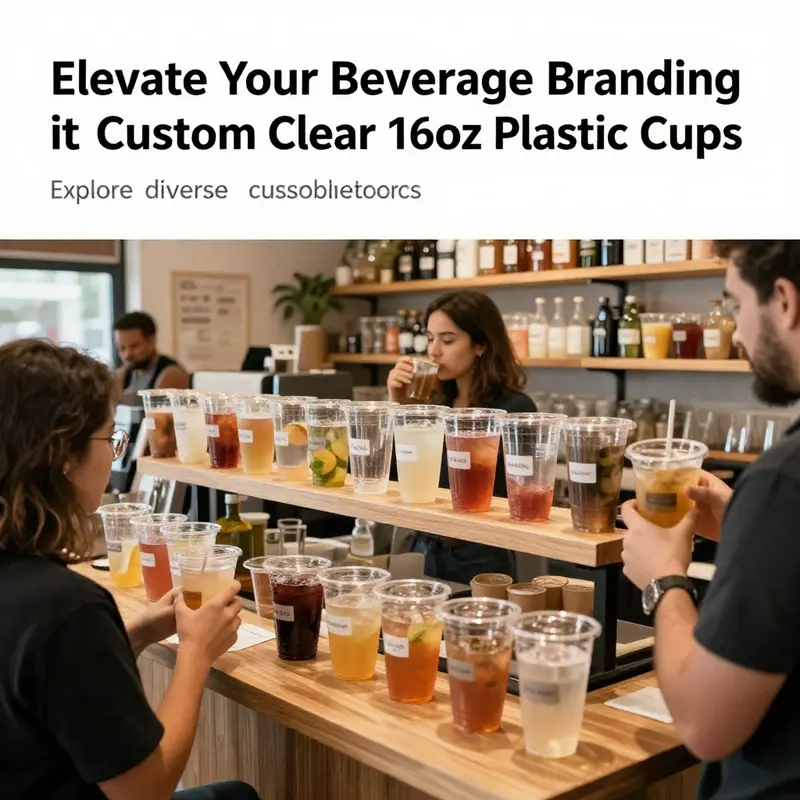
Custom clear 16oz plastic cups serve as an essential tool for beverage shops, restaurants, food trucks, catering services, and event planners. These versatile containers not only hold drinks but also present opportunities for branding and customer engagement. The four chapters delve into the myriad customization options available, the materials that ensure quality and safety, current pricing trends, and the environmental impacts of these products. By understanding these aspects, businesses can make informed choices that align with their operational and sustainability goals.
Clear Branding, Strong Impressions: Designing Custom 16oz Cups That Speak for Your Brand
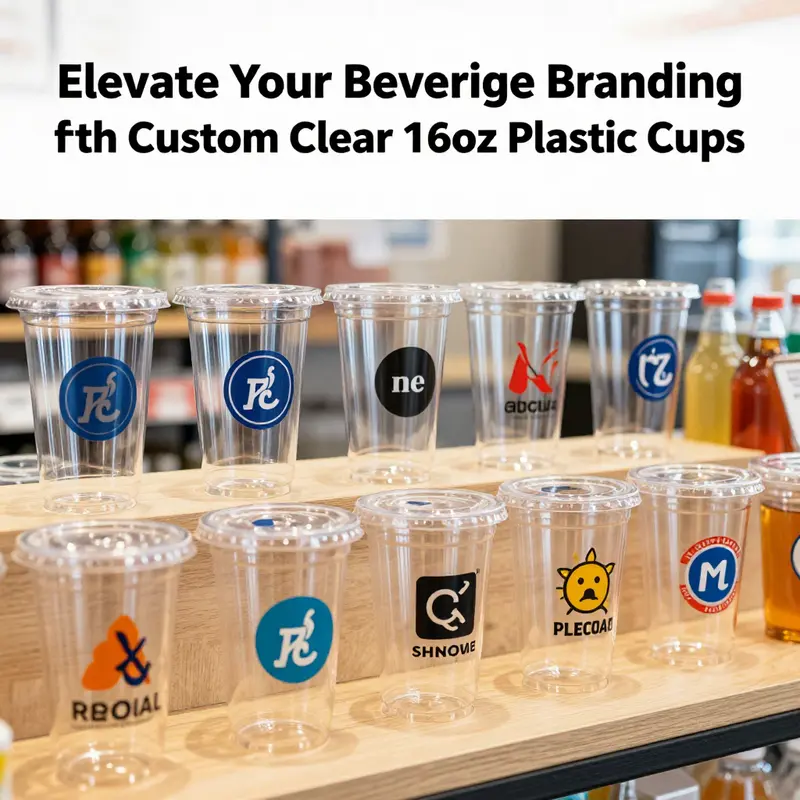
A custom clear 16oz cup is more than a receptacle for a beverage. It is a canvas that blends practicality with perception, a tiny floating billboard that travels from barista station to customer hand, into social feeds, and sometimes back into retail shelves. When brands choose this kind of cup, they are not merely selecting packaging; they are making a statement about clarity, quality, and consistency. The 16-ounce size is particularly versatile because it suits a broad range of beverages—coffee shop favorites, iced teas, smoothies, and craft cold brews—while remaining compact enough to be stacked, stored, and transported with minimal fuss. The true value of customization emerges when the cup ceases to be a generic vessel and becomes an active participant in the brand experience. A well-crafted label, a precise color, and a design that respects the cup’s form can elevate ordinary service into recognizable identity, turning a simple disposable item into a memorable touchpoint that reconnects customers with the brand long after the final sip.
Customization options for these cups are robust, and they operate across several layers of decision making. At the most visible level, printing and labeling transform the cup’s exterior into a branded surface. Direct printing—whether by screen, offset, or digital methods—allows logos, taglines, and event graphics to sit flush against the cup’s curved surface. Labels, meanwhile, offer a temporary or event-specific alternative that can be swapped without touching the base cup supply chain. Neither approach should be seen as a cosmetic add-on; when executed with color fidelity and placement in mind, these techniques shape first impressions. The contrast between a crisp logo on clear plastic and a dull, washed-out impression is often the difference between a repeat purchase and a one-off customer.
Beyond surface decoration, custom molding opens the door to form-based branding. A molded cup can feature unique rim profiles, subtle embossing, or even curved silhouettes that nod to a brand’s motif. While molding is more common in reusable or semi-reusable systems, it can also inform specialty single-use cups if the design requires a distinctive grip, an ergonomic hold, or a counter display cue. In practice, the most accessible customization tends to be printing and labeling, because these methods align with traditional manufacturing flows and offer predictable lead times and costs for high-volume programs. The upside is clear: with disciplined artwork, a 16oz clear cup can communicate a brand’s voice with minimal visual clutter while maintaining the cup’s inherent clarity as a design element.
Material choices for these cups heighten or constrain customization in meaningful ways. PET, PP, and Tritan dominate the market, each with its own strengths. PET provides exceptional clarity, which makes the beverage inside visually appealing and enhances product visibility, a critical factor when the drink itself is part of the allure. PET is generally well-suited for cold beverages, and it can pair effectively with bold color prints and opaque labels that stand out against the transparent body. PP, by contrast, offers strong performance for both hot and cold beverages. Its temperature stability makes it a practical choice for lattes, hot chocolate, and other steam-wreathed drinks, while also accommodating secure lids and reliable seal integrity. Tritan, a durable alternative known for clarity and shatter resistance, often finds favor in reusable or premium beverage programs where users expect a sturdier cup that travels well and withstands more rigorous handling. Each material carries an implicit brand message: PET’s crystal clarity signals purity and freshness; PP’s resilience speaks to practicality and reliability; Tritan’s toughness aligns with premium, everyday reuse.
From a safety and quality perspective, the cups are typically manufactured to be BPA-free and food-grade safe. This is not merely about regulatory compliance; it is about consumer confidence. Modern buyers increasingly demand certifications that reassure their teams and their customers that the container will not affect beverage flavor or safety. Certificates such as LFGB (regulations often cited for European markets) or CPC (China Compulsory Certification) provide additional layers of assurance for brands with global distribution ambitions. When these standards are in place, customization can proceed with fewer concerns about product integrity during printing, labeling, or molding processes. The absence of harmful additives becomes part of the brand’s credibility portfolio, reinforcing a narrative of responsible sourcing and consumer protection that resonates across channels—from café counters to online orders and social media showcases.
Practical considerations shape the scale and pace of customization. Most suppliers place minimum order quantities (MOQs) that reflect the costs of tooling, setup, and the procurement of raw materials in bulk. For highly branded programs, MOQs commonly begin at tens of thousands of units, with some suppliers establishing thresholds near 50,000 units as a baseline for custom runs. This scale offers cost efficiencies per unit but requires careful forecasting and design planning. For brands testing a concept or piloting a new design, many suppliers offer sample programs, sometimes for a nominal fee or even at no charge, to validate artwork, color fidelity, and overall fit with the intended beverage portfolio. The decision to pursue a large, fully customized run versus a smaller, more exploratory order hinges on alignment between the brand’s marketing calendar, distribution cadence, and anticipated demand at partner locations.
Sustainability also threads through the customization conversation. Eco-conscious options are expanding beyond simple disposables. Biodegradable or compostable variants—often based on PLA or other plant-based resins—cater to events and venues that aim to minimize end-of-life impact. Reusable options, such as double-wall insulated designs, can be paired with durable lids and straw systems to create a reusable experience that extends the cup’s value proposition from single-use convenience to ongoing brand engagement. Even within reusable or partially reusable lines, manufacturers can implement branding through thermal prints or laser etching that withstands repeated washing and handling without compromising clarity. The complexity here is balancing user expectations, regulatory compliance, and lifecycle impact. Clear cups must perform consistently over time, with inks and labels that resist peeling, cracking, or fading, especially when beverages carry vibrant hues that might stress color reproduction.
As buyers weigh these decisions, it helps to consider the cup’s place in the broader packaging ecosystem. A 16oz clear cup often ships with compatible lids, and perhaps a straw or a straw-friendly lid. The choice of lid type—slotted, dome, or flat—affects both the user experience and the printed artwork’s visible area. A well-integrated design plan will account for labeling space, print margins, and the cup’s curvature to avoid misalignment or distortion. In environments with high turnover—think quick-service cafes, stadium concessions, or takeaway chains—the ability to stack, store, and reuse or recycle these cups efficiently becomes part of the operational calculus. Straight rim designs, while seemingly modest, contribute to stability during pouring and handling, reduce the risk of spills, and simplify stacking for kitchen and bar staff. Such features, though understated, echo a brand’s commitment to reliability and customer satisfaction.
For brands that depend on visibility and recall, color and contrast management is crucial. The transparency of PET or the translucent potential of certain PP formulations means that the printed artwork must be designed with careful color planning. When printing on clear plastics, white ink is often employed to ensure graphics remain vibrant against any beverage color. Designers frequently need to provide artwork in vector formats with clean separations for each color, plus bleed space to accommodate trimming tolerances. The result is a crisp, high-contrast brand representation that does not blur or bleed when viewed from different angles or under varied lighting. Even the choice of ink chemistry matters; water-based inks and solvent-based inks each carry different performance profiles in terms of durability, wash resistance, and environmental impact. A thoughtful process aligns artwork with material behavior, ensuring the final product maintains its intended aesthetic across use cases—from a brisk morning latte to an icy smoothie on a summer afternoon.
In practice, buyers often seek a balanced package: strong branding options at a cost that supports scalable distribution. A basic disposable clear PP cup, printed or labeled, can start at relatively modest unit prices when purchased in bulk, while more ambitious reusable models with double-wall insulation and integrated lids command higher unit costs. The economics hinge on the intended life cycle of the cup, the beverage category, and the retailer’s or event organizer’s branding strategy. It is not unusual to see a tiered pricing approach where the lowest per-unit cost is achieved with the most basic customization and the most straightforward material choice, while premium, feature-rich configurations fetch a premium that aligns with a premium beverage experience. Buyers who plan ahead—creating artwork files early, confirming print areas, and aligning with a reliable supplier—tend to realize smoother project execution and more predictable budgets.
For those who want to ground this discussion in real-world application, consider the way an outdoor event leans on durable, eye-catching cups that still convey branding at a distance. A clear cup with bold logo placement, temperature-friendly material, and a compatible lid system can become a tactile reminder of the event’s identity long after the day ends. This is where the cup transcends its utilitarian role and becomes a reusable ambassador for the brand’s values—clarity, reliability, and a commitment to user experience. To illustrate how a disposable clear cup can be positioned for outdoor use and event-based contexts, you can explore examples of the disposable clear plastic cup designed for outdoor use here: disposable clear plastic cup for outdoor use.
The conversation about customization is not complete without acknowledging the practical steps that translate concept into product. Brands begin with a design brief, moving through artwork proofs, color approvals, and final production samples. Once a design is approved, the manufacturing pathway is set: mold or plate creation for printing, selection of the cup base material, and confirmation of the finishing details such as rim style, lid compatibility, and labeling method. The interplay between design intent and manufacturing capability often reveals the most meaningful insights. For instance, a design that emphasizes negative space can leverage the cup’s transparency to strong effect, while a bold, full-coverage print may require a more conservative beverage choice to maintain legibility and contrast. This iterative process—brief, proof, sample, adjust, and produce—ensures that the final product aligns with brand standards while delivering dependable performance in the field.
In closing, the customization options for 16oz clear plastic cups are a blend of technology, design, and strategic planning. The material choice informs how artwork will appear and endure, while printing and labeling options shape the cup’s external message. Design features like straight rims and insulation configurations influence usability and efficiency in fast-paced environments. Safety standards and MOQs anchor the project in reliability and scale, while sustainability considerations remind brands that every choice carries environmental implications. Taken together, these elements empower brands to turn a simple beverage vessel into a powerful communicative tool that travels far beyond the point of sale. External resources can provide broader context for suppliers and market norms, such as this external reference on branded travel drinkware and customization options: https://www.alibaba.com/product-detail/Custom-12oz-16oz-22oz-Reusable-Travel_1600493784297.html?spm=a2700.189048.0.0.5a9f4c5bUwJyDl
Crystal Clarity and Material Wisdom: The Materials Behind Custom Clear 16oz Cups
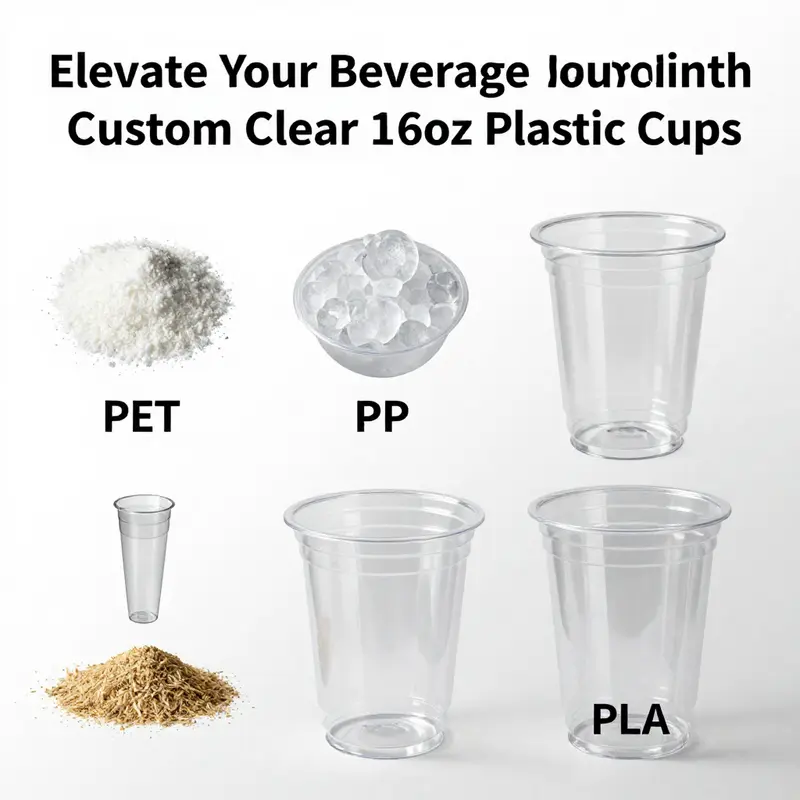
Crystal clarity in a cup is easy to notice, yet the story behind that glass-like appearance is the story of material science, safety standards, and manufacturing discipline. When a brand requests a custom clear 16oz cup, the choice of material becomes the quiet engine of both performance and perception. It determines how the beverage looks, how hot or cold it can safely be, how the cup travels from the coffee shop to the customer’s hand, and how the entire packaging experience translates into trust or aspiration. In this chapter, we explore the core materials that make these cups reliable workhorses in a crowded market, unpacking what the choices mean for usability, branding, and environmental responsibility. The core reality is simple: the primary materials used in these cups are PET, for clarity and rigidity, and PP, for heat resistance and durability. Understanding why those two polymers dominate helps illuminate how customization, cost, and sustainability converge in every order.
PET, or polyethylene terephthalate, is the backbone of many clear cups because it sets a high bar for transparency. When you tilt a 16oz cup toward a window, the light passes with little diffusion, and you can read a label, detect the color of the beverage, and sense the volume at a glance. This level of visual clarity is not accidental. PET’s molecular structure is arranged to minimize light scattering, which translates into the clean, glass-like appearance consumers expect from premium disposable cups and many reusable options. Beyond seeing, PET offers respectable rigidity. A 16oz PET cup holds its shape even as cold liquids exert only modest thermal stress. It resists deformation under typical serving conditions, and its rigidity helps operators stack, package, and transport thousands of cups without collapse or fatigue. For beverages such as water, juice, smoothies, or iced tea, the cup maintains its profile from the moment the lid is snapped into place until the final sip. In the realm of branding and merchandising, PET also has an edge: its surface can take high-quality prints and labels, which means a logo, a seasonal motif, or a promotional message can be displayed clearly without sacrificing the crispness of the cup’s own appearance.
PP, or polypropylene, complements PET by delivering a different set of strengths that broadens the practical envelope of clear 16oz cups. PP excels in heat resistance. When hot beverages—coffee, tea, or specialty drinks—are poured into a cup made from PP, there is less risk of deformation or warping as the liquid transfers heat to the cup. This makes PP a natural choice for hot-fill beverages and for cups intended for both hot and cold service in a single day. While PP is typically a touch less transparent than PET, high-grade PP cups can still present a clear appearance that satisfies visual inspection of contents. The key is a balance between crystallinity and clarity, achieved through precise molding, controlled cooling, and tailored surface treatments that minimize haziness. For many operators, PP’s resilience translates to a longer working life in service environments where cups may be handled repeatedly, bumped on the counter, or stacked in crowded to-go lines. The material’s fatigue resistance, edge integrity, and compatibility with common food-contact processes are practical attributes that steadily drive PP’s popularity for disposable clear cups intended for hot or mixed-use programs.
The dominance of PET and PP in the market is not accidental. Manufacturers design cups with an eye toward both production efficiency and consumer expectations. PET’s process compatibility with high-speed thermoforming and blowing offers manufacturers a dependable path to crystal-clear, thin-walled cups suitable for large-volume runs. The improved clarity and barrier properties of PET also help extend shelf life by reducing oxygen transmission, which is favorable for beverages that might otherwise degrade in transit or on the shelf. On the other side, PP’s processing advantages align with hot beverage workflows and more demanding handling routines in quick-service contexts. The resin’s relatively forgiving behavior under heat means fewer incidents of thermal distortion during transport or in customers’ hands, a practical concern for the many venues that rely on disposable cups for grab-and-go service.
Regarding safety and regulatory compliance, both PET and PP are widely accepted for contact with food and beverages. They are designed to meet stringent food-contact standards that address migration of substances from the plastic into the drink. The result is a predictable performance profile: a cup that remains inert enough not to impart flavors or odors and that maintains its integrity in the conditions it is expected to endure. This is crucial in branding where a consumer’s impression hinges not only on appearance but also on the perceived safety and reliability of the packaging. It is worth noting that while PET is recyclable in many programs and is widely collected as a recyclable option, the real-world recycling outcomes depend on local infrastructure, contamination levels, and the presence of effective sorting streams. Consumers who understand the importance of rinsing and returning containers to proper recycling channels can contribute significantly to closing the loop on PET cups.
Looking at customization—an essential driver of the market—PET and PP cups are among the most accommodating substrates for branding. The surface of a PET cup offers excellent adhesion for prints, labels, and color graphics. Even with the thin walls typical of 16oz disposables, a well-applied logo or promotional design can remain sharp and vibrant. PP’s surface, while slightly more challenging to print on at very high resolution, accepts decals, labels, and screening applications that brands use to communicate identity, flavor profiles, or event themes. The result is a consistent canvas for branding that supports in-store signage, display merchandising, and takeout packaging without compromising the beverage’s clarity or the cup’s structural integrity. In practice, this combination—clear visibility, reliable heat tolerance, and print-ready surfaces—creates a versatile platform for both everyday use and large-scale campaigns.
The conversation about materials also naturally extends to sustainability and end-of-life considerations. The initial market overview noted a growing interest in eco-biodegradable options, including PLA-based alternatives. PLA, or polylactic acid, offers the allure of compostability under the right conditions and can align with brands looking to emphasize environmental stewardship. It is important to acknowledge, however, that PLA’s performance characteristics differ from PET and PP. PLA generally exhibits lower heat resistance, so it is more suitable for cold beverages or for applications where full composting infrastructure is available rather than ordinary curbside programs. The practical takeaway for many operators is that while eco-friendly alternatives can address consumer demand for sustainability, the choice must be matched to the beverage type, service environment, and local waste-management capabilities. In other words, the most responsible option depends on context, not simply on a single virtue such as “biodegradability.”
In addition to the baseline materials, the market has seen experimentation with double-wall and insulated designs. Although the core discussion here centers on the main polymers—PET and PP—the insulated variants often pair these materials with an air gap or an inner core that enhances temperature retention. This approach preserves the visible clarity of the outer wall while delivering a practical layer of insulation. The trade-off, of course, is that such cups may require different manufacturing techniques and potentially different handling during fill and cap processes. Yet for operators aiming to deliver a premium experience, a double-wall configuration can offer a more comfortable drinking experience without compromising the visual appeal that PET provides. The key is to maintain rigidity and form through the entire cup assembly so that even with insulation, the consumer can observe the beverage level clearly.
Brand owners also weigh practical considerations beyond performance. Cost remains a central driver, especially in high-volume sectors such as coffee shops, events, and takeout services. The cost dynamics of PET versus PP reflect material properties, processing complexities, and the intended service life. In many cases, PET is favored for its clarity and printability at a cost that remains competitive in bulk orders, while PP may be preferred when a higher degree of heat resistance is necessary or when the supplier’s design optimizes for stronger performance in hot beverage service. The choice, then, often becomes a balancing act among clarity, heat tolerance, stackability, print quality, and price—an equilibrium that varies by project scale, geographic region, and the specifics of the beverage program.
From a consumer behavior standpoint, the material story matters because it translates into trust and perceived value. A clear 16oz cup that showcases the vivid color of a beverage can elevate the sensory experience, inviting customers to notice, compare, and choose. The surface finish and edge quality—whether glossy PET or more translucent PP—should communicate a sense of care and quality, reinforcing brand messages about cleanliness, safety, and reliability. When a cup carries a logo or branding element, that element appears not as a distraction but as an integral part of the overall presentation. A well-executed customization strategy aligns with the material’s properties to deliver a cohesive experience from selection to sip.
For a tangible sense of how these cups appear in practical settings, explore this disposable clear plastic cup listing: disposable-clear-plastic-cup-outdoor-picnic-pet-cup-drinking-cup-for-parties-birthdays-weddings-camping-utensils. This example, representative of the kind of product described in industry catalogs, illustrates how the material choices underpin both visual clarity and functional reliability in everyday service. The listing is illustrative of how brands communicate capabilities—clarity, temperature tolerance, and the potential for customization—while operators gauge utility through handling, stacking, and breakage resistance in busy environments.
Looking ahead, the interaction between material choices and consumer expectations will continue to evolve as technology and waste-management practices advance. The conversation is not only about the immediate performance of PET and PP but also about how these materials fit within broader sustainability goals. As systems improve to capture, sort, and reprocess plastics, the end-of-life story for clear cups will become more favorable in some regions, while others may still struggle with contamination and market volatility. In the meantime, vendors, designers, and operators can influence outcomes by selecting the right polymer for the intended use, by embracing standardized printing and labeling practices that minimize waste, and by educating customers about recycling pathways. The goal remains a balance: deliver a cup that looks appealing and performs reliably, while contributing to a circular economy where possible.
In closing, the choice of material for a custom clear 16oz cup is more than a technical specification. It is a statement about how a brand values clarity, heat safety, durability, and the consumer’s sensory experience. PET offers unrivaled clarity and solid barrier performance for cold beverages, while PP provides dependable heat resistance and robust handling for hot drinks and mixed-use service. Together, these polymers form a versatile duo, capable of supporting branding through sharp surface finishes, enabling efficient manufacturing, and accommodating the needs of a diverse landscape of foodservice environments. The ongoing challenge for manufacturers and retailers is to align the right material with the beverage, the service setting, and the local recycling realities, all while preserving the crisp, inviting presentation that makes a 16oz clear cup instantly recognizable on any tabletop.
External resources for broader context on plastic sustainability and materials management can be found here: https://www.epa.gov/smm/sustainable-management-materials
Clear Economics: Pricing, Material Choices, and Customization in the 16oz Clear Plastic Cup Market
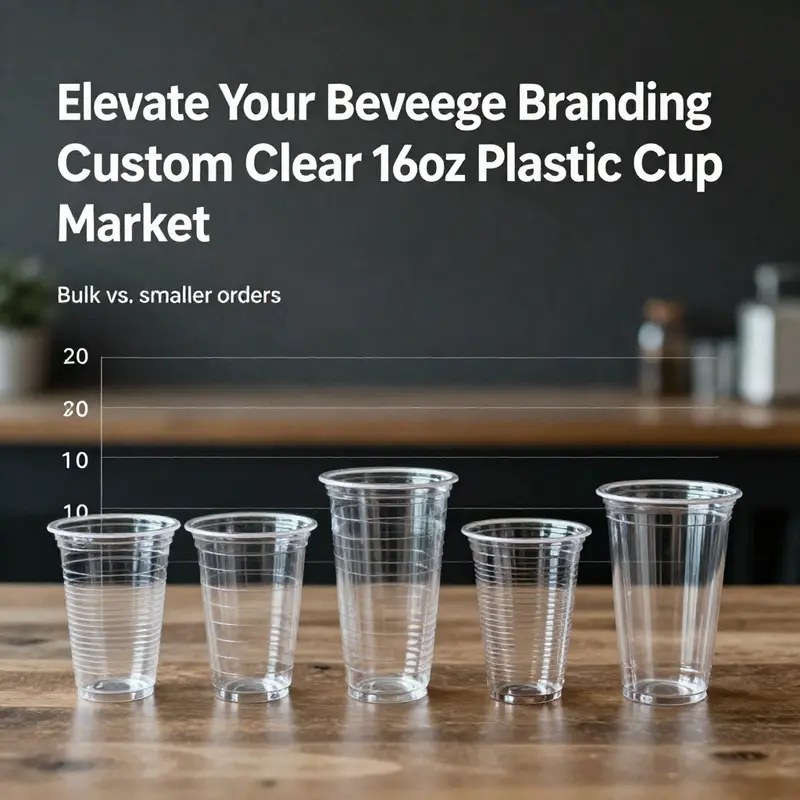
The market for custom clear 16oz plastic cups sits at a delicate intersection of clarity, durability, and identity. Clarity matters not just to the eye but to the brand story a company tells. A cup that looks pristine under café lights or event banners becomes a moving billboard, a tiny stage for logos, colors, and promotions. Yet behind every crystal cup lies a set of cost drivers that shape what brands can reasonably demand in a reorder, how much margin is left for promotions, and how widely an idea can travel from concept to consumer. Material costs, production scale, and regional manufacturing advantages compose the rhythm of price. In 2026, the pricing landscape for these cups shows surprising granularity. A basic disposable variant in clear PET or PP can be extraordinarily affordable when ordered in bulk, while more elaborate configurations—such as printed designs, double-wall insulation, or integrated lids—drive the unit price upward in proportion to the customization complexity. It is not simply a matter of material versus ornament; it is a careful calibration of what a brand needs to convey and what a producer can efficiently deliver at scale. The result is a market that rewards mass customization but also respects the constraints of raw materials, factory capacity, and logistics. This dynamic becomes most visible when we examine how the different material families interact with price, performance, and sustainability claims while remaining faithful to the purpose of a 16oz cup: to present a beverage with clarity, reliability, and a touch of brand personality.
The first axis of variation is material. PET and PP remain the common workhorses for clear cups because they combine high clarity with strength and relative heat tolerance. PET’s glass-like transparency makes logos pop and beverages look inviting, while PP’s lighter weight and chemical resistance support everyday use in quick-service settings. When consumers demand colder drinks and longer shelf stability, suppliers often turn to formulations that optimize both rigidity and resilience. In recent years, there has been growing interest in eco-conscious alternatives and reformulated polymers that improve recyclability or lower the carbon footprint. Eco-enhanced PET formulations, for example, can command a premium linked to advanced processing and improved end-of-life performance. On the other end of the spectrum, there are budget-oriented options from broader manufacturing belts that emphasize cost efficiency over advanced material science. The choice of material therefore does more than influence price; it signals a trade-off between pristine presentation and sustainability considerations, between a single-use approach and a reusable mindset, and between a supplier’s speed and the brand’s environmental commitments. While the classic disposable 16oz cup may be the default for many events, the lure of double-wall insulation, spill resistance, and ergonomic lids for reuse introduces a separate price tier where value is measured not just in cents per piece but in the lifetime utility of the product.
Customization sits at the heart of the chapter’s story about pricing. A cup’s value is amplified when it carries a brand, a message, or a seasonal theme. The most visible expression of this is custom logo printing, color matching, and even decorative sleeves or lids that align with an event’s visual language. The economics of customization hinge on minimum order quantities, setup costs, and the complexity of the artwork. In the broad marketplace, suppliers may advertise high minimums—often in the tens of thousands—to subsidize the cost of multi-color printing, curing times, and quality control checks. This means a brand launching a limited-time promotion or a regional campaign must weigh the allure of personalized cups against the efficiencies of large-scale orders. In practical terms, a standard 10,000-unit MOQ with modest customization prices can still yield a favorable unit rate when the campaign is national or multi-market. The payoff is stronger branding, higher recall, and an event footprint that travels beyond the beverage itself. Yet even within a single product family, customization adds layers of cost that ripple through the price per unit, raising questions about whether a more modest logo or simpler color scheme might achieve the same branding goals at a lower unit price. The optimization problem is not solved overnight; it evolves as technical capabilities, color fidelity, and print-on-demand options improve.
The pricing architecture itself reveals how buyers can navigate this landscape. In the 2026 market, the most competitive per-unit prices appear when volume crosses thresholds that justify factory setup, tooling, and long-run production runs. For basic clear PET cups with standard dimensions and straightforward geometries, bulk orders can fall into a range that reflects economies of scale rather than just material costs. In practical terms, when a buyer approaches half a million units, the unit price for standard, non-reusable cups can drop to a few fractions of a cent—roughly five to eleven hundredths of a dollar per piece—provided the packaging remains basic and the design remains simple. This is a function of manufacturing efficiency, labor allocation, and the amortization of machinery across vast outputs. It is also a reminder that the cheapest cups are not always the best fit for every scenario; the procurement decision must balance cost with performance criteria such as leak resistance, clarity under varied lighting, and the ability to hold the intended beverage without deformation.
At the upper end of the spectrum, where customization intensifies and features like printed logos, color branding, or reusable architecture come into play, unit costs can rise sharply. A high-end configuration might sit in the range of six-tenths to nearly eighty cents per unit. This higher price bracket reflects the added value of branding precision, enhanced durability, and sometimes integrated features that support repeated use or consumer trust. For buyers focused on premium positioning—festivals, brand launches, or high-end retail events—the incremental spend can be justified by stronger visual impact, improved user experience, and a longer association with the brand narrative. The pricing reality is that such investments are not isolated purchases; they are part of a broader strategy that considers promotional cadence, customer engagement, and the lifecycle cost of the cups in a given campaign. The regional dimension of pricing cannot be ignored either. Guangdong and Zhejiang remain the most active production hubs for standard, disposable cups, where scale yields significant savings. Jiangsu and Sichuan provinces illustrate another pattern: the former often demonstrates capability with advanced materials and premium formulations, while the latter can offer more economical options, albeit with longer lead times or varying quality control profiles. Buyers who adopt a strategic sourcing mindset—mixing suppliers to blend price and performance—tend to realize the most favorable outcomes, especially when they can align the most economical options with non-critical portions of the campaign and reserve premium configurations for flagship events or limited editions.
Beyond the pure economics of materials and customization, the market is increasingly shaped by the broader sustainability conversation. Eco-friendly or biodegradable options, commonly rooted in PLA or biodegradability claims, are not mere footnotes; they influence consumer perception and regulatory alignment. The premium associated with eco-conscious formulations reflects not just the raw material cost but the downstream processing, certification, and recycling infrastructure that supports responsible disposal. As brands weigh the trade-offs, they often face a calculus about whether an eco-advantage should be highlighted as a core selling point or treated as a value-add that commands a modest premium. The pricing signal here is twofold: first, to capture the willingness of eco-minded buyers to pay for sustainability, and second, to hedge against potential shifts in regulatory expectations or consumer preferences. In practice, some buyers may choose eco-focused cups for all-disposal campaigns, while others may reserve them for markets with stringent waste-management programs or high sustainability aspirations. This nuanced approach demonstrates how price does not exist in a vacuum but interacts with policy, consumer values, and logistical realities.
The supply chain realities behind these numbers deserve careful attention. Lead times, minimum order quantities, and the availability of samples all influence the perceived value of a quote. For buyers testing new concepts, sample programs offer an essential bridge between idea and execution. They allow validation of print fidelity, surface finish, and the overall impression of the cup under real-world conditions. The practical value of a sample can eclipse its nominal cost when it shortens iteration cycles and reduces risk in large-scale deployments. When orders scale, the efficiency gains multiply, and the unit price can improve correspondingly. But the decision to push a project into mass production must consider not only the economics of per-piece cost but also the reliability of supply, the predictability of delivery timelines, and the supplier’s capability to meet evolving design specifications without compromising quality. The most successful projects often emerge from a disciplined approach to sourcing that blends low-cost, high-volume options with carefully managed premium configurations for strategic moments. This approach requires transparent communication, precise documentation, and a clear alignment between marketing objectives and procurement realities.
The narrative of pricing is also about expectation management. Brands that articulate the intent behind customization—whether it is to maximize visual impact, to emphasize a sustainability story, or to support a seamless customer experience—build a framework in which price becomes a reflection of value rather than a mere line item. In this context, the clear 16oz cup is not only a vessel but a billet for brand storytelling. The cup’s price carries the weight of its story: a clean surface for logos, a reliable shell for beverages, and a shared lens into the company’s attention to detail and consumer experience. As buyers navigate the market, they must weigh the benefits of extra clarity, the stability of a double-wall design, or the convenience of a lid against incremental costs. The most successful sourcing decisions balance the immediacy of event needs with the long-term implications of supplier relationships, material choices, and the sustainability profile of the product. In other words, price is a signal, not a verdict. It communicates constraints, opportunities, and priorities. For brands that see their cup as a touchpoint with customers, a thoughtful pricing strategy becomes part of the product’s promise, shaping how the consumer feels about quality, memory, and value.
To tie the narrative back to practical steps, consider how a buyer can translate these pricing insights into a concrete plan. Start with the end-use scenario: is the cup destined for a one-off festival, a seasonal beverage program, or a long-running retail line? If volume is expected to stay high, a tiered approach—standard disposable cups for everyday needs and premium printed variants for key campaigns—can optimize spend while preserving impact. Next, select a material that aligns with both performance and sustainability objectives. PET often delivers clarity at a favorable price point, while PLA-based or other eco-friendly options may justify a premium in markets with strong environmental expectations. Finally, calibrate customization to the campaign’s scale. A simple logo might reduce unit costs while preserving brand recognition; a multi-color print with intricate artwork might require higher MOQs and a higher per-unit price but deliver a more pronounced brand footprint at peak moments. This is the essence of pricing in a market where form, function, and identity converge in a single, transparent 16oz cup. For readers who want to explore related examples of packaging and takeout solutions that share this vocabulary of clarity, branding, and convenience, a related resource on disposable packaging and themed party supplies provides a broader lens on the ecosystem surrounding the cup. See the disposable clear plastic cup for parties for a practical illustration of how these choices play out in real world contexts. disposable clear plastic cup for parties.
The data landscape for 2026 makes the case that pricing will continue to be a function of scale, sophistication, and sustainability. As manufacturers refine processes, the smallest differences in material formulation or printing accuracy can translate into meaningful price differentials at the margins. Yet for brands with the appetite to invest in visibility, the returns may accumulate across campaigns, repeat purchases, and consumer recognition. The chapter’s thread—how customization, material choice, and volume economics converge—points toward a future where the 16oz clear plastic cup remains not just a consumable but a canvas. The canvas evolves, too, as new materials, new finishing technologies, and new business models enter the market. Buyers who stay attuned to these shifts will find opportunities to optimize cost without compromising clarity or the consumer experience. External market intelligence, such as supplier listings and packaging marketplaces, corroborates the sense that the price spectrum is broad and reactive to volume, design intensity, and the availability of efficient supply chains. For more context on how global sourcing threads into the pricing tapestry, consult a comprehensive platform listing that aggregates 16oz cup variants, including those with different materials and customization levels, available through major manufacturers. External resource: https://www.alibaba.com/product-detail/16oz-PS-Pet-PP-PLA-Crystal_1648938526062.html?spm=a2700.19140714.0.0.6f7a5b1cLjOZlN”
Environmental Impact and Sustainability of Custom Clear 16oz Plastic Cups
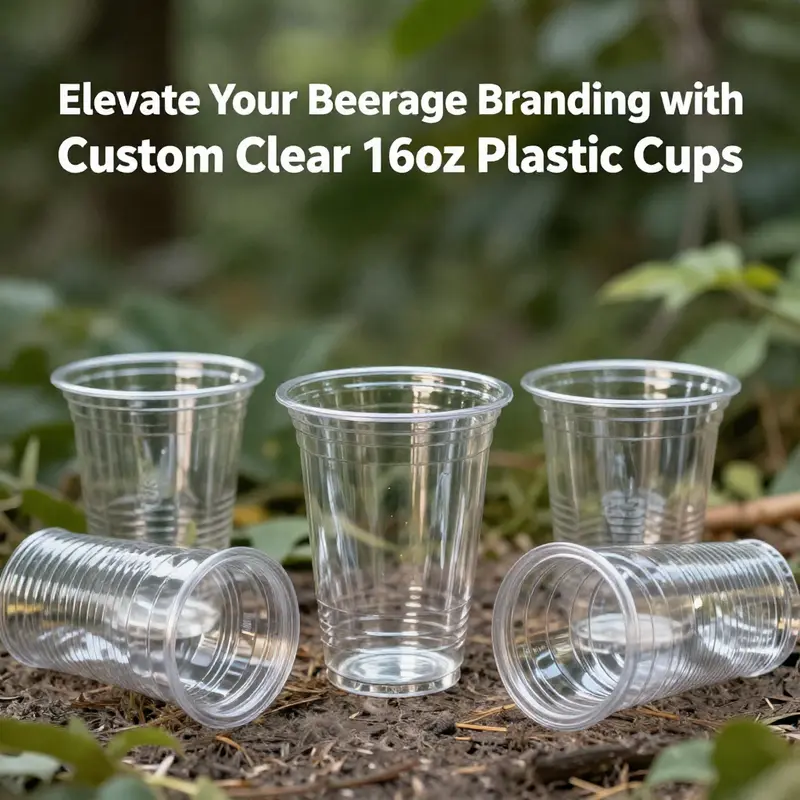
The environmental footprint of custom clear 16oz plastic cups emerges as a careful intersection of material science, manufacturing choices, consumer behavior, and the systems that handle end-of-life waste. In the practical world of takeout, events, and everyday beverage service, these cups are not just vessels; they are signals about a brand’s values and a community’s capacity to manage waste responsibly. The question is not simply which cup looks clearest or costs the least, but which cup can responsibly support a circular flow of materials, while still meeting the functional expectations of customers and the regulatory demands of modern packaging. To understand this, we must trace a path from raw material choices through production, use, and disposal, paying attention to where gains are real and where trade-offs are inevitable. The chapter that follows treats this path as a single, continuous narrative rather than a checklist of pros and cons, because sustainability in packaging is most meaningful when it is integrated into design decisions, supply chains, and everyday disposal routines.
At the heart of the environmental conversation around clear cups is material choice. Traditional transparent cups have commonly relied on fossil-fuel-based plastics such as certain polyesters and polystyrene derivatives. These materials offer clarity and rigidity, but they also pose long-term waste management challenges. In landfill conditions, many petroleum-based plastics persist for centuries, gradually fragmenting into microplastics that can migrate through soils and watercourses. This reality has driven interest in alternatives that reduce reliance on nonrenewable resources, lessen emissions in production, or improve end-of-life outcomes. Plant-based bioplastics, such as those derived from polylactic acid, promise lower net carbon footprints during production and the possibility of industrial compostability. Yet “compostable” cannot be taken as a universal guarantee of sustainability. Compostability depends on infrastructure—industrial composting facilities that reach specific temperatures and residence times—and on consumer behavior that directs post-consumer streams toward the right processing channels. In other words, a compostable cup can deliver environmental benefits when it ends up in the appropriate facility; misplacement can render it functionally indistinguishable from conventional plastics in the waste stream.
Similarly, cups manufactured with recycled content, including recycled post-consumer materials, offer a direct path away from virgin fossil feedstocks. Recycled content reduces the demand for new resin and can lower the energy intensity of production, though the benefits hinge on the availability and quality of recycled feedstock. Recycled content is not a universal solution by itself; it must be balanced against performance requirements, food-safety considerations, and the integrity of recycling streams. The reality is that recycled resin can be more expensive or harder to source consistently in large quantities, and supply chains must ensure that food-contact safety standards are met. Yet when combined with robust post-consumer collection systems and traceability, recycled content becomes a meaningful step toward a lower-impact package.
The most sustainable choice is not a single material but a thoughtful combination of material selection, design for recycling, and a credible end-of-life plan. Cups can be designed to maximize clarity and durability while minimizing additives that complicate recycling streams. They can also be engineered to work with reusable systems, especially in settings that have the capacity to support washing and refilling. In this double-path approach, some customers and venues opt for reusable, insulated versions that can endure repeated cycles, while still offering a compelling user experience. The challenge here lies in balancing durability with the realities of a fast-paced service environment, as well as ensuring the system for cleaning and redistributing these cups is reliable and efficient.
Beyond material selection, the production phase itself deserves scrutiny. The energy mix used to manufacture cups, the efficiency of extrusion or molding processes, and the scale of operations all influence the carbon footprint. When a factory relies on electricity generated from fossil fuels, the emissions associated with the same cup could be higher than in a facility powered by low-carbon energy. Water use is another dimension often underestimated; manufacturing plastics can consume substantial water, and water stewardship becomes a relevant criterion for brands aiming to reduce environmental impact. In this context, the adoption of higher-efficiency equipment, waste heat recovery, and lean manufacturing practices can yield tangible gains without compromising product performance. The supply chain’s net environmental effect hinges on the transparency of those operations and the degree to which suppliers share verifiable environmental data.
From a broader perspective, life-cycle thinking helps illuminate where real advantages can be gained. A cradle-to-grave assessment starts with raw material extraction, moves through manufacturing and distribution, and ends with end-of-life management. In this framework, a cup that is compostable only offers benefits if it indeed reaches a facility that can process it under industrial conditions. If the same cup ends up in a municipal landfill or mixed recycling stream where compostable labels become contamination, the environmental advantage evaporates. Conversely, a cup built with recycled content has a strong potential to reduce overall environmental impact if the recycling system functions efficiently, allowing the resin to re-enter the production cycle rather than becoming waste in landfills.
The end-of-life landscape is where many of the most consequential debates occur. Microplastics, leaching, and environmental persistence are not merely abstract concerns; they translate into real-world consequences for ecosystems and human health. Persistence means that materials can accumulate in soils and waterways long after their usefulness in a single drinking occasion has ended. The degree to which a given cup contributes to this problem depends on its composition and on how well separate collection streams are organized and followed through by consumers. For plant-based cups, adherence to industrial composting is essential; otherwise, the material may end up in landfills where degradation is slow and the material does not contribute to nutrient cycling in any meaningful way. For cups with recycled content, the effectiveness of the circular loop depends on the post-consumer recycling rate and the ability of facilities to reprocess the resin into food-contact approved products.
The important takeaway is that the promise of sustainability rests on three connected pillars. First, material selection matters, but it must be paired with clear, verifiable labeling that informs consumers about appropriate disposal paths. Second, end-of-life infrastructure matters as much as—if not more than—the initial material choice. Without access to industrial composting or robust recycling streams, even the most well-intentioned cup cannot deliver real environmental benefits. Third, the broader system needs to align incentives across manufacturers, waste-management providers, policymakers, and consumers so that the upstream choices made in a factory translate into downstream outcomes that are measurable and meaningful.
This alignment is not merely a technical issue; it is a consumer education challenge as well. Labels and claims on cups should be accurate and transparent, enabling households and businesses to decide how best to manage disposal. The presence of compostable claims should be complemented by information about whether the local waste system can act on those claims. In communities lacking industrial composting or advanced mechanical recycling, a compostable cup may be no more sustainable than a traditional one if it infiltrates the general waste stream. Conversely, in districts with well-functioning composting facilities and high recycling rates, cups designed for recycling or with recycled content can yield appreciable environmental benefits. The net effect of any given cup, then, is a function of local infrastructure, consumer behavior, and the degree to which suppliers and retailers commit to credible, evidence-based sustainability programs.
For brands seeking to integrate sustainability across their packaging programs, the broader strategy matters as much as the material choice. A holistic program considers not only the cup but the entire packaging ecosystem—takeout boxes, lids, sleeves, and forms of merchandising that accompany beverages. An aligned approach can help ensure that a customer’s experience remains simple while the environmental narrative is strengthened through consistent, responsible practice. This is where the concept of cradle-to-cradle thinking—where design for a continuous loop minimizes waste and maximizes material utility—begins to make practical sense in everyday operations. It invites businesses to ask not only what a cup is made of, but how it can be recaptured, reprocessed, or reused in a way that maintains material integrity and avoids a one-way path to disposal.
In the conversation about sustainability, there is a growing emphasis on labeling and verification. Clear declarations about material composition, disposal guidance, and end-of-life facilities can empower customers to participate in responsible waste management. When brands pair transparent labeling with robust take-back or recycling programs, the environmental value of their packaging increases. At the same time, suppliers are urged to pursue verifiable certifications and third-party audits that confirm claims about compostability, recyclability, or recycled content. Such transparency not only helps consumers make informed choices but also supports regulatory compliance and fosters trust in the brand’s environmental commitments.
To connect these ideas to practical decisions, consider the broader packaging ecosystem in which clear cups operate. A cup exists within an entire tier of takeout packaging that includes containers, sleeves, and lids. The sustainability profile of the cup cannot be fully understood in isolation; it is inseparable from the materials and end-of-life performance of the entire package. For example, a cup that is designed to be easily recyclable must be used in conjunction with a recycling stream that accepts plastics of that particular resin, and with labeling that minimizes contamination. In that sense, the cup becomes a part of a value chain where each link relies on collaboration across disciplines—material science, logistics, waste management, policy, and consumer education.
As this discussion advances, it is helpful to invoke the idea that genuine environmental responsibility transcends individual product choices. It requires a systemic approach that values reduction of waste, efficient use of resources, and the creation of recovery channels that can handle the complexities of modern packaging. A cup may seem small, but when millions of cups are used and discarded, the cumulative impact is substantial. The opportunity, then, lies in making informed choices today that set the stage for a more sustainable tomorrow. Brands that invest in credible end-of-life strategies, transparent communication, and ongoing collaboration with suppliers and municipalities will not only minimize environmental harm but also differentiate themselves in a marketplace that increasingly rewards responsible stewardship.
For readers seeking concrete, action-oriented examples of how to situate cup choices within a broader sustainability framework, consider exploring packaging options that are designed for easier separation and processing in common waste streams. This approach can help ensure that the outflow of cups from a venue or retail setting contributes to a circular economy rather than cluttering landfills. To illustrate the broader context of eco-conscious packaging systems, you can explore related materials that emphasize sustainable takeout packaging solutions, such as eco-friendly disposable packaging boxes designed for fast-food settings. eco-friendly disposable packaging boxes. This link showcases a broader design philosophy that values end-to-end sustainability, reinforcing the idea that the best cup choice aligns with a holistic view of how packaging travels from design to disposal.
The environmental science behind these choices is continuously evolving, and new findings may alter the relative advantages of different materials or collection systems. Still, the guiding principle remains robust: the environmental benefit of a custom clear 16oz plastic cup is not guaranteed by its materials alone. It depends on thoughtful design, credible labeling, and robust end-of-life infrastructure that can translate product-level improvements into real-world environmental outcomes. In practice, this means brands should engage early with waste-management partners, invest in lifecycle data, and communicate clearly with customers about how to dispose of or reuse cups. It also means policy makers and industry groups should support expansions of industrial composting capacity, catalyze the adoption of recycled-content standards, and encourage transparency so that environmental claims are verifiable rather than aspirational.
As the chapter closes, the interconnectedness of material choice, manufacturing realities, consumer practices, and waste-management infrastructure becomes ever more evident. The journey of a single 16oz cup—from design sketch to recycling bin or composting facility—epitomizes the complexity and potential of modern packaging. The path toward sustainability is not a single shortcut but a series of well-considered decisions across the lifecycle of the product, underscored by a commitment to credible data, continuous improvement, and shared responsibility among producers, retailers, and consumers. With this holistic lens, the environmental impact of custom clear 16oz cups can be understood not as a static tally of pros and cons but as a dynamic invitation to elevate packaging beyond mere function toward genuine stewardship of people and planet.
External resource for broader context on sustainable packaging: https://www.epa.gov/sustainable-management-food/overview-sustainable-packaging
Final thoughts
Custom clear 16oz plastic cups represent a fusion of design, functionality, and sustainability, making them an ideal choice for various beverage-related businesses. By understanding customization options, material choices, pricing trends, and environmental impacts, businesses can effectively enhance their branding efforts while contributing to sustainability initiatives. Leveraging these insights not only improves customer engagement but also positions brands as responsible and environmentally conscious players in the beverage market.