
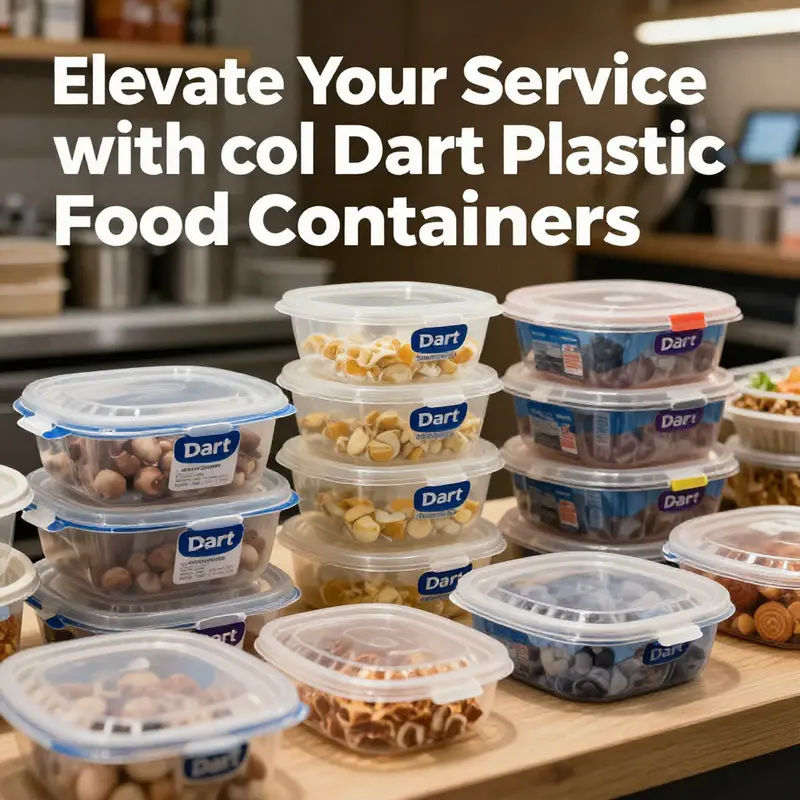
In the dynamic landscape of food service, choosing the right storage solution is vital. Dart Plastic Food Containers offer a blend of durability, versatility, and safety required by beverage chains, restaurants, food trucks, catering services, and event planners. From ensuring food integrity to providing economic benefits, these containers deliver unmatched value. This article delves into the practical applications, material safety, market availability, and environmental considerations that make Dart Plastic Food Containers an essential choice for modern food service providers.
Durable, Safe, and Versatile: How Dart Plastic Food Containers Shape Takeout, Meal Prep, and Home Storage
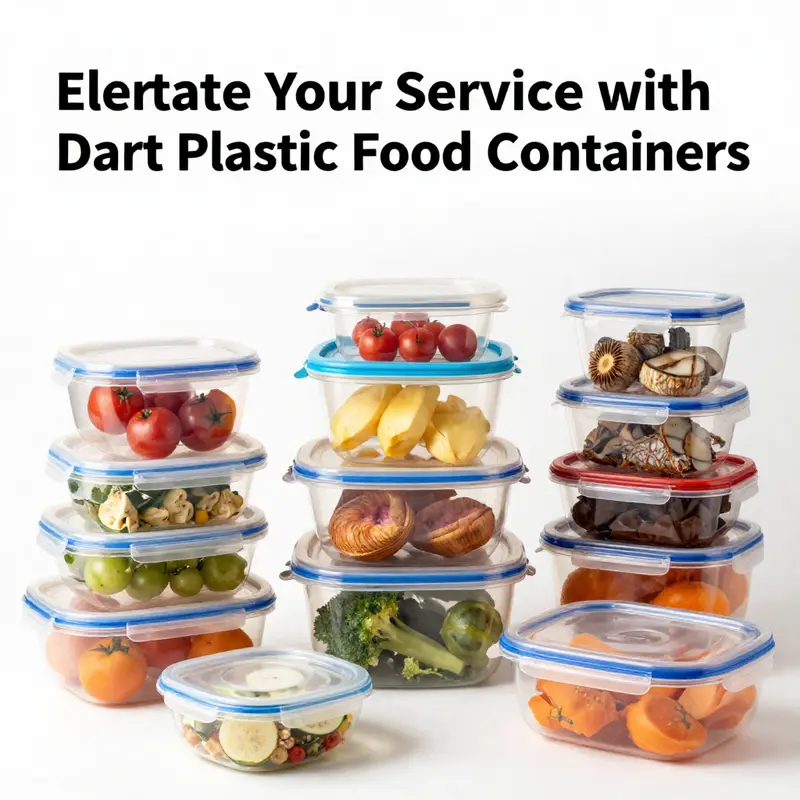
Dart plastic food containers have quietly become a cornerstone of how food moves from kitchen to consumer, blending durability, safety, and versatility into a single, practical package. The brand’s offerings sit at the intersection of commercial need and home convenience, designed to withstand the rigors of busy food service while still serving everyday storage and meal-prep tasks. In many ways, these containers reflect a broader shift in packaging: packaging that is not merely a vessel for food, but a system that supports safe handling, efficient logistics, and responsible usage across hot and cold applications. To understand their impact, it helps to consider the core design logic that drives their most common formats, how those formats meet real-world demands, and what that means for the future of disposable and reusable solutions in a world increasingly attentive to safety and sustainability.
At the heart of many Dart containers is a spectrum of size and shape options built to cover a wide range of serving and storage needs. Take, for instance, the 16-ounce round insulated foam container widely used for soups, sauces, and other liquid-rich foods. This model is crafted to be leak-resistant, a feature amplified by its seamless design that reduces potential failure points where leaks could occur. The physical dimensions—roughly 3.3 inches in height with a top diameter around 4.6 inches and a bottom diameter near 3.1 inches—highlight how these vessels are tuned for stability during transport. The foam insulation does more than keep temperatures steady; it also provides a degree of impact resistance, which is crucial when containers are stacked in a crowded rack or hurried onto a delivery rider’s bike. White in color, such units also offer a clean, neutral canvas that fits a variety of branding and service contexts, from white-labeled takeout to sides and side-dishes that must travel confidently without affecting the overall presentation.
A contrasting but equally important option in the Dart lineup emphasizes clarity and reusability through PET-based plastic containers. A 200-milliliter PET round container, for example, stands out for its moisture, oil, and gas resistance—properties that are essential for preserving freshness and preventing aroma transfer between compartments and packages. The round geometry is more than aesthetic; it supports even heat distribution during reheating, which is particularly relevant if the container is used for pasteurization or microwave heating. The PET material is recyclable, aligning with growing expectations for circular packaging where end-of-life options matter almost as much as performance during use. This combination of barrier properties and recyclability positions PET-based Dart containers as a practical choice for both hot- and cold-application foods, enabling service operators to confidently offer soups, gravies, stews, or chilled desserts without compromising safety or quality.
Beyond the single-serving, round formats, Dart also offers hinged containers that cater to multi-surface needs and visibility. The Solo Dart 8″ by 8″ by 3″ clear plastic hinged take-out container, designed for a single compartment, is a staple in settings where hygiene, presentation, and portion control are critical. The clear lid and body allow operators and customers to assess contents at a glance, a feature that supports fast throughput in busy service lines and improves user confidence in what they are purchasing or reheating. The hinged design also enhances stackability—an efficiency benefit in back-of-house operations where space is at a premium and volume is high. Seeing through the container while maintaining a secure seal makes it easier to manage inventory, prevent cross-contamination, and deliver visually appealing meals, from bowls of fare to composed entrées with sides that must stay neatly arranged during transit.
These varieties—foam-insulated round cups, PET round containers, and clear hinged boxes—illustrate a broader truth about Dart products: the company aims to cover both the needs of high-volume food service and the more personalized demands of home storage and meal-prep workflows. The materials themselves speak to different priorities. The insulated foam option prioritizes thermal retention and cost-effectiveness for hot applications or vessels that require light thermal buffering during short trips. The PET option foregrounds barrier performance and recyclability, appealing to operators who want a more transparent material that supports consumer visibility and compliance with waste-disposal norms. The hinged, clear plastic option emphasizes portion control, presentation, and ease of use in retail and food-service settings where multiple components must stay organized and secure.
These design choices also reflect practical considerations of safety and leakage control. In the case of the seamless, leak-proof models, the absence of seams reduces potential leakage pathways when liquids are involved, a critical factor for transporting soups, sauces, or moist preparations. When tamper-evident closures are included, the containers gain an additional layer of safety, reassuring customers that contents have not been compromised during transit. This is particularly important in busy environments where multiple handoffs can occur—from kitchen to driver to customer—and every handoff raises a chance for spills or contamination if seals aren’t robust.
The materials themselves play a decisive role in the sustainability conversation that now dominates packaging decisions. PET, a widely used plastic in Dart’s repertoire, offers strong moisture and gas barriers while remaining highly receptive to recycling streams. This recyclability is a clear advantage for operations looking to implement more sustainable procurement strategies and for consumers who want to dispose of packaging responsibly. Foam-based containers, while cost-effective and excellent for insulation, face more nuanced debates about end-of-life options. As consumer and regulatory emphasis tilts toward recyclability and compostability, Dart’s PET solutions gain traction as a more compatible option within modern waste streams, though foam remains popular for specific temperature-controlled use cases and certain cost-sensitive segments.
The practical implications of these design and material choices ripple through the everyday workflows of restaurants, meal-prep services, grocery stores, and home kitchens. In restaurants and takeout operations, the need to fulfill a clear, consistent promise to customers—whether it’s keeping a hot sauce from leaking or preserving the texture of a crisp accompaniment—drives a preference for containers that combine leak resistance with predictable performance. The leverage point is not merely the container’s ability to hold contents; it is equally about how easily staff can seal, transport, and present meals without sacrificing quality. In meal-prep contexts, where containers may be used for portioning, reheating, and cold storage, the same principles apply but with heightened attention to reusability and re-sealability for multiple uses. In grocery and retail environments, visibility matters. A clear hinged container, for example, gives shoppers a direct view of the contents, reducing guesswork and enhancing trust—an effect that translates into smoother operations and improved customer satisfaction.
Across these settings, the Dart portfolio also demonstrates how packaging must adapt to both the physical realities of handling and the evolving expectations around cleanliness and food safety. The presence of tamper-evident features, robust lid closures, and leak-proof seals reflects a disciplined approach to safeguarding food during transit. Meanwhile, the clear and hinged formats illustrate a careful balance between transparency for quality control and practicality for daily use. The end result is a family of containers that can be relied upon in high-velocity service environments and in more contemplative home kitchens alike, where users may be meal-prepping for the week, portioning leftovers, or simply organizing meals for busy days.
The availability of these Dart options in major online marketplaces like Amazon and eBay has further shaped how operators and consumers source packaging. The breadth of availability makes it easier to procure in bulk for restaurant groups or to purchase in smaller quantities for home use. This accessibility is as much a part of the product’s impact as its technical capabilities. It lowers the barriers to adopting safer, more efficient packaging practices and reduces the friction that often accompanies transitions away from older, less robust containers. Operators can experiment with different configurations to see what works best for their menus, their service models, and their logistical constraints, all while maintaining a consistent standard of safety and presentation.
In thinking about the broader packaging landscape, the Dart product family sits within a continuum of solutions designed to handle both the practicalities of service and the preferences of today’s conscious consumers. The emphasis on leak-proof, tamper-evident, and temperature-controlled performance aligns with current expectations for product integrity and hotel-quiet efficiency in delivery and takeout chains. The PET options underscore a push toward recyclability and responsible disposal, acknowledging that sustainability cannot be an afterthought but must be embedded in the design and material selection of everyday containers. The hinged, clear containers remind us that visibility, portion control, and hygiene remain central to consumer trust and brand reliability. Taken together, these elements reveal a packaging philosophy that values dependable performance, safety, and adaptability—qualities that matter as food service continues to evolve in response to demand for speed, quality, and responsible packaging.
For readers exploring how different packaging formats compare or seeking a sense of how Dart containers fit into broader category trends, a quick look at related packaging options can be enlightening. Take, for example, the range of takeaway packaging boxes used for burgers, fries, popcorn, chicken nuggets, and similar items. These boxes illustrate how operators balance branding, protection, and convenience across formats that must travel from grill to guest with minimal risk of leaks or crushed contents. Take-away food packaging boxes for burgers and fries provides a sense of the diversity of designs that exist alongside plastic solutions, reinforcing how the market as a whole negotiates issues of performance, sustainability, and display.
As this chapter unfolds, it’s clear that the value of Dart plastic food containers rests not just in a single standout feature but in a coherent set of design choices that address the realities of modern food service and home usage. The enduring appeal lies in the combination of leak resistance, temperature control, ease of use, and the ability to align with recyclable materials where practical. The result is packaging that supports rapid service, predictable quality, and a smoother handoff from kitchen to consumer. Whether a restaurant is delivering a steaming bowl of soup, a chilled portion of yogurt and fruit, or a ready-to-heat entrée with accompanying sides, these containers provide a reliable interface between food and the customer. While sustainability narratives will continue to push for further innovations—more recyclable materials, alternative designs, and closed-loop systems—the current Dart portfolio demonstrates how practical, well-designed packaging can meet the present needs of food service operators and households alike, without compromising on safety or usability.
External resources offer a broader lens on product specifications and purchasing options for those looking to compare features or source containers at scale. For a detailed view of Dart’s product line and purchasing options, readers can refer to the Dart Plastic Containers listing on Amazon, which provides a direct view of available configurations, capacities, and packaging options. https://www.amazon.com/Dart-Plastic-Containers/dp/B001EJ9F7U
Material Choices Under Pressure: How Composition and Safety Standards Shape Plastic Food Containers
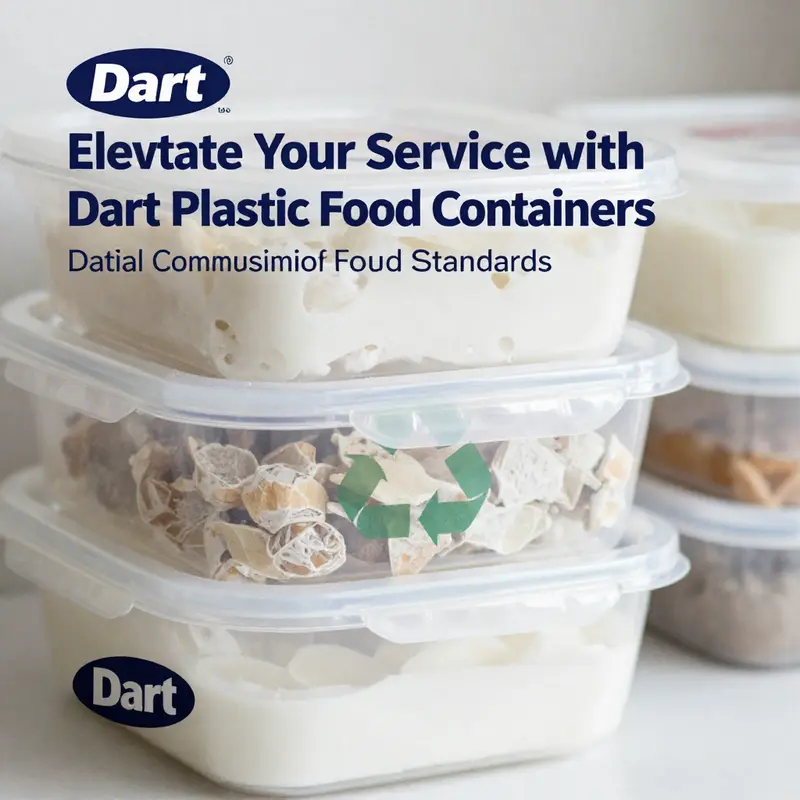
Material choices matter more than most people realize when it comes to plastic food containers. They determine not only how long a meal stays fresh, but how safely a container can interact with heat, acidity, and the occasional rough handling of a busy kitchen. The narrative around these containers often centers on convenience, but behind the scenes the raw materials, the way they are processed, and the safety standards that govern their use tell a story of engineering, science, and responsibility. In the scope of the broader topic—dart plastic food containers—the discussion naturally drifts from the shop floor to the lab, where the materials are chosen, tested, and validated to meet exacting food-contact requirements. A clear-eyed look at the material mix helps explain why some containers excel at insulation, why others resist leaks, and why still others are designed to be easily recycled after a single use. It also clarifies consumer questions about microwave use, heat resistance, and potential chemical migration into foods.
At the heart of this chapter are three materials that commonly appear in the lineup of plastic food containers. Each brings a distinct set of properties, limitations, and safety considerations that shape how the containers perform in real-world scenarios. The first is the long-standing workhorse known colloquially as polystyrene foam. Often marketed as Styrofoam in consumer contexts, this material has long been favored for hot meal and soup delivery containers because of its superb insulation. The tiny air pockets that give foam its lightweight character also provide a barrier to temperature change, which helps keep liquids hot and foods from cooling too quickly during transport. Yet insulation is not the only thing that defines its utility. Polystyrene foam is relatively inexpensive to produce and can be molded into a variety of shapes that fit different meal formats. These advantages come with notable caveats. There are limits to heat resistance. When exposed to higher temperatures over extended periods, the structure can soften or deform, and some analysts worry about the possibility of light migration of certain compounds under stress. Environmental impact is another area of concern, since foam materials can be challenging to recycle in typical curbside programs. Taken together, these factors push foodservice operators to balance the insulation benefits with energy-use, waste streams, and end-of-life considerations.
The second material, polypropylene—often abbreviated PP—offers a different calculus. PP is a thermoplastic polymer known for its high heat resistance and robust impact strength. It stands up well to repeated use, making it a natural fit for reusable storage containers and industrial applications alike. From a safety perspective, polypropylene is widely regarded as chemically stable and capable of performing in warm to hot environments. In many jurisdictions, PP-based containers used for ready-to-eat meals or dairy products are marketed as BPA-free, reflecting a regulatory and consumer preference for materials that minimize potential hormonal interactions or leaching concerns. This does not merely reassure consumers; it reflects a broader regulatory ethos that positions PP as a reliable workhorse in the food contact sector. Its chemical stability makes it a versatile choice for storing acidic foods like tomato sauces or alkaline items like certain cleaning ingredients used in industrial kitchen settings, within reasonable temperature limits. The versatility of PP also translates into the ease with which manufacturers can design lids and closures that seal tightly, support tamper-evident features, and withstand the mechanical stresses of stacking, shipping, and handling.
The third material, clear plastics such as PET—polyethylene terephthalate—offers a contrasting set of strengths. PET is prized for its clarity, which makes it an attractive option for single-serving or short-term storage where visibility is important. In many cases, PET provides strong barrier properties against moisture and gases, helping preserve freshness and extend shelf life for items like salads or yogurt-based meals. The transparency of PET isn’t just a cosmetic feature; it serves a practical purpose in food service by enabling quick visual inspection of contents in busy back-of-house environments. From a safety standpoint, PET is widely used in consumer packaging and is compatible with standard food-contact regulations around the world when formulated and processed correctly. However, just as with any polymer, the context of use matters. PET containers must be designed to manage heat exposure levels and to prevent deformation or degradation that could alter barrier performance or integrity under typical meal temperatures.
These material categories—polystyrene foam, polypropylene, and PET—are not simply catalog entries. They are part of a controlled system governed by safety standards that ensure containers perform safely in contact with food. The chapter’s safety framework rests on several pillars that key manufacturers emphasize when communicating with foodservice professionals and consumers alike. A central tenet is BPA-free design. Bisphenol A, used in some older plastic formulations as a hardening agent, has been the subject of extensive scrutiny due to concerns about its potential migration into food under heat or prolonged contact. Modern food-contact plastics in the disposable and reusable lines strive to be BPA-free, and many suppliers implement additional policy safeguards to minimize exposure to any bisphenol-related compounds. BPA-free labeling is not merely a marketing cue; it reflects regulatory expectations and consumer demand for materials with predictable, low-risk interaction with a wide range of foods, including acidic and fatty substances.
The regulation of food-contact materials is inherently international in scope. In the United States, the U.S. Food and Drug Administration sets standards that define what kinds of materials can be used in contact with food and under what conditions. In Europe, the European Food Safety Authority performs a parallel function with a focus on risk assessment and permissible substances. Both regimes share a common philosophy: materials should be chemically inert under normal use, meaning they should not leach harmful substances into foods when used as intended. The distinction between “normal use” and “extreme use” often becomes a practical concern for operators who transport hot meals or microwave-ready items. While PP often has a well-established track record for microwave safety when used according to the manufacturer’s guidance, polystyrene foam and PET require more careful consideration to avoid conditions that could alter their performance or safety profile.
Migration testing, a term that appears in regulatory documents, is one of the practical tools used to assess safety. It simulates how a container’s constituents might migrate into food under specified temperatures and contact times. The results inform whether a material remains within safe limits for a broad range of foods and use scenarios. In practice, this means that a supplier’s data sheet, often produced for a particular material family, will summarize the tested conditions and the migration limits achieved. For a brand line that aims to cover hot meals, cold salads, and dairy products, the testing matrix becomes a balancing act: the material must resist deformation and maintain barrier properties for a variety of foods while staying within safe exposure limits.
Beyond the chemistry, the mechanical design of containers contributes to safety and usability in subtle but meaningful ways. One straightforward example is the ability to seal with a lid that fits tightly without warping the container. A snug lid reduces the risk of leakage, which, on the surface, protects the user from spills and cross-contamination. At the same time, a well-designed seal helps ensure the container maintains its internal environment, preserving temperature and moisture levels that affect food quality. In a busy foodservice operation, these functional properties translate to reduced waste, improved portion control, and a better dining experience for customers who rely on takeout and meal-prep services.
Recyclability stands alongside safety as a core dimension of responsible packaging. The materials themselves—PP and PET—are widely recyclable through established streams in many regions. When a consumer returns a container to a recycling program that accepts PP or PET, the material can be reprocessed into new products, reducing the overall environmental footprint of takeout and meal-prep ecosystems. Yet recycling is not a universal guarantee; it depends on local infrastructure, clarity of labeling, and consumer participation. The environmental calculus grows more complex for polystyrene foam, which has faced intensified debate over end-of-life handling and ecological impact. While some communities do provide recycling for foam, others do not, and the energy balance of recycling foam is often weighed against alternative waste-management strategies. In practice, brands and retailers respond by offering a mix of material options that align with local recycling capabilities while maintaining performance for food safety and consumer convenience.
To connect these technical threads to everyday use, consider the ways these materials influence how a container feels to a kitchen staffer, a consumer, and a waste-stream manager. A polystyrene foam container, praised for its insulating prowess, may be preferred for hot soups on a late-night delivery route. Its light weight minimizes shipping weight, an economic consideration that cannot be ignored in high-volume operations. However, the material’s heat tolerance and environmental footprint often steer operators toward polypropylene or PET for applications that require repeated use, higher-temperature exposure, or a cleaner disposal profile. PP’s heat resistance and durable feel make it a reliable choice for multi-meal containers, where the container must survive multiple cycles of opening, closing, and transport without losing form or sealing capability. PET’s clarity makes it a natural for packaging where visual inspection of contents matters, such as pre-portioned salads or ready-to-eat meals that travelers or office workers will choose based on appearance as much as on contents. The transparency of PET, coupled with its strong barrier properties, helps preserve freshness while offering manufacturers a versatile platform for branding and product signaling during the consumer’s decision-making moment.
These material decisions do not stand alone. They are guided by safety documentation and compliance practices that vendors routinely share through product data sheets and technical disclosures. The emphasis on inertness and regulated migration limits is more than a regulatory box-ticking exercise; it is a practical framework for ensuring that a container acts as a passive mediator between food and environment. The consumer-facing message is often framed in terms of safety and suitability: is the container BPA-free? Can it be microwaved safely? Will it hold sauces without leaking? The answers hinge on the material class and the product design, but the assurances come from the safety standards that govern food-contact plastics across jurisdictions. When a brand communicates that its containers meet stringent food-grade requirements, it signals a commitment to consistent performance and a cautious approach to the water, oil, and heat interactions that characterize real-world use.
In the broader arc of packaging, the material story also informs the move toward more sustainable options. Recyclability is a key lever, but it is not the sole determinant of environmental impact. The lifecycle of a container—from resin synthesis to molding, use, and end-of-life management—shapes its overall footprint. This is why some manufacturers emphasize the recyclability of PP and PET while exploring alternative materials for foam or researching post-consumer recycled content. It is not a simple trade-off between durability and environmental stewardship; rather, it is a carefully managed optimization problem that must account for performance, safety, cost, and waste-system realities. For operators who manage large fleets of food containers, this translates into decision-making that weighs the integrity of the food, the ease of handling, and the downstream consequences of disposal or recycling.
From a reader’s perspective, the practical implications are clear. If you are evaluating a container family for hot meals, you will likely lean toward materials with superior heat resistance and well-established safety profiles. If your priority is visibility to monitor portions or freshness, transparent PET becomes attractive. And if the goal is weight savings and a disposable option that can perform well in a controlled, short-term context, foam might still appear on the short list in certain markets, provided its use complies with local regulations and waste-management capabilities. In every scenario, the choice of material is a choice about risk versus reward: the risk of leaching or deformation, weighed against the reward of insulation, clarity, or pliability for lids and closures. The brand’s approach—reflected in its material mix, its labeling, and its compliance documentation—embeds a philosophy that safety and performance come first, then convenience, then end-of-life considerations.
To bring this back to the broader topic, the material composition and safety standards of plastic food containers illuminate why these products occupy such a central place in modern foodservice. The interplay of polystyrene foam, polypropylene, and PET shapes the user experience in tangible ways while standing on a foundation of safety assessments and regulatory alignment. Acknowledging these dynamics helps explain why operators choose different container types for different meals, why manufacturers invest in robust testing and disclosure, and why consumers increasingly seek products that combine reliability with a clear demonstration of safety—and, where possible, recyclability. The narrative is not about a single material triumph or a single regulatory victory; it is about a balanced ecosystem where chemistry, engineering, safety science, and market demand converge to deliver containers that can safely carry a hot bowl of soup or a cold, crisp salad through a bustling day.
For readers who want to explore a concrete example of how this material knowledge translates into product design and consumer-facing information, a related resource highlights the practical side of plastic packaging and its evolving role in modern takeout and food storage. See the clear PET plastic cup page for a concise look at how transparency and barrier properties are combined in a disposable container designed for quick-service environments. This resource helps illustrate how the basic material properties discussed here are put into practice in everyday packaging choices. If you are curious about broader implications, consider the manufacturer’s official product information for more technical data. This will provide a deeper dive into how a brand balances performance, safety, and recyclability across its container families, while also offering a window into the testing and compliance frameworks that underpin modern food-contact plastics.
In sum, the story of material composition and safety standards in plastic food containers is a story of careful engineering under constraint. The choices of polystyrene foam, polypropylene, and PET reflect a spectrum of performance—between insulation, heat resistance, clarity, barrier protection, and recyclability. Layered on top of those material facts are the safety assurances that regulators, manufacturers, and consumers rightly expect: BPA-free design, inert behavior under normal use, and robust compliance with global food-contact regulations. When these pieces fit together, they form a coherent picture of containers that can safely bridge the gap between kitchen and consumer, delivering meals with confidence and reducing waste in a complex, fast-paced food economy.
External resource for further reading: https://www.dart.com/products/food-containers
Market Availability and Economic Dynamics of Plastic Takeout Containers
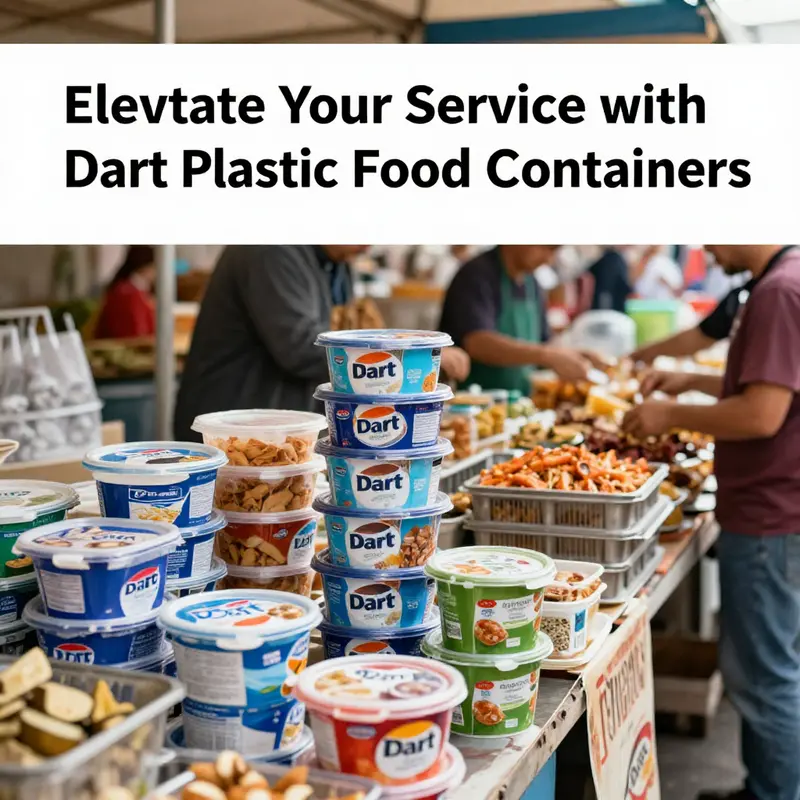
The packaging that travels with a hot meal or a cold salad is more than a vessel. It is a functional contract between kitchens, couriers, and customers that promises safety, convenience, and reliability from the moment food is prepared to the moment it is enjoyed. In the current foodservice economy, plastic takeout containers occupy a central, if evolving, role. They must withstand the rigors of transport, guard against leaks, survive varying temperatures, and present a clean, professional appearance that reflects a brand’s standards. The market for these containers is not a niche segment but a sizable component of the global foodservice packaging story. In 2024, the market was valued in the neighborhood of USD 26.72 billion and is projected to expand to roughly USD 39.68 billion by 2034. Those figures are more than a box of numbers; they map the growth of a delivery and takeout culture that has become ingrained in how people plan meals, how restaurants compete, and how suppliers calibrate capacity and price.\n\nBehind this scale lies a demand for versatility. Operators seek a spectrum of shapes, from rounds that cradle single portions to rectangles that stack neatly in warmers and boxes. The material palette spans PET and clear plastics, each chosen for clarity, moisture resistance, and the ability to shield food from contamination. In more challenging cases, insulation tricks or foam-based solutions continue to provide temperature retention for soups, stews, and other liquid-rich items that must stay appetizing from kitchen to doorstep. Lids, whether flat or hinged, are not mere closures; they are critical performance features that prevent leaks, preserve aroma, and support hygiene standards. The engineering of these containers—how they seal, how they vent, how they resist pinholes and deformation—speaks to a broader design philosophy: packaging that is as dependable as the dish inside it.\n\nDistribution and procurement patterns also reveal the economic logic of this market. The packaging industry has built robust, global supply chains that deliver these containers in bulk to restaurants, caterers, grocery retailers, and meal-prep services. The prevalence of bulk packs—think hundreds or thousands of units in a single order—reflects the needs of operators who must manage peaks in demand, whether tied to holiday periods, promotions, or surges in delivery volume. Retail platforms play a dual role here. They are both demand aggregators and fulfillment channels, enabling small kitchens to access standardized packaging at predictable prices, while giving larger operators the advantage of scale through uniform SKUs and reliable lead times. The visibility created by these online marketplaces also feeds planning cycles in manufacturing, warehousing, and logistics, anchoring a virtuous circle of efficiency that reduces unit costs over time and helps keep menus and brands consistent across geographies.\n\nAmid the growth arc, the industry faces meaningful headwinds rooted in regulation, consumer sentiment, and the pace of technological change. Since 2021, regulatory bodies around the world have tightened restrictions on certain single-use plastics. In parallel, a growing segment of consumers has begun to scrutinize packaging for sustainability credentials, favoring products that either reduce environmental impact or improve end-of-life outcomes. These shifts have tempered the pace of expansion in some markets, even as restaurants expand their takeout and delivery options to meet demand. Yet the overall trajectory remains positive. The resilience of the sector hinges on a combination of durability, cost efficiency, and the ability to align with evolving expectations around recycling, reuse, and responsible disposal. The industry is not retreating from convenience; it is recalibrating what convenience looks like in a more circular economy.\n\nTo navigate this recalibration, the leading packaging companies have pursued strategies that blend performance with responsibility. In late 2025, a notable collaboration emerged between industry players and a trade association focused on advancing recycling access for packaging. The aim is to sharpen the recyclability of common takeout formats, reduce contamination in recycling streams, and improve the downstream viability of materials that households and foodservice operations can actually process. This isn’t a symbolic gesture. It is a deliberate investment in the long-term viability of the packaging ecosystem, designed to preserve supply resilience while addressing the regulatory and reputational risks that come with increasing scrutiny of plastic waste. Such partnerships underscore a broader industry pivot: innovation in materials and design that keeps packaging fit for purpose while clarifying the path to end-of-life recovery. The practical effect is a market that continues to supply essential packaging at a reasonable cost, but with greater transparency about recyclability, better guidance for disposal, and more consistent waste-management outcomes for customers and municipalities alike.\n\nFrom the restaurant floor to the consumer’s doorstep, the economics of these containers hinge on more than raw material costs. They are influenced by the reliability of supply chains, the stability of freight rates, and the efficiency of manufacturing ecosystems that can adapt to shifts in demand. A container must be affordable not just as a unit price, but as part of a total cost of ownership that includes storage, handling, and potential waste fees for non-recyclable formats. The dispersed, global nature of production means that even small changes in petrochemical markets, energy costs, or labor availability can ripple through to price points for end users. In this landscape, the strength of a packaging supplier is measured not only by the breadth of its catalog but by its ability to maintain quality across a diverse range of sizes and configurations while delivering on time, in bulk, and at predictable terms. The reputation for consistent performance and dependable service, reinforced by bulk availability and clear product specifications, becomes a key economic differentiator in a competitive field.\n\nIn this environment, the role of bulk procurement becomes a lens through which to view availability and price stability. Large operators often rely on well-established distributors that can supply standardized, tamper-evident, leak-proof closures in consistent formats. The capacity to offer tamper-evident options, plus the security of leak resistance and heat tolerance, translates into higher consumer confidence and fewer service disruptions. For many foodservice outfits, the ability to source across multiple sizes and shapes from a single supplier reduces complexity, lowers carrying costs, and improves forecasting accuracy. The downstream effect is a marketplace where a reliable packaging partner helps a restaurant maintain menu integrity, protect brand perception, and keep customers returning through the assurance that every component of the meal arrives intact and safe to eat.\n\nOf course, this landscape is not static. The market’s resilience rests on continuous adaptation, whether through material substitution, design improvements, or new business models that reframe how containers are used. Reusables, though not universally adopted, represent an ongoing strategic consideration for venues exploring long-term cost savings and waste reduction. Even where disposables remain dominant, brands increasingly emphasize recyclability and reduced environmental impact in their product development roadmaps. Consumers may not always see the packaging behind their meals, but they experience its consequences through price fluctuations, availability during peak times, and the confidence that a takeout container will perform as promised when the meal is finally opened. In this way, the availability of plastic takeout containers and their economic dynamics are deeply intertwined with the broader shifts toward sustainability, efficiency, and a more transparent foodservice supply chain.\n\nWithin this broader narrative, alternative packaging options sometimes surface to address specific brand goals or customer preferences. For example, disposable kraft paper soup containers with lids illustrate how suppliers diversify offerings to align with sustainability criteria, branding, and performance needs. These paper-based options can provide favorable end-of-life profiles in jurisdictions with stricter plastic regulations, while still supporting the practical demands of hot foods, liquid sauces, and on-the-go meals. disposable kraft paper soup containers with lids. This example underscores a broader truth: packaging ecosystems are not monolithic. They are portfolios of choices that operators deploy in different combinations to manage risk, control costs, and meet regulatory expectations. The capacity to integrate such options into procurement plans reflects the market’s maturity and its willingness to balance convenience with responsibility.\n\nLooking ahead, the economic narrative of plastic takeout containers will keep evolving as technology advances, recycling infrastructures expand, and consumer attitudes continue to shift. The essential capabilities—leak resistance, temperature tolerance, and structural stability—will remain critical for protecting the integrity of food during transport. At the same time, the industry’s attention to circularity means design decisions will increasingly factor in end-of-life outcomes, making it possible to reclaim and repurpose materials rather than bury them. Operators will benefit from clearer guidance on disposal and recycling, which can translate into lower waste-related costs and higher rates of recovery. The economic story thus becomes one of balancing immediate logistics needs with long-term sustainability goals, ensuring that packaging continues to support a vibrant foodservice sector without compromising the health of communities or ecosystems.\n\nExternal resource: https://www.amazon.com/dp/B07XQZVYJL
null
null
Final thoughts
Dart Plastic Food Containers stand out as an essential tool for those in the food service industry, offering a perfect blend of functionality, safety, and economic efficiency. Their ability to maintain food integrity while being widely available ensures that they can meet the diverse needs of beverage chains, restaurants, and catering services alike. In a time when sustainability is increasingly paramount, understanding the environmental implications of these products can also guide better choices. By opting for Dart, businesses not only ensure exceptional service quality but also contribute positively to the community and the planet.