
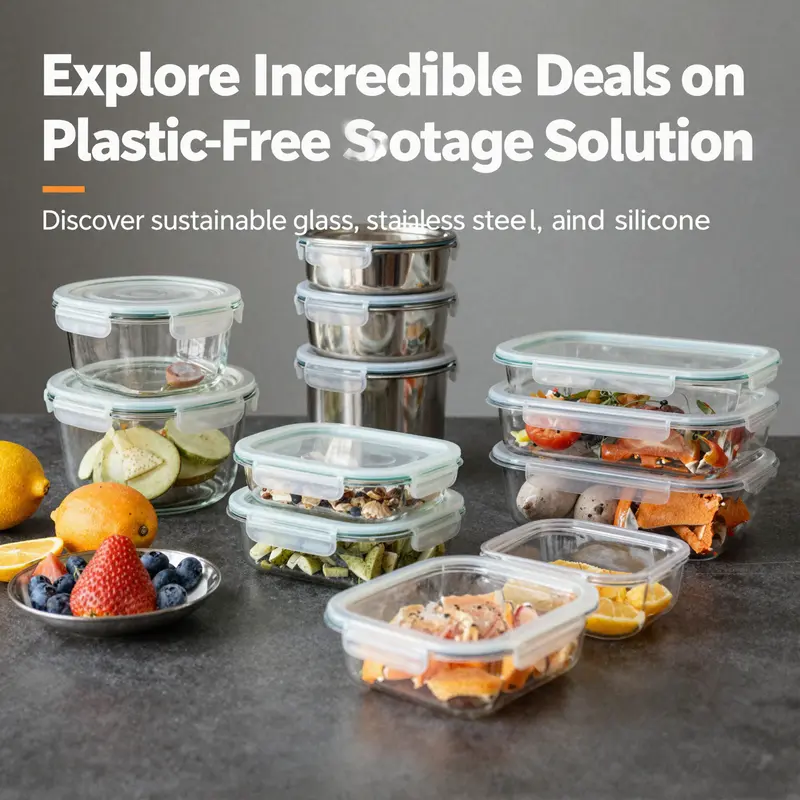
As the focus on sustainability grows stronger in the hospitality and food service industry, making informed choices about food storage solutions becomes crucial. Plastic-free food storage containers are not only better for the environment, but they also enhance the health standards of your business. This guide highlights amazing current deals on glass, stainless steel, and silicone food storage containers. Each chapter will introduce you to sustainable storage solutions available in the market, helping you choose the best products for your bubble tea shop, restaurant, food truck, or event planning needs.
Crystal Clear Value: Navigating Glass Storage Deals in a Plastic-Free Kitchen
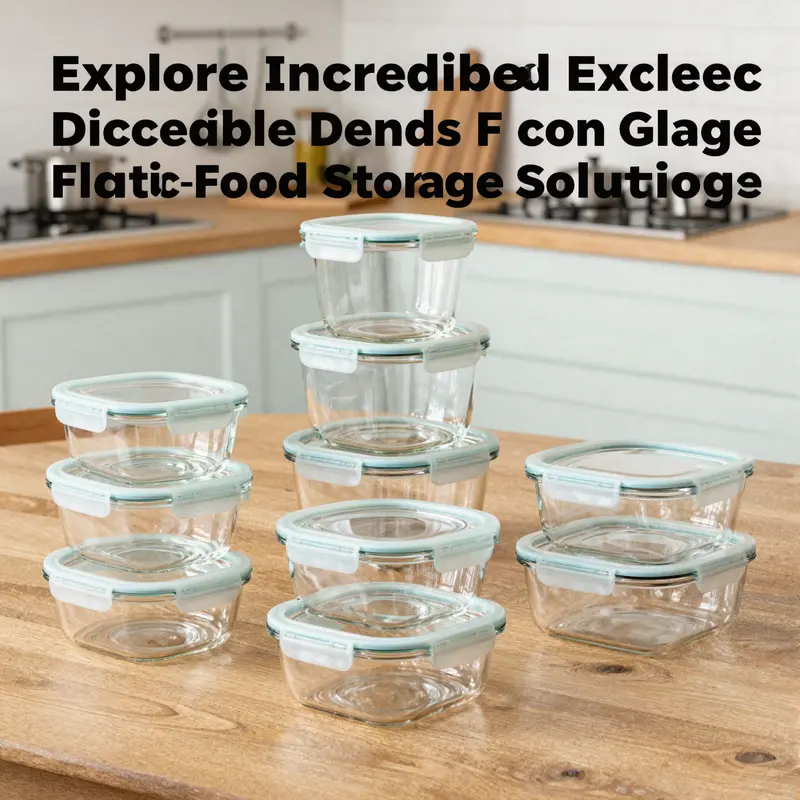
Across our conversation about plastic-free storage, glass containers occupy a leading position for readers seeking durable, safe, and recyclable options. The appeal isn’t only about avoiding plastic, but about investing in storage that respects taste, odor, and the integrity of the foods we keep. When price meets practicality, glass storage moves from a niche choice to a mainstay in households that want fewer plastics in their pantries and more clarity in their routines. Current market dynamics reflect this shift in two closely linked ways: consumer-led demand for reliable glass sets and the lure of favorable deals that make the switch affordable without sacrificing quality. To understand the lay of the land, it helps to look at concrete deal patterns that have emerged in recent months. These patterns illuminate not only what buyers are snapping up, but how suppliers compete on price, packaging, and reliability while staying within the growing expectations around non-plastic storage solutions.
A notable trend in the deals landscape is the parallel rise of consumer-friendly glass meal-prep configurations and the wholesale opportunities that accompany them. On the consumer side, a widely discussed glass meal-prep set has drawn attention on major online retail platforms and in media roundups, signaling strong consumer demand for bulk-ready glass solutions. While it is easy to fall into the trap of chasing well-known brand names, the real story is about the type of product that dominates shopper attention: a sealed, food-grade glass container system designed to support daily meal planning, portion control, and fresh-food preservation. This kind of kit typically emphasizes stackability, uniform lids, and a robust seal that keeps food airtight without relying on plastic components. The popularity of such sets is a useful proxy for broader appetite among households that are serious about eliminating plastics from daily storage.
Beyond consumer bundles, the wholesale-side picture adds depth to the price landscape. Market data from wholesale channels reveals a spectrum of glass storage options that are priced to move, with unit prices revealing both scale and quality considerations. A representative example is a line of small glass sealing jars offered in bulk. In one common configuration, an 180-milliliter glass sealing jar commands a price around eighteen dollars per unit on a platform that aggregates wholesale listings. The sheer volume sold—hundreds of thousands of units in some instances—signals not only a low-friction path to procurement for small businesses and retailers but also a strong consumer habit of refilling and reusing glass jars for dry goods, snacks, or spice blends. The price point, while modest on a per-unit basis, becomes a meaningful lever when households consider a pantry overhaul or a kitchen that aims to trim plastic packaging across multiple use-cases.
Increasingly, mid-sized storage formats attract attention as well. A 500-milliliter glass storage container has appeared on wholesale catalogs at around twenty-six dollars per unit, with tens of thousands of units sold in the course of these listings. This size resonates with families who batch-cook or portion out meals for the week, as well as with hobbyists who store herbs, grains, or baking ingredients in a container that can live on a shelf, in a drawer, or in the refrigerator without risk of leaching or staining. The 480- to 770-milliliter range—these jars, cups, and canisters offered by multiple suppliers—illustrates how suppliers position glass storage as a flexible, adaptable system. The appeal here is not just the glass itself, but the combination of glass with airtight sealing technologies. The seal is crucial because it translates into longer food freshness, reduced moisture ingress, and less smell transfer when jars sit side by side in a pantry or a kitchen cabinet.
These wholesale dynamics matter for readers who are weighing the merits of bulk procurement against consumer-ready sets. The bulk listings show that there is a consistent, steady demand for food-grade, sealed glass containers in sizes that cover everything from spices and tea leaves to rice, lentils, and nuts. In practical terms, this means shoppers can plan their storage layout around a handful of core sizes that cover most everyday needs, then scale up or down depending on family size, cooking style, and frequency of meal-prepping. The wholesale price bands—roughly eighteen to twenty-six dollars per unit depending on size and supplier—also illuminate how total costs accumulate when a household commits to a plastic-free pantry. A single purchase can unlock a family’s capacity to reduce single-use plastics across an array of food categories, from dry goods to leftovers and prepared meals.
But price alone does not determine value. Glass storage is also judged by its material integrity, compatibility with heat and cold, ease of cleaning, and, crucially, how well it integrates with lids and seals. Consumers who gravitate toward glass-pantry symmetry often look for a unifying lid system across multiple jar sizes. A reliable, airtight seal matters almost more than the glass itself because it translates directly into food quality and shelf life. Silicone gaskets and metal bands can offer durable seals, while silicone sleeves may provide grip and protection against chipping during stacking and transport. The thoughtful pairing of glass with a robust lid system is what makes a deal meaningful in daily life, not just in a showroom or on a catalog page.
Material choices within the glass category extend beyond the bottle-and-jar format. Some readers favor borosilicate glass for its resistance to thermal shock, which makes it more forgiving when transferring containers from the fridge to the microwave or oven‑safe applications. Others prioritize standard soda-lime glass for its affordability and general durability. Either way, the glass option remains inherently non-reactive, a standout benefit for keeping flavors pure and preventing staining from dark spices, turmeric, or coffee residues. In the context of plastic-free storage, this non-reactivity is a primary selling point, reducing the risk of flavor carryover and ensuring that stored foods taste as intended without envelope flavors bleeding into future batches.
From a health and environmental perspective, glass has a compelling story. Glass is widely recyclable and, unlike many plastics, does not degrade into microplastics with routine use. For households making a long-term commitment to plastic-free storage, the environmental argument matters as much as the immediate convenience of a well-sealed jar. The end-of-life pathway for glass—recycling streams that can reprocess it into new containers—aligns with broader sustainability goals. It’s not merely about immediate kitchen utility; it’s about how a pantry setup can contribute to a circular economy, reducing waste and reliance on single-use plastics over time. This perspective also feeds into the consumer demand for reliable, durable glass sets that can withstand daily use for years, reducing the need for frequent replacements.
As readers compare options, the practicalities of construction—not just the materials—shape the deals that feel right for a given kitchen. The geometry of jars matters: wide mouths for easy access to grains and spices, narrow mouths for liquids and sauces, and rounded bodies that minimize dead corners where crumbs and residues can collect. In addition, the quality of the seal and the design of the lid determine how well a container performs during freezing, refrigeration, or reheating. Some configurations emphasize leak-proof performance for lunches on the go, while others highlight oven-safe capabilities for reheating leftovers directly in the jar, a feature that can dramatically reduce the number of containers crossing from kitchen to table. When a deal includes such versatile design attention, its value extends beyond the initial purchase, influencing how households choose to organize, label, and maintain food storage over months and years.
For readers who are building a plastic-free kitchen, the transition often begins with an assessment of pantry goals. Do you want to eliminate all disposable plastic from every container, or are you prioritizing a practical, staged approach that reduces plastic gradually while maintaining daily convenience? The glass deals described above support either path. If your aim is a wholesale shift—buying in bulk to outfit a family kitchen or a small business—these price points underscore the potential for a substantial, long-term payoff. If your goal is a measured, consumer-level upgrade, the availability of sealed glass sets in moderate sizes offers a scalable route to gradually replacing plastic storage without overextending the budget. In either case, the core principle remains the same: select glass storage that is food-grade, seal-ready, and suited to your actual cooking and eating rhythms.
Another dimension worth considering is the lifecycle of lids and seals themselves. Even the most durable glass container hinges on a lid that seals tightly and resists cracking or warping. Reads on the wholesale market suggest that the most sought-after lid configurations pair a tight seal with a user-friendly handle or ring for easy twisting. The silicone gasket, when present, should be BPA-free and designed to hold its resilience through repeated cycles of freezing, washing, and microwaving, if applicable. Some readers look for metal bands that secure the seal and provide a premium feel, especially when the capacity of the container sits at the upper end of the size range. The best deals, therefore, often bundle glass with a dependable lid system that doesn’t require constant replacement, protecting the investment over time. As with any kitchen upgrade, a balanced mix of glass quality, lid reliability, and thoughtful sizes yields the strongest return in terms of both performance and peace of mind.
The practical steps to evaluating a glass-storage deal begin with a clear map of your space and your daily routines. Measure the shelf height and width where containers will live, then sketch a rough set of preferred sizes that cover your most common needs: a small jar for seeds and spices, a medium container for leftovers, and a larger canister for bulk dry goods. Compare unit prices across sizes; sometimes the cheapest per unit price is not the best value if the size doesn’t align with your pantry architecture. Also, consider the total capacity you would fill over a typical week; a few well-chosen jars can replace many plastic containers that would otherwise accumulate in a kitchen drawer or recycle stream. When you are buying in bulk, inquire about minimum order quantities, shipping safeguards (to prevent cracks and chips in transit), and the presence of a warranty or guarantee for seal performance. These factors often differentiate a good wholesale deal from one that looks attractive on the surface but offers limited long-term value.
The conversation about glass versus plastic-free storage must also address the realities of kitchen habits. For some households, a fully glass-first approach means letting go of some conveniences that plastic can offer, at least temporarily. A number of readers find that glass jars with broad mouths are the easiest to fill and clean, particularly when working with dry goods like flour, rice, or beans. Others appreciate the compact profiles of taller, narrower jars for spice blends and small-batch ingredients. The goal is to craft a cohesive system where each size has a clear purpose, where storage occurs in a way that reduces waste and clutter, and where the seal functions reliably enough to preserve flavors and textures over time. The deals landscape, with its mix of consumer sets and wholesale options, makes this goal more accessible than ever, allowing shoppers to curate a practical lineup that suits both taste and budget.
In-depth decision making around glass storage is not only about a single purchase; it’s about forming a pantry mindset that respects material choices, minimizes waste, and supports a healthier home environment. Readers who begin with a modest starter kit—think a handful of sizes that cover daily needs—often find the learning curve surprisingly short. The initial set serves as a testing ground for the seal’s reliability, the glass’s resistance to staining, and the ease of cleaning in a busy kitchen routine. As habits solidify, the pantry can gradually incorporate additional containers in complementary sizes, with a continued emphasis on non-plastic materials and sturdy lids. This incremental approach aligns well with the reality that plastic-free storage is as much about daily practice as it is about the hardware on the shelf. The goal is not to achieve perfection overnight but to establish a repeatable pattern of replacement and reuse that reduces waste without compromising convenience.
A final reflection on the market signals surrounding glass storage deals is worth repeating: price signals tell a story about demand, supply chains, and consumer confidence. The large-scale sales volumes in wholesale glass storage components demonstrate that shoppers are not merely curious; they are committed to integrating durable, non-plastic storage into everyday life. The price bands reflect a balance between affordability and quality, allowing households to scale up their plastic-free ambitions without paying a premium that would deter long-term adoption. In this environment, the smart shopper searches for clarity in the pricing, a practical set of sizes that fits real-world use, and a lid system that remains dependable after repeated use. When those elements align, a plastic-free kitchen transforms from an aspirational goal into a routine experience—one where the pantry looks as clear as the commitment to a healthier, more sustainable home.
As you navigate these deals, remember that the broader context—plastic reduction, healthier storage choices, and a cleaner kitchen environment—frames every decision. The glass option, in its many configurations, offers a durable platform for long-term change. And while price points will fluctuate, the fundamental value proposition remains consistent: glass storage can deliver reliable performance, safer food contact, and a path toward a more sustainable, less plastic-dependent kitchen routine. This is not about chasing a single deal, but about selecting a modular system that grows with your needs and aligns with your environmental aspirations. The current market reinforces the idea that plastic-free storage is not a fringe preference; it’s a practical, increasingly accessible standard that households can adopt piece by piece, size by size, as they rebuild their pantries around glass rather than plastic.
External resource: https://www.foxnews.com
Shiny and Strong: Navigating Current Deals on Stainless Steel Food Storage Containers for a Plastic-Free Kitchen
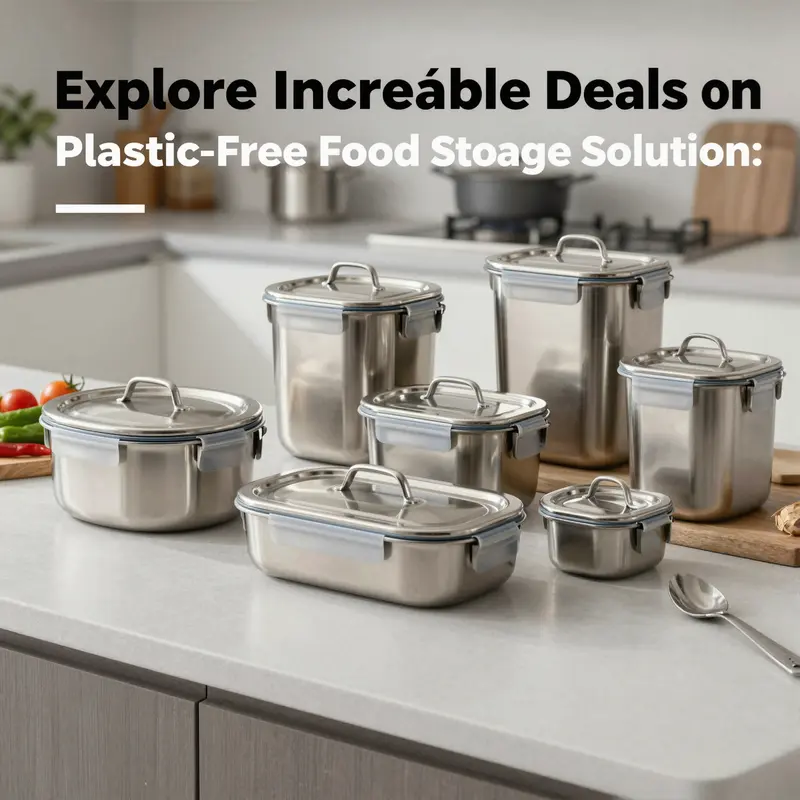
A plastic-free kitchen starts with choices that endure. Stainless steel storage containers offer a balance of durability, safety, and style that fits into a broader habit of mindful shopping. In this chapter, we wade into real-time deals on stainless steel options, exploring how affordable these sturdy containers can be while they help shrink plastic use in daily routines. The data reflects a market that now makes non-plastic storage accessible to a wide audience, from apartment dwellers who want compact, reliable pantry solutions to small households building a more robust, reusable system. As with any purchase tied to sustainability, the math isn’t only about sticker price. It’s about longevity, performance, and how a single purchase can ripple outward into less waste, less frequent replacements, and simpler, neater storage that reduces the likelihood of plastic alternatives slipping back into the kitchen cycle.
To begin with, one notable deal arrives from a popular online marketplace where a stainless steel coffee canister with an airtight seal and a scoop is currently priced just above three dollars. The price point is striking not because stainless steel is new to most kitchens, but because it demonstrates how accessible durable, non-plastic storage can be. When a retailer drops a product to such a low figure, the value proposition is not merely about price. It’s about the assurance that a long-lasting container can fit a modest budget and still offer a reliable seal that protects contents from humidity and odor transfer. The deal even includes a small incentive for shoppers who have a store wallet or coin-based reward system, highlighting how modern online marketplaces layer savings and convenience. The consumer is offered a glimpse into how a seemingly simple item—a sealed canister—can come with multiple forms of value, from immediate price cuts to longer-term savings achieved through durability and reusability. Even as the deal emphasizes a single canister, it points to a broader pattern: non-plastic storage solutions are increasingly available at price points that make them practical for everyday use rather than solely for “special occasion” upgrades.
Beyond that initial bargain, another visible option appears in bulk formats. For households or small offices looking to reorganize pantries or coffee stations, a multi-size set presents a clear path toward a cohesive storage system that minimizes plastic use in the kitchen. The bulk offerings emphasize corrosion-resistant steel and the presence of transparent windows in some models. This combination—sturdy metal bodies with see-through access—speaks to a practical design philosophy. The stainless steel provides durability and a neutral, timeless look, while the glass-like window in some versions gives a quick visual inventory, reducing the need to remove lids or lift pots to confirm what’s inside. Bulk sets typically span several sizes: mid-range containers for cereals or pasta, larger jars appropriate for coffee grounds or big tea leaves, and medium options ideal for nuts, seeds, or snack mixes. The collective emphasis is on organization, readability, and a neat, minimalist aesthetic that complements modern kitchens. For buyers, this translates into a one-purchase strategy that supports consistent storage across multiple food groups, while still keeping the material entirely non-plastic.
Another accessible channel for plastic-free storage comes from a major retailer known for its broad assortment of home goods. Here, stainless steel storage options are presented in a budget-friendly tier, with many items priced under a modest threshold and with shipping benefits that make upgrading more convenient. The affordability angle is important because it frames plastic-free storage as something within reach for a wide audience, not a premium niche. When a consumer can outfit a kitchen with several stackable, airtight containers without surpassing a small-budget ceiling, the decision to move away from plastic becomes a straightforward, practical step rather than a theoretical ideal. The feature set typically includes stackability to maximize cabinet or pantry space, airtight lids to preserve freshness, and durable construction designed to resist daily wear and tear. These elements matter because they reduce the need for frequent replacements, a cost consideration that often weighs heavily in long-term sustainability decisions.
Taken together, these current deals illustrate a broader market trend: stainless steel storage is no longer a niche option for eco-conscious cooks. It’s a mainstream solution that competes on price, convenience, and performance with plastic-backed products. Shoppers are increasingly evaluating the value across dimensions that matter for real-life cooking and storage. Size variety matters, especially for those who want to keep bread, cereals, grains, snacks, and kitchen staples in clearly separated compartments. An important nuance is the inclusion of different lid technologies. Airtight silicone seals are still common, but the design language is shifting toward more robust locking mechanisms that tolerate frequent opening and closing without warping, ensuring a reliable seal over time. The result is a set of stainless steel containers that can serve as the backbone of a plastic-free pantry, reducing the temptation to reintroduce plastic storage because of compromises in freshness, odor control, or ease of access.
From a sustainability perspective, these options align with a broader ethos of reuse and longevity. Stainless steel is robust enough to withstand daily handling, dishwasher cycles in many cases, and the inevitable bumps a busy kitchen experiences. It also lends itself to a simple end-of-life story. When a container eventually reaches the end of its useful life, it can be recycled with minimal risk of losing performance characteristics to degradation. This is a meaningful contrast to plastics that accumulate in landfills or require careful disposal due to additives and potential chemical leaching. The durability of stainless steel also translates into fewer replacements and lower per-use costs over time, assuming proper care. Maintenance is straightforward: regular washing, drying to prevent moisture buildup, and avoiding harsh abrasives that can scratch the surface. A dry, clean container will resist corrosion and keep its luster, which matters if the goal is to maintain a kitchen that feels calm, organized, and free of disposable clutter.
Careful consideration of how these containers are used in daily life can also maximize the value of a deal. For instance, stacking capabilities enable a compact footprint in a crowded pantry or under-sink area. A modular approach to storage—grouping items by contents, such as pastas, grains, and snacks—reduces rummaging and helps keep ingredients visible. This visibility is where a see-through window can be a meaningful feature, even if it is not universal across all stainless options. The window makes it easier to gauge inventory at a glance, saving time and reducing the need to open multiple jars to count. The trade-off is a slightly more complex cleaning routine around the window frame, but many designs address this with smooth seams and accessible gaps that minimize snagging or build-up. The result is a practical blend of aesthetics and everyday utility that supports a plastic-free kitchen without sacrificing convenience.
In guiding a purchase, it is useful to compare the price per liter or per usable capacity across the set. This approach ensures that a bulk option truly delivers economies of scale and isn’t simply a larger price tag for similar performance. It also helps in assessing whether the bulk set’s variety of sizes is genuinely valuable to one’s kitchen layout or if a smaller, more focused collection would be sufficient. The conversation around these deals ultimately comes back to the core question: how does a particular storage solution help reduce plastic usage while meeting the needs of the household? If the answer centers on longevity, reliable sealing, and ease of organization, stainless steel becomes a clear winner in the ongoing shift away from disposable plastics.
The shopping experience is also evolving with the ease of online marketplaces, which often bundle shipping savings, product guarantees, and straightforward returns with the purchase of non-plastic containers. This convenience matters, particularly for buyers who may be trying stainless steel for the first time. A risk-free trial period or a hassle-free return policy can tip the decision in favor of giving stainless steel a real household test. It is worth noting that while some deals emphasize a compelling price, the true value includes factors like shipping speed, packaging integrity, and after-sales support. A smart shopper tracks these elements alongside the sticker price, recognizing that a modest premium on a trusted design can yield long-term value when compared to repeatedly replacing cheaper, less durable options.
For readers seeking more materials beyond stainless steel, the topic of plastic-free storage naturally widens to include glass and silicone options. Glass offers transparency and inertness that many cooks appreciate, while silicone can provide flexible, collapsible features that save space. Each material carries distinct trade-offs. Glass is heavy and fragile but generally inert and long-lasting. Silicone is soft and flexible, often good for lids or inserts, but may not offer the same robustness as hard metals for everyday pantry use. The conversation with current deals across platforms underscores a broader principle: choosing plastic-free storage is less about chasing a single perfect product and more about building a resilient system. That system is defined by durability, ease of use, and the confidence that the containers will perform across years of cooking, meal prep, and organization without relying on plastics.
The practical upshot for readers is straightforward: keep an eye on the price signals that accompany stainless steel storage—whether it’s a single affordable canister or a bulk set with multiple sizes. Look for features that reduce ongoing costs, including dependable lids, airtight seals, and dishwasher compatibility where applicable. Consider how the shapes and sizes will integrate with existing shelves, countertops, and pantry configurations. Ask whether a see-through window adds real value to your routines, or if the emphasis on metal finish and lid strength better suits your priorities. In pursuing a plastic-free kitchen, it becomes less about chasing a utopian version of storage and more about adopting a reliable, reusable solution that fits your kitchen’s rhythm. The current deals demonstrate that economy and sustainability can travel together in practical ways, turning a modest investment into a meaningful upgrade for daily life.
If you’re curious to dig deeper into related packaging options that align with a plastic-free ethos, you can explore further through a resource that highlights eco-friendly takeout boxes and other reusable packaging solutions. This link offers a broader lens on how households and small businesses approach non-plastic packaging without sacrificing convenience or presentation. eco-friendly takeout boxes for food packaging
As you plan your next upgrade, remember that the path to a plastic-free kitchen is iterative. Start with a few sturdily built containers that cover your most-used categories. Add a second set as your pantry evolves, and keep an eye on shipping times and warranty terms. The key is not to chase every new deal, but to curate a repertoire of containers that offer reliability, ease of use, and a design language that harmonizes with your space. The deals highlighted here illustrate a marketplace beginning to normalize plastic-free storage as a practical choice for everyday cooking and organization. In weeks and months to come, the landscape will likely expand further, inviting buyers to balance price, performance, and longevity as they assemble a kitchen that aligns with both health considerations and environmental goals.
External resource for further reading on shopping for reusable, non-plastic storage options can be found at a major retailer’s stainless steel storage collection page, which provides additional context on design variations, lid configurations, and user reviews. For a broader view of online options, you can explore widely available stainless steel containers at https://www.wayfair.com.
Silicone on Sale: Navigating Real Deals for Plastic-Free Food Storage That Actually Works
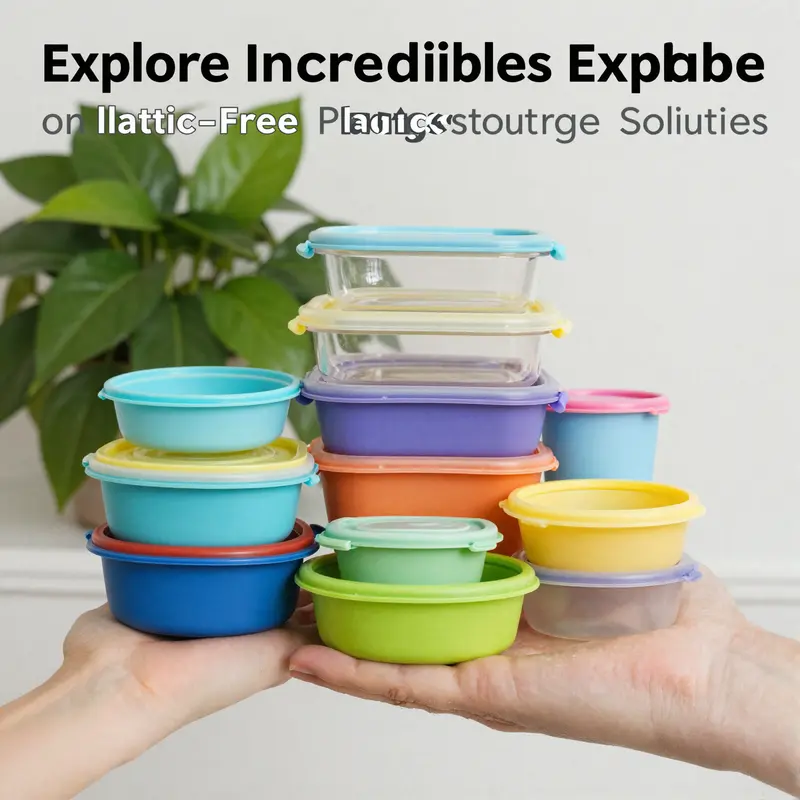
A rising thread in the fabric of plastic-free living is the practical middle ground silicone offers for everyday food storage. The market shows a clear pattern: shoppers want containers that protect freshness without contributing more plastic waste, and suppliers are meeting that need with designs that emphasize ease of use, durability, and efficient storage. In this landscape, silicone emerges not as a substitute for glass or metal in every case, but as a flexible option that bridges gaps—especially when space, preparation, and reusability matter. The deals circulating now mirror that versatility. They reveal three broad approaches to silicone storage that can align with different households and small-scale operations, each with its own logic, cost structure, and potential for reducing plastic exposure in daily routines. The information gathered from real-time platforms shows that bulk pricing, per-piece pricing, and minimum order quantities shape how people decide which design fits their needs, how often they will use it, and what kind of care or handling is practical in a busy kitchen or lunch routine. This is not just about savings; it is about choosing tools that complement a plastic-free ethos without compromising convenience or food safety.
First, there is a strong emphasis on collapsible, BPA-free, microwave-safe sets that are designed for fresh produce and refrigerated items. These items are typically offered in bulk, with a minimum order that encourages small businesses or households planning ahead to stock up. The key appeal of collapsible designs is their space-saving advantage. When not in use, the walls fold flat, freeing up cabinet real estate that often feels crowded by bulky rounds and rectangles. In practical terms, a family or a meal-prep service that rotates through salads, berries, and other perishables can store more items in a fraction of the space. The leak-proof seal on these containers matters greatly for liquids or juicy produce; it minimizes the chance of spills in the fridge or during transport. In a kitchen that already emphasizes reusability and reduced waste, the ability to stack, seal, and reclose with reliable performance translates into less daily trash and more confidence in the storage plan.
The price range for this category typically hovers around a few dollars per set when bought in bulk. A bulk offer that covers hundreds of sets reflects the economics of wholesale purchasing: the per-set cost lands in a range that makes it feasible for families, co-ops, or small cafeterias to adopt silicone as a staple rather than a novelty. While a bulk deal promises savings, it also carries a practical consideration: a minimum order quantity, often in the hundreds or even 500 sets. For buyers, this means a frank assessment of long-term use. Will the investment be balanced by the frequency of use and the reduction in disposable alternatives? In environments like shared meal prep spaces or community kitchens, the math can work in favor of silicone precisely because the size and seals enable batch storage without sacrificing freshness or accessibility.
Second, a subset of deals focuses on durable, collapsible silicone containers designed expressly for lunches. Here the emphasis is on everyday resilience and versatility. These are built to withstand routine handling, washing, and a variety of foods that people pack for work, school, or travel. The walls are typically thick and flexible, allowing the container to compress neatly after use. The balance of durability and collapsibility often comes with a per-piece price that remains affordable even for households expanding their eco-friendly toolkit. The design intent behind these containers is clear: a reliable partner for healthy meals that keeps temperature and flavor in check, while offering the convenience of compact packing for busy days. The approach suits people who want a portable solution that travels well—snacks, lunches, and meals that stay secure without bulky packaging or wasteful wrappers. It also supports the idea that healthy eating can hinge on practical containers that are easy to reopen, reseal, and rinse as part of a daily routine.
Third, there is a hybrid category that merges a sturdy base with collapsible silicone sides. The rigid base provides stability when the container sits on a shelf or is carried in a bag, which can be a meaningful advantage for bulk storage in kitchens that juggle multiple containers and lids. The silicone walls retain the space-saving feature, allowing the same container to compress for storage when not needed. This hybrid design speaks to a more professional setting—perhaps a small bakery, a meal-prep service, or a café that handles both dry ingredients and ready-to-eat items. The base helps the container stand up to frequent use and stacking, while the silicone perimeter keeps the lid-seal tight and the interior free from cracks or warping. The wholesale environment for these hybrids is robust, with wholesale orders that reflect the demand of professional kitchens and distributors who value stability and efficiency alongside flexibility.
Across these three paths, the underlying thread is the same: plastic-free storage remains practical and accessible when the design aligns with real-world use. People weighing these options must consider not only the upfront cost but how often the container will be used, how easy it is to clean, and how well it holds up through cycles of freezing, reheating, and dishwasher or hand washing. The first route—the collapsible, BPA-free, microwave-safe sets—appeals to those prioritizing maximal space efficiency in tighter living quarters. The second route—the durable lunch-focused designs—targets daily meals and portable living, where reliability and comfort in packing and unpacking are paramount. The third route—the hybrid base containers—offers a balance between stability for storage and the space-saving advantages of collapsible walls, appealing to entrepreneurs and households who juggle large quantities or pantry organization alongside daily meals.
Choosing among these options means weighing frequency of use, storage constraints, and the realities of a kitchen that favors minimal waste. A family that cooks ahead every week might benefit from bulk sets with a reliable seal and easy stacking, reducing the number of containers required. A student or worker who commutes daily could value the compact, collapsible design for a bag-friendly lunch. A small kitchen that handles catering or bulk meal prep could find the hybrid design compelling for its stability and compactness at scale. The price signals in these deals—often in the range of a couple of dollars per set for bulk purchases and a few dollars per piece for individual orders—mirror the practical economics of plastic-free storage. It is not only a question of avoiding single-use plastics; it is about choosing tools that make a low-woss lifestyle easier, more predictable, and more enjoyable in everyday routines.
In assessing value, it is helpful to keep a few guiding questions in mind. How will these containers be used most often? If the answer is daily lunches and a need to minimize bulk, a durable collapsible design can serve well. If the primary goal is to maximize fridge space and organize perishables with tight seals, a fully collapsible, leak-proof set might be the best fit. If there is a requirement to organize a pantry or serve as a reliable base for bulk storage, the hybrid base containers could offer the most balanced solution. The decision also hinges on compatibility with cleaning routines. Some silicone containers are dishwasher-safe, while others perform best with a quick hand wash that preserves the integrity of the seal and the material itself. Heat tolerance, though commonly cited as a strength of silicone, can vary by grade; shoppers should look for lightweight indications of food-grade safety and avoid any products that make vague claims about safety without clear certification.
Beyond personal or small-business choices, this moment in the market invites a broader reflection on how silicone storage fits into the larger movement toward plastic-free kitchens. Silicone is not a universal cure-all; its value lies in offering a reusable, flexible alternative that can replace many single-use plastic options without compromising on practicality. The deal structures show a market that understands the friction points of plastic-free adoption: space, cost, and reliability. For households experimenting with the shift, the ability to purchase a set in bulk at a relatively low per-unit price lowers the barrier to trying silicone as a norm rather than an exception. For micro-entrepreneurs, wholesale options provide a way to equip teams and customers with a reusable system that travels and stores efficiently, reducing the frequency with which disposables are used. In short, these deals illustrate how a plastic-free kitchen can be built piece by piece, with tools that are designed to be lived with rather than discarded after a single use.
As readers consider these paths, a related thread emerges that connects storage with packaging philosophy more broadly. For a broader view of eco-conscious packaging that complements silicone storage at scale, explore this example of custom-takeaway-packaging-supplies-disposable-tableware-for-theme-party. This internal reference helps situate silicone storage within a larger ecosystem of reusable and thoughtfully designed containers and packaging, reminding us that the plastic-free transition benefits from a cohesive approach to how we pack, transport, and present food. The dialogue between storage containers and packaging solutions underscores a shared goal: minimize waste while preserving freshness, safety, and user-friendly design.
Ultimately, the decision to buy into any of these silicone pathways comes down to alignment with personal habits and the realities of daily life. A family that delights in batch-prepping meals for the week might find the bulk, collapsible sets ideal, trading off some rigidity for space-saving flexibility. A busy professional who values portability could lean toward the durable lunch containers, which can withstand the rhythms of commuting and office life. A small business or professional kitchen drawn to efficiency and dependable stability might choose the hybrid base option, which offers a solid foundation for larger-scale storage and meal-prep workflows. In every case, the emphasis remains on plastic-free storage that does not demand a radical overhaul of how meals are planned, stored, and enjoyed. The current deals illuminate this path by providing tangible, affordable steps toward a more sustainable kitchen routine, while also inviting readers to consider how silicone can complement other non-plastic materials—glass for crystal-clear visibility, or stainless steel for long-term durability—on a spectrum of storage choices.
For readers who want practical guidance on selecting and using silicone storage without slipping into bland generalities, the numbers and features behind these deals matter. The bulk-oriented options demonstrate the cost-effectiveness of repeat purchases when the volume is high and the need for dependable seals is essential. The per-piece deals, while modest in price, offer a tactile sense of how a single container can become a staple in daily life, supporting lunches, snacks, and leftovers with minimal waste. The hybrid designs bring a nuanced balance, appealing to those who manage both pantry organization and ready-to-go meals, a combination increasingly common in homes that value efficiency alongside environmental responsibility. Across these choices, the consistent thread is practical, everyday functionality that helps a plastic-free kitchen feel achievable rather than aspirational—a critical feature when behavior change hinges on simplicity and reliability.
External resource: https://www.made-in-china.com/products/437657215-202317868/Collapsible-Silicone-BPA-Free-Refrigerator-Fruit-Storage-Box.html
Final thoughts
Choosing plastic-free food storage containers not only contributes positively to the environment but also enhances your business’s image. Whether you opt for stylish glass, durable stainless steel, or flexible silicone, each material provides unique benefits that can suit your needs. As you explore the current deals available, remember that investing in sustainable options aligns your brand with a commitment to health and environmental care, marking your business as a thoughtful choice for consumers.