
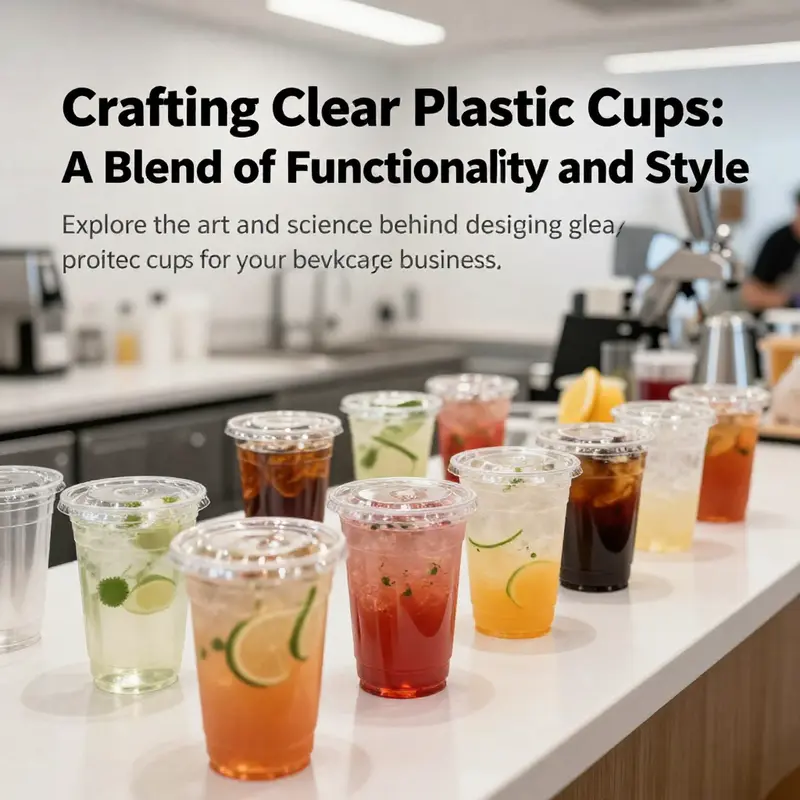
Designing clear plastic cups is not just about aesthetics; it’s a meticulous blend of creativity, material science, and functionality that speaks to the demands of modern businesses. For bubble tea shops, beverage chains, restaurants, and event planners, the choice of cup can communicate brand identity, enhance customer experience, and address sustainability concerns. Each chapter of this article delves into different facets—beginning with the inspiration and customization possibilities for clear plastic cups, then examining the technical materials and manufacturing processes, and finally exploring the economic and environmental challenges that these designs face today. By examining these interconnected factors, businesses can navigate the complexities of selecting the right cup to elevate their offerings and meet consumer expectations.
Translucent Narratives: Designing Clear Plastic Cups as Sustainable, Functional Brand Assets
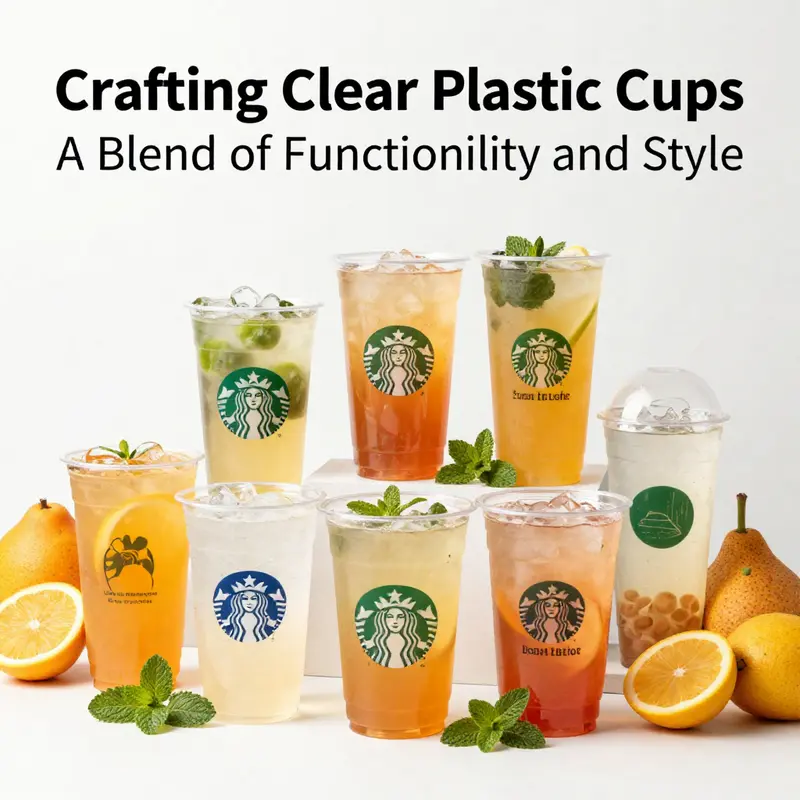
Clear plastic cups occupy an unusual position in design discourse: they are both ubiquitous workhorses and quiet carriers of brand stories. They must be transparent enough to showcase a drink’s color and texture, sturdy enough to withstand the temperatures of beverages and the rough handling of fast-paced service environments, and adaptable enough to accommodate a spectrum of sizes, prints, and lids. The art of designing these cups lies in balancing clarity with complexity. Clarity is not just visual; it is perceptual. It invites trust, allowing consumers to assess a beverage at a glance, from the fizz of a carbonated drink to the opacity of a smoothie. Yet the same clarity can reveal every fingerprint, every smudge, every minor irregularity in a surface texture. The designer’s challenge, then, is to preserve that pristine transparency while delivering durability, usability, and a coherent brand message. This balance becomes even more delicate when the cup is required to support a narrative—an event theme, a festival, or a corporate identity—without compromising the sensory experience of the user. In today’s market, where sustainability and storytelling are inseparable from product design, the clear cup should function as a lightweight, recyclable canvas that communicates values as much as contents.
Material science provides the backbone for this kind of design. The two most common polymers—PET and PP—each offer a distinct slate of properties that influence every design decision. PET is renowned for its clarity and rigidity; it maintains transparency even when filled with cold beverages, and it resists deformation under typical handling scenarios. PP, on the other hand, brings warmth to the user experience with better fatigue resistance, a more forgiving rim, and, in some formulations, lower material density. The choice between PET and PP is rarely about aesthetics alone; it is a strategic decision that accounts for food safety, recyclability, heat tolerance, and the lifecycle cost of the cup. In many markets, the standard practice is to employ PET for cold beverages and PP for hot drinks or multi-use contexts where a slightly higher thermal tolerance and grip become advantageous. The design framework thus begins with material selection, but it soon expands to surface engineering, wall thickness optimization, and the geometry that governs how the cup interacts with lids, sleeves, and stacking systems. The goal is to preserve optical clarity while minimizing wall thickness to reduce material use without sacrificing structural integrity. This is not merely a matter of savings; it is a statement about responsibility and efficiency. A thoughtfully engineered cup can lower raw material consumption, improve transport efficiency through lighter weights, and still deliver the same visual appeal that makes beverages look vibrant through the glass-like surface.
The sustainability conversation that animates contemporary cup design often points in two directions at once: recyclability and biodegradability. The reality is nuanced. Recyclability remains a practical pathway for most beverage cups, provided the material streams are robust and consumer recycling behavior is consistent. A cup designed for recycling should permit efficient separation from other packaging at end of life, avoid coatings that complicate recycling streams, and maintain compatibility with common recycling infrastructures. Yet the push toward more sustainable options has also sparked interest in biodegradable or compostable alternatives. These materials offer compelling narratives for brands seeking to signal environmental stewardship, but they also introduce design challenges. Biodegradable polymers must be formulated to perform like traditional plastics during use while enabling responsible disposal after use. They may require different composting conditions or specialized facilities, and this can affect where and how the cup can be marketed and sold. A mature design practice, therefore, integrates both pathways—recyclability as a default, with optional exploration of compostable or bio-based variants when the supply chain and end-of-life options support it. In practice, designers often craft clear cups that can be easily received by existing recycling streams while offering just-in-time options for events or regions with established composting capabilities. This dual-minded approach lets a brand tell a story of responsibility without compromising performance.
Production realities further shape what is possible in clear cup design. Modern manufacturing lines operate at high speeds, molding, trimming, and decorating with a precision that keeps unit costs down while preserving optical clarity. The geometry of the cup—the diameter, the wall taper, the lip shape, the base contour—must be compatible with automated filling lines, sorting systems, and stacking patterns. Wall thickness is a careful negotiation: too thin, and the cup risks flexing under pressure or temperature shifts; too thick, and the cup becomes unnecessarily heavy, more costly to transport, and visually less elegant. The goal is to achieve a wall that looks seamless to the eye and feels natural in the hand, a surface that can be engraved or printed with brand elements without compromising the cup’s transparency. Surface finishing is another lever. A matte or slightly textured exterior can improve grip and reduce fingerprint visibility, while still allowing a beverage’s color to read clearly through the cup. Surface treatments must be compatible with printing or labeling processes if the cup will carry logos, patterns, or event-specific artwork. The capacity for six-color printing on transparent substrates unlocks a wide tonal range for branding, enabling subtle gradients or bold, high-contrast graphics that work across different lighting conditions. These printing capabilities are essential because clear cups serve as an open canvas—an optical stage where beverage hues, brand colors, and messaging merge in the user’s perception.
Form matters as well. The cylindrical tradition of clear cups continues to be challenged by structural experimentation that respects pouring comfort, stacking efficiency, and ease of transport. Designers explore variations in tapering, curves, and even cross-sections that preserve the ‘see-through’ property while providing a more distinctive silhouette. Some explorations derive inspiration from natural geometries, such as the way light refracts within a curved surface or how a facet-like surface might split and reflect color in unexpected ways. Even modest changes — a gentle bulge that improves grip, a slightly squared-off body to reduce rolling on tables, or a base with a shallow texture to stabilize on saucers and trays — contribute to a more human-centered experience. The aesthetic payoff is not merely novelty; it is a tangible enhancement of function and brand storytelling. A cup that feels substantial in the hand, yet remains slim and light, communicates a message of efficiency and care for the user’s time and comfort. In environments like busy cafés, airports, or event spaces, these small refinements can translate into faster service, fewer customer disputes over spillage, and a more consistent brand impression across thousands of interactions.
One particularly compelling design axis is the integration of functional textures that interact with temperature, cooling speed, or grip. A cup can feature a textured surface that accelerates the perception of cooling for hot drinks or a micro-pattern that provides a secure hold in wet conditions. Such features remind users that design is about experience as much as form. They also open pathways for storytelling: a cup can narrate, through its touch and sight, a brand’s attention to user comfort and sensory delight. Beyond texture, enhancements can be subtle and inclusive. Tactile indicators—arranged as a sequence of small patterns or a flexible film embedded near the rim—offer cues to users about liquid levels without relying solely on sight. For visually impaired users, these tactile cues create a more inclusive drinking experience, allowing them to gauge portions and interact with beverages in a meaningful way. This kind of inclusive design reinforces a brand’s values and expands the circle of users who can engage with the product with confidence.
Customization and branding inhabit a central role in clear cup design, and not only for the sake of decoration. When a cup becomes a vehicle for a campaign, a seasonal promotion, or a corporate identity, the printing strategy must be carefully harmonized with the cup’s transparency. Printing on a transparent substrate requires calibration of color, opacity, and placement so that the visual weight of the artwork does not overwhelm the beverage color or compromise readability. A well-executed print can transform a simple drink into a branded moment, an experience that customers remember long after the last sip. For many users, the cup is the most visible touchpoint in the consumption moment, especially in catering, festivals, and promotional contexts. The sizes available—from compact 200 milliliters to generous 1000 milliliters—accommodate a range of beverages and consumer journeys, from a quick sample to a leisurely refill. Each size demands precise dimensional fidelity to ensure consistent ergonomics and print compatibility. The capacity to accommodate six-color printing opens a broad palette for expression, yet it also introduces challenges: color management must be meticulous to prevent bleeding and color shift when the cup is filled, and the inks must retain legibility against varying beverage hues under diverse lighting. In this design space, the cup becomes not just a container but a negotiator of perception—managing how a brand’s identity looks under the harsh glare of a street festival, the soft illumination of a café, or the saturated colors of a beach party.
To illustrate how these design principles translate into real-world applications, consider the case where a clear cup is chosen to support an event’s branding narrative. The cup acts as a portable billboard, traveling with attendees and circulating through flows of people. The clarity of the cup permits the beverage’s natural color to be part of the visual story, while the printed graphics anchor the moment with a sense of purpose. In such contexts, the design must be robust enough to resist wear: prints should stay legible through repeated wash or reuse, the surface should resist smudges, and the rim should remain comfortable for long periods of use. For events with sustainability goals, the messaging around recyclability or compostability becomes part of the experience. The cup does not merely hold a drink; it communicates a commitment to responsible consumption and environmental stewardship, turning a disposable item into a narrative device that aligns with a brand’s ethos.
The interplay between aesthetics and function extends into the packaging ecosystem as well. Clear cups are often part of a larger system that includes lids, sleeves, and secondary packaging. The lid design must be compatible with the cup’s rim geometry to prevent leaks while preserving the visual clarity of the beverage. Sleeves, where used, provide heat insulation and a canvas for additional branding cues without compromising the cup’s glass-like surface. In some contexts, the packaging itself becomes an extension of the brand’s story, with windows and windowed sleeves that reveal the cup’s contents while maintaining a controlled presentation. The design approach thus recognizes that the cup does not exist in isolation; it lives within a network of accessories, packaging, and user rituals that collectively shape the consumer’s perception.
From a practical standpoint, designers should also consider how clear cups perform across different regions, climates, and waste-management infrastructures. In markets where recycling systems are robust and widely adopted, clear PET cups can be positioned as part of a circular economy, with reliable return streams feeding back into virgin resin production and reuse cycles. In places where composting is more prevalent, options that support industrial composting may be appropriate, provided the facilities exist to process them efficiently. A thoughtful design process acknowledges these regional nuances and supports flexible manufacturing strategies that can accommodate variations in material supply, regulatory requirements, and consumer expectations. This adaptability is an essential strength of clear cup design, enabling brands to respond to shifts in policy, market demand, and cultural preferences without sacrificing the core attributes that define transparency, comfort, and brand resonance.
The narrative of clear plastic cups is, at heart, a narrative about how simplicity and sophistication converge in everyday objects. A cup is not simply a vessel for liquid; it is a micro-stage for color, texture, temperature, and story. When designed with intention, a clear cup communicates a brand’s values through its form, its surface, and its behavior under real-world use. It respects the consumer’s desire for immediate visual clarity, while also inviting tactile exploration and sensory delight. It acknowledges the responsibility that comes with producing a single-use item in a world where waste and resource use are scrutinized. And it recognizes that the best designs do not shout; they listen. They listen to how a beverage looks under different lightings, how a user’s hand wraps around the cup, how the cup stacks in a cart or a display, and how the brand’s message appears at the exact moment when the cold drink meets the lips. In this listening practice, the designer finds the equilibrium where aesthetics, function, sustainability, and storytelling converge to create not just a cup, but a coherent, meaningful experience.
For readers seeking a broader spectrum of cup designs and creative approaches, one can explore curated design roundups that showcase how different designers treat the plastic cup as a medium for expression, utility, and innovation. These collections highlight functional innovations—such as textures that modify the drinking experience—alongside sustainable material explorations and artistic interpretations that reframe the cup as wearable art or a cultural artifact. They illustrate how designers navigate the tension between mass production and unique, accessible beauty, offering a treasury of ideas for those designing the next generation of clear cups. The takeaway is clear: successful clear cup design respects the material’s transparency while pushing the boundaries of form, touch, and meaning. It invites users to see—and feel—the beverage’s story, and it invites brands to tell that story with integrity and imagination. The cup becomes a bridge between the practicalities of service, the aesthetics of display, and the values that customers increasingly expect from everyday objects.
As you move from concept to prototype to production, one practical touchstone remains central: the cup must perform under pressure without compromising its message. It must be legible to a passerby, friendly to a server, and reassuring to a consumer who relies on clear visibility to judge portion size and beverage clarity. The best designs anticipate not only today’s needs but tomorrow’s expectations—whether those expectations include improved recyclability, a broader palette of printing options, or surfaces that support new sensory interactions. The clear cup, in its unassuming elegance, becomes a vehicle for sustainable storytelling, an instrument of efficient service, and a canvas for brands seeking to connect with people through everyday rituals. In this sense, the design process is less about creating a perfect object and more about orchestrating an ongoing dialogue among material science, manufacturing practicality, user experience, and brand narrative. When all these strands align, the result is a clear plastic cup that does more than hold liquid: it communicates, it respects the environment, and it invites people to engage with a brand’s story at the exact moment when color, light, and taste converge.
Internal link for practical context: for an example of disposable clear plastic cups designed for events and everyday use, see this product page offering a straightforward, versatile solution suitable for parties and gatherings. disposable clear plastic cup for parties and events.
External reference for further inspiration: a curated design roundup that highlights creative cup designs, sustainable innovations, and artistic expressions across global studios. https://www.designer-daily.com/creative-cup-designs-that-will-inspire-your-next-project/
Clear Foundations: The Material Science and Precision Making Behind Modern Clear Plastic Cups
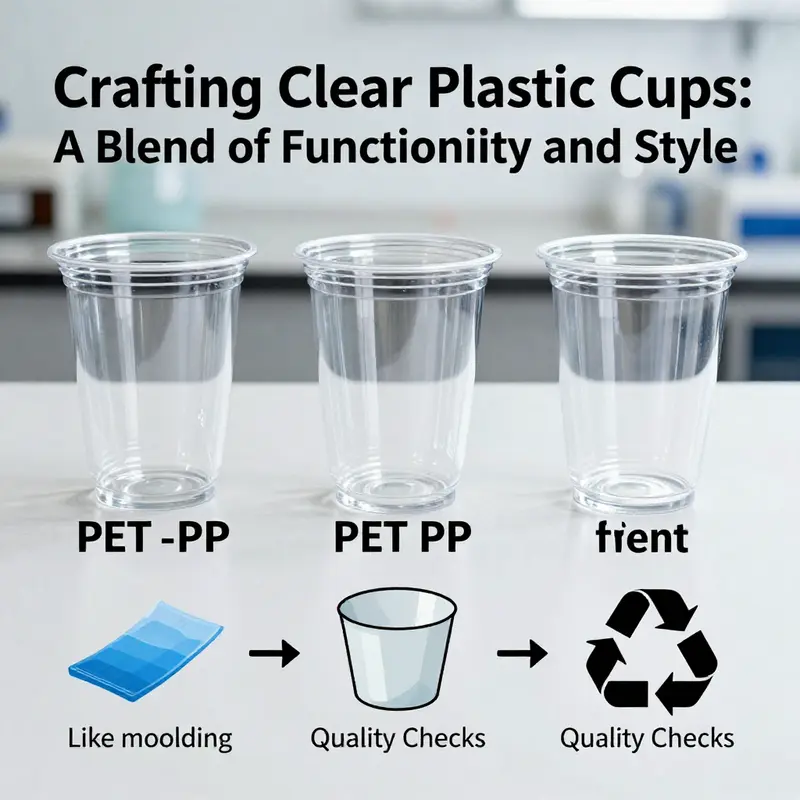
The clear plastic cup stands at the intersection of everyday utility and subtle technical craft. Its transparency is more than aesthetics; it is a suit of armor for flavor, aroma, and presentation, a stage where branding and consumer experience unfold. Designing such a cup is not a single decision, but a sequence of intertwined choices that begin with material selection and continue through formation, finishing, testing, and envisioning end of life. The challenge is to harmonize clarity with strength, heat tolerance with safety, and visual purity with a sustainable footprint. Designers who navigate this landscape must translate market desire for clean, bright presentation into form that remains reliable in real world use, from the first pour to the last sip and beyond into recycling streams. In that sense, the design of clear plastic cups is a study in balancing acts, a story told through material behavior, manufacturing finesse, and responsible innovation taken together rather than in isolation.
The most common material families used for clear cups are PET and PS, each bringing distinct advantages and constraints to the designer. PET, or polyethylene terephthalate, is prized for its exceptional clarity and light weight. It resists impact and cracking under normal service conditions, a practical quality for cups that may be dropped or handled through crowded events. PET also shines in the realm of recyclability, where many regions classify it as a widely accepted curbside material. This recyclability aligns with emerging expectations from brands and consumers who want products that can re-enter the material loop at suitable end points. PET therefore often supports cups intended for both single use and reusable applications, depending on the design and the expected life cycle. Yet clarity in PET is not infinite; optical performance can be influenced by the level of crystallinity, orientation, and any internal or surface imperfections that may appear after shaping and aging. The result is a clear, bright surface that can maintain its appearance even after moderate handling, when produced under controlled conditions and with appropriate resin grades.
Polystyrene offers another path to transparency. PS is renowned for its high clarity as well, but it tends to behave as a more rigid and brittle material relative to PET. Its rigidity translates into predictable wall strength, an attribute that can be leveraged in disposable or short term service where impact resistance is less critical than crisp optical quality. The tradeoff is a reduced tolerance to bending and a shorter life expectancy in some use scenarios. For many food service contexts, PS remains a cost effective option when the cup is designed for quick service and single use. The choice between PET and PS, then, is not merely a material preference but a reflection of the cup’s intended function, its handling environment, and its lifecycle philosophy. Designers must align the material’s mechanical profile with the geometry of the cup, ensuring a slim wall thickness that preserves translucence while resisting cracking or deformation during handling and transport.
Material selection inevitably brings with it questions of food safety and regulatory compliance. In many markets, food-contact safety standards govern what substances may migrate from the cup into beverages. These standards define acceptable limits for leaching, ensure that the resin is free from prohibited additives, and require evidence of safe processing temperatures and storage conditions. In practice, this means that the chosen PET or PS grade must meet relevant food-contact regulations in the target region, such as those stipulated by national agencies and harmonized frameworks where applicable. The materials themselves are tested for clarity stability, chemical resistance, and heat tolerance, while the finished cups are validated for leak resistance and optical uniformity. This rigorous scrutiny supports a design language that remains legible at a glance: a crystal-clear surface, consistent wall thickness, and a geometry that presents the beverage without distortion while resisting the minor perturbations introduced by condensation, temperature fluctuations, or stacking during distribution.
Beyond the fundamental material properties, the manufacturing process defines the ultimate quality and performance of a clear cup. The production workflow typically begins with the conversion of plastic resin into a form suitable for shaping. For PET, this usually involves extrusion into a sheet or a preform, followed by downstream forming. In thermoforming, a heated plastic sheet is shaped over a mold using vacuum pressure. This method enables rapid production of cups with consistent wall thickness and a smooth exterior surface, which is ideal for high-volume runs where dimensional accuracy is critical. Thermoforming shines when designers seek to optimize wall uniformity, minimize defects, and achieve an aesthetically flat profile that photographs well in promotional settings. The technique also provides flexibility in wall geometry, allowing subtle tapering or a slight flare that improves grip while preserving the clear silhouette that draws attention to the beverage inside.
Injection molding offers a complementary route, particularly when the design calls for higher precision, stronger structural features, or complex closures. In this process, molten plastic is injected into a metal mold with high precision, producing cups whose dimensions and surface finishes meet tight tolerances. This method is advantageous for cups that must integrate flat lids, handles, or other functional features without compromising the strength of the wall. The resulting parts tend to exhibit superior rigidity and stability in stacking, which is valuable for display in retail environments or in multi-pack configurations. The tradeoff is that injection molded items can carry higher tooling costs and may require more energy per unit produced, especially in small batch scenarios. For many operators, a hybrid approach—thermoformed walls with integrated features formed in subsequent steps—can deliver a balanced mix of speed, cost, and performance.
Emerging techniques, particularly for prototyping and customization, are gradually entering the design space. Additive manufacturing, or 3D printing, offers rapid iteration of cup geometries, branding elements, or specialized features such as ergonomic rims or unique lip profiles. While 3D printing is not yet a mainstay for mass production due to scalability and cost reasons, it has a meaningful role in testing concepts, validating fit with lids and mating components, and producing limited runs for sampling or promotional events. In the context of clear cups, the opportunity to prototype precisely shaped rims, embossing patterns, or interior textures without committing to expensive tooling means designers can explore new tactile experiences and branding opportunities with relative flexibility. As additive technologies continue to evolve in speed, material range, and surface finish, the bridge between conceptual design and industrial-scale production is likely to shorten further, accelerating the cadence of innovation in this category.
A critical aspect of manufacturing is achieving and sustaining optical clarity. The human eye is sensitive to subtle distortions in a transparent surface, and any waviness, inclusions, or micro-scratches can compromise perceived quality. The control of crystallinity, the management of orientation during forming, and the careful selection of resin grade are all instrumental to maintaining a glass-like appearance. Surface quality is equally essential. A smooth, defect-free exterior not only presents better branding opportunities but also enhances the user experience by providing a comfortable feel and predictable dryness of the surface, even when condensation forms on the outer wall. Surface treatments can further enhance printability for branding, enabling sharp, vibrant logos that stand out against the crystal-clear background. Corona or plasma treatments may be used to improve adhesion for inks and coatings, ensuring that branding remains legible after washing or exposure to cold liquids in display cases. Yet these treatments must be compatible with the chosen resin and subsequent processing steps so that they do not introduce yellowing, cracks, or delamination under typical usage conditions.
The critical technical specifications that govern the design encompass a range of attributes that appear small in isolation but collectively decide the cup’s success in the marketplace. Dimensional accuracy is essential for reliable stacking, lid compatibility, and smooth pouring. Heat resistance, typically in the range of 70 to 90 degrees Celsius for hot beverages, determines whether a cup can confidently handle coffee or tea without warping or releasing a noticeable odor. Chemical resistance matters for compatibility with beverage additives, cleaning agents, or sanitization processes that a cup may encounter in a café or event setting. Barrier properties are particularly important for preserving flavor and preventing odor or taste transfer between beverages, which can be a concern for scented drinks or flavored syrups. The balance of barrier properties with transparency is delicate; thicker walls can enhance barrier performance but may hinder optical clarity and add material costs. Thus, design decisions around wall thickness, taper, and embossing must weave together into a surface that is both attractive and functional under a variety of operating conditions.
In terms of lifecycle and environmental impact, the conversation around clear cups has increasingly shifted toward packaging waste, recyclability, and the broader implications of single-use design. PET has a lead role in recycling programs in many regions, but the efficiency of those programs depends on local infrastructure, contamination rates, and consumer behavior. Clear cups designed for recycling should consider avoiding colorants or opaque coatings that complicate recycling streams and should favor materials that reliably re-enter the material loop. PS, while offering high clarity, often faces more variable recycling outcomes and, in some markets, stricter restrictions or declines in acceptance due to its closed-loop viability. These dynamics push designers toward approaches that emphasize lightweight, efficient geometry, and robust end-of-life pathways, including compatibility with take-back or curbside recycling programs. Even when recycling is feasible, the broader sustainability calculus includes energy use in production and the potential for reusability in multiple cycles when the product life is designed around longer service lifetimes, durable rims, and compatible lids, all of which can reduce aggregate waste compared to single-use micro-thin cups.
Another layer of consideration touches upon branding and consumer perception. The clarity of the cup acts as a blank canvas for logos, color accents, and marketing messages. The ability to print, emboss, or apply decals without sacrificing the integrity of the transparent surface is a key differentiator for brands seeking to communicate quality and consistency at a glance. Surface treatments support branding without compromising safety or food contact compliance, enabling vibrant, durable branding that withstands the rigors of transport and usage. The geometry of the cup itself can influence pouring ergonomics, grip comfort, and the overall sensory experience of the beverage. A well-designed lip and rim can improve sip flow, minimize spillage, and contribute to a sense of premium service. Designers must therefore consider the cup as part of a broader system, including lids, sleeves, and packaging aesthetics, to ensure a cohesive and memorable consumer encounter.
For practitioners seeking concrete guidelines and standard references, the landscape is anchored by established testing and material standards. Organizations that publish methodical frameworks for plastic product development and testing provide the benchmarks that ensure compatibility, safety, and reliability across markets. These standards inform the selection of resin grades, testing methods for dimensional stability, heat resistance, chemical resistance, and barrier performance, as well as guidelines for surface finish, printability, and compatibility with common beverage formulations. By aligning design choices with recognized standards, designers can anticipate regulatory requirements, reduce risk during scale-up, and communicate confidence to customers and distributors who rely on consistent performance across batches and production runs. In practice, this translates into a design process that embeds compliance early, validates critical properties through standardized testing, and uses transparent documentation to demonstrate conformance to applicable regulations.
In translating these principles to an actual product specification, a designer must negotiate several practical questions. How thick should the wall be for a given beverage profile, taking into account stacking stability, heat transfer, and material cost? What lip profile provides the most comfortable sipping experience while reducing splashes or spills during transport? How should branding be integrated so that the logo remains legible and vibrant as the cup interacts with different lighting conditions during events or in retail displays? The answers require a synthesis of materials science, process engineering, and market insight, with an emphasis on repeatability, scalability, and environmental responsibility. The interplay among these factors often leads to a design that favors PET for its balance of clarity, strength, and recyclability, while recognizing the occasional suitability of PS where cost and simplicity are paramount and lifecycle considerations permit it. When opting for PET, the designer may opt for resin grades with refined optical properties to minimize haze and maintain brightness over time, even under repeated handling and exposure to beverages that vary in acidity or aromatic content. If PS is chosen, the design should optimize the geometry to maximize rigidity and minimize flex under load, ensuring that even during handling and stacking, the cup maintains a pristine appearance that supports branding efforts.
The broader context of market demand and trends cannot be ignored. Consumers increasingly expect products to reflect sustainability as a core value, not merely as an afterthought. In response, designers are exploring recycled content options, bio-based alternatives, and more efficient manufacturing methods that reduce energy intensity and waste. The balance remains delicate: while incorporating recycled content can lower environmental impact, it must not compromise clarity, barrier properties, or safety standards. Advances in material science continue to push the envelope, enabling clearer resins, improved barrier performance, and more stable optical properties even when produced at high speeds. Manufacturers are investing in process controls and inline inspection to detect and correct deviations in wall thickness, transparency, and surface finish, ensuring that every cup rolling off the line meets the stringent expectations of brand owners and consumers alike. The result is a category that evolves with technology and policy, yet remains grounded in fundamental design discipline that honors function as much as form.
From the perspective of a designer, the success of a clear plastic cup rests on a seamless chain of decisions that begin with material choice and end with responsible end-of-life outcomes. The experience of holding a perfectly transparent cup is, in itself, a narrative about confidence and quality: a glass-like surface that does not distort the color of the beverage, a rim comfortable to the lips, a form that fits securely with lids and sleeves, and a packaging story that can be recaptured in recycling streams rather than discarded as waste. In this sense, the cup becomes not merely a vessel but a conduit for memory—the moment someone tastes a beverage and recalls the clarity and attention to detail that defined the cup in their hands. As designers continue to refine materials, refine technologies, and refine systems for sustainability, the clear cup remains a compelling badge of material capability and manufacturing craftsmanship.
A practical note for practitioners working on live projects is to remember that design decisions often hinge on local supply conditions and regulatory expectations. Materials availability, regional recycling infrastructure, and the regulatory status of food-contact plastics can vary, shaping the feasible set of options and influencing the final geometry and finish. The interplay between global standards and local realities requires a thoughtful approach to risk management, supplier development, and lifecycle thinking. In this light, the design process becomes a living dialogue with the market: listening to branding teams about how the cup should look, hearing operators about how the cup behaves on the line, and respecting the realities of waste streams and recycling facilities that determine whether a design can truly claim environmental responsibility. The resulting product is more than a container; it is a statement about how clear plastic can perform in a world that values clarity, safety, efficiency, and stewardship.
For readers seeking a concrete path to standards and validation, authoritative references provide the framework for testing methods and material specifications that underpin reliable fabrication and safe use. These references offer detailed guidance on the properties that matter most for clear cups, including dimensional tolerances, heat resistance, barrier performance, and surface characteristics that enable high quality branding. Engaging with these standards early in the design process helps ensure that a concept can scale from prototype to production without losing sight of essential requirements. The collaboration between material science, process engineering, and regulatory alignment is what makes a clear cup not just visually appealing but robust and compliant across diverse use cases and markets. In the end, the most successful designs harmonize a lucid aesthetic with durable performance, and they do so within a framework that supports efficient manufacturing and responsible stewardship of resources.
To illustrate the real value of such an approach, consider the way branding and consumer experience are enhanced by a truly clear surface. When a beverage presents itself with flawless translucence, a logo can appear crisper, and color depth can be more accurately perceived by the consumer. A well designed lip profile mitigates drips while offering a comfortable sip, and a form that stacks neatly on shelves supports efficient display and transport. These outcomes are not accidental; they arise from a disciplined design process that respects the physics of plastic, the capabilities of forming equipment, and the expectations of customers who see a cup as a part of the sensory journey of a beverage. The resulting cups thereby contribute to brand fidelity, waste reduction, and consumer satisfaction—an integrated set of benefits that emerge when the material, the process, and the policy environment are considered in concert rather than in isolation.
For readers who wish to explore practical company examples and product considerations while preserving the conceptual integrity of this discussion, an internal resource illustrating variations in clear cup design can be found in a related product page. This example highlights how a clearly defined geometry, optimized wall thickness, and compatible lid systems can work together with a surface ready for branding, ensuring that every element of the cup contributes to a coherent user experience: disposable clear plastic cup for outdoor use. The emphasis remains on maintaining optical clarity and structural integrity across scenarios, while paving the way for responsible packaging choices that align with broader industry goals.
In closing, the design of clear plastic cups epitomizes how material science, processing technology, and sustainability considerations converge to create products that are both functional and expressive. The cup embodies a philosophy of precise engineering paired with thoughtful environmental and brand considerations. Each batch becomes a test of that philosophy, each shipment a chance to demonstrate consistency, and each consumer interaction a reminder that good design translates into a better, brighter, and more responsible everyday object. The discipline is not only about making a transparent vessel but about shaping a transparent commitment to quality, safety, and stewardship that informs every step from the earliest material choice to the final recycling stream. For those who work in this field, the cup offers a clear canvas on which to practice rigorous design thinking and to deliver tangible, meaningful value in a world that values clarity as much as care.
External references and standard references that guide these practices provide the backbone for the decisions described here. They offer tested methodologies and formal criteria that help ensure that a concept can become a reliable production item while meeting the expectations of regulators, consumers, and supply chain partners. Engaging with these resources helps ensure that the resulting product not only looks right but performs consistently under real-world conditions and remains compatible with evolving environmental and safety standards. In this way, the design journey of clear plastic cups becomes a model for how material science, manufacturing discipline, and sustainability goals can progress together in a shared roadmap of responsible innovation.
External resource: https://www.astm.org/Standards/F2568.htm
Economic and Environmental Considerations in Designing Clear Plastic Cups: Sustainability Challenges and Innovations
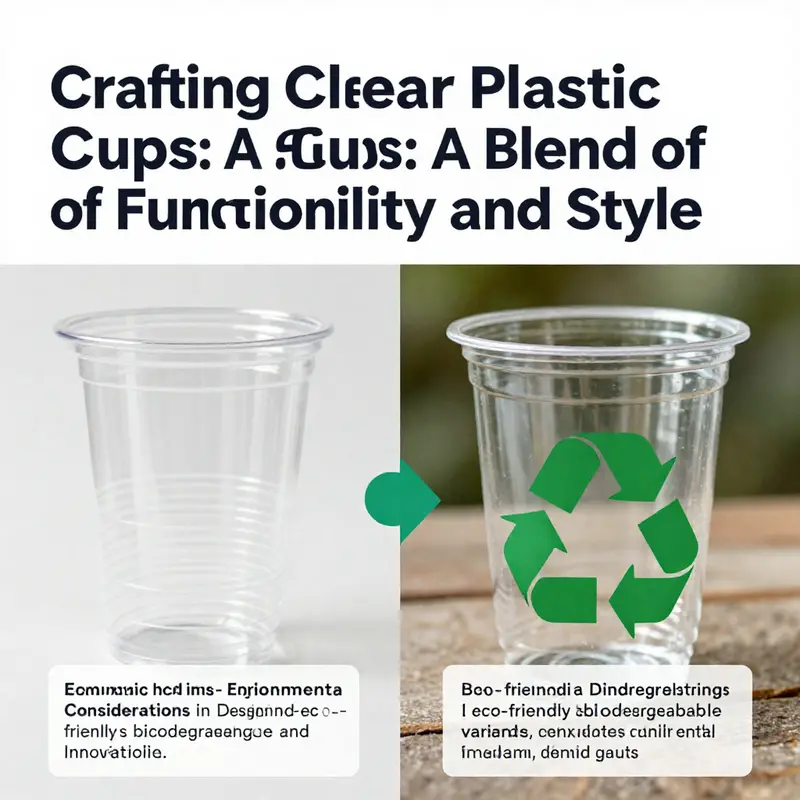
The design of clear plastic cups sits at the intersection of economy, science, and society, where the allure of a transparent container must be weighed against the realities of waste, resource use, and shifting consumer expectations. In contemporary practice, the economics of cup production are inseparable from the environmental footprint they leave behind. The choice of material, the efficiency of the manufacturing line, the ease of end-of-life processing, and the cues the cup sends to a brand or event all feed into a single performance metric: value. Value here is not solely about the sticker price on a case of cups. It encompasses the long-term costs and benefits that accrue to manufacturers, distributors, venues, and consumers when a cup is used, recycled, repurposed, or discarded. To design for value in this space is to design with an understanding of trade-offs, data, and the evolving infrastructure that surrounds plastics, waste streams, and consumer behavior.
Economic considerations begin with material choice and production costs. PET and PP remain the workhorses of clear cups because they deliver high clarity, adequate barrier properties, and processability that suits high-speed molding, thermoforming, or extrusion-based production lines. The appeal of PET lies in its optical transparency and stiffness, which helps beverages appear bright and enticing while maintaining structural integrity during handling and service. PP offers a more flexible alternative with favorable heat resistance and a lighter footprint in some designs. Yet these advantages are not merely about the up-front material cost. They ripple through the entire lifecycle—from resin price volatility and energy intensity in molding to downstream impacts on recycling streams and waste management logistics. As demand for single-use items grows in some markets, price signals can swing with crude oil trends, currency fluctuations, and tariff regimes. Designers must therefore model economics not as a snapshot but as a dynamic system that captures the costs of raw materials, energy, labor, equipment depreciation, and logistic complexity across the distribution chain.
Beyond per-unit costs, production efficiency shapes the economics of clear cups. High-speed manufacturing lines deliver economies of scale but demand precise tooling, process control, and quality assurance to maintain crystal clarity and uniform wall thickness. Even small deviations in thickness can alter optical properties, affect stacking tolerance, or change how a cup performs under heat and cold. In turn, these technicalities influence yield, rejects, and maintenance costs. The most economical solutions often emerge from mono-material construction or simplified geometries that reduce tool changes, speed up cycles, and minimize scrap. The drive toward such designs aligns with the broader move toward recyclability and circular economy principles. When a cup is designed to be recovered in a single-stream recycling process, it reduces the risk of contamination, lowers handling costs for recycling facilities, and improves the probability that the material re-enters the economy as a high-value feedstock.
Market demand presents another layer of complexity. Clear plastic cups are ubiquitous in food service, beverage promotions, and event settings because they deliver a reliable user experience with predictable performance. The visual appeal of a clear cup amplifies the appearance of a drink, a factor that can translate into higher perceived value for brands at promotional events and hospitality venues. Yet consumer preferences are shifting toward sustainability. Event organizers and retailers increasingly seek packaging that communicates responsibility, transparency, and alignment with environmental goals. In this sense, the economic calculus extends beyond price and performance to brand equity and regulatory compliance. A cup that signals care for the environment can bolster a sponsor’s image or a venue’s reputation, turning a simple disposable item into a symbol of stewardship. In parallel, regulators are intensifying labeling, recycling guidance, and material disclosures, which add to the compliance burden but also level the playing field for responsible players. The design challenge then becomes delivering clarity of form, performance, and environmental narrative without compromising cost efficiency or convenience.
Environmental considerations in the life of a clear cup begin with its very material composition and what happens after it leaves the table. The non-biodegradable nature of traditional clear plastics means a single cup can outlive its practical usefulness in the landscape of waste. In many regions, if a cup is contaminated with food residue or beverages, or if it arrives at a recycling facility in a mixed waste stream, it may be rejected or diverted to landfill. The environmental impact of mismanaged plastics accumulates in oceans and soils, contributing to microplastic pollution and ecosystem disruption. These realities affect not just the planet but the economics of waste handling. When recycling streams are clogged or unrecovered, municipalities bear higher costs for collection, sorting, and disposal. This, in turn, affects public budgets and, indirectly, the incentives that shape packaging design decisions. The industry has thus begun to respond with innovations that address both the environmental imperative and the economic incentives embedded in waste management.
One foundational trend is the exploration of bio-based plastics, specifically materials derived from renewable resources such as corn starch or sugarcane. Polylactic acid, or PLA, has emerged as a representative example of this class. PLA can reduce the carbon footprint of cups relative to fossil-based resins, particularly when production is powered by low-emission energy systems. It is important to note, however, that compostability claims for PLA depend on industrial facilities with high heat and controlled moisture, conditions not universally available. In the absence of such infrastructure, PLA behaves, in practice, similarly to conventional plastics in terms of end-of-life, offering limited improvement unless the composting ecosystem is robust and accessible. Designers must therefore align material choices with the local or regional waste-management reality. A PLA-based cup may be a strong statement of sustainability in a city with industrial composting capacity, but the same choice could yield marginal or even negative environmental benefits elsewhere if the infrastructure does not support industrial composting or if consumer participation in composting programs remains low.
A parallel line of technical development emphasizes enhanced recyclability through mono-material constructions. When a cup is made from a single polymer type, it avoids the need to separate multiple resins at the recycling stage. This simplification can improve recovery rates and lower processing costs for recyclers, thereby increasing the likelihood that the resin is reintroduced into new products. Such design for recyclability also reduces the risk of material attrition in the recycling stream, where mixed materials can degrade fiber yields and reduce the quality of recovered resin. The practical implication for designers is a push toward wall designs and fastening methods that do not rely on mixed adhesives, barrier coatings that complicate separation, or combinations of different plastics that hinder whole-stream recycling. The challenge is maintaining the necessary performance characteristics—clarity, stiffness, heat tolerance, and barrier properties—while delivering a product that can be efficiently managed at end of life. This tension between performance and recyclability is at the core of modern clear-cup design.
Another compelling response to environmental concerns is the emergence of reusable cup systems and refill models. Rather than a single-use object, these systems encourage consumers to reuse cups across multiple events or venues, sometimes with a deposit return or a discount on refills. The economic rationale for reusable cups rests on volumes and turnover rather than per-unit margins. In high-traffic environments, the cost of cleaning, sanitation, and logistics can be offset by savings on raw materials and waste-management fees, while customers gain a tangible demonstration of sustainability commitment. Reusable systems also create opportunities for brands to build loyalty and collect consumption data, turning a disposable item into a platform for engagement. Yet scalability and user behavior remain critical hurdles. Adoption hinges on reliable return mechanisms, consumer willingness to participate, and the practicalities of integrating reusable loops into existing service models. The environmental benefits are clear in principle, but realizing them requires coordinated design across supply chain partners, venues, and municipal programs.
For designers, the most effective sustainability story often arises from integrating several strands: material choice that matches local infrastructure, packaging geometry that minimizes resin use while preserving rigidity, and end-of-life pathways that fit the regional waste system. This requires a systems view rather than a focus on a single attribute. A clear-cup solution may be optimized for lightness and visibility, yet without the guarantee of recoverability, the environmental rewards may be limited. Conversely, a cup designed to be easily recycled or composted may need to balance cost and performance in a way that preserves the consumer experience. The design brief thus becomes a balancing act, where trade-offs are transparent and quantifiable. Designers increasingly rely on lifecycle assessments and data-driven tools to compare scenarios, estimating energy use, greenhouse gas emissions, and end-of-life impacts across alternative materials and processes. Such analysis informs decisions about resin choice, wall thickness, surface finish, and even labeling, ensuring that the final product achieves both economic viability and environmental credibility.
In addition to material and life-cycle considerations, regulatory and geopolitical factors shape both the economics and the environmental trajectory of clear cups. Tariffs, trade restrictions, and shifts in regulatory standards for food-contact materials influence resin availability, price volatility, and supply risk. Geopolitical events can disrupt the flow of feedstocks, prompting manufacturers to diversify suppliers or adjust production portfolios. Regulatory regimes increasingly require clear labeling of materials, recyclability claims, and end-of-life instructions. These requirements push designers to communicate clearly with suppliers and end users, reducing misinterpretation and enabling better sorting at recycling facilities. In this environment, a cup is not merely a passive container; it becomes a signal of compliance, sustainability, and social responsibility. The design process learns to anticipate these signals, weaving compliance language and environmental narratives into product specifications, packaging inserts, and marketing touchpoints without sacrificing clarity or aesthetics.
The interplay between economics and environment also reveals an emerging dichotomy in certain markets: the tension between low-cost, widely used plastics and higher-cost, more sustainable options. In some regions, price pressure remains intense, and buyers may favor the cheapest option to meet short-term targets or commitments. In others, procurement teams increasingly require life-cycle data, third-party certifications, and explicit demonstrations of waste-management compatibility. This divergence fuels a market in which designers must craft flexible solutions. A single-cup design could be produced in multiple material variants or with modular features so it can be adapted to different waste-management infrastructure, regulatory regimes, or consumer expectations. In effect, the same shape can be executed as a PET cup for markets with strong recycling capacity, as a PLA cup for regions with industrial composting, or as a mono-material PP cup where recyclability is straightforward and accessible. The ability to tailor designs to specific contexts becomes a source of competitive advantage, allowing manufacturers to align product offerings with both local realities and global sustainability narratives.
The social dimension of sustainability makes its mark in how clear cups are used and perceived. Consumers judge packaging not only by its functional performance but also by how it communicates values. A cup that clearly signals recyclability or compostability can influence brand perception and purchasing decisions, particularly among younger, more environmentally aware audiences. Yet communication must be accurate and free of greenwashing. Clear labeling about end-of-life options helps avoid misdirection and fosters trust in sustainability claims. Designers play a crucial role in translating complex material information into accessible cues, such as simple recycling symbols, compatible disposal pathways, and consistent messaging across product lines. This communicative function reinforces a broader design ethic: sustainability is not an afterthought or a niche attribute; it is part of the product’s personality and its relationship with the user and the waste system.
In practice, the integration of economic and environmental considerations can be seen in the iterative design process that precedes mass production. Early-stage prototypes explore material thickness, wall geometry, and surface finishes, testing not only for aesthetics but for manufacturability and end-of-life outcomes. Rapid prototyping enables teams to compare different materials and configurations, estimating cost-per-unit against expected recovery rates and end-of-life performance. Once a favorable balance is identified, scaled production requires careful coordination with suppliers to lock in stable resins, ensure consistent quality, and align with recycling facilities that can handle the chosen material stream. The ripple effects extend to packaging design, labeling, and even the way cups are merchandised at events. A clear cup that performs reliably, looks pristine, and carries a credible sustainability message can become part of a larger narrative about responsible consumption, helping to shift consumer expectations and business models toward a more circular future.
One practical takeaway for designers is to pursue compatibility across multiple stages of the lifecycle, not just the moment of purchase. This means prioritizing rinsability and dryness to minimize contamination for recycling streams, selecting surface finishes that resist staining and degradation through repeated use or washing, and avoiding coatings or adhesives that complicate separation during sorting. It also means evaluating secondary packaging and transport waste, since the overall environmental impact of a cup includes the packaging and logistics that accompany it from factory floor to consumer hand and back to a recycling facility or waste-collection system. The cumulative effect of modest optimizations across these domains can yield meaningful reductions in energy use, emissions, and material waste, while preserving the visual and tactile appeal that makes a clear cup desirable in the first place.
The broader ambition behind these design imperatives is the adoption of circular economy principles that view materials as resources that can be reintroduced into productive cycles rather than discarded. This requires not only technical innovations but also a cultural shift among manufacturers, retailers, and consumers. It calls for transparent reporting, standardized testing, and shared infrastructure for recycling and composting. It invites collaboration across supply chains, municipal programs, and policymakers to create environments in which sustainable choices are practical, affordable, and intuitive. In this sense, the design of clear plastic cups becomes a microcosm of the transition toward sustainable packaging across industries. It embodies a discipline that seeks to harmonize form, function, and responsibility, yielding products that perform reliably, communicate credibly, and respect the delicate balance of natural systems that support life and commerce alike.
To illustrate how such alignment can manifest in real-world practice, consider how an event-focused packaging system might integrate an internal offering that supports theme-specific needs while maintaining environmental integrity. Within the broader design brief, there is space for a design palette that communicates cleanliness and transparency while remaining compatible with sustainable end-of-life options. A well-considered approach would pair clear cups with mono-material accessories and straightforward disposal guidance, reinforcing a coherent sustainability narrative across the entire event kit. Strategic partnerships with suppliers who can provide consistent material streams and recycling-compatible components can enhance reliability and reduce risk. In contexts where customization is valued, modular design ideas can accommodate different event themes without compromising the recyclability of the dominant cup material. This approach preserves the aesthetic and functional demand for clear cups while embedding them within a responsible packaging ecosystem that resonates with both organizers and attendees. For practitioners exploring these ideas, a practical reference point can be found in the broader ecosystem of takeaway packaging and disposable tableware, where similar design challenges and solutions are being pursued in parallel. custom takeaway packaging supplies—disposable tableware for theme party offers a glimpse into how modular, theme-aware packaging concepts can coexist with sustainability goals and supply-chain realities, illustrating the potential for cross-pollination between product design and packaging systems.
Ultimately, the future of clear plastic cups will depend on the degree to which designers, manufacturers, and policymakers collaborate to align economic incentives with environmental outcomes. The most successful designs will be those that do not present sustainability as an external constraint but rather as a defining feature that enhances performance, value, and trust. By embracing mono-material strategies where feasible, leveraging bio-based alternatives with appropriate infrastructure, and investing in reusable and returnable systems where appropriate, the industry can move toward packaging that supports vibrant economies while protecting the environment. The path forward is not a single shortcut but a portfolio of strategies deployed in concert, tailored to the realities of local waste management, consumer behavior, and market dynamics. In this integrated framework, clear plastic cups remain a familiar, practical object, yet they embody a forward-thinking approach to packaging that respects both the finite nature of resources and the enduring demand for clarity, reliability, and responsible design.
As the sector evolves, ongoing research and transparent communication will be essential. Lifecycle assessments, supplier audits, and third-party verifications can help ensure that claimed environmental benefits reflect real-world performance. Education for users about proper disposal, recycling, and composting pathways can amplify the impact of design choices. In parallel, continued innovation in material science, process engineering, and circular economy infrastructure will broaden the set of viable options, enabling more cups to be recovered and reprocessed rather than discarded. The convergence of these efforts—economic rationality, environmental stewardship, and consumer engagement—will shape not only the next generation of clear plastic cups but also the broader culture of packaging design that aspires to be both useful and responsible. The conversation around sustainability is ongoing, and every design decision becomes a point of contribution to a larger transformation that seeks to reconcile convenience with care for the planet.
For readers seeking broader context and practical guidance on sustainable plastics management, an authoritative external resource provides a framework for understanding how systems can evolve toward better outcomes. See the EPA’s Sustainable Management of Plastics for a comprehensive overview of strategies, metrics, and policy considerations that inform responsible packaging design and waste management: https://www.epa.gov/sustainable-management-plastics
Final thoughts
In crafting the perfect clear plastic cup, businesses in the beverage industry are not merely selecting a container; they are choosing a powerful tool for branding, customer interaction, and environmental responsibility. The interplay of aesthetic and functional design, along with considerations of materials and sustainability, represents a holistic approach that not only serves immediate business needs but also addresses larger societal expectations. By embracing innovation in design and production practices, businesses can not only meet but exceed consumer demands while championing sustainability. Clear plastic cups, therefore, serve as a testament to how thoughtful design can drive both business success and positive environmental impacts.