
Disposable freezer food containers play a crucial role in the food and beverage industry, especially for bubble tea shops, restaurants, food trucks, and catering services. These specialized packaging solutions are designed to safely store food in freezer environments, ensuring quality and preventing freezer burn. This article navigates through the types of disposable freezer food containers, detailing their features and benefits, examining environmental considerations, and analyzing consumer trends. Each chapter illuminates how these containers support operational efficiency and culinary standards, catering to the unique needs of professionals in the food service industry.
Material Matters: How Different Disposable Freezer Containers Preserve Flavor, Texture, and Safety
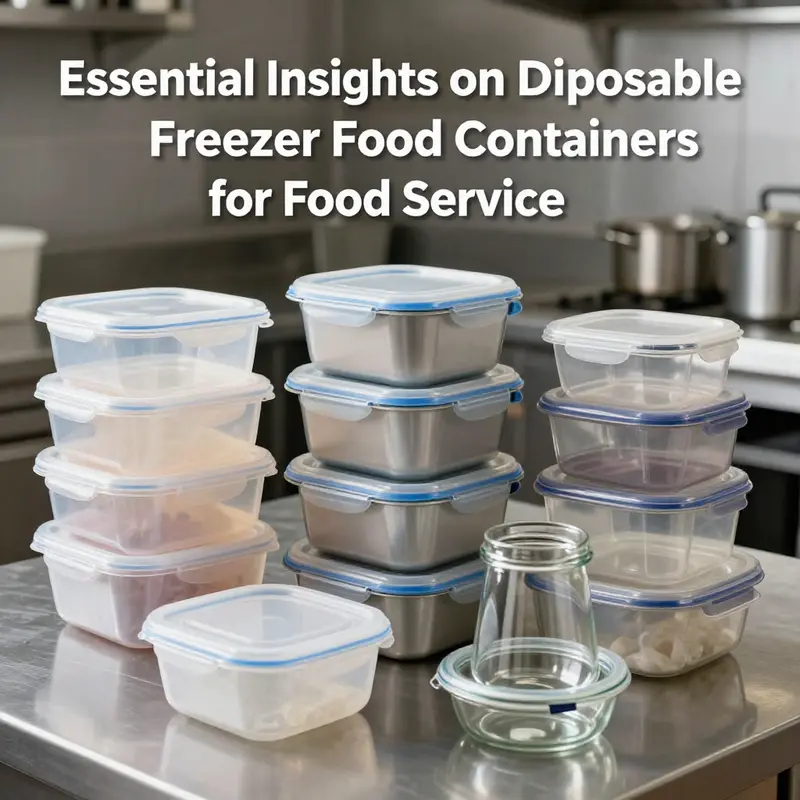
Choosing the right disposable freezer container is a decisions-rich act that blends practicality with food safety. It isn’t just about grabbing something labeled “freezer-safe” off the shelf; it’s about understanding how the container’s material, seal, and construction interact with the cold, the air, and the food inside. The way a container resists ice crystal formation, prevents moisture loss, and allows for easy handling from the freezer to the table shapes the overall quality of meals and ingredients long after they are packed. This chapter untangles the spectrum of disposable options, not to overwhelm with every imaginable variant, but to illuminate how each material behaves in real freezing and reheating cycles, and how that behavior translates into better meal planning, less waste, and a smoother kitchen routine.
Plastic containers remain the most common disposable option in homes and small operations. They are typically manufactured from freezer-safe plastics such as polypropylene or PET, selected for their stiffness, clarity, and resistance to cracking at cold temperatures. A core advantage of these plastics is their balance of durability and light weight, which makes them ideal for long-term storage of meals, leftovers, and pre-portioned ingredients. Most are designed with airtight lids that minimize freezer burn and moisture loss, helping to preserve color and texture. Many are marketed as microwave-safe and dishwasher-safe as well, which adds value for meal prep and post-freeze reheating. Yet the crucial caveat is that not all containers labeled as freezer-safe share the same temperature tolerance. In practice, many products specify a lower limit near -4°C and an upper limit near 100°C. That range can be perfectly adequate for most household freezing and reheating tasks, but if you plan to store items well below freezing for an extended period or to reheat at higher temperatures, you should verify the precise temperature specification for each product. In daily use, selecting a container with a robust seal and a rigid body reduces the risk of dehydration and flavor loss, while the rejection of leaks keeps the freezer tidy and your ingredients uncontaminated by off-flavors from other foods. For those who value a continuum of use, you may find a plastic set that is stackable, transparent, and explicitly labeled as freezer-safe, microwave-safe, and dishwasher-safe, making it a versatile backbone for both meal prep and bulk storage.
Another familiar option is aluminum foil containers. These robust, foil-based trays are prized for their heat conductivity and durability. They perform well in the freezer, as the metal side helps maintain even temperatures and can be convenient for dishes that will later be baked or reheated in the oven. The downside, however, is that many foil containers are not truly airtight by design. Their resealability depends on the lid and the interlocking edges, which can leave gaps that invite condensation and freezer burn over time, particularly if the container is reused and reused again. For this reason, aluminum foil containers are often favored for items that will be cooked from frozen and served directly, or for episodic storage where reheating takes place in a conventional oven. They also shine when you want to avoid extra dishwashing: many foil containers are disposable after a single use, enabling quick cleanup after a meal-prep session or a party platter. As with any material, the key is matching the container to the task: if you anticipate frequent re-freezing or long-term storage of liquids, you may need more than just a foil base to protect quality.
Eco-minded options bring a different set of trade-offs. Molded fiber or recycled paperboard containers offer an attractive sustainability profile. They are typically compostable or biodegradable, aligning with goals to reduce landfill waste. Their performance in freezing conditions, however, can vary more than plastics or metals. Dry or semi-solid foods often fare well, while liquids or highly moist items may stress the walls or compromise seals over time. The best use cases for these eco-friendly disposables tend to be short- to moderate-term storage of non-liquid items, vegetables, or frozen goods that will not sit in a wet state for extended periods. For households prioritizing environmental impact, these containers can form part of a broader strategy that includes recycling or composting where facilities exist, paired with careful portioning to minimize waste. The conversation around sustainability also invites comparisons with premium reusable options, such as tempered-glass containers with airtight silicone lids. These are often marketed as durable and highly recyclable, and while they are not disposable, they demonstrate a compelling direction for reducing single-use waste when meal prep and storage are frequent activities. The contrast between disposable options and reusable glass highlights a continuum in which users balance convenience and environmental responsibility.
Foam containers, made from expanded polystyrene, occupy a different niche. They excel at insulation, which can help limit temperature fluctuations during short-term freezing, but their long-term performance is limited. Over time, EPS can become brittle in the freezer environment and may degrade or absorb moisture, compromising both seal integrity and food quality. Because of these reliability concerns, foam containers are typically recommended for short-term storage of items like frozen desserts or beverages rather than extended freezing of liquids or sauces. For kitchens with strict waste-reduction policies, foam is often avoided in favor of sturdier, more durable plastics or eco-friendly fibers, particularly when large volumes are stored for longer periods.
In sorting through these options, the contrast with premium, reusable glass is instructive. Tempered glass storage with airtight silicone lids can tolerate freezer temperatures with minimal odor or moisture transfer, and they offer the advantage of transparency for easy viewing of contents. Yet because they are designed for reuse rather than disposal, they step outside the category of disposable containers. Their presence in the broader conversation helps illustrate what a best-case scenario could look like for long-term storage. The practical takeaway is clear: if you anticipate regular reuse and want to minimize waste, investing in a high-quality glass system with reliable lids can economically and environmentally outpace disposable options over time. If your goal is strictly disposable convenience, the glass alternative remains a benchmark for durability and sealing, guiding your expectations for the performance you should seek in plastic, foil, or paper-based disposables.
Choosing the right container also means reading the label with care. The temperature range is not a mere footnote. It informs us how much headroom a container has before the material fatigues, becomes brittle, or allows micro-leaks that invite freezer burn. Indeed, the seal matters as much as the base. An airtight, well-fitting lid is the protector against ice crystals, freezer odors, and moisture migration that can rob a dish of its original flavor and texture. When you prepare meals, portioning into appropriately sized single-serve or family-sized containers can also influence outcomes. Smaller portions reach the right temperature more quickly and evenly during reheating, reducing the chance of overcooking on the exterior while the interior remains cold. This is more than convenience; it’s a safeguard for nutrients and taste.
As you navigate the alphabet of materials, a practical route is to consider a hybrid approach. Use plastic or aluminum for bulk or reheatable meals that will be stored for moderate periods, and reserve fiber-based or premium glass for special occasions or for items you know will be consumed within a shorter window. For those who emphasize environmental impact, look for options that clearly disclose recycled content and compostability where feasible, and weigh these against the expected storage duration and reusability. In selecting, you’ll often find the best value lies in a curated set that covers multiple sizes and sealing capabilities rather than a single, one-size-fits-all solution.
For readers who want a concrete example of market options without naming brands, a practical entry point is to explore the catalog of disposable aluminum foil containers. These are widely used in both home and commercial contexts because they combine barrier properties with a degree of robustness that supports freezer storage and oven reheating. The catalog approach also makes it easier to match the container to the dish you’re storing, whether that dish is a casserole, a batch of lasagna, or a metal-foil dessert tray. If you want to see how such containers are presented in real-world listings, you can review an example catalog that highlights the range of sizes and configurations available, including their compatibility with other kitchen tasks. Additionally, the use of such containers in meal-prep workflows often pairs with clear labeling, portioning, and stacking strategies that maximize space in a crowded freezer.
An internal resource worth consulting when considering aluminum-based disposables is a dedicated catalog that details the variety of disposable aluminum foil containers, tin-foil trays, and related takeaway options. This resource offers practical guidance on selecting sizes, lids, and configurations that best support freezing and reheating workflows. See the disposable aluminum foil containers catalog for more details.
In keeping with a broader view of food storage, it’s useful to remember that many containers are compatible with a range of kitchen appliances. Some are microwave-safe for reheating the food portion inside, while others may be approved for oven use only if the container itself is metal or if the lid is not involved in heating. Dishwasher compatibility is another dimension of convenience, though care should be taken not to expose the seal or the lid’s gasket to high heat if the manufacturer recommends hand washing. The practical upshot is that you want a kit that aligns with how you cook, freeze, reheat, and wash, without forcing you into awkward compromises between safety and speed.
With these considerations in mind, you’ll be better equipped to select a disposable freezer container that matches your needs for flavor preservation, texture integrity, and food safety. The best choice will depend on your storage duration, the types of foods you freeze, and how much you value sustainability versus convenience. As you prepare meals or portion out ingredients for future meals, a deliberate approach to choosing the right container becomes a quiet but powerful part of keeping flavors intact and reducing waste across the food lifecycle.
External resource: https://www.walmart.com/ip/GPED-Food-Storage-Containers-Set-of-20-Stackable-BPA-Free-Microwave-Freezer-Safe/695774923
Guardians of Frost: Protecting Flavor, Texture, and Safety in Freezer Storage
Freezer storage hinges on controlling moisture, air, and temperature. Disposable freezer containers provide an airtight barrier that helps minimize freezer burn and texture changes. Materials like polypropylene (PP) and high-density polyethylene (HDPE) are chosen for stiffness, chemical resistance, and performance in sub-zero conditions. Seals, labeling, and microwave-safe options can simplify routine freezing and reheating, while considerations of reuse and waste influence long-term costs and environmental impact. For households and small operations, selecting containers with reliable seals, appropriate freezing tolerance, and clear labeling supports safer, more predictable thawing and cooking. When evaluating options, balance durability, convenience, and sustainability to choose containers that fit your workflow without compromising safety or quality. This chapter offers a practical framework for selecting disposable freezer containers that protect flavor, moisture, and texture from freezer to table.
Beyond Convenience: Navigating the Environmental Footprint of Disposable Freezer Food Containers
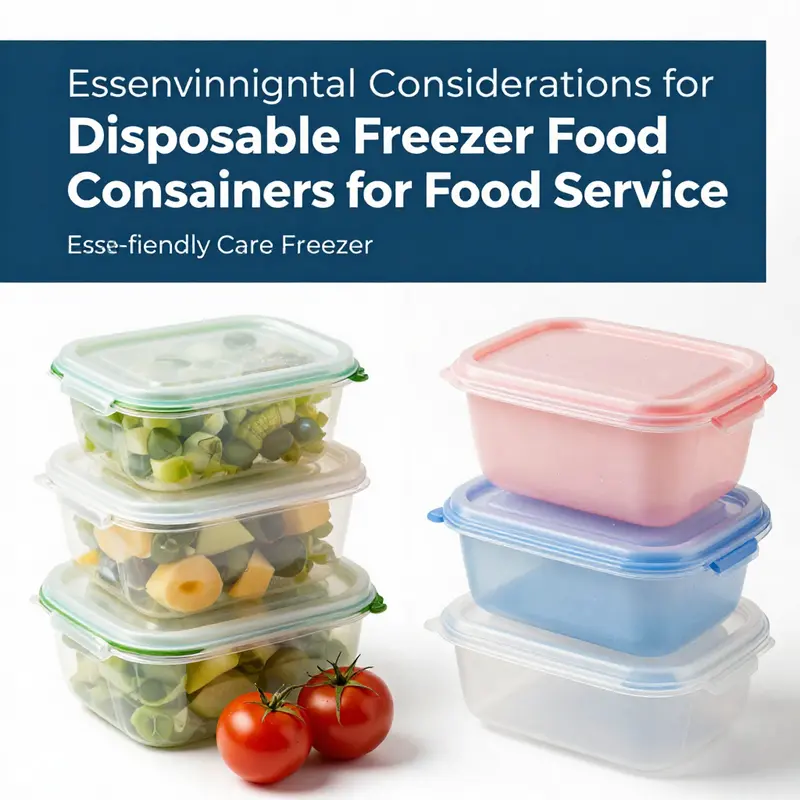
The need for disposable freezer food containers is undeniable in a world that values rapid meal planning, bulk preparation, and accessible portioning. Yet every choice we make in packaging—every container we reach for—resonates with environmental consequences that unfold long after the meal is thawed and eaten. The chapter that sits beside this one in the larger narrative about disposable freezer solutions invites readers to move beyond immediate practicality and toward a durable, lifecycle-aware mindset. It considers how the materials, the manufacturing footprint, the logistics of distribution, the reliability of end-of-life pathways, and even the occasional reuse scenario weave together to determine the true sustainability of a seemingly simple product. To begin with, a foundational question often passes unnoticed in the rush of meal prep: what happens to these containers after they have served their freezer duty? The answer depends less on a single virtue—price, convenience, or performance—and more on the interaction of material science, waste management infrastructure, consumer behavior, and corporate design choices that shape a product’s entire lifespan.
At the heart of environmental considerations for disposable freezer containers is material selection. Polypropylene and PET are among the most common plastics used because they strike a balance between thermal resilience, food safety, and lightweight practicality. PP, in particular, offers good heat resistance, making reheating in some contexts convenient, and it can be molded into clear, rigid forms that resist moisture loss and odor transfer. PET brings clarity and durability, which helps with product visibility and stackability. But the story doesn’t end with performance; the recycling reality of these materials is not universal. In many municipalities, PP and PET are technically recyclable, yet the practical, real-world viability of collecting and processing these materials hinges on local infrastructure. Contamination from food residues, mixed materials in lids and seals, and inconsistent sorting streams can degrade the value of these streams and push containers into landfills or downcycling pathways that do not fully capture their potential for reuse. The consequence is a paradox: materials engineered for cleanliness and reusability can become stranded if systems for recovering and returning them to the loop aren’t robust enough to handle the volume and variety they present.
Complicating the recyclability equation is the way freezing temperatures interact with plastic. Repeated exposure to subfreezing conditions can render some PP or PET containers more brittle over time, raising the risk of cracks or breakage during handling. This brittleness reduces the likelihood of long-term reuse, nudging consumers toward disposal sooner than planned. The stronger the performance promise of a container in the freezer, the more important it becomes to pair that promise with a credible end-of-life plan. This is where labeling, clear temperature guidance, and straightforward disposal instructions become not just helpful but essential. When the path from kitchen to curb is murky, the environmental benefit of a container rapidly erodes, because the recycling stream cannot reliably capture, sort, and repurpose it.
Alternatives exist that tilt toward reduced environmental impact, but they come with trade-offs that must be weighed in context. Compostable baggies and fibers, for instance, offer a tempting promise of organic recovery, especially when the user aims to divert waste from landfills. Yet compostable options are only as effective as the facilities that can process them. Industrial composting can neutralize certain materials that are marketed as compostable, but if such facilities are scarce or far away, the container may end up in ordinary waste streams. Even when compostability is achieved, home composting rarely matches the conditions required for rapid degradation, prolonging the container’s presence in the waste stream. In many households, compostable packaging works best when it is clearly segregated and sent to appropriate facilities, a level of separation that is not universal and often not practical in small-scale operations.
In contrast, glass and stainless-steel containers—while not disposable in the strict sense—offer a bright beacon of sustainability for long-term use. These durable vessels resist the rigors of freezing, preserve food quality through repeated cycles, and are routinely recyclable at end of life. The caveat is that they demand a different kind of commitment: higher upfront material and cleaning costs, more storage space, and the need for a reliable washing routine. When viewed through a lifecycle lens, the environmental advantage of reusables increases when they are used repeatedly, maintained properly, and eventually recycled in an established stream. This long-horizon view shifts the focus from a single-use mindset to a stewardship approach that values durability, repairability, and end-of-life recoverability as part of the design philosophy. It also invites businesses to design containers that encourage users to repurpose or reuse, rather than discard after a single freezing cycle.
Design considerations for environmental performance extend beyond material choice to how a container is engineered for ease of recycling or reuse. A well-designed freezer container minimizes multifaceted packaging, reduces the use of mixed materials, and employs lids and seals that can be separated or recycled within existing streams. A crucial, often overlooked factor is the impact of transport and production. Heavier or more complex forms may deliver superior performance in the freezer, but they carry a larger embedded energy cost. Lightening the product, simplifying the geometry, and using materials that fit smoothly into established recycling or composting streams can yield meaningful reductions in greenhouse gas emissions, even when measured against a packing list that promises performance. In practice, the most sustainable option for many users is one that minimizes waste across the entire life cycle: materials that yield high recovery rates, manufacturability that aligns with local recycling capabilities, and a design that accommodates both safe freezing and straightforward end-of-life processing.
This is where informed consumer choice intersects with responsible manufacturing. Consumers who understand the limitations and opportunities of available packaging can favor options that are explicitly designed for recyclability, that carry credible certifications, and that align with the local waste framework. They can look for containers that are easy to clean and separate, compatible with common recycling streams, and that minimize the emissions associated with production and transport. They can also internalize a rule of thumb: if a container’s lid and body are made from different materials, it is more likely to complicate recycling, and that complication erodes the environmental value of the package. When a company presents a product as recyclable, it should be accompanied by clear guidance about preparation for recycling, such as rinsing to remove food residues, separating components if required, and not mixing with incompatible waste streams. Without such guidance, even the most technically recyclable container can fail to deliver its environmental benefit.
For readers exploring eco-friendly options, an illustrative example of the direction some suppliers are taking involves packaging designed to support multi-compartment needs without inviting complexity in disposal. A three-compartment, food-grade container marketed as eco-friendly—though not named here to respect the broader conversation—emphasizes partitioned utility while striving to maintain integrity under freezing conditions. The idea is to offer a solution that fits a range of frozen meals, from soups and stews to meals with sides, while supporting cleaner separation of components that may be eaten separately or combined. The design approach here highlights two key environmental criteria: it should be robust enough to survive freezing without shedding or leaking, and it should be compatible with established waste systems, ideally in a way that keeps labels and adhesives from contaminating the recycling stream. In practice, such products aim to balance performance with recoverability, acknowledging that the best environmental outcome occurs when a packaging item remains in productive circulation rather than becoming waste soon after purchase. For readers who want a concrete example of this approach, an online option focused on eco-friendly disposable packaging demonstrates how a multi-compartment container can deliver practical convenience while prioritizing end-of-life clarity and system compatibility. The intent is to offer a viable alternative that keeps waste to a minimum without sacrificing the ease of use that makes freezer storage practical in busy households.
To connect these ideas with real-world sourcing and to provide a sense of how such products fit into a broader ecosystem, consider exploring a supplier offering eco-friendly disposable packaging with three compartments. This example showcases how the industry is experimenting with shapes, materials, and finishes that support recycling streams and minimize environmental impact without compromising food safety and user experience. The possibility of combining practicality with responsible design points toward a future where convenience and stewardship are not mutually exclusive but mutually reinforcing. As this chapter unfolds into the broader conversation about disposable freezer solutions, the reader can visualize a continuum: from virgin plastics through complex recycling streams to reusable, durable alternatives that extend beyond single-use cycles. The best path isn’t a single answer but a spectrum of choices that reflect local infrastructure, consumer behavior, and the shared ambition to reduce the footprint of frozen-food packaging while preserving the benefits that modern meal prep affords.
For readers who want a tangible touchpoint within this spectrum, one can examine supplier options that emphasize eco-friendly configurations while remaining mindful of practical constraints like freezer performance and leak resistance. The emphasis on recyclability and reuse does not negate the need for reliable containment or the safety of stored foods. It simply reframes success as the harmonization of these elements: material choice, disposal pathways, and user practices that together reduce waste, lower emissions, and extend the useful life of packaging in a way that aligns with today’s varied waste-management landscapes. The narrative thus moves beyond superficial green labels toward a more rigorous, evidence-informed approach to selecting and using disposable freezer containers. It invites manufacturers to continue refining the balance between barrier properties, temperature resilience, durability, and end-of-life manageability, while encouraging consumers to adopt routines that support recycling and reuse wherever feasible.
In sum, the environmental footprint of disposable freezer containers is not fixed by a single material or feature. It is shaped by a network of decisions—from resin selection and manufacturing energy to distribution logistics, consumer handling, and the availability of recycling or composting infrastructure. The best path forward embraces a lifecycle perspective, prioritizing materials with the strongest potential for recovery, designing products that minimize the barriers to proper end-of-life processing, and recognizing when reusable alternatives offer a more sustainable long-term option. As markets, technologies, and policies evolve, so too will the packaging landscape, gradually tilting toward choices that honor both the needs of modern kitchens and the health of the planet. For readers who want to explore further, a practical starting point is to examine eco-friendly packaging options that clearly align with end-of-life pathways, and to engage with local waste-management guidelines to determine what can be recycled or composted in their community.
External resource for further reading: https://www.epa.gov/sustainable-management-food-waste/environmental-impact-disposable-food-packaging
Internal reference for readers seeking a concrete example of an eco-friendly packaging option: eco-friendly-disposable-3-compartment-food-grade-packaging-box-for-fast-food-high-quality-takeout-boxes-for-fried-chicken-french-fries-packaging
From Freezer to Fresh: Navigating the Growth, Sustainability, and Safety of Disposable Freezer Containers
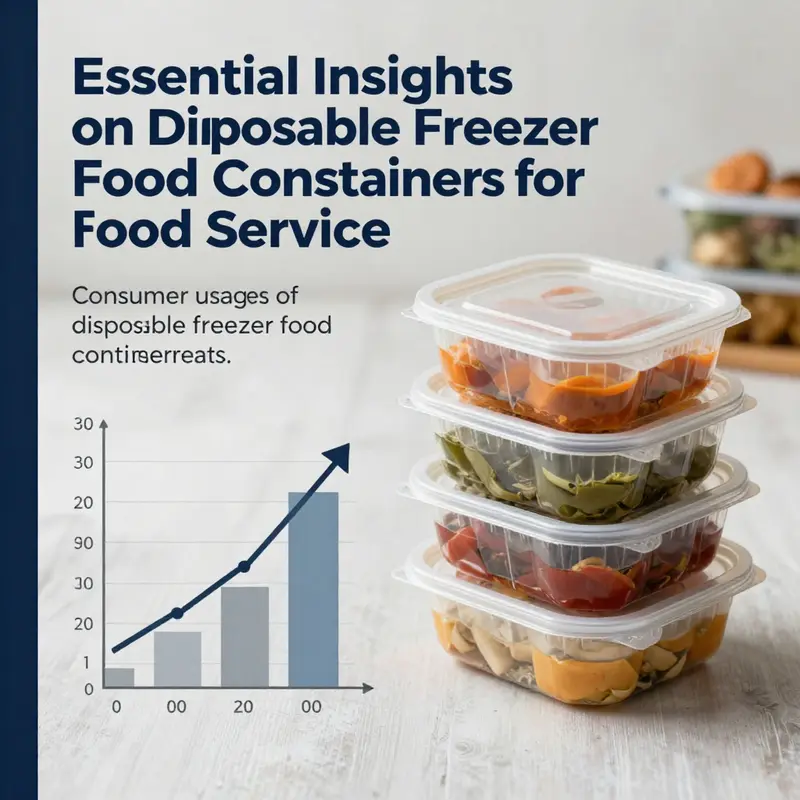
The rise of disposable freezer food containers mirrors a broader shift in how households approach food preparation, preservation, and convenience. These containers sit at a crossroads where temperature resilience, reliable sealing, and ease of use intersect with growing concerns about environmental impact and transparent material sourcing. As families juggle busy schedules, meal-prepping becomes a practical ritual, and the freezer assumes a more active role in daily life. In this environment, the packaging that holds, freezes, and, if needed, reheats the meal becomes part of the experience itself. The conversation is not merely about keeping a dish cold for longer; it is about maintaining texture and flavor after weeks in cold storage, ensuring safety during handling, and doing so without unduly burdening the planet. The result is a market that prizes clarity about what the container is made from, how it behaves across a range of temperatures, and how it fits into broader sustainability goals without sacrificing performance.
Among the most visible dynamics is the demand for materials that can stand up to the freezer without becoming brittle or leaching unwanted substances. BPA-free plastics have been a standard bearer in this space because they offer a combination of light weight, stackability, and affordability. Yet even within plastic, consumers are more discerning now, looking for products labeled freezer-safe, microwave-safe, and sometimes dishwasher-safe, with explicit temperature ranges. The practical implication is simple: when a consumer selects a disposable freezer container, they are weighing a balance of cost, ease of use, and safety. They want a container that seals tightly enough to prevent moisture loss and odor transfer, resists condensation buildup that can lead to soggy lids, and survives repeated cycles in a busy kitchen. In this context, the design is as important as the material.
Beyond plastics, the market presents alternatives that reflect the growing emphasis on sustainability. Aluminum foil containers, once a staple for their robustness and reheating versatility, have a different set of trade-offs. They conduct heat efficiently, which makes them convenient for oven-ready meals, but their lack of a robust, lasting seal during prolonged freezing can invite moisture-related issues. For deep-freeze storage in bulk or for transit across long distances, these containers often fall short of the airtight performance many households expect. Their strength lies in quick, on-the-spot reheating rather than long-term storage. In contrast, molded-fiber or recycled-paperboard options, sometimes branded as compostable or eco-friendly, respond to a consumer audience increasingly wary of single-use plastics. They can be surprisingly sturdy when specifically engineered for freezing, but they typically require careful evaluation of whether their performance aligns with longer storage needs, as their durability under extended cold conditions can vary significantly from batch to batch.
Another segment that has gained momentum is tempered-glass containers with airtight silicone lids. Though not strictly disposable in the traditional sense, these options represent a premium category that underlines a different trend in consumer behavior: durability and visibility can justify a higher upfront cost in exchange for a long-term, reusable solution. For households seeking a transparent view of what’s inside without sacrificing freezer integrity, tempered glass with a well-sealed lid provides an appealing alternative. Yet the higher price point and the need for careful handling mean they sit alongside single-use options as part of a broader portfolio of packaging choices rather than replacing them entirely. The overarching pattern is clear: shoppers increasingly demand a menu of durable, safe, and easy-to-use choices that fit across a spectrum of occasions—from quick weeknight dinners to batch-cooked meals destined for the back of the freezer.
Market signals corroborate this behavioral shift. The disposable-plastic segment remains the most prominent, driven by cost efficiency and familiarity, but it is gradually evolving. The market for disposable plastic food containers has grown into a substantial global category, buoyed by rising demand in food service, home meal replacement, and private-label products. The growth is not merely about more units sold; it is about smarter, better-performing designs that can be relied upon for safety and convenience. In parallel, the broader disposable-food-packaging landscape shows even stronger momentum as dining options expand—delivery, catering, and retail food sales all expand the demand for packaging that can travel, preserve quality, and endure the pace of modern life. Temperature resistance and seal integrity remain among the most critical design criteria, because they directly influence texture, moisture retention, and the absence of freezer burn. In that sense, the difference between a decent container and a truly dependable one often comes down to how well it guards the meal against the subtle degradations of freezing and thawing.
Consumers increasingly read packaging labels with a more practiced eye. They want to know not just that a container is freezer-safe, but what that designation means in practical terms: the exact temperature range, the presence or absence of chemical leachables, and how the material behaves with a microwave or a dishwasher. Transparency has become a competitive advantage. Brands that provide thorough, credible information—ideally backed by independent testing—tend to earn trust and gather higher customer satisfaction scores. This trend aligns with the broader consumer emphasis on brand integrity and the willingness to pay for products that align with values such as health, safety, and environmental responsibility. In parallel, shoppers increasingly rely on reviews and ratings to gauge performance. A container that keeps moisture in, odor out, and food tasting as fresh as possible in the freezer typically earns higher marks, while reports of cracking, staining, or seal failure quickly dampen confidence.
From a market perspective, macro data illustrate a robust growth arc for disposable containers in the food ecosystem. The Disposable Plastic Food Containers market has reached into the tens of billions of dollars and is projected to continue expanding as food-service channels broaden and at-home cooking intensifies. The broader Food Service Disposable Market has already surpassed several milestones, reflecting not only the surge in takeout and delivery but also ongoing demand for convenient, disposable packaging across retail and hospitality sectors. In this context, the future of disposable freezer containers hinges on a delicate balance: pushing for greater functionality and durability while steering products toward materials that align with environmental values and waste-management realities. Manufacturers who innovate along this axis—through smarter lid designs, recycled-content plastics, and compostable formulations designed for freezing—stand a better chance of leading a market that is increasingly discerning and globally interconnected.
Within the consumer toolkit, the ability to use the same container across multiple stages of food handling—freezing, storage, reheating, and eventual disposal or recycling—has become a selling point in itself. The best designs deliver that multi-functionality without compromising safety. For instance, a container that maintains a secure seal after months in the freezer and tolerates a quick spin in the microwave, if approved by the manufacturer, offers a compelling value proposition. The integration of leak-proof lids, sturdy walls, and reliable temperature resistance translates into real-world benefits: fewer refreezes from moisture loss, less waste from freezer burn, and a more predictable reheating experience. This, in turn, reduces the cognitive load on busy households and sustains a habit of cooking and portioning ahead. The narrative around disposable freezer containers is trending toward a more sophisticated, design-led approach that treats packaging as a functional partner in how people plan, protect, and enjoy meals over time.
A practical note underpins all these considerations: while sustainability is a guiding value for many, trade-offs persist. Eco-conscious consumers understand that recycled-content plastics or molded-fiber alternatives may offer meaningful environmental benefits but can also demand compromises in performance for certain freezing durations or food types. The optimal choice, therefore, becomes contextual. A batch of frozen soups might fare well in a sturdy, BPA-free plastic container with a tight seal, while a portion of delicate fruit or a light sauce could be well-suited to a compostable molded-fiber option if designed to withstand the cold and moisture long enough. In other cases, a premium tempered-glass container might be the preferred long-term solution for households prioritizing durability and reusability over disposability. The key insight for shoppers, educators, and retailers alike is that there is no one-size-fits-all answer. Instead, there is a spectrum of designs, each optimized for different storage durations, reheating needs, and environmental considerations.
To connect these threads in a concrete way, consider how a consumer might navigate the landscape. They begin with a basic assessment of needs: What foods are being stored? How long will they stay in the freezer? Is reheating required, and if so, what conveniences does their kitchen support—microwave, oven, or dishwasher? With these questions answered, they move to material choices, weighing durability, safety, and ease of disposal or recycling in their local waste stream. They then evaluate features like airtightness, lid integrity, and stackability—practical aspects that influence daily use and long-term satisfaction. Finally, they look for transparency: clear labeling about temperature ranges, material safety, and end-of-life options. This approach aligns with broader market signals that emphasize trust, performance, and responsible design.
For readers seeking a quick through-line to practical choices without wading through a sea of product pages, there is value in a single, well-designed option that embodies the core requirements: freezer resilience, reliable sealing, and appliance compatibility, all while offering a pathway to sustainability. Included within this conversation is a practical pointer to explore more about eco-friendly takeout packaging options that can inform personal and business decisions alike. eco-friendly-disposable-3-compartment-food-grade-packaging-box-for-fast-food-high-quality-takeout-boxes-for-fried-chicken-french-fries-packaging.
The discourse on disposable freezer containers is not merely about material science or market numbers. It is about how households and food-service operations translate those insights into everyday routines. The best containers become invisible in the sense that they simply work: they keep a meal intact, prevent freezer burn, and survive the rhythms of a kitchen with minimal fuss. Yet they also tell a larger story about how people value safety, cleanliness, and the stewardship of resources. The evolution of these containers reflects a broader cultural shift toward packaging that respects the integrity of food while acknowledging the environmental realities of waste. As consumer expectations continue to mature and as city regulations steer choices toward more sustainable options, the future of disposable freezer containers is likely to be characterized by smarter materials, better design for reuse versus disposal, and greater transparency about what happens to packaging after the meal is finished. The chapter at hand traces this trajectory, not as a triumphalist proclamation but as a grounded observation of how modern households balance convenience, safety, and responsibility in a compact, freezer-friendly package.
External resource: for a broader view of consumer behavior and product demand in the disposable food-storage category, see the external industry reference here: https://www.amazon.com/gp/bestsellers/food-storage/
Final thoughts
Choosing the right disposable freezer food containers is essential for maintaining food quality and operational efficiency in beverage chains, restaurants, and catering services. From understanding the various types available to considering environmental impacts and market trends, this article has outlined the significant role these containers play in food service. A proactive approach to selecting high-quality freezer containers can elevate service offerings and meet customer expectations consistently.