
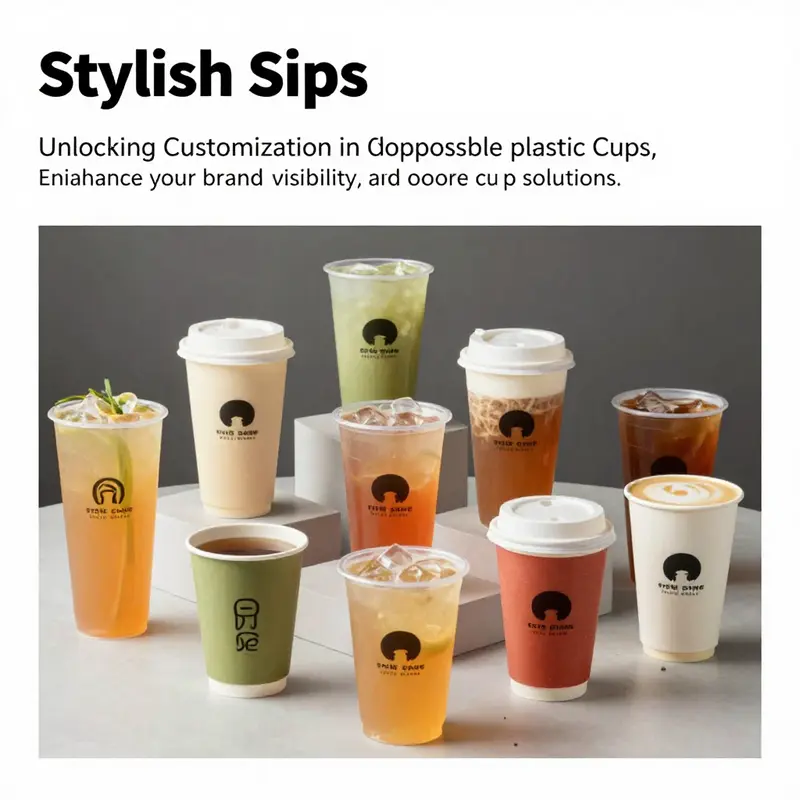
In today’s competitive beverage market, distinctive branding is essential for business growth and customer loyalty. One effective way to elevate your brand presence is through customized disposable plastic cups. Whether you’re a bubble tea shop, a bustling food truck, or an event planner, the right cup can communicate your brand’s story and enrich the customer experience. This article dives into how ergonomic design, temperature versatility, and high production capacity in disposable plastic cups can cater to your unique business needs. By examining each aspect, we’ll highlight how these features can boost customer satisfaction and enhance your marketing strategy.
The Shape of Interaction: Ergonomic Design and Customization in Disposable Plastic Cups
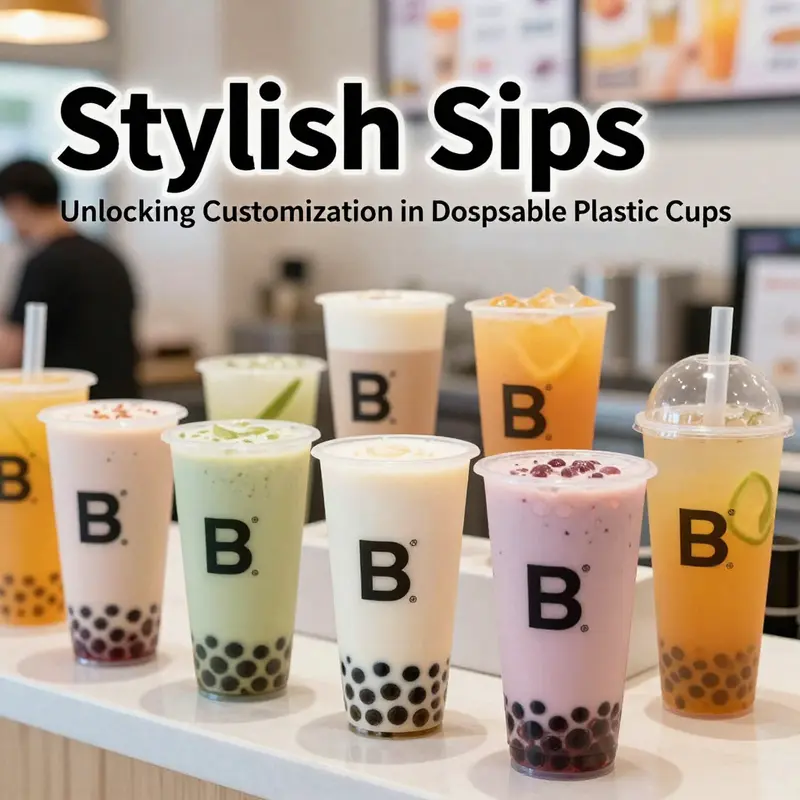
Ergonomics is not a luxury feature for disposable plastic cups; it is an essential thread that ties usability, safety, and branding into a single, tangible experience. When a cup feels predictable in the hand, when its grip prevents slipping even with a wet or chilly grip, when the logo alignment seems natural as the drink is lifted and poured, the user interaction becomes a quiet partnership between form and function. In the world of disposable cups, where customization is a core differentiator, ergonomic design translates branding into everyday behavior. It guides when and how a beverage is held, how securely it is carried, and how confidently the user engages with the brand at a moment when attention is fleeting. The result is not just a visually pleasing object but a practical instrument that moves drinks from point A to point B with comfort, confidence, and a sense of reliability that can be felt long after the cup is discarded. The market for customizable, ergonomic disposable cups is driven by a blend of needs: ergonomic efficiency for the user, durability under pressure for the supplier, and memorable visibility for the brand. The interplay among these needs shapes decisions about shape, material, texture, and print placement, all of which are visible in the way a cup sits in the hand, how it feels when squeezed, and how a brand message reveals itself as the cup is handled. The most successful designs treat ergonomics as a design brief with multiple stakeholders in mind: the person who bears the cup during a festival, the staff member who fills and hands it over at a busy counter, the consumer who will carry it between events, and the brand that relies on the cup to communicate identity, values, and even a quick path to engagement (such as a QR code or a social handle). In practical terms, ergonomic customization begins with the cup’s fundamental geometry and extends into the tactile experience of the surface, the clarity of branding, and the subtle, almost imperceptible cues that guide the user’s interaction with the cup. A cup’s geometry is the first line of communication between human intent and product performance. A slightly tapered body, a contoured profile, or a molded-in grip can offer a secure hold without forcing perfect dryness or a certain hand size. The aim is not to force a specific hand position but to accommodate natural variations in grip, temperature, and moisture. In this sense, ergonomics is a matter of inclusive design: the cup should feel accessible to a wide range of users, whether they are grabbing a drink at a crowded concert, sipping at a corporate reception, or enjoying a hot coffee in a quick, on-the-go moment. Materials play a central role in this equation. Lightweight yet sturdy polymers such as polypropylene and certain grades of PET provide a balance that supports both hot and cold beverages while keeping the cup manageable in the hand. The material’s tactile character—its smoothness, its potential for a gentle texture, and its response to temperature—contributes to the overall ergonomic impression. A surface that offers a soft, reassuring touch can transform a simple carry into a more pleasant, memorable experience. Texture, even when subtle, can be a powerful ergonomic device. A micro-textured grip around the lower portion of the cup, a lightly ribbed panel for enhanced hold, or a soft-touch coating in high-use event scenarios can reduce the likelihood of slips, especially when hands are sweating, damp, or wearing gloves. These features do more than prevent spills; they shape the user’s sense of control and confidence in the product. When the cup is designed for a variety of beverage types—hot coffee, cold iced tea, or boba tea with thick toppings—the grip surface and contour must support a range of temperatures and viscosities. A hot beverage demands a surface that remains secure even when the user’s fingers warm and sweat, while a cold beverage benefits from a finish that remains comfortable to touch rather than numb. In many markets, disposable cups are printed with bold branding and promotional messages using flexographic printing. The design team faces a balancing act: make the branding prominent enough to be legible from a reasonable distance, yet ensure the placement and size do not disrupt the ergonomic story. This often leads to a dual-sided strategy. The primary logo can be placed on one side, optimized for visibility when the cup is held in a typical grip, while a secondary element—such as a slogan, a QR code, or a social handle—appears on the opposite side. This arrangement respects the user’s handedness and grip orientation, so that the most important recognition cue appears naturally as the cup is raised toward the mouth or swung for a quick sip. The geometry of the cup thus becomes a canvas that respects the hand’s path. Capacity choices—ranging from options around 8 ounces to 16 ounces and beyond into larger volumes—should align with typical usage scenarios and the ergonomics of pouring, lifting, and carrying. When brands offer a wide range of sizes, the ergonomic logic should guide how handles or molded-grip features are integrated. Although most traditional disposable cups rely on a simple, cue-less grip, some premium or event-specific lines experiment with ergonomic handles or molded-in grips that channel the user’s hand into a more natural, secure position. Even if such features appear to be subtle departures from standard forms, they carry a meaningful impact on comfort and perceived value. In practice, a well-designed cup supports a smooth flow of action. The user picks up the cup, the grip prevents slipping as the beverage shifts, and the branding reads clearly in the moment of interaction. The experience of reading the logo or the message depends on the cup’s orientation and the hand’s angle. A well-conceived ergonomic plan anticipates that the cup will be rotated as it is turned toward the mouth, so branding elements are legible in multiple orientations. In a setting where cups rotate or are viewed from different angles—as at receptions, festivals, or pop-up markets—the ability to communicate through both sides of the cup becomes a competitive advantage. This is where the aesthetic and the functional converge. A visually striking cup can set a mood and signal a brand’s character, while an ergonomically sound structure ensures that the cup is comfortable to use, not just beautiful to look at. The result is an object that does not demand sacrifice from the user: the cup remains easy to handle, easy to pour into, and easy to carry for extended periods. It is here that the customization process becomes fully integrated with usability. Brands that approach customization with ergonomic intent begin by testing grip dynamics using real users and a range of hand sizes. They observe whether the contour supports a secure hold when the cup is filled with a hot beverage, and whether the texture maintains its grip under damp conditions. They test whether the logo’s placement works when the cup is at rest on a display table versus when it’s being carried by a guest. They examine whether the labeling and the printable area can accommodate multiple language considerations or promotional messages without compromising grip or readability. The result is a cup that communicates brand values through sight, while also optimizing the physical experience of use through touch. In practice, this synthesis of ergonomics and branding invites a more deliberate approach to supplier selection and manufacturing. For brands seeking scalable production, the choice of material, the printing method, and the molding process must all align with ergonomic goals. Papers and plastics that are too rigid can feel harsh on contact, while overly glossy finishes can be slippery; hence, material science and finishing options are often balanced to achieve the desired tactile quality without compromising safety or recyclability. The modern packaging environment also emphasizes spill prevention, a pragmatic ergonomic concern. Lids, sealing options, and spill-resistant designs can be integrated without compromising grip or readability. The best configurations permit secure transport while still allowing easy access for the user to drink, sample, or pour without awkward manipulation. The interplay of form and function in ergonomic customization also has implications for consumer perception and brand recall. When the user experiences a cup that feels reliable and comfortable, the brand becomes associated with everyday ease and thoughtful design. The cup is not merely a container; it becomes a silent ambassador of quality and care—an impression that endures beyond the moment of consumption. For businesses, this translates into tangible benefits: higher user satisfaction at events, stronger word-of-mouth promotion, and a greater likelihood of repeat encounters with the brand as the cup travels through hands, pockets, and bags. A practical example of how ergonomic design translates into market-ready options is the disposable clear plastic cup designed for events and parties, which demonstrates how visibility and grip work in concert. A single design choice—placing a primary logo for readability on the side most naturally facing the user’s eye, while adding a secondary element on the opposite side—can amplify brand presence without adding friction to the user’s experience. Consider also the potential for a light-textured grip that aids handling without creating a bulky or cluttered surface. In this sense, ergonomics is an invisible companion to branding, a strategic element that supports a positive user experience while allowing the brand to remain legible and memorable. The industry has embraced the idea that customization should be a conversation rather than a decoration. It is not enough to print a logo; the design must be born from the realities of how people hold, carry, and use a disposable cup. That means understanding the diverse contexts in which cups are used—from a crowded festival queue to a quiet coffee break—that shape what a cup must be capable of doing. It also means recognizing that the cup’s performance is judged in moments of minor stress: when a hand is sweaty, when the beverage is hot, when the cup is expected to travel across a busy floor. In those moments, ergonomic design proves its value. It allows brands to deliver a consistent, comfortable user experience while preserving the visual clarity and branding impact that make customized cups effective marketing tools. As customization practices mature, the industry will continue to refine grip textures, contour transitions, and branding geometry to suit an expanding range of beverages and contexts. The challenge is not simply to print more attractively but to integrate ergonomics into the DNA of the product. The payoff is a cup that people reach for not just because it displays a striking logo but because it feels right in their hands, supports their activity, and communicates care through its very design. When a consumer can enjoy the moment of taking a drink and the moment of looking at a brand message with equal ease, the cup has achieved its dual purpose: it is both usable and memorable. For researchers, designers, and marketers, the path forward is a reminder that effective customization begins with the body—the hand that holds, the grip that secures, the texture that reassures—and ends with the same cup becoming a carrier of brand identity in a way that feels natural and inevitable. The ergonomic journey in disposable cup customization is not a single solution but a continuous dialogue among form, function, and frequency of use. It is a reminder that the most powerful brands often succeed not by shouting louder but by designing a touchpoint that fits seamlessly into daily life. A well-considered cup invites repeat encounters and fosters recognition, which in turn strengthens loyalty. In the end, ergonomics enhances usability, improves safety, and elevates branding, turning a common everyday object into a trusted partner in the consumer’s everyday rituals. For researchers and practitioners looking to delve deeper into the practicalities of ergonomic customization, a practical reference on a broadly similar disposable-cup category can be found here: Disposable Clear Plastic Cup for Parties. External resource: Alibaba listing for PET cups. https://www.alibaba.com/product-detail/Alibaba-listing-for-PET-cups
Temperature Versatility in Custom Disposable Cups: Balancing Brand, Comfort, and Safety
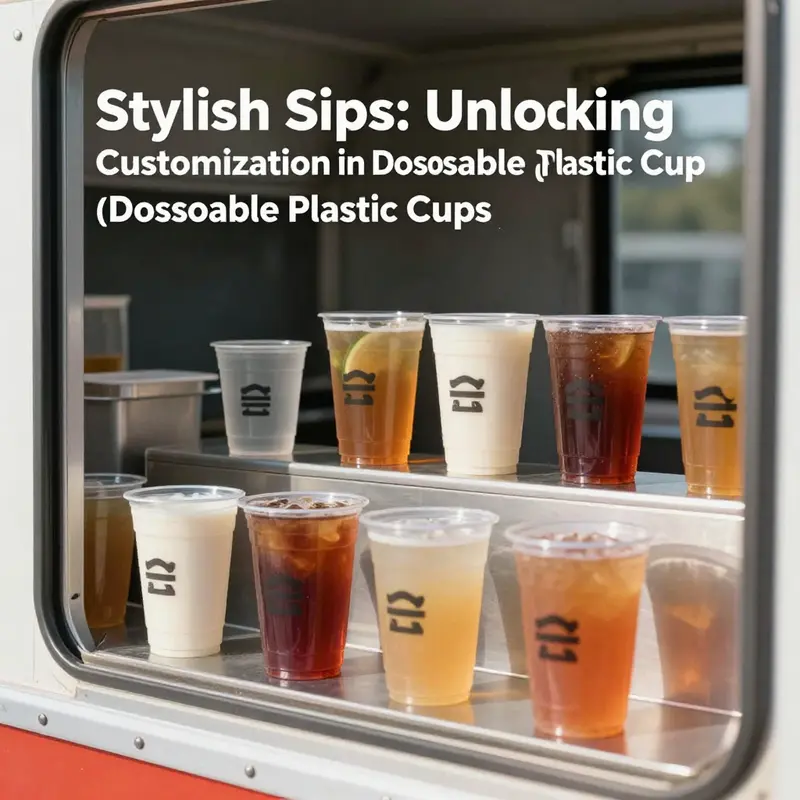
Temperature versatility is a defining, often underappreciated, dimension of custom disposable cups. For brands crafting a memorable event or packaging experience, the ability of a cup to perform across a range of beverages without compromising safety or aesthetics matters as much as color, logo, or lid design. The core of this capability rests in material science and thoughtful engineering, yet its impact radiates through every interaction a consumer has with a branded cup. From a steaming latte at dawn to a cold fruit smoothie at a sunlit festival, the cup must hold its shape, resist deformation, and keep the beverage at an acceptable temperature while presenting the brand with clarity and confidence. In practice, that means a careful balance between the intrinsic properties of the resin, the wall thickness, the geometry of the cup, and the ancillary components that accompany it, such as lids and sleeves. The result is a product that can function in real-world environments where temperature swings are the norm, not the exception.
Materials commonly used for disposable cups, notably polystyrene (PS) and polypropylene (PP), define the fundamental limits of thermal performance. PS offers clarity and cost efficiency, which explains its long-standing popularity in the consumer market. PP, with its higher resistance to heat and impact, often serves better in hot beverage applications and in contexts requiring more robust handling. Taken together, these materials create a practical temperature window that most standard cups comfortably occupy. In typical form, a standard disposable cup designed for everyday use is engineered to withstand temperatures from roughly -10°C to around 70°C. This range supports cold drinks, iced beverages, and moderately hot beverages like coffee or tea without immediate risk of melting or softening. It does not, however, extend to boiling liquids or near-boiling steam, and exposure to extreme heat for prolonged periods can lead to warping, deformation, or chemical leaching concerns.
Custom solutions push the envelope in two principal directions: higher temperature tolerance and predictable, repeatable performance under changing conditions. Some high-performance variants are engineered to withstand up to around 90°C, a threshold that covers hot beverages more aggressively and supports rapid beverage transfer or mobile service where cups are carried with hot contents. Yet these higher-temperature designs come with higher costs, and not every application needs them. The decision hinges on the intended beverage portfolio, the expected service environment, and the level of risk a brand is willing to manage. When a cup is used at elevated temperatures, the risk of deformation rises as the wall thickness interacts with the base geometry. A thicker wall may resist heat-induced softening longer, while a reinforced base helps counteract sagging that can compromise both the cup’s integrity and the drink’s presentation. The interplay between material choice and geometry is therefore central to delivering consistent thermal performance.
The practical implications for custom branding are significant. Event catering, pop-up shops, and theme-packaged products often demand cups that not only convey a logo with crisp fidelity but also function reliably across hot and cold drinks. The thermal tolerance of the cup must be clearly communicated through labeling—such as hot beverage compatibility—and backed by testing that aligns with recognized standards. Consumer confidence grows when a label states that a cup is designed for specific temperature ranges and tested accordingly. This is not merely a regulatory compliance issue; it is a trust issue. If a branded cup fails after a few minutes of contact with a hot liquid, the brand’s reputation and the event’s experience are at stake. In that light, brands are increasingly favoring cups whose technical specifications are explicit and traceable, a practice that also reduces returns and negative feedback.
The design features that influence temperature resilience extend beyond the material and wall thickness. Ergonomics play a surprising role. A contoured grip or a U-shaped profile reduces heat transfer to the hand, enabling comfortable handling even as beverage temperature remains high near the cup’s surface. This ergonomic consideration enhances the user experience while moderating perceptions of heat by distributing the sensation of warmth more evenly across the hand. In catering settings, where staff may lift many cups in rapid succession, a reliable grip reduces the likelihood of spills and burns for customers juggling multiple drinks. Lids or sealing films add a crucial layer of protection against spills, but they also introduce a new set of thermal considerations. A secure lid must resist warping or loosening when placed on a hot beverage, and it must seal effectively to prevent leaks during transit. The interface between lid, cup, and beverage temperature can determine whether a drink remains at the desired temperature long enough for the consumer to enjoy it, or whether heat loss is rapid enough to degrade the drinking experience before the last sip.
Customization complicates the thermal story in subtle, but important, ways. Printing methods such as flexography can deliver vibrant, durable branding on curved surfaces, yet the inks and coatings used must tolerate temperature exposure without cracking, fading, or interacting chemically with the beverage. Color fidelity matters not only for aesthetics but for legibility under varying lighting and thermal conditions. A brand’s logo must stay sharp as the cup warms, and colorfastness must be assessed in the context of both hot and cold beverages. The interaction between the print layer and the plastic substrate can influence how well a cup retains its exterior finish when subjected to heat cycles, condensation, and the friction of handling. In practice, this means selecting printing inks and finishes designed for food-contact safety and thermal stability, while ensuring that the overall structure of the cup remains compliant with regulatory standards. The end result is a branded cup that looks as confident under a café’s heat lamp as it does under a festival’s chilled air.
Consumer safety and regulatory compliance are inextricably tied to these temperature parameters. Regulatory bodies across regions require that materials in contact with food or beverages meet safety criteria, not only for chemical migration but also for heat exposure scenarios. For hot beverages, many manufacturers annotate cups with a “hot beverage compatible” designation and supply data demonstrating test outcomes aligned with food-contact regulations. These tests cover thermal resistance, leachate behavior, and physical integrity under expected service conditions. The FDA guidelines, as a reference, emphasize the need for materials and packaging to be evaluated for temperature-related risks and to communicate those risks transparently to users. While the letter of any single regulation may vary by jurisdiction, the underlying principle remains constant: a branded cup should perform safely across its intended use cases, and the consumer should not be exposed to unexpected hazards as temperatures change during handling or transit. The design team’s challenge is to translate these safety expectations into a tangible product — a cup that preserves its shape and clarity while carrying a consumer’s drink from kiosk to curbside.
From a practical standpoint, the management of temperature range and safety hinges on the manufacturing process and the supply chain. A supplier’s specification sheet should detail the material composition, wall thickness, base reinforcement, and the precise temperature range the cup supports. This transparency helps brands align product choices with the beverage programs they plan to offer. It also anchors conversations about sample testing and pilot runs. A well-executed pilot can reveal how a cup performs under real-world conditions: the pressures of stacking, the impact of refrigeration versus room temperature, and the effects of sustained exposure to hot beverages during service or transport. In a world where fast service is a differentiator, these small, often overlooked details can determine whether a cup is simply adequate or genuinely reliable for a brand’s promotional ambitions. The ability to test the product in a controlled setting — with hot and cold beverages and with the intended lids or sealants — is a powerful tool for reducing post-purchase risk and ensuring that brand promises translate into positive consumer experiences.
The broader market context also shapes how temperature versatility is perceived and implemented. High-volume producers can offer a wider range of options — from standard caps and lids to specialized insulating sleeves and double-wall configurations — without sacrificing speed or scalability. These capabilities are particularly attractive to events and retailers that require rapid deployment across thousands or even hundreds of thousands of units daily. The economics of scale make it feasible to opt for higher-thermal-capacity cups when the application demands it, while still providing cost efficiency for general-use scenarios. Yet even in high-volume contexts, the core principle remains unchanged: the chosen cup must perform consistently across temperatures, align with branding goals, and comply with safety standards.
For organizers and operators, the practical takeaway is straightforward. Begin with a clear understanding of the expected beverage temperature ranges and the service environment. Consider whether the cup will encounter extreme, real-world conditions — for instance, a hot drink in a crowded, warm venue, or a cold beverage in an outdoor setting with wind and humidity. In those scenarios, the combination of material choice, design features, and appropriate closures will determine overall performance. The customization layer then becomes a matter of mapping brand identity onto a product that is simultaneously functional and safe. A well-chosen cup can act as a silent ambassador, signaling quality and care through its stability under heat and its capacity to travel through crowded spaces without mishap. The strategic value of this alignment cannot be overstated: when a product reliably handles temperature, the brand earns confidence, the consumer enjoys comfort, and the event or retailer reinforces its commitment to quality.
In this context, a single product page and its accompanying technical documentation become tools for decision-making. Brands can assess whether the cup’s thermal tolerance is aligned with their beverage program, whether printing processes will endure the heat of repeated service, and whether the overall package — including lids and sleeves — offers the right balance of security, convenience, and aesthetics. The social and experiential dimension matters as well: the visual appeal of a transparent cup, the way branding shines as the drink’s temperature changes, and the ease with which staff can handle, serve, and replenish drinks all feed back into the consumer’s perception of the brand. When temperature versatility is integrated into the product development mindset from the outset, it reduces friction later in deployment and increases the likelihood that a branded cup will contribute positively to a brand’s recognition and customer loyalty.
The conversation doesn’t end with safety and performance metrics. The supply chain’s capacity to deliver reliable stock, the availability of samples for trial, and the ability to customize at scale all influence how a brand translates the temperature story into a concrete solution. In practice, this means that brands should seek suppliers who can provide detailed specifications, clear labeling, and robust support for testing and pilot runs. A clear pathway from concept to production minimizes the risk of misinterpretation or misalignment between what the brand intends and what ends up on the table. It also supports faster iteration, enabling brands to refine temperature tolerance through real-use feedback before committing to a large rollout. In the end, temperature versatility is not a standalone attribute; it is a facet of a broader system that includes design, branding, safety, user experience, and supply-chain reliability. When this system works in harmony, the result is a custom disposable cup that not only carries a beverage but reinforces a brand’s value at the moment of consumption.
For readers seeking practical benchmarks and further context, a representative product category demonstrates how these elements come together in the field. A clear, disposable plastic cup often serves as the centerpiece for promotions at events, cafés, and retail environments. A single piece must survive the journey from kitchen or bar to customer hand while maintaining its form, clarity, and branding. The cup’s thermal tolerance informs decisions on inner coatings, exterior finishes, and the compatibility of seals and lids under a spectrum of temperatures. Inline quality checks, such as heat resistance tests and leak tests, are part of the standard workflow that ensures the end-user experience remains consistently positive. It is through this confluence of material science, ergonomic design, branding fidelity, regulatory compliance, and logistical planning that temperature versatility becomes a meaningful differentiator rather than a technical footnote.
For brands evaluating the path from concept to consumer, the question is not merely whether a cup can hold hot or cold beverages. It is whether the cup can uphold brand integrity across temperatures, withstand the rigors of service, and do so in a cost-effective and scalable manner. The answer lies in collaborative engineering between brand teams and cup manufacturers, in clear communication of temperature expectations, and in rigorous, documented testing that aligns with safety standards. When done well, the result is more than a functional vessel; it is a trusted conduit for brand storytelling, a reliable companion to an on-site experience, and a consistent touchpoint that reinforces loyalty with every sip. To connect these ideas with practical exploration, consider a representative entry point in the product ecosystem that showcases the potential of standard, customizable cups for events and everyday use. This resource highlights how a clear plastic cup, designed for versatility and branded to suit various campaigns, can serve as a flexible platform for mixed beverage programs and multi-venue deployments. See this product page for a concrete example of a customizable, disposable plastic cup intended for on-the-go use and diverse events: https://ecocupbowl.com/product/disposable-clear-plastic-cup-outdoor-picnic-pet-cup-drinking-cup-for-parties-birthdays-weddings-camping-utensils/
As the industry continues to evolve, temperature versatility will remain a key criterion for success. Brands that prioritize it alongside branding, usability, and sustainability will be better positioned to deliver cohesive, satisfying experiences to consumers who expect their drinks to be well-presented, safely handled, and reliably served across a spectrum of environments. The story of a disposable cup is not merely about containment; it is about enabling a moment of connection — with flavor, with memory, and with the brand that accompanies the drink from beginning to end. In this light, the temperature characteristics of a custom cup are not a minor technical footnote but a strategic capability that shapes how a brand communicates value, manages risk, and scales a memorable consumer experience across markets and occasions. The careful selection of materials, the thoughtful design choices, and the transparent communication of safe usage collectively empower businesses to offer branded beverages with confidence, no matter the temperature of the moment.
External research reinforces the practical importance of these considerations. For readers seeking regulatory context on food-contact materials and temperature guidance, refer to official guidance on materials safe for food contact and temperature considerations. External resource: https://www.fda.gov/food/food-contact-materials/food-contact-materials-and-food-packaging
Scale, Speed, and Style: The Manufacturing Power Behind Custom Disposable Plastic Cups
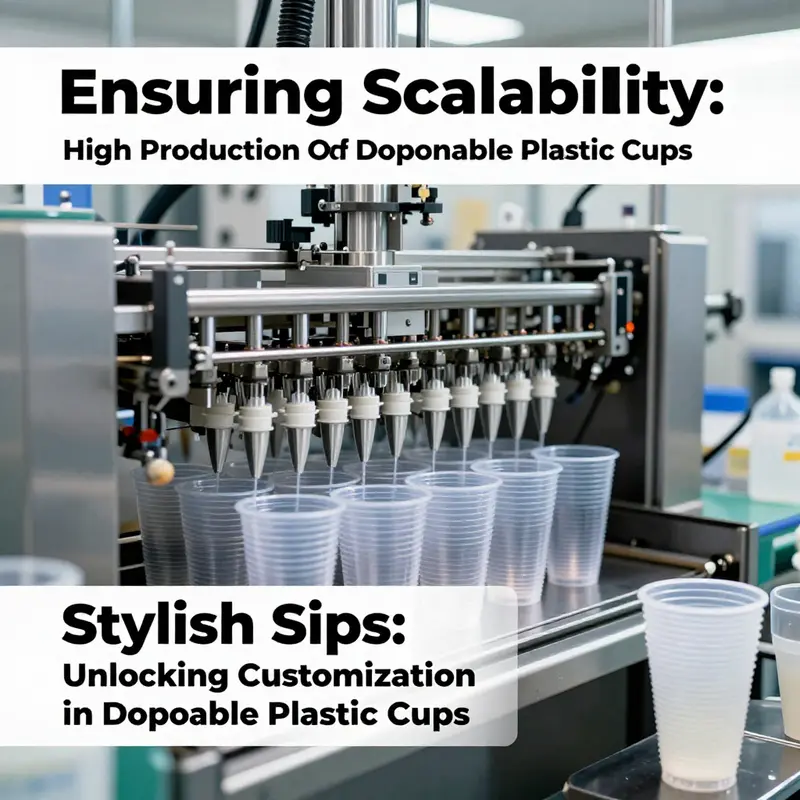
Across the spectrum of consumer engagement, the ability to supply branded, disposable cups at scale is a quiet, unseen backbone of modern food service, events, and promotional campaigns. When a brand designs a cup, it imagines a portable billboard, a tactile touchpoint that travels from kiosk to line, conference hall to airport lounge. This chapter examines not just the surface appeal of such cups but the high-volume machinery, workflows, and material science that make consistent customization possible at tens of millions of units per year. The conversation shifts from color swatches and logos to production lines, automation, logistics, and compliance, showing how capacity and fidelity coexist in contemporary manufacturing ecosystems. As capacity expands, so does the scope for brands to extend their messages beyond the storefront, turning every sip into an opportunity for recognition and recall.
In the realm of custom disposable cups, production capacity is not a mere statistic. It is a promise that a supplier can fulfill large orders with predictable timelines while preserving the integrity of branding and performance. The research indicates a broad capacity spectrum, from the lower end near one million units annually to the upper echelons of fifty million or more. These figures are not arbitrary; they reflect a mix of materials, tooling, and process maturity. A typical polypropylene (PP) cup produced for durable, lightweight use might be rated in the tens of millions per year when the plant operates in continuous, automated cycles. A PET (polyethylene terephthalate) version, chosen for clarity and premium feel, can reach similar or higher annual outputs depending on line efficiency and downstream finishing. The breadth of capacity signals a manufacturing sector built to absorb spikes in demand—from major sporting events and festival seasons to corporate giveaways across multiple regions.
To understand what makes high-volume output feasible, it helps to map the technologies that undergird modern cup production. Automation is the quiet driver behind the numbers. Robotic handling, automated molding, and continuous-flow printing lines reduce human error and accelerate throughput without sacrificing precision. In practice, a single plant might run multiple parallel lines for different materials, balancing PP, PS, and PET streams to meet the exacting demands of clients who request temperature versatility for hot beverages or the crisp clarity that elevates product visibility. The automation extends from resin preparation and molding to post-production steps like trimming, annealing, labeling, and, where needed, lid integration. The result is a synchronized workflow where the first batch can be produced, inspected, and approved, and subsequently scaled to tens of millions of units within a matter of days.
Turnaround times are not merely about speed; they reflect a chain of decisions about the readiness of the product to move from line to warehouse. In many cases, manufacturers report seven to fifteen days from initial batch approval to delivery of bulk quantities. That window includes prototype validation, color matching, and alignment of printing with the chosen customization method. Flexographic printing, a common choice for branded cups, offers vibrant results and durability across large runs. It accommodates logo placement, multi-color designs, and even gradient effects that remain legible under pressure from hot liquids. Importantly, the printing stage can be integrated directly into the cup production line so that designs are applied in the same pass that forms and trims the cups, streamlining the supply chain and reducing risk of misalignment or delays.
Customization is a defining feature of modern disposable cup manufacturing, and it is the lever that converts capacity into value. Suppliers describe flexible options that are compatible with high-speed production without compromising output. Logo printing remains a core capability, enabling brands to imprint their identity on cups in a durable, wash-resistant manner. Color selection extends beyond a single palette; it can cover multi-color schemes, branding accents, or seasonal motifs that reinforce a campaign’s narrative. Lid integration adds another layer of practicality, allowing cups to be sealed for spill resistance during transport or at outdoor events. The design considerations extend to ergonomic features such as a U-shaped grip or contoured body that helps users maintain control when carrying beverages on the move. The synergy between design and manufacturing is essential: a well-conceived customization not only looks appealing but also respects the constraints of automation, material properties, and downstream handling.
The materials themselves anchor the spectrum of capabilities. PP cups often excel in temperature resistance, performing well with hot beverages and resisting deformation under heat. PET cups bring superior clarity and stiffness, which can enhance beverage presentation, particularly for cold drinks and ready-to-serve formats. PS cups, while offering clear sightlines, typically carry different performance profiles, including cost considerations and environmental tradeoffs. Each material interacts with the chosen production technologies in distinct ways. For instance, the printing chemistry must adhere to the resin behavior during molding, curing, and post-processing. The end result is a family of cup solutions that can be tailored to the beverage profile and service scenario, whether that be a high-volume coffee program, a boba tea station, or a retail promotion that travels across networks.
Beyond the core cups themselves, the market recognizes the growing importance of sustainable materials. PLA-based options are increasingly explored as a pathway to reduce reliance on fossil-based feedstocks, while maintaining the feasibility of high-capacity production lines. The adoption of eco-friendly transitions, however, often requires careful assessment of compostability, end-of-life handling, and regulatory acceptance in different markets. Suppliers report that sustainability goals do not necessarily compromise throughput. With conscientious planning, a plant can maintain output while introducing bio-based resins or recycled-content materials, balancing performance with environmental responsibility. The challenge lies in preserving clarity, strength, and seal integrity when substituting resin sources, and in ensuring compatibility with existing printing and sealing technologies. In practice, this means early-stage material trials, robust QC checks, and iterative adjustments to process parameters so that the final product remains uniform across thousands or millions of pieces.
Certifications and compliance emerge as a critical support layer for large-scale deployments. Suppliers frequently hold CIQ-related credentials that attest to safety and quality for international markets. This assurance is particularly valuable for brands seeking to scale the distribution of branded cups into multiple regions. In addition, many operations align with standards that signal FDA-compliant materials and food-contact safety across the lifecycle of the product. With a global supply chain, the assurance of compliance reduces the risk of interruptions caused by regulatory variances or import barriers. Brands can rely on a documented framework that spans from raw material selection through manufacturing, printing, packaging, and final delivery. Such governance supports the confidence needed when an order represents not just a single event but a sustained program that travels across countries and continents.
The capacity to deliver large orders also intersects with procurement strategy and supplier relationships. For buyers, the ability to place bulk orders with predictable timelines hinges on a few practical factors: robust supplier capacity, a synchronized logistics network, and a clear customization roadmap. Smart relationships emphasize transparent communication, sample programs, and a scalable pricing structure that adjusts as volumes rise. A productive pattern is a staged approach: initial prototypes test branding fidelity and functional fit, followed by a controlled ramp to large volumes, with continuous monitoring for quality and color consistency. In this context, platforms that facilitate supplier discovery and specification sharing play a meaningful role. They enable buyers to compare materials, printing capabilities, and delivery terms side by side, accelerating the decision process while preserving batch integrity.
From the perspective of a brand facing a major event or a global campaign, the practicality of high-capacity manufacturing is best understood through a story of demand shaping supply. An event with tens of thousands of attendees, a nationwide promotional tour, or a corporate giveaway program all require a partner able to commit to a clean schedule, precise branding, and reliable availability. Here, the production line’s rhythm becomes a strategic feature. When a supplier can commit to seven-day turnarounds for initial validation and still meet subsequent weekly or daily shipping milestones, brands gain the confidence to project their marketing timeline with fewer risks. The capacity to respond quickly to last-minute changes in design or color, while maintaining the same level of quality, reinforces the value of a well-structured supply chain that blends manufacturing discipline with creative flexibility.
For readers seeking tangible examples of how this capacity translates into real-world options, consider the broader ecosystem of disposable cups with customization options that support high-velocity service environments. A practical glimpse into the availability of clear, disposable cups reveals the breadth of choice for event planners and operators who want visibility of the beverage inside the cup while maintaining design versatility. See this example here: disposable-clear-plastic-cup-outdoor-picnic-pet-cup-drinking-cup-for-parties-birthdays-weddings-camping-utensils. The device under discussion is not a novelty item; it is a practical artifact of scale, built to travel with people across a festival field or a conference hallway, while still carrying a brand’s visual story on its surface. Such cups showcase how the intersection of form, function, and print capability can produce a dependable, repeatable experience for customers and event attendees alike.
Any discussion of high-capacity manufacturing would be incomplete without addressing the trade-offs that accompany large-scale production. In the rush to meet demand, quality control becomes a gatekeeper rather than a mere checkpoint. Modern plants tackle this with inline inspection, statistical process control, and automated defect detection that trace issues back to the earliest stage of production. The goal is not to sprint without regard for quality but to harmonize speed with consistency, so every batch meets the same standards that brands expect for uniform branding and reliable performance. When a supplier demonstrates a robust QA culture, buyers gain reassurance that large runs will not produce a scatter of cups that vary in color, thickness, or seal integrity. The result is a predictable supply that can sustain campaigns across multiple weeks or months, minimizing dispensing errors and customer complaints.
In the strategic calculus, cost and time-to-market are inseparable from capacity. Large-volume operations often achieve favorable economics through economies of scale, reduced per-unit overhead, and optimized loading and unloading cycles. However, the relationship is nuanced. Cost efficiency must not erode the features brands rely on, such as ergonomic grip and translucence that invites beverage visibility. Price discipline emerges from disciplined process optimization, where tooling, maintenance, and material yield are managed as a closed-loop system. Suppliers that invest in multi-material lines, rapid-changeover capabilities, and intelligent scheduling can offer lower incremental costs for incremental increases in volume, which is particularly valuable for seasonal campaigns with fluctuating demand. For procurement teams, this means a credible plan that aligns branding ambitions with a rational financial model, ensuring that the economics of scale support rather than constrain creative intent.
The sustainability conversation is not a side note but part of the capacity narrative. As manufacturers explore PLA and other bio-based options, the conversation expands to how these materials behave under high-speed printing, how they respond to heat, and how their end-of-life pathways align with client sustainability goals. The compatibility of these materials with existing printing techniques is critical; it determines whether a single production line can support multiple material families without costly retooling. In practice, this means early-stage testing for viscosity, cycle times, and adhesion of printing inks, as well as post-processing steps that preserve cup integrity during stacking and transport. The industry’s trajectory suggests that eco-conscious choices can coexist with scale, provided that there is a thoughtful balance between performance, cost, and environmental impact. The result is a set of options that empowers brands to decide not only what their cups look like but how they align with broader stewardship commitments.
For buyers navigating the procurement landscape, the sheer breadth of capability can feel overwhelming. A practical approach is to articulate the non-negotiables first: material safety, print fidelity, seal integrity, and delivery reliability. Then map these to the manufacturing levers of automation, line versatility, and lead-time transparency. The conversation should also extend to sample programs that validate branding and function before committing to mass production. In the end, capacity is a means to an end—a proxy for a reliable partner who can translate a creative brief into thousands or millions of cups that carry a brand message with clarity and consistency across geographies. And while the numbers tell a story of scale, the true value lies in the quiet confidence that the cups will be there when an event begins, when a kiosk opens, and when a consumer takes that first, branded sip.
Final thoughts
Custom disposable plastic cups are not just practical; they are a powerful marketing tool for bubble tea shops, beverage chains, and catering services. By investing in ergonomic designs, versatile materials for temperature retention, and scalable production capabilities, you position your brand for success. Integrating these elements into your service offerings not only enhances the customer experience but also strengthens brand recognition. As you consider your options, remember that choosing the right disposable cup can set your business apart in a crowded marketplace.