
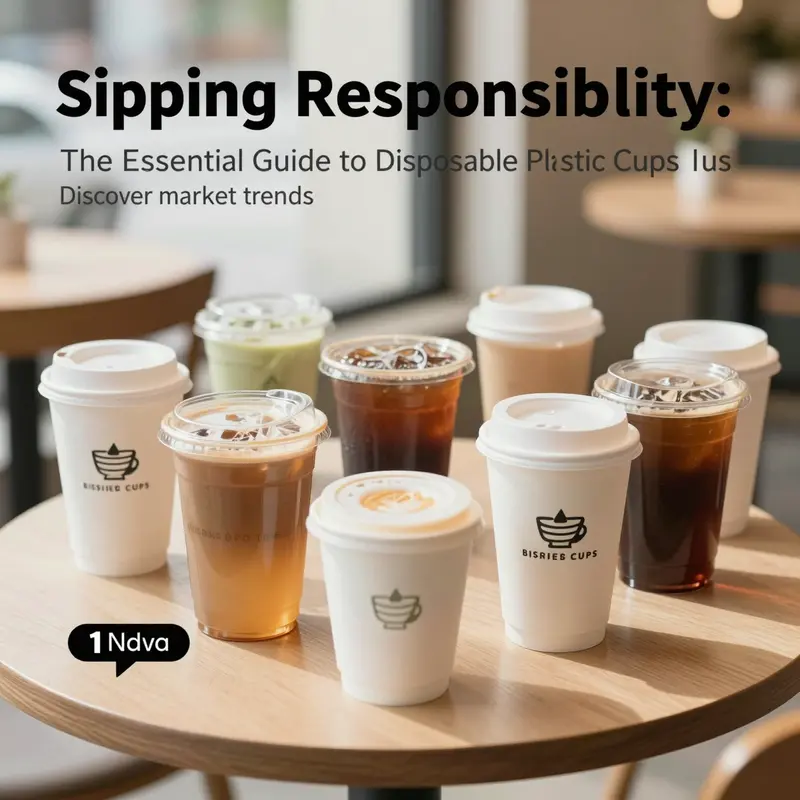
In today’s beverage industry, disposable plastic cups with lids are more than just a convenience; they’re an essential part of customer experience and environmental responsibility. Popular choices among bubble tea shops, beverage chains, restaurants, food trucks, catering services, and event planners, these cups cater to both fast-paced service and sustainability expectations. Understanding the evolving market trends and consumer preferences, the growing importance of environmental impact, and the various manufacturing processes and customization options available can help businesses make informed choices. This exploration will provide valuable insights that can enhance beverage presentation while aligning with sustainability goals, ensuring your brand remains competitive and conscientious.
null
null
Rethinking Convenience: The Environmental Footprint and Future of Disposable Cups with Lids
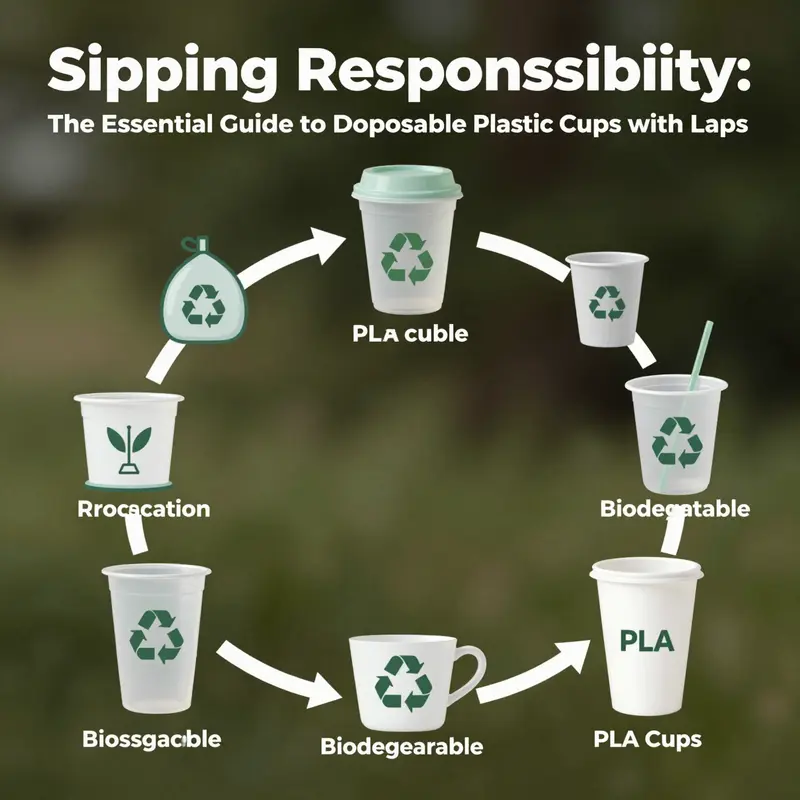
Disposable cups with lids have become a familiar sight in urban life. They appear in coffee shops, fast-casual eateries, street food stalls, delivery logistics, and the myriad events that stitch everyday social life together. The appeal is simple: a lightweight, portable vessel that keeps beverages secure, prevents spills, and travels well from point A to point B. Yet beneath this everyday utility lies a complex web of environmental trade-offs rooted in material choices, manufacturing practices, and end-of-life handling. The chapter that follows unpacks this web with a focus on two widely used materials, polypropylene (PP) and polylactic acid (PLA), and explores how their distinct footprints shape the sustainability profile of single-use cups with lids. It also considers how recent lifecycle assessments and evolving waste-management realities push brands, policymakers, and consumers toward choices that balance convenience with responsibility. As the research shows, there is no single solution, but a suite of design, infrastructure, and behavioral shifts that together can redefine what “single-use” means in a more sustainable economy. For a concrete example of the kind of disposable clear plastic cup used for parties and picnics, see this product page: disposable clear plastic cup for parties and picnics.
The environmental calculus of disposable cups with lids starts with material selection. PP is a petroleum-based thermoplastic known for its strength, heat resistance, and versatility. It keeps beverages from leaking, supports hot drinks, and performs reliably in a range of service environments. These properties make PP a practical choice for coffee, tea, soups, and other contents that demand sturdiness during transport and consumption. But durability has a hidden cost: PP is not biodegradable in any meaningful sense, and its persistence in the environment can span centuries if mismanaged. The long tail of PP means that even with robust recycling systems, a significant fraction of PP cups still ends up in landfills or as environmental litter, where they can contribute to microplastic pollution and ecosystem disruption over time. The energy intensity of PP production and the fossil-fuel backbone of its supply chain add further layers to its environmental profile. The maintenance of product quality through multiple life cycles requires careful handling of resins, additives, and contaminants, all of which can influence recyclability and end-of-life outcomes.
PLA, by contrast, is marketed as a biobased alternative derived from renewable feedstocks such as corn starch. In theory, PLA aligns with circular economy ideals by offering a compostable option that can return organic material to the soil or to composting streams. In practice, however, PLA’s end-of-life reality is more nuanced. Industrial composting facilities equipped to reach the temperatures and residence times necessary to break PLA down are not universally available. Where such facilities exist, PLA can be processed efficiently, but only if the material is correctly separated from conventional recyclables. When PLA cups contaminate recycling streams or end up in home composting systems ill-suited to industrial-grade compostable polymers, the material fails to degrade as intended and may degrade recycling performance by introducing contaminants. The harsh truth is that inappropriate disposal can undermine recycling streams and complicate the sorting infrastructure that communities rely on to keep plastics out of landfills.
Beyond the core polymers, the presence of lids—often made from a different resin or in a different form factor than the cup—adds a further layer of complexity. Lids are designed to seal and protect contents, but they can be more challenging to recycle if they are composed of alternate plastics or require separation from the cup prior to processing. The practical outcome is a recycling stream that becomes a sorting puzzle: the cup and lid must be separated, and even then the mixed-material reality can degrade recyclability. This is not merely a technical challenge; it translates into real-world waste-management gaps where missorting, contamination, and limited facility capacity translate to higher rates of disposal rather than recycling.
A 2026 lifecycle assessment, focused specifically on plastic cups made of PP and PLA, underscores the scale of the environmental burden associated with disposable cups. The study dissects the cradle-to-grave journey—from raw material extraction and resin production through to transport, manufacturing, and waste treatment—and reveals that the cumulative impacts are substantial. Resource extraction and energy-intensive production contribute to greenhouse gas emissions and other environmental pressures. Transportation adds further emissions, especially when cups are produced far from where they are consumed and then shipped in large volumes to distribution hubs, cafes, and events. The waste-treatment phase—whether landfilling, incineration, or composting—also shapes the overall footprint, with the presence of lids and multi-material configurations sometimes reducing the efficiency of recycling or diverting streams toward energy recovery or disposal.
The 2026 findings are not merely theoretical; they reflect the realities of waste-management infrastructure that many regions face today. In places with robust curbside recycling and well-timed sorting programs, cups that are made from a single material and clearly labeled for recyclability can be processed into new products. In places where recycling systems are fragmented or under-resourced, even well-intentioned disposal can end up in landfills. For PLA, the situation is even more intricate: industrial composting facilities can transform the material into organic matter, but only if the compostable designation is preserved from contamination and the material is kept out of conventional recycling streams that are ill-equipped to process it. The practical consequence is a landscape in which the same product can be recycled, composted, or landfilled depending on where it is disposed, how it is disposed, and the quality of the surrounding waste-management ecosystem.
This context invites a set of pragmatic responses aimed at reducing environmental harm while preserving the practical benefits of disposables in food service. First, there is a clear case for investing in reusable cup programs. Deposits, discounts for returning and reusing cups, and the logistical support to wash and reuse cups can dramatically cut single-use demand. Not every operation can switch to reusable systems immediately, but layered approaches—where reusable measures sit alongside improved recycling and composting options—can help communities and businesses move toward circularity without sacrificing convenience. The research likewise points to expanding industrial composting capacity for PLA products. If municipal and industrial facilities can process compostable cups under appropriate conditions, PLA’s end-of-life potential can be better realized, provided the material is kept separate from conventional plastics and food waste streams. Public education is essential here: consumers and staff must understand what can be composted, what should be recycled, and what needs to be discarded as trash. Without clear guidance and consistent infrastructure, well-intentioned disposal can become a source of contamination that undermines the entire waste-management system.
Second, material design and labeling matter. One pathway is to pursue monomaterial cup-and-lid configurations that minimize multi-material interfaces. Removing or simplifying materials reduces the probability of separation errors and makes sorting easier for recycling facilities. Where biodegradability is pursued, the challenge lies in ensuring that materials degrade only in appropriate environments and that they do not inadvertently contaminate recycling streams when mismanaged. A third lever is design-for-recycling education embedded into product labeling. Clear, concise disposal instructions on cups and lids help consumers direct waste to the right channels. This approach is complemented by standardization efforts across the industry, encouraging consistent resin codes, lids, and packaging formats that facilities can recognize and process efficiently. In tandem, these design and policy strategies can help close the loop—moving from a world where a disposable cup quickly becomes waste to a system where the same cup can re-emerge as a new product with reduced energy and material inputs.
The environmental discourse also benefits from considering the broader supply chain and service model. Disposable cups are part of a larger system of on-the-go consumption that includes takeout packaging, straws, napkins, and other consumables. A shift toward reuse must acknowledge the realities of service settings where speed, reliability, and cost are critical. In many cases, it is more feasible to optimize the entire service package around reuse and refill stations, efficient dishwashing logistics, and predictable demand forecasting rather than to attempt a rapid replacement of disposables with a newer compostable polymer alone. Yet even as reuse scales up, the industry cannot ignore the near-term demand for disposables in contexts where reuse is impractical or unsafe, such as high-traffic events, emergency relief settings, or places with limited access to washing facilities. In these contexts, improving the environmental performance of disposables remains essential.
The discussion thus far points to a nuanced reality: PP and PLA each offer advantages and drawbacks, and neither material alone can solve the sustainability puzzle. The 2026 study reinforces that the environmental burden associated with cups and lids is not static; it responds to the choices that communities and firms make about production, disposal, and the scale of reusable alternatives. The good news is that the path forward is not a single silver bullet but a portfolio of strategies that, implemented together, can reduce the ecological footprint of disposable cups without erasing the conveniences that modern life depends upon.
In practical terms, what does this mean for a brand contemplating packaging choices in a world of growing environmental awareness? It means recognizing that the materials and designs we select set the baseline for the product’s environmental profile. It means acknowledging that end-of-life realities—recycling gaps, composting availability, and consumer behavior—will determine how much of that baseline translates into actual environmental benefit. It means embracing a systems approach that combines robust waste-management infrastructure, clear consumer guidance, and a willingness to experiment with new material paradigms and business models. It also means placing collaboration at the center: manufacturers, waste-management operators, policymakers, retailers, and consumers all have a stake in shaping a future where convenience and sustainability coexist.
The broader implications of this convergence extend beyond individual cups. They touch the design philosophy of foodservice packaging, the organization of urban waste streams, and the social norms surrounding consumption. If the industry can shift from a linear impulse—use, dispose, forget—to a circular intention—use, recover, reprocess, and reuse—the same cup can fulfill a role in a more sustainable economy. Achieving this requires not only scientific insight into materials and lifecycle impacts but also practical innovations in logistics, labeling, and consumer engagement. It requires policymakers who can create the incentives and the guardrails that encourage responsible disposal without stifling innovation. It requires retailers and coffee shops that adopt reuse-friendly service models, invest in staff training, and communicate honestly with customers about what works best given local infrastructure. And it requires a culture of continuous improvement, where data on waste streams, recycling rates, and composting outcomes informs every packaging decision.
In closing, the environmental cost of disposable cups with lids is a function of material properties, end-of-life realities, and the broader resilience of waste-management systems. The PP versus PLA comparison illustrates the complexity of choosing a single best option. The lifecycle lens reveals that the most sustainable choice is rarely a matter of a single attribute, such as biodegradability or recyclability alone; it is the outcome of how a package is designed, how it is disposed of, and how well the surrounding infrastructure supports recovery and reintegration into the production cycle. If we want to see meaningful reductions in plastic pollution and resource use, we must pursue an integrated strategy: promote reuse where feasible; expand and harmonize industrial composting and advanced sorting capacity; educate the public about proper disposal; and push for materials innovations that simplify end-of-life pathways. When these elements align, the familiar cup can still serve the needs of modern life while contributing far less to the environmental burdens that our cities and ecosystems continuously bear.
External reference: https://www.sciencedirect.com/science/article/pii/S0956053X25004128
From Mold to Market: How Injection and Thermoforming Shape the Performance, Customization, and Brand Identity of Disposable Cups with Lids
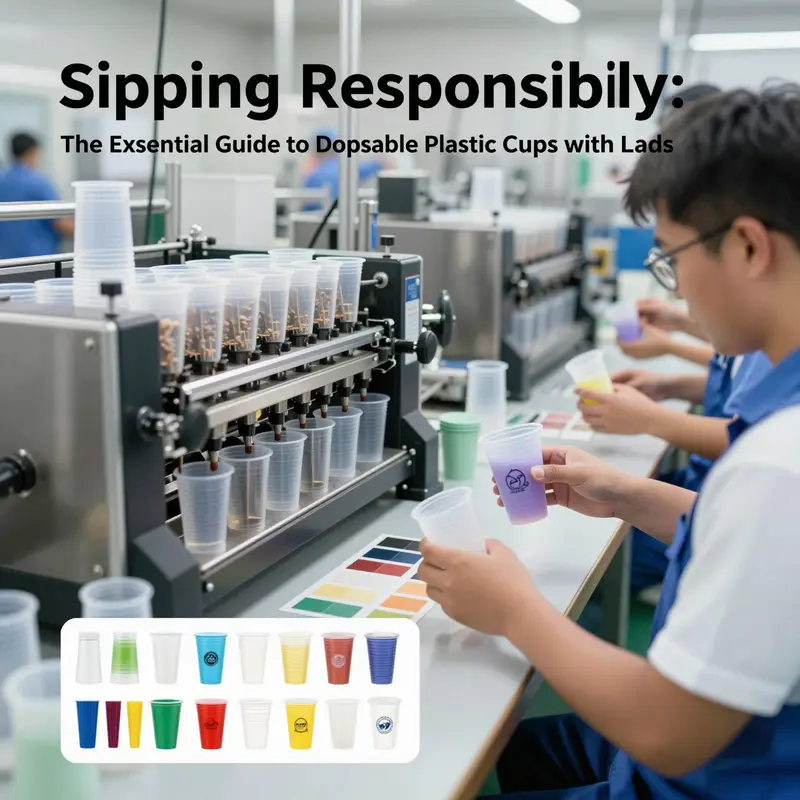
In the world of cold beverages and on the front lines of hospitality, the disposable cup with a lid is more than a convenient vessel. It is an intersection of engineering, material science, and brand storytelling. The journey from an empty mold to a finished cup that survives the rigors of transport, preserves the integrity of the drink, and carries a brand message is a careful orchestration of process, choice, and precision. The chapter that follows weds the technical backbone of manufacturing with the emerging expectations of customers who demand reliability, sustainability, and customization in equal measure. It is a narrative that begins in the quiet hum of a mold shop and ends in the hands of a diner who never stops to think about the cup’s journey, but whose experience depends on its flawless function. The two core manufacturing methods that define this arena—injection molding and thermoforming—set the stage for what properties a cup can deliver, how quickly it can scale, and what aesthetic or environmental promises it can carry into the market. They also reveal the tradeoffs that brands must navigate when they choose materials, wall thickness, and the architecture of the lid, the little cap on the cup that can either enhance or complicate the user experience. Across provinces renowned for plastic manufacturing, the interplay of technique and design becomes a practical language for business decisions, from cost control to speed to market, and from sensory appeal to sustainability. When captured in a single unit, a disposable cup with a lid embodies the sum of these decisions, and its value is measured not only by the beverage it holds but by the confidence it instills in the consumer and the consistency it promises to the operator.
Injection molding and thermoforming are the two pillars that sustain the vast range of cups seen on café counters and at large events. Injection molding excels when rigidity, detail, and durability matter. It is ideal for producing cups from polypropylene or polystyrene where wall thickness can be tightly controlled and uniform across millions of units. The process involves melting polymer pellets and injecting the molten material into highly engineered molds that define the interior geometry and the exterior silhouette. Because the mold design can accommodate complex curves, reinforced rims, and even integrated features such as a lip for a tighter lid fit, injection molded cups often carry a premium feel. They are well suited for premium lines or specialty beverages that demand a sturdy, clear, or color-charged presentation. In contrast, thermoforming shines when scale and cost efficiency take center stage. In this approach, a heated sheet of plastic is formed over a mold using vacuum or pressure to create the cup shape. The result is a lighter, more economical cup with faster cycle times and lower material weight per unit. Thermoforming is especially advantageous for high-volume production of standard cups used for a broad range of beverages, where a balance between adequate barrier properties and aggressive unit pricing is essential. The choice between these two paths is rarely about a single metric; it is about the cumulative effects on performance, cost, and the ability to tell a brand story through design and packaging.
The materials at the heart of these decisions are PP, PS, and the increasingly prominent PLA for eco-conscious programs. Polypropylene offers a solid blend of chemical resistance, toughness, and flexibility in processing, making it a workhorse for injection molded cups that need to endure the rigors of transport and stacking. It presents a clean surface for branding, and its heat resistance makes it suitable for cold and ambient beverages alike. Polystyrene, prized for rigidity and clarity, is often chosen when a transparent cup is desired to showcase a beverage or to convey a premium, pristine look. The tradeoff with PS lies in its brittleness under certain conditions and its environmental considerations, which propel some brands toward options with better end-of-life performance. Biodegradable PLA enters the conversation as a conscious choice for brands seeking to align with sustainability narratives. PLA’s compostability and renewable feedstock footprint can resonate with consumers seeking responsible packaging. Yet the balance must be carefully struck between environmental aspirations and practical realities such as barrier properties, heat tolerance, and the available end-of-life infrastructure. Each material carries a fingerprint of performance and responsibility, and the manufacturer’s role is to translate that fingerprint into a cup that meets the beverage’s needs, the brand’s promise, and the operator’s economics.
Customization rearranges this technical map into a canvas for brand expression. Material selection is the first constraint, but it quickly broadens into options for size variations, wall thickness, and structural features that can redefine a drink’s journey. Brand teams commonly navigate a spectrum that includes small volumes suitable for sample runs and large quantities required for global rollout. The spectrum also embraces not just the dimensions of the cup, but the design of the lid. Snap-on closures, tamper-evident seals, integrated straw holes or pre-punched straw opportunities, and even double-wall insulated configurations all contribute to the consumer’s tactile and thermal experience. The lid becomes a critical touchpoint in the drinking experience—an everyday interaction that, if executed poorly, undermines assurance of containment and convenience. The interplay between cup and lid demands tight tolerances and a well-planned molding and finishing sequence. In this environment, the dimensions of the cup’s rim, the geometry of the dome lid, and the profile of the sealing surface must harmonize to resist leaks, spills, and distortion at the moment the beverage is tipped toward a straw.
Printing and labeling provide a channel for branding that travels with the cup all the way to the consumer. Flexographic printing, with its rapid setup and ability to yield vibrant, multi-color designs on curved surfaces, is a common choice for cups intended to showcase logos and campaigns in contrast-rich color. Screen printing offers an option for special effects or high-heat resistance where multi-layered branding becomes a premium feature. Labeling can layer a brand story through coated or laminated sticker solutions that accommodate multi-layered designs without compromising the surface integrity of the cup. These printing approaches require partnerships across mold-making, printing, and finishing operations, and they often define minimum order quantities for printed, customized items. In some cases, the minimums can be high, driven by the cost of establishing and maintaining the necessary tooling and print plates. Yet these are the realities of delivering a consistent brand presence across millions of units, where the incremental cost of branding is measured against the value of consumer recognition and loyalty.
Across the manufacturing hubs in coastal and inland regions, the supply chain for disposable cups with lids is a study in integration. Guangdong’s dense network of plastic processors, Sichuan’s manufacturing scale, and Hubei’s access to logistical networks converge to support rapid production cycles, intentionally short lead times for trial orders, and the ability to control the entire sequence from mold to packing. The factories that excel in this space manage multiple facets in-house: mold making, printing, capping, and final packaging. Owning these steps allows for tighter process control, reduced risk of misalignment between cup and lid dimensions, and faster iterations when a brand wants to test a new size, a new print, or a new lid feature. The result is not just a product, but a process that can transform a brand’s go-to-market tempo. Turnaround times can be remarkably short for trial or sample orders, with some facilities offering 7 to 10 days to deliver prototypes, while larger runs demand more extensive planning and allocation of raw material and tooling. In this ecosystem, the alignment between process and purpose matters. The supplier’s ability to deliver consistent quality, on time, at the scale required, becomes a decisive factor in whether a brand can sustain a particular design narrative or a new beverage offering.
The commercial reality driving these decisions includes the practical need to balance cost with capability. Minimum order quantities for printed and customized cups often begin around two hundred thousand units, reflecting the investment required to create durable molds, colorants, and printing plates that tolerate the rigors of repeated dishwashing, stacking, and transport. Yet the market also accommodates lean trials where a brand can assess consumer response to a new cup shape or lid design before committing to a broad rollout. In such cases, suppliers frequently offer free samples with the customer paying freight, and express shipping is commonly arranged to expedite evaluation. This is more than a procurement nuance; it is a pathway for brands to de-risk product development and to test how a particular cup’s profile, feel, and performance influence the user experience. The lessons drawn from these tests inform decisions on material selection, wall thickness, and the overall architecture of the cup and lid family that a brand will eventually publish as its standard offering.
From a packaging and sustainability standpoint, the choice of material and the end-of-life considerations are increasingly central to the conversation. PLA, with its compostable promise, attracts brands that want to spotlight eco-friendliness, yet it carries with it a set of conditions for performance and disposal. PLA tends to be more temperature sensitive than PP and PS, and its recyclability or compostability depends on local infrastructure. Recycled PET and other recycled content options add another axis to the decision matrix, offering potential improvements in environmental footprint while preserving the strength and clarity required by certain cup designs. The goal for many brands is not merely to show that they care about the planet, but to demonstrate that their packaging choices align with consumer expectations and with regulatory trends that increasingly favor responsible packaging life cycles. The supplier’s ability to present credible options—PLA for compostable streams, recycled materials for circular systems, and standard PET or PP for traditional, well-established recycling pathways—becomes a key differentiator in a market that increasingly rewards transparency and traceability.
To weave these threads into a coherent strategy, brands must also think beyond the bottle and beyond the lid. They must consider how the cup’s geometry affects the drinking experience, how the lid’s leak resistance holds up through the transport chain, and how the printed surface endures the handling and the heat of the beverage. The aesthetic impact matters, but the functional resilience under real-world use is the backbone of consumer trust. A cup that feels sturdy in the hand, resists deformation during shipment, seals securely with its lid, and presents a crisp, legible imprint is a brew of engineering and design that translates into reliability and repeatable sales. The manufacturing choices, then, are not abstract science; they are the practical language by which a brand articulates its commitment to quality, consistency, and responsible packaging. The alignment of injection molding with premium line needs and thermoforming with high-volume efficiency demonstrates how two seemingly distinct pathways converge to support a broad spectrum of brand strategies. It is in this convergence that the cup becomes more than a disposable item; it becomes a tangible representation of the brand’s promise, engineered into form, color, and function, ready to travel across continents and into the hands of countless consumers who will never pause to think about the process behind the cup, yet will feel the effect of every choice made along the way. As this narrative unfolds, the role of the internal processes speaks as loudly as the branding strategy itself, and the cup’s journey from mold to market becomes a quiet but powerful testimony to the marriage of science and storytelling in modern packaging.
For brands looking to connect this technical tale to practical procurement decisions, a key consideration is how to balance customization with scale. The decision to pursue a particular material or a specific lid design often hinges on anticipated demand, the expected duration of the campaign, and the logistical realities of shipping and warehousing. Custom printing, in particular, demonstrates how the economics of mass production intersect with the art of branding. When a design requires multiple colors or special finishes, the production line must accommodate plate changes and color management that add to lead times and unit costs. Yet the payoff is clear: a cup that carries a brand’s visual identity in a way that is both memorable and durable. The choice of printing method, whether flexographic or screen printing, can affect color fidelity on curved surfaces and the durability of the print under cold beverages or under heat exposure. In some cases, labeling can supplement or replace direct printing, offering an alternative that preserves surface integrity while delivering detailed graphics or regulatory information in a readable format. These decisions influence the end product’s market fit and the speed with which a brand can respond to changing consumer preferences or promotional campaigns.
The modern buyer also considers the broader sustainability narrative when evaluating supplier capabilities. As consumer expectations tilt toward eco-friendly options, the availability of biodegradable or recycled content cups becomes a decisive factor. Brands may seek to demonstrate a genuine commitment to environmental stewardship by offering packaging that can be composted or easily recycled where appropriate. This does not happen by accident; it requires close collaboration with suppliers to ensure the chosen materials retain their functional properties while aligning with environmental goals. In the end, the environmental story is part design, part policy, and part logistics. The cup ceases to be a simple one-time use item when it becomes a portable ambassador for a sustainable approach that customers can identify with and support. The conversation about material selection, quality control, customization, and lifecycle thinking thus forms a continuous loop, a feedback system in which consumer response informs product development, which then feeds back into the manufacturing process, and so on.
In closing, the craft of manufacturing disposable cups with lids is a disciplined fusion of technique and imagination. It is about choosing the right tool for the right job—whether that tool is an injection molding press or a thermoforming line, whether the material is PP for strength and versatility, PS for clarity and rigidity, or PLA for its eco friendly appeal. It is about recognizing that each choice has ripple effects across cost, speed, brand perception, and end of life. It is about building a workflow that can deliver large MOQs when scale is needed and nimble prototyping when new designs and campaigns demand faster validation. And it is about embedding within the cup a sense of reliability, a quiet confidence that the beverage will arrive safe and presentable, with a lid that seals and a surface that communicates the brand’s story with fidelity. This is the backbone of a packaging ecosystem where every cup is a carefully engineered, carefully branded conductor of experience, carrying more than a liquid from point A to point B. It is in that orchestration that the chapter finds its rhythm: a continuous dialogue between form and function, between the factory floor and the storefront, between the needs of the operator and the expectations of the consumer, and between a disposable item and a durable impression.
For readers who want to explore related materials and practical examples of packaging options that align with this manufacturing logic, see the eco friendly disposable packaging options resource for broader context and practical guidance on sustainability in disposable packaging. eco-friendly disposable packaging options. This link offers a gateway to understanding how multi compartment packaging, surface finishes, and material choices translate into real world packaging that supports both brand storytelling and efficient logistics, while staying mindful of environmental considerations.
External resource for deeper technical and market context: https://www.alibaba.com/product-detail/Strategic-Sourcing-of-Plastic-Cups-with-Lids_1600589198775.html?spm=a2700.gallery-1000000000000.0.0.1c7f4e1dUqYxGj&sourceType=productDetail
Final thoughts
The rising popularity of disposable plastic cups with lids is not merely a trend but a crucial element of the modern beverage industry. As consumers become increasingly aware of their choices, businesses must adapt by embracing market trends that prioritize sustainability and customization. By aligning product offerings with consumer preferences, brands can enhance their service while remaining eco-conscious. Ultimately, understanding the intricacies of this packaging solution positions businesses to thrive in an increasingly competitive landscape, ensuring quality, functionality, and environmental responsibility go hand in hand.