
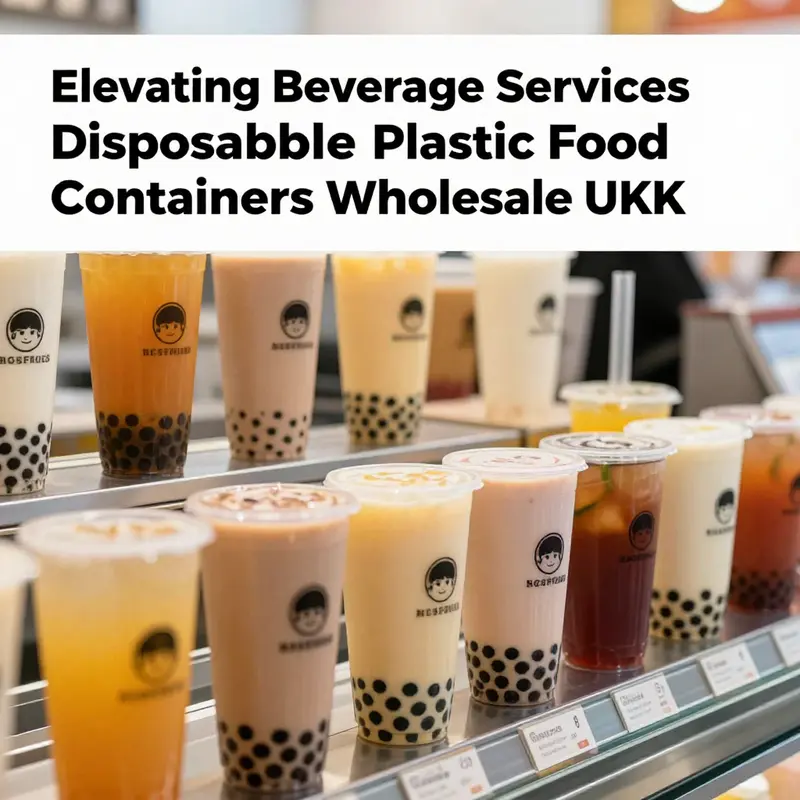
Meeting the demands of modern food service requires a careful balance between quality, cost, and adaptability. For bubble tea shops, beverage chains, restaurants, food trucks, catering services, event planners, and corporate procurement teams, choosing the right packaging materials can significantly impact operational efficiency and customer satisfaction. Disposable plastic food containers stand out as a valuable option, especially when procured wholesale in the UK. As we delve into the cost-effectiveness, quality assurance, and demand management associated with disposable plastic food containers, businesses will gain critical insights into optimizing their packaging strategies.
Economies of Scale and Market Resilience: The Cost-Effectiveness of Wholesale Disposable Plastic Food Containers in the UK
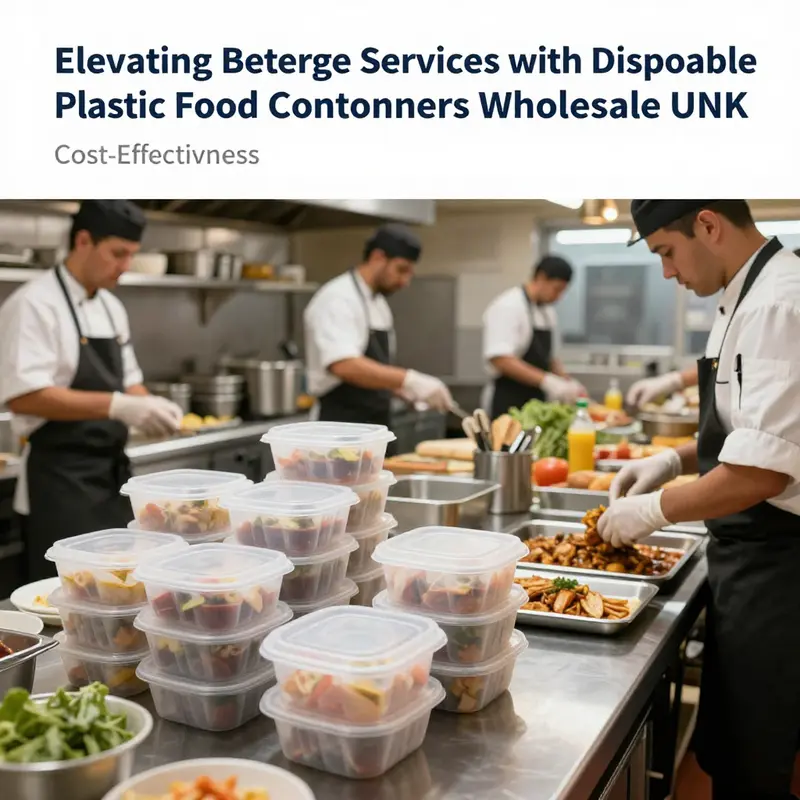
When a modern food business scales up, the choice of packaging becomes less a peripheral decision and more a strategic lever. In the UK market, where restaurants, takeaways, and caterers compete not only on taste but on speed, reliability, and price, wholesale procurement of disposable plastic food containers emerges as a core driver of financial and operational resilience. Cost-effectiveness is not simply a headline; it is a practical outcome that shapes margins, influences menu pricing, and underwrites the capacity to withstand fluctuations in demand. The chapter that follows threads together the economic realities of bulk purchasing, the guarantees of quality and consistency, the pressures of stock management, and the broader considerations a modern operator must balance when selecting a wholesale packaging strategy. Throughout, the emphasis remains squarely on how scale translates into strategic advantage in a competitive hospitality landscape, while keeping a steady eye on safety, compatibility with service channels, and evolving expectations around sustainability.
At the heart of wholesale advantages lies the principle of economies of scale. When containers are bought in large quantities, the per-unit cost declines, sometimes dramatically. This reduction is not merely a matter of a lower sticker price; it becomes a multiplier for every facet of the business. A lower per-unit cost means that even modest increases in monthly usage can yield outsized savings, because the savings accumulate across tens or hundreds of thousands of units. For high-volume operations—meal-prep services, large-volume delivery kitchens, or event caterers—the implications are especially pronounced. In theory, bulk buying spreads fixed procurement costs across more units, a simple arithmetic that compounds over time. In practice, it manifests as lower purchasing costs, improved gross margins, and the financial flexibility to reinvest in other growth initiatives, such as marketing, menu development, or equipment upgrades that further enhance service quality.
Concrete figures from broader market observations illustrate the magnitude of these savings. In wholesale contexts where demand scales into the millions of units, per-piece costs can shrink to fractions of a cent when orders reach tens of millions. For example, prices cited in wholesale market analyses show units as low as around US$0.068 per piece for orders approaching 30 million units. While not every operation will operate at that volume, the underlying lesson is clear: the proportional benefit of bulk purchasing multiplies with volume. For the serious operator, this creates a cost ladder that begins with the bulk price, improves cash flow through predictable procurement costs, and enables more stable pricing strategies for customers. The result is a financial framework in which packaging is a controlled cost rather than an unpredictable expense that eats into margins during busy periods.
This economic logic does not occur in a vacuum. It interacts with a suite of practical considerations tied to the nature of disposable plastic containers and the realities of the UK foodservice ecosystem. One of the most consequential is the consistency and reliability of the product itself. Wholesale suppliers typically offer uniform batches, enabling a level of predictability that is invaluable for operations that must align packaging with workflow. Inconsistent quality—leaky seals, brittle walls, or mismatched lids—can transform a favorable unit price into an operational headache. When a batch fails to seal properly or leaks during transport, the consequences ripple across the customer experience, from soggy meals to reputational damage and the expensive, time-consuming process of replacements. The assurances that come with wholesale procurement—consistent thickness, stable sealing, and predictable performance across a range of dish types—translate into smoother fulfillment and fewer service disruptions. It is not merely about avoiding cost; it is about protecting the brand promise that a professional, reliable package conveys to every customer touchpoint, whether the meal is consumed in a dining room, carried home, or delivered to a doorstep.
In addition to price and reliability, stock management emerges as a critical dimension of cost-effectiveness. UK operators face predictable and unpredictable demand surges—seasonal promotions, weekend spikes, or special events—that can press packaging inventories to the limit. The wholesale model provides a buffer against such pressure. By maintaining larger reserves, businesses reduce the risk of stockouts that would otherwise force expensive last-minute substitutions, disrupt service, or force price concessions to expedite replenishment. The ability to keep a robust, on-hand stock of containers aligns with the operational tempo of fast-paced environments such as food trucks, pop-up markets, and event catering, where any delay in packaging can halt the entire service. Moreover, bulk purchasing supports a leaner supply chain; with reliable delivery schedules and larger orders, a business can secure priority allocation, minimize backorders, and preserve continuity even as demand dynamics shift. This resilience is a practical form of cost control, reducing not only the direct expense of rapid replenishment but also the indirect costs associated with lost sales, customer dissatisfaction, and the overtime required to manage last-minute logistics.
A further dimension of cost-effectiveness relates to the breadth of product range and the customization possibilities that wholesalers typically offer. For operators, efficiency is not only about price but also about choosing containers that align with specific menu needs and packing styles. A robust wholesale portfolio includes a variety of container formats—microwave-safe and freezer-safe options, clamshell designs for takeout, and multi-compartment trays suited to layered or saucy dishes. The material spectrum typically encompasses polypropylene (PP), polystyrene (PS), and polyethylene terephthalate (PET), among others, with production capabilities capable of delivering high volumes daily. From a business perspective, the ability to standardize on a single material family or a small set of compatible formats across multiple offerings simplifies procurement, reduces inventory complexity, and strengthens quality control. When combined with high daily production capacities—some suppliers report capabilities exceeding 250,000 pieces per day—the supply chain becomes robust enough to support aggressive growth plans without compromising delivery timelines. This scalability is not merely about having enough stock; it is about ensuring the packaging ecosystem can absorb demand shocks without triggering costlier contingencies.
Safety and regulatory compliance sit alongside price and availability as essential determinants of true cost-effectiveness. In the UK and broader EU context, packaging used for contact with food must comply with food contact regulations, and many wholesale suppliers explicitly offer BPA-free products with microwave and freezer compatibility. These safety assurances reduce the risk of product recalls, regulatory penalties, or customer concerns about safety—risks that can subtly erode profitability if not carefully managed. The wholesale path often provides a straightforward way to source containers that meet these standards consistently across batches, further protecting margins by reducing the chance of quality-related service failures. A cost-effective packaging strategy, therefore, is not only about the money saved on unit prices but also about the stability gained through predictable compliance and dependable performance across all service channels.
Another layer in the cost calculus is the broader sustainability and environmental profile of packaging. While the drive toward lower unit costs can tempt a single-minded focus on price, responsible operators increasingly weigh the environmental footprint of their packaging choices. Wholesale suppliers in the UK and Europe frequently offer an array of eco-friendly options, including containers designed for leak resistance, efficient sealing, and materials selected for lower environmental impact. For instances where sustainability is a strategic priority, wholesale procurement can be aligned with environmental goals through careful product selection and supplier collaboration. The ability to source compatible, eco-conscious packaging in bulk is not merely a compliance or marketing consideration; it is a practical cost-management strategy that can reduce waste, improve packaging efficiency, and appeal to increasingly environmentally minded consumers. When a business can pair low per-unit costs with durable, recyclable, or compostable options, it reduces the total cost of ownership for packaging over time while supporting a brand story that resonates with today’s shoppers.
In the realm of supplier relationships, wholesale procurement often presents opportunities beyond price. Reliability of delivery, transparency of lead times, and responsiveness to demand signals can translate into meaningful savings in avoided stockouts, expedited shipping, and administrative efficiency. An established wholesale partner with a proven track record helps reduce the administrative burden that can accompany high-volume purchases: fewer purchase orders to manage, consistent invoicing terms, and predictable reorder cycles. This broader procurement efficiency compounds the basic price advantages and contributes to a more stable cash conversion cycle, a critical consideration for cash-constrained operations or businesses seeking to scale with confidence.
To illustrate how a modern operator might balance these forces, consider a hypothetical lifecycle of a busy UK takeaway that moves large volumes of meals with standardized packaging. The business begins with a conservative monthly forecast, ordering a core set of containers in bulk to ensure coverage for anticipated peaks while maintaining enough flexibility to adjust for demand shifts. As sales grow, the operator revises the forecast upward, enjoying the benefit of declining unit costs as order quantities rise. This price trajectory encourages a disciplined approach to budgeting: the business channels incremental savings into marketing campaigns that drive additional orders, or into quality improvements such as enhanced sealing to reduce spill risk during delivery. The result is a virtuous circle where scale enables lower costs, which in turn funds growth initiatives and strengthens competitive positioning. In such a scenario, the wholesale approach becomes less about a single discount and more about a sustainable, long-term framework for cost control and market expansion.
The choice of container formats also intersects with service design and operational workflows. A supplier’s catalog that includes a mix of PP, PS, and PET options, along with clamshells and multi-compartment trays, provides a versatile toolkit for packaging different menu items. For saucy entrees and layered bowls, secure sealing and leak resistance are non-negotiables. For salads or dry snacks, a lighter, sturdy design with reliable lids matters as much for the customer experience as it does for shelf life. The ability to standardize around a cohesive set of compatible formats simplifies kitchen operations, reduces waste from unused or mismatched packaging, and supports faster packaging lines during peak periods. The aggregate effect is a reduction in hidden costs, such as time spent selecting different packaging or managing variety-driven inventory inefficiency.
These dynamics coexist with a broader trend in packaging toward customization without sacrificing scale. Wholesalers increasingly offer customization options that can enhance brand presentation while preserving the economies of scale. For example, containers can be tailored in ways that preserve the integrity of sauces, accommodate specific meal formats, or reflect branding through consistent color and lid design. The incremental cost of customization is typically manageable within a wholesale context, especially when aligned with a long-term packaging strategy and a stable ordering cadence. For a business seeking to balance branding with efficiency, the wholesale route offers a pathway to achieve both without incurring disproportionate costs or operational complexity.
In weaving together price, reliability, range, compliance, and sustainability, the wholesale model becomes a comprehensive solution for UK food service operators who need predictable packaging costs and robust supply chains. It is not a one-size-fits-all answer, but rather a framework in which the true value of packaging is measured by its contribution to steady service, preserved margins, and a compelling customer experience. For operators who must juggle high volumes, tight margins, and evolving regulatory and environmental expectations, wholesale plastic containers in bulk present a pragmatic, scalable, and forward-looking option. The combination of low unit costs at scale, consistent quality across batches, secure stock during demand surges, and a broad, adaptable product range creates a cost structure that can underpin sustainable growth in a competitive market. In short, volume-driven procurement is more than a savings play; it is a strategic asset that helps maintain operational tempo, protect margins, and enable a customer-centric service model that remains dependable under pressure.
For those who wish to explore practical examples of the eco-conscious packaging options available in bulk, one example among the many in the wholesale ecosystem is a range offered as eco-friendly disposable 3-compartment packaging. These containers exemplify how modern wholesale suppliers are aligning cost efficiency with functional versatility, allowing operators to tailor multi-item meals and sauces into a single, secure package that travels well and maintains quality from kitchen to doorstep. eco-friendly disposable 3-compartment packaging box for fast food. In this way, a wholesale strategy can accommodate both the practicalities of high-volume service and the aspirations of brands that seek to emphasize responsible packaging without compromising profitability.
As operators weigh their options, it is also useful to situate these considerations within the broader data landscape of wholesale plastics and meal-prep containers. Market evidence consistently points to a strong link between bulk purchasing and improved cost management, while reinforcing the importance of product quality and supplier reliability. The combination of price, performance, and supply chain resilience forms the backbone of a cost-effective packaging strategy in the UK. For readers who want to broaden their perspective beyond the immediate sector, external data sources provide additional context about the scale and pricing dynamics of wholesale plastic meal-prep containers. External resource: https://www.alibaba.com/product-detail/Wholesale-Plastic-Meal-Prep-Food-Containers_1600794474410.html?spm=a2700.1.wiss001.1.5f1c7d2bJUjZaH
Quality Assurance at Scale: Safeguarding Safety and Consistency in UK Wholesale Disposable Plastic Food Containers
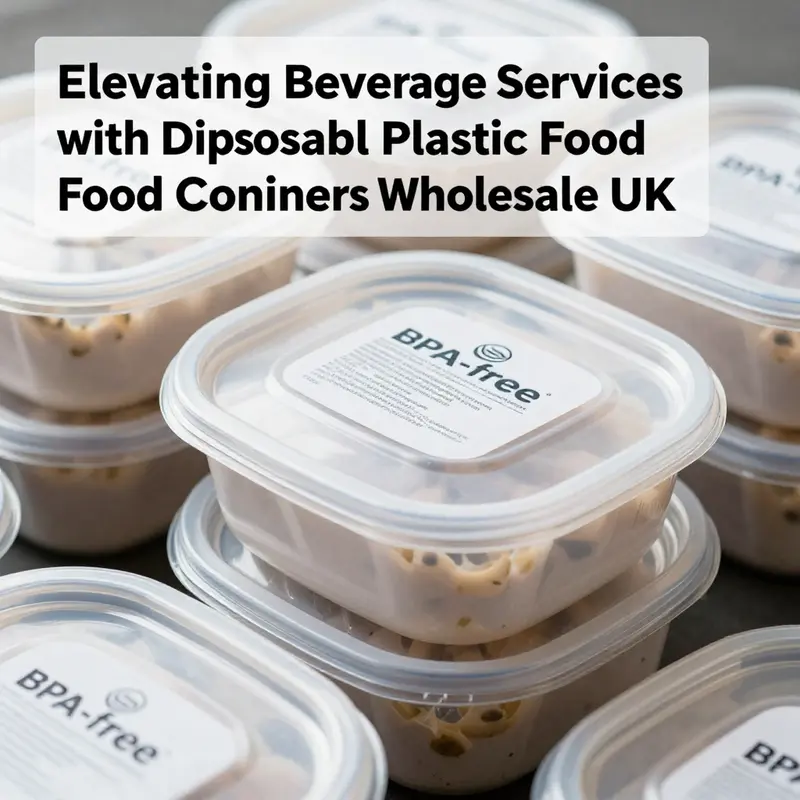
In the fast moving world of wholesale packaging for the food sector, quality assurance is not a luxury but a foundation. When a business purchases disposable plastic containers in bulk, the aim is not merely to reduce cost per unit but to secure a predictable supply of packaging that protects the product, preserves safety, and reinforces brand integrity at every customer touchpoint. For operators ranging from quick service restaurants to caterers and wholesale retailers, the stakes are high: a batch with a flawed seal, a migration challenge, or a unit that fails in freezing or heating can ripple into customer complaints, regulatory scrutiny, and damaged trust. The quality assurance landscape that underpins UK wholesale procurement blends rigorous material science with structured supplier governance, creating a shield against both safety risks and operational disruption. In this chapter the emphasis is on how a disciplined approach to compliance testing and supplier collaboration translates into reliable packaging that can be counted on during peak demand, seasonal spikes or emergency replenishments. The narrative links the practical realities of day to day purchasing with the broader regulatory environment that shapes how packaging must perform in real world kitchens takeouts and retail displays.\n\nMaterials and Compliance\n\nThe bedrock of safe compliant disposable containers lies in the choice of food grade polymers and the regulatory framework that encases them. In the UK wholesale market polypropylene PP and polystyrene PS are the most common materials used for a wide range of container types include clamshells hinged takeaway boxes and multi compartment trays. These materials are selected because they balance rigidity with lightness provide good moisture resistance and tolerate the temperature extremes typical of food service workflows from hot meals to refrigerated storage. Importantly these polymers must meet the requirements of Regulation EC 1935 2004 which governs materials and articles intended to come into contact with food across the European Union and the UKs own Food Contact Materials Regulations. Even after regulatory changes associated with Brexit the guiding principle remains clear packaging must not transfer harmful substances into food and it must do so under normal or foreseeable use conditions. Suppliers that align with these standards by design reduce the risk of non compliance that can trigger product recalls labelling challenges or customer complaints.\n\nBeyond the base material selection quality assurance teams look for supplier processes that demonstrate traceability and control. Manufacturers and wholesalers often document performance across material specifications including molecular weight distribution additives and resin compatibility. They also verify that migration characteristics how much if any substances migrate from the plastic into food under specified conditions are within safe limits especially for containers intended for hot or microwaved meals. The objective is to establish a safety margin that remains robust across batches and product lines ensuring a consistent baseline of safety even as product designs evolve to meet new consumer demands or regulatory expectations.\n\nStructural Integrity Leak Resistance and Temperature Tolerance\n\nA core pillar of quality assurance is the verification of physical performance through targeted testing. Structural integrity ensures that containers do not crack warp or buckle under normal handling stacking or during transport. Leak resistance testing addresses a frequent pain point the risk of leaks during transit or consumer use which can cause mess food safety concerns or brand damage. Temperature tolerance testing is equally critical because many foods transition from hot to cold and packaging must withstand microwave use chilling or freezing without compromising safety or form. These tests are designed to simulate real world scenarios customers experience daily in kitchens catering operations and delivery networks. By confirming that a container maintains its shape seal and functional performance under expected usage patterns, suppliers provide retailers and food service operators with confidence that the packaging will protect product integrity from the point of dispatch to the end consumer.\n\nCertifications and Management Systems\n\nThe confidence generated by quality assurance often rests on recognized certifications that signal an integrated approach to safety quality and traceability. International standards such as ISO 22000 which focuses on Food Safety Management and ISO 9001 a broad Quality Management System standard are commonly pursued by manufacturers in the disposable packaging sector. These frameworks require documented risk assessment defined processes continual improvement and robust record keeping. In addition many producers hold BRCGS British Retail Consortium Global Standards certifications which emphasize rigorous supplier management product safety and build quality into the supply chain. For UK buyers these certifications are more than badges they are evidence that a supplier operates a formal system capable of identifying controlling and reducing risks across product design production and distribution. The presence of such certifications helps buyers allocate scarce QA resources more efficiently knowing that the suppliers core processes have been independently validated and are subject to ongoing surveillance and recertification.\n\nSourcing Supplier Evaluation and Global Reach\n\nFor UK based buyers the journey from raw material to bulk shipment is a collaborative process that benefits from a well structured supplier evaluation framework. Reputable manufacturers often operate across borders leveraging mature injection molding ecosystems automated production lines and integrated logistics networks. While there is a clear cost advantage to sourcing from high volume producers in regions with established export capabilities the evaluation framework remains consistent capacity process stability material specifications and sustainability practices must be demonstrable. Lead times and production cycles vary with volume tooling and demand but common patterns show that a reliable supplier can maintain consistent output while meeting tight deadlines during peak periods. In addition to material and process metrics sustainability considerations have grown in importance Eco conscious packaging options such as compostable or recyclable alternatives are increasingly offered as part of a broader portfolio that aligns with tightening European and UK environmental regulations. These options enable businesses to balance safety and compliance with environmental responsibilities preserving brand reputation while respecting waste management goals.\n\nThe case for consistent verifiable supplier documentation cannot be overstated Buyers should request copies of material safety data sheets migration test reports and batch specific certificates of conformity A robust supplier evaluation framework should go beyond certificates and include the ability to trace every container back to the exact raw material and production run Such traceability is essential when addressing quality issues quickly identifying the root cause and implementing corrective actions that prevent recurrence across future batches It also creates a transparent audit trail that can reassure customers and regulators alike during inspections or recalls.\n\nEco conscious alternatives have become part of standard procurement considerations Bioplastics such as polylactic acid PLA bagasse or sugarcane pulp based containers and recyclable PP variants offer pathways to reduce environmental impact without compromising safety and performance While not every menu or operation can switch entirely to sustainable options offering a mix of conventional and eco friendly packaging lets operators adapt to evolving consumer preferences and regulatory requirements These options align with industry trends toward circular economy principles and with the expectations of customers who want responsible choices at the point of sale Importantly the adoption of eco friendly materials should not come at the expense of rigorous QA practices If a supplier cannot demonstrate comparable migration data temperature tolerance and integrity for an alternative material the risk to product safety and brand trust increases rather than decreases.\n\nBest Practices for Purchasing and Supplier Relationships\n\nA disciplined purchase journey begins with sample evaluation Before committing to bulk orders buyers should request samples that replicate the precise packaging configuration planned for use Samples enable QA teams to conduct hands on assessments of sealing reliability dimensional accuracy and compatibility with existing transport and storage practices Verifying supplier credentials through trusted platforms and performing site or production line visits can uncover potential gaps that documentation alone may miss The evaluation should be anchored in several pillars certifications production capacity material specifications and sustainability practices A structured checklist helps ensure no critical area is overlooked from resin grade to the presence of formal traceability systems When suppliers are able to provide comprehensive documentation and prompt responses to technical queries buyers gain a level of assurance that supports smoother procurement cycles and fewer disruptions during high demand periods.\n\nSelecting the right packaging partner is about more than price It is about aligning on a shared commitment to safety regulatory compliance and operational reliability For instance the right partner will not only deliver containers that meet regulatory standards but will also provide consistent quality across batches They will adopt a proactive approach to problem solving share batch level data and respond rapidly if a problem emerges In the end the decision to purchase wholesale packaging rests on building a durable relationship rooted in transparency accountability and continuous improvement A well chosen supplier helps a business maintain a consistent brand presentation reduce the risk of leaks or failures and keep customers satisfied across dine in takeout and delivery channels.\n\nMarket and Brand Alignment Visual Consistency and Customer Experience\n\nConsistency is a silent driver of customer trust When containers look the same batch after batch with uniform lids seams and labeling customers experience a seamless brand encounter from storefront to table Uniform packaging supports a professional image on menus in online ordering platforms and in the hands of customers during delivery It also reduces operational friction for staff who must assemble meals portion and transport products Suppliers that invest in process controls color and finish standardization and dimensional accuracy contribute to smoother operations and fewer product returns or complaints The ability to reproduce a cohesive look across multiple product lines be it single compartment or multi compartment designs adds a layer of reliability that downstream teams can depend on during busy periods.\n\nPractical Integration An Example of Accessible Eco Conscious Options\n\nFor operators who want to see how a compliant customizable and environmentally conscious option can fit into a procurement strategy a representative example is available online The notion of an eco friendly multi compartment packaging solution illustrates how a supplier can balance safety performance and sustainability in a single design A representative example can be found online such as eco friendly disposable 3 compartment packaging boxes This kind of option demonstrates how an operator can maintain a consistent product experience while pursuing eco conscious choices that resonate with modern customers and regulators alike The ability to customize dimensions lid styles and color finishes can also align with branding goals making QA more than a mechanical check and turning it into a strategic driver of market differentiation.\n\nThe Regulatory Backbone and Public Guidance\n\nBeyond internal QA processes the regulatory landscape provides essential guardrails that shape how packaging must perform In the United Kingdom the Food Standards Agency FSA offers guidance on food contact material standards testing methodologies and compliance expectations Access to authoritative resources helps buyers and suppliers stay aligned with current expectations and adapt quickly to changes in standards or enforcement priorities Engaging with the FSA official materials and maintaining open channels with regulators reduces the risk of mis interpretation and ensures that QA programs reflect the latest legal requirements This alignment between internal QA activities and external regulatory guidance is a cornerstone of sustainable scalable procurement in the wholesale sector.\n\nFinal Reflections and Continuous Improvement\n\nThe pursuit of quality in disposable plastic food containers is an ongoing journey rather than a one time milestone Effective QA programs collect data from every batch every test and every supplier interaction turning this information into actionable insights When a deviation occurs an established corrective action process should be in place to identify root causes implement fixes and prevent recurrence across product lines Continuous improvement also means revisiting material choices testing protocols and supplier partnerships as consumer expectations and regulatory standards evolve The result is a supply chain that remains resilient in the face of demand volatility seasonal spikes and market disruptions while preserving safety performance and brand trust across the entire customer journey.\n\nFor further context on food contact material standards and UK regulatory considerations see official guidance from the FSA at https://www.food.gov.uk
Demand Management in the UK Disposable Plastic Food Container Wholesale Market: Navigating Consolidation, Compliance, and Green Transitions

The UK market for disposable plastic food containers sits at a critical juncture where demand management becomes less about reacting to orders and more about orchestrating a steady, strategic flow through an increasingly consolidated landscape. In markets where the top five players command a substantial share of revenue, wholesalers and food-service buyers alike face a paradox: the same few suppliers can guarantee scale and reliability, yet their market power can magnify volatility if demand signals misalign with production schedules. Effective demand management in this setting means building resilient futures through long-term partnerships, precise forecasting, and a deliberate balance between cost discipline and strategic capability. It requires a view that extends beyond the current quarter, acknowledging how shifts in consumer behavior, regulatory expectations, and environmental goals can reshape demand patterns across a wide spectrum of users—from restaurants and takeaways to caterers and retailers. In practice, this means combining rigorous data analytics with collaborative supplier engagement and a nuanced appreciation of supplier capacity, lead times, and product standards, all while maintaining a clear eye on the evolving policy and public sentiment around packaging waste and recyclability.
A foundational truth is that consolidation, while offering stability in supply, also concentrates risk. When a handful of suppliers control a large slice of capacity, any disruption they experience—whether a spike in raw materials, a port backlog, or a shift in production priorities—can ripple across wholesale channels and downstream customer operations. Thus, demand management in the wholesale UK market is inseparable from supply risk assessment. Buyers should pursue long-term contracts or strategic sourcing agreements that lock in baseline capacity and price bands, while retaining the flexibility to adjust volumes in response to actual demand. Such arrangements help stabilize inventory cycles and preserve brand integrity during periods of rapid change. They also create a framework for joint forecasting that reduces the traditional tension between procurement and operations teams, transforming volatility into manageable variance through shared data and mutual accountability. The goal is not to eliminate risk but to convert uncertainty into a more predictable operating tempo that supports consistent service levels, predictable margins, and steadier cash flow across the business.
Consumer trends in takeout and ready-to-eat meals are a central driver of demand for disposable packaging. Convenience remains paramount, and this fuels a broader demand wave that includes multi-meal formats, convenience meal kits, and increasingly sophisticated portioning solutions. In the wholesale market, these trends translate into a growing need for a diverse SKU mix that can satisfy varied service models—from compact, single-serve containers for street-food vendors to larger, multi-compartment trays for meal-prep operations. Yet while convenience drives demand, it is tempered by a concerted push toward sustainability. The UK market is actively balancing performance with environmental responsibility, pressuring suppliers to offer materials and designs that reduce waste, enhance recyclability, and comply with tightening regulations across Europe and North America. Traditional polypropylene (PP) and polyethylene terephthalate (PET) remain widely used for their durability and cost efficiency, but buyers are increasingly evaluating sugarcane pulp (bagasse) products, PLA-lined papers, and other biodegradable options as part of a longer-term path to greener packaging. The demand signal, therefore, is no longer a single price-quantity equation but a spectrum that blends cost, performance, and environmental credentials. Wholesale buyers must translate this spectrum into procurement playbooks that can accommodate both rapid, high-volume orders and slower, more differentiated lines without sacrificing service levels.
From the perspective of capacity planning, lead times and batch flexibility matter as much as price. Large, automated manufacturing hubs in Asia continue to underpin global supply for disposable packaging, offering scale and sophisticated quality control across millions of units monthly. For UK wholesalers, this means that a reliable supply is often secured through diversified sourcing, with primary capacity anchored in long-term contracts that guarantee baseline throughput even as demand swings. Lead times in the best cases can be in the range of two to four weeks for standard lines, with longer windows for customized or private-label runs. The ability to produce at scale means that somewhat longer lead times can still yield quick replenishment when demand spikes, provided the relationship includes clear forecast commitments and agreed ramp-up protocols. Importantly, this requires transparent production processes and verifiable certifications that reassure buyers about safety, quality, and compliance. As environmental expectations rise, suppliers face pressure not only to deliver a steady supply but to demonstrate that their processes, materials, and end-use performance meet stringent standards for food-contact safety and sustainability.
Compliance is a throughline in every facet of demand management. The UK market does not operate in isolation; it is part of a broader regulatory ecosystem that institutions and businesses must navigate carefully. Food-contact materials must meet robust safety guidelines, and exports or cross-border shipments add layers of compliance complexity. Buyers increasingly prize supplier partners who hold verifiable certifications—ISO standards, forest stewardship certifications (where applicable), and recognized food-safety programs such as BRCGS or equivalent schemes that verify standardized production controls and traceability. The emphasis on compliance is not merely about avoiding penalties; it is about reducing reputational risk and ensuring continuity of supply in a highly regulated environment. When a supplier can demonstrate rigorous testing, traceability, and documented quality-control practices, buyers gain confidence to plan further ahead and to engage in larger, longer-term commitments that stabilize demand while safeguarding consumer safety. In parallel, the regulatory landscape continues to push toward greener alternatives. Environmental directives and consumer expectations are converging to favor products that reduce plastic waste, promote recyclability, and minimize lifecycle emissions. This creates a dual imperative: maintain reliable supply of proven, cost-effective plastics while expanding the portfolio of eco-friendly options that can be deployed where appropriate. The challenge for demand management is to balance the near-term need for dependable performance with a longer horizon of regulatory and societal expectations.
The procurement strategy for the wholesale market must reflect these realities. Strategic supplier selection becomes a core competency. Buyers evaluate more than the price per unit; they assess material compliance and safety certifications, production transparency, and sustainability credentials. In a consolidated market, these attributes become differentiators. Long-term relationships with a carefully curated set of verified suppliers can stabilize pricing, secure capacity, and provide access to value-added services such as private-label customization or coordinated packaging solutions that support a buyer’s brand identity. This is where the concept of strategic sourcing moves from a theoretical ideal to a practical, day-to-day capability. The right partner can not only supply containers but also align with a buyer’s product development and marketing timelines. For instance, if a retailer or caterer plans to launch a new line of eco-conscious meals, a supplier who can offer biodegradable options, compliant certifications, and scalable private-label production becomes a strategic asset rather than a transactional vendor. The outcome is a more resilient supply chain that can absorb shocks, maintain consistent product quality, and deliver predictable lead times even as external conditions shift.
To translate strategy into execution, wholesalers should implement a structured demand planning process that integrates customer network intelligence, order patterns, and market signals about sustainability uptake. This means segmenting customers not merely by volume but by service model, use case, and environmental priorities. High-volume, high-velocity accounts may warrant tighter forecast alignment and higher safety stock for core SKUs, while smaller, niche operators may benefit from flexible replenishment constructs and pilot programs for new eco-friendly materials. In practice, this requires a shared data framework where forecast assumptions, promotional calendars, and regulatory changes are discussed openly between buyers and suppliers. The result is a forecast that reflects not only current demand but the trajectory of how packaging preferences and regulatory constraints may evolve. Scenario planning becomes a crucial tool, enabling teams to examine potential futures—such as a sudden shift toward compostable or recyclable formats or a tightening of EU food-contact rules—and to decide where to build redundancy, where to diversify, and how to allocate capacity across the portfolio. This is the essence of resilient demand management: turning uncertain futures into structured, negotiable commitments that protect margins and customer service.
Risk management in this context extends beyond supplier diversification. It encompasses currency exposure, raw-material volatility, and the complexity of cross-border logistics. The UK’s position as a hub for hospitality and food-service businesses means that packaging decisions ripple through to labor, storage costs, and delivery logistics. A robust approach employs both qualitative and quantitative tools: supplier scorecards that track lead times, defect rates, and responsiveness; and quantitative analytics that model safety stock levels, reorder points, and service-level targets under various demand scenarios. A multi-sourcing approach—where feasible—can guard against capacity constraints while keeping price competition healthy. Even when consolidation is high, the aim is to maintain a balanced supplier ecosystem that provides reliability without surrendering negotiable terms or strategic flexibility. In tandem, digital tools—ranging from cloud-based forecasting platforms to integrated procurement systems—enable real-time visibility into inventory levels, order status, and capacity utilization. This visibility is indispensable for managing not only the day-to-day restocking but also the longer cycles of private-label development, grey-market risk reduction, and innovation sourcing that many wholesalers increasingly pursue.
The human element remains indispensable in demand management. Strong, trust-based relationships with suppliers become the bedrock of resilience. Transparent communication about forecast shifts, regulatory developments, and sustainability goals fosters collaboration that extends beyond price. In such relationships, a supplier knows when a buyer anticipates a promotional push, a seasonal spike, or a regulatory uptick in packaging standards. In return, buyers gain access to preferential capacity, early warning of supply constraints, and the opportunity to pilot new materials or formats before broader market adoption. This is not about negotiating shorter-term deals at the expense of long-term viability but about co-creating a packaging supply chain that can adapt to changing demand with minimal disruption. The practical upshot is a demand-management regime that looks ahead, builds redundancy where needed, and rationalizes the mix of standard and eco-friendly products in a way that supports business goals, customer satisfaction, and corporate responsibility.
The strategic logic of demand management in the UK wholesale market also recognizes that private-label and customized packaging capabilities are not merely add-ons but strategic levers for growth. For buyers who see packaging as a core part of their value proposition, partnerships that enable private-label runs or custom branding on essential container formats can differentiate offerings and deepen customer loyalty. Such capabilities require careful capacity planning, clear execution standards, and alignment with environmental goals. They also demand risk-sharing structures—such as staged rollouts, minimum order commitments, and joint investment in testing and certification—that align incentives and ensure that both sides invest in quality and sustainability. In this context, one feasible path is a phased expansion where core, high-volume SKUs remain the foundation, while optional private-label or eco-friendly variants are introduced in controlled increments. This approach preserves service levels, minimizes capital risk, and provides a framework for collecting feedback from customers that informs future product development and sourcing strategies.
All of these considerations culminate in a practical, integrated set of actions for demand management in the wholesale UK market. Start with strategic supplier evaluation that weighs compliance, capacity, and sustainability more heavily than price alone. Build forecast collaboration with suppliers using shared data dashboards that track demand signals, promotional calendars, and regulatory milestones. Establish inventory policies that balance service levels with total cost of ownership, including storage, obsolescence risk, and the potential for product substitutions when eco-friendly options are required. Develop contingency plans that address potential disruptions in supply chains, whether from macroeconomic shifts, regulatory changes, or environmental disruptions. And finally, nurture a culture of continuous improvement through regular reviews of supplier performance, market feedback, and customer outcomes. This creates a supply chain that is not only resilient but capable of embracing green transitions without compromising reliability or value for wholesale customers. As the market continues to consolidate and environmental imperatives intensify, the capacity to manage demand with foresight and agility will distinguish the successful wholesalers and the resilient buyers who rely on them.
In this context, private-label or customized packaging solutions become more than branding opportunities; they become strategic instruments for demand shaping. Buyers with a clear plan for how eco-friendly formats fit into their product lines can influence supplier development agendas, steering the market toward more sustainable options, better packaging performance, and improved end-of-life outcomes for packaging waste. The net effect is a more stable demand environment that harmonizes cost containment with the flexible supply of innovative packaging formats. This alignment also helps reduce the total cost of ownership for the customer base, as predictable lead times, higher quality standards, and consistent performance translate into lower downtime, fewer leakage incidents, and stronger customer satisfaction. For buyers and suppliers alike, the objective is to create a virtuous cycle in which demand clarity reduces volatility, supply collaborations accelerate innovation, and sustainability becomes a source of competitive differentiation rather than a compliance checkbox.
To anchor this discussion in real-world context, consider the broader market signals and the public data that illuminate the size and trajectory of the UK disposable containers sector. Market research indicates a mature, consolidated landscape with a substantial portion of revenue concentrated among a few large players. This reality underscores why demand management cannot rely on short-term, price-focused tactics alone. Instead, it requires a disciplined, long-horizon approach that integrates regulatory awareness, environmental priorities, and shared forecasting with suppliers. The goal is to build a resilient, cost-conscious, and sustainable packaging supply chain that serves a wide range of operators—from high-volume delivery kitchens to seasonal pop-ups—without compromising on safety or performance. As the industry evolves, those who invest in robust demand management practices will be best positioned to navigate volatility, capitalize on private-label opportunities, and respond responsively to the accelerating shift toward greener, safer, and more transparent packaging solutions. The path forward is not merely about stockpiling containers; it is about shaping a more intelligent, collaborative, and sustainable packaging ecosystem that strengthens the entire hospitality and retail network.
External reference: https://www.statista.com/statistics/1374895/uk-disposable-food-containers-market-size/
For further industry context and ongoing market insights, a relevant internal resource that explores private-label and customized packaging options can be consulted here: custom-takeaway-packaging-supplies-disposable-tableware-for-theme-party.
Final thoughts
Incorporating disposable plastic food containers into your operations not only enhances your cost-efficiency but also ensures that you maintain product integrity and meet customer demands seamlessly. By leveraging the benefits of wholesale buying, businesses in the food and beverage sector can enjoy the advantages of consistent quality, timely availability, and significant savings. This strategic approach empowers teams to focus on delivering exceptional service, fostering customer loyalty, and driving growth. As the industry continues to evolve, investing in responsible packaging becomes not just an operational necessity but a competitive advantage.