
Disposable plastic power bomber shot cups play a significant role in the beverage industry, especially in vibrant environments such as bubble tea shops, bars, and events. These cups, designed with both aesthetics and function in mind, are widely used for serving drinks like ‘Jäger Bombs’ at parties and celebrations. In this exploration, we will dive into the specifications and features of these cups, analyze market trends driving their popularity, assess their environmental impact, and discuss sustainable options available in this space. By the end, readers will have a comprehensive understanding of disposable plastic power bomber shot cups and the considerations associated with their use in various business settings.
Clarity, Convenience, and Consequence: Understanding the Specifications and Lifecycle of Disposable Plastic Shot Cups
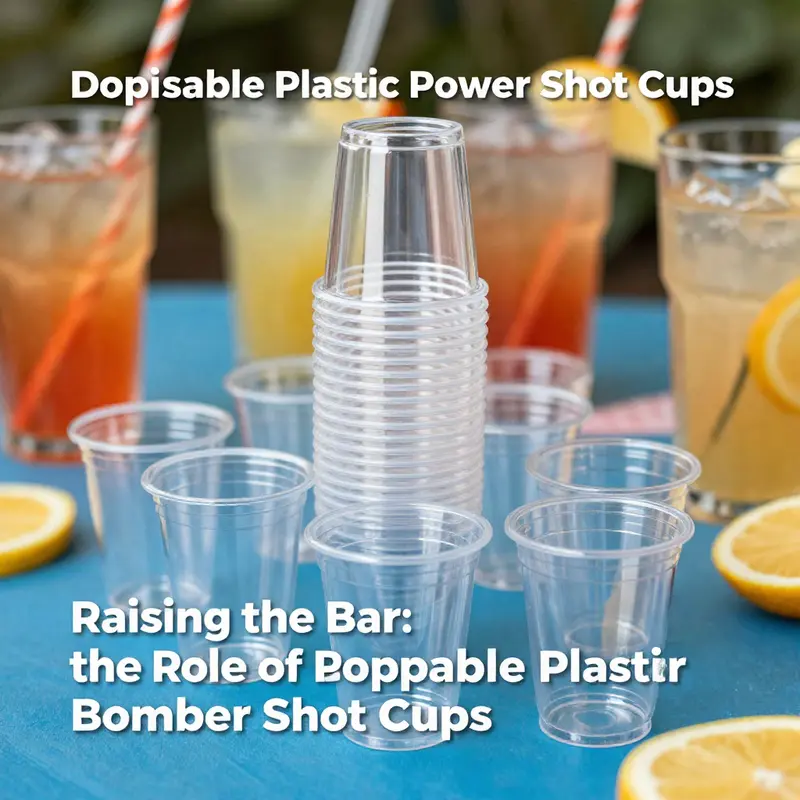
In the world of social gatherings, convenience often translates into a brief moment when the drink is handed from a server to a guest and the night moves forward. The disposable plastic shot cup, a small vessel with a big job, embodies this dynamic. It is designed to hold a precise serving of a beverage, usually in fast-paced environments like bars, nightclubs, and events where speed, consistency, and visual appeal matter as much as the drink itself. The physical profile of these cups matters as much as their performance: the general shape, the stackable form, the way they feel when held, and the way they present the drink to the eye. In practice, this means a vessel that can be manufactured with high clarity, enough rigidity to stand up to handling, and a design that minimizes waste while maximizing cost efficiency for operators who must serve dozens, if not hundreds, of guests per night. The material choice—typically a hard, clear plastic—plays a central role in achieving this balance, shaping everything from appearance to durability to end-of-life considerations.
Among the most common form factors for these cups, a particular profile is defined by a measured height and a tapered geometry that offers both a strong stand and a comfortable grip. In the case of the cups under discussion, the height is 2.68 inches, the top diameter is 3.2 inches, and the base diameter is 2.54 inches. Those numbers matter not only for the drink’s aesthetics but also for stackability, compatibility with standard trays and racks, and consistency across large orders. The sheer practicality of this design speaks to the larger logic that governs disposable drinkware: when the cup is easy to stack, easy to store, and easy to transport, the service system becomes more reliable. The lightweight nature of the material further reduces handling fatigue for staff, lowers transportation costs, and, crucially, aligns with the needs of venues that prioritize volume and turnover.
The material most often employed in these clear, rigid cups is a variant of polyethylene terephthalate, well-known for its clarity and strength. The clarity is not a trivial aesthetic choice; it matters because the liquid’s color and presentation are part of the consumer experience. A beverage that looks bright and appealing in a crisp, transparent container is more engaging, and the visual cue can influence perceived quality, even in a hurried, crowded setting. The rigidity of the material underpins the cup’s ability to resist compressive forces, a common hazard in the course of service where cups may be stacked in bins or bumped during busy service periods. In this context, the specification that the cup is 2.68 inches tall is not simply about volume; it is about the balance between height, diameter, and wall thickness that yields a cup strong enough to survive a night of handling without cracking or warping. The base diameter of 2.54 inches gives a stable footprint that helps prevent tipping, a small but meaningful detail when a table is crowded with glasses, napkins, and plates.
A second feature that travels with these cups is their price-to-performance ratio. The disposable nature of the product is not merely about convenience; it is a business decision aimed at ensuring quick service, predictable costs, and simple waste management. Packs of 50 cups are common, and their light weight makes them cost-effective to ship and stock. For operators, the ability to purchase in bulk reduces the per-unit cost, a critical factor in the hospitality industry, where margins can be slim and the pace of service is relentless. At the same time, the design has to be visually appealing enough to justify purchase by venues seeking a certain ambiance or branding effect. A cup that is too plain risks looking cheap, while a cup that emphasizes technical clarity and geometric precision conveys an impression of quality that supports the overall event experience. The balance is delicate, and it is shaped by decisions about material, thickness, and the edge finish, all of which influence not only the drink’s presentation but also the perceived value of the event itself.
Beyond the physical geometry, the category invites reflection on the broader kinds of features that define disposable cups for use in lively, social environments. There are several general types that illustrate the spectrum of options available to buyers. Some are designed as tamper-proof cups, with integrated lids or security seals intended to ensure product integrity and consumer safety. While such features may be more common in packaged beverages, the same logic informs a subset of disposable cup offerings where security and freshness are a selling point. Other variants focus on short-form beverages, such as mini shot cups that emphasize portability, decoration, and the social ritual of sharing shots at gatherings. In these contexts, a plastic shot cup can be made with attention to eco-conscious design, where the material choice aims to strike a balance between visual appeal, sturdiness, and the possibility of subsequent recycling or safe disposal.
Material diversity further colors the conversation about these cups. PETE, PETG, and polypropylene (PP) form a spectrum of properties that influence performance. PETE is commonly used for cold beverages due to its clarity and food-safe profile. PETG, favored for its rigidity and high clarity, often serves applications where a more robust presentation is desired, particularly in showpiece or promotional contexts. PP, known for heat resistance, tends to appear in cups intended for hotter liquids or more demanding environments. Although the specific product details for a particular “shot cup” may not disclose exact wall thickness or temperature tolerance, these general material families illuminate what goes into the decision to choose a cup for a particular event or service scenario. The choice among PETE, PETG, and PP matters for every aspect of the cup’s lifecycle—from how easily it can be recycled to how well it withstands stacking fatigue and the precision of the molding that yields a smooth, safe rim for drinking.
If one peels back the layers a bit further, the lifecycle implications of such cups begin to reveal themselves. The decision to use disposable plastic is, at its core, a decision about speed and efficiency. In a world where the tempo of nightlife and live events continues to accelerate, the appeal of a cup that can be produced and dispensed in bulk cannot be underestimated. Yet the environmental costs of single-use plastics present a counterpoint that cannot be ignored. The environmental narrative for these cups centers on persistent waste streams—how easily the material can contribute to landfills or end up as litter in waterways if not properly managed. The scale of the issue is daunting: millions of tons of plastic waste enter ecosystems each year, and the consequences for wildlife, water quality, and human health are complex and enduring. This tension between utility and sustainability has pushed producers and retailers to examine how to reconcile a demand for convenient, attractive beverageware with growing concerns about pollution and resource use.
The market landscape surrounding disposable cups corroborates this tension. Analysts project a steady expansion of the global disposable cup market, driven by continued demand from bars, clubs, and events around the world. The momentum reflects a broader consumer preference for low-cost, easy-to-use servingware that can be produced at scale and disposed of without burdensome cleanup. However, that same momentum is subject to intensifying regulatory scrutiny and evolving consumer values around sustainability. Regions with rapid growth in consumption are also places where waste management systems are being tested by rising volumes of single-use plastics. In these contexts, the path forward is not merely about making a better cup; it is about integrating solutions that reduce environmental impact. Options such as improved recyclability, compatibility with composting streams, or the development of bio-based or biodegradable alternatives gain traction as potential paths to reconcile the needs of hospitality operations with greater environmental responsibility. The shift toward sustainable packaging does not negate the demand for the benefits that disposable cups provide. Instead, it reframes what those benefits look like in a future where packaging is designed to be more recyclable, more reusable, or more easily integrated into circular economy models.
In this transitional landscape, product design can play a meaningful role. The very features that contribute to the user experience—clarity, lightweight construction, and robust stackability—also influence a cup’s end-of-life profile. A cup that is constructed with materials that can be readily recycled in municipal streams becomes more compatible with sustainable waste management, while a cup whose resin and additives hinder recycling faces a higher likelihood of ending up in discarded waste. The interplay between material selection and waste management infrastructure shapes not only the environmental outcomes but also the strategic choices operators make about which cups to stock. Businesses may weigh factors such as regional recycling rates, local landfill policies, and consumer expectations when deciding whether to source simpler, more easily recycled cups or to explore alternative formats that emphasize reuse or compostability. The reality is that the cup exists within a complex network of production, distribution, use, and disposal—each stage offering opportunities to improve outcomes or deepen environmental burdens depending on the choices made.
Design and supply-chain considerations further illuminate why the disposable format endures in many markets. The stackable geometry, for instance, supports compact transportation and efficient storage in crowded venues. When a service operation runs on tight margins and tight timelines, the ability to house thousands of cups in a single pallet can translate into meaningful cost savings and reliability. The choice of plastic, the thickness of the walls, and the degree of transparency all intersect with manufacturing capabilities and supplier lead times. Even the rim finish—how smoothly the cup meets the lips and how comfortable it is to drink from during a high-energy moment—affects guest experience and repeat patronage. In short, the cup’s seemingly modest features are the product of sophisticated decisions that balance aesthetics, usability, and logistical efficiency, all within the constraints of cost and regulatory risk.
Within this broader frame, there is also room to consider how alternatives are perceived in the marketplace. The boundary between disposable and reusable packaging is not a strict dichotomy; rather, it is a spectrum that includes reusable plastic cups, glassware washable on-site in larger venues, and durable single-use options oriented toward post-consumer recycling or composting where available. Some operators experiment with hybrid strategies, using a durable, reusable core for high-volume sections of a venue and offering disposable adjuncts for overflow or outdoor events where cleaning capabilities may be limited. In these scenarios, the decision to deploy a specific disposable cup—one that offers a clear aesthetic, reliable performance, and a low cost per use—depends not only on the drink’s presentation but also on the operational realities of the venue, from staff training to waste segregation. The lessons from this blending of approaches point to a future in which packaging design must anticipate and accommodate a broader ecosystem of waste management, consumer expectations, and regulatory frameworks.
A final thread in this exploration concerns the potential for knowledge transfer across packaging categories. The broader packaging ecosystem—ranging from takeout food boxes to dessert cups—offers a palette of materials, finishes, and customizations that can inform the evolution of single-use drinkware. For instance, the same attention given to clarity and rigidity in cup design can inspire innovations in other forms of disposable ware, including containers that balance visibility of contents with secure handling. The educational takeaway is that even a small cup can reflect larger themes about how we design for use, reuse, and the afterlife of packaging. And while the available data do not reveal a complete, product-specific specification sheet for this exact cup type, the converging threads of material science, ergonomics, and sustainability illuminate why these cups remain a fixture in many service settings—at least for now—while signaling the kinds of improvements likely to emerge as market and regulatory pressures shape the next generation of drinkware.
To connect these threads with practical implications, consider how operators might navigate their choices about cup selection. If presentation and cost are paramount in a high-volume environment, a cup offering high clarity with a robust yet economical profile remains appealing. The balance between material rigidity and wall thickness influences not only the user experience but also the cup’s performance during stacking, transport, and handling. A supplier’s ability to offer reliable supply chains, consistent dimensions, and compatible packaging configurations can be a decisive factor for venues needing to forecast inventory accurately for peak periods. Meanwhile, a growing segment of buyers is paying closer attention to environmental impact, seeking packaging options that align with corporate sustainability goals or local waste-management capabilities. In this climate, small but meaningful changes—such as selecting a cup fabricated from a resin that can be more readily recycled or choosing a cup with packaging that reduces overall weight—can cumulatively shift the footprint of an entire night’s service.
For readers seeking a bridge between the practical and the theoretical, consider how packaging choices relate to broader supply-chain decisions and the culture of events. The cup’s role goes beyond the moment of drink service; it touches the rhythm of a venue’s operations, the vibe of a party, and the environmental message that accompanies modern hospitality. One way to explore sustainable options in adjacent packaging spaces is to examine related product categories that emphasize eco-conscious design, such as multi-section takeaway packaging or containers designed for easier recycling. This cross-pollination can yield insights into how discarding waste need not be synonymous with wastefulness. It can also inspire a more deliberate, design-forward approach to even the smallest pieces of serviceware. In the end, the cup is a marker of a broader set of choices—about materials, about systems, and about how a society chooses to consume in the heat of celebration.
Internal link to related packaging perspectives can be a useful touchpoint for readers seeking deeper context about sustainable options in the packaging world. For example, a resource illustrating eco-friendly disposable packaging boxes demonstrates how manufacturers are reimagining takeout and party ware to balance usability with environmental responsibility. You can explore a related approach to packaging design here: eco-friendly-disposable-3-compartment-food-grade-packaging-box-for-fast-food-high-quality-takeout-boxes-for-fried-chicken-french-fries-packaging.
External resource: for broader context on plastic pollution and sustainable packaging, see the UNEP plastic pollution resource: UNEP plastic pollution resource.
Market Currents and Visual Clarity: Mapping the Rise of Disposable Plastic Power Bomber Shot Cups in a Global Drinkware Boom
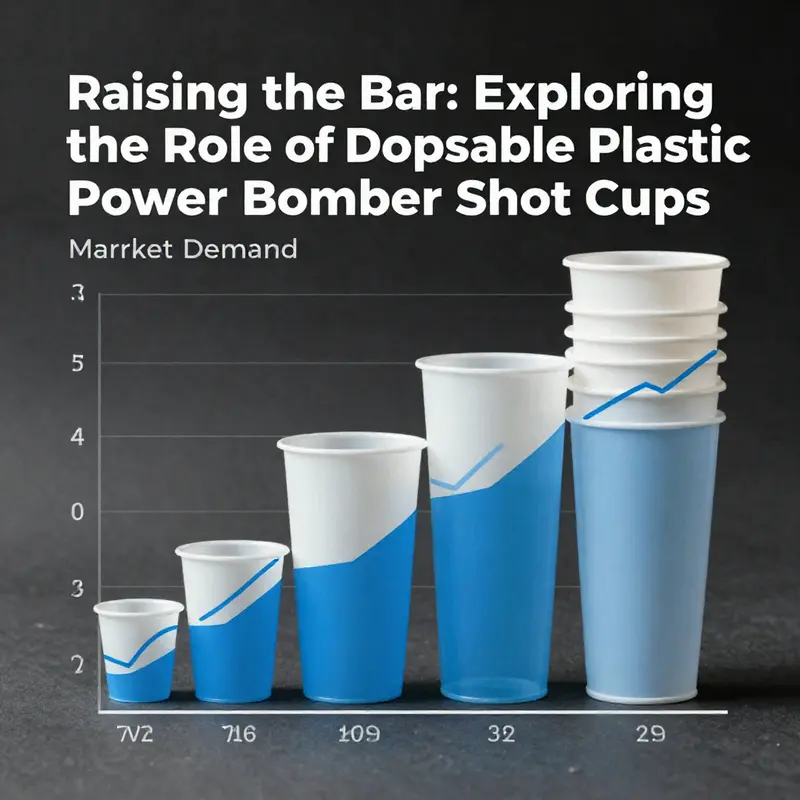
The market for disposable plastic power bomber shot cups sits at an intersection of convenience, spectacle, and growing scrutiny. In venues that pulse with energy—bars, clubs, festivals, and private events—these cups are more than vessels. They are a compact, stackable solution that pairs practical reliability with visual appeal. The design advantages are deliberate: a tall profile that elevates drink presentation, a clear material that makes the color and level of liquid instantly legible, and a geometry tuned for durability during transport and quick service. Typically produced in compact, high-volume runs, these cups leverage a light, cost-efficient construction that preserves margins for operators while delivering a consistent user experience. The dimensions—approximately 2.68 inches in height with a top diameter around 3.2 inches and a base diameter near 2.54 inches—are not incidental. They reflect a balance between compatibility with standard dispensing systems, the ergonomic needs of servers, and the visual impact event hosts seek when beverages are arranged in a crowd. In practice, the appeal lies not only in how these cups perform but how they look when filled, the way the liquid glints through the clear walls, and how the packaging ecosystem supports easy stock rotation and replenishment during a night that never seems to let up. For operators who aim to minimize prep time and maximize service throughput, the appeal of a single-use cup that can be stacked, transported, and disposed of without compromising hygiene or presentation is undeniable. The practical value of such cups is amplified by their role in popular high-energy serving formats where fast turnover and portion control are essential. A well-choreographed service line can keep lines moving, reduce cleanup burdens, and maintain a clean, orderly presentation that contributes to a seamless guest experience. This combination of functional design and experiential payoff has helped these cups carve out a lasting niche within the broader disposable cup category, where single-use universality meets the specific demands of the party and event ecosystem. Yet the story of their market position is not simply about convenience; it is about how consumer culture, regulatory regimes, and manufacturing efficiencies intersect to shape demand, pricing, and long-term viability in a market under pressure to become more sustainable without sacrificing the quick, hygienic advantages that party-goers have come to expect.
Market analysis reveals a broad, polyphonic set of projections for the disposable cup segment, with each source offering a slightly different lens on growth trajectories and regional dynamics. On one axis, the overall disposable cup market has been identified as a multi-tens-of-billions global category, with forecasts suggesting substantial expansion driven by beverage service, takeout, and events. A representative figure places the global disposable cup market size in the vicinity of USD 12.5 billion in 2024, with projections that reach well into the tens of billions over the next decade. The compound annual growth rate (CAGR) associated with these broader projections tends to hover in the mid-single digits, though some analyses point to higher mid-term momentum depending on regional activity, consumer trends, and the pace of regulatory adaptation. In a parallel view—often cited in industry newsletters and market summaries—the niche for specialty shot cups shows particularly robust momentum, buoyed by the continued rise of cocktail culture, the proliferation of themed events, and the persistent demand for hygienic, readily disposable serving options. In this frame, some forecasts suggest notable acceleration in specific periods, reflecting surges in hospitality spending and the expansion of on-premise consumption in emerging markets.
The more granular numbers underscore a nuanced landscape. A common takeaway is that the broader market is not monolithic; it comprises tiers defined by durability, clarity, size, and the degree to which a cup is optimized for a single-use occasion. For instance, the market for specialty shot cups—while narrower than the overall disposable cup segment—benefits from the same structural drivers that propel disposable beverageware: convenience, predictable cost per unit, and the hygiene benefits tied to single-use products. In certain analyses, the specialty subset is forecast to grow at a rate that outpaces more general product categories, driven by demand in high-volume venues and among home entertainers seeking professional-grade presentation at modest cost. In this light, the category is less a standalone category and more a high-visibility layer of the larger drinkware landscape, where trend lines and consumer preferences for both convenience and spectacle converge.
From a product-attribute perspective, the advantages of these cups are not merely tactile. Durability and stackability translate into tangible logistical savings for event organizers, caterers, and hospitality operators who must move heavy loads, set up quickly, and restore order after peak service windows. Clear material remains a critical asset; it not only highlights the color and composition of the drink but also serves as a visual cue that the cup is new and uncontaminated, a factor many event planners equate with perceived hygiene and quality. The standardized size—compatible with common dispensing techniques and compatible with existing accessory ecosystems—ensures that venues can integrate the cups with minimal disruption to their established workflows. The visual clarity of a transparent cup can elevate the perceived value of a crafted beverage, especially when the drink relies on layered colors or the dramatic appearance of a bright shot offset by a dark mixer. In this sense, the cups do more than hold liquid; they contribute to the theater of service, a subtle but meaningful lever in guest perception and overall event experience.
The market drivers behind steady demand are well aligned with broader shifts in social behavior and consumption patterns. The ascent of cocktail culture—with its embrace of precision, flair, and social storytelling—feeds demand for specialized glassware and plasticware that can perform under demanding service conditions while preserving the visual drama of a well-made drink. The hygiene and convenience narrative is equally potent. In an era where quick turnover and minimal post-event cleanup weigh heavily in decision-making, single-use options offer a clear value proposition. When paired with efficient sourcing and distribution, these cups help operators control labor costs, reduce risk associated with breakage or contamination, and maintain a consistent quality standard across events of varying scale. An economic reading of producer and supplier networks reveals cost containment as a central theme. In many markets, plastic cup production benefits from mature, scalable manufacturing ecosystems that produce parts and materials at competitive unit costs, sometimes dipping below a few tenths of a dollar per cup in high-volume regimes. This cost efficiency is a key driver for adoption, particularly among venues that service high-density crowds or operate with tight margins. It also explains why these cups remain appealing across different market segments, from premium clubs to casual party setups, where the balance of price, performance, and presentation matters.
Yet the trend lines are not unidirectional. Environmental concerns cast a long shadow over disposable plastic products, and the discourse around sustainability has intensified in many regulatory landscapes. The environmental footprint of single-use plastics, including the risk of leakage into landfills or waterways, has become a focal point for policymakers, brands, and consumers alike. This has translated into formal policy actions in several regions, including measures designed to curb the use of non-recyclable materials, promote recycling infrastructure, or encourage alternative materials with lower environmental footprints. The ecological argument is not simply about waste; it encompasses broader questions about resource use, lifecycle impacts, and the social license to operate for hospitality and consumer goods providers. Industry participants, while defending the practical value of single-use serving solutions, increasingly acknowledge that sustainable innovation cannot be an afterthought. The path forward involves a blend of material science advances, circular economy concepts, and innovative service models that decouple consumption from waste.
Within this sustainability frame, the regional dynamics of manufacturing and regulation add another layer of complexity. In major manufacturing hubs, notably in parts of Asia, the economics of production—fueled by rapid industrial scale and favorable cost structures—remain a central driver of price and availability. In these markets, the affordability of disposable cups, including specialty shot cups, helps sustain demand even as operators search for ways to mitigate environmental impact. The regulatory environment in global markets is uneven but increasingly convergent in its direction: a push toward reducing single-use plastic burden, a preference for recyclable or compostable materials, and the exploration of circular business models that reclaim, refurbish, or repurpose used cups. Within this context, regional growth narratives often hinge on how quickly suppliers can adapt to shifting headwinds—whether by transitioning to bio-based polymers, introducing compostable blends, or partnering with venues to implement returnable or reusable cup concepts where feasible. The Chinese market, noted for its rapid expansion in tea and specialty coffee consumption, illustrates how consumer rituals and beverage formats can catalyze demand for specialized servingware. The scale of growth in this region is tempered by regulatory expectations, yet the underlying appetite for convenient, high-clarity presentation remains robust, suggesting continued interest in efficient, one-time-use solutions where sustainability policies allow.
The future trajectory for this niche within the broader drinkware market is likely to be shaped by a triad of forces: material innovation, circular business models, and digital branding that leverages the unique properties of disposable cups as marketing touchpoints. Material science is poised to deliver bio-based or biodegradable alternatives that can match the performance of conventional plastics in terms of clarity, stiffness, and barrier properties, while also offering improved end-of-life outcomes. The financial and logistical realities of transitioning to new materials will nonetheless determine how rapidly uptake occurs across different market segments. Circular economy approaches—such as returnable cup programs for venues that manage high-volume traffic—represent a practical pathway to reconcile convenience with sustainability objectives. These models require collaboration across supply chains, venue operators, and waste-management networks, but when implemented effectively, they can preserve the experiential advantages of single-use cups while dramatically reducing waste. Finally, the integration of smart packaging and digital engagement offers new ways to add value without sacrificing disposability. QR codes or branded identifiers on cups can unlock data about consumption patterns, help with inventory management, and create opportunities for targeted marketing or loyalty programs in a way that does not compromise product performance.
All of these strands point toward a market that remains viable in the near term, even as it evolves toward greater sustainability. Operators who balance cost, performance, and environmental considerations will be best positioned to capture demand during peak party and event periods while staying adaptable as policies and consumer expectations shift. In practical terms, this means continuing to optimize the manufacturing and supply chain for efficiency, investing in materials that deliver a credible environmental advantage, and exploring venue-specific models that align with local waste-management capabilities and regulatory frameworks. For practitioners, the challenge is to see beyond the single-use moment and to plan for a lifecycle approach that honors both guest experience and planetary health. The reward for successfully navigating this balance is a stable demand stream that benefits from the ongoing appeal of cocktail culture, the growth of events-driven consumption, and the universal preference for clean, fast, and visually compelling beverage service. The chapter thus sketches a market that remains dynamic, resilient, and increasingly sophisticated in its approach to design, materials, and policy alignment. It also points to a broader truth: the cups that color the party, the clarity with which drink visuals are displayed, and the speed of service are not merely operational details. They are integral elements of how the modern beverage landscape negotiates value, ethics, and experience in a world where every event is a stage and every cup a catalyst for mood and memory. To readers navigating the market, an awareness of these interdependencies helps illuminate why demand persists, how price and supply chain considerations shape availability, and where opportunities may emerge as sustainability innovations mature. For those seeking practical references on broader market scale and trends, reputable industry analyses provide deeper insights into the contours of the disposable cup landscape and contextualize the specific dynamics at play for high-impact, single-use serving solutions. External resources, such as the Grand View Research overview of disposable cups and related categories, offer a structured view of market size, regional drivers, and material segmentation that complements the narrative here. https://www.grandviewresearch.com/industry-analysis/disposable-cups-market
Internal linkage note: In practice, buyers and organizers often rely on a familiar category of clear, disposable serving cups when planning events. For those exploring practical sourcing and presentation, a representative option available in the wider market highlights how capacity for party-scale use, visibility of liquid color, and straightforward disposal come together in real-world settings. See a relevant example of disposable clear plastic cups designed for parties and events here: disposable clear plastic cups for parties and events.
A final note on the ecosystem surrounding these cups: the market’s resilience depends not only on the hardware itself but also on the supporting infrastructure—manufacturing capacity, supply-chain reliability, and the availability of compatible accessories such as lids, holders, and display options. The interplay between these elements ensures that venues can maintain smooth operations even during the busiest service periods. It also underlines why ongoing collaboration among suppliers, venue operators, waste-management providers, and policymakers is essential. As sustainability goals rise in prominence, the ability to pivot toward materials with lower environmental footprints, and to implement recycling or returnable models where feasible, will increasingly define who leads the market in the years ahead. The narrative remains open-ended, inviting brands to experiment with materials, packaging concepts, and service models that honor both the practical needs of high-energy beverage service and the imperative to reduce waste and ecological impact. The outcome will likely be a more nuanced, diverse, and adaptable market landscape—one where the cups that power the party are paired with smarter, cleaner, and more responsible choices across the entire lifecycle.
External resource for further context: https://www.grandviewresearch.com/industry-analysis/disposable-cups-market
From Convenience to Consequence: Charting the Environmental Footprint of Single-Use Plastic Shot Cups
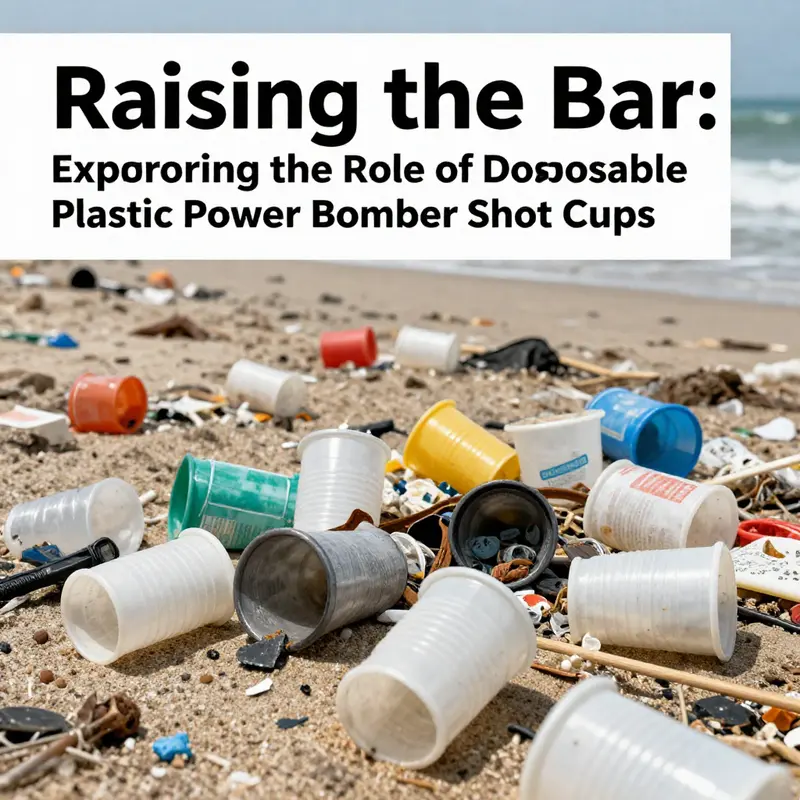
The party environment rewards quick, effortless service and eye-catching presentation. In many lively settings, single-use plastic shot cups are chosen not for elegance but for practicality: they are lightweight, stackable, and inexpensive enough to justify the scale of events where dozens, if not hundreds, of shots flow in a night. Yet behind the glint of clear plastic lies a shadow that grows larger as consumption scales up. The environmental footprint of these cups is not merely a footnote in a sustainability report; it is a tangible part of the broader plastic economy, a facet of a system that treats convenience as a default setting and often neglects the long arc of impact that follows.
To understand the environmental consequences, one must start with the material at hand. These cups are typically made from polystyrene, a petroleum-based plastic built from fossil fuels extracted from the ground. The journey from crude oil and natural gas to a disposable cup is a chain of high-energy processes: extraction, refining into resin, polymerization, and, finally, rapid molding in high-speed industrial lines that churn out millions of units. In the moment they are used, the cups seem almost inconsequential—their purpose is ephemeral, their utility temporary. But the energy embedded in each cup matters, especially when multiplied across the millions of cups deployed around the world each year. The manufacturing footprint compounds when you consider the distribution networks that move these cups from factory floors to bars, clubs, festival grounds, and private parties. The result is a product that embodies a particular phase of industrial civilization: low unit cost, high-volume production, and a holdover of convenience that often outpaces consideration of end-of-life outcomes.
Disposal practices reveal a stark contrast between the ease of use and the complexity of consequence. In a life-cycle sense, the single-use cup cycles through a narrow, almost obligatory path: purchase, fill, use, discard. Recycling rates for plastics as a whole remain disappointingly low in many regions, and the number for polystyrene is notably constrained by practical and policy-related barriers. International assessments reveal that less than 10 percent of all plastics produced are recycled. The vast majority ends up in landfills, incinerators, or, worse, the environment. For the cups in question, this means a striking reality: a large portion of them never re-enter the circular economy. They persist in a landfill or, if mismanaged, escape into streets, waterways, and ecosystems. The recycling route for polystyrene is frequently downcycled, meaning the material is transformed into products of lower value rather than being reintroduced as food-grade or high-quality packaging. This downcycling erodes the material’s potential to be reclaimed with its original strength and safety, perpetuating a linear pathway rather than a closed loop.
A more troubling dimension emerges when the cups fragment. Environmental exposure—sunlight, heat, mechanical stress—drives polystyrene to break apart, producing microplastics that pervade water, soil, and air. These microplastics have been detected in oceans and terrestrial environments, and even in human blood, raising concerns about systemic exposure and the longer-term health implications. The simple act of discarding a cup at the end of a night can, in the long view, be a small but persistent act of pollution, one thread in the wider tapestry of plastic contamination that science currently describes as global in scale and stubborn in its persistence. The sentiment voiced by environmental scientists—“Plastic doesn’t go away—it just breaks into smaller pieces”—captures a sober truth about the durability of these materials. As a result, even a single-use item intended for a brief moment of sociability becomes part of a cascade that can last for centuries, outmatching the moment it served.
The permanence of polystyrene is not an abstract concern. In real terms, a cup discarded after a night of revelry may endure unchanged for hundreds of years, gradually shedding fragments that find their way into soil, rivers, and oceans. When these fragments reach the marine environment, they contribute to a spectrum of ecological problems: ingestion by wildlife, interference with habitats, and the introduction of microplastics into food webs. The human dimension cannot be ignored either. Microplastics have been detected not only in distant ecosystems but in human tissues, prompting scientifically grounded questions about exposure routes and potential health effects. The cautionary phrase attributed to Dr. Jane Thompson—“Plastic doesn’t go away—it just breaks into smaller pieces”—serves as a reminder that the problem is not a single event but a long-term process that crosses disciplines, from chemistry to ecology to public health.
Within the broader market dynamics, the story of disposable plastic shot cups intersects with rising awareness of environmental costs and shifting consumer expectations. Global consumption of disposable cups continues to trend upward, driven by the growth of bars, nightclubs, and event-driven venues as well as the expanding footprint of on-the-go beverage culture in urban centers. Yet this growth coincides with mounting regulatory scrutiny and policy responses aimed at curbing single-use plastics. Jurisdictions around the world are experimenting with bans, levies, and standard sets of criteria that encourage reuse, reduce waste, or promote higher recycling rates. The tension between the demand for low-cost, convenient drinkware and the imperative to curb pollution creates a market inflection point. Suppliers and venues alike are pressured to consider alternative pathways—reusable systems, durable plastics designed for multiple uses, or compostable materials that actually integrate into local waste-management ecosystems. The interplay between consumer behavior, policy instruments, and corporate responsibility shapes what counts as viable tomorrow.
In practice, this tension manifests in practical choices at the point of sale and service. The economics of single-use cups often hinge on the cost-per-unit and the perceived convenience of storage, transport, and cleanup. For many operators, the appeal of a low-cost, light, stackable cup is balanced against the real-world costs of waste disposal, environmental compliance, and corporate social responsibility goals. A growing segment of event organizers and hospitality operators are experimenting with more sustainable options, even as they weigh the risk of compromising on user experience. The shift toward reuse and durable serviceware points to potential futures where the party ritual continues, but the ecological footprint is reduced. It is a shift that requires coordination across supply chains, including the design of rinse-friendly ware, reliable laundering or sanitizing processes, and clear standards for end-of-life management.
For readers looking to connect the broader discussion to concrete alternatives, there is a pathway through which the industry is evolving. Some suppliers are moving beyond single-use paradigms by offering eco-friendly packaging and durable, reusable systems that can be integrated into venue operations. These options reflect a broader movement toward cradle-to-cradle thinking, where materials are chosen not only for immediate function but for their capacity to re-enter the economy after use. The idea is to reshape the lifecycle so that what was once waste becomes a resource again, in a loop that reduces the reliance on virgin materials. In this sense, the conversation expands beyond the choice of a cup to consider how events are organized, how materials flow through the system, and how waste is captured and transformed. The conversation is not abstract; it aligns with the practical realities of event planning, waste management, and urban sustainability.
Within the ongoing dialogue, there is also a recognized need to balance aesthetics, user experience, and environmental accountability. In some cases, venues have embraced visuals and branding that align with sustainability without sacrificing convenience. These efforts often involve not just substitute materials but integrated waste-management strategies, such as clearly marked recycling streams, partnerships with local recycling facilities, and staff training to ensure proper disposal. Such programs can help counter the sense of inevitability that sometimes accompanies disposable products, replacing it with a more empowered approach to consumption. The outcome is a culture in which efficiency and responsibility are not mutually exclusive but mutually reinforcing. The path forward demands collaboration among manufacturers, event organizers, waste-management entities, and regulators, who together can redefine the lifecycle of beverage ware in ways that preserve the social value of gatherings while reducing environmental costs.
To anchor these reflections in a tangible direction, consider how the packaging ecosystem can evolve. A segment of the market is responding with solutions that emphasize durability, reusability, and recyclability. By foregrounding design for reuse, companies can reduce per-event waste and extend the value of materials across multiple uses. Where single-use cups once reigned, alternative models are gradually moving into the foreground, offering a spectrum of choices that accommodate large volumes while remaining mindful of sustainability. For readers navigating this transition, one practical example lies in the availability of eco-conscious packaging options that can be integrated into event workflows. These options—designed for durability and reusability—represent a shift toward systems that can be scaled without compounding environmental harm. As part of this shift, providers of eco-friendly packaging are increasingly offering solutions that align with event demands, enabling operators to sustain the social ambiance of parties while aligning with responsible waste practices. For related ideas on packaging choices that support sustainable event operations, see the resource that discusses eco-friendly disposable packaging concepts in practical terms: eco-friendly-disposable-3-compartment-food-grade-packaging-box-for-fast-food-high-quality-takeout-boxes-for-fried-chicken-french-fries-packaging.
Despite the momentum toward change, the environmental challenge remains significant. The numbers from global assessments emphasize why research and policy continue to push for stronger waste-management infrastructure, better recycling technologies, and a shift in consumer culture. The UNEP Global Plastic Pollution Report, a cornerstone external resource, highlights how plastics permeate every level of society and how collective action is required to curtail the footprint of disposable items. The report underscores the scale of the problem and the urgency of solutions that integrate policy, technology, and behavior change. It is not simply a matter of replacing one material with another but of reshaping systems so that convenience no longer sits in opposition to stewardship. The path forward involves investing in infrastructure that can process plastics more efficiently, promoting consumer education about proper disposal, and supporting innovations that enable materials to re-enter the economy in high-value forms.
In the end, the environmental impact of single-use plastic shot cups reflects a broader pattern in contemporary consumption: the tension between momentary sociability and lasting ecological effects. The cups themselves are small, yet they are emblematic of how modern life often externalizes the costs of convenience. Addressing this requires a combination of smarter design, smarter policy, and smarter behavior. It invites readers to imagine a future where events remain vibrant and social, but waste is minimized through durable ware, robust recycling, and well-structured waste streams. It invites a shift from linear to circular thinking, not as abstract theory but as a practical approach that changes the way venues stock, serve, and dispose of their beverages. And it invites a deeper understanding that every cup, in its brief life on a party table, participates in a longer narrative about materials, ecosystems, and the kind of world we want to leave for future gatherings.
External resource: UNEP Global Plastic Pollution Report. https://www.unep.org/resources/report/global-plastic-pollution-crisis
Rethinking the Shot: Sustainable Paths Beyond Disposable Plastic Power Bomber Cups
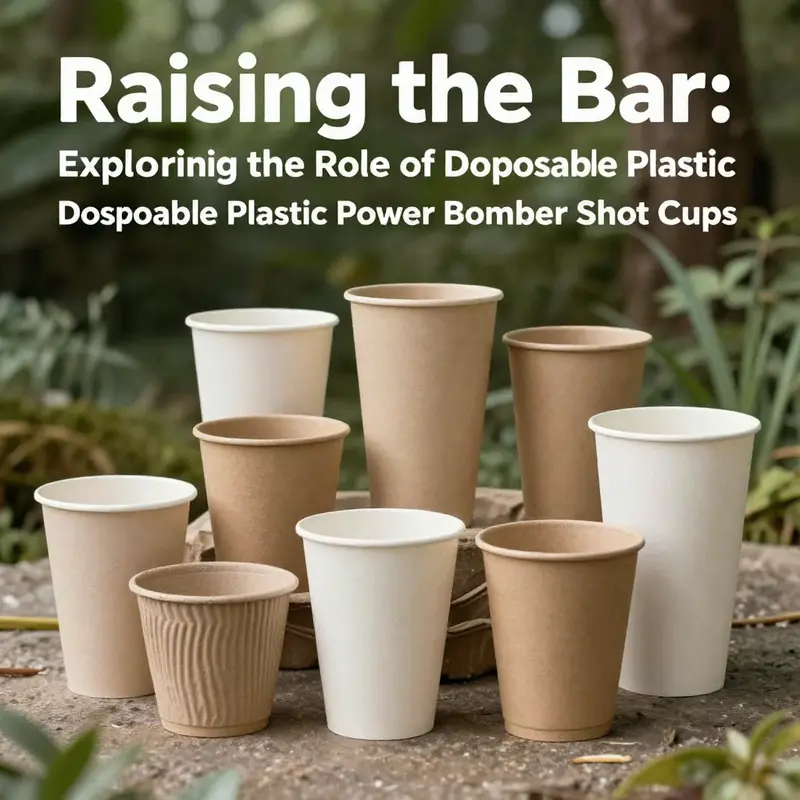
The culture of social drinking has long embraced convenience and spectacle, especially in party and event spaces where the quick turnover of beverages keeps the energy high. The disposable plastic power bomber shot cup sits at the center of that dynamic, offering a compact, stackable, and visually clear vessel that can showcase a shot and a mixer with minimal fuss. Yet the same factors that make these cups appealing—their single-use nature, their light weight, and their cost efficiency—also lay bare a stark tension: the urge to celebrate and socialize versus the imperative to reduce waste and protect ecosystems. In recent years, this tension has evolved from a quiet concern to a loud chorus of demand for solutions that can sustain the mood of a night out while lowering the environmental footprint. The chapter that follows seeks to trace that tension and map a practicable path forward, one that honors both the social fabric of events and the principles of responsible stewardship.
To understand where we are headed, it helps to ground the discussion in the larger trajectory of consumption and waste. Global attention has shifted from merely minimizing damage to actively rethinking the lifecycle of single-use items. The sheer volume is sobering: hundreds of billions of disposable cups are used each year, contributing to a mountain of waste that strains landfills and pollutes waterways. In that context, the power bomber shot cup is not just a vessel for a drink; it is a symbol of a consumption pattern that prizes speed and disposable convenience. The question is not whether to abandon disposables entirely but how to reframe the choice so that the same social energy can be sustained with less harm to the world that makes those gatherings possible.
At the heart of sustainable alternatives lies material innovation. Biodegradable and compostable options—whether paper cups lined with plant-based coatings, polylactic acid (PLA) derived from plant starches, or cups made from bamboo or sugarcane pulp—promise to break down more readily than conventional plastics, especially under industrial composting conditions. Each material brings its own set of trade-offs. Paper cups with plant-based linings, for instance, can maintain a crisp, opaque appearance and a graspable feel while offering a route to compostability. PLA, though derived from renewable feedstocks, requires appropriate composting infrastructure to realize its environmental benefits and can complicate recycling streams if not properly separated. Bamboo and sugarcane pulp bring strength and a distinct tactile impression, which can be advantageous in terms of perceived quality at events. The shift toward these materials is not simply a substitution of one polymer for another; it is an attempt to align product performance with end-of-life outcomes in a way that is meaningful for consumers and compliant with evolving waste-management capabilities.
Yet material choice is only part of the equation. The lifecycle assessment of any disposable cup depends on how it is produced, used, and disposed of. A cup that requires high energy input to produce but breaks down quickly in an industrial composting facility might still carry a considerable environmental burden if such facilities are scarce in a given region. Conversely, a cup designed for recyclability may perform well where robust recycling streams exist, but far less so where contamination or collection rates are low. In practice, the most effective solutions are those that reflect local waste infrastructure, consumer behavior, and the economic realities of supply chains. This means that for venues and brands aiming to reduce environmental impact, a one-size-fits-all solution rarely suffices. Instead, operators need a thoughtful combination of materials, systems, and policies that together reduce waste while preserving the social vitality of gatherings.
One tangible path is the expansion of reusable cup systems. When venues adopt durable, dishwasher-safe vessels made from stainless steel or glass, the potential for waste reduction increases dramatically. These systems can be integrated with deposit-return models that incentivize customers to return cups for cleaning and reuse, creating a circular economy loop rather than a linear path from use to disposal. Implementing such systems at scale requires careful attention to logistics: reliable washing infrastructure, clear handling procedures, and efficient return channels. It also demands shopper trust in cleanliness and usability. The design of reusable cups—though perhaps less about disposable convenience—can still capture the celebratory feel of a party through customizable finishes, ergonomic shapes, and tactile quality. In other words, sustainability is not merely about material choice; it is about creating experiences that feel premium even as they are reusable.
For many organizers and service providers, a hybrid approach offers the most practical entry point. A growing segment of the market now explores compostable disposables as a bridge to a low-waste future, paired with robust recycling where feasible and careful waste-diversion practices. In this model, the emphasis shifts from choosing a single ultimate solution to orchestrating a portfolio of options that together minimize environmental input while preserving the social value of the event. For example, cups made from plant-based fibers can deliver the visual clarity and stackability that event professionals rely on, while being compatible with industrial composting streams in regions where such infrastructure exists. In other regions, these same cups might be more effectively managed as recyclable options, provided that local facilities can process them without contamination. The critical point is that businesses must assess both the material properties and the local end-of-life opportunities before deciding which path to pursue.
The regulatory environment also shapes these choices in significant ways. Several jurisdictions have begun restricting single-use plastics or imposing fees and bans that encourage alternatives. When regulations tighten, the cost calculus for disposable cups shifts, often accelerating the adoption of compostable or reusable options. Beyond compliance, there is growing consumer expectation for brands to demonstrate environmental responsibility. This social pressure translates into demand for transparent product labeling, clear information about end-of-life options, and opportunities for customers to participate in circular programs. In practice, this means better disclosure on packaging, accessible guidance on how to dispose or return items, and visible branding that communicates a commitment to sustainability without sacrificing the party mood. The result can be a more informed consumer base that feels connected to the choices being made at the event level, which in turn reinforces brand affinity and loyalty.
From a design perspective, the shift to sustainable cups—whether biodegradable, compostable, or reusable—must not compromise the user experience. A disposable cup for shots, particularly in the power bomber format, has to meet certain performance benchmarks: it must be leak-resistant, heat-stable enough to hold cold or room-temperature beverages, and capable of stacking for efficient transport and storage. The cup should also convey a sense of quality that supports the perception of a premium event experience. This balance between performance and sustainability often drives innovation in surface finishes, wall thickness, and connection with other serveware used in the same setting. For instance, a compostable cup might feature a slightly different texture to aid grip or stackability, while a reusable cup emphasizes durability and dishwasher resilience. The goal is to deliver a product experience that feels intentional and well-crafted, even as the material choices support environmental objectives.
The social implications of these shifts are equally important. When a venue adopts sustainable alternatives, it signals a broader commitment to the wellbeing of the community and the environment. This can influence guest behavior in positive ways, encouraging more thoughtful consumption patterns and a willingness to participate in returnable cup programs or recycling initiatives. The cultural narrative surrounding a night out can evolve from a purely hedonistic impulse to a shared moment of responsibility, without sacrificing the sense of celebration. In this transition, the aesthetics of the cup—clarity, shape, color, and texture—play a critical role in maintaining the confidence and excitement that define party atmospheres. A well-designed sustainable option can enhance the visual drama of a shot, making it feel as momentous as ever while aligning with a broader ethical frame.
The practical implications for event planners, bars, and retailers extend beyond the material notes. Operational workflows must adapt to new waste streams, whether compostable, recyclable, or reusable. Staff training becomes essential to ensure correct handling at service points, including separation of materials, proper washing cycles for reusables, and clear signage to guide guests through disposal or return processes. The economic calculations may shift as well: upfront costs for durable cups and washing infrastructure must be weighed against ongoing expenses associated with disposables, waste removal, and potential regulatory penalties for waste mismanagement. In many cases, the total cost of ownership for a sustainable approach can be competitive or even favorable over the medium term, particularly when waste diversion credits, consumer goodwill, and brand differentiation are considered.
To connect these ideas to real-world practice, consider the importance of accessible resources that help stakeholders navigate the transition. For venues contemplating a move away from single-use plastics, it is useful to explore packaging and serveware ecosystems that support sustainable diversity. This includes collaborations with suppliers who provide compostable or reusable options, guidance on best-practice waste management, and examples of end-to-end programs that integrate product design with take-back and cleaning processes. In the spirit of practical adoption, it is valuable to look at case studies and supplier ecosystems that illustrate how these concepts translate into tangible improvements in waste streams, customer satisfaction, and operational efficiency. The overarching message is that sustainable choices need not be a burden; when thoughtfully executed, they can amplify the energy of the event while quietly reducing environmental impact.
For readers seeking a concrete entry point into the world of eco-friendly packaging and disposable alternatives, one relevant resource offers a compact snapshot of the options available in 2025. This resource highlights the breadth of materials—from bamboo and sugarcane to PLA and plant-based coatings—and it reviews how each option performs in real-world settings. It also discusses how brands and organizers can evaluate end-of-life infrastructure to ensure that the chosen solution actually reduces waste rather than shifting it elsewhere. The discussion emphasizes that the best choice depends on regional waste-management capabilities, lifecycle impacts, and consumer expectations, reminding readers that there is no universal fix, only context-driven strategy. For those exploring a practical route into sustainable alternatives, the following link provides a concise frame for evaluating options:
Looking ahead, the momentum toward sustainability in the world of party and event ware is unlikely to abate. The convergence of material science, waste-management infrastructure, and conscious consumer behavior points toward a more nuanced and resilient ecosystem for serveware. The disposable plastic power bomber cup may still have a place in certain scenarios—where ultra-lightweight needs collide with limited infrastructure—but the broader trajectory is toward materials and systems that respect both celebratory rituals and planetary boundaries. As cities and venues experiment with returnable cup programs, industrial composting, and recycling-forward design, a new norm emerges: a hospitality industry that can entertain with flair while consciously stewarding resources. In this sense, sustainability becomes not a limitation but a catalyst, pushing the craft of event service toward innovations that enrich the experience and reduce harm in equal measure.
For those interested in digging deeper into the landscape of eco-friendly cup alternatives, a recent external overview offers useful context and data on material options, environmental trade-offs, and implementation considerations. It provides a broader lens on how shifts in consumer demand, policy frameworks, and industry practices intersect to shape the future of drinkware and packaging. See https://www.greenmatters.com/eco-friendly-alternatives-to-plastic-cups-2025 for a broader discussion of sustainable cup alternatives and their implications for the industry.
Final thoughts
In summary, disposable plastic power bomber shot cups serve an essential purpose in catering to the demands of social events and beverage services. While they provide convenience and functionality, the pressing concerns regarding their environmental impact call for a careful reassessment of their use. As we move towards a more sustainable future, businesses must consider eco-friendly alternatives that align with consumer expectations and regulatory developments. By balancing practicality with responsibility, we can enjoy the vibrant atmosphere of our gatherings without compromising our planet’s well-being.