
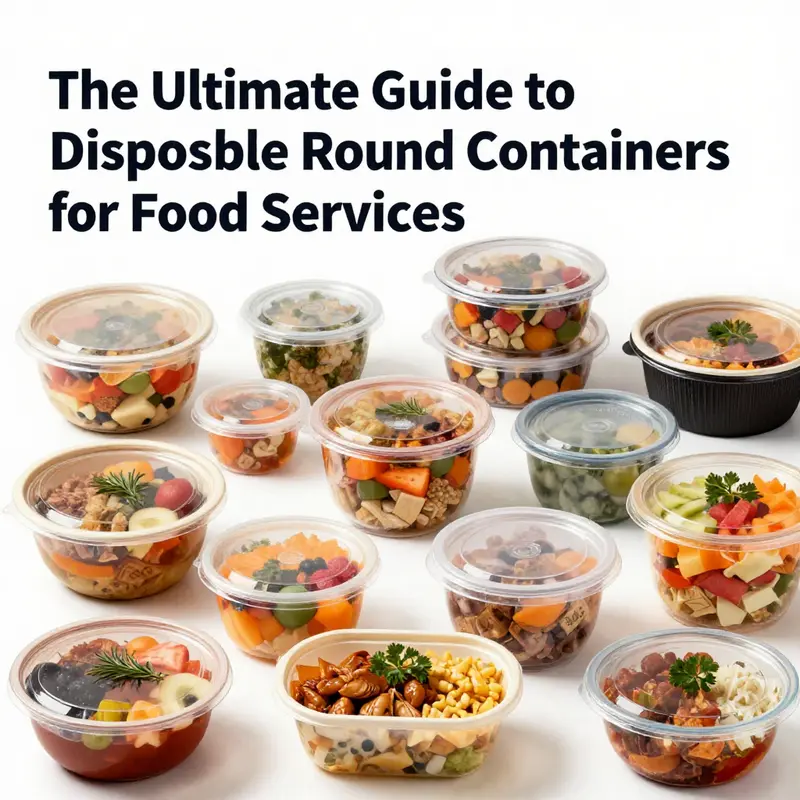
As disposable round food containers become increasingly essential in the food service industry, understanding their diverse types, sustainability implications, and applications is crucial for optimizing operations. This guide aims to provide Bubble Tea Shops, Restaurants, Food Trucks, Catering Services, Event Planners, and Corporate Procurement Teams with a comprehensive insight into the world of disposable round food containers. We will cover various container types like RPET, biodegradable paper, and polypropylene, delve into their sustainability aspects, and examine applicable safety standards and market trends to help you make informed decisions that resonate with your customers and align with your business goals.
Circular Choices: RPET, Kraft Paper, and PP Round Containers in Modern Food Packaging
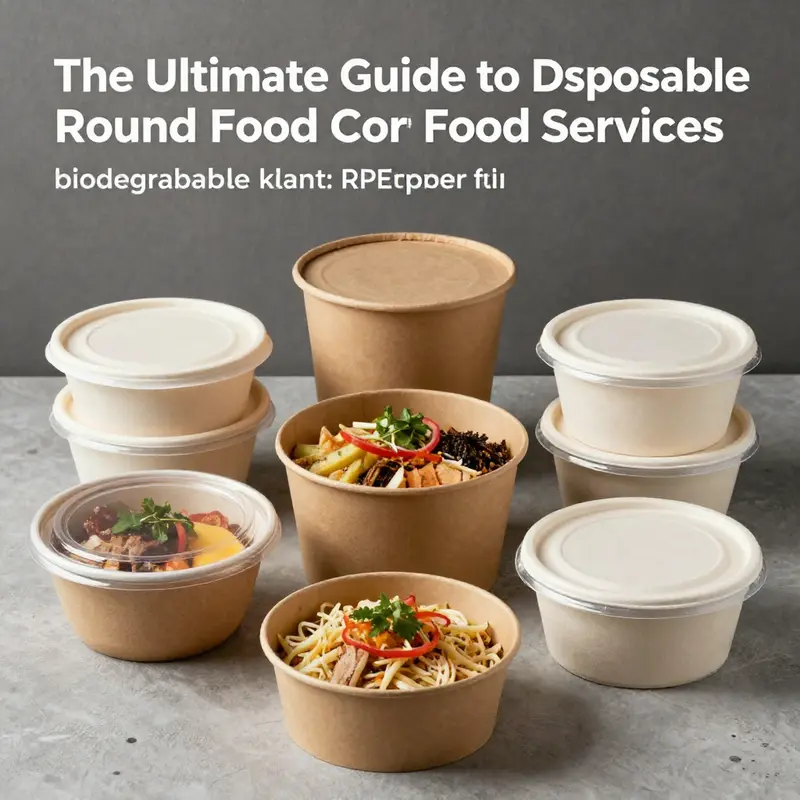
Round food containers are a staple in kitchens, catering, and retail because their circular shape improves portion control and storage efficiency. Yet behind the familiar silhouette lie three primary materials – RPET, kraft paper, and polypropylene (PP) – each with distinct strengths, tradeoffs, and implications for safety, waste, and brand storytelling. This chapter compares these options and explains how their material properties translate into real world performance, sustainability, and regulatory alignment, helping a food business choose wisely or blend solutions for a responsible operation that still delivers convenience and clarity of presentation. RPET, or recycled polyethylene terephthalate, sits at the intersection of visibility and virtue. Containers made from post consumer recycled plastic can provide crystal clarity that helps showcase salads, fresh produce, and ready to eat meals, while offering a moisture and gas barrier that supports freshness and keeps the container lightweight and rigid for stacking and transit. Heat resistance, however, is typically limited – often around 70 degrees Celsius – so RPET is best suited for cold or room temperature applications rather than hot servings. This makes RPET attractive for cold items with strong recyclability in many municipal programs. The sustainability story is compelling but contingent on proper sorting and contamination control, and its end of life outcomes depend on local infrastructure and consumer recycling behavior. Kraft paper rounds bring a natural aesthetic and a recyclable or compostable pathway, depending on the liner and local facilities. They are well suited for dry or non greasy foods and can convey a warm, earth friendly brand narrative, but moisture and heat can challenge performance; barrier coatings and the choice of lining influence both compatibility with wet foods and recyclability or compostability. While industrial composting can validate a compostable claim, home composting is rarely reliable. PP, or polypropylene, is a workhorse for many operations because of durability, chemical stability, and strong heat resistance. PP containers tolerate hot foods and microwaving, support dishwasher or repeated use in some cases, and offer reliable performance up to higher temperatures commonly cited up to about 160 degrees Celsius. This makes PP a versatile option for hot soups, sauces, and ready to serve meals where container integrity is critical. The regulatory dimension is also important; many PP options meet FDA food contact standards and are clearly labeled for microwave use. In practice, many operators blend materials to cover a broader range of needs, such as RPET for cold items that benefit from visibility, kraft paper for dry or compostable options, and PP for hot, ready to serve items. The end result is a packaging ecosystem that supports safety and efficiency while aligning with environmental commitments and consumer expectations. In short, the choice depends on the product, service model, and local waste infrastructure, and smart operations often use a mix to maximize performance, sustainability, and cost efficiency.
null
null
Beyond the Tray: Applications of Disposable Round Food Containers Across the Food Industry
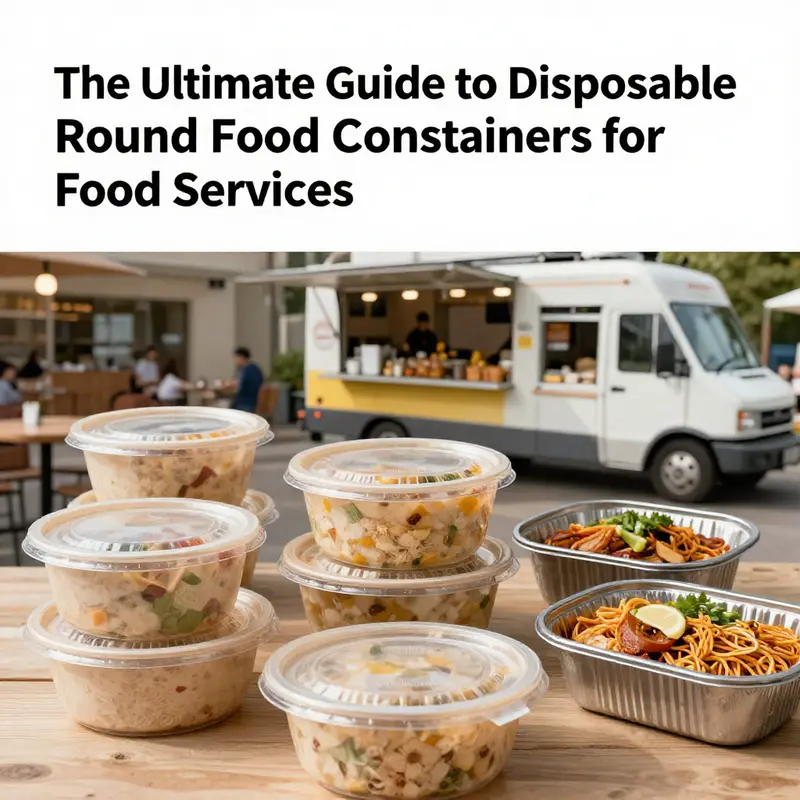
Disposable round food containers are more than simple vessels; they are a strategic intersection of safety, efficiency, and sustainability that shapes how food moves from kitchen to consumer. In the modern food industry, their round form offers ergonomic advantages for handling, stacking, and portioning, while their material choices reveal a nuanced balance between performance and environmental responsibility. When a chef or operator selects a container, they are not just choosing a receptacle for soup or salad; they are deciding how a dish is perceived, how long it keeps its quality, and how a brand is communicated in a marketplace that increasingly values responsible packaging. The spectrum of options—from RPET and kraft paper to microwave-safe polypropylene—reflects a system in which form follows function, yet function is increasingly judged by its footprint as well as its flavor.
In fast food settings, round containers are prized for their versatility and the way their curved geometry aligns with the flow of a quick-service kitchen. Soups, sauces, and side items benefit from a shape that accommodates easy scooping and stable stacking. The container’s visual clarity, when made from RPET, helps customers identify contents quickly, reducing confusion and waste. Yet this clarity comes with a trade-off: the same material that showcases freshness is often not suitable for reheating in a microwave, limiting its use to cold or room-temperature items such as salads, snacks, or pre-packaged meals. Here, the material science behind RPET—post-consumer recycled content, good moisture and gas barrier properties, and a lightweight, rigid profile—offers a compelling sustainability narrative. Operators who prioritize cold-chain integrity can leverage RPET to communicate a commitment to circular economy principles, while still delivering dependable performance in display cases and on takeout prompts.
Where heat and reusability collide, microwave-ready polypropylene (PP) containers step into a different role. These round, clear-lidded vessels are designed to withstand reheating in the microwave, preserving the texture and moisture of hot meals, soups, sauces, and ready-to-eat dishes. Their durability and form stability make them a staple in both large-scale kitchens and home meal prep, where portion control and cleanup reduction matter. From a regulatory standpoint, many of these PP containers are certified to meet U.S. FDA standards for food contact materials, specifically under 21 CFR 177.1520, which provides a framework for safe contact with various foods under typical usage conditions. This certification reassures operators that reheating food directly in its container can be done with minimal risk, provided the food’s acidity, fat content, and temperature fall within established boundaries. The practical upshot is clear: PP containers enable convenient, safe reheating while supporting efficient service models.
For operators who seek a softer environmental footprint, 100% biodegradable kraft paper bowls represent a compelling trend, especially in venues that emphasize sustainability, branding, and compostable end-of-life outcomes. These round containers, often used with lids, are well-suited for fresh produce, salads, and ready-to-eat meals. Their natural appearance communicates a commitment to responsible packaging, while their compostability aligns with broader waste-reduction strategies. However, this option is not without caveats. Very wet or hot liquids can challenge the performance of kraft paper bowls unless they’re coated or lined with materials that maintain grease resistance and moisture containment. Suppliers note that such coatings can influence compostability and may add cost, so operations must balance environmental goals with practical performance. The appeal lies in the potential for bulk, customizable branding, and a narrative that resonates with eco-conscious customers who favor discarding packaging in a responsible manner rather than after a single use.
A third cluster centers on the paperboard and molded fiber categories that sit between rigid plastic and disposable paper cups. Paperboard with plastic linings offers a middle ground—improved moisture resistance and a lower carbon footprint in certain supply chains compared with traditional plastics, while molded fiber containers draw from recycled fibers and are often biodegradable. These options appeal to brands seeking to maintain a presentable, sturdy package without compromising sustainability credentials. They can be particularly persuasive for salads, desserts, or snack servings where presentation matters and the container’s environmental story can be told alongside the product. For premium presentations, round glass containers exist as a non-disposable, high-end alternative that emphasizes clarity, inertness, and reusability. While not part of the disposable round category, their mention helps frame the choices available to operators who want to elevate product presentation without sacrificing food safety.
In institutional settings—schools, hospitals, corporate cafeterias—the round form remains a practical choice for service efficiency and portion controls. The ability to standardize sizes, align with standardized serviceware, and streamline inventory is a major advantage in environments with high throughput and strict sanitation requirements. In these contexts, the combination of airtight seals and stackable geometry reduces the risk of cross-contamination during distribution and transport. The environmental narrative is particularly nuanced here. Facilities may opt for recycled content plastics like RPET to demonstrate recycling commitments, while at the same time evaluating how to minimize waste through better menu planning and waste segregation. The choice may also be influenced by regulatory expectations around food-contact safety, as well as institutional procurement guidelines that favor materials with clear end-of-life pathways and reliable performance under diverse service conditions.
The varied materials used in disposable round containers reflect a layered approach to safety and performance that aligns with regulatory expectations and consumer expectations. PP’s heat resistance and microwave compatibility make it a preferred choice for hot meals and ready-to-eat dishes that demand reheating convenience. RPET’s transparency and barrier properties support cold chains and freshness display, lending itself to salads, fruits, and other moisture-sensitive items. Kraft paper options, often favored for their branding potential and compostability, require careful consideration of coatings and hydration resistance to ensure performance in wet or oily applications. Across these materials, the underlying logic remains consistent: select the container in proportion to the meal’s temperature, moisture, and presentation requirements, while also weighing the sustainability and regulatory dimensions of the packaging choice.
Safety considerations play a central role in shaping these decisions. The literature highlights that when containers are used within their intended temperature and acidity ranges, they pose minimal food safety risks. A historical study from Hong Kong’s food safety authorities underscored the importance of selecting materials that match the specific application conditions. In practice, this means that operators must understand not only the container’s material properties but also the product’s chemistry and the service context. A cold salad stored in RPET can maintain its quality and appearance, while a hot soup stored in a microwave-safe PP container can be reheated safely inside the package. Such alignments between product, container, and process underpin reliable performance and consumer trust. To ensure ongoing compliance, many operators consult guidelines from recognized food-safety agencies and stay informed about evolving best practices in container design, labeling, and end-of-life disposal.
From a practical standpoint, the decision matrix for disposable round containers often begins with the intended use. Hot versus cold, single-serve versus multi-serve, and the need for presentation versus the need for stealth storage all shape material choice. The capacity options—ranging from smaller 16-ounce equivalents to larger 48-ounce formats in PP, along with the more specialized capacities of RPET and kraft paper variants—provide a spectrum that can be tuned to portion control and menu architecture. The design priorities then branch into hinge-lid or screw-on lids, leak resistance, and stackability, all of which influence efficiency in busy kitchens or at service counters. The continuing evolution of packaging aesthetics and functionality makes this a dynamic landscape: operators increasingly seek packaging that not only protects and preserves food but also reinforces brand values, whether through transparent RPET to showcase freshness or through kraft paper with branded finishes that signal eco-conscious choices. In this context, the metaphor of the container as a support instrument for the dish—rather than merely a vessel—becomes apt. A well-chosen container can reduce waste, accelerate service, and elevate the consumer’s perception of quality.
To keep pace with this evolving landscape, foodservice operators benefit from a holistic approach to container selection. Consider how a given item travels through the supply chain: from kitchen prep and hot transport to display, pickup, and consumption. The round shape’s advantages—ease of handling, efficient stacking, and predictable storage—are amplified when matched with a material that aligns with the dish’s temperature profile and the business’s sustainability goals. The trend toward eco-friendly options, including biodegradable kraft and molded-fiber alternatives, signals a shift toward packaging that can be integrated with broader waste-diversion strategies. Yet the choices must be pragmatic. For cold items and cold-chain displays, RPET offers visibility and recyclability; for hot meals with microwave reheating needs, PP provides safety and convenience; for menus centered on sustainable narratives with branding opportunities, kraft-based and molded-fiber options deliver both performance and promise. In every case, the container becomes part of a broader system—one that supports efficient service, reduces waste through better portioning and containment, and communicates a thoughtful approach to packaging that resonates with today’s conscientious consumer.
Internal link note: operators exploring environmentally minded packaging options can explore models described in practical product lines that emphasize eco-friendly takeout packaging, such as this example: eco-friendly takeout boxes for food packaging. This kind of choice illustrates how design, materials, and usability come together to support safer handling, clearer presentation, and clearer branding in a single package.
External reference: for a regulatory overview that informs material selection and safe use in different contexts, see the guidelines from food-safety authorities that discuss disposable food containers and their safe application across temperature and acidity ranges. External reference: https://www.fehd.gov.hk/eng/foodsafety/disposablefood_containers.html
null
null
Rings of Change: Trends, Trust, and Transformation in Disposable Round Food Containers
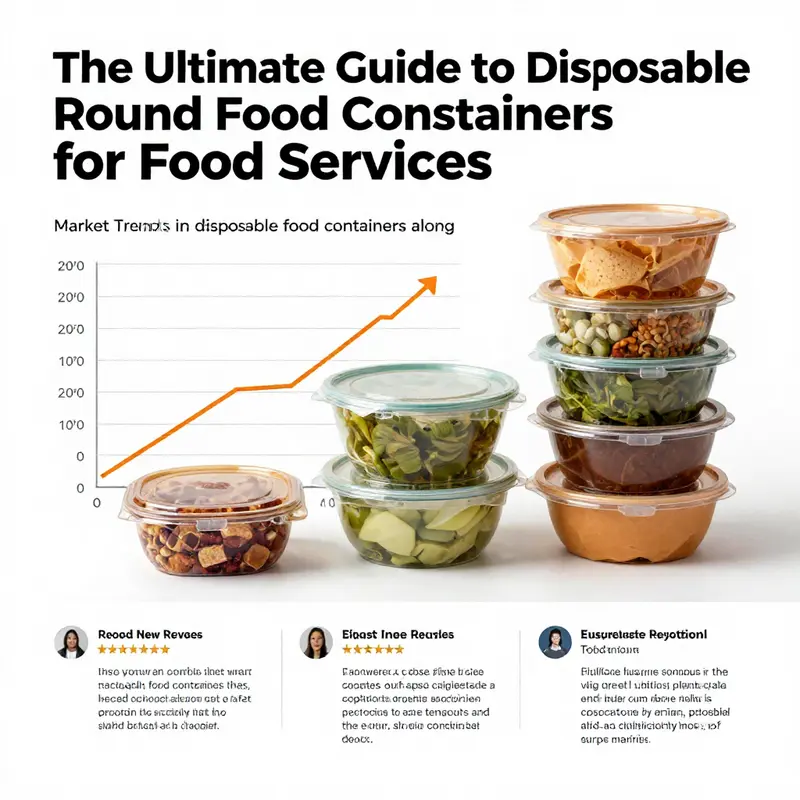
Round containers have become more than mere vessels for meals. They sit at the intersection of how people eat, how food travels from kitchen to customer, and how society negotiates waste, safety, and convenience. In recent years, the shape itself–an efficient circle–has become the canvas for a broader evolution. The market does not move in a straight line, yet the trajectory is clear: sustainability is no longer a niche consideration, functionality has become a driver of premium value, and trust through clear standards is emerging as a decisive differentiator. These currents are especially visible in the disposable round category, where materials, design, and lifecycle thinking converge to redefine what a simple bowl, cup, or lid can do for a modern food ecosystem.\n\nA key driver behind the current shift is the green transformation that has swept through consumer markets and manufacturing alike. In many corridors of the packaging world, older plastics are giving way to materials chosen for their lower environmental footprint and their compatibility with circular economy principles. Consumers increasingly prefer materials that promise biodegradability, compostability, or high recyclability after use. Among the most discussed options are bio-based and bio-degradable materials such as PLA derived from corn starch and other plant-based fibers, as well as paper-based composites that blend strength with a reduced reliance on fossil-based feedstocks. This isn’t a fringe trend; it has become a mainstream expectation for many buyers, especially when meals are sold on a takeout basis or served in bulk through catering and food-service networks. The global and regional studies that track these shifts describe a market gradually converting away from traditional rigid plastics toward eco-friendly alternatives that still meet the practical demands of food contact, shelf life, and user experience. The ease with which these materials break down under appropriate conditions helps blunt concerns about white pollution while aligning with rising environmental consciousness. Even regulatory bodies have begun validating this path, approving new eco-friendly materials for food contact when they meet safety standards, which in turn bolsters consumer confidence and accelerates adoption.\n\nYet the green shift is not merely about the end-of-life story. Sustainability now stitches together with performance in ways that matter to operators and consumers alike. Round containers must protect the integrity of their contents, preserve moisture and gas exchange where needed, resist leakage, and, crucially, remain practical in the flow of a busy kitchen or delivery network. The RPET option made from post-consumer recycled polyethylene terephthalate exemplifies this balance. RPET containers offer a crystal-clear appearance that showcases the product inside, a quality that helps with merchandising and consumer trust. They are lightweight and rigid, which supports efficient packing and stacking in service lines and cold-chain logistics. Importantly, RPET remains recyclable in a majority of municipal programs, aligning with recycling infrastructure in many regions. However, this path has its limits: RPET is not microwave-safe and has restricted heat resistance, making it most suitable for cold or room-temperature foods such as salads, snacks, or pre-packaged meals. For hot applications, or where reheating is integral to the consumer experience, other materials and design choices are often preferred. This nuance the alignment of material properties with the intended use case highlights a broader lesson: there is no one-size-fits-all answer in disposable round packaging. The best choice emerges from a careful mapping of end-use, regulatory compliance, and lifecycle impacts.\n\nAnother meaningful strand in this evolving landscape is the growing popularity of 100% biodegradable kraft paper bowls. These round containers, frequently equipped with lids, are particularly appealing to brands and operators aiming to signal environmental stewardship to environmentally aware customers. Their compostable and sustainable credentials resonate with consumers who want to see tangible environmental benefits in their packaging choices. The kraft option is often paired with customization branding and design treatment that elevates the product experience without compromising compostability, so long as the coating and inner linings are compatible with composting streams. The trade-offs here involve moisture handling and wet-heat compatibility. Very wet or hot liquids can challenge certain coatings, so suppliers and buyers must evaluate whether add-on coatings or alternative inner linings are necessary. The discussion around kraft paper packaging also reflects broader market access: bulk ordering is readily available on major platforms, with opportunities for branding and design customization at scale. This combination of sustainability, cost-competitiveness, and customization has helped kraft-based bowls and boxes become an influential part of many menus and service models.\n\nFor those whose operations hinge on reheating or immediate reheating after delivery, microwave-safe polypropylene (PP) containers have emerged as a staple in professional kitchens and meal-prep logistics. These containers marry durability with user safety, and their clear lids support visibility of contents, which remains a critical factor in minimizing errors in busy venues. The macro standardization around microwave safety is reinforced by regulatory frameworks that govern food-contact materials. In the United States, for example, FDA guidance and statutory references guide the use of PP in contact with foods, helping ensure that performance does not come at the expense of consumer safety. The ability to reheat directly in the container preserves freshness, reduces waste, and minimizes cleanup, a value proposition that resonates across meal-prep services and large-scale food service operations. The spectrum of sizes—from compact 16-ounce portions to larger 48-ounce options—further enables precise portion control, reducing plate waste and improving operational efficiency.\n\nWithin this material and performance mosaic, design is not an afterthought but a strategic lever. The trend toward high-end, multifunctional packaging suggests that containers will increasingly offer more than containment. Multi-compartment designs, modular lids, and secure locking mechanisms are rising in prominence for applications ranging from airline catering to community-supported agriculture boxes. In some cases, containers incorporate insulating layers or even phase-change materials aimed at extending the safe window for temperature-sensitive items during transfer. For urban commuters and travelers, collapsible or foldable designs are appealing because they reduce storage and transport bulk when the containers are not in use. In all these scenarios, the ultimate goal is to deliver reliability and convenience without creating additional burdens for waste management or supply chains. The consumer experience—clear visibility of the meal, confidence in safety, and a tactile sense of quality—feeds directly into brand perception and repeat purchase behavior.\n\nThe trust aspect has grown in importance as well. Consumers are increasingly asking for transparency around materials, sourcing, and end-of-life options. They expect packaging that not only performs but also communicates its safety credentials and environmental promises in a clear, unambiguous way. Regulatory reference points such as the FDA’s guidance for food-contact materials play a crucial role in shaping this trust. Brands that voluntarily align with recognized standards and that disclose material composition, migration tests, and compliance documentation tend to earn greater customer confidence. In practice, this means clear labeling and traceability, as well as accessible information about recyclability or compostability. It also means avoiding vague marketing claims that cannot be substantiated. As this culture of trust matures, packaging becomes part of the value proposition rather than a discreet, ancillary layer.\n\nApplication contexts for disposable round containers continue to diversify. Beyond the familiar quick-service and home-meal segments, there are growth opportunities in catering, airline services, meal-kit providers, and community food programs. Each context pushes the envelope on performance requirements: high leakage resistance for sauce-heavy meals in takeout, strong pressure resistance for airline service, and aerobic moisture management for ready-meals. The result is a wave of customization that leverages the flexibility of rounds—ranging in capacity, shape nuance, coating options, and closure mechanisms. This emphasis on differentiation underscores a broader market dynamic: companies increasingly compete on the ability to offer branded, differentiated packaging solutions that also meet sustainability and safety expectations. Packaging becomes a vehicle for storytelling—an outward sign of a brand’s commitments to the environment, to food safety, and to user experience.\n\nWithin this evolving narrative, a concrete example of how design choice meets business aspiration can be seen in the growing interest in branded, visually appealing, foldable or fold-out packaging solutions that still preserve recyclability. For instance, a packaging page that features Pure Color Foldable Cake Boxes with Window demonstrates how a simple round-based packaging ecosystem can be extended with windowed, kraft-inspired, or coated variants to heighten product visibility and brand recognition without compromising recyclability. The concept encapsulates the tension and opportunity at the heart of this market: create a container that looks and feels premium while remaining compatible with recycling streams and composting channels where appropriate. It also hints at the practical reality that packaging is part of a cohesive brand experience. The more customers see consistent design cues across packaging, the more the entire food experience feels intentional and trustworthy.\n\nAs the market matures, the importance of a well-managed lifecycle cannot be overstated. The circular economy is no longer a lofty ideal but a concrete framework for business strategy. Companies are experimenting with take-back programs, closed-loop recycling schemes, and partnerships with local recyclers to transform used containers back into high-quality feedstock. These initiatives address a core concern of modern consumers: waste reduction at the source and responsibility for end-of-life disposal. While not every material stream is equally easy to close the loop on, the momentum toward reusability, refill, and recycling persists. It is this momentum that helps explain why the disposable round category remains resilient even as it undergoes material transitions. The future belongs to packaging that can adapt to the time of use, align with environmental goals, and maintain rigorous safety and performance standards.\n\nIn this light, the consumer’s evolving preferences mirror and propel the industry’s design language. People want packaging that is safe, sustainable, easy to use, and capable of enhancing the overall eating experience. They want packaging that allows for intuitive handling, reliable performance in transport, and clear signals about what happens to it after use. They want to see brands that walk the talk, with materials that perform as claimed, and with lifecycle information that is easy to access. The chapter that unfolds from these trends will continue to emphasize smart material choices, thoughtful design, transparent communication, and robust infrastructure for recycling and composting. In the end, the circle is not just a shape; it is a framework for aligning product, people, and planet without compromising the taste of what makes food packaging meaningful.\n\nFor readers seeking a broader horizon on market expansion and consumer trends, a comprehensive industry forecast offers valuable context. See Grand View Research for in-depth analysis of the disposable food containers market. https://www.grandviewresearch.com/industry-analysis/disposable-food-containers-market
Final thoughts
In navigating the realm of disposable round food containers, it becomes evident that each type—from RPET to biodegradable paper and microwave-safe PP—offers unique advantages tailored to specific food service needs. Prioritizing sustainability and adhering to safety regulations not only enhances brand reputation but also aligns with the growing consumer demand for eco-friendly and safe packaging solutions. By staying attuned to market trends and consumer preferences, businesses can strategically position themselves to thrive in a competitive landscape while positively impacting the environment.