
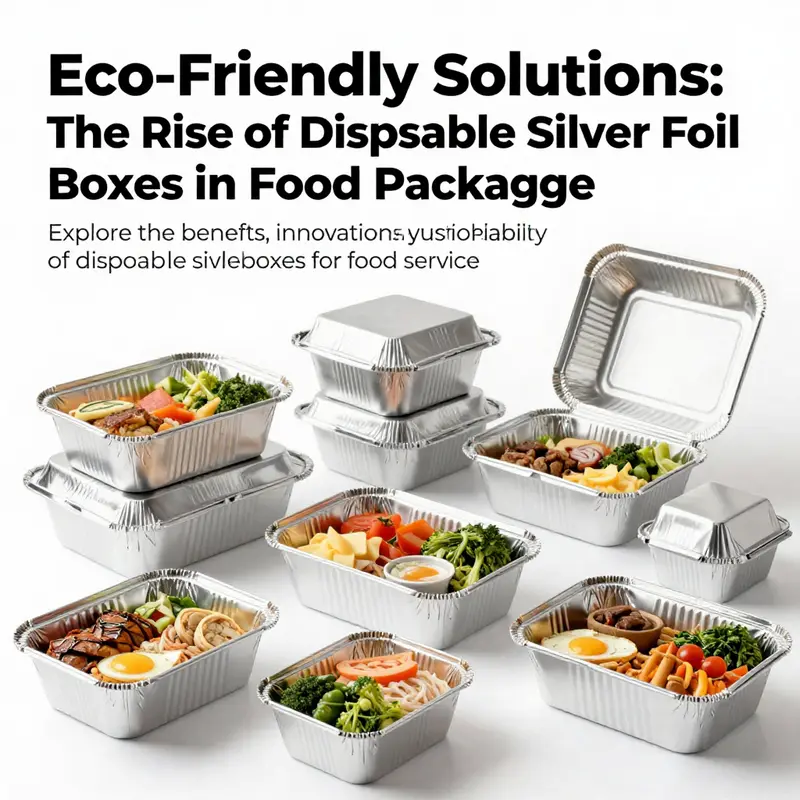
Disposable silver foil boxes are becoming a go-to choice for food-based businesses. From bubble tea shops to catering services, the demand for sustainable and efficient packaging solutions is on the rise. Offering practical benefits and compliance with health standards, these containers are designed to meet the diverse needs of the food industry. This article delves into the environmental impact, technological advancements, market trends, relevant regulations, and consumer preferences surrounding disposable silver foil food packaging, providing a holistic view of its significance in contemporary food service.
Shining Footprints: Navigating the Environmental Footprint of Disposable Aluminum Food Boxes
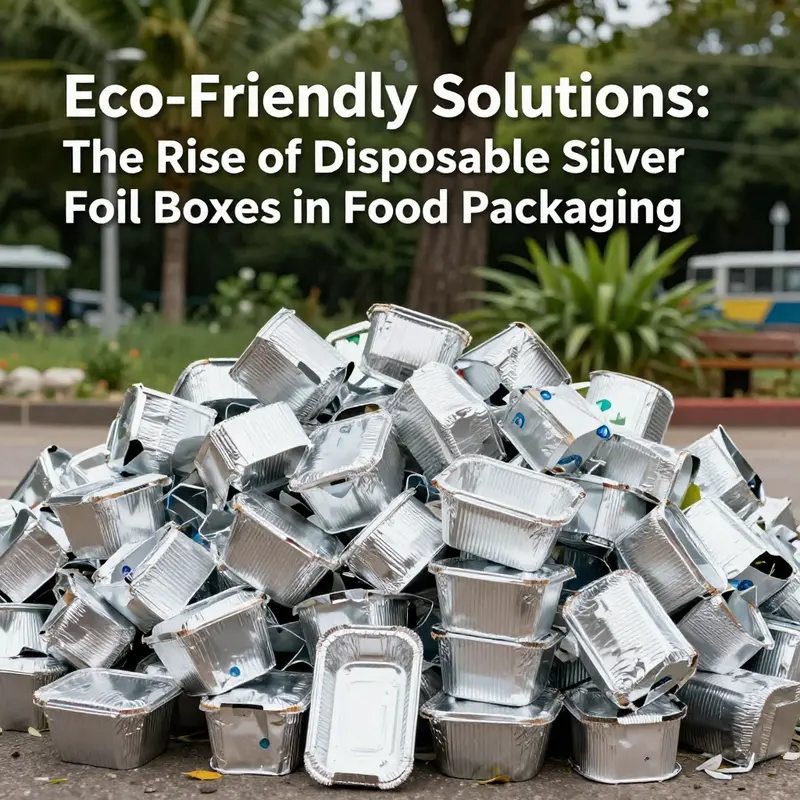
Disposable aluminum foil boxes occupy a familiar niche in modern food service. Their metallic sheen often accompanies meals from quick-service chains, takeout windows, and catering trays. The convenience is evident: heat, seal, and transport in a single, inert container that can withstand the heat of an oven or microwave. Yet when we pause to consider the environment, the story becomes more nuanced. Aluminum packaging sits at the intersection of promise and pressure. It is light and formidable, offering a reliable barrier to heat, moisture, and air. It can help reduce food waste by extending shelf life and enabling safe, portable meals. But the energy required to produce aluminum and the realities of waste management complicate its sustainability credentials. The chapter that follows examines this complexity, balancing the upfront costs and end-of-life benefits with the broader goal of lowering the packaging footprint for a global food system that relies heavily on single-use containers.
One of the strongest environmental positives of disposable silver foil boxes is recyclability. Aluminum foil can be recycled again and again without losing its fundamental properties. This infinite recyclability means the material has a built-in potential to close the loop in a circular economy if the post-consumer stream is well organized. The energy savings in recycling are striking. Reprocessing existing aluminum requires only a fraction of the energy needed to extract and refine new ore. In numbers, the recycling process uses roughly five percent of the energy. That contrast makes the option more favorable than many plastics whose recycling rates and mechanical properties degrade over time. When collection and sorting systems function efficiently, a large share of used aluminum packaging can be diverted from landfills and reintroduced into new boxes, trays, or foil layers.
However, the production of aluminum itself is energy-intensive. The original smelting and refining steps demand substantial electricity and heat. The emissions profile of aluminum packaging hinges on the energy mix used by a region. In places powered by coal or oil, the upfront climate cost can be high. This is not a contradiction so much as a reminder that the life cycle matters. A box that is recycled many times does not erase the emissions embedded in its creation; rather, it distributes them over many reuse cycles and, ideally, many end-of-life recoveries. The overall environmental performance therefore depends on how often recycling occurs at the end of use and how efficiently the systems collect and process discarded containers.
Contamination presents a practical barrier to recycling. Food grease, oils, and residues can complicate the cleaning and sorting steps that recycling facilities rely on. If a box arrives at a facility smudged with oil or attached to stuck food pieces, it may be diverted to waste rather than converted into new material. The result is a loss of opportunity embodied in the resource. This challenge emphasizes the need for consumer habits and industrial processes to align. In some cases, a simple wipe or draining of leftover contents can improve recyclability, but the feasibility of such steps depends on consumer behavior, logistics, and the economics of waste streams. The life cycle analysis therefore must consider the likelihood that a single-use item will be recycled versus discarded.
Industry researchers and manufacturers are responding with a mix of strategies. Some efforts emphasize lighter designs or different alloys that maintain strength while reducing energy use in production. Others pursue biodegradable or compostable alternatives for takeaway applications, seeking to reduce the overall footprint without compromising safety and performance. Yet these options come with their own trade-offs, including potential emissions from composting, the need for industrial-scale facilities, and the variability of composting infrastructure around the world. In practice, many businesses pursue a pragmatic path: balancing performance, customer expectations, and environmental impact. The result can be a more sustainable takeout ecosystem that relies on optimized material choices, improved separation of recyclables, and smarter use of end-of-life streams. The message is not that aluminum is inherently bad, but that its benefits are greatest when the entire system supports robust recycling and responsible consumption.
Successful sustainability for disposable aluminum packaging hinges on robust post-consumer collection and efficient recycling networks. In regions where separate collection, clean streams, and accessible facilities exist, the environmental case for aluminum boxes improves markedly. Where such infrastructure is weak or non-existent, the same boxes can contribute to waste problems rather than resource recovery. This reality has pushed policymakers and industry players to explore standardized labeling, clearer disposal guidance, and incentives that encourage recycling. Business models are also adapting, with takeout providers and caterers coordinating with recycling partners to ensure containers are collected properly and diverted from landfills. Consumers, too, play a decisive role; choosing curbside recycling options, rinsing containers, and supporting brands that invest in end-of-life programs can collectively tilt the balance toward a lower footprint.
For food service operators, the environmental calculus goes beyond material choice. It involves supply chain planning, packaging optimization, and clear communication with customers. Decisions on box shapes, sizes, and coatings influence how much material is used, how well heat is retained, and how readily the packaging can be recycled after use. Brands that emphasize recyclability and provide easy-to-follow disposal instructions can elevate their sustainability profile without sacrificing convenience. The integration of reusable or returnable components is another lever, where feasible, to reduce single-use waste. However, the economics of scale, the fast-paced nature of takeout customers, and the need for reliability constrict such options. The aim for practitioners is to strike a balance: minimize waste, maximize recyclability, and ensure safety and hygiene, all while preserving the user experience.
To explore greener takeout packaging options that still meet performance needs, many businesses look to alternatives in the sector that emphasize grease resistance and microwave safety while using recyclable materials. For a closer look at eco-friendly takeout boxes designed for food packaging, you can explore this option: eco-friendly takeout boxes for food packaging.
External resources provide broader context for these decisions. A comprehensive life-cycle assessment of takeaway packaging highlights the trade-offs among materials, energy use, and end-of-life scenarios across different packaging options. This wider lens helps explain why a single material cannot be judged in isolation and why effective recycling systems are central to achieving real environmental gains. For a broader reading on this topic, see the external study at: https://www.sciencedirect.com/science/article/pii/S095965261830784X
null
null
null
null
Safeguarding Freshness: Health, Safety, and Compliance in Disposable Silver Foil Food Boxes

The visual appeal of disposable silver foil boxes often masks a quiet but essential devotion to safety, quality, and responsible practice. In fast-paced kitchens, takeout windows, and catering events, these containers are expected to shield food from heat, moisture, and air while remaining harmless to those who handle and consume the contents. The promise of convenience must be backed by a robust regulatory framework that governs material composition, manufacturing processes, labeling, and end-of-life disposal. When operators understand the regulatory landscape, they gain a practical advantage: fewer compliance surprises, steadier shelf life, and a clearer path to consumer trust.
At the heart of health and safety regulations for food-contact packaging is the idea that materials should not transfer harmful substances to food in amounts that could pose a risk to health. In many jurisdictions, this is codified through specific food-contact regulations, migration limits, and clear requirements for good manufacturing practices. Aluminum foils used in disposable boxes are generally regarded within this framework as food-contact materials designed to act as barriers against heat, moisture, and oxygen, while also withstanding the mechanical demands of handling, stacking, and transport. The emphasis, however, is not simply on the material itself but on the entire chain: from raw alloy selection and foil thickness to coatings, adhesives, and any laminates or barrier layers that might be applied during fabrication. Each step has the potential to affect safety, and each step is subject to verification through testing, certification, and traceability.
Material integrity begins with the choice of food-grade aluminum and the specific alloys employed in foil production. Commonly used alloys in foil packaging deliver a balance of formability, barrier performance, and heat tolerance. In practice, alloys such as those in the 3000-series and the 8000-series are used to achieve a foil that can be formed into stable shapes, resist corrosion, and maintain barrier properties under repeated heating and cooling cycles. The presence and arrangement of coatings or polymeric barriers—often applied to minimize contact between food and metal or to enhance heat reflectivity—also shape safety outcomes. When coatings are used, regulatory expectations shift toward ensuring that any polymers or lacquers are themselves approved as food-contact substances and do not migrate beyond established limits. The result is a layered approach to safety: metal alone provides a structural and barrier role, while any functional coatings must remain inert to the food environment and compatible with the intended use.
Beyond material science, the regulatory landscape emphasizes accountability in manufacturing processes. A food-packaging operation that produces disposable silver foil boxes typically adheres to recognized quality management systems such as ISO 9001, which codify consistent production, process control, and traceability. In many supply chains, certificates and third-party verifications from bodies like SGS or other accreditation organizations accompany shipments, signaling that products meet international expectations for safety and quality. While certification alone does not guarantee safety in every context, it serves as a structured means for buyers to compare suppliers and confirm that critical controls—ranging from raw material sourcing to packaging integrity tests—are in place.
A comprehensive compliance posture also requires attention to the broader regulatory framework for food-contact materials. In regions where EFSA-like or similar oversight exists, aluminum and foil-based packaging must align with rules that govern food-contact safety, migration limits, and environmental considerations. This alignment often translates into documented product specifications, clear labeling about intended uses, and assurances that any laminates or coatings are compatible with the intended foods and temperatures. For brands and manufacturers, the practical implication is that claims about microwave or oven suitability must be supported by testing and explicit labeling. A container may be described as oven-safe because it can withstand conventional baking temperatures; if the same box is marketed as microwave-safe, it must be explicitly designed for microwaving and tested for safe performance in that context. When in doubt, instructions should guide users to remove lids, vent steam properly, or transfer contents to a microwave-safe dish to avoid safety hazards.
The path from regulation to everyday practice is also illuminated by the growing emphasis on environmental stewardship and end-of-life considerations. Aluminum foil boxes are highly recyclable in many communities, but the recyclability depends on local facilities and the presence of any non-metal laminates or coatings. Clear guidance on recycling or disposal helps prevent cross-contamination of recycling streams and reinforces consumer confidence in the packaging’s safety story. In practice, manufacturers and suppliers support this through labeling that clarifies recyclability, along with recommendations for cleaning and sorting. An industry-wide shift toward sustainable packaging often involves designing with recyclability in mind, such as selecting barrier layers that are compatible with standard recycling processes, and minimizing the use of non-recyclable composites.
From a practical standpoint, operators should view compliance as an ongoing program rather than a one-time certification. Supplier selection becomes a critical control point: auditors look for documented material specifications, evidence of food-grade status, and traceable lot numbers that enable root-cause analysis if issues arise. Migration testing, although not always required for every product, provides a proactive mechanism to detect any potential leachables under conditions that reproduce real-world use—such as extended contact with cooked or highly acidic foods, exposure to high temperatures, and repeated reheating. While migration parameters may vary across markets, the underlying principle remains consistent: packaging should not compromise food safety, even under the stress of service environments and rapid turnover.
For businesses seeking practical exemplars of compliant design and responsible manufacturing, the choice of container should reflect a balance of performance, safety, and sustainability. It is not simply about meeting a regulatory checkbox; it is about fostering trust with customers who rely on efficient, safe, and predictable packaging. As part of this ethos, many operators adopt a risk-based approach to packaging decisions. This approach includes clear hazard analysis, consideration of potential contact scenarios, and written procedures that describe how safety controls are implemented and verified at every stage—from incoming material inspection to finished-product testing and post-market surveillance. The result is a packaging solution that not only preserves food but also upholds the highest expectations for safety and transparency.
In conversations about safety and compliance, a concrete example helps frame the discussion. When assessing options for disposable silver foil boxes, teams often evaluate a packaging option described de facto as disposable aluminum foil take-away boxes. This phrasing signals the core material and intended use while allowing room for evaluating questions of coatings, recyclability, and regulatory alignment. Such an option, linked to a broader family of compliant packaging designs, becomes a practical reference point for procurement teams and quality professionals who seek to harmonize operational needs with regulatory requirements. disposable aluminum foil take-away boxes can serve as a case study in how design considerations intersect with safety claims, labeling, and end-of-life responsibility. This link provides a touchpoint for teams to examine how a product family translates safety standards, testing regimes, and environmental commitments into tangible packaging choices.
Ultimately, health and safety regulations for disposable silver foil boxes revolve around the same core objectives: to prevent the transfer of unwanted substances to food, to enable reliable performance across hot and cold applications, and to support responsible consumption through clear labeling and credible certifications. The integration of material science, quality management, regulatory compliance, and environmental considerations creates a packaging ecosystem that aligns the interests of food service operators, regulators, and consumers. As markets evolve, this alignment remains essential to sustaining trust in a packaging class that blends convenience with safety in a modern, sustainability-minded food economy.
Shining Toward Sustainability: How Consumer Preferences Shape the Future of Disposable Silver Foil Food Packaging
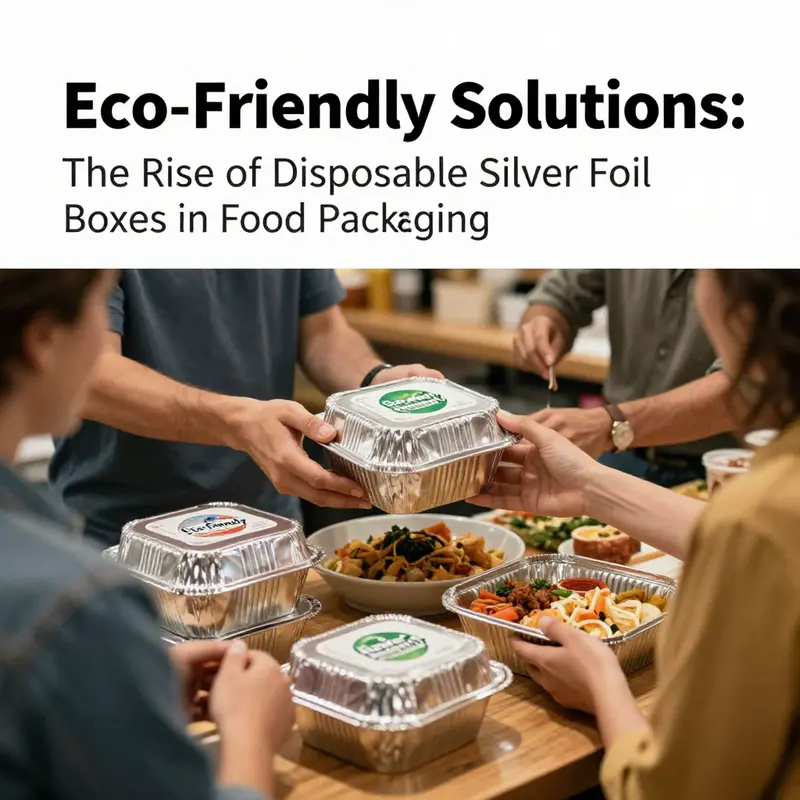
In the busy world of takeout and catered meals, disposable silver foil boxes have quietly become a backbone of service. They combine practicality with a perception of safety that customers notice and rely on. These containers, forged from food-grade aluminum, deliver a reliable barrier against heat, moisture, and air, while remaining oven- and microwave-safe. That combination of properties makes them versatile for hot dishes, cold preparations, and everything in between. Yet the how and why of their continued use hinge on more than performance. They sit at the intersection of consumer expectations, environmental responsibility, and operational efficiency, a crossroads where every design choice echoes through the supply chain and into consumer kitchens.
Consumer preferences around disposable silver foil boxes are increasingly tethered to sustainability concerns, but the relationship is nuanced and regional. A global 2025 survey on sustainable packaging reveals that many shoppers express a desire for eco-friendly options. Nevertheless, actual purchasing behavior remains strongly influenced by price, convenience, and perceived functional effectiveness. In some markets, there is a ready appetite for recyclable or even compostable packaging, while in others, cost and familiar handling practices can slow the adoption of greener designs. This divergence is not simply a matter of taste; it reflects how different communities manage waste, what recycling infrastructure exists, and how clearly brands communicate disposal instructions. The aluminum foil container, with its high barrier performance and heat resistance, often checks the functional boxes that consumers expect, which helps explain its continued popularity even as sustainability discussions intensify.
Aluminum’s environmental narrative is two-sided. On the one hand, aluminum is infinitely recyclable, a trait that aligns with circular economy goals and long-term waste reduction. On the other hand, the environmental footprint of aluminum production remains a concern, driven by energy-intensive processes and material use. The industry’s response has emphasized improved recyclability, easier segregation from food waste, and designs that require less material without compromising performance. In practice, this means packaging that signals to consumers precisely how to dispose of it and that makes the recycling stream as frictionless as possible. Some operators are experimenting with design features that aid separation, such as clear labeling of recyclability, simplified components, and finishes that avoid multilayer complexity. The result is a packaging solution that remains robust in preserving food while nudging users toward responsible disposal, a balance that resonates with many who want both reliability and a lighter environmental footprint.
The appeal of aluminum foil containers is rooted in their shared strengths: outstanding barrier properties, heat tolerance, and the ability to preserve freshness across a range of culinary formats. These attributes matter because consumers expect food to travel well from kitchen to table, and aluminum boxes meet that expectation with a simplicity that plastic alternatives sometimes struggle to achieve. Yet sustainability-centric consumers push for more than performance; they seek clarity and accountability at the point of disposal. This has driven innovations such as transparent labeling about recyclability, the inclusion of disposal guidance, and even the exploration of compartmentalized designs that facilitate material separation after use. In a world where brand trust is earned through transparent practices, packaging that speaks plainly about its end-of-life path can strengthen consumer confidence without sacrificing convenience.
Customizing these boxes is another pathway through which the industry aligns with diverse consumer needs. Brands increasingly demand variations in size, shape, and finish to match different dishes and service models, from quick-service to gourmet meal kits. Typical ranges—such as compact 100 ml formats for bite-sized meals and larger capacities up to 1000 ml for hearty dishes—allow operators to fine-tune portions while preserving the food’s quality. Finishes, from silver tones to bespoke metallic looks, enable a subtle branding touch that supports a professional presentation without requiring costly changes to the core material. Even though the packaging is disposable, these customization options help ensure that the container reflects a business’s standard of care, which in turn influences consumer perception of safety, hygiene, and value. This alignment of form and function with brand narrative is a quiet driver of adoption and repeat use, especially in markets where first impressions carry significant weight.
The discourse around sustainability is not just about what the box is made from, but how it travels through the lifecycle. Aluminum’s recyclability is a critical consideration, yet recycling rates vary widely across regions. In many places, low recycling rates blunt the environmental gains of switching to metal containers, creating a persistent gap between potential and real impact. To address this, producers and retailers increasingly pair clear disposal labeling with consumer education efforts designed to improve recycling outcomes. When customers understand that the box can be recycled, and when they can distinguish it from other waste streams, the likelihood of proper disposal increases. This is not merely a matter of compliance; it is about empowering consumers to participate in a circular system, reinforcing a sense of shared responsibility between the kitchen, retailer, and household.
Operational practicality remains a compelling argument for continued use, even as the sustainability conversation grows louder. The oven-safe and microwave-safe properties of these containers reduce the need for transfer to alternative dishware, which can lower waste from accidental spills and reduce the steps involved in reheating. For businesses striving to maintain efficiency and speed, the ability to deliver a reheated meal directly in its packaging can translate into faster service and a smoother pickup experience for customers. At the same time, the industry continues to wrestle with material optimization. Lighter gauges and innovative alloy formulations aim to use less metal without compromising performance, a move that can lower energy consumption across manufacturing and transport. In this context, the choice of material is not a binary decision of metal versus plastic, but a spectrum where durability, safety, cost, and end-of-life considerations are weighed together.
Branding and consumer trust also hinge on how packaging communicates safety and compliance. Certifications such as food-safety approvals and quality-management standards provide a sober assurance that aligns with consumer expectations. While these standards do not guarantee sustainability by themselves, they create a credible framework within which environmental improvements can be pursued. Clear labeling about recyclability or disposal paths helps reduce confusion, especially in regions with complex waste-management systems. In some markets, this clarity supports the emergence of take-back or reuse programs that encourage households to participate in circular solutions while still enjoying the convenience of a disposable format. The result is a packaging ecosystem where functional reliability coexists with growing environmental accountability, a combination more likely to earn consumer trust in the long term.
For practitioners seeking a practical reference, the design and supply chain choices surrounding disposable aluminum foil containers illustrate how sustainability goals translate into everyday decisions. The balance between cost, performance, and the ease of end-of-life handling shapes product development, supplier selection, and marketing communications. In this sense, the consumer’s evolving preferences function as a compass rather than a verdict, guiding manufacturers toward packaging that remains fit for purpose while embracing clearer recycling narratives and reduced material intensity. The path forward involves not only smarter design and smarter labeling but also a broader commitment to education and infrastructure that supports responsible disposal. When consumers see a box that performs well and clearly signals its recyclability, they are more likely to treat it as a resource rather than a throwaway, which in turn reinforces the viability of metal-based, single-use packaging within a more sustainable framework.
As this dynamic unfolds, the industry benefits from cross-cutting insights that connect consumer attitudes with material science and waste management policy. A growing body of regional data suggests that consumer willingness to pay a premium for recyclable packaging is highly contingent on perceived value and accessible disposal options. The best outcomes arise when brands pair robust product performance with straightforward recycling messages and practical options for household and business users. The utility of these boxes—heat retention, freshness protection, and versatile reheating—remains compelling. The sustainability story, however, is not completed by performance alone; it requires a shared commitment to clear communication, responsible disposal, and continuous improvement in recyclability and material efficiency. This integrated approach helps ensure that the shiny surface of disposable silver foil boxes reflects not only reliability but also an honest commitment to environmental stewardship.
For further context on how consumer views toward sustainable packaging are evolving globally, see the latest comprehensive analysis from leading industry researchers. McKinsey’s 2025 sustainable packaging consumer views report provides regional insights, behavioral drivers, and a nuanced look at what motivates or deters sustainable packaging choices across markets. McKinsey’s 2025 sustainable packaging consumer views report.
Internal reference to practice can be found in industry-facing product pages that illustrate how disposable aluminum foil takeaway boxes are designed for scalability, customization, and recyclability in real-world settings. disposable aluminum foil takeaway boxes.
In sum, consumer preferences are steering disposable silver foil packaging toward greater transparency, smarter design, and a more explicit pathway to recycling. The material’s performance advantages remain attractive, while the push for clearer disposal guidance and lower material intensity pushes manufacturers to innovate rapidly. The resulting packaging can deliver reliable food quality and convenient reheating, while also contributing to waste reduction and resource conservation when end-of-life steps are well understood and effectively supported by policy and infrastructure. This synergy—between function, communication, and systemic waste-management improvements—will shape how these boxes evolve in a world that increasingly values responsible consumption and clear environmental accountability.
Final thoughts
The evolution of disposable silver foil boxes represents a pivotal shift in the food packaging landscape. As environmental concerns grow, these containers not only provide practicality and sustainability but also cater to modern consumer preferences. Understanding the impact and advancements in this packaging solution can help food service businesses make informed decisions that resonate with both their operational needs and their customers’ values.