
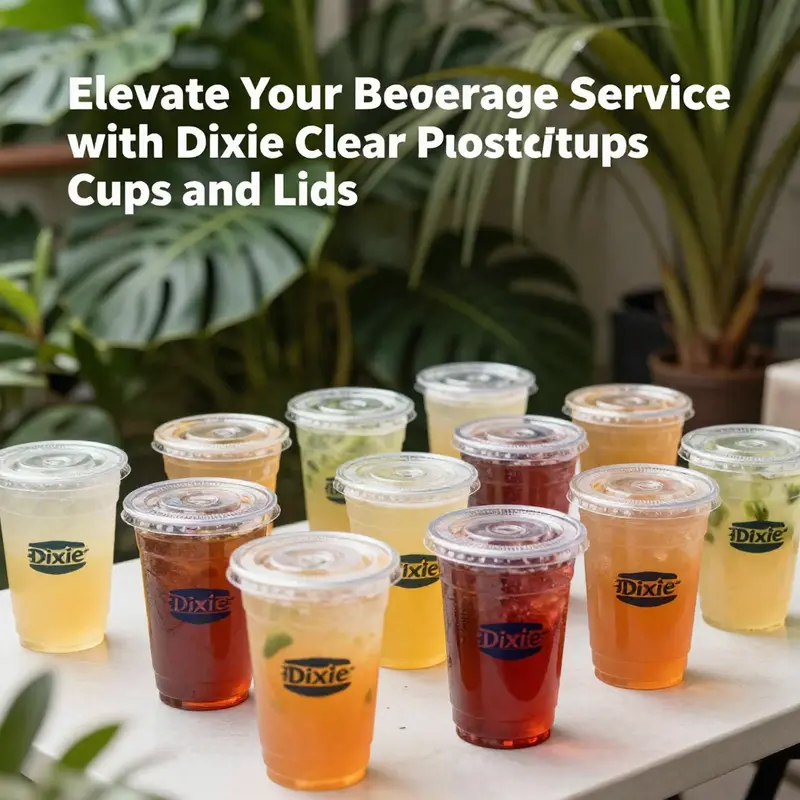
Dixie clear plastic cups with lids have become essential in the realm of food service, catering, and event planning. These cups are not only practical for a variety of applications, from small bites at food trucks to hefty drink servings at events, but they also align with the growing demand for sustainable and durable packaging. In this comprehensive guide, you will explore the specifications and variations of Dixie clear cups, their utility across different food service establishments, the ongoing efforts toward environmental considerations, and the current market trends driving consumer preferences. Each chapter will provide insights that are key to understanding how these products can enhance your service and meet your operational needs.
The Clear Advantage: In-Depth Look at Dixie Clear Plastic Cups with Lids, Their Specs, and Real-World Versatility
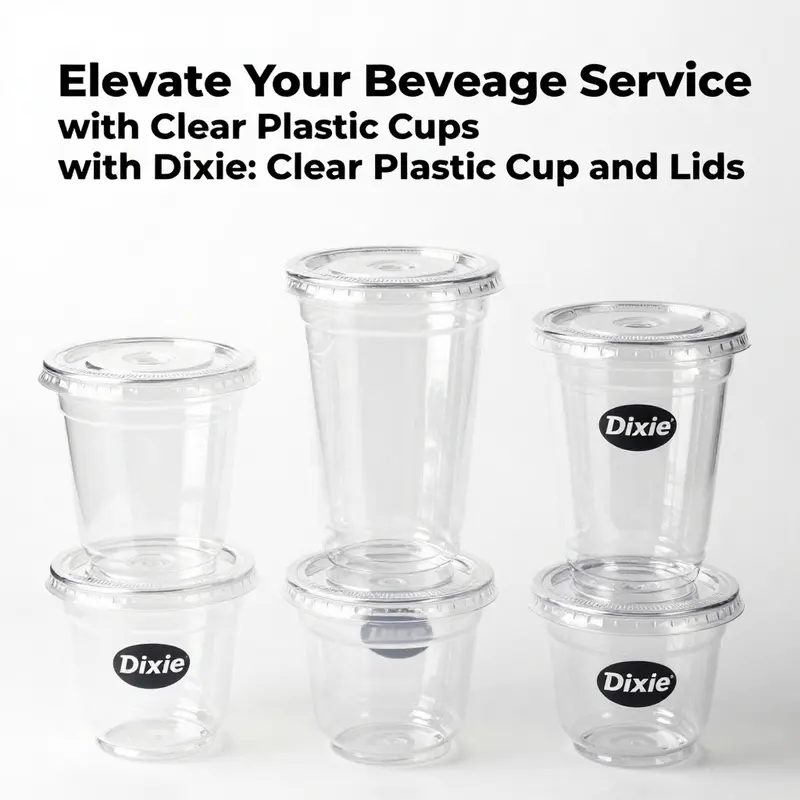
Clear plastic cups with lids from the Dixie line sit at a practical crossroads of visibility, hygiene, and convenience. They are not merely vessels for beverages; they are designed to support a wide range of service environments, from fast-casual counters to event takeout, and even to more controlled settings like sampling campaigns or cosmetic and pharmaceutical demonstrations. The material choice, the lid design, and the way the cup integrates with common portion cup systems all converge to create a package that is lightweight, predictable, and easy to handle in high-volume scenarios. The core of their appeal lies in how these cups marry clarity with security, ensuring that what is inside stays visible and protected during transport without adding undue weight or cost to the operation. The result is a packaging option that often becomes a default choice for venues that prize quick service, consistent presentation, and reliable leak resistance. Yet beneath the simplicity of a clear cup with a lid lies a carefully engineered balance of material chemistry, sizing, and usage guidance that operators should understand to maximize performance and minimize waste or customer dissatisfaction.
At the heart of these cups is PETE, or polyethylene terephthalate, a polymer selected for clarity and strength. This choice means beverages and products shown through the cup walls benefit from perceptible color and saturation, which can be important for branding and sensory appeal. Clarity matters not just to chefs or baristas who want customers to see the product, but also to managers who rely on quick visual checks for fill levels, portion control, and presentation standards. The lids that accompany these cups are designed to fit snugly and seal effectively, which is a critical feature for cold beverages during takeout, delivery, or staging areas where movement could otherwise cause leaks. The combination of a clear cup with a transparent lid reduces the chance that customers will encounter opaque or confusing seals, improving the overall consumer experience and reducing the likelihood of spill-related complaints.
Specification-wise, one of the defining data points is the depth and geometry of the lid interface. In the typical Dixie configuration, the lid depth is about 2.9 inches, a dimension that supports a stable seal without requiring a bulky or overly tall cap. The color remains clear, preserving the visual appeal of the contents while allowing operators to showcase bright, colorful drinks, sauces, or samples. Compatibility is another pillar of their design. These cups and lids are engineered to fit standard portion cup systems, which means they slot into existing back-of-house workflows with minimal customization. For busy kitchens and event operations, this compatibility translates into faster assembly lines, fewer errors in product matching, and a smoother handoff from prep to service. The ability to reuse the same lid system across multiple cup sizes or volumes helps operators consolidate inventory, simplify training, and keep a consistent customer experience—even as menu items or beverage sizes evolve.
One topic that often surfaces in discussions of PETE-based cups is recyclability. The documented spec segment for the Dixie clear cup and lid pair notes that the item is not recyclable in many municipal programs. This is an important point for operators and conscientious consumers alike. While the material can offer excellent clarity and a compact footprint for cold beverages, the end-of-life path is not as straightforward as some other disposable plastics. In practice, this means understanding local recycling capabilities is essential. Some models in the broader Dixie line and related lines may be marketed as recyclable, but the specific 2-ounce or larger capacity cups with lids described in standard product sheets may not be accepted by all recycling streams. This nuance underscores a broader operational consideration: sustainability in packaging is not a blanket attribute and must be matched to local capabilities. Operators who serve eco-conscious markets should weigh the trade-offs between performance, cost, and environmental impact when selecting cup-and-lid configurations.
Design features extend beyond the basic seal. The lids are frequently described as secure and leak-resistant, a critical attribute for cold beverage transport. Whether it is a smoothie, an iced coffee blend, or a fruit-forward drink, customers often rely on the assurance that the lid will stay closed during transport and that the cup walls will resist seepage or cracking under ordinary handling. This is particularly important for takeout and delivery programs where products are jostled along various routes. The overall weight of the cup and lid system is intentionally light, contributing to lower disposable costs per unit and making it feasible to offer a wider variety of items in a single service window without significantly increasing the burden on storage or handling. Cost considerations matter too, since the overall price point of these cup-and-lid combinations is designed to be accessible for a range of business models—from small, independent cafes to larger fast-casual chains and event organizers budgeting for large-scale service.
Beyond the beverage-focused uses, these clear cups with lids are versatile enough for other applications. Their sealed design makes them suitable for portions of sauces, condiments, or samples at events where presentation and hygiene are essential. In practice, staff can pre-portion items like dressings or dips, present them in a clear vessel, then seal for distribution. The transparency of the cup is a functional benefit in such contexts as well; product visibility can guide customers toward the right choice without lifting the lid or opening the cup, thereby preserving the sample’s integrity and protecting it from contamination. In some environments, such as cosmetics or pharmaceuticals demos or displays, the combination of clarity and secure lid helps maintain product integrity during transport and display, while also easing inspections by staff who need to verify contents at a glance. The container’s design supports both the visual appeal of the product and the practical demands of handling, distributing, or showcasing it in various settings.
A practical takeaway for operators relates to usage environments and the limits of thermal performance. The Dixie clear cups with lids have limited thermal insulation compared with more specialized, double-walled or insulated designs. They are best suited for cold or room-temperature beverages, and for hot fills, caution is advised. Specifically, filling above 70°C (158°F) can lead to structural concerns. Clarity can be compromised and the integrity of the seal may be tested under high heat, resulting in potential leaks or deformations. For food service professionals who routinely encounter hot beverages or hot-fill scenarios, this is an important boundary in which to operate. It underscores the need to match packaging choice to the product profile and service model. For hot service, operators often turn to alternative configurations or different materials that offer stronger heat resistance and better insulation to protect both the product and the customer experience. The same rationale extends to transport and delivery: a cold or room-temperature beverage travels more reliably in these cups with lids than a hot beverage would, reducing the risk of leaks and spill-related incidents during transit.
In terms of lifecycle and environmental considerations, there is a nuanced conversation to be had about the balance of practicality and responsibility. The not-recyclable specification invites a closer look at disposal practices and local recycling policies. For many operators, the focus remains on minimizing waste through efficient portion control, careful inventory management, and education of customers about proper disposal. The broader packaging ecosystem is evolving, and some regions are expanding their streams to accommodate more post-consumer plastics, while others remain strict about what qualifies. The consumer’s perception of recyclability can influence brand trust, particularly in markets where customers actively seek sustainable packaging choices. As a result, operators should communicate clearly about disposal expectations and, where possible, pursue packaging configurations that align with both performance needs and environmental goals. In practice, this means balancing the inherent advantages of clear PETE cups—clarity, light weight, compatibility, and price—with the realities of waste streams and local recycling eligibility.
From a workflow perspective, the ability of these cups to integrate with standard systems reduces the cognitive and logistical load that staff face during busy service periods. When a cup’s lid matches a familiar profile, the likelihood of misfits drops, which translates into fewer product errors, faster assembly, and happier customers. The visual appeal of the clear cup, combined with a precise seal, reinforces a reliable, repeatable customer experience across shifts and service channels. A well-trained team can confidently pre-pack beverages, sauces, or samples in a way that preserves product quality, minimizes spillage, and supports a steady throughput that is essential for high-volume operations. The economic dimension also matters; a design that is lightweight and cost-effective helps keep per-unit waste down while enabling broader menu options and value additions to be offered to customers without inflating labor costs.
To illustrate how these cups fit into a broader packaging strategy, consider their role alongside other disposables that service designers and operators frequently evaluate. The choice to deploy clear cups with lids can be paired with a matching lid system to create a cohesive, scalable solution for a venue that aims to streamline inventory, training, and service calls. In practice, this means standardizing on a cap-and-cup approach where possible, reducing the breadth of SKUs staff must manage. For operators seeking inspiration on related packaging concepts and practical implementations, a representative example of the packaging ecosystem can be explored through related packaging catalogs that discuss disposable cups, lids, and companion products in the same family of applications. For instance, you can explore a practical example of how a disposable clear plastic cup can be used in a similar context, including ideas for party and event packaging, by visiting a relevant product page such as the disposable clear plastic cup designed for outdoor use and gatherings: disposable-clear-plastic-cup-outdoor-picnic-pet-cup-drinking-cup-for-parties-birthdays-weddings-camping-utensils.
Cumulatively, the Dixie clear cup with a matching lid emerges as a practical solution for many service operators. It balances clarity, seal integrity, and cost efficiency while acknowledging its environmental realities. The design supports display and product integrity in a variety of contexts, reinforcing the value of a well-chosen cup-and-lid pairing for menus that rely on fast throughput and reliable presentation. As markets continue to evolve toward greater transparency and more agile service formats, these clear cups with lids remain a dependable option for those who prioritize visibility, hygiene, and dependable performance in their packaging choices. For more detailed product specifications and to compare against other options in the same family, you can consult the Walmart product page that aggregates the official details and current availability. This external reference provides the most up-to-date data, including size ranges and any changes in the stated recyclability status. Dixie Foods Plastic Portion Cup Lid – Walmart.com
In the broader picture of packaging strategy, the clear cup with lid is not an isolated choice. It fits into a continuum of disposable tableware and portable packaging that supports on-the-go service, dine-out convenience, and event-based logistics. Brands and operators evaluate these systems not only on the basis of immediate cost per unit but also on how they affect the customer experience, order accuracy, and post-purchase perceptions. Clarity of product inside the cup contributes to a confident customer decision at the point of sale. A transparent container invites trust when customers can see the product clearly, and lids that seal securely reduce the anxiety around messes and leaks. For venues that emphasize consistent service across multiple locations or events, adopting a standard cup-and-lid approach can be a strong differentiator. It reduces training time, accelerates fulfillment, and minimizes the risk of mis-pours or mis-selections during peak periods.
In closing, the Dixie clear plastic cup with lid embodies a design philosophy that prioritizes visibility, reliability, and cost-conscious practicality. Its PETE construction delivers clear product presentation, while the compatibility with standard cup-and-lid systems supports operational efficiency. The lid’s secure sealing capability protects contents during transport, and the overall system remains accessible to a broad spectrum of service environments. While recyclability remains a key consideration for buyers who are navigating sustainability goals, the essential trade-offs are clear: the cup and lid offer a reliable, cost-effective solution for cold or room-temperature beverages and related applications, with a known constraint around hot fills and end-of-life disposal that must be managed through local recycling guidelines or alternative packaging choices. For further reading and up-to-date specifications, refer to the external product resource mentioned above, and for exploratory context on related disposable packaging options, consider visiting related packaging categories that address takeout and event packaging in a broader sense.
Crystal Clarity and Operational Confidence: The Role of Clear Cups with Lids in Modern Food Service
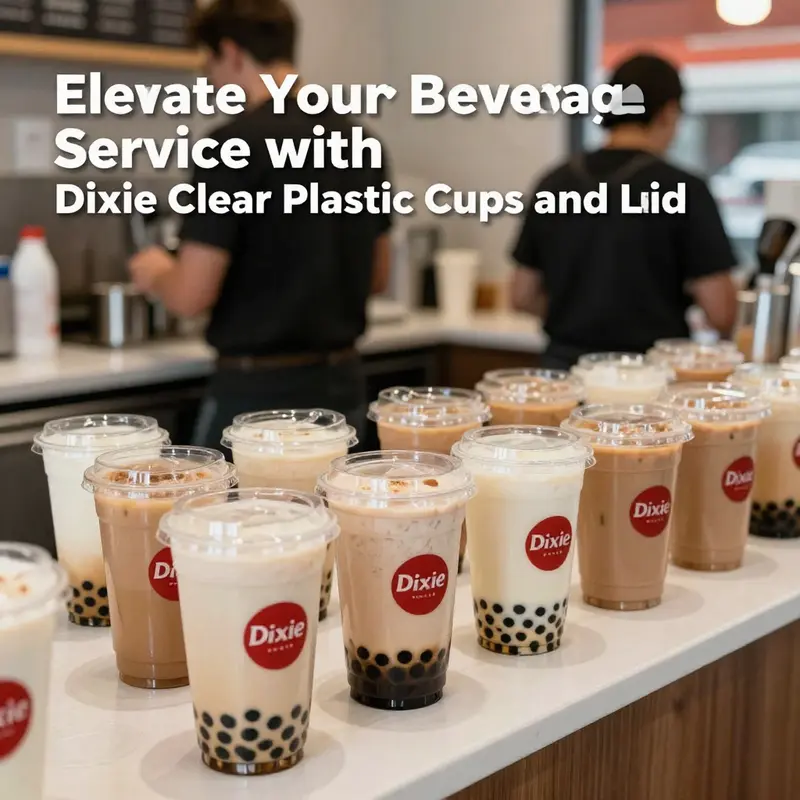
Clear plastic cups with lids sit at the intersection of practicality and perception within the modern food service landscape. They are not flashy martini glasses or high-end carafes, but they perform a foundational function with quiet reliability. In the bustle of coffeeshops, catering events, and quick-service restaurants, these cups act as the everyday interface between vendor and customer. Their value emerges not from a single breakthrough feature but from a confluence of design choices that optimize safety, speed, and visual communication. When a customer peers into a cup and sees a precisely portioned fill, the perception is of care and control. This visual honesty—contents visible and sealed from the moment of capture to the moment of consumption—builds trust, a currency in food service where every decision echoes in the guest experience.
The utility of a clear cup begins with its size options. Small-volume cups, such as those designed to hold about 1 ounce, are indispensable for portions of sauces, dressings, or sample tastings. A lid that snaps on tightly prevents leaks during transit to tables or to takeaway bags, a feature that reduces the potential for mess and the need for secondary containment. The lids themselves, crafted from transparent plastic, preserve the aesthetic appeal of the contents while delivering a functional seal. For operators, this is more than a convenience; it is a hygienic safeguard that aligns with health-and-safety expectations and service-level commitments. The combination of a transparent cup and a secure lid makes the unit reliable for carry-out scenarios, catering carts, and any service model that requires transport without compromising cleanliness.
Beyond the pocket-sized 1-ounce variant, there are larger clear cups that pair with matching lids to accommodate beverages from coffee to juice, and even thicker, broth-like liquids when needed. In fast-paced environments, being able to pour, seal, and hand off a completed cup within seconds is a notable efficiency gain. The plastic materials used—commonly polypropylene or polystyrene—provide a level of thermal stability that supports both hot and cold offerings. A hot beverage might demand a cup that resists warping and maintains a comfortable grip, while a cold drink needs a cup that remains sturdy and crack-resistant under stacking and transit. These materials also influence acoustics and weight, reducing fatigue for busy staff who repeatedly lift, seal, and crown orders throughout a shift.
From an operational perspective, the single-use nature of these cups translates into labor savings. Food-service teams can maintain high throughput without the burdens of frequent washing and sanitizing. Sanitation protocols become more straightforward when cups are disposed of after service, enabling kitchens to redirect manpower toward other critical tasks like order accuracy and guest engagement. The single-use design dovetails with rigorous health codes that govern handling, storage, and transport of takeout foods and beverages. In environments where speed is essential, a reliable disposable option eliminates the bottlenecks that can arise from cleaning cycles and equipment downtime.
Sustainability remains a central consideration as operators weigh the trade-offs between convenience and environmental impact. Many clear cups in this category are BPA-free and offer recyclable pathways, reflecting a growing emphasis on responsible waste management. For cafés and catering operations aiming to minimize their environmental footprint, selecting models that are both BPA-free and recyclable can align with broader sustainability programs. In practice, this means choosing products whose materials allow for efficient recycling streams and that avoid additives perceived as risky by modern health-conscious consumers. While no disposable option can claim to be perfect from an ecological perspective, informed choices can reduce the life-cycle footprint and support recycling infrastructure that is increasingly accessible in urban and suburban areas.
The visual advantage of a clear cup cannot be overstated. In a takeout world, where customers decide with their eyes before they decide with their palates, the ability to showcase the color, texture, and even the layering of a beverage or sauce matters. A vividly layered latte, a golden broth with herbs, or a bright, fruit-forward juice—these visual cues invite a purchase and set expectations for taste. Staff benefit from the same clarity; seeing through the cup helps them confirm fill levels, identify ingredients, and ensure consistency across orders. This transparency also reduces the cognitive load on customers who may otherwise rely on labeling or guesswork to identify contents. When a beverage is visually legible, the service experience gains a dimension of reassurance and professionalism that can translate into repeat business.
In discussing the practical aspects of cup-and-lid systems, it is worth noting the importance of compatibility with existing serviceware. A well-designed cup does not exist in isolation; it must harmonize with lids, carrying trays, anti-spill designs, and transport accessories. The right combination can minimize spills during delivery, reduce the need for secondary containment, and streamline the handoff from kitchen to front-of-house to customer. This compatibility also extends to catering and vending contexts, where standardization across equipment reduces training time and simplifies procurement. A cohesive system—clear cups paired with reliably sealing lids and compatible accessories—creates a predictable workflow, which in turn supports faster service, fewer errors, and a more confident staff posture during peak periods.
The story of these cups is also about versatility. They are equally at home in a coffee shop’s morning rush and in a catered event’s late-night service. They hold hot brews and cool smoothies with equal poise, reflecting careful material selection that anticipates temperature fluctuations. The 1-ounce portion cups, in particular, demonstrate how even modest sizes can drive value by enabling precise portioning for condiments and samples. When used thoughtfully, these seemingly modest vessels contribute to a larger narrative of consistency and quality across a menu. The lid’s seal is not just a barrier against leaks; it is a guarantee that the product you present remains as intended—from the moment a cup leaves the prep station to the moment it lands on a customer’s table.
There is also a layer of strategic decision-making embedded in choosing a clear cup system. Operators must weigh frequency of use, cost per unit, and the expected waste profile. A high-volume environment benefits from reliable, leakage-resistant designs that maintain the integrity of the contents during transport. A venue that emphasizes aesthetics might prioritize the crispness of the cup’s clarity and the clean line of the lid’s seal, ensuring the presentation matches the quality of the beverage or sauce inside. At scale, even small improvements in seal reliability or material durability accumulate into meaningful cost savings and operational gains. The cumulative effect of these small efficiencies is a service experience that feels seamless to the guest and manageable for staff, even on the busiest shifts.
One practical detail often noted by operators is the importance of packaging design that supports accessibility without sacrificing security. A lid that is easy to open for customers with limited dexterity, yet secure enough to resist accidental pops during transit, represents a thoughtful balance. Similarly, a cup with a taut, reliable lid profile that reduces the risk of seam leaks during stacking and transport offers tangible peace of mind. These design considerations translate into fewer customer complaints and a smoother handoff in drive-through lanes or curbside pickups. When staff can rely on a leak-proof system, they are less distracted by spill-related tasks and more focused on hospitality and speed—two core metrics of strong service.
For environments that strive to merge efficiency with sustainability, the right mix of clear cups and lids can support broader ecological goals. Many operators follow a strategy of using recyclable options where feasible, paired with recycling programs that encourage proper disposal. BPA-free formulations address health concerns while remaining compatible with municipal recycling streams. In practice, the choice is not simply about offloading waste but about choosing a system that integrates into a broader waste-management plan. This often means negotiating with suppliers for packaging that aligns with local recycling capabilities, selecting sizes that minimize excess material, and training staff to dispose of cups and lids in a way that supports recovery streams. The result is a packaging solution that respects both operational realities and environmental responsibilities.
These cups also play a role in the broader narrative of consumer expectations. Today’s guests increasingly value not only the quality of the beverage or sauce but the clarity of its presentation and the perceived integrity of the service process. A cup that reveals a precise fill and a lid that remains sealed during a customer’s journey from counter to table or car trunk reinforces a message of consistency. It communicates that the operation pays attention to detail and cares about the guest’s experience from first glance to final sip. In this way, the observable features—the transparency of the cup and the security of the lid—become signals of reliability. They reassure guests that what is promised on the menu is delivered in a consistent, accessible, and clean format.
For practitioners seeking to optimize their use of clear cups with lids, the decision rarely rests on a single feature. Instead, it rests on a holistic assessment of how these vessels fit into a broader service ecosystem: the pace of service, the intensity of staff training, the complexity of the menu, and the environmental commitments of the operation. The most effective configurations are those that simplify routine tasks while enhancing the guest experience. In practice, this translates to fewer spills, more accurate portioning, clearer product visibility, and a streamlined post-service cleanup. Operators who embrace these principles discover that the tangible benefits extend beyond the counter—into customer satisfaction, brand perception, and the ability to scale operations without sacrificing quality or control.
For readers exploring practical examples beyond the safety and functionality, consider the value of a disposable clear cup designed for outdoor events. The portability, visibility, and reliable sealing that such a cup offers can make a significant difference in picnic setups, festival booths, and mobile catering. It is exactly the kind of tool that supports a flexible service model, enabling staff to manage varied environments with confidence. For a glimpse into this category of products and to see how a typical 1-ounce cup and lid configuration is presented in the market, explore a representative option through an internal link focused on outdoor event use that highlights its applicability to busy, on-the-go settings. disposable clear plastic cup for outdoor events.
In sum, clear cups with lids serve as a quiet backbone for contemporary food service. They underpin hygiene, portability, and presentation, while their transparent walls invite a straightforward connection between product and consumer. The design choices behind these cups—material selection, seal quality, size variety, and compatibility with lids and accessories—translate into practical benefits that operators feel in real time: faster service, fewer spillage incidents, clearer product identification, and a path toward more sustainable packaging options. As the industry continues to evolve, these vessels will likely become even more adaptable, with innovations that preserve clarity and reliability while embracing new materials and recycling pathways. The result is a packaging solution that meets the demands of high-volume service without compromising on safety, cleanliness, or guest satisfaction.
External resource: official product page for the 1-ounce clear plastic portion cup and lid (detailed specifications and compatibility information): https://www.dixie.com/products/portion-cups/dixie-clear-plastic-portion-cup-lid-1-oz
Clear Choices, Complex Footprints: Environmental Realities of PET Cups with Lids in Food Service
Clear plastic cups with lids sit at a crossroads of practicality and responsibility. They are designed to show, contain, and protect—with a practical efficiency that keeps beverages fresh and transport reliable.
PET cups and lids are common in kitchens, cafes, catering, and delivery. Their clarity helps servers and customers assess contents, portion control, and presentation. Yet beneath that transparency there are environmental considerations tied to material, design, and disposal.
PET is recyclable in many systems but relies on disposal practices and local infrastructure. In robust curbside programs, PET cups can be recycled; in communities with limited programs, they may end up in landfills or contaminate streams. Responsibility falls on manufacturers to provide disposal guidance and on consumers to follow it.
Lid compatibility matters: secure seals reduce spills and waste; the CL912PET lid exemplifies practical sustainability by protecting contents without adding complexity. The life cycle—from resin to disposal—shapes the overall footprint and invites improvements at each stage.
While PET is recyclable, the degree of benefit depends on behavior and municipal programs. A simple rinse before recycling improves stream quality and reduces contamination. Training staff and communicating with customers support proper disposal. In fast-paced settings, a leak-proof cup-and-lid combination protects product integrity, minimizes waste from spills, and can reduce the need for extra protective packaging.
The environmental story includes broader concerns about litter and microplastics, and the energy demands of production. There is ongoing exploration of alternatives—biodegradable or compostable materials—though they bring challenges in performance, labeling, and end-of-life facilities. Clear cups with lids remain a practical option when managed properly, and can fit into sustainable strategies today.
Operational practices like clear disposal workflows, routine staff guidance, and partnerships with waste-management providers help translate recyclability into real results. Communicating environmental performance to customers fosters responsible consumption. Looking ahead, operators should weigh future packaging choices against performance requirements and local waste capabilities. The goal is to balance convenience and clarity with efforts to minimize impact, while continuing to improve recycling streams and reduce contamination.
Clear Signals: How Transparent Cups with Lids Shape Convenience, Credibility, and Brand Experience in Foodservice
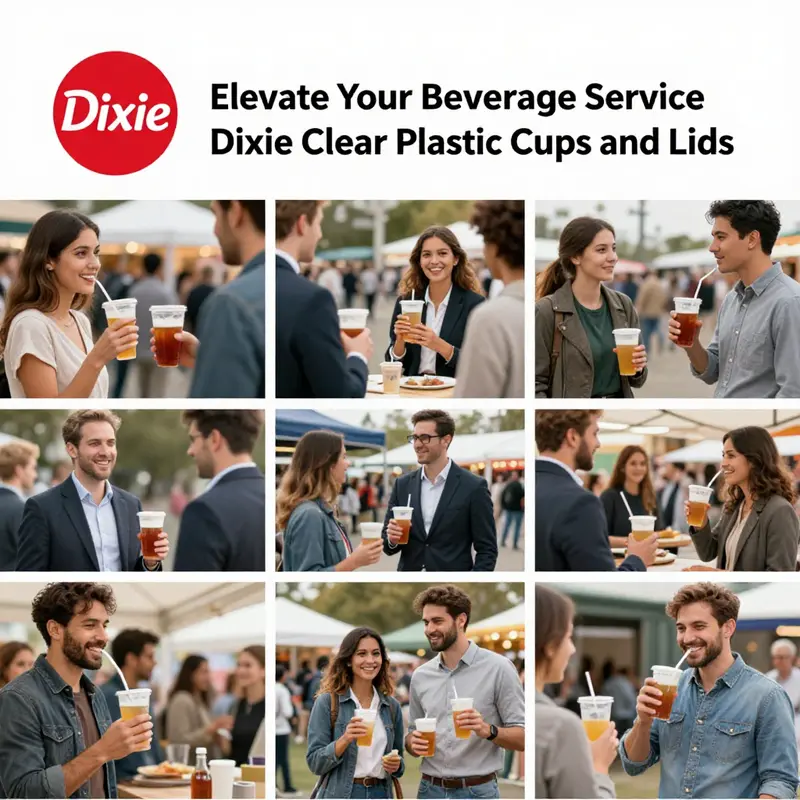
The clean, unassuming silhouette of a clear plastic cup with a lid has become a quiet benchmark of modern service design. In the steady rhythm of coffee shops, dessert cafes, smoothie kiosks, and delivery-driven foodservice, these cups do more than hold a beverage; they project a promise. The container becomes a visual stage where color, texture, and aroma combine to form trust between the product and the consumer. In this sense, the market for transparent cups with lids sits at the intersection of utility and perception, where form supports function and function, in turn, elevates brand storytelling. As consumer habits shift toward grab-and-go consumption and omnichannel ordering, the materials and designs that underpin these cups are not mere back-office decisions. They are strategic levers that influence perceived quality, brand identity, and operational efficiency. The journey of these clear cups from the factory to the customer’s hand is a story about clarity in more ways than one: clarity of contents, clarity of purpose, and clarity of choice amid a crowded marketplace.
A central thread in this narrative is material choice. Transparent cups with lids have historically leaned on materials like polypropylene and polyethylene terephthalate because of their cost-effectiveness, durability, and clear, glass-like transparency. Yet consumer markets are increasingly asking for packaging that aligns with sustainability goals. The demand for eco-friendly solutions pushes manufacturers to explore biodegradable or compostable options, often rooted in plant-based polymers such as polylactic acid (PLA). The trade-offs are tangible. PLA and similar bioplastics can offer improved end-of-life outcomes, but they may require specialized composting streams or specific handling to realize those benefits. Meanwhile, traditional PP and PET remain attractive for their consistent barrier properties, mechanical strength, and widespread recyclability in many municipal systems. Brands want the best of both worlds: a cup that preserves beverage integrity and a lid that seals securely, all while minimizing environmental impact and keeping costs predictable for operators who live on margins and speed.
This balancing act feeds into a broader consumer preference trajectory. When a consumer selects a beverage, they are implicitly evaluating the packaging as well. A clear cup offers a direct line of sight to the product, which matters for trust and perceived freshness. For health-conscious or premium brands, the transparency acts as a form of inoculation against suspicion: if the beverage looks vibrant and unblemished through the cup, confidence in the product rises. Conversely, when a cup is cloudy or a lid appears ill-fitting, perception can drift toward doubt about quality or hygiene. In a market where many beverages are designed to be visually appealing—the hue of a cold-pressed juice, the sparkle of a well-made latte, the gradient of a smoothie—the cup becomes part of the sensory experience. The lid, too, contributes to that experience. Modern lids are engineered not only to seal but to enable a confident sip, whether through a wide or narrow mouth, a spill-resistant profile, or a design that accommodates drive-through lanes and mobile ordering. For operators, these design choices translate into tangible outcomes: fewer spill incidents, faster service, and a smoother handoff to the customer who is in a hurry yet wants to feel certain about their purchase.
What emerges from the market data is a clear preference for functional design married to reliable performance. The most valued attributes consistently include leak resistance, sip-ability, and compatibility with a range of service formats—from counter-service to drive-thru to curbside pickup. The lids’ geometry matters as much as their material. A well-engineered lid will resist leaks during vigorous transit, yet allow a comfortable sipping action without forcing the consumer to tilt the cup at awkward angles. When such lids integrate with a lid-and-cup system that stacks neatly, ships efficiently, and stores compactly, operators gain operational latitude. They can hold more stock in less storage space, simplify inventory management, and speed up the line during peak hours. In this way, the practical engineering of the lid directly feeds into the consumer’s daily routine, reinforcing reliability as a brand attribute.
This reliability has real implications for the channels through which beverages move. In many foodservice settings, cups and lids are the visible, daily touchpoints that reinforce hygiene and trust. Customers frequently equate the cleanliness of the cup with the cleanliness of the establishment itself. A clear cup that shows no residue, no fogging, and no discoloration communicates a message of meticulous care. The same is true for transparency in branding. While the cup itself is neutral, the space around it—lids with branded tamper-evident seals, printed sleeves, or subtle color accents on the lid edge—becomes a vehicle for identity. In a marketplace where many operators seek to create a distinctive look, clear cups act as quiet canvases that let product color do the talking while still offering enough surface area for branding elements that do not overwhelm the beverage’s visual appeal. The visual value is not purely cosmetic. It supports premium positioning in a crowded category by allowing the consumer to visually assess ingredients and freshness before taking a sip.
The story of consumer preference also carries implications for customization and personalization. In recent times, operators have shown growing interest in providing branded, tamper-evident features that preserve product integrity while signaling care and attention to detail. The lid becomes a flexible vehicle for branding through color, logo placement, or a raised valve that is both functional and decorative. Customization extends beyond aesthetics. It can also imply a tacit promise of quality and safety. When a beverage is delivered to a table or curbside, the visible seal and the tidy alignment of cup, lid, and sleeve convey a sense of meticulousness that resonates with customers who value consistency. This alignment supports retention, as repeat customers come to expect the same precise experience every time they order.
The business sector focus has also evolved alongside consumer preference. Across coffee shops, dessert cafes, and beverage-forward concepts, the emphasis is on cup designs that support brand identity while staying true to hygiene and practicality. For many operators, the cup-and-lid choice is not a standalone decision but part of a broader package that includes straws, sleeves, and packaging that can be customized to reflect brand values. The integration of customization into the packaging ecosystem offers a way to deepen brand recognition without sacrificing the speed and reliability needed for busy service environments. In addition, the growing importance of takeout and delivery channels means that cups must perform under varying conditions—from a hot beverage kept warm in a sleeve to a cold smoothie with a secure lid that travels without leaking. In these contexts, the role of the lid extends beyond sealing; it becomes a trust signal for the consumer. The ability of a lid to remain leak-proof through transit reinforces the perception that the entire service chain is attentive to detail and committed to quality.
As the industry contends with sustainability, the decision matrix for clear cups with lids becomes more nuanced. Consumers are increasingly mindful of packaging end-of-life and the presence of recyclability streams. While recyclable PET and PP are widely accepted in many communities, bioplastics like PLA offer a pathway to reduced fossil-fuel reliance, albeit sometimes with stricter disposal requirements. The practical takeaway for operators is to look beyond the immediate price and consider life-cycle factors: whether the chosen cup and lid optimize product integrity, minimize waste through better portion control and sealing, and align with the local waste-management landscape. The ability to recycle the cup and lid together in compatible streams can simplify disposal for customers and improve the overall sustainability profile of the operation. For those who want to go further, selecting materials and designs that enable easier separation of components can improve recyclability. In this way, the cup becomes not just a container but a component of a broader sustainability narrative that customers increasingly expect from the brands they trust.
One implication of this evolving landscape is the reality that clear cups with lids are more than containers; they are communication tools. They tell a story about what the brand values—convenience, quality, transparency, and responsibility. In a world where mobile ordering is rising and consumers expect rapid, reliable service, the cup’s performance underpins the entire customer journey. A well-designed cup and lid system supports fast assembly, minimizes error, and reduces friction at the moment of purchase. It offers a tangible benefit to operators by enabling smoother handoffs, easier stacking, and more predictable shipping or curbside pickup. But it also offers a psychological benefit to the consumer: the visible beverage and the assurance of a secure seal deliver confidence that the order will satisfy upon arrival.
For practitioners seeking concrete guidance, the lesson is to view cup selection as a strategic operating decision rather than a peripheral one. Consider the expected delivery pathway, the typical beverage temperature, the brand’s visual language, and the local waste system. Seek materials that deliver stable clarity and resistance to fogging over time, while also providing a seal that stands up to transit and a lid geometry that supports a comfortable sip. When possible, pilot multiple configurations to observe how they perform in the real world—from busy morning rush hours to weekend events with higher volumes. In addition, examine the flexibility of the system: can lids be swapped to accommodate different beverage types without introducing complexity? Can the same cup be used across several product lines to reduce SKUs and simplify inventory management? These practical questions are central to building a packaging ecosystem that sustains both customer satisfaction and operational efficiency.
As the chapter closes on this examination of market trends and consumer preferences, it is helpful to connect the dots between perception, performance, and practicality. Clear cups with lids are more than plastic vessels; they are interfaces between product, brand, and consumer experience. They translate the value proposition of a beverage into a tangible, portable moment that travels from the serving counter to the customer’s hand, through transit, and into memory. The most successful operators treat this interface with the care it deserves, recognizing that every sip begins with a well-chosen cup and lid. In an industry that prizes speed without sacrificing trust, the cup becomes a quiet ally—an instrument through which flavor, freshness, and brand identity are conveyed with minimal fuss and maximal impact. For readers who want to explore practical examples of how clear cups function in event settings and everyday use, see this resource on disposable clear plastic cups for parties and events, which illustrates how the same container adapts to a range of occasions while maintaining a consistent standard of quality. clear plastic cups for parties and events
The landscape ahead is one where material science, design ingenuity, and consumer expectations continue to converge. New blends and manufacturing processes promise better clarity, improved barrier properties, and more sustainable end-of-life options. The value proposition for clear cups with lids remains straightforward yet powerful: they enable fast service, protect beverage integrity, showcase product appeal, and convey a brand’s commitment to quality and responsibility. In this interplay of visuals and performance, the container helps to shape behavior—encouraging customers to choose quickly, trust what they see, and feel confident enough to repeat the experience. For researchers and practitioners, the topic remains fertile ground for exploring how incremental advances in lid design, closure technology, and materials can lift overall customer satisfaction, reduce waste, and support smarter, more resilient foodservice operations. For readers seeking deeper technical detail on the specifications and applications that underpin these cups, a comprehensive technical overview is available at the external reference linked here. It offers a rigorous look at the materials, sealing performance, and compatibility considerations that underlie successful cup-and-lid systems across diverse use cases.
External reference: A Technical Overview of Disposable Clear Cups Lids: Specifications and Applications (Alibaba).
Final thoughts
Dixie clear plastic cups with lids represent a perfect blend of practicality, functionality, and eco-friendliness. Whether used in food trucks, restaurants, or catering services, they provide a reliable solution for a variety of needs in the food and beverage sector. As consumer preferences continue to evolve towards sustainability and innovation, integrating Dixie cups into your operations can enhance your service while meeting market demands. Embrace the benefits of these versatile cups and position your brand at the forefront of the beverage service industry.