
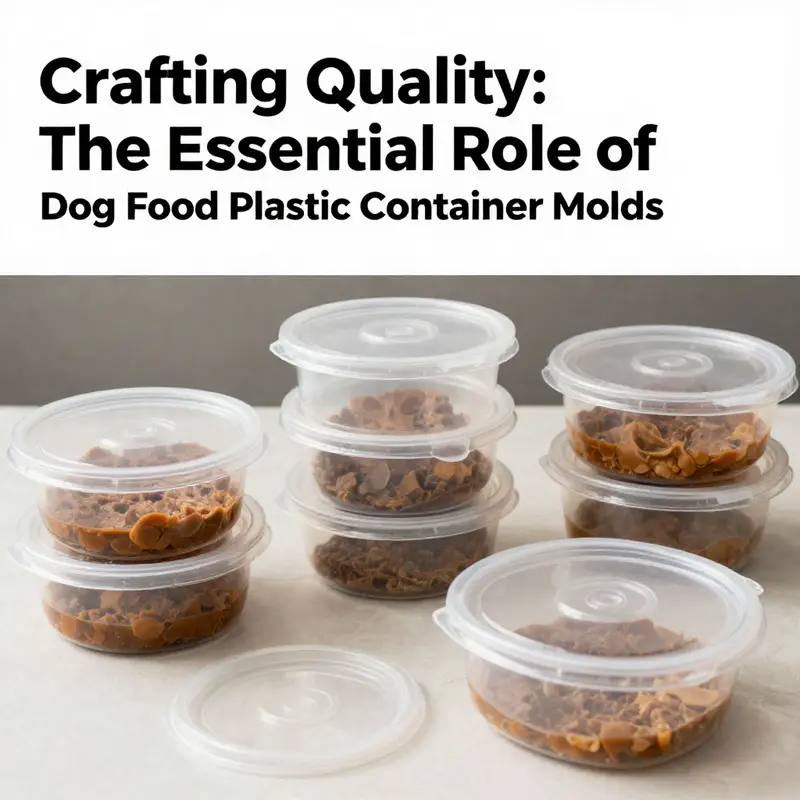
In an upscale dining landscape, businesses such as bubble tea shops, restaurants, and food trucks are continually on the lookout for innovative packaging solutions that enhance both functionality and aesthetics. A standout product in this niche is the dog food plastic container mold, designed specifically to meet the needs of dog owners and retailers alike. This article delves into the critical elements of manufacturing processes, design considerations, and current market trends that govern the production of dog food containers. Each chapter highlights the unique aspects of these molds and their significance for food service establishments catering to pet owners, ensuring that readers gain a comprehensive understanding of why investing in high-quality molds is essential for today’s businesses.
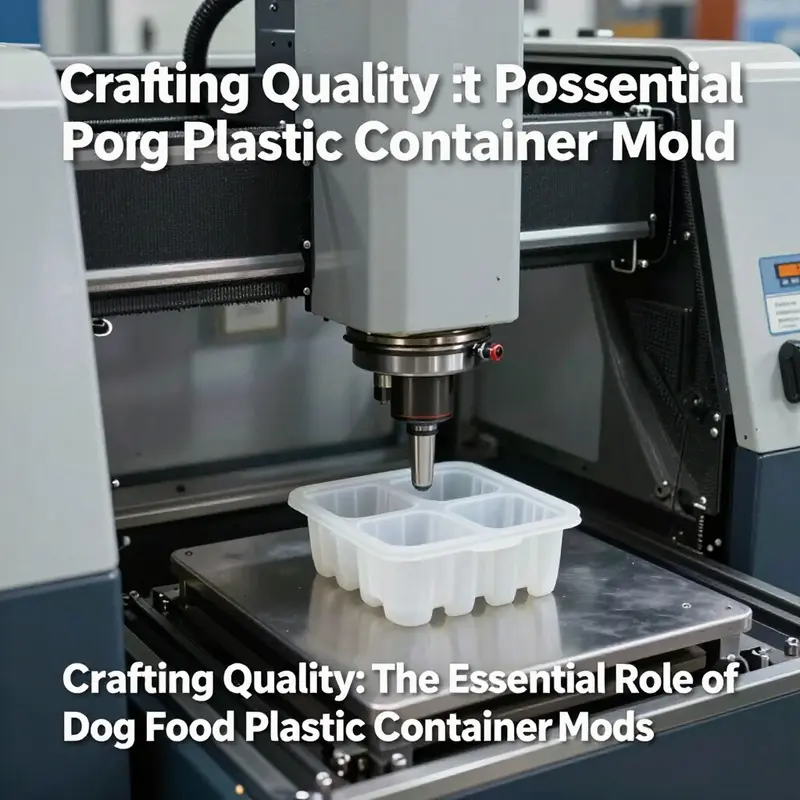
Molding Taste and Structure: The Precision Craft Behind Dog Food Plastic Container Molds
External resource: https://www.tianshuipetpack.com/industries/pet-food-mold-manufacturing-process
Molded for Freshness: Designing Robust Injection-Molded Dog Food Containers
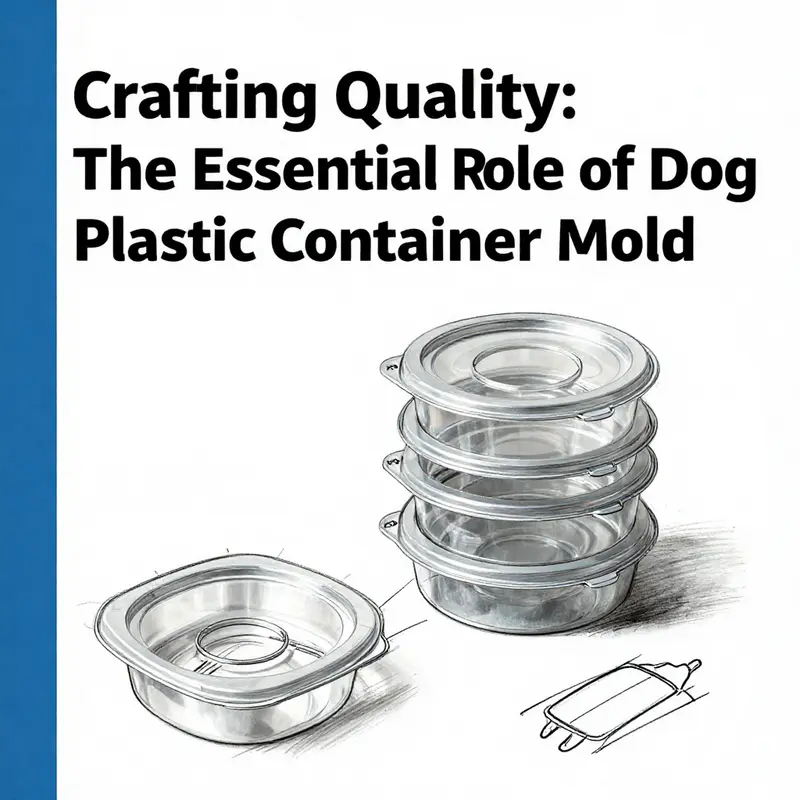
Designing an injection-molded dog food container is as much about user behavior as it is about polymer science. This chapter outlines how a well-conceived mold approach translates a simple box into a durable, safe, and family-friendly system.
From mold architecture to gate design and cooling, every decision affects performance, cost, and longevity. The mold must produce consistent wall thickness, reliable seals, and smooth interiors that resist kibble buildup.
Material selection matters for food safety. HDPE and PP are common choices; each offers advantages for rigidity, chemical resistance, and sealing surfaces. The mold designer accounts for shrinkage and cooling to avoid warping and to maintain airtight lids.
Modular bases, quick-change inserts, and robust ejection mechanisms reduce downtime and enable family-wide product variants. Standardized bases allow rapid repair and predictable cycle times.
Real-world use impose stacking, carrying, and long-term wear. The mold should accommodate these loads with thicker walls in critical areas, reinforced ribs, and well-designed locking features.
The broader packaging ecosystem and cleaning protocols influence the mold strategy, ensuring parts tolerate sanitizers without compromising aesthetics or safety.
In practice, continuous feedback from production lines and consumer testing informs incremental refinements, turning a single container into a reliable system for pet owners who store and serve meals with confidence.
The mold is a tool that translates design intent into everyday life, balancing safety, convenience, and performance across a family of containers.
Shaping Freshness and Future Value: Market Currents in Dog-Food Container Molds and the Push Toward Smarter, Safer Storage
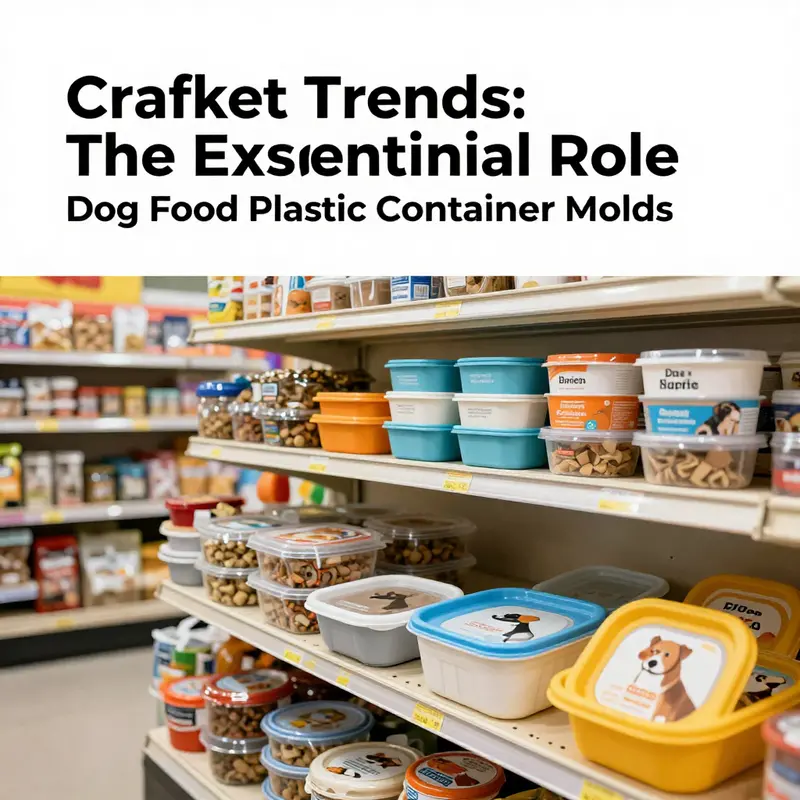
The market for dog food plastic container molds is not only expanding; it is evolving in ways that blend durable performance with smarter manufacturing and more sustainable packaging. A robust body of recent data shows a pet care sector that is growing from strength to strength, with the global pet food packaging market projected to rise from roughly $128 billion in 2026 to around $210 billion by 2034, a compound annual growth rate near 6.4%. Those numbers translate directly into demand for molds that can deliver high-quality, durable containers at scale. They also underscore why mold makers must balance tight tolerances, rapid iteration, and predictable maintenance with the growing expectations of brand owners who want freshness, convenience, and responsible material stewardship all in one package. This convergence—between consumer demand for freshness and the technical capability to produce sophisticated molds at scale—defines the current trajectory of dog food container molding and shapes the roadmap for what comes next in the industry.
From the outset, the core driver is product freshness and preservation. Pet owners are increasingly vigilant about moisture control, pest barriers, and contamination prevention. Packaging designers respond by demanding seal systems and moisture barriers that can stand up to repeated handling and long storage in home environments or garages. In practice, this means molds must produce containers with highly reliable seal rings, robust lids, and sometimes integrated dispensing features—all created in a single, repeatable cycle. The emphasis on multi-component molding reflects a broader shift in which the final product can be assembled inside the mold. A container might feature a built-in seal ring or a dispensing mechanism integrated with the main body. This reduces assembly steps downstream, lowers total cost of ownership, and minimizes the risk of misalignment during production. The mold, therefore, is not just a hollow cavity but a complex system that orchestrates several functions in one cycle, demanding precision engineering and an advanced toolset.
Technological progress in molding technologies is a central element of the trend. The industry leans heavily on high-performance, food-safe polymers such as HDPE and PP, chosen for their balance of chemical resistance, durability, and compatibility with recycling streams. The capability to execute multi-component injection molding enables designers to bring intricate features into a single, high-quality part. For example, a storage bucket might be molded with a built-in dispensing mechanism or an ergonomic handle that is molded in, rather than attached later. Such designs demand sophisticated CAD/CAM workflows and high-tolerance machining. The update cycle for molds mirrors the speed of new product introductions in the pet care space, where brands frequently refresh packaging to align with flavor lines, seasonal promotions, or sustainability commitments. The molds themselves thus become a strategic asset, not just a manufacturing tool.
Within this landscape, there is also a clear emphasis on precision engineering and the ability to implement complex geometries. The latest molds are designed to form tight-fitting seals, smooth interior radii that ease cleaning, and internal structures that optimize material flow and product performance. The ability to maintain tight tolerances across thousands of molding cycles is essential to preventing leakage, warping, or sealing failures. To achieve this, mold makers rely on an ecosystem of advanced software, including high-precision CAM and simulation tools, paired with state-of-the-art machining centers. The result is a family of containers that not only meet current expectations but also set new benchmarks for user experience, from comfortable grips to intuitive pouring or scooping features.
In practical terms, these capabilities are underpinned by substantial manufacturing investments. A modern mold shop often deploys imported 5-axis machining centers, electrical discharge machining (EDM) equipment, and large-range injection molding presses—sometimes in the 120-ton to 3,300-ton class—to cover a spectrum from small caps to large, stackable buckets. The advantage is twofold: tighter tolerances for critical interfaces like seal rings and lids, and the scalability to produce large volumes with consistent quality. An additional design principle is the use of standardized mold bases. By standardizing bases, manufacturers minimize downtime when parts wear or when a repair is necessary. They can quickly swap components, reduce maintenance windows, and keep lines running with less disruption. This emphasis on maintenance readiness is essential in an era when production lines must be resilient against supply chain variability and demand surges.
The production capacity a mold house can sustain is a telling indicator of market readiness. A facility that can deliver more than 500 molds per year points to a mature ecosystem capable of supporting diverse product families, from consumer-grade buckets to more specialized containment solutions. The example of a 25-kilogram stackable dog food container illustrates how the mold’s design must balance form and function with practical realities like space utilization in a typical home pantry or garage. A tall, stackable design improves vertical storage, which is a response to consumer behavior around bulk buying and extended storage in limited spaces. For large-breed owners and bulk buyers, such a design reduces the footprint on shelves and makes it easier to organize different food types—kibble, treats, grain-free options—without the clutter that can accompany horizontal layouts. The mold for such a container does not stand alone; it is part of a broader family of pet-food molds that share a standardized approach to automation, cooling, and ejection to ensure fast cycle times without sacrificing quality. It is also a reminder that price points for complete mold configurations can start in the lower thousands, reflecting an ecosystem where value is created through durability, replicability, and the ability to tailor for multiple product categories.
As the mold makers align with the pet care industry’s broader push toward sustainability, the conversation shifts toward materials science and process transparency. The adoption of sustainable practices in mold construction and in the resulting containers manifests in several ways. First, the emphasis on recyclable mold materials and energy-efficient manufacturing processes signals a shift toward lower lifecycle impact. Second, there is a growing appetite for designs that facilitate easy recycling and the use of recycled content in the final containers. Third, designers are exploring the feasibility of biodegradable or compostable alternatives for future lines, an ambition that sits alongside the practical realities of current packaging demands. While HDPE and PP currently dominate, the field is watching developments in polymer blends and fillers that can deliver similar mechanical properties with improved sustainability profiles. This is not a theoretical concern; it is a practical driver of design decisions, affecting wall thickness, rigidity, and seal effectiveness. The goal is to sustain performance while reducing waste and increasing the proportion of recycled content in new products.
The practical implications of Industry 4.0 are increasingly visible in mold shops. Real-time monitoring of temperature, pressure, and cycle times during production enables predictive maintenance. Connected molds can alert operators when a component is nearing the end of its life, reducing downtime and scrap. This data-rich environment supports a culture of continuous improvement and tighter process control, essential in a market where consumer expectations for freshness hinge on reliable packaging performance. The sustainability narrative also extends to energy usage and waste reduction. Recyclable materials, energy-efficient ovens and coolants, and smarter automation reduce the environmental footprint of both the mold-making process and the final product. In the end, the convergence of smart manufacturing and sustainable materials becomes a differentiator for brands that need to balance cost, performance, and environmental responsibility.
Regionally, the competitive landscape reflects globalization paired with local expertise. Global players contend with specialized regional vendors who understand local regulatory environments, consumer preferences, and distribution networks. A 2026–2034 horizon is shaped by these dynamics, with emerging markets in Latin America and the Asia-Pacific region offering significant opportunities due to rising pet ownership and growth in disposable income. The Brazil Mold Exhibition and similar events are signals of a market actively seeking to blend advanced molding capabilities with market-specific needs. This market dynamism pushes mold designers to provide not only high-quality bases and components but also after-sales support, training, and adaptable manufacturing solutions that can scale with shifting demand—and with the ability to introduce new product lines quickly as pet owners respond to flavor, packaging, or convenience trends.
The future outlook remains firmly anchored in continuous innovation. Material science is likely to deliver new polymers with enhanced barrier properties, better clarity for consumer-facing components like label windows, and improved processing characteristics that make high-speed molding more feasible. Smart packaging features, from QR codes that link to freshness indicators to embedded sensors that report in real time on the state of the food, are areas that mold designers will increasingly accommodate. The goal is not to create a single futuristic container but to enable a family of products with modular features that can be combined in multiple ways. These could include integrated dispensing mechanisms, modular seal rings, or adjustable lids, all engineered to perform across a wide variety of environments—from climate-controlled kitchens to humid climates where moisture control is critical.
Sustainability will continue to be core to this evolution. There is an industry-wide push toward reducing plastic waste through designs that are easier to recycle, the use of recycled content in base materials, and the exploration of truly biodegradable or compostable alternatives for certain product lines. The challenge is balancing compostable or biodegradable options with the durability and cost requirements that dog food packaging demands; packaging must survive shipping, stacking, and daily use without degrading too quickly or posing a contamination risk to the pet food itself. The mold makers’ response is to develop processing strategies that minimize material usage while preserving strength and seal integrity. In practice, this means thinner walls in non-critical areas, smarter ribbing to maintain stiffness, and redesigned seal systems that function reliably with lower material content. These innovations, in turn, ripple through to buyers and brands who seek both attractive design and responsible packaging choices.
All these threads—the demand for freshness, the acceleration of multi-component molding, the push for sustainable materials, and the integration of Industry 4.0—cohere into a single narrative. The mold design and manufacturing ecosystem is becoming a strategic enabler of brand performance in the pet care space. It supports not only the practical aspects of packaging but also the experiential angles that matter to consumers: how easy it is to store, how well the product stays fresh, how user-friendly the container is, and how confidently the packaging signals quality and safety to the end user. In this sense, the mold is not merely a tool for forming plastic; it is a vehicle for delivering value across the product lifecycle—from production line reliability to shelf appeal and ultimately to the pet owner’s daily interaction with the product.
The specific example of a 25 kg stackable container illustrates how market requirements translate into mold design decisions. The container must maximize vertical storage, accommodate bulk purchase behavior, and support efficient organization in home storage environments. The mold must produce a part with consistency across thousands of cycles, ensuring that the stacking geometry remains functional as the product lines evolve. The lid, seal ring, and interior geometry all interplay to create a system that keeps moisture out, keeps the contents flowing properly when dispensing, and remains easy to clean. While the 25 kg design is oriented toward large breeds and bulk buyers, the underlying mold architecture is modular enough to support variations for medium and small dog formulations, different dispensing configurations, or alternative sealing strategies. In this way, a single mold family becomes a platform for a range of products, enabling manufacturers to respond quickly to changing consumer preferences without sacrificing the economies of scale that drive margin and investment return.
Finally, the broader packaging ecosystem—beyond dog food alone—offers a lens to understand how these trends interact with consumer expectations. A wide spectrum of consumer packaging—ranging from takeout containers to home storage solutions—reveals a shared emphasis on safety, convenience, and sustainability. The convergence with other packaging formats is not accidental. It reflects a standardized approach to materials, processing, and end-of-life considerations that can be leveraged to create consistent quality across product categories. For those who study this field, it is clear that the mold is a central hinge between concept and market performance. The same principles that drive robust seal integrity, precise tolerances, and efficient cycle times in dog food containers are equally applicable to other containers that households rely on daily. In this sense, the lessons learned in one segment of the packaging world can inform innovations across a broad swath of consumer products.
As the market continues to grow and the technology continues to advance, the most successful players will be those who align their mold design and manufacturing capabilities with the evolving expectations of pet owners, brand owners, and regulators. They will invest in precision, pursue new materials with an eye toward end-of-life outcomes, and embrace the benefits of connected, smart manufacturing that turns data into action. They will also recognize that the container is only as good as its least reliable component, whether that is the seal, the lid, or a dispensing feature that must function flawlessly after tens of thousands of cycles. In that sense, the chapter on market trends is not a story of product lines alone but a narrative about how technology, sustainability, and consumer behavior intersect to redefine what it means to store, protect, and present dog food. It is a story of molds that are more than tools; they are the enablers of freshness, convenience, and trust in a world where pets are regarded as family and the relationships we form with them are grounded, quite literally, in the packaging that keeps their meals safe and appealing.
Final thoughts
Understanding the intricacies of dog food plastic container molds is vital for restaurants, food trucks, and catering services aiming to meet the demands of pet owners. By focusing on manufacturing excellence, thoughtful design, and emerging market trends, businesses can not only enhance their product offerings but also cater effectively to a growing demographic. Investing in quality molds ensures that your establishment remains competitive and responsive to consumer needs, reinforcing the importance of incorporating innovative packaging solutions into your operations.