
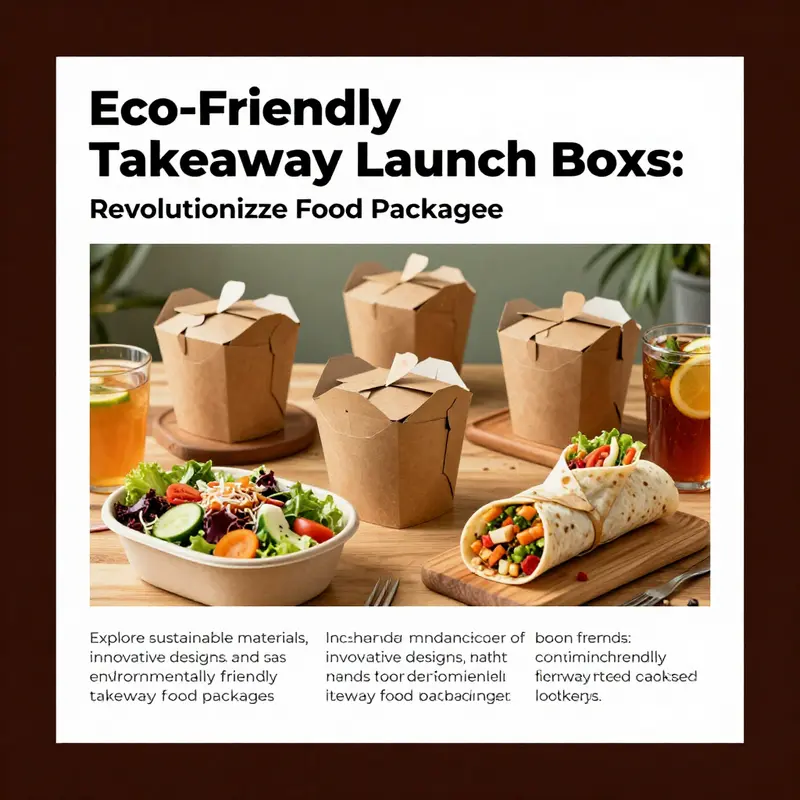
The growing demand for sustainability in the food service industry has led to the rise of eco-friendly takeaway launch boxes, which cater to businesses striving to reduce their environmental impact. These innovative packaging solutions not only reflect a commitment to the planet but also enhance customer experience across various sectors, including bubble tea shops, restaurants, food trucks, catering services, and corporate procurement teams. The following chapters delve into the sustainable materials that comprise these boxes, showcase groundbreaking design innovations, and analyze market trends that underscore the economic benefits of adopting these eco-friendly solutions.
From Forest to Front Door: The Material Truths Behind Eco-Friendly Takeout Launch Boxes
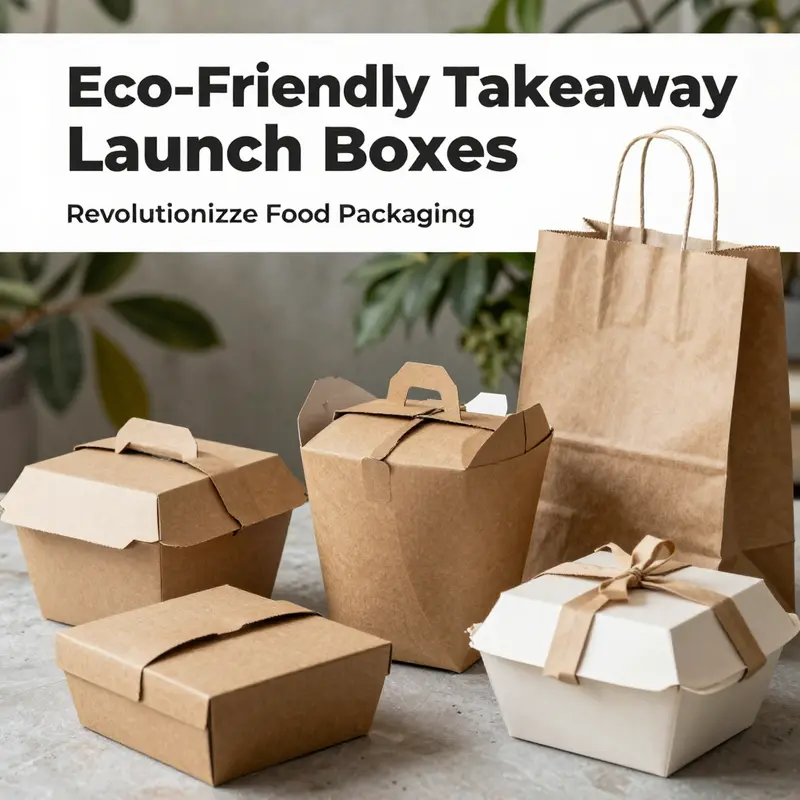
A shift is quietly reshaping the world of takeaway packaging. Businesses increasingly demand packaging that performs as reliably as traditional options, yet leaves a lighter imprint on the environment. This movement centers on sustainable materials that can endure the rigors of transport, protect the integrity of a meal, and at the end of life, nudge the system toward recycling, composting, or safe biodegradation. In practice, that means turning to materials sourced through verifiable stewardship programs, optimized through design that minimizes waste, and produced in scales that make sustainable choices affordable for kitchens that must serve high volumes every day. The result is a nuanced material story rather than a single shortcut. When you look closely, the sustainable materials that underpin modern eco-friendly takeaway launch boxes reveal a layered logic: durability paired with biodegradability, responsible sourcing paired with practical performance, and branding possibilities paired with clear messages about a company’s environmental commitments. This is not simply a matter of swapping plastic for paper; it is a careful orchestration of material science, supply chain integrity, and consumer expectations that can reshape the bottom line and the planet at the same time.
At the heart of this shift is a class of materials often described in broad terms as FSC-certified recycled cardboard and paperboard. The Forest Stewardship Council certification signals that the feedstock for the packaging comes from forests managed with a balance of ecological safeguards, social responsibility, and economic viability. In practice, FSC-certified cardboard and paperboard offer a combination of traits that matter in real-world use: strength to hold a range of foods, resistance to moisture and grease to limit soggy or leaky packages, and a path to end-of-life that respects recycling streams or composting if facilities permit. The durability of these materials is not a mere marketing promise; it is demonstrated in their ability to keep soups contained without bulging seams, to support heavier items such as pizzas or multi-item meals, and to withstand the bumps and drops of everyday delivery. Yet the story doesn’t stop at performance. The biodegradability and recyclability of these boards are central to their appeal, aligning with a growing consumer demand for transparent, responsible end-of-life options.
Beyond plain recycled cardboard, compostable paperboard has carved out a niche in applications where a lighter, more natural aesthetic or a shorter shelf life is acceptable and desirable. This material is treated as a renewable option that can break down under industrial composting conditions, reducing landfill burden when facilities exist to process it. It finds particular resonance in product lines that feature fried foods, lunch bowls, or other items where a lighter substrate is compatible with the desired branding while still delivering functional containment. It is worth noting that compostability hinges on the availability of appropriate facilities; without those, even compostable paperboard may end up in mixed waste streams. Thus, strategic planning around local waste infrastructure becomes a part of choosing this material—and a part of communicating the intended end-of-life pathway to customers.
Kraft paper remains a steadfast favorite for many operators seeking a warm, natural look with robust performance. Kraft’s natural strength, printability, and versatility support a broad spectrum of branding strategies, from bold, rustic visuals to clean, minimalist aesthetics. In the realm of takeout launch boxes, kraft paper often pairs with windowed lids or clear panels that satisfy consumer curiosity about food contents while preserving structural integrity. This combination of form and function creates a compelling package: customers can see the meal, decisions about portioning feel informed, and the packaging itself communicates a brand’s commitment to sustainable principles through color, texture, and material choice. The kraft option also tends to be forgiving in production terms, accommodating a range of sizes and shapes with predictable performance in shipping and handling.
The overarching advantage of these materials is a clearer path to responsible waste management. FSC certification and similar sustainability claims anchor a credible narrative about where the raw materials come from and how forests are stewarded. In a market increasingly driven by transparency, the ability to point to verifiable standards matters. The credibility gained from such certifications supports a broader industry shift toward sustainable procurement practices. For brands, this is not merely about ticking a compliance box; it is about embedding environmental stewardship into the core of product development, supplier selection, and customer communication. The supply chain, in turn, benefits from supplier ecosystems that are aligned on environmental goals, social responsibility, and traceability. When a chain of custody is established, every link—from forest to factory floor to bag or box—becomes part of a documented, auditable story that can be shared with customers and regulators alike. This alignment matters because it invites consumers to participate in a circular economy, where packaging is not simply discarded but reinterpreted as a resource in a continuous loop.
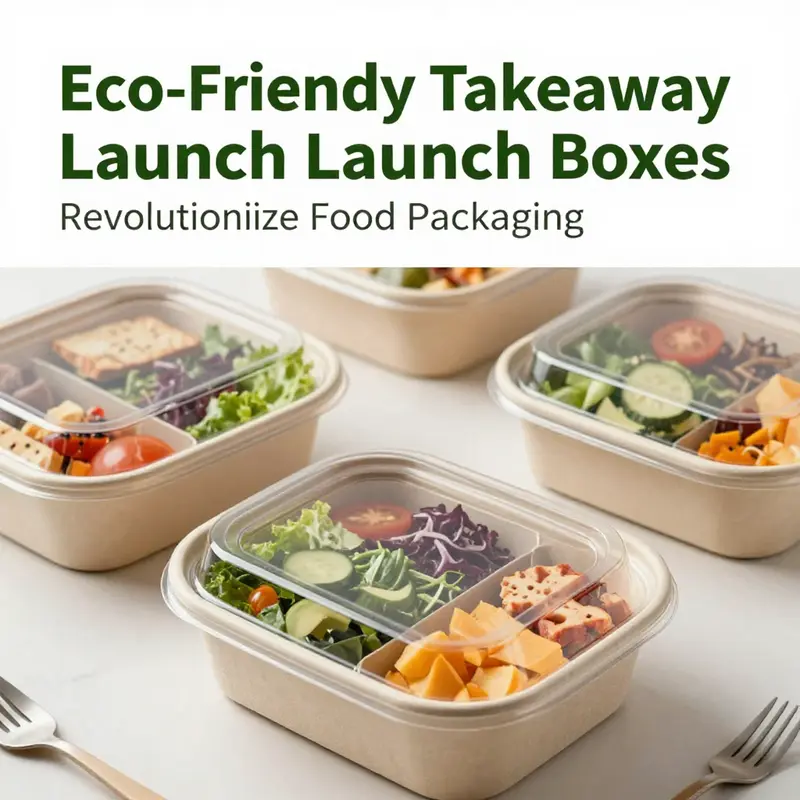
Design and functionality sit at the intersection of sustainability and practicality. Contemporary takeaway launch boxes increasingly feature design elements that support both food safety and the consumer experience. Clear window lids are among the most visible of these features; they invite the eye to a product, reducing the need for excessive unpacking and enabling a sense of anticipation about the meal inside. Windowed designs also reinforce a perception of freshness and quality, a psychological cue that reinforces the value proposition of the box as a premium, yet eco-conscious, choice. Compartmentalized structures are another important design element. They prevent cross-contamination, preserve the distinct textures and flavors of different components, and promote neat, organized presentations—benefits that are especially meaningful for salads, bowls with toppings, and multi-item meals that might include sauces or dips.
Practical performance remains a core concern. The packaging must be strong enough to withstand conventional transport without collapsing under the weight of heavier items, while maintaining a light touch that supports a satisfying consumer experience when opening and enjoying a meal. This balancing act often drives material choice and wall thickness, as well as the engineering of seams, folds, and locking mechanisms. For many operators, such performance is reinforced by coatings or liners that resist grease and moisture, without compromising recyclability or compostability. The goal is to achieve a leak-resistant, grease-resistant profile that protects both the contents and the customers’ hands, a feature that becomes particularly valuable when meals travel long distances or need to be stored briefly before consumption.
The conversation about materials also intersects with production realities. High-volume manufacturing capabilities are crucial for large-scale adoption of sustainable packaging. In practice, suppliers can offer impressive output with flexible configurations, including a range of sizes and the possibility of customized printing and branding. Those capabilities enable brands to maintain a consistent look and feel across product lines, even as they scale up. It is not uncommon for suppliers to accommodate orders in the tens of thousands or even millions of units per year, with minimum order quantities that reflect the scale at which restaurants and delivery platforms operate. This capacity is essential because sustainability initiatives often require a transition that touches every SKU, every size, and every regional market. The ability to deliver consistent quality at scale is a practical knock-on effect of this approach, and it directly affects operational reliability for the businesses pursuing greener packaging options.
From a branding perspective, the opportunity to customize packaging without abandoning sustainability is a meaningful advantage. Modern suppliers can combine FSC-certified materials with water-based inks and environmentally friendlier printing processes to minimize the environmental footprint of the packaging itself. Customization is not purely cosmetic; it strengthens a brand’s narrative by aligning visual identity with environmental claims. The visual language—color choices, typography, and messaging around recyclability or compostability—helps to translate a company’s values into tangible consumer touchpoints. In a marketplace where customers are increasingly selecting brands based on values, packaging becomes a form of nonverbal communication that travels with the meal to the customer’s door and back into the recycling stream.
At a systems level, adopting sustainable materials is intertwined with broader regulatory and market dynamics. Governments and industry coalitions are moving toward tighter regulations on single-use plastics and expanded producer responsibilities. In response, many operators are looking to packaging solutions that not only comply with current rules but also anticipate future requirements. The move toward FSC-certified materials, compostable substrates, and recyclable designs aligns with these trajectories, reducing the complexity of compliance and enabling a more predictable, future-proof packaging strategy. In addition to regulatory alignment, there is a cultural shift in consumer expectations. Consumers increasingly demand proof of environmental stewardship, and the packaging they encounter in online orders or retail takeout becomes a tangible proof point for a brand’s commitments. The packaging itself, when thoughtfully designed and responsibly sourced, becomes a statement about responsibility, trust, and long-term partnership with customers who care about the broader consequences of their choices.
For organizations exploring this path, practical steps begin with a clear understanding of the lifecycle implications of each material option. Inventory decisions should account for end-of-life pathways available in target markets, whether curbside recycling programs or industrial composting facilities. Beyond that, the selection process benefits from a lifecycle assessment approach that weighs energy use, water intensity, and emissions across raw material extraction, manufacturing, transport, and end-of-life processing. It is through this lens that the debate moves from a simple material swap to a strategic recalibration of packaging as a lever for sustainability and customer trust. When brands can articulate the full story—from forest to front door and back to the waste stream—consumers receive a coherent narrative that informs their choices, a narrative that helps them feel good about the meals they order and the brands they support.
As this chapter unfolds, it becomes clear that the sustainable materials powering eco-friendly takeaway launch boxes are not a single solution but a network of interrelated choices. Materials, design, production capabilities, and end-of-life infrastructure come together to create packaging that is both practical for food service operations and responsible for the environment. The best implementations are those that harmonize a robust performance profile with transparent, credible sustainability credentials. They invite customers to participate in a circular economy, where packaging is not merely discarded but reimagined as a resource. The result is a package that travels far beyond its primary function of containing a meal. It becomes a symbol of a shared commitment to stewardship and a practical tool for brands striving to balance profitability with planet-friendly values.
To explore the material landscape in a practical, real-world context, consider the online resources that showcase how these options are being packaged for delivery and retail use. For readers seeking a direct point of reference, a commonly cited example on a major procurement platform highlights the durable, recyclable, and biodegradable potential of FSC-certified recycled cardboard and paperboard in takeaway packaging. While exact product names and supplier details are outside this narrative, the emphasis remains on the material class and its lifecycle benefits. For a detailed case study and spec sheet, you can examine the external resource linked at the end of this chapter.
For operators aiming to deepen their understanding of the material options and to connect the dots between sustainability claims and practical performance, a concise starting point is to review suppliers that offer eco-friendly kraft paper boxes with windows and the option for custom printing, enabling a brand-ready appearance without compromising environmental goals. The capability to customize while maintaining sustainable credentials can help a business differentiate itself in a crowded market. It also supports a consistent brand experience across channels, from in-store pickup to home delivery, a continuity that can reinforce consumer trust and loyalty over time.
In this ongoing dialogue between materials science, design, and consumer expectations, the takeaway is not that one material is universally superior, but that the best choices reflect a thoughtful balance of performance, life-cycle impact, supplier credibility, and brand alignment. The result is packaging that does more than protect a meal; it communicates a company’s values, demonstrates a commitment to responsible resource use, and helps advance the transition toward a more circular economy in the food service industry. As the ecosystem of materials evolves—with new fibers, coatings, and processing techniques entering the market—the core objective remains stable: to deliver packaging that is trustworthy, functional, and aligned with a future in which waste becomes resource rather than waste. This is the essence of sustainable materials in eco-friendly takeaway launch boxes: a carefully chosen set of options that, together, support durable performance and responsible end-of-life outcomes, all while preserving the dignity of the brands that choose them.
Internal resource for readers seeking a concrete example of how these ideas translate into product lines can be found here: eco-friendly takeout boxes for food packaging.
External resource: For a deeper dive into the material and lifecycle implications of eco-friendly packaging options, see the detailed product overview on a major procurement platform: https://www.alibaba.com/product-detail/Maibao-Takeout-Breakfast-Box-Eco-friendly1600729534484.html?src=seoen&spm=a2700.10253467.0.0
Smart Design Strategies for Eco-Friendly Takeaway Launch Box Packaging
Designing for Performance and Planet: Innovations in Takeaway Launch Boxes
Designing an eco-friendly launch box for takeaway food means solving many problems at once. The box must protect food, preserve temperature, prevent leaks, communicate brand values, and fit into tight logistics. At the same time, it must minimize environmental impact across material extraction, manufacturing, use, and end-of-life. Recent innovations converge around a few clear objectives: higher functionality from sustainable materials, reduced waste through reuse and return systems, and clearer consumer guidance for disposal. This chapter describes those innovations and how they work together to make eco-friendly takeaway launch boxes a practical choice for food businesses.
Materials are the foundation of every design decision. Instead of oil-derived plastics, designers now favor plant-based fibers and recycled paperboard. High-grade recycled cardboard and kraft paper offer stiffness and printability while remaining recyclable. Bamboo and molded fiber made from agricultural residues deliver tensile strength with low embodied energy. These materials allow designers to create structures that stack reliably, nest efficiently, and resist compression during transport. By engineering fiber orientation and board thickness, manufacturers can balance weight, durability, and cost.
Barrier performance is critical. Many biodegradable fibers absorb grease and moisture, threatening integrity and food safety. To address this, innovators are developing plant-based coatings and layered paperboard constructions. A thin layer of PLA or other compostable biopolymer, applied selectively to interior surfaces, blocks grease and moisture without contaminating the fiber for recycling in regions that accept such materials. Alternately, layered paperboard with an inner grease-resistant layer and outer recyclable shell preserves recyclability in standard waste streams while protecting contents. Designers increasingly rely on lab testing that measures grease resistance, water vapour transmission, and hot-fill stability to validate these approaches.
Sealing and leak resistance have long limited paper-based containers. Modern designs integrate mechanical and material solutions. Snap-fit lids with interlocking tabs prevent accidental openings. Reinforced rim profiles distribute compressive forces so lids stay engaged under weight. Tamper-evident features like tear tabs or integrated perforations deliver both security and visible hygiene assurance. At the material level, reinforced corners and folded seals use doubled board sections that resist soaking and failure. These combined improvements reduce returns, spills, and food waste.
Thermal performance is another major focus. Conventional insulation has relied on non-recyclable foams, but new layered paper constructions and plant-fiber composites provide thermal control while staying compostable or recyclable. Air-trapping corrugation, internally corrugated liners, and double-wall assemblies all slow conductive heat loss. For chilled items, reflective paper coatings and vacuum-formed plant-fiber liners help maintain low temperatures. Importantly, designers tailor insulation to food type and delivery time. Lightweight lunch boxes for short trips prioritize stackability, while insulated meal kits for long deliveries use thicker, multi-layer assemblies.
Functionality often determines user satisfaction. Multi-compartment layouts solve cross-contamination issues and preserve texture. Integrated vents prevent sogginess for fried foods while maintaining leak resistance for sauced dishes. Removable dividers and fold-out trays give consumers flexible layouts for meal customization and reheating. Clear windows remain popular; when made from compostable cellulose film, they provide visibility without plastic waste. Designers also optimize ergonomics: tabs that provide a secure grip, lids that double as plates, and stacking features that reduce wobble during transit.
Branding and communication are increasingly embedded into the packaging itself. Water-based inks and laser-etching allow bold graphics without compromising compostability or recyclability. Designers use printed cues to guide disposal—clear icons and short instructions help consumers choose recycling or composting. Beyond disposal instructions, packaging can deliver value-added messaging about sourcing, seasonal menus, or loyalty programs. The visual design is often chosen to reflect the product’s sustainable credentials, using natural tones and simple typography to communicate authenticity.
Beyond single-use improvements, modular and reusable launch box systems are maturing. Several models enable returnable containers to cycle between kitchen and consumer. Durable fiber or hybrid boxes withstand repeated use and cleaning. Logistics integration is the key: designated collection points, return incentives, and driver-assisted pick-ups make returns convenient. Closed-loop systems often pair with commercial composting or industrial laundering facilities, depending on the material chosen. When properly structured, these systems drastically reduce landfill-bound waste and lower lifecycle emissions compared with one-off disposables.
Practical rollout of reusable programs requires careful planning. Businesses must manage inventory of clean containers, schedule pickups, and handle lost or damaged units. Software integrations that track container circulation by QR code or RFID simplify administration. Incentives such as small discounts, loyalty points, or deposits encourage returns. For events and catering, a pooled container model can reduce upfront costs by sharing stock among operators. When combined with accurate costing models, reusable systems can be both environmentally beneficial and economically viable.
Supply chain and production scalability shape which innovations reach the market. Large-volume operations need standardized box sizes that ship flat and assemble quickly. Manufacturers address this with efficient die-cutting and automated gluing processes. Custom printing at scale uses water-based inks and spot varnishes that resist grease. Minimum order quantities are often balanced against cost-per-piece, with larger runs dramatically lowering unit price. Small businesses can still access sustainable options through modular catalogs that prioritize common sizes and reduce custom tooling fees.
Regulatory and certification landscapes influence material choices. Certifications such as FSC for responsibly sourced paper and industrial compostability standards help buyers verify claims. Designers must align with local waste infrastructure. A fully compostable box is only an environmental win if a local composting facility accepts it. Where curbside recycling programs are robust, recyclable paperboard may be preferable. Clear labeling helps match consumer behavior to infrastructure, reducing contamination in recycling or compost streams.
Operational integration extends beyond returns and recycling. The interplay between packaging and food preparation workflows matters. Boxes that stack reliably on prep lines and in delivery bags reduce handling time. Designs that collapse flat after use save space for storage or compacting. Compatibility with point-of-sale systems and delivery platforms can further streamline order fulfillment. For instance, folding indices or printed assembly guides on the carton speed up staff training during peak hours.
Cost remains a practical barrier for many operations. Sustainable materials and advanced features can raise unit costs. Still, total cost of ownership includes waste disposal savings, brand value, and potential regulatory compliance. When factoring in customer willingness to pay more for sustainable choices, many businesses find that the higher per-piece cost is offset by increased customer loyalty and reduced waste fees. Volume ordering, standardized sizes, and simple printing runs also reduce costs. Thoughtful design choices—using compostable films only where necessary, for example—can yield substantial savings without compromising performance.
Consumer behavior and education are part of the design brief. Packaging that leaves disposal decisions to chance often fails its sustainability objectives. Clear, concise disposal instructions reduce contamination and improve recovery rates. Visual icons, single-line directives, and QR codes linking to local guidance empower consumers. Designers should avoid jargon and focus on action: “compost here” or “recycle with cardboard” works better than vague sustainability claims. Packaging that acknowledges consumer effort—such as a brief thank-you note for returning a container—reinforces positive behavior.
Testing and verification close the loop between design intent and real-world performance. Accelerated aging tests, moisture exposure trials, and thermal retention measurements reveal how a design will behave during typical use. Field trials with delivery partners uncover handling stresses not visible in the lab. Metrics like return rate for reusable boxes, spill incidents per thousand orders, and contamination rates in recycling streams provide actionable data. Designers should establish target thresholds and iterate based on measured outcomes.
Cross-functional collaboration accelerates innovation. Materials scientists, supply chain managers, foodservice operators, and waste management partners each bring essential perspectives. Early engagement with local waste authorities prevents costly mismatches between compostable claims and available facilities. Collaboration with print suppliers ensures graphics remain durable and compliant. In short, packaging design must be a systems exercise rather than a one-off product decision.
Aesthetics and user delight still matter. Consumers expect packaging to feel premium and to reflect the culinary experience inside. Natural textures, tactile finishes, and clever multi-function elements elevate perception without requiring non-recyclable components. Designers can create memorable unboxing moments through simple, sustainable touches: a patterned inner liner, an integrated napkin pocket, or a peel-away strip that doubles as a tasting tray.
Looking ahead, digital and smart features will grow. Embedded QR codes, near-field communications, and minimal electronics for tracking can provide provenance data, digital loyalty functions, and return verification. These features must be implemented with care to avoid compromising recyclability. Low-impact printing and paper-based tracking tokens offer a balance between functionality and sustainability.
The most successful launch box designs will be those that treat sustainability as a design constraint, not an afterthought. By selecting materials that match local waste infrastructure, engineering robust sealing and thermal systems, and aligning logistics with consumer behavior, brands can deliver packaging that performs as well as it protects the planet. Practical innovations—modular stackability, selective barrier coatings, clear disposal messaging, and scalable reusable systems—show how design can drive meaningful reductions in environmental impact while keeping the customer experience intact.
For a deeper analysis of how advanced material science and user-centered design combine to balance functional performance with environmental responsibility, see the comprehensive study available here: https://www.researchgate.net/publication/378512345ResearchonInnovativeDesignofTakeawayFoodPackaging
For a ready example of consumer-facing sustainable options, explore this selection of eco-friendly takeout boxes for food packaging that balance microwave safety, leak resistance, and recyclable materials: eco-friendly takeout boxes for food packaging.
How Market Forces and Economics Are Shaping Eco-Friendly Takeaway Launch Box Packaging
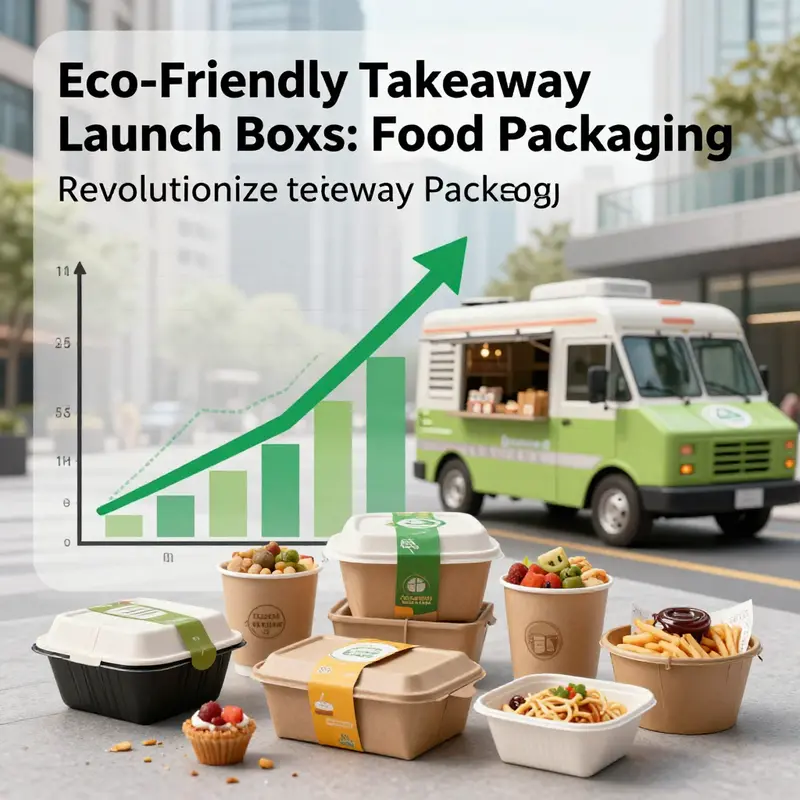
The market for eco-friendly takeaway launch box packaging is more than a niche trend. It is a structural shift with measurable economic effects across manufacturing, retail, and food service. As material science and design converge with regulation and consumer values, the packaging category is evolving from a compliance response into a strategic asset. This chapter traces the forces behind that evolution and explains how companies turn environmental choices into competitive advantage.
At the center of the change are materials that reduce environmental impact without compromising function. Recyclable and compostable papers and cardboards now form a substantial share of the market. They are valued for lower lifecycle emissions and simpler end-of-life processing. Their appeal is practical: they are sturdy enough for delivery, heat-resistant enough for hot meals, and adaptable to compartments and windows that protect and display food. These attributes matter because a packaging solution must meet performance expectations first. Sustainability can only be credible when it pairs with usability.
Policy frameworks have accelerated adoption. Regulatory measures that limit single-use plastics create both constraints and opportunities. Food service operators face mandates that require alternative materials or impose fees on plastic use. The result is a predictable rise in demand for certified paper-based lunch boxes and biodegradable paperboard options. Compliance pressures force suppliers to innovate and scale. They invest in new supply chains, adjust production lines, and secure certifications that reassure buyers and regulators. The economic consequence is a shift in capital allocation toward eco-conscious manufacturing capabilities.
Consumer preference amplifies regulatory effects. Buyers increasingly expect sustainability signals on products. Packaging is often the first brand touchpoint. A well-designed eco-friendly launch box communicates care for the planet and attention to detail. For restaurants and delivery services, this can translate into repeat business and higher perceived value. Operators leverage customization—branded printing, textured finishes, foil accents—to elevate their offering. Premium presentation helps justify modest price premiums and supports campaigns tied to seasons, holidays, or corporate gifting. In short, eco-friendly boxes can carry both functional and marketing value.
Price sensitivity remains part of the picture. Cost differences between conventional plastic and sustainable paper-based options vary by scale and specification. When ordered in high volumes, the per-unit cost of eco-friendly boxes drops substantially. Manufacturers that run efficient, high-capacity lines can offer price points competitive with conventional alternatives. Conversely, small operators often face higher per-unit costs and minimum order quantities that strain budgets. This dynamic creates a tiered market: large chains gain via scale and smaller operators seek flexible suppliers offering lower minimums or shared inventory options.
Investment in premium finishes and certifications is another economic lever. Certifications like FSC and RoHS increase buyer confidence in sustainability claims. They also open doors to business with clients that have strict procurement rules. Adding finishes such as UV coating or embossing increases production complexity. That builds value through enhanced aesthetics and durability. For clients targeting premium events, such options allow packaging to serve as part of the product experience. The economic trade-off is clear: higher upfront cost yields stronger brand positioning and higher perceived value.
Supply chain implications are wide-ranging. Shifts to paper-based materials spur demand for recycled fiber, pulp, and food-grade coatings that maintain grease resistance and leak protection. This creates upstream market opportunities for suppliers who supply treated paper and cellulose films. At the same time, manufacturing processes must adapt. New die-cutting, compartment forming, and window laminating steps are required. Investments in flexible tooling and modular lines pay off when companies support multiple sizes and designs with short changeover times. Those that invest early capture market share as buyers prioritize speed to market.
Scale economics also influence environmental outcomes. Large production runs reduce per-unit energy consumption through better utilization rates. They also reduce the proportionate waste generated during set-up and changeover. This creates a virtuous cycle: as demand grows, per-unit environmental impact can fall. Yet this requires responsible procurement at scale. If a supplier expands output but sources virgin, non-sustainable fiber, gains in efficiency may be offset by poor raw material choices. Sustainable sourcing policies ensure scale benefits translate into real environmental improvements.
Customization is central to competitive differentiation. Eco-friendly launch boxes support diverse branding needs. Printing options allow logos, storytelling, and campaign messages to coexist with sustainability claims. Packaging tailored for occasions—festivals, corporate events, or weddings—adds revenue channels beyond daily takeout. For example, boxes designed for multi-course meals or gift sets can command price premiums. This flexible use case increases average order values and opens partnerships with caterers, bakers, and specialty food producers.
Manufacturing capacity and minimum order quantities influence who can enter the market. Many suppliers set high minimums for specialized, customized runs. That favors established buyers. However, manufacturers that offer standardized eco designs with smaller minimums enable smaller businesses to participate. This democratization of access matters because it expands the customer base for sustainable packaging. It also diversifies revenue streams for suppliers, reducing dependence on a small set of large clients.
Another economic factor is the lifecycle cost advantage. Paper-based boxes often achieve lower disposal costs in jurisdictions with composting infrastructure. When local waste systems accept compostable packaging, overall waste-management costs fall. This benefit is indirect but real. Food service operators can reduce disposal fees and improve brand perception simultaneously. Lifecycle assessments that compare greenhouse gas emissions, water use, and waste metrics reveal trade-offs between material types. A clear understanding of these metrics helps buyers make cost-effective and environmentally sound choices.
Innovation in barrier technologies has addressed historic limitations of paper packaging. Grease-resistant coatings and biodegradable liners keep foods crisp and intact. These enhancements extend product shelf life and reduce the need for double packaging. Less packaging translation into lower material use overall. In many cases, improved barrier properties reduce food waste by protecting contents longer. Lower food waste affects the bottom line directly, particularly for perishable items. For operators, a single design improvement that preserves freshness can reduce returns and complaints, saving labor and logistics costs.
Retail and online ordering trends are reshaping demand patterns. Growth in food delivery increases the need for robust, compartmentalized boxes that survive transit. At the same time, consumers ordering meal kits or prepared meals expect packaging that supports reheating and storage. Microwave-safe, leak-resistant paper containers meet this need. The intersection of delivery logistics and packaging design creates demand for standardized sizes compatible with common delivery boxes and carriers. That standardization reduces handling errors, improving operational efficiency.
Competitive advantage arises from integrating sustainability into the supply chain, not just swapping materials. Businesses that redesign menus, portion sizes, and order workflows to complement new packaging achieve better margins. For instance, designing meals that fit a single, compartmentalized launch box reduces the need for additional containers. Training staff on packing and sealing reduces spillage and waste. Investing in marketing that highlights sustainability converts those operational changes into brand value. These steps create a measurable return on investment beyond material cost savings.
Financing and procurement models evolve to lower adoption barriers. Leasing production equipment, pooling orders across buyers, and subscription-based supplies help smaller businesses transition. Some suppliers offer hybrid models: standardized designs with optional branding at low minimums. These models spread capital costs and enable smaller buyers to test sustainable packaging without long-term commitments. For manufacturers, providing such flexible procurement expands addressable markets and stabilizes demand.
Job creation and local manufacturing benefits are often overlooked. Building flexible production lines for eco-friendly boxes can create skilled manufacturing roles. Localized production reduces shipping distances and emissions. It can also mitigate supply chain disruptions caused by global shocks. For regions investing in sustainable manufacturing clusters, the packaging transition becomes an economic development opportunity. Grants and subsidies aimed at green manufacturing further lower entry costs for new plants.
Price signaling and consumer willingness to pay influence margins. Many consumers accept modest price premiums for sustainable packaging, particularly when the environmental benefit is clear. Packaging that communicates certification and compostability builds trust. Transparent communication about end-of-life and recycling pathways helps consumers take proper disposal actions. When customers properly compost or recycle packaging, the real-world environmental benefit increases, reinforcing the brand promise and encouraging repeat purchases.
Risk management is another lens for economic assessment. Switching to new materials carries quality and liability risks. Suppliers must ensure food safety compliance and consistent performance. Certifications, testing, and traceability reduce legal and reputational risk. Investing in quality assurance systems is an economic necessity for any supplier aiming for long-term contracts with reputable buyers.
Finally, the market trajectory favors integration. Packaging suppliers who combine sustainable materials with design, printing, logistical support, and compliance documentation win more business. Buyers prefer single-source solutions that simplify procurement. This drives consolidation in some market segments and strategic partnerships in others. Companies that position themselves as full-scope eco packaging partners create stickier customer relationships and predictable revenue.
The economic impact of the eco-friendly takeaway launch box market extends beyond price comparisons. It influences how businesses design products, manage operations, and communicate value. Policy, consumer preference, and technological innovation together create a demand environment where sustainability pays off. Companies that understand both the cost dynamics and the strategic value of packaging can convert regulatory pressure into profitable differentiation.
For further detail on performance optimization and best practices in takeaway packaging design and materials, refer to the Packaging.com guide on takeaway food packaging: https://www.packaging.com/takeaway-food-packaging-guide/.
For a practical example of available options, explore the range of eco-friendly takeout boxes for food packaging that balance durability and sustainability: eco-friendly takeout boxes for food packaging.
Final thoughts
Adopting eco-friendly takeaway launch boxes is no longer just a trend; it’s a necessity for businesses aiming to align with sustainability goals and meet consumer expectations. From sustainable materials to innovative designs, the benefits are multifaceted—enhancing customer experience and supporting brand loyalty while positively impacting the environment. As market demand shifts towards eco-conscious choices, embracing these sustainable packaging options positions businesses for success in a competitive landscape. Take the leap into eco-friendly solutions today and be a part of the change.