
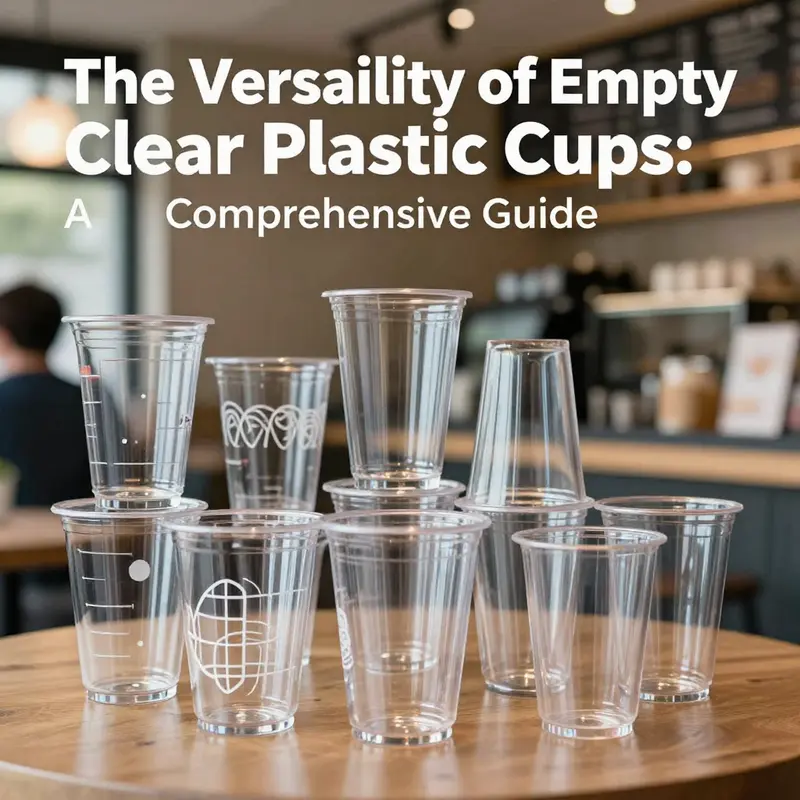
Empty clear plastic cups are a staple in the beverage and catering industries, appreciated for their functionality and adaptability. With the growing popularity of bubble teas, gourmet beverages, and events requiring stylish yet practical serveware, understanding the types and specifications of these cups, their design applications, and the environmental trends becomes essential. This guide aims to provide insights into how empty clear plastic cups can enhance service quality and brand presentation for bubble tea shops, restaurants, food trucks, event planners, and corporate procurement teams.
Clear, Contain, Convey: The Hidden Architecture of Empty Clear Plastic Cups
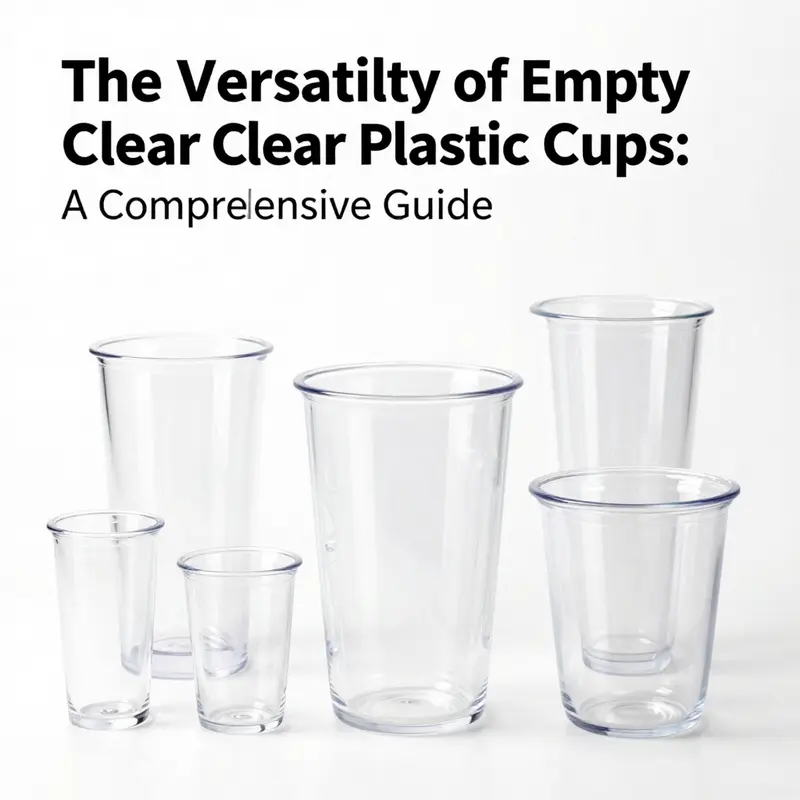
Across the spectrum of modern hospitality and consumer packaging, the empty clear plastic cup sits at a quiet crossroads where clarity, containment, and convenience meet. It acts as more than a simple vessel; it is a canvas on which beverages, brands, and moments are rendered. Even when it is empty, the cup carries expectations—of safety, of visual appeal, of performance in transit from point A to point B. The chapter that follows looks beyond the surface of this unheralded disposable ware to uncover the material choices, design decisions, and market forces that define what a plain, transparent cup can do for a cold drink, a celebratory toast, or a practical grab-and-go moment. It is a narrative of physics and aesthetics, sustainability and industry economics, all folded into a single, unassuming object.
At its core, the empty clear plastic cup is a compact engineering system. The most common material choice is PET, polyethylene terephthalate, renowned for its optical clarity, light weight, and resistance to moisture ingress. PET’s transparency is not merely aesthetic; it is functional. A beverage inside a PET cup remains visually vibrant, and the material’s barrier properties help keep liquids from picking up off-flavors or losing carbonation during short-term storage and transport. PET cups are also celebrated for their recyclability, a feature increasingly highlighted as brands and governments push for responsible end-of-life management. Yet PET’s virtues come with boundaries. The material performs best at cool or cold temperatures; hot liquids can lead to deformation and, in some formulations, the trace presence of additives may raise concerns about leaching when temperatures rise significantly. Those limits illustrate a recurring design theme: the cup is optimized for its sweet spot—cold drinks, chilled or ambient temperatures, and on-the-move consumption—while deliberately stepping away from hot beverage service.
Another polymer sometimes encountered in the dialogue around clear cups is HDPE, high-density polyethylene. HDPE’s inherent rigidity and chemical resistance set it apart from PET in several ways. While standard HDPE is more opaque and less crystal-clear than PET, there are specialty grades that deliver enhanced transparency without sacrificing the strength and barrier properties that matter in bulk packaging or industrial contexts. In practice, though, PET remains the dominant material for clear, single-use cups intended for beverages. The broader takeaway is that material selection is a balance: clarity, recyclability, cost, and compatibility with the intended drink temperature profile must align with the brand’s sustainability goals and the consumer’s expectations of performance.
Beyond the raw materials lie the specifications that translate a polymer into a practical product. Cups come in a family of sizes designed to accommodate a wide array of beverages, from a compact 8-ounce serving of espresso or milk tea to a generous 16-ounce iced coffee or fruit smoothie. The capacities most commonly encountered—8 oz (237 ml), 12 oz (355 ml), and 16 oz (473 ml)—often map onto precise dimensional tolerances: a height that promotes stable grip, a top diameter that supports both comfortable sipping and reliable lid fit, and a bottom diameter that ensures sturdy stacking and convenient packing in standard foodservice workflows. The geometry matters not only for user experience but for production efficiency. Manufacturing lines optimize the wall thickness and flare of the cup so that it can bear a liquid load without buckling, while lids designed to fit these cups must strike a balance between secure sealing, easy access, and compatibility with cold, foamy, or semi-viscous beverages.
Lid integration, in particular, has evolved into a key differentiator in the market. There are two dominant lid archetypes. The first is a flat lid with a straw hole—an accessible solution that supports beverages like iced coffee, bubble tea, and smoothies while minimizing spillage during transport. The second is a fully sealed flat lid, which offers the highest degree of spill protection and is preferred for premium cold drinks, on-the-go consumption, and environments where contamination risk must be minimized. Each lid type affects the beverage experience differently: the straw-hole lid preserves the ease of sipping and topping options, while the sealed lid emphasizes integrity and portability, at times at the expense of insulation or foam accommodation. These choices reveal how a single cup must be designed as part of an integrated system, rather than as an isolated container.
The chapter’s disease-and-delight relationship with the environmental narrative remains central. The market’s enduring reality is still one of single-use products, yet the conversation is shifting toward sustainability. The majority of cups today remain disposable, but suppliers are increasingly highlighting recyclable content, waste-stream compatibility, and end-of-life services that help brands close the loop. Recyclability is a function of both material and infrastructure. PET cups placed in the correct recycling stream can be reprocessed into new bottles or other PET items, reducing virgin material demand and energy consumption in the process. The caveat, of course, is that not all recycling systems accept clear PET cups, and consumer participation in sorting matters as much as the material’s recyclability. As a result, manufacturers and retailers face a practical challenge: they must communicate clearly with customers about how to dispose of cups and lids, while also collaborating with recyclers to ensure that the product’s journey from usage to remanufacture is technically feasible and economically viable.
This is where the broader trend toward sustainability interacts with design and branding. Many stakeholders recognize the opportunity to position cups as part of a responsible narrative without sacrificing the crisp aesthetics that drive consumer preference. The market does not require a binary choice between form and function; rather, it rewards a holistic approach where the cup’s material choice, its structural geometry, and its end-of-life pathway align with the retailer’s brand story. In practice, this means some suppliers emphasize recyclability by using PET with clear market-recovery channels, while others explore bio-based or compostable alternatives, such as PLA-based variants. Those options, however, come with their own constraints, including composting infrastructure availability and the purity of feedstreams for recycling. The result is a maturing landscape in which supply chains are tested not only for cost and performance but for alignment with sustainability goals at regional and global scales.
As a result of these evolving expectations, the visual presentation of the empty clear plastic cup—before a beverage is poured—has grown to matter as well. Designers frequently rely on digital renderings and vector templates to plan packaging and branding experiences before a single cup is produced. A typical workflow might include high-resolution 3D renderings that depict the cup with a lid, ready to showcase at point-of-sale or on a brand’s e-commerce page. Some templates offer front-view views or complete assemblies with open and closed states, enabling marketing teams to explore how the cup will appear in photography, social media, or on a store shelf. The fidelity of these templates matters because it influences how a brand communicates transparency, quality, and consistency to its audience. A clear cup must not only show the drink clearly; it must also convey a sense of reliability and care through its lines, curvature, and finish.
In this sense, the empty clear cup becomes a microcosm of the packaging world’s broader tension between performance and perception. It must resist leakage as it travels through a busy service environment, yet it must also invite the consumer to imagine the beverage inside as a bright and appealing experience. It must be sturdy enough to be stacked with other cups during storage and distribution, yet light enough to be handled quickly by busy staff. It must feel premium enough to justify a premium beverage, even as it remains an economical option for mass consumption. The balance among these requirements defines not only how the cup is engineered but how it is marketed and adopted by foodservice operators, event planners, and retailers.
To illustrate the pragmatic side of these considerations, consider how an operator chooses cup sizes for a given service scenario. A small coffee service might lean on the 8-ounce format to reduce waste and support a quick, efficient turnover. A café with a bigger cold drinks program could standardize on 12-ounce or 16-ounce cups, accommodating beverages that are more likely to include layers, toppings, or foams that require confident containment. The choice is rarely about a single dimension; it is about the choreography of the entire beverage experience—from the moment the drink is poured to the moment the lid is snapped on, carried away, and finally recycled or disposed of. In practice, such decisions also intersect with packaging aesthetics. A cup’s clarity helps preserve the natural color of the drink, and the clean, uninterrupted wall surface provides a neutral stage for branding identifications, labels, or peel-and-stick graphics. In short, empty clear plastic cups are not blank vessels so much as they are adaptable carriers of the goods and experiences that define a modern beverage economy.
Within this broader context, a note on terminology and scope helps anchor the discussion. The term empty emphasizes potential rather than current content; the clear descriptor highlights the visual priority of transparency, which is central to consumer perception and product storytelling. The phrase plastic cup is intentionally generic, encompassing a family of products whose performance characteristics—rigidity, clarity, seal integrity—are shaped by the chosen polymer, the wall thickness, and the cup geometry. The practical upshot is that even though the cup is empty now, it carries the promise of a beverage’s arrival and the opportunity to present that beverage with the right degree of sparkle, protection, and branding resonance.
As markets evolve, a minority of suppliers also brings attention to specialized variants that stretch the conceptual boundaries of the term. Among these is a contextual analogue sometimes encountered in fashion and light-apparel design: the transparent structure used in certain bra-cup components. This reference is not a direct product analog for beverages; rather, it serves to illustrate how the same underlying material properties—transparency, lightness, stiffness, and sculpting ability—can inform different design challenges. In the context of cups, the transparency is about consumer confidence and product storytelling; in the context of fashion, it is about form and support that remains discreet under clothing. The shared thread is that clear plastics can be leveraged to create shapes and experiences that are simultaneously functional and perceptually unobtrusive. Keeping this parallel in mind helps practitioners understand that the cup’s clarity is an asset, not a mere aesthetic choice.
For practitioners seeking tangible references to real-world design and packaging options, practical pointers exist in the form of catalogued templates and product pages. One representative example—part of a broader family of disposable containers—offers a clear plastic cup designed for outdoor use, suitable for parties, birthdays, weddings, and camping. The page highlights how a cup can deliver crisp visibility of the beverage, while the lid and structure mitigate spills in open-air environments. The product demonstrates how the combination of material clarity and lid design translates into a reliable consumer experience during events where mobility and social dynamics shape the service flow. The internal link to this practical reference serves as a bridge between theory and application, illustrating how these cups operate in real-world settings while keeping the focus on the core attributes that define their value: clarity, reliability, and compatibility with standard lids and accessory components. disposable clear plastic cup for outdoor picnics.
The landscape continues to evolve as brands push toward sustainability, while consumers increasingly expect transparency about sourcing and end-of-life outcomes. The chapter’s sober takeaway is that the empty clear cup is a flexible yet finite design space. It can be optimized for cold drinks, sealed for travel, produced in recyclable forms, and even aligned with decorative or branding schemes that elevate perceived quality without sacrificing convenience. The tension between single-use convenience and environmental responsibility remains central. In practice, this translates into material and process decisions such as selecting PET with proven recyclability credentials, exploring compatible lid designs that minimize plastic waste through standardized sizing, and evaluating lifecycle impacts through supplier disclosures and third-party certifications. The outcome is a product that supports efficient service and delightful user experiences, while also contributing to broader sustainability objectives when integrated into a circular economy strategy.
The trajectory of this category is not predetermined by nostalgia for simplicity but shaped by customer expectations and policy environments that increasingly prize material stewardship. As research and development in polymer science continue to advance, future iterations may blend clarity with enhanced heat resistance, enabling a broader range of hot beverage applications without compromising the visual appeal that defines the cup’s appeal. New lid concepts may further reduce spillage and improve insulation, while evolving recycling technologies could expand the end-of-life pathways for PET cups, lowering contamination risks and enabling higher recovery rates. In the meantime, the market should expect a continued emphasis on design interoperability: cups that pair seamlessly with a spectrum of lids, branding templates, and packaging ecosystems, and that remain legible and attractive when photographed, printed, or displayed on shelves. The end goal is a coherent narrative that makes the everyday act of pouring a drink into a transparent cup feel reliable, stylish, and responsible.
In closing, the empty clear plastic cup embodies a paradox common to many modern packaging formats: it is both ordinary in its ubiquity and extraordinary in the range of design decisions it imposes on beverages, brands, and waste streams. Its success hinges on a careful synthesis of materials science, mechanical design, user experience, and environmental stewardship. When these elements align, the cup functions not merely as a disposable tool but as a facilitator of moments—moments of refreshment, celebration, and shared experience—unfolding with clarity, containment, and confidence. The conversation about these cups will continue to evolve as new materials, new processing capabilities, and new public priorities emerge, but the core idea remains steadfast: a simple cup, well conceived, can elevate the ordinary act of drinking into a small, well-orchestrated experience. External resources offer a broader lens on sustainable materials management and recycling practices that frame this ongoing evolution. For a broader context on sustainable materials management, see https://www.epa.gov/smm/sustainable-management-materials.
Clarity That Carries: The Subtle Design Language and Everyday Potential of Empty Clear Plastic Cups
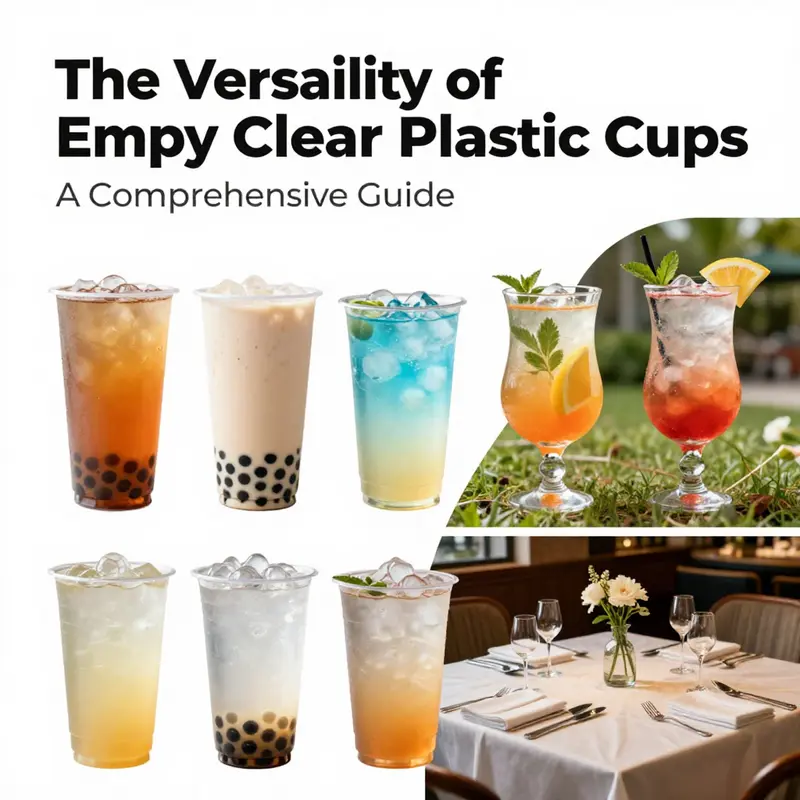
The empty clear plastic cup sits at a curious crossroads of utility, visibility, and design restraint. Its simplicity is deliberate: a container that’s supposed to vanish as a carrier so the beverage inside claims all the attention. Yet in the quiet of a design studio, the same cup reveals a network of choices that govern not only how well it holds a drink, but how it communicates with a brand, how it travels through a supply chain, and how it might be repurposed long after the beverage has vanished. The story of these cups begins with materials and finishes that emphasize clarity and lightness, but the narrative extends far beyond the rim. It edges into the realm of sustainability, customization, and everyday ingenuity, where a single, transparent shell can become a miniature workshop for creativity and efficiency.
At their core, empty clear plastic cups are crafted from a set of transparent polymers chosen for their optical properties, toughness, and cost-effectiveness. The most common families are PET, PS, and PP, each bringing a distinct balance of clarity, rigidity, and chemical compatibility. PET offers high clarity and a relatively strong barrier against liquids, PS provides crisp edges and a smooth interior ideal for printing and labeling, and PP contributes flexibility and a higher resistance to certain chemicals while maintaining transparency. The decision among these materials hinges on the intended use: whether the cup is meant for a quick cold beverage, a showpiece for a promotional event, or a temporary vessel in a hospital or manufacturing setting where weight and cost matter as much as appearance. Clarity is not merely aesthetic; it is functional. The ability to see contents clearly affects consumer perception, enabling color, texture, and even the volume of the drink to be judged at a glance. Inside this transparent shell, a design philosophy takes shape: minimize visual noise, maximize clean lines, and avoid interior ridges or seams that trap liquid. The interior is often smooth and seamless to prevent liquid retention, a detail that may seem minor but improves user experience by reducing the chance of residues lingering after use and by making cleaning easier if the cup is reused in a non-disposable context.
The geometry of the cup—the radius of the lip, the curvature of the wall, the weight distribution, and the base’s width—plays a quiet but decisive role in daily rituals. A well-proportioned lip offers a pleasant sip; too sharp a rim can irritate the edge of the mouth, while a burr or uneven edge can compromise the drinking experience. The base is engineered for upright stability on crowded tabletops, in vending machines, or on a moving conveyor belt. Even thickness variations are deliberate: walls that are too thin risk cracking; walls that are too thick add weight and cost. The result is a subtly engineered artifact whose beauty lies in restraint. When you lift a cup that feels balanced, you notice the absence of wobble, the way it sits in the hand, and how the glass-like surface refracts light to reveal the drink’s color with minimal distortion. The choice of cap or lid, if present, completes the design language. A lid must seal without warping the top rim or obstructing the view of the liquid. It should snap on with a single, confident motion, and—crucially—the fit should be forgiving enough to accommodate small manufacturing tolerances while maintaining a clean seal to prevent leaks. These are not cosmetic add-ons but integral parts of the cup’s function, particularly in quick-service contexts where speed and reliability determine customer satisfaction.
Size variety is another essential thread in the story. While 500 ml (or 16 oz) is a staple for many cold drinks such as iced teas, fruit drinks, and coffee beverages that tolerate refrigeration rather than heat, a range of capacities exists to accommodate different experiences. Common sizes like 400 ml, 700 ml, and 1000 ml reflect market demands for larger servings at events, in markets that favor sharing, or for beverages that benefit from extended cold-chain performance. The sizes are not arbitrary; they shape how beverages are marketed, how merchandising is presented at the point of sale, and how waste is managed downstream. In some contexts, the larger cups support premium or specialty drinks—those that rely on visual appeal, layered colors, or toppings that invite a closer look through the cup’s transparent walls. The smaller sizes, meanwhile, pair with quick-service formats and takeaway culture where portion control, speed, and reduced overflow are valued. In every case, the transparency of the material does more than display color; it becomes part of the brand’s narrative, offering a canvas for labels, logos, and printed patterns that can be applied to the cup’s surface. If the brand wants a minimalist look, the cup can be left nearly unadorned to emphasize purity of liquid and form. If the brand wants to tell a story through color and texture, the surface can be printed or laminated in ways that harmonize with the beverage’s identity, while maintaining the cup’s core virtue: clarity.
As the product design moves from the workshop to the consumer’s hands, the potential for repurposing expands the cup’s horizon beyond its original purpose. Creative content and practical experimentation show how these cups can be transformed into miniature desktop or vehicle trash bins simply by removing the lid, giving a small, contained space for waste such as paper scraps or snack wrappers. The same transparent shell can serve as a temporary flower vase, where stems can be displayed against the backlit glow of a window or a desk lamp, turning the object into a low-cost, easily recyclable centerpiece. The cup’s water-tight and transparent structure also makes it suitable for hydroponic experiments, where plant cuttings can root in water, creating a tiny indoor garden that reflects a broader interest in urban agriculture and accessible home science. For students and office workers alike, the cups provide a convenient organizer for stationery: pens, pencils, scissors, and clips can be corralled in a neat row that is easy to see and easy to replace. These uses illustrate a shift in thinking about disposables: the habit of discarding becomes a habit of reimagining, with the clear cup acting as a modular unit in a larger, highly adaptable ecosystem.
Designs evolve toward scales and features that extend this adaptability. The emergence of space or ton-ton style cups—large capacities, ergonomic shapes, and often double-wall insulation—speaks to a consumer culture that values durability, temperature retention, and portability for outdoor, fitness, and travel contexts. Although many of these variants are marketed for reuse in many settings, the reality is that reuse depends on the material’s performance and the lifecycle it is designed to support. Some cup designs integrate built-in storage compartments for tea bags or sugar packets, or feature integrated handles and straps, turning the simple vessel into a multifunctional accessory for on-the-go consumption. In such cases, the material choice—whether a high-grade PP, a Tritan-like copolyester, or a BPA-free variant—becomes as much about safety and longevity as about appearance. The emphasis on BPA-free materials aligns with broader consumer expectations for food-contact plastics, reinforcing trust in the product and expanding potential reuse scenarios that go beyond single-use convenience. Even when the cups are devised to be disposed of after a single use, the thinking behind their production increasingly accounts for end-of-life considerations, recycling compatibility, and the feasibility of incorporating recycled content into future runs. The circular economy conversation thus threads through design choices, urging manufacturers to consider how a cup travels from factory to consumer and, finally, back into the system again as feedstock for new products.
This is where branding and marketing intersect with engineering. The cups’ clear surface invites direct branding and labeling, whether through external stickers, direct printing, or special surface finishes that catch the eye. The ability to print on the exterior surface without obscuring the beverage inside allows businesses to communicate flavors, seasonal promotions, or sustainability messages in a way that is both legible and visually striking. The process requires careful calibration: inks and coatings must adhere to the chosen polymer without cracking or peeling under cold, wet conditions; the printing must withstand handling and stacking in bulk without compromising the cup’s clarity. In bulk supply, manufacturers and retailers often rely on modular templates and scalable production lines to meet diverse demands. Visual tools such as 3D renderings or vector templates play a critical role in packaging design and brand simulation, enabling designers to explore how a logo, color gradient, or label shape interacts with the cup’s geometry. For instance, designers may use high-resolution 3D renders that show the empty cup with a lid in place, providing a front view that helps stakeholders gauge visual impact before any physical prototyping. Another set of templates might illustrate the cup in open or closed states, set against a transparent background to enable easy integration into branding materials or marketing campaigns. These templates—delivered in standardized resolutions and print-ready formats—streamline the workflow from concept to consumer experience. They also reflect a broader trend toward digital-first packaging design, where brands test and refine visuals before committing to production runs.
The lifecycle story of empty clear plastic cups cannot ignore the sustainability conversation that has grown throughout consumer and manufacturing circles. While disposability remains a defining feature of many market options, there is growing interest in materials that balance performance with environmental responsibility. Recyclable PET and PP formulations are corners of that discussion, as is the potential for biodegradable alternatives such as PLA-based blends in specific applications. Yet recyclability is not automatic; it depends on local waste streams, sorting facilities, and consumer behavior. The question becomes not only what the cup can do for a beverage at the point of sale, but what remains of value after it is discarded. In some markets, the push toward reusable and reusable-like designs has shaped a new class of cups that can withstand multiple uses when properly cleaned and maintained. In others, there is emphasis on optimizing the manufacturing footprint, reducing water and energy consumption, and increasing the recycled content in the base material. The outcome is a design language that embraces efficiency, safety, and a more thoughtful approach to end-of-life management, even as the single-use paradigm persists in many contexts.
Within this larger frame, the clear cup also raises questions about context and meaning. The phrase “empty clear plastic cup” can even surface in contexts far from beverages, such as fashion or lingerie discussions where the term may refer to a structural component like a transparent cup used in design of certain undergarments. While this is a tangential reference, it highlights how language can travel across domains and how material transparency can be leveraged for different purposes. The primary focus for the chapter, however, remains the container as it functions in everyday life: an economical, adaptable, and visually honest vessel that embodies a particular equilibrium between form, function, and future potential. The ongoing shift toward sustainable materials and circular design invites designers, manufacturers, and consumers to reimagine disposables not as final endpoints but as steps in a longer, more resilient lifecycle. In classrooms and studios, the cup offers a practical case study in how material science, product engineering, and branding converge to shape a product that is at once ordinary and remarkably consequential.
For readers who want to explore beyond the surface of the cup into related packaging design resources, the cup’s transparent surface provides a compelling canvas for templates that help brands simulate packaging in marketing materials. A practical example of this is the use of a high-resolution template for a clear cake cups page, which demonstrates how branding elements translate onto a transparent surface and how the final presentation can be optimized across different sizes and contexts. See the resource here: clear cake cups. This reference can serve as a useful starting point for designers seeking to visualize how a logo, color, and typography interact with the cup’s form before committing to production. In the end, the empty clear plastic cup emerges as more than a disposable vessel; it is a design instrument that models clarity, efficiency, and adaptability in modern packaging and everyday life.
External reference: The visual reference used to illustrate the clean, minimalist design and common applications of empty clear plastic cups can be found in stock photography that captures the essence of the product in a white background, conveying the simplicity and transparency that define its utility. External resource: https://www.shutterstock.com/image-photo/empty-transparent-plastic-cup-white-background-1734857935
Seeing Through Waste: Reframing Empty Clear Plastic Cups in a Sustainable Age

An everyday, seemingly simple object often goes unnoticed until it reveals its longer story. An empty clear plastic cup, once pressed into service for a cold drink or a quick taste test, becomes a hinge point for questions about materials, systems, and stewardship. The surface clarity of such a cup can lull one into thinking the problem is trivial, but the truth lies in how its life begins, how it ends, and how societies choose to shape or restrain that ending. The arc from purchase to post-use destiny is shaped by material science, waste management infrastructure, and human behavior, and each of these influences the cup’s environmental footprint in ways that may be invisible at the moment of consumption but are felt across landscapes and lifetimes. In confronting this reality, the chapter moves beyond a catalogue of features and into a larger dialogue about responsibility, resilience, and the possibility of a more thoughtful choreography between demand, design, and disposal.
The most common forms of these cups are crafted from polyolefin-based polypropylene or from polyesters such as PET, chosen for their transparency, rigidity, and resistance to cracking when filled with beverages that can turn cold swiftly or stay warm for a little while. Their clarity is a function not only of the resin choice but also of the manufacturing finish, the absence of bubbles and scratches, and the way the walls taper to a form that feels familiar in the hand. This clarity matters because it communicates quality and freshness to consumers, inviting trust in the product inside. Yet the same clarity draws attention to the existential question of what happens after use. The lifecycle of an empty clear plastic cup is a thread that, when pulled, unravels a network of downstream consequences spanning ecosystems, labor markets, and urban and rural waste streams. Understanding this chain requires looking at materials, end-of-life pathways, and the social systems that either amplify or mitigate waste.
In lifecycle assessments, the choice between polypropylene and biobased alternatives such as polylactic acid often surfaces as a focal point. Polypropylene cups are widely recycled where infrastructure exists and where collection, sorting, and processing flows are robust enough to keep them out of landfills and oceans. They are light, inexpensive, and compatible with existing recycling streams in many regions, which makes them a practical option for mass consumption. However, the track from bin to recycling facility is not guaranteed. In many places, cups end up in mixed waste streams, or they are discarded in conditions that preclude efficient sorting. The result is a paradox: a material that can recycling potential is squandered by gaps in the system, leading to emissions, resource depletion, and contamination of ecosystems. By contrast, biobased alternatives like polylactic acid are often marketed as compostable or biodegradable. PLA, for instance, promises a more sustainable end-of-life under the right conditions. But the caveat is stark: industrial composting facilities—capable of maintaining the high heat and controlled moisture required for PLA to break down effectively—are not universally available. In places without access to such infrastructure, PLA cups behave similarly to conventional plastics, lingering in landfills and contributing to long-term waste. This contrast underscores a broader truth: the sustainability of empty clear plastic cups is not determined solely by the material’s chemistry, but by the completeness and efficiency of the systems that manage them after use.
The consequence of weak end-of-life management falls most heavily on the most vulnerable actors in the waste economy. In many Global South contexts, informal waste pickers play a critical role in recovering reusable and recyclable materials from streets, markets, and landfills. Their labor is essential for resource recovery, yet it is often undervalued and fraught with risk. When cups are discarded indiscriminately, or when sorting infrastructure is underdeveloped, the volume of waste creates burdens that overflow into communities, waterways, and urban spaces. The social dimension of sustainability thus arises not only from what we choose to buy but from how we design our cities to handle what we throw away. If a culture discourages littering and incentivizes proper disposal, and if workers are supported through fair wages, safety measures, and access to information, the environmental benefits of using a clear plastic cup can be magnified many times over. Conversely, neglect in this sphere translates into polluted soils, contaminated water, and health hazards for those who are most intimately connected to the waste system.
To grasp the environmental footprint of these cups, researchers examine the lifecycle stages from raw material extraction to end-of-life disposition. The manufacturing stage often consumes energy and water and can generate emissions, but its impact is only part of the total equation. The use phase, including the cup’s insulation, rigidity, and ability to withstand stacking during transport, influences how efficiently such cups can be moved and stored in supply chains. It is in the post-use stage that the divergence among materials and systems becomes stark. Recycling streams rely on consumer separation, reliable collection, and effective sorting. Inadequate infrastructure causes contamination of streams, which undermines recycling rates and leads to increased landfilling. This dynamic is especially pronounced for single-use items used at scale for events, outdoor gatherings, or quick-service settings where the volume of discarded cups can be substantial. The combined effect of these factors shapes an overall environmental performance that hinges not only on material properties but also on governance, policy, and public participation.
Design discourse around these cups often touches the tension between ease of use and ease of recovery. A cup that is cheap and durable for the consumer can complicate recycling if it lacks compatibility with local streams or if it resists disassembly during sorting. Conversely, a cup designed to break down more readily in composting environments may require specialized facilities and consumer behavior changes to realize its benefits. The challenge lies in aligning product design with regional realities. A one-size-fits-all answer is unlikely to succeed because waste management maturity varies dramatically from city to city, country to country. The same cup may be efficiently recycled in one urban center but contribute to litter and landfill elsewhere. In this sense, sustainability is less about selecting a single material and more about aligning product design with the capacity and incentives of the waste system that receives it. This alignment includes labeling that is clear and informative, enabling consumers to sort products correctly, and investment in municipal facilities that can handle the material streams generated by modern consumer lifestyles.
From a policy and civic engagement perspective, the chapter emphasizes that systemic change tends to yield the most durable improvements. Deposit-return schemes, standardized labeling, and regionally appropriate collection infrastructure can shift incentives toward higher recovery rates. When communities adopt visible and reliable recycling programs, people are more likely to participate consistently, which translates into tangible improvements in waste diversion. Yet policy alone does not suffice. The community’s daily choices—how often a cup is reused, whether a business encourages customers to bring their own cups, and how well a city communicates disposal guidelines—shape the actual outcomes in real time. Cultural norms, religious practices, and local economies interact with these policies to determine disposal patterns. In many places, informal networks play a critical role in extending the life of materials through repair, reuse, or repurposing. Recognizing and integrating these networks into formal waste management strategies can help to reduce leakage into the environment and protect vulnerable workers who are often on the front lines of this transition.
The chapter now turns to the practical implications of these relationships. Designs and packaging concepts aimed at events or casual gatherings should acknowledge the end-of-life realities while still delivering the user experience that consumers expect. This means exploring ways to minimize unnecessary usage, encouraging structured take-back programs, and providing clear pathways for material recovery. It also means recognizing that alternative materials cannot guarantee sustainability in isolation. PLA, for instance, requires conditions that may not be present in many places, while PP can be recycled in some streams but fails to reach recovery if the collection system is fragmented. The optimal path, therefore, is not a single material replacement but a robust blend of design foresight, infrastructure investment, and consumer education that enables a higher rate of material recovery and a better post-use outcome for the cups that no longer serve their initial purpose.
In design terms, the most compelling opportunities lie in creating compatibility between products and local waste ecosystems. This might involve choosing resins with well-established recycling protocols in a given region, adopting standard wall thicknesses and finishes that facilitate sorting, and incorporating labeling that informs consumers about proper disposal. It also includes exploring reuse-oriented models where feasible, such as durable, washable versions for certain venues or community programs that encourage participants to return cups for cleaning and reuse. The economic calculus of reuse versus single-use disposal remains nuanced, but in communities where water and sanitation infrastructure makes cleaning feasible, reuse can dramatically reduce the demand pressure on virgin materials and energy. Even when reuse is not practical, a product can still contribute to a circular economy if it is designed for easy disassembly and recycling, and if market incentives and governance structures reliably direct the material to appropriate streams.
The social dimension cannot be separated from the technical. Litter reduction is not just an environmental priority; it also touches human dignity, worker safety, and urban aesthetics. When public spaces are cluttered with discarded cups, the consequences extend beyond the visual nuisance. Litter can clog stormwater systems, degrade habitats, and degrade the quality of life for residents. Conversely, when communities invest in clean spaces and accessible recycling, the social and environmental returns compound. Citizens feel a sense of shared responsibility, businesses see improved brand perception, and local officials gain support for broader sustainability initiatives. The path to this shared responsibility passes through education, transparent metrics, and credible governance that demonstrates progress, even if progress is incremental.
As researchers and practitioners examine the frontiers of sustainability for empty clear plastic cups, a careful synthesis emerges: the problem is less about the cup in isolation and more about the fabric of systems that either capture or squander its potential. The most robust solutions are not simply technical fixes but systemic reforms. They require synergy among producers who design with end-of-life in mind, retailers who encourage responsible consumption patterns, municipalities that build and maintain efficient collection and processing networks, and citizens who participate in recycling with sincerity and consistency. In this sense, the cup becomes a symbol of how modern economies manage material flows. If we can refine the choreography—from the moment a cup is chosen for a drink to the moment it is diverted from landfills—then the clarity of the cup’s material can reflect a more transparent and responsible relationship with the environment.
Within the broader discourse of packaging and sustainability, the social and environmental narratives are reinforced by practical demonstrations of where change is possible. For events and outdoor gatherings, the availability of clear, easy-to-use cups is not in itself the problem; it is the afterlife of those cups that demands attention. The opportunity lies in pairing thoughtful product choice with robust waste infrastructure and with consumer norms that favor responsible disposal. When communities implement comprehensive recycling or composting programs, and when cups are labeled to support correct sorting, the same object—an empty clear plastic cup—can transition from symbol of convenience to symbol of conscientious consumption. In that sense, the future of these cups is not a surrender to waste, but a negotiation of design, behavior, and policy that aligns with a more sustainable urban and rural ecology.
For readers seeking a deeper, data-driven perspective on the comparative environmental footprints of different disposable cup materials, a peer-reviewed life-cycle assessment of polypropylene and polylactic acid cups provides rigorous context for policy and practice. See the external reference below for a detailed examination of how material choices interact with regional waste management realities to shape overall environmental outcomes. In the meantime, the practical takeaway remains clear: the sustainability of empty clear plastic cups hinges on the strength of the systems that recover and reuse them, as much as on the materials themselves. The simplest act—careful disposal—resonates through the chain of production, circulation, and recovery, turning a small, everyday object into a test case for how societies can balance convenience with care for people and the planet.
As a final reflection, consider the cup as a microcosm of the circular economy in action. Its life invites us to examine the conditions that allow materials to circulate rather than accumulate as waste. That includes rethinking how cups are sold, how they are used at scale, and how communities mobilize resources to reclaim value from discarded items. The change is not purely technocratic; it is social, economic, and cultural. It requires empathy for waste workers, clarity for consumers, and commitment from policymakers. It requires design that respects local realities, rather than imposing a single universal standard. If the public and private sectors collaborate with humility and audacity, the empty clear plastic cup can be transformed from a disposable impulse into a durable contributor to environmental resilience. In that transformation, the cup’s transparency extends beyond its material to reveal a clearer path toward sustainable consumption and responsible stewardship of shared spaces.
External reference: https://www.sciencedirect.com/science/article/pii/S0956053X24001234
Internal link (for context and related material): disposable-clear-plastic-cup-outdoor-picnic-pet-cup-drinking-cup-for-parties-birthdays-weddings-camping-utensils
Final thoughts
Understanding the versatility, design potential, and environmental implications of empty clear plastic cups equips beverage businesses and event planners with tools to enhance their services. By carefully selecting the right types and embracing sustainability trends, industry professionals can not only elevate the customer experience but also contribute positively to environmental stewardship. It’s time to consider how the humble plastic cup can play a significant role in both your success and the health of our planet.