

Selecting the right thermoforming machine for food containers is essential for businesses in the food and beverage sector. This comprehensive guide dives deep into the core products and pricing, key performance parameters, and the various materials suitable for creating versatile food containers. Each section aims to provide valuable insights that will empower bubble tea shops, restaurants, food trucks, catering services, event planners, and corporate procurement teams to make informed purchasing decisions. Discover how factory price thermoforming machines can streamline your operations while meeting industry standards.
Factory-Price Thermoforming Machines for Plastic Food Containers: Core Offerings, Pricing Levers, and Pathways to Scalable Packaging
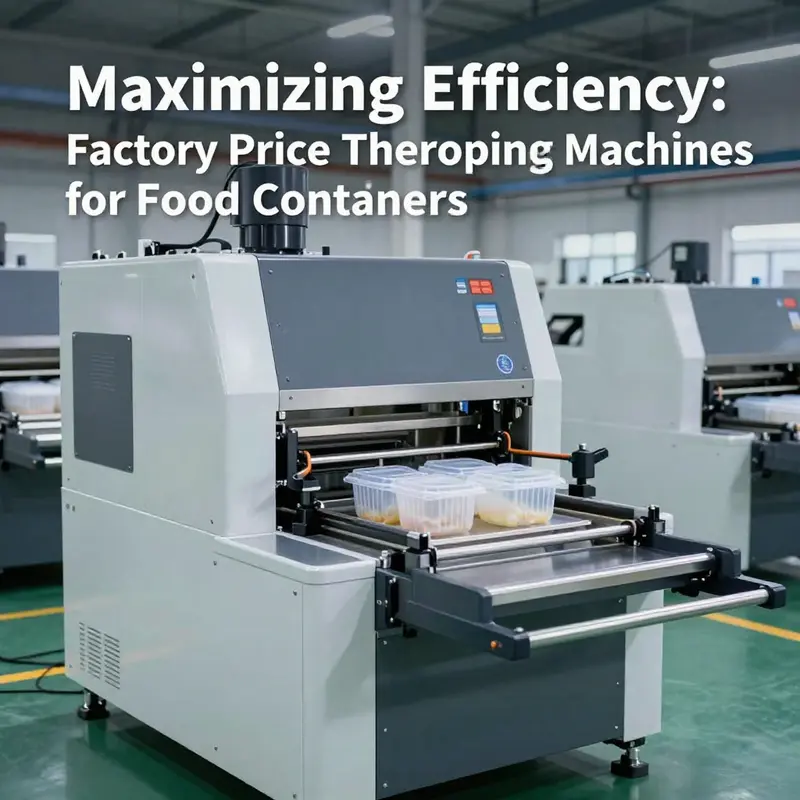
The journey from a raw sheet of plastic to a sealed, ready-to-sell food container begins on a factory floor where thermoplastic sheets are transformed by precision tooling, heat, and automated handling. In this chapter, we explore the heart of the production line—what core products are offered by factory-price thermoforming machines for plastic food containers, how pricing is determined, and what those levers mean for scale, hygiene, and sustainability. The aim is to illuminate how an operation can balance upfront investment with long-term throughput, product variety, and compliance, all while keeping a close eye on the cost per unit. In a market where packaging decisions ripple through supply chains—from ingredient sourcing to shelf labeling and waste management—the price tag attached to the thermoforming equipment matters as much as the geometry of the boxes it produces. A factory-direct approach to pricing often yields a meaningful edge, provided the buyer understands what features truly affect economics and performance over the machine’s life cycle.
At the core of the equipment landscape are automatic plastic disposable cup, lid, bowl, tray, and container forming machines. These systems are designed to handle a broad palette of thermoplastic materials, including PS, PP, PET, PVC, and even PLA in some configurations. The ability to work with multiple materials is not a mere convenience; it is a strategic asset. It enables producers to tailor products to end-use requirements, regulatory demands, and consumer preferences—whether the aim is clear, microwave-safe dairy cups or robust clamshells for ready-to-eat meals. The breadth of product types that a single line can support is itself a driver of capital efficiency. Instead of investing in separate lines for cups, lids, trays, and containers, the same platform—with appropriate tooling—often handles diverse shapes and thicknesses. This flexibility can lower total cost of ownership when product assortments change with seasons, promotions, or new market entries.
Pricing for these systems varies widely, mirroring the spectrum of automation, throughput, material compatibility, and after-sale service that buyers demand. Basic automatic thermoforming machines suitable for common cups and lids may fall within a lower price band, offering essential forming, trimming, and basic stack-and-pack capabilities. On the lower end of the spectrum, the investment tends to be modest, reflecting fewer automation stages and limited customization. As automation increases—multi-station configurations, integrated punching, enhanced cooling, robotic or servo-driven feeding and stacking, and smarter control systems—the price climbs accordingly. The mid-range tier often aligns with multi-cavity capabilities and medium-throughput requirements, delivering reliable performance for medium-scale producers. At the high end, fully automatic systems with advanced robotics, closed-loop scrap recovery, intelligent monitoring, and non-standard tooling can push prices upward, but with the potential for substantial gains in throughput, hygiene, and process control.
In practical terms, buyers frequently see a tiered pricing landscape: basic automatic machines for CP (cost-per-piece) reduction through automation, mid-range lines designed for higher-volume packages with more complex geometry, and premium systems that emphasize top-tier hygiene, precision, and turnkey integration. The factory-direct model—where equipment is sold directly from the producer to the end user—often translates into lower headline price premiums compared with distributor-marketed offerings. The savings can be meaningful, but they come with the need to assess support structures, spare parts availability, and the scope of customization that accompanies factory-direct sales. Importantly, the price is not the only consideration; total cost of ownership includes maintenance, energy use, downtime, and the cost of any non-standard tooling required for new product formats.
The price is also influenced by the automation level and the breadth of features included as standard. A machine that feeds, forms, trims, and stacks in a fully integrated line reduces manual handling, and that, in turn, reduces labor costs and contamination risk. For food packaging, where hygiene is a critical criterion, automation that minimizes human contact and ensures consistent wall thickness, precise sealing, and reliable product ejection can translate into safer products and smoother regulatory compliance. In markets that demand FDA- or EU-compliant packaging, machines designed with sanitary chassis, easy-to-clean surfaces, and accessible tooling can command a premium—but one that often pays for itself through higher yield, less waste, and fewer line stoppages.
With this landscape in mind, decision-makers often weigh several practical questions as they assess pricing: What throughput is required to meet current orders and cushion seasonality? How complex are the products we plan to make, and how quickly do we need to change formats? What materials will we use, and how often will we switch materials or introduce new ones? How important is automated stacking or automated waste recovery to maintain a clean line in a production hall that prioritizes hygiene? And finally, what level of vendor support is needed to ensure fast ramp-ups, spare parts availability, and long-term reliability of the line? All these factors shape the price living behind the machine’s sticker price and, more importantly, the cost-per-unit over time.
The pricing narrative is also influenced by who is selling the equipment. Factory-direct pricing is often positioned as a more competitive option for buyers who are comfortable with a shorter supply chain and a direct line of communication for sourcing, installation, and after-sales service. In contrast, distributor-based models might bundle additional services or financing options but may add a premium to the headline price. For buyers seeking the best possible unit economics, it is essential to quantify the incremental value of additional automation against the incremental capital outlay. This involves estimating throughput gains, labeling integration, micro-stamping or punching capabilities, automated scrap recycling, and the potential reductions in labor costs over the line’s operational life.
Beyond the sticker price, performance parameters—speed, precision, material compatibility, and mechanical robustness—ultimately determine whether a given machine is a prudent investment. A machine that can operate at high speeds with consistent wall thickness and reliable forming depth is more likely to reduce cycle times and rework. A robust clamping system helps ensure that even when venturing into tougher materials or higher throughputs, the formed products maintain dimensional stability. The heating system, typically delivering substantial power to both zones of the forming cycle, governs the consistency of the sheet forming and the final product’s rigidity. Considerations like energy efficiency of the hydraulic or servo-driven drives, as well as cooling efficiency, also feed into both operating costs and the machine’s environmental footprint. In an era where green manufacturing is increasingly a buyer expectation, machines that optimize heat use and minimize waste not only reduce operating costs but also align with corporate sustainability goals.
From a materials perspective, the ability to process common plastics—PP, PS, PET, PVC—and, in some configurations, biodegradable alternatives such as PLA, expands the scope of applications. For a facility producing yogurt cups, ice cream tubs, or ready-meal trays, the material choice interfaces with product performance requirements: heat resistance, rigidity, moisture barrier, printability, and end-of-life considerations. Each material brings a distinct set of processing parameters and tool geometry requirements. A line that can flexibly accommodate multiple materials may incur higher capital costs upfront but can offer long-run adaptability as product lines evolve. This adaptability is particularly valuable for contract manufacturers who must respond rapidly to changing customer specifications or regulatory shifts without committing to new turnkey lines each time.
To ground these considerations in market realities, buyers often consult industry platforms and supplier catalogs that summarize capabilities and price bands. A direct, factory-level quote can be informed by the intended product mix, cavity counts, maximum forming depth, sheet thickness range, and the thickness and stiffness of the molds used. Typical performance metrics might include a maximum forming depth of roughly 120 to 150 millimeters and a mold size ceiling in the range of 750 by 560 millimeters to 860 millimeters in width, with sheet thicknesses commonly spanning 0.2 to 2.5 millimeters. Throughput can reach around 50 cycles per minute in high-throughput configurations, with heating power distributed between the upper and lower zones to maintain even radiant heat and surface uniformity. Clamping force—an indicator of the machine’s ability to maintain sheet stability during the forming stage—can be substantial, on the order of several hundred kilonewtons. In sum, the core specifications shape both the capabilities and the price, and buyers who align those specs with their product requirements often unlock the most favorable economics.
Where price and capability truly intersect is in the interface between the machine and the end-to-end packaging process. Fully automatic lines that include autoloaders, forming cells, trimming stations, and stacked output can drastically reduce handling time and contamination risk. In food packaging, sterile or near-sterile transfer between stations translates into higher yields and better regulatory compliance. When a line features integrated waste recovery, regrind handling, and automated sensor-based quality checks, the cost of ownership begins to tilt toward a lower total waste and higher consistency—benefits that can justify higher upfront costs if production volume supports it. The customer’s long-run utilization pattern—the number of shifts, the number of product formats introduced in a year, and the expected uptime—plays a decisive role in evaluating whether the premium for a fully integrated system yields an acceptable return on investment.
In the contemporary marketplace, a factory-direct pricing approach may also come with commitments to customization. Buyers seeking non-standard tooling, one-off cavity designs, or control-system integration can often negotiate more favorable terms when dealing directly with the manufacturer. The rationale is straightforward: a single source owns the design and manufacturing workflow, enabling tighter alignment between customer requirements and machine capabilities, and reducing the friction that can accompany multi-vendor integrations. The result can be a more streamlined path from order to installation and a shorter time-to-volume production, which matters for seasonal campaigns or new product launches where time-to-market is critical. Yet customization carries its own cost implications. It can extend lead times, elevate engineering risk, and necessitate more rigorous commissioning and validation work to ensure that the altered tooling or software meets the required specifications for quality and safety.
From an end-user perspective, the ultimate value proposition of a factory-price thermoforming solution lies in how well it enables the production of safe, consistent, and aesthetically appealing packaging at scale. The design of the forming process, the control of temperature profiles, and the precision of the cut and stack sequence all determine the final product’s performance in the field—whether the yogurt cup maintains its shape during transport, whether a clamshell seals reliably under varying ambient conditions, or whether a ready-meal tray resists leakage in a hot-fill scenario. These qualities, in turn, influence brand perception and consumer satisfaction, which can be as consequential to a packaging program as the initial price tag. Consequently, a purchase decision should weave together price, performance, service, and strategic alignment with sustainability objectives.
A practical path for buyers is to begin with a clear specification of the formats and volumes they intend to produce over the next 12 to 24 months. This baseline helps quantify the throughput required and, by extension, the automation level necessary to hit target cycle times and line uptime. With this foundation, a buyer can request quotes that include both the machine and the anticipated ancillary equipment—sheet feeders, palletizing or stacking solutions, and optional scrap-recovery modules. While evaluating quotes, it is wise to compare not only the machine price but also the service package, warranty terms, availability of spare parts, and the vendor’s track record for on-site installation and commissioning. A machine that promises minimal downtime, rapid replacement of wear parts, and a strong regional service network should not be undervalued, even if its sticker price is modestly higher than a less robust alternative.
Within the broader purchasing journey, it is useful to connect the factory-price machine discussion to the ongoing evolution of packaging design and material science. Growth in demand for sustainable options—such as bio-based or compostable materials—places additional emphasis on a line’s material compatibility and cleanability. The same line that forms a standard PS cup for the dairy aisle must sometimes accommodate PLA-based alternatives or other bio-resins that behave differently under heat and pressure. This requires tooling, feed mechanisms, and process control that can gracefully handle material transitions without compromising quality. The capability to switch formats efficiently becomes a competitive differentiator for manufacturers looking to cater to retailers that require eco-friendly packaging across product lines. In this context, the economics of tooling, molds, and process changeover become a strategic consideration rather than a mere manufacturing footnote.
For readers seeking a practical pathway to further explore options, a representative reference on factory-price thermoforming machines for plastic food containers can be found on industry platforms that compile product specifications and procurement channels. The resource summarizes core machine types, material compatibility, and typical price bands, offering a snapshot of what buyers might expect when engaging with suppliers directly. This external resource can serve as a starting point for a structured vendor comparison, helping to align technical needs with market offerings while keeping total cost of ownership in focus. In addition, there are relevant internal resources that discuss packaging design, customization options, and supply-chain considerations for takeout and pre-packaged foods. For example, a detailed piece on custom takeaway packaging and disposable tableware highlights how packaging versatility can complement manufacturing flexibility. It is worth noting that such internal content remains a complementary guide to machinery selection, emphasizing how packaging choices influence line configuration and downstream logistics. You can delve into this topic through one of the internal resources linked here: custom-takeaway-packaging-supplies-disposable-tableware-for-theme-party.
In closing this examination of core offerings and pricing dynamics, the reader should leave with a practical sense of how factory-price thermoforming machines for plastic food containers fit into a broader manufacturing and packaging strategy. The decision is rarely about choosing the cheapest option. It is about balancing initial investment with throughput, product complexity, material versatility, hygiene standards, and the ability to adapt to changing consumer preferences and regulatory expectations. The most effective configurations are those that offer enough flexibility to support multiple product formats while maintaining tight control of quality and cost. They also support a sustainable manufacturing ethos by enabling efficient material usage, reduced waste, and the possibility of integrating bio-based or recyclable materials into the line. As markets continue to demand safer, more efficient, and more adaptable packaging solutions, the role of the thermoforming machine—when priced and specified with discipline—will remain central to the long-term viability and competitiveness of plastic food container manufacturing.
External resource: https://www.alibaba.com/product-detail/Factory-Price-Plastic-Food-Container-Thermoforming-Machine_1600544175841.html
At the Pace of the Pack: Key Performance Parameters for Factory-Price Thermoforming Machines Producing Plastic Food Containers
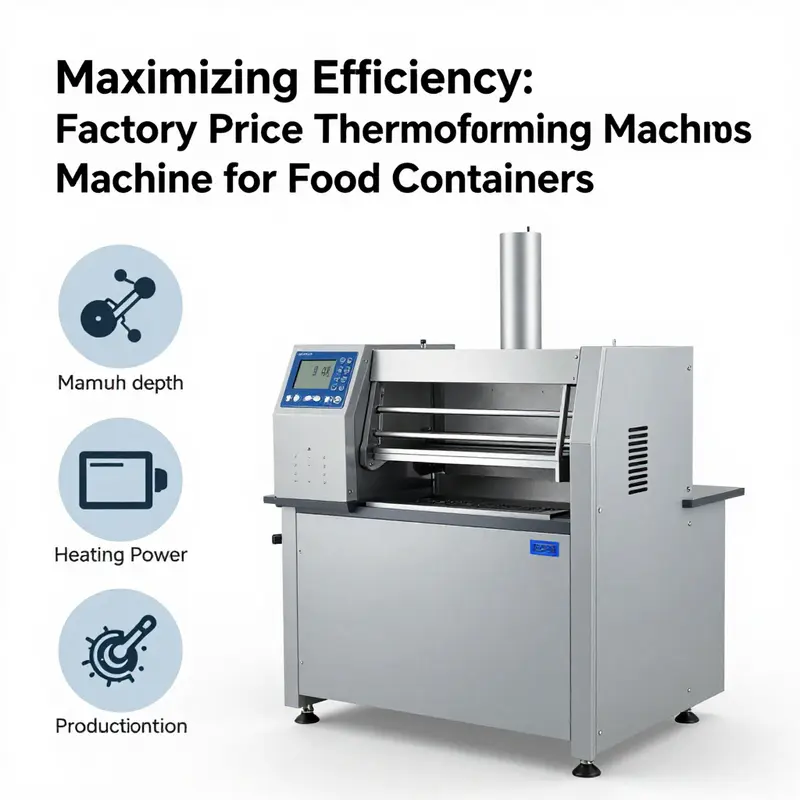
When a packaging operation looks for factory-price thermoforming machines to produce plastic food containers, it is not simply chasing the lowest sticker price. It is balancing upfront cost against the daily grind of throughput, material efficiency, sanitation, and long-term reliability. The machines at the heart of this equation are designed to convert roll or sheet stock into finished containers with little human intervention, yet the variety of shapes, depths, and materials means that performance parameters become the steps that determine profitability and flexibility. A clear understanding of these parameters helps buyers distinguish between equipment that merely ships and equipment that sustains a factory’s ability to respond to changing demand while keeping costs predictable. In practice, these machines are highly automated, and their value rests on how well an integrated line can move from sheet to stack with minimal waste, how broad a range of materials can be accommodated without sacrificing cycle time, and how easily the system can be adapted when a new product line must be introduced.
At the core of any thermoforming line is a set of performance envelopes that define what the machine can consistently do in a working day. Forming speed, sometimes described in cycles per minute, is a decisive driver of daily output. A high-speed option can achieve as many as thirty cycles per minute in some models, a rate that translates into tens of thousands of containers per shift when the line runs at full tilt. This throughput capability is not just about speed; it is about the cadence of the entire factory. The automation level, including sheet feeding, forming, trimming, and stacking, must be synchronized so that a single bottleneck does not drag the entire line down. When the line includes an automatic stacker, labor costs are reduced and the final packaging step is integrated into the cycle, minimizing handling and expanding overall efficiency. In practical terms, the speed parameter translates into daily capacity, determines how many shifts are required to meet a given order book, and influences the allowable scale of batch production for faster time-to-market.
Beyond speed, the forming depth defines the practical geometry of the containers a machine can produce in one cycle. For many common applications—yogurt cups, fruit trays, snack boxes—a forming depth in the range of roughly 135 millimeters is typical. This allows the single-cycle production of fairly deep containers while maintaining structural integrity and heat-sealing compatibility with the chosen lid or film. Some models offer slightly shallower depths, around 110 millimeters, which may be better suited for lighter or shallower products, or for applications that require thinner walls to optimize material usage. The forming depth interacts with other parameters, especially sheet thickness and mold design, to set the upper limit of container volume that can be achieved without compromising stability during handling, stacking, or subsequent filling. The depth specification becomes a practical gating parameter when planning a product family with evolving container sizes, as small changes in depth can necessitate different mold sets or quick-change tooling.
Sheet width capacity is another decisive factor because it governs how many containers can be produced per cycle and how large a single container can be without expensive mold redesigns. Machines designed for sheet widths of around 730 millimeters or 550 millimeters provide a balance between high-volume output and flexibility for smaller lines. Wider sheets enable more containers per cycle, but they also demand more robust tooling, better sheet alignment, and more precise heat management to avoid defects at the edges or in the corners. The relationship between sheet width, forming depth, and mold geometry highlights why many facilities invest in multi-mold or quick-change tooling capabilities. When a machine can accommodate multiple mold sizes without long downtime, a facility gains responsiveness to demand shifts—whether for seasonal flavors, promotional packaging, or strategic suppliers of different product lines. This is a core advantage of factory-direct configurations that emphasize modular design and non-standard adaptation: the line remains capable without a new capital expenditure every time a product mix shifts.
The air pressure required for stable vacuum forming is another often underappreciated parameter. The typical operating range, around 0.6 to 0.8 megapascals, ensures reliable vacuum conditions for consistent wall formation and material draw. Pressurized air supports manifold equalization, helps in releasing formed parts, and can play a critical role in demolding without damaging delicate edges. Consistency matters here: fluctuations in air pressure can produce subtle and not-so-subtle defects, especially with thinner wall structures or recycled-content sheets. A well-specified air system minimizes downtime caused by pressure drops, leaks, or incomplete vacuum cycles, and it allows the line to run with tighter tolerances—an important factor when a brand seeks uniformity across thousands of containers per shift.
Automation level, including upstream sheet feeding, thermoforming, trimming, و cutting, and downstream stacking and waste recovery, defines how much of the process is hands-off. Modern lines often claim full automation, meaning they can operate from raw sheet input to finished, stacked, and boxed parts with minimal manual intervention. The inclusion of an automatic stacker is especially valuable for high-volume environments; it reduces labor requirements, speeds up throughput, and minimizes manual handling that could introduce contamination or handling damage—an important consideration for food-contact packaging that must meet stringent hygiene standards. Automation also implies integrated control systems, which orchestrate temperature profiles, vacuum cycles, press force, and cycle timing across stations. A robust control architecture reduces the risk of mismatches between stages and provides the visibility needed for process improvement and traceability, important features for FDA- and EU-compliant packaging operations.
Material compatibility is the fourth pillar of performance. Leading thermoforming platforms are designed to work with a broad spectrum of plastics, including PP, PS, PET, PVC, and even bioplastics like PLA. Each material brings its own processing window: melt behavior, crystallinity, draw characteristics, and impact resistance all influence cycle time and mold design. For example, thicker walls require longer dwell times to achieve full forming without thinning, while materials with higher draw ratios demand precise vacuum and preheating to avoid thinning at the bottom or warping at the rim. The ability to switch among materials—sometimes within the same production line—offers a powerful hedge against shifting supplier costs, consumer preferences, or regulatory constraints. It also supports sustainability objectives, as some lines are qualified to process RPET or other recycled content blends, enabling brands to meet recycled-content targets without sacrificing sterilization or product integrity.
Mold flexibility completes the picture. The capacity to swap molds quickly, or to reconfigure a mold set for a family of products, reduces downtime and expands the range of containers that can be produced without a major capital expenditure. Quick-change mold systems and standardized tooling interfaces enable a facility to migrate from yogurt cups to dessert cups, or from takeaway clamshells to round snack trays, within relatively short timeframes. The mold strategy interacts with sheet width and depth to determine how many parts can be produced per cycle and how the line can adapt to evolving product lines. In practical terms, mold flexibility translates to product diversity without the need for a new machine each time a retailer requests a different packaging dimension or a brand launches a limited-edition design.
Together, these performance parameters—speed, depth, sheet width, air pressure, automation, material compatibility, and mold flexibility—form an operational ecosystem. They shape how a thermoforming line contributes to a factory’s bottom line, how quickly it can respond to market changes, and how resilient it is to shifts in material costs and regulatory demands. Price, while a crucial factor, sits within this ecosystem, because factory-direct channels can offer compelling cost-to-capability ratios when the equipment is designed with modularity, standardization, and serviceability in mind. In the end, the most effective machines are not the fastest or the broadest in one isolated dimension, but those that strike the right balance for a given production plan, a defined product mix, and a sustainable path to scale.
To illustrate how these parameters translate into real-world outcomes, consider the interplay of sheet width and mold design with product depth. A line engineered for 730-millimeter sheets paired with a shallow to mid-depth range can produce a high volume of mid-sized containers in parallel across multiple cavities. In contrast, a line tuned for 550-millimeter sheets with deeper forms may excel at specialty packaging, such as deeper yogurt cups or premium snack trays, while keeping cycle times within a competitive band through optimized vacuum and heating strategies. In both cases, automation and material compatibility provide the agility to navigate shifting demand curves, whether that means introducing a new shape for a promotional period or switching from one polymer to another in response to price fluctuations or regulatory considerations. This is the practical value of understanding performance parameters in the context of factory-price thermoforming equipment: it enables informed decisions about where to allocate capital, how to design a line that can grow with a business, and how to ensure that the final product quality remains consistent across a broad range of volumes and product configurations.
For buyers who are evaluating supplier options, a practical path often begins with a clear technical brief that maps target containers to the machine’s spec envelope. Questions to answer include: What is the maximum container depth required for the current product family? What sheet width is needed to maximize per-cycle output while allowing reasonable mold changeovers? What material portfolio must be supported, and what is the minimum acceptable recycled-content level? What is the desired level of automation, and what downstream equipment will be integrated (conveyors, trimming lines, or packaging stations)? Answering these questions helps narrow the gap between price and performance and clarifies where a factory-direct approach can deliver the best value.
As a practical note on sourcing, many buyers scan supplier catalogs and digital marketplaces to compare machine families that meet these performance envelopes. In this context, one can often find catalog entries describing fully automatic thermoforming lines with auto-stacking capabilities, multi-material compatibility, and a range of mold options. When evaluating such offerings, it is important to look beyond the stated maximums. Real-world performance depends on the quality of the heating system, the precision of the vacuum network, the rigidity of the press frame, and the robustness of the control software. The best matches not only meet the numerical targets but also deliver consistent results over time, with straightforward maintenance schedules and predictable spare parts availability. In portfolios of this kind, the ability to customize—whether that means adapting mold suites, integrating with a particular control system, or aligning with a specific sanitation standard—often differentiates a good choice from a great one.
For readers who want to explore a broad catalog of packaging options while they assess line compatibility, consider browsing platforms that showcase a range of takeaway packaging and related containers. A convenient way to gauge how packaging shape and material choices interact with thermoforming capabilities is to examine supplier pages that offer both containers and the associated packaging ecosystems. For instance, you can explore examples like take-away food packaging boxes to understand how container geometries align with lid designs, sealing methods, and downstream filling lines. Such references help in planning the downstream compatibility of a thermoforming line and in anticipating the operational footprint required to produce a diversified product portfolio.
In sum, price is a critical entry point, but the true value lies in how a thermoforming system performs across a spectrum of realistic operating conditions. The most effective factory-price solutions are those that offer a well-balanced combination of speed, depth flexibility, sheet-width versatility, reliable vacuum and air delivery, and a smart automation architecture. They also provide mold flexibility and a materials-ready pathway that accommodates evolving sustainability goals. When these elements are aligned with a supplier that stands behind the equipment with service, certification, and upgrade pathways, the purchase becomes not merely a capital outlay but a strategic enabler for a plastics-based food packaging operation that aims to grow with market demand while controlling cost and waste.
External reference: https://www.alibaba.com/product-detail/Factory-Price-Plastic-Food-Container-Thermoforming-Machine_1600544175841.html
Material Choices and Practical Uses: How Factory-Price Thermoforming Machines Shape Plastic Food Containers
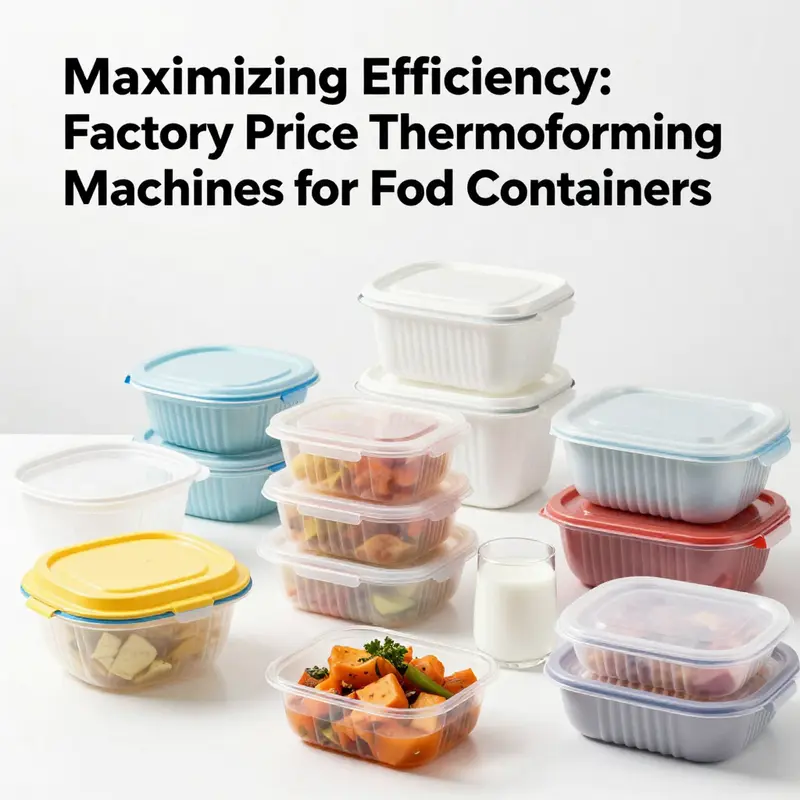
Materials, design and real-world applications
Thermoforming machines offered at factory prices deliver a rare combination of affordability and processing flexibility. Their value lies not only in machine cost, but in the range of thermoplastics they can convert into finished food containers. Understanding the practical limits and advantages of each material is essential for choosing the right machine configuration, designing reliable packaging, and meeting hygiene, performance, and sustainability targets. This chapter weaves material science, production realities, and everyday applications into a single, practical narrative to guide decisions that affect tooling, cycle times, downstream handling, and end-user acceptance.
At the heart of thermoforming is the sheet. Gauge, temperature window, and melt behavior of the sheet determine formability, cooling time, and final properties. Common choices for food containers include PP, PS, PET, PVC, and PLA. Each material brings a distinct set of mechanical and barrier traits, processing temperatures, and regulatory considerations. Polypropylene (PP) is widely used because it balances stiffness, high-temperature resistance, and clarity in the right grades. For hot-fill or microwaveable containers, PP’s resistance to deformation at elevated temperatures makes it a reliable option. Specific grades designed for food contact also offer low odor and high chemical resistance, ensuring safety for fatty or acidic foods.
Polystyrene (PS) appears frequently in thermoforming catalogs, especially for rigid cups, trays, and single-compartment lids. General-purpose PS forms crisply and produces excellent surface detail, which is useful for containers requiring defined corners or thin ribs. PS also supports foam variants where insulation or lightweight panels are critical. However, PS has lower heat resistance than PP. This makes it better suited to chilled, ambient, or non-microwave applications. Manufacturers often pair PS with barrier coatings or laminates if oxygen or moisture protection is needed.
Polyethylene terephthalate (PET) is prized for clarity and barrier performance. Containers intended to showcase contents, such as dessert cups or fresh salads, often use PET for its glass-like transparency. PET’s crystalline structure makes it a stronger, stiffer sheet compared to many amorphous plastics. It also accepts secondary operations like printing and hot- or cold-forming with good dimensional stability. Semi-crystalline PET grades require careful control of cooling profiles to avoid warping, but the result is a high-value, premium-looking container.
Polyvinyl chloride (PVC) appears less often in contemporary food packaging due to regulatory and recycling concerns, yet some thermoforming lines still process it for specific rigid applications. PVC’s formability and cost-structure can be attractive where local regulations and recycling systems permit its use. When PVC is selected, the equipment must be configured to manage its processing temperatures and ensure proper ventilation for safe operation.
Polylactic acid (PLA) has emerged as a biodegradable alternative compatible with thermoforming. PLA is suitable for single-use containers intended for composting or municipal organic waste systems. It forms well at moderate temperatures and can produce clear or opaque products depending on grade and orientation. PLA’s heat resistance is lower than PP’s, so designers must consider end-use conditions. Where compostable credentials are a market requirement, PLA offers a credible option and pairs well with eco-minded branding.
Beyond these principal materials, many thermoforming applications use ABS, PMMA (acrylic), PETG, HIPS, and various polyethylene grades. These materials extend the mechanical possibilities for containers needing impact resistance, chemical resistance, or specialized optical effects. A machine with a broad heating range and adjustable forming parameters can handle several of these polymers with only tooling and recipe adjustments.
Processing considerations influence material choice. Sheet thickness typically ranges from 0.2 mm to 2.5 mm in factory-priced thermoforming setups. Thinner gauges yield faster cooling and more cycles per minute, but they reduce rigidity and may require reinforcing ribs. Deeper draws, up to 120–150 mm on many machines, demand materials with high elongation at break to avoid thinning or tearing in corners. Clamping systems, mold venting, and plug assists are common strategies to improve material distribution and control wall thickness in deep draws.
Heating power and cycle design matter as much as polymer selection. A machine with strong upper and lower heating arrays enables forming of high-temperature polymers and shortens preheat times. Faster cycles, sometimes up to 50 cycles per minute in optimized runs, depend on quick, uniform heating and efficient cooling. Faster throughput lowers unit cost, but it increases thermal stress on the sheet and tooling. Properly matched heating power, servo-driven servo or hydraulic motion control, and precise mold cooling channels will keep cycle times and scrap rates low.
Applications for thermoformed food containers span a broad spectrum, from single-compartment takeaway boxes to multi-compartment trays and specialized drinkware. Disposable meal boxes and compartmented trays are classic outputs. Thermoforming excels at producing rigid sections with defined transitions, such as the partitions that keep fries separate from a burger or the ridged base that prevents sogginess. When a high production volume is required, the machine’s automatic feeding, punching, and stacking systems reduce labor and contamination risk. For multi-compartment designs, tooling becomes the differentiator: the right mold geometry and parting line produce strong, stackable parts that nest properly and resist leakage.
Cups and lids are another major application. Machines configured for cup-making often include trimming stations and automatic stacking. Materials like PS and PET enable thin-walled, aesthetically pleasing cups for cold beverages, while PP is favored for hot beverages and microwavable cups. Thermoforming also creates specialized lids with tight snap-fit features or venting designs to balance steam release and spill resistance.
Food trays and pans frequently require barrier properties for extended shelf life. When oxygen or moisture ingress matters, PET or co-extruded sheets may be used, or the formed parts can be laminated or overwrapped. The thermoforming line must ensure tight, consistent tolerance to allow secondary sealing processes. For ready meals, the formed tray’s dimensional precision must match subsequent sealing films, lids, and gaskets to prevent leaks and ensure consumer safety.
Specialty packaging, including egg trays and niche shapes, leverages thermoforming’s ability to produce tailored pockets and cavities. Egg cartons, for example, benefit from uniform pocket depth and gentle contours to protect fragile contents. Snack trays and bakery clamshells often combine transparency with secure closures to display goods while protecting them in transit and on shelves.
Thermoforming can also produce hybrid packaging solutions when part of multi-material assemblies. A formed base may be combined with a paperboard sleeve or a kraft paper overwrap to create an eco-forward appearance while preserving barrier and structural integrity. These hybrid approaches help balance sustainability messages with functional performance. For brands that seek compostable or recyclable packages, a PLA-formed shell paired with a paper sleeve can communicate environmental responsibility without compromising container performance.
Regulatory and hygiene considerations influence material and machine choices. Food contact regulations vary by market, but thermoformed containers must use food-approved sheet grades and maintain traceability for additives and pigments. Machines designed for food packaging often include sanitary features like sealed guarding, minimal exposed lubricants, and automated waste collection to prevent cross-contamination. Automated stacking and bagging reduce manual handling and help meet stringent cleanliness requirements in sensitive product categories.
Sustainability questions shape both material selection and sourcing strategies. Recyclability of thermoplastics depends on local infrastructure and polymer compatibility. PET is widely recycled, and many markets accept PET containers in curbside streams. PP recycling is increasing but remains more variable by region. PLA requires industrial composting to degrade properly, and it cannot be mixed with PET in many recycling systems. Manufacturers and procurement teams must align material choices with the recycling and waste management realities of their customers’ markets.
Designers can reduce material use through intelligent geometry. Ribs, gussets, and curved corners can improve stiffness without increasing gauge. Strategic thinning in non-structural areas reduces material input and lowers per-unit cost. Thermoforming’s ability to create variable wall thicknesses makes these optimizations feasible without extra assembly steps.
Operationally, the integration of thermoforming into a production line must consider stacking, trimming, labeling, and secondary sealing. Automatic trimming minimizes labor and improves consistency. Robotic or mechanical stackers designed for formed parts preserve part orientation and limit manual touching. Waste trim can be collected and shredded for recycling if the trimmed polymer is compatible with the intended recycling loop.
Cost factors include machine configuration, tooling complexity, and material selection. Factory-priced thermoforming lines that include automatic feeding, cutting, and stacking reduce labor costs and increase throughput. However, tooling often represents a significant portion of the upfront investment. Complex multi-cavity molds deliver high output but require greater initial expenditure. For short runs or frequent design changes, simpler tooling or modular mold systems can reduce lead time and upfront cost.
Finally, market fit determines which combinations of machine, material, and design succeed. Ready-to-eat meals and premium desserts benefit from clear, rigid PET packaging that showcases contents. High-temperature takeout and reheatable meals favor PP. Compostable or biodegradable branding calls for PLA or fiber-based hybrids. Snack and bakery items may blend thermoformed trays with paperboard sleeves for shelf appeal. Understanding end-user handling, storage conditions, and disposal practices leads to choices that balance performance, regulatory compliance, and cost efficiency.
To explore an example of compartmented, eco-friendly takeout packaging that parallels thermoformed multi-compartment goals, see this example of an eco-friendly 3-compartment food-grade takeout box: eco-friendly 3-compartment food-grade takeout box.
External resource:
For a representative factory-priced thermoforming machine listing with specifications, images, and inquiry options, visit: https://www.alibaba.com/product-detail/Factory-Price-Plastic-Food-Container-Thermoforming-Machine_1600544175841.html
Final thoughts
Understanding the landscape of factory price thermoforming machines equips businesses with the knowledge to enhance efficiency and reduce costs associated with food packaging. By exploring the core products, their pricing, performance parameters, and applicable materials, bubble tea shops, restaurants, food trucks, and other food service entities can confidently select equipment that best suits their operational needs. Each investment in a thermoforming machine is a step toward bolstering productivity while meeting customer demands for quality and safety.