

Flat plastic food containers play a vital role in modern food service operations, including bubble tea shops, restaurants, food trucks, and catering services. These containers facilitate organization, display, and efficient service while supporting cost control and waste reduction. This article examines their physical properties and material composition, economic impact, manufacturing processes, and sustainability considerations to help businesses choose wisely and operate more efficiently.
From Molecules to Meals: The Physical Fabric and Material DNA of Flat Plastic Food Containers
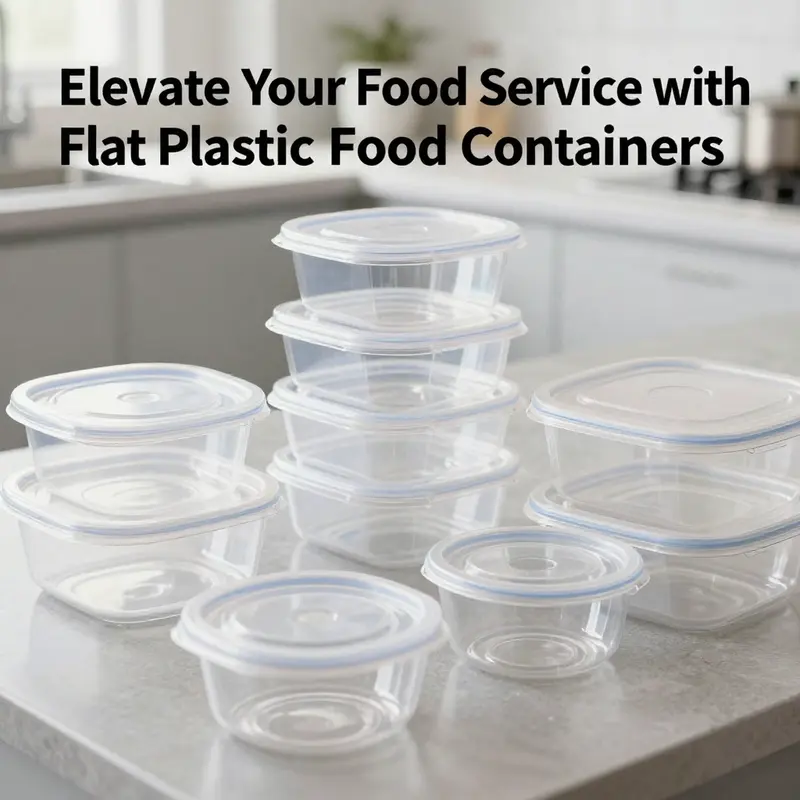
Flat plastic food containers sit at a practical crossroads where everyday convenience meets the science of materials. Their shallow profiles are not mere aesthetic choices; they are deliberate responses to the needs of modern kitchens, prep lines, and takeout workflows. The chapter you are about to read follows that thread from the molecular scale to the everyday act of holding, storing, and transporting food. It reveals how choices in polymer composition, barrier performance, and manufacturing methods converge to create containers that are light, clear, and capable of keeping food fresh for the right span of time. It also cautions about limits that shape how we use these tools in real life, especially when heat is involved, and it points toward a design logic that blends visibility, efficiency, and safety with mass production and recycling in mind.
At the heart of most flat based containers lies a family of thermoplastic polymers chosen for a balance of strength, flexibility, and cost. Low-Density Polyethylene, or LDPE, emerges as a workhorse material because it blends ductility with a robust barrier against moisture and air. This latter property helps to slow down moisture exchange and oxygen ingress, which in turn helps preserve the quality of many cold and refrigerated items. In practice, a typical LDPE based container may be formed from a flat sheet that is heated and then shaped by vacuum into the shallow, uniform walls that make up the familiar boxy tray or lid. The result is a structure that feels light yet surprisingly resilient to minor impacts and handling during routine use in home kitchens or busy service environments.
An important regional variation in the material makeup is the use of metallized layers. A thin film of aluminum or a metalized coating can be added to the interior or a middle layer to strengthen barrier performance. Metallization reduces the ingress of light, oxygen, and moisture more aggressively than LDPE alone. The practical effect is a longer shelf life for light sensitive or oxygen sensitive items and an improvement in the overall visual appeal since the container wall remains transparent or semi transparent while the internal environment is better protected. This layering is a clear example of how the material composition is engineered not just for mechanical function but for performance in real packaging scenarios. The reader should picture the LDPE sheet as a base that provides flexibility and toughness while the metallized layer acts as a quiet guardian that fights the elements from the outside world.
Transparency plays a starring role in the everyday use of flat containers. The ability to see vegetables, fruit, or leftovers at a glance reduces the cognitive load required to manage inventory and meal planning. Clear walls are not merely an aesthetic feature; they are a practical reminder of what is inside, which helps reduce waste and improve meal turnover in both household and commercial kitchens. The visual clarity also supports labeling and organization in shelving and refrigerators, where a quick glance can confirm contents without opening the lid. In modern designs, this transparency is carefully balanced with barrier layers and optimized wall thickness. The goal is to maintain a steady appearance and predictable performance across thousands of cycles of opening, closing, stacking, and washing.
Temperature tolerance is a defining constraint for flat containers. Although a broad swath of these products excels at cold and room temperature storage, their heat resistance is more limited. Prolonged exposure to high temperatures can soften the walls, deform the base, or cause deformation of the lid seal. That is why many models are explicitly labeled as not microwave safe, or are recommended only for reheating when a heat tolerant designation is present. This limitation is not a flaw but a design decision rooted in material science. LDPE and similar polymers have glass transition temperatures that place them in a safe operating window for cold or neutral temperature usage. Pushing the material beyond that window jeopardizes the structural integrity and safety of the container. The result is a practical rule of thumb for buyers and operators: use these flat containers for cold and room temperature items, and reserve heat for appropriate utensils or separate microwave safe packaging.
From a design standpoint, the flat geometry is a deliberate choice that optimizes stacking and space efficiency. The shallow depth allows a high density of containers to occupy a refrigerator shelf or a pantry stack without wasted space. Resealable closures, commonly via zipper type mechanisms, reinforce the utility by enabling repeated opening and closing without compromising the freshness or the containment of contents. The lid is not a cursory add on; it is a functional partner that often incorporates a tight seal or a snap fit to prevent leaks during transport. In practice, these features translate into tangible benefits for food service operators who need to move multiple portions quickly and for households that manage leftovers with minimal mess. The engineering of lids and seals is closely tied to the material chemistry of the base. A good seal depends on a precise interaction between the polymer walls and the gasket or edge geometry of the lid, ensuring that pressure changes during transport do not compromise the interior environment.
Manufacturing these flat containers involves an established subset of plastics processing that is both technically sophisticated and well suited for serial production. Thermoforming, in particular, is a favored method. In thermoforming, a plastic sheet is heated to a pliable temperature and then pressed into a mold under vacuum. The sheet material adopts the form of the mold, and wall thickness is controlled to maintain uniform strength throughout the container. This method is especially effective for creating flat based formats used in retail ready packaging and for organizing fresh produce in a way that keeps contents visible and accessible. The process offers a reliable route to achieve consistent walls, smooth surfaces, and crisp edges that resist snagging or tearing during use and stacking. The result is a line of containers that can be produced at scale with predictable performance from batch to batch, which is essential when supply chains demand consistent sizing, labeling, and docking with lids.
Even as the science and the factory floor converge on a reliable product, the economics of flat containers matter, especially for large scale food service and catering operations. The market often treats these items as a cost of doing business, a line item that expands with volume but must remain predictable in price. In wholesale terms, there are configurations and bundles that appeal to mass producers. A container family can be designed to minimize material waste during conversion, and to streamline packing and sorting in warehouses. In many cases, the economics are complemented by modular features such as discrete compartments or clear labeling areas. These features are not mere luxuries; they support inventory control and portioning accuracy, which are critical in settings where every gram and every minute count. The modern flat container thus serves not only as a vessel but as a small link in a larger system that includes labeling, sorting, and storage workflows.
Regulatory compliance is the other non negotiable thread that runs through the story of flat plastic containers. Food grade plastics are strictly regulated to prevent the leaching of harmful substances into food. In the United States, the FDA provides guidance on what constitutes safe food contact substances, outlining standards for material composition, performance, and labeling. In Europe, regulatory oversight by EFSA echoes similar goals, ensuring that materials marketed for food contact meet safety requirements across diverse supply chains. Compliance is not an abstract ideal; it translates into rigorous testing, traceability, and clear declarations about what the container is made of and how it should be used. For a kitchen operator, this means choosing containers with appropriate certifications and following usage guidelines that align with the material’s properties. It also means understanding that compatibility with heat, light, and oxygen is not universal across all LDPE based solutions. A design decision that favors a high moisture barrier may inadvertently reduce clarity or flexibility, underscoring how tradeoffs are embedded in material selection.
Recyclability is the environmental dimension that often accompanies material choice. LDPE is recyclable in many municipal programs, but successful recovery hinges on proper sorting and contamination control. Metallized layers, while beneficial for barrier performance, can complicate recycling by introducing additional materials into the stream. This reality invites designers and operators to balance barrier gains with end of life considerations. In practice, responsible use means providing clear instructions to users and supporting take back or recycling options where they exist. The circular potential of these containers depends on the availability of suitable recycling streams, the compatibility of multiple materials in a single package, and the willingness of users to participate in proper disposal. The conversation about recyclability thus threads through every decision about wall thickness, transparency, adhesions, sealing gaskets, and even the way a container is marketed in a labeling system. The aim is a practical, no nonsense approach that respects both performance needs and environmental responsibilities.
Together, these material and process choices map closely onto the everyday realities of storage and transport. A flat container must be light enough to carry with ease, yet durable enough to survive multiple openings and alignments on a busy shelf. It must present its contents with clarity so users can quickly identify what is inside. It should resist light and air long enough to keep contents fresh, while not reacting with food or migrating into it in a harmful way. And it must fit into the broader systems that manage waste and recycling, a consideration that grows more important as demand for sustainable packaging increases. The resulting product is not a single feature but a confluence of material science, manufacturing efficiency, regulatory compliance, and practical design. Each decision, from polymer choice to lid geometry to labeling space, sends ripples through the user experience and the life cycle of the container.
From a consumer standpoint, it is easy to overlook the science behind a simple plastic box. Yet the performance of flat containers is a quiet testament to how materials engineering translates into everyday reliability. The lightweight, clear walls invite a visual confirmation of freshness. The shallow depth supports quick access and small portioning tasks, which reduces prep waste and speeds up service in kitchens and cafes alike. The ability to stack reduces clutter in refrigerators and storage rooms, a boon when space is at a premium. The warning against microwave heating is not a prohibition but a guide for safe use. Heed it, and the product becomes a dependable ally that supports cold storage, cold transport, and efficient cold meal reassembly at mealtime.
As with any material based solution, the full story of flat containers extends beyond the lab and the loading dock. It includes the social and logistical context in which these items circulate. The cost advantages of large scale production enable restaurants and catering services to serve more people with consistent portions and predictable freshness. The design emphasis on visibility, modularity, and labeling supports accurate inventory checks and reduces the likelihood of misplacement or confusion during busy operating hours. The integration of modular compartments and ergonomic handles in modern variants reflects a holistic approach to usability that connects human factors with material properties. Every seam, every edge, and every interface between lid and wall is a site where performance meets practical use. The science of the container becomes a practical habit when it is translated into daily routines around food handling, storage, and transport.
To close the loop, the manufacturing ecosystem behind flat containers demonstrates how thermoplastic polymers and plastics processing methods scale from a sheet to a shelf. The thermoforming lines that shape flat containers rely on precise control of heat, vacuum, and tooling to deliver consistent geometry. The resulting product must meet strict tolerances for wall thickness and edge quality to ensure that lids seal well, that stacking is stable, and that the finished package looks uniform on retail displays. This uniformity is important not only for aesthetics but for performance in automated warehouse environments where robots and conveyors move thousands of units in a single shift. Uniform walls mean predictable behavior under stacking pressures and during handling, which reduces breakage and extends the usable life of the packaging in real world use cases. Ultimately, the physical properties of flat containers are not only about what they do for food but about how they do it reliably in complex, high volume environments.
For readers who want to explore examples of how packaging design translates into practical options, one avenue is to review eco friendly packaging options that emphasize multi compartment configurations. These configurations illustrate how the same base material can be arranged to support different meal parts, sauces, and garnishes without sacrificing the advantages of a flat form factor. A representative reference to such designs can be found at the following resource, which highlights a range of disposable takeout containers with multiple compartments and clear presentation. eco-friendly-disposable-3-compartment-food-grade-packaging-box-for-fast-food-high-quality-takeout-boxes-for-fried-chicken-french-fries-packaging
The narrative of flat plastic containers is thus a layered one. It begins with a simple, shallow geometry and a polymer that responds to heat and stretch with measured resistance. It continues with barrier layers that push the shelf life of cold or ambient foods without compromising clarity. It moves through practical design features that support everyday use, including resealable lids, labeling areas, and ergonomic handles. And it acknowledges a wider system that must account for heat safety, regulatory compliance, and end of life recycling. In this sense, the material composition and physical properties of flat plastic food containers are not just technical facts alone but a toolkit for making and moving meals efficiently and safely across homes and food service operations. The science is quiet but persistent, shaping the way we store, carry, and consume food with confidence and ease. External regulatory frameworks remind us that these choices carry responsibilities, encouraging continuous improvement in material science, design, and waste management. The future of flat containers will likely hinge on even smarter barrier systems, clearer guidance for heat handling, and packaging that is easier to recycle without compromising performance on day to day use. For researchers and practitioners, the path forward is clear: deepen understanding of how thin walls and multi layer constructs interact under realistic conditions, and translate those insights into packaging that respects both human needs and environmental constraints. For readers and practitioners, the next meal is just a lid away, held securely within a container designed to deliver reliability as standard practice.
External reference: FDA Guidance on Food Contact Substances provides essential context for safety expectations and regulatory baselines that shape how materials are selected and used across the industry. https://www.fda.gov/food/food-contact-materials/fda-guidance-food-contact-substances
null
null
From Sheet to Shelf: The Thermoforming Craft Behind Flat Plastic Food Containers

Flat plastic food containers seem simple at first glance—a shallow tray that holds vegetables, leftovers, or a ready meal and then tucks into a refrigerator or a delivery bag. Yet behind this everyday practicality lies a sophisticated chain of decisions, where material science, heat, pressure, and precision geometry converge to shape plastic into forms that balance strength, clarity, and cost. In this chapter, we trace the thermoforming journey that turns flat sheets into the containers we rely on, a journey driven by relentless optimization, ever-shifting consumer expectations, and a growing imperative to minimize waste and energy use without compromising performance. The pathway from sheet to shelf is not a single step but a sequence, each stage calibrated to produce a dependable, uniform product that can perform under cold storage, simple handling, and occasional transport through busy service environments.
The most common method by which flat containers are manufactured is vacuum forming, a process that binds heating, forming, and cooling into a continuous cycle. A thermoplastic sheet—often PET, PP, or PS—is heated until it becomes pliable, then clamped over a mold cavity. A vacuum beneath the mold pulls the softened sheet toward the cavity, letting it assume the mold’s contour. The resulting form captures the container’s profile: a shallow base, smooth walls, and a lip that will later accommodate a lid. The material choice is often guided by several trade-offs. PET offers excellent clarity and stiffness, essential for display and visibility of contents. Polypropylene, with its good chemical resistance and relatively higher impact strength, lends itself to reusable or durable-day applications. Polystyrene, while economical and transparent, can be more brittle and less suitable for long-haul cold storage. The choice is rarely about one property in isolation; it is a careful assessment of clarity, rigidity, sealability, and end-of-life considerations.
Vacuum forming yields fast cycles and cost efficiency, which is why it dominates many markets. It is especially well suited to produce a wide range of shapes with consistent wall thickness, important when stacking or when integrating with lids and modular insert systems. However, the form cannot always capture the finest surface details or the tight tolerances needed for premium aesthetics. This is where pressure forming expands the toolset. By introducing positive air pressure on top of the molten sheet after the initial vacuum draw, pressure forming pushes the material into the mold’s recessed features with greater force. The edges become sharper, surface definition improves, and wall thickness can be more uniform. For high-end packaging that must communicate quality through appearance as well as function, pressure forming proves valuable. The technique requires more sophisticated control of air pressures and often slightly longer cycle times, but the payoff is a crisper surface and a more uniform product. The enhanced fidelity of pressure-formed trays is not merely cosmetic; it translates into improved seal integrity with compatible lids and more predictable stacking behavior, particularly under refrigeration where cold temperatures can alter how a wall bears load.
Beyond single-material forms, modern manufacturers increasingly employ multi-layer co-extrusion thermoforming to build barriers directly into the sheet before forming. This approach, which layers different polymers in a single sheet, creates a container with improved oxygen or moisture resistance without sacrificing weight or process speed. A typical co-extruded sheet might combine a rigid, clear substrate with a thin barrier layer that retards gas transmission. The resulting tray provides a longer shelf life for fresh produce and ready meals, a feature that matters as products travel farther along the supply chain. The trade-offs here involve material costs and process complexity. Co-extruded sheets tend to demand more precise control of extrusion parameters and more advanced handling during forming to ensure consistent layer distribution across the finished container. When executed well, however, the result is a package that preserves flavor, texture, and color while remaining approachable for automated filling lines and stackable storage.
The equipment landscape for thermoforming is equally central to product quality and efficiency. In a typical high-volume operation, continuous or in-line thermoforming machines execute a seamless sequence: feeding the sheet, heating to the softening point, forming on a mold, trimming the excess, and ejecting the finished part. Modern lines increasingly rely on servo-driven drives that offer precise control over temperature profiles, forming pressure, and cooling rates. This precision matters because even tiny variations in thickness can cause differences in rigidity, sealing performance, or clarity. What looks like a straightforward tray is, in fact, the product of careful balancing of heat distribution, mold geometry, and the speed of each cycle. Vision-based inspection systems further reinforce consistency by detecting defects in real time—warpage, thickness deviations, or surface blemishes—so that defective units are culled from the line before packaging and distribution.
The industry’s move toward smarter manufacturing aligns with broader concerns about sustainability and resource efficiency. Real-time feedback and data collection enable manufacturers to fine-tune the heating profile and forming pressure to minimize scrap and energy use. For instance, shorter cycle times may be achieved by optimizing the heat distribution in the sheet and the timing of clamping and release. When every parameter aligns, the same sheet can yield more identical containers in a given shift, directly reducing material waste and associated costs. The push toward thinner-wall designs illustrates another facet of this optimization. Engineers continually seek to decrease the amount of plastic used per container without compromising performance. This is a delicate exercise: walls must be thick enough to resist denting under load and to maintain a reliable seal with lids in cold storage, yet they must not be so thick that the tray becomes heavier, more expensive, or less space-efficient when stacked in a refrigerator or a delivery box.
As environments and user expectations evolve, the materials toolkit for thermoforming also expands. Bio-based and recyclable materials are increasingly explored as substitutes or complements to traditional fossil-based polymers. Bioplastics, blends, and barrier formulations offer pathways to reduce environmental impact while preserving the package’s functionality. This transition, however, must reckon with supply chain realities—cost volatility, compatibility with existing filling lines, and the performance expectations of cold chains and quick-service kitchens. The thermoforming process itself remains flexible enough to accommodate such materials, but each new formulation demands careful characterization. Forming behavior can differ with a material’s melt strength, elasticity, and crystallinity, which in turn affects draw ratios, cooling times, and even mold design. In practice, a shift toward sustainable materials often pairs with innovations in mold surface treatments and energy-efficient heating systems to preserve process efficiency as material properties shift.
The conversation about flat containers would be incomplete without touching the practical realities of the final product—how the container is finished, how it pairs with lids, and how it behaves in the cold, at scale, and under transport. The lid-and-tray interface is not a cosmetic detail; it is a critical element of performance under a range of conditions. A well-matched lid seals efficiently at low temperatures, resisting leakage and maintaining moisture balance. The geometry of the rim, the presence or absence of a gasket, and the lid’s edge design all influence the seal’s reliability. On the shelf, a clean, uniform surface area helps stackability, reduces cross-contact between packages, and simplifies automated handling in warehouses and during loading. In the context of thermoforming, these features emerge from the mold design and downstream trimming operations. The trimming process, which removes the excess sheet after forming, must produce edges that are smooth enough to prevent snagging in trays on a shelf or in a stack, yet not so frayed that they invite tearing or contamination during handling.
The dialogue between design and manufacturing is ongoing. Engineers develop container geometries that provide robust performance while accommodating standard fill volumes, labeling requirements, and the realities of automated filling and packaging lines. The forms must accommodate a variety of contents—from leafy greens and berries to prepared meals—without introducing spoilage risks or distortions. In this light, the thin-wall philosophy is not merely about reducing plastic; it is about achieving a balance where each millimeter of material contributes to a stronger, clearer, and more reliable package. Population density in cold storage environments depends on how efficiently containers resist deformation under weight and how effectively they maintain a tight seal with a lid across repeated cycles of opening and closing.
The economics of thermoforming are equally nuanced. While the process gives weighty advantages in cycle time and material efficiency, it remains sensitive to the cost of inputs, including resin pricing, energy consumption for heating, and the durability of forming molds. Skilled operations managers optimize energy use by calibrating zone heating in inline ovens and by synchronizing mold cooling with run speed. The outcome is a reliable price-per-unit that supports wholesale or factory-to-table flows while staying attractive to both large-scale operators and smaller kitchens seeking portion-controlled packaging. In this environment, the potential for scalability through line automation—continuous production without frequent changes in setup—becomes a major competitive lever. The capacity to switch quickly between tray sizes or from one product family to another without sacrificing throughput is a hallmark of modern thermoforming facilities.
The chain of decisions embedded in thermoforming also intersects with regulatory and safety considerations. Food-contact materials must meet standards that govern migration of substances to food, surface finish quality, and cold-chain compatibility. The clarity of a PET-based tray, for example, matters not only for consumer appeal but also for ensuring that dyes and surface treatments do not contribute undesired contaminants. Surface finish matters when labeling or branding is applied; a matte or glossy surface can influence print adhesion and readability, while also shaping consumer perception of quality. The mold’s life cycle, from initial fabrication through hundreds of thousands of cycles, becomes a stewardship issue—resonant with maintenance planning, downtime, and the cost of replacing worn inserts. In short, thermoforming containers embody a careful blend of artistry, physics, and economics, all aimed at delivering a dependable product that supports the feeding and provisioning of people across diverse settings.
Within this broader landscape, the real value of understanding thermoforming processes lies not only in knowing how a container is made, but in recognizing how design choices ripple through the supply chain. A container designed for easy stacking reduces warehouse space and shipping weight, while a form with a robust seal minimizes waste and returns. The availability of multi-layer sheets opens doors to longer shelf life, enabling fresh produce and ready meals to reach distant markets without compromising quality. Meanwhile, the drive toward eco-friendly materials and reduced-wall designs reflects a broader shift in the packaging industry toward sustainability without sacrificing reliability or performance. The science of thermoforming, then, is a practical science—one that translates polymer physics into tangible benefits: protection of contents, efficient storage, predictable fill lines, and responsible material use.
To anchor this discussion in concrete conventions, it helps to observe how designers and engineers balance process capabilities with product demands. A vacuum-formed tray, with its gentle draw and broad surface, is a workhorse of value packaging. A pressure-formed tray, with sharper details and more uniform walls, addresses higher-end aesthetics and stricter tolerance needs. A co-extruded sheet preconditions the package to defend its contents over longer journeys. Each option has a role in a diversified portfolio of flat containers that must perform across a spectrum of climates, handlings, and contents. In practice, many manufacturers blend these approaches: core trays produced by vacuum forming for cost-efficiency, with selectively pressure-formed components for features such as rigid corners or enhanced lid interfaces, and occasional co-extruded sheets to extend shelf life for sensitive items. This modular mindset—matching forming method to functional requirement—proves essential in meeting evolving consumer expectations while maintaining process resilience and economic viability.
Finally, the theme of continuous improvement remains central. The thermoforming enterprise thrives on a loop of feedback: material behavior under representative loads, mold wear patterns, cycle-time data, energy usage, and incident rates of defects. This data informs next-generation mold designs, improved heating zones, and smarter automation that reduces downtime and waste. As digitalization permeates the plant floor, real-time monitoring of temperature, pressure, and cooling rates becomes routine, not a luxury. In turn, these capabilities empower engineers to push the envelope of film performance, barrier properties, and clarity while keeping environmental impact in check. The outcome is not just a better tray, but a more reliable, cost-effective, and sustainable system for serving food in homes, restaurants, and logistics networks around the world.
In a sense, the story of flat plastic food containers is the story of thermoforming as an engineering discipline: it is about shaping, controlling, and scaling a material into a product that preserves freshness, protects its contents, and travels with confidence. It is about turning a flat sheet into a dependable, recyclable, and affordable package. And it is about recognizing that every dimension—from wall thickness to lid fit, from mold surface to cooling rate—contributes to the end-user experience. The containers we rely on are, therefore, not merely passive vessels but active components of the food supply chain, engineered to respond to cold storage, transit, and handling while keeping our food safe and appealing. This is the core idea that threads through the methods described here and that continues to drive innovation in the world of flat plastic packaging.
For practitioners and students alike, the practical takeaway is to view thermoforming not as a single process but as a versatile toolkit. Vacuum forming offers speed and simplicity for broad ranges of shapes. Pressure forming adds fidelity and strength where it matters most. Co-extrusion enables enhanced barrier performance without extra weight. Each technique contributes to a family of containers designed to meet particular performance targets, cost structures, and sustainability ambitions. As markets demand more efficient cold chains and greater transparency in packaging, thermoforming remains flexible enough to deliver the necessary mix of clarity, rigidity, and barrier protection, while continuing to evolve toward lighter walls and smarter, data-driven manufacturing.
To connect this discussion to broader industry resources, consider how a similar logic applies across the takeout and packaging ecosystem. The design of a three-compartment packaging option—where different sections keep sauces separate or portions distinct—embodies the same careful balance of form, function, and manufacturability that governs flat trays. You can explore related developments in this space through the following example: eco-friendly disposable 3-compartment packaging box for fast-food high-quality takeout. This kind of design demonstrates how thermoforming’s principles translate into practical, scalable solutions that meet modern service and sustainability demands.
In sum, the path from sheet to shelf is a narrative of precision and adaptability. It is about choosing the right polymer, mastering the heat, guiding the sheet into a mold, and ensuring that every finished container can be sealed, stacked, and stored with consistent performance. As the industry continues to refine these processes, the humble flat plastic container will keep advancing—delivering reliable protection for food, enabling efficient logistics, and supporting the growing emphasis on responsible packaging. For researchers and practitioners seeking a deeper technical basis, the foundational concepts in thermoforming remain well-documented and continually updated as new materials and equipment become available. A robust technical reference provides a timely lens on evolving standards, process control strategies, and the integration of barrier polymers with thermoformed trays. External readers may consult the ScienceDirect article cited in recent reviews for a rigorous treatment of the subject: https://www.sciencedirect.com/science/article/pii/S135983682400123X.
Rethinking Flat Plastic Food Containers: Designing for Durability, Reuse, and a Circular Future

Flat plastic food containers occupy a quiet, ubiquitous niche in kitchens and food service operations. They are the unsung workhorses of storage, portioning, and transport, prized for their shallow profiles that keep vegetables, fruits, leftovers, and ready-to-eat meals organized and visible. Their clear, BPA-free construction offers taste-free clarity, enabling quick checks of freshness without opening lids. The lid, a simple companion, seals in aromas, protects from spills, and supports a modular approach to stacking in refrigerators, pantries, and delivery racks. In practice, these containers are designed to be stacked high and to nest efficiently, a feature that maximizes space in cramped cold storage and crowded service lines. The underlying materials, typically HDPE or PET, balance clarity, strength, and durability while lending themselves to recyclability in many municipal streams. Thermoforming—where heated plastic sheets are drawn into molds by vacuum—creates the flat bases and shallow walls that define this category. The process yields consistent wall thickness and reliable sealing surfaces, which are essential for retail-ready packaging and for maintaining the quality of fresh produce, salads, and multi-component meals that require short hold times. The economic appeal is real as well: in bulk, these containers can be produced at competitive unit costs, and their simplicity translates into predictable performance across thousands of reuse cycles in the eyes of a busy kitchen. Yet the story of flat plastic containers is not only about convenience and cost. It unfolds within a broader context of environmental responsibility that increasingly shapes consumer choices, corporate strategies, and policy debates about packaging waste, recycling, and alternatives that can tame the lifecycle footprint of modern dining. The tension between utility and sustainability is not just technical; it is behavioral, infrastructural, and systemic. The same shallow profile that makes these containers so space-efficient in a fridge also means they carry a surface area-to-volume ratio that intensifies material use per unit of food stored. That ratio matters because it intersects with how much plastic must be produced, how energy is consumed in manufacturing, and how the waste stream is managed at the end of a container’s life. The environmental questions grow louder as waste management systems struggle with the volume of single-use packaging and as microplastics enter ecosystems through litter, improper disposal, or leakage from recycling streams that are overwhelmed by contaminated or incompatible plastics. The literature in this area points to a complex lifecycle that cannot be reduced to a single action such as “recycle more” or “reuse more.” It requires a portfolio of strategies that acknowledge material properties, consumer behavior, and the capacity of waste systems to sort, collect, and reintegrate plastics into productive loops. Within this framework, several practical truths emerge about flat plastic containers. Their relatively straightforward composition—HDPE or PET, clear enough for visual checks, and compatible with effective sealing lids—supports predictable processing in many recycling programs. This contributes to a perception of recyclability as a viable end-of-life option in some regions. At the same time, these same regions reveal uneven recycling rates and a troubling pattern of contamination, especially when containers are not properly rinsed or when the plastic color and additives complicate reprocessing. Add to this the energy and fossil-fuel inputs required to produce the plastic resin and to transform it into finished containers, and the lifecycle footprint becomes more tangible. The environmental costs of producing flat plastic containers include resource extraction, energy-intensive manufacturing, and the transportation emissions tied to global supply chains. For some users, the capital cost of more durable, reusable alternatives can be a persuasive argument to swap away from disposables, particularly in high-volume settings like cafeterias, catering operations, and meal-prep services. The push toward sustainability also intersects with consumer expectations about safety, hygiene, and convenience. A straw-poll of kitchen practices reveals a spectrum: some households and enterprises rely on flat containers for cold storage and for ready-to-serve meals, appreciating the ease of stacking and the transparency that helps with inventory management. Others are increasingly drawn to reusable options that promise lower long-term waste, even if the upfront investment is higher or the cleaning regime more demanding. In this transitions landscape, the conversation about sustainability is not simply a matter of choosing between “plastic” and “paper” or between “disposable” and “reusable.” It is a question of aligning product design, consumer behavior, and municipal waste infrastructure toward a circular economy where materials persist in productive use for as long as possible, with their end-of-life paths clearly defined and physically feasible. To advance that alignment, designers and manufacturers can pursue several concrete avenues. First, there is room to optimize material use without compromising performance. Thinner walls, improved geometric efficiency, and smarter ribbing can preserve strength while reducing resin consumption. The goal is to minimize the plastic footprint per unit stored, especially for items that are used in large quantities across the year. Second, surface chemistry and clarity should be balanced with recyclability. PET offers clarity and barrier properties, but its recyclability depends on the local infrastructure’s ability to handle color sorting and resin purity. HDPE, while robust, may be more forgiving in some recycling streams. The choice of resin thus becomes a strategic decision, guided by regional recycling realities and the specific shelf-life requirements of the contents. Third, the stacking and lid design should not merely optimize storage but also support end-of-life readability. If a lid can be reconfigured or reused across product lines, or if the container is compatible with re-sealable lids made from recycled content, the entire system gains resilience against waste. Fourth, there is opportunity in modular design. Compartments that can be added or removed to accommodate different foods—think of salads, fruits, stews, or snack assortments—can extend the container’s usefulness beyond a single meal or a single season. The ability to repackage leftovers in a familiar form reduces the temptation to discard them, encouraging users to repurpose rather than discard when plans change. Fifth, labeling and labeling systems matter as much as the container itself. Clear, durable labeling that indicates material type, recycling category, and reuse guidance can improve the chances of proper end-of-life handling. In practice, such labeling can be integrated into a broader inventory-management approach within food-service operations, where containers are tracked, washed, and redistributed with minimal loss. All of these design considerations intersect with a critical truth: sustainability is not a one-time action but a continuous loop that hinges on human behavior and system readiness. The literature emphasizes that partial or isolated changes—such as adopting a more recyclable resin or calling for higher recycling rates without addressing reuse, collection, and contamination—offer limited environmental gains. Conversely, durable, reusable systems framed around long-term use, combined with robust collection and recycling infrastructure, can yield meaningful reductions in resource use and waste generation. This logic finds resonance in emerging circular-economy models that advocate for post-consumer recycled content in new containers, minimized virgin resin inputs, and verified end-of-life pathways that keep materials circulating. It is not a simple matter of replacing one material with another; it is about reconfiguring how households and businesses interact with packaging in daily practice. In practice, the path toward sustainability for flat plastic containers also encounters practical barriers. Not all regions support wide-scale recycling of PET or HDPE, and many municipal programs struggle with sorting, contamination, and limits to markets for recovered plastics. Contamination can arise from food residues, coatings, or incompatible additives, reducing the likelihood that containers will be accepted for recycling. The heat resistance and microwave-safety profile of many flat containers can further constrain their use in reheating leftovers, pushing users toward alternative storage methods or disposable options for hot foods. This is where consumer education becomes a pivotal piece of the puzzle. When people understand how their choices ripple through the supply chain—from production to disposal—habits can shift toward practices that extend the life of a container and improve its chances of being recycled. For instance, rinsing items before storage and choosing containers with lids that seal tightly can reduce leakage and odor, making them more suitable for reuse and less problematic for recycling streams. At the same time, the dialogue about sustainability needs to engage the economic realities that govern both manufacturers and buyers. The unit cost of these containers, especially in wholesale volumes, is a practical consideration that can either accelerate or hinder the adoption of greener practices. If durable, reusable solutions are financially viable in the long run, organizations may be more inclined to invest in them, even if the initial expenditure is higher. Conversely, for operations operating on razor-thin margins, cost-per-use calculations and return-on-investment analyses become decisive factors in choosing between disposables and reusables. In such contexts, it is essential to illuminate not just the price tag of a single container but the full lifecycle cost—materials, manufacturing energy, distribution, cleaning, and end-of-life processing—so that managers can compare alternatives on a like-for-like basis. This broader view also helps to reveal the often-overlooked benefits of reusables: reduced waste, better inventory control, and the potential for a consistent consumer experience that supports brand trust and loyalty. The behavioral component cannot be overstated. Designers must ask not only what a container can do technically but how it fits into the daily rhythms of kitchens, homes, and delivery workflows. If a container is too delicate, prone to leakage, or difficult to wash, it risks becoming disposable after a single use. If it is robust and easy to clean, it invites reuse and can become a stable part of a household routine. As researchers and practitioners push toward scalable, sustainable packaging, the conversation inevitably touches on broader questions about resource depletion and greenhouse gas emissions. The production of plastics relies on fossil fuels, and the energy mix used to manufacture resin influences the total carbon footprint. While some advances in resin chemistry and manufacturing efficiency have reduced energy intensity, the fundamental dependence on non-renewable inputs remains a critical consideration. The challenge is to guide investment toward materials and processes that either lower the lifecycle emissions or increase the system’s ability to recover and reintroduce materials into new products. In this sense, the future of flat plastic containers may lie as much in systemic change as in material innovation. For example, expanding the use of post-consumer recycled PET or HDPE content can reduce the demand for virgin resin and lower cradle-to-grave impacts if the recycling stream is well managed. Likewise, designing for disassembly and clean separation of components can improve recycling rates and quality of recovered material. The human dimension—how people store, reuse, and dispose—will continue to shape outcomes as much as engineering choices. A growing recognition within the packaging community is that sustainability achievements require cross-functional collaboration: product designers, material scientists, waste-management professionals, policy makers, and frontline staff in kitchens and warehouses must speak a common language and align incentives to move toward more circular systems. In this sense, a single container is not just a storage solution; it is a node in a network of decisions that determine whether a piece of plastic becomes a durable resource or a lingering pollutant. To illustrate how design and behavior can converge, consider the potential for modular, reusable systems that accommodate a wide range of foods while maintaining hygiene and ease of cleaning. Such systems can be engineered to accept recycled content without compromising clarity, with lids that seal securely and can be used across different product families. The same approach can extend to labeling and color-coding that helps kitchens sort containers for recycling or reuse with minimal friction. In the end, sustainability is about credible trade-offs and informed choices. It invites a rethink of how we conceive packaging from the outset, encouraging manufacturers to design for longevity and for end-of-life clarity, while empowering consumers to participate actively in reuse and recycling. This vision does not diminish the value of flat plastic containers in contemporary food economies; rather, it reframes their purpose and their potential. It invites us to imagine a future where a flat, shallow container is not a disposable artifact but a durable component of a planned, circular loop—one that preserves food, reduces waste, and returns materials to productive use after each serving. For readers seeking a concrete pathway toward that future, a practical example of design-for-sustainability in action can be found in the eco-friendly takeout packaging options that emphasize modularity, recyclability, and content resilience. eco-friendly-disposable-3-compartment-food-grade-packaging-box-for-fast-food-high-quality-takeout-boxes-for-fried-chicken-french-fries-packaging. This example shows how a single product concept can be aligned with broader circular-economy principles when it is designed for reuse within the system, compatible with current recycling streams, and easy to clean and reintroduce into service. The broader literature on sustainable packaging underscores that meaningful environmental benefits hinge on durable reuse coupled with robust end-of-life infrastructure. It calls for a combined strategy: design for longevity, support for high-quality recycling, and policies and incentives that reward reduced material throughput while maintaining food-safety and accessibility for businesses of various sizes. As attention shifts toward these integrated approaches, flat plastic containers have a place in a more responsible packaging landscape. They remain a practical choice for organizations that require reliable cold storage, clear visibility, and straightforward handling. The challenge is to ensure that their use does not come at the expense of long-term environmental health and resource stewardship. In the chapters to come, we will explore how advances in materials science, waste-management technology, and consumer engagement can further close the loop, turning everyday storage into a model for sustainable practice. The journey toward a circular future for flat plastic containers is not a solitary pursuit; it is a shared venture across design studios, manufacturing floors, kitchens, and municipalities, united by the goal of minimizing harm while preserving the functions that modern food systems depend on. For readers who want to deepen their understanding of the environmental implications of packaging materials and the pathways toward more sustainable packaging systems, a foundational external resource offers a rigorous examination of lifecycle impacts and policy considerations: https://www.sciencedirect.com/science/article/pii/S095965262400378X
Final thoughts
Understanding the multifaceted nature of flat plastic food containers helps food service operations optimize storage, reduce waste, and make informed choices about materials, manufacturing, and end-of-life disposal. By balancing durability, cost, and sustainability, businesses can improve efficiency and environmental performance.