
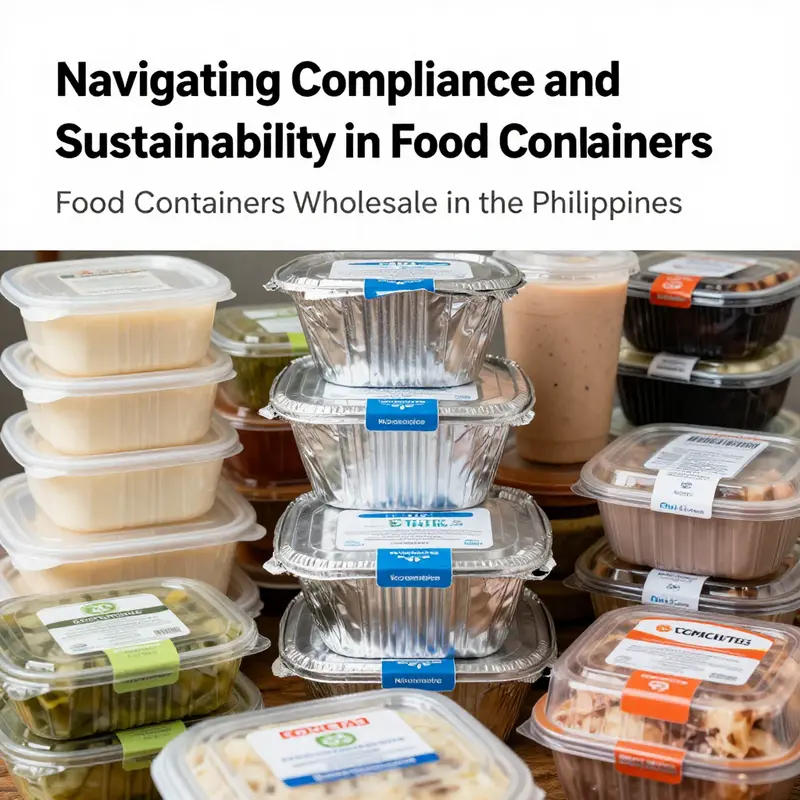
The growing food and beverage industry in the Philippines demands high standards for food container sourcing. With an emphasis on safety, sustainability, and compliance, businesses like bubble tea shops, restaurants, food trucks, catering services, event planners, and corporate procurement teams must stay informed about the best practices in wholesale food containers. This article explores the vital compliance standards, the shift towards sustainable materials, effective supplier selection, current market trends, and cost considerations which can guide your purchasing decisions. Together, these chapters will equip businesses with knowledge to thrive in the competitive landscape while prioritizing safety and environmental responsibility.
From Compliance to Confidence: Navigating Food Container Standards in Wholesale Philippines
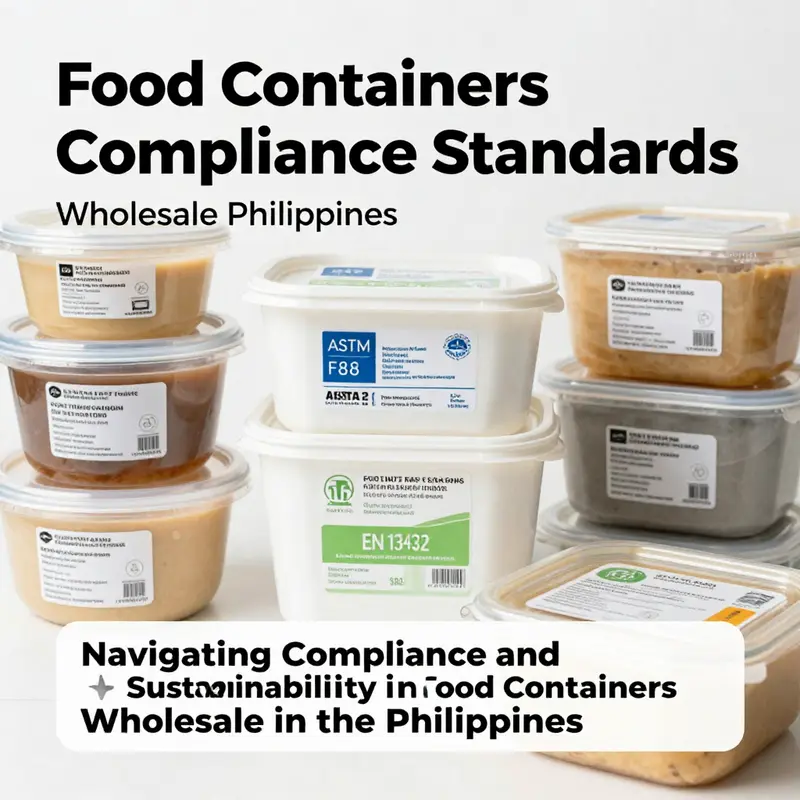
In the wholesale landscape of food containers in the Philippines, safety is a non negotiable at every link of the supply chain. Wholesalers handle materials that will touch food directly or come into contact with it during processing, distribution, and storage. The stakes are high: any failure to meet a regulator’s expectations can disrupt supply, erode trust, and leave retailers vulnerable to recalls. This reality makes a deep understanding of regulatory expectations not simply a legal obligation but a commercial advantage. The core concern is simple in principle yet complex in practice: the materials must be safe, traceable, and compliant with the standards that govern food contact substances. For the wholesale buyer, the challenge is to align procurement choices with a regulatory framework that is both expansive and precise, spanning overarching laws, regulatory agency actions, and evolving technical guidelines that influence how packaging performs under real-world conditions.
At the heart of the Philippines’ regime for food contact materials is a framework set by the Food and Drug Administration (FDA) under the Department of Health, with responsibilities that cascade from national statutes down to daily procurement decisions. The backbone of this framework rests on the country’s foundational laws, including the Food, Drugs, and Cosmetics Act (Republic Act No. 3720, enacted in 1963) and the more recent Food Safety Act, enacted in 2013. These laws establish the baseline expectation that any container used for foods must not introduce toxic or harmful substances into the product, and that packaging materials cannot be treated as covert additives that compromise safety. Meanwhile, the FDA recognizes that manufacturers and importers often rely on established international benchmarks, particularly those from the United States and Japan. The U.S. Food Code and related FDA regulations are frequently referenced as a practical proxy for good manufacturing practices and material applicability policies. In effect, compliance with well-regarded overseas standards often serves as a credible indicator of meeting Philippine requirements, provided the supplier can substantiate conformity with relevant tests and documentation.
For wholesalers, the practical implication of this regulatory landscape is that due diligence cannot stop at a certificate of compliance. It requires a disciplined approach to supplier qualification and documentation. A mandatory early step is registration with the Philippine FDA via the e-FDA portal for importers of food packaging materials. Registration is not merely bureaucratic; it is the formal mechanism that enables the market to operate within a transparent, auditable framework. In addition to establishing eligibility, the process requires evidence of quality control systems, provenance of raw materials, and a robust set of third‑party test reports. These reports should demonstrate, among other things, that inks and printing processes used on exterior packaging do not migrate into food at permissible levels, that seals and closures maintain integrity under intended use, and that packaging strength is sufficient to withstand normal handling without rupture or compromise. The emphasis on third‑party verification reflects a broader shift in regulatory practice toward independent validation of safety claims—an approach that reduces information asymmetry between suppliers and buyers and between manufacturers and regulators.
The technical expectations attached to food contact materials are specific and testable. Ink migration, for example, is a critical concern when containers feature printed graphics or text that borders on direct contact with food. Third‑party testing that assesses ink migration helps ensure that printing does not contaminate the food product. Seal integrity, often evaluated through standardized tests like those referenced by ASTM F88 (the standard for seal strength of flexible barrier materials), is another non‑negotiable criterion. A packaging seal must withstand the rigors of filling, sealing, and subsequent handling without failing, which would expose contents to environmental contaminants. In addition to these concerns, the material’s barrier properties, puncture resistance, and overall mechanical robustness come into play, particularly for containers that will endure stacking, shipping, and extended shelf life. The regulatory dialogue around these properties is practical: a product may be manufactured to international standards, but wholesalers must confirm that the supplier’s test results and certifications cover the exact material formulation, use scenario, and product category in the Philippine market.
Thermal processing and heat sealing introduce another layer of specification. For packages that rely on heat sealing to create a barrier and a secure closure, the stability of the sealed joints across a temperature range is essential. The 90–130°C window cited in industry practice refers to the temperatures encountered during processing, hot-filling, sterilization, or during the finalization of packaging. A seal that weakens inside that range risks leaks, compromised sterility, or microbial intrusion, all of which would trigger regulatory concerns and potential product recalls. Consequently, wholesalers should require suppliers to demonstrate seal performance within this temperature envelope and to provide data that proves stability under the packaging’s intended use conditions. This is not merely a technical preference but a compliance imperative that directly impacts food safety.
Sustainability is increasingly interwoven with safety, and the regulatory conversation mirrors this reality. For brands and wholesalers that pursue greener packaging options, evidence of environmental performance matters just as much as chemical safety. Certifications such as EN 13432, which pertains to the compostability of packaging, are used to demonstrate cradle‑to‑grave environmental performance. However, the regulatory acceptability of compostable packaging hinges on clear articulation of end‑of‑life conditions. In many cases, industrial composting environments are assumed for compostable materials; home composting may not achieve the same decomposition pace or product integrity. This nuance matters for wholesale buyers who must communicate packaging disposal expectations to retailers and consumers, while ensuring that the material’s compostability does not conflict with its safety profile during use. The procurement decision, therefore, becomes a balancing act between ensuring the material does not migrate harmful substances into food and aligning with sustainability goals that increasingly shape consumer expectations and corporate social responsibility programs.
Labeling and information requirements, though typically applied to packaged foods, spill over to the wholesale side through regulatory expectations that packaging materials be interpreted and treated in a way that does not mislead or confuse. The administrative commands governing prepackaged foods underpin how the packaging ecosystem communicates safety and composition. Wholesalers, in turn, can rely on suppliers to provide substantiation that any components considered as part of the packaging system—whether additives or coatings—are within the permitted lists and that their use is supported by solid evidence. The 2026 updates to labeling and nutrition or health claims add another dimension: any claim tied to the packaging or its materials must be supported by tests conducted in ISO/IEC 17025‑accredited laboratories. This push toward validated data elevates the credibility of the entire supply chain and reduces the risk of regulatory pushback downstream.
The practical consequence for wholesale buyers is a robust checklist of documentation. A supplier should be ready to present GMP certificates, evidence of compliant material composition, and traceable raw material sources. They should supply third‑party test reports covering ink migration, seal strength, and barrier performance in the packaging format that will be used. If a supplier touts sustainability credentials, they should provide EN 13432 documentation and clear information about the approved end‑of‑life environment. The objective is to mitigate regulatory risk, but it also creates a competitive edge: buyers who insist on comprehensive documentation signal to retailers that their supply chain adheres to the highest standards of safety and transparency.
An internal example of how these expectations translate into practical procurement behavior can be seen in a commitment to transparent packaging performance. Wholesalers may specify that the packaging selected for direct food contact must be compatible with common processing conditions, such as hot‑fill or microwave use, and must maintain integrity under typical transportation stresses. They may demand that any printed elements on the container are evaluated for ink migration and that the printing process uses materials that meet recognized safety benchmarks. In making these demands, buyers are not merely reacting to compliance demands; they are shaping the packaging ecosystem toward safer, more reliable products, which in turn supports national public health goals and consumer confidence.
For wholesalers seeking to extend the reach of their sustainable packaging programs while maintaining compliance, a concrete path includes a careful collaboration with suppliers who can demonstrate EN 13432 certification alongside robust safety testing. When sustainability claims accompany safety data, the relationship becomes more durable: retailers gain assurance that the packaging can be disposed of in an environmentally responsible way without introducing new safety risks. This alignment becomes particularly important in a market like the Philippines, where urban centers grapple with waste management challenges and consumers increasingly favor brands that can articulate a responsible packaging strategy. Within this context, the right packaging decisions contribute not only to compliance but also to a broader narrative of quality, responsibility, and resilience across the entire food supply chain.
To connect these considerations with real examples within the wholesale ecosystem, wholesalers can explore packaging options that explicitly combine safety and sustainability features. For instance, a multi‑component, heat‑sealed packaging solution designed for ready-to‑eat foods can offer a strong barrier against moisture and oxygen while supporting stable temperatures within the required 90–130°C range. Such solutions are typically manufactured under GMP and validated by third‑party laboratories, offering wholesale buyers a credible combination of performance data and regulatory alignment. For buyers seeking concrete illustrations while preserving a focus on compliance, one can review supplier catalogs that emphasize oxygen barriers, seal integrity, and compostability credentials, coupled with transparent COA data and ISO/IEC 17025 testing attestations. The emphasis remains on the interplay between material performance and regulatory admissibility—two dimensions that form the bedrock of confidence in wholesale purchasing.
In the spirit of practical guidance, consider this example of a compliant, market‑ready packaging approach: when a supplier presents a heat‑sealed, multi‑layer container designed for hot foods, the buyer should verify the temperature stability of the seal within the 90–130°C range through independent testing, confirm that inks used for any exterior graphics do not migrate, and request third‑party verification of barrier properties and burst resistance. The buyer should also confirm that the packaging materials carry references to GMP and traceable raw material origins and that the supplier can provide EN 13432 or equivalent compostability documentation if sustainability claims are made. If the supplier can also document alignment with U.S. FDA or other international standards, the buyer gains additional assurance that the packaging will perform in the Philippine market and abroad should distribution extend beyond national borders. In this way, compliance becomes a practical, ongoing practice rather than a static checkpoint.
For readers seeking a tangible example of compliant packaging in the wholesale ecosystem, consider the broader category of takeout packaging designed to deliver safe, convenient, and environmentally mindful service. This category illustrates how regulatory expectations inform day‑to‑day decisions in the wholesale market, guiding the selection of materials, the design of packaging systems, and the expectations set with retailers about product safety, labeling, and end‑of‑life options. Wholesalers who embed these considerations into their supplier assessments build a foundation for long‑term partnerships and more resilient operations. The conversation between safety data, environmental credentials, and practical performance data becomes the thread that ties together the compliance chapter with the next stages of product development, supplier qualification, and market expansion. As the Philippine regulatory landscape evolves, the wholesale buyer’s emphasis on third‑party verification, rigorous testing, and transparent documentation will remain central to achieving not only compliance but true supply‑chain confidence.
For further context on compliance information, you can explore packaging options that align with eco‑friendly aims but also meet safety standards through a representative product page: eco-friendly disposable 3-compartment food-grade packaging box for fast food takeout.
External resource: FDA Philippines official site for regulatory guidance on food contact materials: https://www.fda.gov.ph
Greener Goods in Bulk: Navigating Sustainable Food Containers for Wholesale in the Philippines
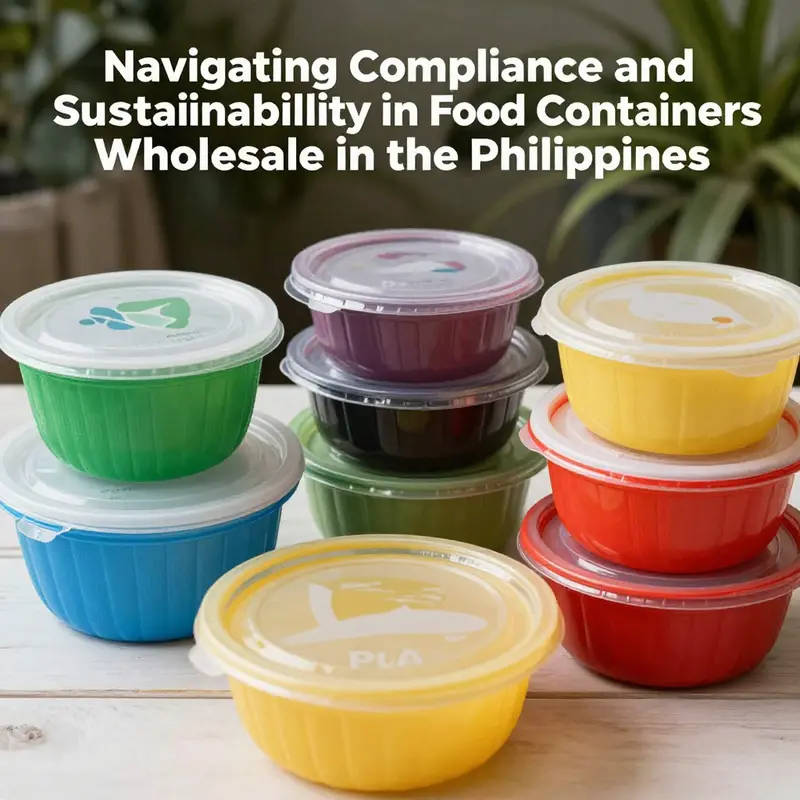
The wholesale landscape for food containers in the Philippines is undergoing a deliberate pivot from convenience to responsibility. As food businesses scale, they face growing expectations from regulators, retailers, and diners who want packaging that protects safety while reducing waste. In response, wholesalers are expanding catalogs with sustainable options that perform in real-world kitchen conditions yet leave a lighter footprint on the environment. This chapter follows that shift, tracing how durable materials, clear standards, and practical logistics intersect in a market where every pallet has to move fast, every box must seal reliably, and every disposal decision matters for the country’s streets and rivers. The conversation now is less about cost alone and more about lifecycle thinking: how a bulk order can support safe meals today while enabling a circular economy tomorrow.
Compostable and biodegradable materials are at the core of this transition. Sugarcane fiber, commonly marketed as bagasse, has emerged as a standout for wholesale buyers because it combines stiffness with heat tolerance. When used for hot meals, bagasse containers resist oils and moisture better than many early bioplastics, making them suitable for ready-to-eat meals and takeout that travels across urban neighborhoods. Bamboo and palm leaf bring natural aesthetics and strength that appeal to brands seeking a premium, rustic presentation without sacrificing performance. Plant-based alternatives derived from polylactic acid, or PLA, sourced from cornstarch, offer a familiar plastic-like form factor with the right end-of-life narrative, especially when certified for industrial composting. These materials are chosen not only for safety—ensuring they meet direct-contact food standards—but also for their market signals: a growing consumer willingness to pay a premium for packaging that aligns with environmental values.
Yet performance remains the decisive factor for wholesale buyers who must forecast shelf life, transport, and customer experience. Bagasse, for instance, exhibits notable durability and heat resistance, which translates into containers that hold steam-rich meals without warping. Bamboo and palm leaf deliver natural rigidity and an organic texture that can elevate a restaurant’s branding, while PLA-based items can emulate the look of conventional plastics with the right molding and barrier properties. For cold items, snack packaging, or short-term storage, these materials often outperform traditional fiberboard or standard plastics in terms of consumer appeal and moisture control. Importantly, the industry-wide move toward sustainability comes with a quiet but essential demand: robust certification and traceable testing. Buyers increasingly require third-party verification of ink migration, seal integrity under ASTM F88, and accurate labeling of compostability claims, so that customers and auditors can trust the product’s safety through all stages of use and disposal.
Even with clear advantages, sustainable packaging faces structural barriers in the Philippine context. The country’s infrastructure for industrial composting remains uneven, with facilities clustered in urban centers and far fewer options in rural or peri-urban areas. When industrial composting is not available, even biodegradable materials risk ending up in landfills where decomposition is far slower than expected. Durability under heat and moisture varies by material; PLA, for example, can be sensitive to high temperatures if not properly processed, while bagasse and palm leaf can require more careful handling to prevent breakage or moisture absorption during transit. Cost is another hurdle. While wholesale buyers can negotiate bulk pricing, the unit economics of sustainable containers often differ from conventional plastics, which means buyers must apply lifecycle costing rather than price-per-case comparisons alone. This is where education and demand-shaping come into play: educating chefs, delivery partners, and customers about appropriate disposal pathways helps ensure that each purchase translates into real environmental benefits rather than ambiguous outcomes.
From the supplier side, a growing ecosystem supports this transition. Eco-packaging suppliers across the country increasingly offer bulk options of compostable and biodegradable containers, designed for takeout, catering, and retail packaging. The portfolio often includes bagasse lidded bowls, bamboo fiber trays, palm leaf clamshells, and PLA cups with barrier coatings that resist oil and moisture. For buyers, the diligence starts with the basics—certifications that attest to safety and compostability. Third-party testing reports should verify ink migration levels to guard against toxins transferring to food and confirm seal strength that meets widely adopted standards such as ASTM F88 for heat-sealed joints. The right supplier will also provide clear information about permissible disposal environments, so customers can distinguish industrial composting from home composting, and avoid confusing claims that could undermine compliance or consumer trust. In this ecosystem, wholesale buyers must balance the allure of a greener image with the practicalities of supply continuity, packaging performance, and after-use handling.
Procurement strategy becomes a blend of science and storytelling. Buyers design a packaging brief that enumerates expected waste streams, disposal infrastructure, and brand positioning. They then align supplier selection with that brief: materials that are certified for direct contact with foods, compatible with common filling and sealing equipment, and resilient enough to withstand shipping vibrations and temperature fluctuations. The best practice includes requesting third-party testing results that cover not only ink migration but also migration under heat and contact with fatty foods. Seal integrity remains nonnegotiable for hot pouches and top-sealed containers; therefore, heat-seal performance across the anticipated temperature range—typically 90 to 130 degrees Celsius for many hot-fill and hot-press processes—should be explicitly validated. Beyond performance, buyers should evaluate end-of-life narratives. EN 13432 certification provides a credible benchmark by signaling industrial compostability, but it is essential to understand the material’s actual conditions for disposal—industrial composting facilities, home composting, or other pathways—and to communicate these realities to customers so expectations align with capabilities.
Education and collaboration emerge as strategic levers in wholesale markets. Suppliers can help by offering disposal guidance, labeling that clarifies composting requirements, and bilingual packaging instructions that address both local waste streams and consumer behavior. For restaurants and distributors implementing compostable options, partnerships with waste-management programs that can process bagasse, PLA, or palm leaf products reduce the risk of misdirected waste. In regions where industrial composting remains sparse, a pragmatic approach is to position compostable containers as interim solutions for takeout and short-term service, while maintaining a parallel supply of durable, reusable, or recyclable options for longer service durations. The goal is not to replace plastics overnight but to expand the choice set so businesses can meet evolving preferences without compromising on safety or speed of service. As consumer demand shifts toward transparency, the wholesale channel can become an educator and curator—providing clear labels, disposal instructions, and credible certifications that reinforce a brand’s environmental commitments.
To illustrate practical alignment, consider the operation of a food service that pivots to sustainable packaging for takeaway. When hot meals are involved, the packaging must remain stable within the typical 90–130°C range used in hot-fill or pre-warming processes. This stability, combined with a reliable seal, is essential to prevent leaks and preserve temperature during delivery. Bagasse and bamboo-based options often perform admirably in this window, provided the supplier’s process ensures proper barrier properties and coating compatibility. For cold items or snacks, PLA cups and palm-leaf clamshells deliver a clean, attractive presentation that travels well in urban delivery networks. These choices influence not only the moment of purchase but also the subsequent minutes of consumption, where consumer experience hinges on packaging that maintains integrity yet leaves minimal residue, an outcome increasingly favored by eco-conscious patrons.
Within this evolving landscape, wholesale buyers can leverage specific suppliers that specialize in eco-friendly disposables to optimize both cost and quality. The market rewards those who couple selective sourcing with responsible disposal education. eco-friendly-disposable-3-compartment-food-grade-packaging-box-for-fast-food-high-quality-takeout-boxes-for-fried-chicken-french-fries-packaging. For example, a prominent supplier catalog includes multi-compartment, compostable units designed for fast food contexts. The combination of performance and sustainability in such products helps restaurants and caterers reduce their plastic footprint while maintaining the speed and reliability of their service.
Finally, external resource: the broader context on sustainable trends in the Philippines can be explored in industry analyses and regional summaries that track regulatory developments, consumer expectations, and innovations in waste management. External reference: https://www.philippinebusinessnews.com/2025/11/18/sustainable-food-packaging-trends-in-the-philippines/
Strategic Sourcing for Food Containers Wholesale in the Philippines: Crafting Compliant, Resilient Supplier Partnerships
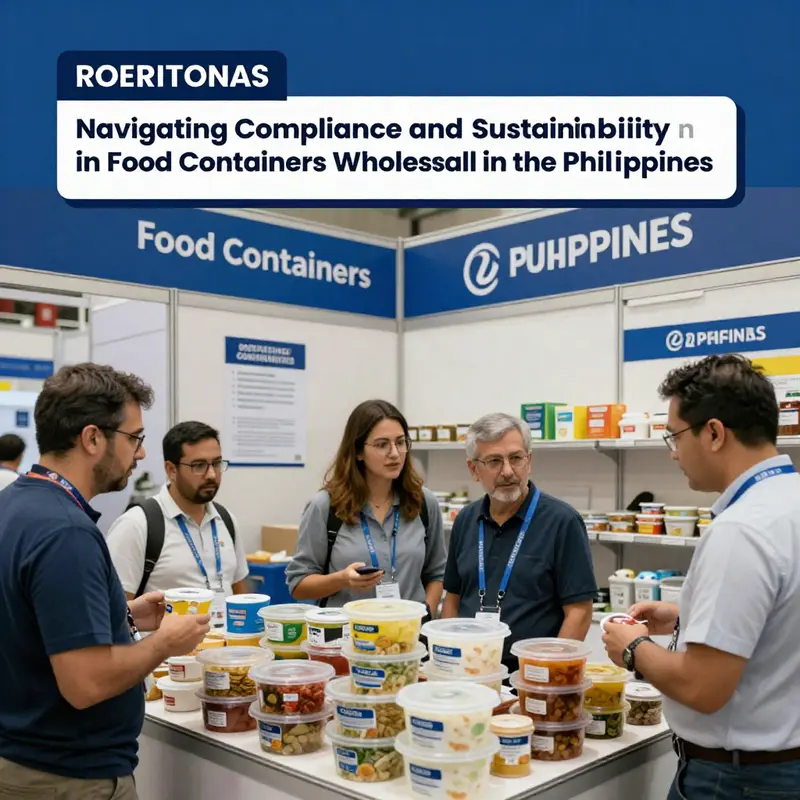
When a business in the Philippines set out to source wholesale food containers, it quickly becomes clear that the choice of supplier shapes more than price. It defines product safety, operational efficiency, and the ability to scale with demand as urban dining and takeout culture expand. The most effective supplier relationships hinge on a holistic assessment that blends technical capability with reliability, compliance, and a shared commitment to responsible packaging. In a market where regulators and consumers increasingly demand transparency, a well-constructed supplier strategy becomes a competitive differentiator. The path to this strategy begins with a clear map of the landscape: recognizing the central role of quality assurance, understanding regional logistics within the archipelago, and aligning with five core pillars that sustain a resilient supply chain—compliance and certification, production scalability, material innovation, logistical efficiency, and customer service responsiveness.
In this context, the Philippines presents a multi-layered sourcing environment. The archipelago concentrates much of its manufacturing emphasis in Luzon, where proximity to Metro Manila, robust port infrastructure, and a large pool of skilled workers create favorable conditions for high-volume production. Cavite and Laguna, among other provinces, serve as logistical hubs that enable faster turnaround times and more predictable delivery schedules for distributors serving the northern markets. Yet, the geography of demand is not monolithic. As regional consumption grows and new business models take hold, Cebu in the Visayas and Davao in Mindanao have emerged as valuable secondary hubs. They offer shorter domestic routes to southern provinces and reduce exposure to single-point transportation risk. A sourcing strategy that tortuously relies on a single region can suffer from disruption, cost increases, and longer lead times when demand shifts or weather events affect supply lines. Therefore, a robust approach contemplates diversification across these geographic nodes while maintaining tight control over quality across the supply base.
A central feature of any robust supplier framework is the insistence on verifiable performance metrics. For wholesale operations, this translates into consistent on-time delivery, rigorous quality control processes, and the capacity to handle both small trial runs and large-scale private-label projects. Conscientious buyers routinely request third-party testing reports to verify critical aspects of the packaging’s safety and performance. Ink migration tests are non-negotiable when containers are intended for direct contact with food; they guard against taints that could compromise flavors, aroma, or consumer health. Seal integrity, measured against established benchmarks such as ASTM F88, is another essential criterion because compromised seals can lead to leakage, contamination, and product waste. The ability to withstand the mechanical and thermal stresses of transport and use is equally vital. For heat-sealed packaging, confirming stable performance within a 90–130°C window is a practical guardrail against embarrassing product failures during hot-fill processes or in warm climates.
In addition to mechanical and chemical performance, sustainability and regulatory alignment have moved from optional considerations to baseline requirements for many buyers. The industry has coalesced around standards that distinguish truly compostable or recyclable options from those that merely appear greener. If a brand emphasizes environmental stewardship, it should demand materials with recognized certifications, such as EN 13432 for compostability, and a clear delineation of the end-of-life conditions—whether industrial composting facilities or home-composting environments. These certifications are not just marketing signals; they are indicators of a packaging system that can meet customer expectations and regulatory requirements while avoiding misaligned claims that could attract scrutiny or mislead consumers.
To operationalize these expectations, a supplier selection framework should be anchored by five pillars. First, compliance and certification: the supplier must hold recognized quality and safety certifications—such as ISO standards or equivalent programs—paired with accessible third-party documentation that details testing protocols and results. Second, production scalability: the supplier must demonstrate the capacity to ramp up from pilot runs to full-scale private-label programs without sacrificing consistency or schedule reliability. Third, material innovation: the industry’s best partners actively explore and validate alternatives that reduce environmental footprint while maintaining performance. This might include compostable options like bagasse-based products, PLA-lined paper, or recycled-content materials. Fourth, logistical efficiency: the procurement process should reveal clear lead-time expectations, dependable shipping options, and the ability to adapt to regional distribution strategies across Luzon, Visayas, and Mindanao. Fifth, customer service responsiveness: suppliers should exhibit clear responsiveness, collaborative problem-solving, and transparent communication channels that keep buyers informed through every phase of development and production.
Beyond these pillars, practical due diligence remains a cornerstone of effective sourcing. Buyers should look for evidence of a supplier’s capacity to handle both small trial orders and larger private-label runs, because the ability to manage a spectrum of batch sizes is a strong predictor of a partner’s versatility and risk management sophistication. A thorough supplier evaluation also requires visibility into the lead times for typical orders. When sourcing from major manufacturing regions such as Guangdong or Shanghai, where injection-molding ecosystems are highly mature and automation enables millions of units monthly, buyers must weigh the benefits of proximity against longer global lead times and potential customs complications. In many cases, lead times of 15–25 days for standard orders are common, and smart buyers plan for these windows while maintaining buffer stock for critical lines.
An effective supplier relationship also depends on the supplier’s ability to support sustainable packaging strategies. For many buyers, eco-friendly alternatives are more than a trend; they are a strategic requirement that aligns with evolving consumer expectations and regulatory directions. Compostable materials, recycled-content packaging, and recyclable design principles should be demonstrable through viable product lines and credible certification. For businesses that place a premium on environmental performance, a supplier should present a concrete pathway to sustainable packaging—clear information on compostability conditions, material recyclability, and end-of-life guidance for distributors and end users alike. The goal is not merely to label a product as green but to provide a documented, practical framework for achieving lower environmental impact while maintaining safety and performance standards.
The geographic and regulatory realities of the Philippine market also call for a pragmatic stance on supplier diversification. Relying on a single source or a single corridor carries risks that cut across regulatory changes, currency volatility, and natural disruptions. A diversified approach, with established partners in Luzon and thoughtful ties to Visayas and Mindanao, helps spread risk and enable regionally targeted service. In pursuing this diversification, buyers should seek suppliers who can speak to regional distribution plans, warehousing options, and value-added services such as private-label customization, packaging design support, and coordinated logistics that simplify cross-island distribution. The right partner will not only deliver units but will also align with the buyer’s supply chain calendar, seasonal demand curves, and promotional campaigns.
In the pursuit of credible, practical supplier assessments, a careful buyer may consult up-to-date directories and verified supplier networks. The most relevant directory for the Philippines can provide comprehensive profiles on production capacity, certifications, and regional strengths. It serves as a practical starting point to map potential partners across Cebu, Davao, and Luzon, and to identify those with demonstrated capabilities to scale, maintain stringent quality controls, and support both conventional and sustainable packaging regimes. As with any strategic procurement exercise, the emphasis should be on evidence: documented certifications, third-party test results, production traceability, and a history of reliable, predictable performance. The aim is to build a resilient network that can accommodate evolving safety standards, shifting consumer preferences, and the continued growth of food-service channels in the country.
To illustrate concrete pathways for buyers who want to pursue this framework without losing sight of the human element in supplier relationships, consider the value of a targeted learning resource that aggregates verified suppliers across key regional hubs and provides in-depth capability profiles. This resource can help procurement teams compare candidates on a consistent basis, aligning supplier capabilities with the five pillars and the broader goals of safety, reliability, and sustainability. For practitioners seeking additional context on practical sourcing strategies and supplier capabilities, this external resource offers a structured starting point for due diligence, regional market intelligence, and a practical framework for supplier selection that complements internal testing and certification review. External resource: https://www.b2bsourcingguide.com/ph/food-packaging-suppliers
In parallel with formal certifications and performance metrics, the dialogue with prospective suppliers benefits from addressing real-world scenarios. Buyers should ask for case studies or evidence of successful private-label engagements, especially those involving takeout and ready-to-eat products where packaging must maintain integrity under heat, moisture, and rough handling. The conversation should extend to samples that replicate end-use conditions: containers that endure the heat of hot-fill processes, trays that resist grease and moisture, and lids that maintain a secure seal under varying temperatures and transit shocks. The goal is not to surprise a supplier with an unexpected test but to engage in a collaborative validation process that accelerates time-to-market while preserving the end-user experience. In this approach, a single well-documented batch of tests can stand in for a multitude of assumptions, guiding both parties toward a shared, verifiable standard of quality.
In weaving together geographic strategy, certification rigor, and a practical testing mindset, a Philippines-based buyer can construct a supplier ecosystem that is not only compliant but also agile and future-ready. The emphasis remains on a thoughtful balance: rigorous standards and flexibility in production, all anchored by transparent communication and a long-term partnership frame. The result is a supply chain that can grow with demand, accommodate regulatory shifts, and meet the rising expectations of consumers who increasingly scrutinize the safety, environmental footprint, and reliability of the packaging that protects their food every day. And as the market continues to evolve, so too must the dialogue with suppliers—ongoing, data-driven, and anchored in shared commitments to safety, performance, and sustainable progress.
Internal link reference (for readers seeking concrete examples of eco-friendly packaging options): eco-friendly takeout boxes for food packaging. This resource illustrates how different packaging formats can be combined with green materials to meet both functional and environmental objectives, while preserving the performance required for direct-food-contact applications.
By integrating these perspectives—regional supply dynamics, certified safety and performance benchmarks, scalable production, and a clear pathway to sustainability—buyers in the Philippines can build supplier relationships that withstand the pressures of growth, regulatory scrutiny, and consumer demand. The result is not merely a catalog of products but a coherent, resilient procurement strategy that supports the country’s vibrant food-service ecosystem and positions businesses to thrive in a more environmentally conscious, safety-focused market.
Chapter 4: From Sustainability to Smart Packaging—Charting the Philippine Food Container Wholesale Market
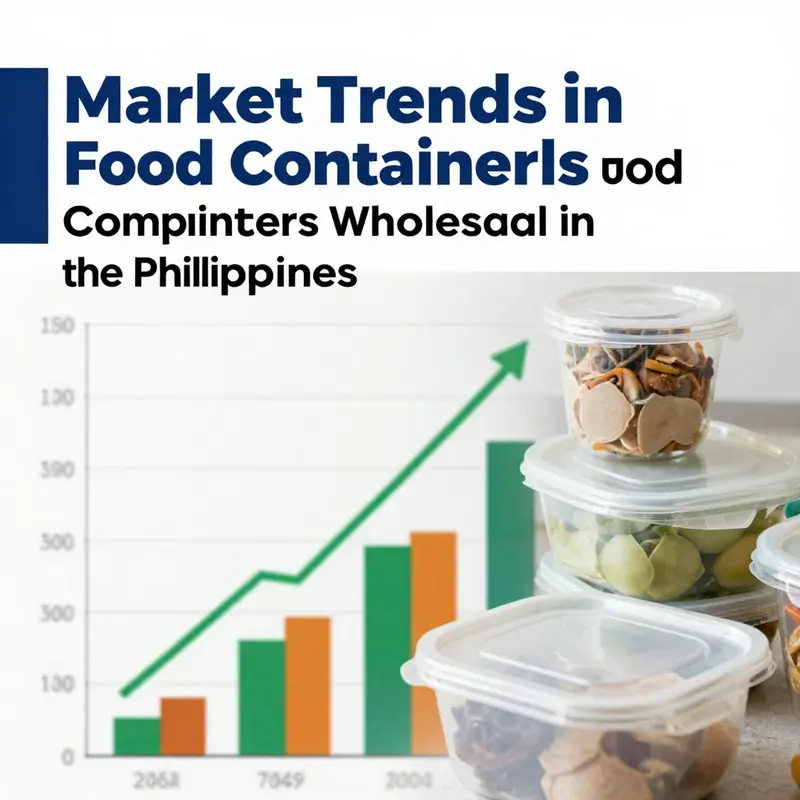
The Philippine market for food containers in wholesale channels is quietly undergoing a powerful reshaping, not by a single dramatic shift but through a convergence of rising consumer expectations, tighter regulatory guardrails, and a steady push toward smarter, more sustainable packaging. Projected to grow at a compound rate of roughly 4.4% from 2024 to 2032, the sector reflects a country-wide appetite for packaging that protects food quality, aligns with environmental priorities, and scales with the logistics needs of a dynamic food service ecosystem. Wholesalers stand at the nexus of this transformation, balancing availability, compliance, and cost while catering to diverse segments—from street-food vendors and casual dining to large-scale catering and delivery platforms. In this landscape, success hinges on accuracy of specification, reliability of supply, and a clear read of evolving market signals that extend beyond price alone.
Sustainability sits at the core of current decisions, not as a fashionable add-on but as a practical business discipline. Filipino consumers are increasingly aware of the lifecycle impacts of packaging, and businesses are responding with materials that can reduce landfill burden and pollution. The shift away from traditional single-use plastics toward biodegradable and compostable alternatives is not merely legislative theater; it is a measurable trend reflected in materials choice, supplier dialogues, and product development pipelines. Local manufacturers have begun to experiment with plant-based feedstocks such as cornstarch and sugarcane bagasse, creating disposable containers that perform in real-world service while offering a clearer path to decomposition under appropriate conditions. This evolution aligns with the national objective of reducing plastic waste and moving toward a circular economy, ultimately supporting the broader goal of zero plastic waste by 2040. For wholesalers, the implication is plain: a growing demand for eco-friendly lines, coupled with an imperative to verify genuine compostability and to communicate clear disposal guidance to end users.
Equally important is the ongoing enhancement of food safety and performance standards. Buyers in wholesale channels increasingly insist on documents that verify compliance and safety. Third-party testing reports have become a standard expectation, serving as the bridge between supplier claims and retailer assurance. In this framework, attention to ink migration, seal integrity, and resistance to mechanical stress matters as much as the raw material itself. A foundational priority remains the seal strength and integrity of heat-sealed packaging, especially for products designed for hot or moist contents. Industry guidelines commonly reference tests aligned with standards such as ASTM F88 to characterize seal strength under typical handling and consumer use scenarios. Materials chosen for direct contact with food—such as PET/PE composites, aluminum foil, or biodegradable PLA—must be traceable, certified, and compatible with the intended use environment. Importantly, when heat-sealing is involved, stability across a practical temperature window—roughly 90–130°C—is a non-negotiable criterion that affects food safety, performance, and consumer trust. In this sense, the materials story is inseparable from the quality controls that wholesalers demand before SKU-level assortment decisions.
The market is also becoming more specialized in design, mirroring the culinary diversity that characterizes the Philippines. As cuisines from across Asia and the local dining scene gain momentum, there is a clear preference for containers tailored to specific tasks. For instance, the growing popularity of dumpling and dim-sum formats has spurred the development of purpose-built containers with features such as ventilation or steamer inserts. These innovations preserve texture and moisture, enhancing the dining experience from kitchen to table. Similarly, meal-prep brands, cloud-based catering services, and delivery platforms require containers that are stackable, durable, and microwave-safe, all while presenting an appealing, professional look. The design language in wholesale catalogs evolves accordingly, with suppliers offering solutions that combine functional engineering with attractive aesthetics. In this context, wholesalers who curate assortments around niche applications—whether for a dumpling service, a healthy meal-delivery concept, or a gluten-free snack line—are positioned to reduce waste in stock and speed up turnover through more precise matching of product to use case.
Technology is quietly intensifying the reliability and visibility of supply chains. Smart packaging elements, including temperature-sensitive indicators and tamper-evident seals, are making their way into premium containers and are increasingly accessible at the wholesale level. Such features build consumer confidence by providing at-a-glance assurances about product integrity, a factor that resonates with both retailers and end-users. Simultaneously, digitalization is transforming how wholesalers manage orders, inventory, and delivery. Real-time stock updates, automated reordering, and streamlined logistics reduce the friction of bulk purchases and enable more responsive replenishment cycles for grocery chains and food-service operators. For a market that often operates on tight margins and high service expectations, the ability to forecast demand accurately and fulfill bulk orders with speed is a differentiator that grows with scale.
Industry platforms and events act as accelerators for these trends. The Philippine Food Processing and Packaging Exhibition, a notable industry hub, showcases the latest in packaging technology, sustainable materials, and smart container design. Attendance by hundreds of exhibitors and thousands of visitors signals a robust appetite for innovation and collaboration, creating a marketplace where wholesalers, manufacturers, and end-users can explore new materials, processes, and business models. In this ecosystem, the emphasis on sustainable materials, design-for-use, and digital-enabled procurement strategies becomes not just a competitive advantage but a practical necessity for wholesalers seeking to future-proof their portfolios. The responses from suppliers and buyers alike point to a market that rewards not only low cost but also value-added attributes such as reliability, safety certifications, and the ability to support CSR and ESG commitments.
Within this evolving backdrop, the blend of regulatory alignment and consumer expectation shapes not only what is bought but how it is bought. Wholesalers face a double mandate: comply with safety and environmental standards while offering flexibility to respond to seasonal demand cycles and the volatility of raw-material prices. The materials conversation becomes practical when considering the balance between eco-friendly options and cost considerations, particularly for high-volume categories such as takeout boxes, noodle cups, and large-capacity meal containers. Strategic sourcing now often means partnering with suppliers who can provide robust documentation, third-party verification, and clear guidance on disposal and end-of-life conditions. For products labeled as compostable, the distinction between industrial composting and home composting environments is not a mere footnote; it dictates how customers will use, store, and dispose of these containers and, by extension, how wholesalers forecast demand and educate buyers.
The market’s momentum toward specialization is mirrored by advances in container performance that tackle real operational pain points. Food-service operators value containers that maintain heat without compromising structure, resist grease and moisture, and tolerate stacking without deformation. The evolution of corrugated and barrier coatings, combined with microwave compatibility, translates into fewer product failures and returns, a metric that matters in wholesale logistics. Digitally enabled product catalogs and bulk-order interfaces further reduce ordering friction, enabling smaller shops to access premium packaging while giving large retailers a reliable, scalable supply. The result is a wholesale environment in which assortment breadth and depth are matched by a disciplined approach to quality control, supplier qualification, and continuous improvement.
An important reminder for practitioners navigating these waters is to view sustainability not as a standalone label but as a set of verifiable practices that inform procurement decisions. The presence of credible third-party tests, compliant with recognized standards, is essential for risk management and brand protection. Consumers increasingly look to vendors who can demonstrate responsible sourcing, transparent testing, and clear remediation pathways if issues arise. In practice, this means wholesalers must cultivate supplier relationships built on trust, documentation, and ongoing performance reviews. It also means that convex optimization of stock—balancing eco-friendly materials with supply reliability—becomes a core competency rather than a side initiative. When vendors can provide clear data on ink migration, seal strength, and heat-seal stability, buyers can design packaging programs that minimize waste while maximizing food quality and safety across diverse distribution routes.
Layered into these considerations is a practical sense of how to translate market signals into tangible procurement decisions. The transition toward eco-friendly materials does not happen in a vacuum; it is accompanied by consumer education, disposal infrastructure, and viable cost trajectories. For wholesalers, this often translates into phased product introductions, pilot programs with select retailers or food-service operators, and measurement of key performance indicators such as shrink, spoilage, and post-consumer recyclability. In parallel, the rise of niche designs means that a portion of the catalog may be allocated to specialty items—containers optimized for dumplings, for example, with rounded shapes and ventilation that preserve texture after cooking. This approach enables wholesalers to serve both mass-market needs and premium segments, a balance that helps stabilize revenue streams while capturing growth opportunities.
To connect these themes in a practical way, think of a wholesale strategy that is anchored in three pillars: safety and compliance, sustainability and lifecycle clarity, and operational agility. First, ensure that products intended for direct contact with food are supported by third-party data and materials certified for safety. Second, align product selections with credible environmental standards, and accompany them with clear disposal guidance so customers can plan for end-of-life scenarios. Third, implement digital tools that enable real-time visibility and rapid response, whether it is stock replenishment, order customization, or last-mile logistics. In this configuration, a wholesale portfolio does not merely offer boxes and cups; it delivers a coherent packaging program that helps food service operators maintain quality, comply with evolving norms, and meet the expectations of a market that prizes both sustainability and efficiency.
For readers seeking a concrete example of how these trends come to life in the Philippine context, consider the broad movement toward eco-friendly takeout solutions that do not compromise on performance. A representative product category focus pairs with a communications strategy that emphasizes compostability where appropriate, clear labeling for disposal, and proof of performance in typical service conditions. Such an approach resonates with a wide range of buyers—from independent cafés to larger franchise networks—while offering a practical path to align business goals with environmental stewardship. The industry’s trajectory suggests a future where the wholesale landscape is defined not just by price or availability, but by the reliability of certifications, the clarity of environmental attributes, and the agility of supply chains to respond to evolving tastes and regulatory expectations.
As wholesalers navigate this dynamic, one can also look to the broader market signals that indicate growth areas and investment priorities. The ongoing demand for specialized packaging, paired with the rise of smart features and digitalized procurement, points toward a packaging ecosystem that rewards end-to-end solutions. This means product bundles that couple eco-friendly materials with testing documentation, design for efficiency, and scalable manufacturing capabilities. It means a network of suppliers who can deliver consistent quality across volumes and lead times that support large grocery chains and hospitality groups alike. It also means that the wholesale channel will increasingly value partnerships that extend beyond product supply to include technical support, regulatory guidance, and environmental impact reporting. In this sense, the Philippine food container wholesale market is becoming less about a single SKU and more about an integrated packaging program that helps food businesses thrive in a competitive, safety-conscious, and sustainability-minded era.
External reference: https://www.grandviewresearch.com/industry-analysis/philippines-food-storage-container-market
Internal link reference: For retailers and caterers seeking eco-friendly, microwave-safe options that balance performance with responsible packaging, see the broader catalog of sustainable takeout solutions. eco-friendly takeout boxes for food packaging.
null
null
Final thoughts
In summary, successful sourcing of food containers in the Philippines hinges on an understanding of compliance standards, sustainability options, and smart supplier selection. By aligning procurement strategies with market trends and performing thorough cost analyses, businesses can enhance their operational efficiency and maintain consumer trust. Investing in compliant and eco-friendly food containers not only fulfills regulatory requirements but also contributes positively to environmental efforts and aligns with consumer preferences. Properly navigating this landscape will enable your business to thrive in a competitive marketplace, ensuring safety and sustainability remain at the forefront of your operations.